Species at a Glance
| Scientific Name | Carassius auratus |
| Family | Cyprinidae |
| Order | Cypriniformes |
| Origin | Selectively bred — primarily Japan and China |
| Variety | Oranda — Short Tailed Shogun |
| Adult Size | 16–25 cm body length (6–10 in); compact overall span |
| Lifespan | 10–15 years with proper care |
| pH Range | 6.5–7.5 (ideal 7.0) |
| Temperature | 18–24 °C (64–75 °F) |
| Hardness (GH) | 4–12 dGH |
| KH | 4–8 dKH |
| Diet | Omnivore — sinking pellets, gel food, blanched vegetables, occasional frozen foods |
| Minimum Tank Size | 120 L (30 gal) per fish; 180 L+ recommended |
| Care Level | Intermediate |
| Temperament | Peaceful, social |
| Breeding | Egg scatterer — seasonal spawning trigger required |
| Tank Position | All levels; prefers open mid-water swimming |
| Product ID | 2663 |
Meet the Species
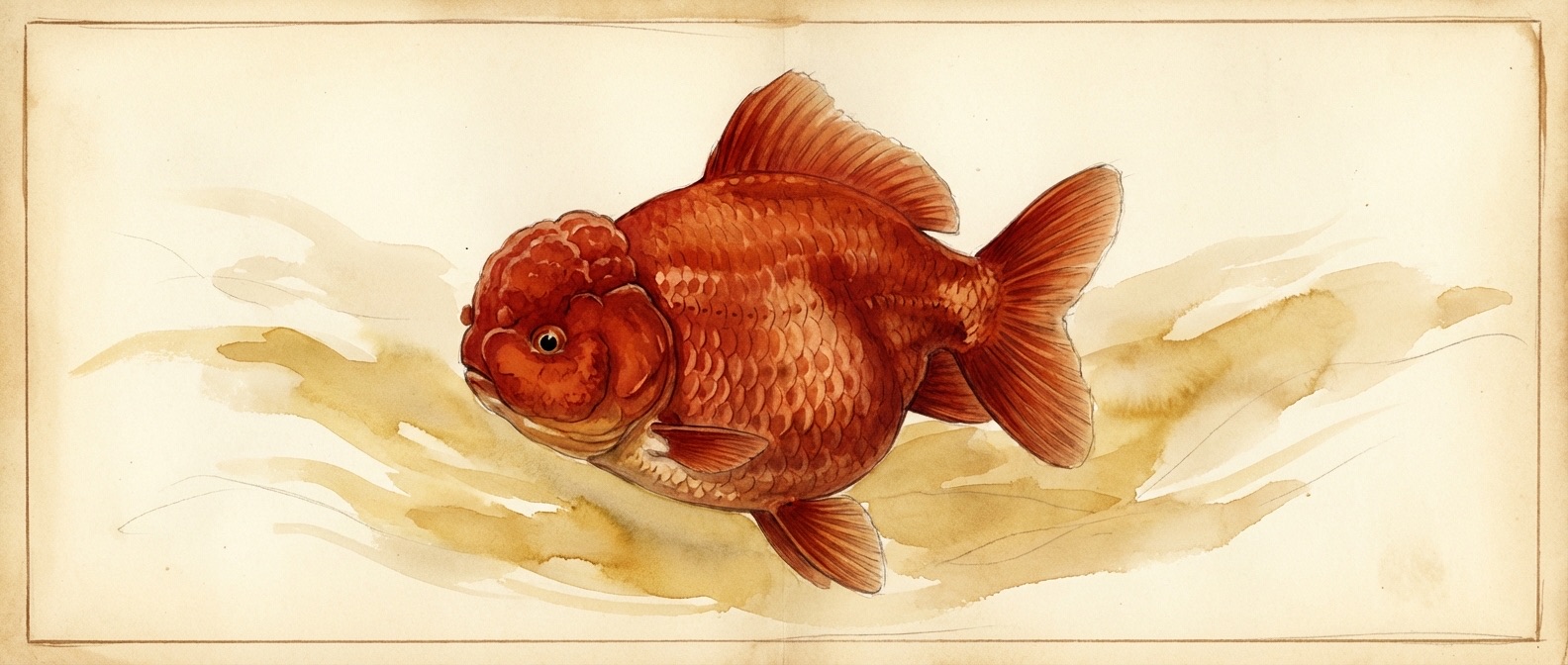
The name Shogun — borrowed from the Japanese term for a military commander of supreme authority — is a fitting descriptor for this variant’s physical presence. Where a standard Oranda might be described as graceful and flowing, the Short Tailed Shogun is compact and imposing. The name references both the Japanese cultural heritage of Oranda development and the variety’s distinctively powerful, authoritative silhouette.
The Oranda name itself derives from the Japanese Oranda-shishigashira — “Holland lion-head” — a reference to the Dutch trading ships that introduced exotic ornamental fish to Edo-period Japan. The breed’s actual lineage traces to Song Dynasty China (960–1279 AD), where Carassius auratus was first domesticated from the wild Prussian carp Carassius gibelio. Chinese court breeders developed hundreds of colour and form variants over centuries; Japanese breeders, beginning with imports around 1502, refined these into the distinctive hooded varieties including the Oranda. The wen hood mutation — a proliferation of head tissue that gives the Oranda its defining characteristic — was likely developed through crosses between Ryukin and Ranchu lineages in 18th-century Japan.
The Thai and modern Chinese goldfish industries subsequently industrialised and accelerated the pace of variety development, producing new form variants including the short-tail and short-body selections that led to the Shogun. The modern Shogun Oranda is characterised by genes that suppress caudal fin elongation — resulting in a short, stiff, upright tail rather than the flowing twin-lobed fin typical of standard Oranda — while simultaneously selecting for maximum body depth and wen mass. The result is a fish that appears disproportionately powerful, with a body-to-tail ratio inverted from the normal Oranda standard.
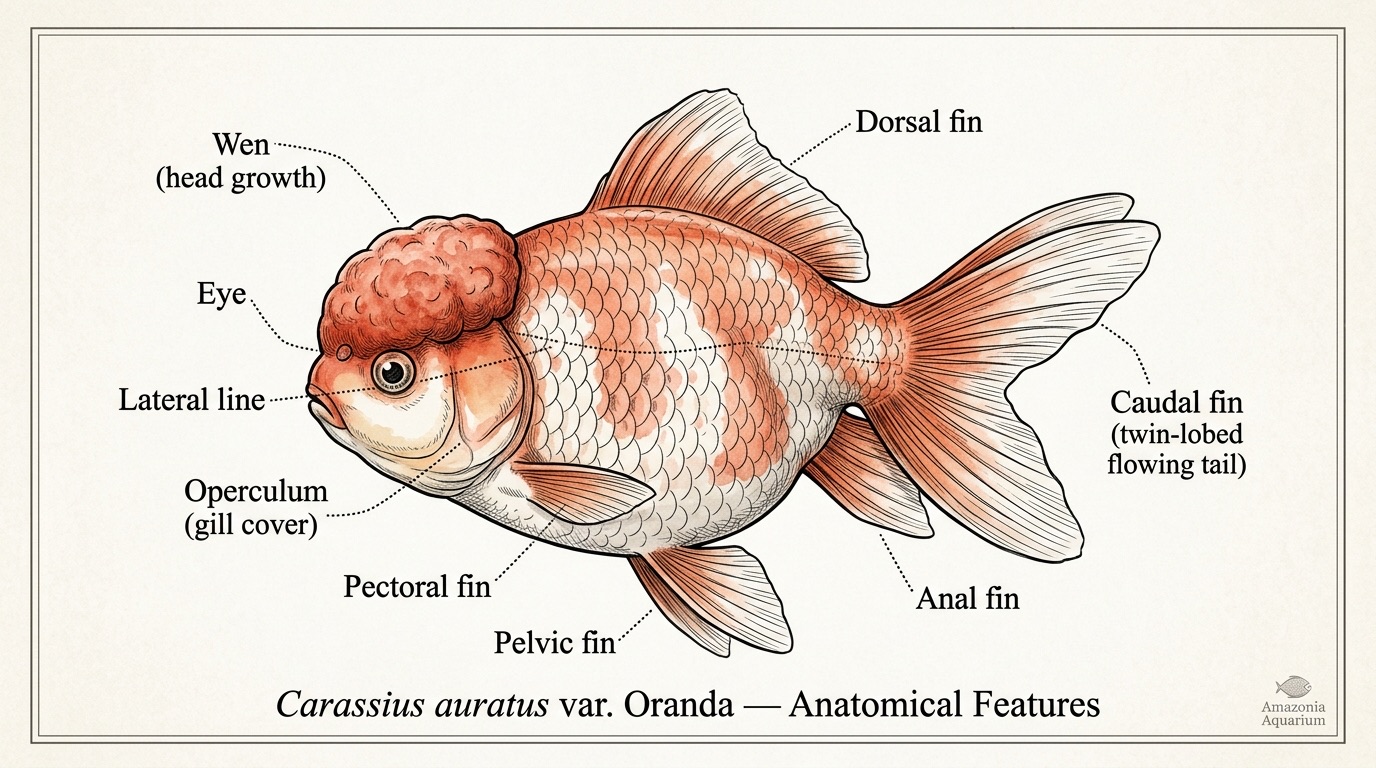
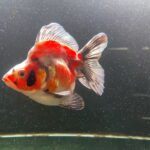
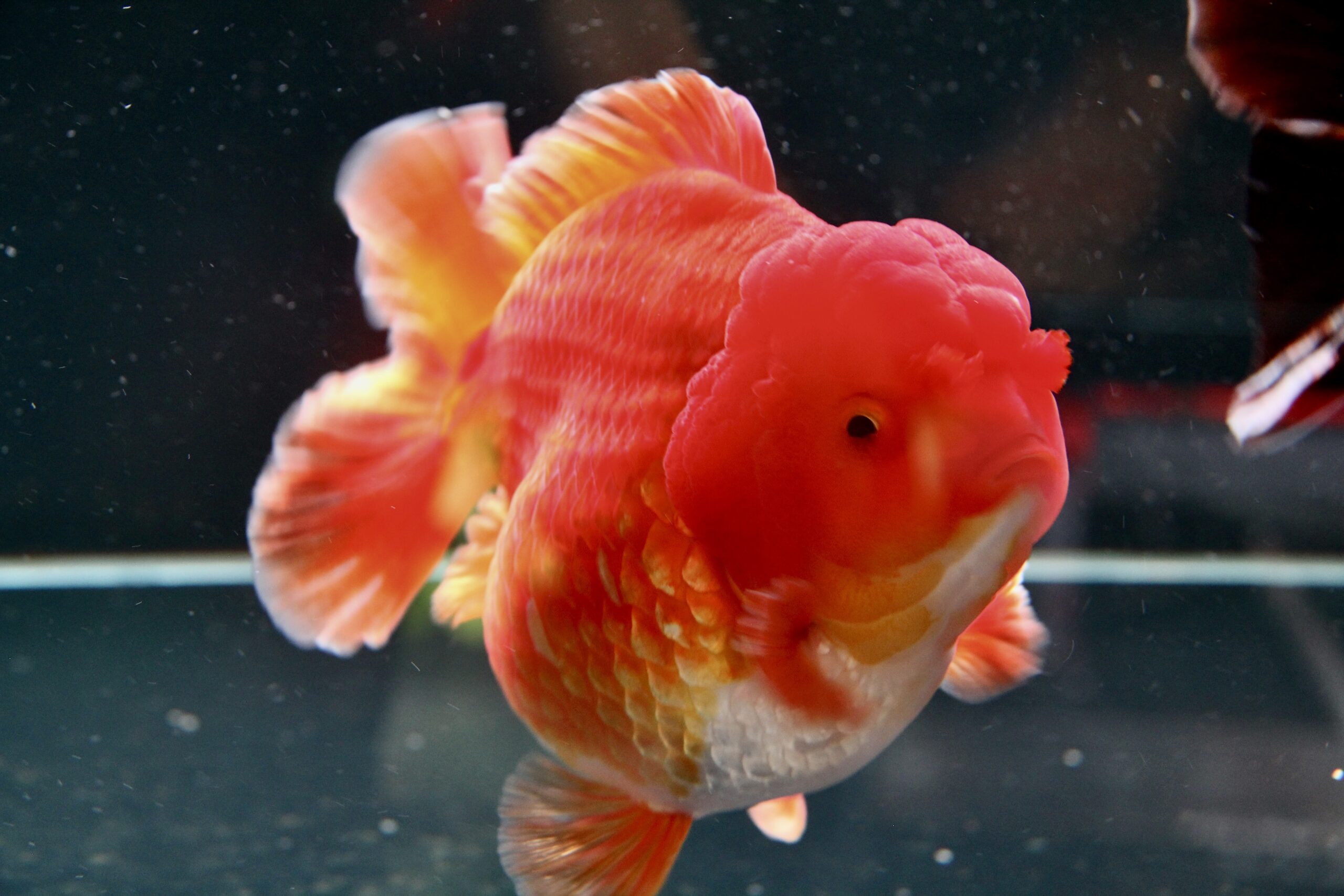
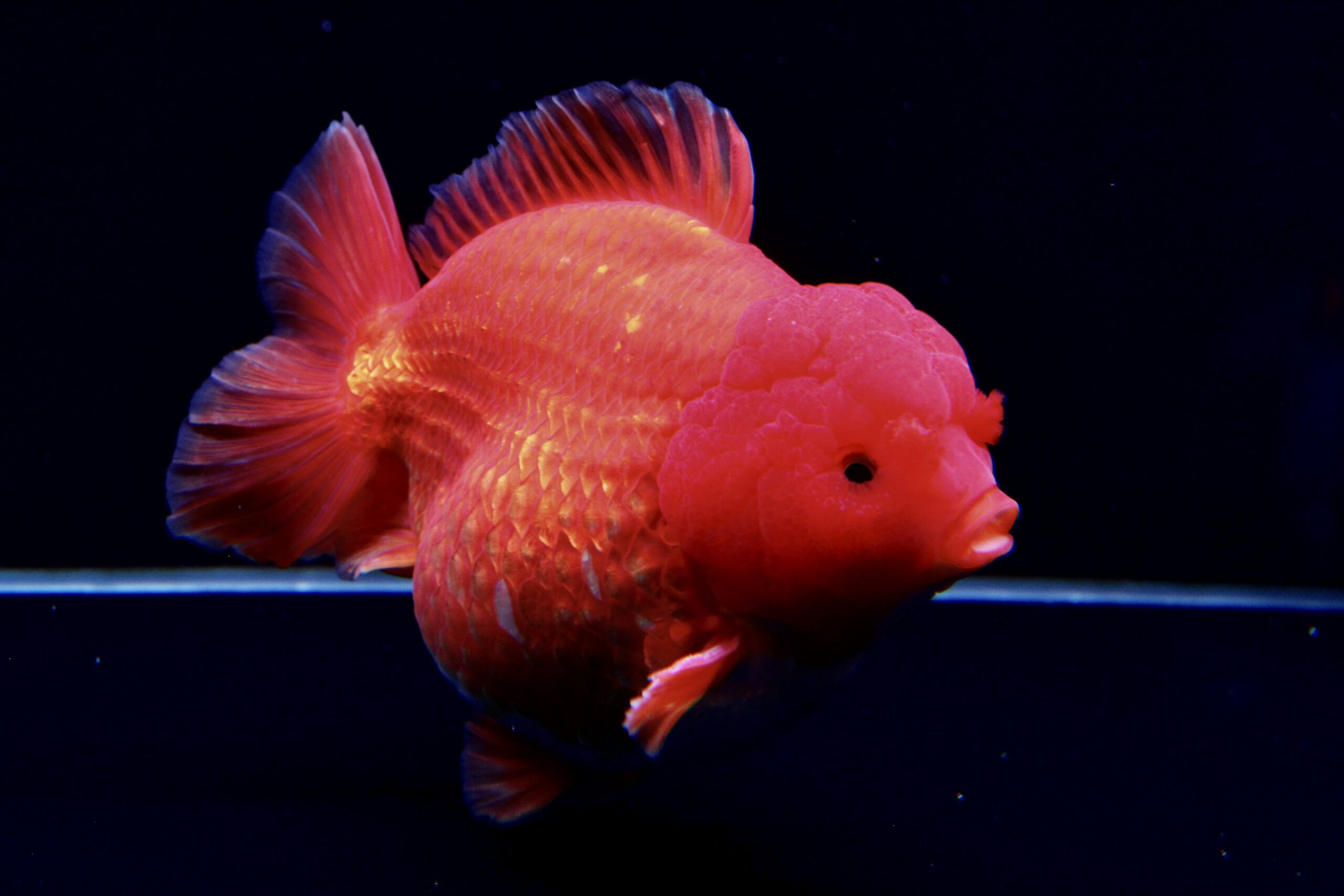
The Shogun Oranda body plan differs from standard Oranda in caudal fin length and body width-to-length ratio. The short, held-upright tail fin and extreme body depth give this variety its characteristic stocky, powerful silhouette.
The Short Tailed Shogun Oranda is a variety bred specifically for its departure from conventional Oranda proportions. Breeders selecting for the Shogun type prioritise: (1) maximum wen volume and coverage, often extending from crown to cheeks; (2) extreme body depth — the ratio of body height to body length should approach or exceed 1:1 in top specimens; (3) a short, stiff caudal fin held erect rather than drooping; and (4) broad, well-spread pectoral fins that contribute to the fish’s imposing frontal profile. This combination produces a fish that looks as if it has been compressed vertically, concentrating all of the Oranda’s characteristic mass into a smaller, denser package.
Visual Varieties
Short Tail Shogun — Red/Orange Featured
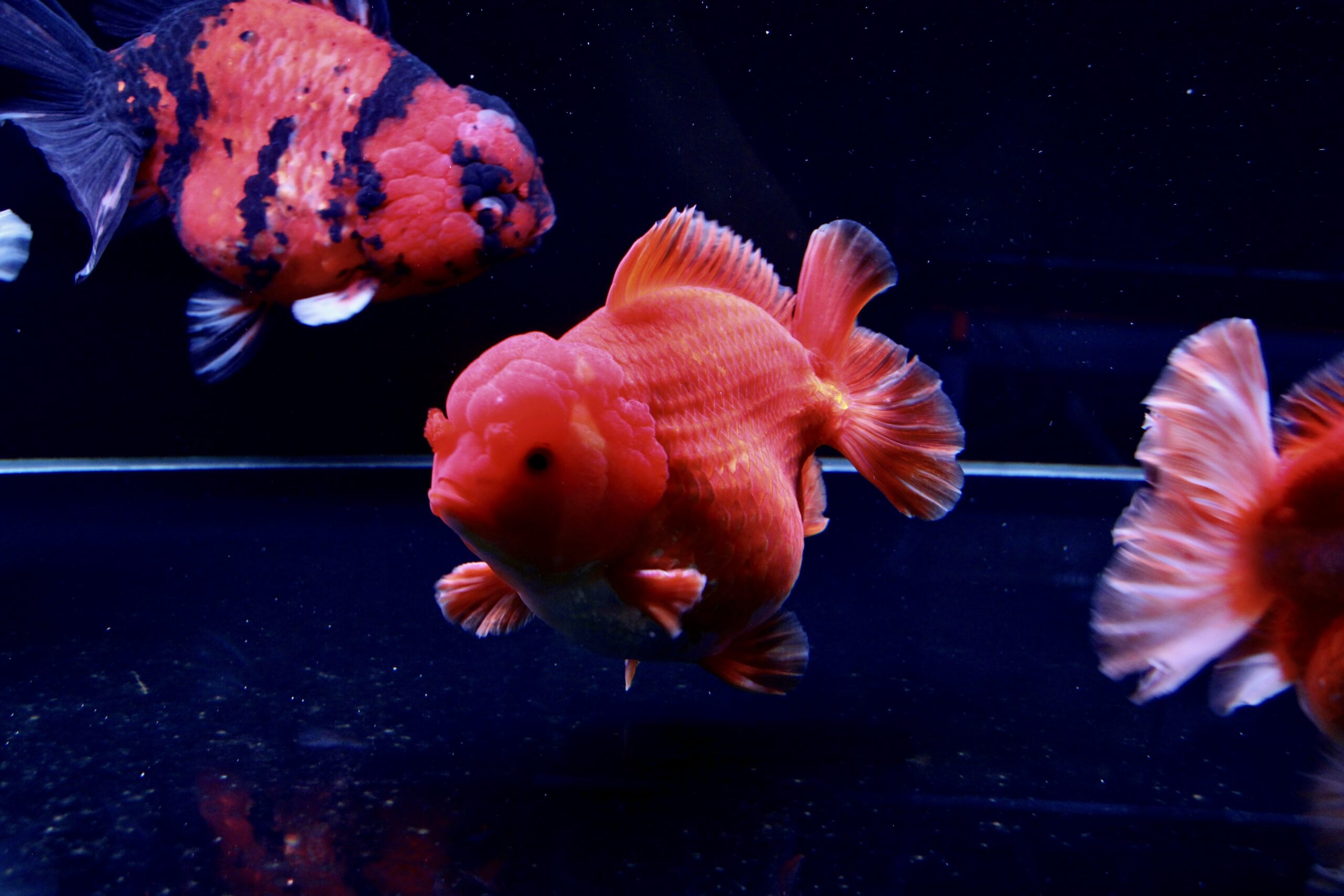
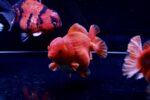
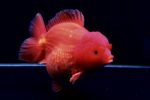
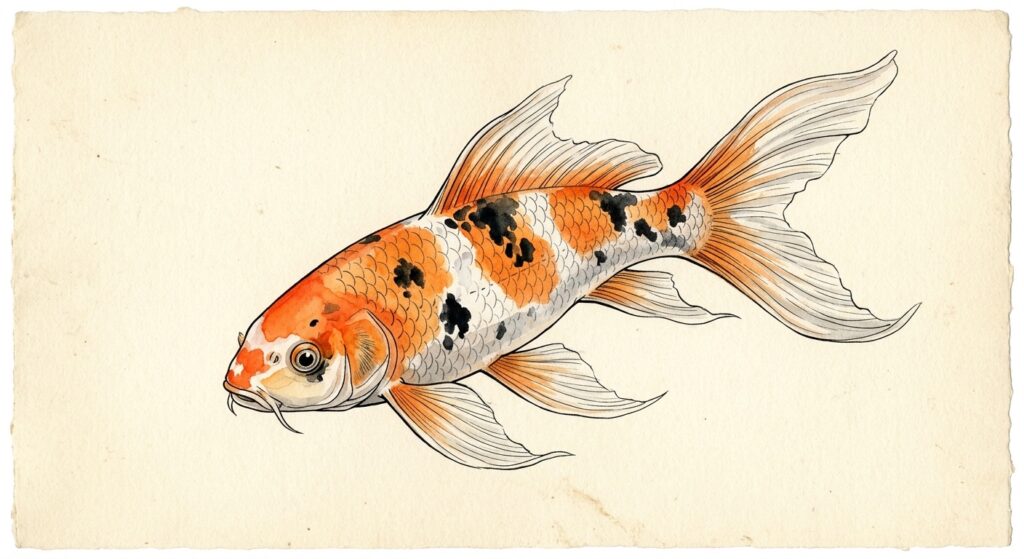
The variety in product #2663: classic Oranda orange-red coloration in a compact, high-depth Shogun body form. The contrast between the large orange wen and the short, upright tail communicates the Shogun’s distinctive visual power. An unusually structured fish that stands out in any mixed fancy goldfish display.
Tri-Color Oranda (Red/Black/White)
Three-tone mosaic with vivid red-orange, jet black, and white zones in an asymmetric pattern unique to each individual. A Grade Thai specimens show sharply defined colour zone boundaries — a hallmark of top-tier tri-color breeding.
Panda Oranda (Black/White)
Stark bicolor black and white pattern with no red or orange pigment. Sharp colour boundary definition distinguishes high-quality specimens. The Shogun body form in panda coloration creates a visually powerful combination.
Rose Tail Oranda (Red/Orange)
Classic orange-red body combined with the multi-lobed ruffled tail mutation. The rose tail adds floral texture to the flowing Oranda fin — a contrasting aesthetic to the Shogun’s compact form.
Red Cap Oranda
Pure white body with vivid red restricted entirely to the wen hood. A universally recognised pattern that pairs elegantly with the Oranda’s structural characteristics across all body form variants.
Calico Oranda
Nacreous (pearlescent) multi-tone pattern combining red, orange, yellow, black, and blue-grey. Colours shift with viewing angle and light source. No two calico specimens are genetically identical.
The Shogun body type can be expressed across all Oranda colour varieties, though in practice most Short Tail Shogun specimens available commercially are in the traditional red-orange or red-and-white coloration. A Shogun in Panda or Tri-Color pattern would represent a compound rarity — two highly selective traits in a single fish. The colour genetics of Shogun-bodied Orandas are identical to those of standard-tail Orandas; the short-tail character is controlled by separate loci and can be combined with any colour genotype through appropriate breeding crosses.
Spot the Difference: Male & Female
Sexing Oranda goldfish is very challenging outside breeding season. The most reliable method is observing breeding tubercles (white dots on gill plates) that males develop in spring when water rises above 18 °C. Females appear slightly rounder when viewed from above, but this is subtle in naturally round-bodied fancy goldfish.
Sexing the Shogun Oranda presents the most challenging identification exercise of all Oranda varieties, because the extreme body depth of the Shogun form means both sexes already carry considerable abdominal volume year-round. The gravid female’s additional egg mass can be difficult to distinguish from the normal deep belly of a well-fed Shogun male. The same sex markers apply as with all Orandas, but the gill plate tubercle observation method is most reliable for this variety — it does not depend on body shape comparison.
| Feature | Male | Female |
|---|---|---|
| Body Profile | Extremely deep but proportionate; the compact body form creates a naturally round appearance in both sexes | Even broader posteriorly when gravid; the egg mass adds to already considerable body depth, creating an almost spherical appearance from the side |
| Overhead View | Roughly symmetrical oval outline — the Shogun’s wide body makes this less diagnostic than in slimmer varieties | Distinct asymmetric bulge to one side when eggs are ripe — eggs push one flank outward noticeably more than the other |
| Breeding Tubercles | White pimple rows on gill covers and pectoral fin rays in spring — the most reliable sex indicator in Shogun-type Oranda due to difficulty reading body shape | Absent; gill covers smooth year-round |
| Vent | Small, concave, or flat | Enlarged, slightly convex, and reddened when eggs are fully ripe |
| Wen Size | Shogun males often develop exceptionally large wens; this is a structural characteristic reinforced by testosterone but not reliable for sex determination | Typically somewhat smaller wen; significant individual variation |
| Swimming Style | During spawning season, actively chases female; the Shogun’s compact body makes it surprisingly nimble | Evasive; seeks open water or shelter to escape persistent male attention |
Water Quality Requirements
6.5–7.5
ideal 7.0
18–24 °C
ideal 20–22 °C
4–12 dGH
moderately soft to hard
4–8 dKH
pH stability buffer
0 ppm
ammonia & nitrite
< 20 ppm
nitrate target
Water quality requirements for the Shogun Oranda are the same as for all Oranda varieties: pH 6.5–7.5, temperature 18–24 °C, KH 4–8 for pH buffering, and zero ammonia and nitrite tolerance. However, the Shogun’s extremely compressed body introduces one specific additional consideration: this variety’s gut compression is even more pronounced than in standard Oranda due to the extreme body depth. This means the Shogun Oranda is more susceptible to buoyancy disorders from suboptimal feeding, and maintaining excellent water quality reduces the background bacterial load that triggers secondary infections in compromised fish.
Shogun Orandas also benefit from slightly higher dissolved oxygen levels than standard varieties, because their compact anatomy means their gill surface area relative to body mass is lower than a proportionally-built fish. Strong surface agitation — from a spray bar, airstone, or powerhead — ensures adequate gas exchange at the water surface.
Tank Requirements & Layout
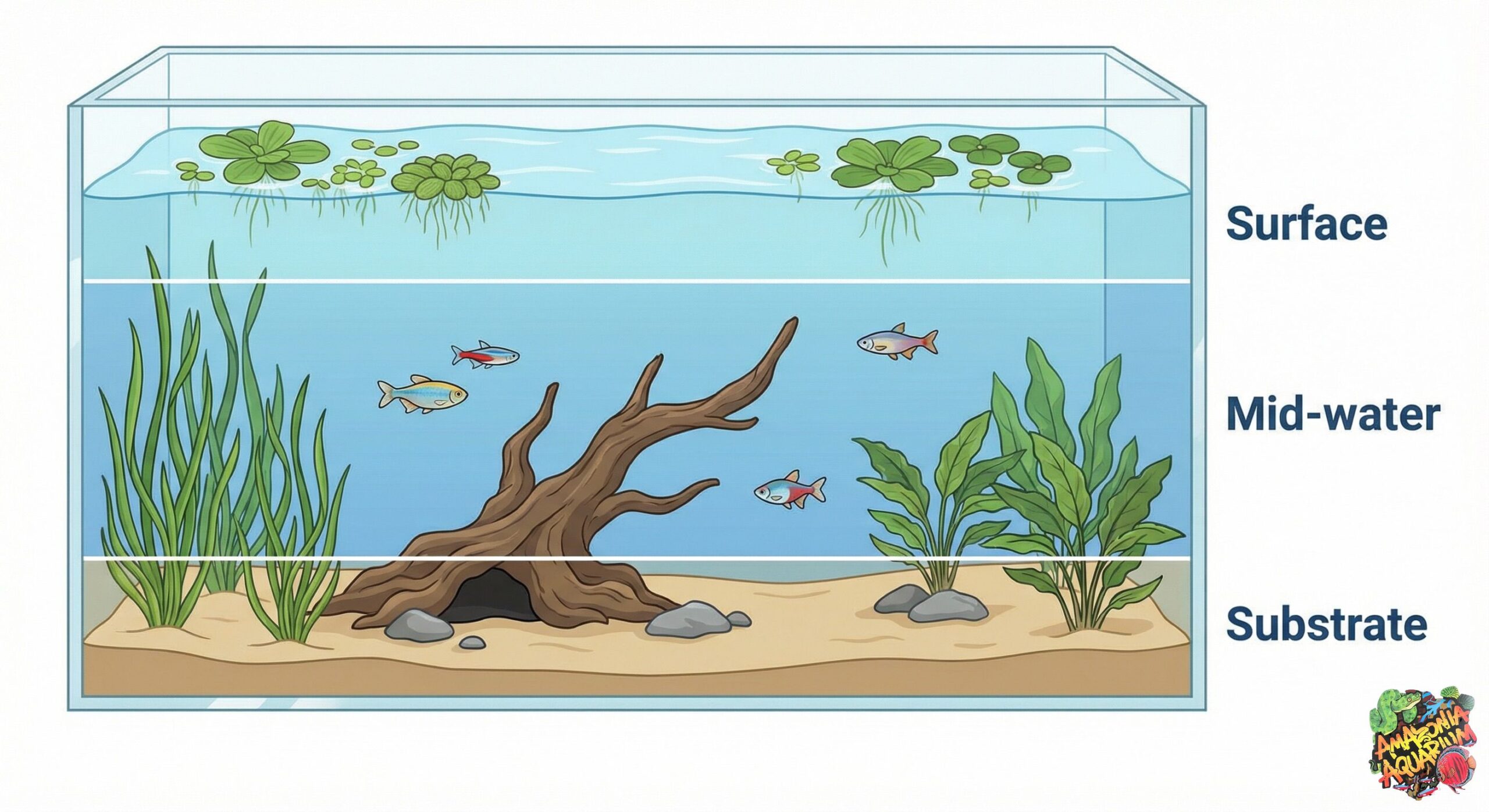
The Shogun Oranda’s compact body makes it a somewhat more practical aquarium fish than long-tailed fancy goldfish in one specific respect: it does not require the same long open swimming corridors to prevent fin damage. The short tail fin is robust and unlikely to catch on decor. However, the tank size requirement remains identical to other large adult Oranda: a minimum of 120 litres per fish for water quality reasons. The Shogun’s compact physical size should not be confused with a reduced water volume requirement — it produces just as much waste as any other large fancy goldfish.
The Shogun’s powerful, muscular swimming action means it can create more water disturbance than its compact size might suggest. Ensure the tank substrate is not so light that the fish’s foraging stirs up constant turbidity. Fine sand or smooth rounded pebbles are ideal — the Shogun actively forages along the substrate, using its broadly rounded snout to sift through the substrate for food particles.
Minimum 120 L per fish. The Shogun’s compact form means a slightly wider, lower tank works well — a 90 cm wide tank is more suitable than a tall narrow column.
Canister filter rated 4–6x tank volume/hour. The Shogun is active and can handle slightly stronger flow than rose-tail varieties — use a spray bar for even distribution.
Recommended for Sydney winters; set to 20 °C. The Shogun’s dense body mass gives it slightly more thermal inertia than slim fish, but it still needs protection from cold snaps.
Moderate LED. The Shogun’s dramatic wen mass casts interesting shadows under directional lighting — a consideration for display presentation.
Fine sand or smooth rounded pebbles. The Shogun forages actively — fine substrate allows natural rooting behaviour without scratching the snout.
Strong airstone or surface agitation from spray bar. The Shogun’s compact gill surface area relative to body mass means high dissolved oxygen is even more important than with standard Oranda.
Feeding Schedule & Diet
Feeding the Shogun Oranda correctly is arguably the single most important husbandry decision for this variety. The extreme body depth compresses the intestinal tract even more than in standard Oranda, meaning dietary errors manifest as buoyancy and digestive problems with greater speed and severity. The Shogun should never be fed floating pellets or flake food under any circumstances. A gel-food diet is often recommended by specialist Shogun keepers as the safest option — gel food sinks immediately, is soft enough to avoid air inclusion during feeding, and can be formulated with the vegetable-to-protein ratio that supports gut motility in extreme body-depth fish.
| Food Type | Frequency | Notes |
|---|---|---|
| Gel food (Shogun Oranda priority) | Daily (preferred primary food) | Gel food is the safest format for extreme body-depth Oranda. Mix vegetables, protein source, and gelatin. Sinks immediately, no air gulping. |
| Sinking fancy goldfish pellets | Daily (if gel food not available) | Must be fully sinking pellets. Feed very small portions — the Shogun can overeat if pellets are offered freely due to its high food motivation. |
| Blanched peas (skin removed) | 3x per week | Critical for Shogun Oranda gut health. The extreme body compression means constipation occurs more readily than in other goldfish. Peas are the primary preventive measure. |
| Blanched spinach or zucchini | 2x per week | Dietary fibre and vitamins. The Shogun’s vigorous foraging behaviour means it actively seeks out and shreds vegetable pieces. |
| Frozen daphnia | 2x per week | Natural gut cleanser. The fibrous exoskeleton of daphnia acts as roughage and supports digestive motility in compressed-body fish. |
| Frozen bloodworm | 1x per week | Protein conditioning. Excellent for maintaining the wen tissue health that makes this variety exceptional. |
Breeding in Captivity
Weeks -4 to -2
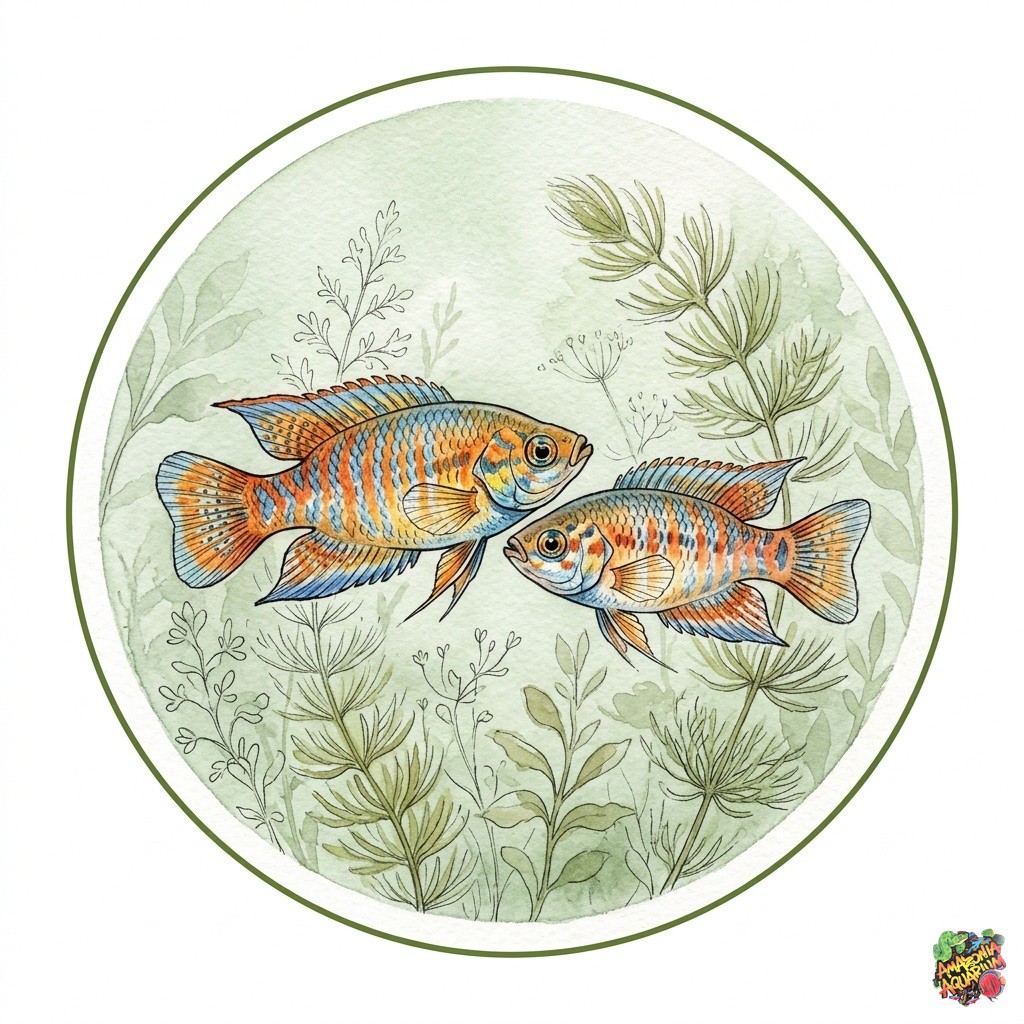
Winter Cooling
Gradual reduction to 12–15 °C over 4 weeks; reduce feeding during cooling
Weeks -2 to -1
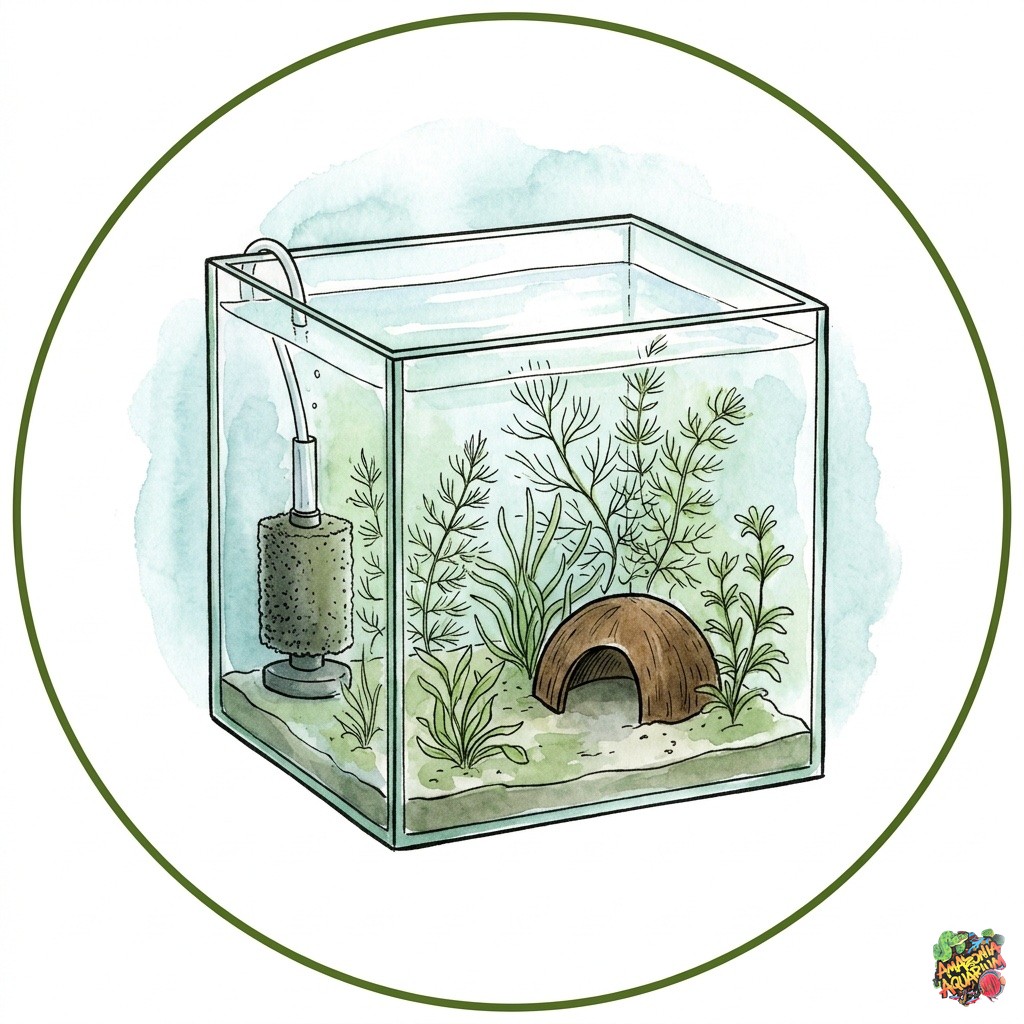
Conditioning
Warm to 20 °C; intensive live food feeding; separate sexes
Day 0
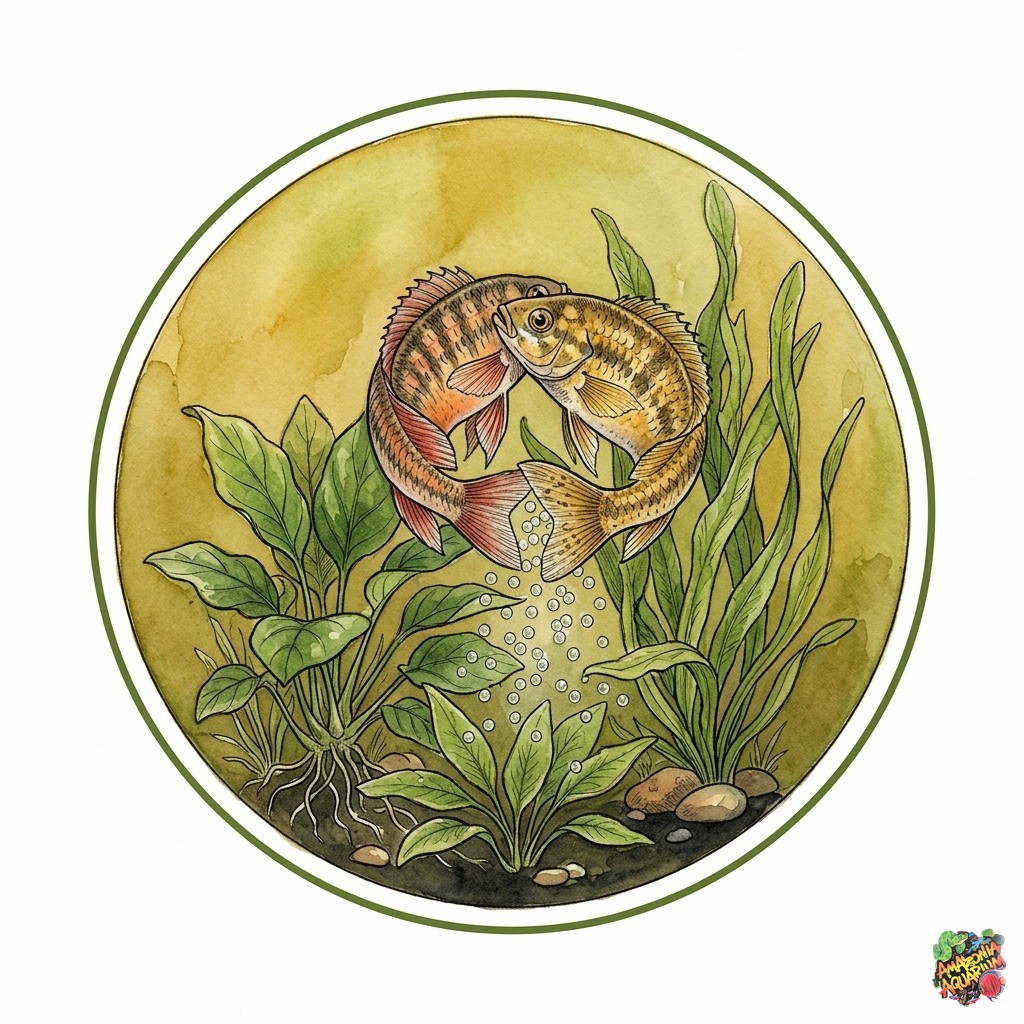
Spawning
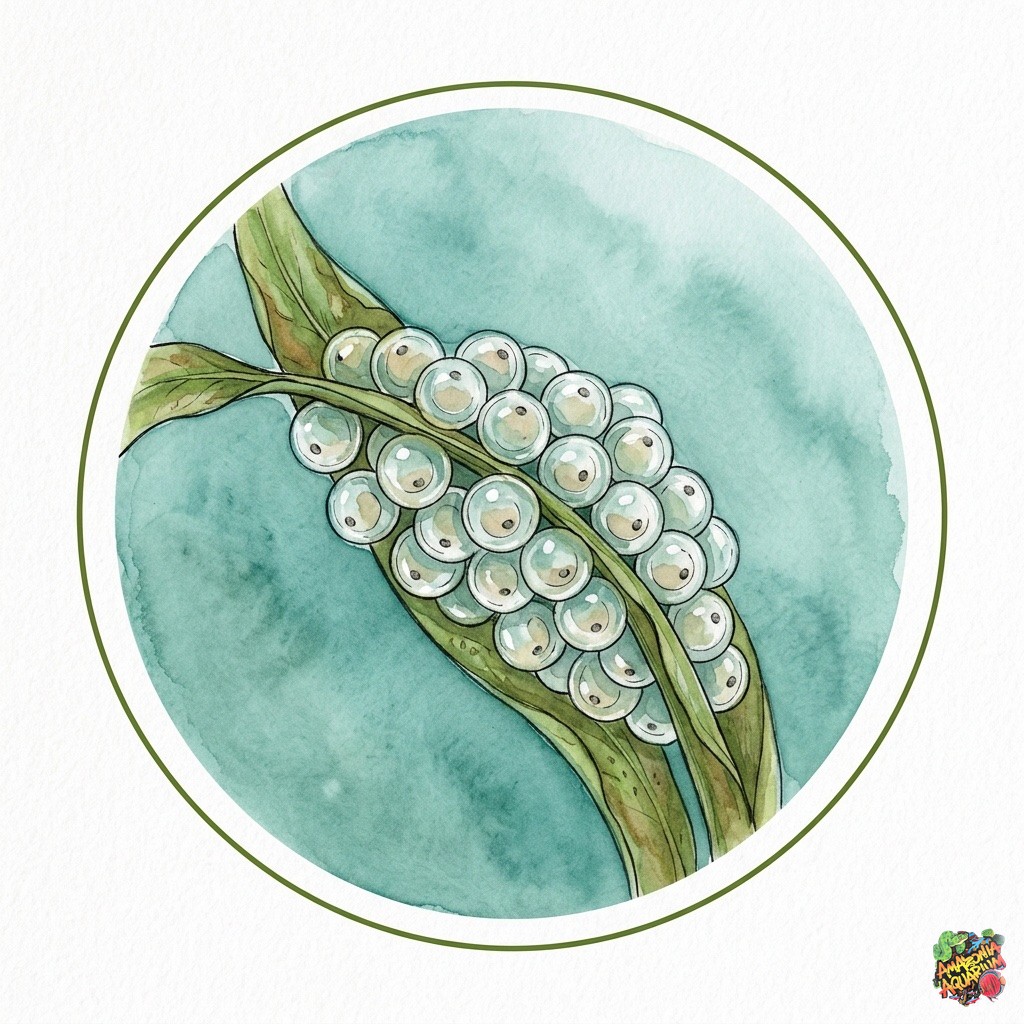
Transfer pair at dusk; spawning begins at first light; 500–2000 adhesive eggs
Days 1–3
Incubation
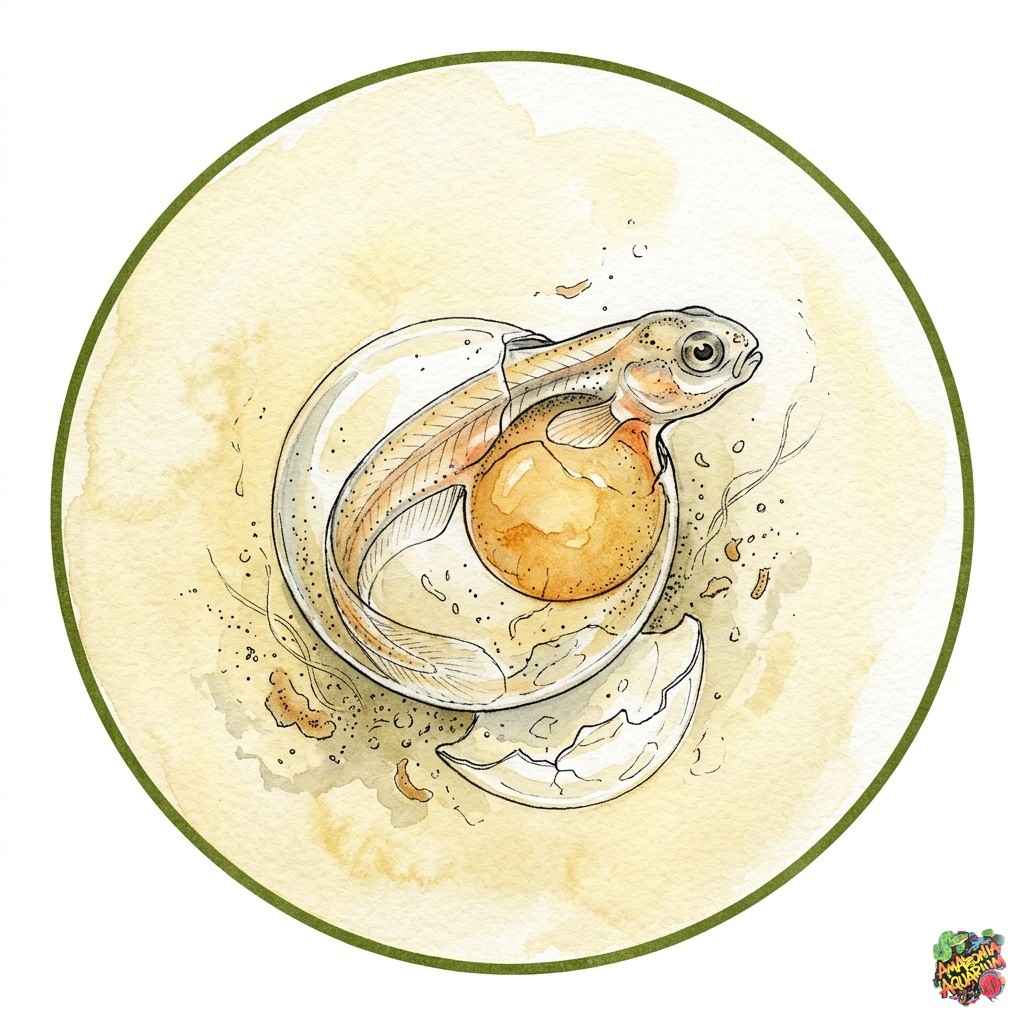
Remove parents immediately; eggs hatch 48–72 hrs at 20 °C
Days 3–7
Free Swimming
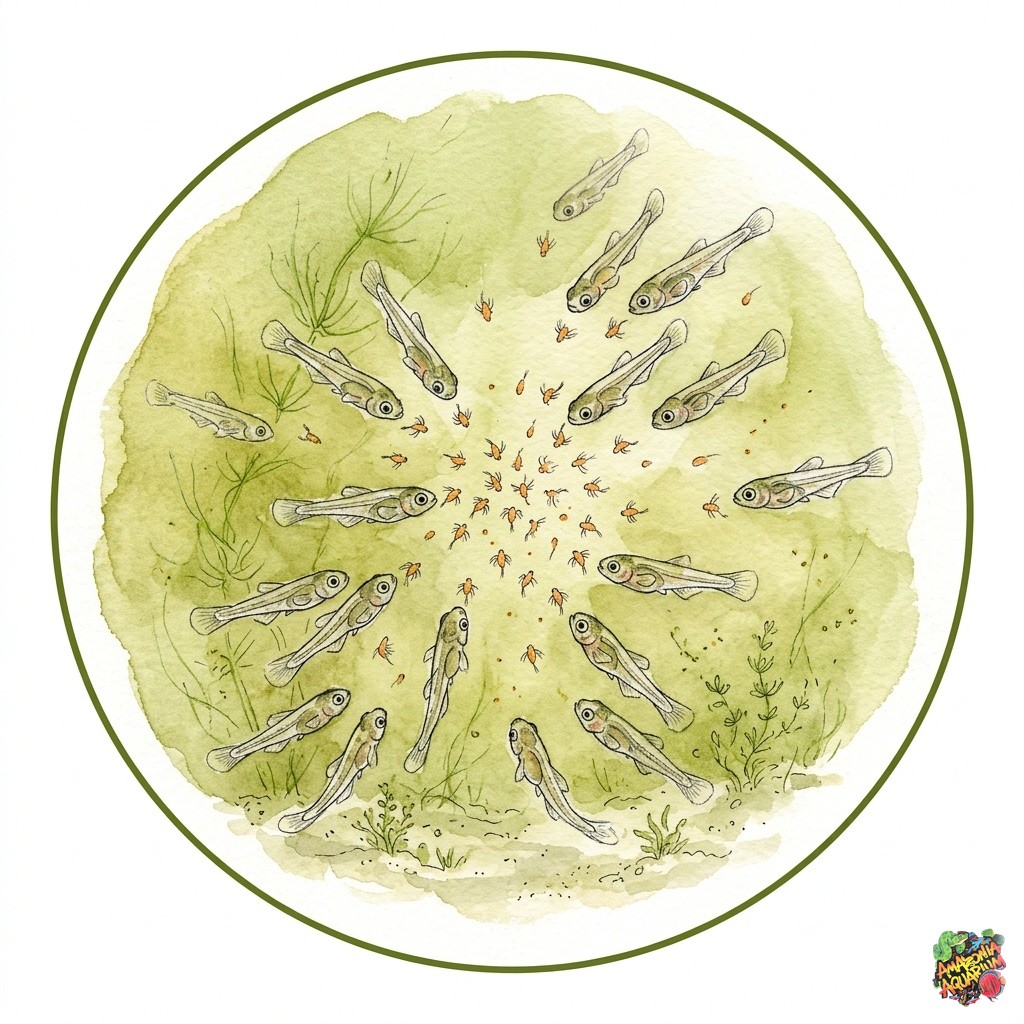
Feed infusoria progressing to BBS at day 7
Month 4+
Form Selection
Select for extreme body depth, short tail, and wen development at 4 months
Breeding the Shogun Form
The short-tail and extreme-depth characters of the Shogun Oranda are selectively bred traits controlled by multiple recessive and semi-dominant loci. Crossing two Shogun Orandas does not guarantee that all offspring will express the Shogun form — some will revert to standard Oranda proportions. Selecting the most extreme-depth, shortest-tail individuals from each generation intensifies the Shogun characters over successive generations. A proportion of offspring from Shogun-type parents will also show intermediate forms — useful as display fish but not ideal for maintaining the breeding line’s intensity.
Choosing Tank Mates
The Shogun Oranda is a strong, compact swimmer — more manoeuvrable than its rounded form might suggest. This means it can actually hold its own more effectively at feeding time than long-tailed Oranda varieties, and can coexist with slightly more active fancy goldfish companions. However, the same fundamental rule applies: avoid single-tailed goldfish that will outcompete it, and avoid tropical species that require incompatible water temperatures.
| Species | Compatibility Notes | |
|---|---|---|
| Other Shogun Oranda | Ideal — same body form, similar activity level and swimming speed. A group of Shogun Orandas creates a visually powerful display. | |
| Ranchu Goldfish | Excellent pairing — both are compact, rounded, wen-bearing fancy goldfish. No dorsal fin on Ranchu contrasts visually with the Shogun’s erect dorsal. | |
| Black Moor Goldfish | Fellow deep-bodied fancy variety; compatible care requirements. The telescoping eye adds visual variety without competition issues. | |
| Weather Loach | Cold-water bottom-dweller; peaceful and non-competitive with goldfish of any form. | |
| Rose Tail or Long-Tail Oranda (with care) | Possible, but the Shogun’s better manoeuvrability means it may outcompete long-tail varieties at feeding time. Monitor feeding closely to ensure all fish eat equally. | |
| Common / Comet Goldfish | Far too fast at feeding; will outcompete any fancy goldfish including the Shogun. | |
| Tropical Species | Temperature incompatibility — harmful to both parties at any intermediate temperature compromise. |
Sydney Keeper Tips
Water Chemistry in Sydney
Sydney tap water (pH 7.0–7.6, GH 2–5 dGH) is compatible with Shogun Oranda requirements. The moderately low hardness is fine for goldfish generally. Add a chloramine-specific dechlorinator on every water change. A small addition of aquarium salt (1 tsp per 10 L) supports the mucus coat and can help prevent wen bacterial infections — particularly relevant for the Shogun’s large wen surface area.
Seasonal Management
Sydney winters (June–August) can drop to 14–16 °C indoors in unheated rooms. A heater set to 18–20 °C provides the temperature stability that Shogun Oranda require. Unlike slim-bodied goldfish that tolerate temperatures down to 10 °C, the fancy Oranda’s wen is a bacterial infection risk below 15 °C. Sydney summers can push tanks above 26–28 °C in heatwaves — evaporative fan cooling (a clip-on fan aimed at the water surface) provides 2–3 °C reduction without the complexity or cost of a chiller.
Displaying the Shogun Form
- The Shogun Oranda’s visual impact is best appreciated from a frontal view. Position the tank so the main viewing angle is from the front or slight side — the body depth and massive wen read most powerfully in this orientation.
- A clean dark substrate and minimal background decor keeps visual focus on the fish’s structural form.
- Shogun Orandas are best kept in small groups of 2–4 of the same type — a “Shogun display tank” of several compact-form goldfish creates an impact unlike any conventional aquascape.
Frequently Asked Questions
What makes the Shogun Oranda different from a standard Oranda?
Is the Shogun more prone to swim bladder problems?
Why is the wen so much larger on Shogun Oranda?
Can the Shogun Oranda swim effectively?
How do I keep the wen healthy?
Acclimation Guide
Health & Disease
| Condition | Symptoms | Cause | Treatment |
|---|---|---|---|
| Swim Bladder Disorder (elevated risk) | Floating head-up, tilting, unable to descend to substrate | Dietary (floating food, overfeeding, constipation) — elevated risk in extreme-depth Shogun body form | Fast 24–48 hrs; switch to gel food and peas only for 1 week; improve dissolved oxygen; vet if persistent |
| Wen Bacterial Infection | Redness, white discharge, erosion on wen | Poor water quality; temperature fluctuation; physical injury | 30% water change; broad-spectrum antibiotic; raise temperature to 22 °C |
| Wen Overgrowth (vision impairment) | Fish misses food when feeding; wen tissue covers eyes; unusual swimming | Genetic tendency in heavily selected Shogun lines; age-related wen expansion | Aquatic veterinarian wen trimming procedure — minor, effective, and low-risk when performed professionally |
| Ich | White spots; flashing; increased breathing rate | Ichthyophthirius multifiliis | Raise temperature to 26 °C; ich-specific medication; full treatment cycle required |
| Flukes | Excessive mucus; scratching; gill flaring | Dactylogyrus or Gyrodactylus — common in imported stock | Praziquantel; repeat at 7 days |
Quick Reference — Short Tailed Shogun Oranda
| Scientific Name | Carassius auratus |
| Variety | Oranda — Short Tailed Shogun |
| Adult Size | 16–25 cm body; compact total span |
| Lifespan | 10–15 years |
| pH | 6.5–7.5 (ideal 7.0) |
| Temperature | 18–24 °C (ideal 20–22 °C) |
| Hardness | 4–12 dGH; KH 4–8 dKH |
| Min Tank Size | 120 L per fish |
| Diet | Gel food strongly preferred; sinking pellets, blanched peas 3x/week, occasional frozen daphnia |
| Care Level | Intermediate (dietary discipline critical) |
| Temperament | Peaceful, active, more manoeuvrable than long-tail varieties |
| Tank Position | All levels — active mid-water and substrate forager |
| Breeding | Egg scatterer — seasonal temperature cycle required |
| Product ID | 2663 |
Related Products



Reviews
Clear filtersThere are no reviews yet.