Care Tips
Freshwater Fish Care Tips
Keeping freshwater fish is one of the most rewarding hobbies around — but healthy fish don’t happen by accident. A little knowledge and a consistent routine go a long way. Below are the care fundamentals we share with every customer at Amazonia, whether you’re setting up your first tank or your tenth.
Acclimation: The First 30 Minutes Matter
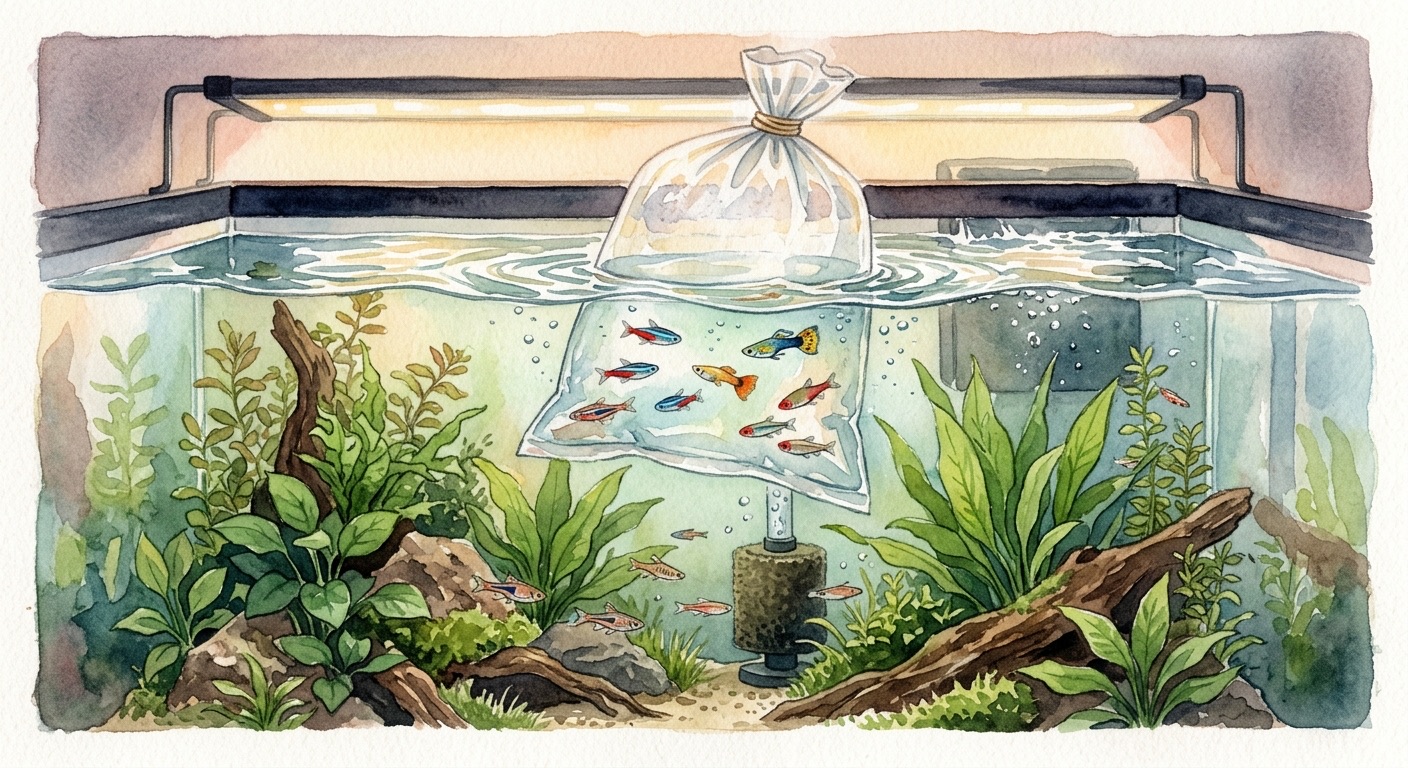
Fish are sensitive to sudden changes in temperature and water chemistry. Rushing the introduction is one of the most common mistakes we see, and it’s completely avoidable.
- Float the sealed bag in your tank for 15–20 minutes. This equalises the temperature gradually.
- Open the bag and add small amounts of your tank water — about half a cup every 5 minutes — for another 15–20 minutes.
- Net the fish out and release them into the tank. Never pour the bag water into your tank. The water from transport can contain ammonia, stress hormones, and potentially pathogens.
For shrimp and sensitive species, consider drip acclimation — it’s slower but much gentler. Ask us in-store and we’ll walk you through it.
Feeding: Less Is Almost Always More
Overfeeding is the number one cause of water quality problems in home aquariums. Fish have tiny stomachs, and uneaten food breaks down into ammonia fast.
- Feed once or twice daily, only as much as your fish can finish in 2–3 minutes.
- Vary the diet. A mix of quality flakes or pellets, frozen foods (bloodworms, brine shrimp, daphnia), and occasional blanched vegetables keeps fish healthy and brings out their best colour.
- Skip feeding one day a week. It won’t harm your fish — it helps their digestion.
- Match the food to the species. Bottom feeders need sinking wafers, surface feeders prefer floating pellets.
Tank Maintenance: Build a Weekly Routine
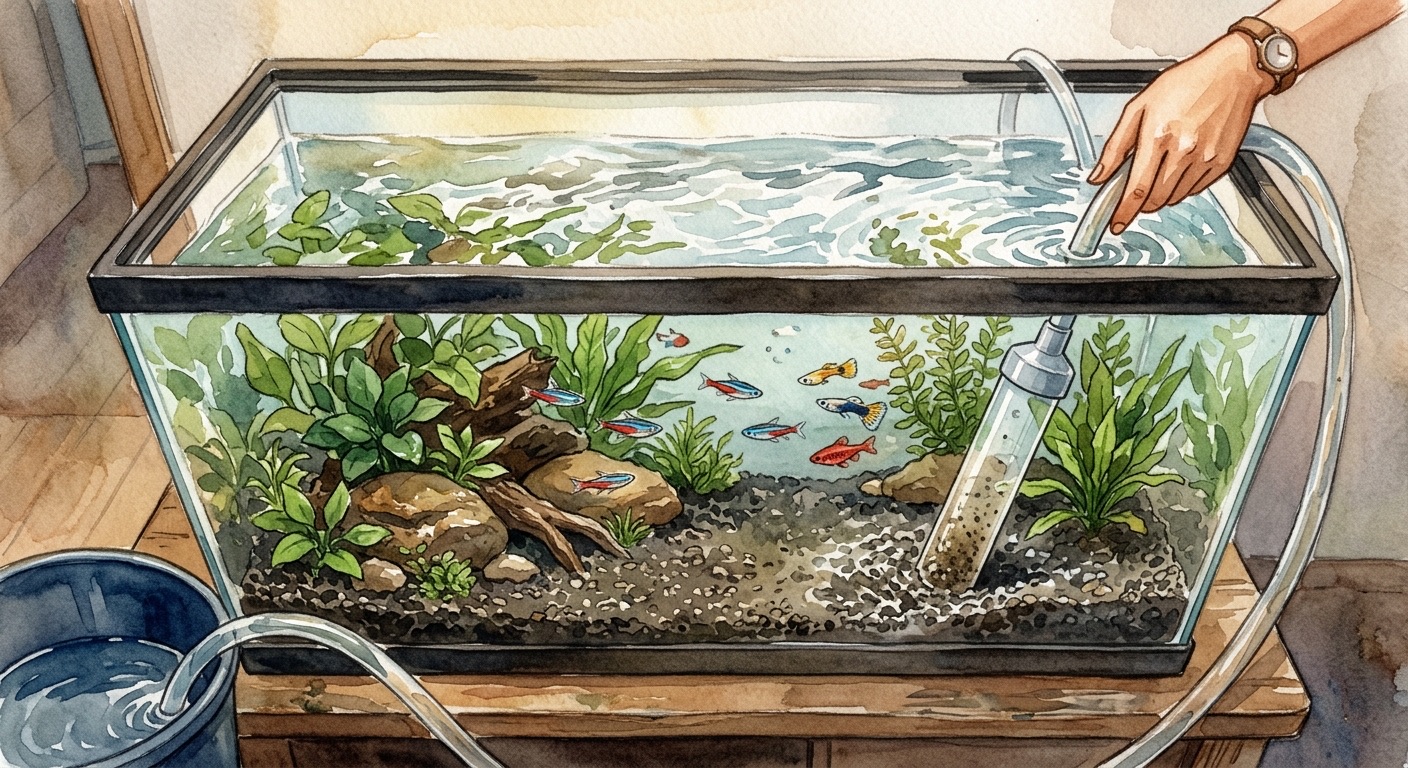
Consistency beats intensity. A simple weekly routine prevents most problems before they start.
- Water changes: Replace 20–30% of your tank water weekly with dechlorinated water at a similar temperature.
- Gravel vacuum: Use a siphon to clean the substrate during water changes.
- Filter maintenance: Rinse filter media in old tank water (not tap water) once a month. Never replace all filter media at once.
- Glass cleaning: An algae scraper or magnetic cleaner once a week keeps things looking sharp.
Water Testing: Know Your Numbers
You can’t fix what you can’t measure. Test your water weekly using a liquid test kit (we recommend the API Master Test Kit).
| Parameter | Ideal Range | Action If Off |
|---|---|---|
| pH | 6.5 – 7.5 | Investigate cause; don’t chase a number with chemicals |
| Ammonia (NH₃) | 0 ppm | Immediate water change; check for dead fish, overfeeding |
| Nitrite (NO₂) | 0 ppm | Water change; cycle may not be complete |
| Nitrate (NO₃) | Below 40 ppm | Increase water change frequency; add live plants |
Want to understand the science? Read our water chemistry guide.
Common Health Issues
Most fish diseases are triggered by stress and poor water quality. Fix the water first — medication is a last resort.
- White spot (ich): Tiny white dots on fins and body. Raise temperature to 28–30°C gradually and treat with a white spot remedy.
- Fin rot: Ragged, discoloured fin edges. Usually caused by poor water quality. Clean water often resolves mild cases.
- Bloating / dropsy: Swollen belly, raised scales. Isolate the fish. Epsom salt baths can help in early stages.
When in doubt, bring a water sample to the shop. We’ll test it for free and help you work out the next step.
Seasonal Tips for Sydney Fish Keepers
- Winter (June–August): Double-check your heater before cold snaps hit. A backup heater for tanks over 100L is cheap insurance.
- Summer (December–February): Tank temperatures can climb past 30°C during heatwaves. Use a clip-on fan, float frozen water bottles, or run the air conditioner. Reduce feeding slightly.
- Year-round: Avoid placing tanks in direct sunlight. It spikes temperatures and fuels algae growth.
Got questions? Visit us at Amazonia, 8 Lakeside Rd, Eastwood or email amazonia2049@gmail.com — we’re always happy to help.