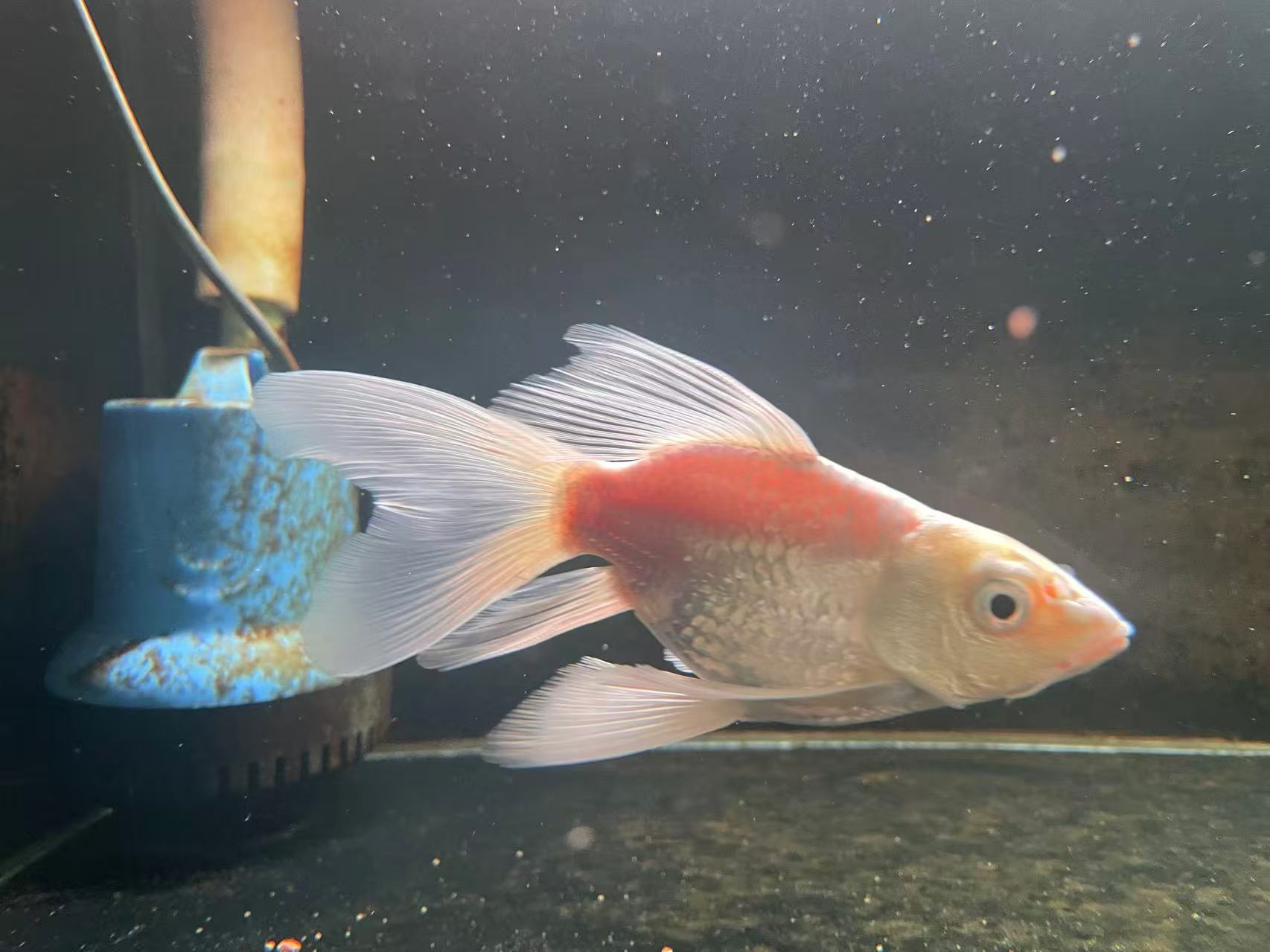
🪨 Species at a Glance
| Scientific Name | Cyprinus rubrofuscus (long-finned Butterfly variant) |
| Common Names | Butterfly Koi, Dragon Carp, Longfin Koi, Onagaoi |
| Family | Cyprinidae (carps and minnows) |
| Order | Cypriniformes |
| Origin Lineage | Hybrid — Japanese Nishikigoi x Indonesian long-fin river carp (1980s, United States) |
| Supplied Size | Juvenile, approximately 8-12 cm |
| Adult Size | 60-80 cm body, plus 15-25 cm fin trail on mature specimens |
| Lifespan | 25-40 years in well-maintained ponds |
| pH Range | 7.0-8.5 (alkaline-tolerant) |
| Temperature | 4-28 °C (pond-hardy; survives Sydney winters outdoors) |
| Hardness (dGH) | 8-20 |
| Diet | Omnivore — floating pellets, shrimp, vegetables, aquatic plants |
| Minimum Pond Volume | 2,000 L per adult fish (3,000 L+ strongly preferred) |
| Grow-Out Tank | 200 L+ temporarily acceptable for juveniles under 20 cm |
| Care Level | Beginner-friendly with adequate space |
| Temperament | Peaceful, social, slow-moving; enjoys group company |
| Nishikigoi Show Eligible | No — long fins disqualify under traditional Japanese judging standards |
| AU Import Status | Declared noxious / invasive — never release to waterways |
| Price Point | $5.80 AUD (bargain juvenile grade) |
Meet the Species
The scientific name Cyprinus rubrofuscus places the Butterfly Koi firmly in the common carp family, alongside every other koi variety in the hobby. The genus Cyprinus is the classical Latin name for the carp, derived from the Greek kyprinos — itself likely a reference to the island of Cyprus, where the fish was sacred to the goddess Aphrodite. The species epithet rubrofuscus, meaning ‘red-dark’ or ‘reddish-brown’, refers to the typical wild coloration of Asian carp populations before humans began selecting for the reds, whites, blacks, yellows, and metallic sheens that modern koi display. What makes the Butterfly Koi a variant rather than a distinct species is a single, dramatic morphological trait — extraordinarily long, flowing, unpaired-and-paired fin extensions that give the fish its common Western names: Butterfly Koi, Dragon Carp, and Longfin Koi. In Japanese the fish is sometimes called Onagaoi, literally ‘long-tail carp’, or more poetically Hirenaga-goi, ‘long-finned koi’.
The lineage story is a fascinating twentieth-century crossroads between Japanese tradition and Western experimentation. Standard Nishikigoi — ‘brocaded carp’ — are the product of roughly two centuries of deliberate breeding in Japan, beginning in the early 1800s in the rice-farming villages of the Niigata region, where farmers noticed colour mutations appearing in the plain black Magoi carp they kept for food in their mountain irrigation ponds. By selectively breeding red-and-white, white-and-black, and tri-coloured individuals, Niigata farmers produced the foundation varieties — Kohaku, Sanke, Showa — that today define classical Nishikigoi. These fish were, and remain, stocky, muscular, short-finned creatures designed to be viewed from above in shallow mud ponds, with colour patterns evaluated against strict Japanese aesthetic criteria that emphasise balance, clean edges, and the concept of shibui (refined understatement).
The Butterfly Koi story begins in the 1970s and 1980s, not in Japan, but in the United States. The precise origin is disputed — as it often is for fish that arose from aquarium-trade experimentation — but the most widely accepted account credits Wyatt LeFever at Blue Ridge Fish Hatchery in North Carolina. According to the standard version of the story, LeFever obtained long-finned specimens of a freshwater carp from Indonesia in the early 1980s. These Indonesian carp were not koi in the Japanese sense; they were a separate long-finned population of Cyprinus carpio/rubrofuscus that had developed or been selectively bred in Indonesian rice paddies and ornamental ponds. LeFever crossed these long-finned Indonesian carp with standard Japanese-lineage Nishikigoi to combine the Japanese colour varieties with the Indonesian finnage. The resulting hybrids — initially marketed as ‘Butterfly Koi’ because the long pectoral fins fluttering in the water resembled butterfly wings — were an immediate commercial hit in the American pond-and-water-garden market, which was booming in the 1980s and 1990s.
From that initial cross, generations of back-crossing with the full spectrum of Nishikigoi varieties have produced Butterfly Koi in every major koi colour form — Butterfly Kohaku (red-and-white), Butterfly Sanke (red-white-black), Butterfly Showa (black-red-white), Butterfly Chagoi (brown-tan), Butterfly Platinum, Butterfly Ogon (metallic), Butterfly Calico, and countless specialty morphs. Genetically, a Butterfly Koi today is overwhelmingly a koi — the Indonesian long-fin trait is a single heritable feature grafted onto an otherwise Japanese bloodline. This is part of why purists find them controversial. To a traditional Nishikigoi breeder in Niigata, a Butterfly Koi is not a new variety of koi at all, any more than a long-finned betta is a new species of fish; it is simply a koi with a congenital fin mutation that, in the breeder’s view, destroys the carefully cultivated body proportions that define classical Nishikigoi form.
The Zen Nippon Airinkai (ZNA) and the Shinkokai — the two major Japanese koi-judging associations — do not recognise Butterfly Koi as show-eligible Nishikigoi. At an All-Japan show, a Butterfly Koi cannot compete in any traditional class. Outside Japan, most Western koi-keeping associations follow the same standard, though a growing number of American and European water-garden societies have created separate Butterfly categories for pond-garden shows, where the fish are judged on their own merits — fin length, fin symmetry, colour vibrancy, and overall graceful movement — rather than against the classical Nishikigoi body standard.
This creates a genuine philosophical split in the hobby, and we think it is worth addressing honestly for any customer buying their first Butterfly Koi. On one side, the Nishikigoi purist argues that a koi is, by tradition and definition, a short-finned Japanese pond fish, and that the Butterfly represents a commercial dilution of a centuries-old art form. On the other side, the Butterfly enthusiast argues that art evolves, that Western water gardens are a legitimate aesthetic tradition in their own right, that the sheer visual drama of a Butterfly Koi in motion rewards a side-view appreciation that classical Nishikigoi simply cannot match, and that a healthy fish with clear colour and graceful fins is beautiful regardless of what judging panels say. Both positions have merit, and at Amazonia we are content to let our customers choose their own side of the argument. What we will not do is pretend the debate does not exist — because the moment you start reading Japanese-language koi literature or international koi forums, you will encounter it, and you deserve to have the context.
One footnote on naming: you may occasionally see Butterfly Koi referred to as ‘Dragon Fish’ or ‘Dragon Carp’. This is the Western market embracing the association between the fish’s long, flowing finnage and the serpentine, whiskered dragons of East Asian mythology. In Chinese tradition, the carp is already a dragon-adjacent animal — the myth of the carp leaping over the Dragon Gate at Longmen on the Yellow River, transforming into a dragon upon crossing, is one of the foundational metaphors of Chinese folklore, synonymous with academic and career achievement. A Butterfly Koi, with its trailing fins, looks rather more literally like that mythological dragon-fish than a stocky standard koi does. Western pond keepers who name their fish ‘Dragon’ are participating, perhaps unknowingly, in an older mythological lineage than the 1980s North Carolina hybrid origin suggests.
Spot the Difference: Male & Female
Sexing Butterfly Koi is one of the more difficult tasks in the koi-keeping hobby because the species does not develop the obvious secondary sexual characteristics that many popular aquarium fish show. For the first two to three years of the fish’s life — essentially the entire juvenile and early adult period — sex is effectively indistinguishable from external inspection. Even professional Japanese koi breeders generally do not reliably sex fish until they are four years old and fifty centimetres or more in body length. For pond keepers, the practical guidance is to simply stock a group of six to ten fish and allow sex ratios to sort themselves out naturally; in any group of that size, you will almost certainly end up with at least a couple of each sex.
The clearest single diagnostic in mature fish is the vent. When handled gently and inspected, a female’s vent is noticeably larger, more rounded, and often slightly protruding, particularly in spring when she is developing eggs. The male’s vent is smaller, flat, and has a characteristic concave slit appearance. A second reliable indicator, specific to the spring spawning season, is the presence of breeding tubercles on the male — tiny white pimples along the gill covers and the leading edges of the pectoral fins, which feel like fine sandpaper when the fish is touched. These tubercles appear in the weeks leading up to spawning and fade afterwards. Females never develop them.
Body shape becomes increasingly useful as the fish matures. By age four, adult females typically carry more body depth behind the pectoral fins — a noticeable belly bulge visible even when the fish is not actively gravid. Males stay comparatively slender and torpedo-shaped. In the Butterfly Koi specifically, the males often (but not always) develop slightly longer and more pointed fin extensions than females, though this is a probabilistic trend rather than a reliable sexing rule.
Behaviourally, the most obvious clue is spawning itself. In spring — typically October through December in Sydney, following a rise in water temperature above about 18°C — mature males will actively chase females around the pond, nudging the female’s flanks and driving her into vegetation or spawning brushes. This can be remarkably physical; a pursued female may break the water’s surface, rub against pond walls, and may even suffer minor scale loss from the chase. Several males will typically pursue a single female simultaneously. Females release eggs in response to this crowding, and males release milt to fertilise them externally. If you see this behaviour in your pond, you have definitively confirmed both sexes.
| Feature | Male | Female |
|---|---|---|
| Body Shape (Adult) | Slimmer, more streamlined, torpedo-like profile | Rounder, deeper-bellied, especially in spawning condition |
| Size (Adult) | Typically 55-70 cm | Typically 65-80 cm — generally larger at peak |
| Fin Length | Often proportionally longer fins, especially pectoral trails | Fins slightly shorter and less flamboyant on average |
| Pectoral Fin Shape | More pointed tips, stiffer leading edge | More rounded tips, softer flowing appearance |
| Vent (Cloaca) Appearance | Small, flat, concave slit | Larger, rounded, protruding especially pre-spawn |
| Breeding Tubercles | White pinhead bumps on gill plates and pectorals during spring | Absent — smooth gill plates year-round |
| Spawning Behaviour | Active pursuer; 2-3 males often chase one female | Passive; releases eggs when crowded by males |
| Age of Sexual Maturity | 3-4 years | 4-5 years |
Visual Varieties
🔴 Butterfly Kohaku (red and white)
The classic red-on-white pattern that defines the foundational Nishikigoi variety, rendered with trailing ribbon-like dorsal and tail fins. Look for a pure, snow-white base with crisp, deeply-saturated red (hi) patches. The long fins typically carry the pattern forward — a red-capped head fin is especially prized.
🎴 Butterfly Sanke (three-colour)
White base with red and black markings. In a Butterfly Sanke, the trailing fins often display dramatic black edge lines or spot patterns (sumi) that emphasise the fin’s length by running lengthwise along the rays. A well-balanced Sanke shows all three colours distinctly without muddying.
▫ Butterfly Showa (black-based tri-colour)
Predominantly black with red and white accents, the most dramatic of the classical tri-colours. Butterfly Showa are visually stunning in motion — the long black fins sweep behind like dark kimono sleeves, with red and white patches providing high-contrast punctuation.
🧊 Butterfly Chagoi (tea-brown)
A matte brown-to-bronze fish without contrasting pattern — the friendliest and most food-motivated variety in the koi world, reputed to tame and hand-feed faster than any other. In Butterfly form, the long fins take on a metallic coppery sheen under pond light that a standard-finned Chagoi cannot produce.
⭐ Butterfly Platinum Ogon (metallic silver-white)
Solid metallic platinum white, no pattern — pure luminous sheen. The long fins on a Platinum Butterfly catch light like liquid mercury, and the overall effect in a planted pond is of a living moonbeam trailing silk streamers.
🟡 Butterfly Yamabuki Ogon (metallic golden-yellow)
Solid metallic gold-yellow, the mountain-rose (yamabuki) colour of Japanese tradition. Butterfly Yamabuki are among the most striking pond fish under direct sunlight — the finnage glows almost fluorescent, and the fish reads as gold ribbon moving through water.
🌈 Butterfly Calico / Asagi hybrids (pale blue) and Koromo variants
Multi-coloured patterns combining pale blue, red, white, and black across the body. Calico Butterfly Koi show complex pointillist patterns with no two fish alike, and the long finnage tends to carry at least a hint of every colour in the body.
🧈 Butterfly Karashigoi / Mustard (mustard tan)
A mustard-yellow to tan solid colour, hardy and fast-growing — Karashigoi are popular grow-out fish that reach large sizes quickly. The long fins often carry a slightly darker edge that accentuates the fin shape as the fish glides.
Because the Butterfly trait is essentially a long-fin overlay on the full Nishikigoi colour catalogue, almost any traditional koi variety exists in a Butterfly form. Breeders continue to produce new combinations each generation, and specialty morphs such as Butterfly Ginrin (scales with a metallic silver sparkle), Butterfly Doitsu (scaleless German strain bodies with only dorsal and lateral scale rows), and Butterfly Tancho (a single red circle on an otherwise white head) appear regularly at specialty retailers. The interplay of these secondary scale traits with the long-fin trait creates some of the most visually complex koi available in the hobby — a Butterfly Ginrin Sanke, for instance, shows red, white, and black patches across a body that sparkles with metallic silver scales, finished off with long flowing fins that catch light like cut glass. At the $5.80 price point you are buying at, the juvenile will typically show its adult colour only in draft form — patterns often shift, intensify, or re-arrange as the fish grows from juvenile to adult over the first two to three years. This is part of the grow-out appeal: you are not buying a finished fish, you are buying a promising one, and watching the pattern develop over multiple seasons is a legitimate hobbyist reward. If you specifically want a guaranteed pattern, higher-grade older Butterfly Koi are available at premium prices, but for introducing a pond or starting a grow-out project, juvenile assorted-colour Butterflies offer the best value-to-reward ratio in the hobby. One practical note for grow-out success: juvenile Butterfly Koi colour intensity depends heavily on diet quality and UV exposure. Fish raised indoors under artificial lighting, fed a basic pellet diet, will consistently show duller adult colour than siblings raised in outdoor ponds with direct sunlight and a varied diet including colour-enhancing foods like spirulina, krill, and astaxanthin-rich supplements. If you are grow-out-rearing indoors, plan to transition the fish to an outdoor pond as soon as it is large enough to resist predators — the final years of colour maturation will proceed far more satisfyingly under natural sun.
Water Quality Requirements
7.0–8.5
ideal 7.5
4–28 °C
ideal 20 °C
8–20 dGH
moderately hard to hard water preferred
Butterfly Koi share the same water tolerances as standard Nishikigoi, which is to say they are among the hardiest large ornamental fish available. Their natural lineage as a temperate Asian carp has gifted them the ability to survive and thrive across an enormous temperature range — from just above freezing at 4°C in winter ponds to summer highs of 28°C or slightly above. This makes them ideally suited to Sydney’s climate, where outdoor ponds can fluctuate from 8°C on cold winter nights to 26°C in January afternoons. No heater is needed, and indeed heated ponds are discouraged for koi because consistent seasonal temperature cycling contributes to long-term immune health.
The pH range of 7.0 to 8.5 reflects the fish’s preference for alkaline water — reflecting both the limestone-rich geology of its native Asian river systems and the reality of pond water chemistry, which tends to drift alkaline over time as biological activity consumes CO2. Koi handle pH swings relatively well compared to more sensitive species, but stable parameters are always preferable; sudden shifts of 0.5 pH units or more can stress fish even if the absolute value remains in range. Water hardness in the 8-20 dGH range supports healthy scale and skeletal development — very soft water below 4 dGH is actively inappropriate for koi and can lead to calcium deficiencies over time.
The single most important water parameter for long-term koi health is not pH, temperature, or hardness, but nitrogenous waste concentration. Koi produce prodigious amounts of ammonia, nitrite, and nitrate through their gills and waste; they also uproot plants, stir substrate, and generally keep a pond in constant suspension. A pond that appears crystal-clear can still have dangerously high ammonia if the biological filter is undersized. The first and last rule of koi husbandry is: over-filter your pond. A pond rated for ‘six koi’ by a retailer can almost certainly comfortably hold three, and the filter rated for that pond should be one size larger than the manufacturer suggests. Weekly water testing — ammonia, nitrite, nitrate, pH, and KH (carbonate hardness for buffering) — is a non-negotiable part of serious koi keeping.
For juvenile Butterfly Koi housed temporarily indoors in grow-out tanks, the same principles apply at smaller scale: aggressive mechanical and biological filtration, frequent partial water changes of twenty to thirty percent weekly, and regular testing. Juveniles grow fastest in clean, well-oxygenated water with stable parameters, so a well-maintained 200-litre grow-out tank can produce a 30-centimetre adolescent within a year, ready for transfer to the permanent outdoor pond.
Feeding Schedule & Diet
Butterfly Koi are enthusiastic, opportunistic omnivores that will eat almost anything you offer them — and will line up at the pond edge like dogs at feeding time once they learn to associate human presence with food. In nature, wild Cyprinus carp feed on insect larvae, crustaceans, molluscs, aquatic plants, detritus, algae, and occasionally small fish or fry. In captivity, this dietary flexibility translates to a fish that thrives on a varied menu and responds positively to food variety rather than a single commercial pellet.
The staple should be a high-quality floating koi pellet from a reputable brand. Floating pellets are strongly preferred over sinking formulations for several reasons specific to Butterfly Koi: they bring the fish to the surface where their finnage displays beautifully, they allow you to observe appetite and health on each feed, and they reduce the risk of uneaten food accumulating on the pond bottom and fouling water. Look for pellets with whole fish meal or shrimp meal as the first ingredient, protein content in the 30-40% range (higher for juveniles and growth phases, lower for mature fish), and colour-enhancing ingredients such as spirulina, astaxanthin, or natural carotenoids if your fish are the red-colour varieties (Kohaku, Sanke, Showa).
Supplement the staple with fresh and frozen variety. Koi love frozen or live brine shrimp, daphnia, bloodworms, and mysis shrimp — offer these two or three times per week as enrichment. Even more fun, koi are famous for their appetite for human foods: watermelon slices, halved oranges, peeled peas, blanched lettuce, cooked plain rice, and watermelon rinds are all classic pond-keeper treats that your fish will recognise and approach eagerly. Seasoning, salt, and oil must be avoided entirely — plain, unprocessed foods only.
Feeding frequency and quantity are temperature-dependent because koi metabolism scales directly with water temperature. In warm summer water of 22-26°C, feed two to three small meals per day, offering only what the fish can clean up in three to five minutes per meal. In spring and autumn at 15-20°C, reduce to one meal per day. In winter below 10°C, stop feeding entirely — the fish cannot digest food at those temperatures, and food left in the gut will rot and cause illness. Koi will not starve over winter; they have substantial fat reserves and enter a semi-dormant state where metabolic demands are minimal.
Tank Requirements & Layout
Butterfly Koi are unambiguously pond fish. A mature sixty-to-eighty-centimetre adult with trailing fins simply cannot be accommodated in any reasonable aquarium, and attempting to do so causes chronic stress, fin deterioration, and stunted growth. The minimum recommended pond volume per adult is 2,000 litres, and most experienced koi keepers aim for 3,000 to 5,000 litres per fish to allow graceful cruising room and adequate filtration headroom. A well-designed Butterfly Koi pond is at least 1.2 metres deep — depth protects fish from predators like kookaburras, magpies, and wandering cats, provides thermal mass that moderates summer and winter temperature swings, and gives fish vertical swimming room where their flowing finnage can fully display without contacting the bottom.
That said, juvenile Butterfly Koi under twenty centimetres can be temporarily housed in indoor grow-out tanks of 200 litres or more, and this is in fact an excellent approach for Australian keepers who want to grow out a juvenile through its first winter before introducing it to an established outdoor pond. A rectangular 200-300 litre tank with strong filtration, low-wattage lighting, and minimal decor (the long fins are vulnerable to sharp decor) can successfully raise a 10-centimetre juvenile to 25-30 centimetres over twelve to eighteen months, at which point the fish is large enough to resist most pond predators and can transition outdoors.
Pond design considerations specific to Butterfly Koi emphasise smooth surfaces and absence of sharp edges. The long fins snag easily on rough rocks, plastic pond liner tears, uncovered drain inlets, and aggressive plant stems. A properly planned Butterfly Koi pond uses smooth river stones in any visible feature work, sleeved or covered bottom drains, baffled pump intakes to protect against fin entrapment, and either softer pond plants (water lilies, hornwort) or plants confined to separate bog chambers that the koi cannot enter. Surface-skimming filtration is beneficial both for removing floating debris and for reducing the surface tension that can tangle long pectoral fins during feeding.
For customers in Sydney apartments or townhouses without outdoor pond capacity, Butterfly Koi are honestly not the right fish — no matter how appealing the juvenile looks at $5.80, committing to a fish that will need a large outdoor pond within two to three years is a significant responsibility. We will often suggest goldfish varieties as an aquarium-scale alternative for customers in this situation; a fancy goldfish in a 200-litre indoor tank is a far better match for urban living than a Butterfly Koi in the same space would be long-term.
High-Capacity Biological Filter
Minimum 3x pond-volume turnover per hour, with generous bio-media (ideally moving-bed or shower-tower style). Under-filtration is the single leading cause of koi health problems.
Mechanical Pre-Filter / Settlement Chamber
Vortex chamber, sieve, or drum filter that removes solid waste before water enters the biological stage. Dramatically extends bio-media service life.
Pond Pump
Energy-efficient external pump rated for the full pond turnover plus head loss. External pumps outlast submersibles by years and are more easily serviced.
UV Clarifier
Controls green-water algae blooms by sterilising waterborne algae cells as they pass through. Essential for any outdoor pond in full sun.
Air Pump & Diffusers
Supplementary aeration, especially in summer when warm water holds less dissolved oxygen. Ensures koi never gasp at the surface.
Koi-Safe Water Conditioner
Neutralises both chlorine and chloramine in Sydney tap water. Standard dechlorinators that only handle chlorine are inadequate.
Master Test Kit
Liquid test kit for ammonia, nitrite, nitrate, pH, and KH. Strip tests are acceptable for casual checks but liquid kits are more accurate for serious koi keeping.
Koi Sock Net & Padded Bowl
For safe handling during health checks, pond moves, or vet visits. Standard aquarium nets can tear long Butterfly fins; a fine-mesh koi sock supports the fish gently.
Choosing Tank Mates
A well-stocked Butterfly Koi pond is fundamentally a koi-and-koi-cousin society. The most successful pond communities pair Butterfly Koi with standard Nishikigoi, hardy pond goldfish varieties (shubunkin, comet, sarasa), and occasionally large peaceful temperate pond fish like golden orfe or grass carp. The unifying principle is matched temperature range, matched temperament, matched swimming speed, and absence of fin-targeting behaviour. Tropical community fish are out of scope — no tropical species will survive a Sydney winter in an outdoor pond, and tropical water parameters are wrong for koi regardless. Predatory or fin-nipping species are inherently incompatible with the vulnerable long finnage that defines Butterfly Koi aesthetics.
One Australian-specific consideration deserves emphasis. Koi of all varieties, including Butterfly Koi, are declared noxious invasive species across most Australian states, including New South Wales. Common carp have devastated native freshwater ecosystems across the Murray-Darling system and elsewhere, and deliberate or accidental release of ornamental koi into waterways is both illegal and ecologically harmful. Responsible Butterfly Koi keeping in Australia means ensuring your pond is fully contained, has no overflow path to stormwater or natural waterways, and that fish are never released even if you move house or lose interest. Rehoming through aquarium clubs, retailer return programmes, or ornamental pond networks is the only legal and ethical disposal route. At Amazonia, we will always accept a returned koi of any size — we have networks of large-pond keepers who are often looking for rehomed adults, and we would far rather facilitate a rehome than see a fish released.
| Species | Why | |
|---|---|---|
| ✅ | Standard Koi (Nishikigoi) | Identical care requirements and temperament; mixed koi and Butterfly Koi collections are extremely common and work beautifully. The contrast between compact standard koi and flowing Butterfly finnage is visually appealing. |
| ✅ | Fancy Goldfish (Ranchu, Oranda, Lionhead) | Compatible in large ponds of 3,000+ litres with matched water parameters and gentle water flow. Both are slow swimmers and share similar feeding styles. Avoid pairing in small ponds where koi size and appetite will dominate. |
| ✅ | Shubunkin Goldfish | Hardy pond-scale goldfish with similar cold-water tolerance and peaceful temperament. Their speed helps them coexist with fast-growing koi in pond settings. |
| ✅ | Comet Goldfish | Hardy single-tail goldfish that share koi cold-water tolerance. Their fast swimming means they access food before slower koi, which can be a mild concern in mixed pond feeding but is manageable with spread feeding. |
| ✅ | Golden Orfe (Leuciscus idus aureus) | A classic British pond fish, fast-swimming and surface-oriented. Excellent pond biodiversity partner that occupies different water column levels than koi and does not compete directly for food or space. |
| ✅ | Grass Carp / Weather Loach | Peaceful large pond fish compatible with koi. Weather loaches specifically are fun pond scavengers that help clean up uneaten food without competing with koi. |
| ✅ | Apple / Mystery Snails (indoor grow-out only) | In indoor grow-out tanks with juvenile Butterfly Koi, large snails provide algae control without risk. Not recommended for ponds where they may become invasive. |
| ❌ | Tropical Aquarium Fish (Angelfish, Discus, Tetras) | Temperature and pH mismatches make tropical community fish fundamentally incompatible. Tropical fish require 24-28°C warm water while koi tolerate and in fact appreciate cooler conditions year-round. |
| ❌ | Fin Nippers (Tiger Barbs, Serpae Tetras, most loaches) | Long flowing Butterfly fins are irresistible targets for fin-nipping species. A tiger barb in a koi pond would systematically shred the fins of every Butterfly Koi within weeks. Absolutely incompatible. |
| ❌ | Large Cichlids (Oscars, Jaguar, Flowerhorns) | Aggressive predatory cichlids will attack, stress, and potentially consume pond fish including koi. Completely different tropical aggressive-species approach incompatible with peaceful temperate koi ponds. |
| ❌ | Native Australian Fish (Silver Perch, Australian Bass) | Strongly discouraged by biosecurity best practice. Mixing ornamental exotic koi with native Australian species in a shared pond creates risk of accidental hybridisation, disease transmission, and illegal escape into waterways. |
| ❌ | Smaller Goldfish (Fancy Bubble Eye, Telescope Eye, Celestial) | Extreme fancy goldfish varieties with vision or swim bladder challenges cannot compete with healthy koi for food and space. Koi will inadvertently out-compete delicate fancy goldfish to the point of starvation. |
Breeding in Captivity
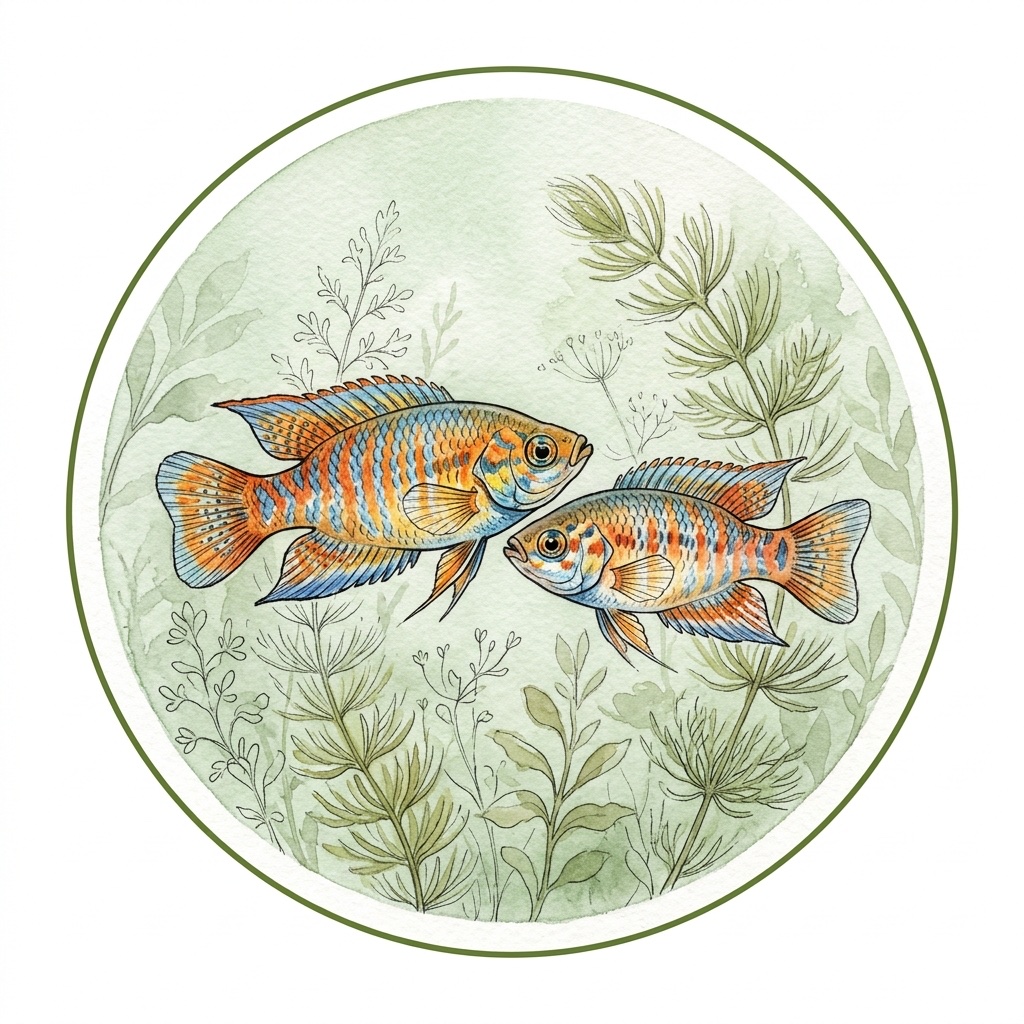
Day -14 to 0
Pre-Spawn Conditioning
spring warming triggers maturation
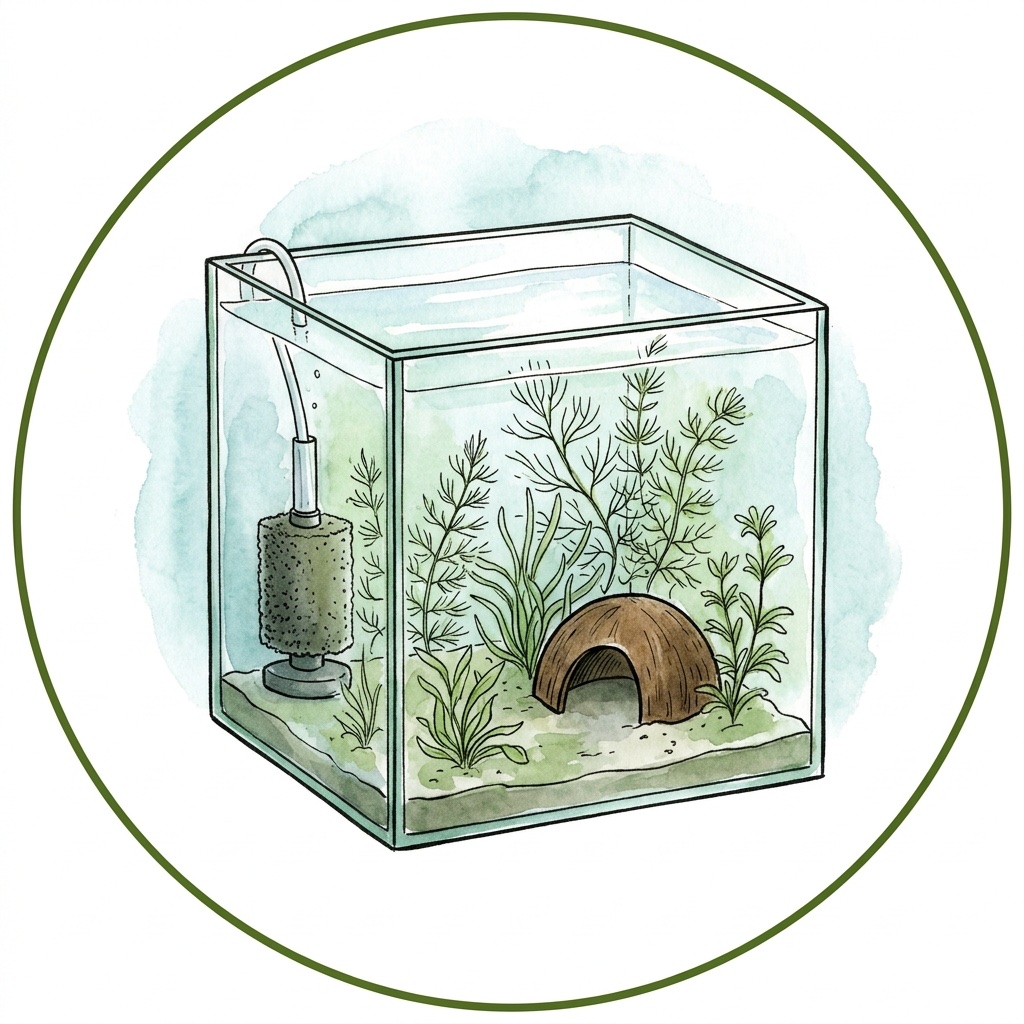
Day 0
Spawning Event
dawn chase, egg deposition
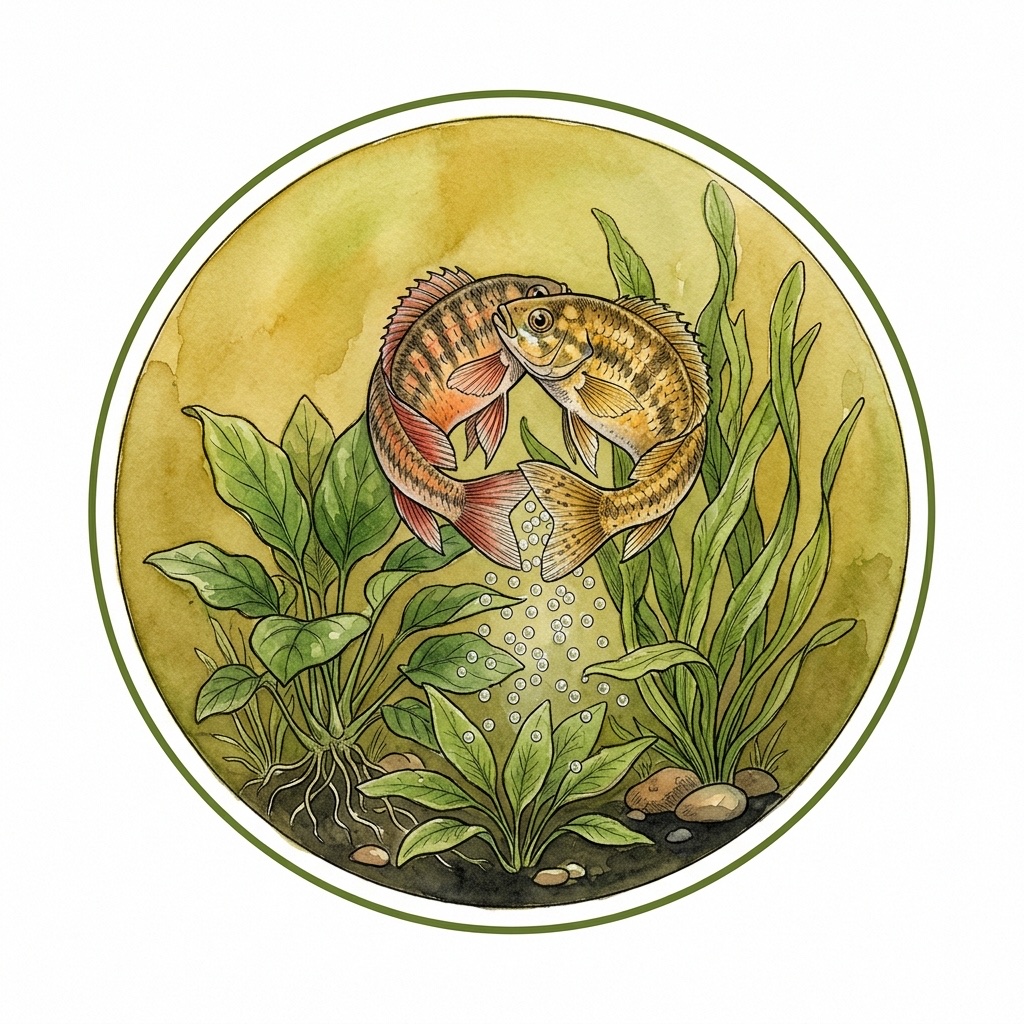
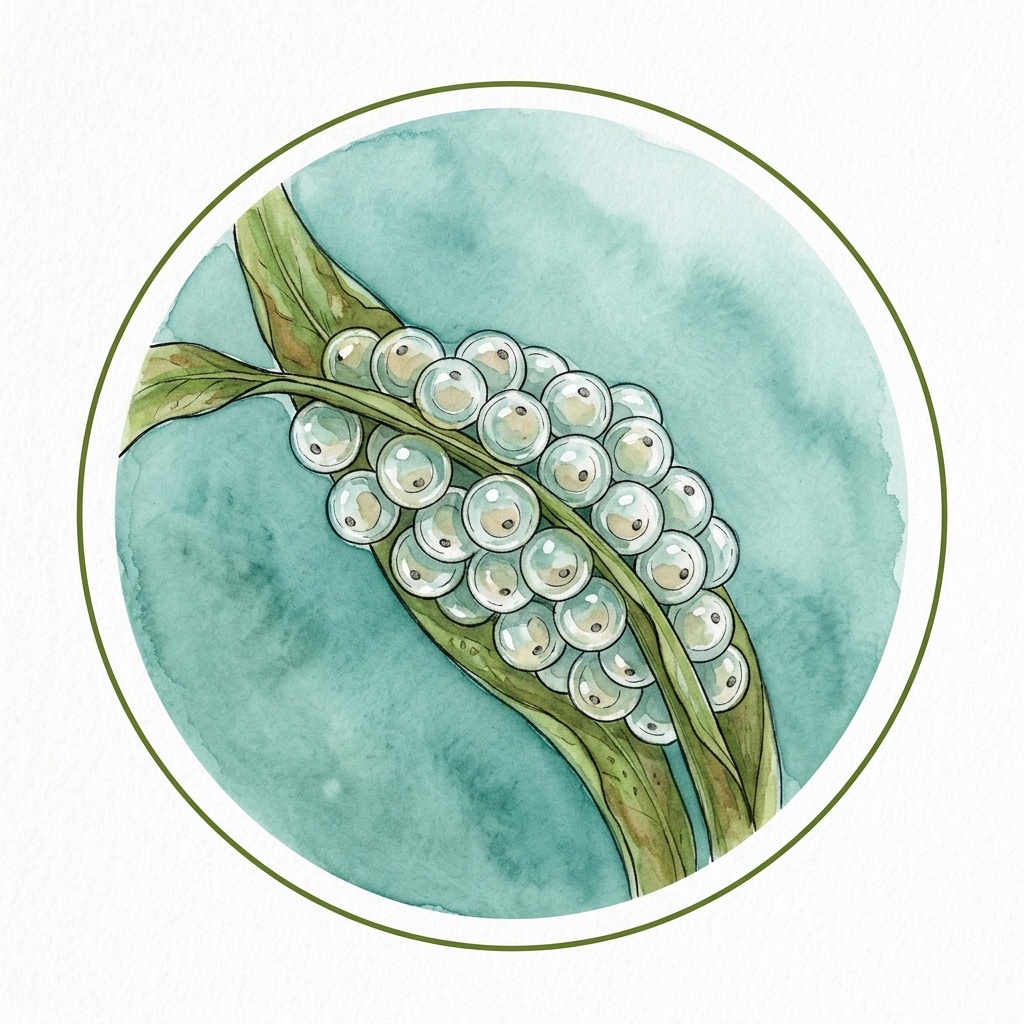
Day 3-5
Egg Hatching
free-swimming fry emerge
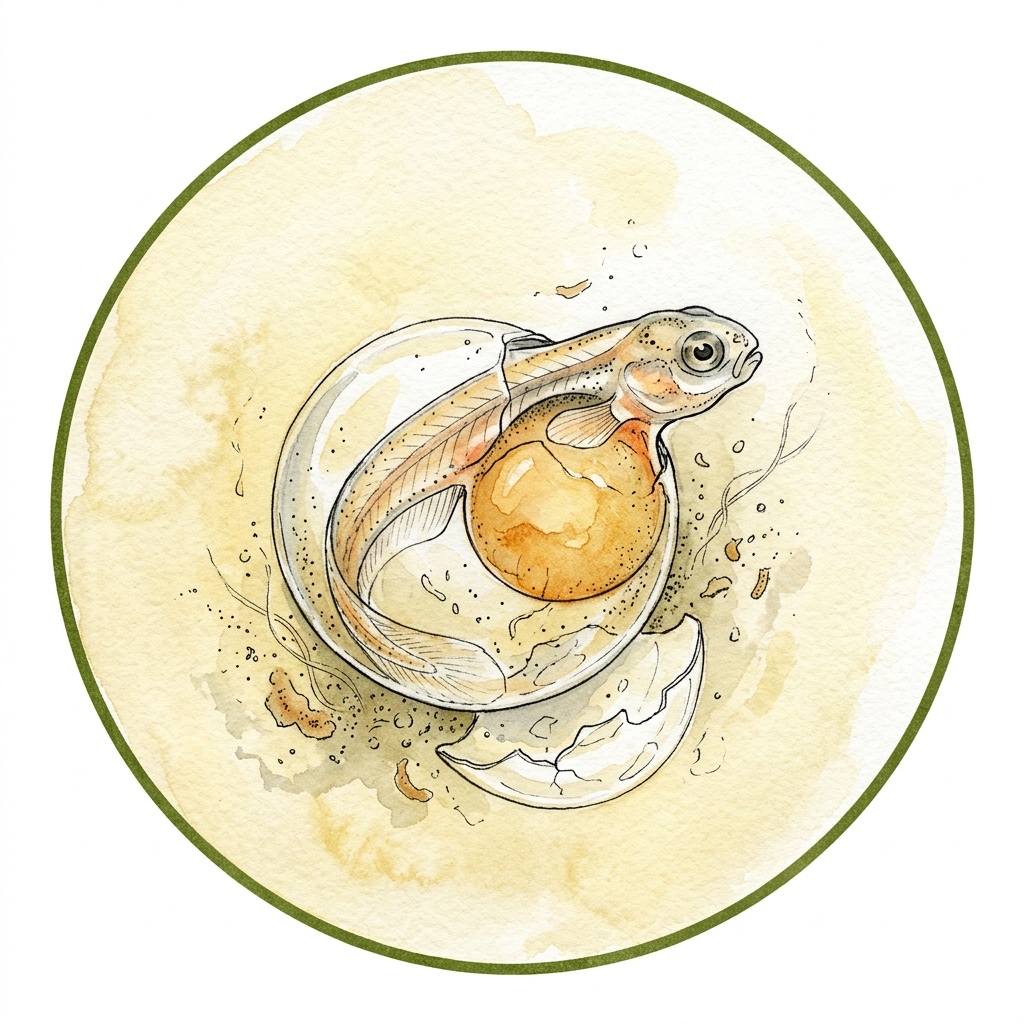
Day 30
Early Fry Colour Development
first pattern hints appear
Day 180 – Year 3
Juvenile Grow-Out
pattern and fins develop fully
Pre-Spawn Conditioning
As Sydney spring warms the pond through September and October, water temperature rising through 16-18°C triggers hormonal changes in mature koi. Females begin to visibly deepen in the belly as ovaries swell with eggs, potentially carrying 100,000 or more eggs in a large fish. Males develop breeding tubercles — small white pimples on the gill plates and leading edges of pectoral fins — and become increasingly active and attentive to females. At this stage, breeders often begin feeding a higher-protein conditioning diet to support the enormous energetic demands of egg production and milt development.
Spawning Event
Spawning typically occurs in the early morning hours, often at dawn, when water temperature reaches 19-22°C. Males will actively pursue the gravid female around the pond, nudging her flanks with increasing vigour over a period of hours. The female eventually responds by releasing eggs — typically against spawning brushes, floating plants, or the edges of the pond — and the pursuing males simultaneously release milt to fertilise the eggs externally. The process is physically intense for the female; scale loss and minor fin damage are common. In Butterfly Koi specifically, the long fins can suffer tears during spawning, and pond keepers who breed seriously often separate pairs into spawning tanks with sacrificial-fin-protected surfaces.
Egg Hatching
Fertilised koi eggs are adhesive and stick to whatever surface they landed on — plants, spawning brushes, or pond liner. At 20-22°C, eggs develop over three to five days, hatching into tiny larvae that initially cling to surfaces by yolk-sac threads. Within 24-48 hours of hatching, fry absorb the yolk sac and become free-swimming. At this point they require infusoria-scale food — green water cultures, rotifers, or commercially prepared fry food — because they are too small to accept even baby brine shrimp for the first week.
Early Fry Colour Development
By one month post-hatch, Butterfly Koi fry are around one to two centimetres long and beginning to show the first hints of adult patterning. Crucially, the long-fin trait is generally visible at this stage — fry that will become Butterfly Koi show proportionally longer unpaired fins compared to standard-finned siblings, even at this tiny size. Breeders typically cull heavily at this stage, keeping only fry with the best proportions, clearest pattern suggestions, and most desirable finnage. In a natural pond, survival is driven by whatever fry can find food and avoid being eaten by their parents, who show no parental care and will cheerfully consume their own offspring.
Juvenile Grow-Out
Over the first six months, Butterfly Koi fry grow from 1-2 cm to 10-15 cm juveniles — roughly the stage at which Amazonia sells them. Colour patterns shift and develop substantially during this period, often changing unrecognisably from what was visible at hatching. The long-fin trait becomes more pronounced as the fish grows, with fin length scaling faster than body length until adulthood. Over years one to three, the fish transitions from juvenile to sub-adult, reaching sexual maturity somewhere between years three and five. Full adult size of 60-80 cm body plus flowing fins is typically achieved over five to eight years, though koi continue slow growth throughout their long lives.
Quick Reference
| Scientific Name | Cyprinus rubrofuscus (long-finned Butterfly variant) |
| Adult Size | 60-80 cm body plus 15-25 cm fin trails |
| Lifespan | 25-40 years |
| Minimum Pond Size | 2,000 L per adult; 3,000 L+ preferred |
| Temperature | 4-28 °C (pond-hardy cold-water fish) |
| pH | 7.0-8.5 (alkaline-tolerant) |
| Hardness | 8-20 dGH (moderately hard to hard) |
| Diet | Omnivore — floating pellets, frozen shrimp, vegetables |
| Feeding Temperature | Stop feeding below 10 °C — no winter feeds |
| Tankmates | Other koi, hardy pond goldfish, golden orfe, weather loach |
| Avoid | Fin nippers, tropical fish, aggressive cichlids, native Australian species |
| Show Status | Not recognised by Nishikigoi judges — Western pond-garden classes only |
| Best For | Outdoor pond keepers wanting maximum visual drama over classical tradition |
| AU Status | Declared noxious — contained ponds only, never release |
Related Products
Reviews
Clear filtersThere are no reviews yet.