
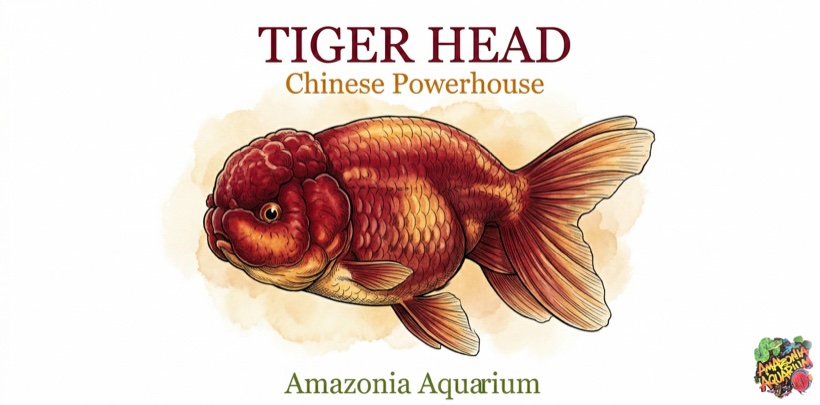
Tiger Head: The Chinese Classic
The Tiger Head (虎头, hǔ tóu) goldfish gets its name from its massive cranial growth (wen) that resembles a tiger’s broad, powerful head. In Chinese goldfish culture, the Tiger Head is one of the oldest fancy goldfish varieties, documented in breeding manuals dating back to the Ming Dynasty (1368–1644). Unlike the Japanese Ranchu, which has no dorsal fin, classic Tiger Head goldfish may retain a small dorsal fin, though modern breeding lines often lack one. The Tiger Head is closely related to the Lion Head (狮头, shī tóu) — both emphasise wen development, but Tiger Heads traditionally have a more evenly distributed head growth, while Lion Heads concentrate growth on the crown. In Australia, both names are sometimes used interchangeably, though purists maintain the distinction.
🏅 At a Glance
| Common Name | Tiger Head Goldfish |
| Scientific Name | Carassius auratus (Lionhead / Tiger Head variety) |
| Origin | China — Fuzhou (Fujian), Guangdong, and surrounding regions |
| Adult Size | 15–20 cm (6–8 in) |
| Lifespan | 10–15 years |
| Temperament | Peaceful, sturdy |
| Care Level | Beginner to Intermediate |
| Viewing Style | Top-view / Side-view |
| Diet | Omnivore — sinking pellets, frozen food, vegetable supplements |
| Minimum Tank Size | 75 L (20 gal) per fish |
| pH Range | 6.5–7.5 |
| Temperature | 16–24 °C (61–75 °F) |
| Hardness (dGH) | 6–14 |
Water & Tank Setup
Tiger Heads are among the hardiest fancy goldfish you can keep. They are true cold-water fish — no heater is needed in Sydney’s climate, and they comfortably handle the natural temperature swing from cool winters to warm summers. Their robust constitution means they tolerate a wider range of water parameters than more delicate varieties like the telescope eye or bubble eye, though they still appreciate clean, well-maintained water.
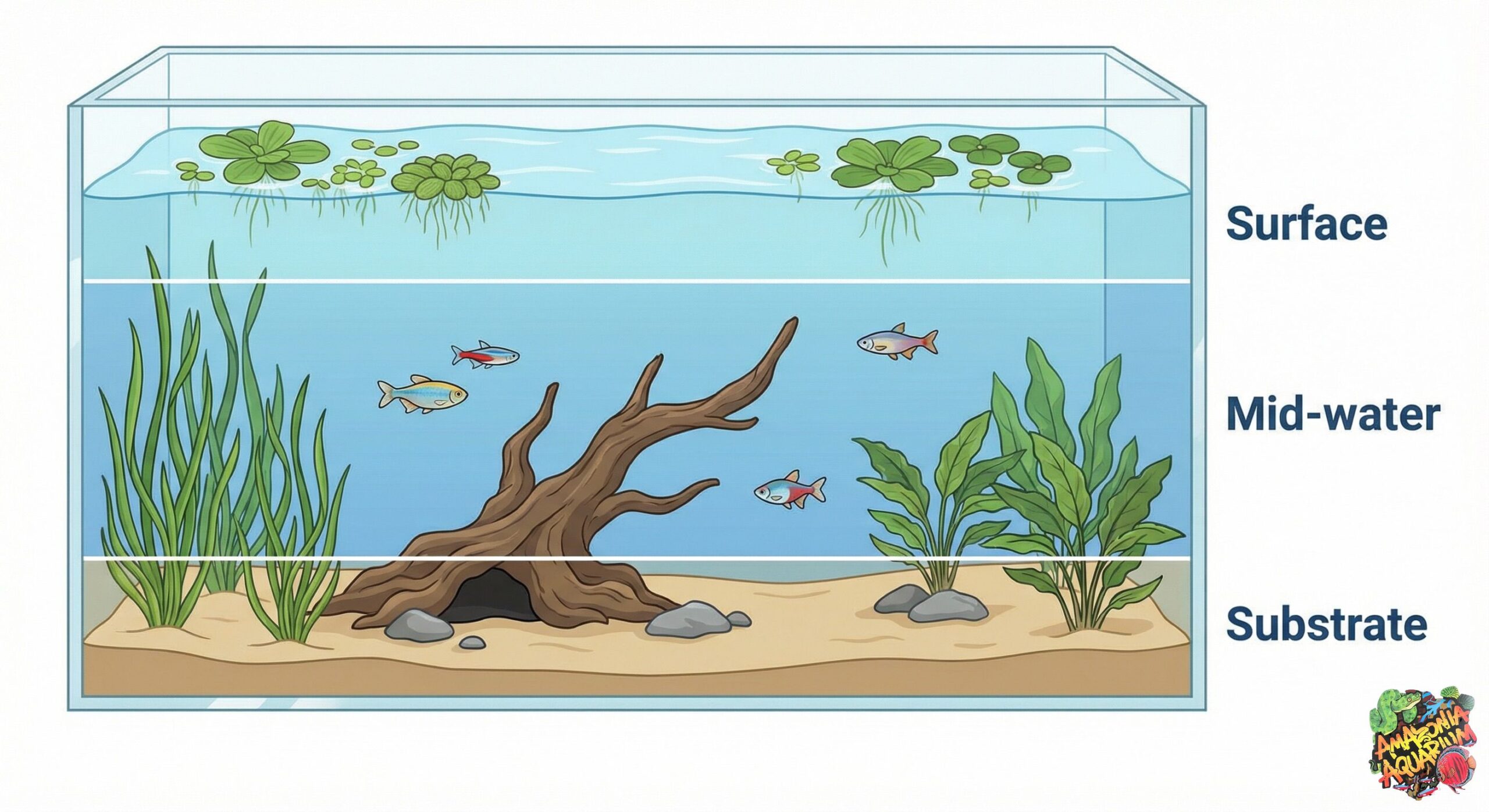
The key to Tiger Head health is consistent water quality rather than chasing perfect numbers. Weekly water changes of 30–40% will keep nitrates low and the wen tissue healthy. Goldfish are heavy waste producers, so biological filtration capacity should be generous — aim for a filter rated at least twice the tank volume per hour. Ammonia and nitrite should always read zero on your test kit.
A single Tiger Head needs a minimum of 75 litres, with an additional 40–50 litres for each extra fish. These are not small goldfish — adults reach 15–20 cm and produce waste proportional to their size. A wider, shallower tank is preferable to a tall one, as it provides more surface area for gas exchange and gives these bottom-oriented swimmers more usable space. A standard 120-litre tank comfortably houses a pair.
Keep the tank setup simple. Bare-bottom or fine rounded gravel substrate makes cleaning easier and eliminates the risk of gravel ingestion. Avoid sharp rocks, rough driftwood, or plastic plants with hard edges — the wen tissue is soft and can tear on abrasive surfaces, leading to infection. If you want live plants, choose hardy species like Anubias or Java fern attached to smooth stones. Strong filtration is non-negotiable: a hang-on-back filter or canister rated for the tank size, supplemented with a sponge pre-filter to protect the intake from curious fins.
Essential Equipment
Feeding Your Tiger Head
Tiger Heads are enthusiastic, almost greedy eaters — they will vacuum up food with a determination that matches their stocky build. A high-quality sinking pellet should form the staple diet, as sinking food reduces the air gulping that can trigger swim bladder issues in round-bodied goldfish. Look for pellets with whole fish meal or shrimp meal as the primary ingredient, with a protein content around 35–40% for growing fish and 30–35% for mature adults.
Supplement the staple with variety. Blanched peas (skinned and halved) are an excellent weekly addition — the fibre aids digestion and helps prevent the constipation that plagues fancy goldfish. Frozen bloodworms and brine shrimp provide enrichment and trigger natural foraging behaviour. For wen development, increase protein intake during the warmer months when growth is most active. Spirulina-based foods and pellets containing astaxanthin or carotenoids will enhance and maintain deep red colouration over time. Feed two to three small meals per day rather than one large meal — offer only what the fish can finish in two minutes per session.
Sinking Pellets (staple)
Frozen Bloodworm / Brine Shrimp
Live Food (daphnia, artemia)
Vegetable Day (blanched peas / spinach)
To bring out the best colour in your Tiger Head, incorporate colour-enhancing ingredients into the regular rotation. Spirulina flakes or pellets contain natural pigments that intensify reds and oranges from the inside out. Krill meal and astaxanthin-enriched foods are even more potent — many competitive breeders in China feed a dedicated colour food daily during the three months leading up to show season. Even for pet-quality fish, you will notice a visible difference within four to six weeks of adding spirulina to the diet.
Health & Seasonal Care
The Tiger Head is one of the hardiest fancy goldfish varieties available, which is a major reason it makes such a good beginner fish. Its broad genetic base and generations of Chinese pond-culture breeding have produced a fish with solid disease resistance and a strong constitution. That said, all fancy goldfish share certain vulnerabilities that owners should watch for and manage proactively.
The most common issues are swim bladder disorder (floating or sinking abnormally after eating), ich (white spot disease, especially during sudden temperature drops), and wen infection — bacterial or fungal growth on the head tissue that appears as white patches, redness, or cottony tufts on the wen. Regular 30–40% weekly water changes, stable temperatures, and avoiding overfeeding will prevent the vast majority of health problems. Keep a bottle of aquarium salt and an anti-bacterial treatment on hand for early intervention when needed.
Seasonal Care Calendar (Australia)
If you notice early signs of illness — clamped fins, loss of appetite, white spots, or abnormal swimming — a salt bath is a safe and effective first response. Dissolve 5 grams of pure aquarium salt per litre in a separate container of tank water and bathe the fish for 5–10 minutes, observing closely for signs of stress. For new fish, always quarantine in a separate tank for at least two weeks before introducing them to your main setup. This simple step prevents the majority of disease outbreaks in established tanks.
Quick Reference
| Tank Size | 75 L minimum per fish; 120 L for a pair |
| Temperature | 16–24 °C — very adaptable, no heater needed in Sydney |
| pH | 6.5–7.5 |
| Diet | Sinking pellets + blanched peas + frozen bloodworm / brine shrimp |
| Tankmates | Other fancy goldfish only — avoid fast swimmers, single-tails, and fin nippers |
| Best For | Goldfish beginners — one of the hardiest fancy varieties with the most dramatic head growth |
Frequently Asked Questions
What’s the difference between Tiger Head and Lion Head goldfish?
Do Tiger Head goldfish have a dorsal fin?
How do I maintain healthy wen growth?
Can Tiger Heads see properly with large wen?
Are Tiger Heads cold-water fish?
Chinese Goldfish Royalty
China is the birthplace of goldfish keeping, a tradition stretching back over 800 years to the Southern Song dynasty, when monks in Hangzhou first selectively bred golden-coloured crucian carp in temple ponds. From those early origins, generations of Chinese breeders developed dozens of distinct varieties — the bubble eye, the celestial, the telescope, and, among the most prized, the lionhead family that includes the Tiger Head.
The Tiger Head takes its name from the sheer scale of its head growth, or wen. Where the Japanese ranchu aims for balanced proportions and an understated elegance, the Chinese Tiger Head pursues maximum cranial drama. The wen can grow so full and prominent that it covers the cheeks, the gill plates, and much of the top of the skull, creating a broad, powerful silhouette that Chinese fanciers liken to a crouching tiger. It is goldfish breeding as sculpture — bold, unapologetic, and built to impress from across the room.
The main breeding centres for Tiger Heads are Fuzhou in Fujian province and the greater Guangdong region, where breeders have refined bloodlines for generations. These areas benefit from a subtropical climate that supports year-round outdoor pond culture, allowing fish to grow large with the robust constitutions that characterise the variety. Fuzhou, in particular, is famous for its deep-red Tiger Heads with towering wen development.
In recent years, Chinese goldfish culture has gained renewed international recognition. The variety was celebrated at the 2024 Royal Goldfish Exhibition held at Gongwangfu in Beijing, further solidifying the Tiger Head’s status as one of China’s living cultural treasures. Chinese goldfish breeding is now formally recognised as intangible cultural heritage, ensuring these ancient techniques will be passed on to future generations.
🇨🇳 Chinese Heritage
🐯 Tiger Head
Built Like a Tank
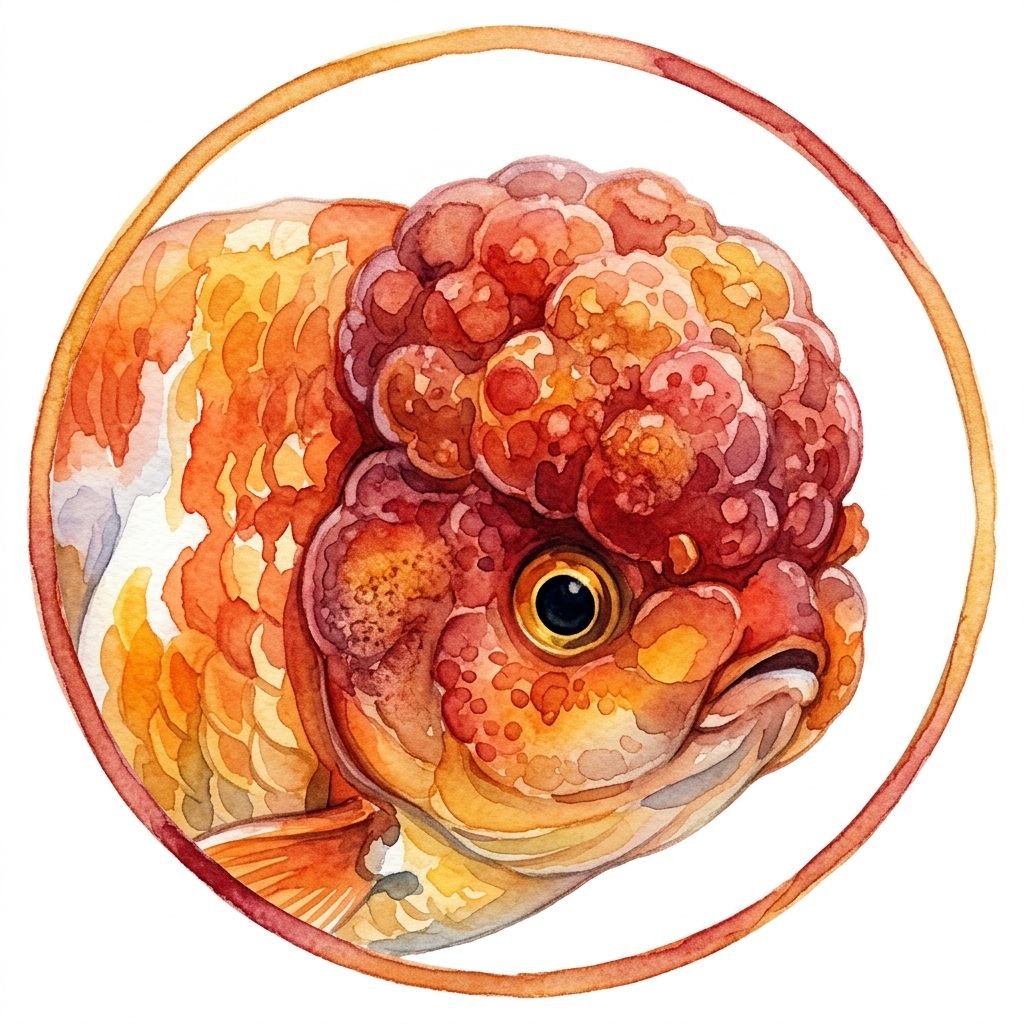
The Tiger Head is, above all else, a fish about mass. Its body is wide, deep, and barrel-shaped — noticeably stockier than a Japanese ranchu of the same length. There is no dorsal fin, giving the back a smooth, arching profile from head to peduncle. The paired pectoral and ventral fins are short and rounded, while the tail is typically a short, stiff butterfly or three-lobed spread held slightly upright. Everything about the body plan says durability over delicacy.
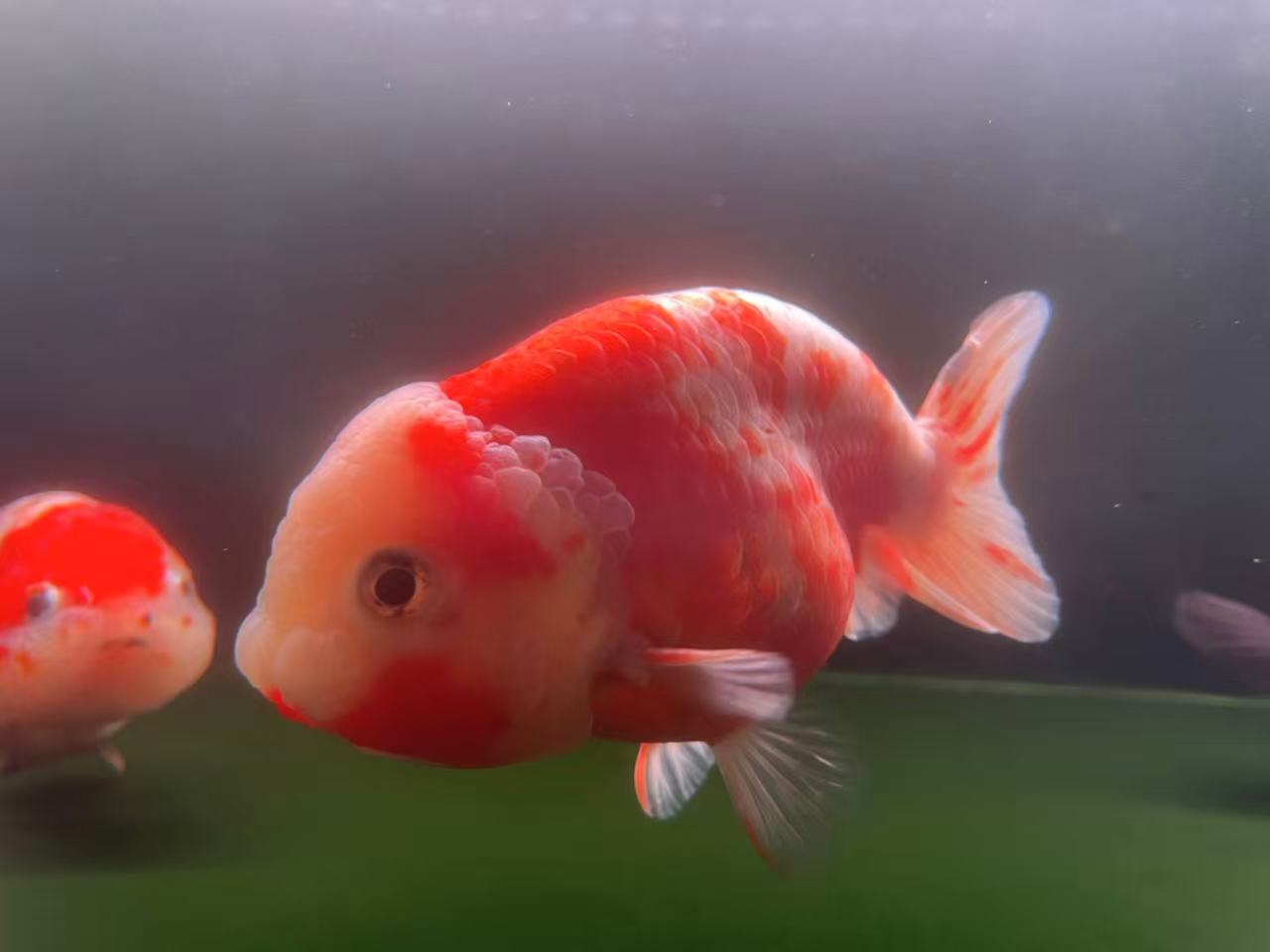
But the defining feature is the wen — the fleshy head growth that earns this fish its name. On a mature Tiger Head, the wen covers the entire cranium, fills out the cheeks, and extends over the gill plates, creating a helmet-like mass that can account for a quarter of the fish’s total head volume. In top specimens, the wen grows so full it partially hoods the eyes, giving the fish a brooding, heavy-browed look. The texture is bumpy and cauliflower-like, divided into distinct cranial, infraorbital, and opercular regions that judges evaluate separately.
Compared to the Japanese ranchu, the Tiger Head carries more extreme wen development and a wider body frame. Where ranchu breeders balance wen growth against overall body symmetry, Tiger Head breeders push wen volume to its practical limit — the fish should look like it is wearing a crown. The back arch is also less pronounced than a show-grade ranchu, giving the Tiger Head a more horizontal swimming posture that emphasises its forward-facing bulk.
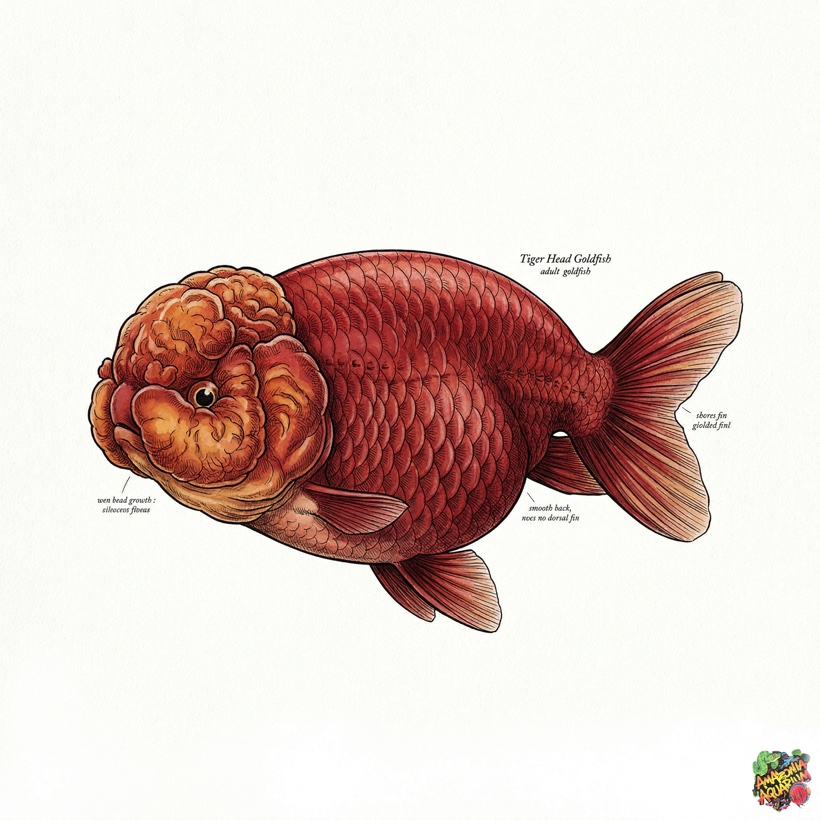
A mature Tiger Head goldfish displaying the characteristic massive wen (head growth) that covers the cranium and cheeks, with the stocky, barrel-shaped body typical of the variety.
Colour Varieties
🔴 Red
The classic and most sought-after colour — a deep, even crimson covering the entire body and wen. Fuzhou breeders are renowned for producing the richest reds, which deepen with age and a quality diet.
🔴⚪ Red & White
A striking two-tone pattern with clean separation between deep red and pure white patches. The most prized pattern places red on the wen like a cap, with a white body — called ‘red cap’ or .
⚫ Black
A dramatic all-black Tiger Head that holds its ink-like colouration without fading. True stable blacks are uncommon and highly valued at Chinese goldfish shows.
🟣 Purple / Blue
An uncommon variety displaying a deep lavender-to-steel-blue metallic sheen across the body. The colour shifts depending on lighting angle, making these fish mesmerising under side lighting.
🌈 Five Colour / Calico
A mosaic pattern combining red, white, black, blue, and grey across the body and wen. No two calico Tiger Heads are alike, making each fish a one-of-a-kind specimen.
Wen development in Tiger Heads follows a predictable timeline. Fry show no head growth at all — it first becomes visible around six months of age as a slight thickening on the top of the head. Growth accelerates during the second year, and by age two to three the wen reaches its most impressive stage. Water quality, protein-rich feeding, and stable temperatures all influence how fully the wen develops. After age four, growth slows and the wen gradually firms in texture, becoming denser and more defined rather than larger.
What Makes a Great Tiger Head
Appreciating a Tiger Head goldfish follows the Chinese tradition of (pǐn) — attentive evaluation of form, colour, and spirit. A great Tiger Head should command the tank. When it swims towards you, the wen should dominate your field of view like a small, ornate helmet. The body behind it should be wide enough that the fish looks balanced despite the heavy head, and the tail should fan symmetrically without drooping or listing to one side. Chinese judges call this overall quality (qìshì) — presence or bearing.
Grading differs significantly from Japanese ranchu standards. Where ranchu judging balances many criteria — back curvature, tail tuck angle, peduncle width — Tiger Head evaluation tilts heavily toward wen fullness and colour depth. A Tiger Head with spectacular wen development and rich, even colouration will consistently outrank a more ‘balanced’ fish with modest head growth. The philosophy is simple: the Tiger Head is a wen fish first, and everything else supports that centrepiece. Side-view is the standard appreciation angle, with fish typically displayed in glass tanks at eye level.
For goldfish beginners deciding between a Tiger Head and a Japanese ranchu, the Tiger Head is generally the more forgiving choice. Its sturdier build and broader genetic base translate to better disease resistance and more tolerance for minor water-quality fluctuations. While a show-grade ranchu demands precise husbandry and often comes at a premium price, a healthy Tiger Head will thrive with consistent basic care — making it an excellent entry point into the world of fancy goldfish keeping.
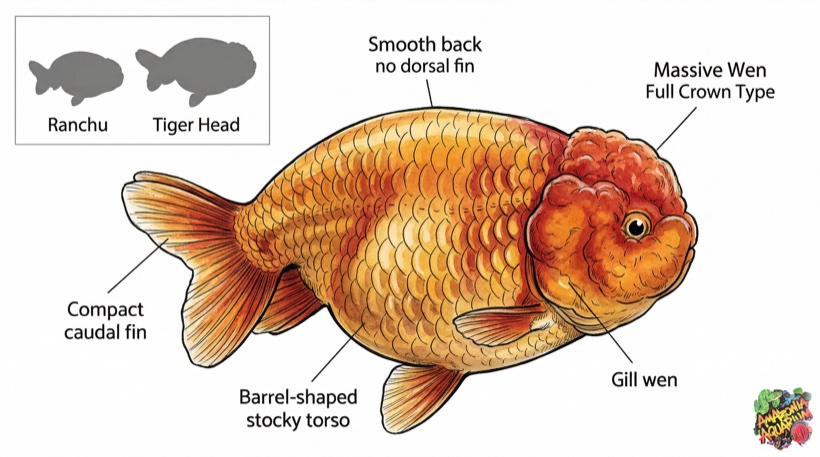
Tiger Head anatomy: note the smooth dorsal profile (no dorsal fin), the massive wen covering cranium and cheeks, the short stiff tail held slightly upright, and the wide barrel-shaped body that distinguishes this variety from the Japanese ranchu.

Reviews
Clear filtersThere are no reviews yet.