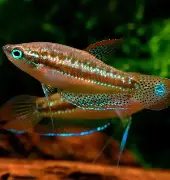
🪨 Species at a Glance
| Scientific Name | Trichopsis pumila |
| Family | Osphronemidae |
| Order | Anabantiformes |
| Common Names | Sparkling gourami, pygmy gourami, dwarf croaking gourami |
| Origin | Thailand, Cambodia, Laos, Vietnam, Peninsular Malaysia |
| Habitat | Peat swamps, flooded forests, rice paddies, slow blackwater streams |
| Adult Size | 3–4 cm (1.2–1.6 in) |
| Lifespan | 3–5 years |
| pH Range | 6.0–7.5 |
| Temperature | 22–28 °C (72–82 °F) |
| Hardness (dGH) | 2–10 |
| Diet | Micro-carnivore — crushed flake, micro pellets, cyclops, baby brine shrimp, small live foods |
| Minimum Tank Size | 40 L (10 gal) for a pair or trio |
| Care Level | Beginner–Intermediate |
| Temperament | Peaceful, shy; audibly vocal during courtship and display |
| Breeding | Bubble nest builder; male guards nest and fry |
| Tank Position | Mid-water to surface |
| Availability | Occasional — specialist and nano-oriented stores |
Origin & Etymology
The sparkling gourami owes its English common name to the single most striking feature of a well-kept adult: a dusting of iridescent spots across the flanks and unpaired fins that catch the light like flecks of crushed opal. Under subdued tank lighting — especially the amber glow of a blackwater aquarium stained with botanicals — these spots flash blue, teal, emerald, and crimson as the fish turns, creating the impression of tiny embers drifting through dim water. The effect is most pronounced in mature males in breeding condition, whose entire body can appear to shimmer when viewed at the right angle. It is a colour pattern utterly unlike the flat wash of gold or silver seen in the larger, more commonly kept honey and dwarf gouramis, and it is what first converts casual observers into dedicated keepers.
The scientific name Trichopsis pumila carries its own quiet descriptive weight. Trichopsis, the genus, is formed from the Greek trichos (hair) and opsis (appearance), a reference to the long, thread-like pelvic fin filaments that this small fish sweeps ahead of itself like sensory antennae — filaments that, as in all gouramis, are packed with chemoreceptors and tactile nerves used to taste and feel surroundings in low-visibility water. The species epithet pumila comes from the Latin pumilus, meaning dwarf or tiny, and distinguishes this miniature species from its close relatives in the same genus, the larger croaking gourami Trichopsis vittata and the intermediate-sized Trichopsis schalleri. The species was formally described by Dutch ichthyologist Pieter Bleeker in 1845, making it one of the earlier Southeast Asian anabantoids to enter the scientific literature.
But perhaps the most evocative name this fish carries is the one assigned to it by aquarists who have spent evenings listening to their tanks. The sparkling gourami is sometimes called the ‘pygmy croaking gourami’ in reference to an astonishing ability shared with the rest of its genus: it produces an audible clicking, popping, or purring sound during courtship and territorial encounters. The sound is generated by specialised tendons and muscles associated with the pectoral fins — when the fin is spread rapidly, the tendons snap against a modified bony process, creating a crisp mechanical pop that radiates through the water and, remarkably, through the glass of the aquarium into the room beyond. A quiet living room with a sparkling gourami tank can become faintly percussive at dusk, when males face off or court females with bursts of double and triple clicks. Ichthyologists who have studied the behaviour describe the call as a mechanism for both sexual advertisement and territorial negotiation; the pattern, frequency, and duration of the clicks encode information about male fitness, readiness to breed, and intent to challenge rivals. In behavioural experiments, females have been shown to prefer males with longer and more regular call bouts, and two males placed in visual range of each other will engage in extended clicking contests before any physical display begins, with the winner of the acoustic contest often claiming the contested territory without an actual fight.
For anyone raised on the silent stereotype of fish, this is a small revelation — the sparkling gourami is a fish that quite literally has a voice, and learning to listen for it transforms the experience of keeping the species. Many keepers report that the clicking becomes a kind of passive soundtrack to their evenings, reliably signalling when the tank is content (regular, relaxed clicks during courtship) or when something is disturbing the fish (urgent, staccato bursts during a confrontation). In a hobby where most of the communication between keeper and fish is strictly visual, having a species that audibly announces its emotional state is a rare and welcome connection. More on this remarkable behaviour can be found throughout this guide — in the sex comparison section, the breeding timeline, and the tank setup advice on keeping surface conditions quiet enough that the sound is not drowned out by filter noise.
How to Sex This Species
Sexing sparkling gouramis is a pleasant exercise for anyone who enjoys a good look at their fish. The differences between a mature male and a mature female are clear and consistent once you know what to look for, though they only become reliable in fish over about six months of age — younger juveniles are genuinely difficult to sex, and even experienced keepers routinely guess wrong when choosing from a tank of three-centimetre youngsters at a shop. The single most reliable adult indicator is fin shape: mature males develop long, pointed extensions on the rear edges of the dorsal, anal, and caudal fins, sometimes trailing back a third of the body length, while females retain short, rounded fin margins throughout life. Viewed side-on in a well-lit tank, this difference is striking; a sexually mature male appears almost finned like a miniature gourami version of a dwarf crenuchid, while the female looks comparatively plain. This fin dimorphism develops gradually over the course of four to eight months in a well-fed fish, and is the single feature that most often sells undecided keepers on a particular individual when they are picking a centrepiece male for a nano tank.
The second reliable cue is the intensity and extent of iridescent spangling. Both sexes carry the species’ characteristic flecks of blue, green, and red, but in males these become almost feverishly bright in good conditions, extending across the body and deep into the finnage. Females show the pattern too, but it is typically restricted more to the body, with the fins remaining relatively plain and translucent. A close look at a confident adult pair will show the male glittering like a small handful of wet opal chips, and the female looking like a more modest version of the same fish. Under side lighting or a torch beam, the difference can be dramatic — the male appears to be wearing a coat of sequins, while the female wears a subtler embroidery. When viewed from directly above, a gravid female is unmistakable: her belly rounds outward in a clear oval profile, while the male remains knife-edge slim. This top-down view is the single most useful technique for picking pairs at a shop or confirming breeding readiness in your own tank, and is worth cultivating as a habit.
The third, and for some keepers the most delightful, cue is behaviour — specifically, the clicking call. Males vocalise frequently, particularly when a rival male is present or when a female is in visual range. Females occasionally produce soft clicks, but the prolonged call bouts and the louder, crisper individual clicks are almost entirely a male behaviour. Sit quietly beside a tank containing a trio of sparkling gouramis at dusk, and within fifteen minutes you will likely hear the call; the fish that is doing the talking is, with very high probability, a male. The sound is generated by a specialised modification of the pectoral girdle, in which a tendon snaps across a bony projection when the pectoral fin is spread rapidly — effectively the same mechanism by which some humans can audibly crack their knuckles. Each click is a single crisp ‘tick’, and calls are often delivered in bursts of two, three, or four rapid clicks in succession. In a quiet room with the aquarium lid slightly raised, the sound can be heard clearly from two or three metres away; most keepers find the experience surprising and charming the first time it happens.
| Feature | Male | Female |
|---|---|---|
| Body Size | Slightly smaller, slimmer, 3–3.5 cm | Slightly larger and rounder, up to 4 cm, especially when gravid |
| Dorsal, Anal, and Caudal Fins | Markedly longer and more pointed; extensions on dorsal and anal fins trail well past fin margins | Noticeably shorter and more rounded; fin extensions minimal or absent |
| Iridescent Spangling | Intense — body and unpaired fins heavily flecked with blue, green, red, and gold points that flash brightly under side lighting | Subdued — spangling present but less saturated; fins especially appear plainer |
| Body Colouration | Warm amber-gold body with strong red-blue shimmer; throat and lower body may darken during display | Paler, more yellowish-tan body overall; ventral area remains light |
| Body Profile (from above) | Slim and torpedo-shaped | Clearly rounded belly when viewed from above, especially when carrying eggs |
| Behaviour and Vocalisation | Actively produces clicking calls, especially when facing another male or courting; builds and tends small bubble nest | Generally silent or produces only occasional soft clicks; does not build nests |
Available Colour Grades
✨ Wild Type Trichopsis pumila
Translucent amber-gold body scattered with iridescent blue, green, and red spots; dark horizontal stripe visible under stress or in juveniles; unpaired fins heavily spangled.
🐟 Trichopsis vittata (Croaking Gourami)
Larger relative reaching 6–7 cm with more pronounced body stripes and a louder, deeper croaking call; sometimes sold as ‘large sparkling gourami’ in error.
🔸 Trichopsis schalleri (Threestripe Gourami)
Intermediate 4–5 cm species with three distinct longitudinal stripes along the body; less iridescent than pumila but shares the characteristic clicking call of the genus.
Unlike many popular aquarium fish, the sparkling gourami has not been subjected to extensive selective breeding, and there are no recognised fancy colour morphs in the trade — the fish you buy at a specialist nano shop looks essentially identical to one netted from a Thai rice paddy. This is, frankly, part of its charm: Trichopsis pumila is already one of the most visually interesting small fish available, and the ornamental trade has largely left it alone. What does vary dramatically is colour intensity and presentation, and this variation is almost entirely environmental rather than genetic. A sparkling gourami kept in a bare, brightly lit quarantine tank will appear as a washed-out, semi-transparent little creature with barely visible spangles — disappointingly plain, and easy to mistake for a weak juvenile of some other species. The same fish, transferred to a dimly lit aquarium with tannin-stained water, botanical leaf litter, dark substrate, and dense planting, will transform over the course of a week or two into the jewel-spangled creature the name promises. The iridescent spots become brighter, the body colour deepens to a warm amber, and the fins extend and spread as the fish gains confidence. The eyes, which in a stressed fish look plain and dark, develop a fine metallic blue rim that catches light beautifully when the fish turns. Even the way the fish swims changes: a stressed sparkling gourami darts nervously between cover, while a confident one hangs motionless in mid-water with fins fully spread, occasionally drifting to the surface for a gulp of air.
This colour dependency on environment is a useful purchase diagnostic. If you see sparkling gouramis in a shop that display any hint of their iridescent spangle pattern despite the harsh retail lighting, you are looking at exceptionally confident and healthy fish — and, probably, a shop that knows what it is doing with blackwater species. If they appear drab, do not automatically dismiss them — they may simply be stressed by shop conditions, and will transform in a properly set up home tank within one to three weeks of arrival. The two close relatives listed above are occasionally mixed into imports of Trichopsis pumila, particularly T. schalleri, and careful keepers will want to verify species identification before purchase by comparing body length, stripe count, and the degree of spangling. The larger T. vittata is usually obvious by size alone at import, but young specimens can resemble oversized T. pumila; the reliable distinguishing feature is the more pronounced three-banded pattern and the larger eventual adult size, which will become apparent over three to six months of growth. All three Trichopsis species share peaceful temperaments, bubble-nest breeding, and the famous clicking call, though T. pumila’s click is the quietest and highest-pitched of the three, often described by keepers as more of a ‘tick’ or ‘crackle’ than the deeper, wetter pop of its larger cousins. If your goal is the most vocal gourami possible, T. vittata is actually the better choice; if your goal is the prettiest small labyrinth fish in the hobby, T. pumila is nearly unchallenged.
Getting the Water Right
6.0–7.5
ideal 6.5
22–28 °C
ideal 25 °C
2–10 dGH
Soft water preferred; tolerates moderate hardness but colour and breeding suffer above 10 dGH
In the wild, Trichopsis pumila lives in some of the most challenging waters in Southeast Asia — the shallow, highly acidic, tannin-stained peat swamps of the Malay Peninsula and lower Mekong basin, the seasonally flooded forest floors of Thailand and Cambodia, and the temporary waterways of rice paddies and roadside ditches. These habitats share several common features: they are warm, shaded, densely vegetated, very low in dissolved oxygen, soft in mineral content, and often stained the colour of strong tea by tannins leaching from fallen leaves and peat. pH readings in some peat swamp habitats drop well below 5.0, and the fish survives these conditions thanks to its labyrinth organ, which allows it to breathe atmospheric air directly from above the water surface — bypassing the oxygen-poor water entirely. This is why the species is sometimes found in habitats so shallow and warm that other fish cannot survive in them: an isolated roadside puddle left behind by a receding flood, or the corner of a rice paddy where the water is only a few centimetres deep and hot to the touch. The ability to breathe atmospheric air is the fish’s ticket into these marginal environments, and it explains the species’ remarkable resilience once it is settled in an aquarium. In the aquarium, you do not need to replicate these extreme conditions; a stable pH anywhere between 6.0 and 7.5 with soft to moderately soft water will keep the species in excellent health.
That said, the closer you come to the tannin-stained, soft, acidic end of the range, the more striking the fish will look and the more readily they will breed. A blackwater-style setup, with catappa (Indian almond) leaves, alder cones, and a piece of driftwood releasing tannins gradually into the column, produces the amber lighting and mild humic acid presence under which sparkling gouramis show their very best colour. The humic and tannic compounds released by botanicals also have mild antimicrobial and antifungal properties, which is part of why blackwater tanks so often produce noticeably healthier fish than sterile-looking bright setups. Stability matters far more than hitting an exact pH; a rock-solid pH of 7.2 in Sydney tap water will keep sparkling gouramis far better than an unstable 6.2 that swings half a unit every week as you chase the ideal. If your tap water is hard and alkaline, consider cutting it 50:50 with rainwater or RO water for a noticeable improvement in both colour and breeding willingness, but do not feel obliged to chase extreme softwater purity. Many successful keepers in Australia and the UK keep sparkling gouramis in mid-range tap water of pH 7.0 to 7.5 and moderate hardness, and the fish do perfectly well.
Temperature should be kept in the mid-20s Celsius; the species is tolerant down to about 20 °C and up to 30 °C but suffers at the extremes, and sustained temperatures outside the 22–28 °C band will shorten lifespan and suppress breeding. Because the labyrinth organ breathes air from just above the surface, the air layer under the aquarium lid must be kept warm; a well-fitting cover glass or hood is not optional in cooler climates, as a cold draught chilling the labyrinth chamber will cause respiratory problems within days. This is one of the most common, and most preventable, causes of mortality in newly purchased sparkling gouramis: a keeper who leaves the lid off an unheated room in winter can lose a fish overnight. Water changes should also be temperature-matched — replacing 20 to 30 percent of the tank weekly with dechlorinated water at the correct temperature is the standard recipe, and produces visibly happier fish than the neglectful ‘top up as evaporation happens’ approach that some keepers fall into with nano tanks.
Nutrition & Diet
The sparkling gourami is a micro-carnivore by nature. In the wild it picks minute insect larvae, zooplankton, small crustaceans, tiny worms, and emerging terrestrial insects from the surface and from the undersides of leaves and plant stems, supplemented by any biofilm organisms it can nibble from surfaces. Observations of wild Trichopsis pumila describe them hanging motionless just beneath floating vegetation, then darting quickly to snatch mosquito larvae, copepods, or the pupae of other small aquatic insects — a hunting style that rewards patience over chase speed and matches the species’ cautious, deliberate temperament. In the aquarium, its tiny upturned mouth — barely a millimetre or two across — demands small-particle foods. Standard-size flake and pellet formulations are simply too large for this species to manage efficiently, and if they are the only option offered, the fish will eat reluctantly, waste most of what is dropped, and gradually lose condition. Feeding a sparkling gourami well is a matter of matching particle size to mouth size, and offering enough variety to sustain both colour and breeding readiness.
A high-quality micro-pellet or nano granule — ideally a formulation labelled for small characins, killifish, or nano community fish — should form the daily staple. Crushed flake works too, provided it is genuinely crushed between the fingers into a fine dust or small fragments before being sprinkled on the water. Look for formulations with a recognisable first ingredient — whole fish, krill, or shrimp meal rather than vague ‘fish meal’ or ‘cereal derivatives’. Supplement this staple with small frozen foods several times a week: frozen cyclops is perhaps the single best frozen food for the species, being exactly the right size and closely matching natural prey, followed by frozen baby brine shrimp, frozen daphnia, and occasional finely chopped frozen bloodworm. Rinse frozen foods briefly in a fine net under the tap before feeding, to avoid dumping the preservative-laden thaw water directly into a small tank. Live foods are the gold standard for conditioning breeding pairs: freshly hatched baby brine shrimp, vinegar eels, micro-worms, grindal worms, and live daphnia will produce the fastest colour response and the most enthusiastic feeding behaviour, and setting up a simple brine shrimp hatchery is one of the most worthwhile pieces of aquarium infrastructure you can add if you intend to breed the species.
Feed small amounts twice a day; sparkling gouramis are not greedy eaters and excess food in a small, low-flow tank degrades water quality quickly. A useful rule of thumb is to offer only what the fish will consume in 30 to 60 seconds per meal — anything still drifting after a minute is probably going to waste. New arrivals may take three to seven days to feed confidently in a new tank, particularly if there is any boisterous activity from tankmates at feeding time — be patient, offer small amounts of the most tempting foods at the same time each day, and feeding will settle within a week. If a newly introduced fish refuses food entirely for more than five days, check water parameters, ammonia and nitrite especially, and verify that the lid is tight and the surface air layer warm; stress from any of these factors will suppress appetite long before it causes visible illness.
Aquarium Setup Guide
The sparkling gourami is small enough to thrive in aquaria that many other fish would find cramped, and this is part of its appeal for keepers working with nano tanks and desk-side aquascapes. A well-planted 40-litre (10 US gallon) tank is comfortable for a pair or trio, and 60 litres gives enough territory for a small group of five or six to establish a natural social structure with a dominant male, subordinate males, and females — the configuration that produces the most interesting behaviour and the most frequent clicking. Tank shape matters: a long, shallow footprint of around 45 to 60 cm length with a water depth of 20 to 25 cm better reflects the species’ native habitat than a tall, narrow cube, and gives each fish easier access to the surface for labyrinth breathing. Deeper tanks are not harmful but are not ideal — the fish spend noticeably less time near the bottom in tall tanks, wasting vertical space that the aquascape could have used for plant mass.
Planting should be dense, with cover at the back and sides and open swimming space in the middle and front. Tall stem plants such as Hygrophila, Limnophila, Cabomba, and Vallisneria work well at the rear; midground plants like cryptocorynes (C. wendtii and C. parva are superb), Anubias nana, and java fern provide structure and shade without crowding out swimming space; and a carpeting plant such as dwarf sagittaria or a low Cryptocoryne ties the scape together. Mosses — Christmas moss, flame moss, or weeping moss — tied to driftwood contribute enormously to the sense of scale in a sparkling gourami tank, making the small fish appear more substantial as they weave through the tendrils. The single most important plant choice, however, is the floating layer — Amazon frogbit (Limnobium laevigatum), red root floater (Phyllanthus fluitans), salvinia, or a mat of dwarf water lettuce should cover at least half of the water surface, creating the shaded, still, warm-air conditions under which males build their bubble nests and display best colour. Without floating cover, sparkling gouramis remain noticeably shy, their spangling dull, and breeding behaviour rare. If you remember only one thing from this guide about tank setup, let it be this: add floating plants.
Hardscape should lean organic and dark. A fine black or dark brown substrate (sand or aquasoil) enhances the iridescent spangles dramatically, and makes the fish appear to glow when they drift over it. A piece or two of driftwood — Malaysian driftwood, spider wood, or manzanita — provides visual structure, a gentle tannin source, and anchoring points for mosses and epiphytes. Dried leaves scattered across the substrate complete the blackwater look: catappa (Indian almond), jackfruit, guava, or oak leaves all work, each slowly releasing tannins as they soften over four to eight weeks. Beyond the aesthetic role, fallen leaves serve an important functional purpose: they develop biofilms and microfauna that newly free-swimming fry can browse, turning an otherwise ordinary tank into a living nursery the first time a pair decides to breed. Alder cones and oak galls can be added sparingly for extra tannin release during conditioning and breeding periods.
Lighting should be low to moderate; the species dislikes bright overhead light and will spend most of its time hiding if subjected to it. If your light is strong, use floating plants or stem plants to diffuse it, and consider running it on a shorter photoperiod of six to eight hours. Warm-spectrum LEDs around 3000–4000 K enhance the amber cast of a tannin-stained tank and bring out the red and gold tones in the fish; cooler 6500 K lighting can work but tends to wash out the blackwater atmosphere. Keep the tank lid tight-fitting; sparkling gouramis are accomplished jumpers when startled, and the air layer under the lid must remain warm and humid for the labyrinth organ to function comfortably. A 5 mm gap for cables and feeding is the maximum; anything larger invites both escape and unwanted evaporation of the warm surface air. Finally, do not underestimate how much the species benefits from visual cover in the form of low-hanging plants and overhangs. Even a single large Anubias leaf arching over an open patch of substrate can transform a fish from reclusive to confident within a day.
Tank
40 L (10 gal) minimum for a pair or trio; 60 L (16 gal) recommended for a small group of 5–6
Filter
Small sponge filter on a quiet air pump — gentle, biological, safe for fry; alternative is a baffled internal filter or HOB with spray bar directed at glass
Heater
50–75 W adjustable, set to 24–26 °C; heater guard recommended to prevent burns on curious shrimp or small fish
Lid / Cover Glass
Essential — prevents jumping and maintains warm, humid air layer above the water that the labyrinth organ relies on
Lighting
Low to moderate LED; short photoperiod (6–8 hrs) diffused by dense floating plant cover
Substrate
Fine dark sand or aquasoil — enhances iridescent colouration and supports plant growth; 3–5 cm depth is ample
Plants
Dense planting — floating plants (frogbit, salvinia, red root floater), stem plants, cryptocorynes, Anubias, java fern, mosses
Hardscape
Driftwood (Malaysian, spider wood, or manzanita) plus scattered catappa leaves and a few alder cones for tannins and biofilm
Thermometer
Verify heater accuracy; stability is more important than hitting a precise number
Community Compatibility
The sparkling gourami’s community requirements are best summarised as calm, calm, and calm. At 3 to 4 centimetres, it is small enough that almost anything boisterous feels threatening, and its timid, surface-oriented lifestyle means it cannot easily escape a persistent tankmate. The ideal community tank is a quiet, densely planted nano aquarium of 40 to 80 litres with a single shoaling species of peaceful tetra or rasbora at the mid level, a small group of pygmy or dwarf Corydoras on the substrate, and the sparkling gouramis themselves patrolling the upper third. A tank organised this way — three species, each occupying a clear vertical zone, all sharing blackwater preferences — is one of the most satisfying community configurations available in the hobby, and is a proven recipe for both visual harmony and peaceful coexistence. Adult freshwater shrimp can be included happily in such a setup and will coexist without aggression, though shrimplets may occasionally be taken as prey — this is normal and acceptable for most keepers, and the small reduction in shrimp population is rarely noticeable if the colony is well established.
Avoid mixing sparkling gouramis with other labyrinth fish unless the tank is large (over 100 litres) and very heavily planted. The species’ niche overlaps too strongly with bettas, other small gouramis, and even its own close congeners, and males will click, display, and occasionally physically contest territory in ways that become unpleasant in a small tank. Keep them as the only anabantoid species in a nano or small community, and they will reward you with bold surface presence, frequent clicking calls, and — in a well-matched pair or trio — spontaneous breeding attempts that are among the most engaging sights in small-scale fishkeeping. Stocking numbers matter as well: a single sparkling gourami is a lonely fish that rarely displays its full colour or behaviour, a pair can work but risks the female being harassed by an overly keen male, and a trio (one male, two females) or a small group of five to six is almost always the sweet spot for both animal welfare and keeper enjoyment. In a group, the social structure distributes male attention across multiple females and gives each fish enough space to claim a small personal territory without conflict.
When the balance is right, a trio of sparkling gouramis hovering beneath a mat of red root floater while a male clicks a courtship rhythm at a ripe female is one of the defining pleasures of nano freshwater, and more than repays the modest effort of setting up a proper blackwater tank for them. The species is ideal for the aquarist who values behaviour over flashiness and atmosphere over colour saturation — the keeper who leaves the aquarium light off for long stretches and simply watches the tank in the evening with a warm drink, listening for the faint tick of a small fish staking its claim in a miniature forest puddle.
| Species | Why | |
|---|---|---|
| ✅ | Pygmy Corydoras | Tiny, peaceful, soft-water bottom-dweller that ignores the mid-water gourami entirely and shares habitat preferences |
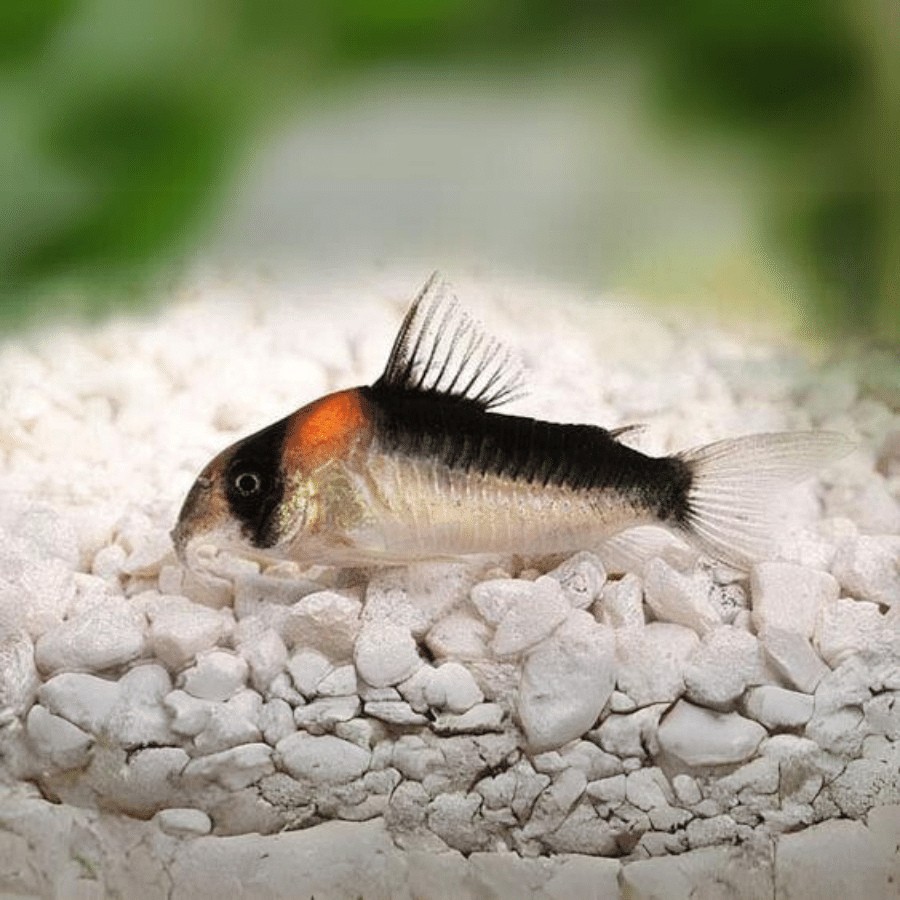
| ✅ | Corydoras habrosus (Salt and Pepper Cory) | Another dwarf cory species, peaceful, similarly sized, and happy in the same soft, warm, densely planted tanks |
| ✅ | Ember Tetra | Peaceful, genuinely tiny tetra whose warm orange tones contrast beautifully with the gourami’s spangles |
| ✅ | Chili Rasbora (Boraras brigittae) | Exceptionally peaceful nano rasbora sharing blackwater preferences; forms quiet schools that coexist effortlessly |
| ✅ | Galaxy Rasbora (Celestichthys margaritatus) | Small, peaceful, and a close visual match — its pearl-spotted body complements the sparkling gourami perfectly |
| ✅ | Harlequin Rasbora | Peaceful mid-level schooler with overlapping soft-water preferences; larger shoals give the gourami a feeling of security |
| ✅ | Kuhli Loach | Gentle, nocturnal eel-like bottom-dweller sharing Southeast Asian origin and soft-water preferences — zero interaction with surface-dwelling gouramis |
| ✅ | Cherry Shrimp (adult) | Adult cherry shrimp coexist well with sparkling gouramis; be aware that shrimplets may be eaten, which is normal and acceptable for most keepers |
| ✅ | Otocinclus | Small, peaceful algae eater that shares soft-water preferences and never troubles gouramis |
| ❌ | Betta (Siamese Fighting Fish) | Male bettas will attack closely related labyrinth fish and may target the flowing-finned sparkling gourami; females are less predictable but still risky in small tanks |
| ❌ | Tiger Barb | Notorious fin-nippers that will target the sparkling gourami’s long pelvic filaments and fin extensions relentlessly |
| ❌ | Angelfish and larger Cichlids | Adult angels and most medium-to-large cichlids are simply too large; sparkling gouramis may be viewed as prey, and the gourami’s timid temperament cannot handle the constant presence of large fish |
| ❌ | Dwarf Gourami (Trichogaster lalius) | Dominant male dwarf gouramis will out-compete and bully the smaller sparkling gourami for surface territory and bubble-nest sites |
| ❌ | Serpae Tetra | Known fin-nippers; the sparkling gourami’s trailing fin filaments and extensions are an irresistible target |
How to Breed
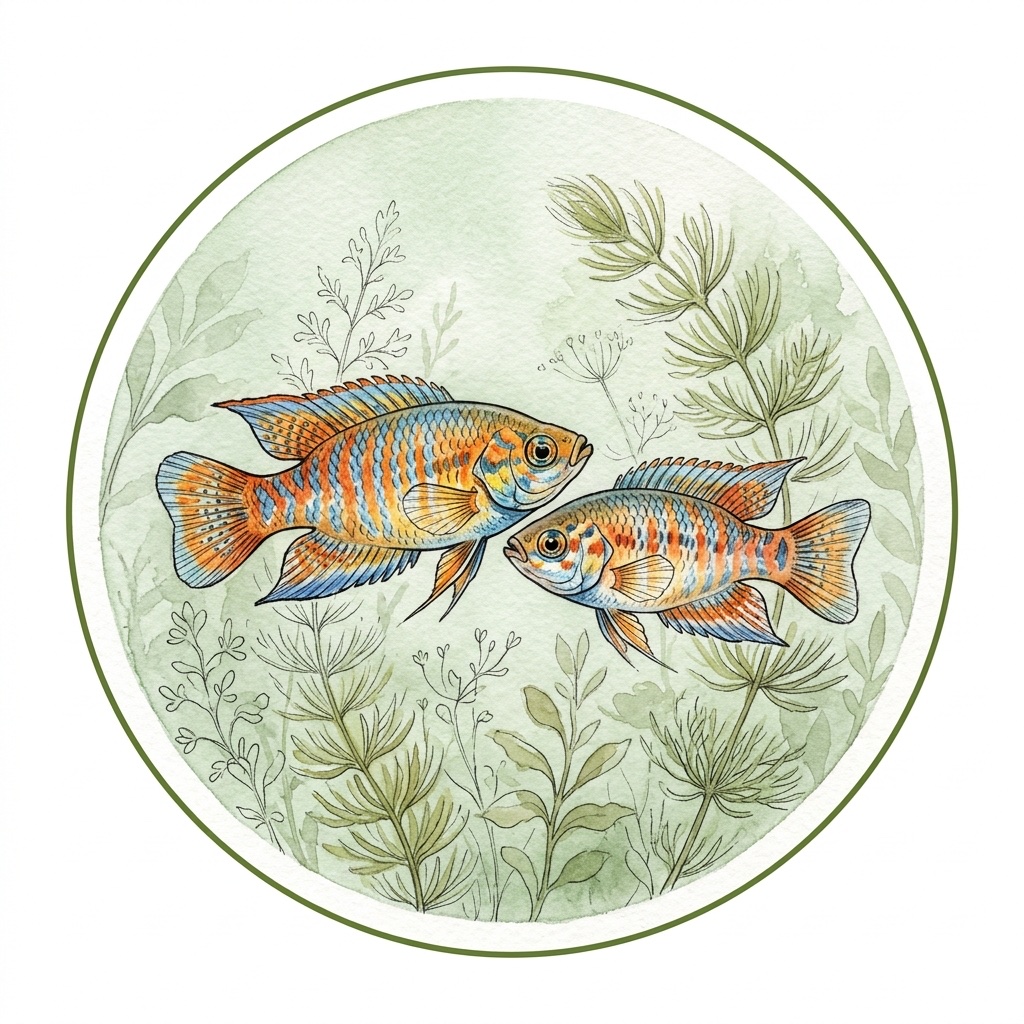
Week -1
Conditioning
Feed intended pair heavily on live and frozen micro-foods for 7–14 days
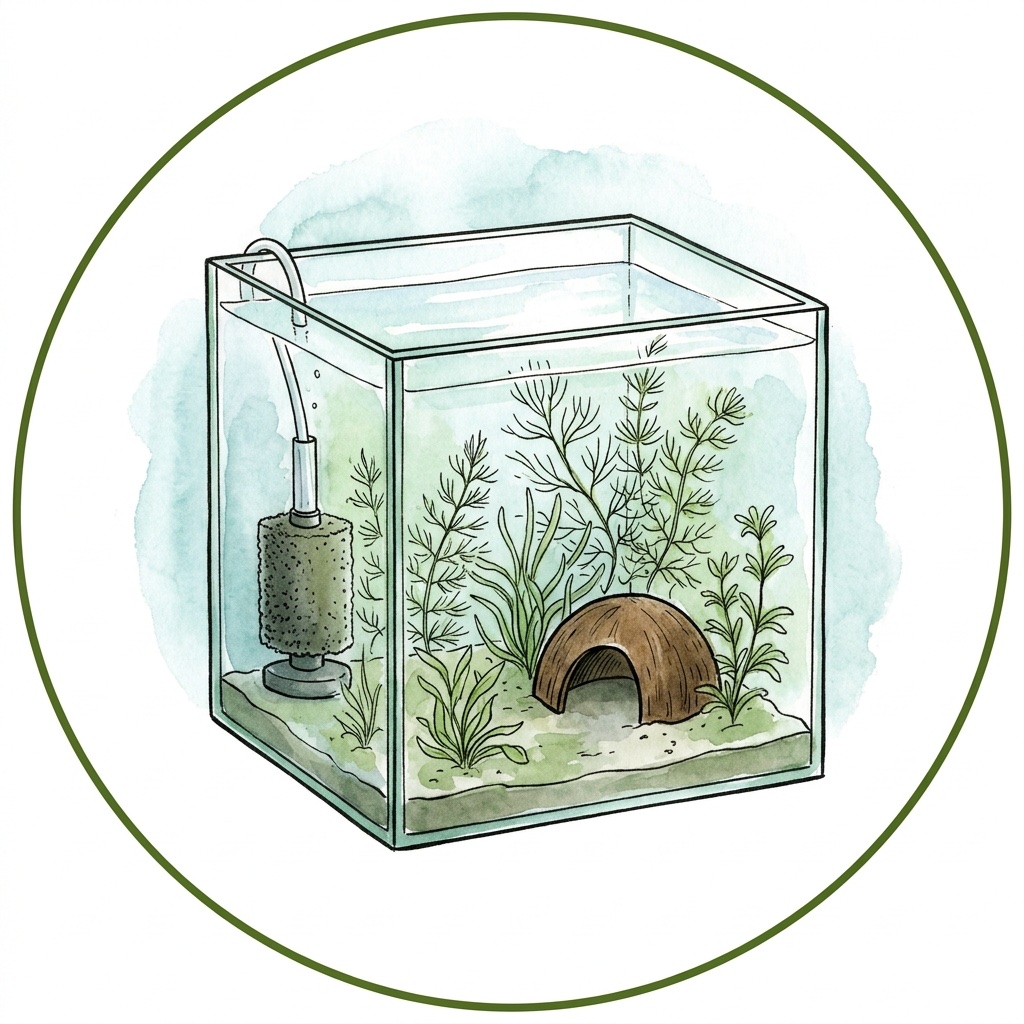
Day 0
Nest Building and Clicking Display
Male builds small bubble nest under floating plant or leaf; clicks intensify
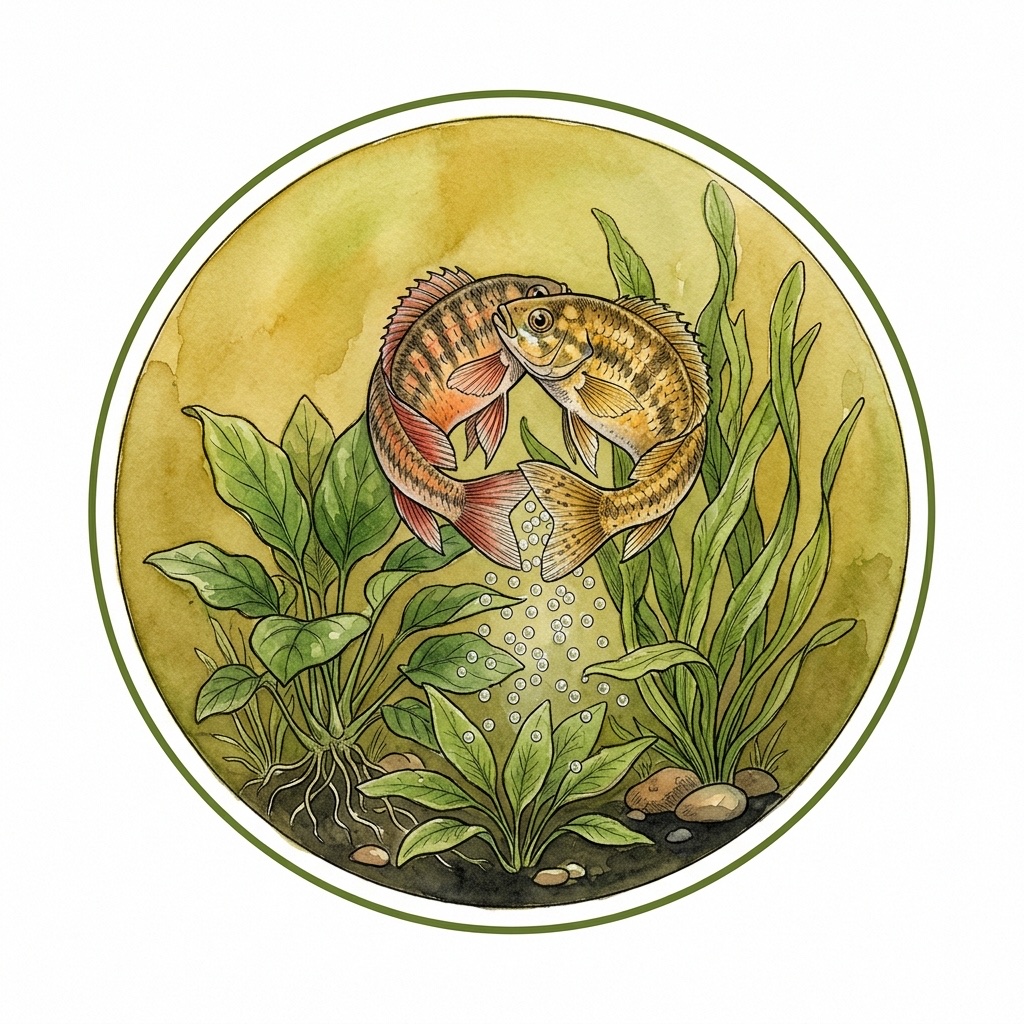
Day 1–2
Courtship and T-Embrace Spawning
Male leads female to nest; pair embrace; eggs float up to nest
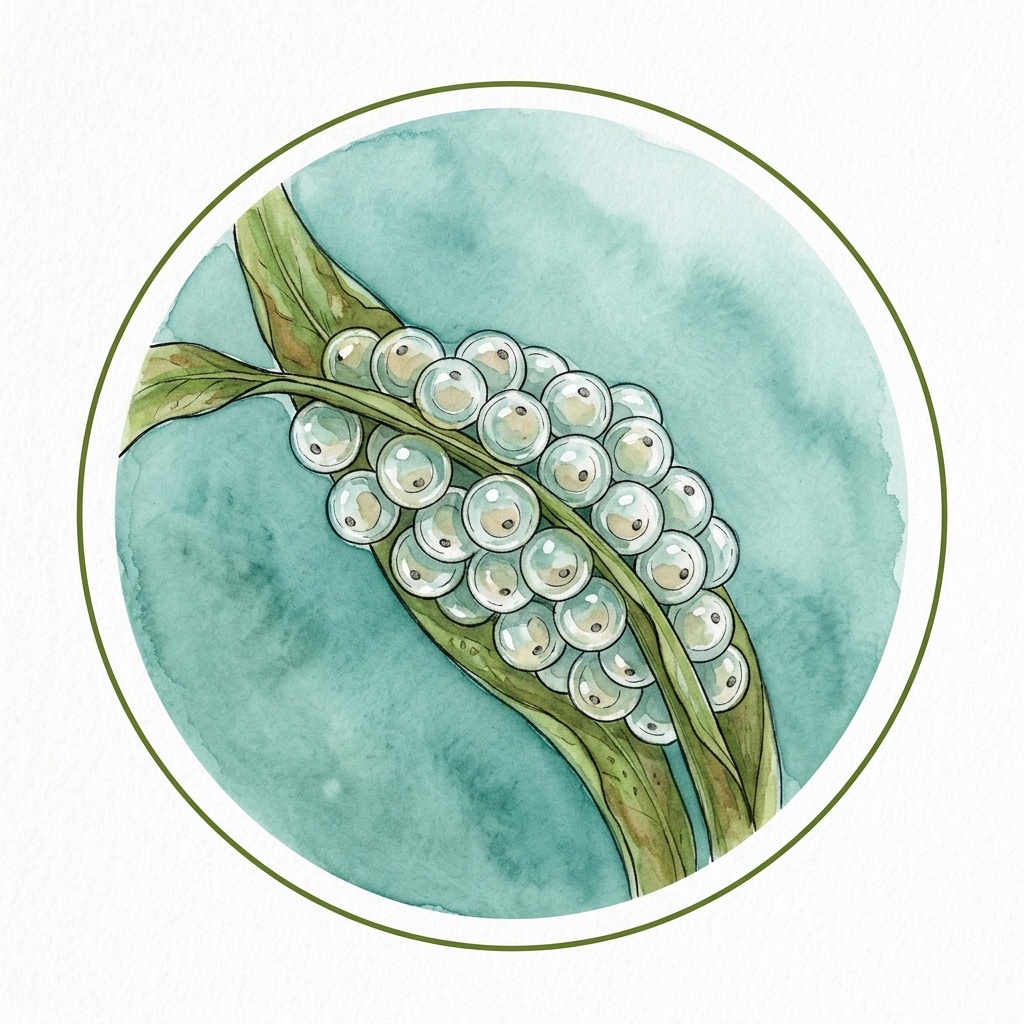
Day 2–3
Male Guards Nest; Remove Female
Male tends eggs; female removed to prevent stress
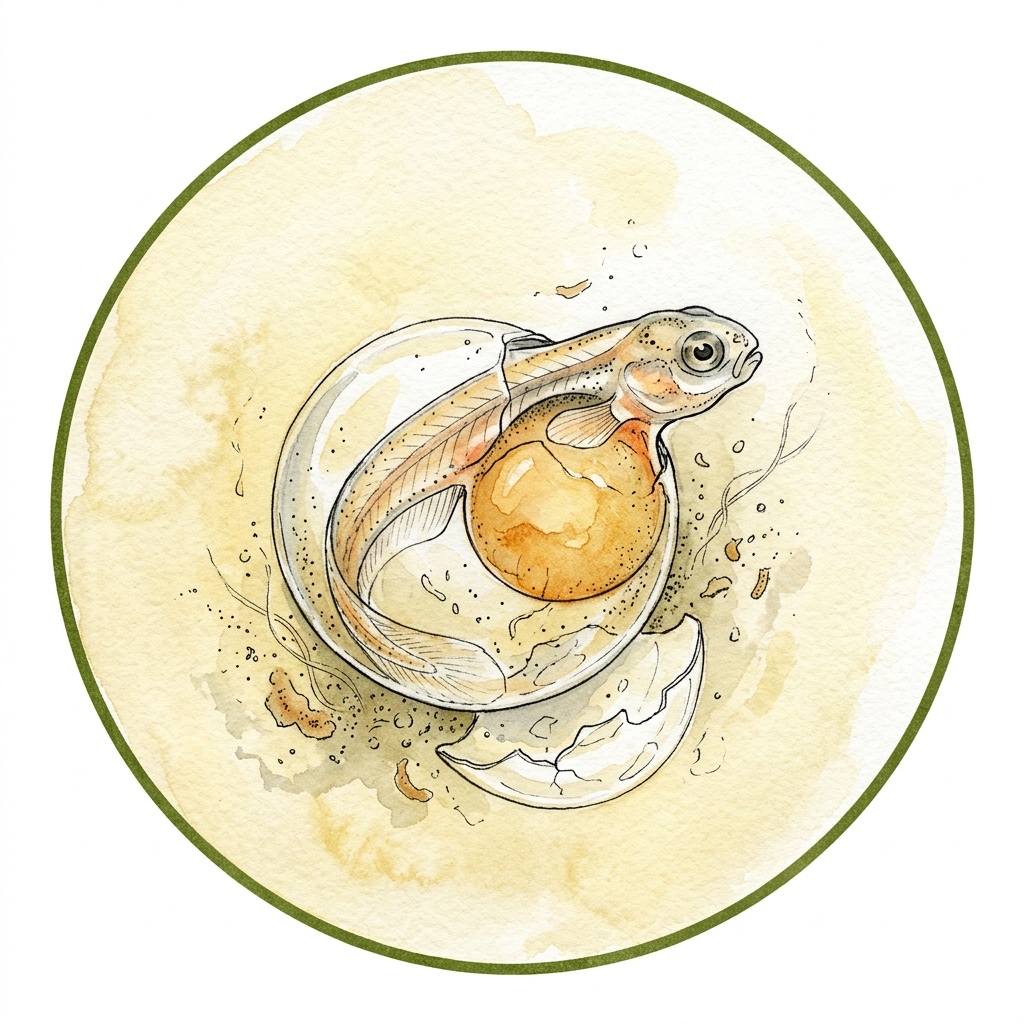
Day 3–4
Hatching
Eggs hatch within 24–48 hrs; fry hang in nest absorbing yolk
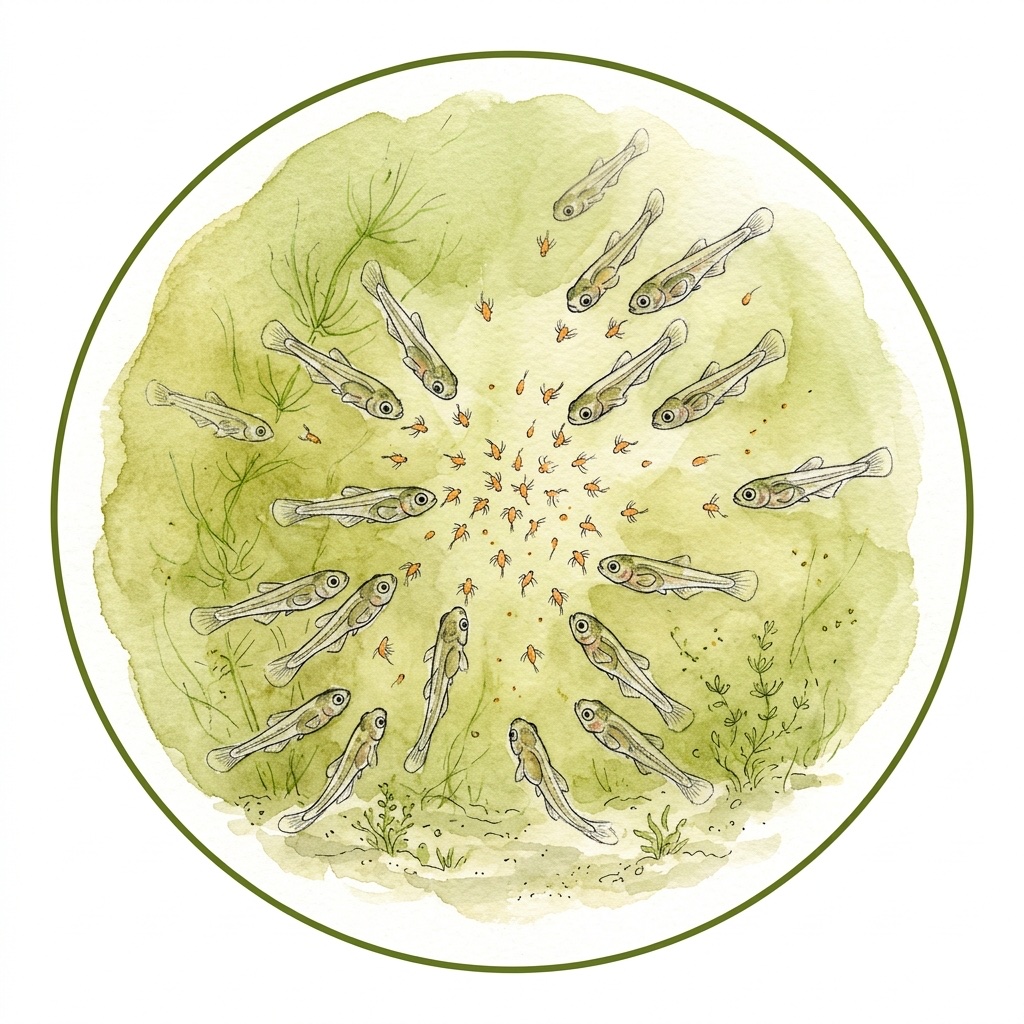
Day 5–7
Free Swimming; Begin Micro-Feeding
Fry become free-swimming; feed infusoria, vinegar eels, then baby brine shrimp
Conditioning
Condition a well-selected pair or a trio (one male and two females) for one to two weeks in a mature, well-planted tank. Offer live baby brine shrimp, microworms, grindal worms, and frozen cyclops or daphnia two or three times daily in small amounts. The female should round out visibly from above, taking on a clearly oval profile; the male should develop peak spangle colour and begin displaying with fins extended and producing regular clicking calls. Gently lower water level to around 15–20 cm depth and raise temperature to 26–27 °C. Ensure dense floating plant cover is in place — this is non-negotiable.
Nest Building and Clicking Display
When the male is ready, he selects a suitable site under a floating leaf, a section of floating plant, or occasionally under a broad emergent leaf, and begins constructing a small, compact bubble nest of saliva-coated air bubbles — far smaller and less conspicuous than the sprawling nests of larger gouramis or bettas, often no bigger than a thumbnail. During nest construction, the male becomes increasingly vocal, producing frequent double and triple clicks, especially when the female comes into view. This is one of the most charming sights in the nano-aquarium hobby: a fish the size of a paperclip, industriously spitting bubbles beneath a leaf while audibly clicking at a waiting female.
Courtship and T-Embrace Spawning
When the nest is complete and the female is receptive, the male performs a slow, spreading display with all fins fully extended beneath the nest, frequently punctuated with clicks. He leads the female under the nest, where they perform the distinctive anabantoid T-embrace: the male wraps his body around the female, inverting her momentarily. She releases a small cluster of eggs — often only 5 to 15 per embrace — which float upward (sparkling gourami eggs are buoyant, unlike those of many other gouramis) directly into the bubble nest. The embrace repeats every few minutes over the course of one to two hours, with total clutch size typically between 80 and 200 eggs depending on female size and condition.
Male Guards Nest; Remove Female
Once spawning is complete, the male takes sole charge of the nest, catching any eggs that fall and returning them to the bubble raft, and gently driving the female away. The female’s parental role is finished, and keeping her in the tank now invites stress and possible physical harassment; remove her to a separate holding tank with plenty of cover and resume normal feeding. Keep the breeding tank very calm, with no external disturbance — sparkling gourami males are easily spooked and may abandon a nest if the tank is tapped, the light is switched on abruptly, or a large shadow passes overhead.
Hatching
At 26 °C, eggs hatch within 24 to 48 hours. The newly emerged fry — minute, translucent, and barely larger than a comma — hang motionless from the bubble nest, absorbing their yolk sacs. The male continues to tend the nest attentively, catching any fry that fall and returning them. Do not feed the tank at this stage; the fry are not yet ready to consume external food, and any uneaten food will foul the water and threaten the clutch.
Free Swimming; Begin Micro-Feeding
Fry become free-swimming three to five days after hatching. At this point they are extremely small — noticeably smaller than newly hatched fry of honey or dwarf gourami — and require the very smallest first foods: infusoria cultured from lettuce or banana leaves, commercially prepared liquid fry food, vinegar eels, or green water are the reliable options. After about four to five days of micro-feeding, fry are typically large enough to take freshly hatched baby brine shrimp, and growth accelerates noticeably once they are on brine. Remove the male around the time fry become free-swimming, as paternal guarding behaviour fades and adults will opportunistically eat fry that stray from cover. With consistent feeding and stable conditions, fry reach recognisable juvenile form at six to eight weeks and begin showing the first iridescent spangles at around three months.
Quick Reference
| Scientific Name | Trichopsis pumila |
| Family | Osphronemidae |
| Origin | Thailand, Cambodia, Laos, Vietnam, Peninsular Malaysia |
| Adult Size | 3–4 cm |
| Lifespan | 3–5 years |
| pH | 6.0–7.5 (ideal 6.2–6.8) |
| Temperature | 22–28 °C (ideal 24–26 °C) |
| Hardness | 2–10 dGH |
| Min Tank | 40 L for a pair or trio |
| Care Level | Beginner–Intermediate |
| Temperament | Peaceful, shy, audibly vocal |
| Diet | Micro-carnivore; crushed flake, micro pellets, cyclops, BBS |
| Breeding | Bubble nest under floating plant; male guards |
| Tank Zone | Mid-water to surface |
| Special Note | Labyrinth organ — needs warm surface air; audibly clicks during courtship |
Related Products

Reviews
Clear filtersThere are no reviews yet.