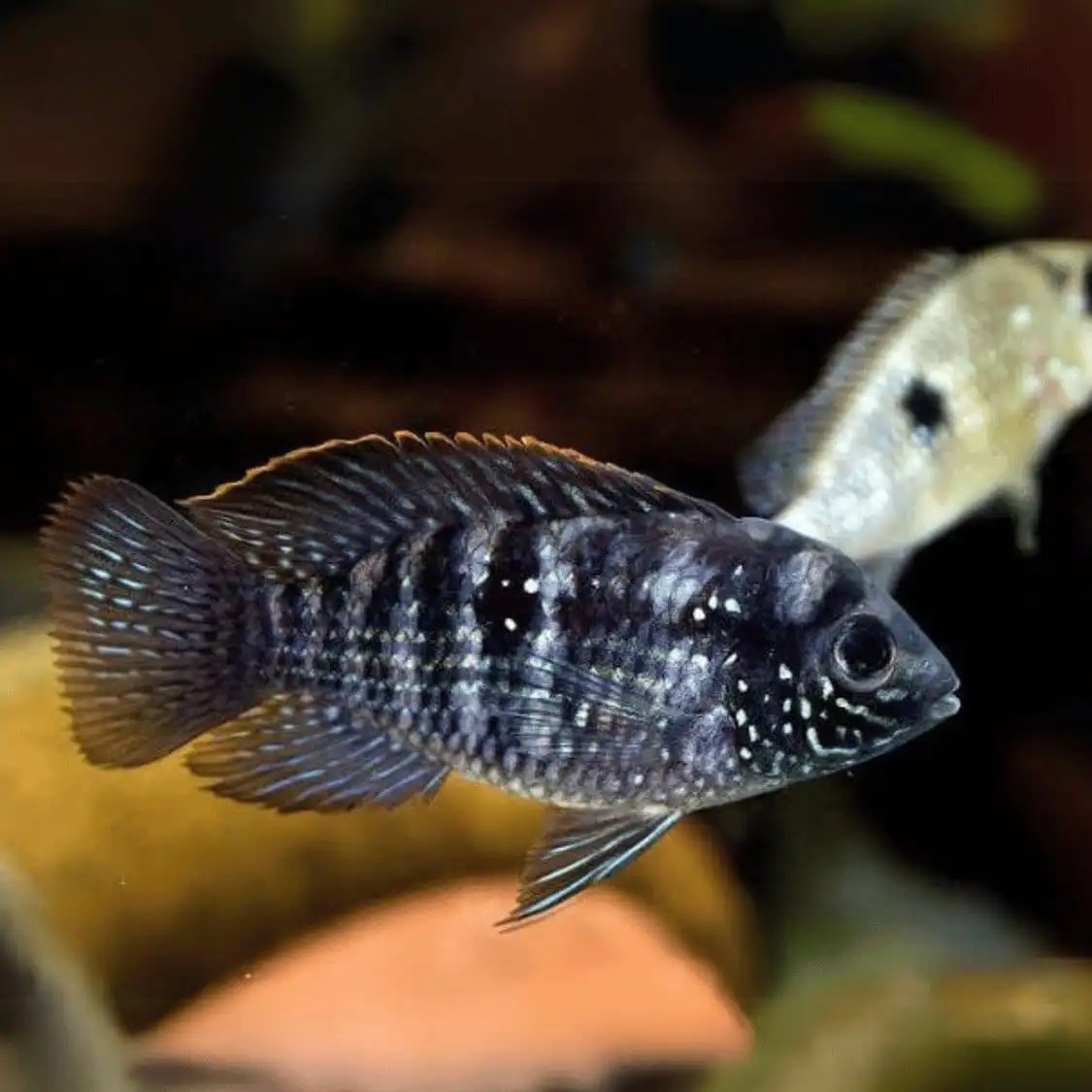
🪨 Species at a Glance
| Scientific Name | Andinoacara pulcher (formerly Aequidens pulcher) |
| Family | Cichlidae |
| Order | Cichliformes |
| Origin | Central America, Venezuela, Trinidad, Colombia — coastal drainages |
| Adult Size | 15–20 cm (6–8 in) |
| Current Size | 4 cm juvenile (grow-out stage) |
| Lifespan | 8–12 years with good care |
| pH Range | 6.5–8.0 (very adaptable) |
| Temperature | 22–28 °C (72–82 °F) |
| Hardness (dGH) | 5–20 (wide tolerance) |
| Diet | Omnivore leaning carnivore — pellets, frozen meats, some veg |
| Minimum Tank Size | 120 L juvenile grow-out; 200 L+ adult pair |
| Care Level | Beginner to Intermediate cichlid |
| Temperament | Mildly territorial, forms pair bonds, generally peaceful |
| Breeding | Substrate spawner on flat rock, biparental care — easy to breed |
| Tank Position | Mid to bottom, enjoys the full water column |
Species Background
The Blue Acara carries one of the more interesting taxonomic histories in the cichlid world, and if you have been keeping fish for more than a decade you will almost certainly remember it by its older name, *Aequidens pulcher*. The species epithet *pulcher* is Latin for ‘beautiful’ or ‘handsome’, a direct and deserved nod to the metallic sparkle that makes this fish so recognisable at any age. The genus *Aequidens* translates as ‘equal teeth’, referring to the uniform dentition that originally united a large group of South American cichlids under one convenient scientific umbrella. For decades, aquarists happily referred to the Blue Acara, the Green Terror, the Port Acara, and a handful of other broadly similar species as all belonging to this one genus — and honestly, the fish did look related enough that nobody raised serious objections.
That changed in 2007, when ichthyologists Oldřich Říčan and Jindřich Novák, together with colleagues working across several institutions, published a formal revision of the group based on combined morphological evidence (body shape, skull structure, scale patterns) and molecular data (mitochondrial and nuclear DNA sequences). Their analysis revealed that *Aequidens* as originally defined was paraphyletic — meaning it grouped together species that were not all each other’s closest relatives. In particular, a distinct clade of cichlids living on the western (Andean) side of South America and extending north into the Central American drainages was found to form a tight evolutionary group of its own, separate from the true *Aequidens* cichlids of the Amazon basin proper. To reflect this, the authors erected the new genus *Andinoacara* to house this clade. The name is a portmanteau — *Andino* referencing the Andes mountains whose rain-shadow streams so many of these fish inhabit, and *acara* from the Tupí-Guaraní word simply meaning cichlid or, more literally, a ‘perch-like fish that lives in fresh water’. The Blue Acara was reclassified as *Andinoacara pulcher*, joined by its larger and more aggressive relative the Green Terror (split further into *Andinoacara rivulatus* and the more recently described *A. stalsbergi*), along with several other related species from the Pacific slope of Colombia and Ecuador.
In the aquarium trade the older *Aequidens pulcher* name persists stubbornly in field guides, older reference books, and retail signage across a significant number of shops, which is why you will often see both names listed side by side. They refer to the exact same fish — do not be concerned if one supplier uses one spelling and another supplier uses the other, and do not let any retailer charge you a premium for the fish under a ‘new’ scientific name, because it is literally the same animal. The common name ‘Blue Acara’ itself has also been used loosely in the hobby to refer to both the wild-type *A. pulcher* and a selectively line-bred colour morph called the Electric Blue Acara, which we will discuss in detail in the colour varieties chapter below. Whichever name it goes by, *pulcher* remains the right word for it — a genuinely beautiful fish that earns its Latin epithet the moment you see adult colouration develop under good lighting. The taxonomic shuffle is a good reminder that modern fish classification is a living, evolving field, and that even well-known species occasionally get renamed as our tools for understanding evolutionary relationships improve.
Water Chemistry Guide
6.5–8.0
ideal 7.2
22–28 °C
ideal 25 °C
5–20 dGH
Very wide tolerance — soft to moderately hard all work
One of the biggest reasons the Blue Acara is recommended so consistently to first-time cichlid keepers is the exceptional width of its water parameter envelope. Unlike the delicate soft-water dwarfs of the deep Amazon (Apistogramma, wild-type Rams) or the specialist hard-water rift lake cichlids of the African Great Lakes (Mbuna, Peacocks, Frontosa), *Andinoacara pulcher* originates from a mosaic of habitats — slow-moving coastal streams in Venezuela that can swing from black-water acidity in the wet season to mildly alkaline hard-water clarity in the dry season, lowland tributaries in Trinidad carrying mineral loads washed down from limestone bedrock, and warmer drainages reaching into southern Central America where volcanic geology keeps pH buffered in the mid sevens. These waters vary dramatically in pH, hardness, and temperature between the wet and dry seasons, and the species has evolved over evolutionary time to tolerate that variability gracefully. In the aquarium this translates directly to a fish that thrives anywhere from a pH of 6.5 to 8.0 and a hardness reading of 5 to 20 dGH — essentially the entire normal range of municipal tap water you will encounter anywhere in Australia, North America, Europe, or Southeast Asia.
What matters much more than hitting any specific target number is **stability**. A Blue Acara kept at a rock-steady pH of 7.8 will be healthier, more colourful, more active, and considerably more likely to breed than the same fish kept at a theoretically ‘ideal’ 7.0 that fluctuates wildly between water changes or across the day due to CO2 swings in a planted tank. Consistency beats perfection every single time in this hobby, and the Blue Acara is a perfect example of the principle. If your tap water is hard (which most Australian metropolitan supplies are, typically running 10 to 18 dGH with a pH around 7.4 to 8.0), do not waste time or money on reverse-osmosis dilution for this species — use it straight from the tap (properly dechlorinated with a quality conditioner) and let the fish settle into those conditions long-term. Trying to chase a softer water target for a fish that does not need it introduces instability and failure modes (RO unit maintenance, remineralisation errors, buffer crashes) that will harm the fish more than the original hard water ever would.
Temperature is similarly forgiving: anywhere between 22 and 28 degrees Celsius works well, with 24 to 26 being the comfortable middle ground for adults and 26 degrees ideal for active juveniles growing out. Cooler temperatures slow the fish down and reduce their appetite; warmer temperatures speed up metabolism, growth, and waste production, which means more frequent feedings are tolerated and required but also more attention to water quality. Avoid rapid temperature swings during water changes — match your replacement water to within one degree of the tank temperature, which is easily done by filling a bucket, letting it sit for ten minutes with a small heater, and checking with a digital thermometer before adding. For the four-centimetre juvenile specifically, keeping the tank at the upper end of the range (26 to 27 degrees) during the first six months of grow-out will maximise growth rate and help the fish reach its adult form faster, at which point you can bring temperature back down to the 25-degree comfortable setpoint for long-term maintenance.
The Colour Spectrum
🐟 Wild-Type Blue Acara
The classic form: bronze-olive body overlaid with rows of metallic turquoise-blue spangles; seven to eight dark vertical bars on the flanks; bright orange trim on the unpaired fins as the fish matures into adulthood.
💙 Electric Blue Acara (EBA)
A line-bred selection of the same species, developed over many generations to replace the bronze base colour with a solid, nearly fluorescent electric-blue finish from nose to tail. A very popular hobby form.
🟡 Gold / Xanthic Blue Acara
A rare and somewhat unstable colour sport in which the melanin is reduced, yielding a buttery gold body with softer blue sparkle. Not commonly exported and usually only seen in specialist breeders’ stocks.
A quick note on terminology, because confusion is extremely common in this corner of the hobby: the Electric Blue Acara (EBA) is simply *Andinoacara pulcher* that has been selectively bred over many generations for an intensified all-over blue pigment pattern. It is the same species as the wild type, interbreeds freely with it, and shares absolutely identical care requirements — water parameters, tank size, diet, temperament, breeding behaviour, and lifespan all match. The visual difference is purely the result of accumulated artificial selection for blue pigment distribution, combined in some lines with the suppression of the underlying bronze melanin base. Do not confuse the Electric Blue Acara with the **Electric Blue Ram** (*Mikrogeophagus ramirezi* ‘Electric Blue’) — a completely different and much smaller, far more delicate South American dwarf cichlid with very different water requirements (soft, acidic, warm), a tiny adult size of around 5 cm, and a significantly more demanding care profile. The names sound similar and the fish appear on adjacent shelves in many stores, but they are not related, not interchangeable, and certainly not substitutes for one another. Also be cautious about the ‘Electric Blue Jack Dempsey’ (*Rocio octofasciata* ‘EBJD’) — another popular blue line-bred cichlid, again totally unrelated to the Blue Acara despite the superficial colour similarity.
The four-centimetre juveniles listed here are the wild-type *pulcher*, and as they grow the bronze base and blue spangling will develop in parallel over six to twelve months. Expect the first real shimmer to appear around the six-centimetre mark, with full adult colour locked in by twelve to fifteen centimetres. The progression is one of the genuine pleasures of keeping this species: a drab little juvenile transforms into something unmistakably regal, and the process takes long enough that you stay engaged as the months tick by. Colour depth in adults is highly responsive to three things — diet (carotenoid-rich foods like quality cichlid pellets with krill and astaxanthin will deepen the warm bronze tones and intensify the blue contrast), water quality (stable, clean water with consistent parameters sharpens the metallic scales, while poor water muddies them), and mood (a settled, confident fish in an established territory will always outshine a stressed new arrival still figuring out where to hide). Do not judge the final colour of your fish from how it looks in the first few weeks after purchase; give it three to six months to settle and grow into its environment before concluding anything about its genetic potential.
Creating the Perfect Habitat
A Blue Acara tank should borrow from both the New World cichlid playbook and the more open-plan community look, because this species genuinely uses every zone of the aquarium during its daily routine. For the four-centimetre juvenile listed here, a 120-litre grow-out tank (roughly 90 centimetres long, 38 centimetres wide, 38 centimetres high, or equivalent dimensions) is the right starting point: large enough to let the fish reach eight to ten centimetres over the next six months without stunting, small enough to make feeding, observation, and water changes easy and pleasant. Stunting is a real risk with cichlids kept in undersized tanks during their rapid juvenile growth phase, and a stunted fish rarely reaches its genetic size potential even if later moved to a larger tank — so do not cut corners on this step. When the fish approaches the ten-centimetre mark, or when a natural pair forms in your grow-out group, it is time to upgrade to the permanent adult home. Plan for a minimum of 200 litres for a single adult or an established breeding pair, and ideally 300 litres (roughly 120 centimetres long) if you want to keep them in a modest community context with robust tank mates. Bigger is always better for cichlid territoriality, and the more swimming room you can provide the more you will see of the species’ natural patrolling and display behaviour.
Start with a substrate of fine pool-filter sand or rounded smooth pea gravel in a natural tan, brown, or black shade. Blue Acaras are gentle substrate sifters, frequently taking mouthfuls of sand and spitting them out through their gills as they search for food particles — this is completely natural behaviour that keeps the substrate aerated and the fish entertained. Sharp gravel or decorative glass chips can damage their lips and gill arches over years of keeping, so avoid those materials entirely. A sand bed three to five centimetres deep is ideal; deeper beds can go anaerobic in cichlid tanks where the fish do not fully disturb the lower layers, so do not overdo it.
Build a rock pile against one side of the tank using smooth river stones, textured slate, or lava rock — big enough that the fish can claim territory, find shade, and feel secure. Construct the pile against the tank glass for maximum stability and with the stones interlocking so they cannot collapse if the fish digs at the base (a common cichlid behaviour during pre-spawning). Include at least one flat exposed rock near the front of the rockwork as a potential spawning slab; Blue Acaras are substrate spawners and will reward you by using it. Large pieces of driftwood — spiderwood, Malaysian driftwood, mopani — add structural interest, release mild tannins that condition the water, and provide the fish with territory markers. Aim for one substantial centrepiece plus a couple of smaller branches distributed across the length of the tank.
Finally, and critically, leave a clear open swimming channel along the front two-thirds of the tank, running the entire length. This is the species’ favourite patrol zone, and adult Blue Acaras in a well-structured aquarium will cruise it with visible confidence, turning at each end in a graceful figure-eight pattern that is one of the great pleasures of owning a medium-sized cichlid. Plants are welcome in the tank but should be tough species that can withstand the occasional nudge or mild root disturbance. Anubias attached to driftwood or rockwork (never planted directly in substrate — the rhizome rots if buried), Java fern tied to wood, Amazon swords planted in terracotta pot liners buried in the substrate to protect the roots from digging, and Vallisneria or Sagittaria along the back glass all work well. Delicate stem plants (Rotala, Ludwigia, Cabomba) will be uprooted during spawning preparation and generally look ragged in a cichlid tank, so skip them entirely. Floating plants (Amazon frogbit, Salvinia) are a nice addition that diffuses overhead light, provides shelter for any fry that survive in the main tank, and adds a naturalistic feel.
Tank (Juvenile Grow-Out)
120 L (roughly 90 × 38 × 38 cm). Sufficient for the 4 cm juvenile through to ~10 cm, at which point upgrade.
Tank (Adult / Pair)
200 L minimum for a single adult or pair; 300 L+ if combined with a tank mate group.
Filter
Canister rated ~2× tank volume per hour, or well-baffled large HOB. Moderate flow, good mechanical and bio media capacity.
Heater
150–200 W fully submersible, thermostatically controlled, set to 25 °C. Use two smaller heaters on larger tanks for safety redundancy.
Lighting
Moderate output LED, 8 to 10 hours per day on a timer. Brighter light brings out the metallic blue spangles; dim slightly if the fish seem shy.
Substrate
Fine pool-filter sand or rounded smooth gravel, 3–5 cm deep. Avoid sharp crushed materials that damage lips during substrate sifting.
Rockwork
Smooth river stones, slate, or lava rock. Include at least one flat stone as a potential spawning slab. Build pile against glass for stability.
Driftwood
One large centrepiece plus smaller branches. Pre-soaked to avoid floating. Releases mild tannins that condition water.
Plants (Optional)
Anubias, Java fern, Amazon sword, Vallisneria — tough species attached to hardscape or planted in pot liners.
Test Kit
Liquid test kit for ammonia, nitrite, nitrate, pH, GH, KH. Essential during cycling and for ongoing monthly maintenance.
Sexual Dimorphism
Sexing juvenile Blue Acaras at four centimetres is effectively impossible — the sexual dimorphism that eventually makes this species one of the easier cichlids to pair simply has not developed yet. Secondary sexual characteristics (fin extensions, nuchal hump, relative size differences, colour saturation) do not begin to appear until the fish reach approximately twelve centimetres, usually around eight to ten months of age under good feeding conditions. Any retailer or online seller who claims to offer ‘sexed’ four-centimetre Blue Acaras is either misinformed or being deliberately dishonest — wait for the fish to develop before making any pair-selection decisions. This is why the traditional and far more reliable method for obtaining a breeding pair is to grow out a group of six to eight juveniles together and allow them to pair naturally as they mature. Forming pairs from strangers introduced later in life is possible, but much more prone to failure and occasional injury-level aggression, so the grow-out route is strongly recommended unless you are deeply experienced with cichlid pair introductions.
Once the fish reach breeding age, the comparison table above becomes very clear and easy to apply. Males develop the classic cichlid profile — a deeper head, pronounced forehead hump (sometimes called a kype in reference to salmon, though it is a thickening of the nuchal pad rather than a bony structure in cichlids), and flowing dorsal and anal fin tips that trail well behind the body when the fish is at rest. The male’s colour also tends to be deeper and more saturated, especially in the blue spangle concentration along the flanks and the orange trim along the fin edges. Females remain more compact and rounded in body profile, which also makes them more agile during the spawning dance and the subsequent fry-shepherding phase. The genital papilla — the small tube near the vent, used for egg deposition and sperm release — becomes visible during pre-spawning preparation; males have a pointed, narrow papilla, while the female’s is shorter, blunt, and slightly wider. If you can inspect both fish from below during this phase (most easily done by gently directing them into a clear holding container), pair identification becomes unambiguous. Behaviourally, males tend to be more display-oriented — they flare their gill covers at rivals, patrol the territory edges with slow confident movements, and spend more time at the front of the tank showing off. Females, once paired, spend more time inspecting potential spawning surfaces, grazing over the flat rock you have provided, and are often the initiators of the actual breeding cycle.
| Feature | Male | Female |
|---|---|---|
| Adult Size | Larger, often 18–20 cm | Smaller and more compact, 13–15 cm |
| Dorsal & Anal Fins | Long trailing filaments extending well past the tail base | Rounded, shorter extensions; fins look stubbier overall |
| Head Profile | Develops a nuchal hump and deeper, more sloping forehead with age | Stays rounded and less pronounced on the forehead |
| Body Colour | Deeper, more saturated blue sparkle with higher contrast bars | Slightly softer, paler blue; bars less pronounced |
| Genital Papilla | Small and pointed when viewed from below during spawning | Short, blunt, and tube-like during spawning |
| Behaviour | More display-oriented; flares at rivals and patrols the territory | More focused on substrate inspection and potential spawning sites |
What to Feed
Blue Acaras are opportunistic omnivores with a definite preference for meaty protein — in the wild they hunt aquatic insect larvae, small crustaceans, tubificid worms, chironomid larvae, and occasionally tiny fish that stray too close, supplemented with a little plant matter and algae-grazed detritus picked up during substrate sifting. In the aquarium they accept an exceptionally wide range of prepared foods, which makes feeding this species refreshingly simple compared to more specialised cichlids. The staple diet should be a quality sinking cichlid pellet sized appropriately to the fish’s current gape — around 1 mm for the four-centimetre juvenile, progressing to 2 mm at eight centimetres, and 3 to 4 mm for adults at their full size. Look for a product with whole fish meal or insect meal as the primary ingredient (not soy or wheat filler) and a protein content in the 40 to 45 percent range; overly high-protein cichlid foods marketed at obligate carnivores are not necessary for Blue Acaras and can contribute to long-term liver issues in adults that do not burn through that much protein daily. Two or three quality brands to look for include New Life Spectrum cichlid formula, Hikari Cichlid Gold, Omega One Cichlid Pellets, and Fluval Bug Bites cichlid formula — any of these, rotated occasionally to provide nutritional variety, will form an excellent backbone for the diet.
Rotate frozen foods into the diet two or three times a week for variety, enrichment, and colour enhancement. Bloodworms (chironomid midge larvae) are eagerly accepted and the Blue Acara’s favourite frozen food by a wide margin — limit to once a week, however, as they are fatty and their exoskeletons are low in digestible nutrition compared to other options. Brine shrimp (both adult and newly hatched baby brine for juveniles) provide excellent carotenoid content for colour and are well tolerated. Krill chunks are a premium enrichment food that triggers very visible excitement at feeding time. Mysis shrimp are probably the best all-round frozen food in terms of balanced nutrition and acceptance. Chopped mussel, prawn, or squid for larger adults adds variety and unsaturated fatty acids. A small vegetable component once a week — blanched spinach, courgette slices, de-shelled peas (especially useful if a fish shows signs of constipation or bloating), or a spirulina-enriched pellet — provides fibre and keeps the gut healthy in a species that does consume some plant matter naturally.
For the juvenile grow-out phase specifically — the stage that the four-centimetre fish listed here is currently in — feed smaller amounts two to three times daily rather than one large meal. This maximises growth rate by keeping the digestive system constantly loaded, minimises waste spikes in a relatively small grow-out tank, and gets the young fish used to seeing and responding to you as their food source (which is very useful for later handling, health inspection, and general keeper-fish interaction). A good rule of thumb for juveniles: feed what they will consume in about 60 seconds of enthusiastic eating, three times a day. If food is left on the substrate after two minutes, reduce the portion next time. Once the fish reaches the adult stage (roughly 12 to 15 cm), twice daily feeding with similar ‘eat in 60 seconds’ portion sizing is plenty, with an occasional fasting day once a week being actively beneficial for long-term digestive health. A fasting day also lets you spot any underlying issues — a fish that refuses food after a one-day fast is worth watching carefully for disease.
Tank Mate Guide
The Blue Acara occupies a genuinely unusual and valuable niche among medium-sized cichlids: large enough to be a proper centrepiece fish with visible personality, peaceful enough to share a tank with a thoughtfully selected community, and territorial only within a defined pair-bond zone during breeding rather than across the entire aquarium at all times. This makes it one of the rare cichlids where the phrase ‘community tank’ is genuinely appropriate, as opposed to the misleading way that phrase is sometimes used for more aggressive species where ‘community’ really means ‘collection of fish that temporarily coexist before conflict erupts’. The rule of thumb for stocking is to pair the Blue Acara with tank mates that are either (a) too big to eat, which means anything over about six centimetres adult size as a reasonable floor, or (b) occupying a different zone of the tank and too fast to chase when they briefly cross paths with the cichlid. Sterbai cories cleaning the bottom, a bristlenose pleco working the driftwood, a school of eight to ten Congo tetras or boesemani rainbows in the upper level, and a Blue Acara pair cruising the middle is a textbook community layout that has worked for decades of aquarium keeping and fills every zone of the tank beautifully, providing visual interest, behavioural diversity, and biological balance all at once. This is the configuration we would recommend to anyone starting their first community cichlid tank, and it is genuinely one of the most satisfying aquascapes you can build.
The single most common and heartbreaking mistake new keepers make is including small schooling fish that were fine when the Blue Acara was four centimetres but become snacks as the cichlid matures and rediscovers its predatory instincts. Neon tetras, ember tetras, chili rasboras, green neons, small rasboras like the harlequin — all of these will be systematically picked off over the course of two or three months once the Blue Acara reaches about ten centimetres, usually during the night when the cichlid’s enhanced low-light vision gives it an overwhelming advantage. You will wake up to discover the school has ‘mysteriously vanished’ and blame water quality or disease, when the real cause is sitting calmly in the middle of the tank. Plan the community around the adult size of the cichlid, not the juvenile size. If you already have a small-tetra community and want to add cichlids, the Blue Acara is not the right species — look instead at dwarf cichlids like Apistogramma or rams, which stay small enough to coexist with nano fish permanently. Avoid also any fish specifically known for fin-nipping (tiger barbs, serpae tetras in small groups, silver tip tetras) or for matching the Blue Acara’s own territoriality with comparable aggression of their own (Convicts, Firemouths, Jack Dempseys, most African rift lake cichlids) — a separately aggressive fish in the same space means constant disputes, and even if no individual fish is seriously injured, the chronic stress degrades colour, growth, immune function, and breeding willingness across the whole tank. Stick with robust, peaceful, appropriately sized companions and the Blue Acara will be the best-behaved and most visually striking large fish in your aquarium, a genuine centrepiece that earns its keep every single day.
| Species | Why | |
|---|---|---|
| ✅ | Congo Tetra | Large, robust tetra that moves in the upper water column, too big to be viewed as food, and unbothered by mild cichlid assertiveness. Adds gentle movement. |
| ✅ | Sterbai Corydoras | Armoured bottom-dweller that occupies a different zone, tolerates the same temperature range, and cleans up uneaten cichlid food. Keep in groups of 6+. |
| ✅ | Bristlenose Pleco | Tough armoured catfish that holds its own against a cichlid, manages algae, and is fully nocturnal so it avoids territorial conflict during Blue Acara active hours. |
| ✅ | Silver Dollar | Large peaceful schooling fish that fills the upper-middle zone; robust enough to ignore cichlid posturing and herbivorous enough to not compete for protein food. |
| ✅ | Rainbowfish (Boesemani, Turquoise, Red) | Active, colourful, upper-level schoolers that tolerate similar water parameters and never bother cichlids. One of the best colour contrasts you can arrange. |
| ✅ | Severum (Gold or Green) | Peaceful larger cichlid with compatible temperament; similar care, good central-and-south-american community match, and a nice size complement to the Blue Acara. |
| ✅ | Keyhole Cichlid | Extremely shy and peaceful fellow cichlid that shares water chemistry preferences and will not compete for territory — arguably the most peaceful cichlid in the hobby. |
| ✅ | Larger Rasbora species (Scissortail) | Scissortail or other larger rasboras add mid-level movement and are too fast and too big to be chased or eaten by even a fully grown Blue Acara. |
| ❌ | Neon Tetra and other small tetras | A 15–20 cm adult Blue Acara will treat a 3 cm neon as food. Any fish small enough to fit in the cichlid’s mouth will eventually disappear, usually at night. |
| ❌ | Tiger Barb and other fin-nippers | Fin-nipping barbs will target the Blue Acara’s long dorsal and anal fin extensions as they develop, causing stress, permanent damage, and chronic infection risk. |
| ❌ | African Rift Lake Cichlids (Mbuna, Peacocks) | Require hard alkaline water and are far more aggressive; the Blue Acara will be constantly harassed and outcompeted for food. Wrong water chemistry, wrong temperament. |
| ❌ | Oscar | Too large (30+ cm adult), too aggressive, and far too messy. An adult Oscar will dominate and may injure a Blue Acara, and produces water conditions that outpace most filtration. |
| ❌ | Jack Dempsey / Firemouth / Convict | More aggressive Central American cichlids that will bully the comparatively peaceful Blue Acara, especially during their own breeding cycles. Cichlid-on-cichlid conflict is nearly always ugly. |
Reproduction & Breeding
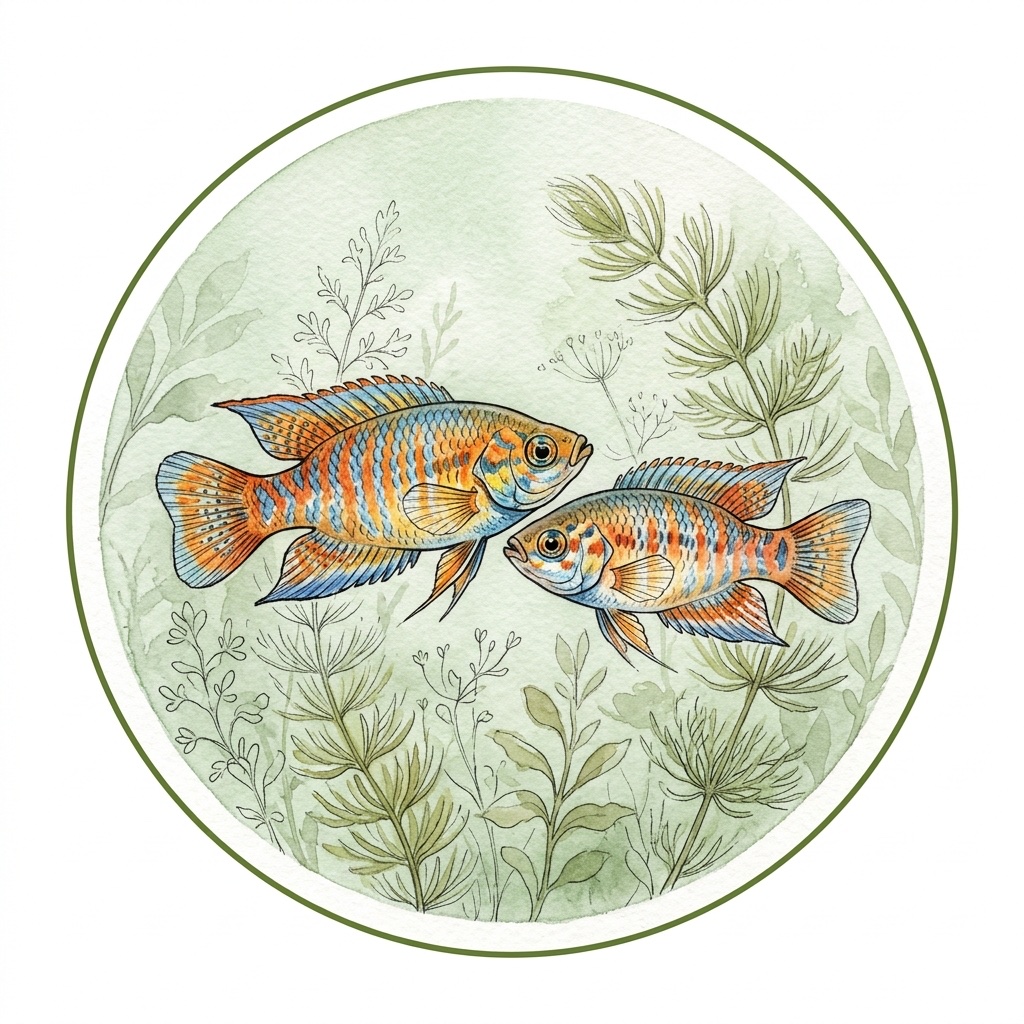
Month 8–12
Pair Bond Formation
Two fish claim a territory together within the grow-out group
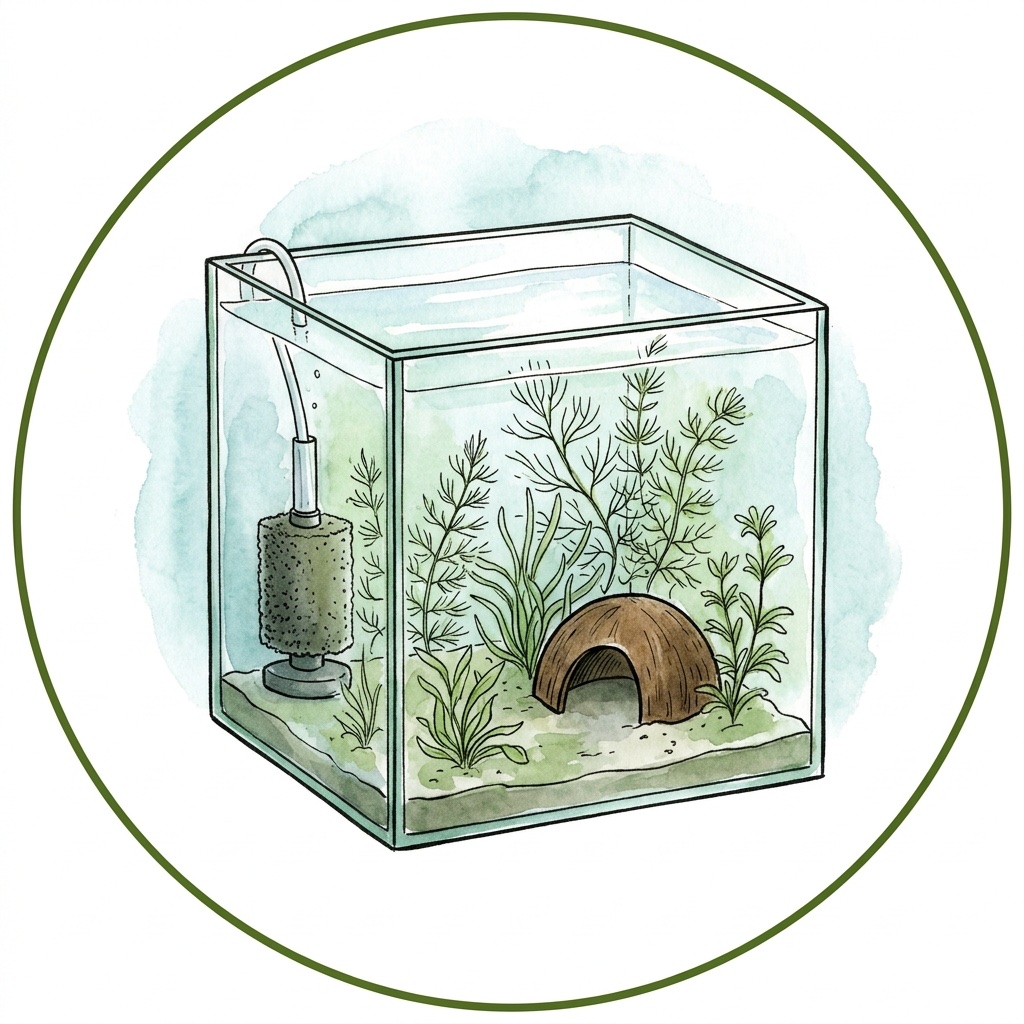
Day -3 to 0
Pre-Spawning Preparation
Flat rock is cleaned and intensely defended
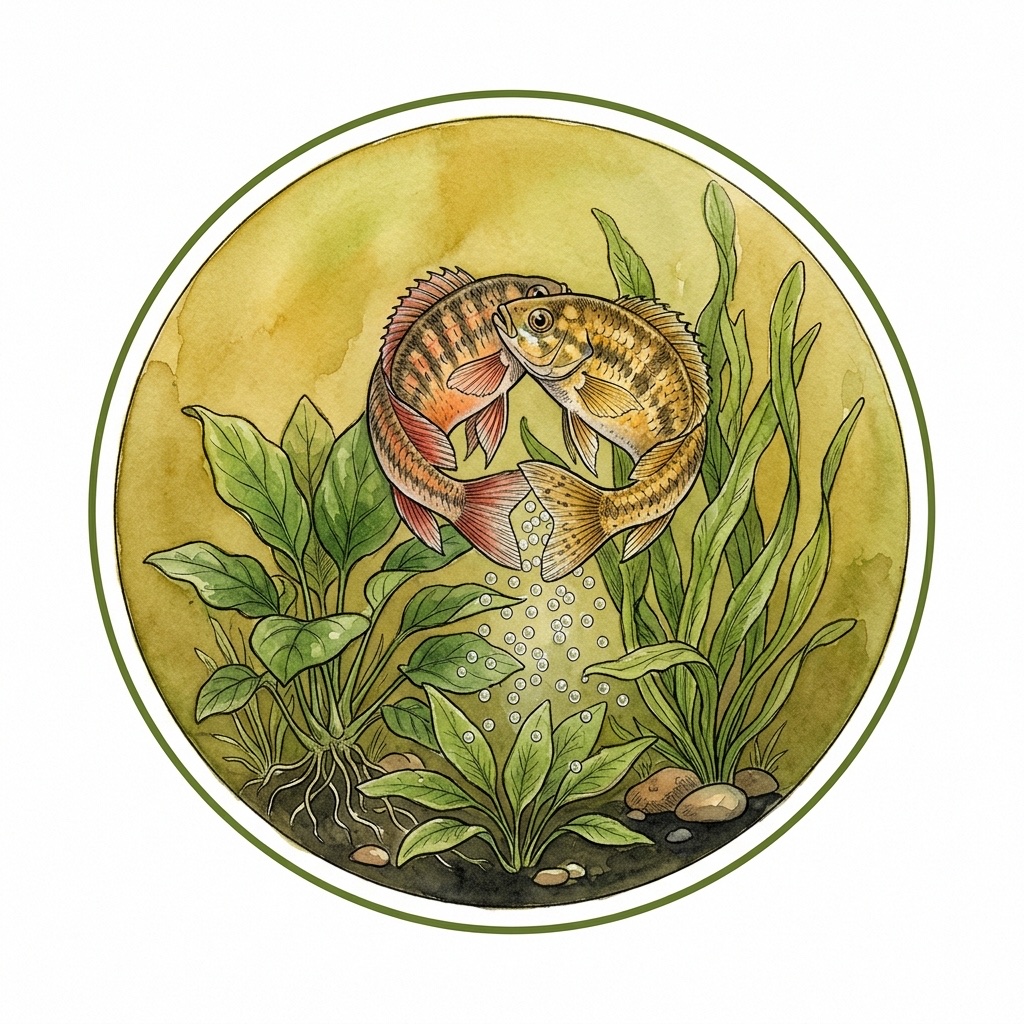
Day 0
Egg Laying
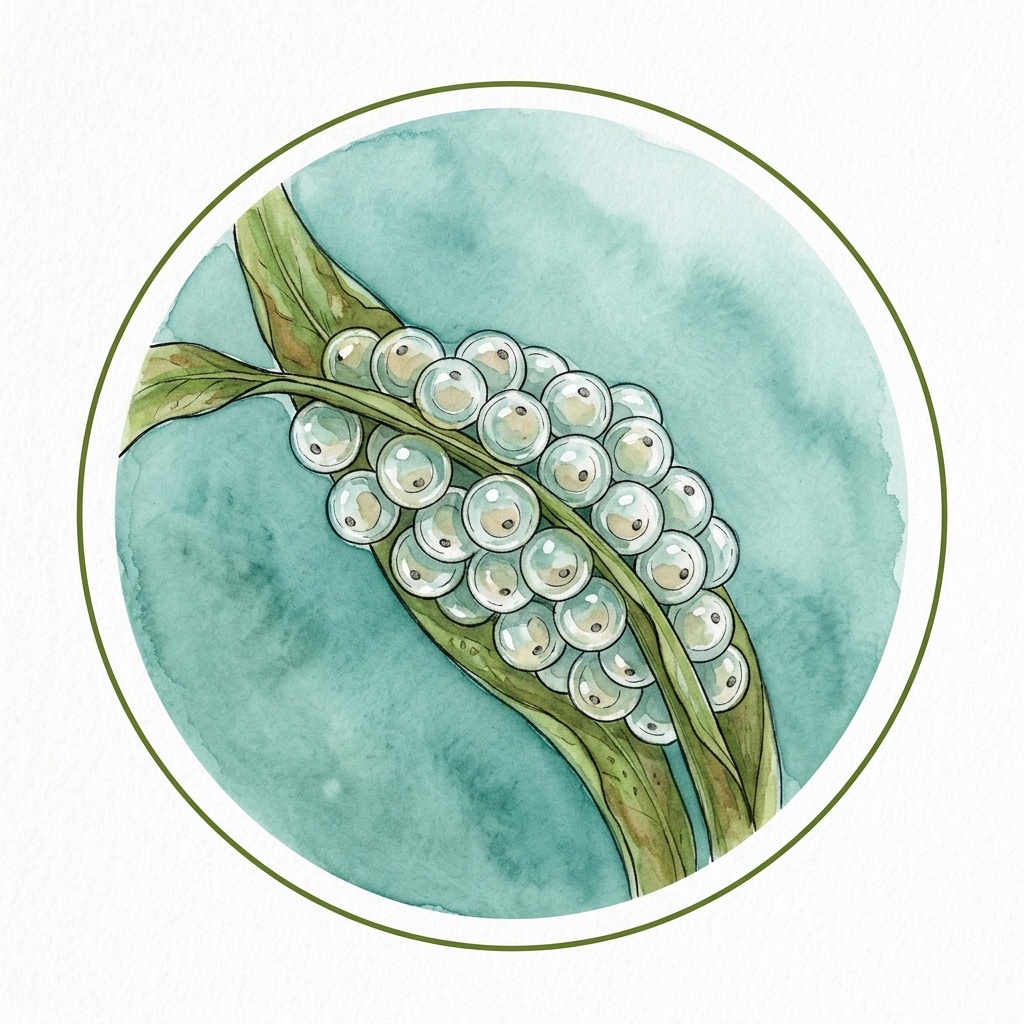
200–400 adhesive eggs deposited on the flat substrate
Day 2–3
Hatching (Wriggler Stage)
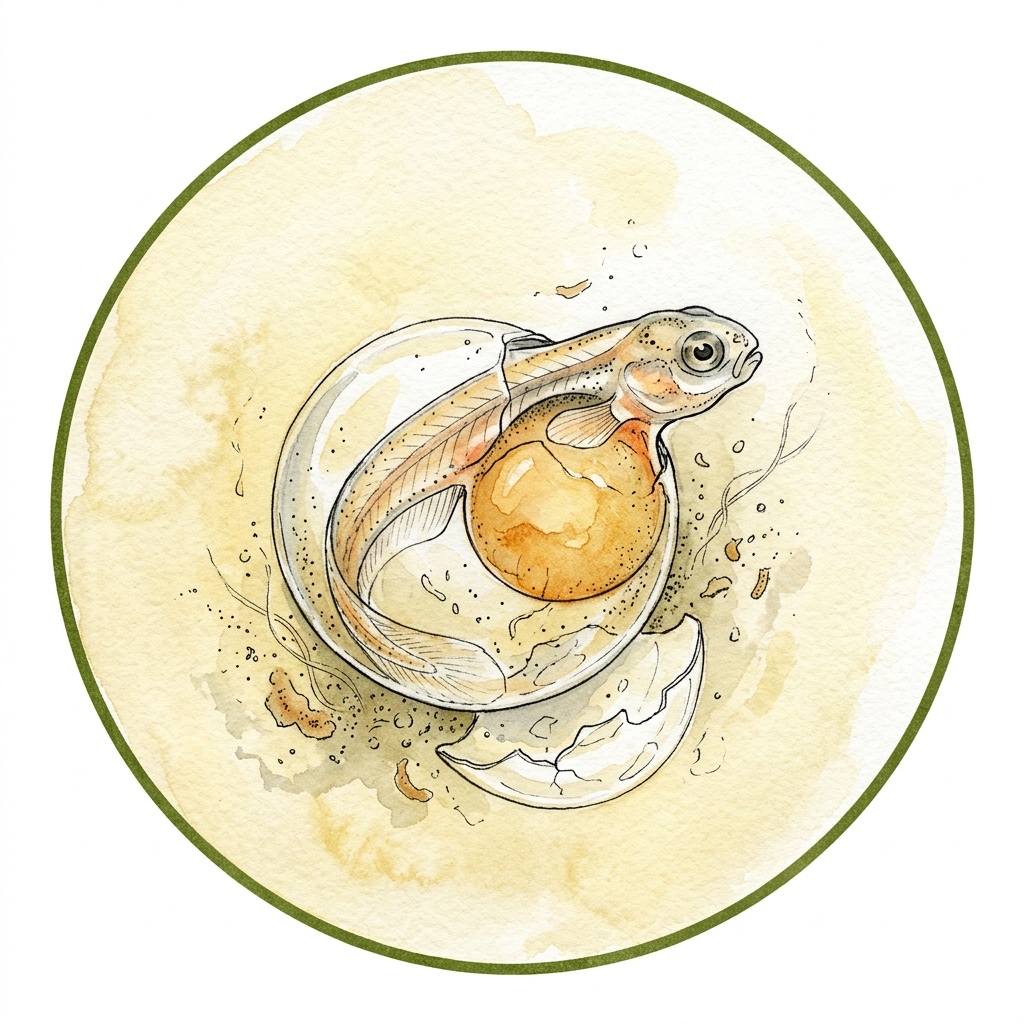
Larvae emerge but cannot yet swim; parents move them
Day 5–7
Free Swimming
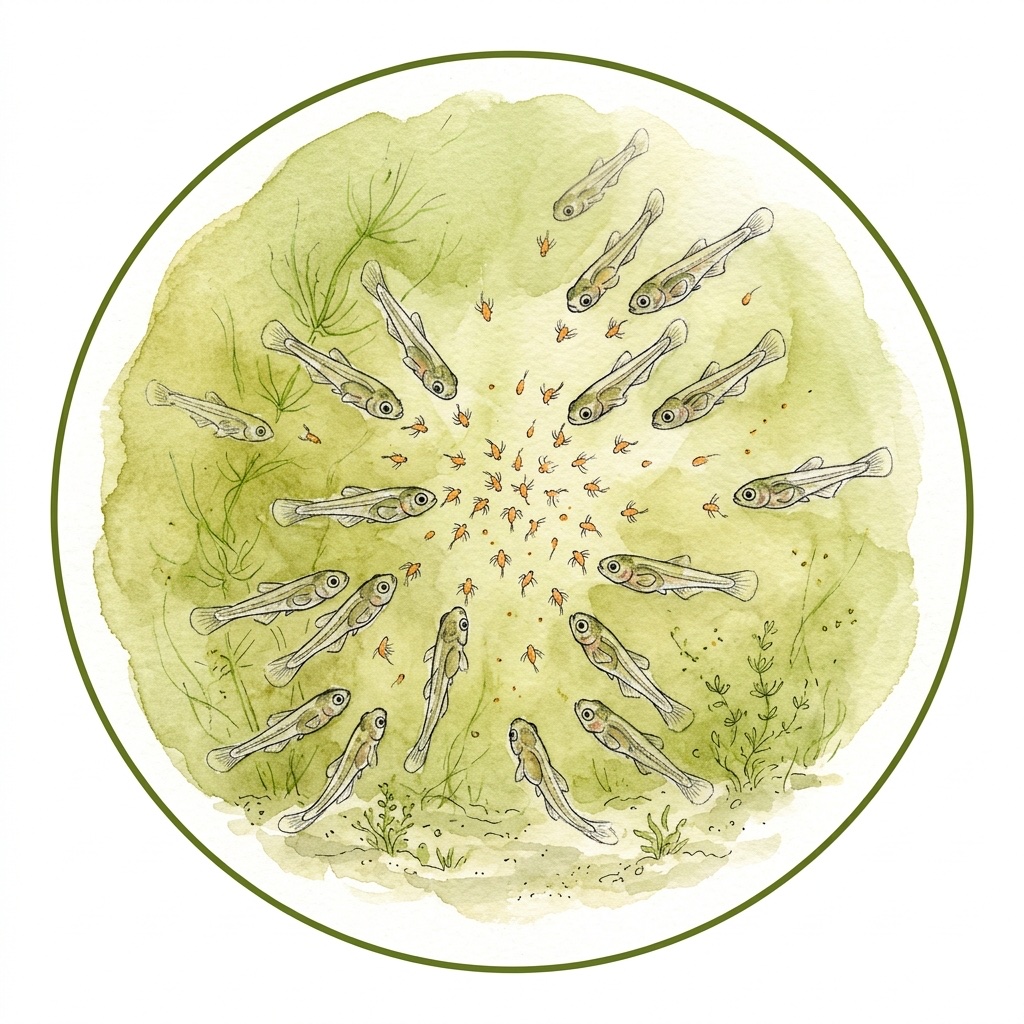
Fry begin swimming in a tight cloud, shepherded by parents
Week 3–8
Growth & Parental Weaning
Fry develop first colour; parents eventually lose interest
Pair Bond Formation
Start by raising a group of six to eight juveniles together in a 200-litre or larger tank with plenty of rockwork, driftwood, and plants — enough cover that subdominant fish can stay out of sight of dominant individuals. As the group matures past eight months, you will start to see subtle pairing behaviours emerging — two specific individuals spending time near each other, swimming in loose synchrony, chasing off other fish from a particular corner of the tank, and eventually jointly staking out one end of the aquarium as their own. This is the formation of a natural pair bond, and it is arguably the single biggest reason Blue Acaras are so much easier to breed than many other cichlid species: a naturally formed pair rarely fights, because the pair bond was established by mutual choice rather than forced proximity. Once you are confident the pair is genuinely established (this usually takes two to four weeks of consistent joint territorial behaviour, not just a single afternoon of apparent interest), it is time to rehome or move the other four to six fish to a separate tank to give the pair their space. Leaving extra fish in the tank during spawning will lead to aggression, injury, and often to the egg-eating that happens when a distressed parent abandons the brood to chase intruders. A clean, dedicated pair tank is the single biggest predictor of breeding success.
Pre-Spawning Preparation
Over a few days before spawning actually happens, the pair will pick a flat surface — most often the spawning slab you provided in the rockwork, though occasionally a piece of driftwood or even the bare front glass works too if the pair for some reason rejects the provided slab. Both fish meticulously clean the chosen surface, removing algae and debris with their mouths in repetitive grazing passes that can go on for hours at a time. This cleaning behaviour is unmistakable once you have seen it — it is more focused and more repetitive than normal feeding activity, and both fish take turns. Colour intensifies dramatically during this pre-spawning window: the male’s blue spangles become electric and almost reflective, and the female’s subtle warm flush across the belly darkens into an obvious egg-bearing glow. Territorial aggression ramps up noticeably — do not be surprised if even your arm near the glass triggers a threat flare, and tank mates that were previously tolerated may start being chased away from the cleaned spawning site. Feed the pair well during this period with frozen bloodworms and brine shrimp to properly condition the female for egg production. A slightly warmer tank (26 to 27 degrees Celsius) and a larger-than-usual water change (30 to 40 percent) often triggers spawning within a day or two — this simulates the rainy-season flush that cues breeding in the wild.
Egg Laying
The actual spawning is a calm, methodical, and genuinely beautiful process that can take two to three hours from start to finish. The female makes repeated passes across the cleaned slab, laying a small row of adhesive eggs each time by dragging her genital papilla across the surface; the male follows immediately behind her, passing over the row and fertilising the freshly laid eggs with a brief release of milt. A healthy, well-conditioned adult pair will deposit anywhere from 200 to 400 pale cream-coloured eggs in a neat oval or circular pattern on the slab. First-time pairs often lay fewer eggs (100 to 200) and the clutch quality may be lower, but each subsequent spawn (spawns typically occur every six to eight weeks if fry are removed or consumed) produces a larger and more fertile brood as the pair gains experience. Once the final eggs are laid, both parents shift immediately into guard mode — one fans fresh water over the eggs with its pectoral fins to keep them oxygenated and free of debris, while the other patrols the perimeter of the territory, flaring at any real or imagined threat. The parents will mouth-pick any eggs that turn white (infertile or fungal) to prevent the fungus spreading to healthy eggs — this is normal and welcome parental behaviour, not egg-eating.
Hatching (Wriggler Stage)
After roughly 60 to 72 hours at 26 degrees Celsius (a bit faster at warmer temperatures, a bit slower at cooler), the eggs hatch into tiny wriggling larvae that cannot yet swim but can clearly squirm and flex their bodies. The parents immediately move them to a new location — sometimes mouthful by mouthful to a different pit in the substrate, sometimes by excavating a shallow depression in the substrate directly next to the original spawning slab. This relocation behaviour is instinctive and evolved as a predator-avoidance strategy in the wild: egg predators that tracked the spawn to the slab are thrown off by the new location. At this ‘wriggler’ stage the fry are still absorbing their yolk sacs and remain clustered together in the pit, occasionally twitching and flopping but not yet actively feeding or swimming. One parent (often alternating shifts) tends the larvae constantly, fanning water over them and occasionally mouth-picking them up and resettling the whole cluster if it starts to spread. The other parent holds the outer perimeter of the territory with unmistakable seriousness. Any tank mate that approaches too closely will be attacked without hesitation, sometimes to the point of serious injury — this is the phase where community tank mates are at the highest risk.
Free Swimming
Around the fifth to seventh day after spawning, the yolk sac is fully depleted and the fry become free-swimming. This is one of the most rewarding sights in the entire freshwater hobby — a little cloud of two hundred pinhead-sized fry, each barely three millimetres long, following a parent around the tank in a tight swarm, with the other parent bringing up the rear and sweeping stragglers back into the group with gentle mouth movements. The cloud moves as a coherent unit and the parents are remarkably good at rounding up wanderers. Begin feeding newly hatched baby brine shrimp (freshly hatched, less than 12 hours old, so they still have their yolk sac intact for maximum nutrition), microworms, and very finely crushed high-protein flake multiple times a day — aim for four or five small feedings rather than one or two big ones, to maximise fry growth and water quality. The parents will often chew food themselves and spit clouds of finely-pulverised particles directly into the fry cloud, which is one of the most touching behaviours in freshwater cichlid keeping and a strong argument for letting the fish raise their own brood rather than pulling the eggs for artificial rearing. Feed, observe, and do gentle water changes (10 percent every two days, carefully siphoning from a corner away from the fry cloud).
Growth & Parental Weaning
Over the following weeks the fry grow steadily, gaining their first faint body bars at around three weeks and the beginnings of the blue spangle at six to eight weeks. By the second month they are a centimetre long, swimming independently of the parent cloud, and eating crushed pellet alongside frozen baby brine shrimp. At this point the parents typically begin to lose interest in brood-tending — a natural cue that the fry are now independent and that the pair is ready to recycle for the next spawn. In fact, parents that do not disengage at this point will sometimes become aggressive towards their older fry as the hormonal drive to breed again kicks in, so watch for any chasing or nipping behaviour from the parents and be prepared to intervene. The natural cue is for you to either pull the fry to a separate grow-out tank at this point, or allow the parents to recycle and spawn again in the main tank (in which case the older fry will integrate with the pair’s patrol zone and usually be tolerated, but may eat some of the next batch’s smaller fry — cichlid family dynamics get complicated). A single healthy adult pair in good condition can comfortably produce a brood every six to eight weeks for many years running, so plan your fry-management strategy in advance and have grow-out tank capacity or buyer arrangements lined up before the first spawn, or you will find yourself very quickly overwhelmed by Blue Acara juveniles.
Quick Reference
| Scientific Name | Andinoacara pulcher (formerly Aequidens pulcher) |
| Current Size | 4 cm juvenile |
| Adult Size | 15–20 cm (6–8 in) |
| Lifespan | 8–12 years |
| pH | 6.5–8.0 (ideal 7.2) |
| Temperature | 22–28 °C (ideal 25 °C) |
| Hardness | 5–20 dGH (very adaptable) |
| Min Tank (Juvenile) | 120 L grow-out |
| Min Tank (Adult Pair) | 200 L permanent home |
| Diet | Cichlid pellet, frozen bloodworm / brine / krill, light veg |
| Care Level | Beginner to Intermediate cichlid |
| Temperament | Mildly territorial, forms pair bonds, generally peaceful |
| Tank Position | Middle to bottom, uses full water column |
| Breeding | Substrate spawner, biparental — easy to breed |
| Keeper Tip | Buy 6+ juveniles and grow out together for a natural pair |
Related Products
Reviews
Clear filtersThere are no reviews yet.