🪨 Species at a Glance
| Scientific Name | Sawbwa resplendens (monotypic genus) |
| Common Names | Burmese Rummy Nose Rasbora, Asian Rummy Nose, Sawbwa Barb, Red-Nosed Sawbwa |
| Family | Cyprinidae (true carps; close to Danio, NOT Rasbora) |
| Origin | Myanmar — Inle Lake and surrounding tributaries, Shan Plateau (approx. 880 m altitude) |
| Adult Size | 3-4 cm (1.2-1.6 in) |
| Lifespan | 3-5 years in well-kept aquaria |
| Care Level | Intermediate — demands cool, alkaline, hard water |
| pH | 7.0-8.5 (alkaline preferred) |
| Temperature | 18-24 degrees C (64-75 degrees F) — coolwater species |
| Hardness | 10-20 dGH (hard, mineral-rich) |
| Min. Tank | 60 L+ for a school of 10 or more |
| Diet | Micro-carnivore — micro pellets, flake, frozen daphnia, baby brine shrimp |
| Tank Position | Upper to mid-water column |
| Community Safe | Yes — but only with cool-water, alkaline-tolerant species |
| Schooling | Obligate — groups of 10+ strongly recommended |
| Availability | In-Store Only — not shipped due to handling sensitivity |
| Conservation | Endangered in the wild — Inle Lake endemic |
Meet the Species
Few common names in the aquarium trade cause as much confusion as this one. The Burmese Rummy Nose Rasbora is, strictly speaking, neither Burmese-only, a Rummy Nose in the South American sense, nor even a Rasbora. Let us untangle each piece of the name in turn, because understanding the taxonomy is the first step to keeping this species well. The ‘Burmese’ part is correct: the species is endemic to Myanmar (formerly Burma), specifically to Inle Lake on the Shan Plateau. That part of the name has stuck because it is accurate and because Inle is one of the most famous freshwater biotopes in Southeast Asia. The ‘Rummy Nose’ part is a trade-name borrowing. When European aquarists first imported this fish in the mid-twentieth century, they noticed that mature males develop a vivid crimson flush across the snout, lips, and forehead — a pigment pattern visually reminiscent of the already-famous Hemigrammus rhodostomus from the Amazon. Fish dealers borrowed the label ‘Rummy Nose’ because it sold fish, and the name stuck. But the two species are separated by an entire ocean, an entire family tree, and completely opposite water chemistry requirements. Hemigrammus bleheri and Hemigrammus rhodostomus are Characidae from South American blackwaters — warm, soft, acidic, and tropical. Sawbwa resplendens is a Cyprinidae from Asian alpine mineral-rich waters — cool, hard, and alkaline. Confusing the two at the point of purchase is one of the most common reasons beginners lose this species within weeks.
The ‘Rasbora’ part is the most misleading element of the common name. True Rasboras belong to the genus Rasbora and its relatives within the subfamily Danioninae of the family Cyprinidae. Sawbwa resplendens does belong to Cyprinidae, and it is a member of Danioninae, but it is placed in a monotypic genus of its own — that is, a genus containing only one species. Sawbwa is its only member. Phylogenetically, Sawbwa is much closer to the true Danios (Danio rerio and relatives) and to the genus Microrasbora than it is to the classic Rasbora species like the Harlequin (Trigonostigma heteromorpha) or Scissortail (Rasbora trilineata). The historic trade has simply lumped small cyprinid schoolers under ‘Rasbora’ as a convenient retail bucket, and Sawbwa inherited that label. Some newer reference works and serious keepers prefer the name ‘Sawbwa Barb’ or ‘Asian Rummy Nose’, which are more taxonomically honest. In Myanmar, the genus name Sawbwa itself is a tribute: ‘Sawbwa’ was a royal title used by the Shan princes of the region around Inle Lake, making this one of the few aquarium fishes named after a line of human nobility.
The species epithet resplendens is Latin for ‘shining’ or ‘resplendent’, referring directly to the male’s pearlescent blue-silver body and the crimson head blaze. As a complete name, then, Sawbwa resplendens means ‘the resplendent one of the Shan princes’ — a genuinely lovely bit of Linnaean poetry for a fish that most aquarists walk past without a second look when it is sitting in a plain shop tank. The practical takeaway: when you see this species for sale, forget every assumption you have about South American Rummy Noses. Treat it as what it actually is — a high-altitude Asian cyprinid from a cool, alkaline lake, most similar in care to cold-tolerant Danios and White Cloud Mountain Minnows. Everything from water chemistry to tank mates flows from that single correction.
Spot the Difference: Male & Female
Among small community cyprinids, Sawbwa resplendens is unusually strongly dimorphic. In many Danios and Rasboras, telling males from females requires a careful eye and a trained guess. With Sawbwa, the difference between a fully coloured adult male and a mature female is so pronounced that newcomers often believe they have been sold two different species in the same bag. This is entirely normal and is a direct consequence of Inle Lake’s mating ecology: males must compete visually for female attention in shallow, well-lit alpine water, and the evolutionary pressure has produced one of the most ornamented male displays of any small cyprinid.
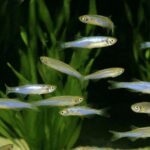
For aquarists, the practical implication is straightforward. When buying a group, do not be tempted to select only the bright red males — a tank full of only males will not form a settled school. The females, despite their plain appearance, are essential for calm group behaviour and for any chance at spawning. A healthy shop group will be roughly balanced, and we recommend asking for a mix of at least six females to four males in a starter group of ten. Over time, as the males settle in and find confidence, their red will deepen further, and subordinate males will tone down briefly during dominance negotiation. This flickering of colour intensity between males during the morning hours is one of the most delightful behaviours in a well-established Sawbwa tank.
Behavioural dimorphism goes beyond simple colour. Males patrol higher in the water column, frequently rising to the surface film and hovering beneath floating plants or surface debris. Females, by contrast, tend to stay slightly lower and closer to the centre of the school, darting up to feed and returning to the group afterward. Male-male interactions are worth watching: dominant males will flare their fins, rotate sideways to display the fullest pearl-blue flank, and briefly chase subordinate males before rejoining the school. These encounters are nearly always harmless and last only a few seconds. Unlike true territorial species, Sawbwa males do not claim defended territories — they simply negotiate a loose hierarchy within the moving school. If you observe prolonged chasing, repeated fin damage, or a single male hiding in a corner for long periods, the cause is almost always a tank that is too small or a male-to-female ratio that is too heavily weighted toward males. Adding more females almost always resolves the problem.
Spawning readiness is the easiest time to confirm sexing. A gravid female becomes visibly rounded when viewed from directly above, with a belly profile that bulges outward from the body line. Males in spawning condition develop their deepest red and will actively approach females, often shadowing them through plant cover. If you plan to breed, learning to read these sex-specific conditioning cues in your own fish is worth more than any written guide, because individual fish vary in how strongly they signal readiness. Spend fifteen minutes each morning quietly observing the school from different angles and you will learn to pick out spawning-ready pairs with surprising accuracy within a few weeks.
| Feature | Male | Female |
|---|---|---|
| Red head mask | Bright crimson across snout, lips, and forehead when in condition | Absent — head is plain silvery grey with no red pigment |
| Red caudal markings | Two vivid red spots at the base of the tail fin | Absent or extremely faint |
| Body iridescence | Strong pearl-blue to silver-blue shimmer on the flanks | Muted silver-grey, much less reflective |
| Body shape | Slim, elongated, and noticeably streamlined | Slightly deeper-bodied and rounder, especially when carrying eggs |
| Size | 3.5-4 cm — marginally larger at maturity | 3-3.5 cm — slightly smaller on average |
| Fin carriage | Fins carried erect and often flared in display | Fins carried closer to body, less frequent displaying |
| Behaviour | Actively displays to other males; patrols the upper water column | Stays tighter within the school and closer to mid-water |
| Overall impression | Obvious show fish — the reason people buy the species | Easy to mistake for an entirely different plain cyprinid at first glance |
Visual Varieties
🔴 Wild-Type Inle Lake Form (Male)
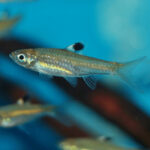
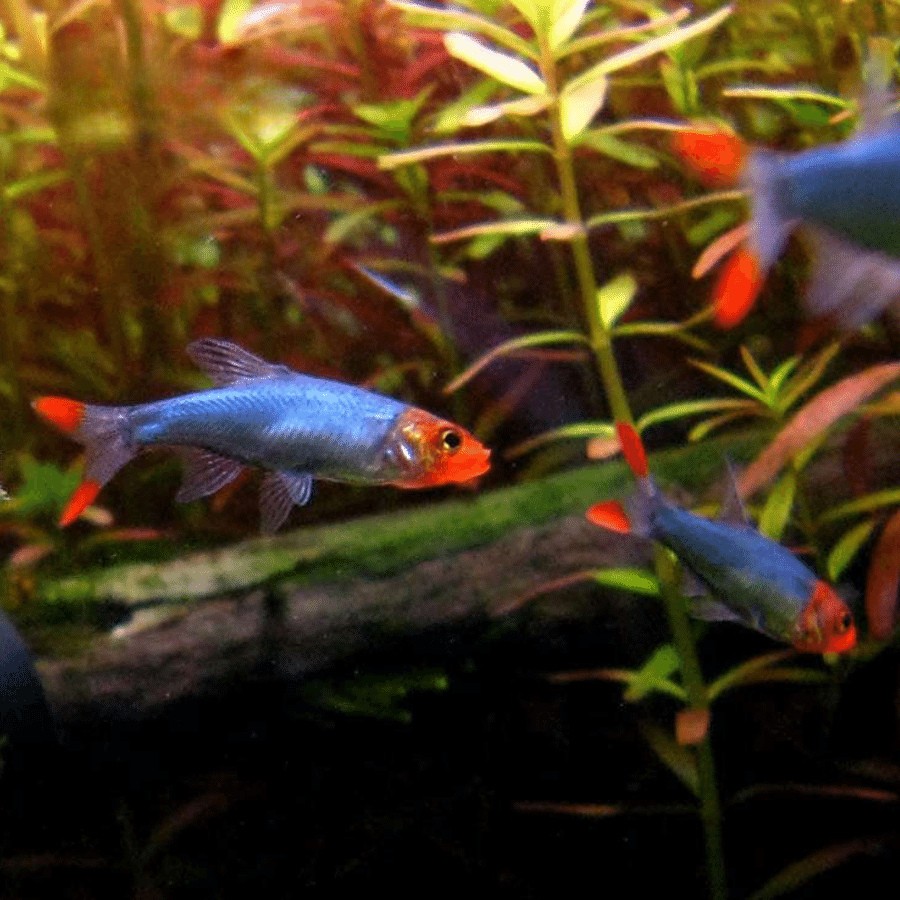
The only recognised form — a mature male in good condition displays a crimson red mask across the snout, lips, gill covers, and caudal fin base, combined with a pearl-blue to silver-blue shimmering flank.
⚪ Wild-Type Inle Lake Form (Female)
Females retain the Inle-form body shape but lack red pigment almost entirely; the body is a plain silvery-grey, slightly smaller, and noticeably less slender than males.
🟣 Non-Breeding / Stressed Male
Males outside spawning condition or under stress show a dulled, washed-out pinkish cast on the head rather than true crimson — a direct indicator of husbandry quality.
Unlike the South American tetra hobby, where decades of selective breeding have produced dozens of designer colour morphs, the Burmese Rummy Nose Rasbora has not been line-bred into artificial strains. What you see in the shop tank is the wild-type Inle Lake form, and that is by design. This species does not tolerate the close-quarter captive breeding and selective propagation that produces line-bred varieties of, say, guppies or platies. Most Australian stock is either captive-bred in specialist facilities in Southeast Asia and Europe, or, less commonly, responsibly sourced wild stock from Myanmar exporters. Both sources show the same natural colour pattern. The absence of designer strains is something to celebrate rather than regret — it preserves the integrity of a species whose wild population is genuinely under threat, and it keeps the hobby focused on husbandry quality rather than cosmetic novelty.
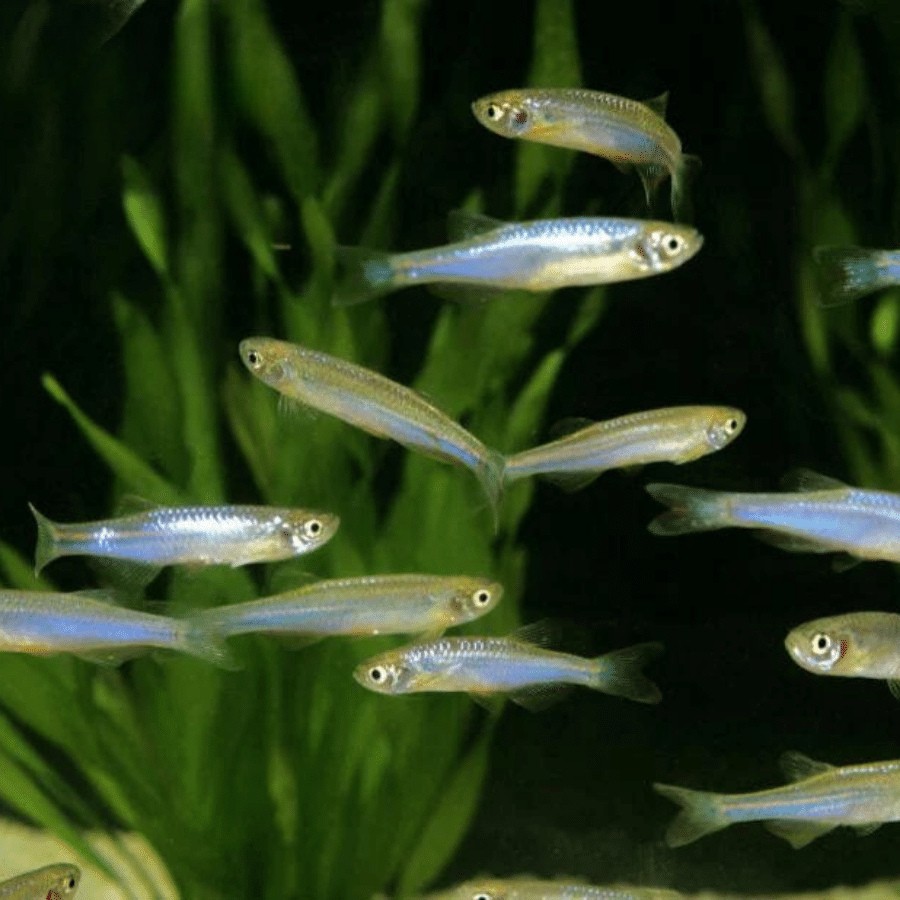
The red mask on the male is genuinely striking when the fish is in peak condition. It extends from the very tip of the snout, across the upper lip, along the forehead, and often picks up again as paired red patches at the base of the caudal fin — giving the appearance of a fish that has been dipped red at both ends. Between those red zones, the body shimmers with a pearlescent blue-silver that catches the light at angles and fades to near-transparency when the fish is viewed from directly in front. The combination is so distinctive that a well-kept school of Sawbwa is one of the most talked-about centrepieces at Australian planted-tank competitions. Under bright LED lighting angled from above, the blue iridescence becomes almost holographic, flashing in different directions as the fish turns. In moderate side-lighting the fish appears more silver than blue, which is why photographers who want to capture the signature pearl-blue shimmer go to great lengths to get the lighting angle just right.
Critically, the intensity of the red is a real-time indicator of three things: water quality, temperature, and stress. If the red is fading to pale pink, something in the environment is wrong. The most common causes in home tanks are water that is too warm (above 25 degrees C), water that has drifted acidic (below pH 7.0), or aggressive tank mates that chase the school and suppress breeding dress. Females never develop the red at all, so do not mistake plain silver females for faded males — learn to read the body shape instead, which we cover in detail in the sex comparison section below. A useful practical rule of thumb for experienced keepers: photograph your dominant male once a week in the same lighting conditions. Compare the images over a month and any gradual colour loss becomes obvious long before the fish shows overt signs of illness. This is one of the earliest warning systems any aquarist can have in a planted community tank, and it costs nothing.
Seasonal colour variation is also normal. In the cooler Australian months, when tank temperatures naturally drop to the 19 to 21 degree C range, Sawbwa males often reach their peak condition. Summer, with its temperature spikes, tends to be when colour is most at risk. Experienced Australian keepers who have run Sawbwa tanks for multiple years report a clear annual cycle: spectacular red intensity and active spawning behaviour through autumn and winter, with a quieter, slightly more subdued school through the hot summer months. Planning your photography, aquascape refresh, and any breeding attempts around this natural seasonal rhythm produces the best results and is more in line with how these fish evolved to behave in the seasonal cool-warm cycle of Inle Lake itself.
Water Quality Requirements
7.0–8.5
ideal 7.8
18–24 °C
ideal 22 °C
10–20 dGH
Hard, mineral-rich alkaline water required
If there is one sentence that defines success with the Burmese Rummy Nose Rasbora, it is this: treat it like the opposite of a tetra. Nearly every famous South American community fish — Neon Tetra, Cardinal Tetra, Rummy Nose Tetra, Angelfish, Discus, Apistogramma — wants warm, soft, slightly acidic water. Sawbwa resplendens wants the exact opposite. It comes from Inle Lake, a 116 square-kilometre mineral-rich alkaline lake sitting at around 880 metres above sea level on the Shan Plateau of Myanmar. The lake is fed by cool mountain streams and limestone-influenced groundwater, which produces year-round temperatures between roughly 17 and 23 degrees C, a stable pH in the high sevens to low eights, and hardness readings that would shock a Discus keeper.
Aim for a pH between 7.0 and 8.5, with 7.8 being a sweet spot that gives you buffer capacity on both sides. Hardness should sit between 10 and 20 dGH — if your tap water in Sydney, Melbourne, or Brisbane is already hard, you are in luck. Do not attempt to soften water for this species; you will regret it within weeks. Temperature is the single most misunderstood parameter. Many new keepers assume all aquarium fish need heaters set to 26 degrees C. Sawbwa resplendens will slowly decline at sustained temperatures above 25 degrees C. Target a range of 18 to 24 degrees C, with 22 degrees C being ideal year-round in Australia. In most Australian homes and the milder seasons, this means running the tank with no heater at all, or with a heater set to a low guard temperature of 18 degrees C purely to prevent winter drops. During summer heatwaves in Sydney or Perth, you may need to actively cool the tank using a small aquarium fan on the water surface or a clip-on chiller. This is one of the few species in the hobby where summer is the dangerous season, not winter.
Oxygen is closely linked to temperature, and since Sawbwa evolved in oxygen-rich alpine water, oxygenation matters as much as chemistry. Use a canister or HOB filter with good surface agitation, or supplement with an airstone during warmer months. Weekly water changes of 25 to 30 percent, using dechlorinated tap water matched to the tank temperature, are ideal. Do not use RO water or peat-filtered water — that path is for tetras, not Sawbwa. If your tap water is unusually soft, supplement with a mineral-remineralising salt such as a dedicated GH-plus product to raise hardness into the target range. When the parameters are right, the males’ red mask deepens into a colour so intense it looks almost painted on.
Practical Australian-specific notes are worth spelling out. Sydney and Melbourne tap water is generally moderately hard to hard with a slightly alkaline pH, making it close to ideal for Sawbwa straight from the tap after dechlorination. Brisbane and parts of the Gold Coast run softer and less alkaline; keepers in those regions should consider supplementing with crushed coral or a commercial mineral buffer. Perth tap water is often hard but variable; test your own supply before committing. Canberra and Adelaide are usually well within Sawbwa’s comfort zone. Regional Australian keepers on tank or bore water must test carefully — some bore water is too hard even for Sawbwa and may need dilution with soft rainwater to reach the 10 to 20 dGH target range.
The summer cooling question deserves its own paragraph because it is where most Australian Sawbwa tanks fail. In a typical Sydney summer, indoor room temperatures commonly sit between 26 and 32 degrees C during heatwaves, even with air conditioning running at night. A tank with no active cooling will track room temperature within a degree or two, which pushes Sawbwa firmly out of their safe zone. Your toolkit for summer cooling includes, in order of cost and effectiveness: (1) a small clip-on aquarium fan positioned to blow across the water surface — typically drops tank temperature 2 to 4 degrees C through evaporative cooling, at the cost of faster evaporation that you will need to top up; (2) floating ice bottles (sealed plastic bottles of frozen water) placed in the tank during extreme heat — effective but labour-intensive; (3) a proper aquarium chiller, which is a luxury option but the only truly reliable solution if you live somewhere very hot and intend to keep this species long-term. Even a basic AC90 or similar small chiller will handle a 60 to 90 L Sawbwa tank without effort. For most Australian keepers, a good surface fan plus a well-ventilated room is enough.
Ph and hardness stability are as important as the absolute numbers. Do not chase tiny deviations — a pH of 7.5 that is rock steady is far better than a pH that drifts between 7.4 and 8.1 across the week. Weekly testing of pH, GH, KH, ammonia, nitrite, and nitrate using a liquid test kit (strips are too imprecise for alkaline specialists) gives you the trend data you need. If your KH is above 8 dKH, pH will naturally remain stable in the high sevens without active intervention. If your KH drops toward 4 dKH or below, expect pH to become unstable and consider adding crushed coral or a dedicated buffering product to restore carbonate reserves.
Feeding Schedule & Diet
Sawbwa resplendens is a micro-carnivore in the wild, feeding primarily on zooplankton, small crustaceans, insect larvae, and surface-drifting invertebrates along the margins of Inle Lake. Its mouth is small, upturned, and adapted for picking prey from the upper water column and the surface film. In the aquarium, this translates into a diet of small, high-protein foods delivered at or near the surface.
High-quality micro-pellets or crushed flake food should form the daily staple. Look for formulas designed for small tropical to temperate fish, with protein content in the 40 to 45 percent range. Offer what the school can finish within two minutes, once or twice a day. Frozen foods are eagerly accepted and should form a significant part of the weekly rotation — frozen daphnia, frozen cyclops, baby brine shrimp, and micro-bloodworms are all excellent. Of these, daphnia is perhaps the most ecologically appropriate, since Inle Lake is full of small cladocerans very similar to the cultured daphnia sold in Australia. Live foods take coloration and conditioning to another level. Freshly hatched brine shrimp nauplii, vinegar eels, grindal worms, and micro-worms all trigger enthusiastic feeding responses. For a breeding project, a regular supply of live nauplii is almost non-negotiable.
One feature worth noting is the species’ preference for feeding near the surface. Unlike bottom-foraging Corydoras or mid-water tetras, Sawbwa will often ignore food that sinks past the middle of the tank. Use floating or slow-sinking foods and resist the urge to overfeed in an attempt to reach stragglers. Any food that reaches the substrate is a water quality problem, not a nutrition solution. A once-weekly fast day is beneficial, giving the digestive system a break and allowing you to observe each fish’s body condition. Keep an eye on females’ belly profiles — plump, evenly rounded bellies indicate good conditioning and possible readiness to spawn; sunken bellies indicate an internal issue or competition at feeding time.
Colour-enhancing nutrition is particularly relevant for this species. The crimson red on male Sawbwa is a carotenoid-based pigment that the fish cannot synthesise on its own — it must come from the diet. Look for foods containing natural carotenoid sources: astaxanthin (from krill and shrimp), canthaxanthin, spirulina, and paprika extract are all proven colour enhancers. Freeze-dried krill, cyclops, and high-quality colour-enhancing flake are excellent options. Do not rely on cheap generic flake food long-term; the red will gradually fade regardless of water quality if the diet is nutritionally poor. A practical rotation that has produced outstanding colour in Australian Sawbwa tanks is: high-quality colour flake or micro-pellet as daily staple, frozen daphnia two to three times a week, frozen cyclops or baby brine shrimp once a week, and live brine shrimp nauplii or grindal worms as an occasional treat when available.
Feeding behaviour at the school level is worth observing. Healthy Sawbwa approach feeding as an organised rush: when food hits the water, the entire school moves rapidly toward the surface in a loose coordinated wave, with dominant males often arriving first. Feeding should take no longer than ninety seconds to two minutes; if fish are still searching for food after that time, you have fed too much. If large portions of the school hang back and do not participate in feeding, that is a welfare signal to investigate. Common causes include a dominant individual monopolising the feeding zone, water quality issues, or recent stress from a water change or tank addition.
Tank Requirements & Layout
The ideal Sawbwa tank looks nothing like a classic Amazonian blackwater setup. Where a Rummy Nose Tetra biotope is dim, tannin-stained, and full of leaf litter, a Sawbwa biotope is bright, open, stone-dominated, and clear. Start with a tank of at least 60 litres — long footprint preferred over tall, because these fish occupy the upper half of the water column and appreciate horizontal swimming distance. A 90 cm or 120 cm long tank at only 30 cm depth is genuinely better than a tall 60 L cube for this species. A school of ten to fifteen is the minimum for natural behaviour; more is better, and twenty-plus produces the most spectacular displays.
Substrate should be fine sand or smooth natural gravel in light to neutral tones. Unlike tetras, Sawbwa does not particularly benefit from dark substrate — the Inle Lake floor is mostly light-coloured sediment and calcareous sand, and the fish look stunning against it. Decorate with rounded river stones, limestone, or tufa rock. These serve double duty as visual hardscape and as slow pH buffers. Arrange the rocks in piles and ridges along the back and sides of the tank, leaving a wide open swimming channel through the middle and front. This layout mimics the shallow stone-bottomed margins of Inle Lake where the species naturally congregates.
Planting is possible but should use alkaline- and cool-tolerant species rather than the usual tropical Amazon stems. Vallisneria is the single best plant choice — it thrives in hard water and its tall ribbon leaves provide vertical structure the fish can dart between. Java Fern and Anubias are safe background plants because they tolerate a wide pH and do not mind cooler temperatures. Avoid soft-water specialists like Rotala macrandra or most Cryptocoryne species; they will melt. Do not add driftwood or Indian almond leaves — these release tannins that lower pH, which is exactly what you do not want. A floating plant like Amazon Frogbit is optional and helps dim strong lighting, but keep coverage under 50 percent so the fish still have open surface for activity. Lighting can be moderate to bright; Inle is a sunlit lake and the males’ colour is most vivid in well-lit tanks.
Flow and circulation deserve special attention. Sawbwa evolved in a lake with gentle but persistent wind-driven currents and localised stream inflows. They enjoy swimming into mild current, which brings out their most active schooling behaviour. Position your filter return so it creates a gentle lengthwise flow across the top third of the tank. Avoid dead spots in the corners where detritus can accumulate. A single canister filter with a spray bar spanning the back of the tank is the gold-standard setup. If using a HOB filter, orient the outflow to skim the surface and create ripples that drive gas exchange. Air stones can be added during the warmer months purely for oxygenation, but they are not strictly necessary if surface agitation is adequate.
Aquascaping the Sawbwa biotope is a genuine art form and arguably one of the most under-represented styles in Australian competition aquascaping. The Japanese Iwagumi stone layout is a natural fit: a few well-placed larger rocks as focal points, a carpet of low-growing moss or Marsilea between them, and tall Vallisneria at the back. The result is minimalist, mineral-themed, and perfectly suited to showcasing the pearl-blue flash of a Sawbwa school moving across open water. Avoid the visual temptation to add everything at once; an over-decorated tank reduces swimming space and hides the school, defeating the whole point. Think open alpine lake, not dense jungle stream.
Cycling and establishment timing follow standard procedure but benefit from a slightly longer run-in. Cycle the tank fully using a fishless cycle method for four to six weeks before introducing Sawbwa. The alkaline, hard water conditions support strong nitrifying bacteria colonies, but the slightly cooler target temperature slows initial bacterial establishment by perhaps 15 to 20 percent compared to a tropical 26 degree C tank. Be patient, test daily during cycling, and wait for a stable zero-ammonia, zero-nitrite reading sustained for at least a week before adding fish. Introduce the school in one batch rather than trickling individuals in — schooling fish settle far better when they arrive together.
Filter
Canister or quality HOB with spray bar, rated 5-8x tank turnover. Sawbwa wants brisk circulation and high dissolved oxygen — sponge filter alone is insufficient.
Heater (optional, low guard setting)
Small adjustable heater set to 18-19 degrees C as a winter floor only. In most Australian climates, no heater is needed during warmer months.
Aquarium fan or chiller (summer)
A clip-on surface fan drops tank temperature by 2-4 degrees C via evaporative cooling — essential during Australian summer heatwaves.
Thermometer
Digital in-tank thermometer checked daily. The danger zone is above 25 degrees C, so monitoring summer peaks is critical.
Substrate
Fine pale sand or light natural gravel. Avoid dark substrates; Inle’s natural floor is pale and calcareous.
Hardscape
Rounded river stones, limestone, or tufa rock. These provide cover and act as slow pH and GH buffers.
Lighting
Moderate to bright LED suitable for low-demand plants. Inle is a sunlit alpine lake — bright lighting brings out male red.
Crushed coral media bag
Small mesh bag of crushed coral in the filter housing — stabilises pH in the alkaline range and replenishes hardness.
Choosing Tank Mates
Designing a community tank for Burmese Rummy Nose Rasbora is a genuinely different exercise from designing a standard tropical setup, and it is the single most common area where keepers go wrong. The critical realisation is that this species does not fit into the usual Amazon or Southeast Asian tropical community. Instead, it sits at the centre of what is sometimes called a ‘coolwater highland Asian biotope’ — a theme built around species that evolved in cooler, mineral-rich, higher-altitude waters. Done well, this theme is one of the most distinctive and rewarding specialist tanks in the hobby.
Start by accepting that you cannot keep Sawbwa with the fish most beginners want to combine them with. Neon Tetras, Cardinal Tetras, Angelfish, Discus, Apistogramma, German Rams, and similar warm soft-water species simply cannot share a tank with Sawbwa long-term without one side suffering. Once that constraint is accepted, a beautiful alternative community opens up. White Cloud Mountain Minnows are perhaps the most natural pairing — they share the upper-water niche, the coolwater tolerance, and the tolerance of alkaline hardness. A school of twelve Sawbwa plus a school of twelve White Clouds in a well-planted, rock-decorated 90 cm tank is one of the most underappreciated setups in Australian fishkeeping. Zebra Danios add fast-moving mid-level interest and are bulletproof. Celestial Pearl Danios bring geographic authenticity (Inle Lake and the Galaxy’s home waters are in the same general Myanmar-highland region) and exceptional colour. For the substrate level, Hillstream Loaches or Asian Stone Catfish add bottom activity without any conflict.
The specific question of ‘In-Store Only’ status deserves a note here. This species suffers significantly from shipping stress compared to more resilient tetras or Rasboras. The combination of a sensitive swim-bladder response to temperature swings, a small body size, and a narrow tolerance for water chemistry drift during transit means shipped fish frequently arrive stressed or die during acclimation. To protect both the fish and the customer’s investment, we supply Burmese Rummy Nose Rasbora only through our physical store, where customers can observe active, well-coloured stock in person, choose their own fish, and transport them a short distance in well-oxygenated bags. This also allows us to have the conversation you are reading now — about the biotope, the water chemistry, and the tank mates — before any fish leave the shop.
One last note on conservation. Sawbwa resplendens is classed as Endangered on the IUCN Red List, primarily because of habitat changes at Inle Lake — water level fluctuation, agricultural runoff, and the spread of invasive species. Responsible Australian keepers should source only captive-bred stock where possible, and should consider this species a long-term commitment rather than a casual purchase. A well-maintained home aquarium of Sawbwa is, in a small but real way, an ark for an endangered fish — a point of quiet pride in the hobby.
| Species | Why | |
|---|---|---|
| ✅ | White Cloud Mountain Minnow | Near-perfect match. Also a cool-water cyprinid (18-22 degrees C ideal), peaceful, schooling, and tolerant of alkaline hard water. The two species share the upper water column without conflict. |
| ✅ | Zebra Danio | Another coolwater-tolerant cyprinid from northern South Asia. Fast, hardy, and thrives in the same 18-24 degree C, alkaline, hard-water parameters as Sawbwa. Avoid the aggressive long-fin strains. |
| ✅ | Celestial Pearl Danio (Galaxy Rasbora) | Small Burmese highland cyprinid from the same broader region. Prefers cooler (20-24 degrees C), harder water than average tropicals, and its small size matches Sawbwa perfectly. |
| ✅ | Hillstream Loach (Sewellia or Beaufortia) | Coolwater bottom-dweller from fast-flowing Asian streams. Shares the oxygen-rich, cooler-temperature requirement and occupies the substrate, so there is zero competition with upper-water Sawbwa. |
| ✅ | Asian Stone Catfish | Tiny, nocturnal, peaceful catfish tolerant of cooler temperatures. Spends the day tucked among rocks and emerges at dusk to scavenge, never bothering the Sawbwa school. |
| ✅ | Rosy Loach (Tuberoschistura arakanensis) | Another small cool-water loach from Myanmar. Often kept with Sawbwa in biotope displays because they share geography and water chemistry. |
| ✅ | Ember Barb (Dario sp.) | Small, peaceful, and coolwater-tolerant alternative centrepiece fish when kept singly. Will not compete with Sawbwa for space or food. |
| ❌ | Neon Tetra, Cardinal Tetra, Rummy Nose Tetra (H. bleheri) | All prefer warm, soft, acidic Amazon water — the exact opposite of Sawbwa’s requirements. Keeping them together compromises one or both species; typically the tetras fade and Sawbwa colour is suppressed. |
| ❌ | Discus and Angelfish | High-temperature (27-29 degrees C) soft-water specialists. Sawbwa cannot tolerate the temperature and Discus cannot tolerate the alkalinity — completely mismatched biotopes. |
| ❌ | Apistogramma and other dwarf cichlids | Soft-acidic blackwater specialists. Their preferred pH of 5.5-6.5 is directly incompatible with Sawbwa’s 7.0-8.5 requirement. |
| ❌ | Tiger Barbs and other fin-nippers | Sawbwa is small and delicate; aggressive nippers harass the school, suppress the males’ red coloration, and cause chronic stress. |
| ❌ | Large cichlids, arowanas, predatory catfish | At 3-4 cm, Sawbwa is bite-sized for any medium-to-large predator. Absolutely incompatible. |
Breeding in Captivity
Weeks 1-2
Conditioning
Heavy live and frozen feeding to bring females into spawning condition
Day 0
Spawning trigger
Java moss substrate, cooler water change, early-morning light
Immediately after spawning
Remove adults
Parents will readily consume their own eggs
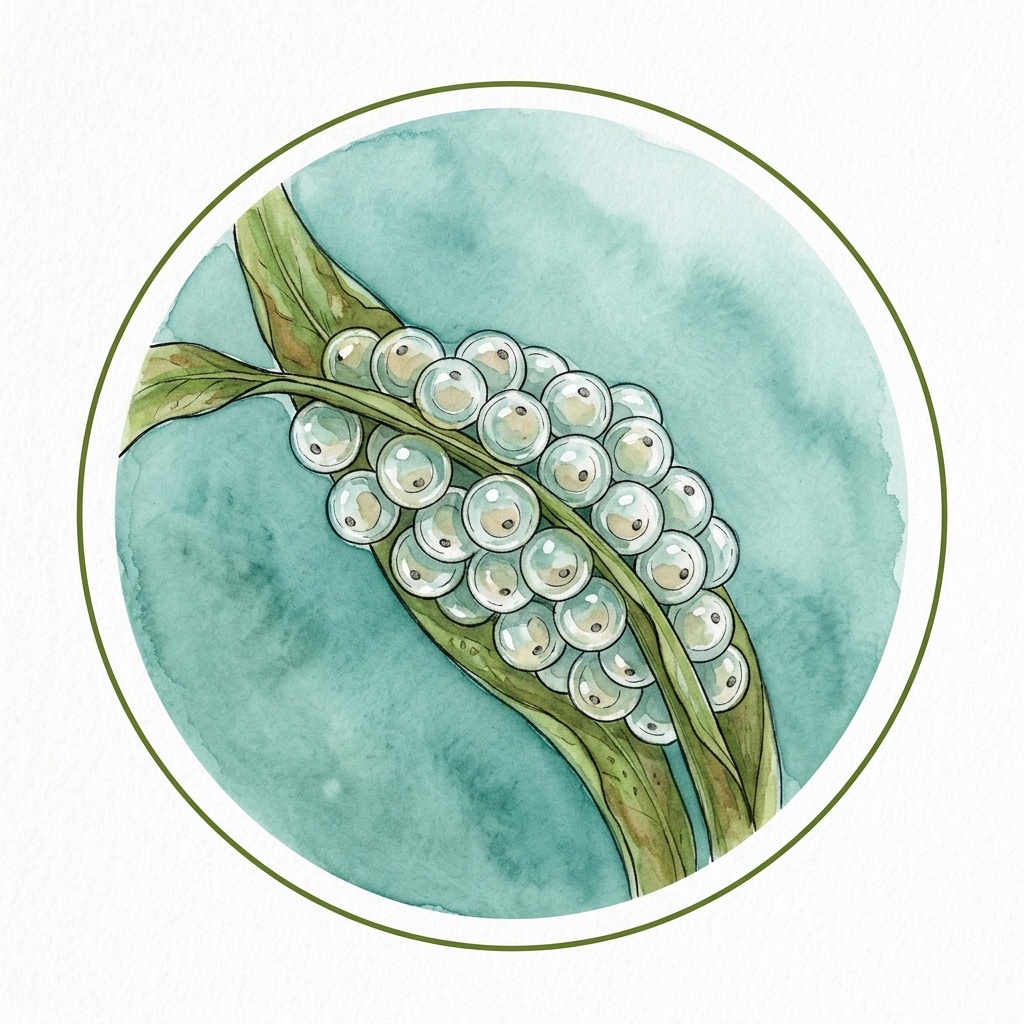
Days 2-4
Hatching and yolk absorption
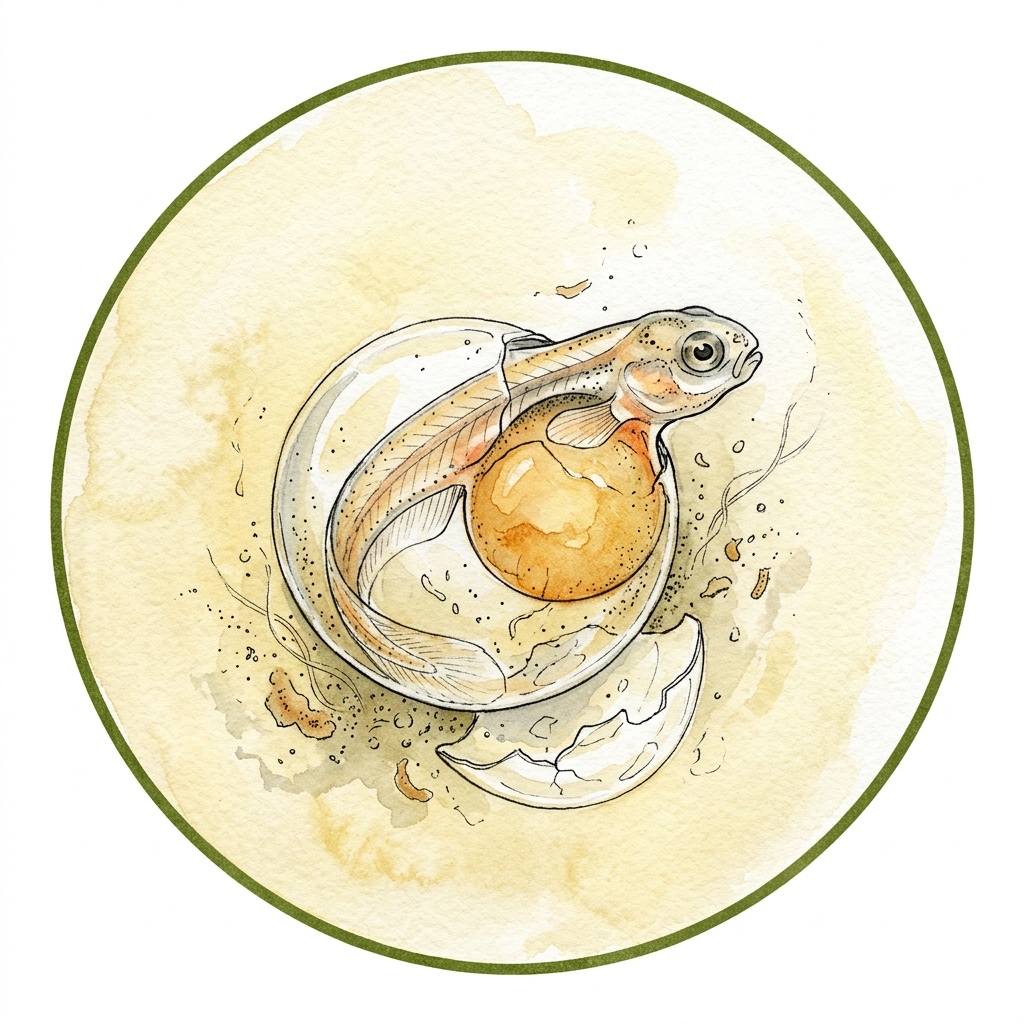
Tiny larvae emerge and rest on surfaces
Days 5-10
Free-swimming fry and first feeding
Infusoria, liquid fry food, then brine shrimp nauplii
Conditioning
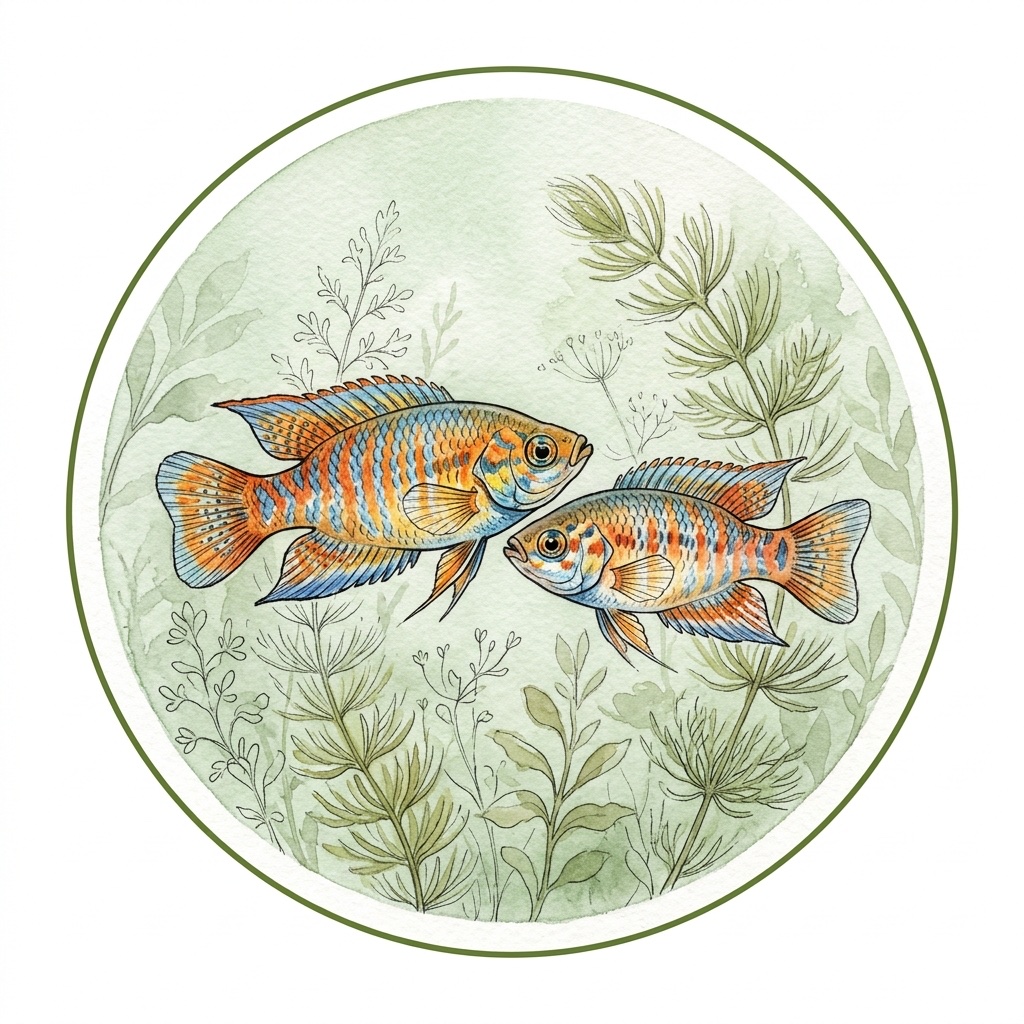
Separate a well-coloured group of six to ten adults (ideally four females and two males, or five females and three males) into a dedicated breeding tank of 40 to 60 litres. Water parameters should sit firmly in the ideal zone: pH 7.8, hardness 15 dGH, temperature 22 degrees C. Feed heavily with live baby brine shrimp, daphnia, and grindal worms two to three times per day. Over ten to fourteen days, females will fill out noticeably, their bellies rounding with developing eggs. Males will intensify their red and begin to display actively to females and to each other. Conditioning is by far the most important stage — under-conditioned females will simply not spawn, no matter how perfect the rest of the setup.
Spawning trigger
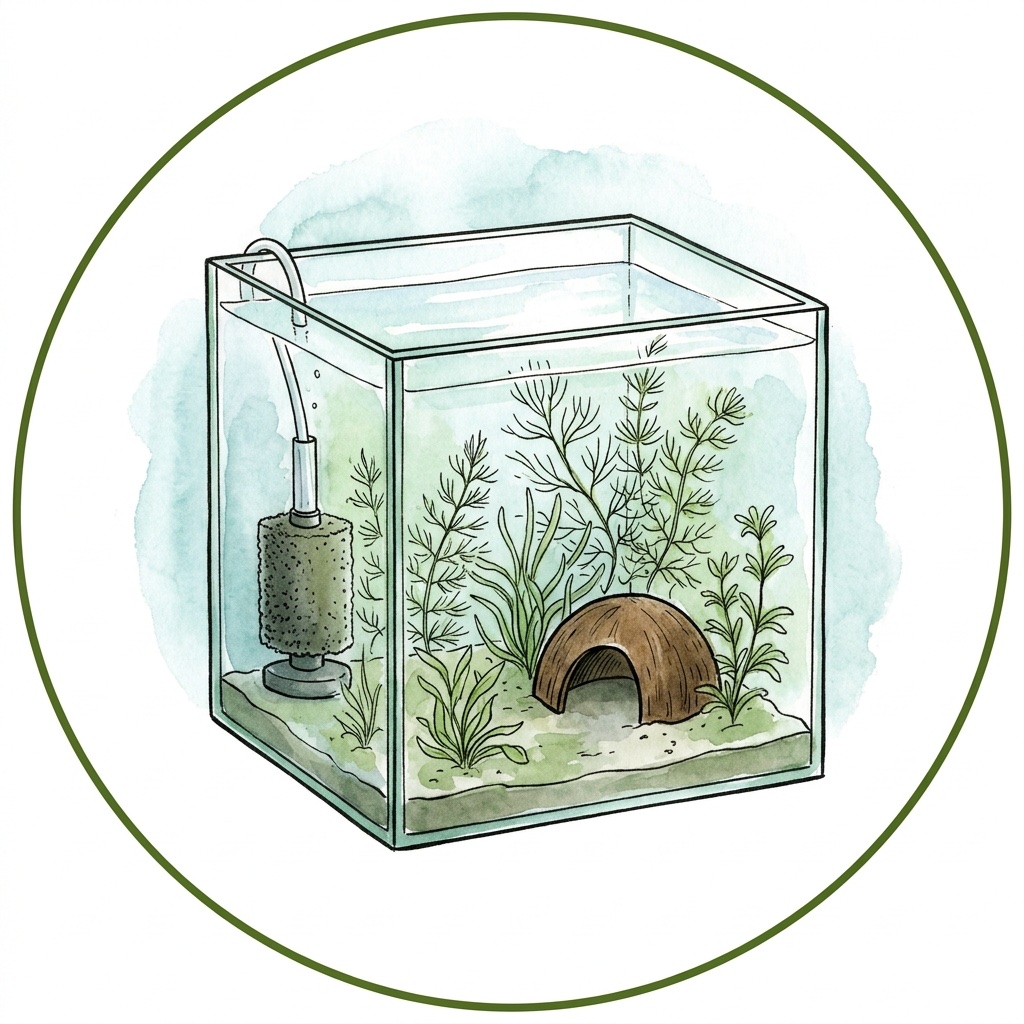
Carpet the bottom of the breeding tank with a thick layer of Java Moss or a dense spawning mop made from green acrylic yarn. On the evening before spawning, perform a 30 percent water change using water that is 2 degrees C cooler than the tank — this mimics the cool rainwater influx of Inle Lake’s spring and is a strong spawning trigger for many high-altitude cyprinids. Dim the room and leave the fish overnight. Early the next morning, turn on gentle ambient light and observe: males will pursue ripe females through the Java Moss, and the pair will scatter small, semi-adhesive eggs across the moss fronds. A productive female may release 30 to 60 eggs per spawning session, often across several hours.
Remove adults
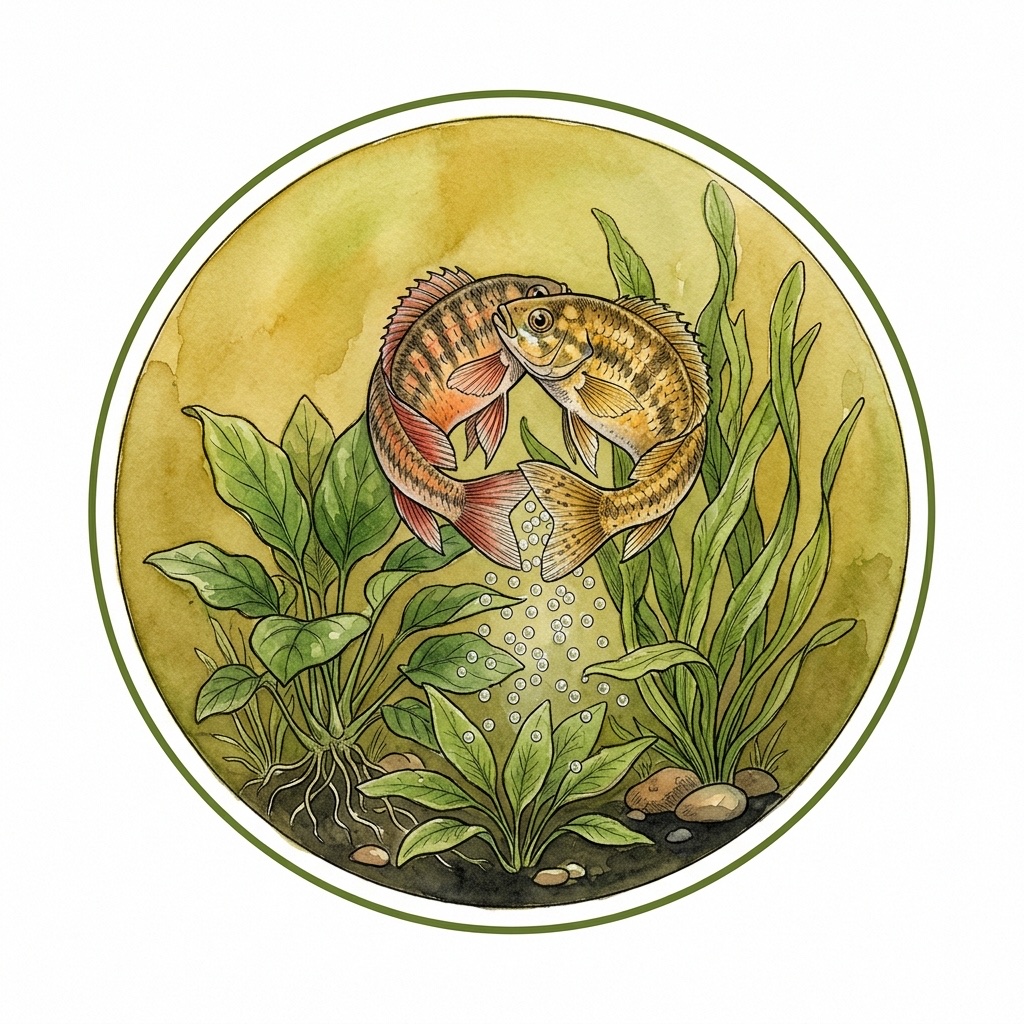
Sawbwa, like most cyprinid egg-scatterers, show no parental care and will happily eat any eggs they can find. Within an hour of observing spawning behaviour, carefully net out all adults and return them to the main display tank. Do not disturb the moss — the eggs are small, transparent, and nearly invisible. Add a very small amount of methylene blue to the water (just enough to produce a faint blue tint) to suppress fungal growth on unfertilised eggs. Maintain the breeding tank at exactly the spawning temperature with gentle sponge-filter aeration.
Hatching and yolk absorption
Eggs hatch in roughly 48 to 96 hours depending on temperature, with cooler water producing slower but generally healthier hatches. Newly hatched larvae are minute — barely two millimetres — and will rest motionless on the moss, tank walls, and any other surface. They are sustained entirely by their yolk sacs at this stage and should not be fed. Do not do a water change during this period; any disturbance can kill the fragile larvae. Keep the room quiet and the tank dimly lit.
Free-swimming fry and first feeding
Once the yolk sac is absorbed, the fry become free-swimming and visibly move through the water column, hunting for food. This is the most critical window. Start with infusoria culture or commercial liquid fry food for the first 2 to 3 days, then transition to freshly hatched brine shrimp nauplii as the staple food. Feed small amounts three to four times per day. Begin very small water changes — 5 to 10 percent, temperature-matched — every second day to keep ammonia at zero without disturbing the tiny fry. Growth is slower than in many tropical species because of the cooler water; expect six to ten weeks before the fry begin to take on adult body shape, and three to four months before the first males start showing hints of red.
Quick Reference
| Scientific Name | Sawbwa resplendens |
| Common Name | Burmese Rummy Nose Rasbora / Asian Rummy Nose |
| Family | Cyprinidae (NOT a true Rasbora; NOT related to H. bleheri) |
| Origin | Myanmar — Inle Lake (Shan Plateau, ~880 m altitude) |
| Adult Size | 3-4 cm |
| pH | 7.0-8.5 (ideal 7.8) — alkaline |
| Temperature | 18-24 degrees C (ideal 22) — coolwater |
| Hardness | 10-20 dGH — hard |
| Min. Tank | 60 L+ for a school of 10 |
| Diet | Micro-carnivore — surface and upper-column feeder |
| Tank Position | Upper to mid-water column |
| Schooling | Obligate — 10+ recommended, mixed sexes |
| Best Tank Mates | White Cloud, Zebra Danio, Celestial Pearl, Hillstream Loach |
| Avoid | Neons, Cardinals, Discus, Angelfish, Apistogramma, warm soft-water species |
| Breeding | Egg-scatterer on Java Moss; cool-water trigger required |
| Conservation | Endangered — Inle Lake endemic |
| Availability | In-Store Only — not shipped |
| Price | $9.95 AUD |
Related Products
Reviews
Clear filtersThere are no reviews yet.