🪨 Species at a Glance
| Scientific Name | Danio kerri |
| Family | Cyprinidae |
| Order | Cypriniformes |
| Origin | Langkawi Islands, Malaysia; adjacent Satun province, Thailand |
| Adult Size | 3-5 cm (1.2-2 in) |
| Lifespan | 4-6 years |
| pH Range | 6.5-7.5 |
| Temperature | 20-26 °C (68-79 °F) |
| Hardness (dGH) | 5-12 |
| Diet | Omnivore — flakes, micro-pellets, frozen daphnia and bloodworms |
| Minimum Tank Size | 60 L (16 gal) for a school of 8 |
| Care Level | Beginner |
| Temperament | Peaceful, active schooler |
| Breeding | Egg scatterer — non-parental |
| Tank Position | Mid to upper water column |
| Swim Style | Fast, constantly in motion, long-distance cruiser |
Where the Name Comes From
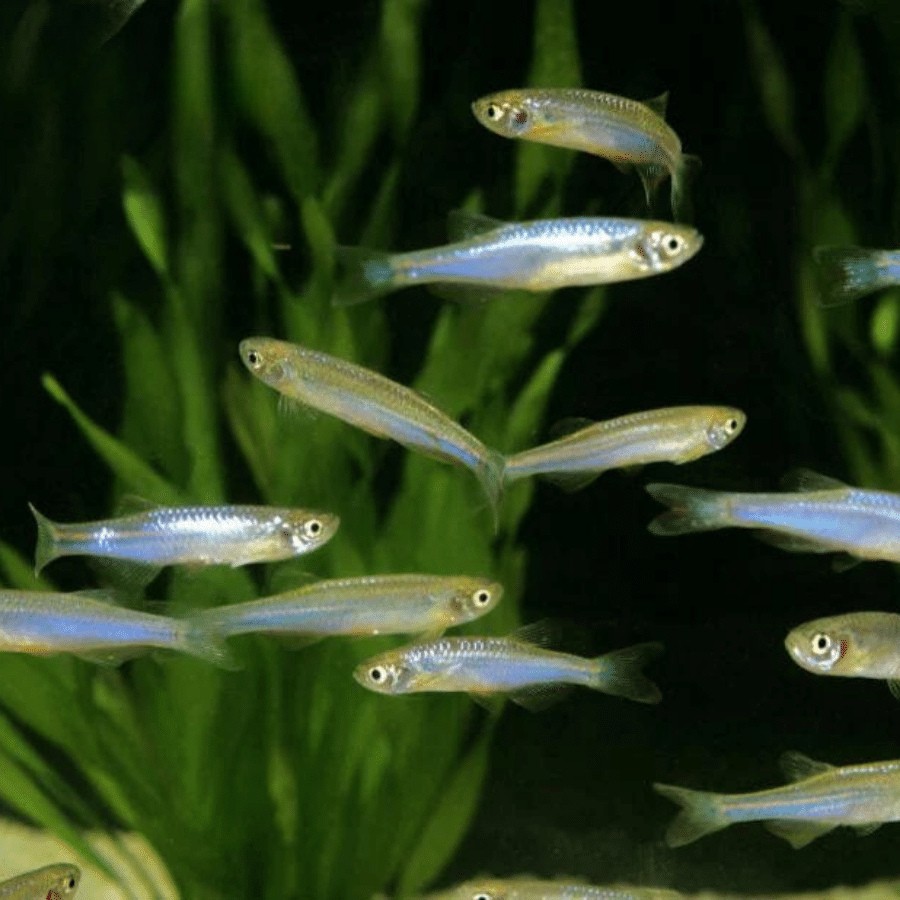
The name *Danio kerri* honours Arthur Francis George Kerr, a Scottish-born physician and amateur naturalist who worked extensively across the Malay Peninsula and Thailand during the first half of the twentieth century. Kerr was stationed at various times as a district medical officer in what was then Siam, and he spent every spare weekend collecting biological specimens — reptiles, orchids, fish, and insects — from the limestone country of the southern peninsula and its outlying islands. He collected the type specimens of this species during one of his expeditions through the Langkawi island group in the late 1920s, dispatching a jar of preserved fish to the United States National Museum for formal identification. The American ichthyologist Hugh McCormick Smith — then the American-born adviser on fisheries to the Siamese government and one of the most productive describers of Southeast Asian freshwater fish of the twentieth century — examined the specimens and formally described the fish in 1931, naming it *Danio kerri* in recognition of Kerr’s tireless collecting efforts. The genus name *Danio* itself derives from a vernacular Bengali word, *dhani*, used for small silvery cyprinids of the rice paddies; the term was Latinised by Francis Hamilton in the early nineteenth century when he first erected the genus for a group of small Indian cyprinids he had encountered along the Ganges. Put together, *Danio kerri* quite literally means “Kerr’s small rice-field fish”, which is a wonderfully understated title for an animal as iridescent as a polished moonstone.
The common name “Blue Pearl Danio” was adopted by the aquarium trade decades later, coined to distinguish this species from the much more widely traded *Danio albolineatus* — the so-called pearl danio — which shares a pearly sheen but lacks the electric blue tint so characteristic of *kerri*. Australian and British importers occasionally label the species as “Kerr’s Danio” or simply “Blue Danio”, while in parts of East Asia it still appears under the old trade name “Turquoise Danio”. Whichever label it travels under, the identification is straightforward: run your eye along a healthy adult and you will see a body that shimmers from grey-blue at the head through pure iridescent turquoise along the sides, broken only by a thin, luminous gold horizontal line that runs from behind the gill cover all the way to the base of the tail. No other small community fish in the hobby carries quite that combination of colours, and once you have learnt to recognise it, you will spot *kerri* across a shop tank from twenty paces away. The luminous stripe along the flank is produced by a specialised row of iridophores — cells packed with guanine microcrystals that refract light in an angle-dependent way — and it is this structural colour, not pigment, that gives the species its characteristic lamp-lit glow under aquarium lighting.
It is worth noting that the genus *Danio* has been reshuffled by taxonomists several times over the decades. Earlier editions of aquarium books occasionally listed the species as *Brachydanio kerri*, placing it in a group of “short danios” distinct from the longer-bodied giant danios of the old genus *Danio* sensu stricto. Modern molecular phylogenetic work carried out in the 2000s and 2010s has collapsed *Brachydanio* back into *Danio*, so the currently accepted name is unambiguously *Danio kerri*. Hobbyists buying from older stocklists or reading older aquarium literature may still encounter the earlier combination, but the fish itself is identical, and there is no risk of misidentification so long as you are confident in the visual characteristics described above. The species is also occasionally confused with *Danio albolineatus* in shipping invoices, and it is not at all uncommon for an Australian retailer to receive a box labelled “pearl danio” that contains a mixture of both species side by side — another reason why understanding the subtle colour differences between *kerri* and *albolineatus* pays off when you are buying livestock for the first time.
Ideal Water Conditions
6.5–7.5
ideal 7.0
20–26 °C
ideal 23 °C
5–12 dGH
Medium-soft to moderately hard water — very adaptable
One of the reasons Danio kerri has earned such a devoted following among experienced aquarists is its unusual temperature tolerance. Unlike many truly tropical species that collapse as soon as the thermometer drops below 23 °C, the Blue Pearl Danio handles cooler water with genuine ease — a legacy of its upland island origins, where shaded limestone streams can run noticeably cooler than nearby lowland rivers, especially during the rainy season when cold fronts occasionally push in from the Andaman Sea. A steady 20 to 22 °C is perfectly acceptable, and many keepers in temperate parts of Australia run unheated tanks for this species during the warmer months of the year, only switching the heater on when winter overnight temperatures in the room drop below 18 °C. That said, kerri is still fundamentally a tropical fish, and sustained temperatures below 18 °C will suppress immunity, slow digestion, and noticeably reduce appetite. The species does not, conversely, enjoy the high 28-30 °C range that discus, rams, or some tropical plants demand; warm water holds less dissolved oxygen, and these active, constantly swimming fish quickly appear stressed when pushed above 27 °C. Signs of heat stress include rapid gill movement, surface gasping, and a noticeable loss of colour intensity as the fish divert energy into respiration rather than display.
Water chemistry is refreshingly forgiving. A broad pH window of 6.5 to 7.5 covers virtually every municipal tap supply in Australia, and hardness is tolerated from a soft 5 dGH through a solidly medium 12 dGH. This range covers the overwhelming majority of urban tap water supplies across Sydney, Melbourne, Brisbane, Perth, and Adelaide without any need for reverse osmosis water, remineralisation salts, or chemical buffering. In practice, the only keepers who run into problems are those with extremely hard, high-pH well water above 8.5 pH and 20 dGH — conditions in which almost no small tropical cyprinid thrives. Stability always matters more than chasing a specific numeric target: a rock-steady pH of 7.2 is better in every way than a reading that drifts between 6.6 and 7.4 on alternate weeks due to inconsistent CO2 injection or erratic water changes. Carry out a 25 to 30 percent weekly water change, match the replacement water within a degree of tank temperature, dechlorinate with a quality conditioner, and the school will remain in peak condition for years. Many long-term keepers report individual fish living five and even six years in well-maintained community tanks, which makes kerri one of the longer-lived of the small danios.
Colour Forms & Morphs
💠 Wild Blue Pearl (Danio kerri)
The true Blue Pearl — iridescent ice-blue flanks with a thin gold horizontal stripe from gill to tail; fins are nearly transparent with a faint yellow wash. Mature males flush with pink along the belly during breeding condition.
🤍 Pearl Danio (Danio albolineatus)
Close relative often confused with Blue Pearl; softer pinkish-lavender iridescence rather than true blue, and slightly larger body. Frequently mixed in shipments — hobbyists should check each fish carefully.
💨 Zebra Danio (Danio rerio)
The most familiar danio of all — five horizontal dark-blue and pale-gold stripes. Shares habitat preferences and schools happily with kerri; also available in long-fin and GloFish variants.
🧡 Glowlight Danio (Danio choprae)
A smaller, stockier danio from Myanmar with an orange-red lateral stripe underlined in gold. Peaceful, schools with kerri beautifully and adds warm colour contrast.
Although the aquarium trade offers no formal colour morphs of Danio kerri itself — no long-fin, albino, or selectively bred variants have become established in commercial production — the fish is almost always sold and kept alongside its closest relatives in the genus Danio, and it is worth understanding the group as a whole when you are designing a display around this species. In a typical mixed danio community, kerri provides the cool blue end of the colour palette, choprae contributes warm orange and scarlet, albolineatus adds soft pink-lavender, and rerio lays down the classic blue-gold horizontal stripes that every aquarist recognises at a glance. All four species share broadly similar care requirements — the same temperature range, the same forgiving attitude toward water chemistry, the same preference for open swimming lanes — and they cross-school happily. In a large planted tank of 120 L or more, a mixed shoal of twenty to twenty-five danios drawn from all four species is one of the most visually dynamic displays in the hobby, and it will outlast most tropical stocking plans because every species in the mix is hardy and long-lived.
The colour intensity of kerri in particular depends heavily on diet, water quality, and tank background. A dark substrate of fine black sand or charcoal aquasoil enhances the blue flash dramatically compared with pale gravel; subdued overhead lighting — either naturally shaded by floating plants or provided by a dimmable LED unit run at 40 to 60 percent — further coaxes the iridescence to its maximum; and a carotenoid-rich diet that includes frozen daphnia, cyclops, and astaxanthin-enriched micro-pellets deepens the gold lateral stripe while brightening the pink-gold breeding blush of mature males. In bare, brightly lit retail tanks the species often looks washed out and silvery, with the stripe reduced to a faint yellow smudge along the flank, and many beginners walk past a shop tank of kerri without realising what they are looking at. Give those same fish two or three weeks in a proper display tank with dark substrate, floating cover, and a varied diet, and the transformation is genuinely remarkable — the washed-out silver fish you brought home turns into an iridescent jewel that would not look out of place in any aquascape competition. Patience pays: the deepest and most intense colours typically emerge only after the fish are a full twelve to eighteen months old, by which point the males will have developed their adult ventral flush and the females will have filled out to their characteristic rounded breeding shape. Juvenile kerri sold at the three-centimetre size seen in most Australian retailers are still emerging from their silvery adolescent phase; give them six to nine months of good care and the full iridescent blue colouration will develop in a way that simply cannot be rushed. This long maturation curve is one reason the species has sometimes been overlooked in the trade — retailers’ stock tanks rarely hold any single batch long enough for the true adult colours to appear, and photographs of shop stock rarely do the species justice.
Setting Up Your Aquarium
The single most important consideration when designing a tank for Blue Pearl Danios is length, not total volume. These are tireless, long-distance swimmers — fish that evolved to cruise the riffles and pools of Langkawi’s limestone streams in tight formation, and they need horizontal swimming room rather than tall vertical space. A 60 cm long tank is the absolute minimum for a school of eight; a 90 cm or 120 cm aquarium transforms their behaviour entirely, allowing the school to build up real speed and stretch out into the classic cigar-shaped formation that shows off their iridescence to best effect. Tall, narrow cube aquariums or slim column tanks work poorly for this species no matter what the total volume — the fish end up pacing nervously back and forth along the short axis, never settling into relaxed schooling behaviour, and often developing stress-related issues such as fin clamping or lateral-line erosion over time. If your only option is a cube, consider a different species; if you can choose between a 60-litre cube and a 60-litre long-format tank, always take the long format for kerri.
With swimming corridor sorted, the rest of the aquascape follows naturally. Plant densely along the back and side walls with stem plants such as Hygrophila polysperma, Ludwigia repens, Rotala rotundifolia, or stands of Vallisneria spiralis, and leave a generous open lane down the front two-thirds of the tank for swimming. The dense planting at the sides and back gives the school a visual backdrop to orient against and a refuge for any individual that wants to break away from the group briefly, while the open front lane provides the unrestricted cruising space the species needs to display natural behaviour. Floating plants — Amazon frogbit, red root floaters, a thin raft of salvinia, or a tangle of water lettuce — are particularly valuable because kerri is a surface-oriented species and the dappled light from above coaxes them out of hiding and into confident display behaviour at the top of the tank. Without any overhead cover, the fish often hug the lower half of the aquarium in a perpetual nervous crouch; add a few handfuls of floaters and within a week the entire school will rise up and occupy the top third of the tank as nature intended.
A dark substrate of fine sand or aquasoil enhances colour contrast dramatically compared to pale gravel, and also discourages the fish from developing the washed-out silver appearance common in bare retail tanks. Driftwood pieces — a length of spiderwood or malaysian driftwood wedged across the tank, or a pair of smaller pieces forming natural arches — add visual interest and can be used to mount Anubias, Bucephalandra, and Java fern without planting them in the substrate. A few smooth, water-worn stones complete a naturalistic layout, though hardscape is less important to this species than open water and a generous swimming lane. Finally, keep the lid secure: danios of all species are accomplished jumpers, and kerri will rocket out of an uncovered tank at the slightest startle — a loud noise, a cat paw, a sudden shadow overhead from a passing hand. A tight-fitting glass hood or a well-clipped mesh cover is not optional, it is a simple necessity if you want to keep the school intact for the long run. Check the cover weekly for any gaps around heater cables, filter inlets, or airline tubing — kerri are small and slim enough to slip through surprisingly narrow openings when they are startled, and even a 10 mm gap is enough for an adult to launch itself out of the tank during a feeding frenzy or a lights-on startle response at dawn.
One additional point worth mentioning: when setting up a new tank for this species, allow the aquarium to cycle fully before introducing the first fish. Danio kerri are hardy but still sensitive to the ammonia and nitrite spikes of a fishless-cycle gone wrong, and the school behaviour that makes them so appealing only develops properly once the tank is biologically stable. A six-week cycle using pure ammonia or a mature sponge filter transplanted from an established tank will set up a rock-solid biological filter before your fish arrive, and the long-term payoff in fish health and display quality is well worth the short wait.
Tank
Minimum 60 L / 60 cm long; 90-120 L with length of 90 cm+ strongly recommended for long-term display
Filter
Internal, HOB, or small canister sized to turn over 4-6x tank volume per hour; baffle or spray bar to diffuse flow
Heater
50-100 W adjustable heater set to 23 °C; optional in rooms that stay 20 °C or warmer year-round
Lighting
Moderate LED with dimmer; 6-8 hour photoperiod encourages planted growth without bleaching colours
Substrate
Fine dark sand or aquasoil; pale gravel washes out the blue iridescence
Hood / Lid
Tight-fitting glass or mesh cover — danios are persistent jumpers, especially when startled at night
Plants
Stem plants (Ludwigia, Rotala, Hygrophila) along back and sides; floating plants (frogbit, salvinia) overhead
Thermometer
Digital or glass — verify heater accuracy weekly; kerri are sensitive to gradual overheating above 27 °C
Telling Males from Females
Sexing adult Blue Pearl Danios is straightforward once the fish are fully coloured up, and the contrast between the sexes becomes especially obvious when a school has settled into a long-term display tank and males have begun to stake out territorial preferences within the shoal. The single most reliable indicator is body profile viewed from directly above — females in breeding condition look visibly plump compared to the narrow, cigar-shaped males, and a quick glance down onto the tank from the top at feeding time will almost always identify the three or four gravid females in a mixed group of ten. Under good lighting, the male’s ventral surface and gill plates take on a warm pink-gold blush that is quite unlike anything visible on a female, while the female’s own breeding readiness is signalled by the appearance of a pale, rounded abdomen that gently stretches the normally straight gold lateral stripe into a slight upward bow. The breeding blush on males is particularly vivid in the early morning when the lights first come on, and it fades slightly through the day as display activity settles down.
Juveniles below about 2.5 cm are effectively impossible to sex by eye — the sexual dimorphism simply has not developed yet, and both sexes look like slim, silvery torpedoes with the faint beginnings of the gold lateral stripe. Commercial shipments rarely separate the sexes, and most retailers sell mixed batches direct from their wholesaler. If you intend to breed, the best strategy is to buy a group of ten or twelve young fish, raise them together on a varied diet of high-quality flake and frozen foods, and allow the sexes to sort themselves out as the school matures over three to four months. By that point, you will easily identify the four or five plumpest females and can pair them with the most intensely coloured males for conditioning. It is also worth pointing out that the behaviour of the fish gives away their sex long before their bodies do: watch a school of sub-adults for fifteen minutes and you will see the males — even at a small size — begin to flick rapidly past each other, displaying their flanks and flaring their pale fins in a miniature version of adult courtship behaviour. The individuals that participate most enthusiastically in this display are almost always male, while the calmer, more central individuals that quietly cruise through the middle of the school are typically female. This behavioural cue can speed up sexing by several weeks compared with waiting for body-shape differences to become visible, and experienced breeders sometimes select their breeding stock based on display vigour alone.
One common source of confusion among new keepers is the seasonal fluctuation in male colouration. A male kerri in excellent breeding condition, kept on a varied carnivorous diet in a well-planted tank with cool morning temperatures and low overhead lighting, will often look so intensely coloured that beginners mistake him for a member of a different species altogether. The same fish kept in a brightly lit, uncluttered retail tank on a diet of basic flake will appear almost silvery with only a hint of blue. Do not judge the sex of any danio based on a brief observation in a shop tank — take your group home, set them up properly, feed them well for a month, and then make your breeding selections once you have seen them at their true colour peak.
| Feature | Male | Female |
|---|---|---|
| Body Shape | Slimmer, more torpedo-like profile | Noticeably rounder belly, especially when carrying eggs |
| Blue Iridescence | Brighter electric blue, intensifies during courtship | Paler, more silvery blue with less flash |
| Breeding Colour | Pink-gold flush along ventral surface and gill covers | Belly appears pale cream or yellowish when gravid |
| Size at Maturity | 3.5-4.5 cm, slightly smaller and leaner | 4-5 cm, larger and bulkier overall |
| Behaviour | Constantly displaying, flaring to rivals, chasing females | More reserved, stays central in the school except when ready to spawn |
| Fin Carriage | Holds dorsal and caudal fins rigid and flared | Fins carried more relaxed, less assertive posture |
Feeding Guide
Blue Pearl Danios are opportunistic omnivores with a strong preference for surface and mid-water feeding. In their native streams they pick small insects and larvae from the water surface, snatch zooplankton drifting with the current, and graze occasionally on biofilm and soft algae when invertebrate prey is scarce. This mixed, largely carnivorous diet means that in the home aquarium they accept virtually every commercial food offered to tropical community fish, which makes them one of the easiest species in the hobby to nourish properly. A high-quality tropical flake or small micro-pellet forms the backbone of the diet; look for brands that list whole fish meal, krill meal, or insect meal as the first ingredient, and which contain added astaxanthin or spirulina to support colour. Cheap, grain-heavy flakes will keep the fish alive indefinitely, but they will never develop the full iridescent blue and pink-gold colouration that a carnivore-appropriate diet produces.
Supplement two to four times per week with frozen or live foods. Frozen daphnia is a particular favourite — the small, slow-sinking particles perfectly match kerri’s feeding style, drifting at mid-water where the fish like to intercept them — and small bloodworms, cyclops, and baby brine shrimp are all taken enthusiastically. Once a week, drop in a pinch of decapsulated brine shrimp eggs or freeze-dried tubifex as a treat. If you culture your own live foods, a small daily portion of live microworms, grindal worms, or freshly hatched brine shrimp will noticeably deepen colour and improve conditioning for breeding within two to three weeks. Kerri feed fastest and most aggressively of any peaceful community species, which can occasionally cause problems in slower-feeding communities: in a shared tank with corydoras, amano shrimp, or shy honey gouramis, always offer a second slower-sinking food such as algae wafers or sinking micro-pellets at the opposite end of the tank to give quieter tank mates a fair share. Target feeding with a pipette or tweezers is a good technique for getting food directly to slow feeders past the danio blitz at the surface.
Feed two small meals per day rather than one large meal; these fish have high metabolisms and prefer frequent small portions to a single binge, and two-meal feeding also reduces the amount of uneaten food drifting into the substrate and stressing the biological filter. A useful rule of thumb is that each meal should be entirely consumed within about sixty to ninety seconds — if food is still drifting around the tank after two minutes, you are feeding too much. Once a week, observe a fasting day: skip all food for one twenty-four-hour period, which gives the digestive tract a chance to clear fully and helps prevent the constipation and bloating that occasionally affect danios fed too many freeze-dried or protein-heavy foods in succession.
Be careful with freeze-dried bloodworms in particular. They are convenient, popular, and inexpensive, but when dropped straight into the tank they expand rapidly inside the gut of fish that swallow them dry, which can cause the swim-bladder and digestive problems occasionally reported in danio communities. The fix is simple: before feeding, pre-soak freeze-dried foods for thirty seconds in a small cup of tank water, squeeze out the air, and only then drop them into the aquarium. This brings the texture much closer to frozen food, eliminates swallowed air, and allows the fish to digest the meal without risk. The same principle applies to any compressed or dehydrated prepared food, and adopting this habit early on will pay off in years of trouble-free feeding.
Compatible Species
The ideal role for Danio kerri in a community tank is that of a classic dither fish — an active, visible, confident schooler whose constant presence in the upper water column reassures shyer species that no predator is stalking the aquarium. In that role the species is almost unbeatable. A school of ten or twelve kerri drifting back and forth across a 90 cm tank will coax wild-caught apistogramma out of their caves, bring nervous corydoras onto open sand during daylight hours, and encourage shy rasboras to form their own tight shoal in mid-water rather than skulking behind the driftwood. The fish are boldly active without being aggressive; they occupy their own mid-to-upper zone of the tank and leave other species alone; and they school tightly when they feel secure, which amplifies the dither effect and visually anchors the whole community.
The key, as with any schooling cyprinid, is numbers. Kept in a group of fewer than six, kerri become skittish, lose much of their colour, and occasionally develop the nasty habit of fin-nipping slow-moving tank mates out of displaced schooling stress. In a group of eight or more they are perfect gentlemen, and in a group of twelve or more they are one of the most handsome and well-behaved schooling fish you can put into a community aquarium. Avoid pairing kerri with any species that is either significantly slower at feeding (they will simply steal all the food before slower mouths can reach it), has long trailing finnage that invites nipping, or requires water temperatures above about 27 °C. Within those limits they mix with almost every peaceful community fish in the hobby — tetras, rasboras, corydoras, otocinclus, kuhli loaches, dwarf rainbowfish, smaller gouramis, and of course their fellow danios — and they remain one of the most reliable, rewarding, and easy-to-keep schooling species available to Australian aquarists today. If you are building your first tropical community tank and you want a species that will thrive for years, tolerate a few beginner mistakes, and reward attentive keeping with genuine beauty, Danio kerri is one of the very finest choices on the market.
| Species | Why | |
|---|---|---|
| ✅ | Zebra Danio | Closest possible match for swimming style, temperature range, and temperament; the two species cross-school readily and reinforce each other’s confidence, making the combined shoal visibly tighter and bolder than either species kept alone |
| ✅ | Glowlight Danio (Danio choprae) | Smaller but near-identical in habit; the warm orange-red stripe provides perfect colour contrast against kerri’s cool blue iridescence and the two species school tightly together |
| ✅ | White Cloud Mountain Minnow | Shares kerri’s tolerance for cooler tropical temperatures, which makes this pairing almost unique among community cyprinids; peaceful and equally active, the two species make an excellent cool-end community |
| ✅ | Harlequin Rasbora | Occupies the same mid-to-upper water column but with a different colour palette and a noticeably slower swimming style; zero aggression between the two species and colour contrast is excellent |
| ✅ | Peppered Corydoras | Classic bottom-dweller that tolerates cooler water just like kerri; occupies a completely different tank zone, cleans up fallen food, and forms its own lively bottom-level shoal that complements the mid-level danios |
| ✅ | Bronze Corydoras | Sturdy, peaceful bottom companion that shares the same temperature and hardness range as kerri; hardy enough to thrive in beginner community tanks alongside this species |
| ✅ | Otocinclus | Tiny algae grazers that mind their own business on leaves and glass; far too small to interest the danios as prey and unlikely to compete for food since they feed almost entirely on biofilm and soft algae |
| ✅ | Dwarf Neon Rainbowfish | Similar size and matching upper-water schooling temperament; the contrasting electric blue of both species produces a spectacular layered display and the two species happily share the same swimming space |
| ✅ | Kuhli Loach | Nocturnal, eel-like bottom-dweller that poses no competitive threat to the danios and helps keep substrate clean by sifting through fallen food and detritus during the night hours |
| ✅ | Pygmy Corydoras | A tiny schooling cory that occupies the lower-middle water column rather than the substrate, making an unusual three-zone community with kerri in the upper column and the pygmy corys cruising just above the sand |
| ❌ | Betta (Male) | Kerri are far too fast, too active, and too aggressive at feeding — they will stress the betta, steal every pellet before it reaches him, and their constant darting motion upsets the slow cruising behaviour that bettas need to settle comfortably |
| ❌ | Angelfish | The long, trailing fins of adult angelfish will be nipped by excited danios during feeding frenzies, and adult angelfish will eventually eat any kerri small enough to swallow — a classic incompatible pairing on both sides |
| ❌ | Fancy Guppies / Long-Fin Varieties | The flowing fins of fancy guppy strains and long-fin variants are too tempting to resist; kerri become persistent fin-nippers when kept with slow-swimming, long-finned tank mates, leading to shredded fins and chronic stress |
| ❌ | Discus | Discus require high temperatures (28-30 °C) that stress kerri and reduce their dissolved oxygen access; the temperature ranges simply do not overlap safely for long-term coexistence |
| ❌ | Dwarf Shrimp (breeding colonies) | Adult cherry or neocaridina shrimp are generally left alone by kerri, but the danios will eagerly eat newly hatched shrimplets on sight, effectively preventing any consistent colony growth; breeding colonies belong in a dedicated species tank |
Breeding Guide
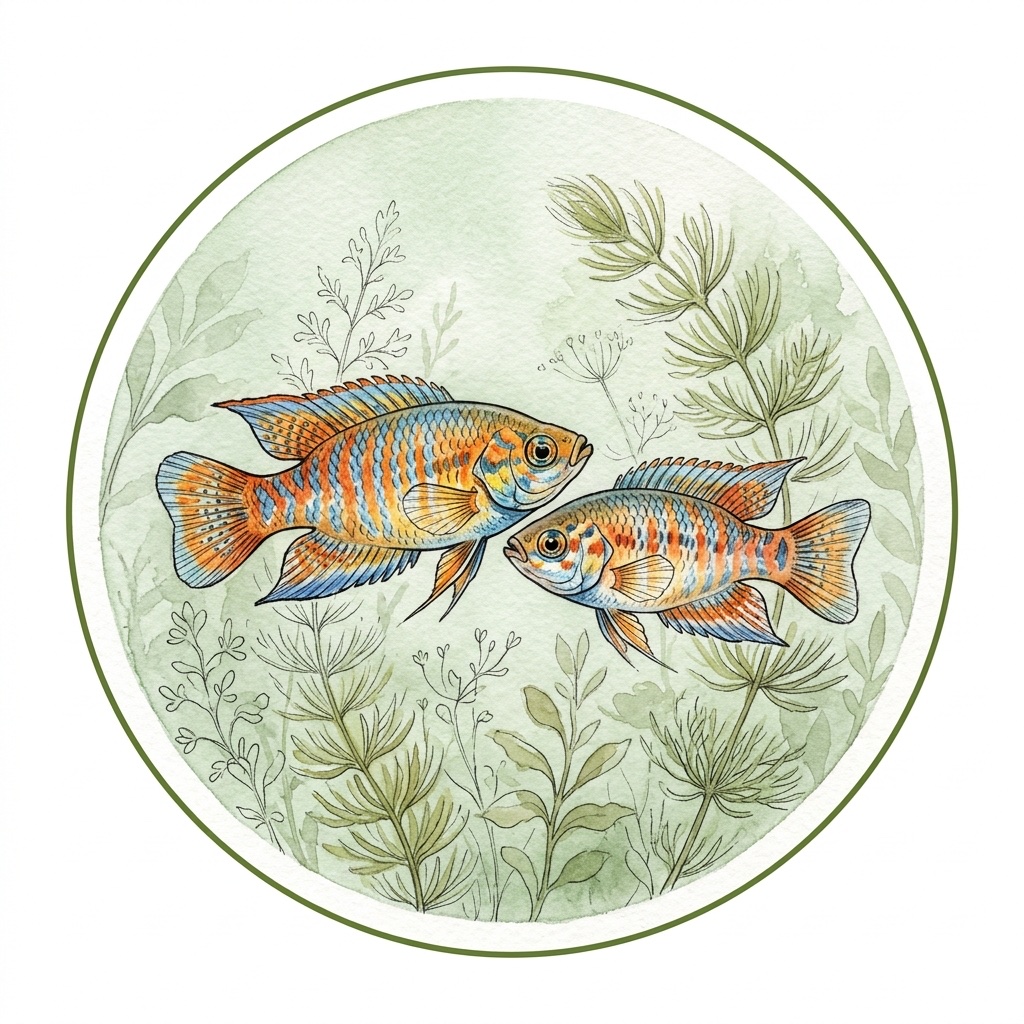
Week -2 to -1
Conditioning
Separate sexes, heavy live-food diet
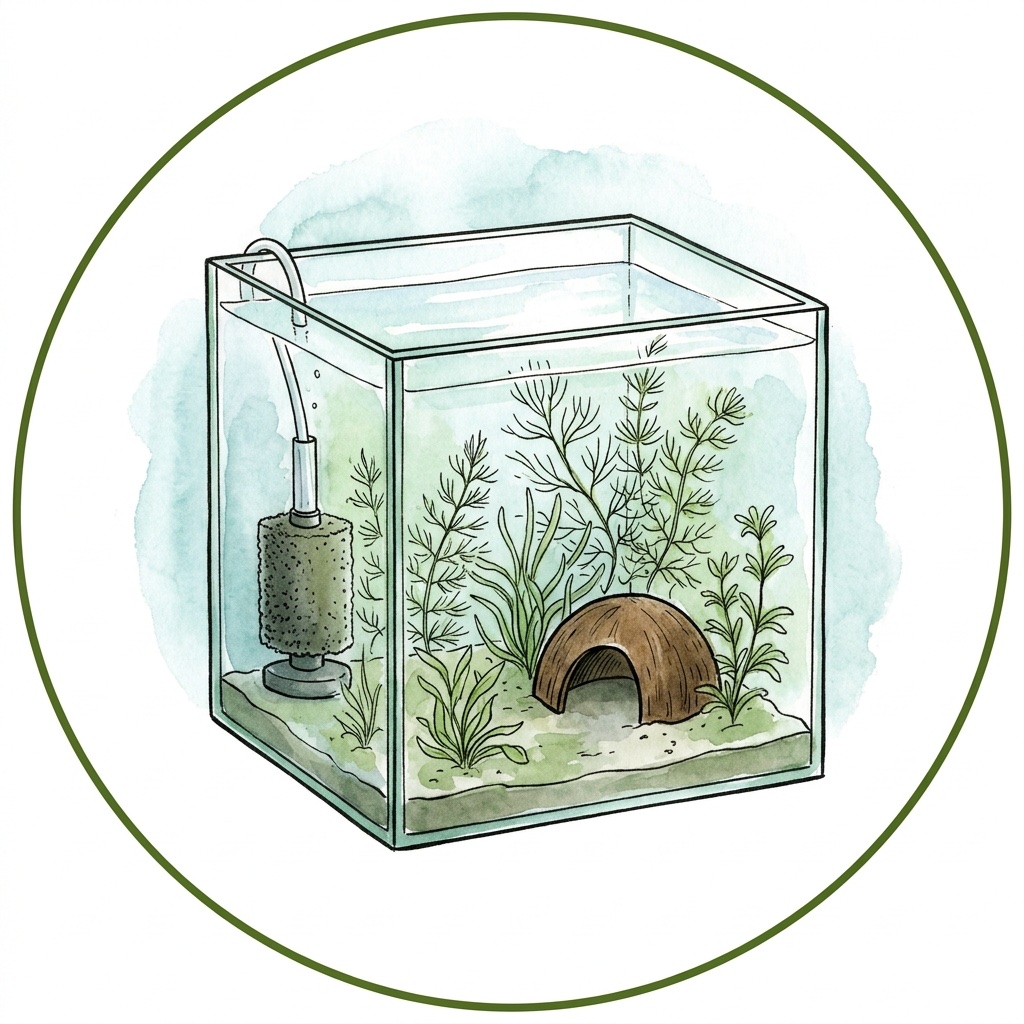
Day 0
Spawning Setup
Introduce breeders to dedicated spawning tank at evening
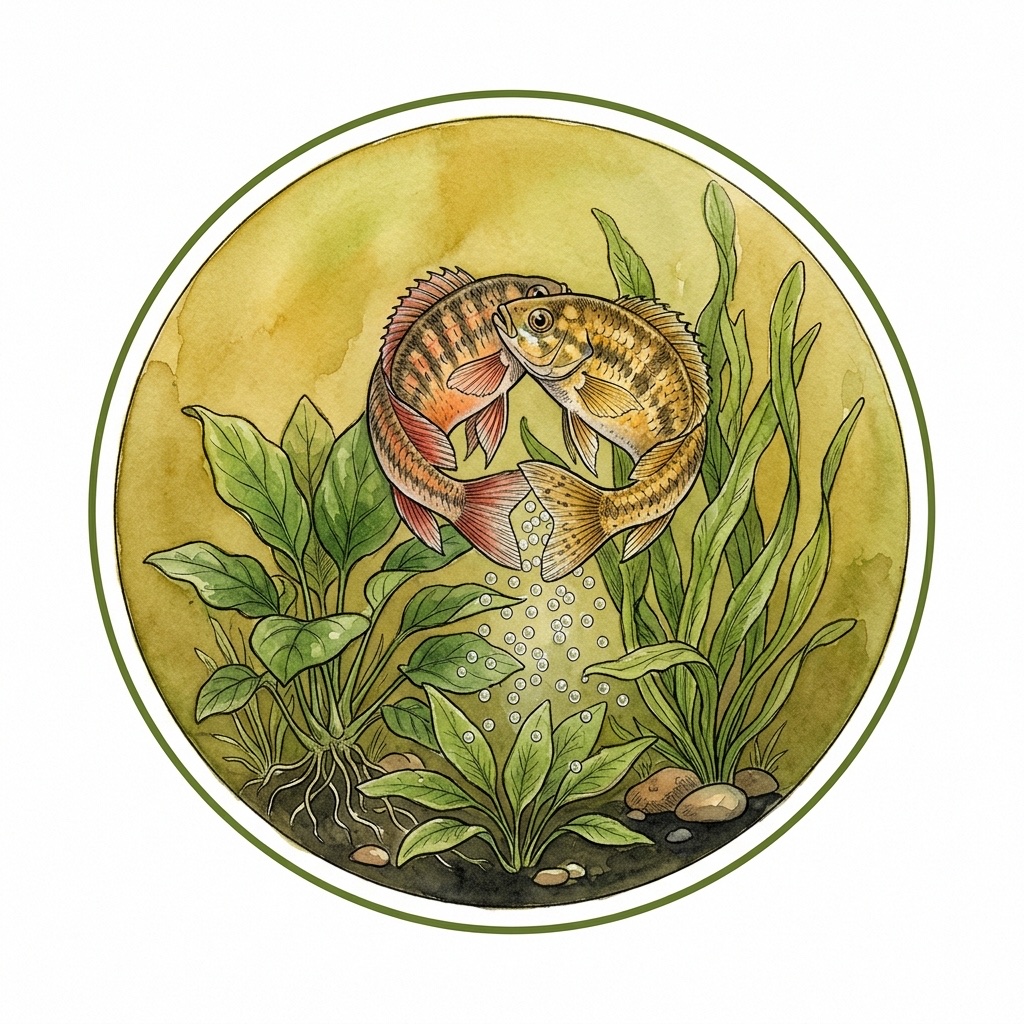
Day 1
Spawning
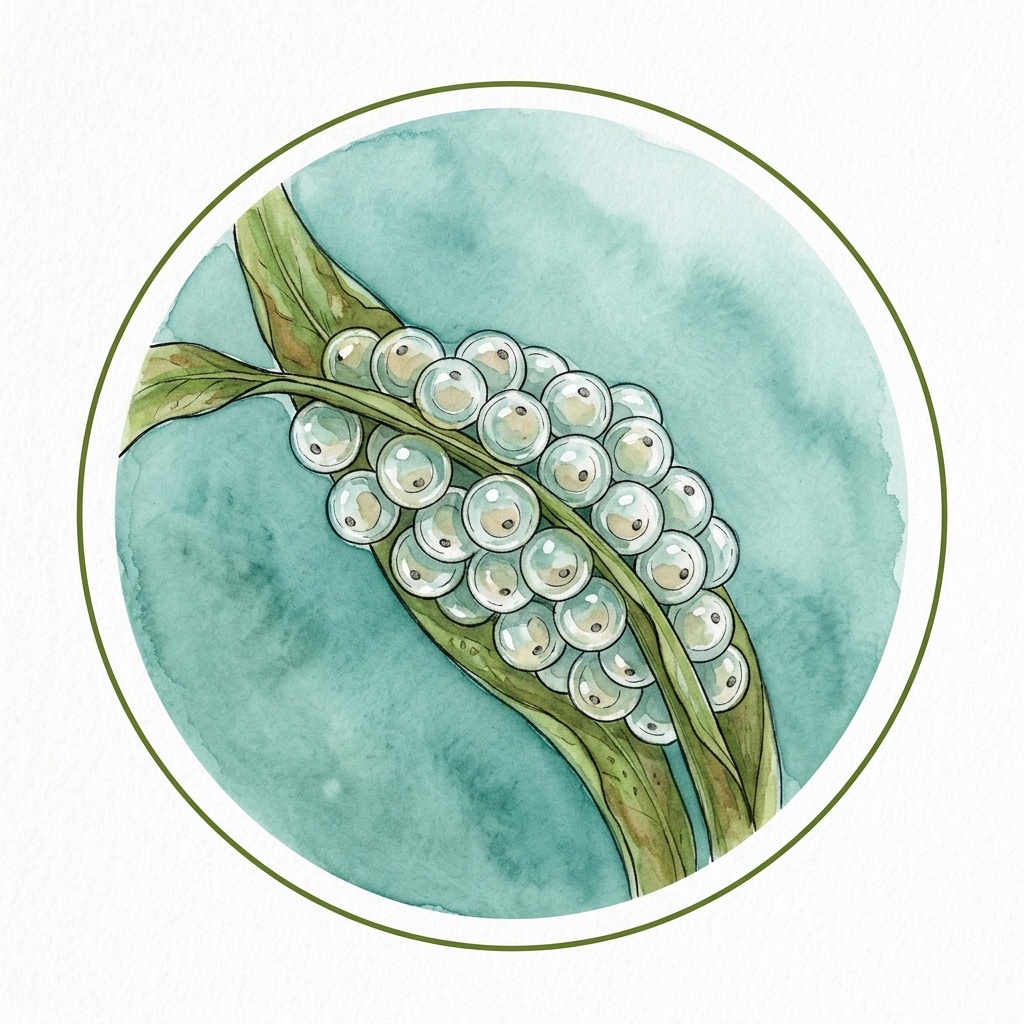
Males drive females at first light; 200-400 eggs scattered
Day 2-3
Egg Incubation
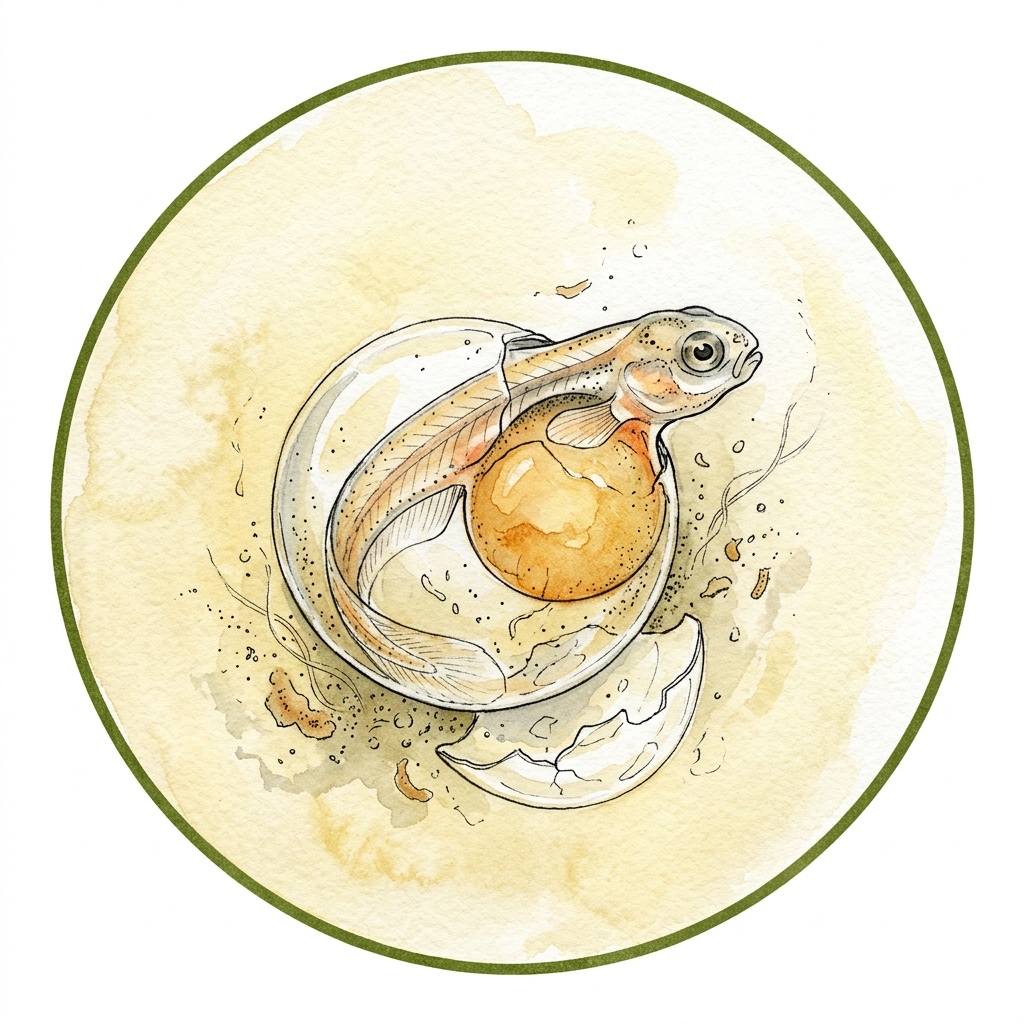
Eggs hatch at 24 °C in roughly 36-48 hours
Day 4-6
Free-Swimming Fry
Begin feeding infusoria, then microworms and vinegar eels
Conditioning
Select the plumpest, most robust females and the most intensely coloured males from your school — typically two females per male gives the best results, though a ratio of three females to two males also works well in slightly larger breeding groups. House the conditioning group in a separate 30-40 L tank with clean, mature water, gentle sponge filtration, and a subdued light level to reduce stress. Feed generously, three times per day, on a rotation of live daphnia, frozen bloodworms, baby brine shrimp, and chopped blackworm. Within ten to fourteen days the females will visibly swell with eggs, their bellies taking on a pale creamy-yellow cast, while the males will flush bright pink-gold along the ventral surface and their gill plates will gleam noticeably brighter than in the main display tank. During conditioning, a small partial water change of 15-20 percent every second day with slightly cooler aged water seems to further stimulate breeding readiness, mimicking the seasonal rain-driven cooling that triggers spawning in the wild populations.
Spawning Setup
Prepare a dedicated spawning tank of 20-30 L, bare-bottomed apart from a thick layer of glass marbles, plastic egg-crate mesh, or a dense mat of Java moss on the floor. These barriers are essential: they allow the small, slightly adhesive eggs to fall through into gaps where the parents cannot reach them, preventing the adults from cleaning up the entire clutch within minutes of spawning. Fill the tank with mature, aged aquarium water at 23-24 °C, pH close to neutral (6.8-7.2), with hardness slightly softer than the main display tank — aim for 4-6 dGH if your display runs at 8-10 dGH. A gentle sponge filter running on low output keeps the water oxygenated without creating currents that disturb eggs. Introduce the conditioned group in the late evening with the tank lights off, cover the tank with a towel or newspaper to create complete darkness, and leave them undisturbed until dawn the following morning. The short period of darkness and quiet seems to allow the conditioned fish to settle rapidly, and spawning activity generally begins within the first hour of tank lights being switched back on.
Spawning
As soon as the tank brightens at dawn, the males begin to chase females vigorously through the upper water column, their ventral flush intensifying to a hot pink-gold and their fins held rigid and flared. Spawning itself is a rapid affair: the pair pauses side-by-side above the marble or moss bed, shudders briefly, and releases a small cloud of clear, slightly adhesive eggs which drift downward and fall between the marbles or into the dense moss carpet. The performance is repeated dozens of times over two to three hours until the females are visibly slimmer and no longer being actively courted. A productive pair or trio can produce between 200 and 400 eggs in a single morning, though not all will be fertilised — a typical fertility rate under aquarium conditions is 60-80 percent. Remove all adults immediately after spawning activity ceases, using a fine net to catch them gently at the water surface. Kerri are unapologetic egg predators and will clean out the entire clutch within an hour if left in the tank after spawning ends; speed and decisiveness at this stage make or break the entire breeding attempt.
Egg Incubation
Fertilised eggs are tiny, glass-clear, and roughly the size of a grain of fine sand — so small that they are easy to miss against a bare tank bottom unless you look closely with a torch. Incubation at 24 °C takes approximately 36 to 48 hours; at cooler temperatures closer to 22 °C the incubation period stretches to around 60 hours, and at warmer temperatures near 26 °C it can finish in as little as 30 hours. During this time, keep the spawning tank dim (covered with a cloth on top works well) and add a few drops of methylene blue or a dose of a commercial anti-fungal agent at the manufacturer’s recommended breeding rate to suppress fungal growth. Infertile eggs turn opaque white within twelve hours and should be siphoned out gently with an airline hose to prevent fungus from spreading to adjacent viable eggs. Maintain gentle aeration from an air stone placed at the far end of the tank from the egg bed, not directly over the eggs themselves, so that the water movement reaches the eggs as a gentle wash rather than a direct blast. Resist the urge to peek frequently — repeated disturbance and sudden light changes can stress developing eggs and reduce the hatch rate substantially.
Free-Swimming Fry
Fry emerge with large yolk sacs attached and cling to the tank walls or lie motionless on the substrate or marble bed for the first two to three days of life. During this yolk-sac phase they do not feed, and attempting to introduce food too early simply fouls the water. Once they become free-swimming — typically day four or five post-spawn, depending on temperature — begin feeding immediately. The fry are small by cyprinid standards and require genuinely microscopic starter foods. Commercially cultured infusoria, home-brewed green water, a dusting of powdered egg yolk, or a high-quality liquid fry food designed for egg-scatterers all work well for the first week. Microworms and vinegar eels can be introduced from day seven onwards, and newly hatched brine shrimp nauplii from day ten to twelve once the fry have grown enough to take them. Feed four to five small meals daily during this rapid-growth phase and perform very gentle 10 percent water changes every other day using aged, temperature-matched water to keep the tank clean without disturbing the delicate fry. By the three-week mark the young fish will already show a faint silvery line along the flank, and by six to eight weeks the characteristic gold stripe begins to develop. At three months post-hatch, juveniles are typically 1.5 to 2 cm long and can safely be introduced into a mature community tank alongside their parents.
Quick Reference
| Scientific Name | Danio kerri |
| Adult Size | 3-5 cm |
| Lifespan | 4-6 years |
| pH | 6.5-7.5 (ideal 7.0) |
| Temperature | 20-26 °C (ideal 23 °C) |
| Hardness | 5-12 dGH |
| Min Tank Size | 60 L / 60 cm long |
| School Size | 8+ (10-12 recommended) |
| Diet | Omnivore — flake, micro-pellet, frozen daphnia/bloodworm |
| Care Level | Beginner |
| Temperament | Peaceful, very active |
| Tank Position | Mid to upper water column |
| Breeding | Egg scatterer — non-parental; 36-48 hr hatch |
| Key Requirement | Long tank with open swimming lane |
| Price | $6.95 AUD |
Related Products
Reviews
Clear filtersThere are no reviews yet.