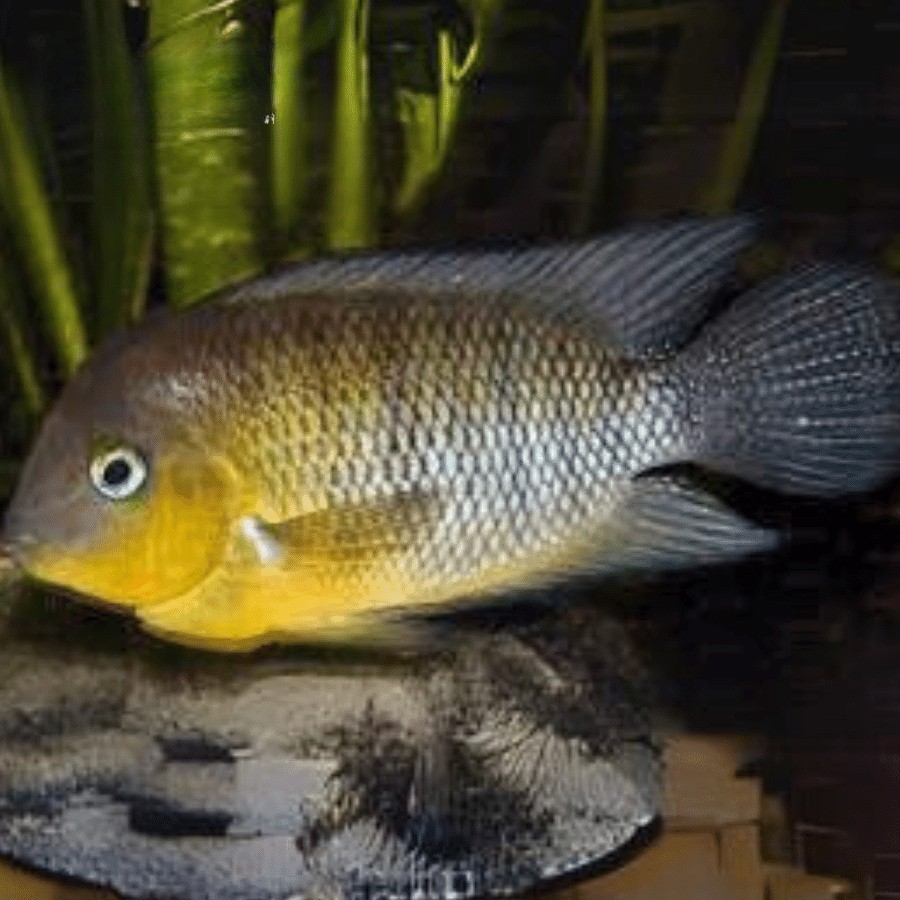
🪨 Species at a Glance
| Scientific Name | Cribroheros rostratus (formerly Cichlasoma rostratum) |
| Family | Cichlidae |
| Order | Cichliformes |
| Origin | Nicaragua, Costa Rica — Atlantic slope rivers and lakes |
| Adult Size | 15-18 cm (6-7 in); occasionally larger |
| Size Offered | 7-10 cm subadult |
| Lifespan | 10-15 years with good husbandry |
| pH Range | 7.0-8.0 (neutral to alkaline) |
| Temperature | 24-28 °C (75-82 °F) |
| Hardness (dGH) | 10-20 (hard water) |
| Diet | Carnivore — predator of fish, shrimp, insects, worms |
| Minimum Tank Size | 250 L single; 400 L+ for a pair or group |
| Care Level | Intermediate to advanced |
| Temperament | Predatory; territorial around spawning |
| Breeding | Biparental substrate spawner on flat rock |
| Tank Position | Mid to lower, open water |
Name & Origin
The scientific name Cribroheros rostratus gives you a quick anatomy lesson in two words. The genus Cribroheros — erected in 2016 when the sprawling Central American ‘Cichlasoma’ was finally broken up — comes from the Latin cribrum, ‘sieve’, referring to the sieve-like pattern of sensory pores on the skull of this clade, paired with heros, the classical Greek hero used across the cichlid family. The species epithet rostratus means ‘beaked’ or ‘with a prominent snout’, a direct nod to the long, powerful, slightly downturned face that sets this fish apart from its rounder-nosed relatives and betrays its hunting style. Until recently you would have seen this fish sold as Cichlasoma rostratum, and many older aquarium books still use that name; if you are researching its care online, be sure to search both names to find the full literature.
The common name ‘Blue Eyed Cichlid’ is where things get genuinely confusing, and it is worth slowing down on this point because it affects what fish you are actually bringing home. The same common name is also used in parts of the hobby for a completely unrelated dwarf cichlid — usually Laetacara araguaiae (the ‘Buckelkopf’ or dwarf flag cichlid) and sometimes other South American dwarfs that show a blue iris highlight. Those fish stay at 5 to 8 cm, are peaceful South American community species, and cost very little. Cribroheros rostratus is none of those things: it is a Central American predator that will grow past 15 cm, need hard alkaline water, and eat anything small enough to fit in its mouth. If you are looking at a 7 to 10 cm cichlid with a clearly elongated, arrow-shaped head and a price point around $40 AUD, you are looking at Cribroheros — not a dwarf. Double-check with your supplier before adding it to any existing community, because the care requirements are not interchangeable.
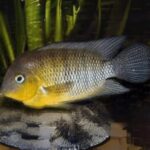
The ‘blue eye’ itself is a genuine and striking feature. Against a body painted in muted olive, dusky gold and charcoal blotches, the iris glows with a highly reflective electric-blue ring, brightest along the upper arc of the eye. Some regional populations and some well-kept individuals in the hobby also show a secondary red or blood-orange highlight in the iris, which has led to the occasional trade name ‘Red Eyed Cichlid’ being applied to the same species. Both names point to the same visual: a high-contrast iridophore structure in the iris that flashes blue under overhead lighting and picks up warmer tones when lit from the side. It is not pigment — it is structural colour, the same physics behind an opal or a peacock feather — and it holds its intensity for life.
Water Parameters
7.0–8.0
ideal 7.5
24–28 °C
ideal 26 °C
10–20 dGH
Hard, mineral-rich water — neutral to alkaline
Cribroheros rostratus evolved in the karst-influenced, mineral-rich rivers and lakes of the Nicaraguan and Costa Rican Atlantic slope. Geology there is dominated by limestone, volcanic basalt, and calcite-rich sediments, and the resulting water chemistry is distinctly hard and slightly alkaline, typically measuring pH 7.5-8.0 with carbonate hardness well above 10 dKH and general hardness around 12-18 dGH. Lake Nicaragua and the Rio San Juan system, two of this species’ strongholds, sit within this mineral-rich envelope year-round. This is the exact opposite of the soft, acidic blackwater environment that suits South American dwarf cichlids, cardinal tetras or altum angelfish. If you have been keeping apistos, discus, or tetras and are now moving into Central American cichlids, your entire water strategy has to flip: you want to add mineral content, not strip it out, and you want to buffer upward, not down.
For Australian keepers, this species is genuinely convenient. Most Sydney, Melbourne, Adelaide and Brisbane tap water sits somewhere in the pH 7.2-8.0 and 8-16 dGH range once it has been aged in a bucket overnight to release chlorine. That is essentially ideal out of the tap — no RO, no buffering salts, no tannic additions, no blackwater extract needed. If anything, some Australian keepers will find the water slightly soft for the upper end of the range, and a bag of crushed coral in the filter or a piece of honeycomb limestone in the hardscape will push hardness up comfortably. What matters more than hitting a specific number, however, is keeping the parameters rock-stable: a steady pH of 7.5 day after day, month after month, is far better for this fish than a pH that drifts between 7.0 and 7.8 because the tank is under-maintained, overstocked, or suffering from an exhausted buffer.
Test weekly, at least for the first six months of owning the tank. A basic liquid test kit covering pH, ammonia, nitrite, nitrate, KH and GH is enough; dipstick tests are too imprecise for a long-term predator setup. Perform 25 to 30 percent water changes every 7 to 10 days — this is a non-negotiable rhythm for a heavy-feeding predator, not a suggestion — and aim to keep nitrates below 20 ppm as a long-term target. Ammonia and nitrite must read zero; if they do not, stop feeding, perform a large water change, and identify the cause before resuming normal routines.
Temperature sits comfortably in the 24 to 28 °C band with 26 °C being the sweet spot for long-term health, colour expression, and a calm behavioural baseline. Avoid the high 28-30 °C range kept by some discus and angelfish keepers: it drops dissolved oxygen just as metabolic demand rises, accelerates metabolism beyond what the filter can keep up with for a heavy-feeding predator, pushes the fish into a slightly shortened but hotter life cycle, and in the long run shortens lifespan. On the other end, keepers in southern Australia should be aware that unheated tanks will drop below 22 °C in winter and this is not acceptable for this species — a properly sized heater set to 26 °C is essential. Provide good surface agitation via filter return or a small airstone, because this is a carnivore living in warm, biologically busy water, and dissolved oxygen matters more than it does for most community species.
Colour Varieties
🔵 Wild Nicaraguan Form
The classic and most commonly imported form: gold-olive body, 5-7 dark lateral blotches, charcoal face bars and the bright electric-blue iris ring. Collected from the San Juan and Lake Nicaragua drainages.
🟢 Costa Rican / Rio Sarapiqui Form
A greener-toned regional population from the Caribbean slope of Costa Rica. Tends to show slightly more olive-green flank, tighter speckling, and a cleaner blue iris without the warmer red undertone.
🟡 High Colour / Breeding Display
Not a separate variety but the state a mature, confident fish settles into: flanks light up to bright brassy gold, face bars darken to charcoal, and the iris can flash almost neon blue-and-red together during courtship and territorial display.
⚪ Juvenile Phase (what you receive)
At 7-10 cm, subadults show a paler silver-gold base with softer dark bars rather than blotches, and the blue iris is already clearly visible but deepens over the next 6-12 months as the fish matures in your tank.
Cribroheros rostratus is not a line-bred aquarium species — there are no ‘Super Red’ or ‘Albino’ morphs the way you see with convicts, flowerhorns or various South American dwarfs. What you get is the wild fish, and the variation you see across the hobby comes almost entirely from two sources: the collection locality of the original broodstock, and how well the individual fish has been kept. Water hardness, diet, substrate colour, lighting, stress level, and social context all affect final colouration in a very visible way. A mature male kept over pale sand with plenty of dark waterworn rock, fed a varied diet including astaxanthin-rich foods like whole krill and shrimp, housed in clean hard water with regular water changes, and given enough space to claim a territory, will show colour you simply will not see from the same fish in a bare quarantine tank or a crowded shop aquarium. Be patient with the 7 to 10 cm subadults you are bringing home — the electric iris is already there and already visible, but the full adult contrast, the dark facial bars, the brassy gold flank and the trailing fin filaments all develop gradually over the first 6 to 12 months in your care. Resist the temptation to judge the fish’s final appearance from the juvenile state; this species is a long-term grower that keeps getting more striking for its first two years, and a well-kept five-year-old adult looks like a different animal from a stressed subadult in a bag.
Tank Setup
A Cribroheros rostratus tank should look like a sunlit Central American river bend. Think pale sand substrate, large waterworn boulders and cobble arranged into caves and vertical visual breaks, a few sturdy pieces of driftwood if you like, and plenty of open mid-water swimming space between the rock features. The aim is not a lush Dutch aquascape; it is a hardscape-first layout that recreates the functional zones this predator uses in the wild — rock cover for ambush, open sand runs for patrolling, a flat stone or two for eventual spawning, and sightline breaks that let the fish retreat visually when stressed. Live plants are optional and should be chosen for toughness rather than beauty. Rooted species like Anubias barteri on rock, Java fern on driftwood, Bolbitis on wood, and Vallisneria in rear corners can survive and even thrive, but expect any delicate stem plant — Rotala, Ludwigia, baby tears, anything fine-leaved — to be dug up, torn, or simply discarded by a fish that sees substrate as something to rearrange. Most serious Central American cichlid keepers go plantless or restrict plants to rock- and wood-attached epiphytes only; this is a legitimate aesthetic choice, not a compromise.
Minimum tank size is 250 litres for a single specimen kept alone or with a suitably calm filter-tolerant tankmate, and 400 litres or more for a breeding pair with a reasonable footprint and hope of peace. Footprint matters more than height in almost every situation with this species: a 120 cm x 50 cm tank holding 300 L is decisively better than a 90 cm x 45 cm tank holding 350 L. These fish cruise and patrol in the horizontal plane; they need length and width, not depth. A good rule of thumb is that tank length should be at least four times the adult length of the fish, and tank width at least twice the adult length — so for an 18 cm adult, aim for 72 cm length and 36 cm width as an absolute minimum, with 120 cm x 50 cm strongly preferred for adults and 150 cm x 60 cm ideal for a pair. Build the rockwork directly on the glass bottom (not on top of sand) and add sand around the stones so that digging cannot collapse the structure on to the fish — that is the single most common cause of injury in large cichlid tanks, and the single most preventable. Silicone the cornerstones of larger structures together if you have any doubt.
Lighting should be moderate and warm. Intense planted-tank lighting washes out the fish’s colour and makes them shy; a simple single-channel LED fixture running 8-9 hours a day is plenty. Floating plants or a few pieces of emergent driftwood help diffuse overhead light and mimic the dappled riverbank light this species prefers, and they have the nice side benefit of reducing algae on the hardscape. A tight-fitting cover or lid is not optional. These are strong, muscular fish that will jump when startled, during territorial chases, when lights suddenly switch on in a dark room, or when a tankmate crosses the wrong invisible line. A carpeted floor is not sufficient protection — a proper lid is.
Tank
Minimum 250 L for a single fish; 400 L+ for a pair or a grow-out group of 4-6 subadults. Prioritise length over height.
Filtration
Canister filter rated 2x tank volume per hour, e.g. Fluval 407 or Oase BioMaster on a 300 L tank. A sponge pre-filter protects the intake.
Heater
200-300 W heater set to 26 °C. On tanks over 400 L, use two smaller heaters on opposite ends for safety and redundancy.
Substrate
Fine pale silica sand or aragonite sand, 2-3 cm deep. Avoid sharp gravel — these fish constantly mouth and move substrate.
Hardscape
Large waterworn river boulders, honeycomb limestone, Texas holey rock, or ocean rock. Build caves and vertical breaks; secure against digging.
Lighting
Moderate warm-white LED, 8-9 hours per day. Too-bright lighting stresses the fish and washes out colour.
Cover
Full tight-fitting lid. These fish jump during territorial disputes and when spooked.
Water Test Kit
Liquid test kit for pH, KH, GH, ammonia, nitrite and nitrate. Weekly testing catches overfeeding/filter issues before they hurt the fish.
Male vs. Female
The honest truth about sexing Cribroheros rostratus at 7 to 10 cm: you usually cannot do it reliably. This species becomes sexually distinguishable at around 12 cm and only becomes genuinely easy to sex once the fish are approaching 14 to 15 cm and beginning to think about spawning. At 7 to 10 cm, all individuals look broadly similar — silver-gold, softly barred, with a visible blue iris but not yet the full adult contrast. Any shop or breeder who guarantees you a sexed pair at this size is either very experienced with this exact population, taking advantage of a subtle size or fin-length difference between siblings from a single spawn, or simply guessing. Do not pay a premium for ‘sexed’ subadults.
The strategy experienced Central American cichlid keepers use — and the one we strongly recommend — is to buy a group of six subadults, raise them together in a large growing-out tank, and let nature sort itself out. A 400 L tank with 6 subadults at 7-10 cm is not overcrowded; it is correctly stocked for a temporary grow-out phase that will last 8-12 months. During that time, dominance behaviour gradually emerges, fish begin to claim favoured caves and flat stones, and a pair will eventually declare itself — you will see two fish consistently hanging together rather than with the group, defending a shared patch of substrate, excavating at the same flat rock, and presenting a united front to any other fish that approaches. That is the unambiguous sign. At that point you separate the pair into their own breeding tank (another 300-400 L) and rehome the four spare fish to other keepers or sell them on. This method produces vastly better breeding outcomes than the alternative of forcing two random adults together into a tank and hoping for the best, which is a well-documented recipe for spousal aggression, bruised or killed females, and frustrated keepers. Central American cichlids are demanding about mate choice, and they should be.
Once the pair is mature, the field marks become unmistakable and you will no longer need any guide to tell them apart. Males develop a modest nuchal hump on the forehead — never as extreme as in a midas cichlid or a flowerhorn, but clearly visible as a gently domed profile rather than a flat one. Their trailing dorsal and anal fin filaments pass well beyond the base of the tail and in some well-kept specimens reach a full centimetre or two past the caudal peduncle, catching the light and adding to the fish’s display. Their iris reaches its full electric intensity and the facial bars darken to almost charcoal. Females stay more compact and rounder overall, show noticeably shorter fin extensions without the trailing filaments, and when in active breeding condition develop a visibly fuller belly as eggs develop, along with a subtle deepening of body colour. Outside the spawning season the sexes can be harder to separate again — fin filaments may regress slightly, the nuchal hump may soften — but by that stage you know your individual fish and can ID them by personality as much as by anatomy.
| Feature | Male | Female |
|---|---|---|
| Adult Size | Larger, 16-18 cm and bulkier | Smaller, 13-15 cm, more slender |
| Body Profile | Deeper body, heavier shoulders, more muscular peduncle | Rounder belly profile, shorter body overall |
| Forehead | Develops a small nuchal hump with age and condition | Forehead stays flat and smoothly curved |
| Dorsal & Anal Fins | Rear tips extend into long, trailing filaments past the caudal base | Tips are noticeably shorter and more rounded |
| Iris / Face Colour | Brighter, more saturated blue iris; face bars darker | Iris still blue but slightly softer; face bars less intense |
| Behaviour near Spawning | Digs, patrols territory, locks jaws with rival males | Cleans the spawning rock, tests flat surfaces with her mouth |
Diet & Feeding
Cribroheros rostratus is a proper carnivore, and everything about its body tells you so. The elongated, slightly downturned snout; the wide gape relative to head size; the forward-set eyes that grant it a hunting animal’s binocular vision; the muscular peduncle and broad tail that deliver the short burst of acceleration needed to take prey — none of those features evolved for nibbling algae. In the wild this species hunts small fish, freshwater shrimp and crabs, aquatic insects and their larvae (especially dragonfly and mayfly nymphs), snails it can crush, and whatever else fits in its deceptively large, extensible mouth. Stomach content studies of wild specimens show a clearly carnivorous diet dominated by live aquatic prey, and the fish’s behaviour in a well-run aquarium mirrors that: it stalks, accelerates, and strikes. In captivity it is not fussy in practical terms — almost every fish brought in accepts high-quality prepared foods within a few days of settling — but what you feed over the long term directly determines health, colour intensity, spawning condition and ultimate lifespan.
Build the diet around three layers. The staple, providing around 70 percent of calories across a typical week, is a high-protein sinking cichlid pellet — something like New Life Spectrum (NLS) Cichlid Formula, Hikari Cichlid Gold, Fluval Bug Bites Cichlid, or Omega One Super Colour Cichlid Pellets — sized to match the fish’s mouth. Use small pellets for 7-10 cm subadults and move up to large pellets as the fish grows past 12-14 cm. The second layer, two to three times a week, is a thawed frozen food replacing one pellet meal: whole krill, whole shrimp, mysis, bloodworm, or chopped earthworm are all excellent, and a rotation across these options over the course of a fortnight keeps the gut biome varied. The third layer, once a week or so, is a protein treat — a thawed whole lance fish, a generous portion of white fish flesh (cod, tilapia, mullet), or a small piece of raw prawn tail. This simple three-layer rotation keeps colour strong, gut flora varied, and the fish genuinely interested in feeding rather than listlessly mouthing pellets.
Avoid two categories of food entirely. First, do not feed mammalian meat — beef heart, chicken, pork — on any regular basis, despite what you may read on older forums. The saturated fats from warm-blooded animals are not properly metabolised by tropical fish and they build up as fatty liver disease (hepatic lipidosis) over months or years, shortening lifespan significantly and often without any visible external symptoms until the fish is seriously ill. Beef heart became popular in the discus and flowerhorn scene decades ago because it produced rapid growth; we now understand it also produces rapid organ damage, and the modern best practice across serious large-cichlid keeping is to skip it entirely. Second, avoid live feeder fish from unknown sources, especially feeder goldfish and feeder guppies. Feeders are the single commonest vector for internal parasites — camallanus worms, capillaria, Spironucleus — and fish tuberculosis in large cichlids, and because a feeder can be carrying these silently while looking fine, you cannot screen for the problem visually. If you want to offer live food for enrichment or breeding conditioning, culture your own blackworms, mosquito larvae, or clean freshwater shrimp from a known pesticide-free source instead.
Feed 7 to 10 cm subadults twice a day in small portions — roughly what they can eat in 30 seconds per feeding, with any pellets not taken on the first pass removed. Mature adults thrive on a single daily feed of a moderate portion, with one deliberate fasting day per week to mimic the natural feeding rhythm of a wild predator and to keep digestion healthy. Obesity is a real and under-discussed problem in long-lived captive predators; a slightly lean, athletic body with a visible shoulder and a well-defined peduncle is healthier and lives longer than a bloated, pot-bellied show fish. If you can see faint vertical shading on the flanks and the belly is flat or slightly concave rather than bulging, you are feeding correctly.
Community Tank Mates
The honest framing for this fish is: it is a predator, and you should design the tank around that fact rather than around the idea of building a diverse community. Most successful Blue Eyed Cichlid setups fall into one of three configurations, and being deliberate about which configuration you are building is the key to long-term success.
Option one is a species tank with a single fish or a bonded pair and no other fish at all. This is the simplest setup and arguably the most rewarding. A solo Blue Eyed in a well-appointed 250-300 L tank becomes genuinely interactive over time — it recognises its keeper, greets you at the glass at feeding time, follows your hand along the front pane, displays full colour rather than suppressed submission tones, and in general behaves like a thoughtful, curious animal. A bonded pair in a 400 L+ tank does the same and adds the possibility of spawning. If you are new to large cichlids, this is the option to start with.
Option two is a Central American biotope with two or three compatible robust species of similar size in a 400-litre-plus tank with heavy rockwork and multiple sightline breaks. Firemouth cichlids, salvini, convicts, jack dempseys, and possibly a thorichthys or amatitlania species pair well with Cribroheros when each species has its own defined territory, with visual barriers (rock stacks, thick driftwood) preventing constant line-of-sight confrontation. Plan the layout so that each fish or pair has at least one ‘home’ cave and one neutral cruising zone, and be prepared to rearrange rockwork if a particular sightline proves to be a constant flashpoint. Never combine two species of similar adult size and shape if you cannot provide this level of territorial structure — the result is chronic stress, fin damage, and eventually deaths.
Option three is a predator tank where the Blue Eyed is housed with fast, upper-water dither fish like silver dollars or giant danios that occupy different space and are too large and quick to be eaten. Dither fish are an underrated tool in large-cichlid keeping: their constant relaxed movement in the upper water column signals to the cichlid that no predator is above, which in turn encourages the cichlid to come out into open water and display rather than hugging its rock cover. A shoal of six silver dollars or ten giant danios adds life and movement without adding competition for the Blue Eyed’s floor-level territory.
Avoid the very common mistake of dropping a Blue Eyed Cichlid into an existing soft-water community tank. It will strip the tank of small fish and shrimp within a fortnight, then spend the rest of its life in the wrong water chemistry — soft acidic water accelerates hole-in-the-head disease (head-and-lateral-line erosion) in Central American cichlids, and the fish will slowly decline over 12-24 months even after the visible prey is gone. Plan for what this fish actually is: a mid-sized Central American predator that deserves a tank built deliberately for its biology, not a fish forced into a setup designed for something else. Respect that, and the rewards — a decade of presence, colour, and interaction from one of the hobby’s most engaging cichlids — are considerable.
| Species | Why | |
|---|---|---|
| ✅ | Firemouth Cichlid (Thorichthys meeki) | Similar Central American origin, comparable adult size, matched water chemistry. Mildly territorial but rarely picks serious fights — a classic tankmate for medium Central Americans. |
| ✅ | Convict Cichlid (Amatitlania nigrofasciata) | Tough, same region, same water. Will hold its own but breeds prolifically — expect fry to become live food unless you rehome them. |
| ✅ | Salvini Cichlid (Trichromis salvini) | Beautiful yellow-and-black Central American of comparable size and temperament. Compatibility is good but both can be nippy near spawning — needs a large footprint. |
| ✅ | Jack Dempsey (Rocio octofasciata) | Matched size, matched aggression level, same water preferences. Works well in tanks 400 L+ where both have room to stake their own territory. |
| ✅ | Central American Plecos (L-number plecos, large) | A large bristlenose or similar thick-bodied pleco handles the hard water and fast water changes this tank requires, and is too armoured for the Blue Eyed Cichlid to bother. |
| ✅ | Silver Dollar (Metynnis argenteus) | Large, fast, robust schoolers that occupy the upper water column and use different space. Shoal of 6+ in a 400 L+ tank is an elegant dither fish choice for Central American setups. |
| ✅ | Giant Danio (Devario aequipinnatus) | Fast enough to avoid predation, tolerant of hard alkaline water, and acts as an active dither fish that encourages the cichlid to display in the open. |
| ❌ | Neon Tetra, Cardinal Tetra, small Rasboras | Anything under 8 cm is food. Full stop. A Blue Eyed Cichlid will eat neons overnight and then ask what is for breakfast. |
| ❌ | Shrimp (Cherry, Amano, crystal) and freshwater snails | Shrimp and most snails are part of this fish’s natural wild diet. Any shrimp added will be hunted and eaten within days; soft-shelled snails are snacks. |
| ❌ | Corydoras and small bottom-dwellers | Corydoras carry defensive spines which can lodge in a predator’s throat, and they are also the wrong water chemistry (they prefer soft slightly acidic). A bad match biologically and ecologically. |
| ❌ | Discus, Angelfish, South American dwarf cichlids | These need soft acidic water, slow flow, and peaceful tankmates — the exact opposite of what a Blue Eyed Cichlid needs. Complete mismatch even before considering aggression. |
| ❌ | African Rift Lake cichlids (Mbuna, Peacocks) | Water chemistry is compatible but behaviour is not. Mbuna aggression is constant and boundaryless, and Central Americans are territorial spike-aggressors — combining them leads to chronic stress for both groups. |
Breeding
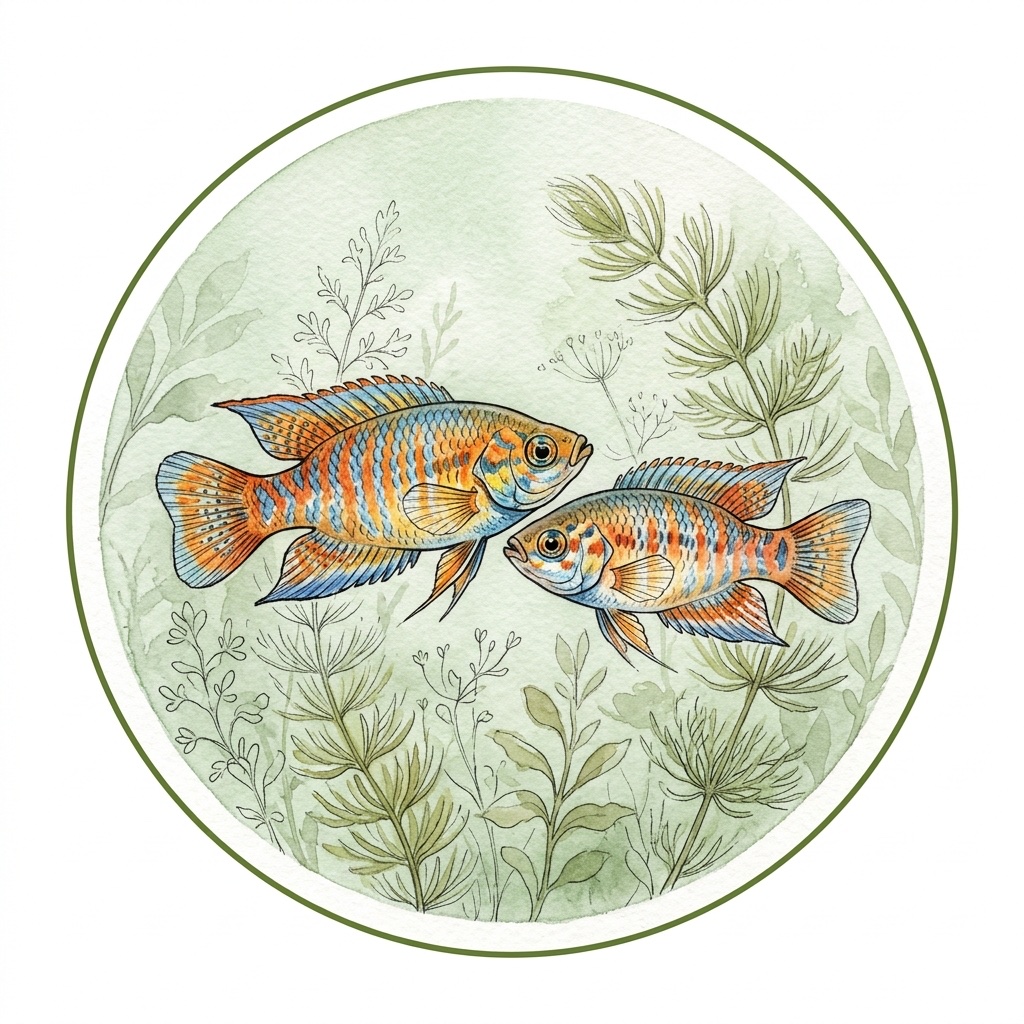
Month 0
Group Grow-Out
Raise 4-6 subadults together in a 400 L+ tank
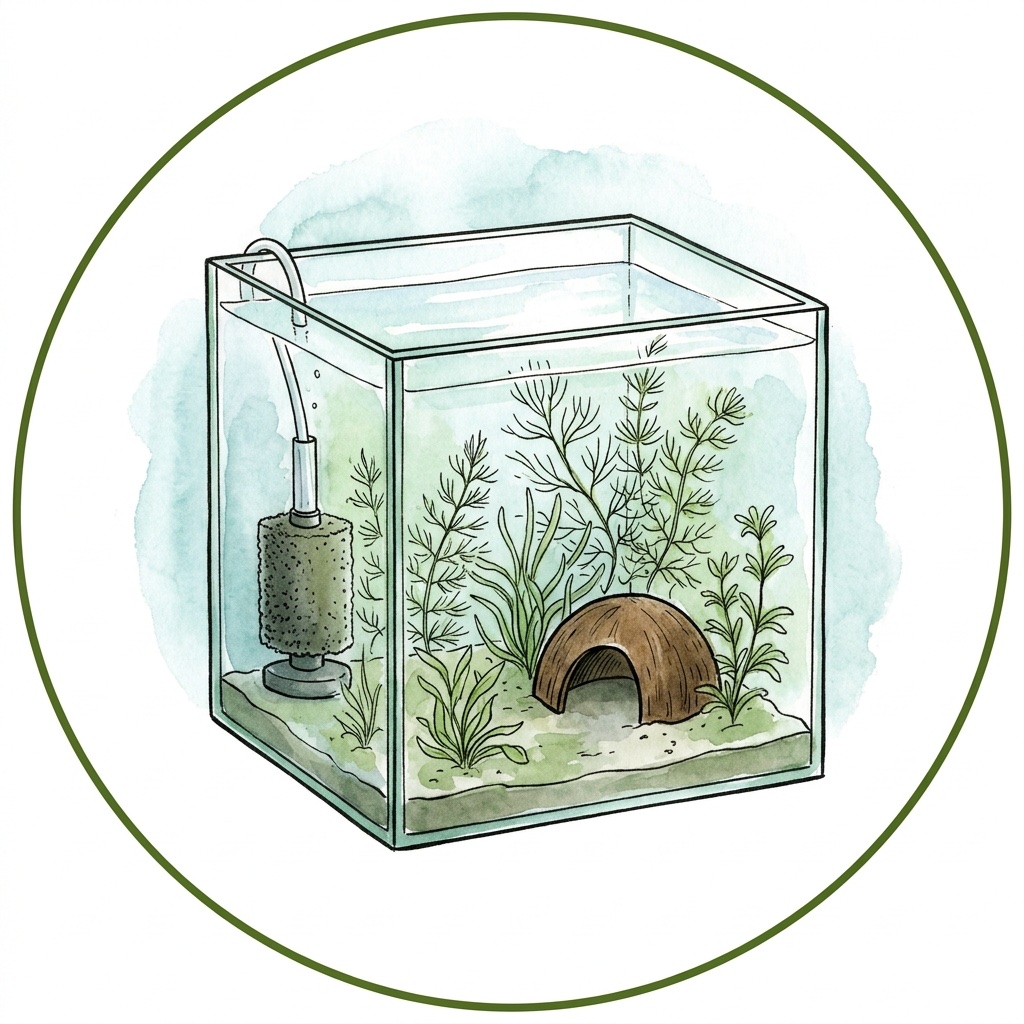
Month 8-12
Pair Formation
Violent courtship — watch closely
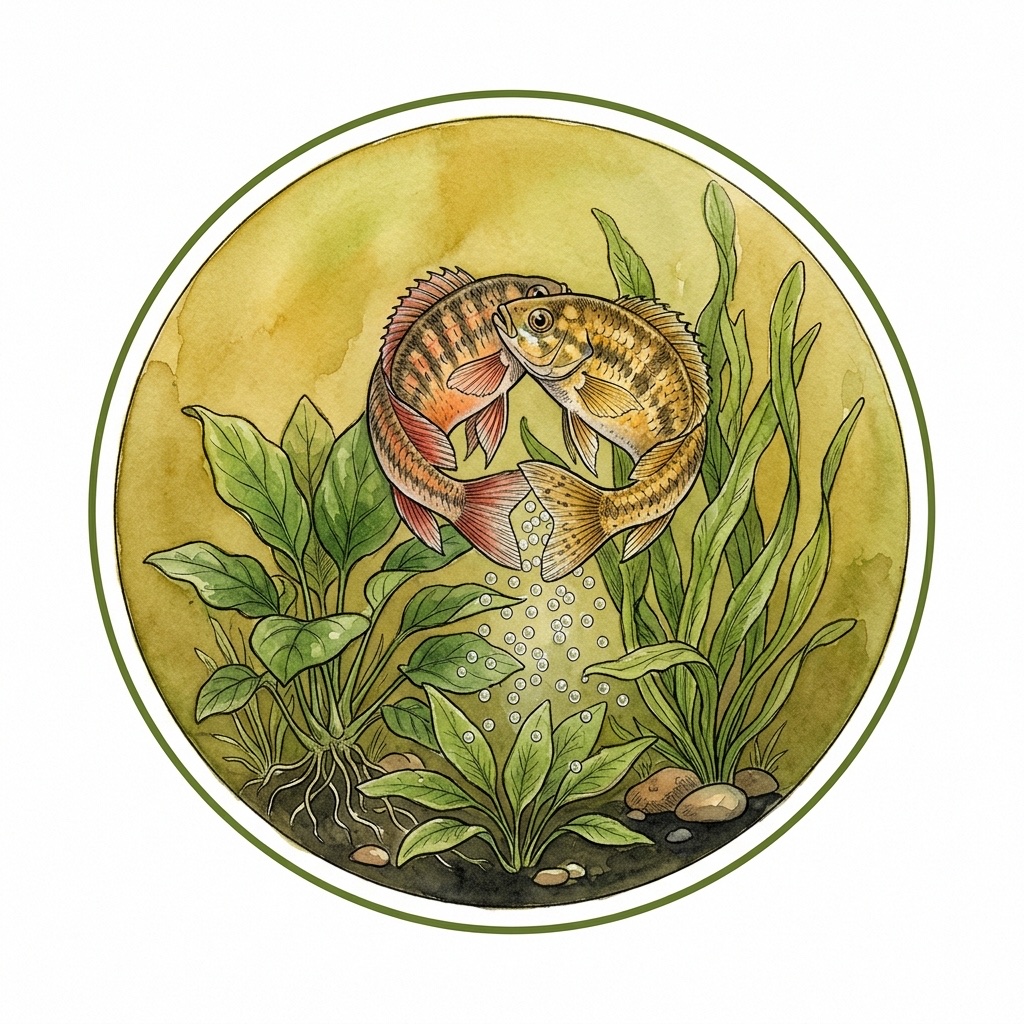
Day 0
Spawning Site Preparation
Pair cleans a flat rock together
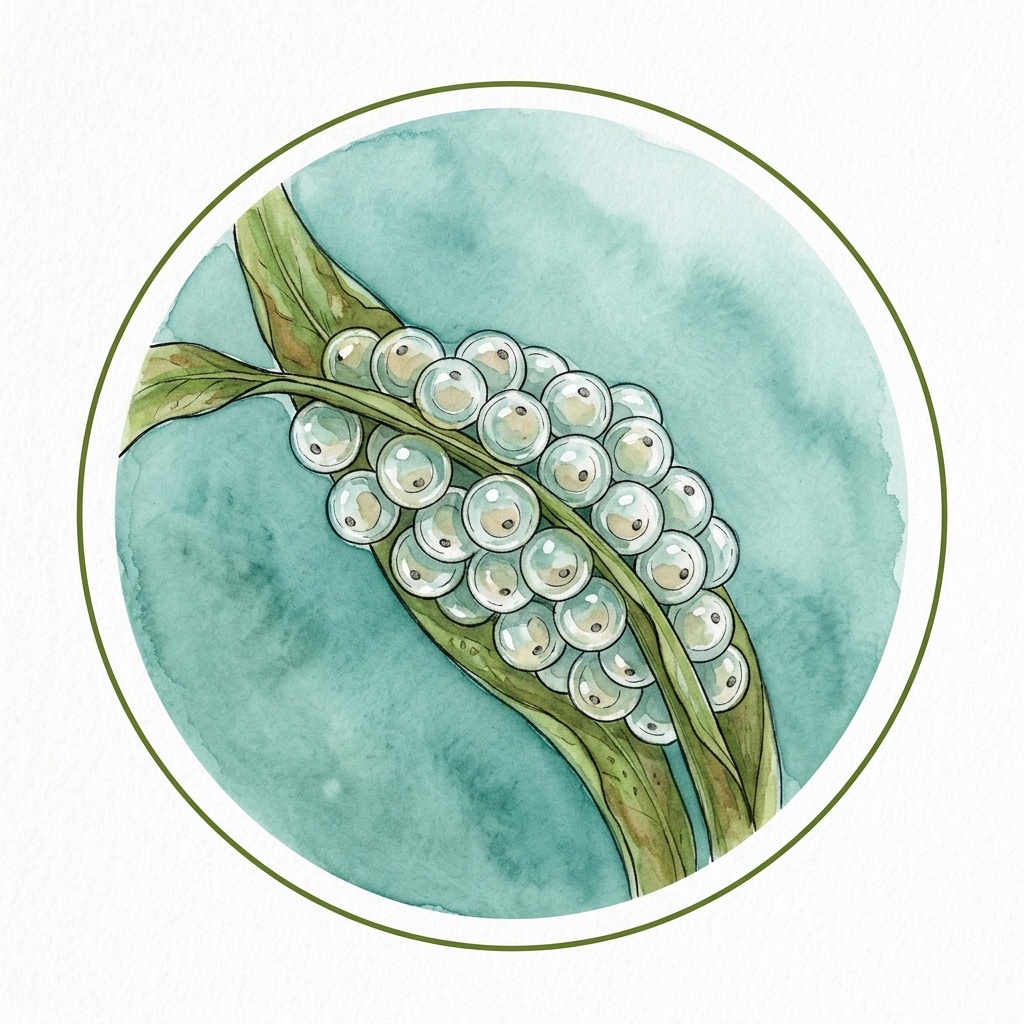
Day 1
Egg Deposit
200-500 eggs placed on flat rock
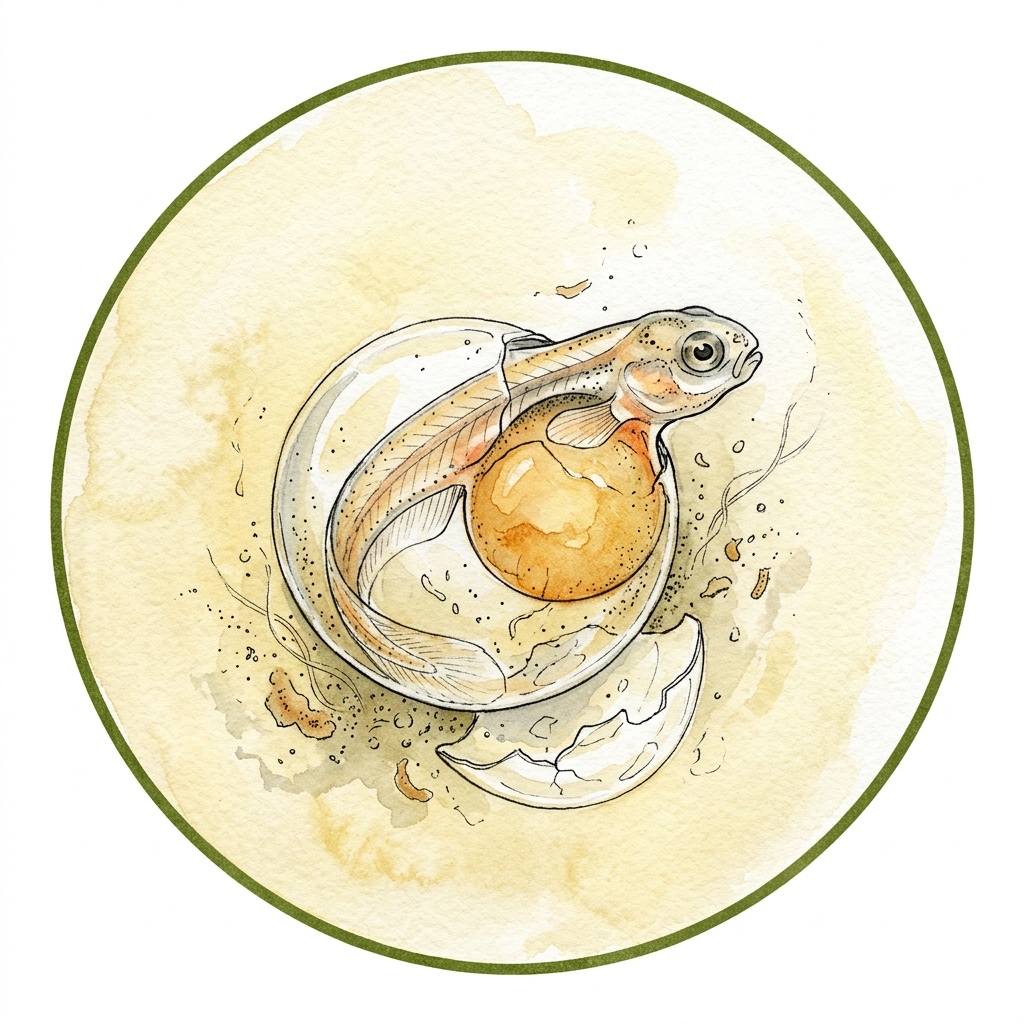
Day 3-4
Wrigglers
Eggs hatch into tethered yolk-sac larvae
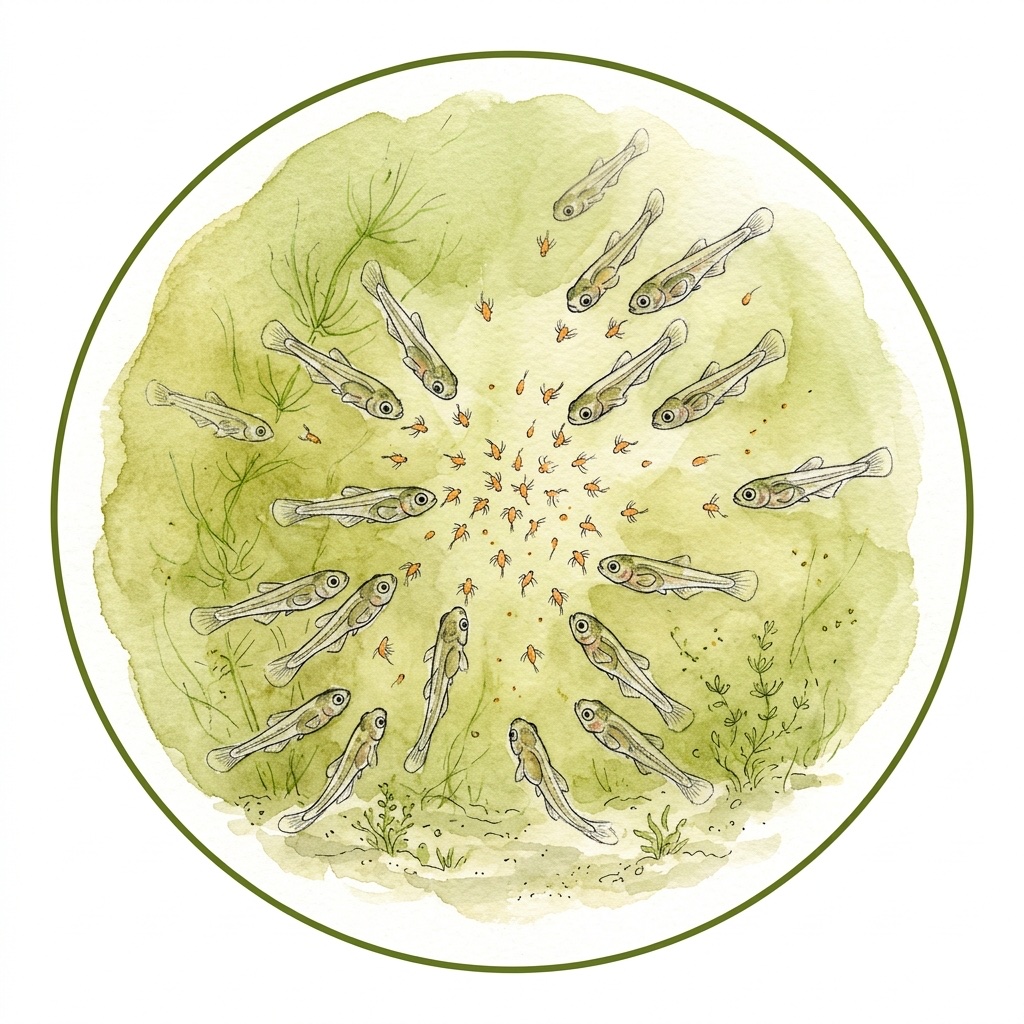
Day 7-8
Free-Swimming Fry
Begin feeding newly hatched brine shrimp and micro-worms
Group Grow-Out
The single most effective breeding strategy for this species is to skip ‘picking a pair’ entirely. Start with 4 to 6 subadults at 7-10 cm, grow them together in a tank of 400 L or larger with plenty of rock cover and multiple territory options, and feed them well on a varied diet. Over 6 to 12 months they will mature, dominance will sort itself out, and a natural pair will bond. Females killed by rejected mates is the most common failure mode in Central American cichlids, and this approach all but eliminates it.
Pair Formation
When the group approaches 12-14 cm, a pair begins to form. You will notice two fish consistently occupying the same stretch of tank, side-by-side, sometimes lip-locking in a classic cichlid strength test. Courtship in this species is rough by community-fish standards — the male and female quite literally wrestle before they spawn. If the female is clearly being chased without reciprocation, bruised, or hiding with clamped fins, they are not a pair; remove her immediately and try again later. If they are locking jaws and then swimming calmly side-by-side moments later, you have a pair. At this point, move the pair to their own 300-400 L breeding tank and rehome the spares.
Spawning Site Preparation
A bonded pair will spend 2 to 5 days meticulously cleaning a flat horizontal surface — a slate, a smooth piece of limestone, or even a patch of aquarium glass. Both fish take turns mouthing the surface and chasing other tank inhabitants out of a defended radius. The female’s belly visibly swells with eggs, the male’s colours intensify, and their shared aggression focuses outward. This is the point of no return: provide pristine water (30% change the day before), a slight temperature bump to 27-28 °C if you want to encourage spawning, and leave them alone.
Egg Deposit
Spawning happens in the morning, usually after first light. The female runs a pass along the cleaned surface, laying sticky translucent-amber eggs in neat rows; the male follows immediately behind, fertilising each row. The full spawn typically produces 200 to 500 eggs. Both parents then station themselves over the clutch and begin fanning water across the eggs with their pectoral fins. Any fish that approaches — including a previously tolerated tankmate — will be driven off or killed. Resist the urge to peek with a torch; just let the parents work.
Wrigglers
At around 72 hours, the eggs hatch into tiny translucent wrigglers still tethered to their yolk sacs. The parents move them — carefully, mouth by mouth — into a shallow pit they have excavated in the sand nearby, where the wrigglers twitch in a compact mass. They are not yet swimming, and they do not yet need to be fed. Parental behaviour intensifies: expect the male to patrol the perimeter while the female hovers directly over the pit, fanning constantly.
Free-Swimming Fry
Around a week after spawning the fry become free-swimming and rise from the pit as a tight cloud under both parents. This is when feeding starts: offer newly hatched baby brine shrimp, micro-worms, or a high-quality powdered fry food 3-4 times a day in small amounts. The parents herd the cloud as a unit, returning strays to the group with a gentle mouth grab, and defend a radius of 40-60 cm around the school. Fry grow quickly on good feeding and can be pulled at around 1.5-2 cm for separate grow-out, or left with the parents until the parents spawn again and stop tolerating them.
Quick Reference
| Scientific Name | Cribroheros rostratus (ex. Cichlasoma rostratum) |
| Common Name | Blue Eyed Cichlid (also ‘Red Eyed Cichlid’) |
| Size Offered | 7-10 cm subadult |
| Adult Size | 15-18 cm |
| Lifespan | 10-15 years |
| pH | 7.0-8.0 (ideal 7.5) |
| Temperature | 24-28 °C (ideal 26 °C) |
| Hardness | 10-20 dGH — hard water |
| Min Tank Size | 250 L single / 400 L+ pair or group |
| Diet | Carnivore — cichlid pellet, krill, shrimp, mysis, worms |
| Care Level | Intermediate to advanced |
| Temperament | Predatory, territorial when breeding |
| Tank Position | Mid to lower, open water |
| Breeding | Biparental substrate spawner on flat rock |
| Price | $40 AUD (7-10 cm) |
Related Products
Reviews
Clear filtersThere are no reviews yet.