

🪨 Species at a Glance
| Scientific Name | Symphysodon aequifasciatus / S. haraldi (line-bred) |
| Family | Cichlidae |
| Order | Cichliformes |
| Origin | Commercial farms (SE Asia / Germany); wild ancestors from central Amazon basin, Brazil / Peru / Colombia |
| Strain Status | Assorted — phenotype varies by shipment, cannot be pre-selected |
| Size at Supply | ~9 cm (sub-adult) |
| Adult Size | 15–20 cm disc diameter |
| Lifespan | 10–15 years with proper care |
| pH Range | 6.0–7.0 (ideal 6.5) |
| Temperature | 28–30 °C (82–86 °F) — high-temp species |
| Hardness (dGH) | 1–8, soft acidic preferred |
| Minimum Tank Size | 250 L (66 gal) for a group of 6 |
| Diet | Omnivore — high-protein pellets, frozen bloodworm, beefheart mix, vegetable flake |
| Care Level | Intermediate to Advanced |
| Temperament | Peaceful shoaling cichlid; subtle pecking order |
| Breeding | Substrate spawner; parents secrete body slime for fry — moderately difficult |
| Tank Position | Mid-water, vertical-structure oriented |
Meet the Species
The genus name Symphysodon is Greek for ‘with teeth grown together’ — a reference to the fused-looking dentition of these disc-shaped cichlids. The species epithet aequifasciatus means ‘equally banded’, alluding to the nine vertical dark bars that cross the flanks of most wild-type discus. The common name ‘discus’ has nothing to do with Greek mythology and everything to do with geometry: held side-on, an adult Symphysodon is almost perfectly circular, disc-shaped, the flattest and tallest of the South American cichlids. Early European ichthyologists who first described the genus in the 1840s were baffled by the body plan — nothing in European fauna prepared them for a cichlid that swam like a floating dinner plate.
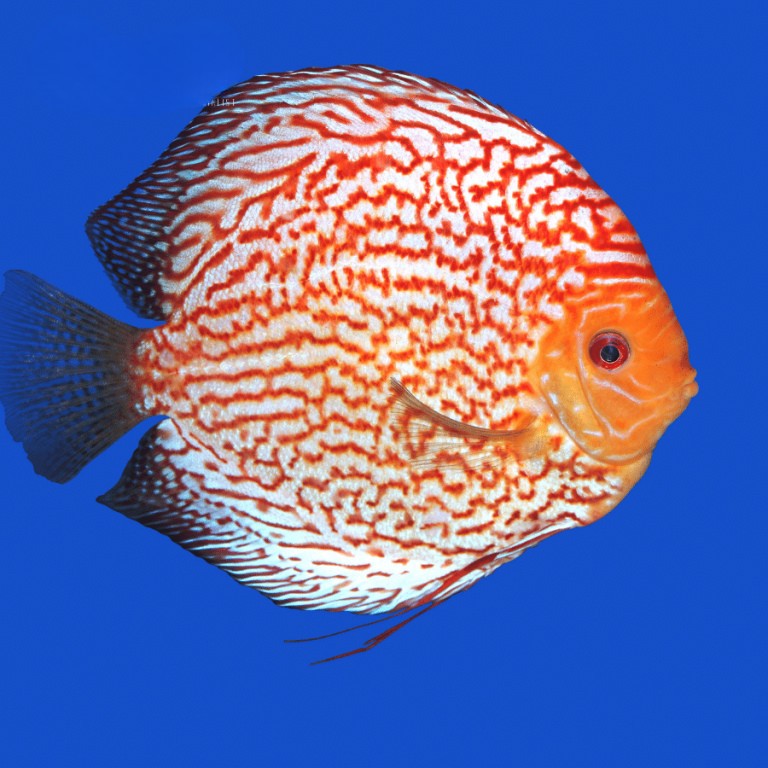
‘Assorted’ is a trade term, not a scientific one. Commercial discus farms — concentrated in Malaysia, Thailand, Germany, and more recently Vietnam — produce dozens of named line-bred strains: Pigeon Blood, Red Turquoise, Blue Diamond, Cobalt, Snakeskin, Leopard, Albino Platinum, Golden Rose, Red Melon, and countless house-crosses. When a wholesaler orders a ‘mixed box’ of sub-adults at 9 cm, the farm fills it with whatever strains are in current production surplus. The fish are all Symphysodon aequifasciatus (or the closely related S. haraldi) at a genetic level — they will interbreed freely — but the visible phenotypes are effectively a lottery. The taxonomic situation is itself messy: for decades all commercial discus were lumped under S. aequifasciatus, but recent molecular work by Ready and Bleher (2006) split the genus into three species — S. discus (Heckel discus, rarely in trade), S. aequifasciatus (green discus), and S. haraldi (blue and brown discus). Modern commercial strains are almost all S. aequifasciatus or S. haraldi lineage, and the two interbreed so freely in farm conditions that the distinction is blurred in practice.
This listing reflects exactly that reality. We cannot promise any specific strain, and specific-strain requests cannot be honoured on assorted shipments. If you want a named morph (say, six Blue Diamonds for a colour-matched display), please contact the store about dedicated single-strain imports — we can often source them with two to three weeks of lead time from farm partners. If you want six beautiful discus and are open to whichever the batch contains, assorted is the right pick — and typically the best value per fish, because farms use it to clear mixed-grade stock that would otherwise be split, photographed, and sold at a premium. Hobbyists who have bought assorted boxes for years often remark that some of their favourite fish were ‘ugly ducklings’ on arrival — a nondescript juvenile that transformed into a stunning adult once colour finished developing at 18–24 months. The surprise is part of the appeal.
Spot the Difference: Male & Female
Discus are among the most sexually monomorphic cichlids in the hobby. A pair photographed side by side and shown to an expert breeder will often produce the answer ‘I would need to see them spawn to be sure’. The few secondary cues that exist — slightly pointier dorsal-fin tips on males, a more domed forehead at full maturity, marginally stronger colour saturation on the anal-fin spines — are variable between strains and cannot be trusted on juveniles.
The only definitively reliable method is observation of the breeding papilla (genital tube) in the 24 hours before a spawn. The male’s papilla is pointed and narrow, used to fertilise eggs as they are laid; the female’s is blunt and wider, the egg-laying tube. Outside of this brief window the papilla is retracted and invisible. For this reason, discus keepers wanting a guaranteed breeding pair almost never attempt to sex juveniles — instead they raise a group of six or more and let natural pairing sort itself out. Two fish will separate from the group, clean a vertical surface together, and defend a small territory; at that point you have confirmed one male and one female. For an assorted 9 cm group, assume you cannot reliably sex the fish you receive, and plan accordingly.
| Feature | Male | Female |
|---|---|---|
| Body Shape | Slightly larger, marginally more rounded forehead at full maturity | Usually marginally smaller overall |
| Dorsal & Anal Fins | Fin tips tend to be slightly more pointed and extended | Fin tips slightly more rounded (unreliable) |
| Forehead Slope | Can develop a more convex forehead bump with age | Generally flatter profile (highly variable) |
| Colour Intensity | Sometimes marginally more saturated on bars/highlights | Often paler when gravid (unreliable cue) |
| Breeding Tube (Papilla) | Pointed, narrow — visible only 24 h before spawning | Blunt, wider, truncated — visible only 24 h before spawning |
| Overall Sexability | Extremely difficult outside breeding context | Extremely difficult outside breeding context |
Visual Varieties
🔴 Pigeon Blood
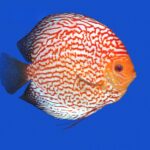
One of the most commercially successful strains — cream-to-red body with fine black peppering, no vertical bars. Descends from a 1991 Malaysian mutation and now underpins dozens of sub-strains like Red Melon and Marlboro Red.
🐟 Red Turquoise
Classic bold-pattern strain: red-orange body crossed with horizontal turquoise striations running the full length of the flank. One of the oldest line-bred forms and still considered a benchmark for pattern quality.
💎 Blue Diamond
Solid metallic blue across the entire body with no pattern, no bars — a reduction strain that trades pattern complexity for pure, jewel-like uniform colour. Bright lighting and a dark substrate show this strain at its best.
🔵 Cobalt
Similar to Blue Diamond but retains vertical bar remnants and a slightly deeper, saturated cobalt-blue hue. Often regarded as the ‘wilder-looking’ solid-blue option.
🐍 Snakeskin
Distinctive fine-pattern strain with 14+ vertical bars instead of the usual 9, producing a dense reticulated body pattern that recalls the scales of a snake. Usually paired with red, turquoise, or blue base colours.
🐆 Leopard (Spotted)
Spotted pattern strain — small dark dots arranged across a lighter base, rather than continuous bands. Rosette Leopards, where the spots develop secondary rings, are the premium expression of this line.
🤍 Albino / Platinum Albino
Melanin-deficient strain with red eyes and a pale cream-to-pink body. Slightly light-sensitive and prefers dimmer lighting and moderate water flow; otherwise cared for identically.
🟡 Golden / Yellow
Reduced-melanin golden body with variable yellow intensity; may retain faint barring. Often sold as ‘Golden Sunrise’ or ‘Yellow Crystal’ by specialist farms.
Because every assorted shipment arrives differently, we strongly recommend buyers treat the box as a curated surprise. Most hobbyists who keep mixed-strain groups find the variety visually more compelling than a colour-matched set — the contrast between, say, a solid Blue Diamond and a patterned Red Turquoise in the same school is far greater than between six of either strain alone. That said, a few combinations clash: full-solid strains (Blue Diamond, Cobalt, Golden) tend to dominate the eye, while fine-pattern strains (Snakeskin, Leopard) read as texture from a distance. A balanced mix usually includes two or three base colour families (reds / blues / patterns) rather than six wildly different directions. If your assorted box arrives heavily weighted toward one family — four reds and two patterns, say — it may be worth accepting that as an unintended blessing: groups of visually similar discus school tighter and settle faster than groups of wildly mismatched strains.
Colour development in discus is famously diet- and environment-dependent. Juveniles at 9 cm have only roughly 60–70 percent of their adult colour saturation; the deep, saturated plates you see in magazines belong to two- to three-year-old adults fed on colour-enhancing blends. Expect your assorted group to visibly deepen colour over six to nine months on a good diet, and to reach ‘showcase’ colour by 18 months in mature water. Tannin-stained water, a dark substrate, low-to-moderate LED lighting, and a calm tank environment (no boisterous tankmates, no heavy foot traffic past the glass) all measurably improve final colour.
One important caveat on colour expectations: many commercial strains, particularly the reds and some pigeon blood derivatives, are hormone-enhanced at the farm level using growth hormones and colour-boosting compounds fed through pellets during the 4–8 cm phase. At our 9 cm supply size the fish are past the hormone-enhancement window and will ‘true up’ to their genuine genetic colour over the following six months — which is sometimes less vivid than the intense red of their online photos. This is a known reality of the modern discus trade, not a defect of your fish: the genuine strain colour is what appears at adulthood, and it is the colour your fish will keep for life. Buyers fixated on showroom-red fish at 9 cm are often disappointed; buyers who understand the development curve are often delighted six months on.
Water Quality Requirements
6.0–7.0
ideal 6.5
28–30 °C
ideal 29 °C
1–8 dGH
Soft, slightly acidic water — the single most important parameter for long-term health
If a new keeper is going to fail with discus, it is almost always water that kills them — and it is almost always because the temperature is too low or the nitrate crept above 20 ppm unnoticed. Keep discus warm: 28–30 °C is non-negotiable, with 29 °C the sweet spot. This is higher than almost every common community fish and rules out many popular tank mates (corydoras excepted — Sterbai cory is specifically heat-tolerant). Below 27 °C, discus slow down, refuse food, and become susceptible to hexamita (hole-in-the-head disease) and other opportunistic infections. Sustained temperatures under 26 °C are a death sentence for the species within weeks, not months. A second, backup heater is standard practice for any discus tank worth more than $300 of livestock, and anyone keeping discus seriously will have a thermostat alarm, a power-failure protocol, or both.
Soft, slightly acidic water is the other pillar. Wild discus come from blackwater tributaries of the central Amazon where pH runs 5.0–6.5 and hardness is below 3 dGH. Commercial line-bred fish are more forgiving — our 9 cm stock is farm-raised on harder water and ships well up to pH 7.2 and 8 dGH — but they truly display at pH 6.5 and 3–5 dGH. If your tap water runs above 7.5 pH or above 12 dGH, blend with RO water to bring it into range. More importantly, keep it stable: a rock-steady pH of 7.0 is healthier than a chemically-buffered pH that swings between 6.0 and 6.8 with every water change. Many experienced discus keepers in hard-water areas (much of Australia, for example) run entirely on RO water reconstituted with a dedicated remineraliser — expensive upfront but eliminating pH swings entirely.
Nitrate discipline is the silent killer. Discus tolerate ammonia and nitrite poorly and begin showing chronic stress (clamped fins, darkened colour, refused food) at nitrate levels other cichlids shrug off. Target below 20 ppm, ideally below 10 ppm. This means weekly water changes of 40–50%, not the casual 20% many keepers do — discus keepers are famous for their water change schedules, and there is a reason. Experienced breeders often do 30% water changes twice or three times a week, specifically to keep nitrate levels crushingly low and push growth rates. For a display tank of adult discus, a weekly 40% change with gravel-vacuum attention to the sand is the minimum maintenance level; anything less and the fish will survive but never thrive.
Chlorine and chloramine from tap water must be neutralised completely before water hits the tank. Discus are more sensitive to chloramine than most freshwater fish, and the standard ‘just add dechlorinator to the bucket as you fill’ approach works well. What does not work is skipping dechlorination on a 10% top-up change because the volume seems small — chloramine damages discus gills cumulatively, and many unexplained discus deaths are traced back to months of minor chloramine exposure rather than any single cause.
Feeding Schedule & Diet
Discus are omnivorous cichlids that lean strongly carnivorous, with a substantial insect and crustacean component in the wild supplemented by plant matter scraped from submerged surfaces. In the aquarium they need a high-protein diet balanced with vegetable matter — roughly 60/40 protein to plant — fed in small amounts multiple times a day. Sub-adults at 9 cm are still in active growth and respond best to four to six small feedings rather than two large meals: their digestive systems are not large, and undigested protein quickly fouls the water.
Staple foods for a well-fed discus tank fall into three categories. First, quality granule or sinking pellet foods (Tetra Discus, Hikari Discus Bio-Gold, Tropical Fish Foods D-50, New Life Spectrum Thera-A) — these should form roughly half the diet and contain at least 45% protein plus a vegetable component. Look specifically for pellets that sink slowly rather than float: discus are mid-water feeders and prefer food that drifts past them at eye level. A floating pellet forces them to surface-feed, which many discus refuse to do, leading to false reports that the fish ‘will not eat pellets’ when in fact they just would not eat that particular presentation.
Second, frozen foods — bloodworm, mysis shrimp, krill, and daphnia are all eagerly accepted and should be rotated weekly to prevent nutritional bias. Black mosquito larvae and whiteworm are two premium options for conditioning breeders, though neither is commonly sold in Australia. Thaw frozen cubes in aquarium water (not tap water) and rinse briefly through a fine net before feeding to remove the protein-rich thaw water — skipping this step dumps a substantial nutrient load straight into the tank and spikes nitrate faster than you would expect.
Third, beefheart-based blends, which are a tradition in the discus hobby for good reason: a home-made or commercial beefheart mix (beef heart, spirulina, gel binder, multivitamin) gives growth rates that pellet-only diets struggle to match. Feed beefheart two or three times a week, not daily. Home-made beefheart recipes are widely available online — the classic includes trimmed lean beef heart, blended spirulina or garlic, shrimp or krill meal for colour, and a gelatin binder to form feedable cubes that can be frozen in ice-cube trays.
Avoid plain fatty beef, red meat trimmings, or home-made mixes that lack a vegetable component. Historic outbreaks of hexamita (intestinal parasites causing hole-in-the-head disease) in discus populations have been consistently linked to poor-quality, high-fat, low-fibre home-made diets, and the bodybuilder-style ‘beef and nothing else’ approach that was fashionable in the 1990s is now firmly out of favour. A modern discus diet pairs a small amount of lean beef heart with plenty of fibre, vegetables, and marine-source protein.
Tank Requirements & Layout
Discus swim vertically more than they swim horizontally. An adult 18 cm disc wants headroom, not length. For this reason the minimum tank dimensions are set by height first: 55–60 cm water depth is the practical floor for adult discus, and taller is better. A 250 L tank (approximately 120 x 45 x 50 cm) is the smallest footprint we recommend for a group of six 9 cm sub-adults, and by the time they reach adult size you will want 350 L or more. Tall rectangular display tanks (often called ‘cube-style’ or ‘Amazon-style’ tanks) suit discus better than long shallow tanks designed for rainbowfish or tetras. If you are building a new tank specifically for discus, aim for a footprint of at least 120 x 50 cm and a water height of 55–60 cm; most high-end aquarium brands (ADA, Mr Aqua, Aqua One Lifestyle series) offer stock sizes that hit these proportions.
For the scape, think Amazon biotope with soft, diffuse lines. Fine sand substrate — not gravel, not aquasoil — is standard: discus sift through substrate while feeding and gravel can injure their barbels and flanks. Pool-filter sand and black quartz sand in the 2–4 mm range are both excellent. Aquasoils designed for planted tanks are rarely the right choice for a discus tank because many lower pH aggressively during their first months and create the swings you are trying to avoid; if you want the look of dark substrate, use black quartz sand instead. Driftwood arranged vertically rather than horizontally mimics the fallen tree roots of the varzea floodplains and gives discus vertical surfaces to spawn on and flank against. Tannin-stained water from the driftwood (or supplemented with Indian almond leaves / alder cones) is highly recommended — it lowers pH gently, dims the light to a level discus find calming, and has mild antibacterial properties that reduce hexamita risk.
Planting is optional but should lean toward heat-tolerant Amazon natives: Amazon sword (Echinodorus) is the classic pairing, along with Vallisneria, Anubias (attached to driftwood, not substrate), and floating plants like Amazon frogbit. Skip stem plants that demand CO2 injection and bright light — discus prefer moderate, diffuse lighting, and the CO2/light combinations that demanding carpets require often conflict with discus water requirements. Leave open swimming space in the mid-water: discus shoal loosely and need room to turn disc-on to each other during pecking-order displays. A common design mistake in new discus tanks is over-scaping — filling the tank with rock, wood, and plants until there is no open swimming lane. Discus need negative space. A sparse, intentional layout with one or two strong vertical driftwood pieces and a large open mid-water area looks better and keeps discus happier than a cluttered competing-element aquascape.
One setup option worth knowing about: many experienced discus keepers run bare-bottom tanks, particularly for growth-out and breeding setups. A bare glass bottom with no substrate at all is visually stark but functionally superb — waste is instantly visible and easy to siphon, nitrates stay crushingly low, and the fish show accelerated growth compared to substrated tanks. For a display tank, most hobbyists prefer sand for aesthetics; for a serious breeding room, bare bottom wins every time.
Minimum 250 L with 55–60 cm depth for six 9 cm juveniles; 350 L+ for adults. Taller is always better than longer.
Canister rated 2x tank volume (e.g. a 500 L/h canister on a 250 L tank). Baffle the outflow with a spray bar or lily pipe to disperse flow.
200–300 W adjustable, external thermostat if possible. Set to 29 °C. Heavy-duty brands (Eheim Jager, Fluval E-series) only — this is not where to save money.
Second 150–200 W heater on a separate socket. Essential insurance — a single heater failure is the most common cause of discus wipe-outs.
Digital with external probe, ideally with a high/low alarm. Verify against a glass thermometer monthly.
Fine dark sand (3–5 mm grain, e.g. black quartz or pool-filter sand). Avoid gravel and sharp-grain aquasoil.
Spiderwood, mopani, or malaysian driftwood — arranged vertically to mimic flooded forest roots.
Amazon sword (Echinodorus), Vallisneria, Anubias on driftwood, floating plants for light diffusion. Skip high-CO2 demanding plants.
Indian almond (Catappa) leaves, alder cones, or a commercial blackwater extract for tannin staining.
Moderate, dimmable LED on a 7–8 hour cycle. Very bright light stresses discus — err dim.
Dedicated digital meters, not test strips. Calibrate pH monthly. This is a species where knowing your numbers matters.
Choosing Tank Mates
The principle for a discus community is simple: everything in the tank must thrive at 28–30 °C, prefer soft acidic water, and match the discus for temperament (calm, slow-moving, non-nippy). This narrows the options considerably — the majority of common community fish fall outside the temperature window. The classic high-end discus community is a species-rich Amazon biotope tank: discus as the centrepiece, a tight school of 20+ cardinals or rummy noses as dither fish in the mid-layer, a group of Sterbai cory cleaning the sand, a bristlenose pleco on the driftwood, and optionally a breeding pair of German Blue Rams or Apistogramma in the low-mid zone. The result is a layered, biotope-appropriate tank that looks intentional rather than stocked by accident.
For an assorted group of six 9 cm discus, we recommend starting simple — discus plus one dither school (cardinals or rummy nose) plus Sterbai cory — and adding the rest only after the discus have settled (usually 6–8 weeks). Discus are subtle animals with a pecking order that takes time to establish; adding other fish too quickly often disrupts the dominance sort and produces a stressed school that refuses food.
One final community note specific to assorted groups: the random mix of strains you receive will never all be the same dominance rank. Within two to three weeks of settling in, you will see a clear pecking order emerge — usually one ‘alpha’ discus that feeds first and claims the prime territory, a middle rank that feeds second, and one or two ‘low-rank’ fish that hang back at feeding time and may darken noticeably when the alpha approaches. This is normal and healthy cichlid behaviour. Problems only arise if the low-rank fish are being actively chased away from food to the point of starvation, or if a single fish is being singled out for sustained aggression — both issues usually resolve by adding more discus (the group dynamic dilutes at 8+ fish) or by rearranging the scape to break up established territories.
| Species | Why | |
|---|---|---|
| ✅ | Cardinal Tetra | The classic discus dither fish — cardinals tolerate 28–29 °C better than neons, school tightly, and draw discus out by signalling safety. Keep 15+ for proper schooling. |
| ✅ | Rummy Nose Tetra | Tight-schooling Amazon natives that flash red noses — excellent water-quality indicator because they are the first fish to show stress if parameters slip. |
| ✅ | Sterbai Corydoras | The only cory species that genuinely thrives at discus temperatures (28–30 °C). Bottom-dwellers that ignore discus and clean up missed food. |
| ✅ | German Blue Ram | Dwarf cichlid that shares the discus temperature range exactly (28–30 °C). Peaceful, stays low, adds a colour accent. Keep only one breeding pair per tank. |
| ✅ | Apistogramma (dwarf cichlid) | Bottom-zone dwarf cichlids from the same Amazon biotope. Occupy a different layer from discus, peaceful if a single pair is kept with defined territory. |
| ✅ | Hatchetfish (Marbled) | Surface-dwelling Amazon natives that fill the top layer without competing with discus. Tight-lid essential — they are champion jumpers. |
| ✅ | L-Number Pleco (Bristlenose) | Bristlenose pleco handles discus temperatures well and cleans algae without bothering tank mates. Avoid common pleco (grows too large). |
| ✅ | Otocinclus | Tiny algae-eaters tolerant of warm water, completely non-aggressive. Keep a group of 6+ for natural behaviour. |
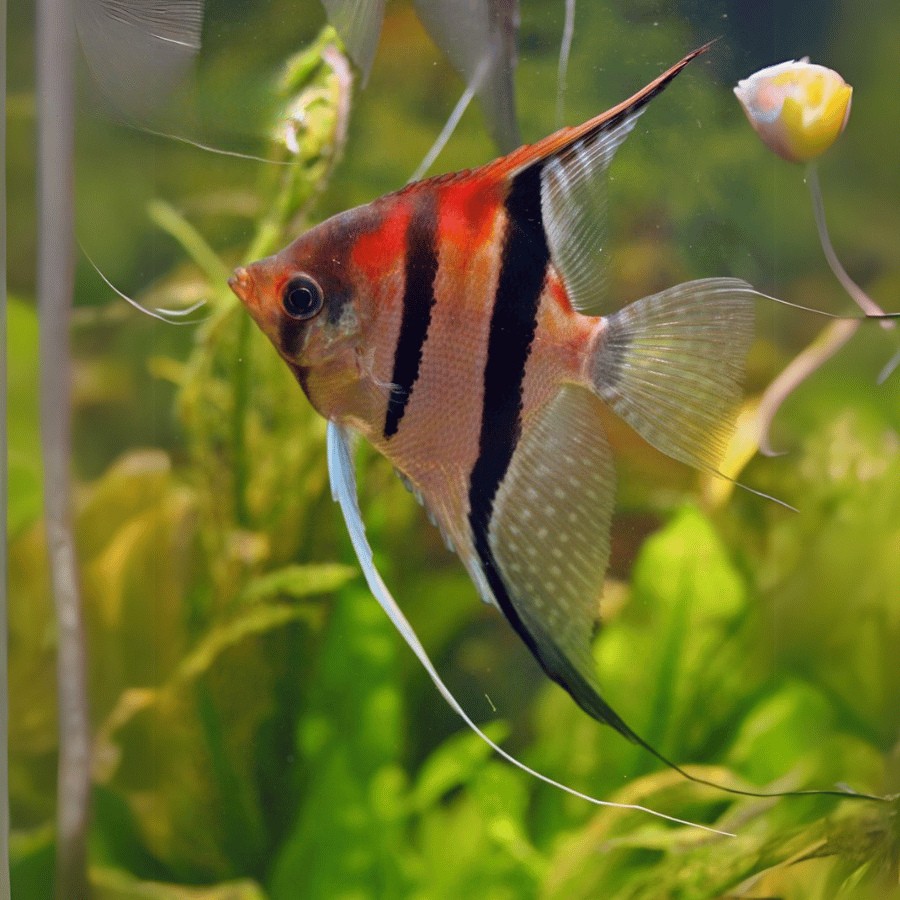
| ❌ | Angelfish | Often suggested as discus companions but in practice carry discus plague and gill flukes as asymptomatic hosts. Also noticeably more aggressive than discus and will outcompete them at feeding time. Skip entirely. |
| ❌ | Tiger Barb / Most Barbs | Chronic fin-nippers that will strip discus of their long flowing fins. Also prefer cooler water than discus tolerate. |
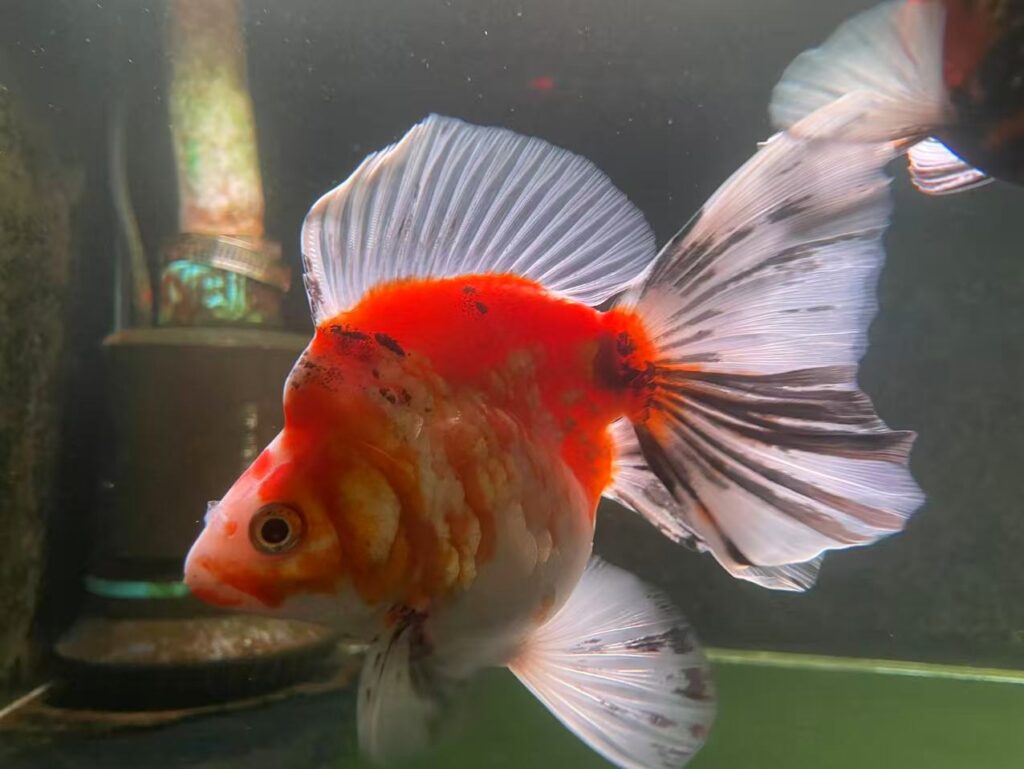
| ❌ | Goldfish / Cold-Water Species | Completely incompatible — require 18–22 °C while discus require 28–30 °C. Never attempt to mix. |
| ❌ | Oscar / Larger Cichlids | Oscars, severums, and other large cichlids will view juvenile discus as prey and will outcompete adult discus for food. |
| ❌ | Clown Loach | Active, boisterous swimmers that unsettle discus with constant rapid motion. Also carry ich more readily than most species. |
| ❌ | Common Pleco | Grows to 40+ cm, will rasp the slime coat off sleeping discus at night — a known cause of discus infection and death. Bristlenose is the only safe pleco for discus. |
Breeding in Captivity
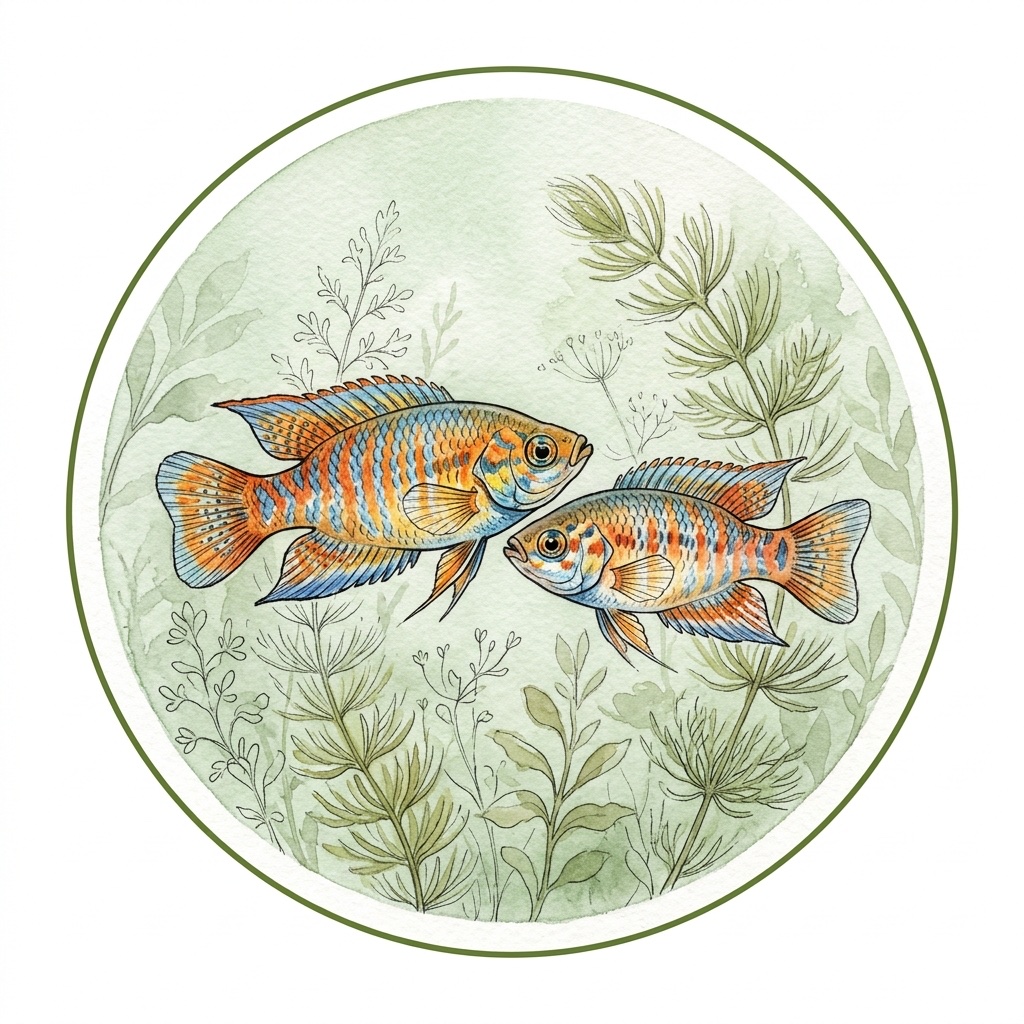
Months 0–12
Pair Selection from a Group
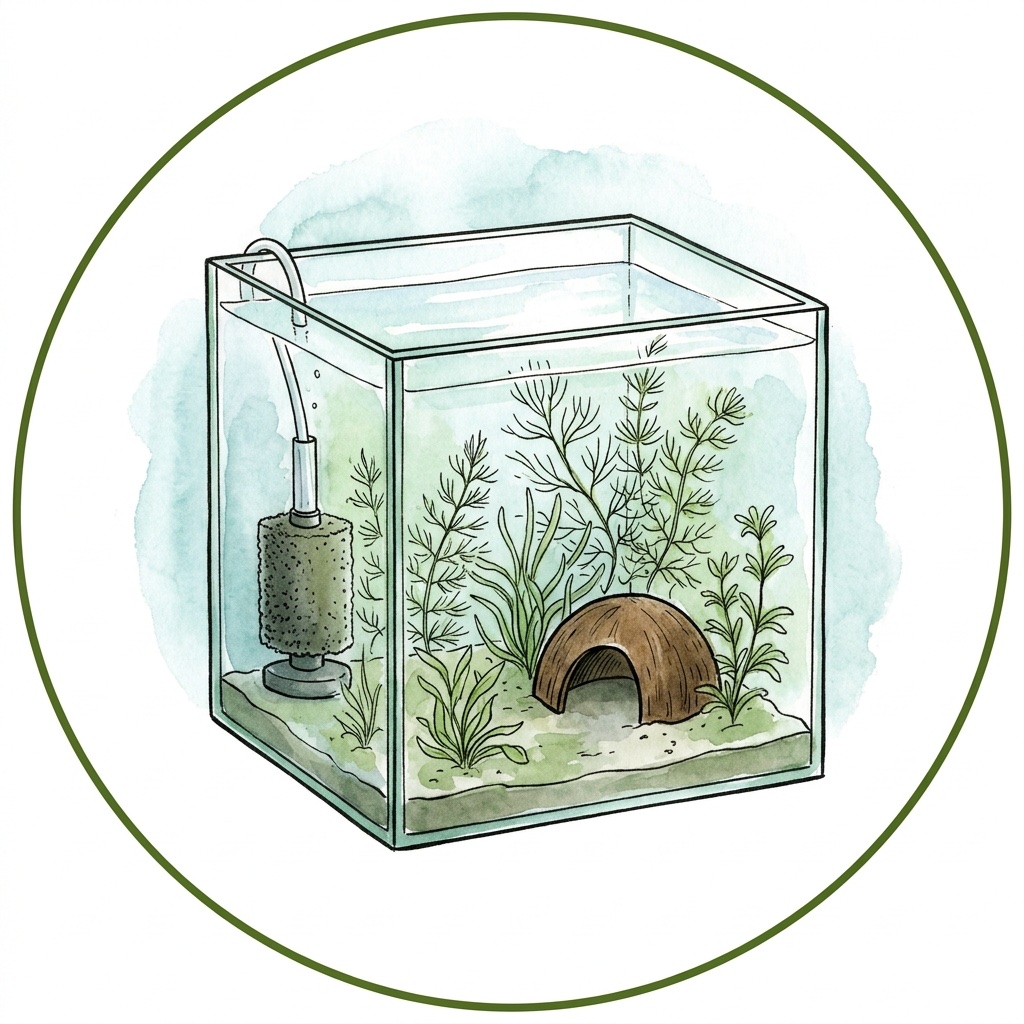
Raise 6+ juveniles together, wait for natural pairing
Day -7 to 0
Courtship & Cleaning
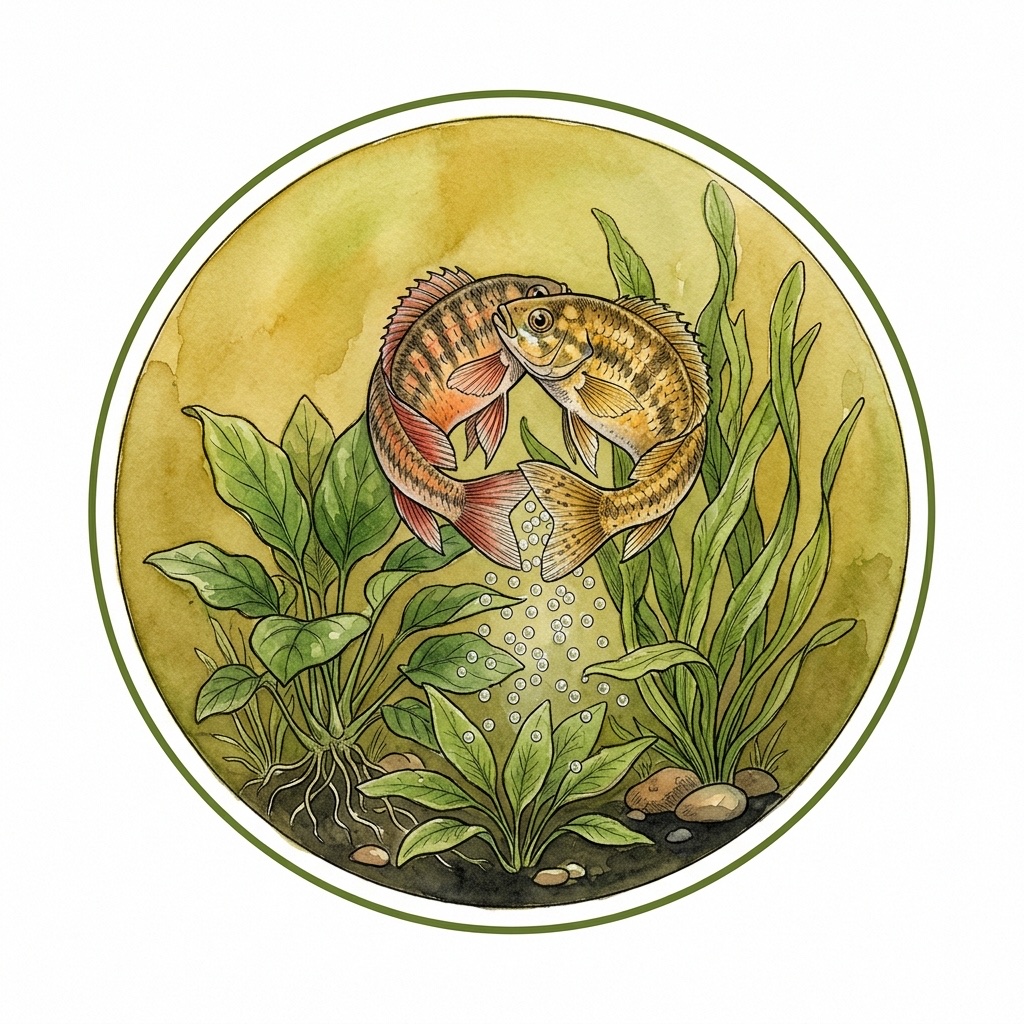
Pair darkens, trembles, cleans spawning site intensely
Day 0
Egg Laying
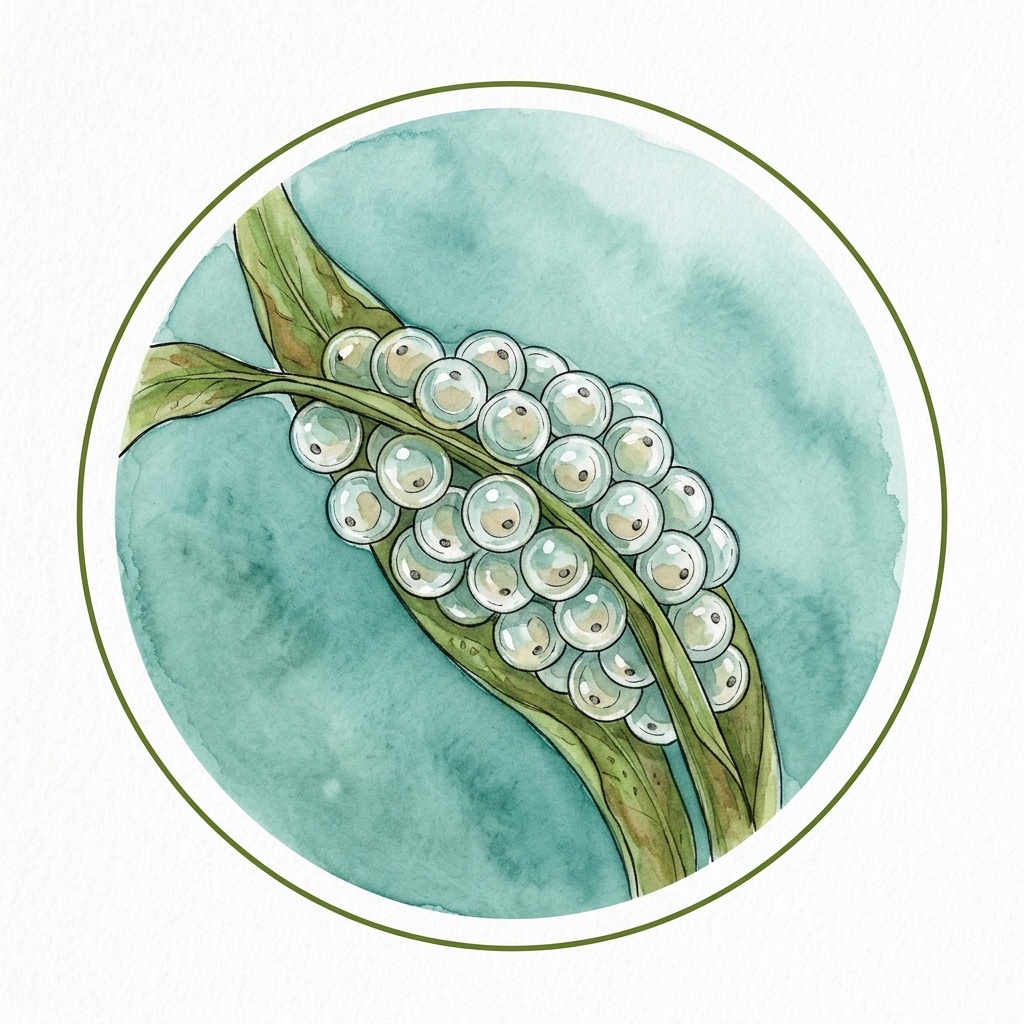
Female lays 100–300 eggs on vertical surface; male fertilises each row
Day 2–3
Hatching & Wrigglers
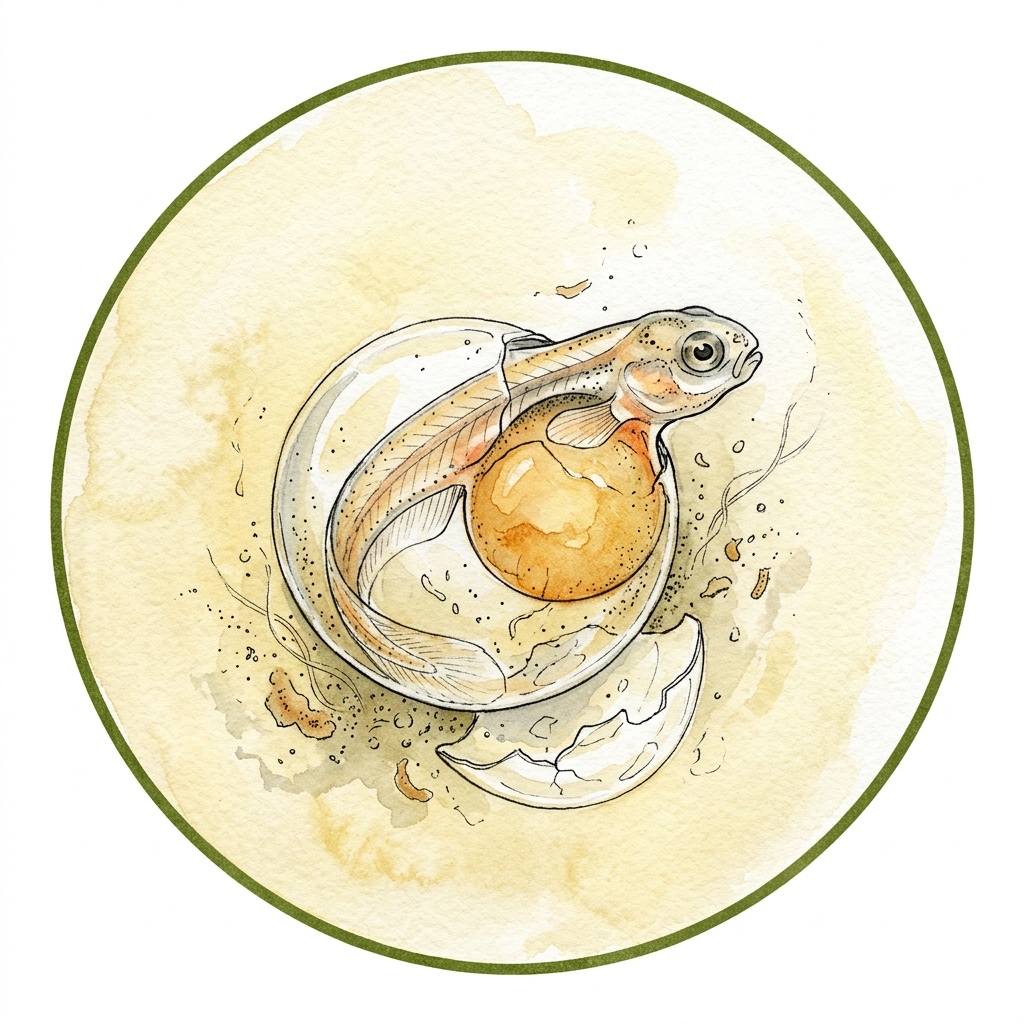
Eggs hatch into wrigglers attached to surface
Day 4–6
Free Swimming & Parent Slime Feeding
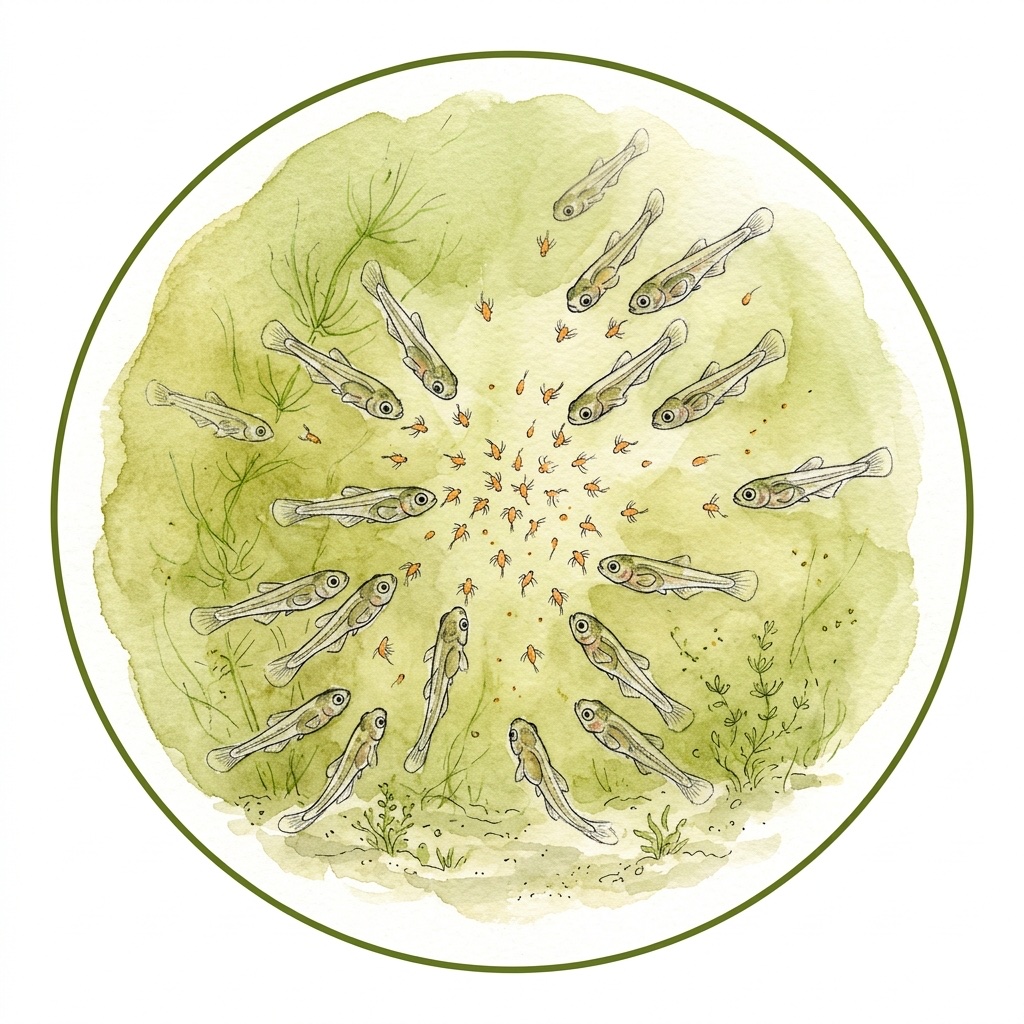
Fry swim to parents’ flanks and feed on body slime — unique to Symphysodon
Day 10–21
Weaning to Baby Brine Shrimp
Introduce newly-hatched brine shrimp, gradually shift off slime
Pair Selection from a Group
Because discus cannot be reliably sexed as juveniles, the standard professional route is to raise a group of at least six — ideally eight — fish together from the 9 cm size you see in this listing. Keep them on excellent water and a high-protein diet, and be patient. Somewhere between month 9 and month 18, two fish will separate from the school: you will see them defending a corner together, driving off other discus that come near, and cleaning a vertical surface (a piece of slate, the glass, a broad sword leaf, or the intake pipe) with their mouths.
At that point you have a confirmed pair — one male, one female, selected by the fish themselves on compatibility grounds. Move the pair to a dedicated 100–150 L breeding tank with bare-bottom or sand substrate, a single spawning cone (a vertical ceramic or slate surface), soft warm water (pH 6.0–6.5, 29 °C, hardness below 4 dGH), and gentle sponge-filter flow only.
Courtship & Cleaning
In the week before spawning, both fish darken in colour, tremble against each other in characteristic ‘shaking’ displays, and clean the chosen vertical surface obsessively with their mouths. The female’s body rounds visibly with developing eggs. In the final 24 hours, the breeding tubes (papillae) drop from both fish and become visible — the female’s is blunt and truncated, the male’s pointed. This is the only reliable moment in a discus’s life when sexing is unambiguous.
Feed the pair heavily during courtship — live or frozen bloodworm and brine shrimp, supplemented with a high-quality pellet — and keep water changes generous and temperature-matched. Do not disturb the tank.
Egg Laying
Spawning typically occurs in late afternoon or early evening. The female swims up the cleaned surface in a straight vertical line, depositing a tight row of amber-coloured adhesive eggs; the male follows immediately, passing over the same row and fertilising each egg. The pair repeats this run 20–30 times over one to two hours until the full clutch — usually 100–300 eggs, occasionally more in mature pairs — is laid.
Both parents then fan the eggs continuously with their pectoral fins to oxygenate them and pick off any that turn white (unfertilised or fungussed). Do not attempt to move the eggs or the parents — discus are dedicated parents and will care for the clutch themselves. Resist all temptation to add medications, tannin supplements, or anything else to the water at this stage.
Hatching & Wrigglers
The eggs hatch roughly 50–60 hours after being laid, at 29 °C. The tiny embryos — now called wrigglers — remain attached to the spawning surface by a mucus thread from the parents’ efforts, twitching their tails but not yet swimming. They are still feeding on their yolk sacs.
The parents frequently move the wrigglers to a new clean surface, carrying them in the mouth one at a time — a remarkable behaviour that indicates healthy parental care. If the parents start eating the wrigglers at this stage, it usually means the pair is inexperienced (first or second spawn) and will settle into proper parenting on subsequent clutches.
Free Swimming & Parent Slime Feeding
By day four to six, the wrigglers become free-swimming and immediately make their way to the parents’ flanks. This is the behaviour that makes discus breeding famous: the parents’ bodies secrete a protein- and antibody-rich slime coat specifically for the fry to feed on. The tiny fry graze on the parents’ flanks in a cloud, swapping between the two adults every few minutes as the producing parent tires and signals its mate to take over.
This parental slime is the fry’s sole food for the first four to five days. Attempts to raise discus fry artificially without the parents — by injecting slime with a pipette or using substitute foods — have historically been far less successful than letting the parents do the work. The slime contains both nutrition and maternal antibodies, and fry raised without it show markedly reduced growth and survival.
Weaning to Baby Brine Shrimp
Around day ten to fourteen, begin supplementing the fry’s diet with newly-hatched baby brine shrimp, introduced gently with a pipette into the fry cloud. The fry will continue to feed on parent slime for another week or two but increasingly take to the brine shrimp. By day 21 most of the nutrition comes from brine shrimp and powdered fry food.
At around three weeks the parents begin to ‘wean’ the fry — moving away from them, ignoring their approaches, and occasionally even nipping at them. This is normal discus parenting: at this point, either leave the fry with the parents for another week or two, or move them to a grow-out tank with similar water and heavy feeding. Young discus grow slowly for the first two months then accelerate rapidly; expect sellable 5 cm juveniles by month four.
Quick Reference
| Scientific Name | Symphysodon aequifasciatus / S. haraldi |
| Strain | Assorted commercial line-bred (varies by shipment) |
| Size at Supply | ~9 cm sub-adult |
| Adult Size | 15–20 cm disc |
| Lifespan | 10–15 years |
| pH | 6.0–7.0 (ideal 6.5) |
| Temperature | 28–30 °C (ideal 29 °C) |
| Hardness | 1–8 dGH |
| Min Tank Size | 250 L (6 fish); 350 L+ for adults |
| Tank Depth | 55–60 cm water depth minimum |
| Group Size | 6+ (essential — do not keep singly or in pairs) |
| Diet | High-protein pellets + frozen + beef heart blend + vegetable |
| Care Level | Intermediate to Advanced |
| Temperament | Peaceful shoaling cichlid |
| Breeding | Substrate spawner; parents feed fry body slime |
Related Products
Reviews
Clear filtersThere are no reviews yet.