Essential Equipment
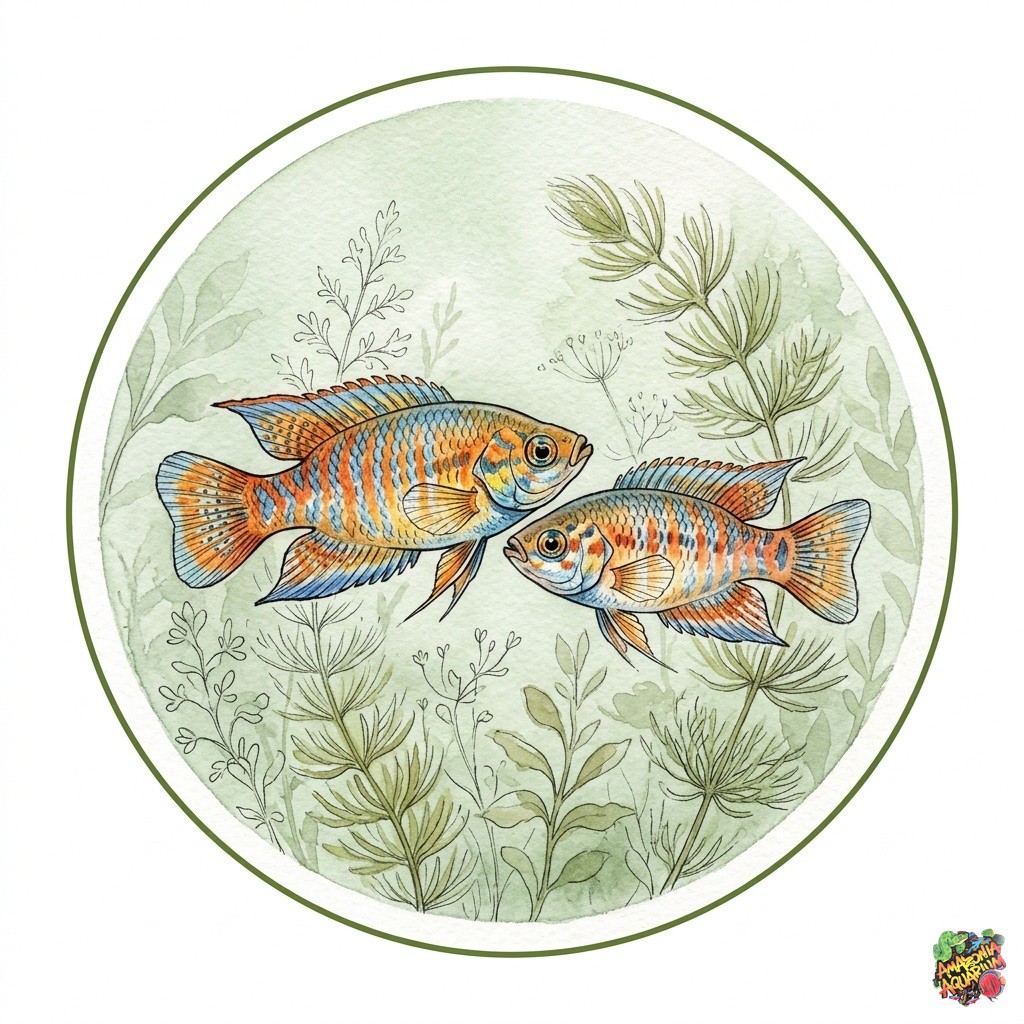
Day 1–3
Mating
Day 3–5
Fertilisation
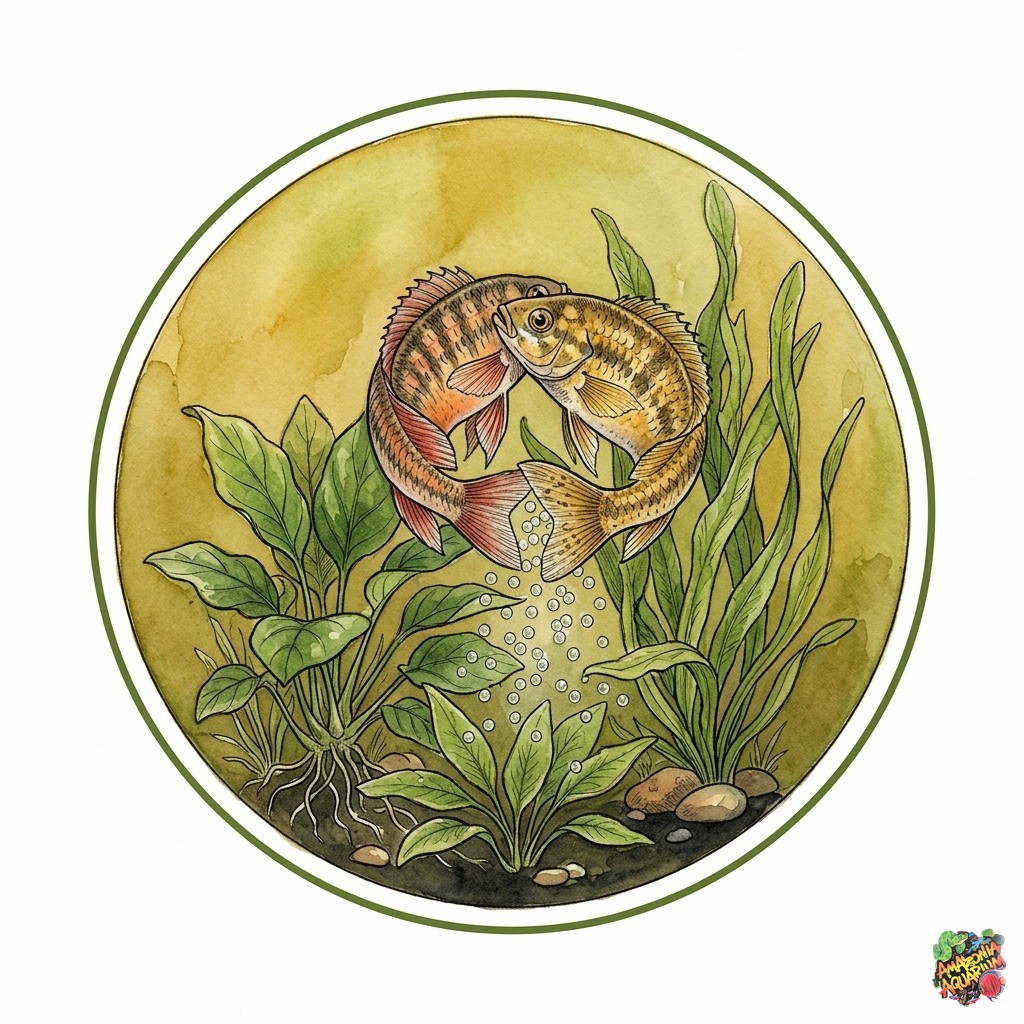
Day 5–25
Berried Period
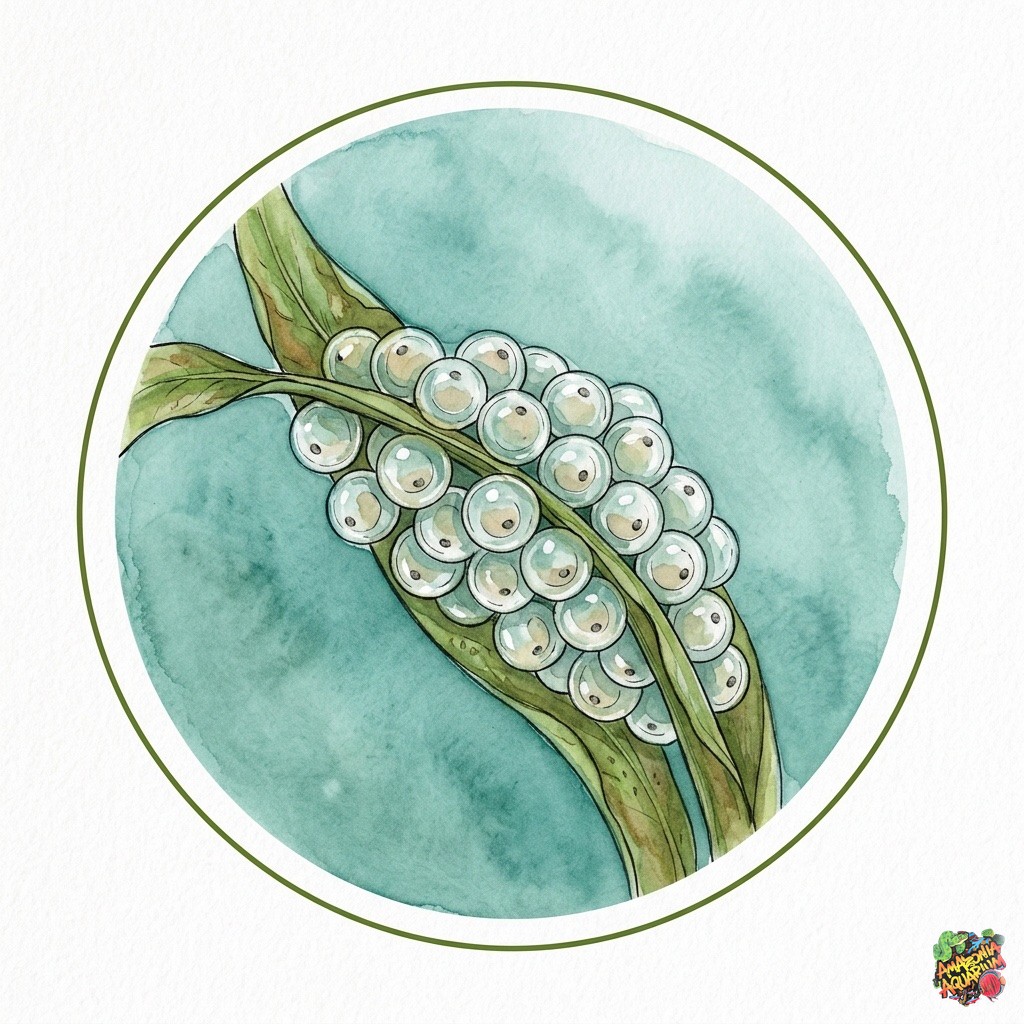
Day 25–28
Hatching
Mating
The female molts and immediately releases pheromones into the water column, triggering a “mating frenzy” where males swim rapidly and erratically in search of her. This frantic behaviour is entirely normal and usually lasts 12–24 hours. Ensure the tank is well-covered during this period as excited males may jump.
Fertilisation
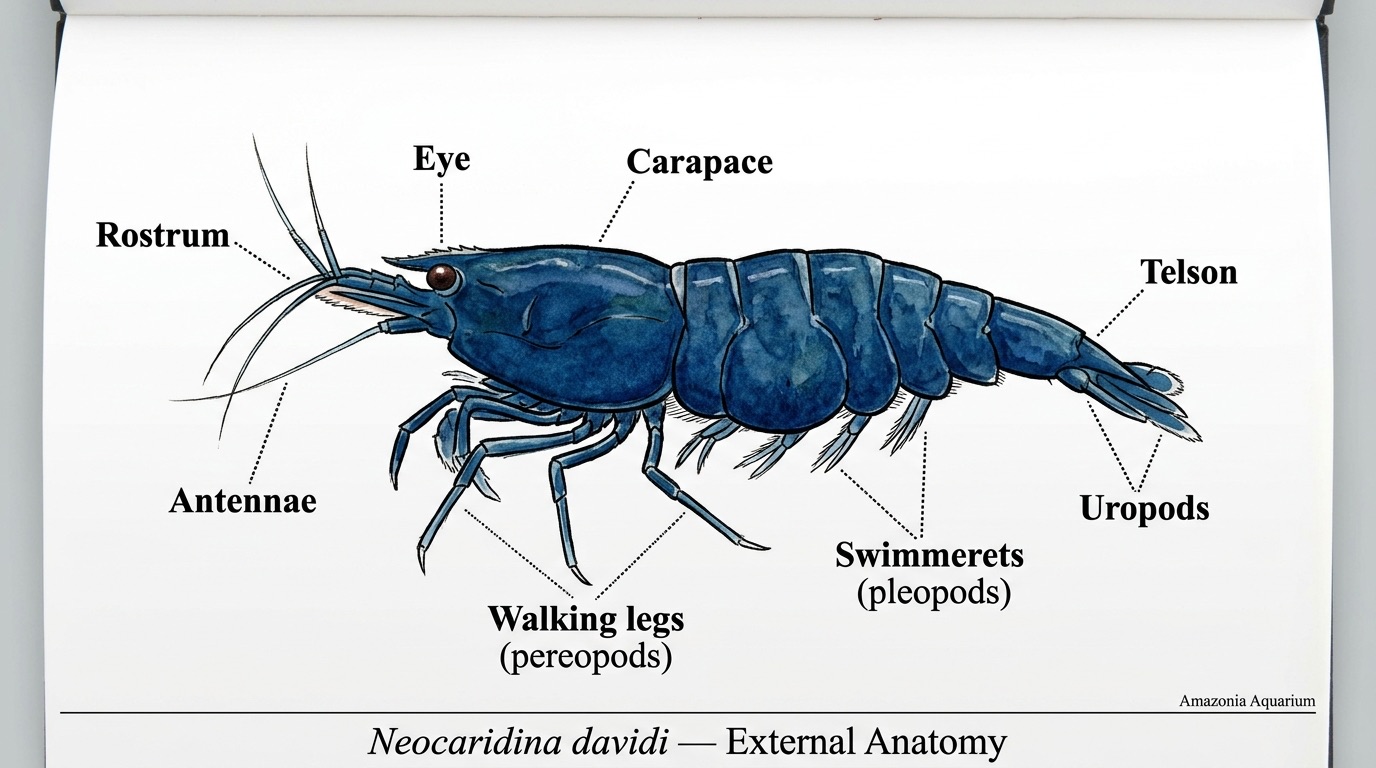
The male deposits a sperm packet and the female collects it to fertilise her eggs internally. She then arranges 20–40 fertilised eggs under her swimmerets (pleopods) at the underside of her abdomen. The eggs are visible as a dark green or brown cluster — a “berried” female is carrying eggs.
Berried Period
The female fans her eggs constantly for 20–25 days to oxygenate them and prevent fungal growth. Avoid disturbing the tank or performing large water changes during this period. The eggs gradually lighten in colour as they develop, shifting from dark green to transparent just before hatching.
Hatching
Unlike many aquatic invertebrates, Neocaridina shrimp hatch as fully formed miniature adults with no larval stage. The baby shrimp are self-sufficient from birth and immediately begin grazing on biofilm. A mature, heavily planted tank with abundant moss and biofilm provides the best survival conditions for shrimplets.
From Wild to Dream
The Blue Dream is a selectively bred colour morph of Neocaridina davidi — the same species as the Red Cherry Shrimp, but carrying the blue colour gene instead. The ‘Dream’ name was coined by Taiwanese and German shrimp breeders in the early 2010s to describe the deep, solid blue colouration achieved through years of selective breeding. Wild N. davidi are unremarkable brownish-grey shrimp — the explosion of colour variants (Red Cherry, Orange Sakura, Yellow, Blue Dream, Chocolate, Black Rose, and more) all emerged from careful isolation of natural colour mutations by dedicated hobbyist breeders, primarily in Taiwan, Germany, and Japan. The Blue Dream represents one of the most stable blue lines — unlike many blue shrimp varieties that tend to revert to brown, Blue Dreams breed true with consistent deep blue offspring. Grading follows the same system as Cherries: from translucent Blue Jelly through Blue Velvet to the highest grade Blue Dream (fully opaque, deep navy blue including legs).
🦐 Species at a Glance
| Scientific Name | Neocaridina davidi ‘Blue Dream’ |
| Common Names | Blue Dream Shrimp, Blue Velvet Shrimp |
| Family | Atyidae |
| Origin | Selectively bred — wild form from Taiwan & Eastern China |
| Adult Size | 2–3 cm (0.8–1.2 in) |
| Lifespan | 1–2 years |
| Temperature | 18–28 °C (64–82 °F), ideal 22–25 °C |
| pH Range | 6.5–8.0 |
| Hardness (dGH) | 4–14 dGH |
| Diet | Omnivore — biofilm, algae, shrimp pellets, blanched veggies |
| Min Tank Size | 20 L (5 gal) |
| Care Level | Easy |
| Temperament | Completely peaceful |
| Breeding | Easy — freshwater, no larval stage |
Neocaridina Colour Varieties
All the popular Neocaridina colour morphs are the same species — Neocaridina davidi. They share identical care requirements and can interbreed freely, though crossing different colours will produce wild-type (brownish) offspring. For this reason, keep only one colour per tank if you want to maintain the line.
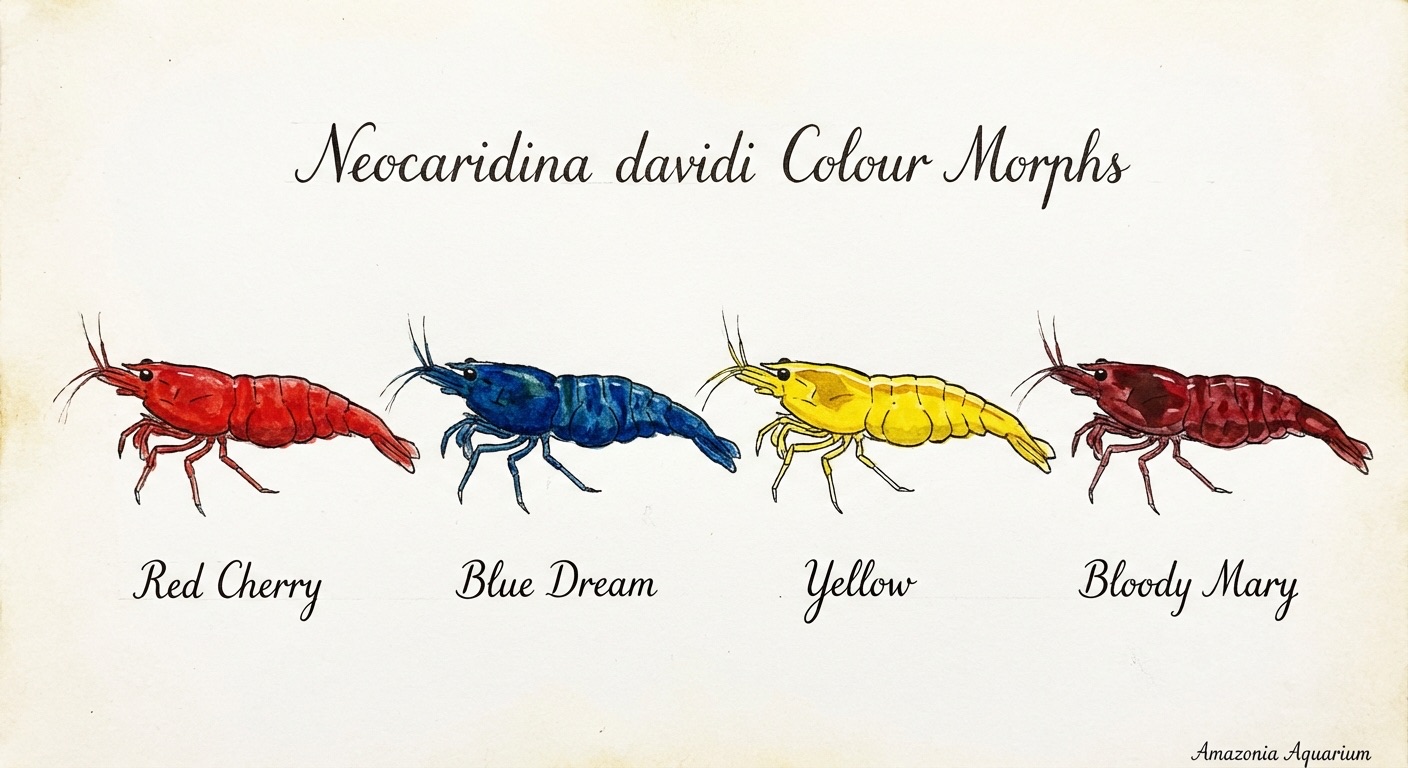
🔴 Red Cherry
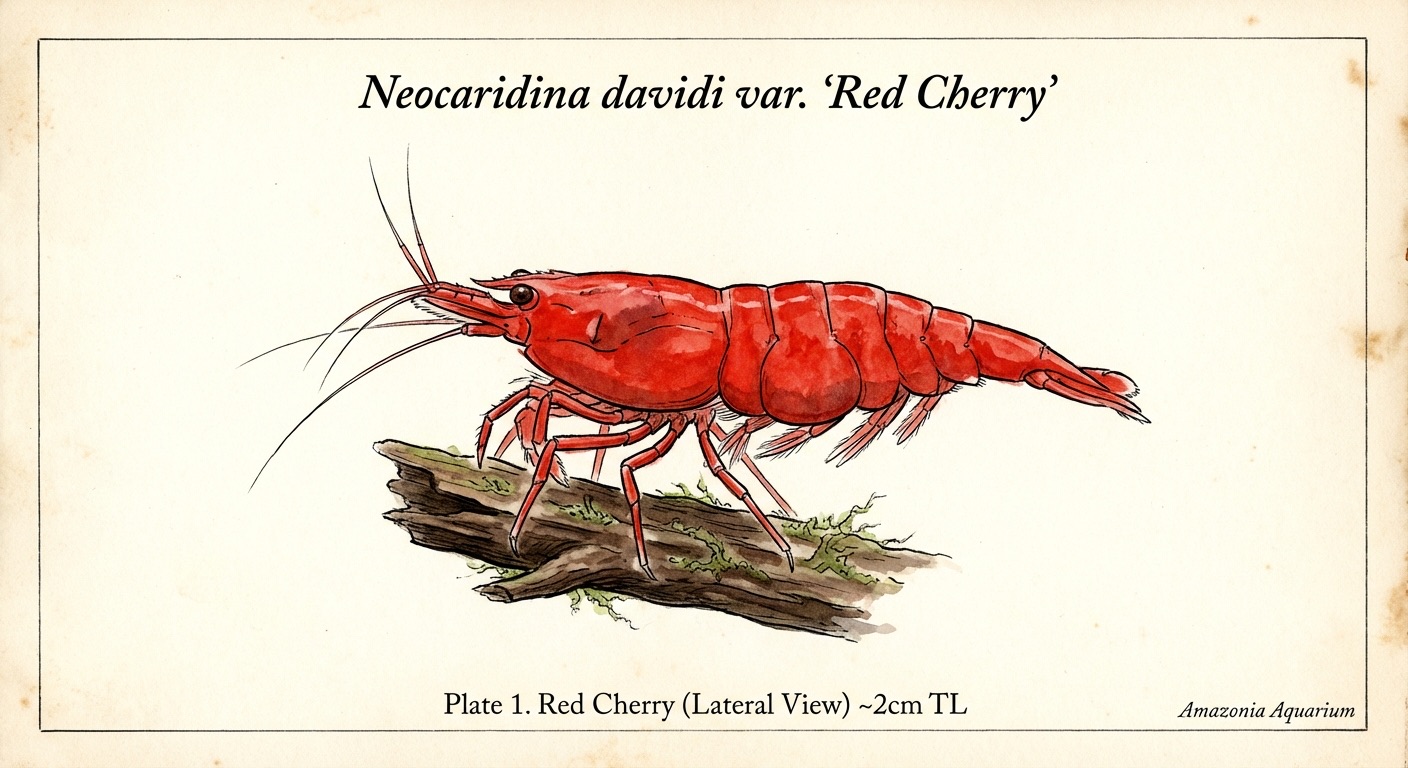
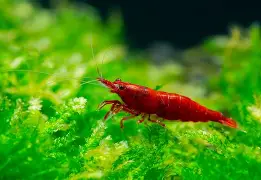
The original and most popular colour morph. Ranges from pale pink (low grade) to deep fire-engine red (Painted Fire Red).
🔵 Blue Dream
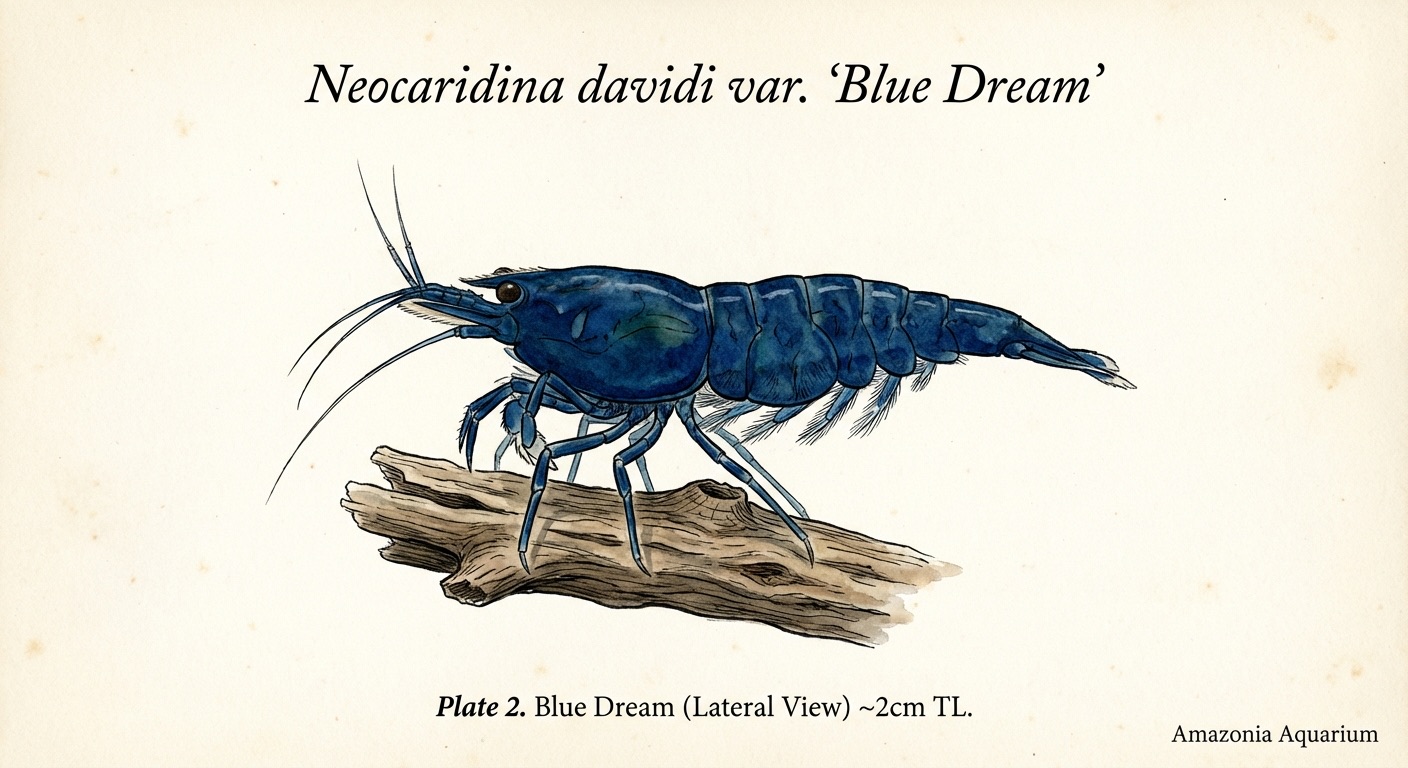
Deep sapphire blue, opaque across the entire body. Our strain — stunning against green plants and dark substrates.
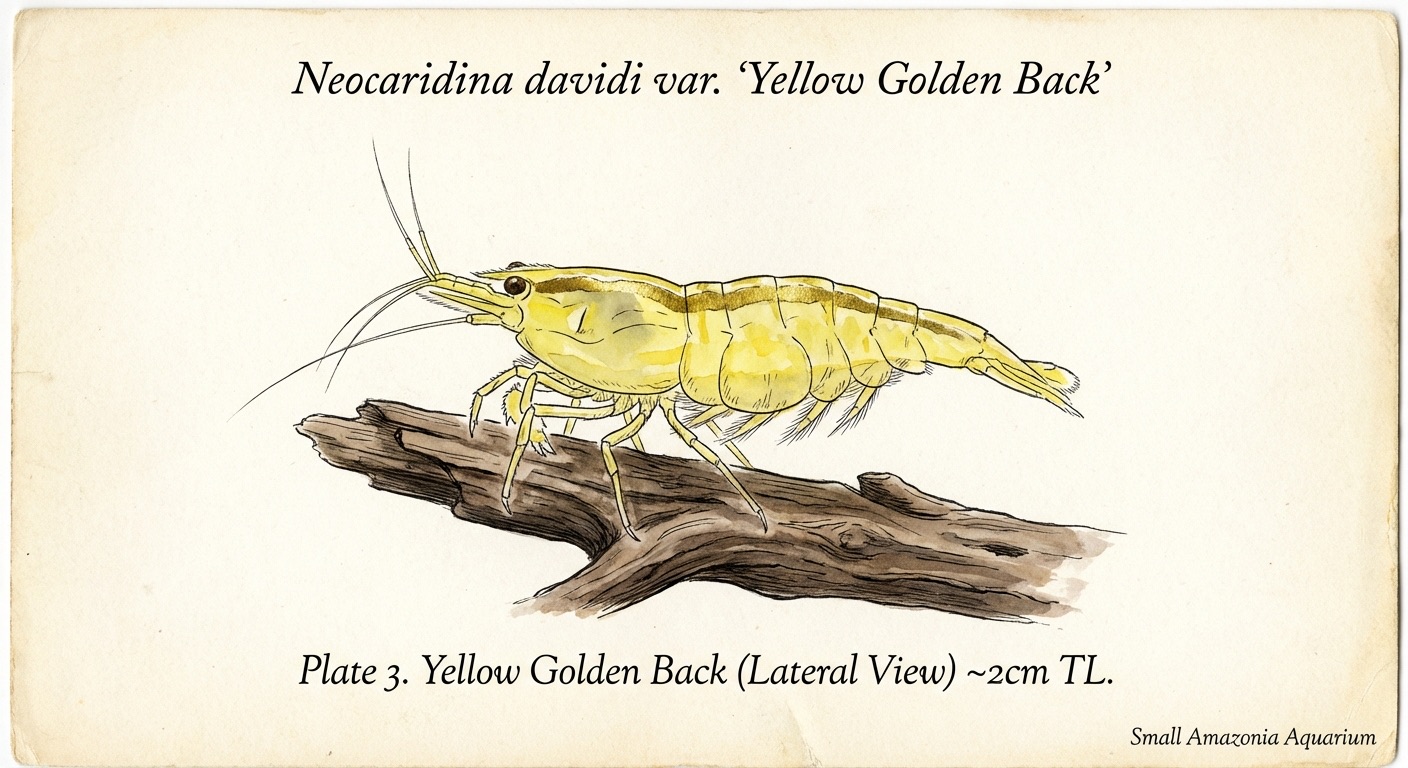
🟡 Yellow (Golden Back)
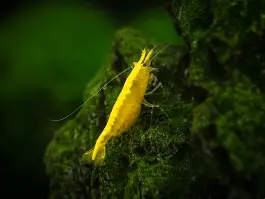
Bright lemon-yellow body, often with a distinctive golden dorsal stripe. Cheerful and easy to spot.
🟢 Bloody Mary
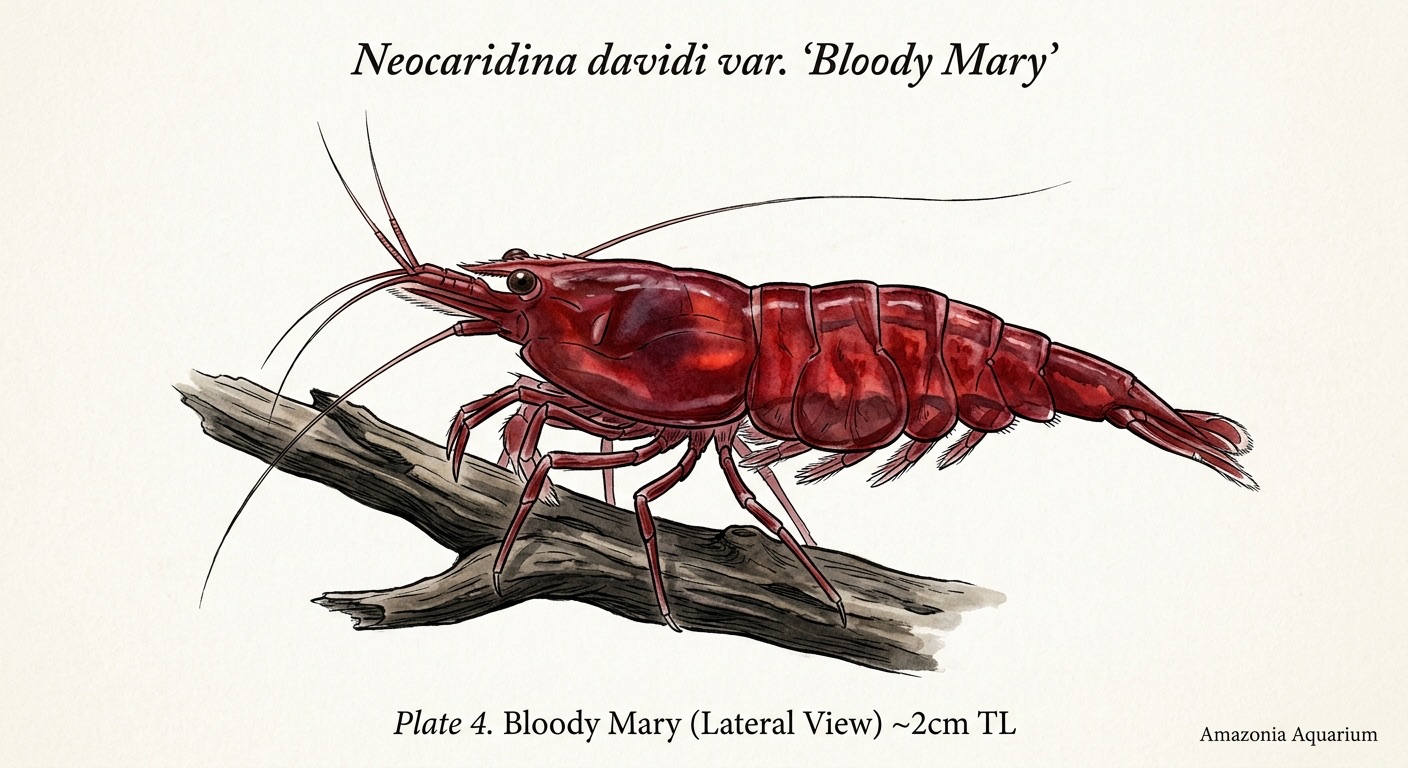
Deep transparent red — colour comes from internal tissue rather than the shell, giving a glowing appearance.
Visual Identification
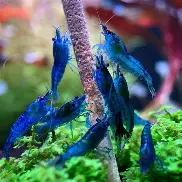
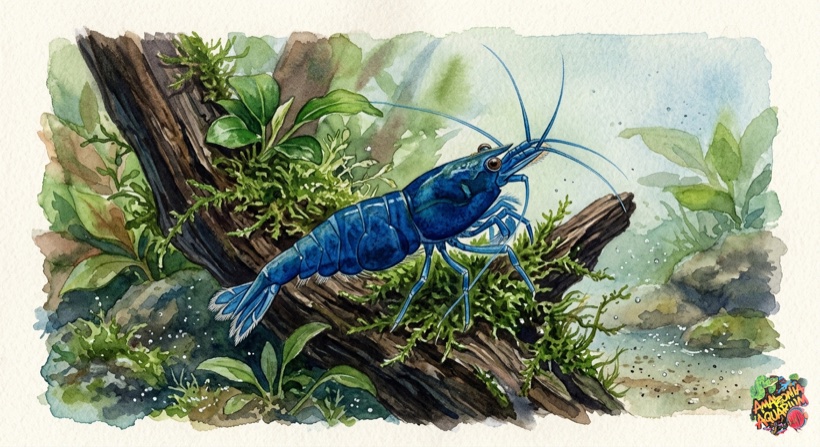
Blue Dream Shrimp display a deep, opaque blue colouration across the entire body and legs. High-grade specimens show solid, uniform blue with no translucent patches. The colour intensifies with age, good diet, and dark substrate.
Male and female Blue Dream Shrimp look very similar in colour. The key differences are:
• Size — Females are noticeably larger and rounder (up to 3 cm vs ~2.5 cm for males).
• Colour intensity — Females are typically deeper blue; males may show slightly lighter or more translucent patches.
• Saddle — Mature females develop a visible yellow-green “saddle” behind the head (eggs in ovaries).
• Underbelly curve — Females have a curved underbelly for carrying eggs; males are straighter.
Water Parameters
Neocaridina are famously adaptable — they tolerate a wide range of parameters as long as conditions remain stable. Sudden swings in temperature or pH are far more dangerous than being slightly outside the ideal range. Use a drip system for water changes rather than dumping fresh water in.
6.5–8.0
very adaptable
18–28 °C
ideal 22–25 °C
4–14 dGH
some mineral content preferred for moulting
Tank Setup
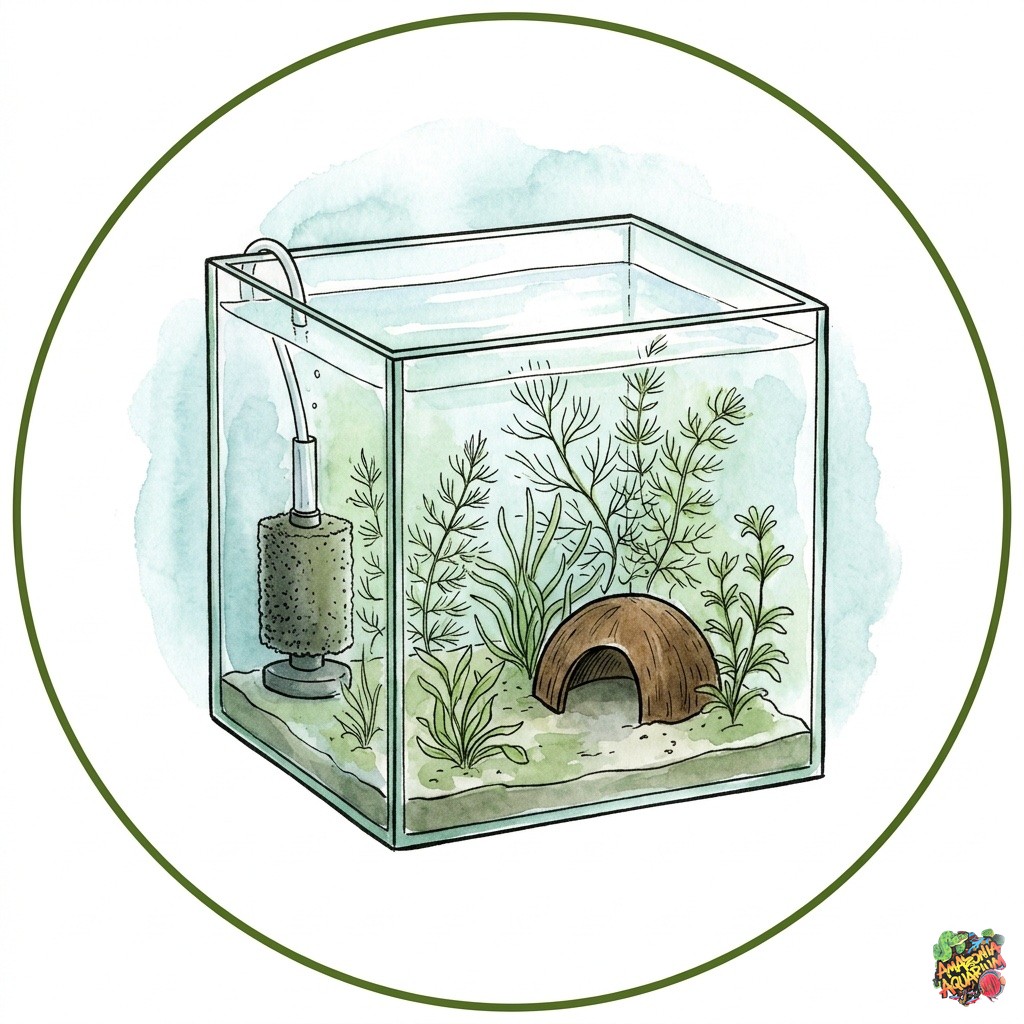
Blue Dream Shrimp thrive in planted tanks with plenty of surfaces to graze. Mosses (Java Moss, Christmas Moss), fine-leaved plants, and driftwood provide excellent grazing area and hiding spots for baby shrimp. A dark substrate (black sand or soil) makes the blue colour pop dramatically.
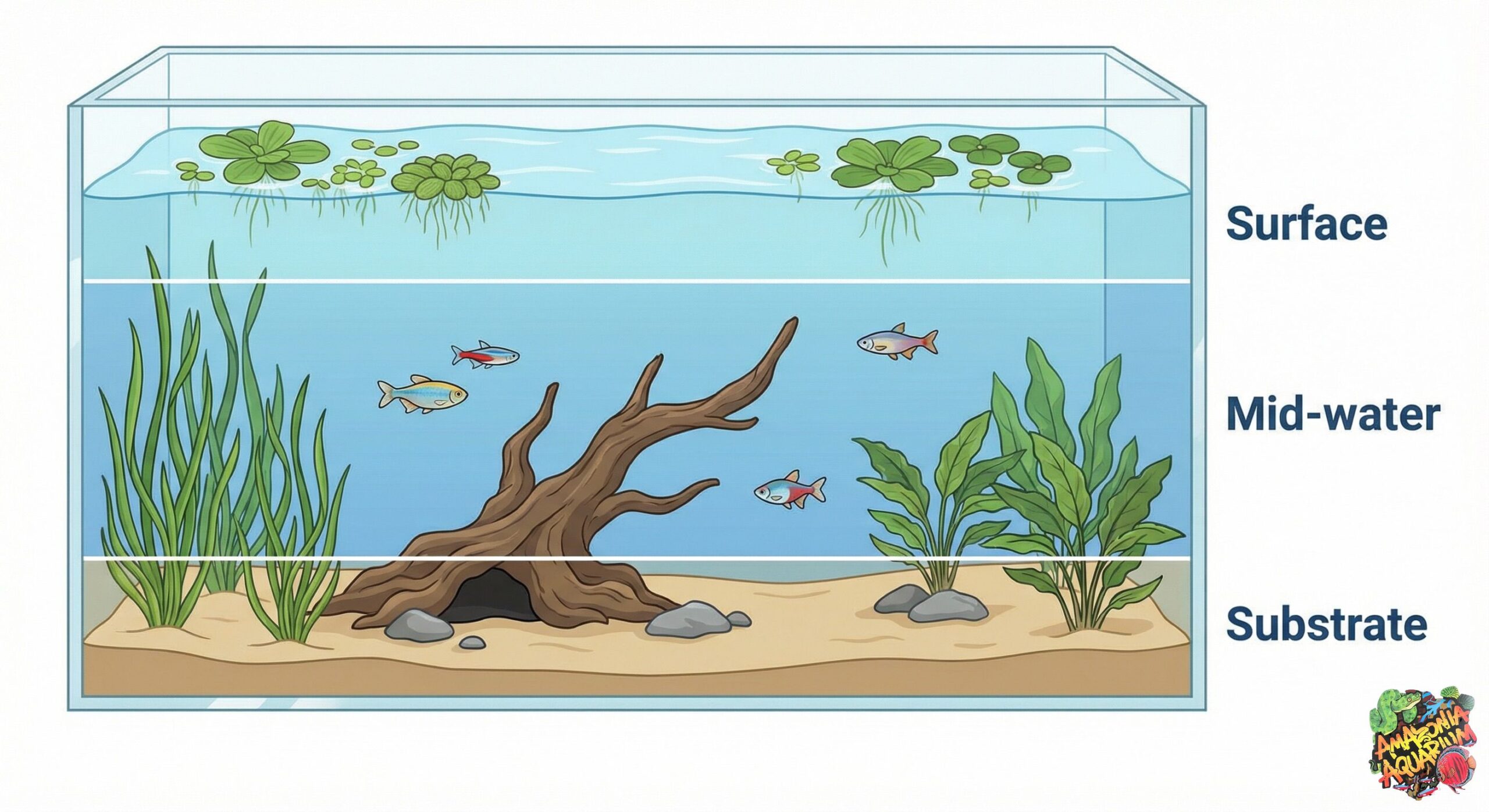
Use a sponge filter — it’s the gold standard for shrimp tanks. HOB and canister filters risk sucking up baby shrimp; if you use one, always cover the intake with a fine sponge pre-filter. Gentle flow is ideal.
Diet & Feeding
Blue Dreams are unfussy eaters. Their primary food source is the biofilm and algae that naturally grow on every surface in a planted tank. Supplement with quality shrimp-specific food 3–4 times per week — less is more, as overfeeding is the fastest way to crash water quality in a small shrimp tank.
| Food | Frequency | Notes |
|---|---|---|
| Natural biofilm & algae | Always available | Primary diet — a mature tank provides this naturally |
| Shrimp pellets (GlasGarten, Dennerle) | 3–4× per week | Drop 1–2 pellets per 10 shrimp; remove uneaten after 2 hours |
| Blanched spinach / zucchini | 1–2× per week | Excellent supplemental greens; remove after 12 hours |
| Dried mulberry / Indian almond leaves | Always in tank | Shrimp graze the biofilm that grows on decomposing leaves |
Breeding
This is where Neocaridina truly shine — they breed effortlessly in home aquariums with zero intervention. No brackish water, no special setup, no separating fry. If you have males and females in decent water, you’ll have babies within weeks.
Females carry 20–40 eggs under their swimmerets (the small legs under the tail) for 3–4 weeks. You’ll easily spot “berried” females — the egg mass is visible as a cluster of tiny round eggs tucked under the abdomen. The babies hatch as miniature versions of the adults, about 2 mm long, and are fully independent from day one.
Community Tank Mates
Choosing the right companions is critical for shrimp survival. Avoid any fish large enough to eat adults or shrimplets.
| ✅ / ⚠️ / ❌ | Species | Why |
|---|---|---|
| ✅ | Otocinclus | Completely peaceful, won’t eat shrimplets |
| ✅ | Small Rasboras (Chili, Exclamation) | Too small to eat adult shrimp |
| ✅ | Nerite Snails | Peaceful algae eaters, won’t breed in freshwater |
| ⚠️ | Endler’s Livebearers | May eat some shrimplets but adults are safe |
| ⚠️ | Pygmy Corydoras | Generally safe but may eat very young shrimplets |
| ❌ | Bettas | Unpredictable; some hunt shrimp relentlessly |
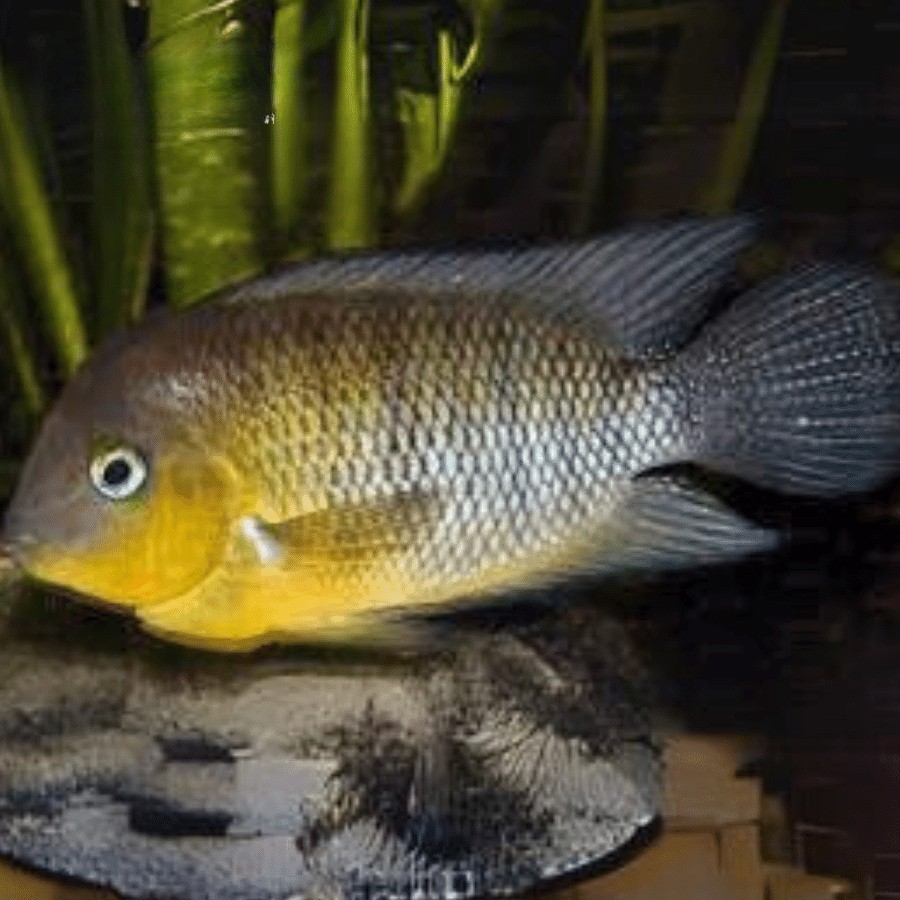
| ❌ | Any Cichlid | Will eat shrimp |
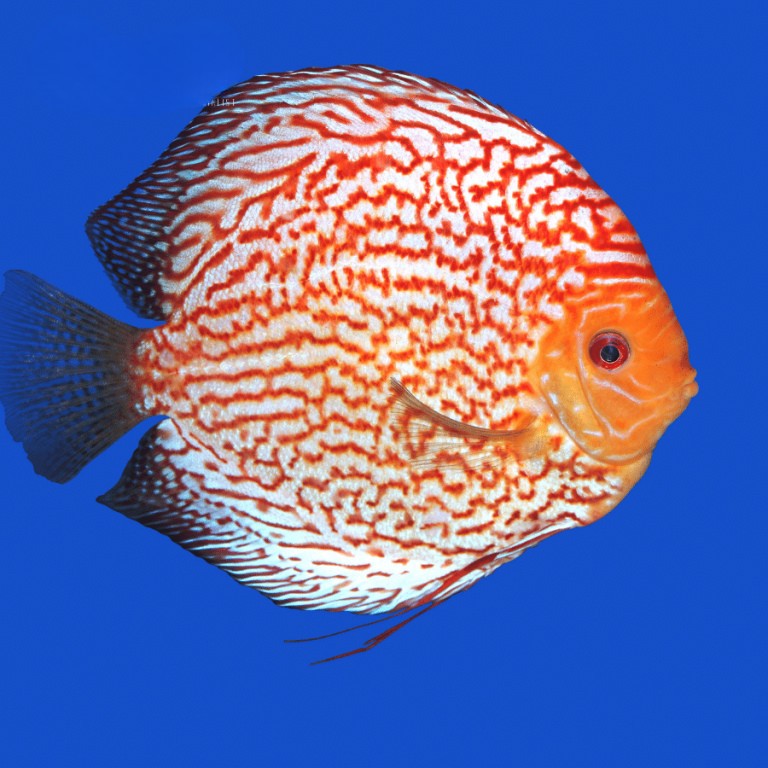
| ❌ | Angel Fish | Shrimp are snacks for Angels |
Colour Grading
Blue Dream Shrimp are graded by opacity and uniformity of colour. The deeper and more opaque the blue across the entire body (including legs), the higher the grade. Here’s what to look for:
| Grade | Appearance | What to Expect |
|---|---|---|
| Low | Translucent body with blue tint, clear legs | Budget-friendly; offspring may vary in colour intensity |
| Medium | Solid blue body, some translucent patches on legs | Good colour; reliable for breeding deeper blues over generations |
| High (Dream) | Deep, opaque sapphire blue across body and all legs | Premium grade; consistent colour in offspring |
Acclimation & First-Week Care
Proper acclimation prevents shock and greatly improves survival. Never rush this process.
Step-by-Step Acclimation
- Float the sealed bag in your aquarium for 15–20 minutes to equalise temperature.
- Open the bag and roll down the edges to create a floating collar.
- Drip acclimation: Add approximately ¼ cup of tank water to the bag every 5 minutes for 90–120 minutes (shrimp are the most sensitive to water parameter changes).
- Net and release — gently net the fish/shrimp and place them into the aquarium. Discard the bag water; never pour it into your tank.
First-Week Checklist
- Keep lights dimmed for the first 24–48 hours to reduce stress.
- Do NOT perform water changes for the first 5 days — let them settle.
- Feed biofilm (no supplemental food needed initially if the tank is cycled).
- If you see them swimming frantically, check GH and TDS immediately.
- Monitor ammonia and nitrite daily — any spike above 0.25 ppm warrants an immediate 25% water change.
- Observe for signs of disease (white spots, clamped fins, lethargy) and quarantine if needed.
Sydney Keeper Tips
Sydney tap water (pH ~7.2, GH ~6–8) is well within the Neocaridina comfort zone and generally fine for Blue Dream Shrimp straight from the tap — just dechlorinate as always. The moderate mineral content supports healthy moulting without needing additives for most keepers.
Quick Reference
| Scientific Name | Neocaridina davidi ‘Blue Dream’ |
| Adult Size | 2–3 cm |
| Lifespan | 1–2 years |
| pH | 6.5–8.0 |
| Temperature | 18–28 °C (ideal 22–25 °C) |
| Hardness | 4–14 dGH |
| Min Tank Size | 20 L (5 gal) |
| Care Level | Easy |
| Breeding | Easy — berried females, 3–4 week gestation |
| Copper Tolerance | NONE — lethal at trace levels |
| Grading | Deeper, more opaque blue = higher grade |
Frequently Asked Questions
Will Blue Dream Shrimp breed with Red Cherry Shrimp?
How do I maintain deep blue colour across generations?
What’s the difference between Blue Velvet, Blue Dream, and Blue Jelly?
Do they need a special diet?
Can I keep them with fish?
Related Products
Reviews
Clear filtersThere are no reviews yet.