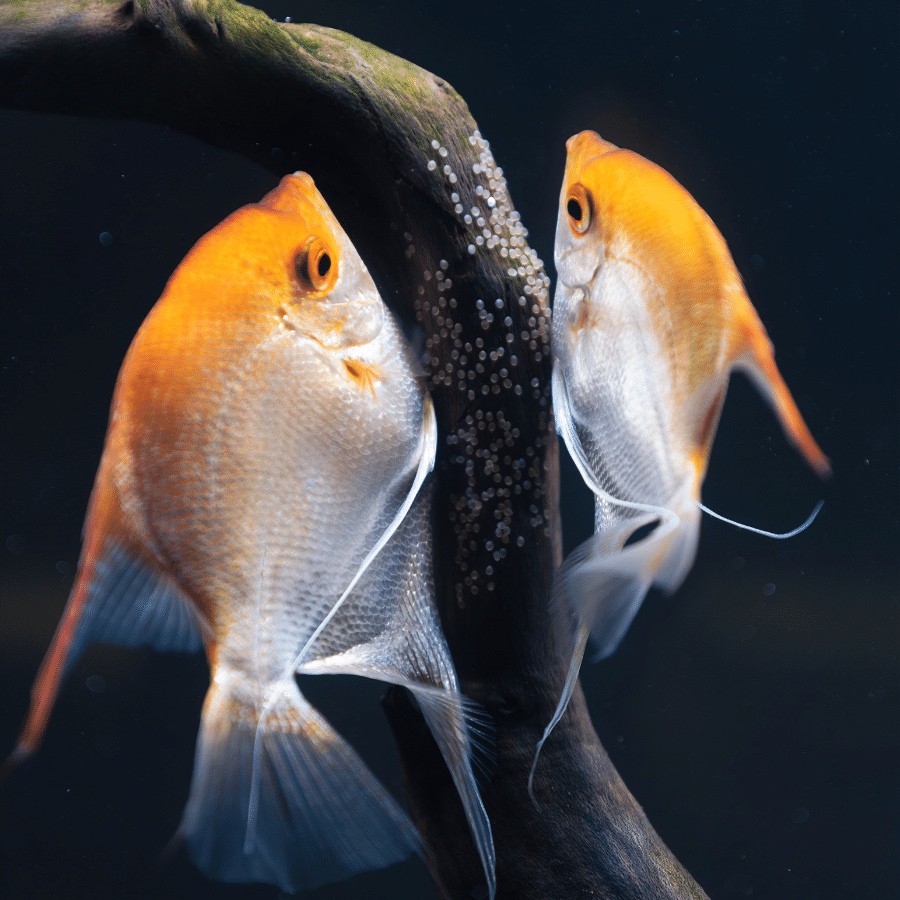
🪨 Species at a Glance
| Scientific Name | Pterophyllum scalare |
| Common Name | Freshwater Angelfish — Assorted Strains |
| Family | Cichlidae |
| Order | Cichliformes |
| Origin | Amazon basin — Peru, Colombia, Brazil, Guyana (wild); commercial farms (aquarium strains) |
| Supplied Size | 8-10 cm body height (juvenile / sub-adult) |
| Adult Size | 12-15 cm body, 20 cm tall including fins |
| Lifespan | 8-12 years in good conditions |
| pH Range | 6.5-7.5 |
| Temperature | 25-29 °C (77-84 °F) |
| Hardness (dGH) | 3-10 |
| Diet | Omnivore — high-protein flakes, pellets, frozen bloodworm, brine shrimp |
| Minimum Tank Size | 200 L tall tank (60 cm+ vertical clearance) for a group of 6 |
| Care Level | Beginner-intermediate |
| Temperament | Peaceful semi-aggressive — group-living cichlid, pairs territorial at breeding |
| Breeding | Egg-layer — spawns on vertical surfaces, both parents guard |
| Tank Position | Mid to upper water column |
Species Background
The genus name *Pterophyllum* comes from the Greek *pteron* (wing) and *phyllon* (leaf) — literally ‘winged leaf,’ a perfect piece of scientific poetry for a fish whose body is compressed flat and whose dorsal and anal fins extend into great vertical sails. The species name *scalare* means ‘like a staircase’ in Latin, referring to the stepped pattern of the dorsal fin rays rising from the shoulder to the tip. Put the two together and you get ‘the staircase-finned winged leaf’ — a name that sounds grand, but is simply an attempt to describe the living geometry of the fish in technical Latin. The species was first formally described by Lichtenstein in 1823 from specimens collected in the Amazon, and the original name (*Zeus scalaris*) has been revised several times as taxonomists sorted the genus out. Today three species are recognised — *P. scalare* (by far the most common and the parent of every aquarium strain), *P. altum* (the deep-bodied Rio Orinoco angelfish, much rarer in the hobby), and *P. leopoldi* (the smaller, sharper-snouted ‘teardrop’ species) — but virtually everything sold as ‘Angelfish’ in any pet shop anywhere in the world is some strain of *Pterophyllum scalare*.
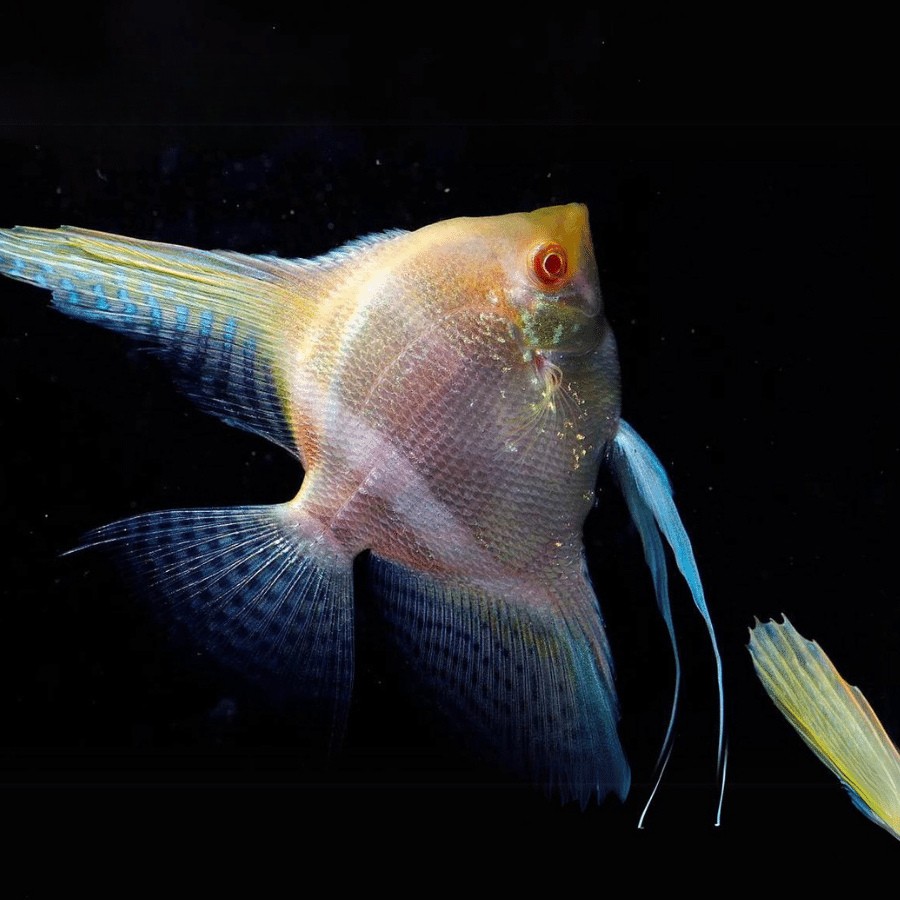
The ‘Assorted’ label, on the other hand, is commercial shorthand that has shaped how angelfish are traded worldwide for the last thirty years. Large Southeast Asian farms — principally in Thailand, Singapore, Malaysia, and Indonesia, the same operations that produce most of the world’s guppies, bettas, and community tetras — raise angelfish in enormous concrete ponds stocked with a mix of parent stock: Silver wild-type, Koi, Zebra, Marble, Gold, Black Lace, Pearlscale, Ghost, Smokey, and a handful of designer strains like Platinum, Sunset Blushing, Philippine Blue, and Pinoy. When the offspring reach grade-out size (around 4-6 cm), the farm sorts out the premium rare morphs — the particularly clean Platinum Pinoys, the high-contrast Koi Blacks, the deep-orange Sunsets — for individual sale at a premium price, and packs the remaining majority into ‘Assorted’ export boxes for bulk trade. Nothing is wrong with these fish; they are simply not hand-picked singletons. Many will grow out to be as strikingly marked as their more expensive siblings, and because they come from the same parent pond, they carry the same robust farm genetics bred over dozens of generations for hardiness, fast growth, and disease resistance.
For a hobbyist, the Assorted box is a genuine bargain and in many ways a better purchase than a single hand-selected fish. You pay a fraction of what you would for a hand-picked ‘Platinum Pinoy’ or ‘Philippine Blue,’ and you receive a group of healthy juveniles already showing strain colour, already large enough to sex in a few more months, and — critically — already socially grouped from the same grow-out pond where they learned their pecking order as fry. Buy six or eight of these 8-10 cm sub-adults, drop them into a tall 200-litre planted tank, and in four to six months you will have a mature angelfish community with at least one natural breeding pair emerging from the cohort. That is how most serious angelfish keepers start, and it remains the single best entry point into the species. Experienced breeders in Australia, the US, and Europe routinely begin their working lines this way: buy a box of 20-30 assorted juveniles, grow them out, let pairs form, identify the best-coloured pair of each strain as they mature, and build the breeding project from there. What looks like a budget option at purchase turns out to be the same method the professionals use.
The Colour Spectrum
🤍 Silver (Wild-Type)
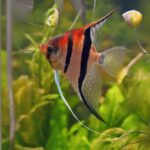
The classic form — bright silver body crossed by four vertical black bars, the one that looks exactly like the angelfish in every childhood aquarium book.
🧡 Koi Angelfish
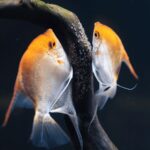
White body splashed with irregular orange, red, and black patches, reminiscent of koi carp — one of the most popular modern strains, no two fish are marked alike.
⚫ Zebra Angelfish
Silver base with five to six narrow vertical black bars instead of the wild-type’s four, giving a distinctive striped-silk appearance.
🗿 Marble Angelfish
Irregular black-and-silver marbling across the entire body — a classic strain from the 1970s that still turns heads in a planted tank.
🟡 Gold Angelfish
Uniform pale-yellow to honey-gold body with no vertical bars, often with a faint orange crown on the head that intensifies as the fish matures.
🕶 Black Lace
A half-dose of the Dark gene — silver body with intense black barring, plus delicate black tracery extending into the fins giving a ‘lace’ effect.
💠 Pearlscale
A scale mutation that makes each scale reflect light like a tiny pearl — most visible on Silver or Koi bases under good overhead lighting.
✨ Platinum / Sunset (occasional)
Pure iridescent white-platinum or platinum-with-orange-blush — sometimes included as bonuses in the Assorted mix, never guaranteed.
Because each shipment is a mixed bag straight from the grow-out pond, we cannot guarantee which strains you receive — only that you will receive a variety. A typical six-fish pack from us has contained, for example, two Silvers, one Koi, one Zebra, one Marble, and one Black Lace. Another recent pack was one Silver, one Gold, two Marbles, and two Koi. We photograph every delivery before bagging and are happy to send phone pictures of the current stock on request — just message us after ordering and we’ll send you the actual fish you will receive before we bag them.
At 8-10 cm the juveniles already show their adult pattern clearly, though fin extension and colour depth will continue to intensify for another six to nine months. Gold strains in particular tend to deepen their orange crown dramatically once they reach sexual maturity around 12 cm — a juvenile Gold that looks pale yellow in the bag will often mature into a rich honey-orange with a flame-red crown by month 9. Koi strains behave similarly: the orange patches that look pale at purchase darken and spread as the fish matures, and many develop a ‘blushing’ red flush on the gill plates that only appears at sexual maturity. Marble strains are the most stable of the lot — a juvenile Marble looks almost identical to an adult Marble in pattern, though the contrast between black and silver deepens with age and water quality.
Strain genetics in angelfish are surprisingly well-documented. The patterns you see — Gold, Marble, Zebra, Black Lace, Silver — are combinations of a small number of identified genes at three or four loci: the Dark gene (which controls melanin intensity, with variants producing Silver, Black Lace, and Double-Dark Black), the Gold gene (which suppresses melanin to produce the gold body), the Zebra gene (which adds extra vertical bars), the Stripeless gene (which removes bars entirely), the Marble gene (which disrupts pigment into patches), and the Pearlscale gene (which alters scale structure). Koi is not a single gene but a combination — typically Gold + Marble — producing white, orange, and black patches on the same fish. Because every Assorted box contains fish carrying random combinations of these genes, the offspring of a pair selected from your Assorted group will be genuinely unpredictable: you could breed two Silvers and get a mix of Silver, Black Lace, and Marble fry from heterozygous parents. This genetic lottery is part of the fun for breeders and part of why the Assorted pack remains so popular. If you want a specific strain, ask — we occasionally hold back individuals from the assorted box and can quote them separately, though the per-fish price will be higher than the mixed group rate.
Sexual Dimorphism
Let’s be direct about this: at 8-10 cm body height, angelfish cannot be reliably sexed. Every guide that tells you to look at ‘the angle of the line from the eye to the ventral fin’ or ‘the shape of the forehead’ at this size is recycling folklore that has been repeated in hobbyist books since the 1960s. Commercial angelfish farmers who raise thousands of fish a year and whose livelihood depends on accurate sexing cannot distinguish males from females at 8 cm either — they wait until the fish pair up naturally, and that is the only reliable method available. If the people breeding these fish for a living cannot sex them at your purchase size, neither can the anonymous author of any online care sheet.
What you *can* rely on is time and group dynamics. Bring home six to eight juveniles from the Assorted pack, raise them together in a properly sized tall tank, feed them well, and somewhere between 10 and 14 months of age (around 12-14 cm body size) you will see natural pairs emerge. The first sign is usually two fish consistently swimming side-by-side near a vertical surface — a piece of driftwood, an Amazon sword leaf, a filter intake tube, the heater cord, a stood-up piece of slate — and driving other angelfish away from that spot. Within a few weeks they will clean the surface obsessively, running their mouths over it dozens of times a day, and the female’s genital papilla will drop visibly between the ventral and anal fins. At that point you have a confirmed pair, and sexing becomes trivial: the one laying eggs is female, the one fertilising them behind her is male. Until then, treat them all as unknowns and enjoy the group dynamics.
For keepers who want to accelerate identification, one secondary clue appears reliably at 12 cm+ body size: the male’s forehead develops a subtle nuchal hump or ‘crown’ — a gentle rise in the profile from the eyes up to the start of the dorsal fin — while the female’s forehead remains smoother and more continuous with the snout line. This is most visible when the fish is viewed in profile against a plain background. It is not 100% reliable in every strain (Silver and Black Lace show it most clearly; Gold and Koi sometimes not at all), but in conjunction with the breeding-tube drop during spawning it confirms the diagnosis. A second reliable clue, again at 12 cm+ and only during conditioning or spawning, is the length and angle of the ventral ‘feeler’ fins: mature males tend to hold them straight down and slightly forward, mature females slightly further back and sometimes shorter overall.
| Feature | Male | Female |
|---|---|---|
| Reliable Sexing Size | 12 cm+ (around 6 months after 8-10 cm) | 12 cm+ (around 6 months after 8-10 cm) |
| Forehead / Nuchal Hump | Develops a pronounced crown / nuchal hump as mature male | Flatter forehead, smoother curve from snout to dorsal |
| Breeding Tube (genital papilla) | Thin, pointed, tucked in — only visible during spawning | Short, blunt, wider — obvious cylinder during spawning |
| Body Shape | Slightly deeper chest, longer ventral ‘feelers’ | Rounder belly when gravid, ventral feelers often shorter |
| Behaviour (at 12cm+) | Tends to take lead in pair formation, chases rivals | Often more cautious, follows chosen male to spawning surface |
| At 8-10 cm (your shipment) | Indistinguishable from female | Indistinguishable from male |
Water Chemistry Guide
6.5–7.5
ideal 7.0
25–29 °C
ideal 27 °C
3–10 dGH
Soft to moderately hard — farm-raised angelfish are adaptable
Wild *Pterophyllum scalare* live in soft, tannin-stained backwaters of the Amazon and its tributaries — the Rio Negro, the Rio Tapajos, the flooded igapo forests of Peru and Colombia — where pH sits around 5.5 to 6.5, hardness is negligible (often under 1 dGH), and the water is stained coffee-brown with decomposed leaf tannins from the flooded forest floor. These are genuinely extreme conditions that most tap water supplies cannot match without heavy modification. Fortunately, the angelfish you are buying are not wild. Farm-raised stock — which is what 99% of commercial angelfish are, including every fish in this Assorted pack — has been bred for dozens of generations in the neutral-to-slightly-hard tap water of Southeast Asian fish farms, and is genuinely happy in a much wider range than its wild cousins. Anywhere from pH 6.5 to 7.5, hardness 3 to 10 dGH, and temperature 25-29 °C is safe and healthy territory. If your tap water sits at pH 7.4, hardness 8 dGH, this is a fish for you — no RO blending, no peat buffering, no chemical tricks needed.
Stability is more important than hitting a specific number. An angelfish in a rock-steady pH 7.4 tank will thrive; the same fish in a tank that swings from 6.5 to 7.5 every week due to erratic CO2 injection, inconsistent water changes, or a dying substrate buffer will stress, lose colour, become disease-prone, and quite possibly develop fin erosion or fungal infections within the first month. Keep temperature at a steady 26-27 °C (a degree warmer during conditioning if you hope to breed), perform 25-30% water changes weekly with temperature-matched water, and let the filter mature for at least four weeks before adding the fish. These three habits solve 90% of the issues beginners encounter with angelfish. The remaining 10% is almost always either a chlorine incident from a forgotten dechlorinator dose or a disease brought in on an improperly quarantined new addition.
One more note on temperature: angelfish are a tropical-warm species, not a temperate one. Below 24 °C they slow down, feed less, and become susceptible to bacterial and parasitic infections — particularly hexamita, which causes the feared ‘hole-in-the-head’ condition, and ich, which appears reliably whenever temperature drops and stress rises. If your house cools overnight in winter, make sure the heater is sized correctly (2-3 watts per litre is a good rule for tanks under 250 litres; above 250 L use two smaller heaters at opposite ends of the tank for redundancy and even heat distribution) and verify actual water temperature with an independent digital thermometer, not just the heater dial. A surprising number of heater failures go unnoticed for days because the keeper trusts the little red light on the heater rather than looking at an actual thermometer. For an investment of a few dollars on a digital stick-on or floating thermometer, this is an unforced error not worth making.
A final note on nitrate. Angelfish tolerate moderate nitrate levels (up to 40 ppm is usually fine), but sustained high nitrates — the consequence of infrequent water changes or overstocking — are directly linked to hole-in-the-head disease and long-term organ damage. A chronic 80 ppm nitrate tank will produce angelfish that look ‘slightly off’ for months before visible disease appears. Weekly 25-30% water changes keep nitrates below 20 ppm in a normally stocked tank and effectively prevent this slow-decline scenario. Get a cheap nitrate test kit and spot-check monthly — it is the single most useful number for long-term angelfish health.
Creating the Perfect Habitat
The single most important setup decision for angelfish is tank height. These are laterally-compressed fish that swim vertically into the water column — a 100-litre rectangular tank with 35 cm of vertical clearance will permanently stunt an adult angelfish’s dorsal and ventral fin extension, because the fins literally cannot develop to full length without clipping the top and bottom of the tank. The fish will survive in a short tank but will never look like the imagined 20-cm-tall, 20-cm-finned adult from the catalogue photo. The minimum we recommend for a group of six 8-10 cm juveniles is a 200-litre tank with at least 60 cm of internal height from substrate surface to waterline. A 300-litre ‘high tank’ format (often sold as a 120 × 45 × 55 cm footprint, or sometimes a tall 90 × 45 × 60 cm cube) is significantly better and future-proofs the setup for full adults. If you are in the planning stage and have any flexibility on tank dimensions, prioritise height over length — a 90 cm long × 60 cm tall tank will grow better angelfish than a 120 cm long × 40 cm tall tank of the same total volume.
Aesthetics-wise, angelfish are pure Amazon. A planted scape with tall background plants (Vallisneria, Echinodorus ‘Ozelot,’ Echinodorus bleheri, giant hygrophila, Limnophila aromatica) reaching most of the way up the back wall, one or two pieces of vertical driftwood or Manzanita angled to break up the mid-water zone, and a fine-grained dark substrate sets off the colours of every strain dramatically. Dark substrates — black sand, dark aquasoil, or fine volcanic grit — deepen body pigment on Silver, Gold, Koi, and Marble fish alike; light gravel washes the colour out and makes every strain look faded in comparison. Leave open swimming space in the front-centre of the tank — angelfish do not like a densely cluttered mid-water zone; they want corridors to cruise through. Floating plants (frogbit, red root floater, salvinia, water lettuce) are strongly recommended because they diffuse overhead lighting and give the fish a psychological ‘ceiling’ that encourages them to drift in the upper two-thirds of the tank rather than hide behind the driftwood. Angelfish are naturally surface-oriented and floating plants directly coax this behaviour back out of farm-raised stock.
Substrate is a matter of preference — inert fine sand or dark aquasoil both work. Inert sand is cheaper and easier to maintain; aquasoil buffers pH slightly acidic and provides better plant nutrition but needs replacing or recharging every 2-3 years. If you plan to breed down the line, include at least one large piece of slate (angled against the back glass or propped in the aquascape), a tall vertical driftwood spine, or a length of plain white PVC pipe stood on end: these become preferred spawning surfaces and make egg observation much easier than if the pair chooses a rockwork cave or plant leaf. Avoid sharp decorations and any plastic plants with coarse edges — long angelfish fins snag and tear easily on rough surfaces, and a torn fin in warm tropical water is an open door for fungal and bacterial infection. Silk plants are a safe compromise if you cannot keep live plants. Driftwood should be soaked and cured before use to sink it properly and to release the worst of its tannins; an emergency waterlogged piece tossed into a new angelfish tank can crash pH overnight in soft water.
Stocking density matters more than it does for smaller community fish. A 200-litre tank comfortably supports 6-8 adult angelfish plus a small cohort of tank mates (a school of 10-12 rummy nose tetras, a trio of corydoras, a pair of rams). Push the angelfish count above 8 in that volume and you will see territorial stress once the group matures, as pairs form and try to claim space. If you want a full dozen or more angelfish, start with a 400-litre tank or larger — or accept that you will need to rehome the weaker fish once pairs start carving out territories. Finally, a secure lid is non-negotiable. Angelfish do not jump often, but they jump occasionally during lights-out disturbances, chasing prey at the surface, or during aggressive chases — and a fish with 20 cm vertical reach can clear a surprisingly tall glass lip when motivated.
Tank
Minimum 200 L with 60 cm+ vertical height; 300 L high-format recommended for full adults
Filter
Canister rated 4-6x tank volume/hour, or internal canister + sponge combo. Baffle strong outflow
Heater
150-250 W thermostat heater set to 26-27 °C; use two smaller heaters on opposite ends for safety in tanks over 250 L
Lighting
Moderate planted-tank LED (20-40 PAR at substrate). A 6-8 hour photoperiod suits fish and plants alike
Substrate
Fine sand or dark aquasoil — dark substrate deepens body colour on every angelfish strain
Hardscape
Vertical driftwood or Manzanita branches, plus one flat slate or broad Amazon sword leaf as future spawning surface
Plants
Tall background (Vallisneria, Echinodorus), mid-ground (crypts, Anubias on wood), and floating (frogbit/salvinia) to soften light
Water Conditioner
Full-spectrum dechlorinator — Seachem Prime or equivalent, used on every water change
Thermometer
Independent digital thermometer — do not trust the heater dial alone
What to Feed
Angelfish are mid-water omnivores that lean distinctly carnivorous. In the wild they eat small fish fry, aquatic insect larvae (mosquito larvae, chironomids), crustaceans, worms, and the occasional algae scrape — but the bulk of the wild diet is animal protein hunted from the water column and from submerged structure. In the aquarium they will take virtually any floating or slow-sinking food that fits in their mouth, but they thrive on a varied high-protein diet rather than a straight flake mono-culture. A ‘cichlid’ on a pellet-only diet will live — but an angelfish on a varied rotation of pellet, flake, frozen, and occasional live food will grow faster, colour more deeply, and breed more readily when the time comes.
Build the staple around a quality cichlid pellet or colour-enhancing flake with fish meal or insect meal as the first ingredient (Hikari Vibra Bites, Fluval Bug Bites, Sera Vipan, Northfin Cichlid Formula, and Omega One Cichlid Flakes are all solid choices used by serious hobbyists in Australia). Avoid pellets where wheat, corn, or soy is the first listed ingredient — these are filler-heavy budget formulas that produce pale, slow-growing, digestion-compromised fish. At 8-10 cm the juveniles have small mouths but huge appetites — feed them twice a day, as much as they will clean up in 90 seconds, and watch growth accelerate noticeably in the first two months. A well-fed 8 cm juvenile can add 3-4 cm of body height in the first six weeks in its new tank, provided water quality keeps up. Supplement the staple three to four times a week with frozen protein: bloodworm, brine shrimp, mysis shrimp, daphnia, and Cyclops are all eagerly accepted and visibly deepen body colour within a couple of weeks. Rotate the frozen offerings rather than sticking to one — nutritional variety beats any single ‘perfect’ food.
Live food is optional but powerful. Newly hatched brine shrimp, blackworms, grindal worms, and white worms trigger the most intense feeding response and are especially useful when conditioning a future pair for spawning. A pair that refuses to spawn on pellets alone will often drop eggs within two weeks of being switched to heavy live-food feeding. Blackworms in particular are the traditional conditioning food for angelfish breeders worldwide — calorie-dense, high in natural fats, and irresistibly attractive to the fish. Source from a reputable supplier only; wild-collected blackworms can carry parasites. Avoid cheap freeze-dried-only diets as a sole staple — they are nutritionally thin and tend to cause buoyancy issues and constipation in the long run, because dehydrated foods expand in the gut and create gas blockages that the fish’s swim bladder struggles to compensate for. One weekly fasting day (no food at all) is beneficial for adult angelfish and helps prevent the chronic bloating that sometimes shows up in heavily-fed pond-raised stock. Do not mistake this for starvation — a healthy adult angelfish can comfortably go 3-5 days without food with zero ill effects, which is why it is also perfectly safe to go away for a long weekend without a feeder.
Reproduction & Breeding
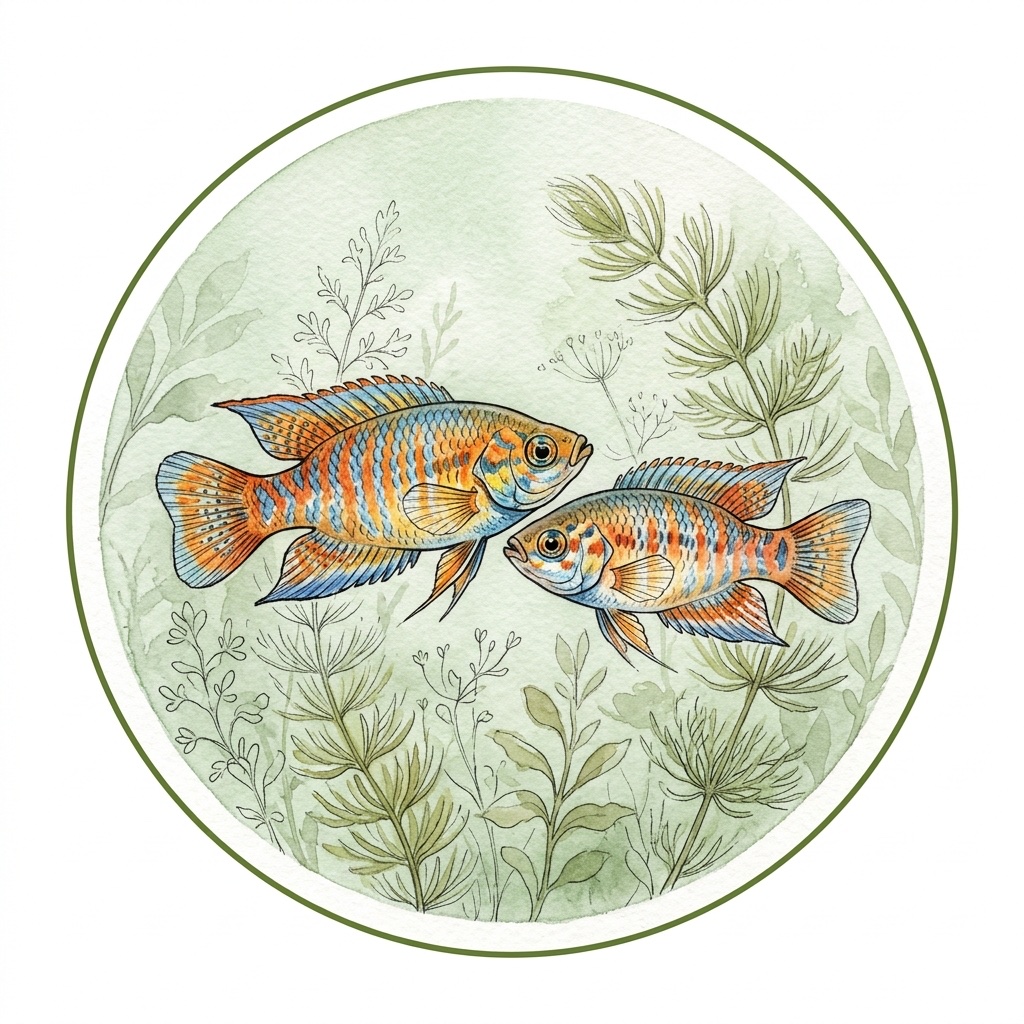
Month 0 (arrival)
Grow-Out As A Group
Keep 6-8 juveniles together in a 200 L+ tank, feed heavily, do not attempt to pair
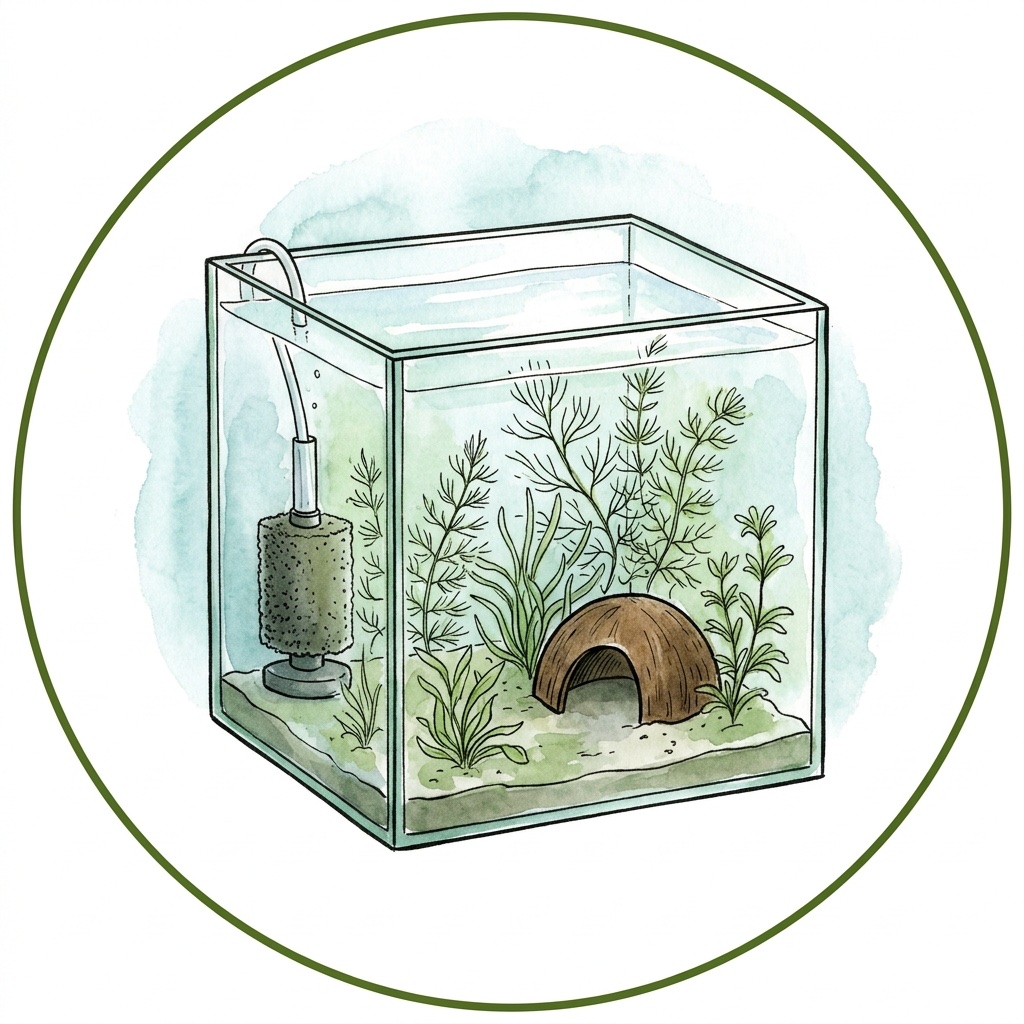
Month 4-6
Natural Pair Emergence
A pair peels off from the group and claims a vertical surface
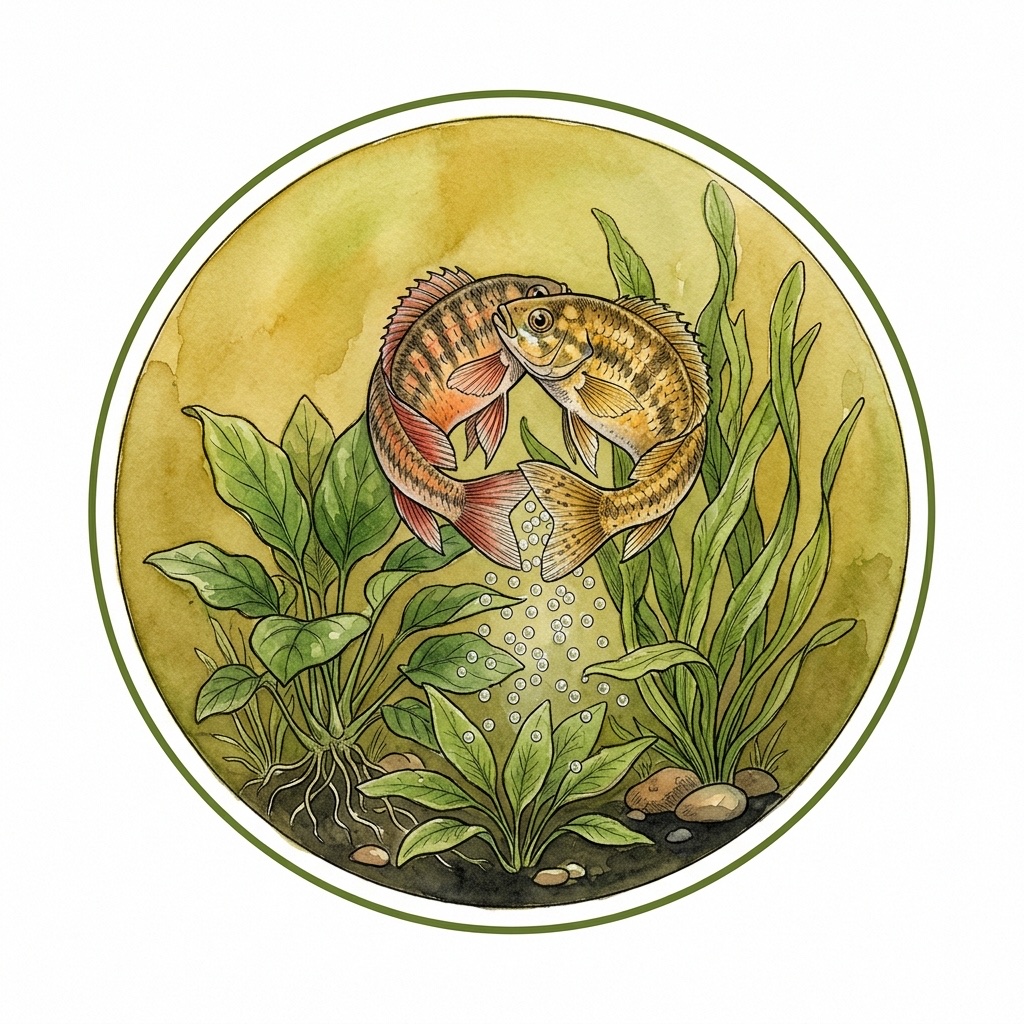
Spawning Day -2 to 0
Surface Cleaning & Breeding Tube Drop
Pair obsessively cleans a vertical surface; female’s genital papilla becomes visible
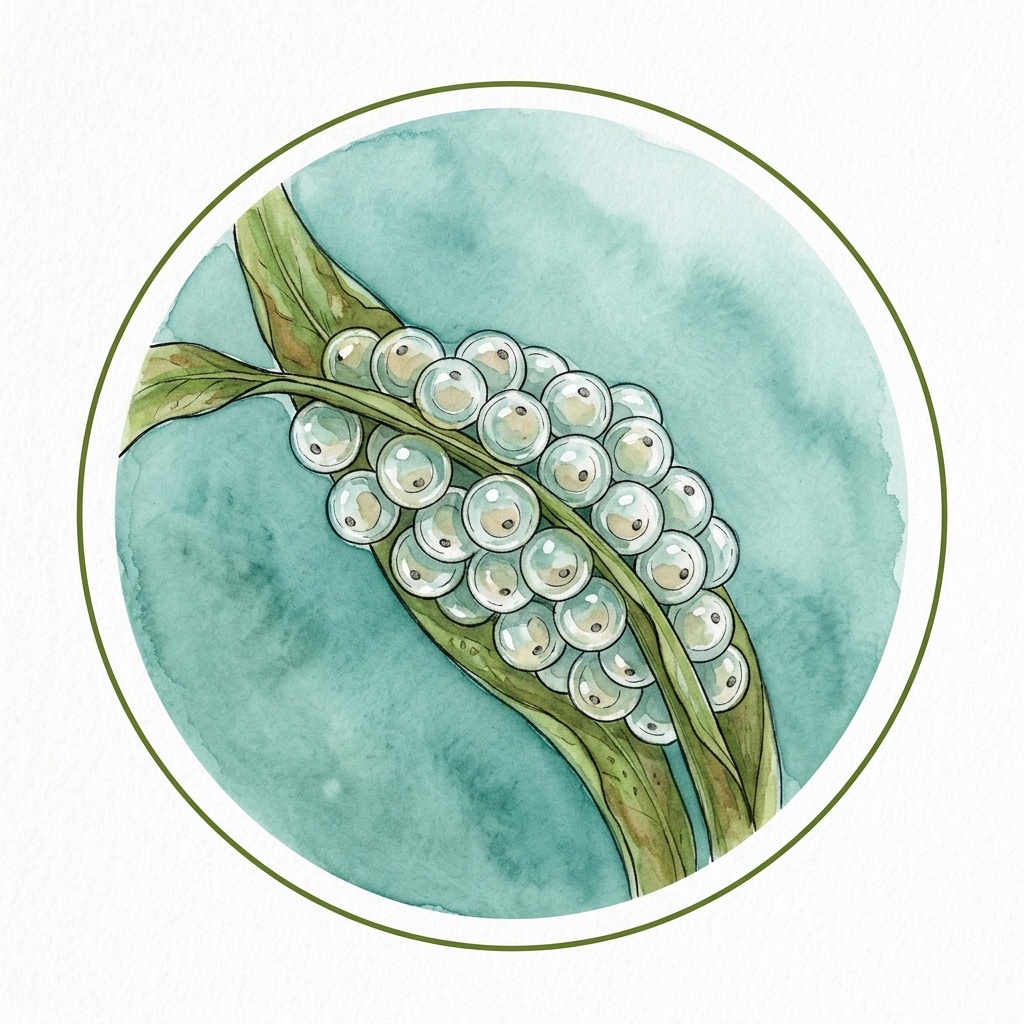
Spawning Day
Egg Laying & Fertilisation
Female lays 300-1000 eggs in neat vertical rows, male fertilises behind her
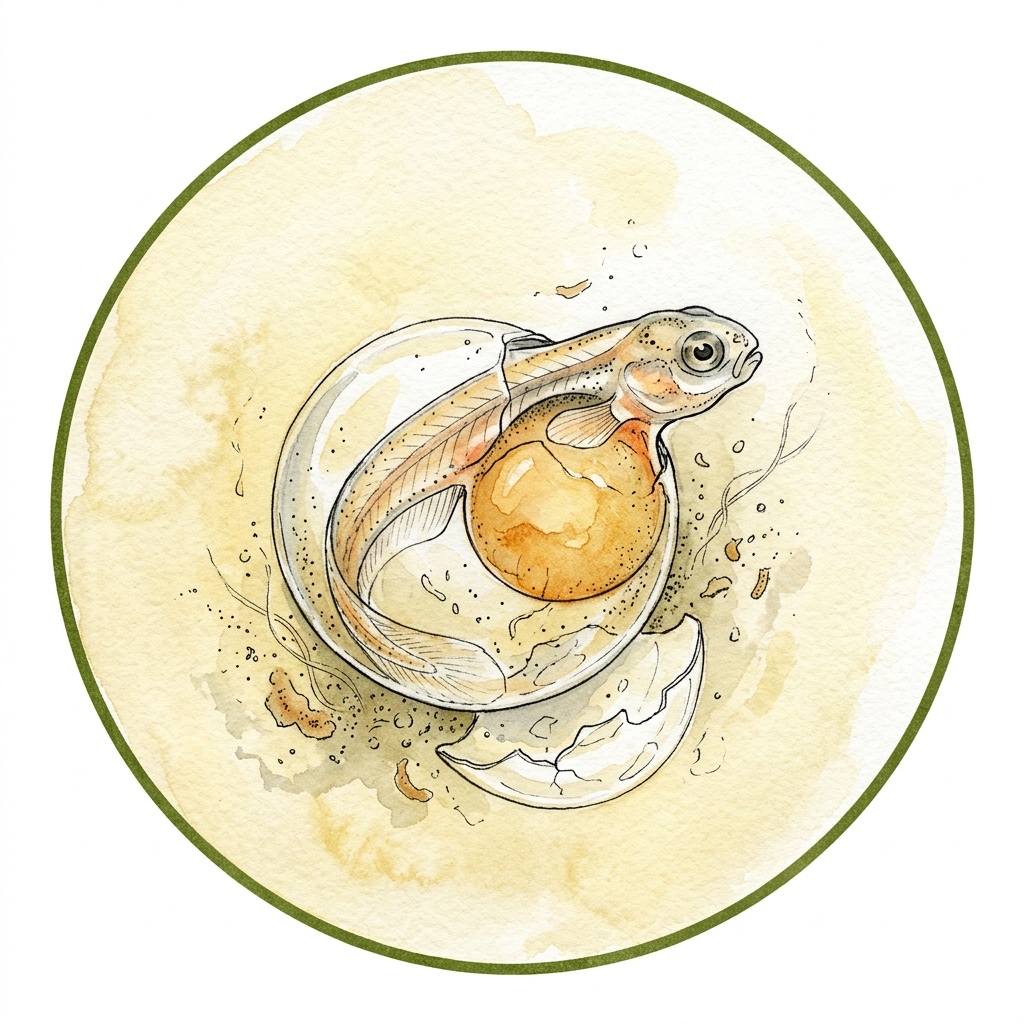
Day 2-3 (wriggler stage)
Hatch & Wriggler Move
Eggs hatch into tailed wrigglers; parents transfer them to a pit
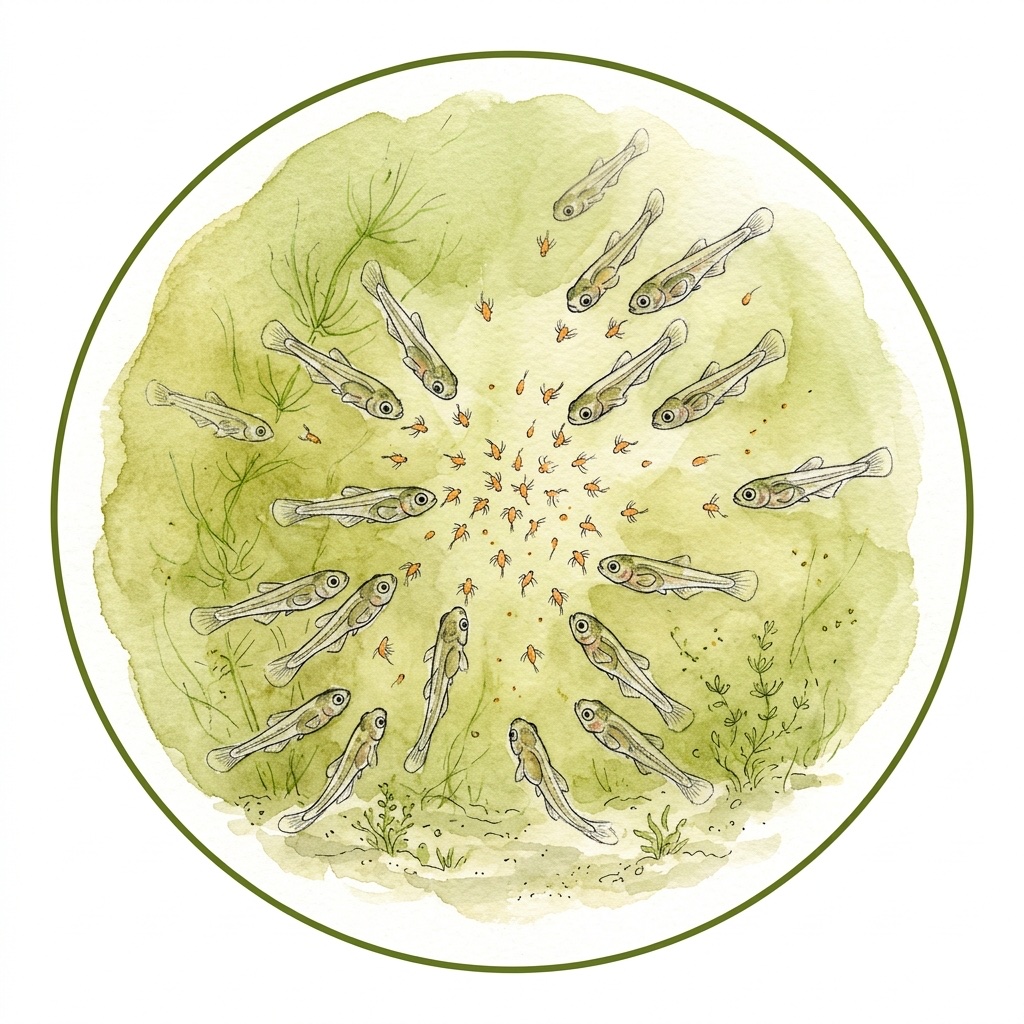
Day 5-7 (free-swimming)
Free-Swimming Fry
Fry leave the wriggler pile, begin feeding on baby brine shrimp and microworms
Grow-Out As A Group
At 8-10 cm the fish are still 4-6 months from sexual maturity. The correct strategy is to do nothing but feed and maintain water quality. Keep the full group together, offer varied protein-rich food twice daily, perform weekly 25-30% water changes at a stable 26-27 °C, and let the fish grow. Any attempt to force-pair at this size is guaranteed to fail — the fish do not yet know what sex they are.
Natural Pair Emergence
Somewhere between four and six months after arrival, you will notice two fish consistently swimming side-by-side near a specific vertical feature — usually a piece of driftwood, a broad Amazon sword leaf, a filter intake, or (if you are lucky and provided one) a slate propped up against the back glass. They will begin driving other angelfish away from this spot with lowered heads and flared gill plates. This is the pair. The other fish in the group are not in danger — they simply give the territory a wide berth and go about their business in the rest of the tank.
Surface Cleaning & Breeding Tube Drop
In the 48 hours before spawning, the pair will clean their chosen surface with an intensity that is almost funny to watch — mouthing it, rubbing it, defending it from every other tank mate including bottom dwellers that happen to wander past. The female’s breeding tube (genital papilla) will drop visibly, appearing as a short blunt cylinder between the ventral and anal fins. The male’s breeding tube drops too but is thinner and more pointed. Colour intensifies on both fish.
Egg Laying & Fertilisation
The female begins laying in long vertical rows — each egg stuck to the chosen surface a few millimetres from the last — while the male follows immediately behind fertilising. A healthy pair of mature angelfish can lay 300-1000 eggs in a single spawn, which takes 30-90 minutes from first egg to last. Once laying completes, both parents take up station fanning the eggs with their pectoral fins to oxygenate them and picking off any that go white (infertile). This is attentive, genuinely impressive cichlid parenting.
Hatch & Wriggler Move
At 26-27 °C, eggs hatch in 48-60 hours into tiny dark wrigglers with visible yolk sacs and twitching tails. The parents will often pick each wriggler off the spawning surface and mouth-transfer it to a small depression they have excavated in the substrate or to a second surface — this movement is normal and is not predation. The wrigglers remain stuck in a tight cluster, twitching constantly, consuming their yolk sacs.
Free-Swimming Fry
Around day 5-7 post-spawn the fry become free-swimming — they detach from the wriggler cluster and begin cruising the lower water column as a tight, parent-guided shoal. At this point they need live food: freshly hatched baby brine shrimp is the gold standard, supplemented with microworms or commercially available powdered fry food. The parents will continue to herd and guard the shoal for another 3-4 weeks, at which point the fry are large enough to be moved to a grow-out tank or left with the parents until the next spawn displaces them.
Tank Mate Guide
Angelfish are the peaceful giant of the Amazon community tank — temperamental only during spawning, otherwise content to cruise the upper water column and ignore almost everything below them. The rules for tank mates are simple: nothing small enough to be swallowed by a 12 cm mouth, nothing fast enough to strip the trailing ventral feelers, nothing requiring water harder or colder than 26 °C. Within that window, angelfish pair beautifully with medium tetras (Rummy Nose, Cardinal, Lemon, Black Skirt, Congo, Bleeding Heart), warm-water corys (Sterbai is ideal, Panda and Julii also work if temperatures stay at the lower end of the range), dwarf cichlids (Bolivian Ram, German Blue Ram, Keyhole Cichlid, Apistogramma species with similar pH preferences), bristlenose plecos, and hatchetfish up top. Stocking note: angelfish are a genuinely group-living cichlid in the wild, unlike most other cichlids which are strictly pair-territorial. Keep them in groups of six or more, not two or three — a ‘pair-only’ tank usually ends badly because the stronger fish bullies the weaker without group dispersion of aggression, and the weaker fish has nowhere to hide from the social hierarchy. Six to eight sub-adults in a 200 L+ tall tank is the formula that works every time, and it comes with the bonus of producing a natural breeding pair in a few months.
One final caution on growth: the juveniles you are buying at 8-10 cm today will be 12-15 cm body with 20 cm fin extension within six months, and potentially 15-18 cm body height with 25 cm total vertical reach by year two on a good diet. Plan tank mates, décor, and tank size around the adult, not the juvenile. The number one mistake in angelfish-keeping is buying juveniles for a tank that cannot fit the adults — a 100-litre community tank with a group of 5 cm juvenile angelfish looks balanced today, but by month 12 the fish are jammed vertically against the glass with deformed fins, stressed and ready to start eating their tank mates. If you are stocking this Assorted pack into a tank under 200 L, plan the upgrade now. If you already have a 300+ L tall tank, you are set for the life of the fish and can focus on curating a beautiful community around the angelfish centrepiece. A second consideration: as the group matures and pairs form, the dominant pair will become intermittently territorial around their chosen spawning surface. This is normal and rarely dangerous — the non-pair fish learn to give that corner of the tank a wide berth — but in a tank at minimum size the territorial pressure can become a problem. Larger tanks solve this by giving non-pair fish room to opt out of the conflict entirely.
| Species | Why | |
|---|---|---|
| ✅ | Corydoras Sterbai | Warm-water cory that tolerates the 26-28 °C angelfish range; peaceful bottom-dweller that occupies a zone angelfish ignore |
| ✅ | Rummy Nose Tetra | Tight-schooling mid-water tetra large enough to not become food; classic Amazon community match with identical water preferences |
| ✅ | Cardinal Tetra | Slightly larger than neons and harder for a mature angelfish to swallow; dense school creates classic planted-Amazon aesthetic |
| ✅ | Bolivian Ram | Dwarf cichlid that occupies the lower water column — tolerates the same temperature band, peaceful character avoids conflict |
| ✅ | German Blue Ram | Warm-water dwarf cichlid perfectly matched to angelfish temperature; occupies bottom territory without competing for mid-water |
| ✅ | Hatchetfish (Marbled / Silver) | Top-dwelling surface specialist — occupies the one zone angelfish tend to ignore; peaceful and identical water parameters |
| ✅ | Bristlenose Pleco | Peaceful algae-eating catfish that stays small enough not to crowd the bottom; shares temperature and water hardness range |
| ✅ | Congo Tetra | Large iridescent tetra (6-8 cm adult) that matches angelfish in size and temperament — one of the best mid-water companions for a big Amazon display |
| ✅ | Otocinclus | Tiny peaceful algae-grazer that occupies plant leaves and glass; too small to be noticed by angelfish and useful for maintenance |
| ❌ | Neon Tetra / Ember Tetra (small tetras) | At adult size (12-15 cm body) angelfish will absolutely predate fish under 3 cm. A neon that coexists with 8 cm juveniles will be eaten at 14 cm — don’t start what you cannot finish |
| ❌ | Tiger Barb | Notorious fin-nipper — will shred the trailing ventral ‘feelers’ of any angelfish within days; incompatible at every life stage |
| ❌ | Serpae Tetra | Chronic fin-nipper when kept in small groups; even large schools are risky with the long-finned angelfish |
| ❌ | African Cichlids (Malawi/Tanganyika) | Completely incompatible — require hard alkaline water and are far too aggressive for any angelfish community |
| ❌ | Oscar / Jack Dempsey / large American cichlids | Large aggressive cichlids will injure or kill angelfish; angelfish body plan makes them slow and vulnerable to lateral attacks |
Quick Reference
| Scientific Name | Pterophyllum scalare |
| Supplied Size | 8-10 cm body height |
| Adult Size | 12-15 cm body, 20 cm tall with fins |
| Lifespan | 8-12 years |
| pH | 6.5-7.5 (ideal 7.0) |
| Temperature | 25-29 °C (ideal 27 °C) |
| Hardness | 3-10 dGH |
| Min Tank Size | 200 L, 60 cm+ vertical height |
| Group Size | 6-8 recommended (natural pair emerges) |
| Diet | High-protein omnivore — pellets, flakes, frozen bloodworm/brine shrimp |
| Care Level | Beginner-intermediate |
| Temperament | Peaceful / semi-aggressive when breeding |
| Tank Position | Mid to upper water column |
| Breeding | Egg-layer on vertical surfaces, both parents guard |
| Sexing | Reliable only from 12 cm+ and breeding-tube display |
Related Products
Reviews
Clear filtersThere are no reviews yet.