
🪨 Species at a Glance
| Scientific Name | Symphysodon aequifasciatus (commercial assorted strains) |
| Family | Cichlidae |
| Order | Cichliformes |
| Origin | Tank-bred (commercial farms — Malaysia, Thailand, Indonesia, Germany); wild ancestors from the central Amazon basin, Brazil |
| Current Size | ~6 cm (2.4 in) — juvenile stage |
| Adult Size | 15–20 cm (6–8 in) at 18–24 months |
| Lifespan | 10–15 years with proper care |
| pH Range | 6.0–7.0 |
| Temperature | 28–30 °C (82–86 °F) — keep warm for grow-out |
| Hardness (dGH) | 1–8 — soft acidic water |
| Diet | Carnivore/omnivore — high-protein for rapid juvenile growth; 3–5 small feeds daily |
| Grow-Out Tank | 200 L starter acceptable; 300 L+ for the final display |
| Care Level | Intermediate–Advanced (juveniles more demanding than sub-adults) |
| Temperament | Peaceful, shoaling (6+ recommended) |
| Sexing | Not distinguishable at 6 cm — wait until 12 cm+ |
| Breeding Readiness | Not sexually mature — 16–18 months away |
| Tank Position | Mid-water, open-body display |
Species Background
The word *Symphysodon* comes from the Greek *symphysis* (a fused joint) and *odous* (tooth), referring to the single row of small teeth fused along the front of the lower jaw — a feature that distinguishes the Discus genus from other South American cichlids. The species name *aequifasciatus* is Latin for ‘equally banded’, describing the nine vertical stress bars that run down the sides of wild Discus and remain faintly visible on every tank-bred strain when the fish is stressed or settling into a new home. Even on a solid Marlboro Red adult, dim the lights and the ancient nine-band pattern will briefly show through — a genetic echo of the wild ancestors collected from Brazil’s Rio Negro, Rio Madeira and Rio Solimões.
The word *Assorted* deserves a careful explanation, because it means something specific in the Discus trade and something slightly different when applied to 6 cm juveniles. At this size, a commercial farm grade-sorts each spawn by body form first, then by the *early* colour expression visible at 5–7 cm — not by the adult colour the fish will eventually show. An ‘Assorted’ batch is therefore a genuine mix of strain backgrounds (Pigeon Blood lines, Turquoise lines, Solid lines, Snakeskin patterns) where some individuals are already showing hints of their adult colour and others are still a neutral tan-beige with faint peppering. The excitement — and the small gamble — of buying 6 cm Assorted Discus is that only about 20% of the fish in a typical shipment will be showing their near-final colour. The other 80% are what experienced keepers call ‘late bloomers’: they will transform dramatically between 8 cm and 12 cm as pigment cells mature and the body deepens. Two juveniles from the same batch can look almost identical in the bag and end up radically different adults six months later, purely based on whose melanophores, iridophores and erythrophores mature first.
For the hobbyist this means two things. First, do not expect the vivid show-quality colour at purchase; that is what a $200 adult Discus buys you. Second, the hands that raise these juveniles matter enormously. Temperature, protein intake, water change frequency and freedom from disease during the 6–12 cm window will decide whether a fish reaches its genetic potential or stunts into a permanently washed-out adult. The ‘Assorted’ grade is not lower-quality genetics — it is simply pre-colour — and some of the most striking adult Discus in long-term hobbyist tanks began life as unremarkable 6 cm juveniles bought from mixed batches.
Water Chemistry Guide
6.0–7.0
ideal 6.5
28–30 °C
ideal 29 °C
1–8 dGH
Soft, acidic water — critical for juvenile health
Six-centimetre Discus are in the fastest growth phase of their entire life. Between 6 cm and 12 cm a well-raised juvenile can gain a full centimetre of body depth per month, and that rate of cellular growth requires three things at once: warm water, clean water, and abundant high-quality food. Keep the temperature held firmly at 29 °C — the upper end of what adult Discus enjoy, and the metabolic sweet spot for juveniles. At 26 °C your fish will survive but grow slowly and develop the tall, narrow, stunted profile that keepers call ‘pencil bodies’ — a conformation defect that cannot be reversed later no matter how good your care becomes after the fact. At 30 °C growth accelerates noticeably, appetite doubles, and disease pressure drops because warm water disadvantages many common parasites. The warm-water philosophy is the single most important distinction between juvenile and adult Discus keeping; a mature 15 cm Discus will happily sit at 27 °C for years, but at 6 cm every degree below 29 °C is a measurable cost in final adult size.
pH between 6.0 and 7.0 is ideal, with 6.5 being the textbook target. However, stability matters more than an exact number at this size — a rock-steady pH of 7.2 is far better for a juvenile than a pH that swings between 6.0 and 7.0 with every water change. If your tap water is hard and alkaline (pH 8+, GH above 12), blend 50:50 with RO water and let the tank settle. Do not chase extreme softness with 100% RO at the 6 cm stage: juveniles need some trace minerals for bone and fin development, and zero-mineral water tanks are notorious for pH crashes that wipe out an entire grow-out batch overnight. A small amount of KH buffer (2–3 dKH) in the incoming water is cheap insurance against pH swings, and is specifically recommended for RO-based grow-out keepers in Melbourne, Sydney and other Australian cities with very mineral-heavy tap water.
Water changes are the single most powerful tool in grow-out keeping. Professional Discus breeders perform 50% daily water changes on grow-out tanks and 90% twice-weekly on adults — not because the tank is dirty in the visible sense, but because growth hormones, nitrogenous waste and dissolved organics accumulate invisibly and suppress juvenile growth. For a home hobbyist, 30–50% every second day is a reasonable compromise that will produce noticeably better fish than the weekly 25% schedule used for most community tanks. Always temperature-match incoming water to within 0.5 °C and dechlorinate with a full-spectrum conditioner (chloramine-capable) before it touches the tank. If you cannot commit to at least 30% every second day for the first six months, consider waiting and buying sub-adult Discus at 10–12 cm instead — their maintenance demands are meaningfully lower. Juvenile Discus do not forgive neglect the way adult Discus do.
Ammonia and nitrite must read zero on a quality liquid test kit at all times. Any detectable reading at 6 cm is an emergency: perform an immediate 50% water change, investigate filter capacity, and reduce feeding by half until the tank recovers. Nitrate should stay below 20 ppm — again, far stricter than community-tank tolerances. Chloramine is the silent killer in many council water supplies; an older conditioner that only neutralises chlorine will leave the ammonia portion of chloramine intact, and in a warm Discus tank that ammonia translates directly into gill burn. Use Prime, Safe, or an equivalent chloramine-rated conditioner, dosed for the full incoming water volume rather than the tank volume, before the water enters the tank.
The Colour Spectrum
🔴 Pigeon Blood
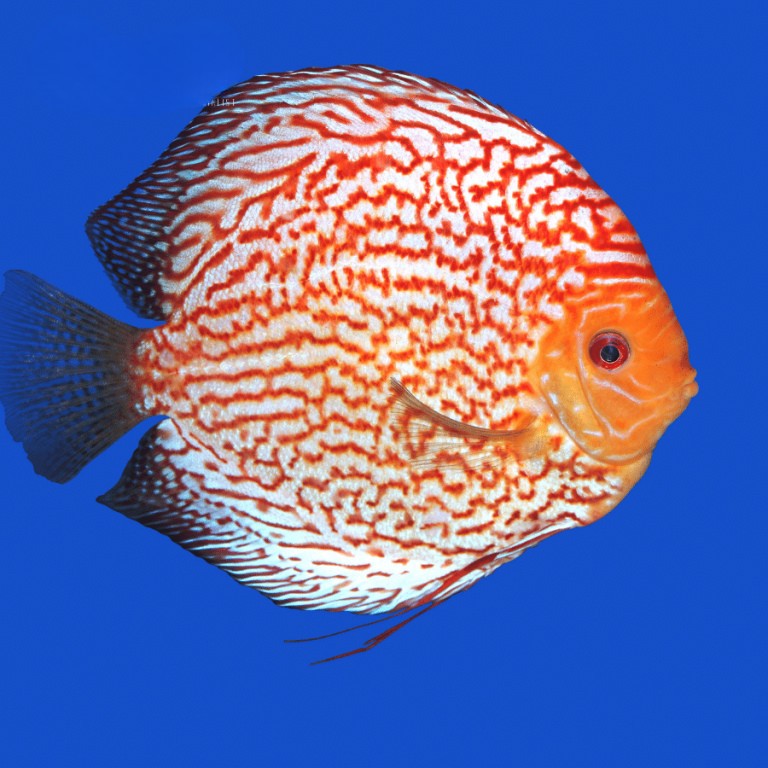
A foundational modern strain — no stress bars, peppered black speckling over a red-orange base. At 6 cm juveniles show a pale beige body with faint peppering; the red flush develops between 8 and 11 cm.
🟠 Red Turquoise
Horizontal turquoise stripes over a red-orange body. At 6 cm the stripes appear as faint greenish lines; full contrast develops at 10 cm+.
🔷 Blue Diamond
A solid metallic blue strain with no patterning. Juveniles at 6 cm look silvery-blue and almost plain; the deep metallic sheen develops as iridophore layers mature past 9 cm.
🐍 Snakeskin
Fine repeating vertical line pattern creating a reptilian look. The pattern is often visible at 6 cm (Snakeskin genes express early) but colour saturation fills in later.
🍅 Marlboro Red
A solid deep red-orange strain. At 6 cm these fish typically show a pale orange body and white face — the full flame-red ‘Marlboro’ coloration is one of the later-maturing looks, often not complete until 12–14 cm.
🎴 Checkerboard / Leopard
Broken reticulated pattern of dark spots on a light base. Pattern emerges around 7–8 cm and intensifies steadily; a striking strain that rewards patience.
Read the size sticker on a Discus tank before you read the strain name — it tells you more about what you will actually see. At 6 cm, a Pigeon Blood, a Marlboro Red and a Red Turquoise can genuinely look similar to an untrained eye, because only the skeletal structure of the pattern is visible; the saturated pigment that identifies each strain is still being laid down. Roughly 20% of a 6 cm Assorted batch will already show clear strain-specific colour, about 50% will show partial pattern with muted colour, and the remaining 30% will look genuinely uncertain — these are the fish a commercial farm could not confidently grade into a named line yet. This is not a defect in the fish; it is a natural consequence of the biology of colour development in *Symphysodon*. The pigment cells (melanophores, iridophores, erythrophores, xanthophores) continue to divide, migrate and layer themselves throughout the 6–14 cm growth window, and each cell type matures on its own schedule. A Pigeon Blood, for instance, needs its melanophore suppression gene to fully activate before the red base shows through — and that activation can lag 6–10 weeks behind body growth.
Colour development between 6 cm and 12 cm is driven by three inputs working together: genetics (fixed at spawning), nutrition (especially carotenoid intake from beefheart mixes, colour-enhancing pellets, and frozen bloodworm) and environment (warm stable water, low stress, a dark substrate, and consistent photoperiod). A 6 cm juvenile raised on flake in a cold bare tank will reach adulthood as a pale, stunted version of its siblings. The same fish raised at 30 °C on a protein-rich diet with daily water changes can end up virtually indistinguishable from a premium show-grade adult. The first six months matter more than the rest of the fish’s life combined — this is the core principle of Discus grow-out keeping. Keepers who have raised multiple batches consistently report that the 20% of fish in an Assorted shipment showing early colour do not end up disproportionately more colourful as adults — in many cases the ‘late bloomers’ catch up and overtake the early starters, because the traits that cause early pigment expression are independent of the traits that govern eventual colour depth and saturation. In other words, do not pick the most colourful 6 cm fish in the shop and assume it will be the most colourful adult; you are better off picking the most active, round-bodied, clear-eyed fish regardless of current colour, because body form and health at this age predict adult quality far better than visible pigment does.
Creating the Perfect Habitat
A 6 cm Discus will eventually need a 300-litre (75-gallon) display tank, but it does not need one today — and in fact a smaller, simpler grow-out tank produces better fish in the first six months than a large, planted showpiece does. The grow-out philosophy is minimalism: a bare-bottom tank of 150–200 L, one or two seasoned sponge filters or a canister with oversized bio-capacity, a reliable heater, a piece of driftwood or a vertical ceramic spawning cone for visual security, and nothing else. No substrate to trap uneaten food, no live plants to compete for filtration capacity, no decor to block your visibility on every single fish every single day. At this stage you are functionally farming, and like any farmer you want to see your livestock clearly every morning. Every uneaten chunk of beefheart must be visible and siphon-able within sixty seconds; every fish’s belly must be clearly observable for signs of bloat, concavity or white stringy faeces; every gill operculum must be countable at a glance. A planted 4-foot show tank with fine gravel makes all of this impossible.
Once the juveniles reach 10–12 cm and their immune systems have matured, you can transition them to a planted Amazonian display tank — 300 L minimum for a shoal of six adults, ideally a tall-profile tank (55–60 cm height) that lets the disc-shaped fish swim naturally. Substrate at that stage can be fine dark sand or aquasoil, planted with Amazon Sword (*Echinodorus*), *Vallisneria*, and large Anubias on driftwood. Avoid needle-leaf plants like Cabomba — adult Discus brush against them and damage their delicate mucus slime coat. Keep the tank dimly lit with a short photoperiod (6–7 hours) and use floating plants like Amazon frogbit to diffuse overhead light. But all of that is a decision for six months from now — start with the grow-out tank.
Stocking density for grow-out is a topic of frequent debate. For a 200 L bare-bottom tank, a group of six 6 cm juveniles is ideal — that is roughly 33 L per fish during grow-out, which sounds generous but is appropriate given the feed load and the need for pristine water. Going tighter (ten or twelve fish in 200 L) is feasible only with daily full water changes and is not recommended for first-time Discus keepers. Going too loose (two or three fish in 200 L) paradoxically produces worse results, because Discus are social grazers and isolated individuals become stressed, skittish, and off their food. Six is the classic magic number: tight enough to school, loose enough to let the keeper afford the maintenance load, and large enough that one or two losses during the first months will not devastate the group.
Grow-Out Tank
150–200 L bare-bottom tank for the first 6 months (until fish reach ~10 cm)
Final Display Tank
300 L+ planted tank with 55 cm+ height for adults (plan the upgrade for month 6–8)
Filtration
Canister rated 2–3× tank volume + one mature sponge filter; must be fully cycled before adding juveniles
Heater
200 W heater with external controller — Discus die fast from stuck heaters; redundancy recommended
Thermometer
Digital with alarm, plus a glass backup — verify 29 °C daily
Water Conditioner
Full-spectrum conditioner that neutralises chloramine, not just chlorine
Python Water-Change System
Makes daily 30–50% changes practical; essential for grow-out
Quarantine Tank
40–60 L bare tank with seasoned sponge filter — use for every new fish, no exceptions
Test Kit
Liquid test kit for ammonia, nitrite, nitrate, pH, GH, KH — strip tests are not accurate enough
Vertical Cone or Driftwood
A single vertical visual element to give juveniles a stress refuge
Sexual Dimorphism
Be honest with yourself about what 6 cm Discus actually show: nothing. Any 6 cm fish that a seller is willing to sex for you is either being sexed through wishful thinking or cut-price marketing. Sexual dimorphism in Discus is genuinely subtle even in adulthood — it depends on a slightly steeper male forehead, a more pointed male dorsal fin, a fuller female ventral profile, and the shape of the genital papilla observable only during spawning. None of these traits are meaningfully expressed at 6 cm, because the juvenile has not yet begun to develop the secondary sexual characteristics that depend on adult gonadal development. Both sexes at this age are essentially identical, round, and neutered-looking. Commercial breeders who have handled tens of thousands of Discus often remark that even 10 cm fish can be impossible to sex reliably; 6 cm is simply not on the table.
The practical takeaway: buy 6 cm Discus as a shoal — six to eight individuals — and let nature sort it out. As the group grows past 12 cm you will start to notice pair bonds forming (two fish always swimming together, gently defending a flat surface from the others), and at that point you can retrospectively identify the sexes of the pair. If you buy only two 6 cm Discus hoping for a pair, you are rolling the dice with roughly 50% probability of getting two of the same sex — and Discus do not switch. The classic advice from commercial breeders remains the best advice for the grow-out hobbyist: buy six, grow them out, watch for natural pairing, and rehome or relocate the extras only once pairing is clearly established. A secondary benefit of this approach is the social dynamic of a shoal: juvenile Discus feel far more secure in a group of six than in a pair or trio, and a secure juvenile eats aggressively, which accelerates growth, which improves adult size and colour — a virtuous circle that the two-fish starter misses entirely.
| Feature | Male | Female |
|---|---|---|
| Body Shape | Not distinguishable at this size — sexing possible only at 12 cm+ | Not distinguishable at this size — sexing possible only at 12 cm+ |
| Forehead | Not distinguishable at this size — sexing possible only at 12 cm+ | Not distinguishable at this size — sexing possible only at 12 cm+ |
| Dorsal Fin | Not distinguishable at this size — sexing possible only at 12 cm+ | Not distinguishable at this size — sexing possible only at 12 cm+ |
| Ventral Profile | Not distinguishable at this size — sexing possible only at 12 cm+ | Not distinguishable at this size — sexing possible only at 12 cm+ |
| Genital Papilla | Not distinguishable at this size — sexing possible only at 12 cm+ | Not distinguishable at this size — sexing possible only at 12 cm+ |
| Behaviour | Not distinguishable at this size — sexing possible only at 12 cm+ | Not distinguishable at this size — sexing possible only at 12 cm+ |
What to Feed
Everything about juvenile Discus feeding is different from adult Discus feeding. Adults at 15 cm are fed twice a day on a maintenance diet; 6 cm juveniles are fed three to five times a day on a growth diet, and the difference shows up in the fish you own two years later. The grow-out appetite is extraordinary — a healthy 6 cm juvenile will eat three times its apparent stomach capacity across a day — and under-feeding at this age produces the pencil-body stunting that cannot be corrected later. Over-feeding is also possible, but in practice the bigger risk at 6 cm is a timid fish that does not eat enough during the first week as it settles in. A newly introduced 6 cm juvenile that refuses food for more than 72 hours is in serious trouble: Discus have very low fat reserves at this size, and a hunger strike combined with the stress of shipping can cause rapid deterioration. If new arrivals are off food, raise the temperature a degree (to 30 °C), dim the lights, reduce traffic near the tank, and tempt with live baby brine shrimp or live microworms — the movement usually breaks the fast.
A working grow-out feeding rotation looks like this. Morning (07:00): a small feed of a premium Discus-specific granule (for example, Tropical Discus Granulat, Tetra Discus, or Hikari Discus Bio-Gold). Mid-morning (10:30): thawed frozen bloodworm or a beefheart mix cube — the classic Discus growth fuel. Lunch (13:00): a second pellet feed, possibly with crushed flake for variety. Afternoon (16:00): live or frozen baby brine shrimp, which juveniles hunt eagerly and which triggers a natural foraging response. Evening (19:30): a final small pellet or frozen feed. Between feeds, remove any uneaten food within ten minutes — bare-bottom tanks make this straightforward. Within a week of consistent feeding on this rotation, the juveniles will begin to anticipate feeds, swimming to the front of the tank as you approach — this is the first sign that they are settled, growing, and healthy.
Beefheart mixes (lean beef heart trimmed of all fat and connective tissue, blended with spirulina, garlic, vitamin supplements, and sometimes seafood) are the traditional Discus growth food and remain unmatched for pure growth rate, but they foul water aggressively. If you feed beefheart, feed small portions and siphon uneaten debris within minutes. Many modern keepers skip beefheart entirely and rely on high-quality granules plus frozen bloodworm, baby brine shrimp, mysis, and daphnia — the growth rate is slightly slower but the water stays cleaner, which matters more for disease prevention at this age. A good compromise for home hobbyists: use a commercial frozen ‘Discus Diet’ cube (several reputable brands exist) as the beefheart-equivalent two or three times a week, and rely on high-quality granules and frozen bloodworm for the other feeds. This gives you 80% of the growth rate of pure beefheart feeding with 30% of the water-quality cost.
Carotenoids deserve a specific mention. The red and orange pigments that identify strains like Marlboro Red, Pigeon Blood and Red Turquoise are derived from dietary carotenoids, principally astaxanthin and canthaxanthin, which fish cannot synthesise. Frozen bloodworm contains significant natural astaxanthin; quality colour-enhancing granules are fortified with synthetic astaxanthin; live baby brine shrimp gut-loaded with spirulina carry additional pigment. Feed these consistently during the grow-out window and the reds deepen dramatically; omit them and even a genetically red strain will end up a washed-out pink.
Tank Mate Guide
For the first six months, resist the community-tank impulse entirely. Six-centimetre Discus belong in a species-only grow-out tank. Adding tank mates at this stage means adding competition at feeding time (which juveniles lose because they are slow, cautious eaters), adding biological load to a bare-bottom tank that is already being pushed hard with high-protein feeding, and adding disease vectors before the Discus immune system has matured. The best community for a 6 cm Discus is six more 6 cm Discus.
Once the fish pass 10 cm and move to their planted display tank, a classic Amazon-biotope community becomes a joy to build. Cardinal Tetras in a school of 20+, a dozen Rummy Nose, six Sterbai Cory on the bottom, and perhaps a pair of German Blue Rams — this is the textbook Discus display and it is breathtaking when done right. Keep your stocking conservative: Discus produce more waste than their calm appearance suggests, and a heavily stocked Discus tank is an unstable Discus tank. The Amazonian aesthetic is about dark water, sparse but intentional tank mates, and letting the Discus themselves be the visual centre.
Health and disease deserve a specific note at the 6 cm stage, because juvenile Discus are notoriously vulnerable to two parasites that adults shake off more easily: hexamita (*Spironucleus*, a flagellate that inhabits the intestine and causes the classic ‘hole-in-the-head’ and white stringy faeces) and gill flukes (*Dactylogyrus* and *Gyrodactylus*, monogenean parasites that cause flashing, rapid gill movement and one-sided gill operculum clamping). Both are often carried asymptomatically by apparently healthy adults — including Angelfish from any source, which is the single strongest reason never to mix Angelfish with Discus — and both become severe in the stress of shipping and tank transition at 6 cm. Quarantine every new arrival for minimum 3 weeks in a separate bare tank at 29–30 °C before introducing to the main grow-out tank, and observe carefully for flashing, darkened stress bars, white stringy faeces, or loss of appetite. Prophylactic treatment with praziquantel (for flukes) and metronidazole (for hexamita) during quarantine is common practice among experienced Discus keepers and is generally safer than hoping the fish are clean. If you are new to Discus, buy from reputable breeders or shops that have quarantined their stock, ask directly what prophylactic treatment has been performed, and never skip your own quarantine step even for ‘guaranteed’ fish. The grow-out tank itself should also be watched for water-quality lapses; hexamita in particular flares when juveniles are stressed, and a missed water change that spikes nitrate above 40 ppm can trigger an outbreak in fish that have carried the parasite at sub-clinical levels. A disciplined schedule, warm temperatures, and prophylactic quarantine are the three pillars of juvenile Discus health.
| Species | Why | |
|---|---|---|
| ✅ | Cardinal Tetra | The textbook Discus companion — shares blackwater origin, soft warm water, and forms a tight mid-water school that does not bother Discus. Add them only once juveniles reach 8 cm+ to avoid stress on very young Discus |
| ✅ | Rummy Nose Tetra | Classic Amazon biotope schooler; tolerates the 29 °C Discus temperature well (most tetras do not) and acts as a visible dither fish that helps juvenile Discus feel secure |
| ✅ | Corydoras Sterbai | The rare cory species that genuinely tolerates 29 °C long-term — most other Corydoras species struggle at Discus temperatures. Gentle bottom cleanup without disturbing Discus |
| ✅ | German Blue Ram | Similar water preferences (warm, soft, acidic) and a non-competitive mid-to-bottom-dweller; keep to one pair to avoid territorial spillover |
| ✅ | Hatchetfish (Marbled) | Occupies the very top of the water column that Discus never use; adds biological interest without any resource competition |
| ✅ | Otocinclus | Tiny, non-aggressive algae eater; completely ignores Discus and vice versa. Note: Otos are fragile — only add once the tank is well-established |
| ✅ | Amano Shrimp | Reasonable cleanup crew for the planted display tank phase; some individuals will be eaten but the rest survive and breed slowly |
| ❌ | Angelfish | Angelfish are faster, more aggressive, and out-compete Discus for food — and they are the number one known carrier of the gill-fluke parasite *Dactylogyrus* and the flagellate *Spironucleus* (hexamita), which are among the most lethal Discus diseases. Never, ever mix |
| ❌ | Tiger Barbs / Serpae Tetras | Fin-nippers; Discus have long delicate fins and a stress-sensitive mucus slime coat — any nipping at 6 cm can trigger fatal secondary infections |
| ❌ | Plecostomus (Common / Sailfin) | Large plecos rasp at the slime coat of stationary fish at night, especially Discus; the resulting lesions are disease entry points. Small bristlenose are tolerable; commons are not |
| ❌ | Most Corydoras species (non-Sterbai) | Standard cories prefer 22–26 °C and slowly weaken at the 29 °C required for juvenile Discus grow-out; only Sterbai are a truly compatible exception |
| ❌ | African Cichlids / Livebearers | Completely incompatible — require hard alkaline water that is directly harmful to Discus; behaviourally also aggressive or too boisterous |
Reproduction & Breeding
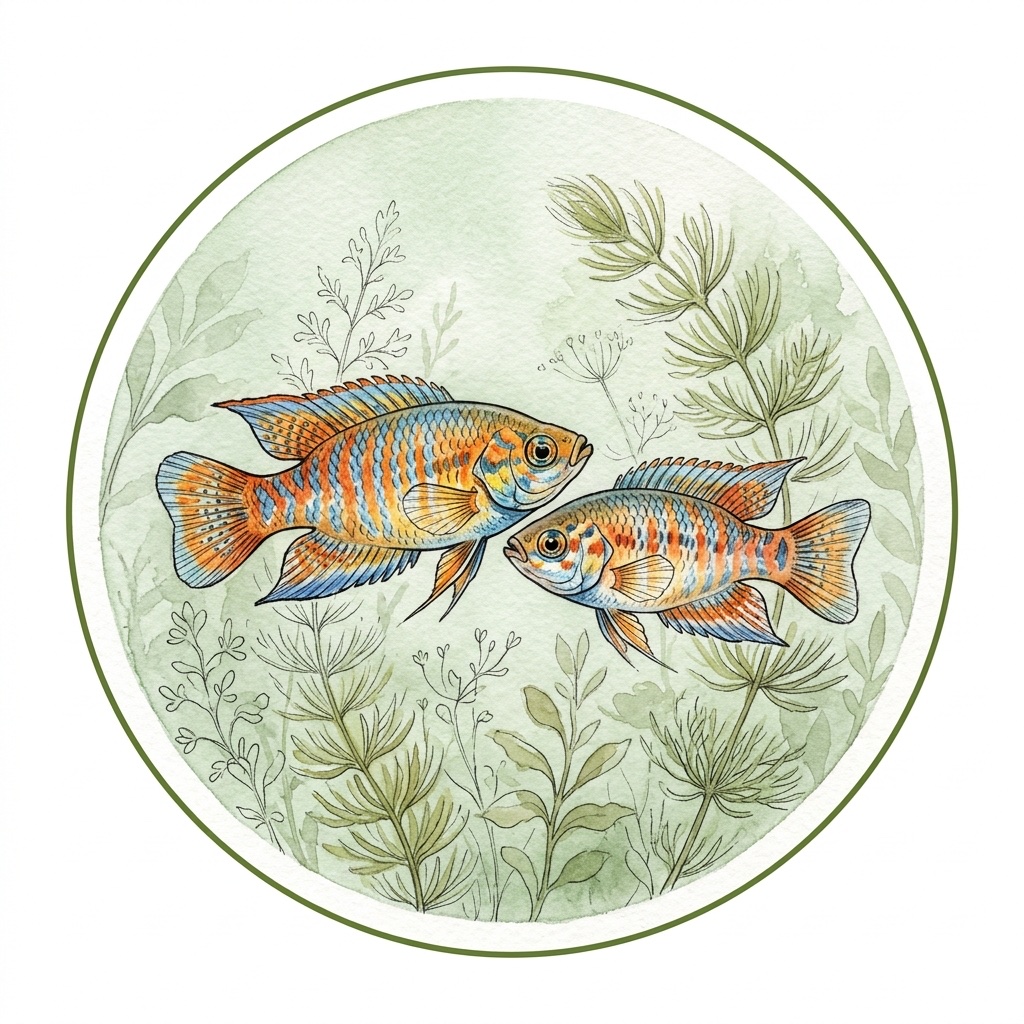
Stage 1 · Grow-Out (months 0–10)
Juvenile growth, no reproductive activity
6 cm → 12 cm body growth; no sexual maturity yet
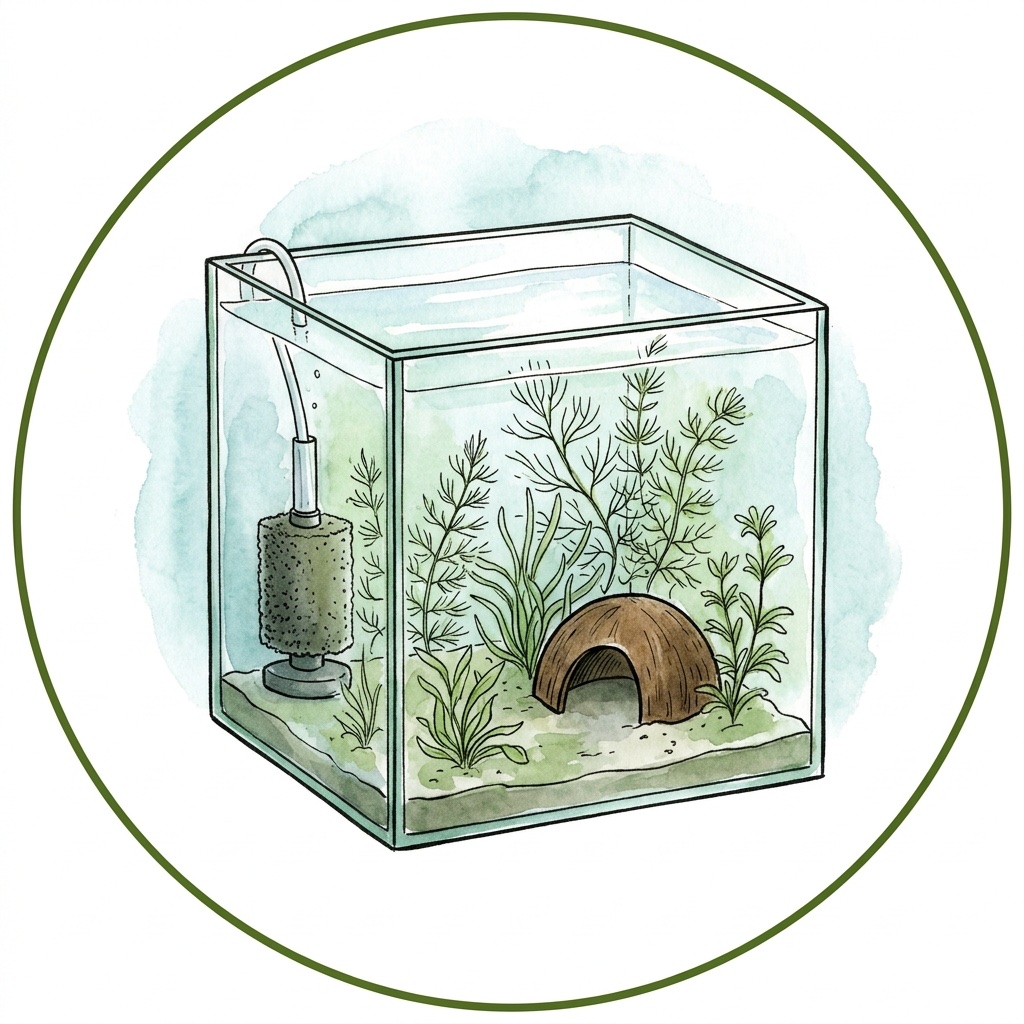
Stage 2 · Pair Formation (months 10–16)
Sexual maturity, natural pairing from shoal
Fish reach 12–14 cm; pair bonds emerge from the group
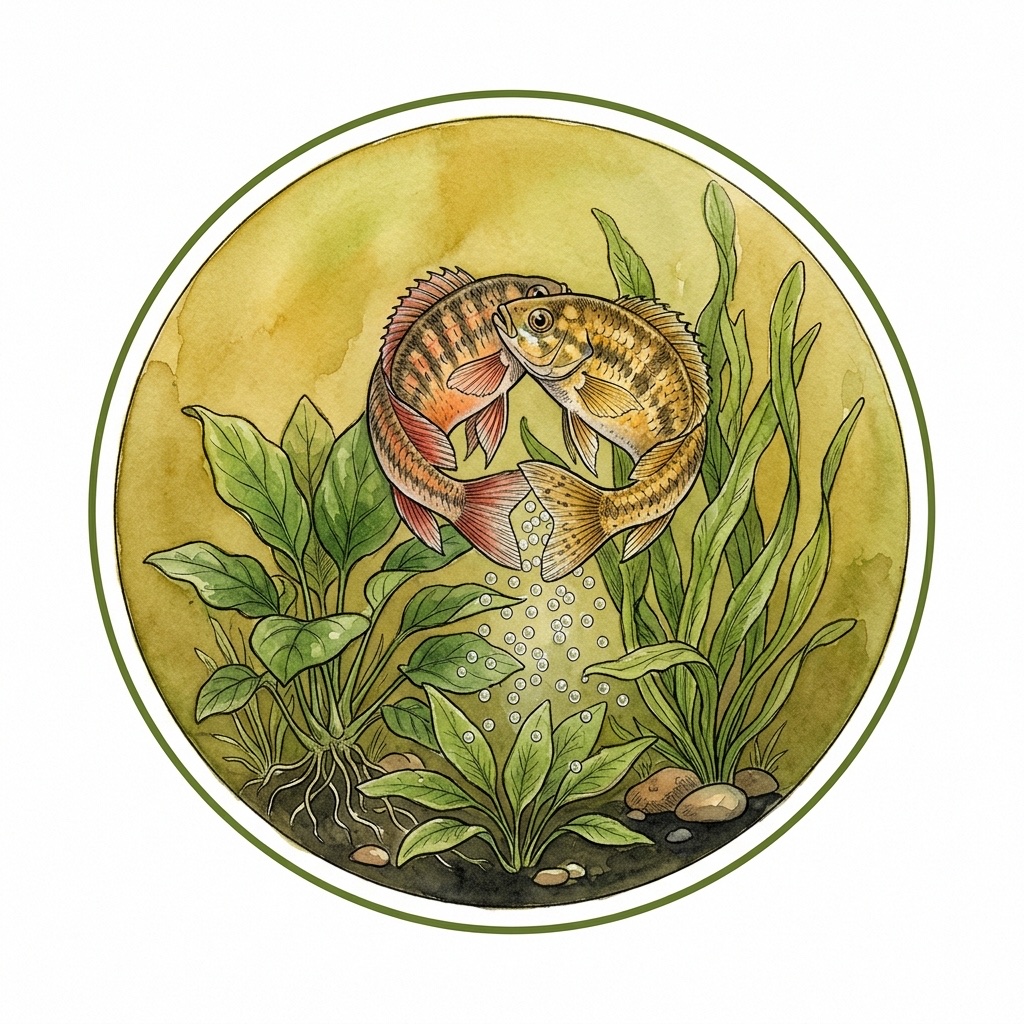
Stage 3 · Standard Breeding (18 months onward)
Pair separation and the classic Discus cycle
Move the pair to a dedicated breeding tank; eggs, parental slime-coat feeding, fry
Juvenile growth, no reproductive activity
This is where your fish are right now. At 6 cm, gonads are undeveloped and hormonally dormant. The sole priority for the next ten months is pure growth — reaching 12 cm on a strong frame with full colour — and anything that slows growth (cold water, under-feeding, stress, disease) will permanently reduce the fish’s adult potential. Do not think about breeding. Do not add breeding cones. Do not soften the water to extreme levels in an attempt to ‘condition’ juveniles. Just grow them. Sexing is not possible in this window and any pair-bonding behaviour is social play, not reproductive.
Sexual maturity, natural pairing from shoal
Once the fish pass 12 cm you may see two individuals consistently swimming together, gently defending a flat vertical surface (the side of a heater, the glass, a piece of driftwood) from the other four in the group. This is the start of a pair bond. Do not interfere yet — let the pair confirm itself over several weeks. You may observe ‘cleaning’ behaviour (both fish running their mouths across a chosen surface), which is pre-spawn practice. Females may start showing a slightly rounder abdomen when viewed from above. True sexual maturity and first productive spawning typically arrives at 16–18 months of age and 14+ cm body length.
Pair separation and the classic Discus cycle
Move the confirmed pair to a dedicated 80–100 L breeding tank with bare glass, very soft slightly acidic water (pH 6.0, GH 1–3), a vertical ceramic cone, and a seasoned sponge filter. The pair will spawn a couple of hundred eggs on the cone, both parents will fan and tend the eggs for 60 hours until hatch, and the fry will free-swim around day 5–6 and immediately feed on the parents’ mucus slime coat for the first two weeks — the famous Discus parental behaviour that sets this genus apart from all other cichlids. This is standard Discus breeding and is covered in depth in our 9 cm Discus guide and specialist breeding literature. From today’s 6 cm juveniles, expect this stage to be at least 16–18 months away.
Quick Reference
| Scientific Name | Symphysodon aequifasciatus |
| Current Size | ~6 cm (juvenile) |
| Adult Size | 15–20 cm in 18–24 months |
| Lifespan | 10–15 years |
| pH | 6.0–7.0 (ideal 6.5) |
| Temperature | 28–30 °C (ideal 29 °C — warm for grow-out) |
| Hardness | 1–8 dGH — soft acidic |
| Grow-Out Tank | 150–200 L bare-bottom |
| Final Tank | 300 L+ planted |
| Shoal Size | 6+ strongly recommended |
| Feeding | 3–5× daily — high protein |
| Water Changes | 30–50% every 1–2 days during grow-out |
| Care Level | Intermediate–Advanced |
| Sexing | Not possible at 6 cm; wait for 12 cm+ |
| Breeding | 16–18 months away (not sexually mature) |
Related Products
Reviews
Clear filtersThere are no reviews yet.