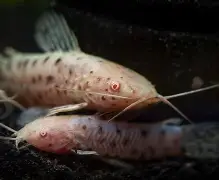
🪨 Species at a Glance
| Scientific Name | Megalechis thoracata (albino variant) |
| Previous Name | Hoplosternum thoracatum (reclassified 2005) |
| Common Names | Albino Hoplo Cat, Albino Hoplo Catfish, Albino Cascadura, Atipa |
| Family | Callichthyidae (armoured catfishes) |
| Order | Siluriformes |
| Origin | South America — Amazon, Orinoco, and upper Paraguay basins; also Trinidad and the Guianas (wild type) |
| Adult Size | 15–18 cm (6–7 in); occasionally to 20 cm in females |
| Lifespan | 8–12 years, longer with good care |
| pH Range | 5.5–7.5 (very tolerant) |
| Temperature | 22–28 °C (72–82 °F) |
| Hardness (dGH) | 2–20 (extremely wide tolerance) |
| Diet | Omnivorous bottom feeder — sinking wafers, pellets, frozen bloodworm, blanched vegetables |
| Minimum Tank Size | 150 L (40 gal) for a trio; 200 L+ for a small group |
| Care Level | Beginner to intermediate — very forgiving but needs space and soft substrate |
| Temperament | Peaceful, social; happiest in groups of 3+ |
| Breeding | Bubble-nest spawner — male builds floating foam nest and guards fry |
| Tank Position | Bottom to mid-water; frequent surface gulps for atmospheric air |
| Light Sensitivity | Moderate to high — albinism reduces UV and glare tolerance; subdued lighting recommended |
| Availability | Uncommon — captive-bred only, occasional imports |
Origin & Etymology
The common name ‘Hoplo’ is a contraction of the old genus name *Hoplosternum* — a compound from the Greek *hoplon* (a piece of armour, particularly the large round shield carried by ancient Greek hoplite soldiers) and *sternum* (the breastplate or chest). Put together, the name means roughly ‘armoured chest’, a direct reference to the two overlapping rows of bony plates — called scutes — that run along the flanks of every member of the Callichthyidae family, from the tiny Pygmy Corydoras to the biggest Hoplo. These scutes are genuinely armour: fused dermal bone, arranged in a staggered pattern, they make the fish extraordinarily rigid and surprisingly difficult for even a determined predator to bite through. If you have ever tried to net a Hoplo against a plant and felt it wedge itself, that rigidity is the reason.
The species name *thoracata* likewise means ‘wearing a cuirass’ — a cuirass being the solid chestplate of armour favoured by Roman legionaries. It was given by Valenciennes in 1840, when the species was originally placed in the genus *Callichthys*. From there the taxonomy wandered: for most of the twentieth century this fish was universally known to aquarists as *Hoplosternum thoracatum*, and that is still the name you will see printed on older shop tanks, fish-club price lists, and nearly every aquarium book published before about 2010. In 2005, however, Reis’s revision of the Callichthyidae split the old *Hoplosternum* genus into three — *Hoplosternum*, *Megalechis*, and *Lepthoplosternum* — based on differences in scute count, skull anatomy, and reproductive biology. The Hoplo we keep in aquaria was moved to *Megalechis thoracata*, alongside its close cousin *Megalechis picta*. You will still hear hobbyists use the old name interchangeably; it is worth knowing both, because the older literature is often the more detailed.
In its native range, the Hoplo has a host of local names. In Trinidad and Guyana it is the ‘cascadura’ or ‘cascadu’ — the subject of an old Trinidadian saying that anyone who eats a cascadura will, by fate, end their days on the island. In French Guiana it is the ‘atipa’, a prized food fish harvested from flooded savannahs in the rainy season. The albino variant has no native analogue; it is a captive-bred line developed in the ornamental trade, and is the only form most Australian aquarists will ever encounter in the hobby.
Aquarium Setup Guide
The Hoplo is a big, active, bottom-foraging catfish and it needs both floor space and physical structure to be happy. A minimum tank of 150 L (around 40 gallons, roughly 90 × 45 × 45 cm footprint) is appropriate for a trio; if you want to keep them as the small social group they prefer — four to six fish — plan on 200 L or more. Footprint matters more than height here: Hoplos spend 90 % of their time on or near the substrate, and a long, low tank is much more useful than a tall one of the same volume.
Substrate choice is one of the most important decisions for this species. Use a fine, rounded aquarium sand — either silver sand, pool filter sand, or one of the commercial aquarium sands sold for Corydoras. Gravel, even smooth gravel, is a poor choice: Hoplos sift the substrate by inhaling mouthfuls, filtering out food particles and small invertebrates, and expelling the inert material through their gill covers. Over weeks and months, coarse substrate damages their delicate sensory barbels — those four pairs of whisker-like appendages around the mouth — leading to infection, barbel loss, and a fish that can no longer feed efficiently. Sand also looks better against the pale albino body and allows natural foraging behaviour. A layer 2–4 cm deep is plenty; Hoplos do not burrow deeply in the way that weather loaches or eels do, but they will push and shuffle the top centimetre or two around, which means any rooted plants need to be firmly anchored in place.
Driftwood is essential. A few well-placed pieces of Malaysian driftwood, mopani, or spiderwood give the fish overhead cover during the day and a visual frame for the tank. The wood also releases tannins over time, which suits the Hoplo’s preferences and helps with the light-diffusion concern specific to the albino form. Add a dense stand of plants — Vallisneria, Amazon sword, crypts, or Java fern and Anubias attached to the wood — to provide mid-level structure. Floating plants (Salvinia, water lettuce, red root floater, frogbit) are particularly valuable: they shade the tank surface, reduce glare, and provide the raft of vegetation under which breeding males will attach their bubble nests. Leave at least a third of the surface clear, however, so the fish can still reach the air they need to gulp.
Caves and hiding spots are appreciated but not strictly required. Where Corydoras tend to rest in piles out in the open, Hoplos prefer a roof of some kind — a piece of wood leaning against the back glass, a ceramic cave, a section of PVC pipe hidden among plants — and will often wedge themselves into snug spaces to sleep. Give them at least one cave per fish in a small group, placed at different points around the tank, so a subordinate fish always has an option. Broken terracotta pots, coconut-shell halves, and sections of bogwood all serve well and can be hidden behind plants.
Lighting should be subdued. This is the single most important accommodation for an albino fish. An LED set to around 30–50 % of its maximum output, or a standard tropical LED run for only 6–8 hours per day rather than the usual 10–12, is about right. If the tank is under a window, avoid direct sunlight hitting the glass. You’ll know the lighting is correct when the fish emerge and forage confidently during the day rather than skulking behind the filter. An additional benefit: a dimmer tank shows the pale apricot and pink tones of the albino Hoplo far more flatteringly than bright overhead light, which tends to wash the body out toward uniform white.
A tight-fitting lid is non-negotiable. Hoplos are very good jumpers, particularly during the first week in a new tank and around water changes or cooler water top-ups (which mimic their spawning trigger). They will also exploit any gap around filter intakes, heater cords, or lid cut-outs. Seal every opening with foam, mesh, or appropriately cut lid panels. A Hoplo on the carpet can survive for a surprisingly long time thanks to its air-breathing, but prevention is easier than rescue.
Tank
150 L minimum for a trio (90 × 45 × 45 cm); 200 L+ for a small group of 4–6. Long, shallow footprint preferred over tall tanks.
Filter
Canister rated for roughly 2× tank volume per hour, or an oversized sponge filter plus a moderate HOB. Hoplos are messy — overfilter rather than underfilter.
Heater
100–200 W adjustable submersible heater set to 25 °C. A heater guard is worth fitting, as Hoplos occasionally lean against the glass.
Substrate
Fine aquarium sand (silver sand, pool filter sand, or commercial black sand). Never coarse gravel — it damages barbels.
Driftwood
Two or three pieces of Malaysian, mopani, or spiderwood, arranged to create overhead cover and visual breaks on the substrate.
Floating Plants
Salvinia, water lettuce, red root floater, or frogbit — critical for subduing surface light and providing a raft for bubble-nest construction.
Rooted / Attached Plants
Vallisneria, Amazon sword, cryptocoryne, Java fern, and Anubias attached to wood. Dense stands give the fish confidence to explore openly.
Lighting
Moderate intensity LED, dimmed to 30–50 % or run for a shorter photoperiod (6–8 hours). Floating plants and tannins do the rest.
Lid
Tight-fitting lid essential. Hoplos are accomplished jumpers, particularly at night and during water changes, and they breathe at the surface so they are often close to the lid.
Leaf Litter
A small handful of Indian almond (Catappa) or beech leaves, replaced as they break down. Tannins reduce stress in albino specimens and mildly inhibit bacteria.
Getting the Water Right
5.5–7.5
ideal 6.8
22–28 °C
ideal 25 °C
2–20 dGH
Extremely adaptable — soft to moderately hard
If the Hoplo had a motto, it would be ‘close enough is good enough’. Few aquarium fish are as forgiving of water chemistry as this species, and the range over which it will live, feed, and even breed is genuinely remarkable. In the wild, *Megalechis thoracata* occupies habitats ranging from the soft, dark, acidic blackwaters of Amazonian flooded forests (pH as low as 4.5, hardness effectively zero) to harder, near-neutral white-water rivers and seasonal swamps that can reach pH 7.5+ and 20 dGH by the end of the dry season. That evolutionary plasticity carries over into the aquarium. A pH anywhere between 5.5 and 7.5 is perfectly comfortable; hardness from very soft Sydney or Melbourne tap water all the way up to Perth-style hard water (18–20 dGH) is fine. Most Australian tap water, after standard dechlorination, will suit a Hoplo out of the box.
Temperature is the one parameter to think about carefully, because — unusually for an Amazonian fish — the Hoplo tolerates the cooler end of the tropical range better than most of its basin-mates. It is comfortable from around 22 °C up to about 28 °C, with 24–26 °C being the sweet spot for long-term health and colour. Keeping the tank at the high end of its range (27–28 °C) year-round will shorten the fish’s lifespan and stress the gut flora; keeping it below 20 °C for any sustained period will depress appetite and suppress the immune system. If you are keeping Hoplos with discus or other warmth-demanding fish, the Hoplo will cope with 28 °C, but consider 26 °C a better compromise if the rest of the community allows it.
Water quality — in the sense of ammonia, nitrite and nitrate — matters more than water chemistry. Hoplos eat a lot and produce proportionally more waste than any Corydoras. Weekly water changes of 25–30 % are the minimum; 40 % weekly in a well-stocked tank is better. Nitrate should sit below 30 ppm and ideally below 20 ppm for long-term health. Ammonia and nitrite must be zero; Hoplos are hardy against pH swings but not against ammonia burns, which show up as reddened patches around the gills and pectoral insertions — particularly visible on an albino where the underlying tissue is clearly displayed.
One final point particular to the Hoplo: this fish is a facultative air-breather. The posterior section of its intestine is modified into a thin, highly vascularised gas-exchange tissue, and the fish must surface periodically — typically every few minutes under normal oxygen conditions, and every few seconds in oxygen-poor water — to gulp atmospheric air. This means the Hoplo can survive in conditions that would suffocate most fish: muddy, warm, oxygen-depleted swamps, bucket journeys of extraordinary length, and even short periods out of water if kept moist. For the aquarist, the practical consequence is that surface access must always be clear. Do not cover the entire tank surface with heavy floating plants; do not let the filter create a layer of undisturbed surface scum; and ensure the lid leaves a 2–3 cm air gap above the water for the fish to reach. If a Hoplo starts gulping urgently every few seconds even at well-oxygenated conditions, read it as a sign of stress or incipient water-quality problems and test immediately.
Nutrition & Diet
The Hoplo is the definition of an opportunistic omnivore. In the wild it sifts sand and leaf litter for insect larvae, small crustaceans, worms, and any small edible matter, and supplements this with plant debris, fallen fruit, and seeds during the flooded forest season. In the aquarium, that generalist appetite makes feeding easy — almost too easy. A Hoplo will eat essentially any sinking food and quite a lot of food that was not intended for it, including flakes and pellets it plucks from the substrate after they have drifted down, and frozen foods that slower mid-water fish fail to intercept.
Build the diet around a high-quality sinking wafer or pellet — something like Hikari Sinking Wafers, Repashy gel food, or a dedicated catfish pellet — as the staple. Supplement several times a week with frozen bloodworm, daphnia, brine shrimp, or tubifex (ideally gamma-irradiated frozen blocks rather than live, for parasite safety). Offer blanched vegetables once or twice a week: courgette slices, cucumber rings, or a small piece of shelled green pea are all readily taken, and the plant matter helps maintain healthy gut flora. Live foods — whiteworm, earthworm pieces, or black soldier fly larvae — are excellent for conditioning breeding adults.
Feed in the evening or just before lights-out. Hoplos are primarily crepuscular and will feed during the day, but they come into their own at dusk, and food offered then is less likely to be intercepted by mid-water tank mates. Quantity is best judged by body condition: a well-fed Hoplo has a subtly rounded belly but not a distended one. Feed only what the group can clear in 3–5 minutes.
One significant caution specific to this species: Hoplos are prone to obesity and fatty-liver disease if overfed on rich protein foods. Keep a fast day every week — no food — and avoid making bloodworm the centrepiece of the diet. Rotate protein sources and include vegetable matter regularly.
Available Colour Grades
🤍 Albino (this fish)
Creamy white to pale apricot body with flushed pink skin beneath the scutes, bright red eyes, and translucent fins. A selectively bred line with no melanin production; the most common form seen in the ornamental trade.
🟤 Wild Type
Olive-brown to grey-brown base with darker marbling and blotches across the flanks, cream to yellowish belly, and often a subtle green or violet iridescence on the scutes. The form seen in nature across the Amazon and Orinoco basins.
🐟 Long-fin Variant
An occasional line (wild or albino base) selectively bred for extended dorsal, caudal, and pectoral fin rays, producing a more flowing profile. Rare in Australia.
The albino Hoplo is one of the more attractive albino fish precisely because the underlying colour is not a harsh pure white, as it can be in some albino livebearers or plecos. Instead, a healthy adult shows a warm, almost buttery cream along the upper flanks, with a pink wash around the belly and throat where the blood vessels show through the unpigmented skin. The scutes themselves are still visible as a subtle quilted pattern across the flanks, and the leading edges of the dorsal and pectoral spines are typically a shade darker than the surrounding skin — often a pale gold. The eyes are a clear ruby red, and because there is no pigment in the iris, the pupil can look deceptively large. Under subdued lighting — especially the warm, slightly dimmed light that a well-planted biotope tank provides — the overall effect is of a softly glowing pink-gold fish moving quietly across the substrate.
Because albinism removes all melanin, the skin is noticeably more sensitive to intense light, UV, and glare than the wild form. A tank with bright overhead lighting and no shade will often produce washed-out, stressed fish that spend their days hiding behind filter intakes. The same fish moved to a tank with floating plants, subdued overhead light, and plenty of driftwood cover will come out in the open, feed confidently, and show its best colour. This is the single most important husbandry note specific to the albino form — we will return to it in the tank setup chapter. Also worth noting: albinos from the same brood can vary surprisingly in the depth of the cream-and-pink tones, and individual colour tends to intensify as the fish matures past 18 months of age.
Albinism in Hoplos is caused by a simple recessive mutation affecting melanin synthesis, most likely in the tyrosinase pathway. In practical terms this means that crossing two albinos produces 100 % albino fry, while crossing an albino to a wild-type fish produces all wild-type offspring that carry a single albino gene. Those heterozygous fish, crossed with each other or back to an albino parent, can then produce albino fry again. For Australian keepers the point is largely academic — the albino line is genetically isolated in the trade and has been captive-bred here for decades — but if you plan to breed, sourcing unrelated albino stock from different suppliers reduces the risk of the inbreeding-related fin and spine deformities occasionally seen in very closely-bred lines.
Finally, a quick note on ageing. Fresh juveniles destined for the albino trade often ship with a slightly translucent, almost pearlescent appearance; the creamy cast develops over the first six to twelve months as the scutes thicken and the body fills out. A six-month-old albino Hoplo is a paler, more delicate-looking fish than the same individual will be at two or three years old, when the warm apricot tones fully emerge and the fish takes on its final adult silhouette.
How to Sex This Species
Sexing adult Hoplos is straightforward once the fish reach about 10 cm, and becomes unmistakable once they enter breeding condition. The single most diagnostic feature is the pectoral spine — the leading, heavily ossified ray of the pectoral fin. In juveniles and non-breeding adults of both sexes, this spine is a simple rigid rod. In sexually mature males that have been well fed and are approaching breeding readiness, the spine thickens substantially, lengthens beyond the trailing edge of the pectoral fin, and develops a characteristic coarse serration along its inner edge. The serration is easily felt if the fish is gently handled (wear nitrile gloves — the spine is sharp), and the whole structure often takes on a deeper apricot-gold hue. Females never develop this modification; their pectoral spines remain slender, smooth and unchanged.
The second reliable marker is overall body shape. Viewed from directly above — the way an experienced keeper will always check — females are obviously broader through the belly and shoulders, while males have a more streamlined, almost cylindrical outline. When a female is ripe with eggs this difference becomes exaggerated, and you can often see the cream-coloured ovarian mass through the lightly pigmented belly skin of an albino. Size overlaps considerably between the sexes but females are, on average, a centimetre or two longer at full maturity.
A behavioural cue worth watching for: when a male comes into breeding condition, he begins to patrol the surface and will often start collecting air bubbles in his mouth, releasing them against floating plants or the underside of a floating object. This is the first stage of bubble-nest construction, and once you see it, you know unambiguously which fish is the male. Females show no equivalent behaviour outside the short spawning window.
| Feature | Male | Female |
|---|---|---|
| Body Shape | Slimmer, more elongated, torpedo-like in profile | Deeper-bodied, stockier, and noticeably rounder when viewed from above |
| Adult Size | 14–17 cm — typically slightly shorter but often appears longer due to slim build | 15–18 cm, occasionally to 20 cm; the larger sex overall |
| Pectoral Spine (leading ray) | Distinctly thickened and elongated; becomes hardened and coarsely serrated along the inner edge during breeding condition | Shorter, slimmer, and smooth-edged; never develops the serrated appearance |
| Pectoral Spine Colour | Often a deeper apricot or orange-gold, especially in breeding condition | Paler and more uniform with the rest of the fins |
| Belly Profile | Flat to very slightly convex | Pronounced convex curve when gravid; eggs often visible as a pale mass through the belly skin |
| Ventral/Pelvic Fin Shape | Pointed pelvic fins, used to nudge the female during courtship | Slightly rounded pelvic fins used to cup and carry eggs to the nest |
| Behaviour at Surface | Constructs and actively tends a floating bubble nest; aggressive toward intruders near the nest | Does not build; approaches the nest only during spawning and otherwise ignores the surface |
| Colouration (general) | Identical to female in base pattern; only the pectoral spine colour is a reliable marker | Identical to male in base pattern; belly fullness is the most obvious secondary marker |
How to Breed
Day -14 to 0
Conditioning
Both sexes fed heavily on live/frozen protein; cooler water change triggers readiness
Day 0
Nest Construction
Male builds floating bubble nest under a leaf or floating plant raft
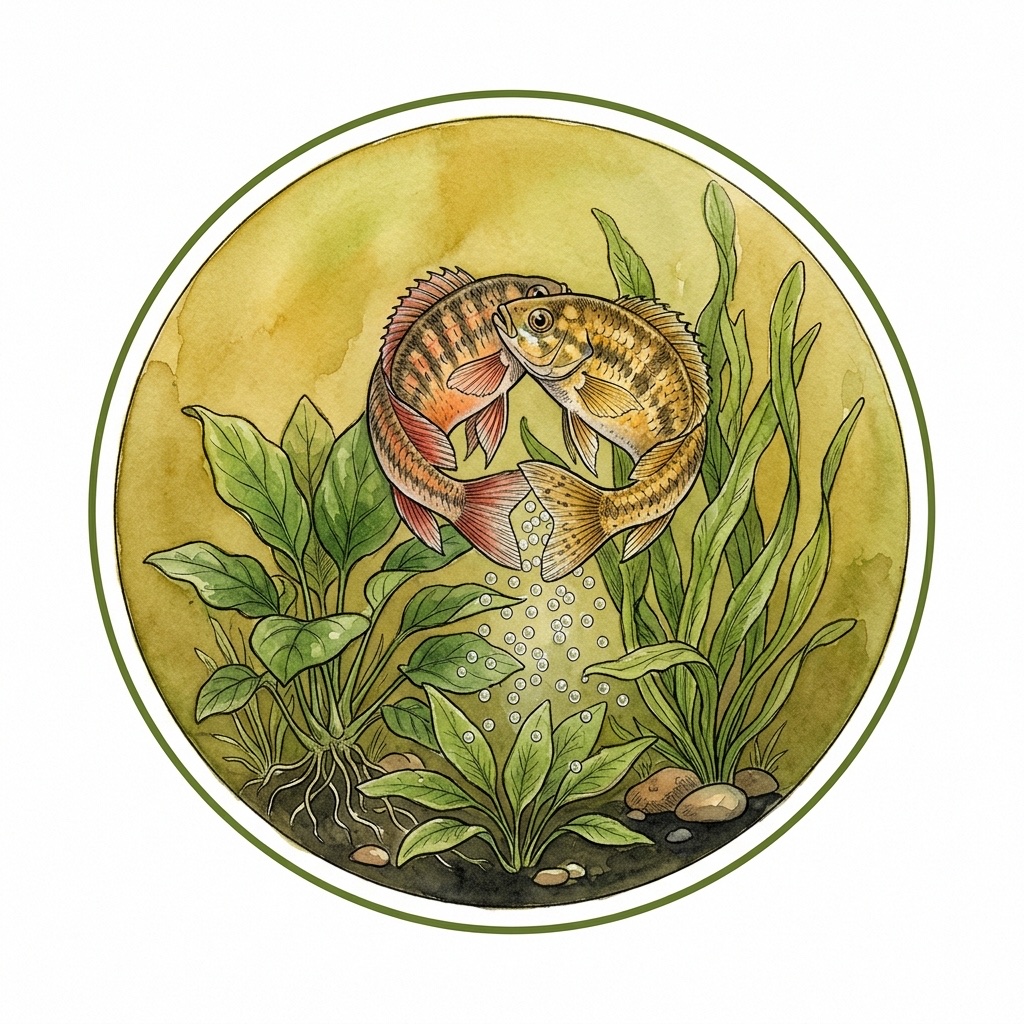
Day 1
Courtship and T-Position Spawning
Male guides female to nest; eggs deposited directly into the foam
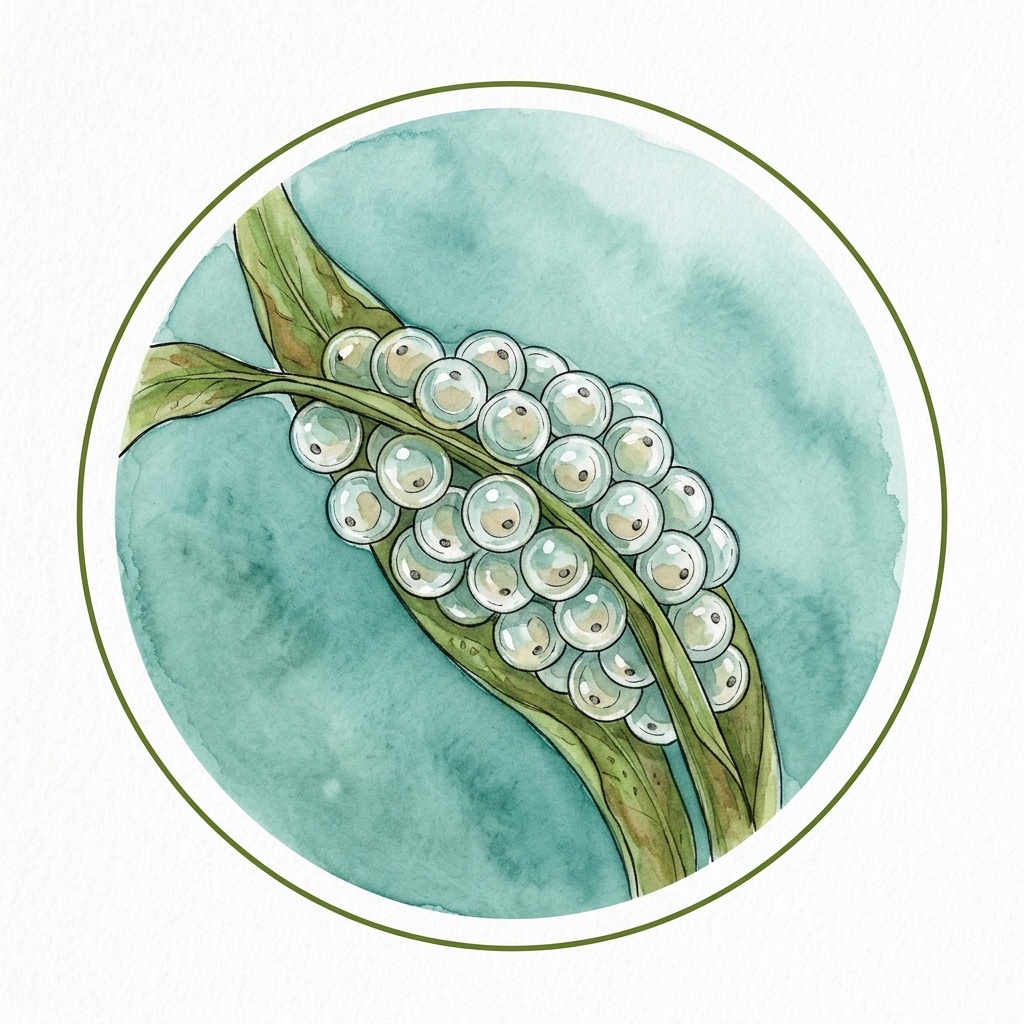
Day 1–5
Male Guards the Nest
Male aggressively defends the foam nest; maintains bubble dome
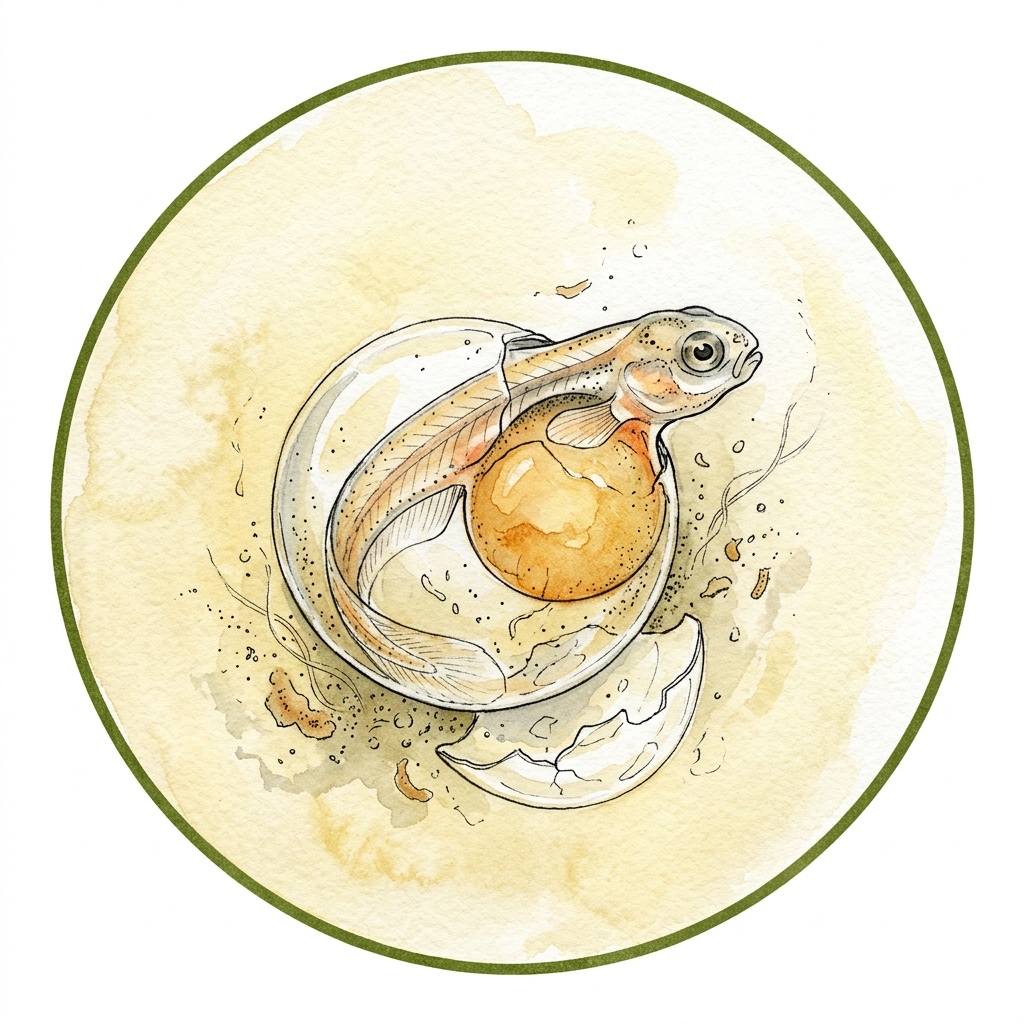
Day 3–5
Hatching
Eggs hatch into tiny transparent larvae; still supported by yolk sac
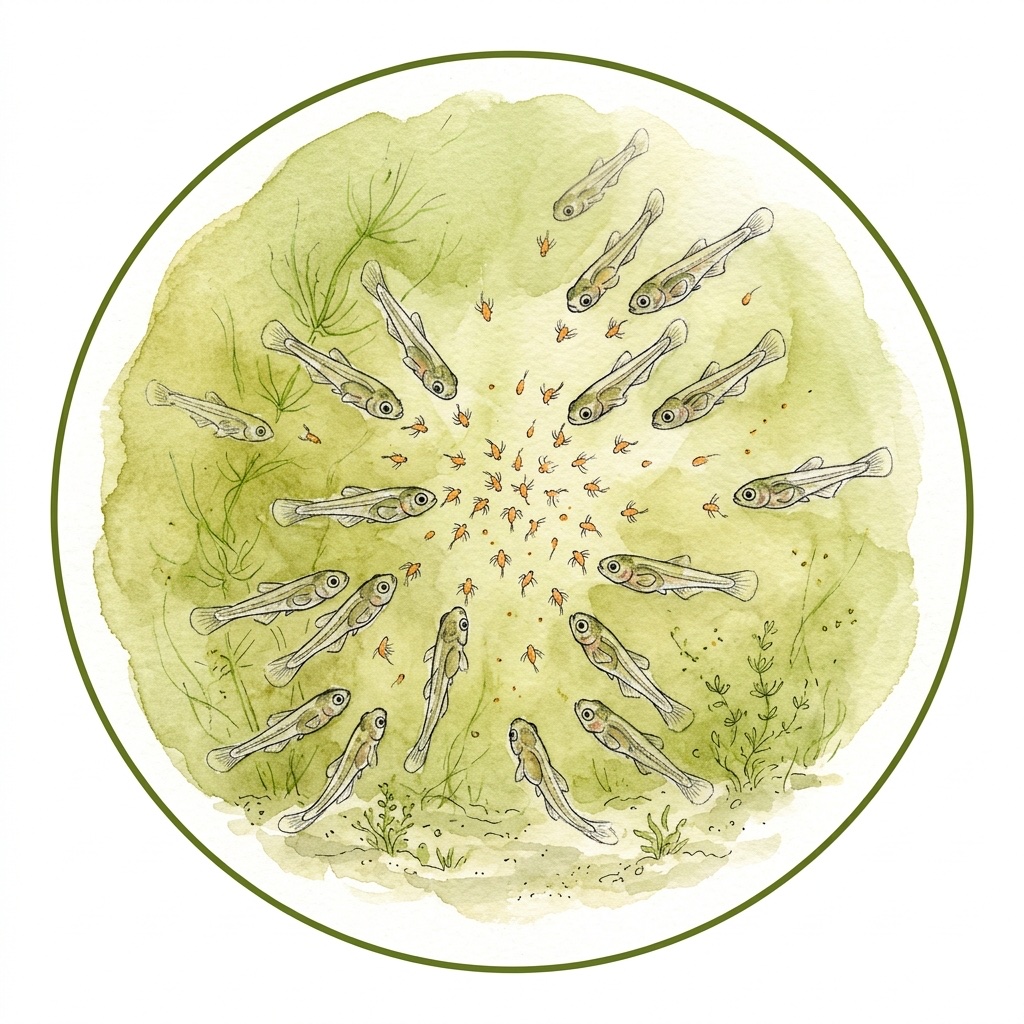
Day 5–10
Free-Swimming and First Foods
Fry become free-swimming; begin taking microworm, baby brine shrimp, and crushed pellet
Conditioning
Breeding the Hoplo begins, as with most catfishes, with conditioning — two weeks of rich, varied feeding built around live blackworm, frozen bloodworm, chopped earthworm, and high-protein pellets. During this period, a male in good condition will noticeably thicken through the pectoral spines and the female will fill out visibly through the belly. The classic trigger for spawning readiness is a large (40–50 %) water change with water 3–5 °C cooler than the tank, mimicking the onset of the rainy season in the Amazon. A drop in barometric pressure often follows this through naturally; some breeders time the cool change for an approaching low-pressure weather system with good success.
Nest Construction
Within hours of the triggering water change — often overnight — the male begins bubble-nest construction. He rises to the surface, gulps air, and releases individual air bubbles coated in sticky oral mucus against the underside of a floating plant, a piece of foam cut from a sponge filter, or the underside of a large leaf. Over six to twenty-four hours the nest grows into a dome of froth up to 15 cm across and 3–5 cm thick, visibly bright white against the water surface. This behaviour is genuinely unusual among armoured catfish — the overwhelming majority of Callichthyidae are egg-scatterers. Only *Megalechis*, *Hoplosternum*, and *Lepthoplosternum* build foam nests, placing them alongside gouramis and bettas as the freshwater world’s other bubble-nest builders.
Courtship and T-Position Spawning
Once the nest is complete, the male begins courting the female, swimming beside her with flared pectoral fins, nudging her flanks with his pelvic fins, and leading her repeatedly toward the nest. At the moment of spawning the pair form the classic callichthyid T-position: the female turns perpendicular to the male, her head pressed against his flank, and the eggs — typically 100 to 400, sometimes up to 1000 in a very large female — are released and immediately caught between her cupped pelvic fins. The female then carries the clutch up to the nest and, with the male hovering below, places the adhesive eggs into the underside of the foam dome. Spawning passes are repeated every few minutes for an hour or more until the entire clutch is deposited. The female’s role effectively ends there; from this point on the male is sole parent.
Male Guards the Nest
This is the single most fascinating phase of the Hoplo’s breeding cycle. For the next three to five days, the male takes sole custody of the clutch. He repairs the nest continuously with fresh bubbles, fans the eggs to oxygenate them, and patrols a territory of roughly 30–40 cm around the nest from which all other fish — including the female — are driven off with surprising aggression. A previously peaceful Hoplo will charge, shoulder-barge, and if necessary deliver a spine-strike to any interloper, tank mate or keeper’s hand alike. For this reason, breeding attempts in a community tank almost always need the male plus nest to be isolated, either by moving other fish out or by carefully lifting the nest (with a leaf or floating foam raft underneath) into a separate rearing tank.
Hatching
Eggs hatch after 3–5 days depending on temperature, with 26 °C a reliable midpoint. The larvae are tiny (about 4–5 mm), nearly transparent, and spend the first two to three days clinging to the underside of the nest or nearby plant leaves, sustained by a large yolk sac. The male remains on guard throughout. Because the larvae do not yet have functional labyrinth-style air-breathing, dissolved oxygen matters at this stage — gentle water movement or an air stone near the rearing area is helpful. At this point many breeders remove the male to prevent him from eating free-swimming fry, though some reports describe males tolerating fry for another week or more. Behaviour varies individually.
Free-Swimming and First Foods
Around day five to seven, the fry become free-swimming and disperse from the nest area. They are still extremely small and will take only the finest foods — microworm, freshly hatched baby brine shrimp (BBS), infusoria, or powdered fry food are all appropriate. Because Hoplos are bottom-orientated from the start, food that sinks and stays on a clean, bare-bottom substrate works best; leaf litter and sand can swallow food and make it hard for the fry to find. From this stage growth is steady but not spectacular — expect 1 cm at four weeks, 2–3 cm at three months, 5 cm by six months, and sexually mature adults of 10–12 cm at around 12–18 months. Colour develops gradually; albino fry are pale from hatching but the red eye pigment strengthens in the first few weeks.
Community Compatibility
The Hoplo is a superb community fish provided you respect two simple rules. First: no tank mate small enough to fit in its mouth, because anything that fits will eventually be eaten. Adult Hoplos can inhale surprisingly large prey at night — the rule of thumb is that anything under 4 cm is a risk. Second: no tank mate aggressive enough to bully it, because Hoplos are peaceful and will retreat into stress if repeatedly chased. Inside those limits, almost any combination works.
Hoplos are social among themselves. They are not an obligate shoaler in the way that most Corydoras are — a lone adult will not waste away from loneliness — but they are visibly happier, more active, and more confident in groups of three or more. A trio is the practical minimum for a 150 L tank; a group of five or six in a 250–300 L community is the kind of arrangement where you will see the fish at their behavioural best, patrolling in loose formation, feeding together, and occasionally engaging in gentle jostling at feeding time. Mixed-sex groups show more natural behaviour than single-sex ones, though a single male with two or three females is a classic and problem-free trio configuration.
The one behavioural exception to the Hoplo’s generally laid-back nature is male territoriality during breeding. A male who has built a bubble nest and is actively guarding eggs or fry is not the same fish as the gentle giant you keep the rest of the year — he will charge tank mates, flare his pectoral spines, and deliver painful strikes if pushed. In a community tank, plan for this by either removing the nest to a rearing tank at spawning, or by ensuring the other fish are large enough and fast enough to get out of his way. Small gourami, timid dwarf cichlids, or slow-moving angelfish can find themselves pinned in a corner by a protective Hoplo male; larger, bolder tank mates simply learn to give the nest area a wide berth for the three to five days the vigil lasts.
For the keeper building a community around an albino Hoplo group, a nicely balanced planted-tank lineup might look something like: six Albino Hoplo Catfish as the bottom feature, a school of ten Boesemani rainbowfish or a dozen Congo tetras in the mid-upper water column, a bonded pair of Bolivian rams or Apistogramma as the mid-level centrepiece, and a couple of bristlenose plecos on algae duty. This kind of arrangement in a well-filtered 300 L tank shows off the pale Hoplos beautifully against darker, more active species in the upper levels, gives each fish its own ecological niche, and produces a display that holds the eye at every depth.
| Species | Why | |
|---|---|---|
| ✅ | Corydoras (any species — Sterbai, Panda, Bronze, etc.) | Related armoured catfishes; compatible temperament and water preferences, no competition. |
| ✅ | Dwarf cichlids (Apistogramma, Bolivian Ram) | Mid-water to lower cichlids that share warmth preferences; Hoplos ignore and are ignored by them. |
| ✅ | Large tetras (Congo tetra, Emperor tetra, Black Skirt) | Big enough not to be mistaken for food, peaceful, occupy the upper water column. |
| ✅ | Pearl gourami and similar peaceful gouramis | Surface-dwelling, slow-moving, and gentle — good visual contrast with the bottom-foraging Hoplo. |
| ✅ | Angelfish | Mid-water grazers that coexist well with Hoplos in larger tanks (200 L+). |
| ✅ | Bristlenose pleco (Ancistrus) | Peaceful fellow catfish at a different feeding niche; usually tolerant of each other. |
| ✅ | Rainbowfish (Boesemani, Turquoise, Dwarf Neon) | Active upper-level schoolers that make a great visual partner to a bottom-level Hoplo group. |
| ✅ | Keyhole cichlid and other peaceful medium cichlids | Similarly placid temperament; shared habitat preferences; no territorial overlap. |
| ✅ | Kuhli loach | Substrate-sharing loach of a very different body plan; no competition and they often pile together in cover. |
| ❌ | Neon tetra, Ember tetra, and other very small tetras | A hungry or opportunistic adult Hoplo can and will swallow small tetras, particularly at night. Keep only with tetras of 4 cm+. |
| ❌ | Chili rasbora, Pygmy Corydoras, micro-rasboras | Anything under 3 cm is at risk of being incidentally eaten during substrate foraging. |
| ❌ | Dwarf shrimp (cherry, crystal, amano) | Will be eaten readily — Hoplos enthusiastically predate invertebrates. Adult amano shrimp are sometimes safe in densely planted tanks, but nothing is guaranteed. |
| ❌ | Aggressive Central American cichlids (Convict, Jack Dempsey, Oscar, Jaguar) | Too aggressive; a dominant cichlid will harass Hoplos relentlessly and can cause stress-related illness or physical damage. |
| ❌ | Large plecos (Sailfin, Common pleco) | Territorial conflict over the substrate and wood; large plecos sometimes rasp on Hoplos at night, damaging their scutes and skin. |
Quick Reference
| Scientific Name | Megalechis thoracata (albino) |
| Previous Name | Hoplosternum thoracatum |
| Family | Callichthyidae |
| Adult Size | 15–18 cm |
| pH | 5.5–7.5 (ideal 6.8) |
| Temperature | 22–28 °C (ideal 25 °C) |
| Hardness | 2–20 dGH |
| Min Tank Size | 150 L for a trio |
| Diet | Omnivore — sinking wafers, frozen, veg |
| Group Size | 3+ recommended |
| Temperament | Peaceful |
| Lifespan | 8–12 years |
| Breeding | Bubble-nest spawner — male guards |
| Lighting | Subdued — albinos are light-sensitive |
| Care Level | Beginner to intermediate |
Related Products
Reviews
Clear filtersThere are no reviews yet.