🪨 Species at a Glance
| Scientific Name | Pomacea bridgesii (Gold color morph; syn. P. diffusa) |
| Common Names | Gold Mystery Snail, Golden Apple Snail (trade), Yellow Mystery Snail, Spike-Topped Apple Snail |
| Family | Ampullariidae (apple snail family) |
| Supplied Size (Large Grade) | 3.5–5 cm shell diameter (mature / sub-adult) |
| Maximum Adult Size | 5–6 cm shell diameter after further growth |
| Life Stage at Supply | Sexually mature / sub-adult — ready to breed |
| Colour Morph | Gold / Yellow — wild-type, genetically dominant |
| Origin | South America — Amazon, Paraguay, Orinoco basins |
| Expected Remaining Lifespan | 12–24 months (total species lifespan 1–3 years) |
| Temperature | 18–28 °C (64–82 °F), ideal 22–26 °C |
| pH Range | 7.0–8.2, ideal 7.4–7.9 (alkaline, carbonate-rich) |
| Hardness (dGH) | 8–25 dGH — hard water is critical for shell at this mass |
| Diet | Herbivore / grazer — algae, blanched vegetables, fish-food leftovers |
| Minimum Tank Size | 60 L for Large individuals (species or community) |
| Breeding Mode | Egg-laying ABOVE waterline — gonochoric (separate sexes) |
| Care Level | Beginner — hardiest Mystery Snail morph at Large size |
Body Structure & ID
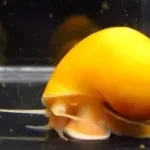
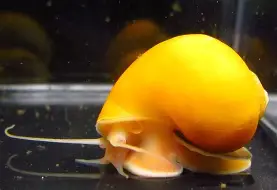
At 3.5 to 5 cm, a Large Gold Mystery Snail shows every diagnostic feature of Pomacea bridgesii with enough size and contrast for confident identification, and the gold colouration simultaneously makes these features the easiest to see of any morph in the trade. The shell is dextral (right-coiling), globular, and carries a moderately elevated spire whose apex is often slightly eroded in older specimens — this wear is normal and is not a health issue. The body whorl is rounded and inflated, with the aperture (mouth of the shell) occupying the majority of the visible front surface. The Gold colour form presents as a bright golden-yellow shell ground, ranging from a pale lemon-yellow through warm honey to a deep amber-gold; individual specimens often show fine darker spiral banding visible on the larger body whorl where a juvenile shell would show only a wash of colour. The body — foot, head, and tentacles — is cream to pale yellow, frequently dusted with very subtle darker speckling that becomes far more visible once the animal exceeds about 3 cm. Two long cephalic tentacles extend from the head, each tipped with a small dark eyespot at its base; separate, even longer labial palps drape forward from either side of the mouth and sweep substrate debris into the grazing path. When the snail is extended fully, these multiple appendages give the head an almost cephalopod-like complexity that is simply invisible in a juvenile, and against the pale gold body they are visible in exceptional detail — the Gold morph is, objectively, the easiest morph to observe closely through aquarium glass because there is no dark pigmentation to swallow detail.
The most diagnostic structure is the operculum, a hard protein plate that seals the aperture when the snail retracts. Only the apple-snail family Ampullariidae possesses an operculum of this design among freshwater aquarium snails; Pomacea canaliculata (the invasive Giant Apple Snail, often confused with this species in trade) also has one, but the two differ strongly in shell outline — P. canaliculata is broader and flatter, with a low spire and a deeply channeled suture, while P. bridgesii maintains its raised spire even at full adult size. Large-grade Gold stock makes this distinction obvious: the 3.5–5 cm shell is clearly spike-topped rather than flat-topped, and the golden colour makes the characteristic spire profile pop against any background. Held side-by-side with a similarly sized P. canaliculata, a Large P. bridgesii also reveals a thinner, lighter shell — the bridgesii shell is relatively delicate because the species did not evolve to resist the heavy predation pressure faced by canaliculata in open wetlands, and this has direct keeper-side consequences in community tanks with fish that bite shells.
Another feature striking at this size is the siphon — a long, muscular tube that the snail extends up to the water surface to draw atmospheric air into its lung. On a juvenile the siphon is short and easy to miss. On a Large Mystery Snail the siphon can reach five to seven centimetres, and keepers new to the species sometimes mistake it for a worm or parasite emerging from under the shell. It is neither; it is entirely normal and a healthy sign of active gas exchange. On a Gold specimen the pale siphon is especially visible as it extends up through the water column. Pomacea bridgesii uses both lung and gill for respiration: the left side of the mantle cavity houses a true lung for aerial respiration, while the right side contains a ctenidium (gill) for aquatic respiration. The snail will surface to breathe several times per day, more often in warm water or when dissolved oxygen is lower, and this dual system is what allows the species to survive transient stagnant-water conditions in its native floodplain habitat.
The common trade name ‘Mystery Snail’ dates from the mid-twentieth-century North American aquarium hobby and refers to the mystery of how baby snails appear in the tank given that the species is not a hermaphroditic self-reproducer — the answer being that adults lay pink egg clutches above the waterline, where they were initially overlooked. The scientific epithet ‘bridgesii’ honours the nineteenth-century British naturalist Thomas Bridges, who collected many South American specimens, while the synonym ‘diffusa’ reflects the species’ wide range across lowland South America. The Gold morph specifically is the original variety imported into the United States commercial trade in the 1950s and 1960s and is the colour form by which the species became famous — every other trade morph (purple, blue, ivory, magenta, black, albino) descends from selective breeding work conducted on Gold founder stock across the subsequent half-century. It is worth stressing again that the common name is shared loosely with the separate invasive species Pomacea canaliculata (the Channeled Apple Snail), which is legally restricted in many jurisdictions and should never be stocked into home aquariums; the two are sometimes confused in poorly labelled retail, and to make matters worse canaliculata also has a yellow colour morph commonly sold as ‘Golden Apple Snail’ in parts of Asia. Use shell outline (raised spike versus flat top), maximum size (6 cm versus 15 cm), and origin documentation to distinguish them with confidence. A true Large Gold bridgesii supplied through this guide will top out around 5–6 cm and retain its raised spire profile at every size — if your ‘gold mystery’ reaches 8 cm with a flat-topped shell, it is a canaliculata and is a biosecurity concern.
A final identification note for Large-grade Gold specifically: the operculum itself becomes diagnostic at this size. In Large P. bridgesii the operculum has a concentric, slightly spiral growth pattern visible as fine lines radiating from a subcentral nucleus, and it is uniformly thick across its surface. In Pomacea canaliculata the operculum shows more obviously concentric growth with a less pronounced spiral centre and tends to be thicker at the margins. If someone hands you a snail labelled ‘Golden Mystery Snail’ that shows a flat-topped shell and a strongly marginal-thickened operculum, it is most likely a canaliculata mis-sold under the wrong name, and you should refuse the purchase — keeping canaliculata is illegal in many jurisdictions including most of Australia under biosecurity rules. The Large-grade Gold P. bridgesii supplied through this guide carries the correct raised-spire profile and the characteristic light thin-walled shell of the species, with no risk of biosecurity issues.
🟡 Gold / Yellow (this grade)
Bright golden-yellow shell with a cream to pale-yellow body. The wild-type, genetically dominant colour form of Pomacea bridgesii — this is the original from which every other Mystery Snail morph was selectively line-bred. The most widely available, most affordable, and most reliably hardy Mystery Snail; shows especially well against dark substrate and planted tanks.
🟣 Purple
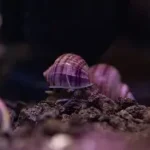
Deep violet to blue-purple shell with a dark charcoal-purple foot. A recessive, selectively line-bred morph; the most visually striking dark-coloured Mystery Snail and a premium seller in planted tanks.
⚪ Ivory / White
Creamy off-white shell with a pale ivory body. A recessive morph that reads almost pearl-like at Large size against dark leaf litter. Derived from selective breeding on Gold founder stock.
🔵 Blue
Pale to medium blue shell with a grey-blue foot. A recessive line-bred morph; at Large size the blue tone develops a subtle pearlescent sheen in bright lighting.
🌸 Magenta / Pink
Pinkish-red to magenta shell. Rarer than Gold, Purple, or Blue; premium-priced when available and strikingly photogenic in mature Large individuals. A relatively recent selective line.
🤍 Albino
True albino — pale translucent shell with a white or pinkish body and red-tinted eyespots. A recessive genetic morph distinct from Ivory; less commonly available and sensitive to bright direct lighting.
⚫ Black (jade / chestnut)
Very dark olive to near-black shell, usually with chestnut highlights at the spire. An uncommon but established morph occasionally produced from dark-morph lineages.
Critical Water Parameters
7.0–8.2
ideal 7.6
18–28 °C
ideal 24 °C
8–25 dGH
Hard and carbonate-rich — mandatory for a Large shell (3.5–5 cm)
Pomacea bridgesii has two absolutely non-negotiable water-chemistry requirements: alkaline pH with adequate carbonate, and zero copper. Everything else is flexible within sensible limits. Large individuals are in fact more tolerant of short-term parameter drift than juveniles because their greater shell mass acts as a buffer — minor acidity does not strip a 4 cm shell as quickly as it would a 1 cm one, and their greater body mass resists short osmotic shocks for longer — but they are not immune. The Gold morph has a small but meaningful edge here: as the wild-type, genetically dominant colour form, Gold Mystery Snails have not been subjected to the inbreeding bottlenecks that affect rarer recessive morphs like Ivory, Albino, and Magenta, and consequently tend to show slightly better constitutional robustness and higher survival rates in marginal conditions than those line-bred colour forms. Keep pH between 7.0 and 8.2, aim for 7.4 to 7.9, and keep general hardness (GH) at or above 8 dGH. Tap water in areas with naturally soft supply should be hardened with crushed coral, aragonite substrate, or a commercial remineraliser before the snail is introduced. Temperatures from 18 to 28 °C are all acceptable; a Large individual placed into a slightly cool room-temperature tank (19–21 °C) will be noticeably less active but not harmed, and many keepers report longer lifespans in the cooler end of the range because lower metabolism slows ageing. For a breeding setup, aim instead for 24–26 °C, which maximises clutch production and juvenile survival.
Copper is lethal at trace concentrations for all molluscs including Mystery Snails. Never treat a tank housing this species with any product containing copper sulfate, copper gluconate, or other copper compounds — this includes most snail-killing medications (obviously), many ich treatments, some planted-tank fertilisers, some trace-element planted-tank supplements, and a number of algae treatments. Always read the ingredients on the label. Even the residue left in a tank previously dosed with copper medication can remain bioavailable for weeks and harm newly introduced snails; if a tank has ever been copper-treated, do multiple large water changes and run activated carbon for at least a week before adding Mystery Snails. Beyond copper, Mystery Snails are somewhat sensitive to ammonia and nitrite and completely sensitive to sudden shifts in pH or hardness. Drip-acclimate new arrivals over at least forty-five minutes. Large individuals at supplied size of 3.5–5 cm are meaningfully more robust to cycling-tank ammonia spikes than juveniles, which makes them a good choice for the final stocking stage of a newly established community aquarium, but they still require a biologically mature filter — they are not recommended for a fishless day-one cycle. As a rule of thumb, confirm ammonia and nitrite both read 0 ppm for at least two consecutive weeks before introducing a Large Mystery Snail.
Nitrate is tolerated reasonably well but should be kept below 40 ppm through weekly 20–25% partial water changes. Chronic high nitrate contributes to slow shell degradation over months, even when pH and hardness test nominally correct, so good regular husbandry matters as much as the headline parameters.
A practical hardware note for the cycling-tank-tolerant angle: Large Gold Mystery Snails often work well as a late-stage cleanup addition to a newly stocked planted tank. After three or four weeks of cycling with small fish, glass and driftwood typically accumulate an uneven brown diatom layer, leftover food begins to settle in dead corners, and the tank is usually in a low but stable nitrate regime. Introducing a Large Gold Mystery Snail at this point resolves all three problems within days — the diatoms are grazed off, the detritus is eaten, and the nitrate does not spike noticeably because the filter is already mature. This is a strong argument for buying Large rather than juvenile stock: juveniles under 2 cm can struggle in that same transitional environment and sometimes fail to establish, whereas a 4 cm Large snail typically takes it in stride and is visibly grazing within 48 hours of the drip acclimation completing. The wild-type Gold is also the single best morph for new keepers trying Mystery Snails for the first time because its genetic hardiness produces the highest proportion of ‘just works’ outcomes in the hobby.
Creating the Perfect Habitat
A single Large Gold Mystery Snail is comfortable in a 40–60 L tank but a 60 L+ setup is strongly recommended if the snail is part of a community or if you plan to keep two or three together for breeding. At 3.5–5 cm shell diameter and with active grazing throughout the day and night, a Large Mystery Snail produces meaningful waste — as a rough guide the bioload of a single Large Mystery Snail is comparable to that of three to four neon tetras — and sizing up gives the biological filter headroom and buffers parameter swings. Substrate choice is open: fine sand is kind to the broad muscular foot and allows the snail to glide smoothly, while smooth small gravel works equally well. Dark substrates (black sand, black gravel, ADA Amazonia) dramatically enhance the visual impact of the Gold morph — the bright yellow shell against a near-black substrate is one of the most striking contrasts available in freshwater aquarium keeping, and this is the single reason the Gold morph dominates planted-tank photography. Avoid sharp-edged substrates and, for this species specifically, avoid heavily active aquasoils that push pH down into the low-sixes — they directly conflict with the alkaline shell-protective chemistry Mystery Snails need. Mix in crushed coral or a pouch of aragonite in the filter if your water is on the soft side; together with a cuttlebone this creates a permanent mineral reservoir that stabilises pH and hardness between water changes.
The single most important physical feature of a Mystery Snail tank is a strict, well-sealed lid combined with 5 to 10 cm of humid airspace above the waterline. Apple snails are accomplished climbers and escape artists: they routinely glide to the top of the glass and explore the rim, and a gap of just 1–2 cm around a heater cable, filter hose, or HOB cutout is enough for even a 5 cm snail to squeeze through. Found-on-the-carpet desiccation is the most common avoidable cause of death for this species, and a desiccated Mystery Snail on the carpet is not a tragicomic anecdote — it is a preventable loss of a $15 mature animal, and it will happen if you do not secure the lid carefully. Plug all cable entry points with sponge or aquarium-safe silicone, cover HOB cutouts with fine mesh, and verify the lid sits flush before the snail goes in. At the same time, do not fill the tank to the brim: the mandatory airspace above the waterline is where a mature female will crawl out to lay her pink egg clutches on the underside of the lid or the upper tank wall. A clutch laid below the waterline will simply drown, and a female with nowhere dry to lay may retain the eggs with negative consequences for her own health.
Lighting has a small but real effect on Gold shell colouration. Bright overhead lighting (a planted-tank LED run at full intensity for 8–10 hours a day) drives the development of the deepest, richest gold tones because the periostracum layer expresses its strongest yellow pigment under higher light. Dim tanks, or tanks with heavy floating plant cover that shades most of the water column, tend to produce Gold Mystery Snails with paler, more lemon-coloured shells. Neither extreme harms the animal, but if maximum gold intensity is a goal, give the snail access to at least some brightly-lit surfaces where it can graze.
Live plants are welcome and largely safe once a Mystery Snail is well fed. A common myth — propagated by confusion with the invasive Pomacea canaliculata — holds that apple snails devour aquarium plants. Pomacea bridgesii is substantially different: it prefers algae, biofilm, decaying plant matter, and leftover fish food, and will only turn to live plants if severely underfed. Hardy species (Anubias, Java Fern, Vallisneria, Cryptocoryne, Bucephalandra) are effectively ignored even when the snail is hungry. Softer-leaved stems (Hygrophila, Ludwigia, Rotala) may see the occasional nibble but not the wholesale destruction the Giant Apple Snail inflicts on aquatic weeds. Provide open swimming space at the front of the tank so you can observe the snail, at least one broad flat surface (a rock or large plant leaf) where the siphon can surface easily, and a moderate arrangement of driftwood and hardscape on which the snail will graze biofilm — this is often where a Large specimen spends its longest active sessions.
Strict Lid with 5–10 cm Airspace
Tight-fitting glass or mesh lid with all cable cutouts sealed. Maintain a gap of 5–10 cm between waterline and lid — mandatory for egg-laying females and critical for preventing escape-and-desiccation deaths.
60 L+ Tank (species or community)
Larger water volume buffers parameter swings and accommodates the heavier bioload of Large-size snails, especially in mixed-species community setups.
Gentle to Moderate Filtration
Sponge filter, HOB, or canister all work. Protect the intake with a coarse sponge pre-filter. Avoid very high-flow powerheads that scatter food before the snail can find it.
Adjustable Heater
Maintain 22–26 °C for best activity and breeding. A Large individual tolerates 18–28 °C but a stable temperature in the middle of that range maximises grazing and lifespan.
Cuttlebone and / or Crushed Coral
Permanent calcium source. Cuttlebone in the tank plus crushed coral in a filter media bag delivers both rasping calcium and a dissolved buffer, locking shell health long-term.
Fine Sand or Smooth Gravel Substrate (preferably dark)
Inert, non-sharp substrate that will not injure the foot. Dark substrate dramatically enhances the contrast of the Gold shell. Avoid active aquasoils that push pH down and strip shell calcium.
Liquid pH and GH Test Kit
Strips are too imprecise for shell-critical chemistry. Test pH and GH weekly for the first month, then every water change thereafter.
Dechlorinator (copper-free)
Essential for any water change. Verify explicitly that the brand contains no copper-based additives — many snail-safe options are clearly labelled.
Shell Health & Molting
Snails do not moult. Unlike shrimp and crabs, a Mystery Snail’s shell is permanent and is secreted continuously by the mantle tissue that lines the inside of the aperture. New shell material is laid down at the growing lip as a thin sheet of calcium carbonate that hardens within hours, while older shell further back in the spiral remains with the snail for life. This has a direct consequence for Large-grade stock: a 3.5–5 cm snail carries several years of accumulated shell that must be protected, as erosion anywhere on the spire cannot be reversed once the mantle no longer covers that region. The single greatest threat is acidic water. Below pH 7.0, calcium carbonate begins to dissolve chemically from the exposed shell surface, producing the characteristic chalky-white pitting seen on neglected snails. Severe erosion eventually reaches the underlying mantle tissue, causing infection and death. On a Gold specimen, early shell erosion is visually dramatic — the bright yellow pigment is laid down in the outermost periostracum layer, and acidic water strips the pigment first, leaving a dull chalky white patch where bright gold should be. Paradoxically this is a useful diagnostic advantage: a Gold Mystery Snail broadcasts water-chemistry problems earlier and more clearly than darker morphs, because the loss of colour at the spire is impossible to miss. Alkaline, carbonate-rich conditions — pH 7.4 to 7.9 and 8 to 25 dGH — stop the chemical attack and allow the snail to concentrate on laying down new, healthy shell at the aperture. This is why the pH and hardness requirements for Mystery Snails are not aesthetic preferences but physical chemistry: calcium carbonate solubility is a direct function of pH and carbonate concentration, and soft acidic water quite literally dissolves the snail.
Large individuals have a higher absolute calcium demand than juveniles. A snail growing from 3 cm to 5 cm is adding a substantial volume of calcium carbonate to its skeleton — the shell volume scales roughly as the cube of the diameter, so going from 2 cm to 4 cm represents an eightfold increase in shell mass — and a mature female committed to producing egg clutches diverts further calcium into the calcified egg mass above the waterline (each clutch can contain 50–250 individually calcified eggs). For this reason, Large Mystery Snails should always be kept with a permanent calcium source in the tank: a piece of cuttlebone floating or wedged into the rockwork, a Wonder Shell dissolving slowly, or crushed coral mixed into the substrate or suspended in a filter-media bag. Cuttlebone is the simplest option — it costs almost nothing, the snails will rasp on it directly as a supplemental food, and it buffers the water chemistry while it dissolves. Top-up or replace roughly every two to four weeks, or when visibly worn through. If supplied stock arrives with minor existing pitting, do not panic; once placed into hard alkaline water with calcium available, the erosion will halt and new aperture growth will close over the affected edge within a few months, leaving the snail with a healthy growing lip even if the older spire remains slightly scarred.
A practical Large-size check: inspect the aperture lip itself, not the old spire. Healthy new growth at the lip should be slightly translucent, smooth, and the correct colour for the morph (bright yellow-gold in this grade). A ragged, crumbly, or chalky lip — or a noticeably pale, dull lip where the gold pigment has failed to deposit — signals ongoing calcium shortage or acidic water and warrants immediate testing plus a cuttlebone top-up. A healthy growing edge is the single best indicator that this specific snail is thriving in your water right now, regardless of what the older, accumulated shell looks like.
One further Large-size observation: as the Gold snail continues to grow from 4 cm toward the species maximum of 6 cm, the new shell material at the aperture may carry a slightly richer or paler yellow tone than the older spire, because the intensity of the gold pigment depends partly on diet (calcium-rich, varied grazing with carotenoid-bearing vegetables such as carrot or red pepper produces the deepest colour) and partly on lighting (bright overhead lighting oxidises the outer periostracum slightly, giving older shell a warmer amber tone while fresh growth is cooler and brighter). This colour banding is harmless and often aesthetically pleasing — it reads as a subtle growth stripe that documents the snail’s time in your specific tank, and on a Gold specimen it is visible as a delicate two-tone lemon-and-amber ring at the growing lip.
What to Feed
At 3.5–5 cm shell diameter, a Large Gold Mystery Snail consumes a genuinely useful quantity of algae and leftover food every day. Its rasping tongue (the radula) scrapes biofilm and algae films from glass, rockwork, hardscape, and broad-leaved plants, and it will also graze along the substrate collecting uneaten fish pellets, flake debris, and decaying plant material before they decompose and pollute the water. A Large specimen is a meaningfully more efficient biofilm grazer than a juvenile — the larger radula covers more surface area per pass and the bigger muscular foot allows the snail to climb vertical glass and inverted surfaces confidently — so in a community tank with moderate algae growth and a few small fish, a well-sized Mystery Snail often needs no targeted feeding at all; the biofilm and fish-food leftovers are sufficient. In a clean, brightly managed tank, or a species-only setup, the snail must be fed directly or it will slowly lose body condition over months.
The best supplemental foods are blanched vegetables and sinking algae wafers. Zucchini (courgette), cucumber, spinach, kale, green beans, and blanched carrot are all readily accepted — blanch briefly (30–60 seconds in boiling water, then cool) to soften cell walls, weigh or clip to the bottom, and remove any uneaten remnant after 24 hours. For Gold morph specifically, carotenoid-rich vegetables such as blanched carrot, red pepper, and occasionally a small piece of blanched pumpkin help sustain the deepest yellow pigmentation in new shell growth — not essential for health, but a useful tool if maximum gold intensity matters for photography or display. Rotate vegetables across the week rather than relying on one: different vegetables deliver different micronutrients, and variety mirrors the mixed plant detritus the species encounters in the wild. Commercial sinking wafers designed for bottom-dwelling invertebrates, especially those with added calcium and spirulina, round out the diet. Cuttlebone serves simultaneously as a permanent calcium source and as a direct food the snails will rasp on; some keepers also offer scalded (boiled and cooled) oak or Indian almond leaves, which provide a gentler biofilm substrate and some tannins that appear to support soft-tissue health.
Crucially, Pomacea bridgesii does NOT eat healthy, firm-leaved aquatic plants when adequately fed — this is the most important dietary distinction between this species and its invasive cousin Pomacea canaliculata (the Giant Apple Snail), which is a voracious macrophyte grazer responsible for agricultural damage across South-East Asia and Florida and is banned or restricted in many countries. Reports of plant destruction attributed to ‘Mystery Snails’ in online forums are almost always misidentifications of canaliculata. A Large P. bridgesii kept in a well-fed tank will leave your Anubias, Java Fern, Cryptocoryne, Vallisneria, Hygrophila, and Ludwigia entirely alone; it will graze algae off their leaves and consume any decaying tissue but will not initiate damage on healthy living material. If you see a Large Mystery Snail apparently eating a healthy plant, the near-certain explanation is chronic underfeeding — increase the blanched-vegetable rotation and the behaviour will stop within a week. This is why the feeding schedule below leans on staple wafers and blanched vegetables: a consistently fed Large Gold Mystery Snail is effectively plant-safe, whereas a starved one may nibble soft stems out of desperation.
Portion guidance for a Large individual: one 1–1.5 cm disc of blanched zucchini or a similarly sized piece of blanched cucumber every second or third day is sufficient on the vegetable side, supplemented by one or two sinking algae/calcium wafers per week. Observe how much is consumed in 24 hours and scale up or down accordingly. A well-fed Large Gold Mystery Snail should have a plump, fully-extended cream-yellow foot that protrudes visibly from the aperture during active grazing; a retracted, small-looking foot that barely fills the aperture suggests underfeeding, stress, or early water-chemistry issues.
The Sunday fast day in the feeding schedule is deliberate. A weekly fast day gives residual food time to be consumed, gives the snail’s digestive tract a reset, and lets the keeper confirm that no leftover material has accumulated in the substrate — if a large amount of uneaten food surfaces during the Sunday inspection, the weekday portions are too generous and should be reduced. This simple pattern avoids the slow, insidious water-quality degradation that comes from habitually over-dosing wafer food into a grazer’s tank.
Reproduction & Breeding
Egg Laying
Pomacea bridgesii is gonochoric, meaning there are distinct males and females and the species cannot self-reproduce. This is the critical point that distinguishes Mystery Snails from pest snails (Physa, Melanoides, bladder, ramshorn) — a lone Mystery Snail, or a same-sex group, will never produce young regardless of how well it is fed. Large-grade stock at 3.5–5 cm is already sexually mature; if you acquire two or more Large individuals and they happen to include both sexes, you can expect egg clutches within weeks of the snails settling into the tank. This is one of the main reasons keepers specifically buy Large-grade stock: juveniles may take four to six months to reach breeding size, whereas Large supply is ready to reproduce almost immediately on arrival.
The Gold morph sits at the centre of Mystery Snail colour genetics and is therefore the most important colour to understand for any keeper interested in breeding. Gold is the wild-type colour form of the species — the allele that Pomacea bridgesii carries in nature — and is genetically dominant over every other colour in the trade. All of the exotic morphs (Purple, Blue, Ivory, Magenta, Albino, Black) are recessive or line-bred modifications of the underlying Gold genetic template. The practical consequence matters greatly for breeders: if you cross a Gold Mystery Snail with a Gold Mystery Snail, you will get approximately 100% Gold offspring (baseline expectation, with rare recessive surprises from hidden heterozygous parents). If you cross a Gold with a Purple, Blue, or Ivory, the F1 offspring will be approximately 100% Gold because the Gold allele masks the recessive colour; the recessive colour will reappear in the F2 generation at roughly 25% if the F1 Gold offspring are crossed back to each other. This Mendelian behaviour is why the exotic morphs are more expensive: they are genuinely harder to produce in quantity, and any breeding colony accidentally contaminated with Gold genetics will rapidly revert toward Gold offspring over a few generations. Conversely it is why Gold Mystery Snails are the most affordable and most widely available — they breed true with minimal selection pressure, and a Gold-only breeding colony produces Gold offspring reliably without any need to cull or sort. Keepers starting a breeding project with Gold founder stock can expect consistent results; keepers starting with Purple, Blue, or Ivory founder stock must actively exclude Gold individuals from the tank to avoid their dominant allele swamping the colour line within a generation.
Sexing is subtle and external cues are unreliable in the hobby. Males have a closed, slightly concave operculum and carry a penis sheath inside the mantle cavity that becomes visible when the snail is fully extended near the surface; females have a flatter, more open operculum and lack the penis sheath. In practice these signs are hard to read confidently even on Large specimens — observation angle matters, the operculum often has individual variation, and the penis sheath is only visible at specific moments. The reliable indicator is behavioural: during mating the male consistently mounts the female from above and behind, riding her shell for anything from a few minutes to several hours, which reveals both sexes simultaneously. Once mated, the female can store sperm and produce multiple clutches from a single encounter, sometimes continuing to lay viable eggs for several months after the last mating. If you want guaranteed breeding, buy a group of four to six Large individuals — at that sample size the probability of including both sexes is very high.
Egg-laying follows a distinctive five-stage timeline unique to apple snails. Stage one: copulation underwater, with the male mounted on the female’s shell. Stage two: hours to a few days later, the gravid female leaves the water and crawls up the tank wall, onto the underside of the lid, or along the hood. Stage three: she deposits a compact clutch of 50–250 eggs encased in a hard, calcified pink or salmon-coloured mass, gluing it firmly to the dry surface; the clutch hardens within hours and takes on a textured, coral-like appearance. Stage four: 2–3 weeks of incubation, during which the clutch darkens from bright pink to mottled grey-brown as the embryos develop; higher temperature (26–28 °C) and moderate humidity accelerate hatching. Stage five: the newly hatched juveniles — 2–4 mm in diameter, looking like tiny perfect copies of the adult with faint yellow colouration already visible in Gold-lineage hatchlings — drop straight into the water below and begin grazing immediately. They are harmless to fish and shrimp, survive on biofilm, and are usually large enough to resist being eaten by adult community fish within a few weeks. Crucially throughout this cycle, the clutch must remain above the waterline and in humid but not submerged air — submerging a clutch kills the developing eggs, and complete drying (e.g. the lid open for days in an arid room) desiccates the clutch. A normally closed lid in a standard aquarium provides the correct humidity automatically.
Tank Mate Guide
Mystery Snails are exemplary community citizens from their own side: at Large size they harm no tank mate, ignore healthy plants, do not reproduce unless paired with the opposite sex, and provide a real algae-cleaning service. The risks flow the other way — from potentially aggressive or predatory tank mates towards the snail. The operculum protects the snail well when it is retracted, but the siphon, eye stalks, tentacles, and especially the broad foot are all exposed during active grazing and can be nipped or bitten by inappropriate neighbours. Repeated harassment, even if no single bite is serious, causes chronic stress: the snail remains retracted for longer, grazes less, loses body condition, and dies prematurely months later. Assessing community compatibility for Mystery Snails is therefore less about whether a tank mate can kill the snail outright and more about whether it will leave the snail alone to feed and move.
Avoid absolutely three groups. First, dedicated snail predators: assassin snails (Clea helena), pea puffers and any other freshwater puffer species, crayfish (Cherax, Procambarus), and larger loaches such as clown and yoyo loaches — all of these will actively hunt or destroy the snail. Second, shell-crushing species: large cichlids (convicts, Oscars, green terrors), large Central American livebearers, and anything with the jaw strength to crack a 4 cm shell. Third, persistent fin- and tentacle-nippers: tiger barbs in insufficient schooling numbers, aggressive male bettas in mixed setups, and goldfish which are simultaneously constant tentacle-nippers and require cooler, softer water than Mystery Snails do best in.
Ideal communities combine Large Gold Mystery Snails with small peaceful tetras (neon, ember, rummy-nose, cardinal), rasboras (harlequin, chili, lambchop), corydoras catfish, otocinclus catfish, small peaceful livebearers (Endlers, platies, guppies), and Neocaridina shrimp — all in hard alkaline water at 22–26 °C. Many of these partners actively benefit from the same water chemistry Mystery Snails need. In a community setup of this kind, a Large Gold Mystery Snail will live out its remaining 12–24 months actively, visibly, and as a genuine centrepiece of the aquarium, cruising across the glass at a pace that makes it easy to follow, crawling onto driftwood and rockwork to graze biofilm, surfacing on its long siphon to breathe, and (if paired appropriately) laying the characteristic pink clutches on the underside of the lid. This is the form of the species that almost every keeper eventually wants to own — and buying at Large grade gets you there immediately, without the four to six month juvenile grow-out period.
For planted community tanks specifically, a single Large Gold Mystery Snail makes an outstanding biological pairing with a group of 6–10 Neocaridina shrimp (Cherry, Blue Dream, Sakura) and a small school of 8–10 peaceful tetras or rasboras. The shrimp pick detritus and pick smaller biofilm off every leaf; the Gold Mystery Snail grazes larger biofilm patches from glass and hardscape and consumes fish-food leftovers; the fish occupy the mid-water column and add movement and colour. The visual composition is especially strong because the bright gold shell provides a consistent focal highlight that catches the eye even in a heavily planted scene — if you have ever wondered why professional aquascapers disproportionately photograph Gold Mystery Snails rather than other morphs, the answer is simply that gold-on-green-on-dark-substrate is one of the strongest three-colour compositions available in freshwater keeping. All three groups thrive in the same hard alkaline water at 22–26 °C, all three require no special food beyond a quality staple flake or micro-pellet plus occasional blanched vegetables, and all three can be maintained by a 25% weekly water change and a cuttlebone. For a keeper moving from a fish-only setup into their first invertebrate-inclusive community tank, a Large Gold Mystery Snail plus Neocaridina plus a small tetra school is the most rewarding and forgiving starting combination available in the hobby. The wild-type Gold morph specifically carries the hardiest genetic profile of any colour form, which compounds the forgiveness — beginner keepers experimenting with their first Mystery Snail have higher success rates with Gold than with any recessive morph. Keep one eye on the three Large-size keeper rules — strict lid, permanent calcium source, do not expect live-plant grazing — and the Large Gold Mystery Snail will reward you with one to two years of visible, active, peaceful centrepiece behaviour and, if sex-paired, the occasional surprise pink clutch glued to the underside of your hood that will hatch out into tiny, already-gold juveniles.
| Species | Why | |
|---|---|---|
| ✅ | Neon Tetra (Paracheirodon innesi) | Small, peaceful schooling fish that ignore snails completely. Share the mid-water column without competition; the blue-and-red tetra plus bright gold snail is one of the most striking colour combinations in the freshwater hobby. |
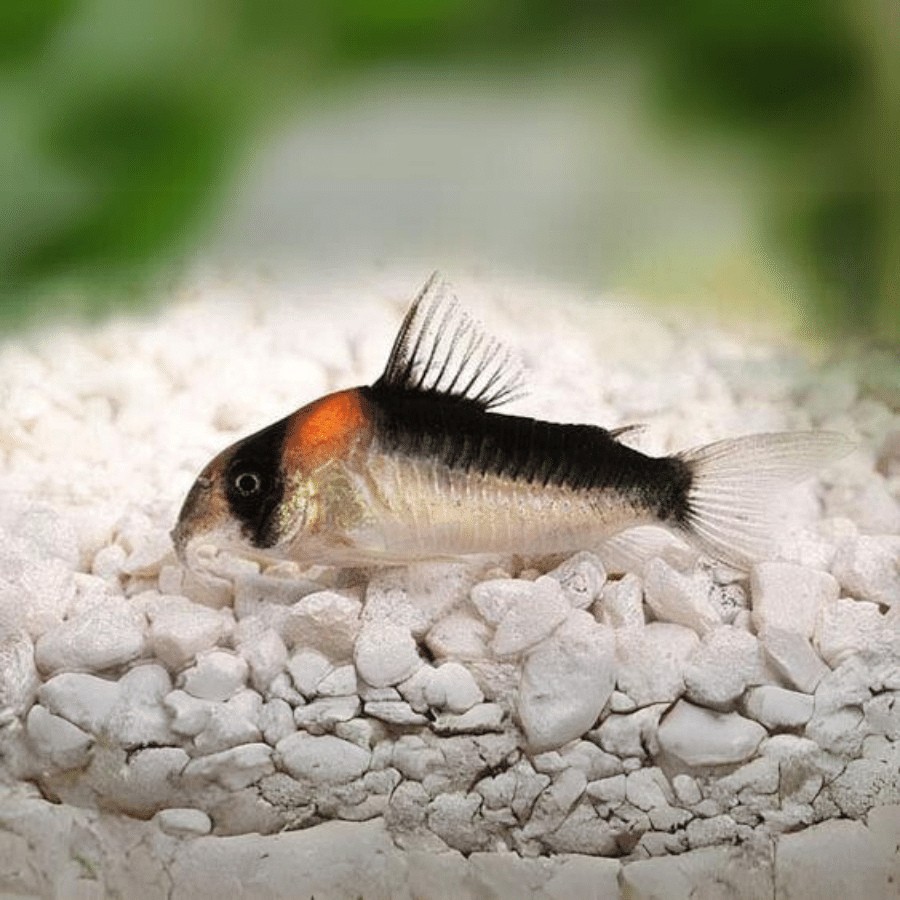
| ✅ | Corydoras Catfish (Corydoras spp.) | Peaceful bottom-dwellers that coexist perfectly with Mystery Snails — both benefit from sinking food and neither competes for the same grazing niche. |
| ✅ | Otocinclus Catfish (Otocinclus vittatus) | Dedicated algae-eating catfish that share the snail’s cleaning role without conflict. Together they keep glass, rockwork, and plant leaves pristine. |
| ✅ | Red Cherry Shrimp (Neocaridina davidi) | Completely non-aggressive and operate in a different feeding niche. The red-shrimp-plus-gold-snail pairing is a hobby classic and both species thrive in the same hard alkaline water with a cuttlebone present. |
| ✅ | Harlequin Rasbora (Trigonostigma heteromorpha) | Mid-water schooling fish that never interact with bottom-dwelling snails; tolerate the same temperature and pH range. |
| ✅ | Amano Shrimp (Caridina multidentata) | Large peaceful algae-eating shrimp that share the grazer role. At Large snail size there is no bullying in either direction. |
| ✅ | Endler’s Livebearer (Poecilia wingei) | Small peaceful livebearer that thrives in the same hard alkaline water Mystery Snails require; completely ignores snails. |
| ❌ | Assassin Snail (Clea helena) | Specialist predator of other snails — will systematically hunt and kill Mystery Snails of any size, attacking the exposed foot when the operculum cannot be sealed in time. Absolute incompatibility. |
| ❌ | Pea Puffer / Dwarf Puffer (Carinotetraodon travancoricus) | Obligate mollusc predator with beak-like teeth evolved specifically to crack snail shells. Will bite, damage, and eventually kill even a Large Mystery Snail. |
| ❌ | Clown Loach (Chromobotia macracanthus) | Efficient snail predator with specialised pharyngeal teeth for crushing shells; will consume Mystery Snails and is unsuitable regardless of snail size. |
| ❌ | Crayfish (Cherax and Procambarus spp.) | Aggressive omnivores that grab and crush snail shells with their claws. Even a Large 5 cm Mystery Snail is not safe from a determined adult crayfish. |
| ❌ | Goldfish (Carassius auratus) | Relentlessly nip at snail tentacles, eyes, and foot causing chronic stress and shortened lifespan. Also require cooler, softer water than P. bridgesii does best in. |
Quick Reference
| Scientific Name | Pomacea bridgesii (Gold morph; syn. P. diffusa) |
| Supplied Size | Large — 3.5–5 cm shell diameter (sexually mature) |
| Maximum Shell Size | 5–6 cm with continued good care |
| Colour Genetics | Wild-type dominant — breeds true in Gold-only colonies |
| pH | 7.0–8.2 (ideal 7.4–7.9) |
| Temperature | 18–28 °C (ideal 22–26 °C) |
| Hardness (dGH) | 8–25 dGH — hard water critical at this shell mass |
| Minimum Tank Size | 60 L+ (single), larger for communities or breeding |
| Diet | Algae, blanched veg, sinking wafers, fish-food leftovers |
| Plant-Safe? | YES when fed — P. bridgesii is NOT P. canaliculata |
| Breeding | Egg-laying above waterline; gonochoric (separate sexes) |
| Incubation | 2–3 weeks in humid airspace above the waterline |
| Copper Tolerance | NONE — lethal at trace levels, check all additives |
| Three Keeper Rules | Strict lid + permanent calcium + do not expect plant-eating |
Related Products
Reviews
Clear filtersThere are no reviews yet.