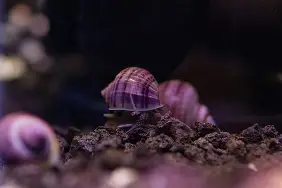
🪨 Species at a Glance
| Scientific Name | Pomacea bridgesii (syn. Pomacea diffusa) |
| Common Names | Mystery Snail, Spike-Topped Apple Snail, Bridgesi Snail |
| Family | Ampullariidae (distinct from invasive Pomacea canaliculata) |
| Order | Architaenioglossa |
| Origin | South America — Amazon, Paraguay, and Orinoco river basins |
| Current Size (this specimen) | 2-3 cm shell diameter — young-adult grow-out stage |
| Expected Adult Size | 5-6 cm shell diameter within 6-12 months |
| Lifespan | 1-3 years (remaining lifespan from Medium stage: ~12-30 months) |
| Temperature | 18-28 C (ideal 22-26 C for grow-out) |
| pH Range | 7.0-8.2, ideal 7.5-8.0 for shell building |
| Hardness (dGH) | 8-25 dGH (high-end of range supports grow-out calcium demand) |
| Diet | Herbivore / omnivore — algae, biofilm, blanched vegetables, calcium pellets |
| Minimum Tank Size | 40 L (10 gal) recommended — gives grow-out buffer and parameter stability |
| Care Level | Beginner-friendly (ideal first Mystery Snail) |
| Temperament | Completely peaceful — safe with shrimp, nano fish, plants |
| Breeding Readiness | Not yet mature — needs to reach ~4 cm shell (est. 3-6 months further growth) |
| Price Point | AUD $20 — entry-level Medium grade (Large adult AUD $28) |
Anatomy & Identification
The Medium-size Purple Mystery Snail shares the core body plan of the species but displays several distinctive features of the young-adult grow-out stage. The shell is a rounded, dextral (right-coiling) spiral with a moderately high spire and a large body whorl that dominates the overall profile. At 2-3 cm of shell diameter this specimen already shows 3-4 visible whorls, but the most recent whorl — the one at the growing aperture edge — will still feel thinner and lighter in pigmentation than the earlier whorls toward the apex. This is entirely normal: the mantle tissue secretes new shell material continuously at the lip of the aperture, and that freshly laid shell has not yet been fully calcified and darkened by diet, age, and water chemistry. Over the next several months, as the snail grazes on calcium-rich biofilm and cuttlebone, that new shell edge will thicken, darken toward the species-characteristic deep violet-to-blue-purple hue, and the growth lines will become more defined. Many keepers mistakenly interpret the lighter lip as erosion or damage; in fact it is a sign the snail is actively building — a healthy young-adult trait that a fully matured adult no longer displays so prominently. Over the course of six to twelve months of careful husbandry, a keeper will observe a visible transformation — the spire tightens in proportion, the whorls deepen from a pale lilac-grey into the signature bruise-purple of the finished adult, and the shell acquires a subtle satin gloss that only fully calcified Pomacea shell develops. This observable metamorphosis is one of the distinctive pleasures of buying a Medium rather than a finished Large specimen.
The shell opening (aperture) is sealed by the operculum, a hard protein-and-calcareous plate attached to the foot. On a Medium specimen the operculum measures roughly 10-18 mm across and fits the aperture precisely: when the snail retracts, the operculum closes flush with the shell lip, sealing out predators, desiccation, and short-term parameter shocks. This trapdoor is unique to the family Ampullariidae among commonly kept freshwater snails and is completely absent in pest species like Physa and Melanoides, making it a useful identification feature. Pomacea bridgesii also possesses a remarkable dual-breathing system: the left side of the mantle cavity contains a true lung, while the right side houses a gill. When dissolved oxygen drops or the snail simply wants to top up its air reserve, it extends a long muscular siphon — a retractable tube that reaches up to the water surface — and breathes atmospheric air. New keepers who see the siphon rising toward the surface often mistake it for an escape attempt; it is entirely normal and healthy behaviour, especially in well-planted tanks where night-time oxygen can dip. On a Medium grow-out specimen the siphon is proportionally slightly longer relative to body size than on adults, giving the impression of an especially elegant breathing posture when the snail surfaces for a gulp of air.
Sexual differentiation in Pomacea bridgesii is notoriously subtle, and at the Medium 2-3 cm stage it is essentially impossible to determine sex reliably by visual inspection. The most commonly cited sexing method — examining operculum shape and checking for a penis sheath visible inside the mantle cavity when the snail is fully extended — requires a cooperative, fully mature specimen, typically 4 cm or larger. At the grow-out size, the reproductive anatomy is still developing, and even experienced keepers cannot sex Medium-grade snails with confidence. This is not a problem for a single-snail ornamental setup, but buyers specifically seeking a breeding pair should either purchase multiple Medium specimens (a group of 4-5 has good statistical odds of containing both sexes) or wait for the Large adult grade where sexing is more tractable. The body colour in the purple form is a deep charcoal-to-dark-purple that complements the shell; on Medium specimens the body pigmentation is often visibly lighter than on adults and will deepen over subsequent months as melanin deposition increases with maturity. The long cephalic tentacles, small eyes at the tentacle bases, and prominent mouth with rasping radula are all fully functional at this size; the snail feeds, respires, and senses its environment exactly as an adult does, simply at a smaller scale. A useful practical distinction from the destructive Pomacea canaliculata (Giant Apple Snail, a banned invasive pest in many countries including Australia) is shell profile: P. bridgesii has a rounder, more globular shell with a moderate spire, while P. canaliculata has a flatter, more angular shell with a distinctly depressed spire and a sharply angled suture line. Buyers should always verify the species name at point of purchase to ensure they are receiving a legal, non-destructive P. bridgesii.
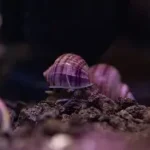
🟣 Purple (this specimen)
Deep violet to blue-purple shell, still deepening at the growing edge; dark purple-grey body. The Medium stage reveals the two-tone effect between mature whorls and freshly laid aperture lip — a visual signature of active grow-out that is lost once the snail reaches full adult size.
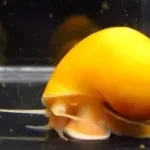
🟡 Gold / Yellow
Bright golden-yellow shell with cream-to-yellow body; the single most common Mystery Snail morph worldwide and the benchmark against which rarer colours are priced. Easily photographed against dark substrate.
🔵 Blue
Pale to medium blue shell with grey-blue body; pairs beautifully with green planted tanks and is a frequent centrepiece in aquascaped displays. Colour intensity varies with shell thickness and diet.
⚪ Ivory / White
Creamy white shell with pale ivory body; a recessive genetic form that stands out dramatically against dark substrate and driftwood. Shell translucency can make newly laid aperture material appear almost glassy.
🌸 Magenta / Pink
Pinkish-red to magenta shell, relatively uncommon compared to gold or blue; often commands a premium. Closely related to the purple form genetically — some breeders line-breed pink and purple together.
⚫ Black / Wild-Type
Dark brown-to-black shell with heavy melanin; closest to the wild-caught P. bridgesii phenotype. Increasingly requested by keepers pursuing a natural biotope aesthetic.
Water Sensitivity
7.0–8.2
ideal 7.7
18–28 °C
ideal 24 °C
8–25 dGH
Hard water essential — calcium critical during grow-out phase
Mystery Snails are more sensitive to water chemistry than their hardy reputation suggests, and Medium-size grow-out specimens are slightly more vulnerable than fully mature adults because their shell is still relatively thin and their body mass smaller. The non-negotiable parameters are pH and hardness: soft, acidic water will visibly erode the shell within weeks and will permanently stunt shell pigmentation for the rest of the snail’s life. Any source water with pH below 7.0 or hardness below 6 dGH should be corrected before introducing the snail. Beyond shell chemistry, the acute lethal threat is copper. Copper is toxic to all molluscs even at trace concentrations, and is a common ingredient in fish medications (especially anti-parasitics targeting Ich and velvet), algaecides, and some municipal water supplies. Never add any product containing copper sulfate, copper gluconate, or chelated copper compounds to a tank housing Mystery Snails, and always inspect the ingredient list of any new water conditioner, fertiliser, or medication before use. Even residual copper from a previous tank treatment can leach out of silicone seals and substrate for months, so a tank that has been treated with copper-based medication in the past should be considered permanently unsafe for Mystery Snails unless stripped and resealed.
Ammonia and nitrite must be maintained at 0 ppm. Mystery Snails at the Medium grow-out stage are sensitive to elevated nitrogen compounds because their smaller body mass offers less metabolic buffer against toxicity spikes. A well-established biological filter (minimum 4-6 weeks post-cycle) and weekly partial water changes of 20-25% are the foundation of responsible Medium-snail husbandry. Because Mystery Snails are relatively heavy bioload producers for their size — actively feeding young-adults particularly so — avoid overstocking; the 40 L minimum recommendation for a Medium specimen gives useful parameter buffer during unexpected events (power outage, heater failure, filter clog). Nitrate should be kept below 30 ppm. Temperature tolerance spans 18-28 C, but for grow-out the ideal range is 22-26 C: cooler temperatures slow metabolism and therefore slow shell growth and colour development, while warmer temperatures accelerate growth but also accelerate ageing and reduce overall lifespan. A conservative 24 C year-round target offers an excellent compromise between pace of grow-out and longevity, producing a well-sized adult in roughly 8-10 months while leaving plenty of lifespan margin for breeding and long-term display once maturity is reached.
Water change technique matters during grow-out. Sudden large changes (50%+) that drop temperature or shift pH should be avoided; the snail may retract for days and halt feeding, losing valuable growth momentum. Temperature-match replacement water to within 1-2 C of the tank, and if your municipal water is significantly softer or more acidic than the tank, pre-treat the replacement water in a separate container with crushed coral or a commercial GH booster so it arrives at tank chemistry rather than pulling parameters downward with each water change. A drip-replacement approach — using a length of airline tubing tied off to throttle flow, refilling over 30-60 minutes — is gentler than pouring fresh water directly over the snail.
Molting & Shell Care
Snails do not shed their shells the way crustaceans do; the shell is a permanent, continuously extended part of the animal’s body, laid down by specialised glands in the mantle edge. For a Medium-size young-adult, shell care is an intensely active process: the snail is growing, which means it is laying down new shell material at the aperture lip every single day. This growth phase places significantly higher calcium demand on a Medium specimen than on a mature adult whose shell growth has slowed. A Medium that is starved of calcium during this window will produce thin, pitted, weakly-pigmented shell — damage that cannot be reversed later in life, even if calcium supply improves after maturity. Every decision about water hardness, diet, and supplementation during the grow-out months directly and permanently affects how the adult shell will look. This permanence gives the Medium stage an outsized importance: decisions made now compound over months, and the difference between an adult with a deep, uniformly pigmented violet shell and a mottled, chalky, pitted adult often comes down to whether the keeper treated the first six months as a calcium emergency or as a casual inconvenience.
The principal threat to a growing shell is acidic water. At pH below 7.0, calcium carbonate — the primary shell material — begins to dissolve back into solution, and the snail’s own body chemistry struggles to lay down new shell faster than the existing shell erodes. Symptoms include visible pitting on older whorls, a chalky white appearance, and a ragged rather than smooth aperture lip. In severe cases erosion exposes the living mantle beneath, leading to infection and death. Alkaline water (pH 7.5-8.0) combined with hard water (8-25 dGH, with the upper half of that range preferred during grow-out) gives the mantle tissue all the dissolved calcium and bicarbonate it needs to build. Calcium supplementation is effectively mandatory in most municipal water supplies that do not naturally reach 10+ dGH. The single most effective and affordable intervention is a piece of cuttlebone placed directly in the tank: it dissolves slowly to release calcium and bicarbonate, buffers pH upward, and the snail will rasp directly on its surface as both mineral source and food. Supplementary options include crushed coral in a mesh bag inside the filter, aragonite substrate, or commercial products such as Wonder Shell. Crushed coral raises both hardness and pH simultaneously, making it an efficient dual-purpose addition. For a Medium grow-out specimen, err on the side of over-supplementing: a thumbnail-size piece of cuttlebone per 40 L replaced every 2-4 weeks is a reasonable default, adjusted upward if you observe the cuttlebone being consumed faster.
A practical monitoring routine for the grow-out phase looks like this. Once per month, take a top-down photograph of the snail next to a ruler; track shell-diameter progression in millimetres. Healthy grow-out produces 3-5 mm of new shell diameter per month under good conditions, with the first month after purchase sometimes slightly slower as the snail acclimates to its new water chemistry. Simultaneously, check pH and GH with a liquid test kit fortnightly; if pH drifts below 7.2 between water changes, add a larger piece of cuttlebone or switch to a crushed-coral substrate blend. Inspect the aperture lip under good lighting: a healthy growing lip is smooth, slightly translucent at the very edge (where the newest shell has just been laid down), and shows faint concentric growth lines. A ragged, flaking, or visibly chalky aperture lip is an early warning of calcium stress and warrants immediate supplementation. Because these symptoms evolve over weeks rather than days, a disciplined keeper who inspects the snail routinely can intervene before any permanent damage is done — one of the real advantages of raising a Medium specimen yourself rather than inheriting an unknown adult with a history you cannot verify.
Tank Setup
A 40 L aquarium is a sensible minimum for a single Medium Mystery Snail and gives considerable parameter buffer during the grow-out months when stability matters most. A 60-80 L setup allows for a small peaceful community (snail plus a few shrimp, a small schooling fish, or a pair of Corydoras) and extends the margin for error further. Substrate can be any inert material — fine sand is particularly kind to the foot as the snail drags its growing shell across the bottom, while smooth gravel works equally well. Active buffering soils (ADA Amazonia, Fluval Stratum) are not ideal for Mystery Snails because they actively pull pH downward toward the 6.0-6.5 range, working directly against the alkaline hard-water conditions the snail needs to build shell. If you are maintaining a planted tank on aquasoil and want to add a Mystery Snail, compensate with crushed coral in the filter and a generous cuttlebone supply — and monitor pH weekly rather than monthly, since aquasoil buffering capacity declines unpredictably over 6-18 months and can swing a previously-stable tank into acidic territory without warning.
The single most important hardware decision is a secure lid with minimal gaps. Mystery Snails are notorious escape artists, and Medium specimens are particularly mobile — they will climb any surface, squeeze through surprisingly small openings, and are frequently found desiccated outside the tank the next morning if any opening exists. Plug any gap larger than 1-2 cm around filter tubes, airline, and heater cables with filter sponge or mesh. Leave 5-10 cm of humid airspace between the waterline and the lid: this airspace is where the snail will eventually lay egg clutches (once it reaches breeding size in a further 3-6 months), and it also provides the atmospheric-air access the siphon needs. Live plants complement Medium Mystery Snails well. Hardy species like Anubias, Java Fern, Vallisneria, and Cryptocoryne are reliably left alone — Pomacea bridgesii does not consume healthy, firm-leaved plants. Soft-leaved fast-growing stems (Bacopa, Rotala varieties with tender new growth) may be nibbled occasionally during heavy grazing phases; mature, well-rooted plants generally survive snail attention without issue. Provide at least 2-3 vertical surfaces (driftwood, rock, tank walls) for the snail to climb and graze; grow-out specimens are notably more active than settled adults and benefit from a rich surface topology to explore.
For the specifically grow-out-oriented keeper, consider dedicating a single-species tank to the Medium snail for the first 3-4 months. A bare-bottom or minimally-decorated 40 L with cuttlebone, a sponge filter, one or two Anubias on driftwood, and nothing else lets you monitor feeding, growth, and behaviour with full visibility. Once the snail reaches 3.5-4 cm and is clearly thriving, the tank can be upgraded with additional tankmates and a planted aquascape. This staged approach — grow-out tank first, display tank second — is especially useful for first-time keepers who want to build confidence before committing to a full community setup. It is also the approach serious breeders use, and a natural fit for anyone planning to add a second Medium snail later to establish a breeding pair.
Secure Lid with Airspace
Tight-fitting lid with 5-10 cm of humid airspace above waterline. Mesh or sponge over every gap. Medium snails escape through gaps adults would ignore — be stricter than you think necessary.
Filter (Cycled)
Sponge filter, HOB, or canister — any gentle-to-moderate filtration. Avoid strong suction intakes that can pin a small Medium specimen. Must be fully cycled before the snail arrives; never introduce a Medium to an uncycled tank.
Adjustable Heater
Maintain 22-26 C ideal grow-out temperature. Stable temperature is more important than exact value; use a heater with a reliable thermostat and a separate aquarium thermometer for verification.
Cuttlebone (CRITICAL for Medium grow-out)
Non-negotiable during the grow-out phase. A thumbnail-size piece per 40 L, replaced every 2-4 weeks or when consumed. Single most effective calcium source for building thick, well-pigmented adult shell.
Crushed Coral or Aragonite
Supplementary calcium source — add a mesh bag in the filter or blend aragonite into substrate. Raises pH and GH simultaneously, buffering against acidification during water changes.
Fine Sand or Smooth Gravel Substrate
Inert, non-buffering substrate preferred. Avoid active aquasoils that lower pH. Smooth grains prevent abrasion of the foot during active grow-out movement.
Liquid pH and GH Test Kit
Essential during grow-out — test pH and GH fortnightly for the first 3 months to confirm your supplementation regime is holding parameters in range. Strip tests are insufficient.
Monthly Growth Ruler/Photo Kit
Optional but recommended for the engaged keeper: a small ruler and a phone camera. Photograph the snail from directly above once a month to document shell-diameter progression from 2-3 cm through to adult 5-6 cm.
Diet & Feeding
Pomacea bridgesii is a genuine herbivore-omnivore that grazes almost constantly when active, using a rasping tongue (radula) to scrape algae and biofilm from glass, hardscape, and plant surfaces. For a Medium grow-out specimen this natural grazing is the dietary foundation — biofilm is rich in protein, calcium, and trace minerals, and a well-matured tank with 4+ weeks of established biofilm provides roughly 40-60% of the snail’s caloric needs by default. Unlike the closely related and destructive Pomacea canaliculata (the Giant Apple Snail), P. bridgesii does not consume healthy, firm-leaved aquatic plants. Yellowing, decaying, or soft-leaved plant matter will be grazed, but this represents beneficial tank maintenance rather than destructive behaviour. Keepers often report that a newly introduced Medium snail will visibly clean a previously algae-coated tank within 2-3 weeks, moving in slow methodical patterns across the glass and leaving clean rasp-tracks behind — a striking demonstration of the radula at work.
Supplement natural grazing with blanched vegetables at least 2-3 times per week during grow-out — the Medium stage has the highest per-gram-of-body-mass appetite of the snail’s entire life. Zucchini (courgette), cucumber, spinach, kale, green beans, and broccoli florets are all readily accepted. Blanch briefly (30-60 seconds in boiling water, then rinse under cold water to halt cooking), cool to room temperature, and sink with a vegetable clip or a small ceramic weight. Remove any uneaten vegetable after 24 hours to prevent ammonia spikes. Commercial sinking pellets and wafers designed for bottom-dwelling invertebrates — particularly those fortified with calcium carbonate and spirulina — are excellent additions to the grow-out diet; feed a single wafer every 2-3 days for a single Medium specimen, removing uneaten portions. Cuttlebone serves double duty as both calcium source and supplemental food: the snail will rasp directly on it. Rotate vegetable types week-to-week to ensure a broad spectrum of trace minerals; monoculture feeding (only zucchini, every day) can produce subtle deficiencies that show up as uneven shell pigmentation months later.
A useful grow-out-oriented weekly feeding plan looks like this. Monday: sinking algae wafer with spirulina and calcium; Tuesday: blanched zucchini slice; Wednesday: sinking calcium-fortified pellet; Thursday: blanched spinach leaf; Friday: algae wafer; Saturday: blanched cucumber or green bean; Sunday: rest day (let the snail graze biofilm). This rotation delivers protein, calcium, and plant matter in balanced proportions while keeping the bioload manageable in a 40 L tank. Observe feeding response: a healthy Medium specimen should find and mount food within 10-20 minutes of placement, using the siphon and tentacles to locate it. A snail that consistently ignores food for 24-48 hours after placement is either stressed, too cold, or in early illness — investigate water parameters immediately. Refusal to feed is one of the earliest and most reliable warning signs of a problem during grow-out.
Community Compatibility
Mystery Snails are genuinely peaceful and will not harm fish, shrimp, or plants under normal circumstances. The Medium grow-out stage is particularly vulnerable because the shell is still relatively thin and the body mass is smaller than a mature adult’s, offering less resilience against both physical harassment and competitive feeding pressure. The ideal community for a Medium specimen consists of peaceful nano-to-small species under 6-7 cm adult length: neon tetras, ember tetras, harlequin rasboras, Corydoras, Otocinclus, Endler’s livebearers, small gouramis, and Neocaridina shrimp. Avoid dedicated snail predators entirely — assassin snails, pea puffers, and clown loaches will kill a Medium specimen with certainty — and be cautious with larger cichlids, goldfish, and aggressive feeding fish even if they are not specialist mollusc predators, because chronic stress and food competition can stunt grow-out and permanently reduce adult shell size and colour quality. A carefully chosen community adds life and interest to the tank without compromising the snail’s developmental trajectory.
A key consideration often overlooked: competitive feeding dynamics matter more at the Medium stage than for adult snails. A mature 5-6 cm adult Mystery Snail can muscle through a crowd of tetras to reach a wafer, but a 2-3 cm Medium specimen is easily out-raced to food by even modestly competitive tank-mates. If you observe the snail consistently failing to reach blanched vegetables or sinking wafers before they are consumed, feed at night (snails are crepuscular and often most active in low light, while many small fish sleep), place food directly next to the snail rather than broadcasting it, or use a dedicated feeding dish that the snail can mount. An under-fed Medium specimen will grow slowly, develop thin pale shell, and may never reach the full adult size and colour potential of a well-fed sibling — so ensure nutrition is actually reaching the snail, not just entering the tank. Consider starting a journal or photo log documenting monthly growth; six months from purchase, the before-and-after comparison is one of the most satisfying parts of keeping Mystery Snails in the grow-out stage.
| Species | Why | |
|---|---|---|
| ✅ | Neon Tetra (Paracheirodon innesi) | Small peaceful schooling fish; completely ignore snails and share the mid-water column without conflict. Ideal community fish for a Medium-snail grow-out tank. |
| ✅ | Corydoras Catfish (panda / pygmy / sterbai) | Bottom-dwelling peaceful scavengers that coexist happily with Mystery Snails; both benefit from the same sinking foods and neither harasses the other. |
| ✅ | Otocinclus Catfish | Small herbivorous algae eaters that pose zero threat to snails; ideal co-cleaners in planted tanks. Both species need stable mature water so both thrive in the same setup. |
| ✅ | Red Cherry Shrimp (Neocaridina davidi) | Completely non-aggressive; different feeding niches. Shrimp will actually clean leftover food around the snail, improving overall tank hygiene during grow-out. |
| ✅ | Harlequin Rasbora (Trigonostigma heteromorpha) | Peaceful mid-water schooling fish that ignore bottom-dwelling snails entirely; tolerates the same pH 7.0-8.0 range the Medium snail prefers. |
| ✅ | Endler’s Livebearer (Poecilia wingei) | Small peaceful livebearer that enjoys hard alkaline water — the same chemistry Mystery Snails require. No predatory interest in snails. |
| ✅ | Small Gourami (Sparkling / Honey) | Peaceful anabantoids that share similar tank requirements and ignore snails. Honey gouramis in particular make calm, photogenic tank-mates for a grow-out Medium snail. |
| ❌ | Assassin Snail (Clea helena) | Specialised mollusc predator — will systematically hunt and kill the Medium Mystery Snail by attacking the foot when the operculum is open. Never house the two species together. |
| ❌ | Clown Loach (Chromobotia macracanthus) | Highly effective snail predator with specialised throat teeth (pharyngeal teeth) for crushing shells. A Medium-size Mystery Snail would be eaten within days. |
| ❌ | Pea Puffer / Dwarf Puffer (Carinotetraodon travancoricus) | Specialist mollusc predator with beak-like teeth designed to crack snail shells. Even a Medium’s thicker shell is no defence — absolutely incompatible. |
| ❌ | Larger Cichlids (Oscars, Jack Dempsey, larger rams) | Many cichlids are capable of and interested in attacking Mystery Snails; even smaller cichlids may harass the snail relentlessly. Chronic stress stunts grow-out even if direct killing is avoided. |
| ❌ | Goldfish | Aggressive omnivores that relentlessly bite snail tentacles, eyes, and foot; also require cooler water (18-22 C) at the bottom end of the Mystery Snail’s tolerance, slowing grow-out. |
| ❌ | Large Aggressive Feeders (Tiger Barbs, large Botia loaches) | Competitive feeders that will out-compete a Medium Mystery Snail at feeding time, stealing pellets and blanched vegetables before the snail can reach them — a subtle form of harm that starves grow-out. |
Breeding
Egg Laying
Mystery Snails are gonochoric — meaning there are distinct males and females, and hermaphroditism does not occur in Pomacea bridgesii. This is excellent news for aquarists concerned about pest-snail population explosions: without both a male and a female present, no reproduction can occur. For this particular Medium specimen, however, breeding is not yet on the agenda. At 2-3 cm shell diameter the snail is not sexually mature; reliable breeding behaviour and successful egg-laying typically begin at 3.5-4 cm and above, and full fecundity is only reached at 4.5-5 cm. A Medium specimen therefore needs an estimated further 3-6 months of grow-out under good conditions before breeding becomes biologically possible, and potentially longer if water hardness or temperature are suboptimal. This deferred-breeding timeline is not a downside of the Medium grade but part of what makes it interesting: the keeper gets to raise the snail through its entire sexual development rather than inheriting a pre-matured adult of unknown provenance.
When this specimen does reach breeding size, the process unfolds in four approximate stages. Stage 1 (current — Medium, 2-3 cm, pre-mature): no breeding behaviour; focus entirely on grow-out, calcium, and parameter stability. Stage 2 (3-4 cm, ~3-6 months future — approaching maturity): sexing begins to become possible; the snail may show early courtship-like behaviour (closer contact with other snails) but eggs are not yet viable. Stage 3 (4-4.5 cm, ~6-9 months future — early breeding): first clutches may be laid; fertility may be low and some clutches may fail; keeper begins observing pink salmon masses above waterline. Stage 4 (4.5+ cm, ~9-12+ months future — full breeding): robust, consistent clutches of 50-200 eggs at 2-4 week intervals when a mated pair is present; full species-typical fecundity achieved. Sexing becomes tractable in stage 3 by examining operculum shape (males slightly concave, females flatter and more open) and by watching for the penis sheath visible inside the mantle cavity of a fully extended male. The single most reliable sexing method, however, is simply observation: during mating the male consistently mounts the female from above and behind, making the sex of both individuals unambiguous. Spawning occurs above the waterline. The female leaves the water and crawls to a dry surface — typically the aquarium glass, underside of the lid, or hood — and deposits a compact clutch of 50-200 eggs encased in a hard, calcified pink-to-salmon mass. The clutch dries and hardens within hours, taking on a textured coral-like appearance. Development takes 2-4 weeks depending on temperature and humidity; warmer conditions (26-28 C) and higher humidity accelerate hatching. The clutch changes colour as it develops, darkening from pink to purple-grey in the final days before hatching. Newly hatched snails are 2-4 mm in diameter and immediately capable of feeding and growing — essentially miniature versions of the Medium specimen they will become a year later. Population control is simple and non-lethal: remove egg clutches before they hatch. Clutches remain visible above the waterline for the full 2-4 week incubation, giving ample time for removal.
Quick Reference
| Scientific Name | Pomacea bridgesii |
| Current Shell Size | 2-3 cm diameter (Medium / young-adult) |
| Target Adult Size | 5-6 cm within 6-12 months of grow-out |
| Price | AUD $20 (budget-friendly Medium grade) |
| Lifespan Remaining | ~12-30 months from Medium stage |
| pH | 7.0-8.2 (ideal 7.5-8.0) |
| Temperature | 18-28 C (ideal 22-26 C grow-out) |
| Hardness | 8-25 dGH (upper half preferred during grow-out) |
| Min Tank Volume | 40 L (gives grow-out parameter buffer) |
| Calcium Source | Cuttlebone CRITICAL + crushed coral supplementary |
| Care Level | Beginner-friendly — ideal first Mystery Snail |
| Sex Determination at Medium | Not yet possible — wait for 4 cm+ adult size |
| Breeding Readiness | Est. 3-6 months further grow-out required |
| Copper Tolerance | NONE — lethal at trace levels (all molluscs) |
| Breathing | Dual — gill (aquatic) + lung (aerial via siphon) |
Related Products


Reviews
Clear filtersThere are no reviews yet.