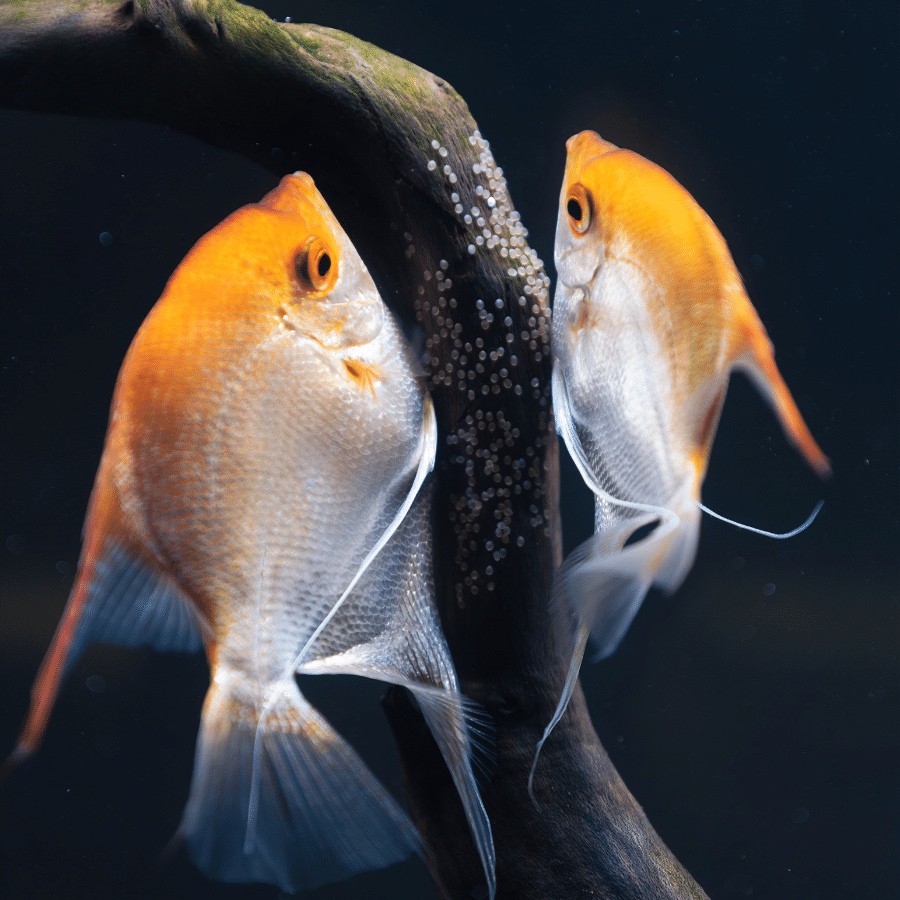
🪨 Species at a Glance
| Scientific Name | Pterophyllum scalare |
| Common Name | Freshwater Angelfish — Assorted Juveniles |
| Family | Cichlidae |
| Order | Cichliformes |
| Origin | Amazon basin (wild ancestry); commercial grow-out farms (your fish) |
| Supplied Size | 4 cm body height (early juvenile) |
| Adult Size | 12-15 cm body, 20 cm with fins (6-12 months away) |
| Strain Mix | Assorted commercial line-bred — Silver/Koi/Marble/Gold/Zebra/Black Lace |
| Lifespan | 8-12 years with correct care |
| pH Range | 6.5-7.5 (farm-bred adaptable) |
| Temperature | 25-29 °C (77-84 °F) |
| Hardness (dGH) | 3-10 |
| Diet | Juvenile high-protein — frequent small feeds 3-5x daily |
| Grow-Out Tank | 100 L minimum for 4cm starter group |
| Adult Tank | 200 L+ tall tank (60cm+ vertical) |
| Care Level | Beginner (with grow-out commitment) |
| Temperament | Peaceful juvenile shoal; dominance hierarchy emerges ~8 cm |
| Colour Maturity | Only ~30% strain colour visible at 4 cm |
| Sexing | Impossible at this size — wait until 12 cm+ |
| QT Required | Strongly recommended — 14 days minimum before display |
Meet the Species
The scientific name tells the same story it always does with this species: *Pterophyllum scalare*, from Greek *pteron* (wing) and *phyllon* (leaf), literally ‘winged leaf’ — a perfect image for a laterally-compressed fish that drifts vertically through submerged roots as though it were nothing but a leaf caught in current. *Scalare* is Latin for ‘like a staircase’, a reference to the graduated dorsal fin rays. Lichtenstein described the species in 1823 from Amazonian specimens, and in the two hundred years since, aquarium stocks of P. scalare have been so heavily selected and inbred that commercial farmed angelfish now constitute a genetic population entirely distinct from their wild ancestors. The Assorted trade we are discussing here is therefore not really about wild angelfish at all; it is about the robust, tap-water-adaptable, flake-eating, reliably-spawning farm stock that has been refined for a century specifically for beginner aquarium conditions.
The more important question is why we stock angelfish at four centimetres at all — a size substantially smaller than the eight-to-ten-centimetre juveniles we list as a separate product, and far smaller than the adult pairs most stores display. The answer is economic and biological. Economically, four-centimetre juvies ship cheaper per fish by a wide margin. A 4 cm angelfish occupies less bag volume, tolerates transit better than a bigger fish, and is produced in far greater numbers per pond at the farms we source from — which means we can offer them to you at our lowest price point for the species. The trade-off is that you receive a fish that needs months of care before it reaches display-tank maturity; the benefit is that you pay a fraction of what a display-ready adult costs, and you get to witness the entire grow-out journey yourself. Hobbyists who grow out their own angelfish consistently report a deeper connection to the finished fish than those who buy adults — you know each individual, you have watched it develop, and you have invested the feedings and water changes that produced it.
Biologically, four centimetres sits at an interesting inflection point in angelfish development. At this size the fish has just passed the critical first-month window after swim-up, when fry mortality is highest; it has been through the farm’s selection for hardiness and disease resistance; and it is large enough to transport safely but small enough that it still behaves as a social juvenile rather than an emerging adult. Juvenile angelfish under about seven centimetres are shoaling fish, not territorial ones — they travel together in loose groups, feed eagerly in competition with each other, and show minimal aggression. This is actually the easiest behavioural stage at which to keep the species. Aggression, pairing dynamics, and territorial posturing do not emerge in earnest until around eight to ten centimetres, at which point the fish transition from ‘juvenile shoal’ to ‘adolescent hierarchy’. The four-centimetre purchase therefore gives you several months of pure grow-out with minimal social complication, before the tank becomes a more interesting social drama as pairs begin to form.
One important framing point: this guide differs from our eight-to-ten-centimetre assorted guide and from our Manacapuru wild-type guide because it treats your fish specifically as a grow-out project, not a display-ready animal. The eight-to-ten-centimetre juveniles can go straight into a fully stocked 200-litre community display with adult tank mates and show significant colour within weeks. A four-centimetre fish cannot do that responsibly; it needs a dedicated grow-out environment with carefully controlled conditions, frequent small feedings, and a staged introduction to adult tank mates only after it has reached six to seven centimetres. This is a different style of fishkeeping — more like raising seedlings than displaying a mature plant. The rewards are proportional to the commitment: by month six you have the exact fish you wanted, shaped by your care, at a fraction of the cost of buying a finished adult.
Water Quality Requirements
6.5–7.5
ideal 7.0
25–29 °C
ideal 27 °C
3–10 dGH
Soft to moderately hard — farm juveniles tolerant; stability is what matters
Juvenile angelfish are more sensitive to water quality fluctuations than adults, and the grow-out phase (four to eight centimetres) is when most avoidable losses occur. An adult angelfish can absorb a bad water change, a missed filter maintenance, or a brief ammonia blip; a four-centimetre juvenile’s gills are smaller, its organ systems less mature, and its tolerance for stress dramatically narrower. The good news is that commercial farm stock, which is what your fish are, has been bred to tolerate the moderately hard, slightly alkaline tap water found across most of Australia without any modification. You do not need RO water, you do not need peat buffering, you do not need chemical pH adjusters. What you do need is unwavering stability within the standard range: pH 6.5 to 7.5, hardness 3 to 10 dGH, temperature 25 to 29 °C, zero ammonia, zero nitrite, and nitrate under 20 ppm at all times.
Stability is everything. A juvenile angelfish in a steady pH 7.4, 8 dGH, 26 °C tank will thrive for months; the same juvenile in a tank that swings between pH 6.8 and 7.6 because of inconsistent water changes, irregular feeding, and uncontrolled CO2 will lose weight, develop fin erosion, and become a ticking time bomb for a disease outbreak. Prioritise consistency of routine: same water change day each week, same replacement water temperature (matched to within one degree of the tank), same dechlorinator dose, same feeding times. Juvenile fish grow faster and fight disease better in predictable environments, and your behaviour as the keeper is the biggest single variable affecting water stability.
Water change strategy for a juvenile grow-out tank differs slightly from an adult display. We recommend twenty per cent weekly water changes, matched in temperature to the tank. Some keepers advocate larger changes on the reasoning that ‘more fresh water is always better’ — this is not quite correct for juvenile angelfish. Larger water changes (40 per cent or more) introduce proportionally larger shifts in trace mineral composition, CO2 dissolution, and pH, which stress juvenile osmoregulation. Twenty per cent weekly is the sweet spot: enough to keep nitrates well below 20 ppm in a lightly-stocked grow-out tank, small enough to avoid osmotic shock, and predictable enough to become routine.
A specific warning for this size class: juvenile angelfish are disproportionately vulnerable to ammonia. An ammonia reading of 0.25 ppm that a community tank of tetras might shrug off can cause gill damage in a four-centimetre angelfish within hours. Always cycle a grow-out tank fully before adding juveniles (four weeks minimum with a fishless cycle or seeded media from an established tank), and test ammonia at least twice a week for the first month after the fish arrive. If you see any reading above zero, perform an immediate 30 per cent water change and investigate the cause — usually either overfeeding (juveniles get fed 3-5x daily, which produces more waste than an adult feeding rhythm) or insufficient biological filter capacity.
Temperature deserves extra attention for juvenile grow-out. Angelfish grow faster in warmer water — the metabolic rate scales with temperature, and the difference between 25 °C and 28 °C grow-out temperatures can translate to noticeably faster size gain over six months. We recommend 27 °C as the grow-out target for fastest healthy growth, supplemented with high-protein frequent feeding. Do not push above 29 °C for sustained periods; at 30+ °C dissolved oxygen drops, respiration stress rises, and the gains from metabolic rate are more than offset by physiological strain. A good 100-watt thermostat heater with an independent digital thermometer is all you need; juvenile tanks rarely need two heaters for redundancy unless your room temperature swings severely overnight.
Visual Varieties
🤍 Silver (Wild-Type Base)
At 4 cm: pale silver body with pencil-thin vertical bars barely visible against light. Will deepen to the classic four-bar silver angelfish within 3-4 months as melanin production matures.
🧡 Koi Angelfish
At 4 cm: mostly silver-white with scattered tiny orange specks on the head and shoulder; no adult pattern yet visible. Adult Koi pattern (large orange, white, black patches) develops dramatically between 6-10 cm. Do not write off a seemingly-plain juvenile Koi — it will transform.
🗿 Marble Angelfish
At 4 cm: faint irregular black smudging across a silver body, often mistaken for a poor-looking Silver. The marble pattern intensifies and sharpens as the fish grows; adult Marbles at 12 cm show dramatic black-silver contrast that simply is not present at juvenile stage.
🟡 Gold / Sunset Gold
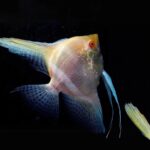
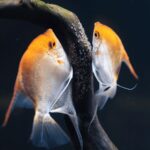
At 4 cm: pale cream to pale lemon body, essentially no vertical bars (Gold gene suppresses melanin), with a very faint orange blush beginning on the head. Adult Golds deepen to rich honey with flame-orange crowns by 8-10 months.
⚫ Zebra Angelfish
At 4 cm: silver body with five or six thin vertical bars (more than the Silver’s four), though at this size the extra bars may be hard to distinguish from wild-type. Becomes a distinctive striped-silk look as the fish matures.
🕶 Black Lace
At 4 cm: silver with darker bars than wild-type Silver, and faint dark tracery beginning to appear in the unpaired fins. Full ‘lace’ fin pattern takes 6-8 months to develop as fin rays extend.
💠 Pearlscale / Pearlscale Hybrids
At 4 cm: the tell-tale raised, light-refracting scales may already be visible under overhead lighting. Pearlscale trait is expressed from very small size and is one of the few adult features you can actually identify in a 4 cm juvie.
Here is the hardest truth about buying four-centimetre angelfish: at this size, perhaps thirty per cent of a fish’s adult colour is on display, and most strain identification is essentially guesswork. We ship from mixed-strain grow-out ponds, and at fry-to-juvenile stage many of the strains look near-identical. A juvenile Silver and a juvenile Zebra both look silver with thin bars; a juvenile Koi looks mostly white-silver with a few orange specks that could easily be missed; a juvenile Gold looks pale cream and might be mistaken for a washed-out Silver. We cannot honestly promise you one of each strain in a mixed pack, because at four centimetres even our own sorters sometimes cannot tell strains apart with confidence — and anyone claiming otherwise is inventing certainty that does not exist.
What we can promise is this: the genetic diversity is present in the pack. Each juvenile carries the strain genes it was born with, and those genes will express themselves progressively over the coming six to twelve months. The Koi pattern emerges as Gold + Marble genes begin to interact in the developing pigment cells; the Gold crown brightens as sexual maturity approaches; the Marble contrast sharpens as melanin production matures and scale structure consolidates. Your four-centimetre pack is therefore best understood as a ‘mystery box of genetic potential’ rather than a display-ready collection. Some keepers love this; others find it frustrating. If you are the kind of aquarist who wants to know exactly what every fish in your tank is on arrival, the eight-to-ten-centimetre assorted pack is the better choice for you — at that size, strain identification is 80-90% reliable because the adult pattern has substantially emerged.
If you embrace the mystery, however, four centimetres is genuinely the most rewarding starting point. There is a particular pleasure in watching a fish you thought was ‘just a Silver’ slowly reveal itself as a Marble over three months of grow-out; or in discovering that the plainest-looking juvie in the pack was actually a Koi all along, with its full pattern emerging only at seven or eight centimetres. Serious breeders in the United States and Europe routinely buy fry-to-juvenile packs for exactly this reason — they are sampling genetic potential at the cheapest price point, and they do not commit to strain identification until the fish are eight centimetres or larger. You can do the same at home. Keep a small notebook (or a phone photo log) tracking each fish in the group month by month; you will see the transformation clearly in photos taken at four, six, eight, and twelve centimetres. By the time the group matures, you will know your individuals not by strain label but by the actual history of their development — which is the most satisfying way to know an angelfish.
Finally, a note on what to expect from a typical Amazonia four-centimetre pack. A six-fish grow-out pack will typically contain: two to three Silvers or Silver-looking fish (some of which may reveal themselves as Zebras or Black Laces later), one or two Marbles, one pale cream Gold, and one or two juvies with early Koi or mystery genetics. Occasionally we see an unexpected strain appear — a Pearlscale, a Ghost, even rarely a Platinum — as a bonus from mixed parent pond genetics. We do not guarantee any specific strain distribution, only a variety. We do photograph packs before bagging where time permits, and if you message us after ordering we will do our best to send you a quick phone shot of your actual fish before shipping.
Tank Requirements & Layout
A four-centimetre angelfish does not need the 200-litre tall display tank that an adult will eventually require. It needs a grow-out tank: a purpose-built juvenile environment designed for maximum growth, minimum stress, and easy water quality management. The standard we recommend is 100 litres for a group of five to six juveniles, which gives each fish roughly 15-20 litres of swimming volume while keeping the bio-load manageable during the high-feeding grow-out phase. Tank dimensions matter less at this size than they will for adults — a 90 cm long × 30 cm wide × 40 cm tall rectangular tank works perfectly, and you do not need the 60 cm vertical clearance that adults require because your juveniles are still only developing their fin extensions. Many keepers use bare-bottom breeder tanks (a rectangular tank with no substrate) for grow-out, and this is actually excellent practice: it makes waste removal trivial (just siphon the bottom), it prevents food from being lost in substrate, and it makes detecting any water quality problems immediate because the bottom is perfectly visible at all times.
If you prefer a planted aesthetic, a lightly planted grow-out tank is fine — Amazon swords, java fern, Anubias on driftwood, and a few stem plants in the back provide visual interest and take up excess nitrates. Avoid densely planted iwagumi-style scapes at this stage; they make siphoning waste more difficult and can trap uneaten food that fouls the water during the high-feeding grow-out phase. Dark sand or fine gravel is appropriate if you want substrate, but the bare-bottom approach remains the tidiest option for juvenile grow-out and many commercial breeders use it exclusively. Lighting should be moderate and run on a six-to-eight-hour photoperiod — juveniles do not need intense lighting, and extended bright photoperiods can stress them during daytime resting periods.
Filtration for a grow-out tank needs to be matched to the small, sensitive fish you are raising. An adult angelfish canister filter with 800 litres per hour of throughput is wildly overpowered for 4 cm juveniles — the outflow will blow them around the tank, exhaust them during feeding, and potentially stress them into poor feeding response. The right filter is a large sponge filter driven by an adjustable air pump (our top recommendation for grow-out specifically), or a small internal canister sized for 1.5-2x tank volume per hour with the outflow baffled by a spray bar or flow diffuser. Sponge filters have the added benefit that juveniles cannot be sucked against the intake — a non-trivial risk with canister intakes at this size, and a recurring cause of juvenile loss in beginner grow-out setups. Seed the sponge filter with media from an established tank before adding the fish, or run a fishless cycle for four weeks minimum to build a functioning bacterial colony before any fish arrives.
Temperature control is straightforward: a 100-watt thermostat heater set to 27 °C, paired with an independent digital thermometer to verify actual water temperature. Do not rely on the heater dial or the built-in thermostat display — cheap heaters drift over time and a failed heater set to ‘off’ that continues to run can cook a juvenile grow-out tank inside of a day. A $10 digital thermometer stuck to the outside of the glass will save you from this scenario with certainty.
Tank mates during the grow-out phase require careful thought. We strongly recommend that your grow-out tank contain angelfish only for the first six to eight weeks — no tetras, no corys, no anything else. This allows you to monitor feeding, growth, and health with perfect clarity, prevents competition at feeding time (juvenile angelfish can be out-competed by faster-feeding tetras, which delays their growth), and eliminates any risk of introduced pathogens from tank mates during the vulnerable post-arrival period. After six to eight weeks, once your juveniles have settled, grown to roughly five to six centimetres, and established a stable feeding routine, you can add appropriate tank mates gradually. At that point, a small group of six to eight neon tetras (yes, compatible at this juvenile angelfish stage, though see the community section for the longer-term warning), a few cory catfish, or an otocinclus or two become reasonable additions. Do not rush this step; the grow-out tank’s primary purpose is juvenile growth, not adult community display.
One final consideration is planning for the future. Your four-centimetre juveniles will be eight-centimetre sub-adults in four to six months, and twelve-centimetre adults by month twelve. Your 100-litre grow-out tank is not the tank they will spend their adult lives in. Plan the upgrade now: budget for a 200 to 300-litre tall display tank within the next six to nine months, or arrange to split the group (angelfish rehome easily to other hobbyists, and aquarium societies frequently have members looking for sub-adult stock). Buying four-centimetre juveniles without a plan for the eventual adult tank is the single most common mistake in angelfish keeping, and we mention it here specifically to forestall it. The grow-out tank is a temporary environment; the display tank is the destination.
Grow-Out Tank
100 L rectangular tank (approx 90 × 30 × 40 cm); bare-bottom or lightly planted; full adult display tank (200 L+ tall) to be purchased within 6-9 months
Sponge Filter
Large sponge filter driven by adjustable air pump; seeded with mature media from an established tank before juveniles arrive. Ideal for grow-out — gentle flow, no intake hazard
Air Pump
Quiet adjustable air pump to drive the sponge filter; provides surface agitation and gas exchange
Heater
100 W thermostat heater set to 27 °C; paired with independent digital thermometer for verification
Digital Thermometer
Cheap stick-on or probe thermometer, verified against a second source weekly for the first month
Ammonia Test Kit
Liquid ammonia test kit (API or similar); twice-weekly testing for the first month — juveniles are especially ammonia-sensitive
Water Conditioner
Full-spectrum dechlorinator (Seachem Prime, API Stress Coat) for every water change
Siphon / Gravel Vac
Small-bore siphon for 20% weekly water changes; bare-bottom tanks siphon faster than planted ones
Feeding Ring
Optional but useful — contains small frequent feedings at the surface, prevents food scattering into filter
Quarantine Tank
Separate 20-40 L tank with sponge filter and heater — for the 14-day QT period before introducing new juveniles to the grow-out group
Spot the Difference: Male & Female
We will not sugar-coat this section: at four centimetres body height, sexing angelfish is not merely unreliable, it is physiologically impossible. The gonads are still undifferentiated — neither testes nor ovaries have developed distinguishable tissue yet. The nuchal hump that identifies adult males has not even begun to form. The genital papilla that becomes visibly different between sexes at spawning time is not yet developed in either sex. Fin filament length, forehead profile, body depth ratio — none of these dimorphic features have emerged at all. Every published shortcut for sexing juvenile angelfish (‘look at the angle from the eye to the ventral fin’, ‘males have pointier snouts’, ‘females have rounder bellies’) is simply incorrect at this size, regardless of how confidently it is presented.
The commercial angelfish industry, which operates at massive scale and whose business depends on accurate sexing for breeding programmes, cannot sex fish at this size either. At the farms we source from, angelfish are grown out together in mixed-sex ponds until they are at least eight centimetres, and the earliest reliable sexing pass is done at ten to twelve centimetres, at which point only pair-formation observation and genital papilla inspection during practice-spawning attempts give consistent results. If the people who have spent thirty years raising these fish for a living wait until twelve centimetres to sex their own stock, you should too.
What this means in practice is that for the next six to twelve months — until your fish reach roughly twelve centimetres body height — you should treat every individual in the pack as ‘unknown sex’ and make all your decisions based on group dynamics rather than individual sexing. Fortunately, this is actually the ideal way to keep angelfish. The species is a natural group-former, and pairs emerge organically from a social grow-out group when they reach maturity. Your job for the next year is not to identify sexes but to raise a healthy, well-formed, disease-free group of juveniles; the sexing will announce itself loud and clear once the first pair begins defending a spawning surface, and from that moment onward the biology does all the identification work for you.
One practical note: if you ever encounter a seller claiming to offer ‘sexed pairs’ of four-centimetre angelfish, be immediately sceptical. Either the seller does not understand the biology (in which case, do not buy fish from them), or they are relying on intuition that is no more accurate than a coin flip, or they are deliberately misrepresenting unsorted juveniles as sexed pairs. The honest angelfish trade operates on the assumption that sub-eight-centimetre juveniles are unsexed stock, and any claims to the contrary should be treated with the scepticism they deserve.
| Feature | Male | Female |
|---|---|---|
| At 4 cm (your shipment) | Impossible to distinguish; wait 12cm+ | Impossible to distinguish; wait 12cm+ |
| Reliable Sexing Size | Impossible at this size; wait 12cm+ | Impossible at this size; wait 12cm+ |
| Gonad Development Status | Impossible at this size; wait 12cm+ | Impossible at this size; wait 12cm+ |
| Behavioural Dimorphism | Impossible at this size; wait 12cm+ | Impossible at this size; wait 12cm+ |
Feeding Schedule & Diet
Feeding a four-centimetre angelfish correctly is the single biggest determinant of how well and how quickly it will grow out to a healthy adult. The adult angelfish feeding regimen — two meals per day, protein-rich but moderate in volume, with one weekly fast day — is completely wrong for juveniles and will produce slow growth and stunted fin development if applied to 4 cm fish. At juvenile stage your angelfish need a fundamentally different feeding strategy: frequent small feedings (three to five times per day), consistently high protein content, and minimal gaps between meals during the active growth window. This is closer to how juvenile fish are fed at commercial farms, and it is how you produce adult angelfish with full fin extension, rich colour, and a healthy adult mass.
The physiological reasoning is straightforward. Juvenile angelfish metabolise food much faster than adults — a combination of small stomach volume, high cellular turnover from growth, and the energetic demands of building bone, fin tissue, and muscle simultaneously. Their stomachs empty completely within two to three hours of a meal, at which point they begin to catabolise their own reserves if no more food arrives. A juvenile fed only twice a day spends roughly eighteen of every twenty-four hours in a hunger state, which slows growth, suppresses immune function, and produces an adult fish that is smaller, paler, and less fin-developed than it should be. By contrast, a juvenile fed four or five small meals per day spends most of its waking hours in an active-feeding metabolic state, which maximises tissue development and produces an adult with the full physical potential of its strain.
Build the diet around three categories of food. First, a high-quality crushed flake or micro-pellet staple — this is the everyday baseline food, delivered in small pinches three to five times per day. Look for whole fish meal or insect meal as the first ingredient, protein content of 45% or more, and ideally added astaxanthin and spirulina for colour development. Brands we recommend from widespread Australian availability include Hikari First Bites (for the smallest juveniles), Hikari Micro Pellets, NLS Grow formulation, Fluval Bug Bites Small Pellet Formula, and Sera Vipan Baby. Crush regular flake between your fingers before dropping in — a 4 cm angelfish mouth is smaller than the typical adult flake size. Second, frozen foods: frozen baby brine shrimp (BBS) are the gold-standard protein treat for juvenile angelfish, eagerly accepted and highly nutritious; supplement with frozen daphnia and cyclops for variety. Offer frozen foods once or twice a day as part of the 3-5 feeding rotation. Third, occasional live foods: live baby brine shrimp freshly hatched from eggs (a simple home operation requiring a 2-litre bottle, air stone, and brine shrimp eggs from any aquarium store) trigger the strongest feeding response and are particularly valuable during the initial settling-in period when the juveniles may be shy about accepting prepared foods. A weekly hatch is sustainable and provides enough BBS for a week of frequent feedings on a small grow-out group.
Portion control for frequent feeding is critical. The rule is ‘as much as they will clean up in 30-45 seconds’ — this is substantially smaller than the adult rule of ‘cleaned up in 90 seconds’ because juvenile stomachs are smaller and because five feedings per day add up quickly. A typical 4 cm juvenile in a group of six might consume a pinch of crushed flake the size of a grain of rice per feeding, five times a day. That is the correct scale. Overfeeding is the number one failure mode in grow-out tanks, because uneaten food breaks down into ammonia and crashes water quality — which in a juvenile tank is especially dangerous. When in doubt, feed less and more often, not more and less often.
A realistic daily feeding schedule for a 4 cm grow-out tank: 7 AM small flake pinch, 10 AM small frozen BBS portion, 1 PM small flake pinch, 4 PM small frozen or live feed, 7 PM final small flake pinch. Adjust to your schedule — the key is spacing the feeds through the active daylight hours rather than concentrating them in one session. If you work a standard office day, feed at 7 AM, use an automatic feeder for a small midday feed, and feed again at 4 PM, 6 PM, and 8 PM. Automatic feeders work well for the midday slot specifically; do not rely on them for all feedings because they cannot observe the fish’s condition the way your own eyes can.
A note on water quality during heavy feeding: frequent feeding produces more waste, and waste produces ammonia. This is why the grow-out tank setup includes extra biological filter capacity (the large sponge filter) and why twice-weekly ammonia testing is mandatory during the first month. Your filter bacteria will colonise more aggressively in response to the sustained bio-load, but there is a lag of one to two weeks during which ammonia can creep up if you have over-fed. Monitor, adjust, and do not panic — juvenile angelfish grow-out is a dynamic balance between feeding enough for maximum growth and not feeding so much that water quality degrades.
One more consideration specific to juveniles: food size matters as much as feeding frequency. A 4 cm angelfish mouth is small. Adult flake that would be perfect for an 8 cm sub-adult is too large for a 4 cm juvenile to swallow efficiently — they will nip at it, spit it out, and eventually refuse it. Crushed flake, micro-pellets specifically labelled for juveniles or fry, and baby brine shrimp are all appropriately sized. As the fish grow — roughly by month three when they reach 6 cm — you can begin transitioning to standard adult flake and small pellets. By six centimetres most commercial adult angelfish foods are accepted without issue.
Choosing Tank Mates
Community planning for 4 cm juvenile angelfish has a dimension that adult-angelfish community planning does not: you must think about two tank configurations across time, not one. The community that suits your 4 cm juveniles today is not the community that will suit your 12 cm adults in twelve months. This single truth, overlooked by many beginner keepers, is the source of the most common ‘angelfish ate my neons’ disaster that arrives on online aquarium forums several times a year.
Today, at 4 cm, your angelfish are peaceful juveniles with small mouths that cannot predate any normal community fish. They will coexist happily with neon tetras, ember tetras, chili rasboras, and other small soft-mouthed tetras — in fact, a grow-out tank with a small school of neons can be visually delightful and socially calming for the juvenile angelfish (which feel less alone in the presence of other fish). The trap, however, is that your juveniles will not stay small. By month six they will be 8 cm sub-adults with mouths starting to rival adult neons in size. By month eight to twelve they will be 12-15 cm adults with mouths that can swallow a 2 cm neon whole. Any small tetra introduced into a 4 cm angelfish grow-out tank is, in effect, on borrowed time — safe today, predated within twelve months. This is not a criticism of angelfish; it is simply biology.
Our recommended approach is therefore staged community planning. For the first six months of the grow-out (while the angelfish are 4-8 cm), keep the tank angelfish-only or angelfish-plus-corys. The corys occupy the bottom zone the angelfish ignore, they eat uneaten food, and they are invulnerable to predation at any angelfish life stage because of their body armour and bottom-dwelling habits. This simple setup grows the juveniles with minimum complication. Around month six, once the angelfish have reached 6-7 cm and you are confident they are stable, you can begin adding appropriate long-term tank mates — specifically species that will remain safe from predation even when the angelfish reach full adult size. Medium schooling fish like rummy nose tetras (4-5 cm adult), cardinal tetras (4 cm adult), cherry barbs (5 cm adult), and honey gouramis (5-6 cm adult) all fit this brief. They are large enough to survive in a tank with adult angelfish, and they share the same water parameters and temperature preferences. Otocinclus are safe at any stage because their small size is offset by their bottom-dwelling, armoured, completely non-threatening nature.
If you already have a community tank containing small tetras (neons, embers, chilis) and want to add juvenile angelfish, you have two ethical choices. First option: buy the angelfish knowing you will rehome either the tetras or the angelfish to a different tank before the angelfish reach 10 cm. Most local aquarium societies have active rehoming networks and this is easy to arrange. Second option: choose different angelfish — specifically, the 8-10 cm assorted juveniles from our separate listing, which are past the cutest grow-out stage but which you can responsibly assess for predation risk against your existing tank mates. Fish at 8-10 cm generally can accommodate moderately-sized adult tetras (rummy noses, cardinals) but will still predate very small species at their adult size. A third option, which many keepers take, is to accept that the smaller tetras in a long-term angelfish tank are essentially a living food supplement — this is ethically dubious to us and we would rather you not do this, but it is common in the hobby and we mention it for completeness.
A note on the unusual recommendation of adding 8-10 cm sub-adult angelfish to a 4 cm grow-out group: this is an advanced technique that some keepers use to stabilise social dynamics in a grow-out tank. The larger sub-adults, which are past the confused juvenile stage but not yet territorial adults, provide social ‘role models’ that calm the younger juveniles and establish a baseline hierarchy. This only works if the 8-10 cm fish are peaceful individuals (observe them before introducing) and if the grow-out tank is large enough (at least 150 L) to prevent the sub-adults from bullying the juveniles. We mention it here not as a first recommendation but because some experienced keepers have found this technique valuable — it is not mandatory, and a simple 4 cm juveniles-plus-corys setup is the safest choice for most keepers.
Finally, the non-negotiable incompatibles apply at all life stages: tiger barbs and serpae tetras are chronic fin-nippers and will damage angelfish fins regardless of size differential; large aggressive cichlids (Oscar, Jack Dempsey, convicts, firemouths) will outcompete or injure angelfish of any age; African cichlids and other hard-alkaline-water species are wrong on water chemistry alone. Avoid all of these regardless of any other consideration.
| Species | Why | |
|---|---|---|
| ✅ | Neon Tetra (at 4 cm angelfish stage ONLY) | At this juvenile angelfish size, neons are safe tank mates — angelfish mouths are too small to swallow adult neons, and the peaceful juvenile angelfish ignores them. Critical warning: this will reverse at ~10 cm angelfish size when adult angelfish will predate adult neons. See incompatible section for the inevitable future issue |
| ✅ | Ember Tetra | Safe at juvenile angelfish stage for the same reason as neons — small mouth of young angelfish can’t eat them. Same warning applies: will become food at adult angelfish stage |
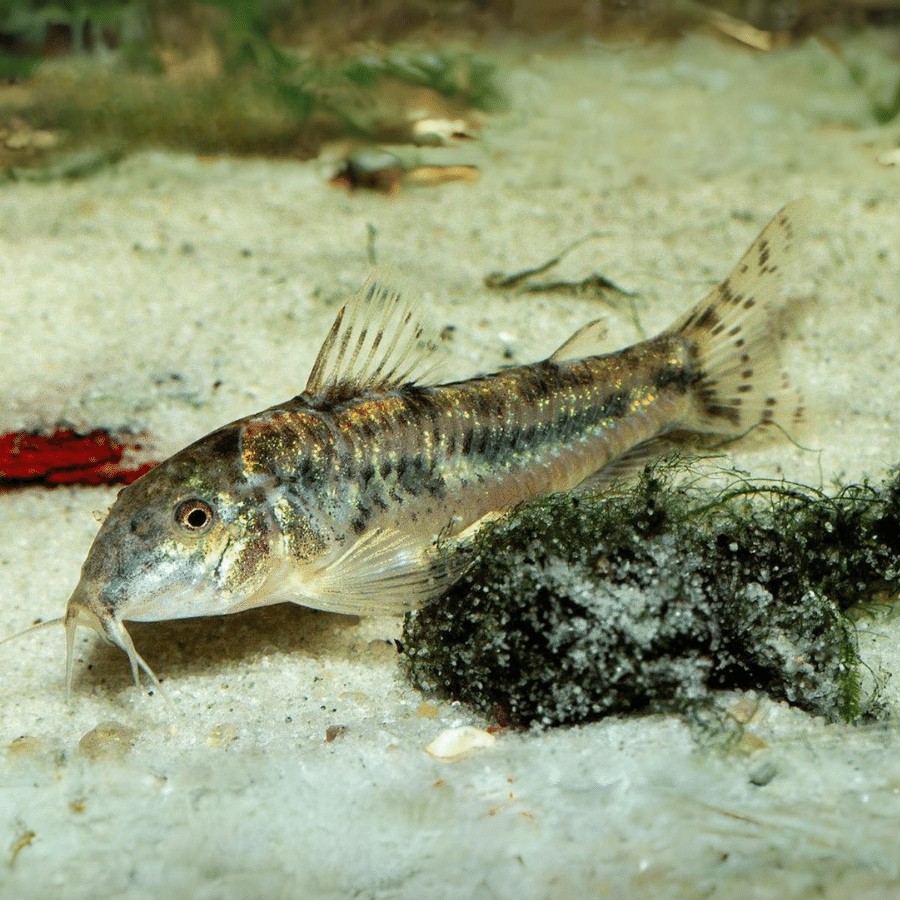
| ✅ | Corydoras (Sterbai, Panda, Bronze) | Excellent long-term compatibility at all angelfish life stages — peaceful bottom dwellers that angelfish ignore and that help clean uneaten food from the grow-out tank substrate or bottom |
| ✅ | Otocinclus | Safe at all angelfish stages — too small and armoured for even adult angelfish to bother with; helps maintain algae-free tank surfaces during grow-out |
| ✅ | Rummy Nose Tetra | Medium-sized school-fish that remains safe at all angelfish life stages because adult rummy noses are too large (4-5 cm) for angelfish to predate easily. A better long-term schooling choice than neons for a grow-out tank that will become an adult display |
| ✅ | Cherry Barb (peaceful) | Gentle barb species that reaches 4-5 cm adult size — large enough to resist predation at adult angelfish stage, peaceful enough not to stress juveniles. Safe across life stages |
| ✅ | Honey Gourami | Peaceful anabantoid that reaches 5-6 cm — too large for adult angelfish predation, gentle enough to share space with juveniles. Occupies upper water column |
| ✅ | Sub-adult Angelfish (8-10 cm from our separate listing) | Unusual but effective — introducing larger 8-10 cm assorted angelfish to the grow-out group once your 4 cm juveniles reach 6-7 cm provides social stability and accelerated confidence. Must be done carefully; see community prose for guidance |
| ❌ | Tiger Barb (all life stages) | Notorious fin-nippers that will destroy the developing fin filaments of juvenile angelfish within days. Absolutely incompatible at grow-out stage — even juvenile angelfish have delicate developing fins |
| ❌ | Adult Neon Tetra (at FUTURE adult angelfish stage) | CRITICAL FUTURE WARNING: your 4 cm angelfish will grow to 12-15 cm adult size within 12 months, at which point their mouths become large enough to swallow adult neon tetras whole. If you start neons with 4 cm juvies, plan to rehome the neons by the time angelfish reach 10 cm (around month 6-8), or accept that they will be eaten |
| ❌ | Adult Ember Tetra / Chili Rasbora (at future adult angelfish stage) | Same adult-stage predation risk as neons — anything under 2.5 cm adult size will be eaten by adult angelfish. Safe during grow-out, at risk by month 8-12 of the angelfish’s development |
| ❌ | Serpae Tetra | Chronic fin-nipper similar to Tiger Barb; incompatible with angelfish of any size, and especially dangerous for juveniles with still-developing fin filaments |
| ❌ | Large Cichlids (Oscars, Jacks, Convicts, Firemouths) | Too aggressive for any angelfish, let alone juveniles. The 4 cm juveniles would be dead within days in a tank containing any of these species |
| ❌ | African Cichlids (Malawi/Tanganyika) | Completely incompatible water chemistry (African cichlids need hard alkaline water) and aggression levels. Never combine under any circumstance |
Breeding in Captivity
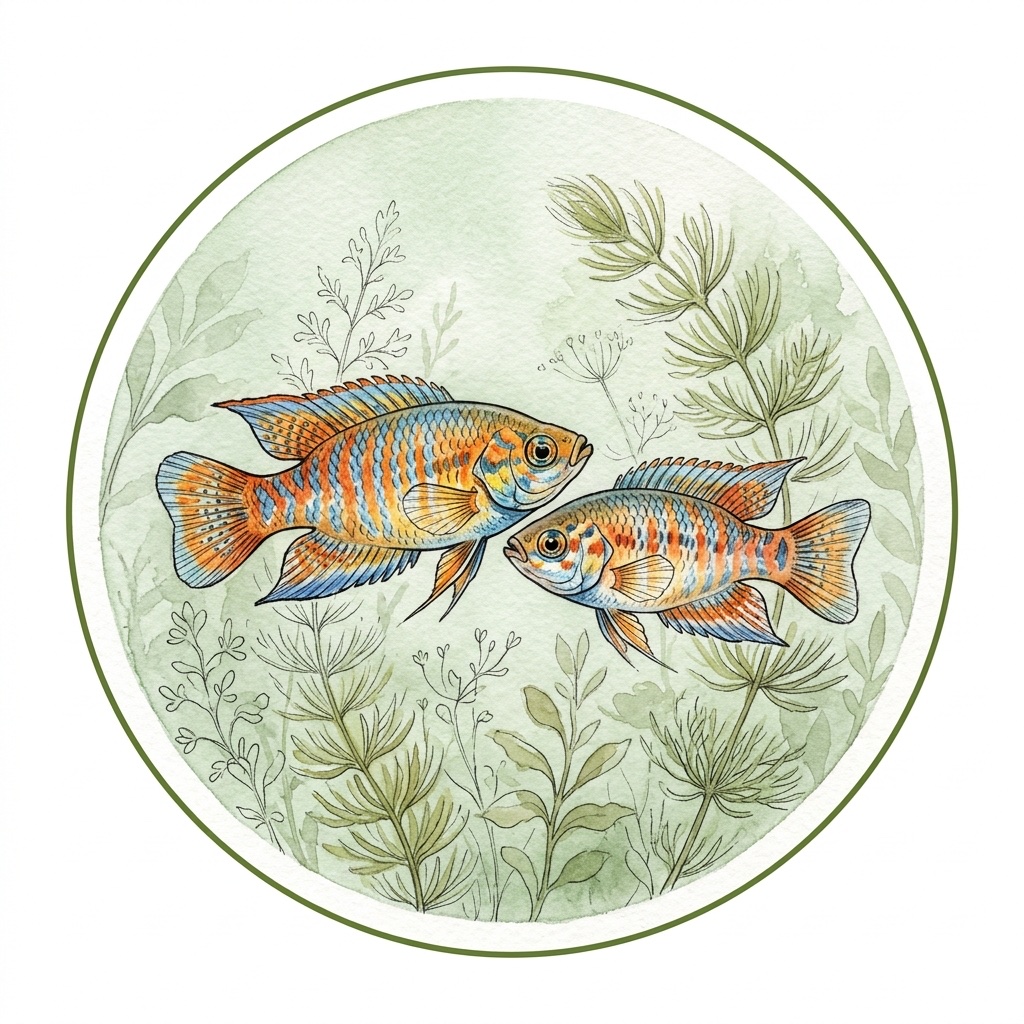
Months 0-4 (now)
Grow-Out Phase — Focus On Growth Not Breeding
4-7 cm juvenile shoal; no sexing possible; dedicate all energy to feeding and water quality
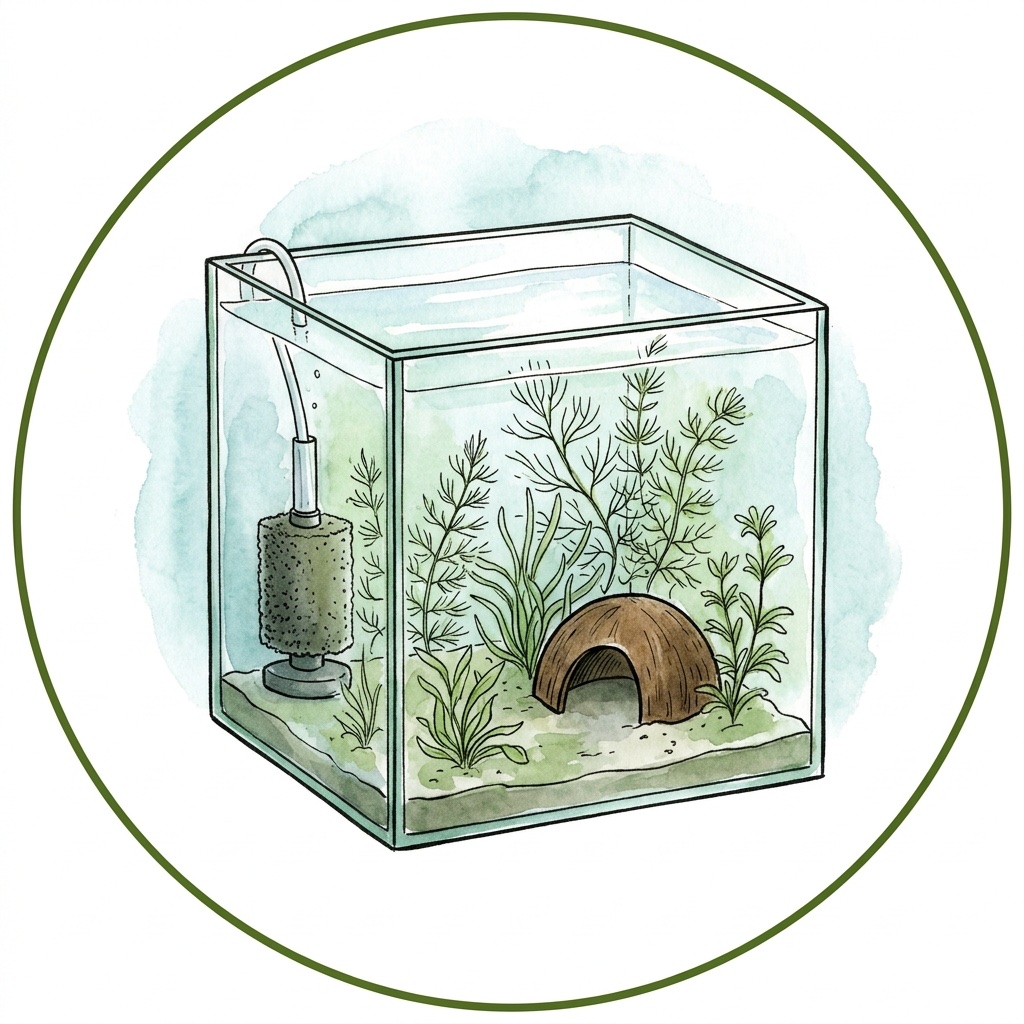
Months 4-8
Adolescent Phase — Social Hierarchy Emerges
7-10 cm sub-adults; dominance displays begin but no mature pairs yet
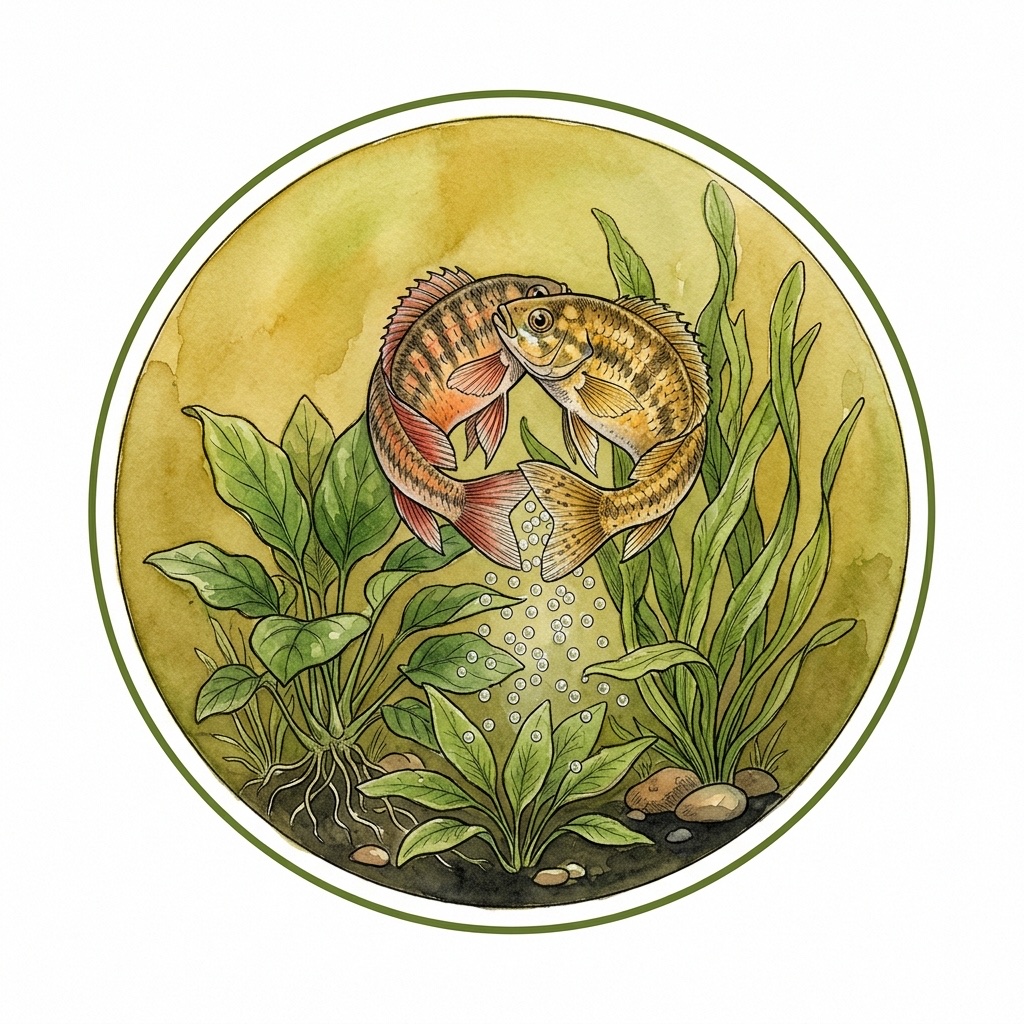
Months 8-12
Maturation & First Pair Formation
10-14 cm adults; natural pair emerges from the group
Month 12+ (first spawn)
First Spawn & Parental Care
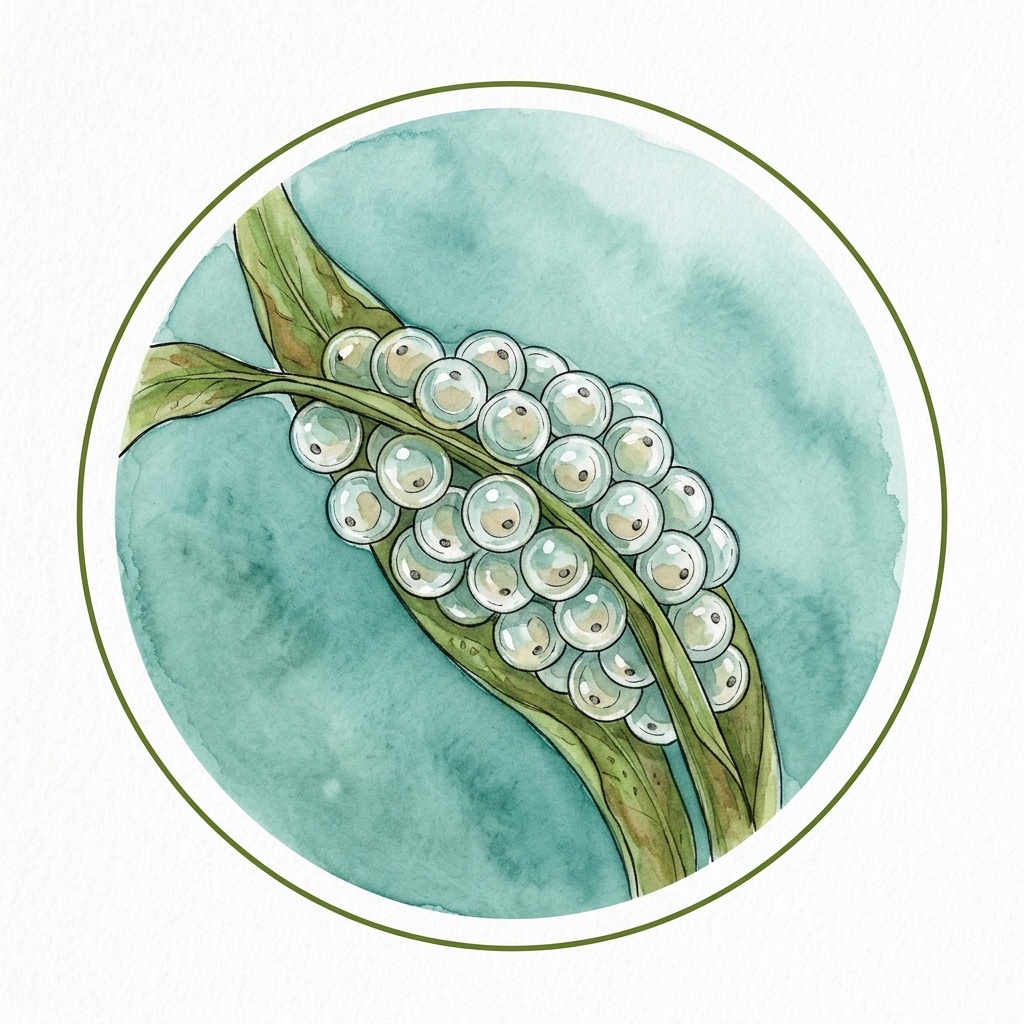
Pair lays 200-500 eggs on a vertical surface; both parents guard
Grow-Out Phase — Focus On Growth Not Breeding
For the first four months after your 4 cm juveniles arrive, breeding is simply not on the table. The fish are nowhere near sexual maturity. Gonads remain undifferentiated until approximately 7-8 cm body height, which for a 4 cm starter represents roughly four months of good grow-out. Your entire focus during this window should be on feeding (3-5 times per day, high protein, varied), water quality (weekly 20% changes, twice-weekly ammonia testing for the first month), and observation (watch for any individual that is growing slower, holding fins tightly, or showing any signs of stress). Do not attempt to identify pairs, do not buy ‘breeding cones’ or slate, and do not be disappointed by the absence of breeding behaviour — this stage is about foundation-building, not reproduction.
Adolescent Phase — Social Hierarchy Emerges
By month four, your juveniles should be sub-adult size (7-10 cm) and you will begin to see the first hints of social complexity. Some individuals emerge as dominant, claiming a particular tank corner or aquascape feature; others retreat to lower positions in the group hierarchy. This is normal and healthy — it is the transition from shoaling juveniles to group-living adolescent cichlids, and it is the preparatory stage for adult pair formation. At this phase you should consider upgrading to the adult tank (200 L+ tall) if you have not already; the grow-out tank will become crowded and more territorial as the fish approach sub-adult size.
Maturation & First Pair Formation
Somewhere between month eight and month twelve after your original 4 cm purchase, the first natural breeding pair will typically emerge from a group of six healthy juveniles. You will notice two fish consistently swimming together, claiming a vertical surface (driftwood, a sword leaf, a piece of slate, or a filter tube), and driving other angelfish away from it. This is the pair — and the sexing that was impossible eight months ago becomes trivially obvious now: the one that will lay eggs is female, the one that follows behind fertilising is male. From this point onward, traditional angelfish breeding advice applies — condition the pair, provide a dedicated spawning surface, and expect a first spawn within weeks once the pair has bonded.
First Spawn & Parental Care
The first spawn from an inexperienced young pair is often chaotic — eggs may be fungused, eaten, or abandoned — and this is normal. Commercial-strain angelfish are reliable long-term breeders once they settle into a rhythm, typically spawning every 2-4 weeks with increasingly large and higher-quality clutches by the third or fourth attempt. A successful spawn from a pair grown out from 4 cm juveniles is one of the most rewarding milestones in angelfish keeping — you have raised both the parents from when they were indistinguishable silver discs, and now you are witnessing the next generation. At this point, the wider breeding literature for farm-strain angelfish applies; the grow-out journey specific to this guide is complete.
Quick Reference
| Scientific Name | Pterophyllum scalare |
| Supplied Size | 4 cm body height (early juvenile) |
| Strain | Commercial assorted mix — strain ID ~30% reliable at this size |
| Adult Size | 12-15 cm body, 20 cm tall with fins (6-12 months away) |
| Lifespan | 8-12 years |
| pH | 6.5-7.5 (ideal 7.0) |
| Temperature | 25-29 °C (grow-out ideal 27 °C) |
| Hardness | 3-10 dGH |
| Grow-Out Tank | 100 L for a group of 5-6 juveniles |
| Adult Tank (planned) | 200 L+ tall (60cm+ vertical) within 6-9 months |
| Feeding | Juvenile-focused — 3-5 small high-protein feedings daily |
| QT Required | 14 days minimum in separate tank before introduction |
| Weekly Water Change | 20% — smaller + more consistent beats larger + irregular |
| Sexing | Impossible at 4 cm — wait until 12 cm+ |
| First Spawn Expected | Month 8-12 after arrival (from mature pair formation) |
| Care Level | Beginner — with grow-out commitment |
| Price | $22.50 AUD — our lowest entry point for this species |
Related Products
Reviews
Clear filtersThere are no reviews yet.