🪨 Species at a Glance
| Scientific Name | Puntigrus tetrazona |
| Former Genus | Barbus / Puntius (reclassified 2013) |
| Family | Cyprinidae |
| Order | Cypriniformes |
| Origin | Sumatra and Borneo — Indonesia and Malaysia |
| Variety | Albino — line-bred recessive colour form |
| Adult Size | 6–7 cm (2.5–2.8 in) — sold here at 2–3 cm juvenile |
| Lifespan | 5–7 years |
| pH Range | 6.0–8.0 (very tolerant) |
| Temperature | 22–28 °C (72–82 °F) |
| Hardness (dGH) | 5–15 |
| Diet | Omnivore — flake, pellet, frozen, live; greedy and fast |
| Minimum Tank Size | 100 L (25 gal) for a school of 8+ |
| Care Level | Easy — beginner-friendly, but NOT community-safe with long-fin fish |
| Temperament | Semi-aggressive schooling fish; notorious fin-nipper |
| Breeding | Egg scatterer — parents eat eggs; separate after spawning |
| Tank Position | Middle — open swimming with sprints into planted cover |
Name & Origin
The Tiger Barb earned its common name from the four broad, jet-black vertical bands that cross the wild-type body from the dorsal fin down through the belly — an unmistakable tiger-striped pattern against a burnished gold flank. The first band runs through the eye like a mask, the second just behind the pectoral fins, the third at mid-body, and the fourth across the caudal peduncle. Red accents on the snout, fin edges, and leading rays of the dorsal fin complete the look, producing one of the most graphically striking small fish in the hobby. It is a pattern that reads instantly, even across a crowded shop tank, and it is exactly what has kept this species in continuous trade since it was first exported from Sumatra in the 1930s. Early tropical fish magazines of the 1930s and 1940s often photographed wild-type tigers alongside neon tetras, angelfish, and guppies in the same breathless feature articles — four species that between them defined the look of the mid-century home aquarium and remain staples of the hobby nearly a century later.
The scientific name has shifted more than once. The fish was originally described in 1855 by Dutch ichthyologist Pieter Bleeker as Capoeta tetrazona — tetrazona literally meaning “four-banded” in Greek-derived Latin, a name that has survived every reclassification precisely because it describes the wild-type so accurately. For most of the twentieth century the species was listed as Barbus tetrazona and later Puntius tetrazona, names still printed on countless older aquarium books, shop labels, and hobby forums. In 2013, ichthyologists Maurice Kottelat and Heok Hui Tan published a revision of the Southeast Asian tiger-striped barbs and erected the new genus Puntigrus — literally “tiger Puntius” — to hold this species and its closest relatives, which include Puntigrus anchisporus, Puntigrus navjotsodhii, and Puntigrus pulcher. The current, correct binomial for the fish in front of you is therefore Puntigrus tetrazona, with Barbus tetrazona, Capoeta tetrazona, Puntius tetrazona, and Systomus tetrazona all surviving as historical synonyms. Do not be surprised to see any of these names on older shipping labels, aquarium literature, or Wikipedia-mirror aquarium websites — they all refer to the same fish.
In the wild, Tiger Barbs inhabit clear, slow-moving forest streams and flooded peat-swamp margins across Sumatra, Borneo, and the Malay Peninsula. They occur naturally in the Kapuas, Musi, and Batang Hari drainage systems, and introduced populations exist in Singapore, Colombia, Suriname, and parts of Australia where warm-water hobby releases have taken hold. Their native habitat is shaded by rainforest canopy, with water temperatures around 25 °C, pH slightly below neutral, and a substrate of fine sand strewn with leaf litter and the occasional submerged log. They school in loose groups of a few dozen individuals, grazing on algae, insect larvae, and small crustaceans, and rarely venture far from vegetation.
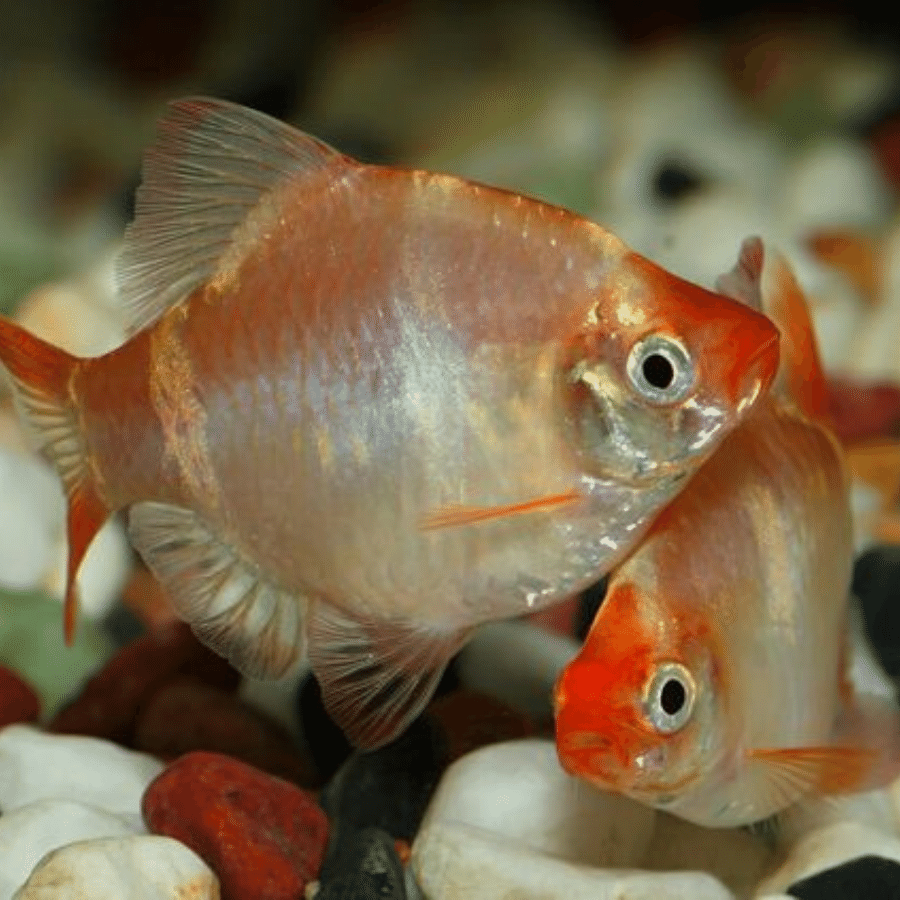
The Albino strain you see here carries no tiger stripes at all. Albinism in this species is a recessive genetic trait that suppresses melanin production, erasing the four black bands entirely and leaving behind a pale, pearlescent body in tones of cream, gold, and faint pink. The eyes glow translucent red because, without melanin, the retina’s blood vessels are visible through the pupil — a classic hallmark of true albinism as opposed to the merely pale “platinum” or “gold” morphs, whose eyes remain dark. The dorsal fin and snout retain a soft orange-red blush because the carotenoid pigments that produce those warm tones are untouched by the albino mutation; only the eumelanin responsible for black markings is lost. Despite looking radically different from its wild cousin, an Albino Tiger Barb is genetically the same species, behaves identically, schools with wild-type tigers happily, and interbreeds freely with them. The albino line is thought to have emerged on commercial Southeast Asian fish farms in the 1970s or 1980s, and has been line-bred as a stable strain ever since — it is not a modern genetic engineering product, just the result of decades of selective breeding for a naturally occurring recessive mutation.
Tank Setup
Think of a tiger barb tank as two zones: an open swimming raceway down the middle, and dense planted cover along the back and sides. Tigers are mid-water fish that spend most of their day cruising and sprinting, so an elongated tank footprint — 80 cm long or more — beats a tall, narrow cube every time. A 100-litre tank is the practical minimum for a school of eight adults; 150 litres is better, and anything upwards of 200 litres opens the door to more adventurous community pairings and larger shoals. Width matters as much as length: a shallow but long “breeder” style tank gives tigers more surface area to patrol and more oxygenated volume at the top where they burn off energy. Tall, narrow cube tanks are the worst geometry for this species — vertical space is largely wasted, the fish bump into each other during sprints, and in-shoal aggression rises noticeably.
Substrate is flexible — fine gravel, sand, or aquasoil all work. A darker substrate brings out the albino’s warm gold-pink tones far better than bare white sand, which can wash them out and bounce bright light back into their sensitive red eyes. Black basalt sand, dark aquasoils like Fluval Stratum or ADA Amazonia, or fine natural-coloured river gravels all produce excellent contrast. Aquascape with hardy stem plants (Hygrophila, Vallisneria, Ludwigia, Rotala, Cabomba, Bacopa) along the back third, a few patches of mid-ground species like Cryptocoryne wendtii or Anubias barteri, and one or two pieces of driftwood to break sight lines and provide territory landmarks. Leave at least the front 60 percent of the tank open for swimming. Floating plants — frogbit, salvinia, red root floaters, or water lettuce — are strongly recommended: they soften overhead lighting, give shy individuals shaded retreats, and encourage the school to display in the open rather than hide. Avoid delicate, slow-growing carpet plants like dwarf hairgrass or Monte Carlo in a tiger tank; the fish will uproot them within days during their sprinting games.
Lighting deserves a particular mention for the albino strain. Red-eyed albino fish are more photosensitive than their melanin-pigmented siblings — the iris cannot shade the retina as effectively, and prolonged exposure to bright cold-white overhead light can stress them visibly. Choose a moderate, warm-spectrum LED in the 5500–6500 K range, avoid running it on full output, and use a timer to limit photoperiod to 8–10 hours per day. A dense mat of floating plants across one third of the surface further dims and softens the light column directly beneath. In a tank set up this way, albinos display their full pearl-gold colouration and spend far more time swimming openly in the front half of the aquarium.
Do not neglect the tank lid. Tiger barbs are capable jumpers, especially when startled by a sudden movement, a quickly switched-on light, or an altercation within the shoal. A tight-fitting glass or mesh lid is non-negotiable, and the lid cutouts for filter returns and heater cords should be closed off with mesh or foam to prevent squeeze-through escapes. More than one Tiger Barb hobbyist has woken up to find a missing fish dried to the floor beside the tank — a completely preventable loss.
On the subject of health, Albino Tiger Barbs are robust fish but they are not immune to the common freshwater ailments. The three most frequent issues are white spot disease (ich), fin rot, and occasional bacterial infections following injury from nipping disputes. Ich presents as small white grains on body and fins, usually following a temperature drop or a new fish introduction without quarantine — treat by raising temperature gradually to 28–29 °C for two weeks alongside an over-the-counter ich medication. Fin rot appears as frayed, blackening fin edges and is almost always secondary to poor water quality; improve filtration and water-change schedule, and the fish will generally heal on their own. Quarantine any new tank additions for two weeks in a separate tank before introducing them to your display — this single habit prevents the vast majority of disease outbreaks in home aquariums. Albinos also benefit from slightly extra vigilance because their pale colour makes it harder to spot subtle colour changes that signal early stress or illness; watch for changes in swimming pattern, appetite, or social behaviour instead.
Tank
100 L minimum for a school of 8; 150 L or larger strongly preferred. Long footprint (80 cm+) beats a tall cube
Filter
Canister or oversized HOB rated for 5–8x tank turnover per hour. Sponge filters alone are insufficient for the waste load
Heater
100–200 W adjustable heater set to 25 °C, sized to roughly 1 W per litre
Lighting
Moderate, warm-spectrum LED. Avoid harsh cold-white overhead light — pair with floating plants to diffuse
Substrate
Fine gravel, sand, or aquasoil. Darker tones show off albino colouration best
Plants
Hardy stem plants (Hygrophila, Vallisneria, Ludwigia) along the back; Cryptocoryne in midground; floating plants up top
Hardscape
One or two pieces of driftwood or rock to break sight lines and create territory landmarks — NOT to reduce open swimming space
Thermometer & Test Kit
Glass or digital thermometer plus liquid tests for ammonia, nitrite, nitrate, pH
Water Parameters
6.0–8.0
ideal 7.0
22–28 °C
ideal 25 °C
5–15 dGH
Soft to moderately hard — wide tolerance
Albino Tiger Barbs are among the most adaptable tropical fish in the freshwater hobby. In their native habitat — clear forest streams of Sumatra and Borneo — water runs soft and slightly acidic, typically pH 6.0 to 6.8 with very low hardness, but generations of commercial farm breeding across Southeast Asia and Eastern Europe have produced fish that will happily live in harder, more neutral tap water. A pH anywhere from 6.0 to 8.0 is acceptable, with the ideal landing near neutral at pH 7.0. Temperature is similarly flexible: 22 to 28 °C covers the full range, and 25 °C suits them perfectly. Hardness from 5 to 15 dGH presents no problem, and the fish show no meaningful difference in colour or health across that range. Most Australian tap water, once aged and dechlorinated, falls comfortably within tiger barb tolerances with no adjustment needed.
What Albino Tiger Barbs absolutely require is clean, well-oxygenated water. They are active, muscular swimmers that chase, dart, and school at speed, and their metabolism demands plenty of dissolved oxygen. They also eat a lot and produce proportionally more waste than a similarly sized tetra. Undersized filtration is the most common mistake new keepers make — a school of ten tigers in a 100-litre tank needs a canister or a good hang-on-back rated well above the tank volume. Aim for 5 to 8 times tank turnover per hour, and perform 25–30% weekly water changes. Nitrate should stay below 20 ppm; ammonia and nitrite must read zero at all times. Unlike blackwater tetras, tigers are not fussy about tannins or driftwood-stained water, but they do appreciate moderate current to swim against — a powerhead or spray bar creating a gentle unidirectional flow along one side of the tank will produce noticeably more natural schooling behaviour than a still-water setup.
Temperature stability matters more than hitting any particular number. A rock-steady 25 °C is far better than a tank that swings between 23 and 27 °C across the day. Place the heater in a high-flow area near the filter return so warmed water is distributed evenly. Avoid sudden water changes with cold tap water: the 5 °C drop from a bucket of 20 °C winter tap water into a 25 °C tank can shock a school, triggering stress stripes (yes, even albinos develop faint stripes under extreme stress, as the underlying chromatophore structure is still partially present) and occasionally outbreaks of ich within 24–48 hours. Always temperature-match your water-change water to within one degree, and aim for a pH delta no greater than 0.3 between old and new water. Tigers tolerate a lot, but they do not tolerate whiplash.
For Australian keepers, a few regional notes are worth flagging. Summer heatwaves in Brisbane, Sydney, and Adelaide can push tank temperatures above 30 °C, which is outside the tiger barb comfort zone and dangerously close to the upper lethal limit. A tank placed against a sunny wall or in a non-air-conditioned room should be monitored closely in January and February; in extreme weather, float a sealed bag of ice in the sump or tank, angle a small fan across the water surface to boost evaporative cooling, and reduce feeding to lower metabolic heat load. Winter conditions in the southern states are the opposite problem — an unheated tank in a cold Melbourne or Canberra lounge room can drop below 20 °C overnight. A reliable adjustable heater, sized generously and ideally paired with a separate thermostat controller for redundancy, is non-negotiable outside the tropics. Tap water hardness varies significantly across Australian municipal supplies; Perth and Adelaide tap water is notably harder than Melbourne or Sydney, but all are well within tiger barb tolerance once dechlorinated.
Diet & Feeding
Albino Tiger Barbs are classic omnivores with appetites that outpace almost every other small tropical fish you are likely to keep. In the wild they graze on insect larvae, small crustaceans, algae, plant matter, fallen fruit, and anything soft enough to tear a chunk from. In the aquarium they will eat absolutely anything you drop in that fits their mouth, and then some. A high-quality tropical flake or a 1 mm sinking pellet should form the staple diet — any reputable brand with whole fish or insect meal as the first ingredient will do. Look for a product with at least 40% crude protein, some plant matter, and ideally added astaxanthin or paprika extract for colour enhancement. Cheap colour-enhancing flakes packed with wheat and soy fillers may produce bright packaging but not bright fish.
Supplement the staple two to three times a week with frozen or freeze-dried meaty foods: bloodworms, brine shrimp, daphnia, mysis, and tubifex are all accepted with enormous enthusiasm. Live foods — black worms, white worms, brine shrimp nauplii, grindal worms — trigger spectacular feeding frenzies and are excellent for conditioning breeders. Once a week, offer a vegetable component: blanched spinach, courgette slices, crushed peas with the skin removed, or a high-quality spirulina flake. This helps their digestion, reduces any tendency to nip at soft plants, and brings out richer carotenoid colour in the dorsal fin and snout. A weekly veg meal is arguably the single most underrated element of good tiger barb husbandry — fish kept on an all-protein diet tend to become constipated, duller in colour, and slightly more aggressive.
The single biggest mistake new keepers make is overfeeding. Tigers attack food so aggressively that it looks like they must be starving — but they are not. A healthy adult needs only what it can clean up within 60 seconds, twice daily. Excess food plunges to the substrate and spikes ammonia fast in a heavily stocked tiger tank. Feed smaller meals more often rather than one large meal: two modest portions a day is the sweet spot, and one weekly skip-day gives their gut a chance to clear. Skip-days are also useful for in-shoal behaviour: a lightly hungry tiger is more focused on foraging and less inclined to chase tank mates for entertainment. A chronically overfed tiger, by contrast, becomes restless and bored, with nothing else to do but harass its shoal.
Finally, watch your feeding technique. Rather than dropping a single pinch of flake in one corner of the tank, sprinkle it across the full width of the surface — this spreads the school out and lets slower or more timid individuals reach food without being bulldozed by the dominant males. Alternating feeding locations on different days also helps, as does feeding once at each end of the tank in quick succession for larger schools. The goal is to turn feeding time into a calm distributed event, not a single-point frenzy.
Colour Varieties
🐅 Wild Type (Sumatra Tiger)
The original form: golden body with four bold black vertical bands, red-orange snout, red-edged dorsal and caudal fins. Still the most widely sold strain worldwide.
🤍 Albino Tiger Barb
The variant offered here — a recessive line-bred colour morph with no melanin. Pale cream-gold body, no black bands, red eyes, and a soft orange flush on the dorsal fin and snout.
🟢 Green (Moss) Tiger Barb
A dominant green-black morph where melanin floods across the body so heavily that the bands merge into a deep iridescent green-black overlay. A striking, almost metallic contrast to the albino.
⭐ Platinum / Golden Tiger Barb
A bright, solid metallic-gold form without black bands — distinct from albino because the eyes remain dark. Sometimes sold as ‘gold’ or ‘golden’ tiger barb.
🏳 Long-Fin Tiger Barb
A line-bred form with extended, flowing dorsal, anal, and caudal fins. Available in wild, green, and albino base colours. Ironically, long-fin tigers are often bullied by their short-fin schoolmates.
🔴 GloFish Tiger Barb (not available in Australia)
A genetically modified fluorescent line sold in some overseas markets. Prohibited in Australia and not stocked here — listed only for completeness.
The Albino Tiger Barb’s pale colour is purely a pigment story, not a behavioural one. Under the skin, the fish is identical to its wild-type sibling: same hunger, same speed, same willingness to nip at a slow neighbour’s tail. That matters when you plan a tank — do not let the gentle appearance fool you. Keepers sometimes assume an albino fish will behave more softly than its fully pigmented cousin; with tiger barbs, it emphatically does not. If anything, albinos are slightly more sensitive to bright overhead lighting (their red eyes are more photosensitive than melanin-shielded eyes) and display best in tanks with floating plants, shaded areas, and a warm-spectrum LED rather than a cold blue-white. A mixed school of albino, wild, and green tigers is visually spectacular and reduces bullying within the shoal, since the fish cannot easily single out an individual “odd one out.” Many experienced keepers deliberately build their school from two or three colour forms for exactly this reason, and the result — a roving cluster of gold, green-black, and pearl-pink bodies, all weaving through the same stem plants — is one of the most visually memorable aquascapes in the small-tank hobby.
Colour saturation in the albino strain is noticeably diet-dependent. Fish raised on plain flake in brightly lit, barren tanks often look washed out — almost chalk-white — while the same fish moved to a planted tank with a darker substrate, warm lighting, and a varied diet rich in carotenoid-bearing foods (paprika-enriched pellets, frozen cyclops, brine shrimp, a weekly spirulina meal) will deepen to a glowing rose-gold within four to six weeks. Juveniles sold at 2–3 cm generally show pale, almost translucent bodies with the faintest orange flush in the dorsal fin; as they mature past 4 cm they fill out dramatically, developing a rounder body profile and a far richer peach-pink overall tone. A well-kept adult albino at 6 cm is a considerably more impressive animal than the little ghost-white juvenile that first arrived in the shop tank.
One note of caution: be wary of so-called “painted” or “dyed” tiger barbs occasionally offered by unscrupulous overseas sellers. These are wild-type or albino fish injected with fluorescent dye to produce artificial pink, purple, or blue colouration. The practice causes severe stress, high mortality, and short lifespans, and is illegal or discouraged in most developed markets. The albino strain you see here at Amazonia is a true line-bred genetic morph, not a dyed fish — its colour is permanent, heritable, and entirely the product of decades of ethical selective breeding. If a tiger barb’s colour looks like it was squeezed from a highlighter pen, it almost certainly was — walk away.
Male vs. Female
Sexing wild-type tiger barbs is relatively easy because the red-on-black contrast makes the male’s brighter fin edging obvious against the black bands. Sexing albinos is trickier — the whole fish is already pink and cream, so the subtle intensity differences that pop on a wild-type fish are considerably harder to read on an albino. The single most reliable cue in the albino strain is body profile: mature males stay slim and torpedo-shaped even after a big meal, while mature females develop a rounder, deeper belly as they pack eggs. View the school from above during feeding, and the females will stand out as the broader silhouettes, occupying roughly a third more width than the males even when both are relaxed. A second cue is the red flush on the snout — in breeding-condition males it warms to a clear red-orange, while females stay washed-out pink at best even when they are carrying a full clutch of eggs.
A third, subtler cue is behaviour. In any tiger barb school there is almost always a dominant male who patrols the mid-water, flaring his dorsal and displaying sideways to other males in short, ritualised confrontations. These mock-fights look alarming but very rarely result in actual injury; within a few seconds one fish breaks off and the dispute is settled for the next few minutes. Females by contrast spend more time in the main body of the shoal, grazing calmly and largely ignoring the male theatrics. Watch your tank for ten minutes at feeding time and you can often identify the two or three most dominant males by this behaviour alone. Juveniles under about 4 cm — including the 2–3 cm fish offered here — are essentially impossible to sex reliably and are always sold as unsexed shoals. If you specifically want a breeding pair, the answer is always the same: buy 8 or 10 juveniles, let them grow out together over three to four months, and select your pair once the sexes become clearly readable.
| Feature | Male | Female |
|---|---|---|
| Body Shape | Slim, torpedo-shaped, more elongated | Noticeably rounder, fuller belly — especially when carrying eggs |
| Adult Size | Slightly smaller, ~6 cm | Slightly larger, up to 7 cm and heavier-bodied |
| Snout / Nose | Bright red flush, intensifies during breeding courtship | Pale pink to nearly colourless, faint even in breeding condition |
| Dorsal Fin | Broader red band along the top edge; may be slightly extended | Narrower red edging, dorsal fin sits lower and shorter |
| Ventral / Anal Fins | Intense red-orange saturation | Pale pink to orange wash, less saturated |
| Behaviour | Chases rivals, flares fins, displays constantly in the shoal | Less confrontational, tends to swim in the main body of the school |
Breeding
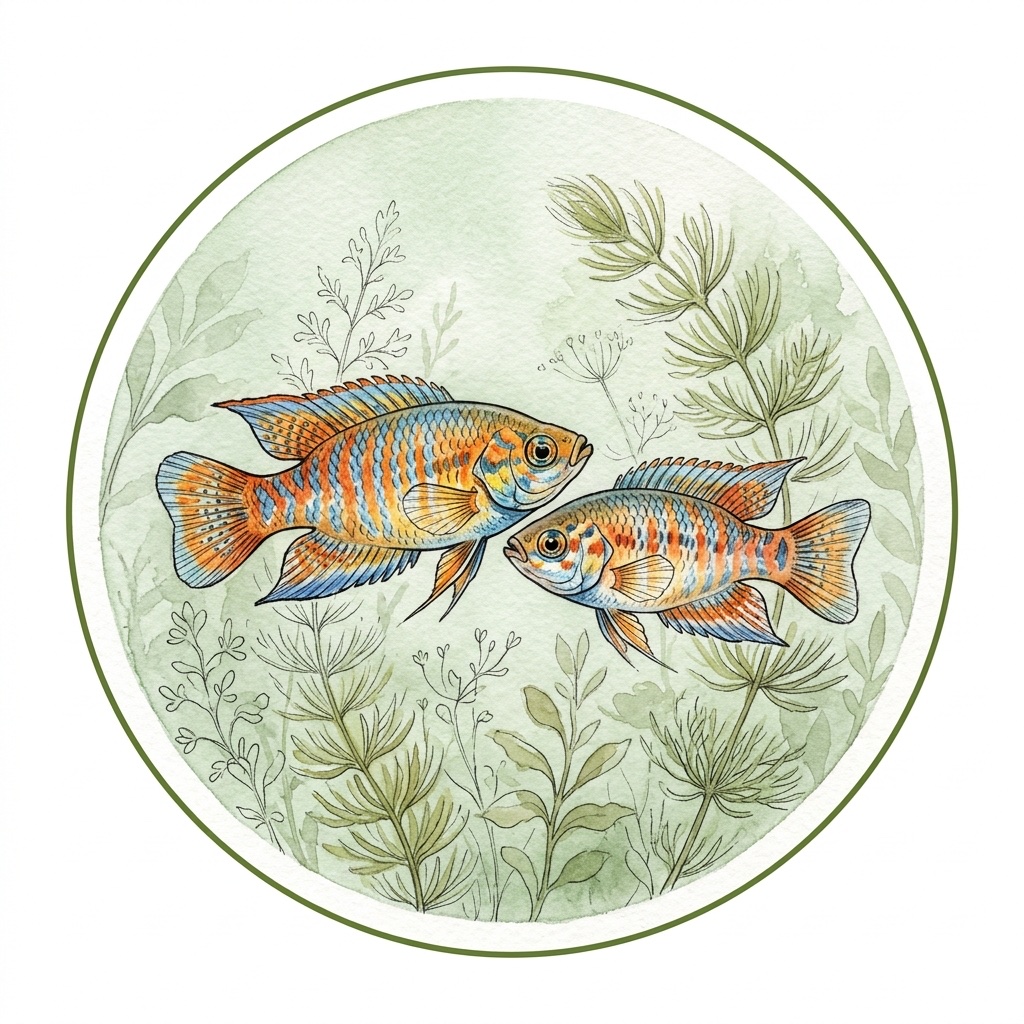
Week -2 to -1
Conditioning
Separate a plump female and a vivid male, feed heavily on live foods
Day 0
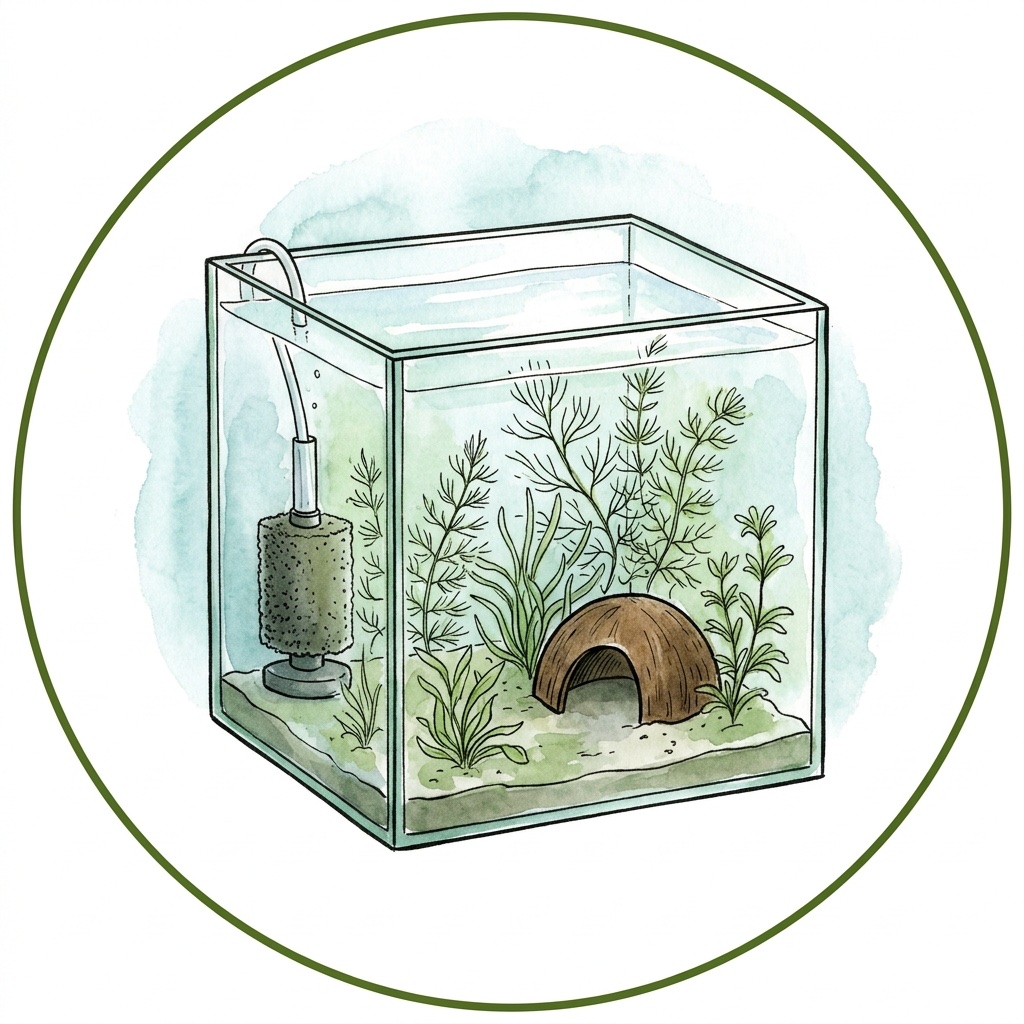
Spawning Tank Setup
Prepare a soft-water breeding tank with a spawning grid or dense mop
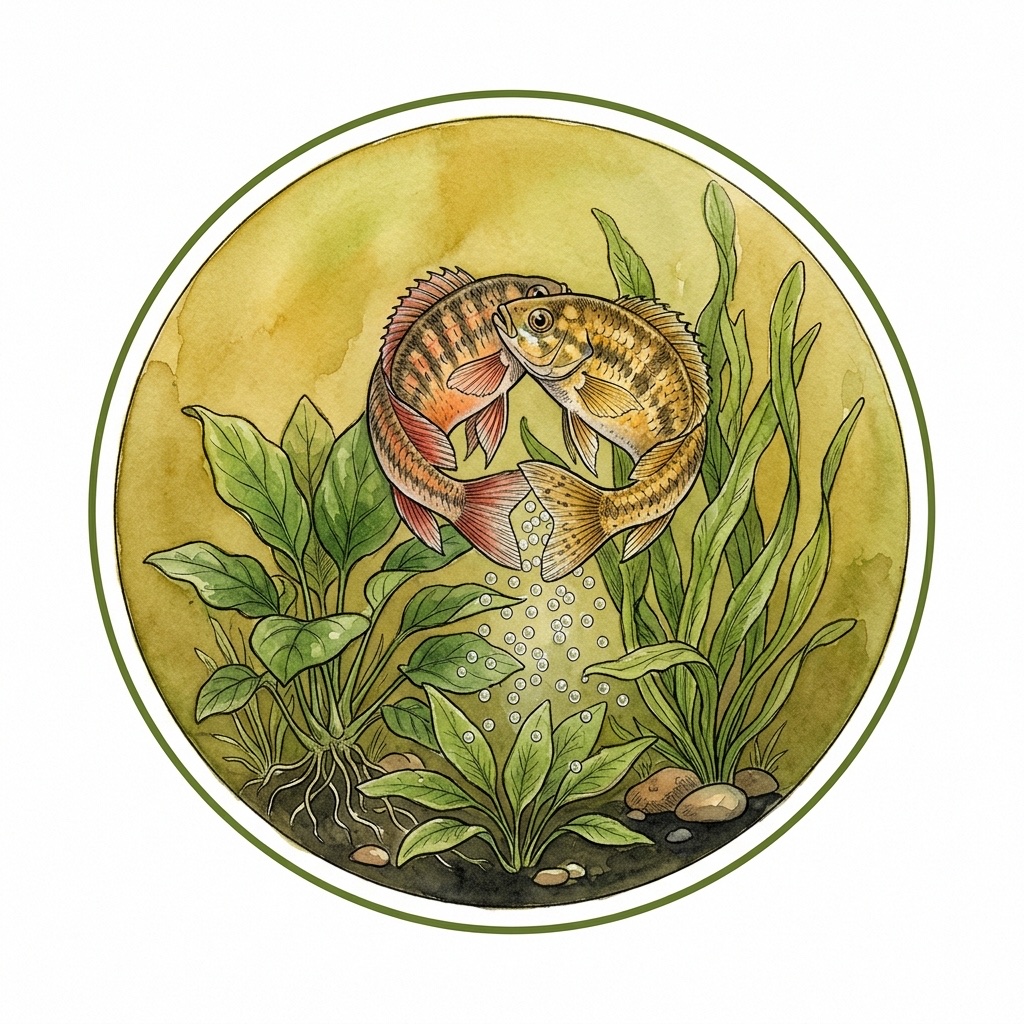
Day 1 (morning)
Spawning
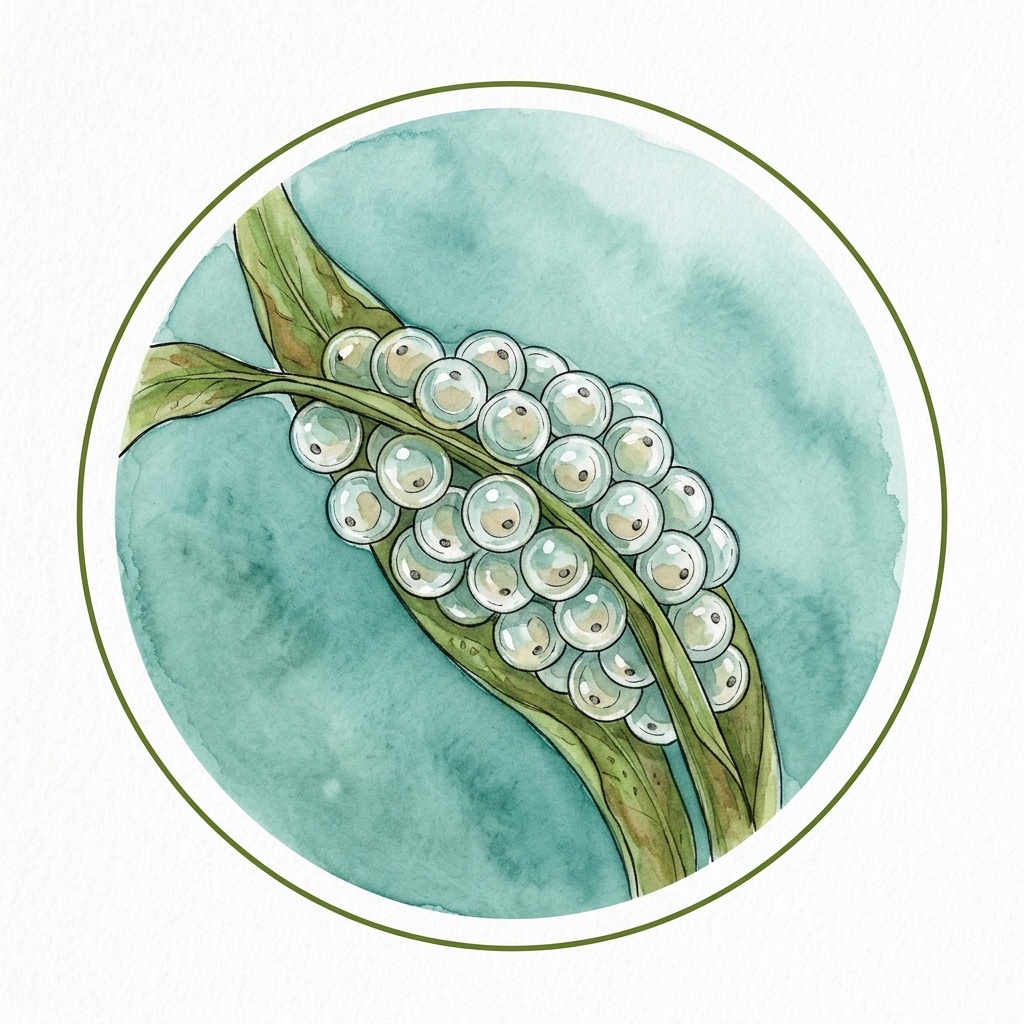
Male drives female through plants; 200–500 eggs scattered
Day 1 (immediately after)
Remove Parents
CRITICAL step — tigers eat their own eggs aggressively
Day 2
Hatching
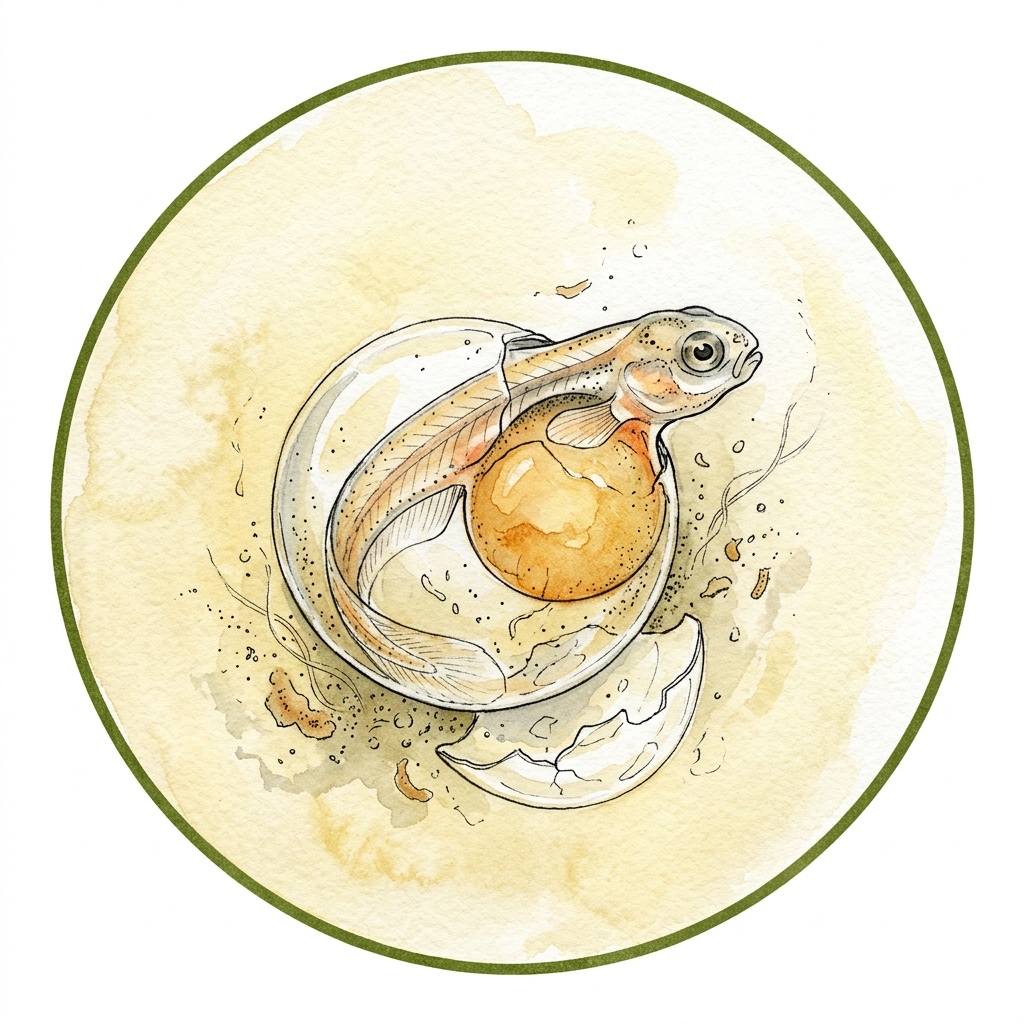
Eggs hatch within 24–36 hours; fry cling to surfaces on yolk sac
Day 4–6
Free Swimming & First Foods
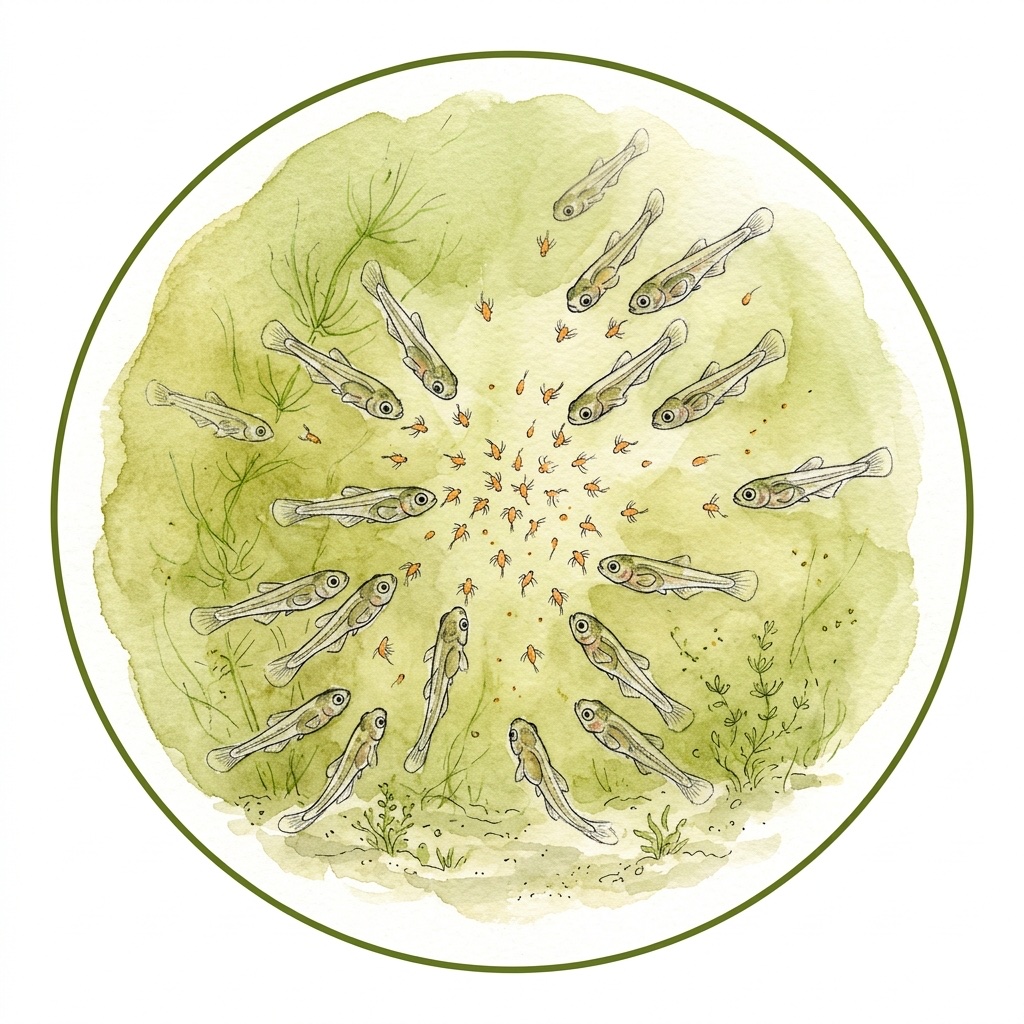
Feed infusoria then baby brine shrimp; grow out over 8–10 weeks
Conditioning
Select the deepest-bodied female and the male with the most saturated red on snout and fin edges. House them separately — or in two compartments of the same tank divided by mesh — for seven to fourteen days. Feed live baby brine shrimp, blackworms, and frozen bloodworms generously, two to three times daily. The female should round out noticeably with eggs; the male’s red accents will intensify from a dusty pink to a clear, almost scarlet orange. Water during conditioning should be clean and stable — perform small daily 10–15% changes to simulate the pre-rainy-season freshening that triggers breeding in the wild, and slowly edge the temperature up towards 26–27 °C. Plenty of protein and clean water are the two levers that get tigers into breeding condition reliably.
Spawning Tank Setup
Set up a separate 40–60 litre breeding tank with soft, slightly acidic water — pH 6.5 and 5–8 dGH is ideal. Add either a plastic spawning grid or mesh across the bottom (mesh size roughly 5–6 mm, large enough for eggs to fall through but small enough to exclude adult tigers), or a thick layer of spawning mops, java moss, and fine-leaved plants like Cabomba or Myriophyllum. The purpose is to let eggs drop through or into cover where the parents cannot easily reach them. Use a gentle sponge filter only — never a powered filter that could suck up eggs or fry — and keep lighting dim with the tank covered on three sides to reduce stress. Introduce the conditioned pair in the evening, feed lightly, and leave them alone overnight.
Spawning
Spawning usually begins shortly after first light. The male will drive the female through the plants or over the grid, flashing his fins and nudging her flanks. She releases small batches of clear, slightly adhesive eggs — anywhere from 200 up to 500 in a single session — which the male fertilises as they fall. The whole event typically lasts one to two hours. Watch closely: the moment spawning activity stops, the parents switch from courtship to predation.
Remove Parents
The single most important step in breeding tiger barbs is the immediate and complete removal of both parents the moment spawning ends. Tigers are enthusiastic egg-eaters and will happily consume an entire spawn within thirty minutes if left in the tank. Net the pair out gently and return them to the main tank. Lower the breeding-tank lighting to near-darkness — the eggs are light-sensitive. Maintain temperature at 26 °C.
Hatching
Viable eggs hatch roughly 24 to 36 hours after spawning. The tiny, nearly translucent fry initially lie on the bottom or cling to plants and tank walls, absorbing their yolk sacs. Infertile eggs will turn opaque white within 12 hours — siphon these out gently with a pipette or airline tube to prevent fungal bloom from spreading to viable eggs. A few drops of methylene blue in the water at spawning can help control fungus without harming the embryos.
Free Swimming & First Foods
Fry become free-swimming around day four to six and start hunting for food. Begin with infusoria or a liquid fry food for the first three to five days, then transition to freshly hatched baby brine shrimp as soon as they are large enough to take them — usually within a week. Feed small amounts four to six times daily and perform gentle 10 percent water changes every other day to keep nitrates low. A cycled sponge filter and daily siphoning of uneaten food and detritus from the bottom are essential, as tiger fry are sensitive to poor water quality in the first three weeks. Growth is steady: fry reach 1 cm by five weeks and can rejoin the main community around 2.5 cm at eight to ten weeks. At that size you can sex them roughly — slimmer vs plumper — and make early selections for future breeding projects. Albino genetics are recessive, so breeding two albinos produces 100% albino fry; crossing albino with wild produces all wild-coloured heterozygous carriers, which can then be paired back to an albino or another carrier to throw 25–50% albino offspring in the next generation. Many hobbyists maintain mixed-colour breeding colonies precisely to keep their genetic pool diverse while still producing albino offspring reliably.
Community Tank Mates
The Tiger Barb community rule is simple: keep them in a proper school, and match them only with fish that are fast, robust, and short-finned. A school of fewer than six tigers is a disaster waiting to happen — without enough of their own kind to direct in-group aggression at, tigers turn their attention outward, and the tank mates with the slowest fins bear the brunt. A school of eight is the safe minimum, ten to twelve is ideal, and sixteen is genuinely spectacular. Once the shoal is large enough, most nipping stays within the group as ritualised chasing and fin-flicking display, and external tank mates are largely left alone. The mechanism is well-documented in small-fish ethology: schooling fish kept in sub-threshold numbers experience chronic low-level stress and redirect aggression outward, while the same fish in a correctly sized shoal settle into stable in-group hierarchies that absorb their energy internally.
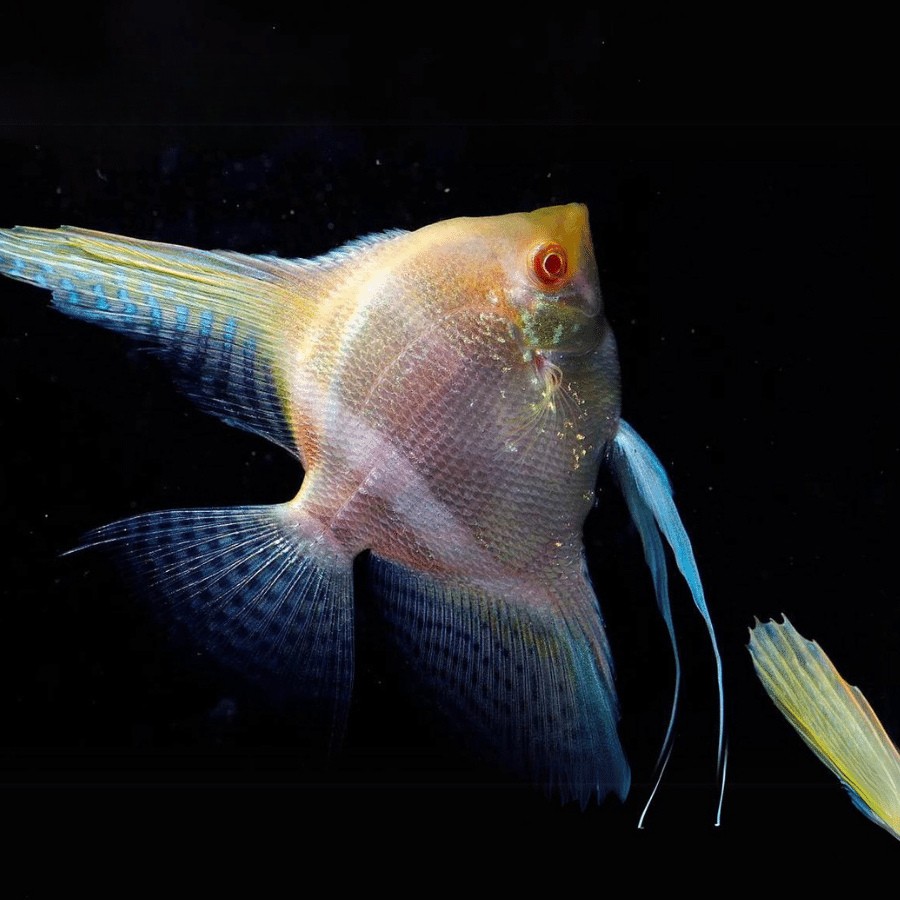
The forbidden list is equally simple and non-negotiable: no long-fin fish. That means no angelfish, no gouramis, no bettas, no fancy guppies, no long-fin goldfish, no Siamese fighters, no long-fin danios, no long-fin tetras, no veiltail or long-fin variants of any species — anything with trailing, delicate, or ornate finnage is effectively a target for tiger entertainment. There is no workaround. Adding more hiding places will not help. Adding more tigers will not help (indeed it makes it worse). Lowering temperature will not help. A large enough tank may briefly appear to help, but the moment the long-finned fish strays into the tigers’ sight line, the chase begins. Slow or timid fish are also poor matches: the tigers’ aggressive feeding style starves them and their confident body language stresses them. Discus, ram cichlids, dwarf gouramis, chocolate gouramis, and harlequin rasboras in undersized groups are all problematic pairings.
Shrimp are essentially live food, especially juveniles. A heavily planted tank with dense java moss and thickets of fine-leaved stems might preserve a few adult cherry shrimp in deep cover, but a breeding colony will never thrive, and any shrimplets produced will be picked off systematically within days. If you want a shrimp colony, do not keep tigers with it. Snails fare slightly better — adult nerite snails are too large and armoured to worry tigers, and mystery snails usually escape notice — but pond snails, ramshorns, and any juvenile gastropod will be attacked if food is ever short.
Good communities do exist, and they are some of the most visually active tanks in the hobby. Picture a 200-litre tank with a shoal of ten albino and wild-type tigers patrolling the middle column, a group of six giant danios or zebra danios sprinting at the surface, three bristlenose plecos grazing across driftwood and glass, and a pair of yoyo loaches busy in the lower zone. Every level of the tank is active, the tigers focus their energy on each other and on the fast-moving danios (who simply outrun them), and the whole display has the restless, busy character that makes tiger communities so rewarding. Build your community around robust, quick, short-finned species — other barbs, danios, loaches, Congo tetras, plecos, and the occasional larger rainbowfish in a big enough tank — and your albino tigers will reward you with their spectacular shoaling display without costing you the peace of the rest of your tank.
A final note on introduction order. When setting up a new tiger barb community, add the tigers last, not first. If tigers are established before the tank mates arrive, they treat the whole tank as their territory and attack newcomers aggressively. Introduce slower or more peaceful species first (plecos, corydoras, loaches), let them settle for a week or two, then add the full tiger school together in one go. Never drip a single tiger or a pair into an existing tank — the minority individuals will be targeted by any established residents and may also lash out at tank mates out of stress. A full shoal introduced simultaneously establishes its internal hierarchy within a day or two and leaves the rest of the tank largely alone afterwards. If you are upgrading an existing tiger school to a larger tank, rearrange the hardscape before moving the fish so the space looks unfamiliar to everyone — this resets territorial claims and reduces post-move aggression dramatically.
A word on the long-running myth that tiger barbs can be “calmed down” by keeping them at the cooler end of their temperature range: it is partly true, but not a solution. A tank run at 22–23 °C does produce a slightly slower, less frenetic shoal, but it also pushes the fish close to their lower thermal comfort limit, raises their susceptibility to disease, and does nothing to protect long-finned tank mates, who will still be nipped — just at a slightly slower pace. There is no temperature at which tigers become safe with angelfish or gouramis. Build the tank around the species you have, not the species you wish they were. That single mindset change — accepting tigers for what they are, and choosing their tank mates accordingly — is the difference between a stressful, constantly-patched-up community and one of the most rewarding small-fish aquariums you can own.
| Species | Why | |
|---|---|---|
| ✅ | Wild-Type Tiger Barb | The same species — albinos school naturally with wild and green tigers, and a mixed-colour shoal of 10+ is the single best way to dilute in-group aggression and fin-nipping |
| ✅ | Green (Moss) Tiger Barb | Same species, different pigment. Mixes seamlessly with albinos and wild types, and the colour contrast in a mixed shoal is spectacular |
| ✅ | Cherry Barb | Smaller, peaceful barb cousin. Fast enough to avoid nips, shares identical water parameters, and occupies the same mid-water zone without conflict |
| ✅ | Rosy Barb | Similar size and energy level; both species handle each other’s enthusiasm without stress. Robust-finned so unlikely to be nipped |
| ✅ | Giant Danio | Fast-swimming, top-level schooler with sturdy short fins — easily outpaces any tiger and pulls their attention to the upper water column |
| ✅ | Zebra Danio | Quick, hardy, short-finned schooling fish that thrives in the same temperature range and is far too fast for a tiger to catch |
| ✅ | Congo Tetra | Larger tetra with robust finnage. Despite having longer fins, their size and schooling behaviour keep tigers respectful |
| ✅ | Bristlenose Pleco | Armoured, nocturnal, and entirely ignored by tigers. Handles the same water chemistry and cleans up uneaten food in the bottom zone |
| ✅ | Clown Loach | Active, robust, same temperature range. Their own busy social life keeps them uninterested in the tiger shoal, and vice versa. Requires large tank 200 L+ |
| ✅ | Yoyo Loach | Bottom-level character fish that shrugs off barb antics. Fast enough to handle itself, and snail control is a bonus |
| ❌ | Angelfish | Long, trailing fins are a prime tiger target. Stressed angelfish develop shredded fins and secondary infections within weeks. The classic mismatched pairing of the hobby — avoid |
| ❌ | Betta (Male) | Flowing finnage is irresistible to tigers. A male betta will be stripped of his fins in 24–48 hours in a tiger tank |
| ❌ | Gourami (Pearl, Dwarf, Honey, Three-Spot) | Long trailing pectoral feelers and soft, flowing fins. Tigers will shred the feelers repeatedly, causing chronic stress and fin rot |
| ❌ | Guppy (Male) and Endler’s | Ornate long fins are catastrophic in a tiger tank. Males will be nipped to the body within days, and the size difference also makes them a target |
| ❌ | Cherry Shrimp and other Dwarf Shrimp | Tigers are fast, greedy, and opportunistic. Adult shrimp may survive in a very densely planted tank, but shrimplets will be picked off systematically — treat shrimp as live food in this tank |
| ❌ | Discus and timid slow-feeding cichlids | Slow, deliberate feeders with delicate skin and finnage. Tigers will outcompete them for food and nip at fins during feeding. Completely incompatible |
Quick Reference
| Scientific Name | Puntigrus tetrazona (albino strain) |
| Adult Size | 6–7 cm (sold at 2–3 cm) |
| Lifespan | 5–7 years |
| pH | 6.0–8.0 (ideal 7.0) |
| Temperature | 22–28 °C (ideal 25 °C) |
| Hardness | 5–15 dGH |
| Min Tank Size | 100 L for a school of 8+ |
| School Size | 8+ (10–12 recommended, 6 is the absolute floor) |
| Diet | Omnivore — flake/pellet staple plus frozen & live |
| Care Level | Easy (but NOT community-safe with long-fin fish) |
| Temperament | Semi-aggressive, notorious fin-nipper |
| Tank Position | Middle — open swimming with planted cover |
| Breeding | Egg scatterer; remove parents immediately after spawn |
| Avoid With | Angelfish, gouramis, bettas, fancy guppies, shrimp |
| Price | $8.95 AUD |
Related Products

Reviews
Clear filtersThere are no reviews yet.