🏅 At a Glance
| Common Name | Pan’s Ranchu (Jumbo) |
| Scientific Name | Carassius auratus (Chinese Ranchu variety) |
| Farm Origin | Pan’s Farm , Fuzhou, China 🇨🇳 |
| Adult Size | 18–22 cm (Jumbo grade) |
| Lifespan | 10–15 years |
| Temperament | Peaceful, dignified |
| Care Level | Intermediate |
| Viewing Style | Side-view (Chinese tradition) |
| Grade | Premium — Hand-selected from Pan’s Farm |
The Pan’s Farm Legacy
Pan’s Farm is widely regarded as the most respected ranchu-only breeding operation in Fuzhou, China. While many Chinese farms breed a mix of goldfish varieties, Pan’s has dedicated its entire programme exclusively to ranchu for over two decades, refining bloodlines with a singular focus that few competitors can match. The farm’s fish are exported to serious collectors in Japan, the United States, Europe, and Australia — a testament to the quality and consistency of their output.
Pan’s ranchu descend from traditional Chinese eggfish bloodlines that Fuzhou breeders have refined over generations. While Japanese breeders pursued top-view perfection, the Fuzhou school diverged in a bold aesthetic direction. Where Japanese breeders optimise for top-view appreciation in shallow ceramic bowls, Fuzhou breeders — Pan’s Farm chief among them — selected for side-view magnificence in glass aquariums. This shift in viewing angle drove dramatic changes in body shape: taller backs, steeper arches, more prominent head growth, and a compressed, powerful silhouette designed to be admired through glass.
Pan’s Farm is also credited with creating the now-iconic Milk Cow Ranchu — a striking black-and-white colour form with irregular Holstein-style patches that took the global goldfish community by storm. This innovation cemented Pan’s reputation as not just a breeder but a true pioneer in ranchu genetics. Their willingness to experiment with colour while maintaining strict structural standards is what sets the farm apart.
Fuzhou’s subtropical climate gives Pan’s Farm a favourable environment: mild winters and warm, humid summers create extended breeding seasons and excellent growing conditions. The region’s long goldfish-breeding heritage — Fuzhou has been a centre of fancy goldfish production for centuries — means Pan’s operates within an ecosystem of specialist knowledge, supply chains, and competitive pressure that continually drives quality upward.
🇨🇳 Chinese Heritage — Fuzhou
🏆 World-Renowned Breeder
🔷 Jumbo Grade
Water & Tank Setup
Pan’s ranchu are raised in Fuzhou’s subtropical climate, where summers are warm and humid and winters are mild. This origin means they are comfortable across a broad temperature range and adapt well to Sydney’s similar coastal climate. In Sydney’s climate, they thrive during the warmer months without supplemental heating and only need protection from the coldest winter lows. A stable temperature range of 20–24°C is the sweet spot for maintaining active metabolism, good appetite, and strong colour display without the stress that extreme heat or cold can cause.
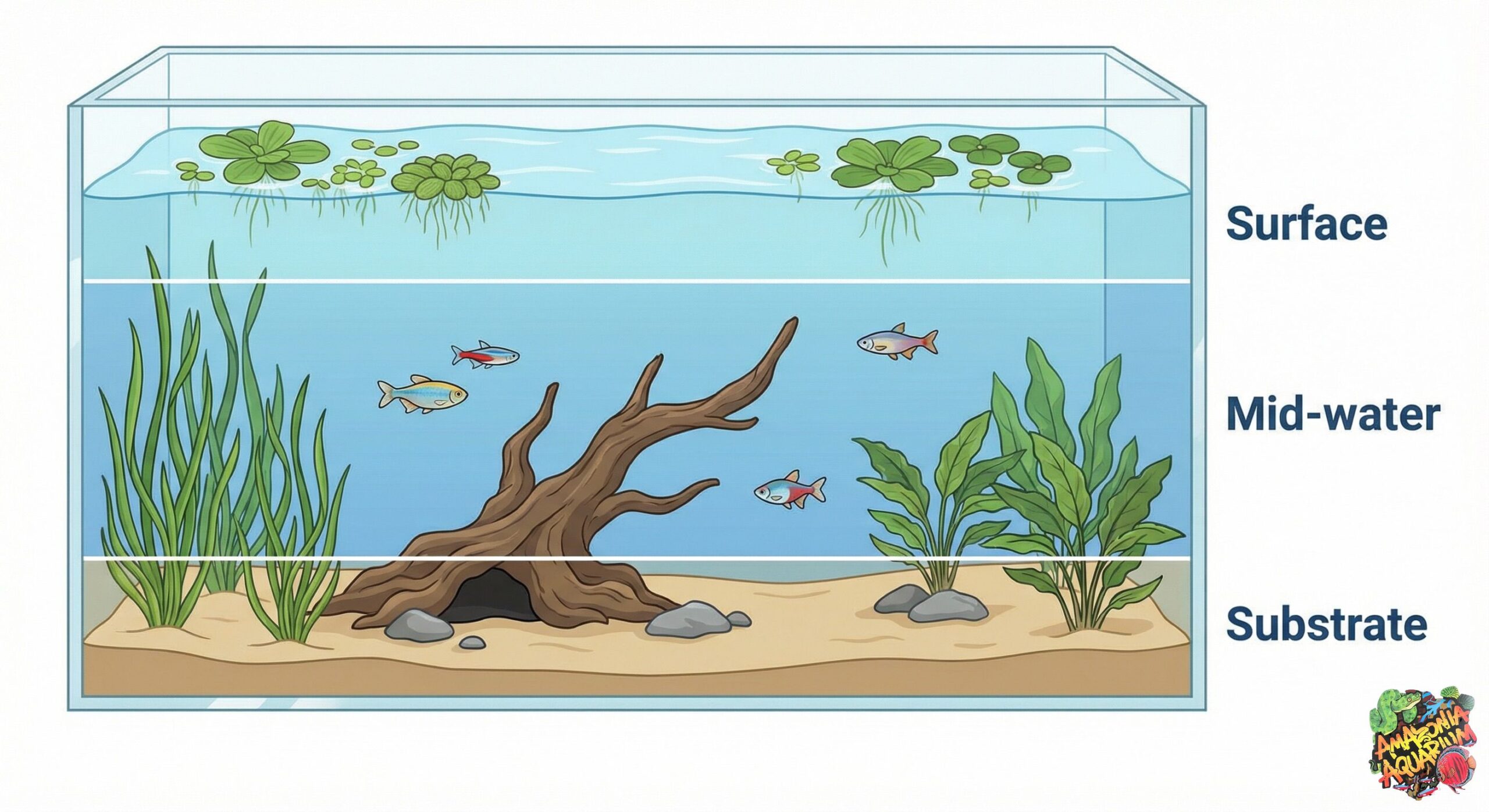
Water quality is more important than water temperature for Pan’s ranchu. They produce significant waste relative to their body mass — jumbo specimens especially so — and ammonia spikes are the most common cause of health problems in newly purchased fish. Invest in robust biological and mechanical filtration, keep nitrates below 20 ppm with regular water changes, and maintain a neutral to slightly alkaline pH. Sydney tap water, once dechlorinated, is generally well-suited for ranchu keeping with minimal adjustment needed.
A glass aquarium is essential for appreciating Pan’s ranchu — these fish were literally bred for side-view display, and keeping them in a pond or opaque container defeats the purpose. For a single jumbo specimen, a minimum of 120 litres is recommended; for a pair or small group, 200 litres or more is strongly advised. Choose a tank with generous floor space rather than height, as ranchu are bottom-oriented swimmers that spend much of their time cruising the lower half of the water column.
Filtration should be rated for at least double the tank volume per hour. A quality canister filter is the preferred choice for jumbo goldfish — it provides strong mechanical and biological filtration while keeping the tank interior clean and uncluttered. Supplement with an air stone or sponge filter for additional oxygenation, particularly during Sydney’s hotter summer months when dissolved oxygen levels drop. Weekly water changes of 30–40% are non-negotiable for maintaining the pristine conditions that premium ranchu deserve.
Essential Equipment
Feeding Your Pan’s Ranchu
Jumbo Pan’s ranchu need a high-protein, nutrient-dense diet to maintain their considerable body mass and support continued wen development. Saki-Hikari Fancy Goldfish (the purple bag) is the gold standard among ranchu keepers — its carefully balanced formulation includes Hikari Germ, a probiotic that aids digestion and reduces waste, along with carotenoids that enhance red colouration. As a sinking pellet, it suits the ranchu’s bottom-feeding orientation perfectly and eliminates the air-gulping that can trigger swim bladder issues with floating foods.
Supplement the staple pellet diet with frozen bloodworms, brine shrimp, and live daphnia to provide variety and enrichment. Pan’s Farm feeds their fish multiple small meals throughout the day in warm-water conditions — for home aquariums, two feedings per day during the warmer months (spring through autumn) and one feeding per day in winter is a practical schedule. Feed only what the fish can consume within two to three minutes at each session. One fasting day per week aids digestion and helps prevent the constipation and swim bladder problems that fancy goldfish are prone to.
Sinking Pellets (Saki-Hikari)
Frozen Bloodworm / Brine Shrimp
Live Daphnia / Artemia
Fasting Day (aids digestion)
For colour enhancement, look for foods rich in astaxanthin and spirulina — these natural pigments intensify red and orange tones without the artificial look that synthetic colour enhancers can produce. Saki-Hikari already includes colour-boosting ingredients, but occasional treats of spirulina-enriched pellets or fresh blanched peas (which also aid digestion) round out a comprehensive feeding programme. Jumbo fish with mature wen growth may also benefit from occasional krill or mysis shrimp, which provide the protein needed to maintain healthy head growth tissue.
Health & Seasonal Care
Pan’s ranchu are generally hardy fish, conditioned by the rigorous culling and high-quality husbandry practices at the farm. Chinese-raised goldfish are acclimatised to temperate-subtropical conditions and tend to arrive in Australia in robust health, having been professionally packed and shipped by experienced exporters. That said, the transition from a Chinese farm pond to an Australian home aquarium involves significant environmental changes — temperature, water chemistry, bacterial populations — and the acclimation period is the most critical window for health management.
The most common health issues in ranchu are swim bladder disorder (often diet-related), ich (white spot disease, triggered by temperature fluctuations), and wen infections (bacterial or fungal growth in the folds of the head growth). Swim bladder problems are best prevented through proper diet — sinking pellets, regular fasting days, and avoiding overfeeding. Ich is managed by maintaining stable temperatures and avoiding sudden drops. Wen infections require early detection: watch for reddening, white patches, or unusual texture changes on the head growth, and treat promptly with clean water and if necessary, targeted antibacterial treatment.
Seasonal Care Calendar (Australia)
When you first bring your Pan’s ranchu home from Amazonia, quarantine it in a separate tank for at least two weeks before introducing it to an established community. Keep the quarantine tank bare-bottom with a sponge filter and air stone. Add aquarium salt at 1–2 grams per litre as a mild preventative against parasites and bacterial infection. Observe the fish closely during this period: healthy ranchu should be active, curious, and feeding eagerly within the first 48 hours. Any fish that remains lethargic, clamps its fins, or refuses food beyond day three warrants closer investigation and possible treatment.
Quick Reference
| Tank Size | 120L+ (jumbo size needs space) |
| Temperature | 20–24°C (Subtropical Fuzhou origin) |
| pH | 7.0–7.5 |
| Diet | Saki-Hikari sinking pellets + frozen/live supplements |
| Tankmates | Other fancy goldfish of similar size only |
| Special | Pan’s Farm pedigree — premium collector-grade specimen |
Frequently Asked Questions
What makes Pan’s Ranchu different from Japanese Ranchu?
How big do Jumbo Pans Ranchu get?
What should I feed for maximum growth?
Can I mix different Ranchu varieties?
Are Cow Ranchu (black and white) from Pan’s Farm?
The Pan’s Signature Look
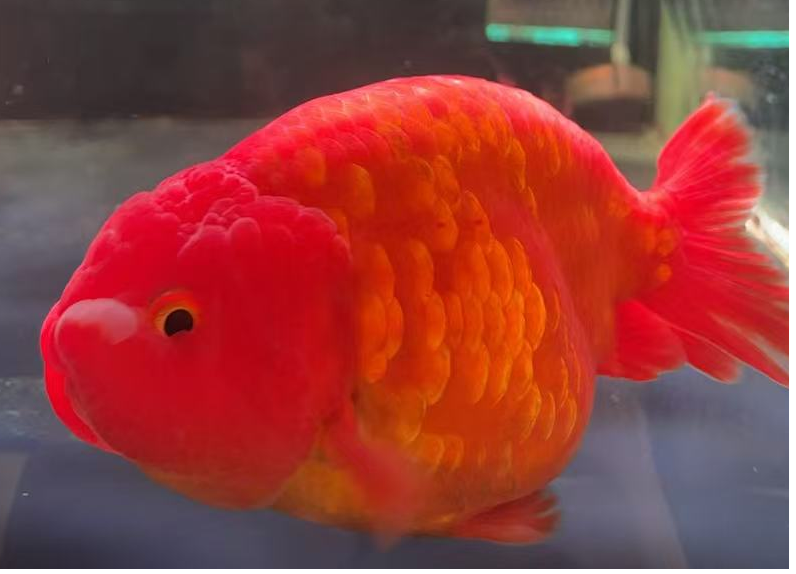
The defining feature of a Pan’s ranchu is the back arch. Viewed from the side, the dorsal profile rises steeply from behind the head in a smooth, scimitar-shaped curve that peaks well above the midline of the body before sweeping down toward the tail. This exaggerated arch is the hallmark of Chinese side-view ranchu and the trait that Pan’s Farm has pushed further than almost any other breeder. A top-grade Pan’s specimen will have a back so tall and curved that it appears almost architectural — a living crescent that commands attention in any tank.
The tail is the second signature. Pan’s ranchu carry extremely short, tightly tucked caudal fins that barely extend past the peduncle. Despite their diminutive size, these tails generate powerful thrust, and watching a jumbo Pan’s ranchu glide through the water with seemingly effortless propulsion is part of the variety’s charm. The thick, muscular peduncle — the section between the body and the tail — provides the mechanical leverage that makes this possible.
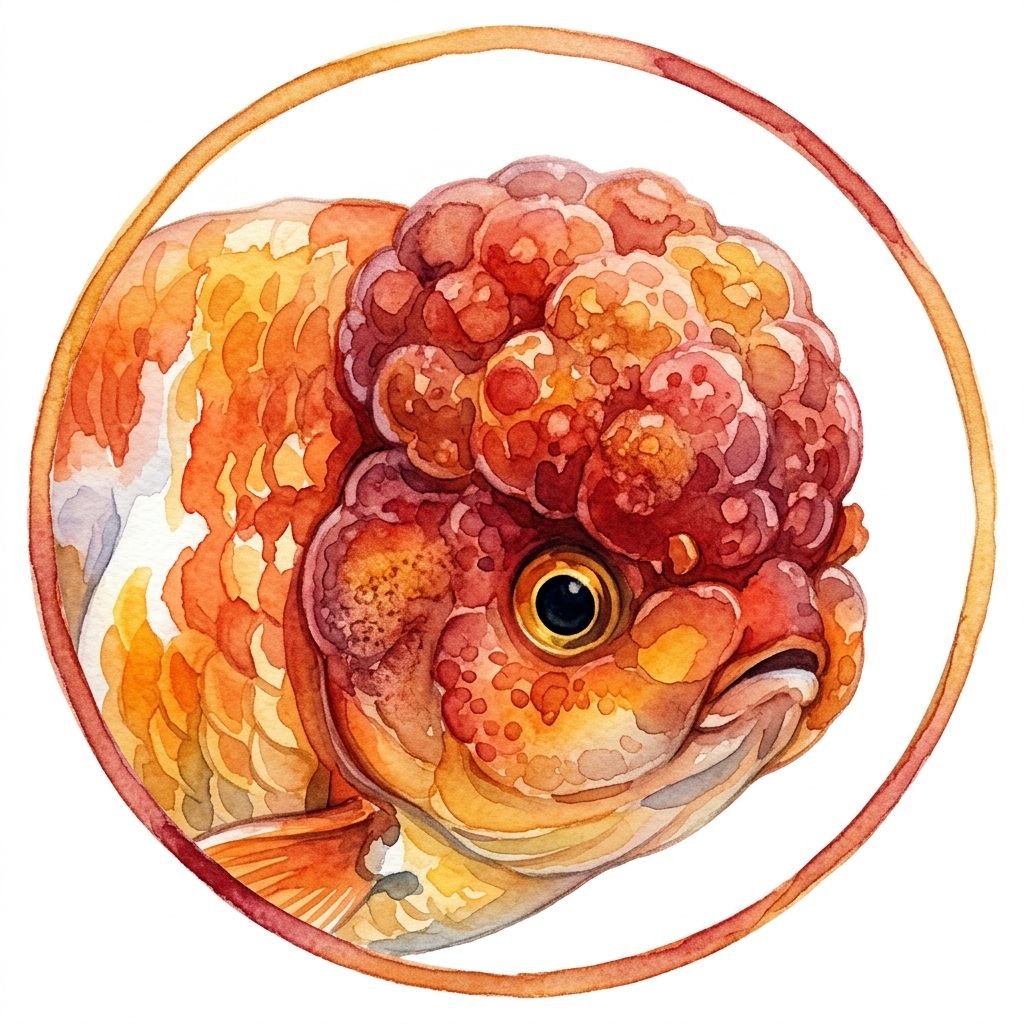
Head growth (wen) on Pan’s ranchu tends toward the dragon-head type, with prominent funtan (the forward-facing growth over the mouth and cheeks) that gives the fish a bold, imposing facial profile. On jumbo specimens, the wen has had years to develop and often frames the face in textured, raspberry-like growth that adds tremendous character. The overall impression is one of compact, rounded power — a fish that looks simultaneously dignified and formidable.
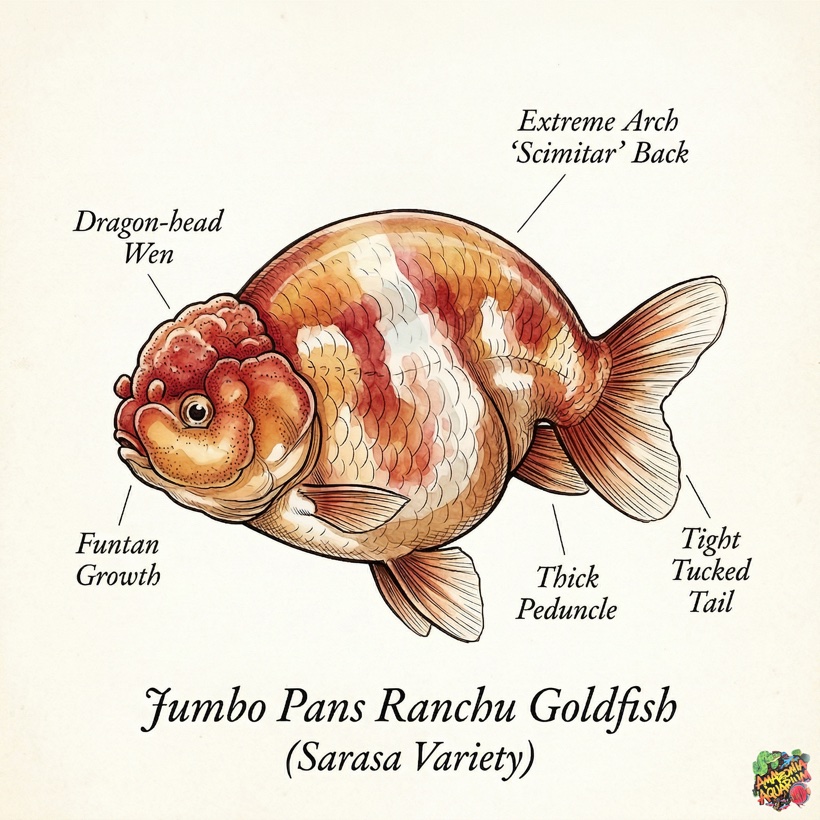
Jumbo Pan’s Ranchu in profile — note the signature steep back arch, tucked tail, and mature head growth that define this Fuzhou breeding line.
Colour Varieties
🔴⚪ Red & White (Sarasa)
The classic Pan’s colour pattern — bold patches of deep metallic red over a clean white base. Pan’s Farm selects for sharp, well-defined colour boundaries rather than gradual blending, giving their sarasa fish a crisp, graphic quality.
🐄 Milk Cow
Pan’s signature creation and their most famous contribution to the goldfish world. Irregular black and white patches mimic Holstein dairy cow markings. No two Milk Cow ranchu are alike, and the best specimens display balanced, high-contrast patterning across the entire body.
🔴 Full Red
A uniform deep metallic red across the entire body and fins. Pan’s full-red fish are prized for colour depth and consistency — the red should be rich and saturated from nose to tail without pale patches or fading.
🌈 Tri-Colour
Red, white, and black in a three-tone mosaic. Tri-colour Pan’s ranchu are relatively uncommon and highly sought after when the three colours are well-balanced and distinctly separated.
⚫⚪ Panda
Striking black and white contrast without any red pigment. The best panda specimens have jet-black patches over snow-white skin, creating a bold graphic pattern that is particularly dramatic on jumbo-sized fish.
Jumbo specimens represent the full expression of Pan’s genetic potential. At 18 cm and above, the back arch reaches its maximum height, the head growth has had multiple seasons to mature and texturise, and the body fills out to a deep, rounded profile that carries real visual weight. Colour also tends to intensify and stabilise in mature fish — the reds become deeper, the whites become cleaner, and patterns that were indistinct in younger fish resolve into sharp, defined boundaries. This is why experienced collectors specifically seek out jumbo-grade Pan’s ranchu: you are seeing the finished product of years of growth and genetic expression.
Appreciating a Pan’s Ranchu
Pan’s ranchu are bred to be admired from the side of a glass aquarium — this is the fundamental difference from the Japanese tradition, where ranchu are viewed from above in shallow bowls or ponds. Every structural feature of a Pan’s ranchu is optimised for this lateral viewing angle: the dramatic back arch creates a striking silhouette, the compressed body presents a large, colourful flank, and the short tail draws the eye forward toward the head. When a well-bred Pan’s ranchu turns broadside in your tank, the effect is genuinely breathtaking — a living sculpture of curves and colour framed by glass.
Judging a top-grade Pan’s specimen comes down to three key criteria. First, the back arch: it should be tall, smooth, and symmetrical — a single unbroken curve from head to tail without lumps, dips, or asymmetry. Second, the head growth: the wen should be well-developed and balanced, with prominent funtan that complements the body without overwhelming it. Third, the tail tuck: the caudal fin should be extremely short and tight against the peduncle, yet the fish should still swim powerfully and with good control. A fish that excels in all three areas while carrying strong colour and clean skin is a genuinely rare specimen — and that is exactly what Pan’s Farm selects for.
Every Pan’s ranchu that leaves the farm for export has been hand-selected from much larger production batches. Pan’s culling standards are notoriously strict — the vast majority of each spawn is culled at multiple growth stages, with only the top fraction progressing to the next round of evaluation. Fish destined for international export undergo a final selection that prioritises structural perfection, colour quality, and overall health. By the time a Pan’s ranchu reaches Amazonia Aquarium in Sydney, it has survived multiple rounds of expert evaluation that most fish never pass.
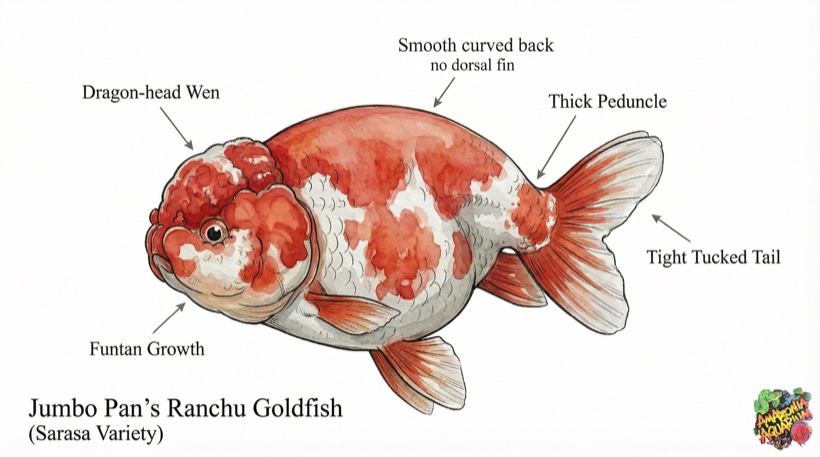
Pan’s Ranchu anatomy — key judging points include the steep back arch, compact tail tuck, prominent funtan head growth, and thick muscular peduncle.
Related Products
Reviews
Clear filtersThere are no reviews yet.