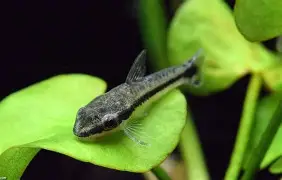
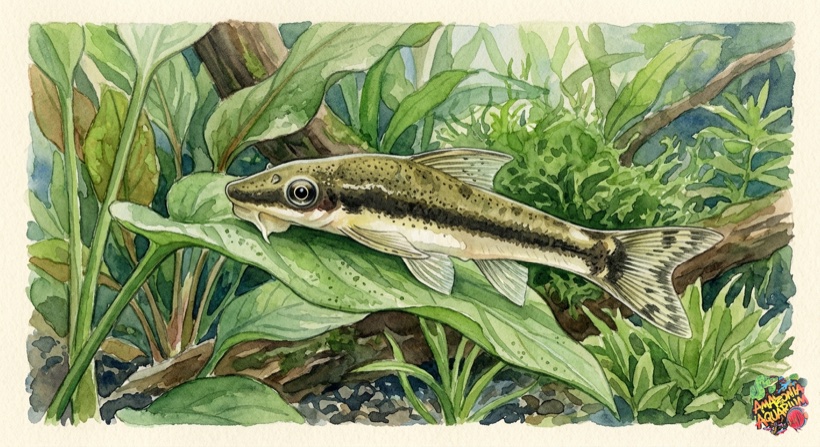
🐟 Species at a Glance
| Scientific Name | Otocinclus vittatus |
| Common Names | Oto, Oto Catfish, Dwarf Suckermouth |
| Family | Loricariidae (armoured catfish) |
| Origin | South America — Amazon and Orinoco basins |
| Adult Size | 3–4 cm (1.2–1.6 in) |
| Lifespan | 3–5 years |
| Temperature | 22–28 °C (72–82 °F), ideal 24–26 °C |
| pH Range | 6.0–7.5 |
| Hardness (dGH) | 4–15 dGH |
| Diet | Herbivore — algae, biofilm, blanched vegetables |
| Min Tank Size | 40 L (10 gal) for a group of 6 |
| Care Level | Easy–Medium |
| Temperament | Completely peaceful, social — keep 6+ |
| Tank Position | All surfaces — glass, leaves, hardscape |
Essential Equipment
Day 1–7
Conditioning
Day 7–14
Spawning Triggers
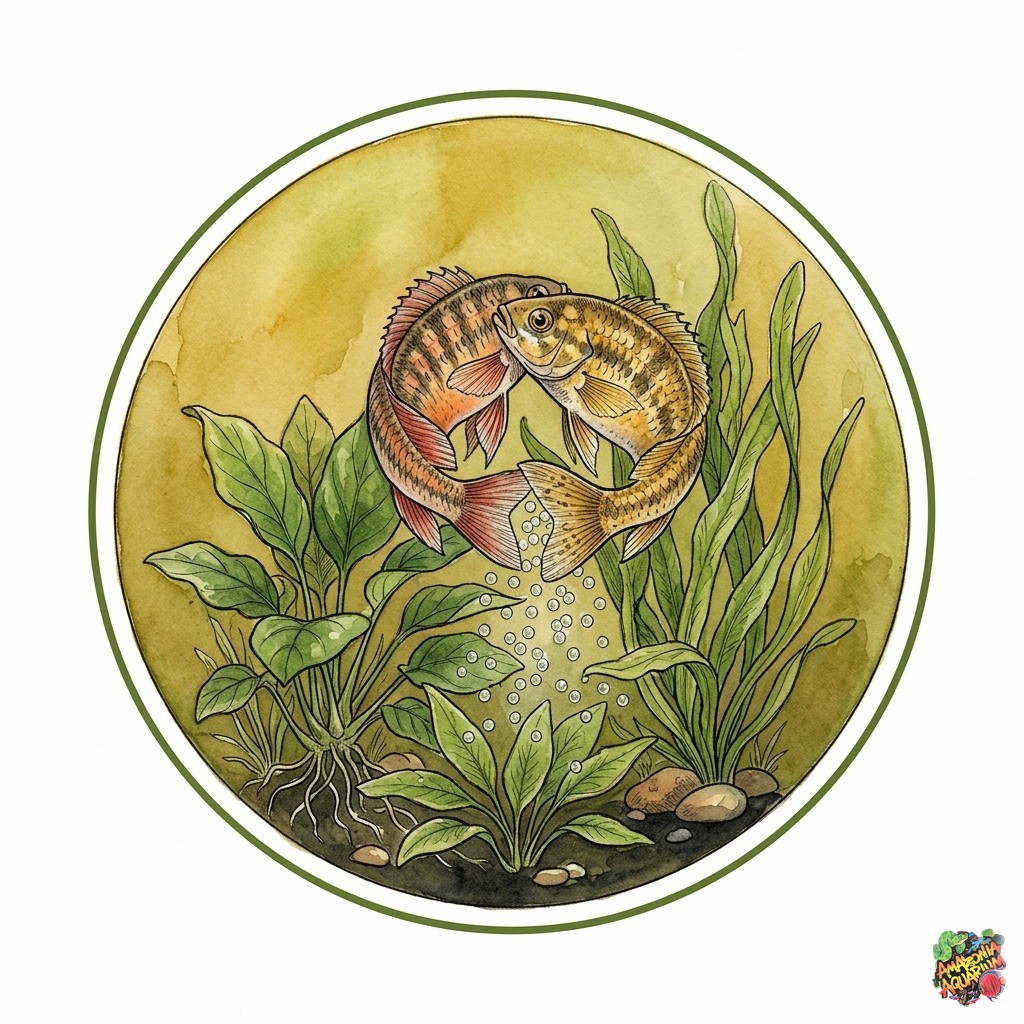
Day 14–17
Egg Laying
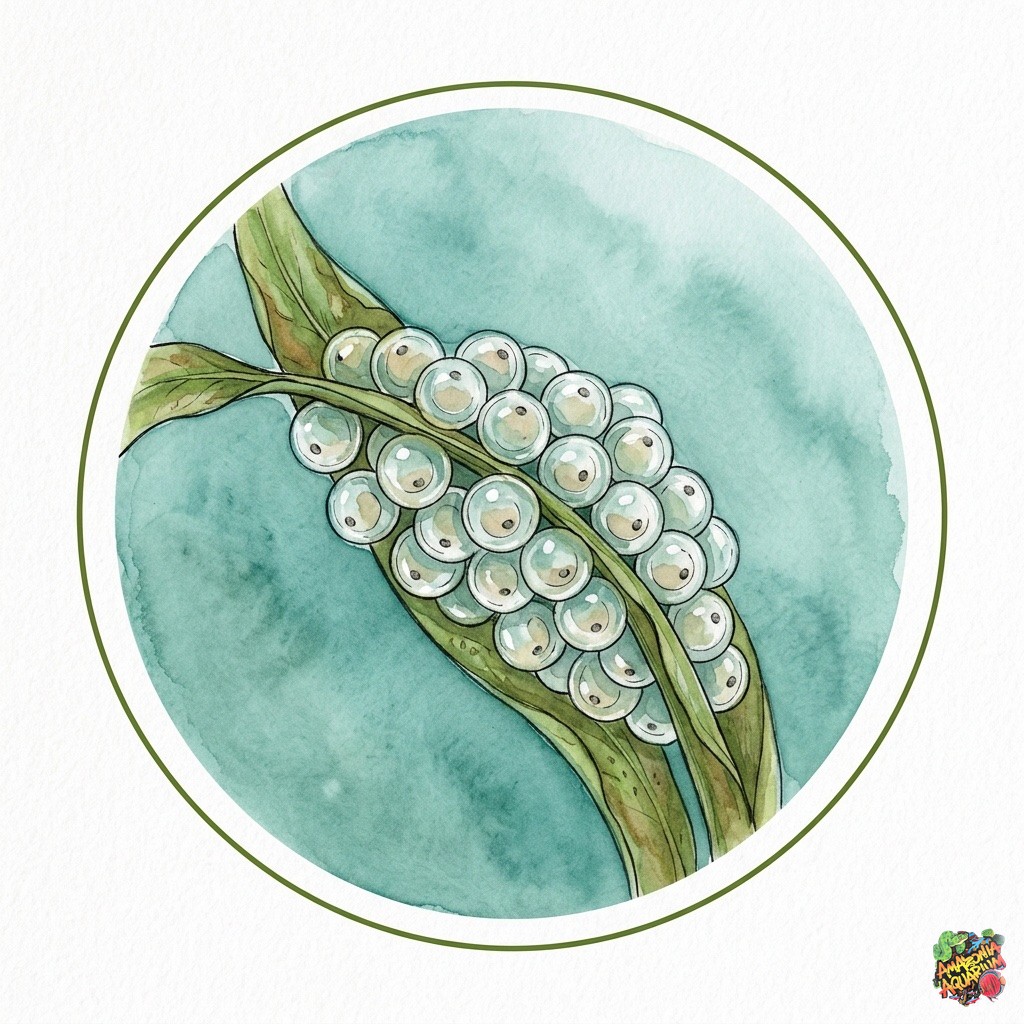
Day 17–21
Hatching
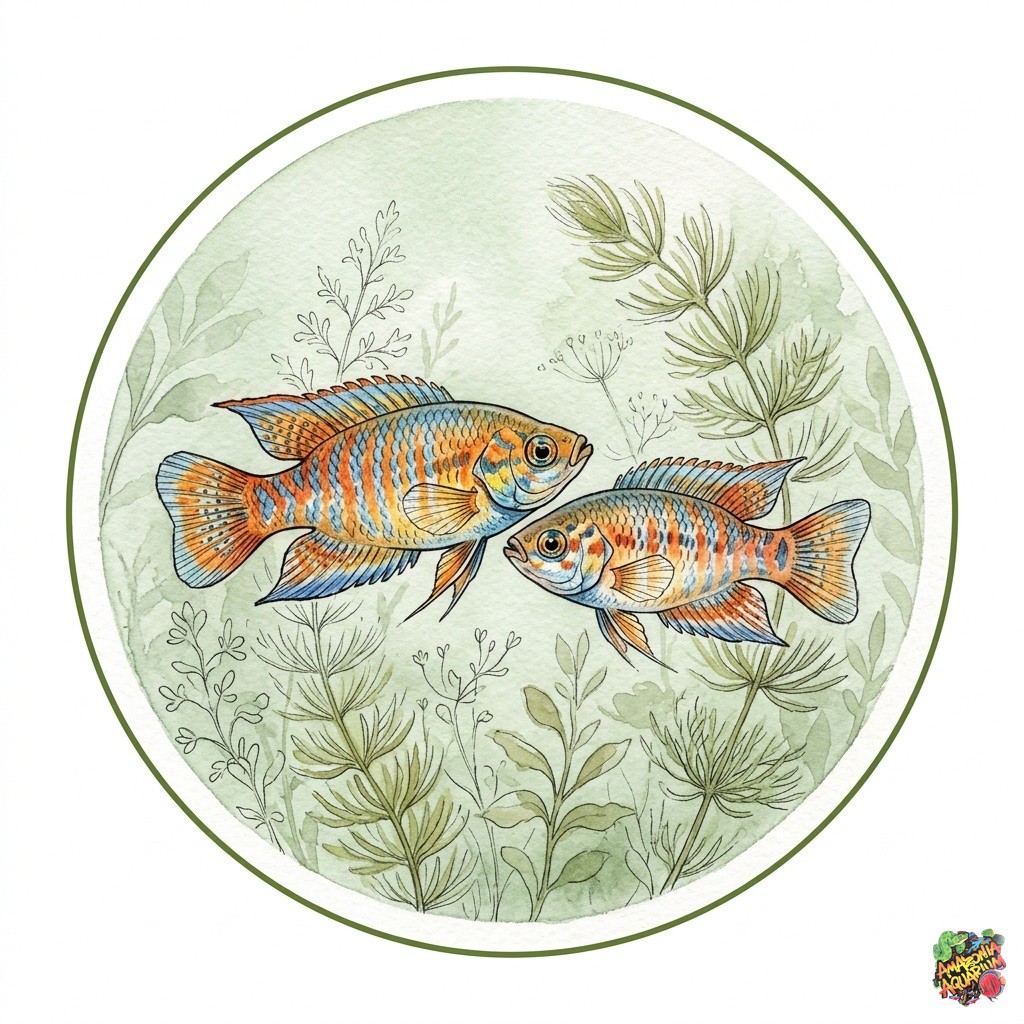
Conditioning
Feed heavily with biofilm-rich driftwood and blanched vegetables to bring both sexes into breeding condition. Maintain pristine water quality with zero ammonia or nitrite — Otos are sensitive to any pollutants during the breeding process.
Spawning Triggers
Perform a large, cool water change of 30–40% using water 2–3°C cooler than the tank to mimic the onset of the rainy season. Males will begin chasing females immediately after the temperature drop. Repeat every 2–3 days if spawning does not occur.
Egg Laying
The female deposits 30–50 small, adhesive eggs on broad plant leaves, aquarium glass, and smooth surfaces. Eggs are transparent-white and approximately 1mm in diameter. Both parents ignore the eggs entirely — no parental guarding occurs.
Hatching
Eggs hatch within 3–4 days at 24–26°C. The fry are extremely tiny and require infusoria or green water for the first two weeks before they can consume algae. A mature, heavily planted tank with abundant biofilm gives the best fry survival rates.
Otocinclus Species Guide
| Species | Pattern | Size | Notes |
|---|---|---|---|
| O. vittatus | Dark lateral stripe, olive-brown body | 3–4 cm | Most widely available; the common Oto |
| O. cocama | Bold black and white zebra bands | 3–4 cm | Rarer and more expensive; striking appearance |
| O. macrospilus | Similar to vittatus with large dark tail-base spot | 3–4 cm | Often mislabelled as vittatus in stores |
Visual Identification
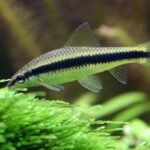
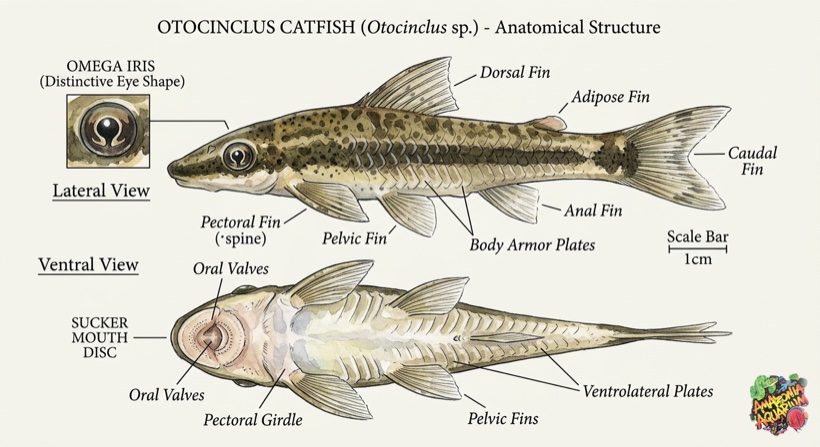
Otocinclus are tiny, torpedo-shaped catfish with an underslung suckermouth. A bold dark lateral stripe runs from the snout to the tail base, bordered above by olive-green to brown colouration and a pale white belly. Their eyes are proportionally large, giving them a characteristically alert expression. The adipose fin is small or absent depending on the species — O. vittatus, the most commonly traded species, has a distinct dark caudal spot.
Male vs Female
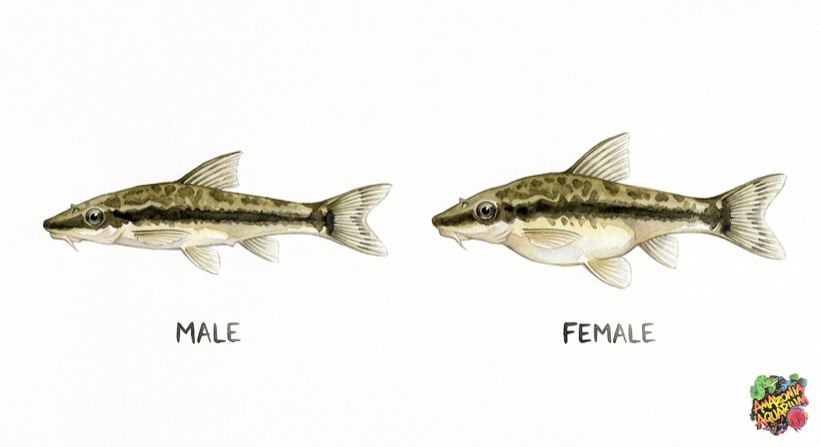
Sexing Otos requires a keen eye. Females are slightly wider when viewed from above, especially when carrying eggs — they appear noticeably rounder behind the pectoral fins. Males tend to be slimmer and fractionally smaller. The differences are subtle and most reliable in mature, well-fed specimens.
| Feature | Male | Female |
|---|---|---|
| Body shape | Slim, streamlined | Wider, rounder when gravid |
| Size | Slightly smaller (~3 cm) | Slightly larger (~3.5–4 cm) |
| Behaviour | More active, chases during spawning | Rounder belly, deposits eggs on surfaces |
Water Parameters
Otocinclus are sensitive to poor water quality, particularly ammonia and nitrite. They come from clean, well-oxygenated streams and have very little tolerance for accumulated waste. Weekly 25–30% water changes and reliable filtration are essential — not optional.
6.0–7.5
slightly acidic to neutral
22–28 °C
ideal 24–26 °C
0 ppm
ammonia & nitrite must be zero
Tank Setup
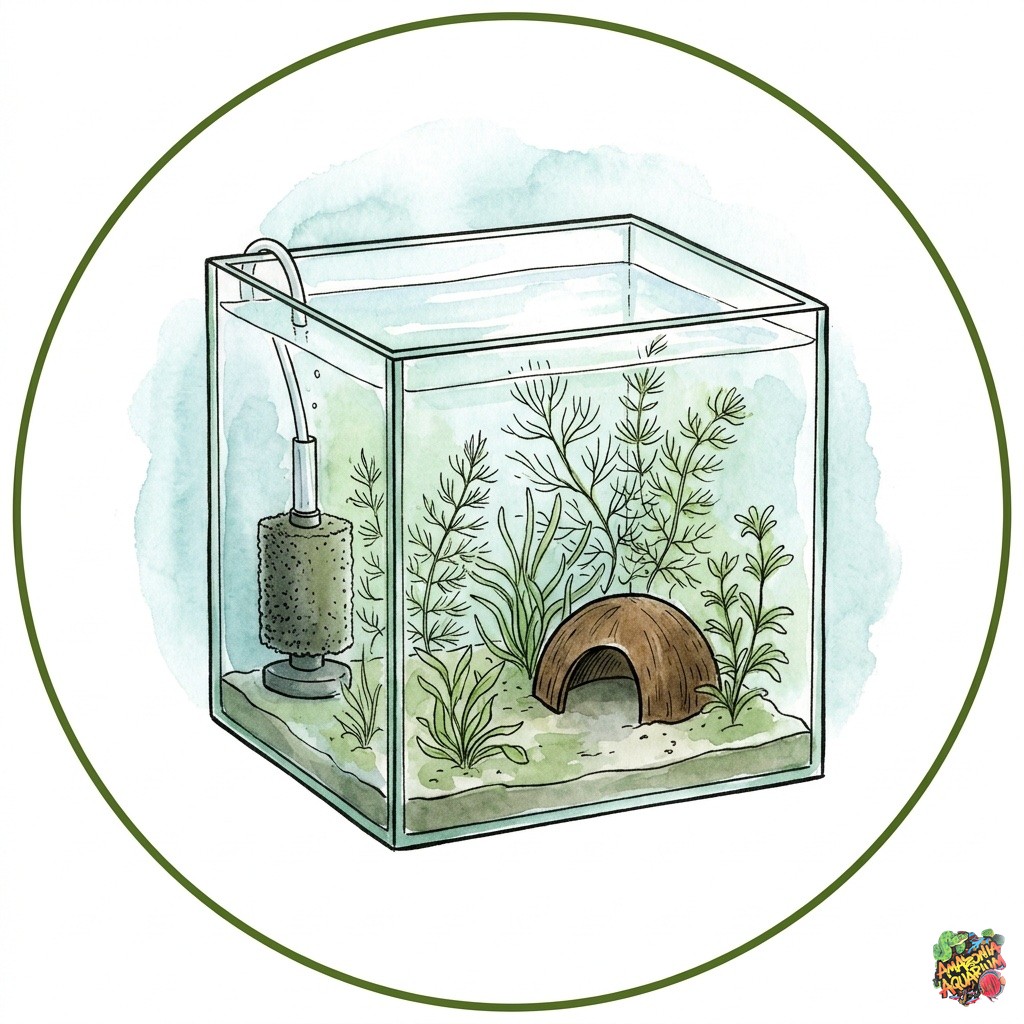
Otocinclus need a mature, planted tank — this is non-negotiable. They feed primarily on biofilm and soft algae that only develop in established aquariums (typically 3+ months old). A brand-new, spotlessly clean tank will starve them. Dense planting with broad-leaved species like Anubias, Java Fern, and Amazon Swords gives them ample grazing surfaces and makes them feel secure.
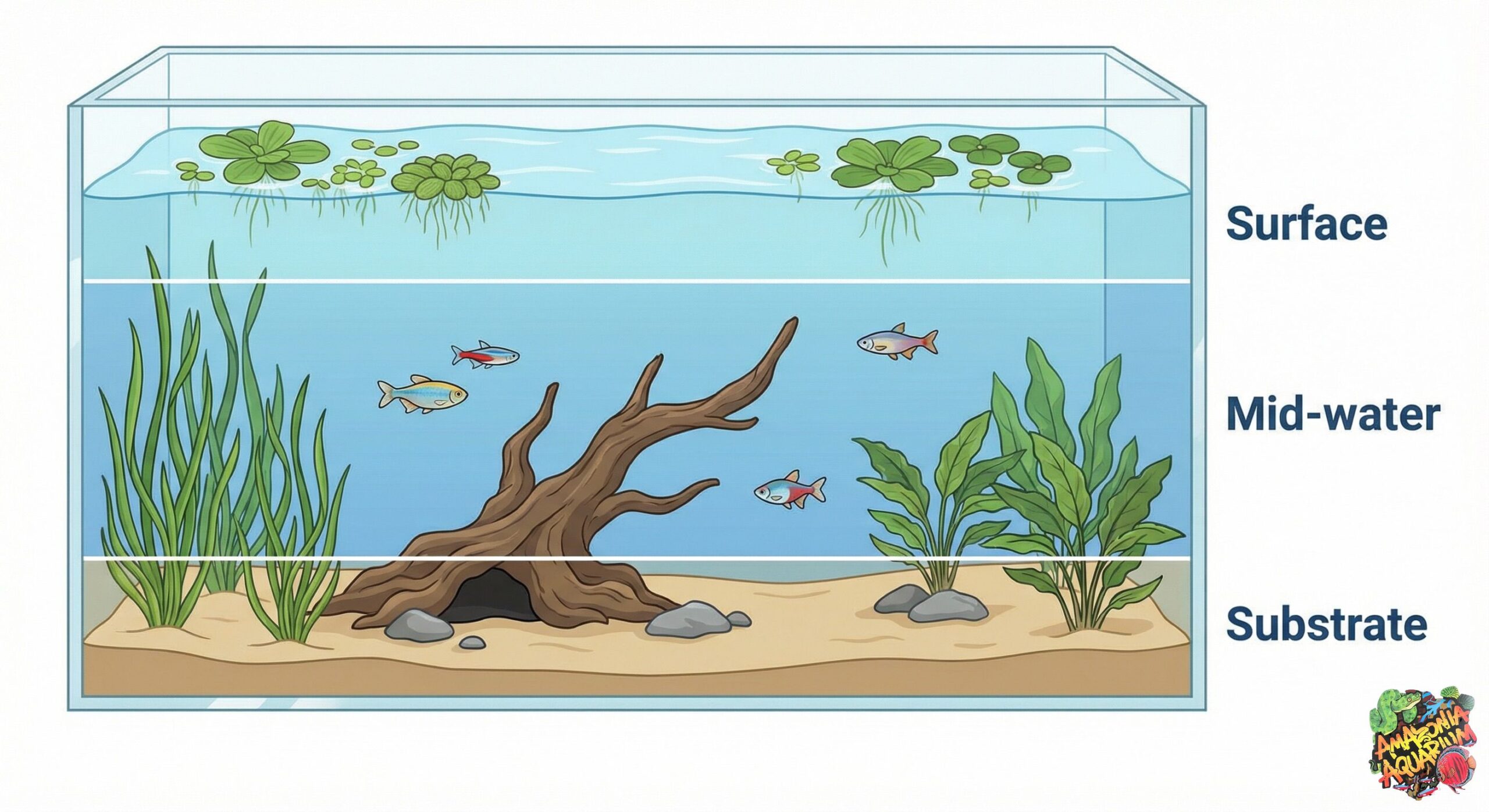
Moderate flow and excellent oxygenation replicate their natural riverine habitat. A sponge filter or gentle HOB with a spray bar works well. Keep the group together — Otos are social and visibly more active and confident in groups of 6 or more.
Diet & Feeding
In the wild, Otocinclus are aufwuchs grazers — they feed almost exclusively on the thin layer of algae and biofilm that coats submerged surfaces. In the aquarium, their primary food source should be the natural biofilm and soft green algae growing on glass, leaves, and hardscape.
However, a group of Otos can clean a tank faster than algae regrows, so supplemental feeding is important:
| Food | Frequency | Notes |
|---|---|---|
| Natural algae & biofilm | Always available | Primary diet — the tank must produce this naturally |
| Blanched zucchini / cucumber | 2–3× per week | Weigh down with a fork or veggie clip; remove after 24 hours |
| Algae wafers (Hikari, Sera) | Every other day | Break into small pieces; remove uneaten portions |
| Repashy Soilent Green | 2–3× per week | Excellent aufwuchs substitute; spread thinly on a rock |
Acclimation & First-Week Survival
Otocinclus have a reputation for high initial mortality, and it’s well-earned. Most losses happen in the first 1–2 weeks and are caused by a combination of stress from wild collection, shipping, and being placed into unsuitable or immature tanks.
• Drip acclimate over 60–90 minutes (do not float-and-dump).
• Ensure your tank is mature (3+ months) with visible biofilm/algae.
• Keep ammonia and nitrite at absolute zero — Otos have no tolerance.
• Offer supplemental food from day one — don’t wait to see if they find algae.
• Dim the lights for the first 24–48 hours to reduce stress.
Once past the two-week mark, Otos are surprisingly hardy little fish that can thrive for years in a well-maintained planted tank.
Sydney Keeper Tips
Sydney’s tap water (pH ~7.2, moderate hardness) is generally well-suited for Otocinclus. During summer, room temperature can push tanks above 28 °C — ensure good surface agitation or an airstone to maintain dissolved oxygen, as warmer water holds less O₂ and Otos are sensitive to low oxygen levels.
Quick Reference
| Scientific Name | Otocinclus vittatus |
| Adult Size | 3–4 cm |
| Lifespan | 3–5 years |
| pH | 6.0–7.5 |
| Temperature | 22–28 °C (ideal 24–26 °C) |
| Min Group | 6+ (social, must be kept in groups) |
| Min Tank Size | 40 L (10 gal) |
| Care Level | Easy–Medium |
| Key Requirement | Mature tank with established biofilm/algae |
| Diet | Algae, biofilm, blanched veggies, algae wafers |
Frequently Asked Questions
How many Otocinclus should I keep?
Why do Otocinclus die in new tanks?
What do they eat besides algae?
Are they good with shrimp?
Can Otocinclus clean a tank with bad algae?
<!–
=============================================================
OTOCINCLUS (Product ID 3459) — PATCH FILE
8 missing sections, ready to insert into oto-desc.html
CSS prefix: sg- (matches existing file)
All styles: inline (WoodMart override compatibility)
=============================================================
(before )
INSERT AFTER:
(inside Tank Setup section, replacing the generic placeholder context)
REPLACE: existing
with this sg-equipment-list version
REPLACE: existing
with this sg-feeding-calendar version
REPLACE: existing
with this sg-timeline version
ALREADY EXISTS in file (lines ~217-224). No insert needed if present.
If missing, INSERT AFTER the sg-timeline block.
of sg-table-wrap ~line 257)
i.e. BEFORE
REPLACE: existing
(before / sg-footer div, ~lines 487-506)
=============================================================
–>
<!– ============================================================
INSERT AFTER: closing
of .sg-hero, BEFORE
============================================================ –>
The Name Behind the Fish
The genus name Otocinclus is derived from two Greek words: oto (ὦτο) meaning ear, and kinklis (κιγκλίς) meaning lattice or grille — a direct reference to the distinctive perforated post-temporal bone on either side of the head, which resembles a latticed eardrum when viewed up close. Some sources render this more loosely as “ear sucker,” combining the Greek ear root with the fish’s suckermouth anatomy. The family name Loricariidae comes from the Latin lorica, a segmented armour breastplate worn by Roman soldiers — an apt description of the bony scutes that cover these catfish from head to tail.
The genus was first formally described by the American ichthyologist Charles Henry Eigenmann and his wife Rosa Smith Eigenmann in 1889, based on specimens collected from the rivers of South America. Today, Otocinclus contains around 19 recognised species, all native to slow-moving, heavily vegetated freshwater streams from Colombia and Venezuela in the north down to Argentina and Uruguay in the south. Within the subfamily Hypoptopomatinae, Otocinclus is considered the most basal genus of the tribe Hypoptopomatini — meaning it sits at the evolutionary root of this group, diverging earliest from the common ancestor.
Most specimens sold in the aquarium trade are Otocinclus vittatus or O. macrospilus, though they are frequently mislabelled simply as “Otocinclus” or “Oto.” All wild-caught Otos are sourced from South American fisheries, primarily from the Peruvian Amazon and the Río Mamoré basin in Bolivia.
<!– ============================================================
INSERT IMMEDIATELY AFTER the tank-zones img tag in Tank Setup section
(after: )
============================================================ –>
Otocinclus activity zones: they spend nearly all their time on vertical and horizontal surfaces — glass, broad leaves, and hardscape — at all levels of the tank.
Glass walls (primary zone). Otos spend the majority of their time on the aquarium glass, methodically scraping soft algae and biofilm in overlapping strokes.
Broad plant leaves. Anubias, Amazon Sword, and Java Fern are favourite grazing surfaces. They attach with their suckermouth and rasp across the leaf surface without damaging it.
Hardscape surfaces. Rocks, driftwood, and the substrate are secondary zones — they graze here when the glass and leaves are clean.
Mid-water resting. Otos occasionally rest on a leaf or the filter outlet in mid-water. A fish resting on the substrate for extended periods is a warning sign — check oxygen and ammonia levels.
<!– ============================================================
REPLACE the existing
============================================================ –>
Sponge Filter
Essential — dual purpose as both filtration and biofilm growing surface. The sponge itself becomes a food source. Gentle flow won’t stress Otos or pull them in.
Heater
25W per 20 L. Maintain 22–26 °C year-round. Avoid rapid temperature swings — use a thermometer to verify.
LED Light (Low–Medium)
A moderate light cycle (8–10 hrs/day) encourages soft green algae and biofilm growth — the primary Oto food source. Avoid very high-intensity reef lighting.
Thermometer
Monitor daily. Otos are sensitive to temperature fluctuations above 2–3 °C.
Air Pump + Airstone
Highly recommended. Otos come from well-oxygenated streams and are sensitive to low dissolved oxygen. Especially important in summer when warm water holds less O₂.
Veggie Clip / Suction Cup
For attaching blanched zucchini, cucumber, or spinach to the glass. Weighted clips prevent food floating to the surface.
HOB / Canister Filter
Can be used instead of a sponge filter — fit a fine pre-filter sponge over the intake to protect Otos from being pulled in. Use a spray bar to diffuse flow.
<!– ============================================================
REPLACE the existing
============================================================ –>
Staple — algae wafer or Repashy
Veggie — blanched zucchini, cucumber, or spinach
Biofilm day (no supplement — let them graze naturally)
<!– ============================================================
REPLACE the existing
============================================================ –>
Conditioning the Breeders
Feed both males and females heavily for 7–10 days with high-quality food: blanched zucchini, Repashy Soilent Green spread on a flat rock, and quality algae wafers. A well-fed female will visibly fill out around the abdomen. Maintain pristine water quality — zero ammonia or nitrite — as Otos abort spawning attempts in polluted conditions.
Triggering Spawning
The key trigger is a simulated rainy season: perform a large water change (30–40%) using water that is 2–3 °C cooler than the tank. This temperature dip mimics the onset of Amazonian rains. Males will begin actively pursuing females within hours. If no spawning occurs within 3 days, repeat the cool water change. A second filter running for increased oxygenation also helps.
Egg Laying
Females deposit 30–50 small adhesive eggs on broad plant leaves (Anubias is a favourite), the aquarium glass, and smooth hardscape surfaces. The eggs are approximately 1 mm, transparent-white to pale yellow. There is no parental care — neither parent guards or fans the eggs. If you have egg predators in the tank, move the eggs to a separate container with gentle aeration.
Hatching & Fry Care
Eggs hatch in 3–4 days at 24–26 °C. The larvae are tiny and require microscopic food — infusoria, green water (phytoplankton), or commercial fry food (e.g., Sera Micron) for the first 1–2 weeks. After that, they begin grazing on biofilm just like the adults. A mature, densely planted tank with abundant natural biofilm gives the best fry survival rates. Fry reach juvenile colouring within 4–6 weeks.
<!– ============================================================
INSERT AFTER: Otocinclus Species Guide table closing
i.e., INSERT BEFORE comment
============================================================ –>
Community & Tank Mates
Otocinclus are among the most peaceful fish you can keep — they are entirely non-aggressive and completely ignore other fish. The concern is the opposite: Otos can be bullied or outcompeted for food. Avoid fin-nipping species and any fish large enough to make a snack of a 3 cm catfish.
| Status | Species | Why |
|---|---|---|
| ✅ Great match | Neocaridina / Caridina shrimp | Otos are 100% shrimp-safe — they never eat shrimplets of any size |
| ✅ Great match | Ember Tetras, Neon Tetras, Cardinal Tetras | Small, peaceful, share similar soft-water parameters |
| ✅ Great match | Harlequin & Chili Rasboras | Mid-water schoolers that don’t compete for the same zones |
| ✅ Great match | Corydoras (small species) | Peaceful bottom-dwellers; different feeding strategy, no competition |
| ✅ Great match | Nerite Snails, Mystery Snails | Excellent algae-cleaning partners, completely peaceful |
| ⚠️ Use caution | Dwarf Gouramis | Generally fine but individual temperaments vary; watch for harassment |
| ⚠️ Use caution | Endler’s Livebearers | Usually fine; rarely nip. Monitor in smaller tanks where Otos can’t escape |
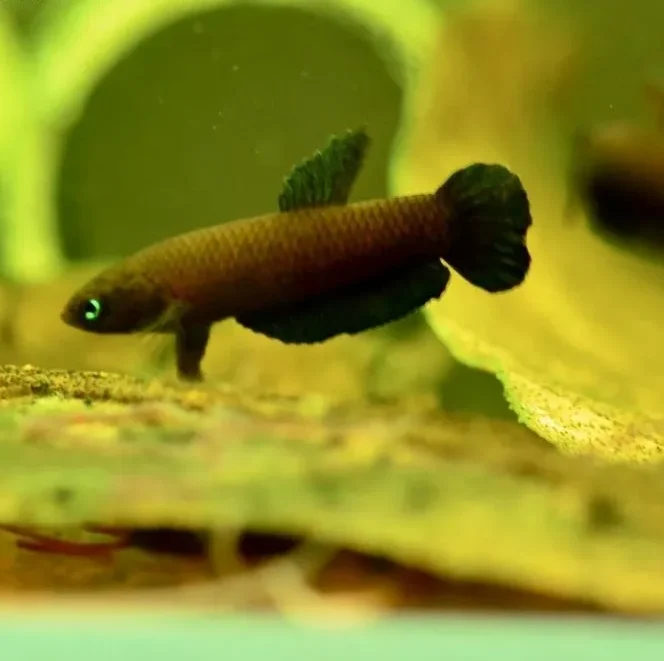
| ⚠️ Use caution | Betta (male) | Depends heavily on the individual Betta. Some are fine; others relentlessly harass Otos. Provide dense plant cover. |
| ❌ Avoid | Tiger Barbs, Serpae Tetras | Notorious fin-nippers; will stress Otos relentlessly |
| ❌ Avoid | Cichlids (most species) | Too aggressive; most cichlids will harass or eat Otos. Exception: very small dwarf cichlids in large tanks. |
| ❌ Avoid | Large Plecos (Common, Sailfin) | Can injure Otos with their spines; outcompete for algae and food |
| ❌ Avoid | Goldfish | Wrong temperature range (Goldfish prefer cooler water); Goldfish also produce far too much waste for Oto-safe water quality |
<!– ============================================================
REPLACE the existing
(the 5
============================================================ –>
Related Products

No account yet?
Create an Account
Reviews
Clear filtersThere are no reviews yet.