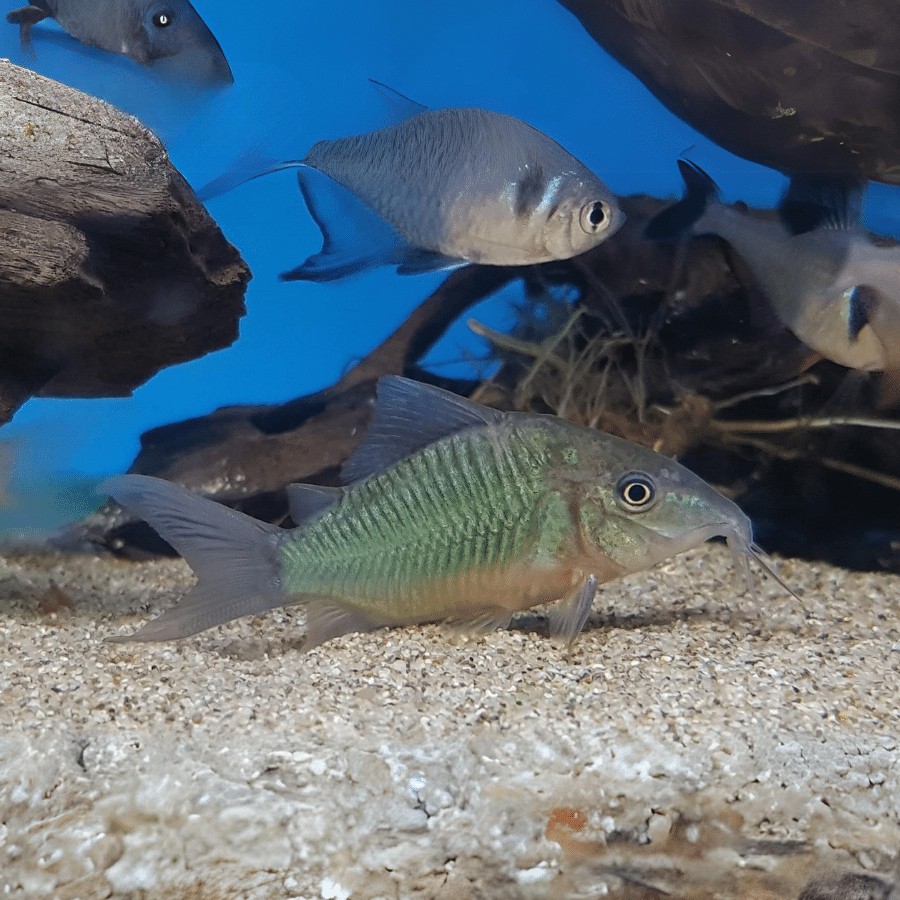
🪨 Species at a Glance
| Scientific Name | Corydoras splendens (formerly Brochis splendens) |
| Family | Callichthyidae |
| Order | Siluriformes |
| Common Names | Emerald Catfish, Emerald Cory, Emerald Brochis, Green Corydoras |
| Origin | Upper Amazon basin — Peru, Ecuador, western Brazil (tributaries of the Amazon, Napo, and Ucayali) |
| Current Size | 3.5 cm (sub-adult at time of sale) |
| Adult Size | 7–9 cm (noticeably larger than standard Corydoras at 5 cm) |
| Lifespan | 8–15 years with good care |
| pH Range | 6.0–7.5 (ideal 6.8) |
| Temperature | 22–26 °C (72–79 °F) — prefers cooler end for breeding |
| Hardness (dGH) | 2–12 |
| Diet | Omnivore bottom feeder — sinking pellets, wafers, frozen bloodworm, daphnia, blanched vegetables |
| Minimum Tank Size | 100 L (26 gal) for a school of 6; 150 L preferred |
| Care Level | Beginner–Intermediate (easy to keep, challenging to breed) |
| Temperament | Peaceful, strongly social; must be kept in groups of 6+ |
| Breeding | Egg scatterer — T-position mating; cool-water trigger required |
| Tank Position | Bottom / substrate — active daylight forager unlike many nocturnal catfish |
| Availability | Occasional — tank-bred stock is more common than wild-caught |
Where the Name Comes From
Few aquarium fish illustrate the shifting landscape of fish taxonomy better than the Emerald Catfish. For more than a century, from its formal description by the French ichthyologist Henri Émile Sauvage in 1878, this species sat in its own genus — *Brochis* — separated from the closely related *Corydoras* on the basis of a small handful of anatomical features, most importantly the number of rays in the dorsal fin. *Brochis* species carry 10–12 dorsal rays; *Corydoras* carry only 7–8. That single, countable feature, along with a slightly larger body, a higher-sided profile, and subtle differences in the structure of the skull and pectoral girdle, was enough to keep the two genera separate in virtually every aquarium book printed between the 1890s and the early 2000s. The genus name *Brochis* itself was coined in 1872 by the British ichthyologist Albert Günther, working at the British Museum, to describe fish that looked superficially like corydoras but obviously differed in fin structure and overall robustness.
The picture changed in 2003 when Britto, working through the callichthyid catfishes using modern morphological and molecular evidence, concluded that the *Brochis* species did not form a distinct evolutionary lineage from the *Corydoras* species. In the language of phylogenetics, *Brochis* was nested inside *Corydoras* — in other words, some *Corydoras* species are more closely related to *Brochis* than to other *Corydoras*. This makes *Brochis* what taxonomists call a ‘paraphyletic’ group, which under modern cladistic practice is not a valid grouping and must be dissolved. Under the rules of zoological nomenclature, this meant *Brochis* had to be folded into *Corydoras*, the older genus name with priority. The three species formerly known as *Brochis splendens*, *Brochis multiradiatus*, and *Brochis britskii* became *Corydoras splendens*, *Corydoras multiradiatus*, and *Corydoras britskii* — the ‘splendens complex’ within the expanded *Corydoras* genus.
Aquarists, being practical people rather than taxonomists, have been slow to adopt the new name. Two decades on, most retailers, books, and online listings still label the fish *Brochis splendens* or some variation of ‘brochis’ — and the common names Emerald Catfish, Emerald Cory, and Emerald Brochis remain in near-universal use across the English-speaking trade. Both names are technically correct: *Brochis splendens* is the historical binomial still widely used in commerce, while *Corydoras splendens* is the current scientifically accepted name. When purchasing, seeing either label on a tank should mean the same fish, though it never hurts to confirm by checking the dorsal fin and overall size. The species name *splendens* — from the Latin for ‘shining’ or ‘glittering’ — refers to the brilliant metallic emerald-green sheen that develops on the flanks of a well-kept adult when viewed under angled light. It is a name the fish earns in full, and once you see a mature school move across a densely planted tank with that gleam catching the aquarium light, no further justification is needed. The common English name ‘Emerald’ appears in nearly every variant — Emerald Catfish, Emerald Cory, Emerald Brochis, Emerald Green Corydoras — and in all cases refers to the same iridescent flank colour that is the fish’s single most distinctive feature.
Colour Forms & Morphs
🟢 Wild Emerald Form (C. splendens)
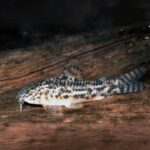
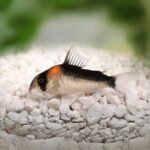
The standard trade form — olive-bronze body overlaid with a brilliant metallic emerald-green sheen on the flanks, most visible under angled light; pale cream belly; clear fins with faint dusky speckling.
🌊 Hi-Fin Emerald
A selectively bred line with elongated dorsal fin rays creating a taller, sail-like dorsal; body colour identical to wild form.
🌿 Corydoras multiradiatus (Long-finned Brochis)
Former *Brochis* species within the splendens complex; body shape very similar to C. splendens but with an even more elongated dorsal fin bearing 15–17 rays; upper Amazon origin; rarely imported.
🧡 Corydoras britskii (Giant Brochis)
Former *Brochis* species in the splendens complex; the largest of the three, reaching 9–10 cm; paler olive body with a bronze-gold sheen rather than emerald green; Paraguay basin origin.
The metallic shimmer that gives *Corydoras splendens* its common name is not a fixed pigment; it is a structural colour produced by the way light refracts through layers of guanine crystals in cells called iridophores just beneath the scales. Like all structural colours, it depends heavily on the angle of the light source and the angle from which the fish is viewed. Under strong overhead lighting directly above the tank, the flanks often appear dark olive or bronze; as the fish turns and the light catches it from the side, the full emerald-green brilliance flashes into view. Keepers who want to display the colour at its best should position the tank so that it is viewed from the side with a light source angled slightly downward from the front — this is the geometry under which the iridophores produce their strongest reflection.
Colour intensity in the Emerald Cory increases with age, and the full metallic sheen does not typically develop until the fish is approaching adult size at 6–7 cm. At 3.5 cm, expect a more muted olive-bronze body with a subtle greenish cast that will deepen over six to twelve months of good care. Diet plays a minor role — varied foods with natural carotenoids and astaxanthin can intensify the underlying warm bronze tones — but the primary drivers of full colour are age, general health, and light. Fish kept in subdued, soft-light tanks with dark substrate and dense planting develop the most saturated emerald colouration; fish kept on pale gravel under bright lights tend to wash out.
It is worth knowing the three former *Brochis* species together because they are often confused in the trade and sold interchangeably. *C. splendens* is by far the most common, with the shortest dorsal fin (still longer than any *Corydoras*) and the most intense emerald colour. *C. multiradiatus* is easily distinguished by its much taller, sail-like dorsal with 15–17 rays. *C. britskii* is larger and paler with a golden rather than green sheen. Any fish sold as ‘Emerald Catfish’ or ‘Brochis splendens’ in the Australian trade is almost certainly the true *C. splendens*.
Telling Males from Females
Sexing *Corydoras splendens* follows the same principles as most other corydoras: it is done from above, rather than from the side. Mature females are visibly broader and rounder than males when viewed down the length of the fish, particularly in the region between the pectoral and pelvic fins where the ovaries sit. In breeding condition, this difference becomes obvious even to an untrained eye — the female’s outline widens into a clear oval shape, while the male retains a narrower, more streamlined profile. A useful comparison: if viewed from above, a mature male looks roughly like an elongated grain of rice, while a mature gravid female looks more like a teardrop or a small, rounded bean.
Unlike some corydoras, there are no reliable colour-based sex markers in the Emerald Cory. Both sexes show the same emerald flanks, the same olive body, and the same fin patterning. Fin shape is also unreliable — the extended dorsal fin rays that were once used to distinguish *Brochis* from *Corydoras* are present in both sexes of *C. splendens* to the same degree. Expect to be unable to sex your fish at the 3.5 cm purchase size; the safest approach for any keeper hoping to breed is to buy six to eight juveniles and let them grow out together, which practically guarantees a mixed-sex group reaching maturity at the same time. Sexual maturity in *C. splendens* is typically reached between 18 and 24 months of age, at which point sexing becomes straightforward and breeding attempts can realistically begin. Patience is rewarded — growing a school from juveniles to breeding-ready adults is part of the long-term pleasure of keeping this species.
| Feature | Male | Female |
|---|---|---|
| Body Shape (from above) | Slender, torpedo-shaped outline; parallel flanks when viewed from above | Noticeably wider, more oval outline — the belly bulges outward from the base of the pectoral fins back to the vent |
| Body Depth (from the side) | Relatively flat-bellied profile — straight line from chin to vent | Clearly rounder, fuller underside — curve drops away from the chin and rises again at the vent |
| Size at Maturity | Slightly smaller and more streamlined, typically 7–8 cm | Slightly larger and heavier-bodied, typically 8–9 cm |
| Pectoral Fin Spine | Leading spine of the pectoral fin is often marginally thicker and more robust | Pectoral spine typically slightly finer, though the difference is subtle |
| Behaviour | Pursues female during spawning; several males often chase a single ripe female | Remains receptive; selects spawning surface; carries fertilised eggs cupped in pelvic fins |
| Juvenile Fish (under 5 cm) | Not reliably distinguishable from female | Not reliably distinguishable from male — wait until maturity for confident sexing |
Ideal Water Conditions
6.0–7.5
ideal 6.8
22–26 °C
ideal 24 °C
2–12 dGH
Soft to moderately hard; soft water preferred, but adaptable
The Emerald Cory is naturally adapted to clear-water and white-water tributaries of the upper Amazon — habitats that are typically soft (low mineral content), slightly acidic to neutral in pH (6.0–7.5), and cooler than the main-channel Amazon itself. In the rainy-season months when water levels rise, temperatures at the surface can climb to 26 °C, but the fish’s preferred daily range is 22–24 °C, which is several degrees cooler than the Sterbai cory’s preferred 26 °C baseline. This difference matters: keeping Emerald Corys at sustained 27–28 °C is not outright dangerous, but it shortens their lifespan, increases respiratory stress (warm water holds less dissolved oxygen), and eliminates any hope of triggering breeding. The species’ upper tolerance is about 28 °C for short periods; its lower tolerance extends down to 20 °C for brief exposures, with 22 °C being safe long-term. If you intend to keep Emerald Corys alongside discus or other high-temperature specialists that demand 28–30 °C, choose a different cory species — the Sterbai Cory is the specialist for warm tanks and the Emerald Cory is the wrong fish for that job.
Because they are bottom-dwellers constantly in contact with the substrate, water quality is paramount. Uneaten food, waste, and decomposing plant matter settle directly into their environment. Nitrates above 20 ppm trigger barbel erosion, chronic bacterial infections, and gradually weakening immune response. Perform weekly water changes of 25–30% using temperature-matched, dechlorinated water, and vacuum the substrate routinely (carefully, to avoid disturbing sand too deeply — lift the syphon slightly off the surface and let it suck up the top layer of detritus without drawing the sand itself). Sponge pre-filters are excellent at catching particulates before they reach the substrate, and they also protect juvenile fry and occasional stray barbels from being pulled into powerful intakes. The fish’s armoured body makes them relatively tolerant of short-term parameter swings, but chronic poor water is their single biggest killer in home aquaria. A test regime of weekly ammonia, nitrite, and nitrate checks during the first three months of a new tank, followed by monthly checks once the tank is mature, is entirely adequate.
The Emerald Cory has one distinctive respiratory adaptation that becomes immediately obvious in the aquarium: the ability to breathe atmospheric air. Like all corydoras, *C. splendens* is an ‘intestinal air-breather’ — it can swim to the surface, gulp a mouthful of air, and extract oxygen through a highly vascularised section of the intestine. Spent air is then expelled through the vent. In oxygen-rich conditions this behaviour is relatively rare (a fish may surface two or three times an hour); in oxygen-poor conditions the frequency increases dramatically and becomes a warning sign of inadequate aeration or overcrowding. If you notice your Emerald Corys surfacing more than once every few minutes, or if several fish surface simultaneously and repeatedly, check your water temperature (warmer water holds less oxygen), surface agitation, and stocking density. Healthy surfacing behaviour is part of the species’ charm; distressed surfacing is a call to action.
Setting Up Your Aquarium
Because the Emerald Cory reaches 7–9 cm as an adult — noticeably larger than the 5 cm standard Corydoras species — it requires a larger tank than its smaller cousins. The absolute minimum for a school of six is 100 litres (around 26 US gallons), and 150 litres is the practical target for long-term keeping of a comfortable school of 8–10 fish. Footprint matters more than volume: a long, shallow tank with a large substrate surface area is far superior to a tall, narrow tank of the same litreage, because these fish forage horizontally across the bottom and use almost none of the upper water column. Minimum recommended dimensions are 80 cm long by 35 cm deep (front to back). Standard 100-litre, 120-litre, and 150-litre commercial tanks in the 80–90 cm length range are ideal; bow-fronted tanks with curved glass also work well because they maximise the front-to-back depth at the bottom. Avoid cube-shaped tanks — a 60 cm cube of 215 litres sounds generous on paper but has the same footprint as a 60 cm standard tank and provides no additional foraging space for the school.
Sand substrate is non-negotiable. Emerald Corys forage by sifting through fine particles with their sensitive mouth barbels, and coarse or sharp-edged gravel will physically erode those barbels over months of use. An eroded barbel cannot regrow; it becomes a chronic bacterial entry point and eventually shortens the fish’s lifespan. Use fine-grain sand with a particle size between 0.1 and 0.5 mm — pool filter sand, children’s play sand (rinsed thoroughly), or dedicated aquarium sand all work well. Dark-coloured sand (black, dark brown) displays the emerald flank colour to best effect and calms the fish’s visible stress responses. Avoid pure white sand, which reflects too much light and causes the fish to wash out in colour and behave more reclusively. A sand depth of 2–3 cm is sufficient; deeper sand beds can develop anaerobic pockets that release hydrogen sulphide gas when disturbed, which is harmful to the fish.
Dense planting is essential. In their native habitat, Emerald Corys live among drowned marginal vegetation, submerged grasses, and rootball tangles from fallen trees. Recreate this with a combination of rooted background plants (Vallisneria, Echinodorus swords, Sagittaria), midground stems (Hygrophila, Ludwigia), and foreground cover (Cryptocoryne, Microsorum on driftwood). Aim for 60–70% planted coverage with distinct open sand foraging zones in front of the plants where the school can feed uninterrupted. Driftwood — particularly dark, aged Malaysian driftwood or cholla wood — provides shelter and leaches tannins that slightly acidify the water, which Emerald Corys appreciate. The tannins also create the slightly amber water colour typical of their native habitat and are believed to have mild antibacterial and anti-fungal effects. Smooth river stones can form low caves, but avoid any substrate or décor with sharp edges that might scrape the belly. Indian almond leaves (catappa leaves) placed on the substrate and allowed to decompose slowly over weeks provide additional tannins, a natural grazing surface for microfauna, and a visual element that closely mimics the wild habitat.
Water flow should be moderate and well-distributed rather than strong or concentrated. Emerald Corys are not natural current-dwellers; their native tributaries are slow-flowing side channels, backwaters, and flooded forest margins rather than fast-flowing main channels. A canister filter output angled across the tank length (rather than directly downward) produces the gentle, even flow these fish prefer. Dead spots in corners where waste accumulates should be avoided — reposition the output occasionally or add a small powerhead to break up stagnant areas. Some keepers add a spray bar across the back glass to diffuse the return, which produces excellent flow distribution and gentle surface agitation for oxygenation.
Tank
100 L (26 gal) absolute minimum for 6 fish; 150 L (40 gal) recommended for a comfortable school of 8–10; prioritise footprint over height
Filter
Canister filter or oversized hang-on-back with moderate, dispersed flow; 4–6× tank volume turnover per hour; add a sponge pre-filter to protect barbels from suction
Heater
100–200 W adjustable (sized to tank), set to 24 °C; cooler end of corydoras range is preferred; avoid sustained 27 °C+
Substrate
Fine-grain sand (0.1–0.5 mm) — black or dark brown shows emerald colouration best; minimum 2–3 cm depth for natural foraging behaviour
Lighting
Low to moderate intensity (plant-adequate only); Emerald Corys are most comfortable and colour-saturated under subdued light
Driftwood / Décor
Malaysian driftwood, cholla wood, smooth river stones forming low caves; avoid sharp-edged rocks or ornaments
Plants
Background: Vallisneria, Echinodorus, Sagittaria. Midground: Hygrophila, Ludwigia. Foreground: Cryptocoryne wendtii, Microsorum on wood. Target 60–70% coverage
Thermometer
Dual thermometer setup (one digital, one classic liquid) to catch heater failure early; temperature stability matters more than exact value
Lid
Close-fitting lid recommended — reduces evaporation and prevents occasional startled jumps
Feeding Guide
Unlike many catfish species that feed strictly nocturnally, *Corydoras splendens* is comfortably diurnal — it forages actively throughout the day, particularly in morning and late-afternoon hours. This behaviour makes it one of the easier bottom-feeders to keep well-fed in a community tank, because you can observe directly whether the food is being taken and competed for. In the wild, Emerald Corys are opportunistic omnivores, taking small invertebrates (bloodworm, midge larvae, small crustaceans), detritus, algae, fallen fruits and seeds, and any organic matter that accumulates on or in the sand. Their mouthparts are specially adapted to sift sand: the fish takes a mouthful of substrate, passes it through the gill rakers, and expels the clean grains through the gill openings while retaining the edible matter — a process you can watch happening in real time through the aquarium glass as little clouds of sand pour sideways from each fish’s gills.
In the aquarium, the staple diet should be high-quality sinking pellets and wafers formulated for bottom-dwelling catfish. Look for products with 40%+ protein content, ideally with a visible ingredient list including whole fish or crustacean meal rather than just fish meal derivatives. Rotate between two or three different staple products to ensure nutritional variety — popular choices include Hikari Sinking Wafers, Tetra PlecoWafers (not just for plecos, also readily accepted by corydoras), Omega One Veggie Rounds, and Repashy gel-food formulations. Shrimp pellets, sinking granules designed for bottom feeders, and freeze-dried bloodworm cubes rounded out into the diet prevent monotony and cover a range of nutritional profiles. Supplement three to four times per week with frozen bloodworm, frozen daphnia, frozen cyclops, frozen brine shrimp, or frozen tubifex — these are accepted eagerly and support breeding condition. Live food (live blackworms or white worms) provides an especially strong breeding trigger and brings out the most energetic foraging behaviour; a small blackworm culture kept on a kitchen counter provides months of high-quality live food for a corydoras school.
Vegetable matter is also welcomed. Blanched zucchini slices, cucumber rounds, or spinach leaves can be weighed down on the substrate with a clean rock once or twice a week and will be grazed steadily for 12–24 hours before being removed. Algae wafers designed for plecos are accepted as supplementary food, although pure algae is not a natural major component of the Emerald Cory diet and should be treated as a supplement rather than a staple. Feed once in the evening, shortly before or just after lights-out, which lets the Emerald Corys outcompete more aggressive daytime feeders and ensures they get a full ration; offer an additional smaller morning feeding if the tank contains high-level feeders that would otherwise strip all food before it reaches the substrate. A helpful technique is to use a feeding funnel — a clean plastic tube placed against the glass with one end reaching the substrate — to deliver sinking food directly past any mid-water feeders, landing it exactly where the Emerald Corys are foraging and leaving competing species unable to intercept it.
Breeding Guide
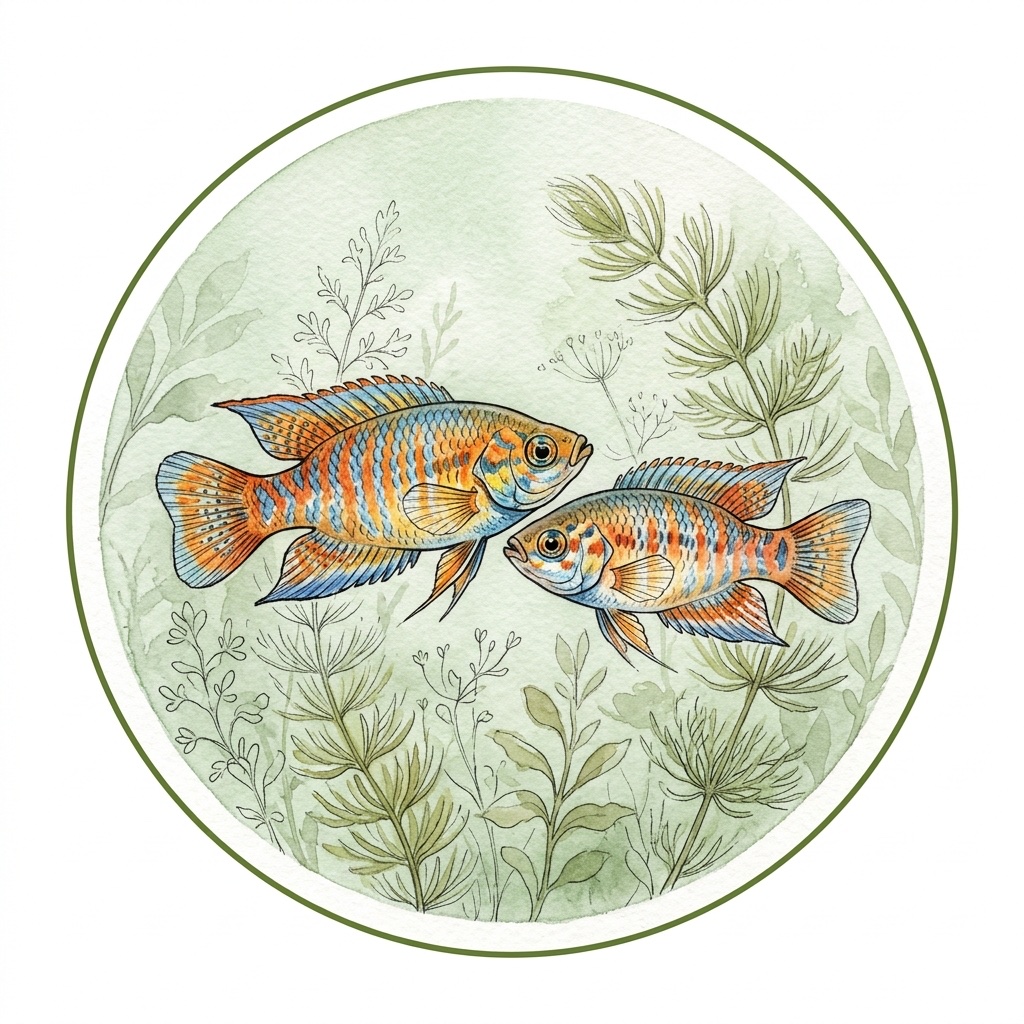
Week -4 to -2
Conditioning a Stable Pair or Group
Feed live/frozen; separate a confirmed mixed-sex group; stabilise all parameters
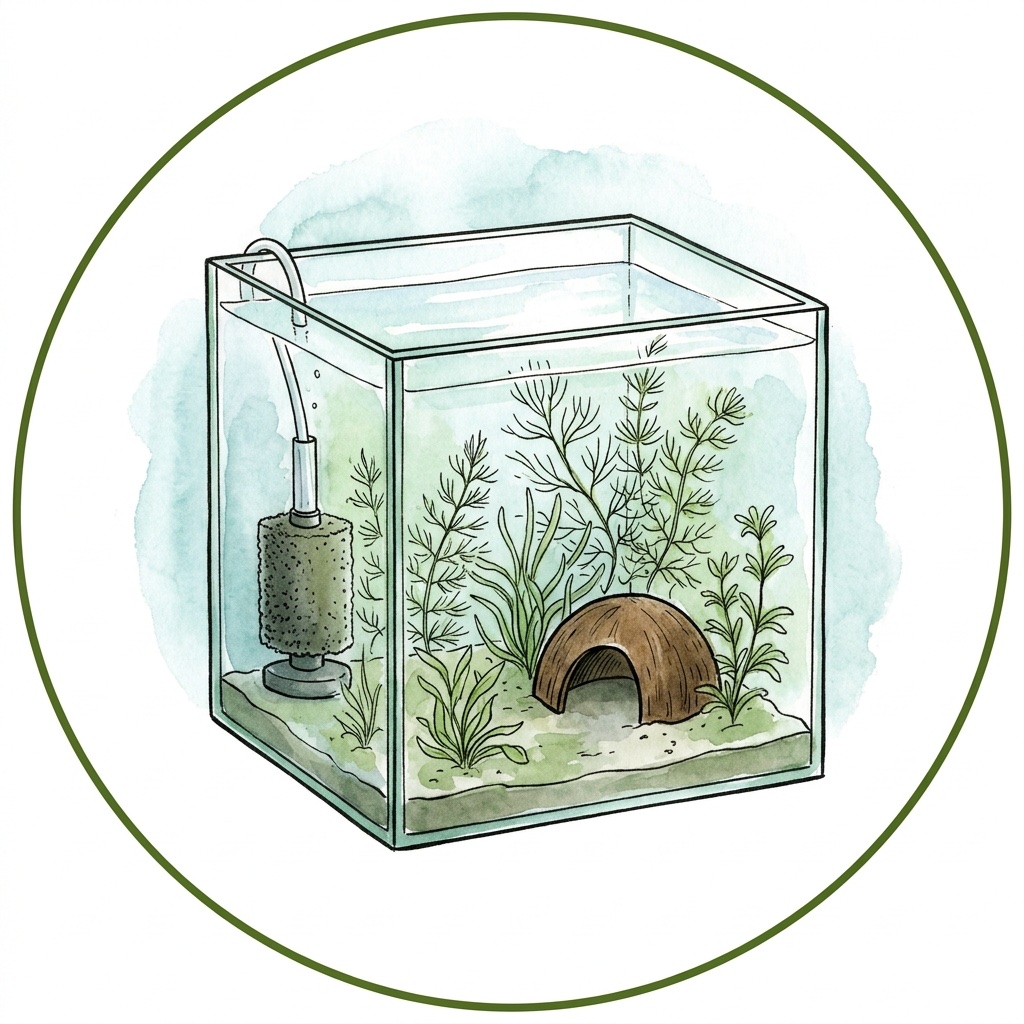
Day 0
Cool-Water Trigger
Perform a 40–50% water change with water 4–5 °C cooler; drop barometric pressure helps
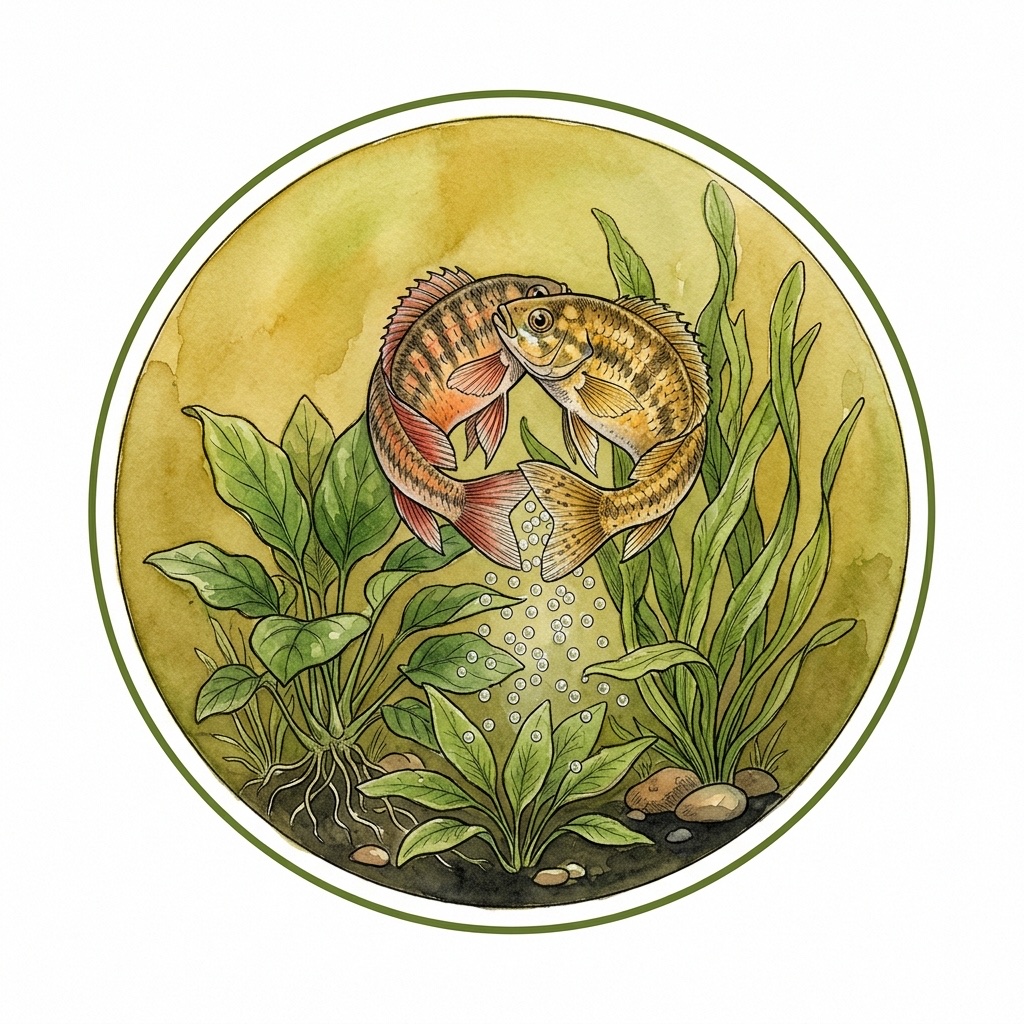
Day 1–2
Courtship and T-Position Mating
Males pursue female in rapid chases; spawning adopts the classic T-position
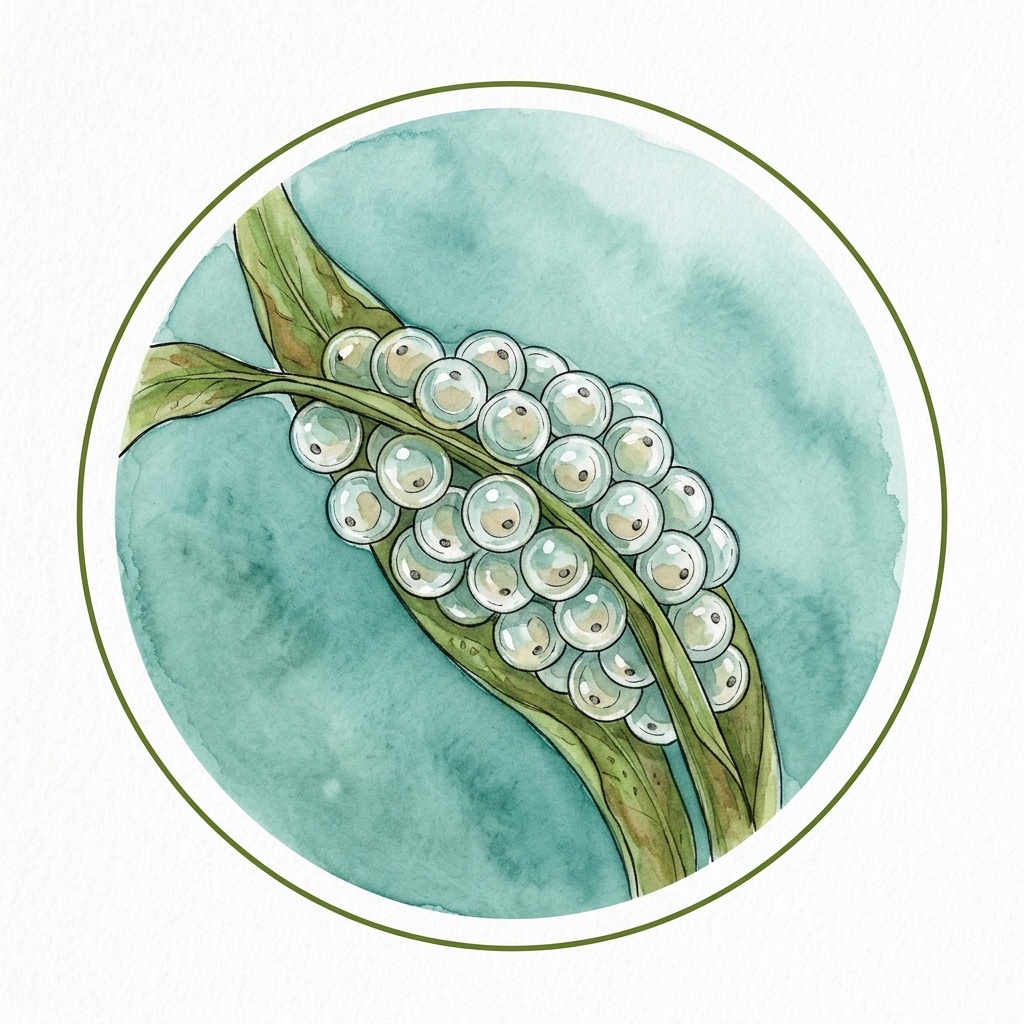
Day 2–4
Egg Collection and Incubation
Remove 80–200 eggs to hatching tank; treat against fungus; aerate well
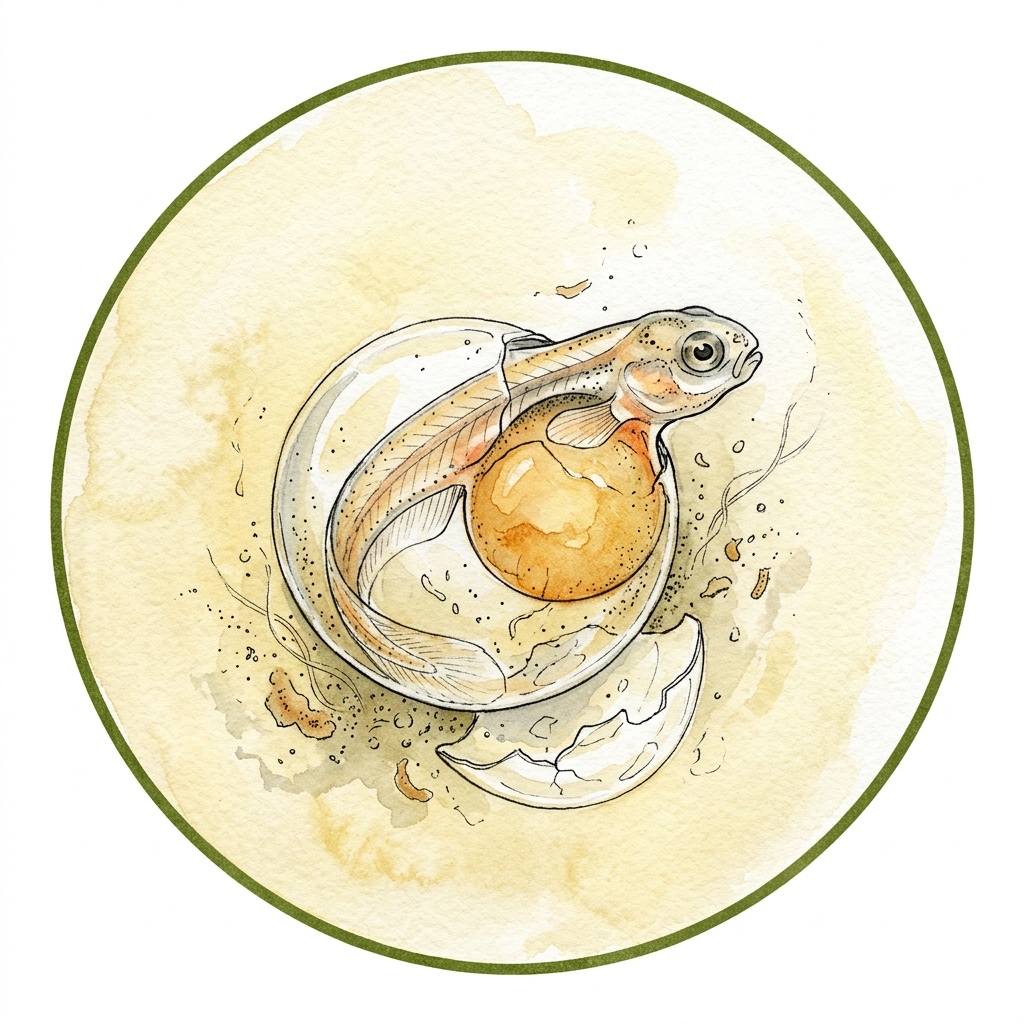
Day 5–7
Hatching and Yolk-Sac Stage
Fry hatch at 5–7 days; absorb yolk over 48–72 hours; no feeding yet
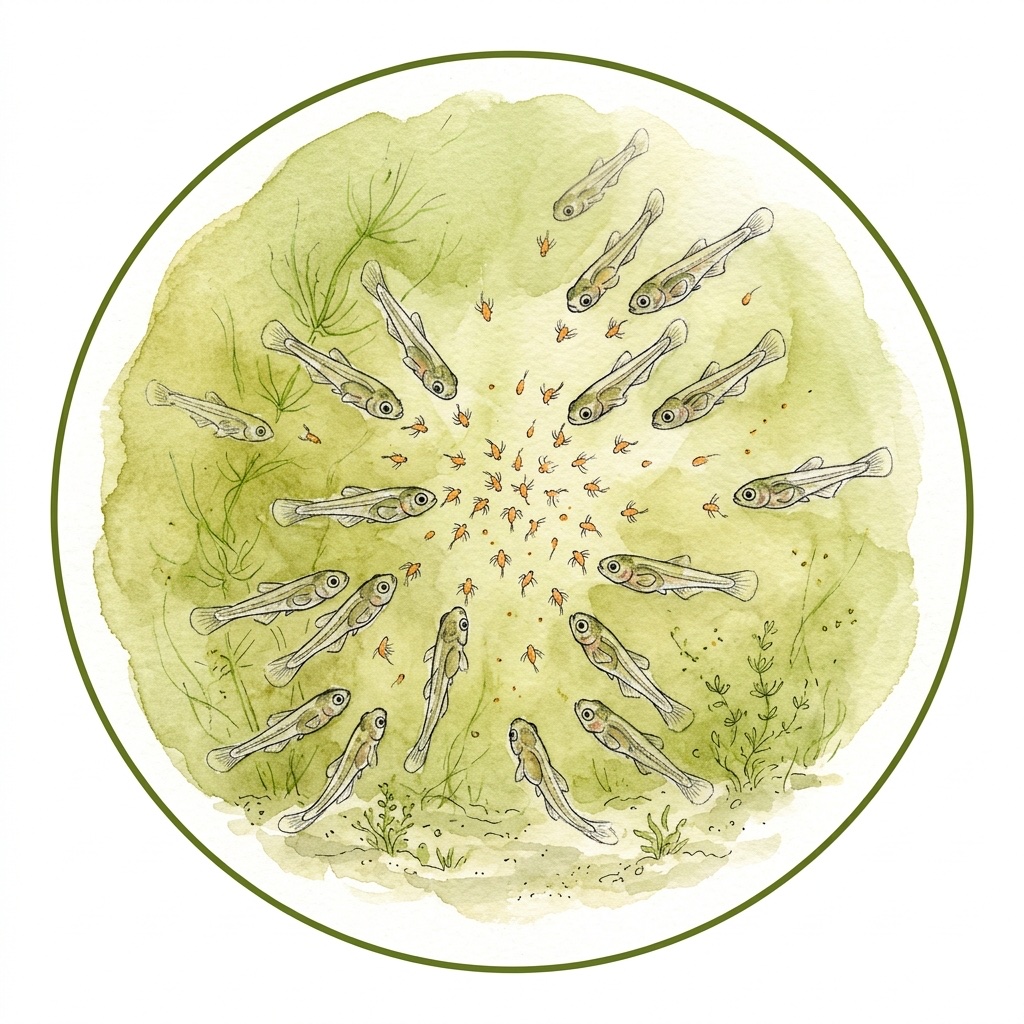
Day 8+
Free Swimming and First Foods
Fry begin foraging; feed microworm, baby brine shrimp; slow growth relative to standard cories
Conditioning a Stable Pair or Group
Successful breeding of *Corydoras splendens* is notably more challenging than breeding standard *Corydoras aeneus* or *C. paleatus*. The fish are more demanding of stable conditions, need a more dramatic cool-water trigger, and will simply refuse to spawn if anything about their environment is marginal. Begin with a confirmed mixed-sex group of at least two males per one female (three males per two females is better) in a dedicated breeding tank of 80 litres or more. Condition the group intensively for two to four weeks on live blackworm, white worm, and frozen bloodworm. The females must visibly plump up and develop a distinctly rounded, pear-shaped outline viewed from above — if this does not happen, conditioning is not complete and no amount of triggering will induce a spawn.
Cool-Water Trigger
The breeding trigger for Emerald Corys is a large, cool water change — significantly colder and larger than the change that suffices for easier corydoras species. With the tank sitting at its normal 24 °C, perform a water change of 40–50% using water at 18–20 °C, producing a final tank temperature of around 21–22 °C. This abrupt drop simulates the arrival of cool, oxygen-rich rainy-season water in the upper Amazon tributaries. Breeders who have studied the species find that timing the water change to coincide with a falling barometric pressure (the onset of a real rainstorm outside) further increases success rates. Keep the tank at the cooled temperature for 24–48 hours before allowing it to gradually return to 24 °C.
Courtship and T-Position Mating
Within 24–48 hours of a successful trigger, the males begin pursuing the ripest female in rapid, darting chases around the tank. Several males may compete simultaneously. When the female is receptive, mating occurs in the characteristic callichthyid T-position: the female comes to rest perpendicular against the male’s flank, her mouth over his vent, and takes his milt into her mouth. Simultaneously she cups her pelvic fins beneath her vent to catch and hold the eggs she releases. The milt she has taken in is spat past her gills and down over the cupped eggs, fertilising them. She then swims to a chosen surface — the aquarium glass, a broad plant leaf, a piece of slate or driftwood — and presses the sticky fertilised eggs onto it. This entire sequence repeats many times over 1–3 hours.
Egg Collection and Incubation
A healthy spawn can produce 80–200 eggs from a single female across multiple egg-laying sessions. The eggs are spherical, 1.5–2 mm across, and cream to pale yellow in colour, darkening visibly as embryos develop. Because the parents will eat the eggs, either remove the adult fish to a separate tank or carefully roll the adhesive eggs off the glass and plant leaves using a finger or soft rubber spatula, transferring them to a small hatching container of 5–10 litres. The hatching water should be drawn from the main tank, kept at 23–24 °C, and lightly aerated with an airstone positioned to create gentle circulation without tumbling the eggs. Dose with methylene blue at the package’s low-concentration rate to suppress fungus — unfertilised white eggs should be removed promptly with a pipette as they appear.
Hatching and Yolk-Sac Stage
At 23–24 °C, the eggs hatch in 5–7 days — slightly longer than the 3–5 days typical of smaller *Corydoras* species, reflecting the larger egg size and embryo development time. Newly hatched fry are roughly 4–5 mm long, transparent, and equipped with a prominent yolk sac that sustains them for the next 48–72 hours. During this period no feeding is required and the fry should not be disturbed. Maintain high water quality in the hatching vessel — any unhatched eggs or dead fry should be siphoned out immediately, as decomposition fouls the small water volume quickly.
Free Swimming and First Foods
Once the yolk sac is fully absorbed, the fry become free-swimming and immediately begin foraging across the bottom of the hatching tank. Their first foods should be live microworms, freshly hatched baby brine shrimp (Artemia nauplii), or commercial liquid fry food specifically sized for very small fry. Feed small amounts three to four times per day and siphon uneaten food after 30 minutes. Emerald Cory fry grow more slowly than standard *Corydoras* fry — expect them to reach 1 cm at 4–6 weeks and 2 cm at 10–14 weeks, rather than the faster growth curve of easier species. At 2 cm and above they can be gradually acclimated to the main tank, where they will begin to show the first hint of the metallic emerald colouration that will fully mature at 6–7 cm.
Compatible Species
The Emerald Cory’s size and temperament make it one of the most broadly compatible bottom-dwelling catfish available. Its armoured body and mildly venomous pectoral spines give it effective passive defence against opportunistic nippers, while its peaceful, schooling temperament means it never initiates aggression itself. Because it reaches 7–9 cm at adulthood — larger than any standard *Corydoras* — it is also physically safe from small and medium predators that might swallow a smaller cory. The ideal community for an Emerald Cory school is an Amazonian biotope of mid-sized tetras (cardinals, rummy nose, black neons), a dwarf cichlid pair, a small group of surface hatchetfish or rainbowfish, and a bristlenose pleco to handle algae — a setup which lets the Emerald Corys’ shimmering metallic flanks become a defining feature of the lower third of the tank. For keepers drawn to a pure biotope approach, matching the Emerald Cory with species from its native upper Amazon region produces an exceptionally coherent display: wild-type angelfish (not the colour-bred varieties), wild-caught cardinal tetras from the Rio Negro, a dwarf cichlid such as *Apistogramma agassizii* or *A. cacatuoides*, and a handful of hatchetfish at the surface creates a tank that looks and behaves like a genuine slice of a Peruvian side channel.
The single most important compatibility rule is group size. Emerald Corys kept singly or in pairs become stressed, reclusive, and slowly decline in colour and health. Six is the absolute minimum, and eight to ten is where the species truly comes into its own — the fish form a cohesive, actively foraging group that rests in relaxed piles, shoals in formation when moving between zones, and displays the confident, curious behaviour that makes them such rewarding aquarium inhabitants. When acquiring new fish, always add them in a group of at least three or four rather than piecing together a school one or two fish at a time; abrupt social changes cause measurable stress. If starting a school fresh, purchase all six (or more) fish at once from the same source and introduce them together to an already-cycled tank — this produces the best long-term results and the strongest schooling cohesion.
Mixing Emerald Corys with smaller *Corydoras* species is possible but not always optimal. In a tank with *C. sterbai*, *C. paleatus*, or *C. aeneus*, the Emerald Corys tend to dominate feeding and may displace the smaller species from prime foraging spots. They do not actively bully other cories, but their larger size and more active foraging style means they simply take more food and more space. If mixing is desired, provide an oversized tank (at least 200 litres) with multiple feeding stations, and keep both species in their own schools of six-plus so that neither is socially isolated. A safer approach is to keep a single-species school of eight to ten Emerald Corys and let them be the sole bottom-dwellers, which produces the most natural and confident behaviour.
One handling note applies to all corydoras but particularly to the larger Emerald Cory: the leading spine of each pectoral fin locks outward when the fish is startled, and the spine carries a mild toxin that can cause a painful sting to unprotected human skin and severe injury to predators that attempt to swallow the fish. When netting Emerald Corys, use a soft, fine-mesh net designed for catfish or scoop them into a container rather than a net where possible — the locked spines easily tangle in standard mesh and require patient, careful release to avoid injuring the fish or cutting the net. If a sting occurs, immediate immersion of the affected hand in water as hot as can be tolerated (without scalding) denatures the toxin and relieves the pain within minutes. The sting is not medically dangerous to healthy adults but can be quite painful — and it is a useful reminder that these apparently placid fish are armed with effective anti-predator weaponry that has helped the callichthyid family thrive in the Amazon for millions of years.
| Species | Why | |
|---|---|---|
| ✅ | Cardinal Tetra | Classic upper Amazon tankmate; occupies the mid-water level while Emerald Corys work the substrate; identical water preferences and peaceful temperament |
| ✅ | Neon Tetra | Small, peaceful, mid-water schooler; shares soft-water and cooler-water preferences of the Emerald Cory; zero ecological overlap |
| ✅ | Boesemani Rainbowfish | Active mid-water schooler; entirely peaceful and uses a completely different tank zone; visually complements the bottom-dwelling emerald silhouette |
| ✅ | Apistogramma (Dwarf Cichlid) | Most dwarf cichlid species coexist calmly with Emerald Corys; the cichlids defend small substrate territories but are physically incapable of harming the armoured catfish, which simply move around them |
| ✅ | Otocinclus Catfish | Tiny algae-grazing catfish that occupy the glass and broad leaves rather than the substrate; peaceful, share water parameters, no food or territorial competition |
| ✅ | Rummy Nose Tetra | Tight-schooling tetra native to the same upper Amazon waters; calm, peaceful, occupies mid-water column; identical water preferences |
| ✅ | Honey Gourami | Gentle surface-to-mid-water anabantoid; no overlap with cory feeding zone; tolerant of the slightly cooler temperatures preferred by Emerald Corys |
| ✅ | Dwarf Chain Loach | Both are peaceful bottom inhabitants with different feeding strategies — the loach focuses on snails and crevice prey while Emerald Corys work open sand; coexistence is calm |
| ✅ | Hatchetfish | Strict surface-dwelling schooler from the same Amazonian habitat; effectively a different ecological layer entirely, with zero interaction or competition |
| ✅ | Bristlenose Pleco | Peaceful, slow-moving algae grazer; occupies wood and glass rather than open sand; completely compatible with Emerald Corys once both are established |
| ❌ | Large Cichlids (Oscars, Green Terror, Jack Dempsey) | Will attempt to swallow adult Emerald Corys; even unsuccessful attempts frequently result in the cory’s locked pectoral spine lodging in the cichlid’s throat, causing serious injury or death to both fish |
| ❌ | Redtail Catfish / Large Predatory Catfish | Any large predatory catfish will outcompete Emerald Corys for bottom food, harass them, and eventually predate them as they approach full size themselves |
| ❌ | Fast-Moving Barbs (Tiger Barbs, Rosy Barbs in large groups) | Aggressive mid-level feeders that strip sinking food before it reaches the substrate; will nip at the Emerald Corys’ barbels and fin trailing edges, causing chronic stress and barbel loss |
| ❌ | Goldfish / Cold-Water Species | Incompatible temperature ranges — goldfish thrive at 15–20 °C while Emerald Corys require a minimum of 22 °C for active health; the pairing stresses both species |
| ❌ | Large Gouramis (Giant, Opaline in aggressive individuals) | Individual temperaments vary, but larger gourami species occasionally develop a habit of nipping at corydoras tailfins and harassing them at the substrate; watch carefully and separate if aggression appears |
Quick Reference
| Scientific Name | Corydoras splendens (formerly Brochis splendens) |
| Family | Callichthyidae |
| Origin | Upper Amazon — Peru, Ecuador, W. Brazil |
| Current Size | 3.5 cm (sub-adult) |
| Adult Size | 7–9 cm (larger than standard Corydoras) |
| Lifespan | 8–15 years |
| pH | 6.0–7.5 (ideal 6.8) |
| Temperature | 22–26 °C (ideal 24 °C — cooler end) |
| Hardness | 2–12 dGH |
| Min Tank | 100 L for a school of 6; 150 L preferred |
| Group Size | 6+ minimum; 8–10 recommended |
| Care Level | Beginner–Intermediate |
| Diet | Sinking pellets, wafers, frozen bloodworm, vegetables |
| Breeding | Egg scatterer; T-position; cool-water trigger (harder than standard cory) |
| Tank Zone | Bottom / substrate; active by day |
| Key Identifier | Metallic emerald-green flank sheen; 11–12 dorsal rays (vs 7–8 in standard Corydoras) |
| Special Note | Former genus *Brochis* merged into *Corydoras* in 2003 — both names still in trade use |
Related Products

Reviews
Clear filtersThere are no reviews yet.