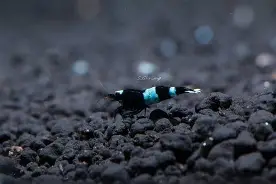
🪨 Species at a Glance
| Scientific Name | Caridina cantonensis var. ‘Shadow Panda’ (SS grade) |
| Common Names | Shadow Panda Shrimp, Shadow Panda Bee, SPS, Shadow Bee |
| Family | Atyidae |
| Order | Decapoda |
| Origin | Selectively bred in Japan and Taiwan from southern Chinese Bee shrimp stock |
| Adult Size | 2.5–3.0 cm (1.0–1.2 in) |
| Lifespan | 1.5–2 years in optimal conditions |
| Temperature | 20–24 °C (68–75 °F) — cool-water species, ideal 22 °C |
| pH Range | 5.8–6.5 (soft acid) — ideal 6.0–6.2 |
| Hardness | GH 4–6 dGH, KH 0–1 dKH (ultra soft) |
| TDS | 120–160 ppm (precision critical) |
| Diet | Biofilm grazer + branded shrimp food + blanched vegetables |
| Minimum Tank Size | 40 L (10 gal) species-only planted tank |
| Care Level | Advanced / Expert |
| Temperament | Completely peaceful, shy, group-oriented |
| Breeding | Egg-carrying (berried female), ~30 day gestation, no larval stage |
Anatomy & Identification
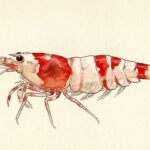
Shadow Panda Shrimp inherit the classic Atyidae body plan — a compact, laterally compressed crustacean with a fused cephalothorax protected by a chitinous carapace, and a segmented abdomen ending in a fan-shaped telson. What sets the Shadow Panda apart from every other Bee shrimp variant is the intensity and distribution of its pigmentation. Where a standard Panda Bee displays crisp black-and-white bands of modest opacity, the Shadow variant takes the black component deeper into an almost jet-lacquer tone, often with a matte or ‘shadow’ quality to the light-reflective cuticle. The white bands, in turn, appear as bright, chalky, opaque regions that emphasise the contrast. This extreme black/white differentiation is the result of decades of selective line-breeding by Japanese and Taiwanese hobbyist breeders pursuing the SS and SSS grade standards. Grading is a strict visual evaluation: the judge looks for clean band edges (no bleed between black and white), full coverage (no translucent regions), symmetry of pattern on left and right flanks, and the presence or absence of high-value traits such as the double-hood (two white bands across the carapace) or the mosura crown.
Adult Shadow Pandas reach only 2.5–3.0 cm, noticeably smaller and more delicate than their Neocaridina cousins. The rostrum — the forward-projecting spine above the eyes — bears fine teeth characteristic of Caridina cantonensis and is a useful identification feature separating the Bee shrimp from the superficially similar Neocaridina (whose rostrum is shorter and less toothed). Long antennae sweep continuously across surfaces as the primary chemosensory organs, guiding the shrimp to biofilm patches and decaying plant matter. The compound eyes, mounted on short stalks, offer near-360° vision — essential in a species with virtually no physical defence. The pereiopods (walking legs) terminate in tiny, delicate chelae used to pick up fragments of food and transfer them to the mandibles in rapid, almost fidgeting movements. The pleopods along the underside of the abdomen serve a double role: they generate the gentle swimming currents that propel the shrimp through short hops, and in females they cradle and oxygenate the developing egg clutch throughout the gestation period.
Sexual dimorphism is clearer in mature adults than in juveniles. Females are visibly larger, with a broader, rounder abdomen designed to carry an egg clutch, and display a ‘saddle’ — a yellow or cream patch of ovarian tissue visible through the translucent carapace just behind the head. When berried (carrying eggs), the clutch of 20–30 eggs is plainly visible as a dense cluster beneath the abdomen, held in place by the pleopods. Males are smaller, slimmer, and lack the saddle; their abdominal profile tapers rather than curving outward, and their colouration is often slightly less dense than the breeding females. Experienced keepers learn to sex Shadow Pandas on a sideways silhouette alone: the female’s abdomen curves outward like a ladle, while the male’s remains cylindrical. In a well-kept SS-grade colony, the challenge is rarely sexing adults — it is preserving the grade standard as the colony reproduces, since lower grades will emerge with every generation if cull selection is not practised. Serious breeders maintain a separate ‘grow-out’ tank where sub-standard juveniles are moved out of the breeding population, preserving the SS/SSS line through selective retention of only the highest-quality individuals.
⚫ Shadow Panda (S Grade)
Entry-level Shadow Panda with clear black-and-white banding but some translucency in the white regions; a solid foundation stock for colony starters.
⬛ Shadow Panda (SS Grade)
The benchmark grade: deep opaque black, chalky opaque white, crisp banding edges. This is the typical ‘Shadow Panda’ offered by quality breeders.
🎭 Shadow Panda (SSS / Double Hood)
Elite grade featuring two white ‘hood’ bands on the carapace, creating a double-masked facial pattern. Rare, prized, and substantially more expensive.
🦍 King Kong Panda (Variant)
Related Caridina morph with near-solid black body and minimal white — the dark extreme of the Shadow lineage. Often line-crossed with Shadow Pandas for depth of black.
🔴 Crystal Red (CRS) — Sister Line
The red-and-white counterpart of the Bee shrimp breeding programme; shares identical water requirements and will interbreed with Shadow Panda if mixed.
⬜ Crystal Black (CBS) — Sister Line
Closest relative to Shadow Panda, with similar black-and-white banding but a different underlying pigment chemistry. Often confused with low-grade Shadows.
📘 Blue Bolt
Selectively bred Taiwan-Bee variant expressing a vivid electric-blue-and-white pattern; shares Shadow Panda water parameters and husbandry exactly.
🍷 Red Wine
Dark wine-red Taiwan-Bee variant with velvety pigmentation; a prestige Caridina morph that coexists with Shadow Pandas under identical water chemistry. Often paired with Shadow Pandas in display tanks for colour contrast, though breeding keepers should keep them separate to avoid hybridisation.
Water Sensitivity
5.8–6.5
ideal 6.2
20–24 °C
ideal 22 °C
4–6 dGH
Ultra soft — GH 4–6, KH 0–1, TDS 120–160 ppm (RO + Bee-specific remineraliser mandatory)
There is no freshwater aquarium animal more demanding of stable, precise water chemistry than the Shadow Panda Shrimp. The tank must operate inside a narrow window: pH 5.8–6.5, temperature 20–24 °C, GH 4–6 dGH, KH 0–1 dKH, TDS 120–160 ppm, ammonia 0, nitrite 0, nitrate under 10 ppm. Drift outside any of these parameters — and particularly sudden drift — triggers stress molts, reproductive failure, or outright colony collapse. A keeper checking parameters weekly and logging the results in a simple spreadsheet will catch slow drifts (soil exhaustion, mineral creep) long before they become fatal; a keeper who only checks parameters when a shrimp dies will usually be too late. Because the ideal water is inherently unstable (KH of 0–1 provides almost no pH buffer), stability is maintained not by bicarbonate chemistry but by the slow, steady acid release of an active aquasoil substrate. The tank chemistry is, in effect, a continuous chemical reaction between CO2 dissolution, humic acid leach from driftwood and Indian almond leaves, and the soil’s cation exchange — and once that reaction stabilises, the keeper must protect it religiously. Water changes should be small (10–15 percent weekly), slow (drip-equalised over at least 20 minutes), and with water pre-matched to tank parameters to within 10 ppm TDS and 0.1 pH units. Many experienced keepers maintain a dedicated storage barrel of pre-mixed, aged, remineralised RO water so that water chemistry matching is simply a matter of opening a tap rather than racing to match values on the day of the change.
Copper is acutely lethal at trace concentrations — Caridina tolerance is effectively zero. Even copper piping in a household plumbing system can leach sufficient copper into RO-source water to pose a risk if the RO prefilter is aging; some keepers add a dedicated copper test kit (API or Salifert) to their toolkit purely to monitor inlet water quality. Any fertiliser labelled ‘shrimp safe’ should still be scrutinised; anything containing copper sulfate, copper chelate, or unspecified ‘micronutrients’ is a risk. Never treat a Caridina tank with fish medications — praziquantel and a handful of others are cautiously acceptable, but virtually every other medication will kill the colony. Chlorine and chloramine in tap water must be eliminated (most keepers bypass this entirely by using reverse-osmosis water remineralised with a Caridina-specific salt blend). Temperature stability matters enormously: above 26 °C these shrimp stress rapidly, breeding halts, and bacterial infection risk spikes. A room that swings above 25 °C in summer is grounds for a chiller or at least a cooling fan rigged to the tank rim — evaporative cooling from a fan over the water surface can drop the tank temperature 2–3 °C below ambient and is often sufficient in temperate climates, but in genuinely hot conditions a thermoelectric or compressor chiller is the only reliable option. Keepers in tropical regions of Asia and Australia almost universally use chillers year-round, accepting the energy cost as a fixed operating expense of the hobby. Air-conditioning the room itself is often the simplest and most effective solution if the setup is kept in a living area that is already climate-controlled.
Tank Setup
A Shadow Panda tank is a system of chemistry, not just an ornamental display. The absolute foundation is active aquasoil — a fired, nutrient-rich, slightly acidic substrate that ion-exchanges with tank water to lower pH, soften KH, and leach humic compounds. ADA Amazonia (regular or Ver.2), Fluval Stratum, Akadama, or SL-Aqua Amazonia Soil are the proven choices; inert gravel or sand will simply not produce the water chemistry Shadow Pandas require and should never be substituted. The soil itself has a working life of approximately 18–24 months after which its buffering capacity is exhausted; many long-term keepers plan a full substrate replacement every two years as part of the tank’s life cycle, moving the colony temporarily to a holding tank while the main tank is rebuilt. Soil is laid 5–7 cm deep, with the front graded slightly lower for visual depth, and is never disturbed once cycled. Allow a full 4–8 week cycle before adding any shrimp — during the cycle the soil will initially release ammonia as it activates, which must be fully consumed by the biofilter before animals arrive. Experienced keepers run the cycle with a small ammonia source (such as pure ammonium chloride dosed to 2–4 ppm) and monitor the conversion to nitrite and then nitrate as a sign that biological filtration is established. A minimum tank footprint of 40 litres (10 gallons) provides enough water volume for parameter stability; experienced keepers strongly prefer 60–90 litres for greater buffer against mistakes, and serious breeders frequently run 120 L+ display tanks to support larger colonies and more reliable reproduction.
On top of the soil, hardscape is chosen for function as much as form. Driftwood (spider wood, Malaysian wood, Manzanita) leaches gentle tannins that reinforce the soft-acidic chemistry and provides vertical foraging surfaces. Dense carpets of Java moss, Christmas moss, Peacock moss, or Susswassertang provide the biofilm grazing surface that the shrimp feed on nearly constantly, and serve as critical shelter for newborn shrimplets during their vulnerable first weeks — a rule of thumb is that the total volume of moss should be enough that you can lose sight of a shrimp within a second of it entering cover. Bucephalandra, Anubias nana ‘petite’, and crypts are ideal plants — they tolerate soft acidic water, grow slowly without demanding CO2 injection, and provide additional foliage for shrimp to explore. Avoid fast-growing stem plants that require rich fertilisation, as liquid fertilisers often contain traces of copper or other shrimp-hostile compounds. Indian almond (Catappa) leaves and alder cones should always be present, typically replaced every 2–4 weeks as they degrade, releasing tannins and providing secondary biofilm substrate. Some keepers add mulberry leaves and banana leaves on rotation as additional slow-release food and chemistry support. Lighting should be gentle — a low-PAR LED on a 6-hour photoperiod is sufficient — because excessive light encourages green algae that displaces the soft brown biofilm the shrimp prefer. A slight tea-coloured tint to the water is not only acceptable but desirable; it indicates healthy humic acid levels that support both pH stability and immune function. Some advanced keepers run a ‘biofilm bar’ — a sheet of mature sponge filter media tucked into a corner of the tank that functions as a dedicated biofilm reservoir and provides a high-density grazing target when the main tank surfaces have been freshly cleaned. Small details of this kind — how the soil is graded, where moss is placed, how much tannin is present, whether a biofilm bar is included — are what separate a tank that merely keeps Shadow Pandas alive from a tank that produces generations of them. The setup should be treated as a living system that needs months to mature and years to truly settle, not a weekend project.
Active Aquasoil (Mandatory)
ADA Amazonia, Fluval Stratum, Akadama, or SL-Aqua at 5–7 cm depth. This is not optional — soft acidic water chemistry depends entirely on the substrate. Plan for soil exhaustion after 18–24 months and a full re-set.
Air-Driven Sponge Filter
Dual sponge filters for redundancy and biological capacity. Gentle flow, no impeller, shrimplet-safe. Run an air pump with check valve; never use power filters without a fully encased pre-filter sponge.
Heater with External Thermostat
25–50 W adjustable heater set to 22 °C. Inline or external heaters strongly preferred — Caridina crawl onto heater elements and have been recorded dying from contact burns.
Chiller or Cooling Fan (Climate Dependent)
If ambient summer temperature exceeds 26 °C, a clip-on cooling fan or dedicated aquarium chiller is essential. Shadow Pandas do not survive prolonged 27 °C+ exposure.
TDS Meter and pH Pen
Digital TDS meter (target 120–160 ppm) and pH pen (target 6.0–6.2). Calibrate monthly. These are not luxury items — they are the instruments that tell you whether your soil is still active.
RO/DI Water System
Reverse-osmosis or RO/DI filtration for water change water. Tap water is almost never suitable. Pair with a storage barrel for pre-mixed, aged change water.
Bee Shrimp Remineraliser
Salty Shrimp Bee Shrimp GH+, SL-Aqua Green, or Mosura Mineral Plus. Never use generic GH/KH+ (intended for Neocaridina) — it will add KH and push pH toward neutral, ruining the tank.
Indian Almond Leaves and Alder Cones
Continuously replaced tannin source. Provides anti-fungal humic acids, buffers pH downward, supports biofilm growth, and gently stains water to the preferred tea-tint.
Dense Moss (Java, Christmas, Peacock)
Non-negotiable for shrimplet survival and biofilm grazing territory. Aim to cover at least 30 percent of tank volume with moss across driftwood, mesh walls, and carpet.
Tight-Fitting Lid
Shrimp climb airline tubing, heater cords, and sponge filter stems. Use a glass or mesh cover — overnight escapees desiccate on the floor in minutes and are rarely recoverable even if found quickly.
Driftwood (Spider, Malaysian, or Manzanita)
Tannin-leaching hardscape that reinforces soft-acidic water chemistry, provides climbing surfaces, and hosts biofilm colonies. Pre-soak driftwood for 2–3 weeks before adding to avoid a sudden tannin flood that crashes pH.
Storage Barrel for Change Water
A 20–30 L food-grade storage container for pre-mixing, aerating, and temperature-matching RO+remineraliser water over 24–48 hours before a water change. Eliminates same-day chemistry mismatches.
Molting & Shell Care
Molting in Shadow Panda shrimp is a knife-edge physiological event. Like all Caridina, they shed their exoskeleton every 3–5 weeks as adults, and every 1–2 weeks as juveniles in rapid growth. But unlike their Neocaridina cousins who molt comfortably in moderately hard water, Shadow Pandas must perform this feat in ultra-soft, acidic conditions (GH 4–6, KH 0–1, TDS 120–160) where mineral availability is intrinsically scarce. The breeder’s balancing act is providing enough calcium and magnesium for cuticle formation without pushing GH above 6 or KH above 1 — parameters that would blur the colour pattern, disrupt osmoregulation, and compromise the very water chemistry the strain was bred to thrive in. Remineralising RO water with a Caridina-specific salt blend (Salty Shrimp Bee Shrimp GH+, SL-Aqua, Mosura Mineral Plus) is essentially non-negotiable — tap water or generic GH+ products will not deliver the right mineral ratio, because generic GH+ formulations introduce sodium chloride and potassium ratios suited for Neocaridina rather than the calcium/magnesium-heavy profile Caridina evolved with. The cost is trivial (a 250 g jar of Bee Shrimp GH+ lasts a typical keeper 12+ months) compared with the cost of losing a colony.
In the 24–48 hours before a molt the shrimp appears pale and cloudy, withdraws to hiding, and refuses food. Some keepers describe the pre-molt phase as ‘gone quiet’ — a shrimp that was previously foraging becomes motionless under a leaf, conserving energy for the physiological effort ahead. The molt itself is rapid: the carapace cracks along the dorsal seam, the shrimp flexes backward with a single muscular snap, and the translucent exuvia is left behind looking eerily like a dead shrimp (leave it in the tank — the colony will consume it within 24–48 hours, recycling its calcium). Post-molt shrimp are briefly soft-bodied and vulnerable, needing 1–3 hours for the new cuticle to begin hardening; this is also when mating occurs, because the female’s soft abdomen is only receptive to sperm transfer during this narrow window.
The single greatest cause of mortality in Shadow Panda tanks is the ‘white ring of death’ — a thick, opaque white band visible across the thorax where the molt has failed mid-process. The shrimp becomes stuck inside the partially-shed shell and cannot escape. Almost no white-ring cases recover; the kindest intervention is usually none, as the animal will typically expire within 24 hours. White ring signals either insufficient minerals (raise GH slightly toward 6 with a careful remineraliser dose), excessive mineral shock from a poorly-matched water change (always pre-match change water to within 10 ppm TDS of tank water), or chronic stress from parameter swings that have been degrading cuticle formation over multiple molt cycles. If you see repeated white-ring deaths in a tank, stop feeding, increase water change frequency with precisely-matched water, test GH/KH/TDS/pH, and investigate whether the aquasoil has exhausted its buffering capacity.
Diet & Feeding
Shadow Panda shrimp are obligate biofilm grazers in the wild sense — they spend the overwhelming majority of their active hours slowly picking microscopic biofilm off every surface of the tank. Biofilm, in aquarium terms, refers to the thin composite layer of bacteria, microalgae, protozoa, and exuded polysaccharides that colonises every submerged surface over the first weeks of tank maturation; it is the true staple of Caridina nutrition, and any feeding strategy is a supplement to biofilm, not a replacement for it. In a mature, well-planted aquarium with stable parameters, biofilm production alone supports a small colony without any supplemental feeding at all. However, as the colony grows and as serious keepers pursue breeding performance and colour expression, targeted supplementation with quality branded shrimp foods becomes essential. The Caridina hobby has developed an entire micro-industry of precision nutrition — Shrimp King Complete (Dennerle), BorneoWild Grow, Mosura Excel, SL-Aqua Blue Wizard, Genchem BIO Max, and Ebita Breed all produce specialised diets formulated for Bee shrimp nutritional profiles, and the quality of the food visibly affects molt success, growth rate, and colour intensity. Keepers who switch from a generic pellet to a premium Caridina-formulated food typically report improved colour saturation and molt success within 2–3 molt cycles. Cheap generic ‘shrimp pellet’ from mainstream fish-food brands is a false economy and often corresponds with poorer molt outcomes.
Feed sparingly, 3–4 times per week at most. A portion of food should be consumed within 2–3 hours; anything left after that risks fouling the water in a lightly-filtered, low-buffer system that has almost no tolerance for decay spikes. Rotate between a staple biofilm-enhancing pellet, a protein pellet (mineral and growth supplement), and occasional blanched vegetables — blanched spinach, zucchini, carrot, and mulberry leaves are all excellent. Blanching softens cell walls so the shrimp can graze efficiently, and boiling briefly (30 seconds) also drives out air and sinks the vegetable. Snowflake food (soy-hull based) is popular as a safe ‘leave-in’ option because it decays slowly and does not foul the water. Baby shrimp specific powders can be sprinkled over moss during the first weeks after hatching to give shrimplets access to finely-divided protein they can manipulate. Many experienced breeders run a ‘fast day’ once or twice a week, providing no supplemental food at all and letting the colony graze entirely on biofilm — this is considered healthy and mimics natural food scarcity cycles. One strict rule: never feed any product from the mammalian food chain (no commercial fish food containing beef heart, no raw meat) — the enzymatic load will wreck the tank and the fat profile is incompatible with crustacean physiology. Another well-established guideline is to avoid spirulina-heavy foods during summer heat peaks: the high protein content accelerates decomposition in warm water and can spike ammonia in an already-stressed tank. In autumn and winter, when tanks naturally run cooler and biological loads are lower, richer protein feeds are safer and often produce more berried females in the following cycle. Many keepers match feeding intensity to the season rather than maintaining a constant year-round schedule, and report noticeably better colony performance as a result of this rhythm.
Breeding
Egg Carrying
Breeding Shadow Pandas is the ultimate reward and the ultimate diagnostic in the hobby — a colony that reproduces reliably is, by definition, a tank where water chemistry, nutrition, and stability are all dialled in. A sterile-looking aquarium full of Shadow Pandas that refuses to produce berried females is almost always sending a message that something is subtly wrong: TDS too high, temperature drifting upward, soil approaching end-of-life, or food quality insufficient for gonadal development. Caridina cantonensis reproduces by direct development: there is no free-swimming larval stage, which is the biological feature that makes hobby-scale breeding practical in the first place. Instead, the female carries a clutch of 20–30 fertilised eggs beneath her abdomen for approximately 28–32 days (slightly faster at 23–24 °C, slower at 20 °C), and the eggs hatch directly into fully-formed miniature adults about 1.5–2 mm long, immediately capable of grazing biofilm. Because the young are essentially tiny versions of the adults, breeding success in Shadow Pandas hinges less on specialised fry nutrition (which dominates fish breeding) and more on providing a biofilm-rich environment with abundant microscopic hiding space.
The breeding cycle follows a repeatable five-stage arc. First, the female approaches a molt — her ovarian saddle becomes especially visible as a yellow or cream patch behind the head, signalling egg readiness. Second, she molts, and within minutes releases pheromones that trigger a sudden ‘mating swarm’ in which every sexually mature male in the tank frantically searches for her. The swarm is one of the more striking sights in shrimp keeping — otherwise sedentary animals suddenly dart around the tank in apparent chaos, tracking a pheromone plume. Third, a single male locates her and mates in a rapid grasp-and-transfer lasting only seconds. Fourth, over the following hours, the female transfers her eggs from the ovarian saddle down to her pleopods, where they will be held, oxygenated, and groomed for the entire gestation — she will regularly fan her pleopods to oxygenate the clutch and pick off any fouled eggs with her chelae. Fifth, after roughly 30 days of visible carry, the eggs hatch as miniature adults during a single evening and immediately disperse into moss and leaf litter, where they begin grazing on biofilm without any parental care.
Shrimplets are at highest risk in their first 2–3 weeks. Predation is the main threat in community tanks (which is why most Caridina breeders run species-only). Mechanical risk comes from unprotected filter intakes — even a pre-filter sponge must have a mesh fine enough to exclude 1.5 mm shrimplets. Chemical stability matters more than ever during shrimplet phase: a TDS or pH swing that a mature adult would shrug off will wipe out a generation of babies. Many keepers deliberately skip a water change during the week following a major hatch, prioritising parameter stability over cleanliness. Expect a well-kept tank to yield one breeding cycle per female every 6–8 weeks, with colony doubling time of roughly 4–6 months under good conditions — slow growth compared with Neocaridina, but each generation represents pure selectively-bred Shadow Panda stock that retains the grade of the parent colony if culling is disciplined. In a mature tank run by a patient keeper, a starter group of ten SS-grade Shadow Pandas can become a visually striking display colony of forty to sixty adults within a year, with a steady background stream of berried females and freshly-hatched shrimplets cycling through the moss.
Community Compatibility
The single strongest recommendation in serious Caridina keeping is: run a species-only tank. Shadow Pandas are expensive, fragile, and reproductively picky; every fish in the tank — no matter how ‘peaceful’ — reduces shrimplet survival, slows colony growth, and introduces chemistry risks (fish waste adds nitrogen, fish food decays faster, fish medication is potentially lethal). A 40–60 litre species-only setup with a stable active-soil base and dense moss produces dramatically better outcomes than any mixed community, and is what virtually every breeder of SS/SSS-grade stock maintains. Think of the Shadow Panda tank less as a community display and more as a precision breeding environment: the goal is a self-sustaining colony, not a mixed underwater diorama. If a community tank is unavoidable, restrict tankmates to the smallest, most peaceful nano fish (Chili Rasbora, Pygmy Cory), accept that breeding output will be reduced to near zero, and never house Shadow Pandas with any Neocaridina species (chemistry conflict, as Neocaridina prefer harder more alkaline water that undermines Caridina health) or any other Caridina cantonensis morph (hybridisation destroys the strain within 2–3 generations of cross-breeding). The genetic risk is particularly important: a single CRS or Blue Bolt added to a Shadow Panda tank will, over time, produce offspring that carry both genetic lines and never regain the pure Shadow pattern, effectively ruining the colony’s grade value. Species-only is the professional standard. Everything else is a compromise, and usually an expensive one. For keepers committed to the long game, the species-only approach also pays in quality of observation: without fish to distract the eye, the subtle behaviours of Shadow Pandas — the way a berried female fans her eggs, the frenzy of a mating swarm, the first hatchlings clinging to moss fronds — become the main visual interest of the tank, and the keeper becomes a patient observer of a self-contained ecosystem rather than an operator of a mixed stock display.
| Species | Why | |
|---|---|---|
| ✅ | Species-only tank (recommended) | By a large margin the safest and most productive setup for Shadow Pandas. Zero predation, zero food competition, zero hybridisation risk, maximum breeding performance and shrimplet survival. |
| ✅ | Pygmy Corydoras (Corydoras pygmaeus) | Tiny peaceful bottom-dwellers that ignore adult shrimp. Shrimplets are still at mild risk of accidental predation when the corys forage. Acceptable only in mature, heavily-planted tanks with abundant moss cover. |
| ✅ | Chili Rasbora (Boraras brigittae) | Tiny (1.5–2 cm) peaceful nano fish with mouths too small to consume adult Shadow Pandas. Shrimplets are at risk; breeding output will be reduced in their presence. |
| ✅ | Endler’s Livebearer (Poecilia wingei) — female only | Female-only Endler groups are small and peaceful; they generally ignore adult shrimp. Shrimplets still at mild risk. Not an optimal choice but workable in larger tanks. |
| ✅ | Horned Nerite Snail (Neritina sp.) | Algae-grazing snails with no interest in shrimp at any life stage. Will not reproduce in freshwater. Safe and useful cleanup crew. |
| ✅ | Ramshorn Snail (Planorbidae) | Peaceful detritivore; coexists without conflict and provides additional biofilm recycling. Population may grow quickly and require manual thinning. |
| ❌ | Any fish over 3 cm | Virtually any fish larger than 3 cm will eventually consume adult Shadow Pandas, and any fish at all will eat shrimplets. Tetras, guppies, rasboras above 3 cm, barbs, rainbowfish — all will reduce colony output to near zero. The rule is simple and non-negotiable: if it has a mouth large enough to fit a shrimp, it will eventually try. |
| ❌ | Neocaridina species (Cherry, Blue Velvet, etc.) | Neocaridina and Caridina do not hybridise — so the commercial myth of ‘mixed colour shrimp tanks’ is real — but they compete heavily for food and territory, and Neocaridina prefer harder alkaline water that is actively harmful to Shadow Pandas. Keep strictly separate. |
| ❌ | Other Caridina cantonensis morphs (CRS, CBS, Blue Bolt) | These will interbreed with Shadow Pandas and within 2–3 generations produce muddy, low-grade offspring that lose the Shadow pattern entirely. Never mix different Caridina cantonensis lines in a breeding tank. |
| ❌ | Assassin Snail (Clea helena) | Primarily targets other snails, but will readily attack and consume molting or recently-molted shrimp when the soft exoskeleton is most vulnerable. Not safe in a shrimp tank. |
| ❌ | Crayfish or Dwarf Crayfish (CPO, etc.) | All crayfish are aggressive omnivores that will hunt and consume shrimp of every size. No exceptions. |
| ❌ | Betta Fish (Betta splendens) | Most bettas actively hunt shrimp, and no betta should be trusted around breeding-grade Caridina. ‘Shrimp-safe’ individuals are anecdotal and unreliable, and the financial risk of losing SS-grade stock far outweighs any aesthetic appeal of a mixed setup. |
| ❌ | Gouramis (Trichopodus / Trichogaster spp.) | Most gouramis readily consume shrimp, and even dwarf gouramis will pick off smaller individuals and shrimplets. They also prefer warmer water (26–28 °C) that is actively stressful for Shadow Pandas. |
Quick Reference
| Scientific Name | Caridina cantonensis var. ‘Shadow Panda’ (SS) |
| Adult Size | 2.5–3.0 cm |
| Lifespan | 1.5–2 years |
| pH | 5.8–6.5 (ideal 6.0–6.2) |
| Temperature | 20–24 °C (ideal 22 °C) — cool water |
| GH / KH | GH 4–6 / KH 0–1 |
| TDS | 120–160 ppm (precision) |
| Substrate | Active aquasoil — mandatory |
| Min Tank Volume | 40 L (10 gal) species-only |
| Care Level | Advanced / Expert |
| Breeding Difficulty | Challenging — demands precision |
| Gestation Period | 28–32 days (berried female) |
| Copper Tolerance | ZERO — lethal at trace levels |
| Filter Type | Air-driven sponge filter only — no impeller filters, ever |
| Water Change Frequency | 10–15% weekly with matched water |
Reviews
Clear filtersThere are no reviews yet.