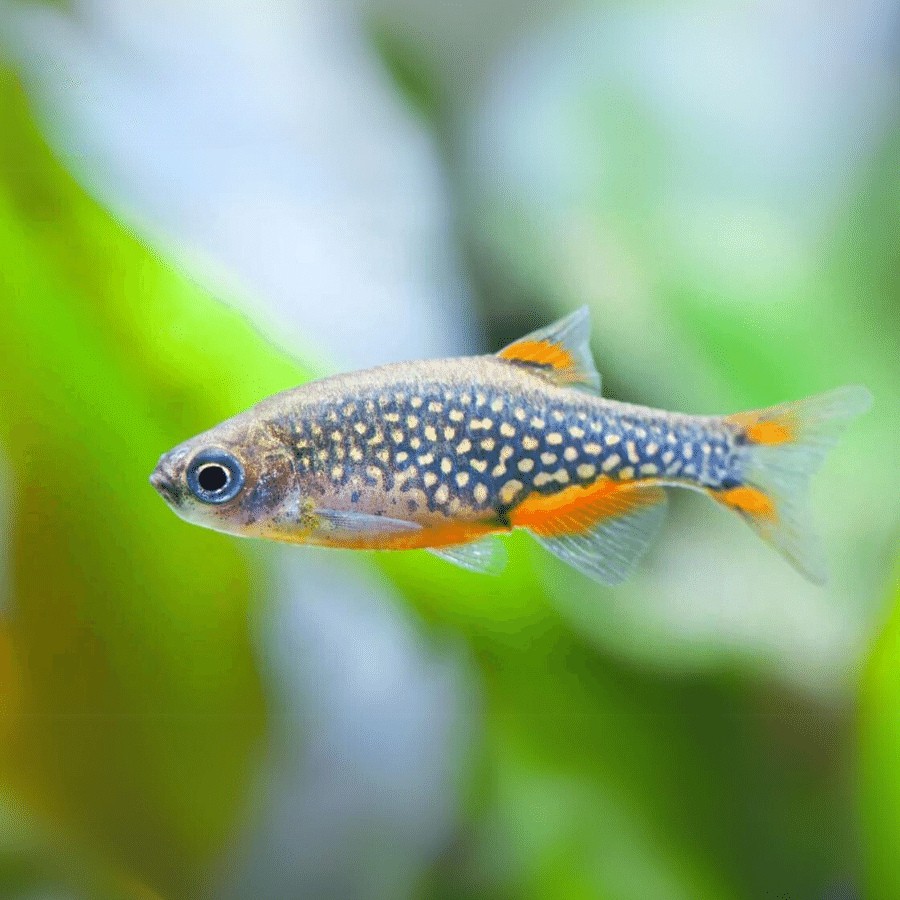
🪨 Species at a Glance
| Scientific Name | Celestichthys margaritatus |
| Trade Names | Galaxy Rasbora, Celestial Pearl Danio, CPD |
| Family | Danionidae |
| Order | Cypriniformes |
| Origin | Hopong plateau, Shan State, eastern Myanmar (Burma) |
| Habitat | Shallow cool-water highland ponds at ~1000 m altitude |
| Adult Size | 2–3 cm (0.8–1.2 in) |
| Lifespan | 3–5 years |
| pH Range | 6.5–7.5 |
| Temperature | 20–24 °C (68–75 °F) — cool water species |
| Hardness (dGH) | 5–15 |
| Diet | Micro-carnivore — tiny live/frozen foods, crushed flake, micro-pellets |
| Minimum Tank Size | 40 L (10 gal) for a school of 10+ |
| Care Level | Beginner to Intermediate (mind the cool water) |
| Temperament | Peaceful, shy — males display to each other |
| Breeding | Egg scatterer on mosses — very prolific in home tanks |
| Tank Position | Mid to lower levels; darts among plants |
Where the Name Comes From
Few fish in the modern hobby have had such a turbulent christening. In August 2006, the first wild-caught specimens arrived in the European aquarium trade via exporter Kamphol Udomritthiruj, who had been shown the fish by Burmese locals from a tiny remote pond roughly 80 kilometres east of Inle Lake, on the Hopong plateau of Shan State, eastern Myanmar. The fish had no scientific name yet, and the exporter — taken by the galaxy-like constellation of pale spots across its dark flanks — coined the trade name “Galaxy Rasbora” to get it moving through the import channels. Within weeks, hobbyist forums were buzzing and photographs of the species had gone viral. It became the single most hyped aquarium import of the decade, and for a brief period wholesale prices in Europe reached staggering levels as hobbyists and commercial buyers alike scrambled to secure specimens of what looked like the most beautiful tiny fish ever discovered.
The wild story, however, quickly turned difficult. The fish had been collected from a single small pond in the Hopong area — barely larger than a suburban backyard swimming pool — and the exporters were taking them out by the tens of thousands within weeks. By early 2007, reports from Myanmar suggested the original population had been essentially fished to collapse; a handful of nearby ponds held scattered fish but nothing like the density of the original locality. The Burmese fisheries department briefly banned wild exports. Fortunately, by that time, the species had already been successfully bred in captivity in Southeast Asian fish farms and hobbyist tanks across Europe and North America. Today, essentially all galaxy rasboras in the international trade are tank-bred — a conservation success story that rescued the species from its own popularity. If you buy a galaxy rasbora in Australia today, you are almost certainly buying a captive-bred fish, several generations removed from the wild.
Only a month after the first shipments, in September 2006, Singaporean ichthyologist Tyson R. Roberts formally described the fish in the journal Aqua. He placed it, somewhat reluctantly, in the genus Microrasbora and named it Microrasbora erythromicron-margaritatus, soon corrected to Microrasbora margaritatus — the Latin margaritatus meaning “adorned with pearls.” But Roberts suspected from the first that the fish was not a rasbora at all: the body proportions, the barbels, the breeding behaviour, and especially the presence of tubercles on male fish during display all pointed toward the danios, a quite separate lineage of cypriniform fishes. In 2007, he revisited the description and erected an entirely new genus for the species, Celestichthys — a compound of the Latin caelestis (“heavenly, celestial”) and the Greek ichthys (“fish”). The fish was now, properly, Celestichthys margaritatus: the heavenly pearl fish. A handful of related species have since been added to the genus, including Celestichthys erythromicron (the emerald dwarf rasbora, formerly Microrasbora), confirming Roberts’s original instinct.
That 2007 reclassification is why the fish carries two common names that both refer to exactly the same species. “Galaxy Rasbora” is the older trade name, coined before the scientific description and now a misnomer — the fish is not a rasbora at all. “Celestial Pearl Danio” (often shortened to CPD in hobbyist discussion) is the newer name that better reflects its true danio lineage and echoes the celestial-pearl meaning of Celestichthys margaritatus. Both names remain in daily use across the hobby, and you will see both on tank labels, price lists, and shipping manifests without any difference in the fish behind the glass. If you see a tank labelled Galaxy Rasbora and another labelled Celestial Pearl Danio or CPD, you are looking at the exact same species — one fish, three names, and one of the most extraordinary aquarium discoveries of the twenty-first century.
Ideal Water Conditions
6.5–7.5
ideal 7.0
20–24 °C
ideal 22 °C
5–15 dGH
Moderately soft to moderately hard — adaptable
Here is the single most important thing to understand about this species: Celestichthys margaritatus is not a tropical fish. It was discovered on the Hopong plateau of Shan State at an altitude of around 1000 metres, in small shallow ponds fed by highland seepage. Water temperatures in its native habitat fluctuate between roughly 17 °C at night in winter and 24 °C during warm afternoons in summer. It has never, in its natural range, experienced the 26–28 °C that most tropical aquariums are set to. Keeping this species at typical community-tank temperatures will not kill it outright, but it will shorten lifespan from a possible 5 years down to 2 or less, suppress breeding, and dull the colours noticeably. This is the number-one reason new keepers complain that their galaxy rasboras “never coloured up” or “died early” — almost always it is because the tank was run at discus or angel-appropriate temperatures of 27–28 °C, which are genuinely too warm for a highland species.
The ideal aquarium temperature for this species is 20–24 °C, with 22 °C as a sweet spot that supports good colour, active display, and reliable breeding. In most Australian homes this means you do not need a heater at all through spring, summer, and autumn — the room temperature is fine. In winter, a small heater set to 20 °C as a floor is usually enough. Critically: if you want to keep this species in a mixed community tank, your other tank-mates must also tolerate cool water. Do not mix them with discus, rams, or most South American dwarf cichlids, which need 27 °C+. Pair them instead with other cool-water nano species — ember tetras, chili rasboras, white cloud mountain minnows, pygmy corydoras, and endler’s livebearers all share the preferred cool-water range and happily coexist with galaxy rasboras in a 22 °C planted tank.
Water chemistry is forgiving. Unlike soft-water Amazonians, these highland ponds run at neutral to slightly alkaline pH (6.5–7.5) with moderate hardness (5–15 dGH). This means most Australian tap water is already in range straight from the tap — a significant advantage over species that demand RO and buffering. You do not need to run a reverse-osmosis rig, dose buffering resins, or tint the water with leaf litter to imitate a blackwater biotope. A dechlorinated tap-water change, straight from the cold tap (after a temperature match), is genuinely all this species requires. Stability matters more than hitting a perfect number: 20–25% weekly water changes with temperature-matched water will keep this species in peak health.
Finally, be aware of the summer heat challenge. Australian summers can push a closed aquarium well past 28 °C even in air-conditioned rooms, especially in smaller tanks with high wattage lighting. If you live in Brisbane, Perth, or northern NSW, an evaporative cooling fan over the tank lid during heatwaves is not optional — it is essential. A fan running for six hours across a 40-litre tank can hold the water temperature 2–3 °C below ambient, which is often the difference between a healthy school and a suffering one. Some keepers freeze 500 ml water bottles and float them in the tank during extreme heat events; the water inside is tank water so there is no chemistry risk, and the slow thaw buys several hours of cooling.
Colour Forms & Morphs
🌌 Wild-type (Hopong form)
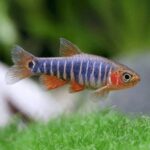
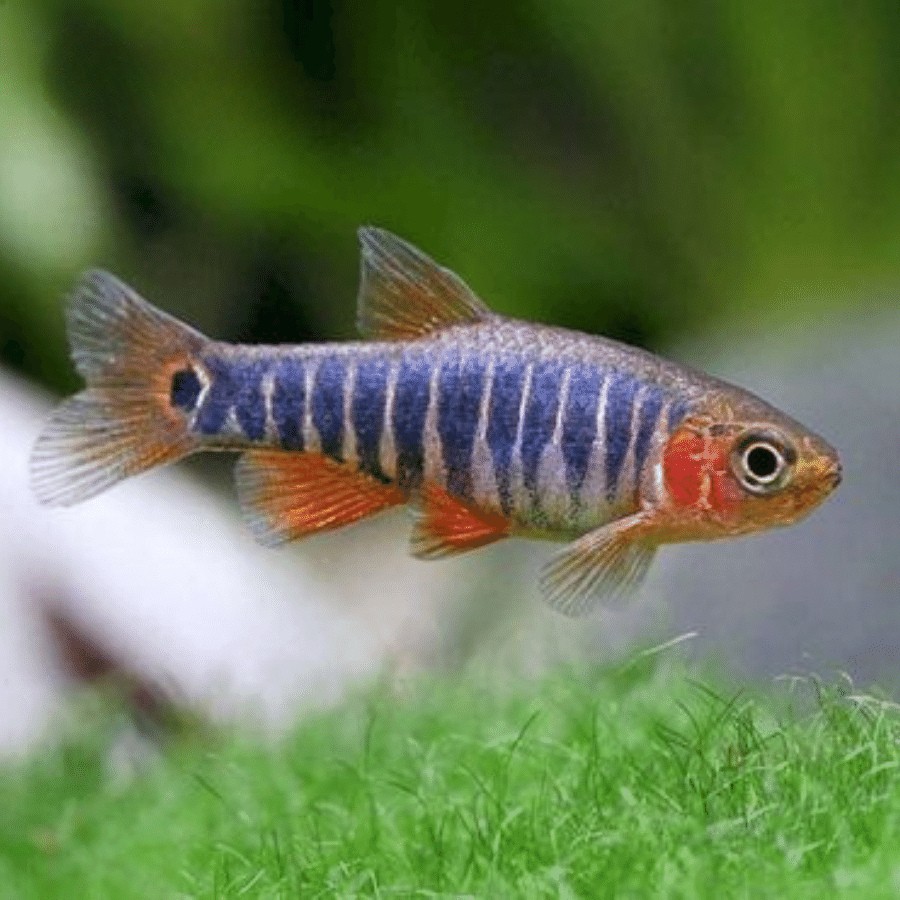
The original and by far the most common form in the trade: deep steel-blue flanks covered in pearl-white to pale-gold spots, with crimson bars on the dorsal, anal, and caudal fin lobes, most saturated in mature males.
💎 Tank-bred line-selected
Over nearly two decades of captive breeding, specialist breeders have selected for extra spot density, deeper indigo base colour, and more extensive red fin markings. Tank-bred stock today often looks more vivid than wild imports and travels far better.
⚪ Stressed / juvenile pale phase
Not a true variety but worth knowing: freshly imported or stressed fish display a pale, washed-out khaki body with muted spots. Full galaxy colouration develops over 2–4 weeks in stable, well-planted conditions once the fish feels secure.
Unlike many popular aquarium fish, Celestichthys margaritatus has no albino, leucistic, or long-finned varieties in mainstream circulation — the wild-type is so stunning on its own that the hobby has largely focused on improving it rather than mutating it. What you will see, however, is enormous variation in the intensity of colour from one individual to the next and from one store tank to another. A freshly imported fish sitting in a bare holding tank under bright light will look pale, khaki, almost unrecognisable from the magazine photographs. The same fish, moved into a dimly lit, densely planted tank with dark substrate and given two weeks to settle, will develop the full indigo base colour and the crisp constellation of pearl spots that made this species famous. Feed a varied diet rich in carotenoid-bearing foods — frozen cyclops, daphnia, and newly hatched baby brine shrimp — and the red fin bars on males will deepen to near-blood colour during display.
There is a simple physiological reason for this dramatic colour shift. Like many schooling fish evolved to live in weed-choked shallow ponds, galaxy rasboras can rapidly re-distribute pigment in their chromatophores to match their emotional state. A stressed or newly moved fish will withdraw dark pigment from the flanks to become nearly translucent — a camouflage response that makes them harder for birds and dragonfly larvae to spot in open water. A settled, secure fish does the opposite: pigment floods the flanks and the pearl spots stand out sharply against the deepened background. This is why you should never judge the quality of a galaxy rasbora on the day you buy it. The real colour comes out after two to three weeks of settled tank life. Experienced keepers actively prefer to purchase fish that look somewhat pale and washed out in the store, because it means the fish are young, unstressed imports that have not yet been through the trauma of a long holding period — and their colour potential is still ahead of them.
One practical tip worth knowing: the best galaxy rasbora tanks are the ones that do not try to show the fish off. Place the tank against a dark wall, use a warm-spectrum low-intensity light (3000–5000 K, around 20–30 lumens per litre), carpet the substrate with dark sand, and plant densely enough that the fish must dart between stems to cross the tank. Counter-intuitively, a setup that hides the fish produces a display that shows the colour off far better than a bright open tank ever will, because the fish feels secure enough to actually wear its colours.
Setting Up Your Aquarium
The ideal Celestichthys margaritatus tank is small, densely planted, and structurally complex. These fish evolved in shallow weedy ponds choked with submerged vegetation, and they feel profoundly insecure in bare open water. A 40-litre planted nano is plenty for a school of 10–12; a 60-litre tank lets you keep 15+ and allows more visible male territorial behaviour without any fish being bullied into a corner. Taller is not better — horizontal footprint matters more than depth, because this species almost never uses the top third of the tank. A long shallow tank with a 45 × 30 cm footprint showcases the school far better than a tall 30 × 30 cube even at the same total volume, because the fish spread out horizontally through the plants exactly as they would in a natural pond.
Plant heavily. Think carpets of low-growing foreground plants (Marsilea hirsuta, Glossostigma, or dwarf hair grass), a thicket of mid-ground stems (Rotala rotundifolia, Ludwigia super-red, Hygrophila pinnatifida), and a background of taller stems or large-leaf epiphytes. Driftwood draped with java moss or Christmas moss is almost mandatory — the moss is where the fish feel safest, where males stake out tiny display territories, and where eggs will be scattered when breeding begins. A dark sand or fine gravel substrate makes the fish feel secure and dramatically intensifies their colour contrast under subdued lighting. Dry leaf litter — a handful of Indian almond (Catappa) leaves or alder cones — is an optional but worthwhile addition; it will not significantly change the water chemistry in a moderately hard tank but it does provide grazing biofilm that fry eat for their first month of life.
One of the unusual advantages of this species is how low-tech a galaxy rasbora tank can be. They actively prefer low to moderate light (high light stresses them and bleaches their colour), and they do not require CO2 injection. A simple, low-energy planted nano with slow-growing plants, a sponge filter, and no CO2 rig is not a compromise for this species — it is the ideal setup. This makes galaxy rasboras one of the best fish in the hobby for keepers who want a planted tank without the expense and fuss of pressurised CO2. In fact, a well-established “Walstad-method” dirted tank with no filter at all and only a small gentle air pump is a classic low-tech setup for a galaxy rasbora colony, and often outperforms high-tech tanks in long-term colour and breeding success.
One last consideration: a lid or cover glass is strongly recommended, even though these fish rarely use the top of the tank. Galaxy rasboras are nervous by nature and will occasionally dart vertically when a shadow passes over the tank (a car headlight sweeping across the living room, a cat jumping onto the cabinet, even a sudden sound from a dropped dish in the kitchen). A single startled jump out of a lidless tank is a death sentence for a 2-cm fish that dries out in seconds on a warm carpet. Most modern nano tanks ship with a fitted cover; if yours is open-top, a pane of clear acrylic cut to size and resting on the rim is cheap insurance.
Tank
Minimum 40 L (10 gal); 60 L ideal for a school of 12–15
Filter
Sponge filter or baffled nano HOB; gentle flow is non-negotiable
Heater (optional)
Small 25 W adjustable heater set to 20 °C as a winter floor — often unnecessary in summer
Thermometer
Digital thermometer with alarm; monitor for summer heat spikes
Cooling Fan (summer)
Small USB clip-on fan for evaporative cooling during hot weather
Lighting
Low to moderate LED; dimmable ideal. Avoid high-output reef-style lights
Substrate
Fine dark sand or aquasoil for colour contrast and plant rooting
Plants
Dense planting essential — mosses (java, Christmas), carpeting plants, mid-ground stems
Driftwood
Spiderwood or Manzanita with attached moss for shelter and display territories
Lid
Fitted lid or cover glass — these fish are tiny jumpers when startled
Telling Males from Females
Celestichthys margaritatus is one of the most strongly sexually dimorphic nano fish you can keep, which is part of what makes it so rewarding. Even at 2 cm — barely sub-adult — the differences are visible to anyone who looks at the tank for more than a minute. A mature male in full colour is unmistakable: the flanks are the colour of a deep stormy night, the spots burn pearl-white, and the crimson bars on the fins flare every time another male swims past. Females are more softly marked, dressed in olive and peach rather than indigo and crimson, with an obviously fuller belly once they begin producing eggs (which is often, and at a very young age). Watch the tank at feeding time and the sexes sort themselves out visually within seconds. A healthy school of 10+ adults will usually resolve to roughly 40% males and 60% females — a ratio that is actually ideal, because it gives the males plenty of peers to display against without any one female being constantly pestered.
This kind of strong dimorphism is unusual among schooling cyprinids and danios. Neon tetras, rummy nose tetras, and most of the common tetra schoolers show only subtle body-shape differences between sexes, and many hobbyists never reliably sex their schools at all. With galaxy rasboras, you can sex the tank at a glance — and you can watch the social dynamics that flow from that visible dimorphism. Males work out a loose hierarchy among themselves within the school, with dominant males claiming small display territories around particularly dense moss clumps or under overhangs of driftwood. Subordinate males hang back at the edges of the school, still coloured up but less willing to chase. Females move freely between territories and choose which displaying male to spawn with — a classic lek-style breeding system compressed onto the scale of a nano tank. The behavioural complexity you get from a 2-cm fish is genuinely surprising and is one reason keepers who start with galaxy rasboras often become lifelong enthusiasts.
One common misconception to address: the muted colours of females are not a sign that the females are unhealthy or under-conditioned. Females of this species are naturally more softly marked than males, full stop. A plump, well-fed female in peak breeding condition will still look duller than a male — she will just also have a visibly rounded belly and will spawn eggs on your moss daily. If a male looks washed out and non-displaying in a settled tank, that is often a sign of stress, poor water quality, or too-warm temperatures. If a female looks washed out, that is simply what a female galaxy rasbora looks like.
| Feature | Male | Female |
|---|---|---|
| Body Colour | Deep steel-blue to near-indigo base, spots bright pearl-white | Muted olive-brown to dusty blue base, spots softer and less contrasted |
| Fin Markings | Bold crimson bars on dorsal, anal, and caudal fins; very saturated during display | Pale orange to peach bars, less saturated; rounded fin tips |
| Body Shape | Slimmer, torpedo-shaped | Noticeably rounder belly, especially when gravid with eggs |
| Size | Slightly smaller, ~2–2.5 cm | Slightly larger, ~2.5–3 cm |
| Black Abdominal Spot | Often absent or very small | A small dark spot just in front of the anal fin is typical |
| Behaviour | Actively flares fins, chases and displays to rival males | More retiring, spends more time mid-water near plants |
Feeding Guide
Celestichthys margaritatus is a micro-carnivore. In its native ponds it picks at tiny crustaceans — copepods, water fleas, newly hatched insect larvae — and occasionally grazes on biofilm grown on plant surfaces. Its mouth is extraordinarily small, barely a millimetre wide in an adult, which is the single most important practical fact about feeding this species: standard flake food dropped on the surface in whole pieces is almost useless. The fish will often ignore it entirely, or pick at it nibble by nibble while most of it sinks uneaten and fouls the tank. Many new keepers panic during the first week of ownership thinking their fish are not eating; nine times out of ten the problem is food size, not appetite, and a switch to crushed flake or proper micro-pellets produces a feeding frenzy within hours.
The solution is to feed small, feed often, and feed variety. Crush flake food to a fine powder between your fingers before dropping it in. Choose micro-pellets specifically sized for nano fish (0.3–0.5 mm granules; most mainstream pellets are too large). Supplement generously with frozen foods — cyclops, daphnia, baby brine shrimp, and finely chopped bloodworm are all enthusiastically taken. Live foods, especially newly hatched baby brine shrimp and micro-worms, trigger the most intense feeding response and are the single best conditioning food for bringing females into breeding condition. Two small meals a day is the correct rhythm: these fish have tiny stomachs and will happily clean up every scrap within 30 seconds if the portion is right.
A varied diet is not just about nutrition — it is directly visible in the fish. Galaxy rasboras fed exclusively on dry food for months tend to develop pale, thin-looking bodies and muted fin colours. The same fish moved onto a rotation that includes frozen cyclops and live baby brine twice a week will visibly fill out within a fortnight: the bellies thicken, the spots brighten, and the red fin bars on the males deepen from dusty orange to crimson. The astaxanthin and related carotenoids in crustacean prey are absorbed directly into the fin pigments and are the biochemical source of the fish’s famous colour. If you want show-quality galaxy rasboras for a display tank or for breeding, you cannot skip the frozen/live food rotation — dry food alone simply cannot provide the same level of pigment precursors.
Finally, a note on feeding rings and target feeding. Because these fish are shy and occupy the mid and lower tank, food dropped on the surface in an open area often gets ignored. Drop food near a moss clump or a thicket of plants where the fish already shelter and they will come out immediately. A simple floating feeding ring placed over a known “hotspot” in the tank — usually where the school hangs out in the afternoons — concentrates food where the fish can find it quickly and prevents scattering across the substrate.
Compatible Species
Celestichthys margaritatus is the archetypal peaceful nano schooler, and community compatibility comes down to three straightforward rules. First, school size: never keep fewer than 8; 10–15 is far better. These fish are shy in small groups and hide for months, but once the school reaches 10+ they gain confidence and the males begin the flaring display behaviour that makes the species famous. Second, tank-mate size: nothing with a mouth larger than a 2 cm fish. Adult galaxy rasboras are prey-sized to most standard community species, including fish many hobbyists consider benign. Third — and often forgotten — tank-mate temperature preference: because this is a cool-water species, many common “peaceful” community fish are ruled out simply because they need water 4–5 degrees warmer. Stick with other cool-tolerant nano species (ember tetras, chili rasboras, pygmy corydoras, endlers, white cloud mountain minnows, otos, adult neocaridina shrimp) and you will have one of the most serene, jewel-like community tanks in the hobby.
A species-only tank is also a completely valid and often more rewarding choice. Some of the most beautiful galaxy rasbora displays I have seen are 40–60 litre nano tanks holding 20 galaxy rasboras and nothing else but a colony of adult cherry shrimp. With no other fish to compete for territory or attention, the galaxy rasboras spread across the entire tank, males display almost constantly, and spontaneous breeding in the moss produces a slow trickle of juveniles that survive to adulthood without any intervention. If your primary goal is to see the fish behave naturally and breed themselves, resist the urge to add a “centrepiece” fish and keep the tank single-species. The behavioural complexity within the school — dominance hierarchies, display duels, cooperative foraging — is more than enough visual interest on its own.
For keepers who want variety, the best companion combinations are carefully layered by water level. Galaxy rasboras occupy the middle and lower zones of the tank, so pair them with species that use zones they ignore. Ember tetras and chili rasboras hang near the upper third of the tank and fill the vertical space without competing. Pygmy corydoras cruise the substrate and clean up any food that escapes the galaxy rasboras above. A trio of adult amano or cherry shrimp works the plant surfaces and biofilm that nothing else targets. This layered approach gives you four or five species visibly active in a 60-litre tank without any one species being crowded out — and because every member of this community tolerates the same cool-water, low-flow, densely planted conditions, nothing has to be compromised for anything else.
| Species | Why | |
|---|---|---|
| ✅ | Ember Tetra | Warm orange tones contrast beautifully with galaxy blue; shares cool-tolerant temperature range and peaceful temperament |
| ✅ | Chili Rasbora (Boraras brigittae) | Tiny red schooler; similar mouth size, peaceful, and occupies upper water levels that galaxy rasboras mostly ignore |
| ✅ | Pygmy Corydoras | Gentle mid-water and bottom dwelling cory that stays tiny, occupies a different zone, and thrives in identical cool temperatures |
| ✅ | Endler’s Livebearer | Peaceful colourful livebearer that tolerates cool water; occupies upper levels and will not compete for food or space |
| ✅ | Otocinclus | Tiny algae eater; completely peaceful, enjoys the same dense planting, and helps keep biofilm manageable |
| ✅ | Neocaridina Shrimp (adults) | Adult cherry or yellow shrimp are too large to be eaten and make excellent tank-mates; galaxy rasboras ignore moulted adults entirely |
| ✅ | Dwarf Chain Loach | Small peaceful loach that controls snails and stays gentle with nano fish, sharing cool-tolerant water preferences |
| ✅ | White Cloud Mountain Minnow | A fellow highland cool-water schooler from China; peaceful, similarly sized, and one of the best companions for galaxy rasboras |
| ❌ | Angelfish, Gouramis (large), Adult Rainbowfish | Any fish with a mouth larger than a 2 cm galaxy rasbora will eventually try to eat one. Adult galaxy rasboras are vulnerable prey to most mid-sized community fish. |
| ❌ | Tiger Barbs & other known fin-nippers | Galaxy rasboras are slow-moving and have trailing fin markings that attract nippers. Tiger barbs, Serpae tetras, and similar species will harass them to death. |
| ❌ | African & Central American Cichlids | Completely incompatible — wrong temperature, wrong water chemistry, far too aggressive, and galaxy rasboras are prey-sized. |
| ❌ | Discus & Rams (any variety) | Require 27–29 °C, well above the safe upper limit for a highland species. Keeping galaxy rasboras in a discus tank will halve their lifespan and prevent breeding. |
| ❌ | Betta (Male) | Male bettas often target the trailing red fins of male galaxy rasboras as rival display. Frequently ends in dead rasboras or a stressed betta — better avoided. |
Breeding Guide
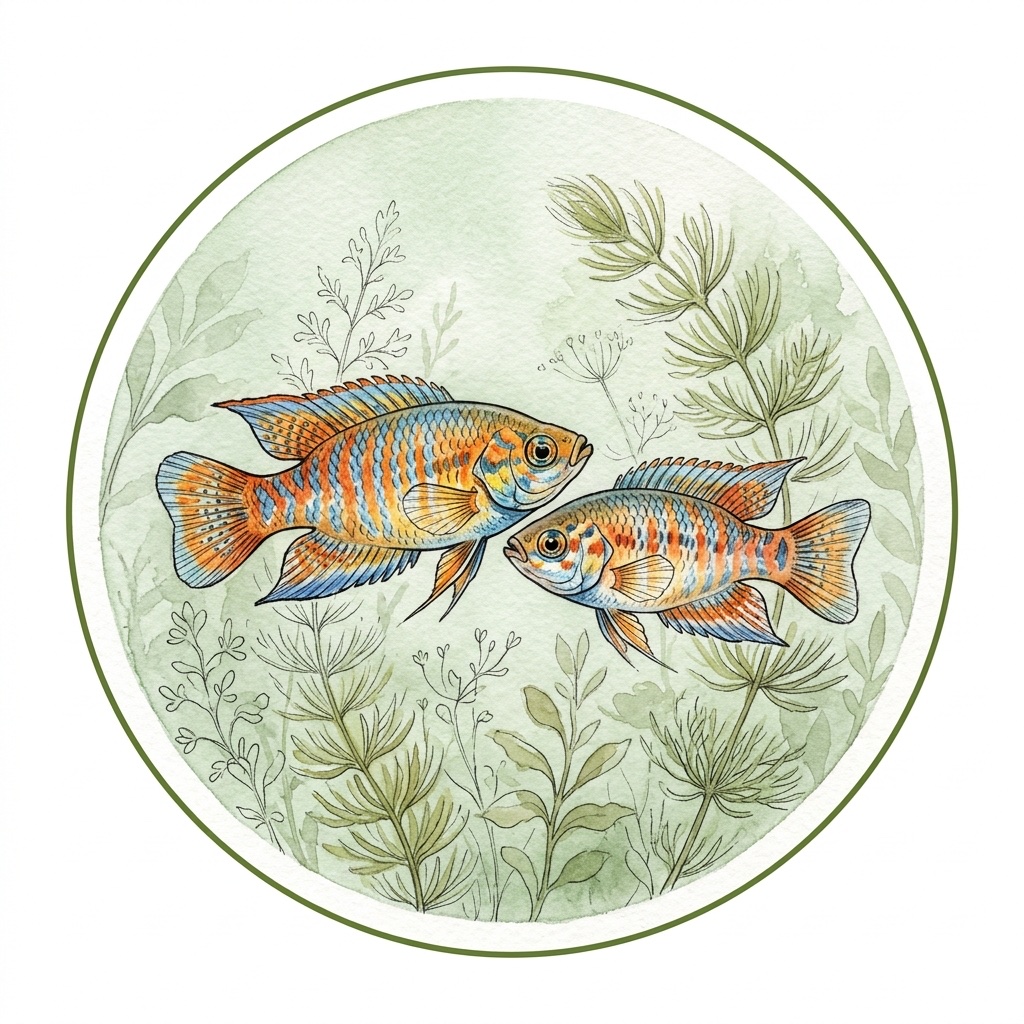
Week 0
Conditioning the Adults
Healthy well-fed school will spawn spontaneously
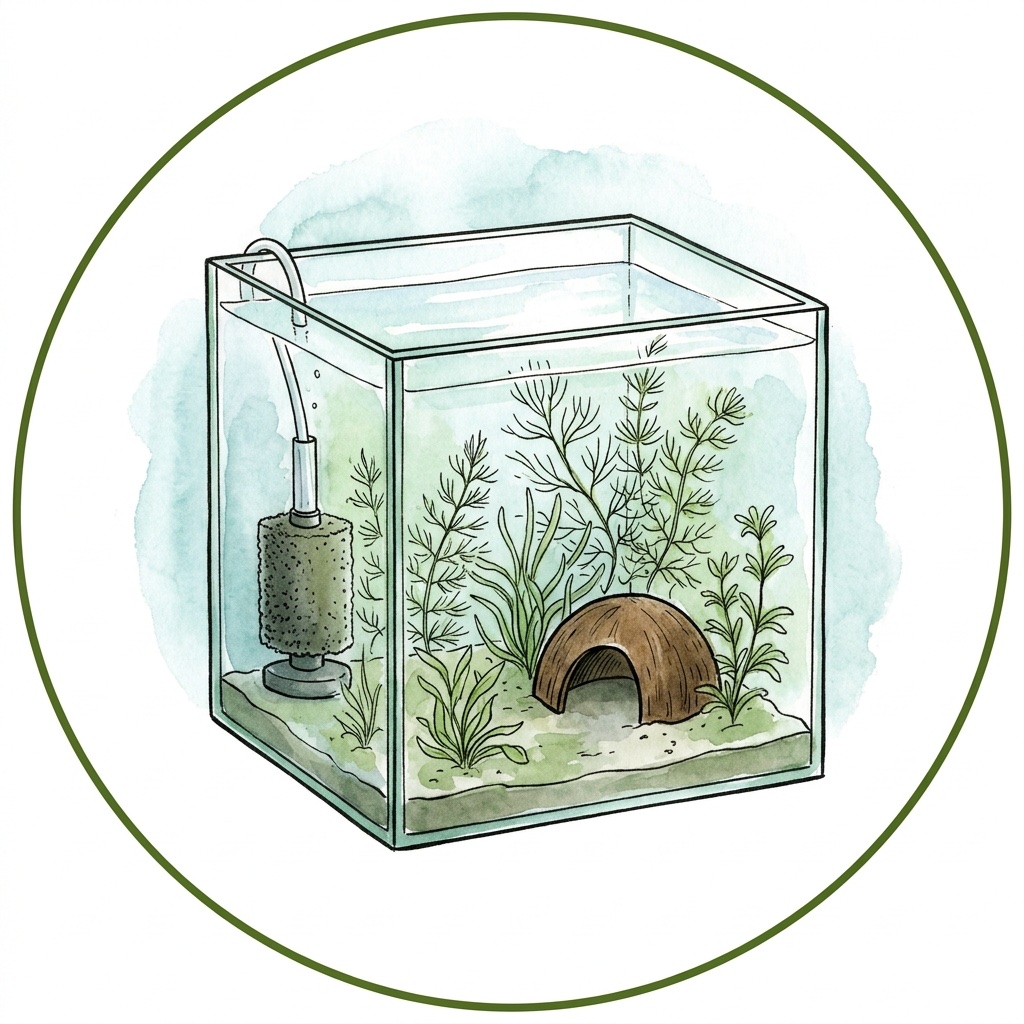
Day 0
Daily Spawning
Small batches of 3–30 eggs scattered on mosses each morning
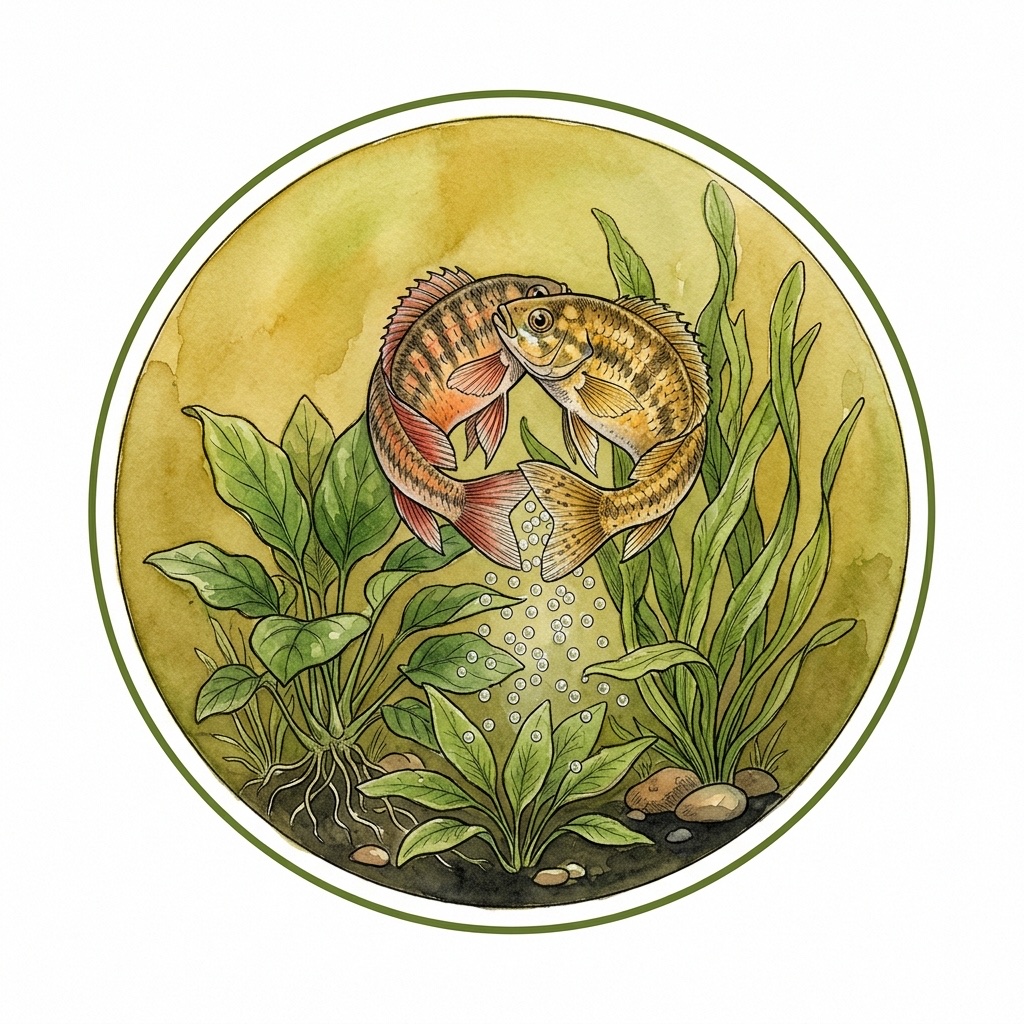
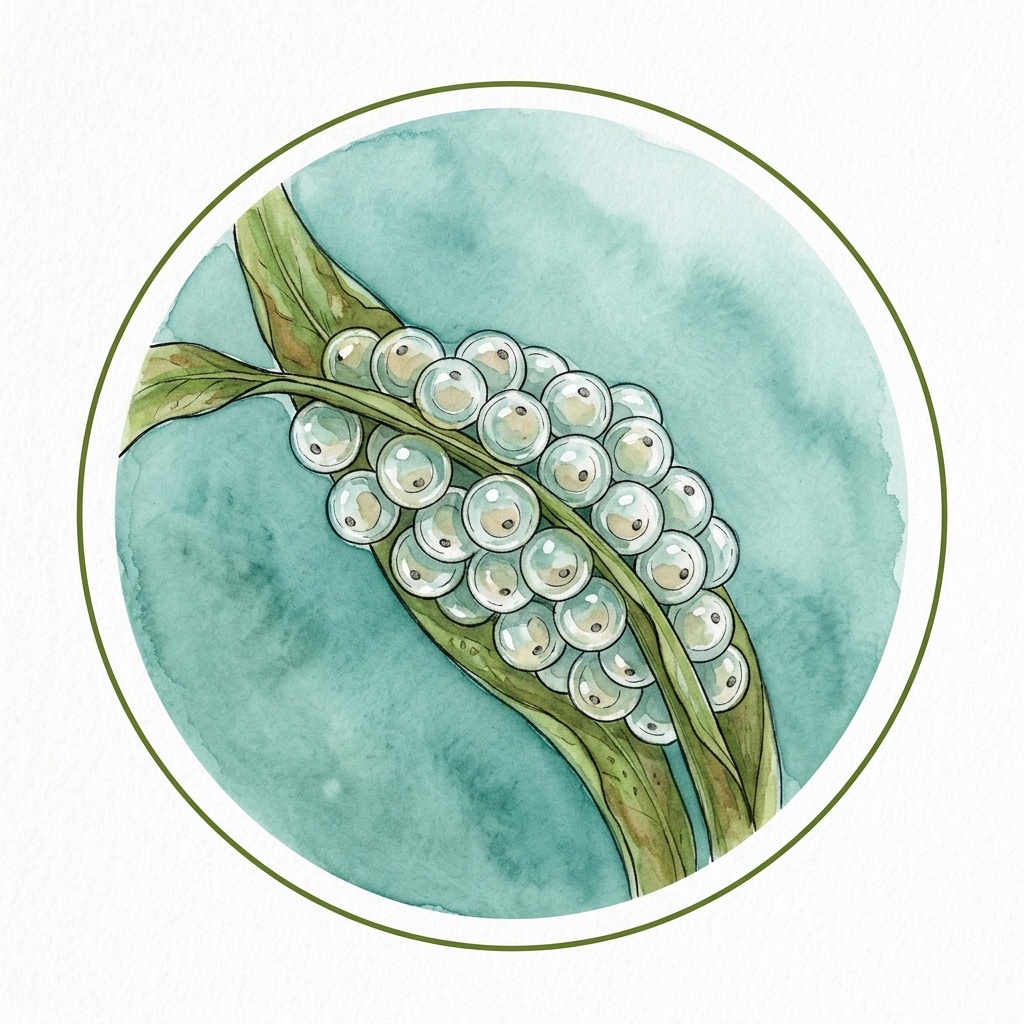
Day 1
Egg Collection & Incubation
Remove moss to separate tank; eggs develop 2–3 days
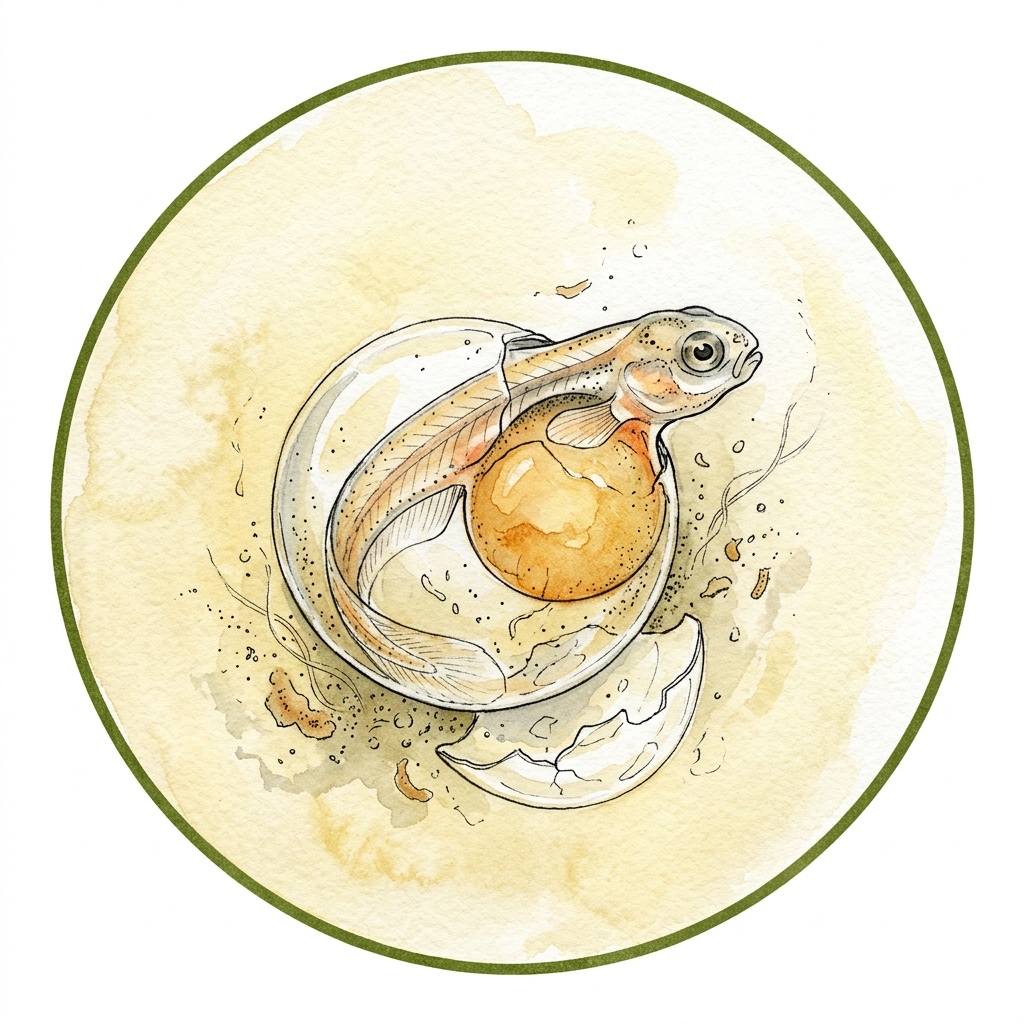
Day 3–4
Hatching
Fry emerge, cling to surfaces, absorb yolk sac
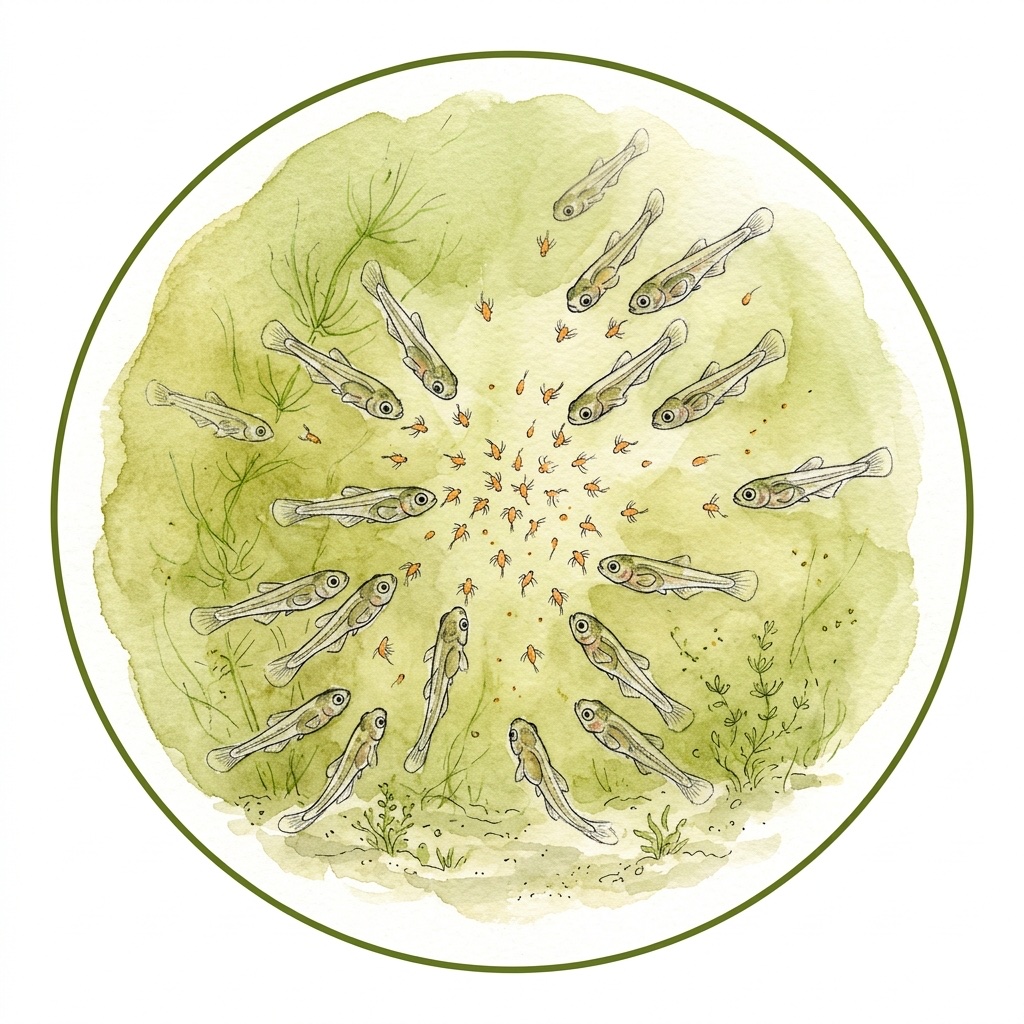
Day 5–7
First Feeding (Critical Stage)
Begin infusoria or commercial liquid fry food
Day 14+
Transition to Baby Brine & Grow-Out
Fry large enough for newly hatched BBS; grow out 2–3 months
Conditioning the Adults
Unlike many fish that require elaborate separation, water changes, and triggers to breed, Celestichthys margaritatus spawns essentially continuously in a well-run tank. A group of 10+ adults in good condition, kept at 22 °C in soft-to-moderately-hard water with a dense carpet of java moss or a spawning mop, will produce eggs daily with no intervention at all. Condition the adults with live or frozen foods (baby brine shrimp is ideal) twice a day for two weeks before you begin collecting eggs, and the females will visibly fill with eggs within days.
Daily Spawning
Spawning happens in the early morning, often within the first hour after lights on. A male in full display will chase a gravid female through the moss, and she will scatter eggs a few at a time — sometimes 3 or 4, sometimes 20 or 30 in a session — that fall into the moss and stick lightly to fronds. Unlike most egg-scatterers, this species does not spawn in a single burst; a single female will drip-spawn small batches across many days in succession, often for weeks. This makes for low-stress breeding but also means parents will happily eat any eggs they find, so collection or separation is essential if you want fry.
Egg Collection & Incubation
The easiest method is to keep a dedicated spawning mop or a bundle of java moss in the main tank, lift it out every 2–3 days, and transfer it to a bare 5–10 litre incubation tank with identical water parameters. Eggs are tiny — about 1 mm — translucent, and slightly adhesive. Keep the incubation tank dimly lit, add a drop of methylene blue to prevent fungus, and maintain temperature at 22 °C. Unfertilised eggs turn white within 24 hours and should be removed with a pipette.
Hatching
Fry hatch after 3–4 days at 22 °C (slightly faster if warmer, slower if cooler). Newly hatched fry are minute — almost invisibly small, roughly 3 mm long — and initially lie motionless on the substrate or cling to plant surfaces. They survive on their yolk sac for the first 48–72 hours and should not be fed until they are swimming freely and the yolk is visibly absorbed.
First Feeding (Critical Stage)
This is the single most difficult moment of the breeding cycle. Galaxy rasbora fry are too small to eat even newly hatched baby brine shrimp for the first week of free-swimming life. Their first food must be microscopic — infusoria cultured from boiled lettuce or green-water, vinegar eels, or a high-quality commercial liquid fry food specifically for nano species. Feed tiny amounts 4–5 times a day. Most breeding failures happen here; keepers who succeed almost always prepare an infusoria culture before they collect eggs.
Transition to Baby Brine & Grow-Out
After 10–14 days on infusoria, fry are large enough to accept newly hatched baby brine shrimp, and growth accelerates dramatically once they do. Within 6–8 weeks the first hints of the adult pattern — faint spots on a greyish body — begin to appear. Full adult colouration develops by 3–4 months, at which point young males begin flaring fins at each other and the juveniles can be added to the display tank.
Quick Reference
| Scientific Name | Celestichthys margaritatus |
| Also Known As | Galaxy Rasbora / Celestial Pearl Danio / CPD |
| Origin | Hopong plateau, Myanmar (1000 m altitude) |
| Adult Size | 2–3 cm |
| Lifespan | 3–5 years in cool water |
| pH | 6.5–7.5 (ideal 7.0) |
| Temperature | 20–24 °C — cool water, NOT tropical |
| Hardness | 5–15 dGH |
| Min Tank Size | 40 L (10 gal) |
| School Size | 10+ (15+ recommended) |
| Diet | Micro-carnivore — crushed flake, micro-pellet, frozen cyclops/daphnia/BBS |
| Care Level | Beginner to Intermediate (easy if you honour the cool-water requirement) |
| Temperament | Peaceful, shy; males display to each other |
| Breeding | Continuous egg-scatterer on mosses — very prolific in home tanks |
| Tank Position | Mid to lower levels — rarely uses upper third of the tank |
Reviews
Clear filtersThere are no reviews yet.