🪨 Species at a Glance
| Scientific Name | Carassius auratus (Oranda variety) |
| Variety / Morph | Oranda — Panda (black + white) colour morph |
| Grade | A Grade — Thai hatchery export selection |
| Family | Cyprinidae |
| Order | Cypriniformes |
| Origin | Thai commercial hatcheries; variety descended from Chinese stock refined in Japan |
| Adult Body Size | 12-20 cm (5-8 in) body; 18-25 cm with fins |
| Lifespan | 10-15 years with proper care, 20+ years possible |
| pH Range | 7.0-8.4 (mildly alkaline) |
| Temperature | 18-22 degrees C (64-72 degrees F) |
| Hardness (dGH) | 8-20 (hard water preferred) |
| Diet | Omnivore — sinking pellets, blanched vegetables, occasional frozen |
| Minimum Tank Size | 150 L (40 gal) single; 200 L+ for a pair |
| Care Level | Intermediate (wen care + cold stability) |
| Temperament | Peaceful, slow, social with other fancy goldfish |
| Breeding | Egg scatterer — triggered by spring temperature rise |
| Tank Position | All levels, predominantly mid to lower |
Name & Origin
The goldfish has carried the scientific name Carassius auratus since Linnaeus formally described it in 1758, and every Oranda, Ryukin, Ranchu and Telescope you encounter is genetically this same species — every variety descends from the humble Prussian carp of East Asia, domesticated in China well over a thousand years ago and then refined through centuries of patient selection into the bewildering array of body shapes and colours we keep today. Domestication likely began around the fourth century CE in the Jin dynasty, when monks in southern Chinese monasteries noticed and preserved the rare orange-red mutants that occasionally appeared among populations of otherwise drab silver-grey carp kept in temple ponds. By the Song dynasty, red goldfish were being kept ornamentally in palace ponds. By the Ming dynasty, the variety had expanded to include double-tailed, egg-bodied and long-finned forms completely unrecognisable to their wild ancestor. ‘Oranda’ itself is a name borrowed from the Japanese rendering of ‘Holland’ — a nod to the fact that the earliest lionhead-capped goldfish reached Japan aboard Dutch trading ships during the Edo period. The Japanese associated anything foreign and exotic with the Dutch, who held the sole European trading privilege at the island port of Dejima. The full Japanese name for the variety is ‘oranda shishigashira’, literally ‘Dutch lion-head’, referring to the fleshy raspberry-textured growth that covers the skull. English-speaking hobbyists call that growth the ‘wen’, and it is technically a mass of fatty hyperplastic tissue that grows continuously throughout the fish’s life.
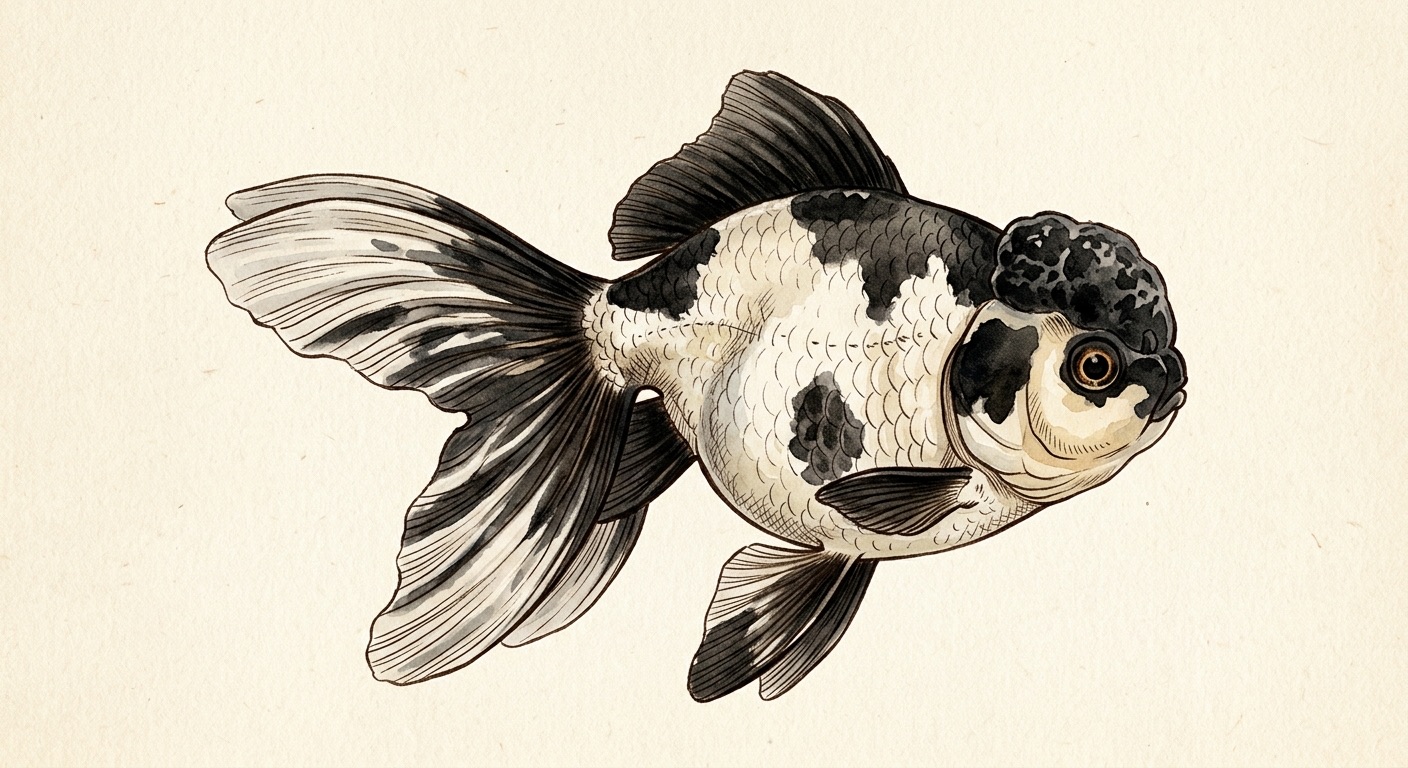
‘Panda’ is a purely descriptive English colour term referring to the specific two-tone black-and-white pattern famously associated with the panda bear. A true panda Oranda displays a snow-white body with crisp jet-black markings typically concentrated on the dorsal fin, caudal fin, pectoral fins, and patches around the eyes and along the flanks. The wen is often partly black as well, sometimes split into striking asymmetric halves of white and black. When the pattern is clean and the contrast sharp, a juvenile panda Oranda is one of the most photogenic fish in the hobby — pattern clarity this crisp is rare enough in nature that it looks almost painted on. The genetics behind the panda morph involve a combination of the nacreous scale gene, which produces the characteristic white body base, and localised melanin expression that creates the black patches. Crucially, the genes controlling where and how much black appears are unstable over the fish’s lifetime, which is why pattern retention is the defining challenge of keeping this variety — more on that in the colour chapter below.
Thailand has emerged over the past two decades as one of the world’s major hatchery centres for commercial fancy goldfish, alongside traditional breeding regions in southern China and select Japanese operations. Thai hatcheries operate at significant scale, running hundreds of outdoor grow-out ponds in the warm tropical climate that accelerates fancy goldfish growth to market size within six to eight months, far faster than temperate-climate breeders can achieve. The result is a well-developed export supply chain of healthy, affordable juveniles that underpins most of the fancy goldfish trade in Australia, Europe, and North America. An ‘A grade’ designation from a Thai hatchery means the fish passed several rounds of grading for body shape symmetry, wen development on track for age, clean finnage and clear pattern expression — it was selected as display-quality stock for export rather than culled to the local pet trade at lower grades. A-grade does not mean show-grade (that would typically be AA or AAA, with correspondingly different pricing), but it is a meaningful step above unselected ‘pet grade’ stock and promises a fish that meets Thai hatchery standards for breed type and condition at the time of export. At $38, this specimen is priced to reflect both the A-grade selection and the panda colour instability that limits its long-term premium value — a straightforward and honest value equation within the Australian fancy goldfish market.
Colour Varieties
🐼 Panda (this specimen)
Crisp black-and-white: pure white body base with jet-black markings on fins, wen and flanks. Dramatic in juveniles but genetically unstable over time.
🔴 Red Oranda
The classic: solid vibrant metallic orange-red body and wen, often with lighter fin tips. Holds colour with carotenoid-rich diet.
🏩 Red-Cap Oranda
Pure white body paired with an intensely red wen on top of the head — one of the most recognisable and collectable Oranda patterns.
🎨 Calico Oranda
Nacreous scale pattern blending red, black, blue-grey and white patches unpredictably across body and fins — no two fish identical.
🍫 Chocolate Oranda
A uniform deep chocolate-brown body, often with slightly darker wen. Colour deepens with age and quality pellet diet.
🔵 Blue Oranda
A cool slate-blue to steel-grey body — genetically related to calico lineage but selected for solid colour. Rare and highly prized.
🌈 Tri-Colour Oranda
A striking mix of red, black and white patches on metallic or nacreous scale base — often compared to koi patterning.
The single most important thing to understand about a panda Oranda before you take one home is that its colour almost certainly will not stay. This is not a defect of any particular fish, and it is not a reflection of how well you keep it — it is a fundamental genetic reality of the panda morph, and any responsible guide must state it plainly. The black pigment in panda goldfish is produced by specialised pigment cells called melanophores, which deposit melanin in the skin and fins of the juvenile fish. In most panda specimens, these melanophores begin to retreat sometime between six months and three years of age, with the vast majority fading significantly by the time the fish reaches full adult size at around two years old. A classic panda at purchase may mature into a solid white Oranda, a ghostly grey, or a faded dappled pattern that retains only hints of its juvenile contrast. This is the standard trajectory and you should plan for it. A small minority of panda Orandas — perhaps five to ten percent — retain strong black contrast into adulthood, and these rare individuals become genuinely special display fish commanding much higher prices than $38 once their stability is proven at three or four years old. You are, in a real sense, buying a chance at a stable panda alongside a guaranteed period of juvenile beauty.
What actually drives pigment stability? The honest answer is: primarily genetics you cannot see at the point of sale. A few environmental factors appear to help at the margins. Stable water parameters prevent stress-induced fading that can accelerate natural pigment loss; specifically, maintaining zero ammonia and nitrite, and keeping nitrates below 20 ppm, seems to correlate with better long-term black retention in hobbyist observation. Full-spectrum aquarium lighting with a strong UV component appears to support melanophore activity better than warm-white-only LEDs. A high-quality colour-enhancing pellet built around spirulina, astaxanthin and a balanced mineral profile — Hikari Saki-Hikari Fancy Goldfish, Dainichi Fancy Goldfish, Northfin Goldfish Formula — supports overall pigment cell health, including black pigment cells, even though the visible marketing focuses on red and orange enhancement. Stable cool water in the ideal 20-22 degree range seems to help; chronically warm water above 24 degrees may accelerate melanin loss. None of these environmental factors will save a genetically unstable panda, but they will give a moderately stable individual its best chance to retain pattern into adulthood. Beyond this, accept the colour reality with equanimity and enjoy whatever the fish becomes — a mature solid-white Oranda with a well-developed wen is a beautiful fish in its own right, and many hobbyists grow to love their faded pandas exactly as they are. The varieties listed above give a sense of where the Oranda palette can go more broadly — red, chocolate, calico, tri-colour and red-cap are all stable enough that the fish at purchase will resemble the fish at five years old, which is why they are generally priced above the panda morph in the Australian market.
Male vs. Female
Honest admission up front: sexing fancy goldfish outside of breeding season is genuinely difficult, and any guide that promises otherwise is oversimplifying. For most of the year, a juvenile or non-conditioned panda Oranda will show no reliable external sex cue — the rounded body shape of a mature female overlaps substantially with an overweight male, and vent inspection requires handling the fish in ways that stress it and risk damage to the wen and fins. Experienced breeders with decades of hands-on grading admit they cannot reliably sex their own fish outside the spawning season. The one truly dependable indicator appears only during the spawning window, typically triggered in early spring when water temperature begins to rise from its winter low: mature males develop pinhead-sized white raised bumps called breeding tubercles across the operculum (gill covers) and along the leading rays of the pectoral fins. These tubercles feel like sandpaper to the touch and are absolutely diagnostic. A male Oranda with visible tubercles is a male; a fish without tubercles during active spawning season is almost certainly a female. Females, by contrast, swell visibly with eggs through the abdomen and the vent becomes noticeably rounder, softer, and sometimes protruding slightly. Viewed from directly above, a gravid female takes on an asymmetric, slightly lopsided profile as eggs accumulate more on one side than the other.
Beyond these spring indicators, subtle behavioural cues can hint at sex in a group: males tend to be slightly more active pursuers during any interaction, sometimes nudging tankmates at feeding time in a mild courtship echo even outside of spawning season. Females are generally more placid and focused on feeding. Neither cue is diagnostic in isolation but a consistent pattern observed over weeks can give you a reasonable guess. If you are buying a single panda specimen for display, sex genuinely does not matter — both sexes are equally beautiful and equally hardy as pets. If you are planning to breed, the standard practice among serious fancy goldfish keepers is to buy a group of four to six juveniles of known lineage, raise them together through one full winter-spring cycle, and let the first spawning season’s tubercles reveal who is who. Never trust a seller who claims to guarantee sex on a juvenile fancy goldfish under 12 cm — they either cannot truly verify that claim or they are charging a premium they cannot honour.
| Feature | Male | Female |
|---|---|---|
| Body Shape | Slightly slimmer and more streamlined | Noticeably rounder and deeper belly, especially when mature or gravid |
| Breeding Tubercles | Develops white raised spots on gill covers and leading pectoral fin rays during spawning season | No tubercles — smooth gill plates year-round |
| Vent Shape | Small, concave, inward-sloped | Larger, rounder, often slightly protruding when ready to spawn |
| Pectoral Fins | Often slightly longer and more pointed | Slightly shorter and rounder |
| Breeding Behaviour | Actively chases females, nudges their sides during spring temperature rises | Becomes receptive, less active, swells with eggs |
| Size at Maturity | Slightly smaller overall | Often larger and more robust once sexually mature |
Water Parameters
7.0–8.4
ideal 7.6
18–22 °C
ideal 20 °C
8–20 dGH
Moderately hard to hard water preferred
Goldfish water chemistry requirements are essentially the opposite of everything a tropical community keeper is used to, and this is the single biggest mental adjustment crossing over from a tetra-and-angel tank into the world of fancy goldfish. Forget soft, acidic, tannin-stained water — Carassius auratus evolved in the cool, mineral-rich still waters of temperate East Asia, the flooded rice paddies, marshy lake edges and slow-moving side channels of the Yangtze and Yellow River basins where dissolved calcium and magnesium accumulate, pH sits naturally above 7 from the buffering of decomposing plant matter over limestone substrates, and summer temperatures peak at 22-24 degrees while winter drops to near freezing. Every aspect of their biology is optimised for mildly alkaline, hard, cold water. Target a pH between 7.0 and 8.4, with 7.6 being a genuine sweet spot that mirrors the pH of most well-established mature goldfish tanks. Hardness should sit in the 8-20 dGH range; soft water keepers (common in coastal parts of Australia where rainwater tanks or reverse-osmosis systems are used) often need to supplement minerals with crushed coral in the filter or a commercial GH booster to keep goldfish thriving. Without adequate hardness, Orandas show slow growth, dull scale colour, poor wen development and increased susceptibility to bacterial skin infections.
Temperature is the critical parameter most new keepers get wrong, and it is the single most common cause of chronic goldfish decline in Australian home aquariums. Orandas are coldwater fish — this cannot be stated emphatically enough. The sweet spot sits at 20-22 degrees C, with a fully tolerable range from about 18 up to 24 degrees. Below 18 the metabolism slows and appetite declines, but the fish remains healthy indefinitely at that range; below 12 they enter a semi-dormant winter state which is entirely natural and even beneficial on an annual basis. Above 24 degrees the metabolism accelerates but so does oxygen demand, while warm water’s oxygen-carrying capacity drops; above 26 degrees sustained you see chronic stress, immune suppression, and dramatically accelerated wen bacterial problems — the warm-water bacteria Aeromonas and Flavobacterium thrive on goldfish mucus and wen tissue at elevated temperatures and can cause rapid lethal infections. For the panda morph specifically, there is a secondary concern: sustained warm water appears to accelerate the natural fade of black pigment, so keeping water cool also gives you your best shot at pattern retention into adulthood. If your room regularly exceeds 26 degrees in summer (common in Sydney, Brisbane and Perth living rooms without aircon), you will need a chiller or a genuinely cooler room location. Basements, pantries and dedicated fishrooms work well. This is absolutely not a fish for a sunlit living-room tank in a hot climate without active climate control — plan for this before committing to the purchase.
Stability matters more than hitting a perfect number. A rock-steady pH of 7.8 is far better than a pH swinging between 7.2 and 8.2 with every water change. Weekly water changes of 25 to 33 percent are the non-negotiable baseline for fancy goldfish, and many experienced Oranda keepers move to twice-weekly 20 percent changes as the fish grows past 15 cm and waste production increases non-linearly. Always temperature-match replacement water to within one degree, and always dechlorinate with a quality conditioner (Seachem Prime or equivalent) — goldfish gill tissue is particularly sensitive to chlorine and chloramine damage. Ammonia and nitrite must test at zero always, and nitrate should be kept below 30 ppm as an upper limit with 10-20 ppm being ideal. Goldfish tolerate higher nitrates than tropicals physically, but sustained elevated nitrate destroys wen tissue over time, causing unsightly red streaking, pitting and eventual necrosis of the fleshy growth. If you see any decline in wen quality, test nitrates first — it is almost always the culprit.
Tank Setup
The single biggest mistake new Oranda keepers make is undersized tanks, and the second-biggest is underpowered filtration. These two errors cause perhaps ninety percent of avoidable fancy goldfish failures. A fully grown panda Oranda is a 15-20 cm body-length fish with another 5-7 cm of flowing tail, it eats like a healthy pig, produces an astonishing amount of waste (goldfish are among the messiest freshwater fish in the hobby, producing far more ammonia per gram than tropical equivalents), and it needs serious swimming room despite its slow deliberate pace. The absolute minimum for a single adult panda Oranda is 150 litres (40 gallons) and this number assumes aggressive filtration and frequent water changes; 200 litres is a more honest minimum, and for two fish you want at least 250-300 litres. Every additional Oranda beyond the first adds approximately 80-100 litres of required volume. Longer and wider is always better than taller — fancy goldfish benefit from horizontal swimming distance more than depth, and their deep bodies actually struggle to navigate tall narrow aquascapes. A 120 cm x 45 cm x 45 cm tank of around 240 litres is a genuinely excellent footprint for a pair of adult Orandas. Substrate should be fine, smooth, rounded sand or bare-bottom. Large gravel is a choking hazard because Orandas constantly mouth substrate looking for food, and more than one beloved fancy has ended up at an emergency vet with a piece of gravel wedged behind the pharyngeal teeth. A bare bottom, while less aesthetic, is genuinely easier to maintain, easier to siphon clean during water changes, and many serious hobbyists run their display tanks this way — a neutral white or pale blue background often makes the fish the undisputed focal point in a bare-bottom setup, and a panda morph in particular pops dramatically against a pale background.
Now the plant question, which always disappoints newcomers: live plants do not work in an Oranda tank, at least not in the lush tropical way. The fish will eat soft-leaved species within days, uproot stem plants by nosing the substrate looking for food scraps, and demolish anything tender and accessible. Vallisneria, Cabomba, Rotala, Ludwigia, most crypts — all doomed within a week. Your realistic options are three: silk or high-quality plastic plants, which look surprisingly good with careful placement and give the fish some cover; tough hard-leaved epiphytes like Anubias barteri, Anubias nana or Bolbitis heudelotii tied firmly to rocks or driftwood where roots cannot be disturbed and the tough leathery leaves are unappetising to the fish; or a planted refugium or sump compartment separated from the goldfish by a divider or filter inlet. Floating plants like Amazon frogbit or Salvinia are sometimes suggested but are typically nibbled down within a few weeks. Avoid sharp decor absolutely — the flowing fins of an Oranda snag catastrophically on jagged edges, causing tears that ruin months of fin development. Test every piece of hardscape against a pair of pantyhose; if the fabric snags or pulls, the fin will too. Smooth river stones, tumbled glass pebbles, and driftwood pieces sanded at any sharp points are your friends. Keep the aquascape minimalist and open — an Oranda’s fins need room to spread, and a heavily decorated aquascape will force constant maneuvering that damages fin tissue. Think of it less as a planted tank and more as a display case for a living ornament.
Tank
Minimum 150 L for one adult; 200-300 L strongly recommended. Longer and wider preferred over tall.
Filtration
Canister filter rated 3-4x tank volume per hour minimum. Consider dual filtration for larger tanks.
Chiller or Cool Room
If ambient exceeds 26 degrees C in summer, a chiller is essential. Otherwise a cool room or basement location works.
Heater (optional)
A low-wattage heater set to 18 degrees C is only needed if winter ambient drops below that. Most Australian rooms do not need one.
Substrate
Fine smooth sand, or bare-bottom. Avoid gravel sized between 3-8 mm (choking risk). Pale background helps panda contrast pop visually.
Lighting
Moderate full-spectrum LED — enough to see the fish and support pigment cell activity, not so much as to encourage algae blooms. 6-8 hours daily.
Decor
Smooth rounded river stones, driftwood without sharp edges, silk or soft plastic plants, hard-leaf Anubias tied to rock.
Water Test Kit
Liquid test kit for ammonia, nitrite, nitrate, pH and GH/KH. Test weekly minimum; strips are not accurate enough.
Diet & Feeding
Orandas are omnivores with enthusiastic appetites — they will eat anything that fits in their mouth and some things that do not — but the combination of a deep egg-shaped body and a coiled intestinal tract makes fancy goldfish notoriously prone to digestive problems, especially swim bladder issues and constipation. Unlike their streamlined common goldfish cousins, fancy varieties were selectively bred for the round body shape without corresponding selection for digestive efficiency, and the result is a gut that struggles with rich, air-filled or fibre-poor foods. The dietary framework that works best is built around a high-quality gel-based or soft sinking pellet as the daily staple. Hikari Saki-Hikari Fancy Goldfish, Hikari Oranda Gold, Dainichi Fancy Goldfish, and Northfin Goldfish Formula are the premium brands most commonly recommended by serious keepers; they are formulated specifically around the digestive quirks of deep-bodied fancy goldfish, with softer pellet texture, added vegetable fibre, and balanced pigment-supporting ingredients. Expect to pay two to three times more than generic tropical pellets, and consider it an investment in your fish’s health and colour retention.
Avoid floating flake food absolutely — a deep-bodied Oranda struggles to reach the surface cleanly and gulps air along with flake, which introduces air into the digestive tract and causes swim bladder problems within weeks. This is perhaps the single most common rookie mistake and the reason why so many Orandas develop the distressing ‘floating upside-down’ syndrome that ends up in online forums looking for emergency advice. If your fish is already conditioned to flake from a previous keeper, soak pellets in tank water for 30 seconds before feeding to sink them cleanly; many keepers pre-sink every pellet even for healthy fish as preventive practice. Some keepers use gel-food (Repashy SuperGold is a popular brand) mixed fresh weekly and cut into sinking portions; this offers excellent fibre content and can be customised with added vegetables.
Supplement the pellet staple two to three times a week with blanched (briefly boiled and cooled) vegetables — frozen peas with the skin popped off and gently squashed, blanched spinach leaves, courgette rounds, or small broccoli florets. Vegetable fibre is essential for preventing constipation in deep-bodied fancies and many experienced keepers believe the weekly ‘pea treatment’ is preventive medicine rather than a treat. A once-weekly feed of frozen bloodworm, daphnia or brine shrimp adds variety and enrichment and triggers natural foraging behaviour. Live foods — live daphnia, micro-earthworms, or occasional live blackworms — are excellent if available but should be sourced from reputable suppliers to avoid introducing parasites. Feed two to three small meals per day rather than one large one, and only as much as the fish clears in about two minutes per feeding. The instinct to overfeed is the single biggest cause of water quality crashes in goldfish tanks, and a slight under-feed is far healthier than a consistent over-feed. Healthy Orandas can comfortably fast one day per week with zero negative effect — many keepers schedule a ‘Wednesday fast’ specifically to let the digestive system clear and prevent constipation buildup.
Breeding
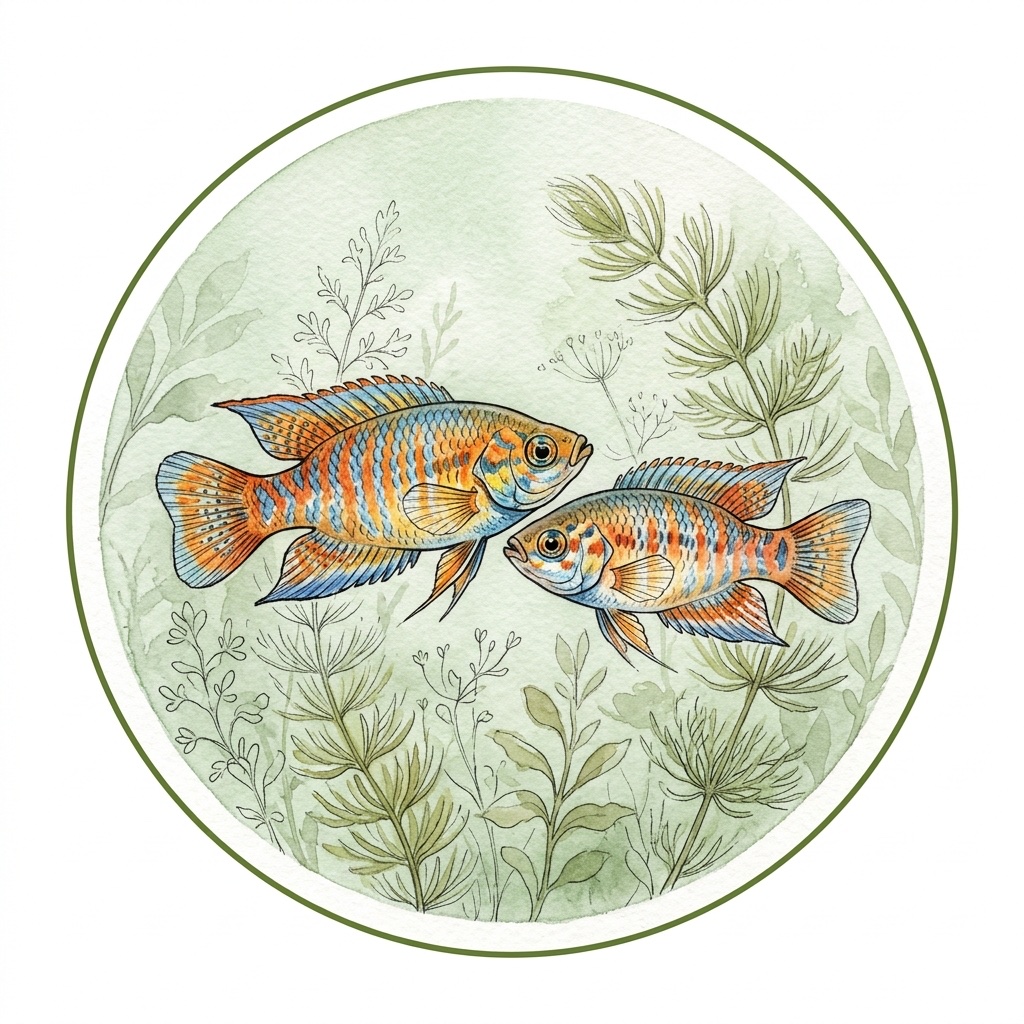
Winter — weeks before
Cooling & Conditioning
Winter chill conditions future broodstock
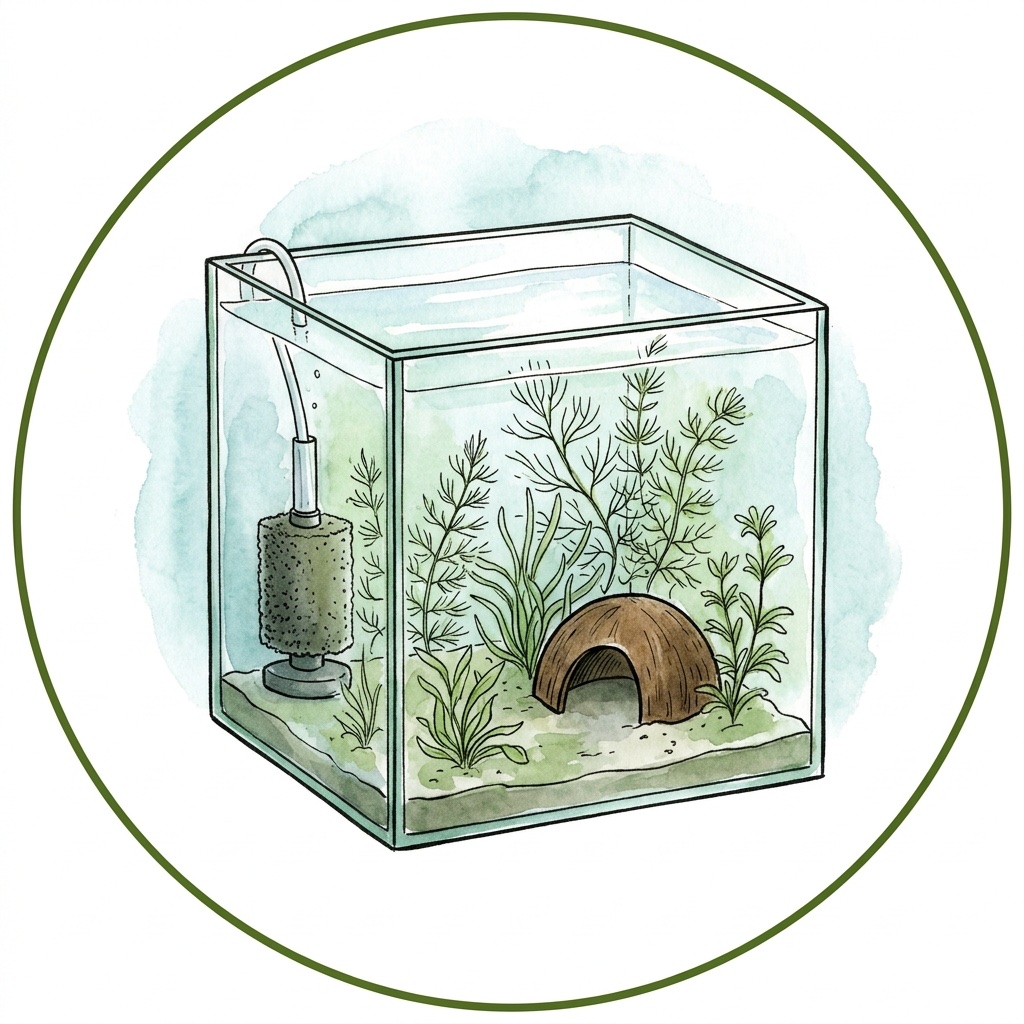
Early Spring — Day 0
Spawning Trigger
Raise temperature 3-5 degrees over several days
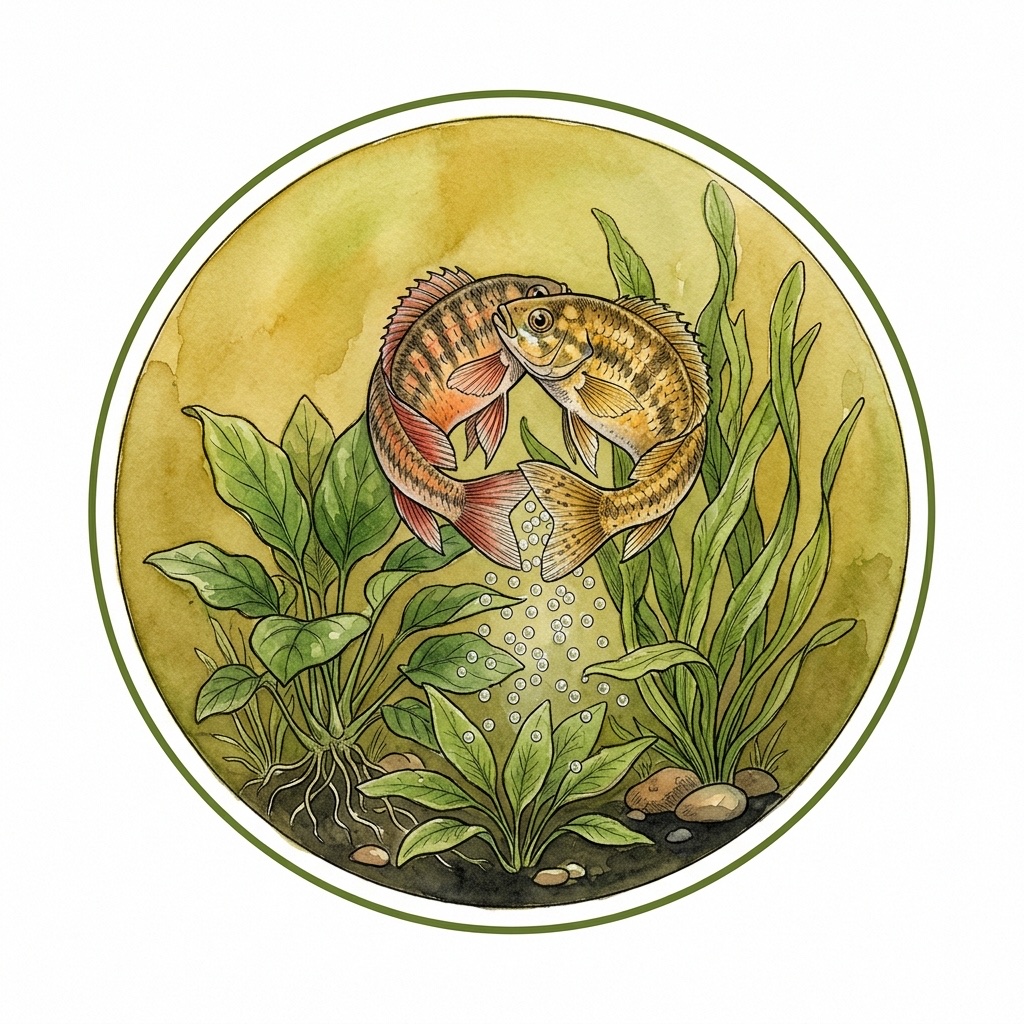
Day 1-3
Spawning Chase
Males pursue females vigorously into spawning media
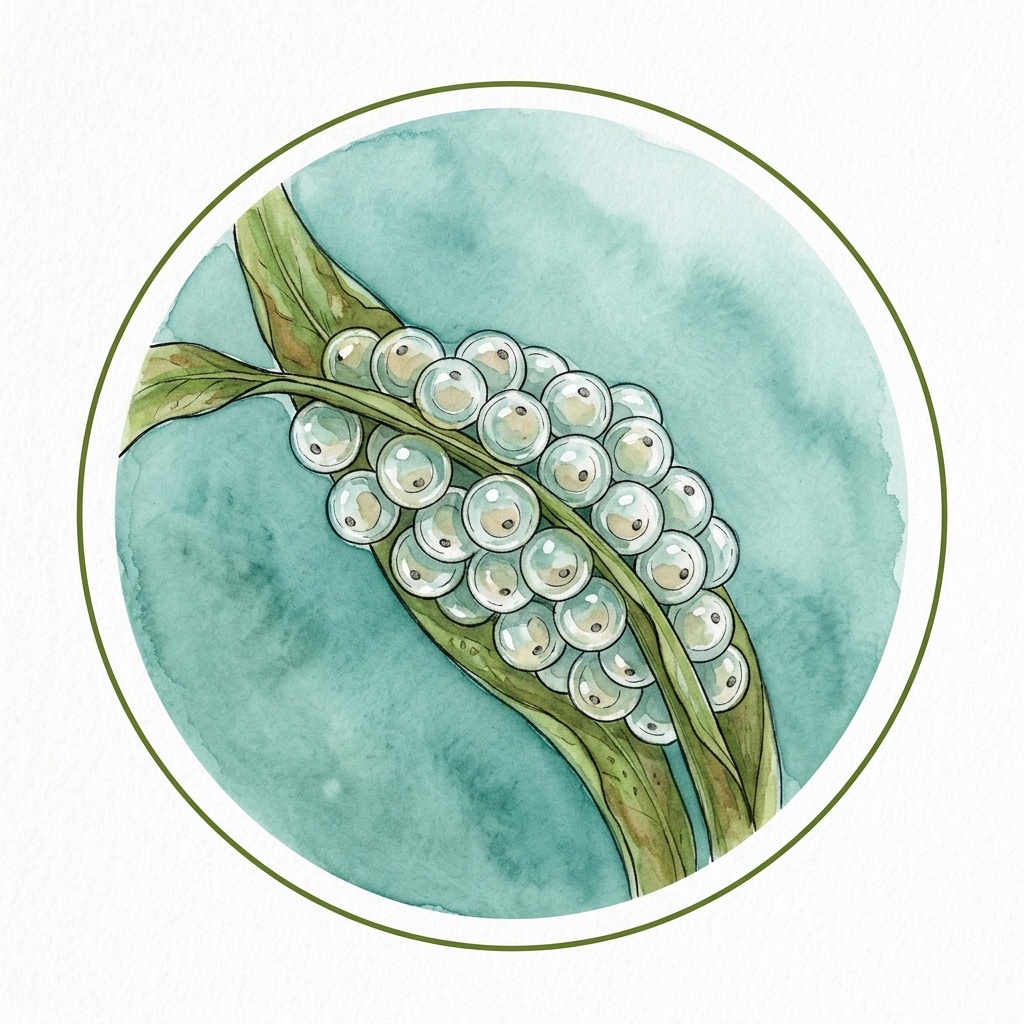
Day 4-6
Egg Incubation
Eggs develop and hatch over 4-7 days
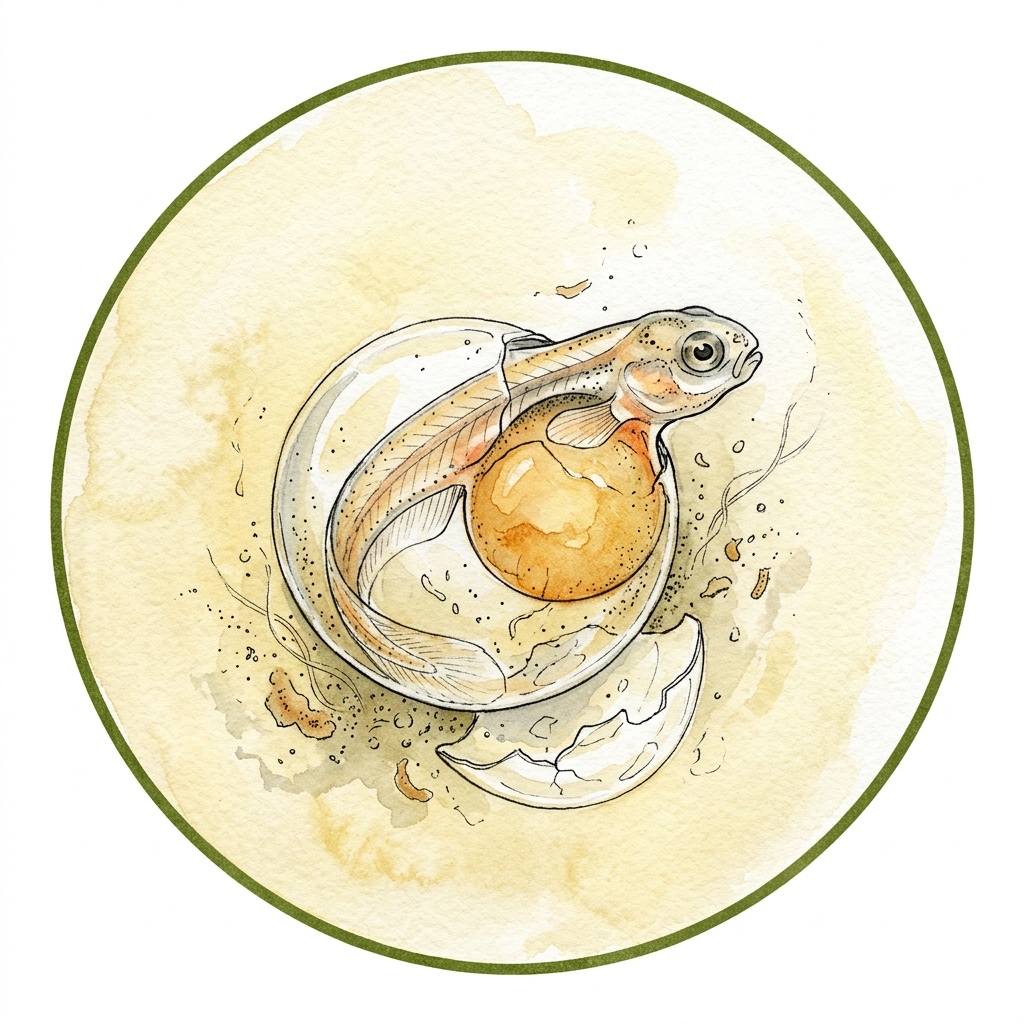
Day 7-14
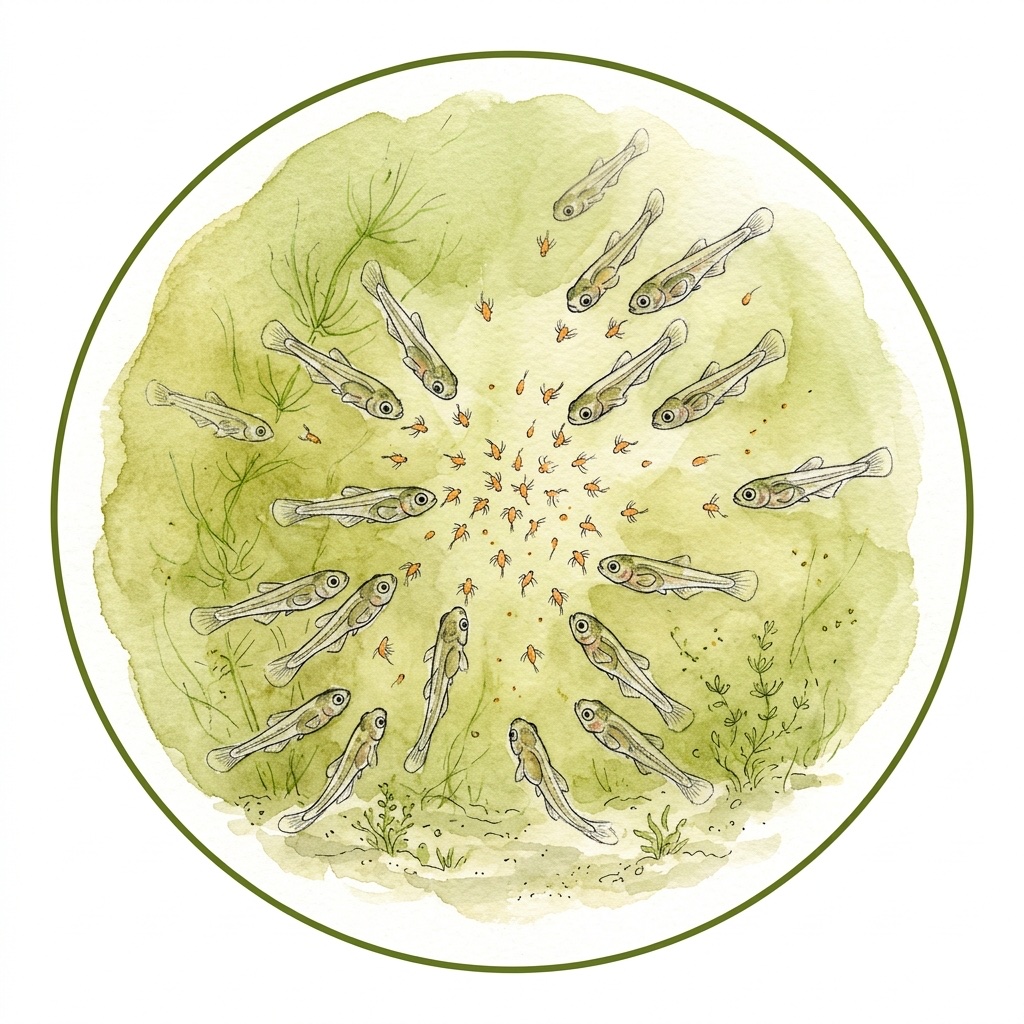
Fry Yolk and First Feed
Fry absorb yolk then transition to infusoria and baby brine
Month 2-6
Panda Pattern Grading
Black pattern emerges and shifts; grading and observation begin
Cooling & Conditioning
Fancy goldfish spawn naturally in response to the spring warming that follows a cool winter, and without this seasonal cooling cycle they often simply do not cycle reproductively. If your fish have been kept at a steady 22 degrees year-round they will likely never spawn — the hormonal cascade that triggers egg development in females and tubercle growth in males depends on a clear cold-to-warm transition. Condition your intended breeding group by allowing the tank to drop gradually to 12-15 degrees C over winter. Unheated rooms, sheltered outdoor tubs, or garage-housed tanks in temperate Australia work well; in tropical regions (Brisbane, Darwin) a dedicated chiller is the only reliable option. Feed sparingly during the cold weeks — once every two or three days with small portions — and introduce high-protein frozen foods (bloodworm, brine shrimp, chopped earthworm) only as temperatures begin to rise in late winter. The female’s ovaries develop over this cold period; without it, egg production is patchy and fry viability poor.
Spawning Trigger
As water temperature climbs from winter lows back toward 18-20 degrees C, mature fish begin pre-spawning behaviour. You can accelerate this trigger deliberately by raising temperature 3-5 degrees over a week using a heater, mimicking the seasonal shift. Males develop the tell-tale white tubercles on gill covers and pectoral fin leading edges within 7-14 days of warming; check every morning during feeding as the tubercles can appear and sharpen quickly. Increase feeding to 3-4 small meals per day with frozen bloodworm, daphnia and chopped earthworm to condition females with eggs — a well-conditioned female will put on noticeable mass in her abdomen over ten days. Females will visibly swell and appear asymmetric when viewed from directly above, often bulging more on one side than the other as eggs accumulate. Add clean spawning media (mops, plastic grass, bunched Java moss) during this phase so it is already in place when spawning triggers.
Spawning Chase
Introduce spawning mops, artificial spawning grass, or dense plastic/silk plants along one end of the tank if not already present. The day of spawning is typically heralded by frantic chasing behaviour that starts at dawn — males will chase a gravid female persistently for several hours, nudging and butting her sides and flanks to stimulate egg release. This chase can last three to six hours and looks alarming to the inexperienced keeper. Bruised scales, missing scales, and temporarily torn fin edges are common and normal consequences of the chase; do not intervene unless a fish appears genuinely exhausted. Females scatter several hundred to over two thousand small (1-2 mm) adhesive amber eggs across the spawning media, which stick on contact. A large mature female Oranda can release 500-2000 eggs in a single spawning session. Remove the parents immediately after spawning concludes — both sexes will readily eat the eggs given the chance, and this is purely opportunistic feeding with no parental care instinct at all.
Egg Incubation
Transfer the spawning media with attached eggs to a separate fry tank at 20-22 degrees C — a simple bare-bottom 40-60 litre tank with a gentle air-driven sponge filter is perfect. Add methylene blue at a mild concentration (light blue tint) to suppress fungal infection on unfertilised eggs; methylene blue is anti-fungal and mildly anti-bacterial, harmless to developing embryos but actively beneficial during incubation. Remove any white, opaque eggs daily with a pipette — these are infertile and will rapidly develop saprolegnia fungus that can spread to healthy adjacent eggs if left. Viable eggs remain translucent amber and show visible embryo development within 48 hours; by day three you can see the dark eye spots of the developing fry through the egg membrane, a satisfying milestone. Hatching occurs 4-7 days after spawning depending on exact temperature, with 20 degrees giving closer to 6-7 days and 22 degrees giving 4-5 days. Maintain gentle airflow through the sponge filter to keep oxygen levels high; stagnant water is the second biggest killer of developing eggs after fungus.
Fry Yolk and First Feed
Newly hatched fry are tiny (2-3 mm), transparent, and largely motionless — they cling to tank walls and plant surfaces for their first 48-72 hours, slowly absorbing the nutritious yolk sac that feeds their initial development. Do not feed during this yolk-sac phase; uneaten food fouls the water and stresses the hatchlings. Once the fry become actively free-swimming and foraging, begin feeding infusoria (culture green water, boiled-lettuce cultures, or commercial liquid fry food such as Hikari First Bites). After 5-7 days of free swimming they become large enough to take freshly hatched baby brine shrimp, which is the gold standard food for this stage and triggers rapid growth. Growth from this point can be remarkable — well-fed goldfish fry on live baby brine shrimp can triple in size within a fortnight. Keep the fry tank pristine with daily gentle water changes using tank-matched water, a turkey-baster removal of any uneaten food, and no accumulated detritus. Fry tanks are high-maintenance until the juveniles reach 15-20 mm and can be transferred to a grow-out tank.
Panda Pattern Grading
For panda morph breeding specifically, this is the window where the characteristic pattern first appears — juveniles that hatch as uniform silver-bronze develop their black markings gradually between four and twelve weeks of age as melanophores activate and deposit melanin in localised patches. Breeders grade panda spawns for pattern clarity (sharp edges, symmetric placement, strong contrast) at 6 weeks, 3 months and 6 months. Crucially, the grading at six months only tells you what the fish looks like at six months — panda pattern retention into adulthood is a separate question that cannot be answered reliably until the fish is two or three years old. Some of the most strikingly marked six-month juveniles fade completely by eighteen months; some unpromising juveniles with modest patches unexpectedly deepen into stable adult pandas. Serious panda breeders therefore hold back their best juvenile pattern expression for an extended grow-out period and only identify their true breeding stock at two years plus, when colour stability can be reasonably assessed. This long evaluation window is why genuinely proven stable adult pandas command dramatically higher prices than juvenile pandas at any Thai hatchery — and why the $38 juvenile price on this fish is both fair and honest.
Community Tank Mates
The honest answer, which often surprises newcomers coming from the tropical community hobby, is that a panda Oranda is happiest either alone or in a group of similarly-shaped, similarly-paced fancy goldfish. There is no magical ‘peaceful community’ setup that mixes tropicals with fancy goldfish successfully, and every attempt produces long-term compromise and eventual loss of one side or the other. The fancy goldfish world operates on one cardinal rule that cannot be broken without consequences: match swimming ability. A panda Oranda is slow, deliberate, buoyancy-constrained by its deep body, and often partially vision-limited by the wen growth that eventually overhangs the eyes in mature specimens. Any tank mate that is faster, more aggressive, or simply more nimble at the feeding window will get to food first, stress the Oranda, and eventually cause long-term weight loss, immune suppression and the chronic low-grade decline that plagues mismatched community tanks. This is why tropical communities fundamentally do not work with fancy goldfish — it is not simply a water parameter mismatch (which it is), it is a whole-behaviour mismatch. A school of active tetras or a nimble gourami will outcompete an Oranda every feeding. Even supposedly peaceful cold-tolerant options like white cloud mountain minnows will nip at trailing Oranda fins given the chance.
The ideal community is a species-only or variety-only tank — one to three Orandas in different colour morphs, perhaps with a Ryukin or Ranchu of matched size, housed in a 250-300 litre display that gives each fish comfortable personal space. Multiple Orandas of similar size and age typically coexist harmoniously; they are social fish that recognise tankmates and show mild schooling tendencies when not actively foraging. A panda paired with a red or calico Oranda creates a particularly striking colour contrast display — the black-and-white pattern against a solid red or multi-colour companion is a classic fancy goldfish aesthetic. Mixing wen-bearing varieties (Oranda, Lionhead, Ranchu) with non-wen fancies (Ryukin, Pearlscale, Fantail) works well as long as body shape and swimming speed match. Avoid mixing specimens of dramatically different sizes — a large adult can accidentally injure a small juvenile simply through feeding competition, even without aggression. This is a coldwater temperate-species tank, and it absolutely should not attempt to include any tropical or warmwater species. Even popular ‘community’ additions like ghost shrimp or Amano shrimp are risky — large Orandas will eventually eat them, and the shrimp may opportunistically pick at any injured fin tissue. Similarly, snails (Nerite, Mystery) are sometimes kept with Orandas but be aware the fish may nibble at extended snail antennae. Keep the tank parameters stable, feed consistently, maintain religiously regular water changes, and let the fish’s natural serenity be the centrepiece of the room — a dedicated fancy goldfish tank of three well-grown Orandas is one of the most calming and elegant displays the aquarium hobby offers, and it does not need mixed-species noise to justify itself.
| Species | Why | |
|---|---|---|
| ✅ | Other Oranda varieties | Identical care needs and matched swimming speed — red, calico, chocolate, and red-cap Orandas all coexist peacefully with a panda |
| ✅ | Ryukin | Deep-bodied fancy goldfish with similar swimming ability and temperament; same water parameters and feeding needs |
| ✅ | Ranchu | Another wen-bearing fancy variety; slow swimmer, peaceful, and thrives in the same cool alkaline hard water |
| ✅ | Lionhead | Dorsal-less wen-bearing cousin to the Oranda — matched pace and same coldwater requirements |
| ✅ | Pearlscale | Round egg-shaped fancy with similar slow swimming speed; excellent temperament match |
| ✅ | Telescope Eye | Slow swimmer — note that telescopes have reduced vision and need a similarly calm tank of slow, non-competitive feeders, which the Oranda perfectly provides |
| ✅ | Bubble Eye | Another slow, delicate fancy variety that only thrives with other slow fancies — Orandas are an ideal tank mate |
| ❌ | Common Goldfish / Comet | Fast, lean-bodied, streamlined goldfish will outcompete fancy Orandas for food every single time and may harass them through sheer active bumping. Never mix fancies with commons. |
| ❌ | Shubunkin | Streamlined single-tail variety with the same fast swimming speed as a comet — will bully slow fancies and steal all the food. |
| ❌ | Koi | Far too large at adult size, require vastly more space, and consume aggressively — pond fish only, incompatible with an aquarium fancy goldfish. |
| ❌ | Tropical community fish (tetras, guppies, gouramis, cichlids) | Completely incompatible — tropicals need 24-28 degrees C and slightly acidic soft water, the opposite of goldfish requirements. Cold-intolerant. |
| ❌ | Plecostomus / large suckermouth catfish | Notorious for latching onto the slime coat of slow fancies at night, causing severe injuries and infection. Absolutely do not mix. |
Quick Reference
| Scientific Name | Carassius auratus (Oranda variety) |
| Morph | Panda — black + white colour pattern |
| Grade | A Grade Thai hatchery |
| Adult Size | 12-20 cm body, 18-25 cm with fins |
| Lifespan | 10-15 years, up to 20+ |
| pH | 7.0-8.4 (ideal 7.6) |
| Temperature | 18-22 degrees C (ideal 20) |
| Hardness | 8-20 dGH (hard water) |
| Min Tank Size | 150 L single, 200-300 L pair |
| Diet | Sinking pellets, blanched vegetables, occasional frozen |
| Care Level | Intermediate |
| Temperament | Peaceful, slow |
| Tank Position | All levels |
| Breeding | Egg scatterer, spring temperature triggered |
| Tank Mates | Fancy goldfish only (Oranda, Ryukin, Ranchu, Lionhead, Pearlscale) |
| Colour Note | Black pigment typically fades with age — pattern is not guaranteed lifelong |
| Price Point | AUD $38 — A-grade juvenile panda morph |
Reviews
Clear filtersThere are no reviews yet.