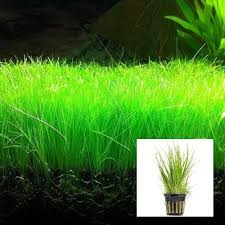
🪨 Species at a Glance
| Common Name | Dwarf Hair Grass / Needle Spike Rush |
| Scientific Name | Eleocharis acicularis (sometimes sold as E. parvula, which is a smaller species) |
| Family | Cyperaceae (sedge family) |
| Origin | Cosmopolitan — Eurasia, North America, temperate wetlands worldwide |
| Form Supplied | Potted (rockwool-wrapped root mass in plastic mesh pot) |
| Planting Method | Carpet / Foreground carpet |
| Light Level | Medium to High (High strongly preferred for dense carpet) |
| CO2 | Strongly recommended for a tight, show-quality carpet |
| Growth Rate | Medium to fast with CO2; slow without |
| Max Height | 6-12 cm (trimmed carpets commonly held at 3-5 cm) |
| Propagation | Horizontal runners (stolons) spreading laterally through substrate |
| Aquascape Placement | Foreground carpet — front and lowest zone of layout |
Getting Started: Planting
Carpet
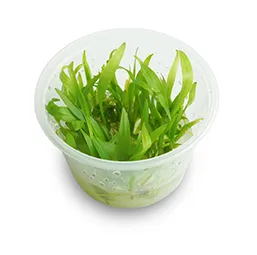
Hair Grass is classified firmly as a carpet plant, which means its goal in the aquascape is to spread sideways across the substrate rather than grow tall like a stem plant or cling to hardscape like a rhizome species such as Anubias or Bucephalandra. In nature Eleocharis acicularis colonises the soft mud of pond edges and slow rivers by throwing out thin, white horizontal runners just below the surface of the substrate, and each runner sprouts new vertical shoots every centimetre or so. When we aquascape with it, we are essentially simulating that same creeping behaviour inside the confines of a glass tank. The potted form you receive here makes the starting process dramatically easier than loose bare-root portions, which often arrive bruised and take weeks to settle. Each pot contains a dense cluster of established plantlets already rooted into a block of rockwool, so you are effectively transplanting a ready-to-grow colony that has already adjusted to being farmed emersed in high-humidity nursery greenhouses. The ‘-pots’ in our product name highlights this convenience: every pot you buy is a self-contained unit that a beginner can split into multiple plugs in a matter of minutes using nothing more than a pair of scissors.
The recommended preparation routine is straightforward but important. First, remove the plant from its plastic mesh pot by snipping the side of the pot with scissors rather than tugging at the rockwool, which can damage the delicate runner network. Next, carefully tease the rockwool away from the roots, working from the outside inward so the fibres come off in manageable layers rather than as one solid block. Rockwool left in place will not kill Hair Grass, but loose roots spread faster and draw nutrients from your aquarium substrate more efficiently; many advanced aquascapers also find that residual rockwool becomes a hiding place for detritus and eventually a substrate for algae, so it is worth the extra five minutes to remove it. Rinse the root ball gently in a bowl of dechlorinated water to dislodge soil debris, emersed-form epiphytes, and any residual pot fertiliser that might otherwise leach ammonia into a sensitive planted tank. Using a sharp pair of scissors, divide the mother cluster into five to ten small portions, each with three to six intact blades and a tuft of white roots. Smaller portions actually cover more area per pot because each plug radiates its own ring of new runners rather than competing inside a tight dense clump for light and nutrients.
Using planting tweezers — long curved ones work best — push each plug two to three centimetres deep into the substrate at a shallow angle, pressing gently rather than jabbing, then withdraw the tweezers while keeping a light fingertip on the plug so it does not pop back out. Space the plugs in a grid roughly two to three centimetres apart across the area you want to carpet. Resist the temptation to plant the entire carpet area with one or two big clumps; the tiny, widely distributed plugs approach is slower-looking for the first week but will catch up and overtake dense planting by week three as each plug fires out runners in every direction. Within two to four weeks under proper conditions, the gaps between plugs disappear as runners meet and fuse into a continuous carpet. Patience during the first fortnight is crucial: new plants are adjusting from emersed to submersed leaf form, and the original leaves may yellow and melt away as fresh underwater-adapted blades emerge. This is normal melt, not plant death, so resist the urge to rip anything out.
If you are aquascaping from scratch, seriously consider using the dry-start method (DSM) for the fastest, tightest carpet possible. In DSM you plant the divided Hair Grass plugs into moist Aquasoil with only a few millimetres of standing water at the bottom, cover the tank entirely with cling film or a piece of acrylic, and let the plants grow emersed for three to six weeks under bright lighting before flooding the tank. Because emersed Hair Grass receives atmospheric CO2 at roughly 400 ppm — a far richer carbon source than any aquarium CO2 system can match — it carpets dramatically faster than it would submerged. Mist the carpet with dechlorinated water daily to keep humidity near 100 percent, vent the film briefly every two or three days to exchange stale air and prevent mould, and watch as runners weave across the substrate. By the time you flood the aquarium, you already have a fully formed meadow that only needs to transition its blades from atmospheric to underwater metabolism. Many competition aquascapers swear by this technique specifically for Hair Grass and Monte Carlo.
Light Needs & Photoperiod
HIGH LIGHT
PAR: 60-100 PAR at substrate level (medium tolerated, high strongly preferred)
High
Hair Grass tolerates medium lighting but only truly thrives — meaning it carpets densely, stays low, and keeps its rich green colour — under high-intensity illumination. The reason relates directly to how carpet plants behave when light is limiting. Under dim light, Eleocharis stretches upward toward whatever photons it can capture, producing long, lanky, pale blades that flop sideways and leave bare patches of substrate visible between the plugs. Under bright light, the plant does the opposite: it invests energy into horizontal runners rather than vertical growth, keeps individual blades short and erect, and turns a rich saturated green because its chlorophyll machinery is saturated. Aim for at least 60 PAR measured at the substrate surface using a quantum meter, with 80 to 100 PAR being ideal for show-quality dense carpets. On a 30 to 45 centimetre deep planted tank that typically means a good full-spectrum LED rated around 30 to 40 watts for a 60 centimetre aquarium, or comparable output from dedicated planted-tank fixtures such as the Chihiros WRGB II, Twinstar S-Line, ONF Flat Nano series, or ADA Solar RGB. The spectral quality of the light matters too: a balanced spectrum with strong output across red, green, and blue (rather than a blue-heavy marine-style spectrum) gives the best colour rendition and the most photosynthetically useful energy.
Be attentive to signs that lighting is mismatched with the rest of your setup. If new growth is dark green but floppy and pointing upward, your light is too weak or placed too high above the tank — raise the fixture intensity or lower it closer to the water surface, depending on your fixture’s flexibility. If you see yellowing tips, stunted new growth, or persistent green-spot algae coating the older blades, the light may actually be too intense for your current CO2 and nutrient supply. In a high-tech planted aquarium everything scales together, so raising the light without raising CO2 and ferts creates a deficit that algae are quick to exploit. Start photoperiods conservatively at six hours when first planting, and extend them gradually by thirty minutes per week as the carpet fills in and the plant’s nutrient uptake keeps pace with the light. Once the carpet is established and dense, a photoperiod of eight to nine hours is sustainable and produces vigorous daily growth without fuelling algae. Use a reliable digital timer to keep the photoperiod consistent from day to day: Hair Grass, like most plants, dislikes erratic light schedules and responds with weaker growth when photoperiod length varies significantly between days.
For aquascapers on a tighter budget, it is possible to carpet Hair Grass under mid-range LED fixtures in the 40 to 60 PAR range, but expect slower establishment, a looser and less uniform carpet, and a greater tendency for blades to grow taller and floppier. If you are constrained to medium lighting, compensate by dialling CO2 slightly higher (but remain below 35 ppm to protect fish), running a slightly longer photoperiod, and being especially diligent with trimming to force density. You can absolutely grow a beautiful Hair Grass carpet under medium light, but the time from planting to full coverage will stretch from the four to eight weeks possible under high light to twelve weeks or more. The good news is that once established, even a medium-light Hair Grass carpet is remarkably stable and requires little intervention to maintain.
Recommended Photoperiod: 7-9 hours per day (start at 6 and build up by 30 minutes per week as the carpet establishes)
Fertilisation & CO2
CO2 INJECTION REQUIRED
Pressurised CO2 injection is the single biggest factor separating a show-quality Hair Grass carpet from a mediocre one. It is technically possible to grow Eleocharis acicularis without added CO2 — the species survives and even flowers in unheated outdoor ponds across the temperate world — but in a typical indoor aquarium without injection, the plant grows so slowly that algae outcompete it before the runners can spread. With CO2 dosed to 25 to 35 ppm during the photoperiod, Hair Grass transitions from a slow trickle of new runners to an explosive carpet expansion that can cover a 60 centimetre tank in four to eight weeks. Use a pressurised CO2 cylinder feeding a good regulator with a solenoid valve, a bubble counter for visual dosing feedback, and either an inline atomiser on the return line of your canister filter or an in-tank diffuser. Monitor dissolved CO2 levels with a drop checker filled with 4 dKH reference solution and pH indicator; keep the drop checker a vibrant lime green during the lit hours. Start CO2 roughly one hour before the lights come on so that photosynthesis has dissolved carbon substrate available from the very first photon, and turn the CO2 off about an hour before lights-out so it does not accumulate overnight when plants are respiring rather than photosynthesising.
CO2 stability is almost as important as CO2 concentration. A Hair Grass carpet exposed to wildly fluctuating CO2 levels — spikes high, then dropping to zero, then spiking again — tends to develop stunted growth tips and persistent algae even when the average concentration looks acceptable on paper. Invest in a quality solenoid valve that cleanly shuts off gas flow, a needle valve that holds a steady bubble rate throughout the cylinder’s pressure range, and consider a surface agitator or surface skimmer that maintains consistent gas exchange at the water surface. Wavemakers are discouraged in Hair Grass carpets because strong pulsed flow can erode plugs before they root, and because the pulsing disrupts the CO2 gradient near the substrate. A steady, moderate flow from a canister filter with a lily pipe or spray bar return is the gold standard.
If pressurised CO2 is truly not an option — perhaps you are in a rental without space for a cylinder, or you are running a nano tank where a gas setup would be impractical — you can partly compensate with high-quality liquid carbon supplements such as Seachem Flourish Excel or Easy Life EasyCarbo, which are glutaraldehyde-based products. Dose daily at roughly one millilitre per 40 litres of water, with doses split morning and midday for steadier availability. Liquid carbon is emphatically not a true CO2 substitute — it provides a readily usable carbon source but cannot match the photosynthetic rate of gas-phase CO2 at meaningful concentrations — yet it is noticeably better than nothing and will at least keep Hair Grass alive and slowly creeping across the substrate. Expect carpet formation to take three to six months rather than four to eight weeks, and expect the final carpet to be slightly looser than what you would achieve with pressurised gas. Be aware that some sensitive plants such as Vallisneria and certain mosses react poorly to glutaraldehyde and should not share a tank with daily liquid carbon dosing; Hair Grass itself tolerates it well, as do most common carpet plants, stem plants, and rhizome plants.
Fertilisation
Because Hair Grass is both a heavy root feeder and a moderately heavy water-column feeder, a dual fertilisation strategy works best. From the substrate side, active planted-tank soils like ADA Amazonia provide the initial reservoir of nitrogen, phosphorus, potassium, and trace elements; once that reservoir starts to deplete (typically after six to twelve months depending on bioload and water change frequency), supplement by tucking generic root tabs into the substrate every six centimetres throughout the carpet zone. Root tabs keyed to planted tanks, such as Seachem Flourish Tabs or Tropica Root Tabs, release iron, manganese, nitrogen, and phosphorus slowly over three to four months right at the root zone, which is exactly where Hair Grass wants its heavy feeding. From the water column, a comprehensive liquid fertiliser providing macronutrients (NPK — nitrogen, phosphorus, potassium) and micronutrients (iron, magnesium, manganese, copper, zinc, boron, and other trace elements) is essential. Two main schools of thought dominate planted-tank fertilisation: the Estimative Index method (EI) and the lean dosing method.
The Estimative Index method is popular among competitive aquascapers because it eliminates deficiencies by keeping all nutrients in slight excess at all times, with weekly large water changes to reset concentrations. Typical EI dosing for a 60 centimetre tank might look like twenty parts per million of nitrate, two parts per million of phosphate, thirty parts per million of potassium, and half a part per million of iron across a seven-day cycle. At week’s end you perform a 50 percent water change to reset, and the cycle begins again. The beauty of EI is that plants cannot be deficient because they are always swimming in nutrients; the downside is that algae, if given even slightly imperfect CO2 or light conditions, will also thrive in that nutrient-rich environment.
The lean dosing method, championed notably by Tom Barr in recent years, aims to deliver only what the plant will consume, keeping nitrate around five to ten parts per million and phosphate around half a part per million, with micronutrients dosed just enough to prevent visible deficiency symptoms. Lean dosing tends to produce algae-free tanks but requires more careful observation because crossing from ‘lean’ to ‘deficient’ is subtle, and Hair Grass responds to nitrogen deficiency with older-blade yellowing that can be mistaken for normal melt.
A simpler regime using an all-in-one product such as Tropica Specialised Nutrition, ADA Green Brighty, Seachem Flourish, or Aquario Neo Premium dosed per manufacturer instructions will also produce a superb carpet in most setups and is the recommended starting point for anyone not yet comfortable with precise dosing math. Watch especially for iron deficiency, which shows as pale, almost yellowish-green new growth; a small additional dose of Seachem Flourish Iron one to three times per week usually solves the problem without much tinkering with the rest of your fertiliser routine. Magnesium deficiency shows as interveinal yellowing on older blades; dose Epsom salt (magnesium sulphate) at roughly one teaspoon per 100 litres once per week if you have very soft water. Potassium deficiency shows as pinhole holes in leaves; dose potassium sulphate or a potassium supplement to fix.
Growth Rate & Upkeep
MEDIUM GROWTH
Under the target conditions described above — bright light, stable CO2, nutrient-rich substrate, and weekly water changes — Hair Grass grows at a medium to fast rate, with well-established carpets visibly expanding by one to two centimetres per week along their leading edge during peak growth. Without CO2, the same plant drops to a slow growth rate, gaining perhaps a centimetre of spread per month, which is survivable but unsuitable for competitive aquascaping timelines. Individual blades reach a natural height of 6 to 12 centimetres when left untrimmed, which is taller than many beginners expect and which is why trimming becomes a core part of long-term care. Most aquascapers hold the meadow at 3 to 5 centimetres by regular haircuts, creating a low, dense turf that shows off taller midground and background plants and allows a feeling of perspective and scale in the layout. Some aquascapers deliberately let Hair Grass grow to its full height for a wilder, windblown look in biotope aquariums; this works beautifully but requires more diligent cleaning of the carpet to prevent debris build-up in the longer blades.
The single most important maintenance task after planting is the first trim, which should happen once the runners have covered approximately 80 percent of the substrate — usually four to eight weeks after planting under high-tech conditions. Using sharp curved aquascaping scissors, cut across the top of the carpet at roughly half its current height and siphon out the clippings as you go to prevent them from decomposing on top of the carpet and triggering ammonia spikes. This first haircut triggers a wave of new runners and dramatically thickens the carpet from patchy to plush, because the plant reallocates energy from maintaining tall blades to producing new tillers and runners. From there, trim every three to five weeks depending on how fast the plant is growing, maintaining a consistent target height that fits your aquascape vision.
Neglecting trimming leads to a cascade of problems. The lower half of each blade starts to yellow and die off as it gets shaded by the canopy above, detritus accumulates in the matted carpet, and algae — especially black beard algae, green spot algae, and occasionally green thread algae — colonise the weakened tissue. In severe cases the entire carpet can lift off the substrate as the runner network decomposes underneath, creating a floating mat that you have to scoop out and replant from scratch. A well-maintained Hair Grass carpet will remain beautiful for years and years with no need for total replanting; a neglected one tends to crash somewhere around the six to nine month mark. Between major trims, continue weekly spot maintenance: remove any visibly yellowing individual blades with tweezers, pick out leaves from other plants or fish food that has landed in the carpet, and spot-treat any emerging algae with a quick dab of hydrogen peroxide from a syringe (only on empty blades, not on healthy new growth).
Some Hair Grass keepers practice ‘rejuvenation trimming’ every six to twelve months, where they take the scissors lower than normal and cut the carpet down almost to the substrate, then remove the majority of the clippings and let the runner network regenerate a fresh new layer of short, vigorous blades from scratch. This technique is somewhat aggressive but extremely effective at restoring a carpet that has become matted, detritus-filled, or algae-plagued over a long run. After a rejuvenation trim, boost fertiliser slightly for the first two weeks to support the rapid regrowth, and consider adding a fresh batch of root tabs beneath the now-exposed runner network.
Algae management deserves a dedicated paragraph because Hair Grass carpets, despite their reputation, are not especially algae-prone when the underlying parameters are balanced. The key principle is that algae thrive in the gap between what a plant could photosynthesise and what it actually does photosynthesise: if your lighting is high but your CO2 is low, the plant simply cannot keep up with the photon supply, excess energy and nutrients remain available in the water column, and algae exploit that surplus. The most common algae types on Hair Grass carpets are green spot algae (GSA) on older blades (indicating low phosphate or simply older leaf tissue), green dust algae (GDA) on tank walls and occasionally blade tips (indicating fresh tank syndrome that usually resolves on its own within a few weeks), black beard algae (BBA) on blade tips and the leading edge of the carpet (indicating unstable CO2 or excess organics), and occasionally thread algae in high-flow areas (usually indicating a nutrient imbalance, typically iron-related). For each of these, the strategic fix is the same: stabilise CO2, clean up any organics, tune fertiliser precisely, and give the plant a slight competitive advantage. Tactical treatments include spot-dosing with hydrogen peroxide diluted to one millilitre per litre applied with a syringe directly to algae, injecting Seachem Excel at elevated doses (three times the label rate) directly at patches of black beard algae using a syringe with the filter off, and enlisting a clean-up crew of Amano shrimp, nerite snails, and otocinclus catfish. Avoid algaecide products that claim to kill all algae with a single dose: they often kill sensitive plants and invertebrates too, and they do not address the underlying imbalance that caused the algae in the first place.
Daily
Spot-check the tank for floating clippings or uprooted plugs; observe carpet colour and density; watch for early signs of algae or deficiency
Weekly
Perform a 30-50 percent water change; use a turkey baster to blow debris out of the carpet before siphoning; dose liquid fertiliser per schedule; check CO2 drop checker
Every 3-5 Weeks
Trim the carpet to target height (typically 3-5 cm) using sharp curved aquascaping scissors; siphon or net clippings immediately so they do not decompose in the substrate
Every 3-6 Months
Add fresh root tabs in the carpet zone if using inert substrate or if the original Aquasoil reservoir is depleted; assess overall carpet health and density
Every 6-12 Months
Thin dense sections by pulling up older plugs to rejuvenate the mat and encourage fresh runners; consider an aggressive rejuvenation trim if matting or algae have taken hold
As Needed
Address algae outbreaks promptly by increasing flow, verifying CO2 levels, reducing photoperiod slightly, and spot-treating problem areas with hydrogen peroxide or Seachem Excel overdose
Getting the Water Right
6.0–7.5
ideal 6.8
18–26 °C
ideal 23 °C
4–15 dGH
soft to moderately hard water tolerated; soft to medium preferred
Hair Grass is delightfully adaptable when it comes to water chemistry, which is one reason it has become such a staple of planted-tank layouts worldwide and one reason it is often recommended to hobbyists who have struggled with fussier carpet species. In the wild, Eleocharis acicularis colonises everything from slightly acidic blackwater margins in northern forests to moderately hard alkaline ponds in agricultural regions, and this natural flexibility carries over beautifully into the aquarium. Target a pH between 6.0 and 7.5, ideally around 6.8 when CO2 injection is running — CO2 injection naturally depresses pH by roughly one full unit from the uninjected baseline, which is normal and expected. General hardness between 4 and 15 dGH is perfectly fine; carbonate hardness (KH) between 2 and 8 gives you a stable daily pH swing without the buffer fighting your CO2 system. Tap water in most developed-country cities is perfectly acceptable as long as chlorine and chloramine are neutralised with a dechlorinator at every water change. If your tap water is extremely hard (above 18 dGH) or very alkaline (pH above 8 out of the tap), consider cutting it 50/50 with remineralised reverse-osmosis water to bring it into a better range for Hair Grass and for any soft-water livestock sharing the tank.
Temperature is where Hair Grass shows its temperate heritage most clearly. The ideal range is 18 to 26 degrees Celsius, with 22 to 24 degrees being the sweet spot for both plant metabolism and the community fish most aquascapers keep alongside it — such as neon tetras, rasboras, Amano shrimp, and otocinclus. Pushed above 28 degrees for extended periods, the plant tends to lose vigour, produce weaker new runners, and become more susceptible to algae on the older blades. This is one reason Hair Grass carpets sometimes thin out in discus or altum-angel tanks kept at 30 degrees, where the combination of heat and heavy bioload overwhelms the plant’s comfort zone. If you run a warm tropical community tank and still want a fine-bladed carpet, consider alternatives such as Monte Carlo (Micranthemum tweediei) or Lilaeopsis brasiliensis, both of which carpet similarly but tolerate higher temperatures more gracefully. Conversely, Hair Grass does superbly in unheated coolwater tanks at 18 to 20 degrees, which makes it ideal for setups housing white cloud mountain minnows, hillstream loaches, or simply unheated room-temperature aquariums in a cool climate.
Water-change discipline is where many Hair Grass keepers either succeed or fail. A well-run high-tech planted tank with Hair Grass typically benefits from a weekly 30 to 50 percent water change, which serves multiple functions: it resets fertiliser concentrations, removes organic waste that would otherwise feed algae, replenishes trace minerals, and refreshes dissolved oxygen to support the biofilm of beneficial bacteria that ultimately help decompose plant debris. Pair each water change with a quick mechanical cleaning of the carpet using a turkey baster to blow detritus out of the blades before siphoning it off. If you skip water changes for weeks, expect to see progressive algae growth on older blades, slowing of new runner production, and a general loss of vibrancy. Conversely, very large water changes exceeding 75 percent can shock a high-tech system by suddenly altering parameters, so aim for the steady middle ground of moderate, regular changes.
Design Ideas & Placement
Foreground
In aquascaping terms, Hair Grass is a classic foreground plant, occupying the lowest and front-most zone of the layout. Its fine texture and low, grass-like habit create the illusion of a meadow stretching into the distance, which is why it features in so many award-winning Nature Aquarium, Iwagumi, and biotope-style tanks in the International Aquatic Plants Layout Contest (IAPLC) and similar competitions around the world. Use Hair Grass to carpet the open substrate in front of your main hardscape, sweeping it slightly toward the tank’s front glass and leaving a small margin of bare substrate at the very front for visual breathing room. Its medium height makes it excellent for transitional zones — a Hair Grass meadow can bridge from shorter, tighter foreground species such as Monte Carlo, Glossostigma, or Hemianthus callitrichoides ‘Cuba’ in the very front, to taller midground stem plants in the rear, creating a smooth sense of depth and perspective that tricks the eye into perceiving more three-dimensionality than the tank actually contains.
For design, think carefully about scale and pairing. In Iwagumi layouts — the minimalist Japanese aquascape style featuring one to three main stones arranged according to classical compositional principles — Hair Grass is often the sole plant used, carpeting the substrate around the rocks and making them appear to sit in a wild mountain meadow. The stones should be chosen to have a rough, weathered character that contrasts with the fine smooth texture of the grass blades; Seiryu stone, Ryuoh stone, and dragon stone are all popular choices that hold this contrast well. In Nature Aquarium layouts (the style pioneered by the late Takashi Amano), Hair Grass pairs beautifully with driftwood and moss-covered branches, with the fine vertical blades echoing the texture of finer mosses such as Christmas moss or flame moss, and contrasting pleasingly against the broad leaves of midground Cryptocoryne wendtii or the bold linear spikes of Blyxa japonica. Background companions such as Rotala rotundifolia in its various colour forms, Ludwigia palustris ‘Super Red’, Limnophila aromatica, or Myriophyllum ‘Guyana’ provide colour contrast against the saturated green of the Hair Grass carpet, while midground accents like Staurogyne repens, small Bucephalandra varieties, or Anubias nana ‘Petite’ attached to hardscape fill the transitional zone without competing for the foreground real estate.
When designing the aquascape, consider leaving strategic empty paths through the Hair Grass carpet to create the impression of walking routes or streambeds winding through a meadow. Use contrasting sand or fine gravel in a slightly different tone (pale cream against the dark Aquasoil works wonderfully) to define these paths, and let the Hair Grass fill around them organically as it grows. This technique, borrowed from traditional Japanese garden design, produces some of the most evocative and naturalistic aquascapes in the hobby. Another advanced technique is to mound the substrate higher in the back of the tank, creating a gentle slope up toward the hardscape, so that the Hair Grass carpet reads as sweeping upward through the composition — this both enhances depth perception and reinforces the meadow-and-hills naturalistic narrative.
For livestock compatibility in a Hair Grass aquascape, the most visually appropriate choices are small schooling fish that match the scale of the fine-bladed carpet. Cardinal tetras, neon tetras, Ember tetras, Harlequin rasboras, and Chili rasboras all complement the scale of Hair Grass beautifully, their small bright bodies moving among the grass blades like miniature birds over a meadow. Amano shrimp are practically mandatory in high-tech planted tanks with carpets because of their algae-eating services and their compatibility with the aquascape aesthetic. Otocinclus catfish offer similar cleaning services for the glass and broader-leaved plants. Avoid large, substrate-disturbing fish such as larger cichlids, loaches that love to dig, and fancy goldfish; these fish will rip Hair Grass out faster than it can spread.
Thinking about the natural analogue of a Hair Grass aquascape can further sharpen design decisions. In temperate-zone lakes and slow streams, Eleocharis acicularis typically grows in the shallow vegetated littoral zone at depths from a few centimetres down to about a metre, alongside other short wetland plants like dwarf sagittaria, American shoreweed, and various pondweeds. Light is intense in these habitats during summer, water is usually soft and mineral-poor, and dissolved CO2 from decomposing organic material in nearby peaty soils tends to run naturally high. Recreating that combination in the aquarium — bright light, soft and slightly acidic water, and generous CO2 — essentially recreates the habitat where Hair Grass evolved to thrive, which is why tanks designed around these principles produce the most impressive carpets. Thinking biotope-first is a useful mental shortcut whenever you are troubleshooting a struggling carpet: ask which element of the natural habitat you are failing to reproduce, and you often find the fix faster than if you chase individual symptoms. Competitive aquascapers also talk about ‘reading the tank’ — observing how Hair Grass behaves across different zones of the same aquarium — because subtle gradients in light, flow, and nutrients will reveal themselves in blade colour, length, and density long before they cause visible problems elsewhere.
| Plant | Why | |
|---|---|---|
| 🌿 | Monte Carlo (Micranthemum tweediei) | Shorter and rounder carpet plant with similar care needs; creates a textural gradient from tight round leaves to fine blades when planted in front of Hair Grass |
| 🌿 | Glossostigma elatinoides | Ultra-low carpet species for the very front margin; Hair Grass rises naturally behind it creating layered meadow depth reminiscent of real wetland margins |
| 🌿 | Blyxa japonica | Clumping midground bush plant that contrasts Hair Grass texture beautifully with its bolder linear leaves; loves the same high light and CO2 conditions |
| 🌿 | Cryptocoryne parva or wendtii ‘Green’ | Slow-growing midground rhizome plant that thrives in the same Aquasoil and light; broad crypt leaves contrast fine Hair Grass blades for strong visual interest |
| 🌿 | Rotala rotundifolia and variants | Background stem plant with pink-to-red colouration that pops dramatically against green Hair Grass; requires similar CO2 and light levels for best colour development |
| 🌿 | Bucephalandra (various species) | Hardscape-attached epiphytic accent plant that fills the midground transition without competing with the carpet for substrate space or light |
Multiplying Your Plant
Runners
Hair Grass propagates naturally and abundantly through horizontal runners, also known as stolons. Once a planted plug is settled into the substrate and actively growing, it sends out thin white runners just beneath the substrate surface; every one to two centimetres along each runner, a new vertical shoot — a ’tiller’ in botanical terminology — emerges, takes root, and begins its own life as an independent plantlet. Those new plantlets in turn send out their own runners after a few weeks, and the carpet spreads in a radial pattern from every original plug outward. Left to its own devices under good conditions, a single small pot can colonise a surprising area: a 60 centimetre planted tank can be fully carpeted in six to twelve weeks starting from just two or three pots of Hair Grass broken into plugs, and a 30 centimetre nano tank needs only one pot to cover completely. The lateral spread rate under high-tech conditions can be as much as two centimetres per week, meaning a plug can fill a ten centimetre radius of substrate in a little over a month.
If you want to speed up coverage or transfer portions to another tank, the harvest process is beautifully simple. Gently push a pair of tweezers or your fingers into the carpet at the point you want to divide, lift a section of substrate containing an established cluster with its attached runners and plantlets, and rinse off the excess soil in a bucket of tank water — never tap water, because the temperature shock and chlorine can stress the plants. Replant the harvested clumps immediately in your destination tank using the same plug method described earlier in the planting section. Because Hair Grass tolerates emersed growth perfectly well, you can also propagate spare plugs in a shallow covered tray of moist Aquasoil indoors under a grow light, building up your personal bank of Hair Grass for future aquascapes or for sharing with friends in the hobby. Emersed propagation is the method most professional nurseries use to produce the pots you buy, and it avoids all the algae risks of submerged growth while delivering blades that are ready to transition once planted underwater.
A subtle point about Hair Grass propagation is worth understanding. Although the species can flower and produce seed in outdoor pond conditions — a tiny, inconspicuous spike of greenish-brown florets emerging above the water in mid-summer — aquarium conditions almost never trigger flowering, and even if they did, seed propagation is vastly slower and less reliable than runner propagation. In practice, every Hair Grass carpet in the hobby is a clonal population, all descended ultimately from a few select parent plants that were propagated for the trade decades ago. This is generally good news for the hobbyist: the plant you receive is genetically identical to the high-performing parent stock, you do not need to worry about variability between pots, and you can count on the behaviour described in care guides to apply directly to your specimen.
Quick Reference
| Scientific Name | Eleocharis acicularis |
| Common Name | Dwarf Hair Grass |
| Light | Medium-High (High preferred) |
| CO2 | Strongly recommended |
| Growth Rate | Medium to fast with CO2 |
| pH | 6.0-7.5 |
| Temperature | 18-26 degrees C |
| Hardness | 4-15 dGH |
| Placement | Foreground carpet |
| Propagation | Horizontal runners |
| Max Height | 6-12 cm (trim to 3-5 cm) |
| Supplied As | Potted with rockwool root mass |
Reviews
Clear filtersThere are no reviews yet.