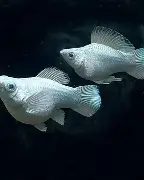
🪨 Species at a Glance
| Scientific Name | Poecilia sphenops (line-bred strain) |
| Also Associated With | Poecilia latipinna / P. velifera hybrid lineage |
| Family | Poeciliidae |
| Order | Cyprinodontiformes |
| Origin | Line-bred ornamental strain; wild ancestors from Mexico and Central America |
| Adult Size | Males 6–7 cm, Females 8–10 cm (3.5–4 in) |
| Lifespan | 3–5 years (up to 6 in ideal conditions) |
| pH Range | 7.2–8.2 |
| Temperature | 24–28 °C (75–82 °F) |
| Hardness (dGH) | 10–25 (hard water preferred) |
| Diet | Omnivore leaning herbivore — algae, vegetable matter, flake, pellets |
| Minimum Tank Size | 80 L (20 gal) for a small group of 4–6 |
| Care Level | Beginner to Intermediate |
| Temperament | Peaceful, active, social |
| Breeding | Livebearer — extremely prolific, stored sperm spawns |
| Tank Position | All levels (mid to top most often) |
Where the Name Comes From
The name ‘Diamond Eye’ comes directly from the fish’s most extraordinary visual feature: a dazzling, reflective iris that catches light and throws it back in tiny flashes of silver, white and pale blue — the optical equivalent of a cut diamond mounted on the side of the head. Against a coal-black body (the dominant base colour for this strain), the effect is spectacular. Where other mollies have a matte-yellow or subtly iridescent eye, the Diamond Eye’s iris is built from densely packed iridophores — microscopic crystalline platelets of guanine stacked in precisely regular layers — that reflect light almost holographically, producing a pinpoint sparkle visible clear across the room. This is structural colour, the same optical physics that makes a butterfly wing iridescent or an opal seem to glow from within; it does not rely on pigment and therefore does not fade with age or diet the way pigment-based colours sometimes do. Under a tank LED with good colour rendering, a group of Diamond Eye Mollies cruising through dark-substrate planted aquascapes genuinely looks as if they have been bejewelled.
The genus name Poecilia comes from the Greek poikilos, meaning ‘varied’ or ‘spotted’ — a reference to the wild mollies’ tendency to display patchy, mottled pigmentation that changes with mood, water chemistry and reproductive state. The species name sphenops breaks down into Greek sphen (wedge) and ops (face), describing the bluntly wedge-shaped snout of the Short-fin Molly from which the strain was originally developed. The genus was first erected by the Cuban-born ichthyologist Felipe Poey y Aloy in 1854, and the Short-fin Molly itself was formally described in 1846 by Achille Valenciennes, one of the collaborators of the great French zoologist Georges Cuvier. The common name ‘molly’ itself has a slightly uncertain origin but is widely believed to be a contraction of the old genus name Mollienesia (which was itself a patronym for the French politician Nicolas Francois Mollien), a name that has since been synonymised with Poecilia but that persists in the everyday hobby vocabulary.
Modern commercial Diamond Eye Mollies are not pure P. sphenops; they carry genetic contributions from P. latipinna (Sailfin Molly, native to the southeastern United States and Mexican Gulf coast) and in many cases P. velifera (Giant Sailfin, native to the Yucatan), crossed over many generations to fix desirable traits like deeper body colour, hardier immune systems and the reflective iris that gives the strain its name. The Diamond Eye trait specifically was selected and stabilised by Southeast Asian ornamental breeders in the late 1990s and early 2000s — particularly farms in Singapore, Thailand and Indonesia — building on an earlier Central American ‘mirror-eye’ line that had appeared sporadically in pond-raised black mollies throughout the twentieth century. Because the trait is visually striking, hardy and genetically stable, it has since become one of the most recognisable designer livebearers on the market, available from virtually every major ornamental fish exporter in Asia.
In the hobby you may hear them called Diamond Eye Black Molly, Mirror Eye Molly, Gem Eye Molly, or occasionally Crystal Eye Molly — the nomenclature has never fully settled. All refer to the same reflective-iris strain, though base body colour can vary from pure velvet black (by far the most common) to dalmatian spotted, pure silver-white, gold, or occasionally a mottled ‘marble’ pattern depending on which base line the breeder has crossed the Diamond Eye trait onto. When buying, the word ‘Diamond’ in the fish’s name reliably points to the eye trait rather than to the more general ‘Diamond Head’ variety seen in tetras — the two are genetically and visually unrelated.
Setting Up Your Aquarium
A Diamond Eye Molly tank walks a fine line between two competing needs: dense planting (which mollies love for grazing, cover and as somewhere for fry to hide) and generous open swimming space (because mollies are active, sociable mid-water swimmers that cruise the tank constantly and will look cramped and stressed in an overstuffed aquascape). A rectangular 80–100 litre aquarium (roughly 80×35×40 cm) is the practical minimum for a group of 4–6 adults; 120 litres gives much more headroom for breeding and larger groups, and 150 litres allows a confident show group of ten with multiple other hard-water species. Longer and wider is always better than taller — mollies use horizontal territory far more than vertical, and a cube-shaped tank with the same volume as a rectangle will feel significantly more constrained.
Substrate choice is flexible but has a real impact on how dramatic the Diamond Eye effect reads. Natural light-coloured sand — beach sand, pool filter sand, or commercial fine quartz — makes the jet-black Diamond Eye body and sparkling silver iris truly pop, giving the tank a bright, high-contrast ‘black pearl on white silk’ aesthetic. Dark sand or aquasoil produces a more dramatic, moody aquascape where the body almost disappears into the background and the eye-flash becomes the sole visual anchor — gorgeous but harder to photograph. Fine gravel works fine too but avoid sharp-edged commercial coloured gravels; mollies occasionally root-pick at the substrate and can abrade their mouths.
Plant choice should lean toward hard-water tolerant species: Vallisneria (a molly classic — they will nibble the long ribbon leaves and leave wavy tooth marks, but rarely destroy the plant), Anubias (all varieties — the thick leathery leaves shrug off molly attention), Java Fern (similarly leather-leaved and nibble-resistant), Cryptocoryne wendtii and C. beckettii (thrive in hard water, tolerate moderate nibbling), Hygrophila (grows fast enough to outpace grazing damage), Echinodorus (Amazon sword plants — tall centrepiece choice that tolerates hard water beautifully) and Bacopa monnieri (a hardy stem plant for the mid-ground) all handle hard alkaline water well and look stunning in the Diamond Eye’s visual palette. Avoid delicate soft-water plants like most Rotala species (they will yellow and melt), Eriocaulon (requires soft acidic water to thrive), and demanding carpeting plants like Monte Carlo or dwarf baby tears (they need soft water and CO2 injection that contradicts the natural molly tank chemistry). Floating plants such as Amazon frogbit, dwarf water lettuce, red root floaters and salvinia are especially valuable — they provide critical cover for newborn fry (the difference between seeing your fry grow up and finding an empty tank the next morning), absorb excess nutrients from the heavy feeding these fish demand, and diffuse the light the way wild coastal streams do. Keep a rough 40 percent surface coverage of floating plants for a good balance between light penetration and fry cover.
Driftwood is optional and more decorative than functional in a molly tank (mollies do not rely on tannins the way tetras do); if you use it, mopani or spiderwood both look striking against the black-bodied fish. Rocks, by contrast, are strongly encouraged: limestone, dolomite, tufa, aragonite-based reef rock and Texas holey rock all passively buffer pH upward and add calcium and magnesium to the water — a molly-friendly cheat for anyone whose tap water is right on the edge of being soft. Stack them into simple caves or shelves; mollies do not need elaborate cichlid-style territory, but they appreciate a few shaded hollows for night-time rest.
Lighting should be moderate to bright. Mollies graze algae and biofilm constantly, and a well-lit tank encourages a healthy green algae film on rockwork and driftwood that the fish pick at between formal feedings — part of why they are sometimes marketed (accurately) as ‘algae-eating’ livebearers. Keep surface agitation moderate to strong; mollies have a high oxygen demand at the warmer end of their temperature range, and gasping at the surface is a sign of both oxygen starvation and stress. A spray-bar return from a canister filter aimed along the back wall works beautifully: it produces visible current along the length of the tank, oxygenates the surface, and doesn’t stagnate any corners.
Tank
Minimum 80 L (20 gal) for 4–6 adults; 120 L (30 gal) strongly recommended for breeding groups
Filter
Canister or large HOB rated for 1.5× tank volume; sponge pre-filter prevents fry from being sucked in
Heater
100–150 W adjustable heater set to 26 °C; use two smaller heaters in tanks over 100 L for redundancy
Lighting
Moderate to bright LED — encourages the algae film that mollies graze
Substrate
Sand or fine-grain gravel. Light substrate maximises the eye-sparkle contrast; dark substrate deepens the body colour
Buffering Minerals
Crushed coral, aragonite or limestone rock (in filter or substrate) for passive pH and hardness stability
Plants
Vallisneria, Anubias, Java Fern, Crypts, Hygrophila, Echinodorus, floating frogbit or water lettuce
Thermometer
Digital or stick-on — mollies suffer rapidly if temperature drops below 22 °C
Aquarium Salt (optional)
Non-iodised salt, 0.5–1 tsp per US gallon, to support slime coat and reduce fungal disease
Test Kit
Liquid drop test for pH, GH, KH, ammonia, nitrite and nitrate — critical in hard-water setups to monitor buffering
Ideal Water Conditions
7.2–8.2
ideal 7.8
24–28 °C
ideal 26 °C
10–25 dGH
Moderately hard to hard water preferred; thrives in mineral-rich conditions
Diamond Eye Mollies are the rare tropical freshwater fish that genuinely prefer hard, alkaline water — the opposite of almost every tetra, rasbora and apistogramma on the market. This is because their wild ancestors inhabit mineral-rich coastal streams, brackish river mouths and even full-salinity lagoons from Mexico through Central America, where pH readings of 7.8–8.2 and hardness above 15 dGH are entirely normal. Wild Sailfin Mollies in Florida and the Gulf coast have been recorded thriving in water that is functionally seawater, and some populations are found in inland salt springs that would kill almost any other freshwater fish within hours. This evolutionary history explains almost everything about molly water chemistry preferences: they are built for mineral-rich, alkaline, oxygen-variable conditions, not for the soft acid tannin-stained blackwater of the Amazon. If your tap water is ‘problem water’ for soft-water species — hard, alkaline, full of dissolved minerals — it is paradise for mollies and you can use it straight from the tap (after dechlorination) without any adjustment.
Aim for a pH of 7.2 to 8.2, with a sweet spot around 7.6–7.8, and a hardness of 10–25 dGH. Temperature should sit between 24 and 28 °C; colder than 22 °C for prolonged periods suppresses their immune system and invites the dreaded ‘molly disease’ (sometimes called ‘the shimmies’), a stress-mediated combination of fungal and protozoan infection that presents as body shimmying, clamped fins, loss of colour and slow wasting. Warmer than 29 °C drops dissolved oxygen sharply and stresses the fish in a different way — watch for gasping at the surface. Stability matters more than hitting an exact number: a rock-steady pH 7.6 beats a pH that drifts between 6.8 and 7.8 every week because of inconsistent water-change habits. Perform 25–30% weekly water changes using temperature-matched tap water that is similarly hard — do not blend in RO water unless you are deliberately chasing soft conditions for another species, as diluting the mineral content works directly against molly physiology.
Ammonia and nitrite must of course be zero in a cycled tank; nitrate should be kept below 30 ppm for healthy adults and below 10 ppm if you are raising fry. Mollies are not especially nitrate-sensitive compared to, say, discus, but chronic nitrate above 40 ppm over weeks dulls colour and shortens lifespan. Test weekly until you know your tank’s rhythm, then monthly once the system is stable. KH (carbonate hardness) is as important as GH for mollies: a KH above 5 dKH provides the buffering capacity that stops pH swings between water changes, and in practice the hard mineral water that mollies love almost always comes with robust KH as a bonus.
A widely discussed but sometimes misunderstood point: Diamond Eye Mollies benefit from a small amount of aquarium salt. Adding 0.5 to 1 teaspoon of non-iodised aquarium salt per US gallon (roughly 2–4 g/L, about 1–2 ppt) firms up their fins, reduces stress, supports the protective slime coat, acts as a mild osmoregulatory aid and noticeably reduces the incidence of ich and fungal disease. Salt is not mandatory — many keepers raise thriving Diamond Eye Mollies in plain hard freshwater with no salt at all — but it can be a useful preventative or remedy for stressed stock, and mollies tolerate it far better than almost any community fish. If you plan to keep salt-sensitive tank mates (corydoras catfish, some loaches, tetras, live plants), adjust the salt dose downward to 0.25 tsp/gal or skip it entirely and rely on scrupulous water quality instead. Do not add marine salt mix (which contains pH-buffering minerals and trace elements designed for reef tanks); stick to plain aquarium salt (sodium chloride without additives) or kosher/sea salt from a grocery aisle. Never add salt to a newly set up tank all at once — add it during partial water changes over several weeks so the fish acclimate gradually.
Feeding Guide
Diamond Eye Mollies are technically omnivores but lean heavily toward the herbivorous end of the spectrum — a fact often overlooked by keepers who feed them as if they were tetras. In the wild, Poecilia species graze constantly on algae, biofilm, diatom mats and soft aquatic plants, supplementing this plant-heavy diet with insect larvae, small crustaceans, mosquito wrigglers and tiny invertebrates that they happen to pick up along the way. The digestive tract of a molly is proportionally long and coiled — an anatomical giveaway that the species evolved to process plant matter rather than flesh. A high-protein diet modelled on predatory fish is actively bad for them: it leads to constipation (white stringy faeces are the classic sign), bloating, fatty liver disease, the characteristic ‘shimmy’ body-vibration syndrome, and substantially shortened lifespan. Build their diet around vegetable matter and treat protein as the occasional seasoning, not the main course.
Algae wafers designed for herbivorous fish (Hikari Algae Wafers, Repashy Soilent Green, Omega One Veggie Rounds, or equivalent spirulina-based sinking pellets) should form the daily staple. Supplement several times a week with blanched vegetables: lightly boiled spinach (about 20 seconds in hot water, then cooled), zucchini medallions (3 mm slices, anchored with a veggie clip), cucumber slices, blanched kale, and shelled garden peas (crush the pea lightly between thumb and finger so the green centre is exposed) are all accepted with enthusiasm. Rotate the vegetable offerings weekly for dietary variety and always remove uneaten vegetable matter within 12 hours to prevent fouling. A high-quality tropical flake with spirulina, earthworm meal and immune-boosting ingredients helps fill micronutrient gaps. Crushed flake is easier for fry to manage than whole flake, and bottom-dwelling species (cory catfish, bristlenose) will happily clean up anything the mollies drop.
Live and frozen protein — baby brine shrimp, daphnia, cyclops, mosquito larvae, and bloodworms in strict moderation — should feature perhaps twice a week only; it conditions breeders, adds behavioural stimulation and dietary variety, but is not their dietary foundation. Bloodworms in particular are calorie-dense and often over-fed; treat them as a once-a-week treat. Daphnia is actually the single best ‘protein’ supplement for mollies because it contains indigestible cellulose in its shell that acts as dietary fibre — it adds variety and helps keep the digestive tract moving rather than gumming it up the way pure muscle protein can.
Feed small portions two to three times a day rather than one large meal; the long digestive tract of a herbivore is designed for constant grazing, not feast-and-famine cycles. A practical rule is ‘eaten in two minutes’ — offer only what the group can consume in that window, then wait several hours before the next feeding. Between formal feedings, the fish will happily pick biofilm, soft green algae and fallen debris from glass, rockwork, plant leaves and driftwood, and this background grazing provides a significant share of their daily caloric intake in a well-lit, biofilm-rich tank. One skipped day per week is actively beneficial — a natural fast mimics wild feeding gaps, clears the gut and reduces the risk of bloat.
Colour Forms & Morphs
⚫ Diamond Eye Black
The flagship form — jet-black velvet body with a brilliant silvery-white reflective iris that sparkles under any light. This is the variety most commonly sold as ‘Diamond Eye Molly’.
🖤 Black Molly
The classic all-black molly, base lineage for the Diamond Eye strain. Solid matte black body, standard dark iris, round belly profile.
💭 Dalmatian Molly
White to pale silver body peppered with irregular black spots — each fish is unique like a fingerprint. Often appears alongside Diamond Eye strains as a contrasting tank mate.
🤇 Silver / White Molly
Pure silver-white body, sometimes with a very faint iridescent sheen along the flanks. Shows the reflective eye trait well when bred into the Diamond Eye line.
🟡 Gold / Golden Panda Molly
Yellow-gold body, sometimes with a black caudal peduncle and tail (‘panda’ patterning). A warm-toned alternative to the dark Diamond Eye base.
🎵 Dalmatian Lyretail
Long, elegant double-pointed tail fin on the dalmatian body. Slower-moving due to finnage, and slightly more demanding of clean water.
🎈 Balloon Molly
A controversial line-bred form with a foreshortened spine producing a round ‘ballooned’ body shape. Cute but scientifically a spinal deformity — see the note below.
The Diamond Eye trait has been crossed onto nearly every commercial molly base colour, but the dramatic contrast of a black body against a sparkling silver iris remains the undisputed showstopper and the overwhelming majority of what reaches stores under the ‘Diamond Eye’ name. Colour intensity depends strongly on diet (astaxanthin and carotenoids deepen any red or gold hues present, while spirulina and chlorophyll-rich foods enrich the velvety blacks and bright yellows), water quality (chronic nitrate build-up dulls the black to a dusty grey within weeks), and lighting (moderate front-facing LEDs with good colour rendering index enhance the eye-flash effect most dramatically, while pure-white overhead lights can wash the contrast out). Over generations, a carefully maintained Diamond Eye line will hold its sparkle reliably, but a poorly fed or chronically stressed fish loses the dramatic iris reflection within months — it dulls to a muddy grey-brown as the iridophore layer thins.
A short note on the Balloon Molly: although it appears in the livebearer trade and many keepers love its round body shape, the ‘balloon’ look is the result of a deliberately selected spinal deformity (scoliosis combined with kyphosis) that compresses the normal torpedo-shaped body into a round football profile. These fish often suffer reduced swimming efficiency, compressed internal organs (especially the swim bladder and digestive tract), difficulty giving birth, and shorter lifespans — typical balloon mollies live roughly half as long as standard-bodied siblings of the same strain. The ethics of breeding and buying balloon varieties is an ongoing debate in the hobby; we respect that many keepers find them charming, but we believe the information should be available up-front. If you are a new keeper, we recommend starting with standard-bodied Diamond Eye, Black or Dalmatian strains and making the balloon question your own informed choice later, once you understand what you are looking at.
From a design perspective, the most striking Diamond Eye aquascapes play to the fish’s contrast. A tank with a pale sand bed, dark hardscape (mopani wood or dark stone) and dense green planting will make every eye-flash pop as the group cruises past. Mixing Diamond Eye Black with Dalmatian or Silver Mollies in the same tank creates a natural ‘tuxedo’ palette — black, white and spotted — that looks remarkably elegant without any further colour fuss.
Telling Males from Females
Mollies are textbook livebearers and sexing them is one of the easiest exercises in the hobby — far easier than sexing tetras, rasboras, or even most cichlids. By the time a male reaches about 3 cm, the anal fin has already begun its transformation from a fan into a gonopodium: a narrow, pointed, rod-like organ that rotates forward during mating to deliver a packet of sperm (spermatophore) directly into the female’s cloaca. Unlike external-fertilising fish, in which the male simply releases milt into the water over scattered eggs, livebearer males perform a mechanical transfer that requires the gonopodium to make brief physical contact with the female. The gonopodium is supported by hooks, spines and a flexible base that allow the male to swivel it dramatically during mating — in slow-motion footage it is genuinely remarkable to watch. Once you have seen a gonopodium side-by-side with a normal fan-shaped anal fin, you will never mis-sex a molly again. Females retain the larger, fan-shaped anal fin throughout life and use it only for stabilising swimming.
Females are noticeably larger and broader than males — a 10 cm female next to a 6 cm male is not unusual — and as they mature they develop a distinctive gravid spot: a dark, triangular pigmented patch on the lower flank just forward of the anal fin. This patch is effectively a window onto the developing brood inside, caused by the embryos pressing against the relatively transparent abdominal wall; it will darken, swell and even take on a purplish hue as the 28-day gestation approaches parturition. In heavily pigmented Diamond Eye Black strains the dark body colour can make the gravid spot harder to see than in silver or dalmatian mollies, so watch instead for the abdominal profile — a boxy, almost angular silhouette when viewed from directly above the tank is a reliable sign that a female is close to dropping fry. Many experienced keepers judge imminent parturition by turning off the tank light for a moment, then flashing a torch horizontally across the female’s belly from above; the embryonic eyes are often visible as tiny dark dots inside the translucent abdominal wall in the last 48 hours.
Males spend an enormous amount of time displaying to females: flaring the dorsal fin, curling the body into an S-shape, and performing short lateral dashes and 90-degree sideways swim-bys. In a mixed group they will also chase each other — dominant males constantly attempt to drive subordinate males away from receptive females — and in undersized tanks this harassment can genuinely wear down a single female to the point of exhaustion, refusal to feed, and susceptibility to disease. The classic solution is a 1 male : 2–3 female ratio, which spreads male attention across multiple targets and allows any single female to retreat into plants or shadow when she has had enough. An even more conservative 1 male : 4 female ratio is often recommended for smaller tanks. If you want the ease of an all-single-sex tank and zero fry, all-female groups are genuinely peaceful; all-male tanks work but males will spar constantly over dominance and require a larger, more structured environment to avoid injury.
| Feature | Male | Female |
|---|---|---|
| Size | Smaller, 6–7 cm slim and streamlined | Larger, 8–10 cm with a distinctly rounder abdomen |
| Anal Fin | Modified into a gonopodium — a narrow, pointed, rod-like structure used to deliver sperm internally | Normal fan-shaped anal fin used only for stabilising swimming |
| Body Shape | Slim, torpedo-like profile along the whole length | Full, rounded belly; pronounced gravid curve when pregnant |
| Colour & Finnage | More intense colour, slightly larger dorsal fin, sometimes flashier eye reflection | More muted colour overall; fins proportionally smaller |
| Gravid Spot | Absent | Dark triangular patch just forward of the anal fin; darkens as gestation progresses |
| Behaviour | Constantly displays to females, flares fins, chases competing males | Calmer; may retreat from persistent male attention into dense plants |
| Dorsal Fin | Slightly taller and often held fully erect during display | Shorter and held more modestly |
| Reproductive Role | Internal fertiliser — delivers sperm via the gonopodium | Internal gestator — carries developing fry for approximately 28 days |
Breeding Guide
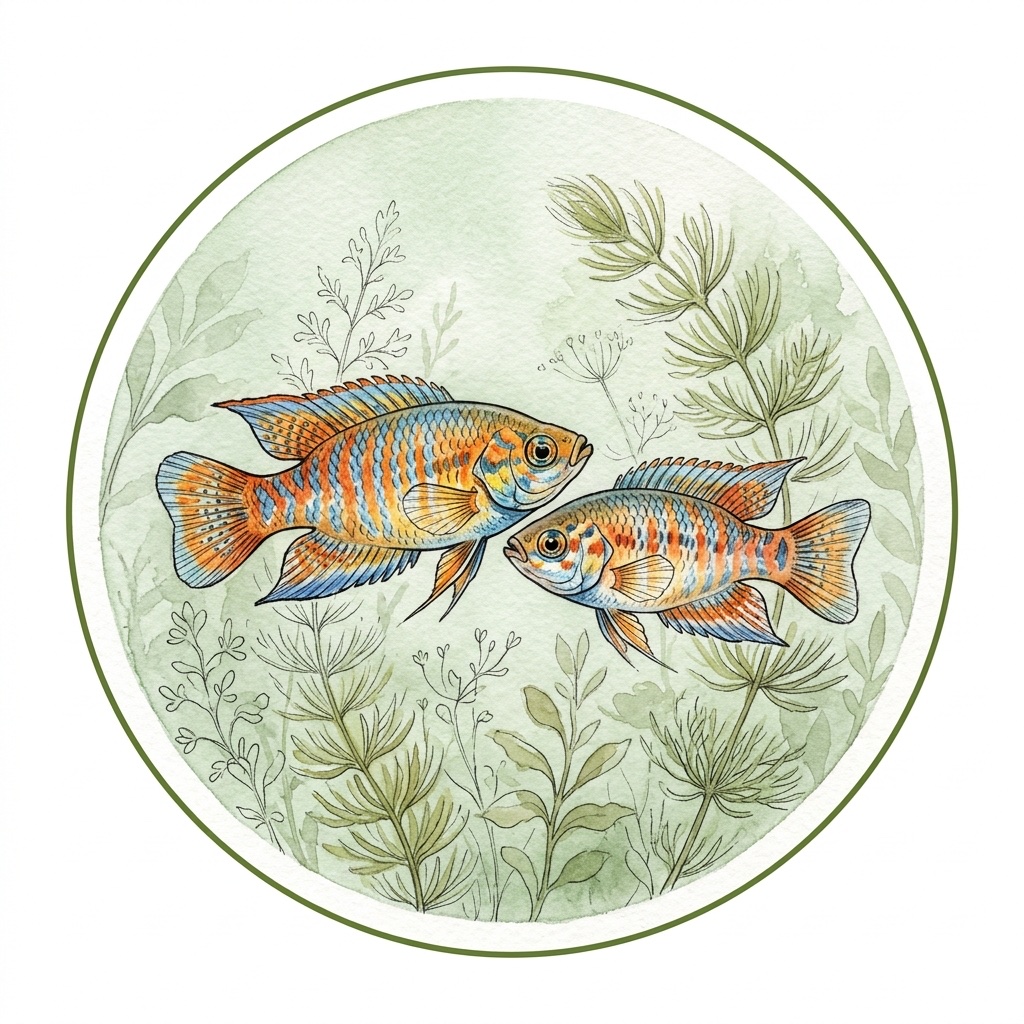
Stage 1 — Courtship
Male Display & Pursuit
Males flare fins, perform S-curve dance, chase receptive females
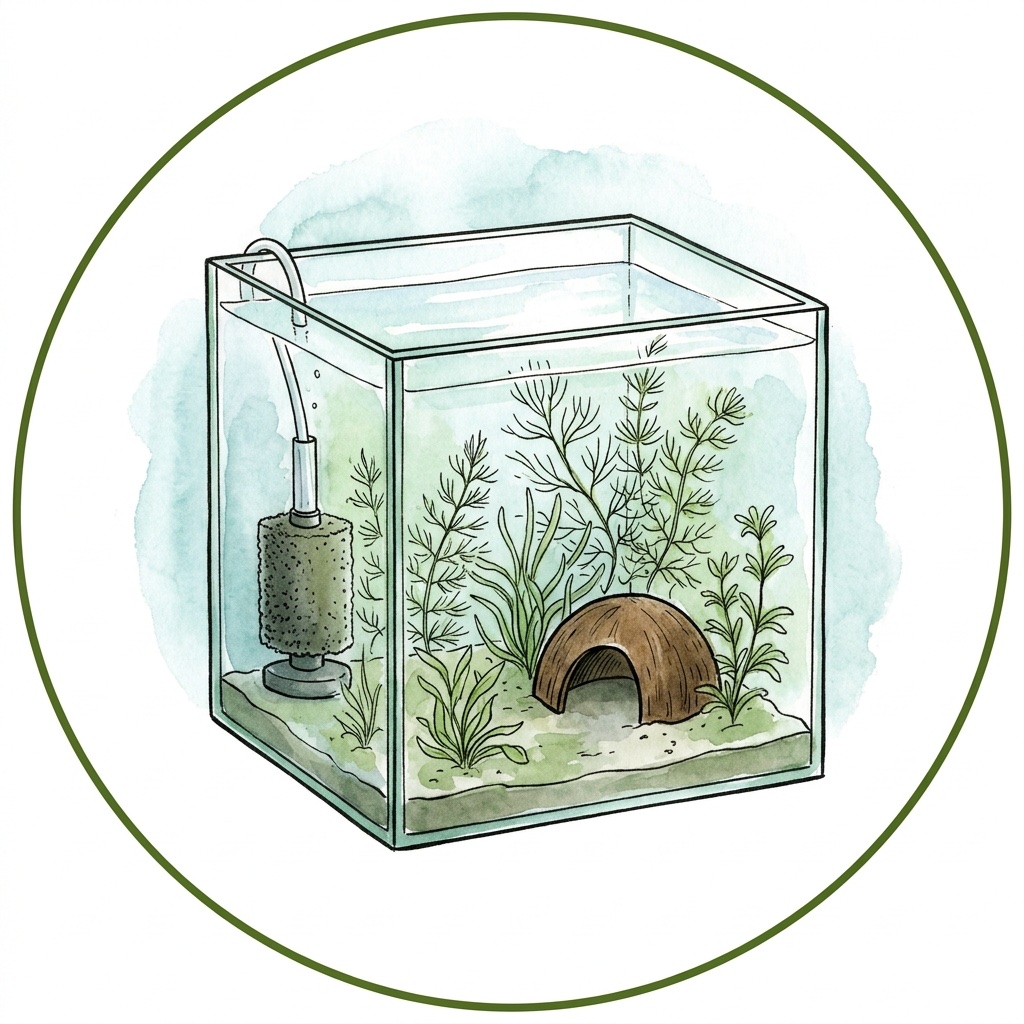
Stage 2 — Internal Fertilisation
Gonopodium Transfer
Male transfers spermatophore to female via modified anal fin
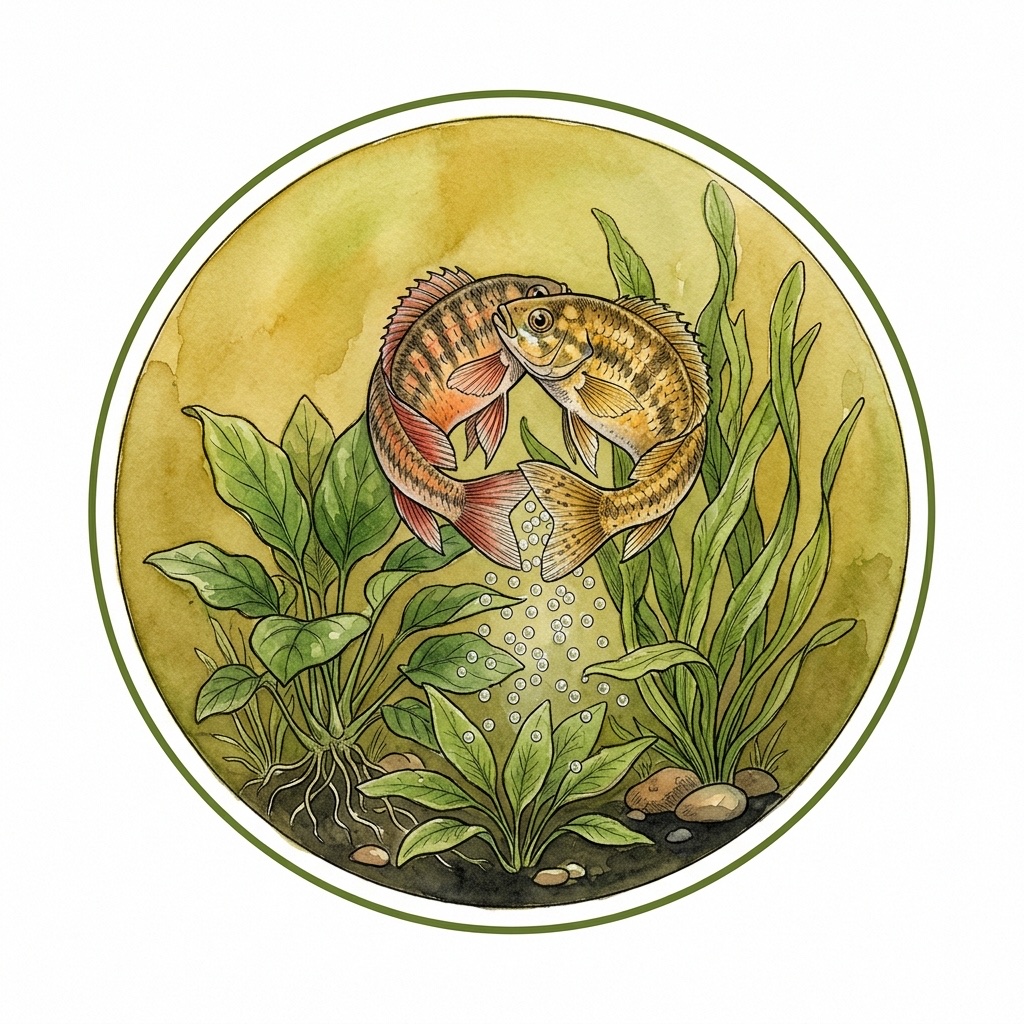
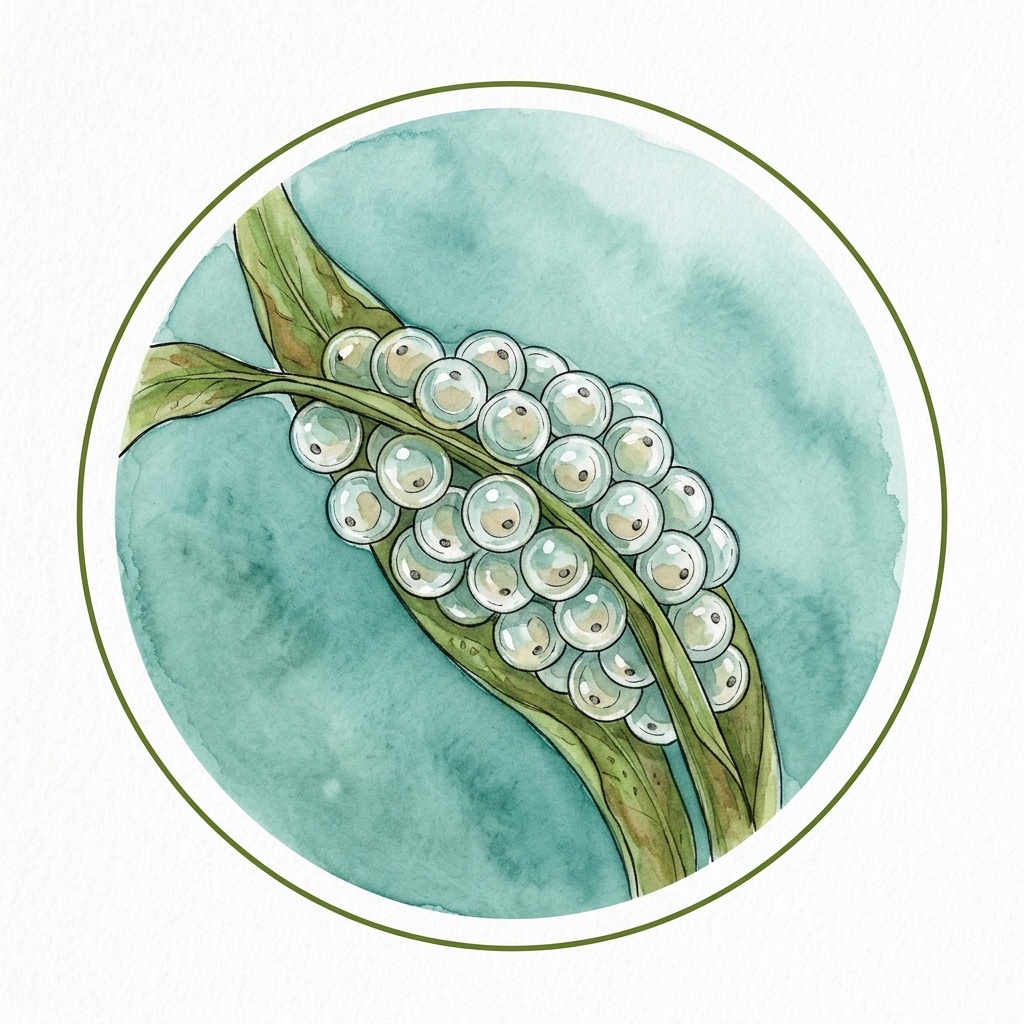
Stage 3 — Gestation (approx. 28 days)
Internal Embryonic Development
Eggs develop inside the female; gravid spot darkens, belly squares off
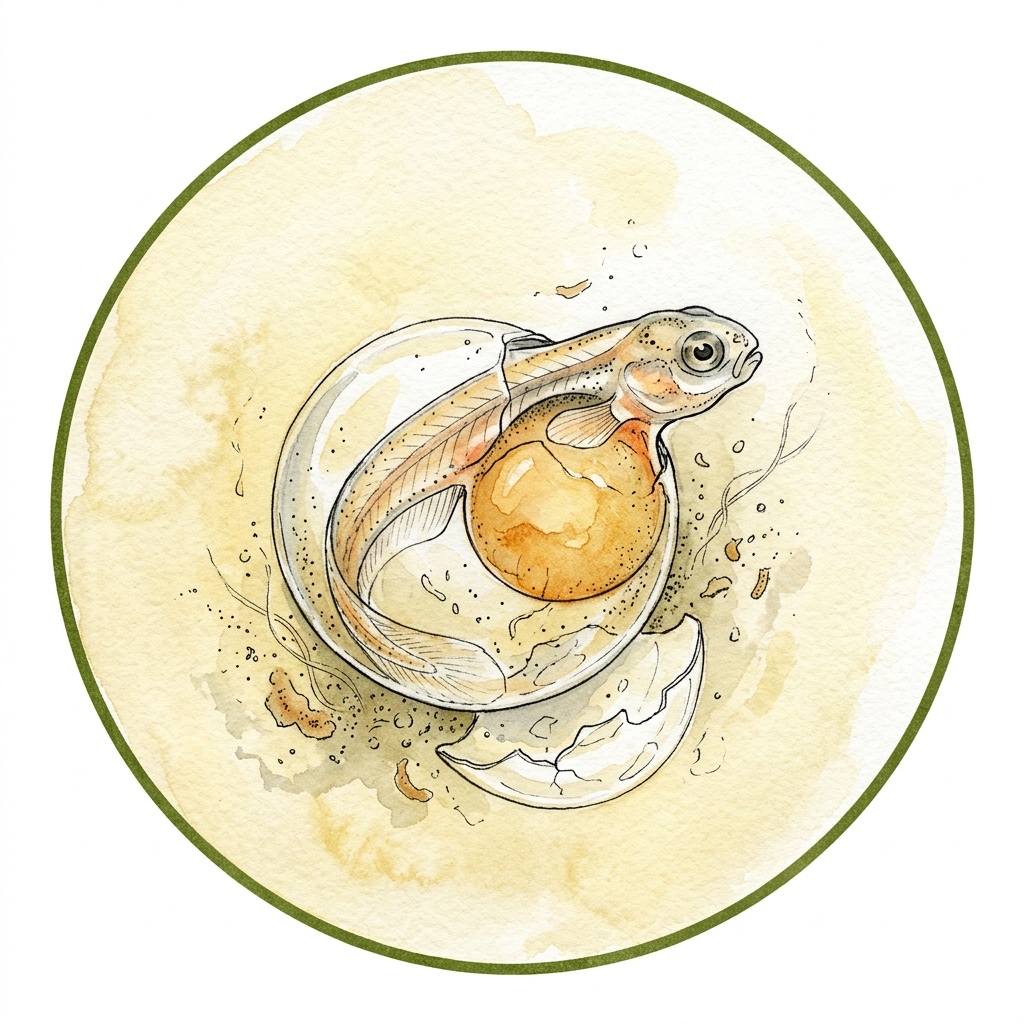
Stage 4 — Parturition
Live Birth (20–80 Fry)
Fully formed fry emerge and immediately swim; no parental care
Stage 5 — Fry Growth
Juvenile Development
Fry take crushed flake immediately; reach sexual maturity in 3–4 months
Male Display & Pursuit
Diamond Eye Molly breeding begins the moment you put a sexually mature pair in the same tank — which with mollies is depressingly soon, since females can reach sexual maturity at just 3–4 months old and males slightly earlier. Males launch into almost continuous courtship display: flaring the dorsal fin, curling the body into a pronounced S-shape, and performing short lateral swim-bys alongside the female. Receptive females slow down and let the male approach; unreceptive females bolt for the plants. Courtship is not subtle and it is not gentle — males are persistent, and this is exactly why a 1 male : 2–3 female stocking ratio is not a suggestion but a welfare requirement.
Gonopodium Transfer
When a female is fully receptive, the male rotates his gonopodium forward and sideways, aligning it with her cloacal opening for a contact that lasts only a fraction of a second. During this brief contact he transfers a spermatophore — a packet of packaged sperm cells. Critically, female mollies are capable of storing viable sperm internally for three to six months (in some documented cases up to eight months). A single successful mating can therefore produce five or more separate broods of fry, each roughly a month apart, with no further contact with a male required. This is the single most important fact to understand before you buy mollies: a female purchased from a mixed-sex store tank is almost certainly already pregnant and will keep producing fry long after you thought it was impossible.
Internal Embryonic Development
Gestation lasts approximately 28 days at 26 °C, sometimes stretching to 35 days in cooler water. During this period the embryos develop inside the female, nourished by the egg yolk (mollies are technically ovoviviparous — they carry eggs that hatch internally, rather than feeding the embryos through a placenta the way guppies partially do). The gravid spot on the lower abdomen darkens progressively and in later pregnancy takes on a purplish-grey hue; viewed from above the female’s abdomen takes on a distinctively boxy, angular silhouette. In the final days she may retreat from the group into quieter corners of the tank, pick at food less enthusiastically, and become noticeably slower.
Live Birth (20–80 Fry)
Parturition typically occurs early in the morning and lasts from one to several hours. The female expels fry one or two at a time — each a perfect miniature molly, 5–8 mm long, fully formed, with the Diamond Eye trait already visible as a tiny silver pinpoint. A first-time mother may produce only 15–25 fry; mature females commonly drop 40–60 fry per brood, and exceptional specimens produce 80+ in a single parturition. There is absolutely no parental care — the female will happily eat her own fry within minutes of giving birth if the fry are not hidden by dense floating plants or separated into a breeding box. Remove the mother back into the main tank once you are confident parturition is complete, and leave the fry in a heavily planted area or a dedicated grow-out tank.
Juvenile Development
Molly fry are among the easiest livebearer fry to raise. From the first day they accept finely crushed flake, powdered fry food and baby brine shrimp — no infusoria stage is required. In a well-fed, well-filtered tank they grow visibly from week to week: 1 cm at two weeks, 2 cm at six weeks, sexing becomes possible at roughly 2.5 cm (watch for the gonopodium beginning to elongate in males), and full sexual maturity is reached at 3–4 months. The Diamond Eye trait is visible from birth but intensifies noticeably as the iris iridophores fully develop around weeks 4–6. A well-fed brood of Diamond Eye fry is genuinely charming — forty tiny black torpedoes, each with a pinpoint silver eye, schooling under a raft of frogbit.
Compatible Species
Diamond Eye Mollies are excellent community fish within the correct chemical framework. The golden rule: build your tank around hard-water, peaceful species and your mollies will thrive alongside almost anything else with the same water preferences. The breakdown almost always happens when keepers try to mix mollies with soft-water favourites like cardinal tetras, rummy-nose tetras, discus or Apistogramma dwarf cichlids — chemically the two sides cannot both be happy in the same water, and one population always suffers. If you must compromise, soft-water species placed in molly-hard water will generally survive but show reduced colour, slower growth, weaker breeding response and shortened lifespan; hard-water fish placed in soft acidic water suffer immune suppression and are prone to fungal and bacterial disease. The cleaner answer is to commit to one camp and stock accordingly.
Within the hard-water camp, mollies mix beautifully with other livebearers (platy, guppy, swordtail — all genus relatives with identical requirements), peaceful mid-water schoolers that tolerate harder water (harlequin rasbora, zebra danio, rainbowfish of various species, some rainbow characins), and calm bottom-dwellers (corydoras catfish, bristlenose pleco, otocinclus, kuhli loach with reduced salt levels). Small peaceful gouramis (honey, pearl) can also share space provided the tank is large enough for the gourami to claim its own surface territory. Avoid anything significantly larger or known-aggressive, and avoid notorious fin-nippers (tiger barb, serpae tetra, some silver dollars) if you are keeping any long-finned molly strain such as Lyretail or Sailfin — the flowing fins will be shredded within days.
Group size matters: keep Diamond Eye Mollies in groups of at least four — ideally two females per male, or an all-female group — and they will school loosely, constantly cruising the tank and interacting with each other in ways that give a community aquarium genuine personality. A single molly in a community tank tends to become a subdued, less colourful version of itself; two or three mollies in isolation often means constant harassment between them and no stable pecking order. Four or more gives the social dynamics room to spread out and settle.
One final compatibility note specific to the breeding question: if you are running any other livebearer in the same tank (platy, guppy, swordtail), cross-species hybridisation is extremely rare but male harassment across species is not. A solitary female molly in a tank of male guppies will be harassed relentlessly by the guppies even though no viable hybrid offspring can result. Maintain comfortable female-majority ratios across all livebearer species together, not just within the molly subset.
| Species | Why | |
|---|---|---|
| ✅ | Platy | Fellow livebearer sharing identical hard-alkaline water preferences; peaceful, colourful, occupies similar mid-water zone |
| ✅ | Guppy | Livebearer cousin with identical water requirements; be aware males may interbreed (molly × guppy hybrids are generally inviable but harassment can occur) |
| ✅ | Swordtail | Larger livebearer cousin, same hard-water preference, similar temperament; males sometimes spar but rarely harm each other or mollies |
| ✅ | Corydoras Catfish | Peaceful bottom-dwellers that clean up leftover food; tolerate hard water surprisingly well though salt doses should be kept low for their sake |
| ✅ | Harlequin Rasbora | Peaceful mid-water schoolers that tolerate harder water than most rasboras; do not compete for territory or food with mollies |
| ✅ | Bristlenose Pleco | Bottom-dwelling algae eater; tolerates hard water and keeps the rockwork clean; wholly ignores mollies |
| ✅ | Zebra Danio | Active upper-water schooler, thrives in the same temperature range and is robust enough not to be stressed by molly activity |
| ✅ | Kuhli Loach | Peaceful nocturnal bottom-dweller; keep salt to the lower end of the molly range if combining, as loaches are scaleless and more salt-sensitive |
| ✅ | Otocinclus | Tiny algae eaters that complement mollies’ grazing habit; peaceful and wholly indifferent to molly activity |
| ✅ | Cherry Shrimp (caution) | Possible if the tank is heavily planted with moss refuges — adult shrimp are usually ignored, but molly fry and hungry adults will pick off baby shrimp. Not a breeding-friendly shrimp tank mate |
| ❌ | Tiger Barb | Aggressive fin-nipper that will harass the flowing fins of Lyretail and Sailfin Molly strains relentlessly |
| ❌ | Betta (Male) | Overlapping territory at the upper water level leads to betta aggression; mollies’ nipping tendency in cramped tanks also stresses bettas |
| ❌ | Discus | Discus require soft, acidic, warmer water (28–30 °C, pH 6.0–6.8) — the complete opposite of molly requirements; chemically incompatible |
| ❌ | Cardinal / Neon Tetra | Soft acidic blackwater specialists whose colour and immune function degrade in hard alkaline molly water; chemically wrong pairing |
| ❌ | Large Cichlids (Oscar, Jack Dempsey, Convict) | Far too aggressive and large — adult mollies become food and breeding females are targeted; not a safe mix |
| ❌ | Red-Tailed or Rainbow Shark | Territorial and aggressive toward similar-bodied fish; will chase mollies relentlessly in most tank sizes |
Quick Reference
| Scientific Name | Poecilia sphenops (line-bred strain) |
| Adult Size | Males 6–7 cm, Females 8–10 cm |
| Lifespan | 3–5 years |
| pH | 7.2–8.2 (ideal 7.8) |
| Temperature | 24–28 °C (ideal 26 °C) |
| Hardness | 10–25 dGH (hard water preferred) |
| Min Tank Size | 80 L for a small group of 4–6 |
| Group Size | 4+ minimum; keep 1 male to 2–3 females |
| Diet | Herbivorous omnivore — algae wafer, blanched veg, spirulina flake |
| Care Level | Beginner to Intermediate |
| Temperament | Peaceful, active, social |
| Tank Position | All levels, mid-water most often |
| Breeding | Livebearer — stores sperm, 28-day gestation, 20–80 fry |
| Salt Tolerance | Tolerates 0.5–1 tsp/gal aquarium salt; useful for stressed stock |
| Price (AUD) | $88 |
Related Products
Reviews
Clear filtersThere are no reviews yet.