
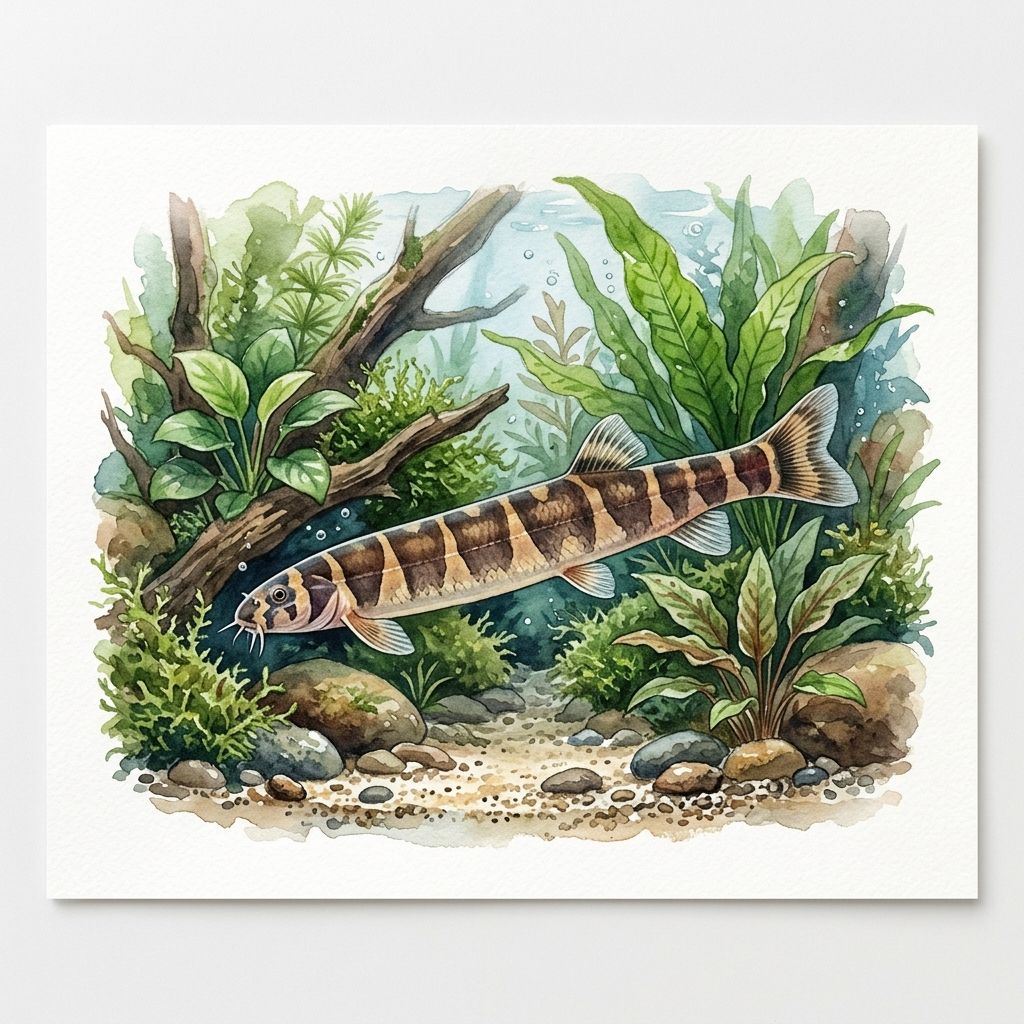
🪨 Species at a Glance
| Scientific Name | Pangio kuhlii |
| Former Name | Acanthophthalmus kuhlii |
| Common Names | Kuhli Loach, Coolie Loach, Leopard Eel, Banded Loach |
| Family | Cobitidae (true loaches) |
| Origin | Sumatra, Java, Borneo, Malay Peninsula |
| Habitat | Soft, slow blackwater streams; leaf-litter beds |
| Adult Size | 8–11 cm (rarely 12) |
| Lifespan | 10–14 years (often longer in Sydney aquariums) |
| Tank Level | Bottom (with nocturnal mid-water dashes) |
| Social Structure | Shoaling — keep 5+ (ideally 8+) |
| Care Level | Easy once substrate is correct |
| Temperament | Peaceful, shy, intelligent |
| Diet | Omnivore — prefers sinking meaty foods |
| Breeding | Rare in home aquaria; most stock is wild-caught or pond-reared |
Why ‘Kuhli’?
The species honours Heinrich Kuhl, a Dutch-German naturalist who sailed to Java in 1820 as part of the Natuurkundige Commissie survey of the Dutch East Indies. Kuhl was only 23 when he arrived, and he was dead within nine months — killed by a tropical liver fever before he could describe most of the specimens he had collected. The French ichthyologist Achille Valenciennes named this strange, worm-like little loach in his memory in 1846, almost three decades after Kuhl’s death. It is a quiet tribute to a naturalist who never saw the fish he became famous for.
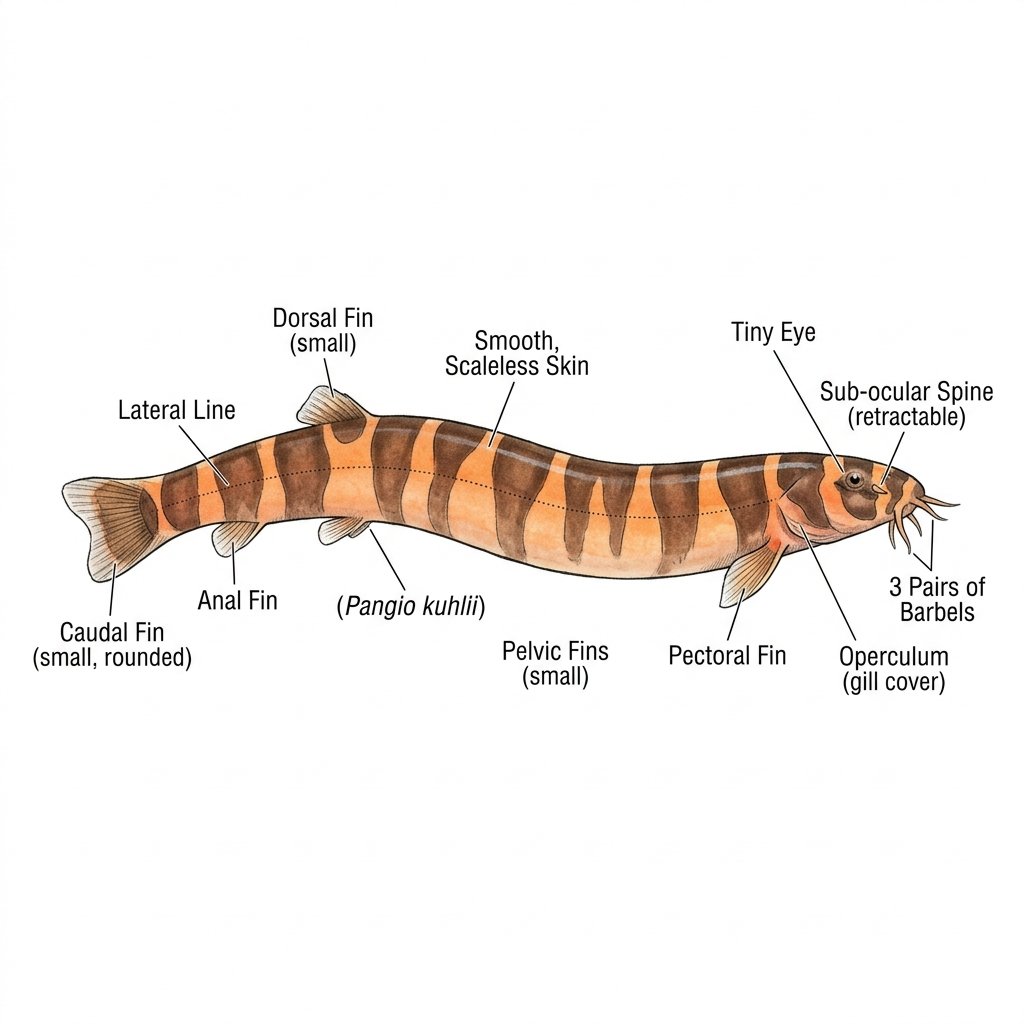
The ‘loach’ half of the common name is older and more literal. Loaches belong to the family Cobitidae, a Eurasian and Southeast Asian group of elongated, bottom-dwelling fishes characterised by barbels around the mouth and, in many species, a small defensive spine beneath each eye. Kuhli Loaches have this spine too — it is retractable and used only when the fish is pinned by a predator, which is why experienced keepers always use a soft container rather than a net to move them. Catch a Kuhli in mesh and the spine inevitably snags; catch it in a cup of water and the transfer is effortless.
In older aquarium literature you will still see the genus name Acanthophthalmus (‘spiny-eye’) used for this species. The name was valid until 1989, when taxonomists moved the group to the older, prior-named genus Pangio, which simply means ‘eel-like’ in the Javanese dialect of the local fishermen who first collected them for European museums. If you want to collect every name this fish has answered to, you can also add Cobitis kuhlii (Valenciennes’ original 1846 combination), Coolie Loach (a spelling that emerged in 1970s pet-shop catalogues and never quite died), and Leopard Eel (wholesale trade slang that persists in some Sydney distributors’ stock lists).
Pangio Varieties You’ll See
🟤 Standard Banded Kuhli
True Pangio kuhlii — apricot-to-salmon body crossed by 12–17 broad chocolate bands that wrap completely around the belly.
⚫ Black Kuhli
Pangio oblonga, a separate species almost always sold under the same name. Uniform deep chocolate brown to near-black, no visible bands. Shyer than the banded form.
🤍 Silver / Sandy Kuhli
Pangio anguillaris. Pale silver-grey, sometimes with ghost banding. Rarely offered in Sydney; usually arrives mixed into consignments of Black Kuhlis.
Unless your retailer has been meticulous, any tank labelled ‘Kuhli Loach’ in Sydney is likely a mix of at least two Pangio species. This is not a problem — they get along perfectly, share identical care requirements, and will even shoal together at night — but it is worth knowing if you are trying to breed the banded form or photograph a pure-species display. The easiest way to sort a consignment is to let the tank settle for an hour and then check from above with a torch: true P. kuhlii always shows at least a hint of banding from the dorsal surface, while P. oblonga is uniform chocolate from nose to tail. There is also a genuinely rare form, sometimes called the ‘Chocolate Kuhli’, which is a honey-brown intermediate phenotype — keep an eye out for it in mixed bags.
Telling Males from Females
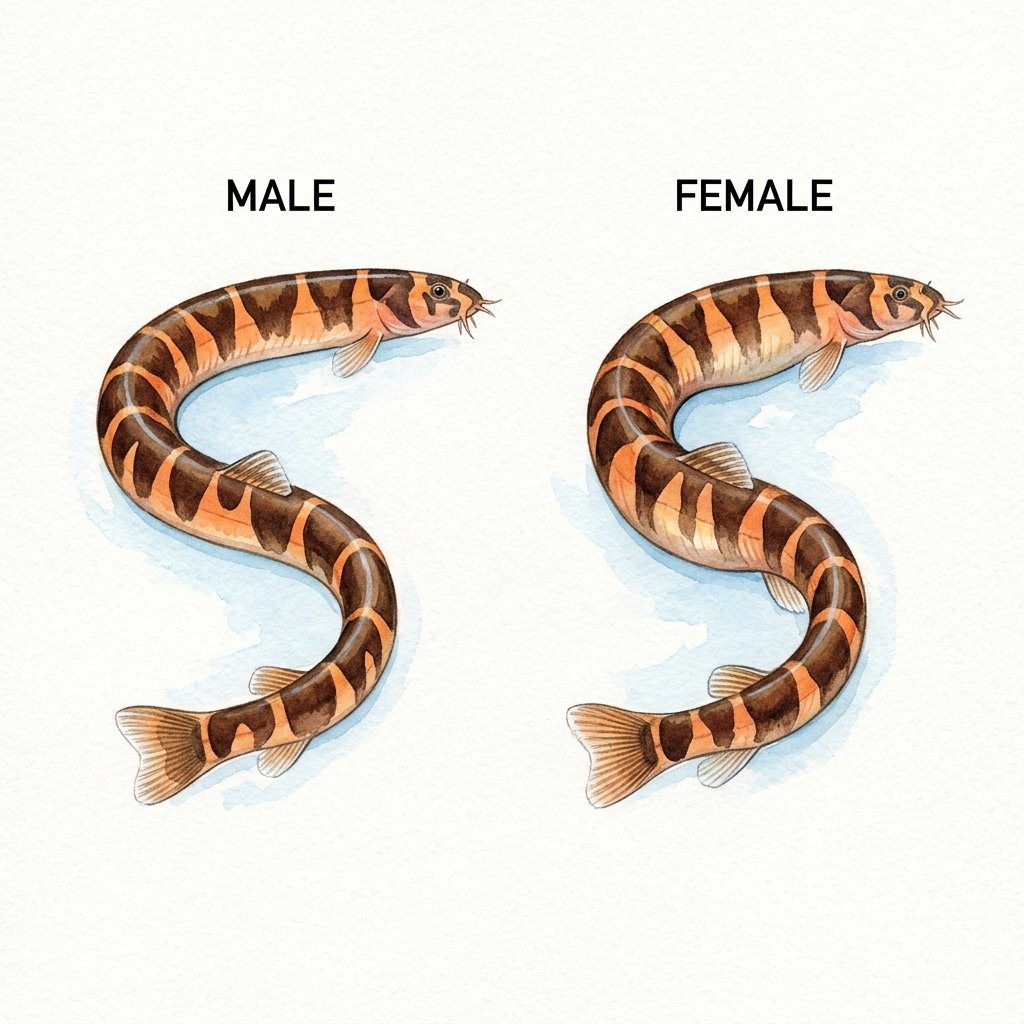
Sexing Kuhli Loaches is notoriously difficult when the fish are under six months old — juveniles of both sexes look identical. Once the fish cross about 7 cm, however, a top-down view becomes the most reliable check. Female Kuhlis develop a distinctive ‘pear-shaped’ outline when gravid: the body behind the pectoral fins visibly widens, forming a subtle but unmistakable belly bulge. Males remain pencil-straight from shoulder to vent for their entire lives.
The second tell is the pectoral fin structure. Hold a Kuhli sideways in a clear plastic bag or against the glass and look at the leading ray of each pectoral fin. In males this first ray is conspicuously thickened and often branches in a small fan; in females it remains a simple, slender spine. This dimorphism becomes obvious in fish over 8 cm and is diagnostic — the pectoral difference cannot be faked by feeding, and it does not reverse.
A third clue, more circumstantial but fun to watch for, is spawning-ready behaviour. As barometric pressure drops before a summer storm, mature males in a well-fed group will begin short bursts of chasing, particularly at dusk. Females retreat into plant thickets or under driftwood caves, where they hover motionless. Sydney keepers who pay attention to their weather app have a reliable heads-up window for sexing activity between late November and March.
| Feature | Male | Female |
|---|---|---|
| Body shape | Slim and cylindrical throughout | Visibly fuller belly when mature, especially after feeding |
| Pectoral fins | First ray noticeably thickened and branched | Pectoral rays slender and simple |
| Adult length | Slightly smaller, averaging 8–9 cm | Often reaches 10–11 cm at full maturity |
| Viewed from above | Straight sides along the belly line | Visible bulge from behind the pectorals to the vent |
| Behaviour pre-spawn | Increased chasing, especially at dusk | Hovers near plant thickets and spawning sites |
Water Parameters
5.5–7.2
ideal 6.2
24–29 °C
ideal 26 °C
0–8 dGH
Soft to very soft — under 8 dGH, ideally under 5
Pangio kuhlii evolved in the blackwater streams and peat-swamp overflow channels of Sumatra and Borneo, where rainforest leaf litter drops pH to 4.5 and below, hardness approaches zero, and tannins stain the water the colour of weak tea. In captivity they adapt surprisingly well to Sydney’s tap water after a period of acclimation, but they will never look their best — or breed — in the hard, alkaline conditions that suit livebearers and African cichlids. Aim for parameters that sit firmly in the soft, slightly acidic window: pH below 7.0, total hardness under 8 dGH, and a stable temperature around 26 °C.
Sydney tap water typically arrives at pH 7.4–7.8 with a GH of 4–6 — not terrible, but at the very upper edge of Kuhli tolerance. If you are serious about the species, the two practical options are (1) a 50/50 tap/RO blend with a tannin source to pull pH down naturally, or (2) regular mains water buffered by a generous bed of Indian almond leaves, oak leaves and cured driftwood. Either approach will tint the water amber within a week, and the Kuhlis will visibly darken their pattern and become bolder in response.
The one parameter Kuhli Loaches will not tolerate is ammonia or nitrite — their long, coiled bodies and heavy gill development mean they are unusually sensitive to nitrogen-cycle instability. Never add Kuhlis to a tank less than eight weeks old, and never more than three or four at a time into an established display. They also dislike dissolved oxygen crashes: during Sydney’s February heatwaves when tank temperatures climb past 29 °C, add an airstone or run the filter outflow at the surface. Kuhlis can actually gulp atmospheric air through a modified gut lining — you will see them dart to the surface in distress — but relying on this is a sign the tank is mismanaged.
Tank Setup That Actually Works
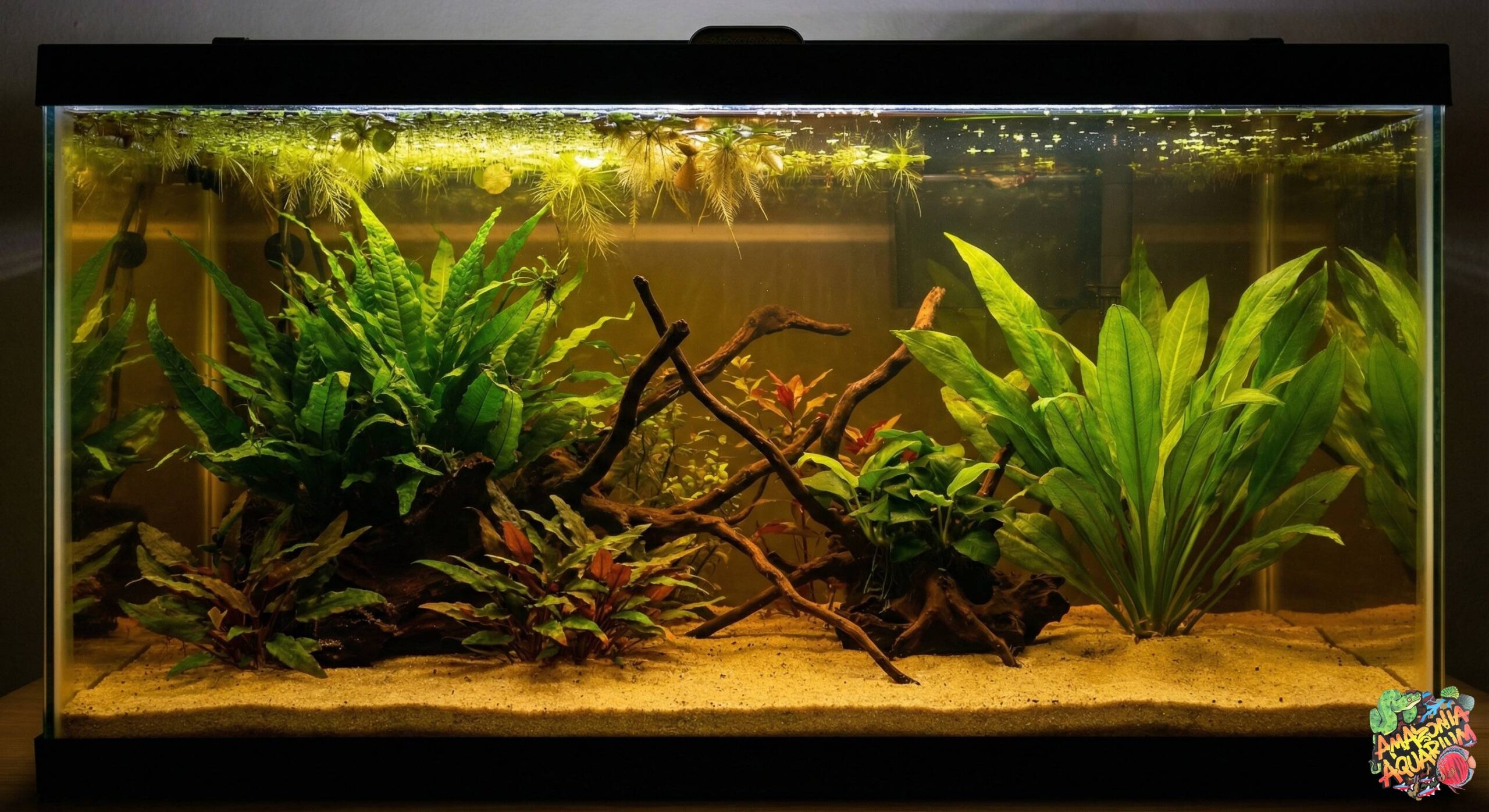
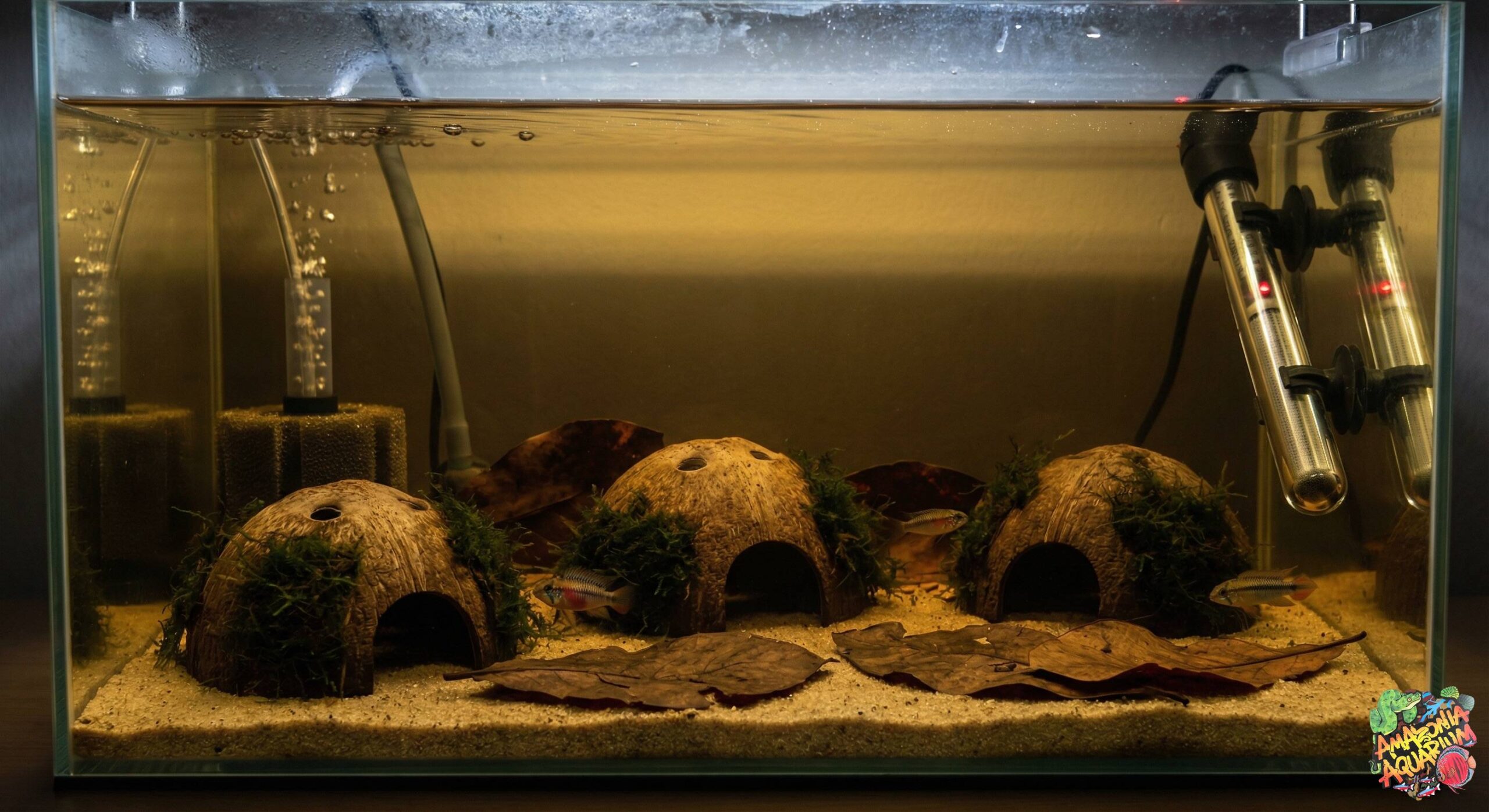
The non-negotiable element of a Kuhli tank is the substrate. Pangio kuhlii spends about a third of its life with its body partially or fully buried in fine sand, sifting through the top few millimetres for micro-invertebrates and organic debris. Coarse gravel, lava rock, or any substrate with sharp edges will abrade their underside, shred the pelvic fins, and lead to chronic bacterial infections around the barbels. Use a soft pool-filter sand (0.4–0.8 mm grain) at least 4 cm deep, or a fine smooth-pebble play sand. Black sand dramatically enhances the apricot banding; white sand washes them out.
Beyond the substrate, the next priority is cover. Kuhlis are diurnally shy — in a bare tank they will hide 22 hours of the day and starve within weeks. Provide several overlapping shelters: a cave formed by crossed driftwood, a cluster of dense-leaved plants (Cryptocoryne wendtii and Java fern do excellent work), a small terracotta pot laid on its side, and at least one ‘escape tube’ of opaque PVC buried under the sand. The escape tube is key — Kuhlis love to thread through enclosed spaces, and giving them a safe, predictable burrow dramatically reduces stress. Within two weeks of installing one, most Kuhli groups will begin emerging during the day to forage around the tube entrance.
Lighting should be subdued. Low-light plants (Anubias, Java fern, Crypts, floating frogbit) match the species’ preferences and create dappled shade. A 6-hour photoperiod is plenty. If you run a high-output planted-tank rig, add more floating plants or tint the water with tannins to cut the glare. Finally, lid the tank securely: Kuhlis are expert climbers of silicone seams and will absolutely escape through a gap the size of a pencil. Every experienced Sydney keeper has at least one ‘Kuhli on the lounge-room carpet at 6 am’ story.
Substrate
Fine pool-filter sand, 4–6 cm deep. Black enhances colour.
Tank Size
Minimum 75 L for a group of 5. 120 L+ strongly preferred.
Filtration
Gentle — sponge filter, baffled HOB, or canister with spray bar
Heater
50–100 W with accurate thermostat; target 26 °C year-round
Lighting
Low to moderate, 6-hour photoperiod. Floating plants ideal.
Cover
Driftwood tangle, Cryptocoryne thicket, 1+ opaque PVC tube
Leaf Litter
Indian almond leaves, replace weekly — lowers pH, releases tannins
Lid
Fully sealed with no pencil-sized gaps. Kuhlis will find any escape route.
Feeding Kuhli Loaches
In the wild, Kuhli Loaches are opportunistic micro-predators. They sift sand for bloodworms, mosquito larvae, copepods, and the soft organic mulch that accumulates among fallen leaves. In the aquarium they will happily take almost any sinking food, but they do best on a rotation that leans meaty. Build their diet around a high-quality sinking pellet (New Era, Hikari Vibra Bites, or Aqueon Bottom Feeder all work well in Sydney), supplemented three or four times a week with frozen bloodworms, brine shrimp, or daphnia. Live blackworms are an exceptional treat — Kuhlis will perform a coordinated feeding frenzy that is worth watching at least once — but source them carefully as wild-caught blackworms can carry parasites.
The single biggest feeding mistake is competition from faster fish. Kuhlis are surface-cautious and slow to rise; if you keep them with Corydoras, loaches of other species, or opportunistic tetras, the food will be gone before the Kuhlis emerge from cover. Always feed after lights-off, or use a feeding cup that sinks a pellet load directly onto the sand in a known corner of the tank. Within a few weeks the Kuhlis will begin associating that corner with food and will queue up at the appropriate hour, tails waving.
As an adult, a Kuhli Loach needs surprisingly little food — a group of eight 9 cm fish will happily eat from one generous feeding every 24–36 hours. Overfeeding is a common cause of bloat and sudden death in this species; if the sand looks dirty, skip the next feed. A lean, hungry Kuhli is a healthy, active Kuhli. A chubby one is usually on borrowed time.
Breeding
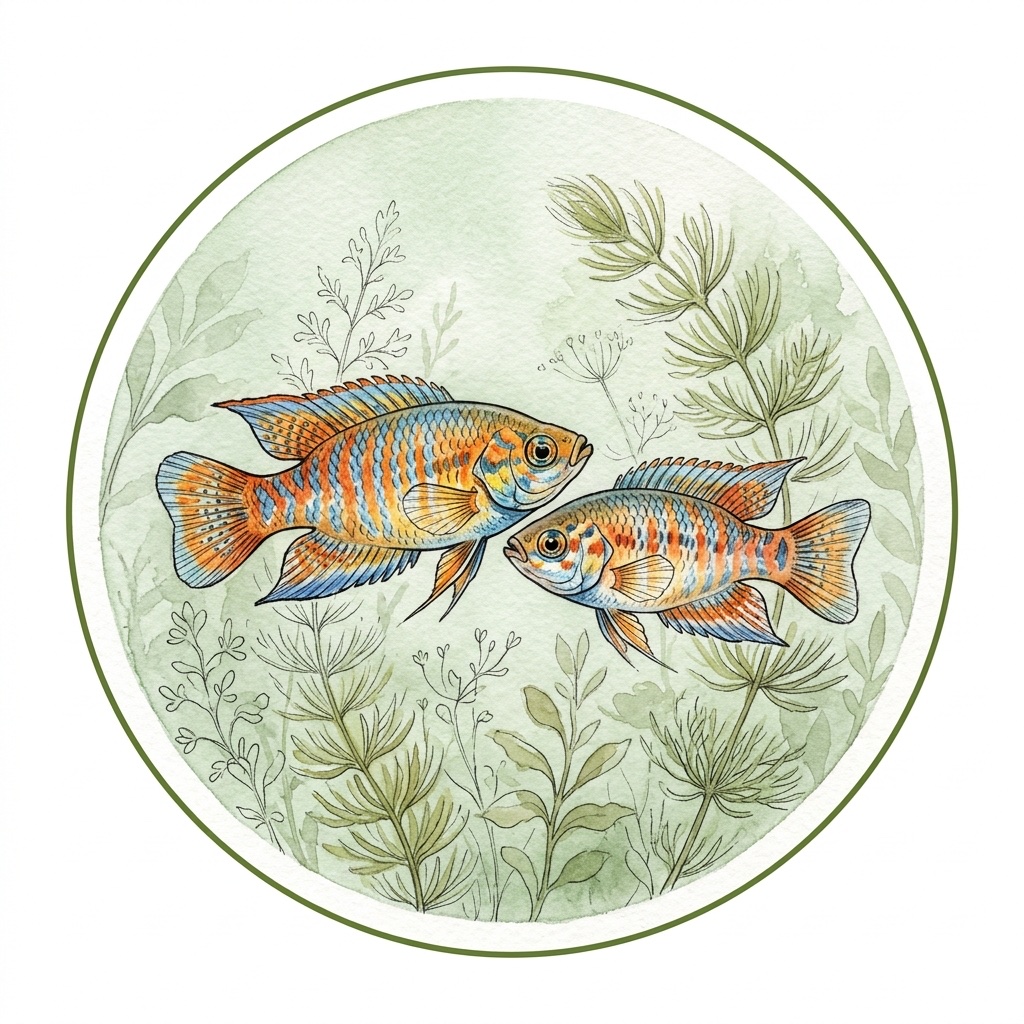
Day 0
Trigger
Cool water change drops temp 3 °C, mimicking monsoon
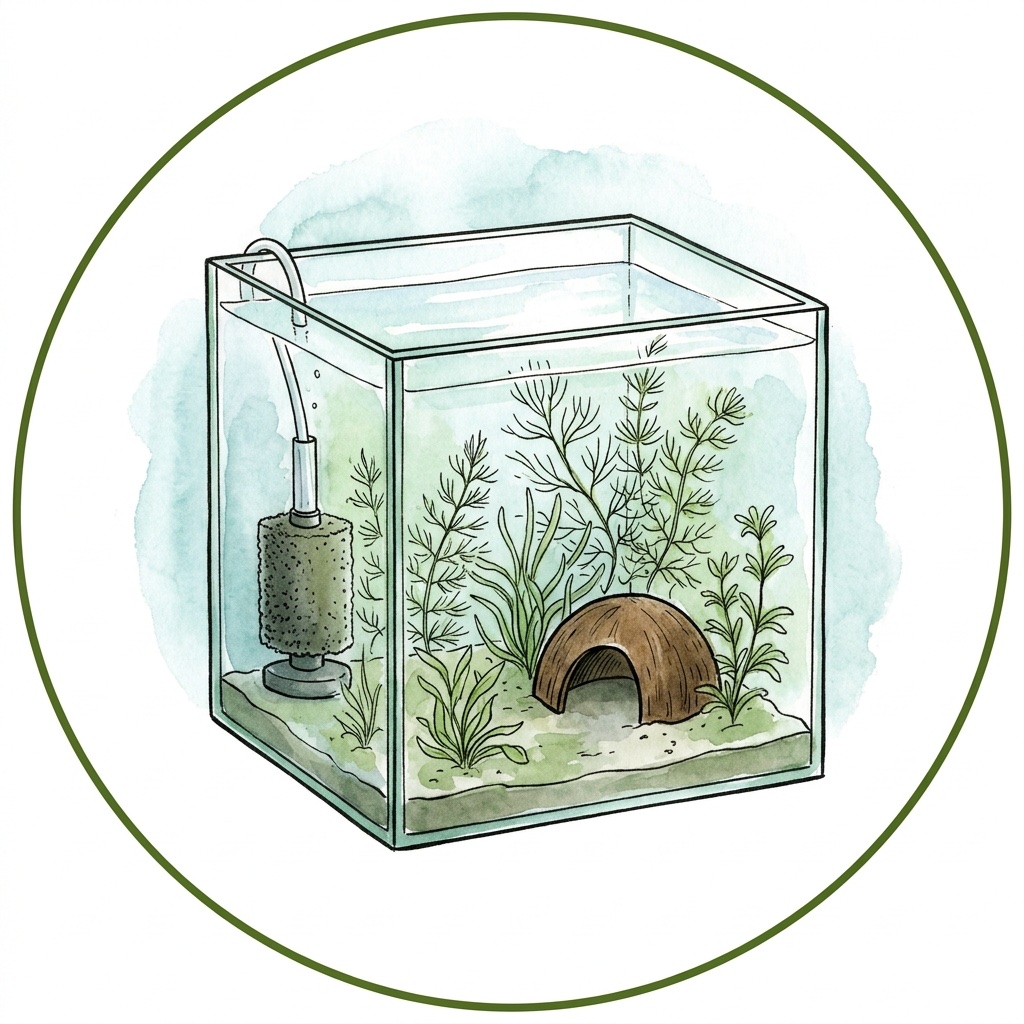
Day 1–2
Courtship
Males chase females in coiling, S-shaped lunges
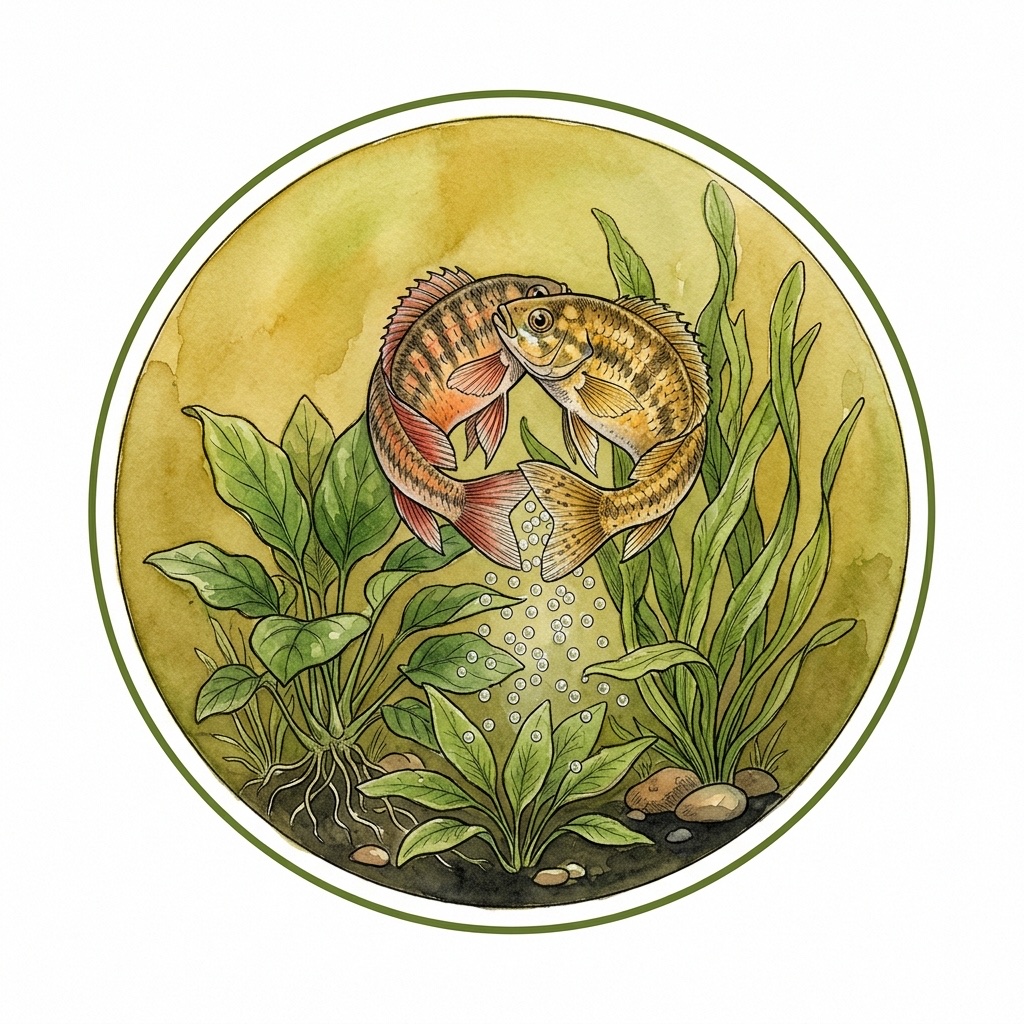
Day 2
Spawning
Female releases ~100 green adhesive eggs under floating cover
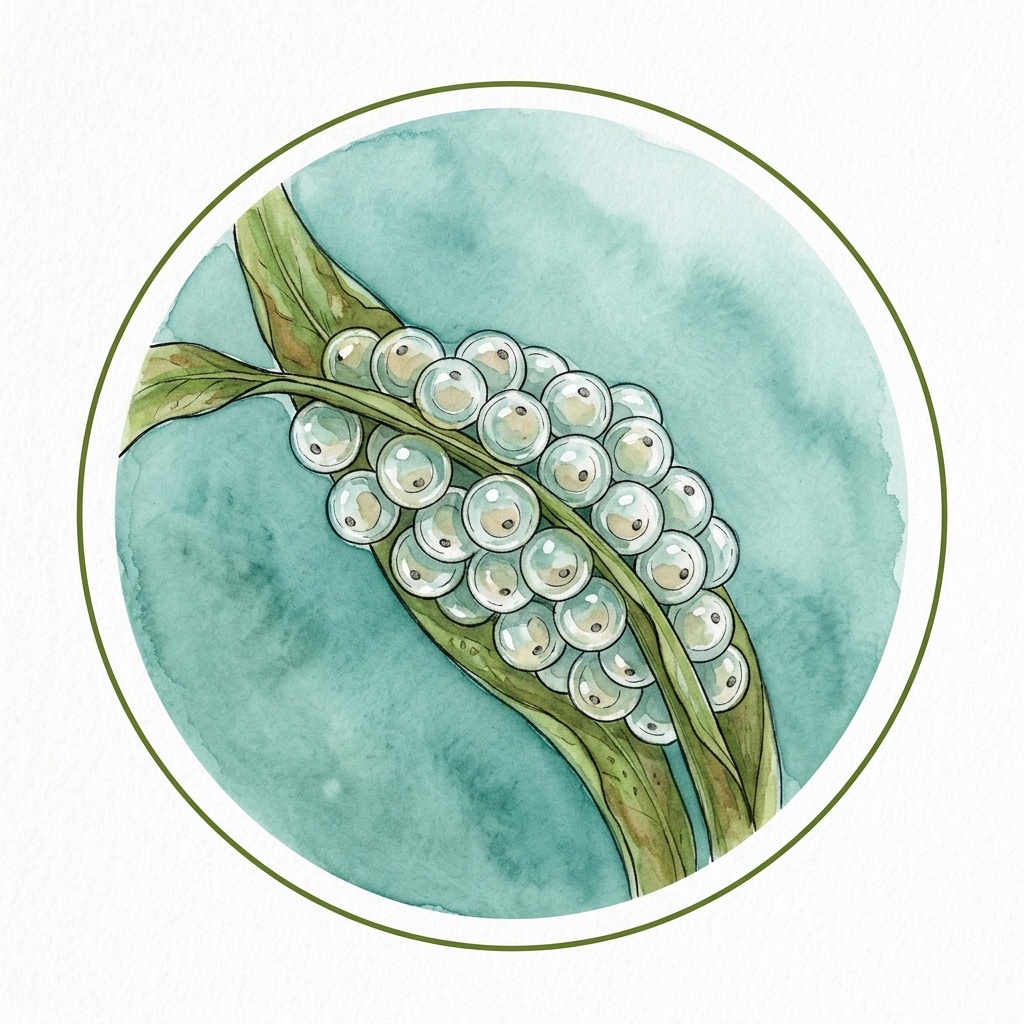
Day 3–4
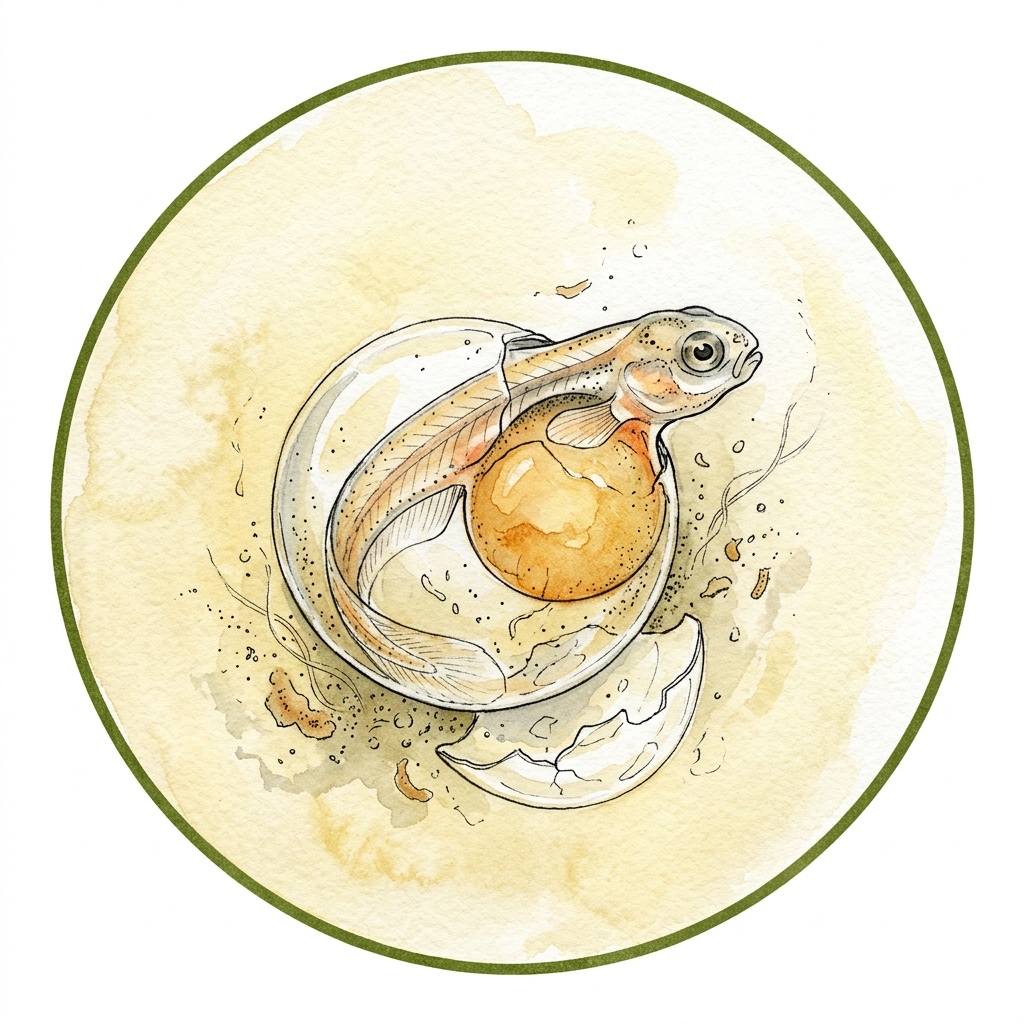
Hatching
Fry emerge at ~4 mm, transparent, with visible yolk
Day 7–30
Rearing
Fry on infusoria, then microworms, then baby brine shrimp
Trigger
Successful Kuhli spawning in captivity is tied almost entirely to environmental simulation. Experienced breeders drop the tank temperature from 28 °C to 25 °C over 24 hours using a large cool water change, simultaneously dosing a generous tannin boost from Indian almond leaves. In the wild this mimics the first heavy rainfall of the monsoon, when streams flood out into shallow leaf-litter overflow. Within hours of the drop, mature pairs will begin displaying.
Courtship
Courtship is vigorous and strange to watch. Males pursue gravid females in fast, coiling S-shaped dashes, sometimes wrapping their entire bodies around the female for a heartbeat at a time. Unlike most egg-laying species, Kuhlis display above the substrate rather than into caves — they rise several centimetres into the water column and circle one another in the open, often under a floating plant mat.
Spawning
The actual spawn lasts only a few minutes. The female releases a cloud of sticky, pale-green eggs — typically 80–150 at a time — which drift upward and adhere to the underside of floating plants, hornwort, or frogbit root masses. Males follow immediately behind, fertilising in the water column. The adhesive is extraordinarily effective: eggs that miss a plant almost always catch a piece of driftwood or filter intake on the way down.
Hatching
At 26 °C the eggs hatch in 24–36 hours. The fry are tiny — around 4 mm — and almost completely transparent apart from two black eyes and a glowing yolk sac. They hang vertically from plant leaves for a further 48 hours, absorbing yolk, before beginning to dart for food. Survival rate in a planted parent tank is usually under 5% because adults will eat their own fry; serious breeders move eggs or fry to a separate rearing tank within 12 hours of the spawn.
Rearing
Fry must be fed infusoria or green water for the first week, graduate to microworms in week two, and baby brine shrimp from day 14. They grow very slowly — it takes 4–5 months to reach 3 cm and a full year to reach sellable 6 cm juvenile size. Because of this slow grow-out, captive breeding is commercially unviable and almost all Kuhlis in the Sydney trade are either wild-caught from Sumatra or hormonally induced in Thai pond farms.
Community Companions
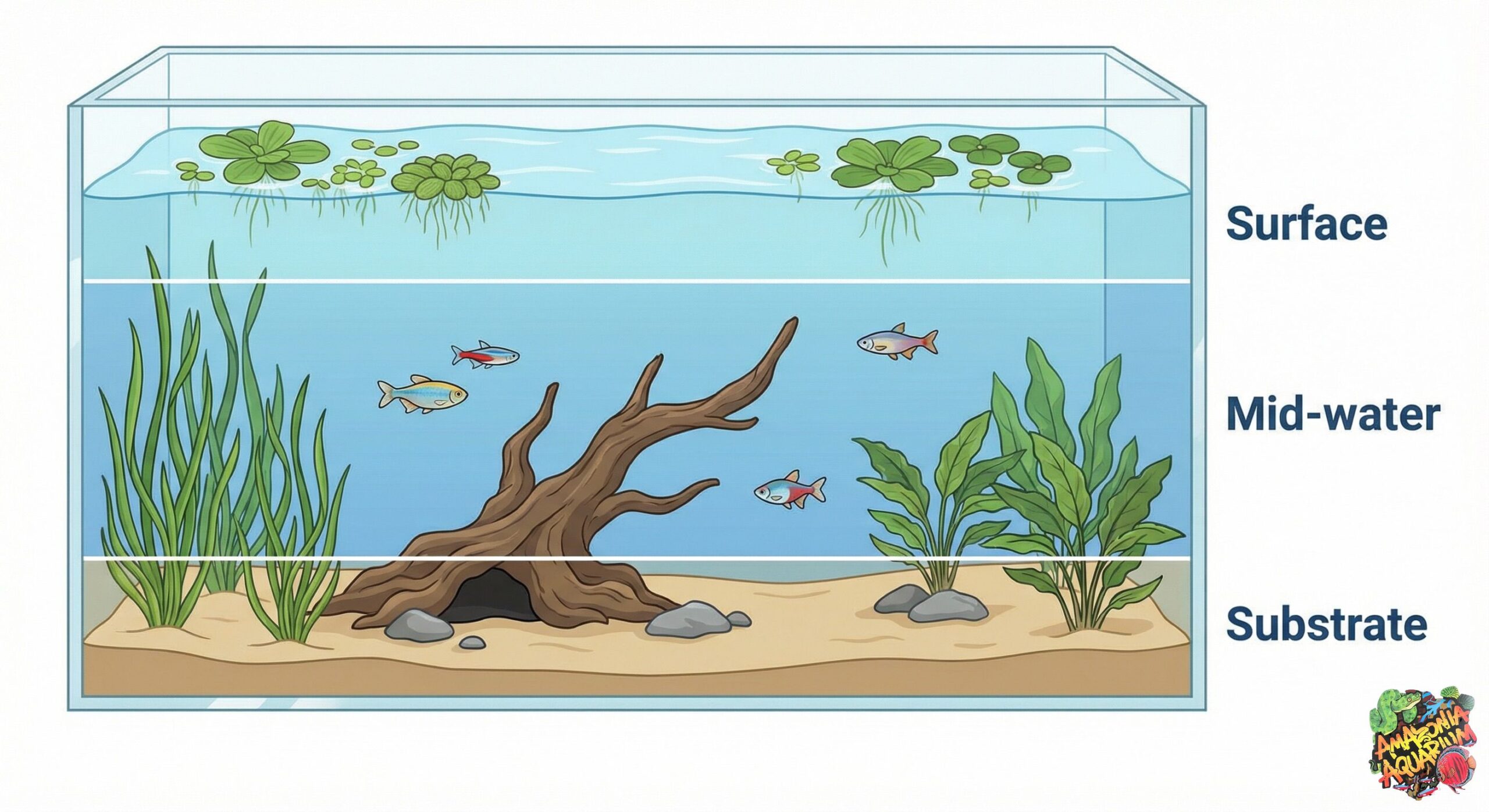
Kuhli Loaches thrive in a peaceful blackwater community built around three principles: everyone should be calm, everyone should respect the substrate, and no one should compete aggressively for sinking food. A mature 120 L planted tank holding a group of eight Kuhlis, a shoal of ten Cardinal Tetras, a pair of Sparkling Gouramis, and a cleanup crew of Amano Shrimp is one of the most balanced and biologically interesting tanks a Sydney hobbyist can keep.
Avoid the temptation to add ‘another bottom dweller’ to fill the floor. Corydoras will out-eat Kuhlis at the food bowl, and Clown Loaches — often recommended to beginners as a Kuhli ‘upgrade’ — will bully them relentlessly. The one substrate-level exception is the Dwarf Chain Loach (Ambastaia sidthimunki), which is diurnal while Kuhlis are mostly crepuscular. The two species time-share the floor beautifully and often form mixed-species shoals at dusk, which is a striking sight in a planted display. Within the family Cobitidae, this pairing is one of the great quiet pleasures of the hobby.
| Species | Why | |
|---|---|---|
| ✅ | Cardinal Tetra | Share soft-water blackwater requirements; occupy mid-water and ignore the Kuhlis completely |
| ✅ | Harlequin Rasbora | Peaceful mid-level schoolers, identical water needs, gentle feeders that do not out-compete Kuhlis |
| ✅ | Sparkling Gourami | Slow surface dweller, tiny mouth, blackwater-adapted; ignores the bottom entirely |
| ✅ | Pea Puffer | Surprisingly compatible in a densely planted tank — puffers stay mid-water and find the fast-moving Kuhlis uninteresting |
| ✅ | Cherry Shrimp | Adults are safe. Kuhlis will occasionally sample very young shrimplets but do not actively hunt them |
| ✅ | Amano Shrimp | Large enough to ignore; excellent clean-up crew in a Kuhli tank |
| ✅ | Otocinclus | Shy algae specialist; occupies glass and broad leaves rather than the sand |
| ✅ | Dwarf Chain Loach | Diurnal counterpart on the same substrate; the two species often shoal together by dusk |
| ❌ | Angelfish and larger cichlids | Will actively hunt Kuhlis as they emerge at dusk; snake-like swimming triggers the attack response |
| ❌ | Large Plecos (Common, Sailfin) | Compete aggressively for sinking food and will rasp algae off Kuhli skin in low-algae tanks |
| ❌ | Clown Loaches and other large botiid loaches | Out-compete Kuhlis for every scrap of food; also physically nip the smaller species |
| ❌ | Gold-spotted Gobies and freshwater puffers over 4 cm | Bottom-zone predators that treat worm-shaped fish as prey |
Quick Reference
| Scientific Name | Pangio kuhlii |
| Adult Size | 8–11 cm |
| Lifespan | 10–14 years |
| pH | 5.5–7.2 (ideal 6.2) |
| Temperature | 24–29 °C (ideal 26 °C) |
| Hardness | 0–8 dGH (very soft preferred) |
| Minimum Tank | 75 L for group of 5+ |
| Group Size | 5+ (8+ strongly recommended) |
| Substrate | Fine soft sand, 4–6 cm deep |
| Tank Level | Bottom, mostly nocturnal |
| Care Level | Easy with correct substrate and cover |
| Diet | Sinking meaty foods; feed after lights-off |
| Temperament | Peaceful, shy, strongly social |
| Breeding | Rare in captivity; triggered by cool, tannic water changes |
Related Products


Reviews
Clear filtersThere are no reviews yet.