
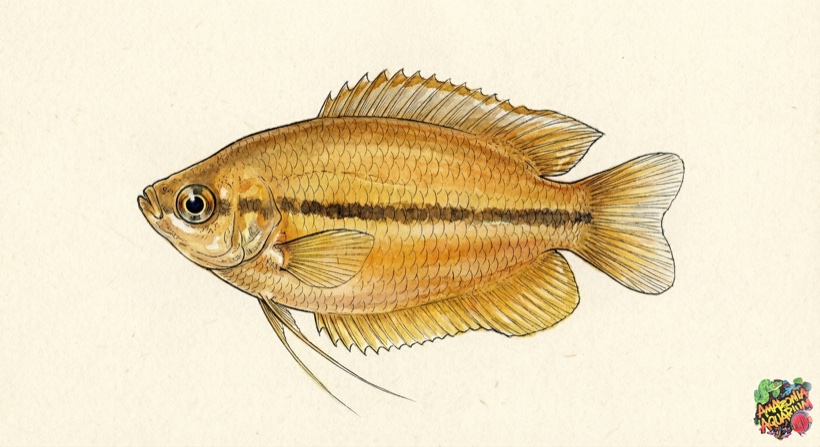
🪨 Species at a Glance
| Scientific Name | Trichogaster chuna (syn. Colisa chuna) |
| Family | Osphronemidae |
| Order | Anabantiformes |
| Origin | India, Bangladesh — Ganges and Brahmaputra river systems |
| Adult Size | 4–5 cm (1.6–2 in) |
| Lifespan | 4–8 years |
| pH Range | 6.0–7.5 |
| Temperature | 22–28 °C (72–82 °F) |
| Hardness (dGH) | 4–15 |
| Diet | Omnivore — micro-pellets, flakes, frozen daphnia, baby brine shrimp |
| Minimum Tank Size | 40 L (10 gal) for a pair |
| Care Level | Beginner–Intermediate |
| Temperament | Very peaceful, shy; best with calm species |
| Breeding | Bubble nest builder; male guards nest and eggs |
| Tank Position | Mid-water to surface |
| Availability | Common |
Meet the Species
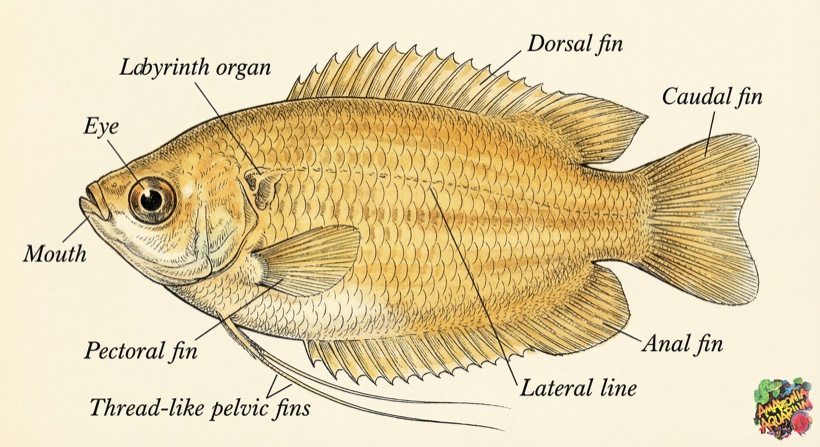
The name *Trichogaster chuna* carries history in both halves. *Trichogaster* derives from the Greek *trichos* (hair) and *gaster* (belly), a reference to the thread-like pelvic fins that are a hallmark of gourami anatomy — these filiform fins are packed with taste and touch receptors, and the fish trails them forward like extended antennae to explore its surroundings. The species epithet *chuna* comes directly from the Bengali word for the fish, acknowledging the local name used by fishers along the rivers of Bengal and Assam. The species was first formally described by Francis Buchanan-Hamilton in 1822, making it one of the earlier anabantoid fish to receive scientific attention.
For much of the twentieth century, the honey gourami was placed in the genus *Colisa* as *Colisa chuna*, and many older aquarium books still use this name. A molecular review of the Osphronemidae family in the early 2000s reassigned the labyrinth gouramis to *Trichogaster*, which is now the accepted genus for the dwarf gouramis (including the popular *T. lalius*). Aquarium literature is still catching up, so both names appear in print and online.
In the trade, the honey gourami goes by several names: sunset gourami, honey dwarf gourami, and occasionally the gold gourami — though the last name risks confusion with a colour morph of the three-spot gourami. The ‘honey’ name is the most evocative and the most widely used, capturing both the warm amber colour of the wild type and the fish’s characteristically gentle, unhurried disposition.
Visual Varieties
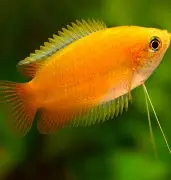
🟡 Wild Type
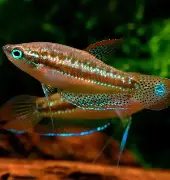
Soft yellow-gold body with a dark lateral stripe; males develop a rich honey-amber colouration under good conditions.
🟠 Sunset / Red Honey
The most commonly traded form: males display intense orange-red body colouration with the characteristic black throat and belly at breeding time.
🟤 Gold
A selectively bred line with a uniform deep golden-yellow body, reduced lateral striping, and a warm amber tone throughout.
🔸 Breeding Coloration (male)
Not a separate variety but a dramatic state change — breeding males develop an inky blue-black throat and belly contrasting with a bright orange body, one of the most striking colour displays in small freshwater fish.
In the aquarium trade, the sunset or red honey form dominates shelves, as the enhanced orange colouration shows well under bright store lighting. Wild-type specimens are less common in shops but are prized by enthusiasts for their more subtle charm. Colour intensity in all forms is strongly influenced by environment: a male kept in soft, tannin-stained water with floating plant cover and peaceful tankmates will display markedly richer hues than the same fish in a bare, brightly lit tank. Diet also matters — foods rich in carotenoids, such as frozen daphnia or quality colour-enhancing pellets, deepen both the gold and the orange tones.
Spot the Difference: Male & Female
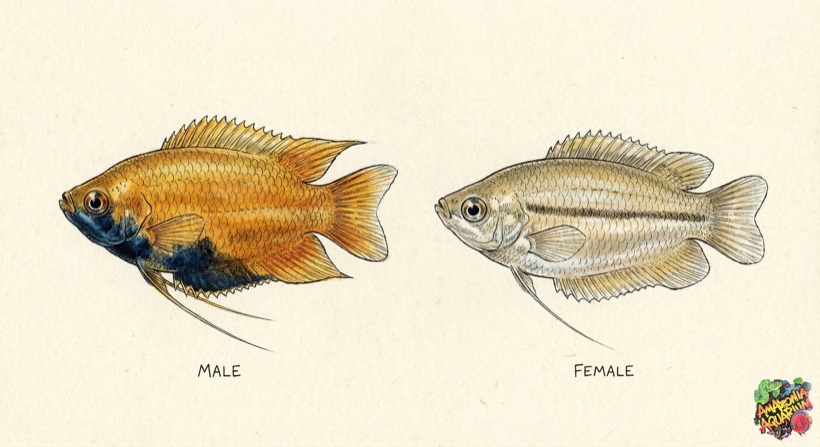
Sexing honey gouramis is straightforward in adult fish but can be deceptive in juveniles, where both sexes wear similar drab colouration and the dorsal fin differences are not yet pronounced. The most reliable cue in mature fish is dorsal fin shape: the male’s dorsal comes to a distinct point while the female’s is rounded — this difference is visible even in fish that are not yet displaying full breeding colours. Body colouration confirms the identification; once a male reaches maturity and the tank conditions are right, his throat and belly darken to blue-black while his body glows a deeper orange.
Females with ripe eggs develop a noticeably swollen abdomen that gives them a rounded profile from above. In a group of unsexed fish from a shop, look for the slimmer, more colourful individuals — those are likely males — and the plumper, paler ones, which are likely females.
| Feature | Male | Female |
|---|---|---|
| Body Colour | Rich honey-gold to orange; deep blue-black throat and belly when breeding | Paler cream-yellow; lacks the dark throat colouration entirely |
| Dorsal Fin | Pointed, extends to a sharp tip | Rounded at the tip |
| Body Shape | Slimmer, more streamlined | Rounder belly, noticeably fuller when gravid with eggs |
| Size | Slightly smaller on average, 3.5–4.5 cm | Slightly larger on average, up to 5 cm |
| Lateral Stripe | Often fades or becomes obscured as the fish colours up | More persistent, visible as a clear dark horizontal line |
| Behaviour | May perform slow, spreading fin display toward female; builds bubble nest | More stationary; retreats if not receptive |
Water Quality Requirements
6.0–7.5
ideal 6.8
22–28 °C
ideal 25 °C
4–15 dGH
Soft to moderately hard; soft water preferred for breeding
In the wild, honey gouramis inhabit the margins of slow rivers, oxbow lakes, flooded rice paddies, and densely vegetated ponds across northern India and Bangladesh. These habitats are typically warm, shallow, and seasonally variable in chemistry — which explains the species’ relatively broad tolerance for pH and hardness compared to, say, softwater Amazonian species. In practice, any tap water in the pH 6.5–7.5 range and below 15 dGH will produce healthy fish.
For breeding, softer and slightly more acidic conditions — pH 6.5–7.0, hardness below 8 dGH — are preferable. The labyrinth organ means surface access is non-negotiable: honey gouramis must be able to reach the water surface to gulp atmospheric air. Cover gaps are important in cold climates, as the fish breathes the air just above the water surface; cold draughts can chill the labyrinth chamber and cause respiratory illness. Always keep the surface air layer warm — maintain a lid on the aquarium.
Tank Requirements & Layout
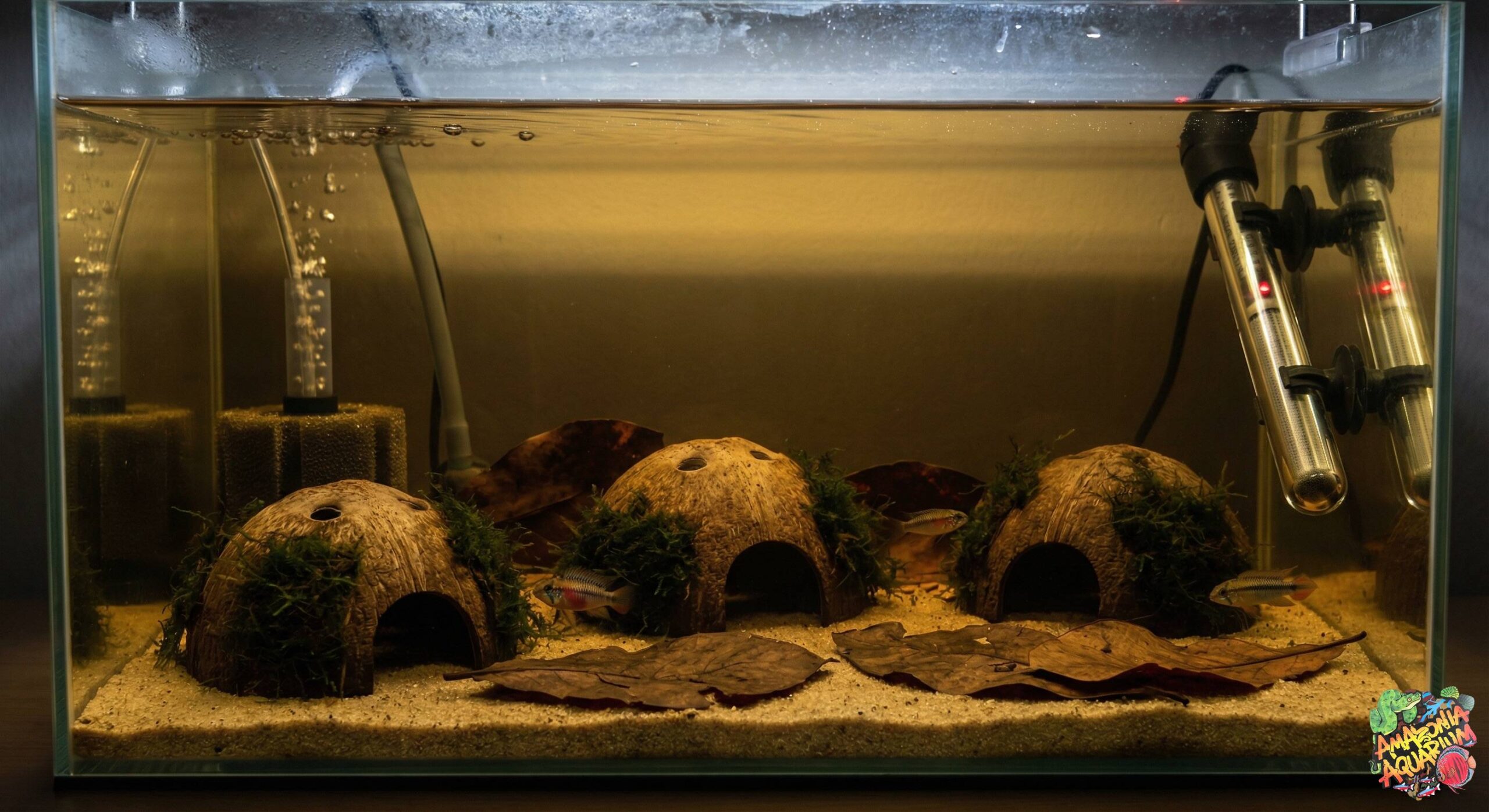
The honey gourami is a fish of still, densely vegetated water, and the aquarium should reflect this. A minimum 40-litre tank is suitable for a pair, though 60 litres gives the male adequate territory to build and defend a bubble nest without persistently harassing the female. Length matters more than height — a long, shallow footprint provides more swimming territory and easier surface access.
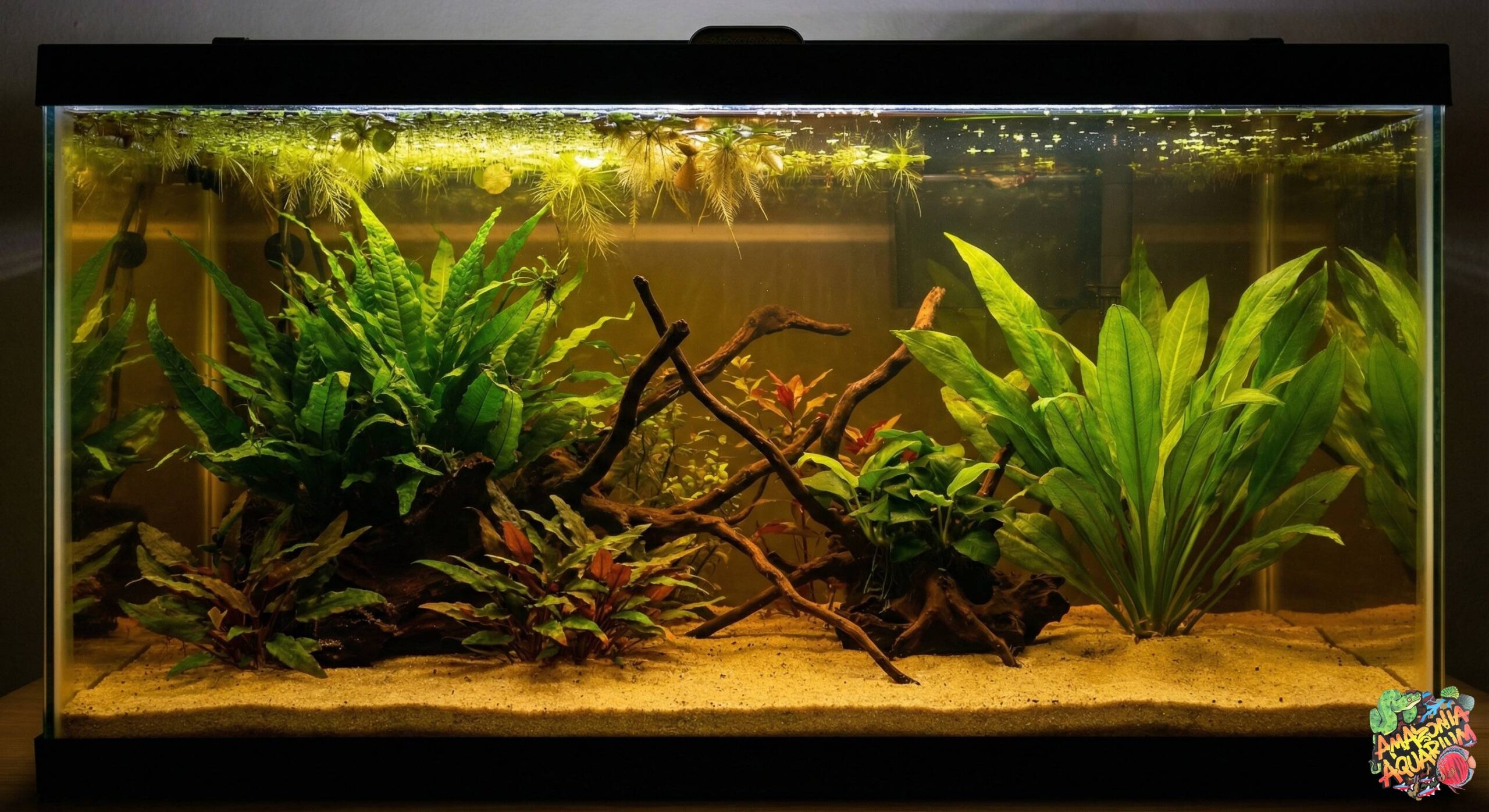
Planting should be dense, especially at the rear and sides, with open swimming space in the foreground. Tall stem plants like Vallisneria, Hygrophila, or Rotala provide cover and structure. Floating plants are highly recommended — Amazon frogbit, salvinia, or water lettuce creates the shaded, sheltered surface conditions under which males build their bubble nests and display their best colour. Avoid strong surface agitation: the bubble nest will be destroyed, and the fish will spend more time stressed than displaying.
Driftwood and leaf litter give the tank a naturalistic feel that suits the species well. A dark substrate — fine black sand or dark aquasoil — makes the honey and orange tones of a healthy male stand out dramatically. Avoid keeping honey gouramis with boisterous or fin-nipping species; their long pelvic fin filaments are irresistible targets, and the fish’s naturally timid temperament means stress will quickly lead to colour loss and susceptibility to disease.
Tank
40 L (10 gal) minimum for a pair; 60 L (16 gal) recommended for comfortable territory
Filter
Sponge filter or baffled HOB — gentle flow, no strong surface turbulence
Heater
50–100 W adjustable, set to 24–26 °C; use a guard if housing with curious fish
Lid / Cover Glass
Essential — prevents cold air draughts above the surface, which damage the labyrinth organ
Lighting
Low to moderate; floating plant cover to diffuse overhead light and encourage natural behaviour
Substrate
Fine dark sand or aquasoil — enhances colouration contrast and supports plant growth
Plants
Floating plants (frogbit, salvinia), stem plants (Hygrophila, Vallisneria), epiphytes (Anubias, java fern)
Thermometer
Verify heater accuracy; stability is more important than hitting a precise number
Feeding Schedule & Diet
Honey gouramis are omnivores with small, upturned mouths adapted for feeding at the surface and mid-water, picking insects and zooplankton from the underside of floating vegetation in the wild. In the aquarium, this translates to a preference for small-particle foods — micro-pellets, finely crushed flakes, or baby-sized granules rather than standard-size pellets, which the fish will struggle to consume and may reject.
A high-quality micro-pellet or nano granule should form the daily staple. Supplement three to four times per week with small frozen or live foods: frozen daphnia is an excellent choice (mirrors natural diet, high in fibre, helps prevent constipation), baby brine shrimp trigger the most enthusiastic feeding response, and micro bloodworm can be offered occasionally. Feed small amounts twice daily — honey gouramis are not greedy feeders and uneaten food in a small tank degrades water quality quickly. They may take a few days to settle in before feeding confidently, particularly in new tanks.
Breeding in Captivity
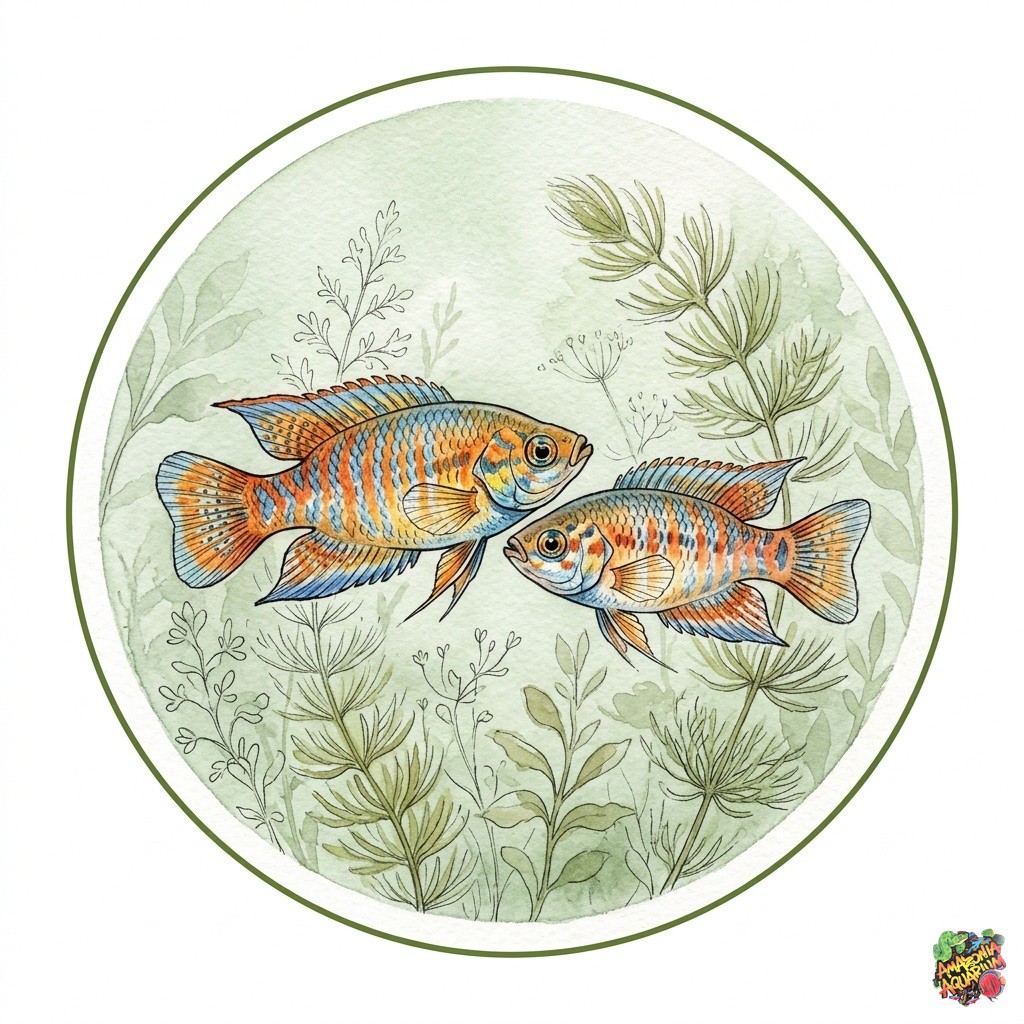
Week -1
Conditioning
Feed pair high-protein live and frozen foods
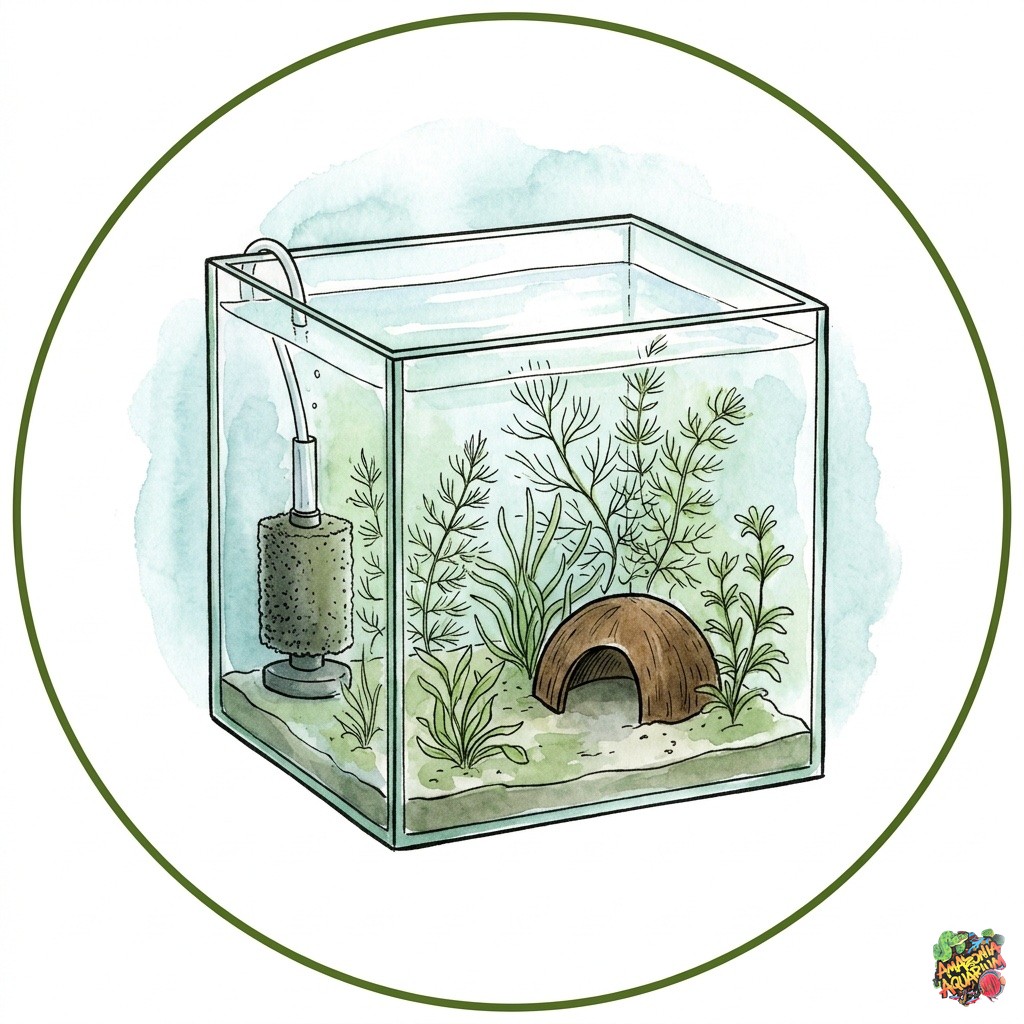
Day 0
Nest Building
Male constructs bubble nest beneath floating plants
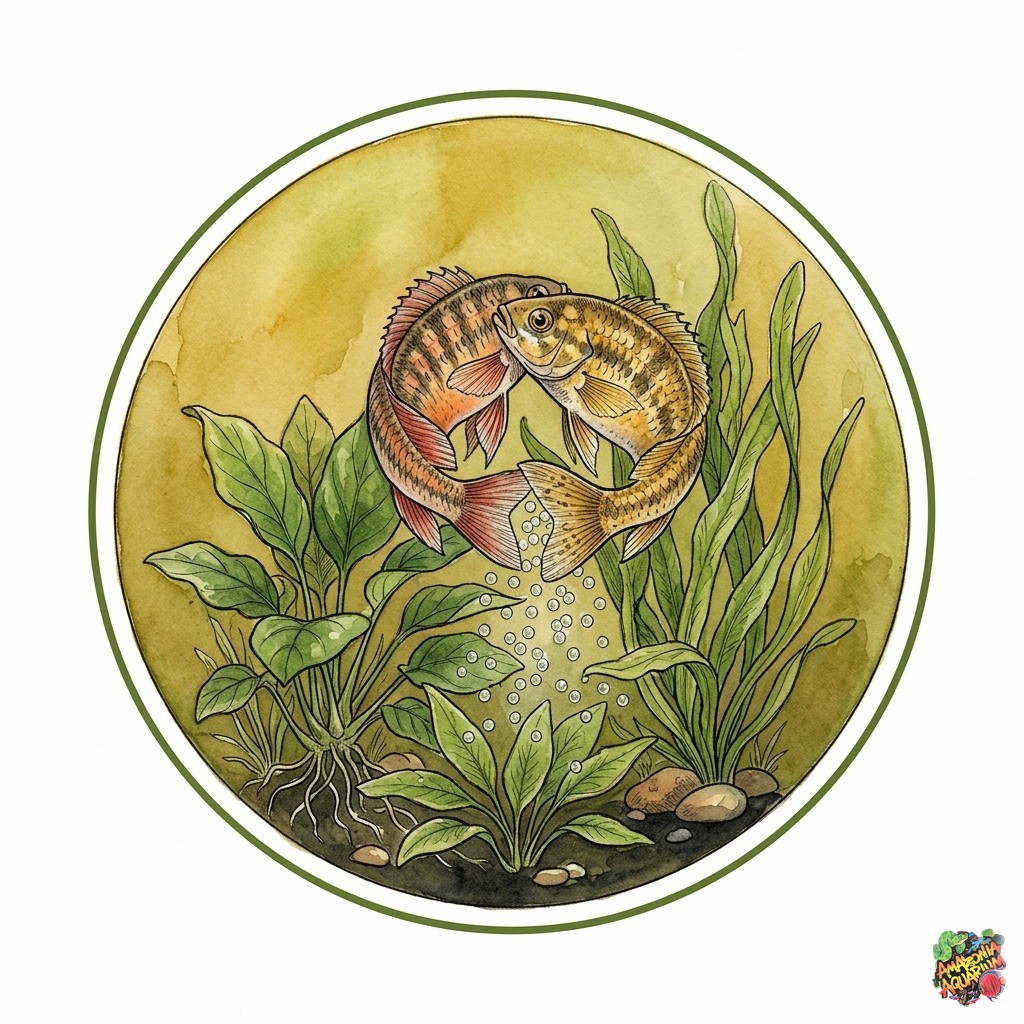
Day 1–2
Courtship and Spawning
Male displays, embraces female beneath nest
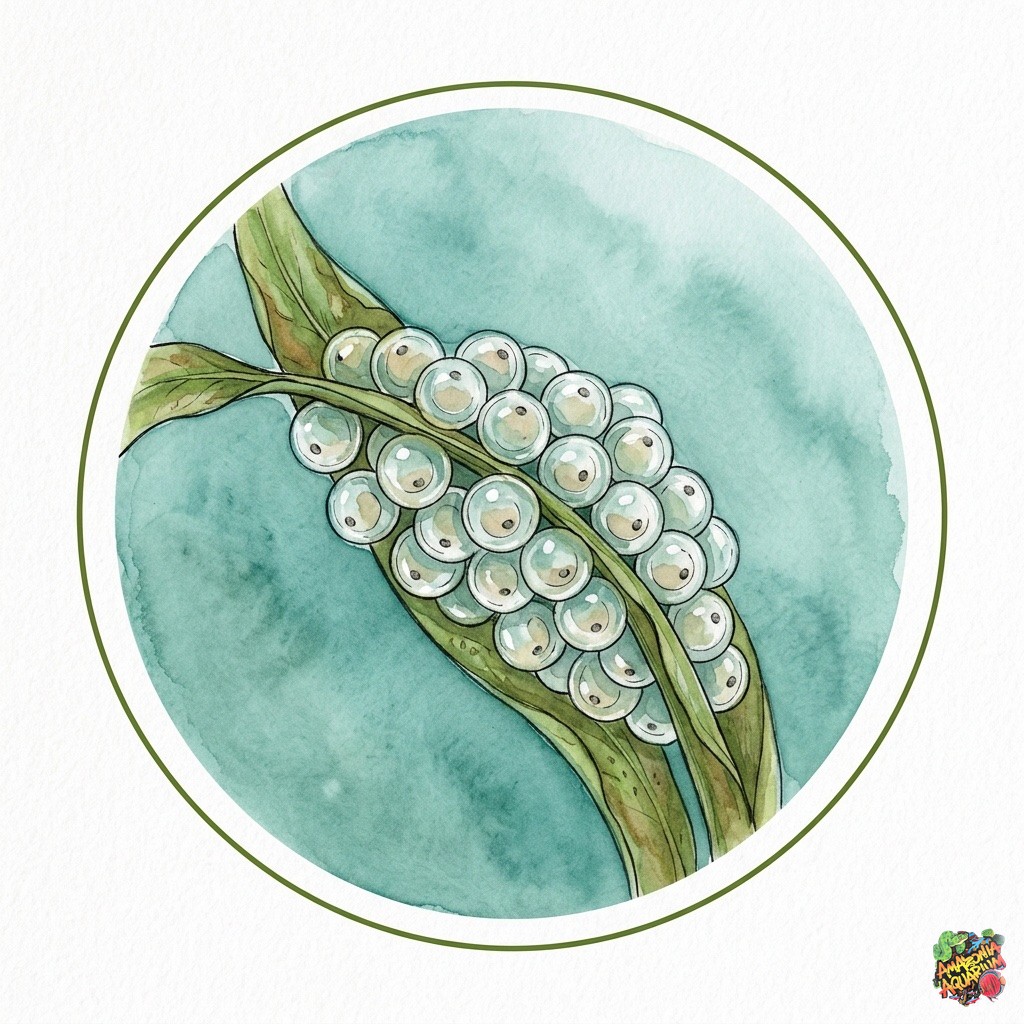
Day 2–3
Egg Guarding
Male guards nest; remove female to prevent harassment
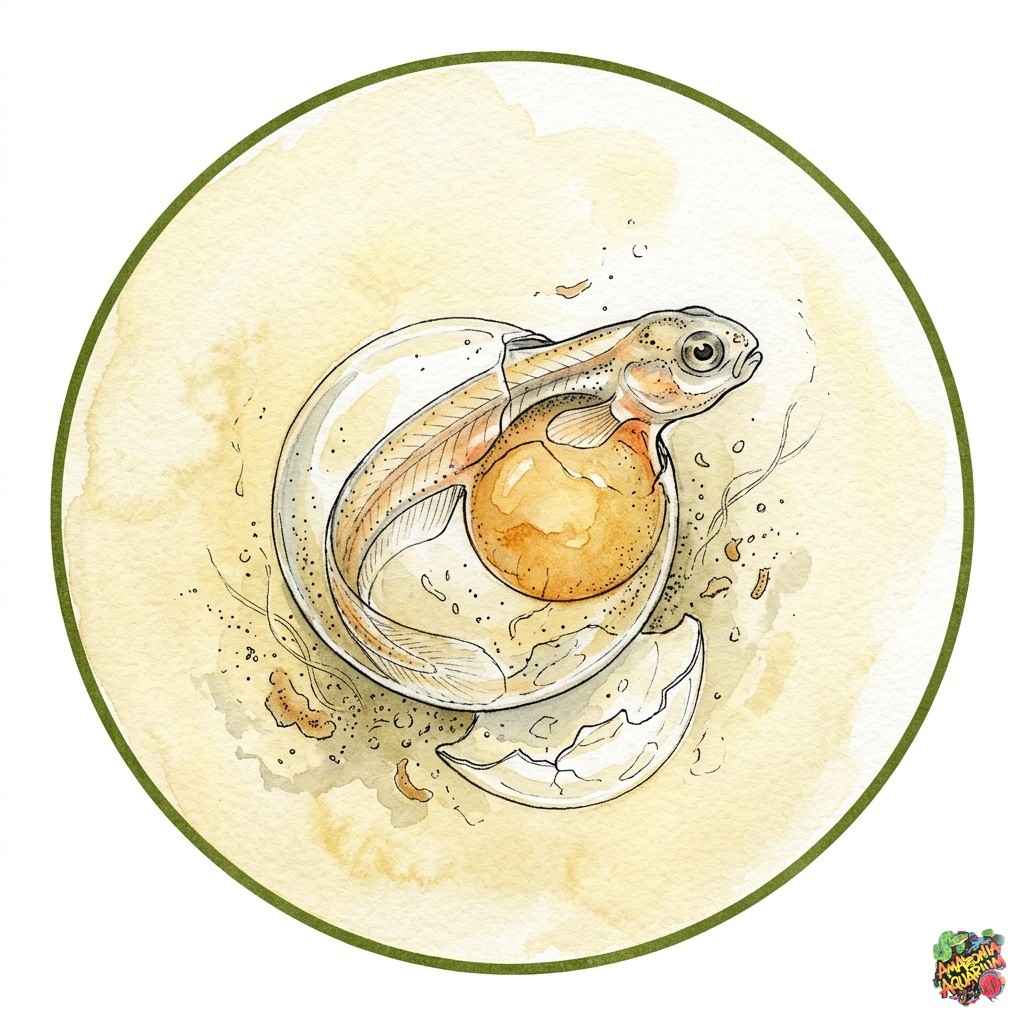
Day 3–4
Hatching
Eggs hatch; tiny fry visible hanging from nest
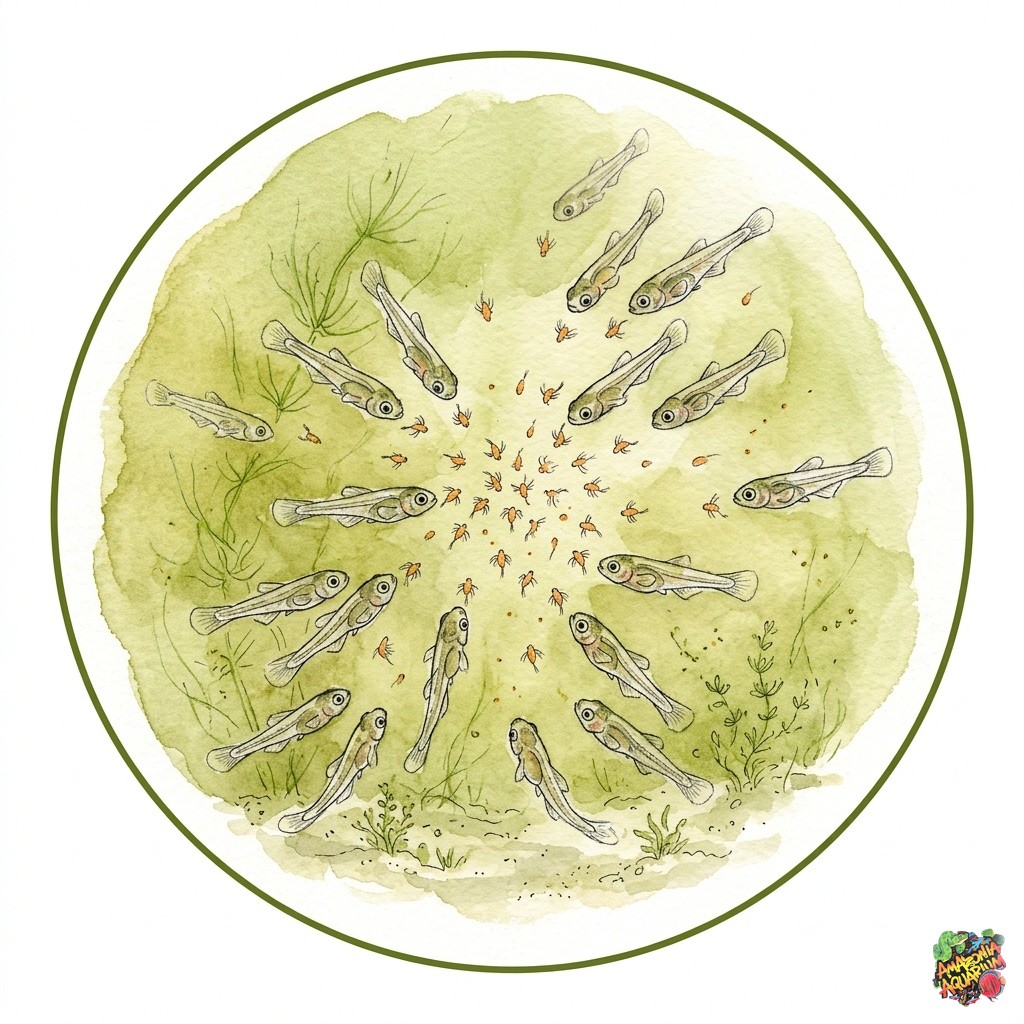
Day 5–7
Free Swimming
Fry become free-swimming; begin feeding infusoria
Conditioning
Condition the breeding pair separately for one to two weeks with live baby brine shrimp, daphnia, and small frozen bloodworm. The female should visibly round out with eggs. The male should be at peak colour — deep orange with a darkening throat. Raise the temperature to 26–27 °C in the intended breeding tank and ensure floating plant cover is in place.
Nest Building
Once the pair is introduced, the male will begin building a bubble nest at the water surface — typically anchored beneath or within floating vegetation. He blows individual saliva-coated bubbles that form a small raft or cluster. This process can take several hours to a couple of days. Do not disturb the tank during this period, as the male is easily startled off the nest.
Courtship and Spawning
The male performs a slow, spreading display with all fins extended, circling beneath the female. When she is receptive, the pair move beneath the bubble nest where the male wraps his body around the female in an embrace. She releases eggs (typically 20–60 per embrace) which he fertilises; the eggs float upward into the bubble nest. The process repeats over one to two hours until the female is spent, with 200–300 eggs total in a typical spawn.
Egg Guarding
After spawning the male becomes highly attentive to the nest, chasing the female away and catching any eggs that fall from the nest. Remove the female at this stage — she serves no further parental role and the male’s aggression toward her will intensify. Keep the tank very calm; sudden movements near the tank can cause the male to abandon the nest.
Hatching
At 26 °C, eggs typically hatch within 24–36 hours. The newly hatched fry hang vertically from the bubble nest, absorbing their yolk sac. The male continues to maintain the nest, catching fry that fall and returning them. Do not feed at this stage.
Free Swimming
Once fry are free-swimming and actively seeking food (usually 48–72 hours after hatching), begin feeding with infusoria, commercially prepared liquid fry food, or vinegar eels. After one week, introduce freshly hatched baby brine shrimp as the primary food. Remove the male at this point, as paternal guarding behaviour fades and he may begin eating fry. Growth is relatively fast and fry become recognisable juveniles within four to six weeks.
Quick Reference
| Scientific Name | Trichogaster chuna |
| Family | Osphronemidae |
| Origin | India, Bangladesh |
| Adult Size | 4–5 cm |
| Lifespan | 4–8 years |
| pH | 6.0–7.5 (ideal 6.5–7.0) |
| Temperature | 22–28 °C (ideal 24–26 °C) |
| Hardness | 4–15 dGH |
| Min Tank | 40 L for a pair |
| Care Level | Beginner–Intermediate |
| Temperament | Very peaceful, shy |
| Diet | Omnivore; micro-pellets, daphnia, baby brine shrimp |
| Breeding | Bubble nest; male guards |
| Tank Zone | Mid-water to surface |
| Special Note | Labyrinth organ — needs surface air access |
Choosing Tank Mates
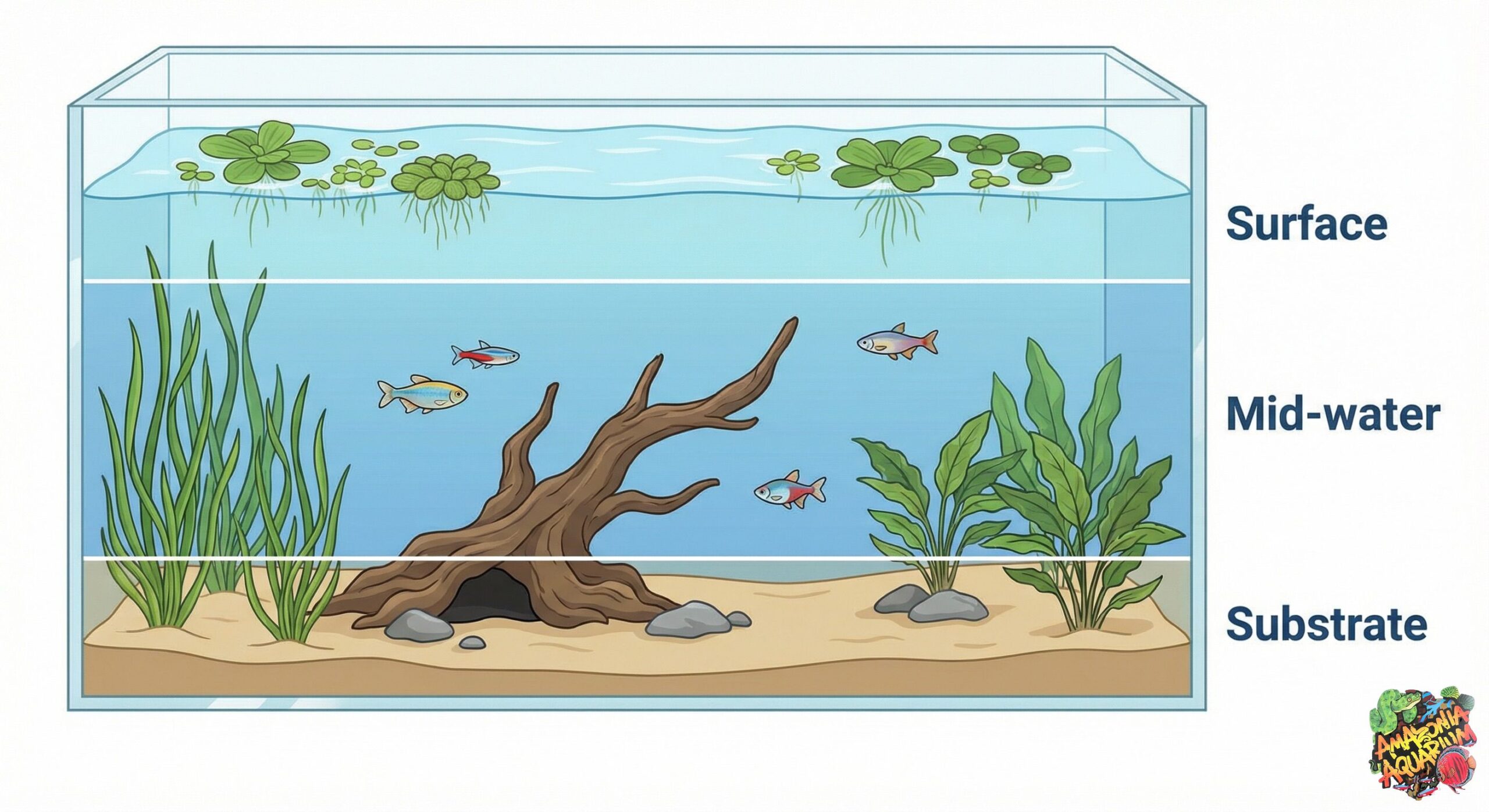
The honey gourami’s defining characteristic in a community context is its genuine peacefulness — it is one of the few fish that can be kept with confidence alongside tiny nano species like ember tetras and pygmy corydoras without any risk of predation. However, its timidity is also its vulnerability. A honey gourami in a tank with boisterous, nippy, or even persistently active fish will spend most of its time hiding and will never display its best colour. The goal is a quiet, unhurried tank: peaceful schooling fish at the mid-level, gentle bottom-dwellers, and floating plant cover above. In the right environment, a pair of honey gouramis becomes the undisputed centrepiece — the male’s display colours and bubble-nest behaviour giving the tank a living-nature-documentary quality that is hard to match.
| Species | Why | |
|---|---|---|
| ✅ | Neon Tetra | Classic community combination — peaceful schoolers that occupy lower water levels and don’t compete for surface space |
| ✅ | Cardinal Tetra | Shares soft-water preference; peaceful, similarly sized, and creates beautiful colour contrast |
| ✅ | Ember Tetra | Tiny, entirely peaceful nano tetra; warm orange tones complement the gourami’s colouration perfectly |
| ✅ | Sterbai Cory | Gentle bottom-dwellers that clean up fallen food and completely ignore surface-dwelling gouramis |
| ✅ | Rummy Nose Tetra | Tight schooling behaviour and peaceful temperament; won’t pester the gourami |
| ✅ | Otocinclus | Tiny algae eaters that coexist peacefully and share soft-water preferences |
| ✅ | Pygmy Corydoras | Diminutive, peaceful bottom fish that complement the gourami without competing for territory |
| ✅ | Harlequin Rasbora | Peaceful mid-level schoolers with overlapping water parameter requirements |
| ❌ | Tiger Barb | Notorious fin-nippers; will target the honey gourami’s long pelvic fin filaments relentlessly |
| ❌ | Betta (Siamese Fighting Fish) | Male bettas will attack other labyrinth fish; females may still harass and stress the timid gourami |
| ❌ | Larger Cichlids (e.g. Convict, Jewel) | Aggressive territorial cichlids will intimidate or injure the peaceful, timid honey gourami |
| ❌ | Serpae Tetra | Known fin-nippers; the long pelvic filaments of the gourami are a constant target |
Acclimation & First-Week Care
Proper acclimation prevents shock and greatly improves survival. Never rush this process.
Step-by-Step Acclimation
- Float the sealed bag in your aquarium for 15–20 minutes to equalise temperature.
- Open the bag and roll down the edges to create a floating collar.
- Drip acclimation: Add approximately ¼ cup of tank water to the bag every 5 minutes for 20–30 minutes.
- Net and release — gently net the fish/shrimp and place them into the aquarium. Discard the bag water; never pour it into your tank.
First-Week Checklist
- Keep lights dimmed for the first 24–48 hours to reduce stress.
- Floating plants (Salvinia, Frogbit) provide immediate cover and reduce stress.
- They may spit food initially — try micro pellets or crushed flakes.
- Monitor ammonia and nitrite daily — any spike above 0.25 ppm warrants an immediate 25% water change.
- Observe for signs of disease (white spots, clamped fins, lethargy) and quarantine if needed.
Sydney Keeper Tips
Keeping Honey Gouramis in Sydney comes with specific advantages and challenges. Here’s what local keepers should know.
Sydney Tap Water
Sydney tap water suits Honey Gouramis well — they’re adaptable to pH 6.0–7.5. As labyrinth fish, water surface access matters more than exact chemistry. Ensure a gap between water surface and lid.
Seasonal Considerations
Honey Gouramis prefer warm water (24–28°C). Sydney’s winters are fine with a heater, but avoid placing their tank in draughty spots — they’re sensitive to cold air at the water surface where they breathe.
Local Tips
- Floating plants are essential — Salvinia and Frogbit are available at most Sydney shops and provide the surface cover Gouramis crave.
- Males build bubble nests at the surface — a gentle filter flow helps nests stay intact.
- Don’t confuse the true Honey Gourami (Trichogaster chuna) with the ‘Honey’ colour variant of the Three-Spot Gourami.
Frequently Asked Questions
Are Honey Gouramis aggressive?
Can I keep just one Honey Gourami?
Why is my Honey Gourami building a bubble nest?
Do they need surface access?
What’s the difference between Honey Gourami and ‘Honey’ Dwarf Gourami?
Related Products

Reviews
Clear filtersThere are no reviews yet.