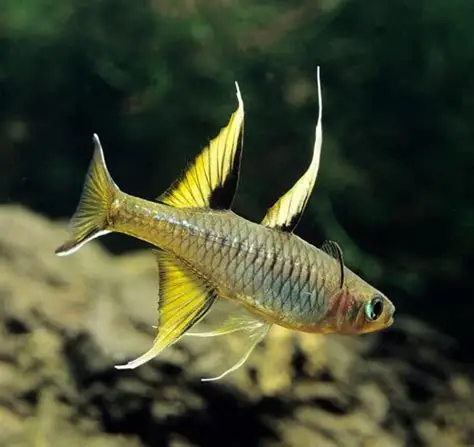
🪨 Species at a Glance
| Scientific Name | Pseudomugil signifer |
| Author & Year | Kner, 1866 |
| Family | Pseudomugilidae |
| Order | Atheriniformes |
| Origin | Eastern Australia (Cape York QLD south to Hawkesbury River NSW) |
| Adult Size | 5–6 cm (2.0–2.4 in) |
| Lifespan | 3–5 years |
| pH Range | 6.5–8.5 (exceptionally tolerant) |
| Temperature | 18–28 °C (64–82 °F) |
| Hardness (dGH) | 8–25 (hard water tolerant) |
| Salinity | Freshwater to brackish SG 1.000–1.005 |
| Diet | Micro-carnivore — flake, micro-pellet, frozen daphnia/BBS, live mosquito larvae |
| Minimum Tank Size | 60 L for a pair/trio; 80 L+ for a proper school of 8+ |
| Care Level | Beginner — one of the toughest native rainbowfish |
| Temperament | Peaceful, tightly schooling, active display among males |
| Breeding | Egg-scatterer — daily spawning on fine-leaved plants and spawning mops |
| Tank Position | Top to middle |
Where the Name Comes From
The scientific name Pseudomugil signifer was assigned by the Austrian ichthyologist Rudolf Kner in 1866, working from specimens collected during the pioneering oceanographic expeditions of the mid-nineteenth century along the eastern coast of Australia. The genus name Pseudomugil is a Latinised compound meaning ‘false mullet’ — a nod to the superficial resemblance of these small fish, with their torpedo body, forked tail, and upturned mouth, to the true mullets of the unrelated family Mugilidae. The species epithet signifer means ‘standard-bearer’ or ‘ensign’ in Latin, a reference to the flagged, elongated fins that males carry into courtship display. The picture Kner evidently had in mind was a tiny Roman legionary, dorsal and anal fins raised like banners over his back, charging proudly through the schooling group. It is an oddly fitting name for a fish whose entire personality is built around the display of those flagged fins.
The common name Pacific Blue Eye is the name most Australian aquarists, field biologists, and Landcare volunteers actually use in everyday conversation. ‘Pacific’ is a geographic marker that neatly distinguishes this species from its freshwater-only cousins of the Northern Territory monsoonal rivers — Pseudomugil gertrudae, Pseudomugil tenellus, Pseudomugil mellis — because P. signifer is the blue-eye of the eastern Pacific-facing drainages of Queensland and New South Wales. ‘Blue Eye’ is the universal common name across the entire family Pseudomugilidae: every species shares that intense iridescent ring around the iris, produced by guanine crystals in the ocular scales that refract light into a shimmering electric blue. In Pseudomugil signifer, the ring is particularly sharp and particularly silvery-blue, and in a well-lit planted tank it seems to glow even at the far end of the aquarium.
You will also see this species sold in Australian aquarium stores under a few alternative names: Pacific Blue-Eye, Blue-Eye, Southern Blue-Eye, Signifer Blue-Eye, and occasionally the regional Aboriginal name recorded in coastal wetlands surveys. In Victoria, Tasmania, and southern New South Wales — outside the species’ natural range — hobbyist stock is often captive-bred from Hawkesbury or Sydney-basin lineages, and is sometimes labelled as ‘Southern form’ to distinguish it from the taller-bodied, slightly more colourful Queensland populations. All point to the same species, and all refer to Kner’s original 1866 description.
Taxonomically, Pseudomugil sits within the family Pseudomugilidae — the Blue-Eyes — which is closely related to but taxonomically distinct from Melanotaeniidae, the larger-bodied rainbowfishes. Both families sit within the order Atheriniformes, the silversides, which radiated across the freshwaters of Australia and New Guinea as the Australian continent drifted northwards and as sea-level changes repeatedly isolated inland drainages from the coast. The blue-eyes are distinguished by their smaller adult size, slender body shape, prominent iridescent eye ring, and reduced lateral line. Pseudomugil signifer itself is unusual even within its own family because it has evolved a remarkable physiological plasticity — populations in estuarine habitats near river mouths tolerate fully brackish water, while populations only a few kilometres upstream in pure freshwater creeks never encounter salt at all. Both groups interbreed freely and are considered the same species. This flexibility is genuinely rare among rainbowfish and is one of the main reasons signifer is such a well-suited aquarium and pond species.
Setting Up Your Aquarium
Pseudomugil signifer succeeds in almost any sensible planted tank, but it shines in two specific setups: a well-planted indoor display tank of 80 to 120 litres, or an outdoor garden pond anywhere along the Australian east coast. Both are legitimate ways to keep the species, and each plays to different aspects of its behaviour.
For the indoor display, an 80-litre tank is the realistic minimum for a proper school of eight to ten fish, and 100 to 120 litres is substantially better if you want to see real schooling behaviour develop. Width and length matter more than height: signifer is an active horizontal swimmer that uses the full upper two-thirds of the tank for courtship display, and a long, shallow footprint reads this behaviour far better than a narrow, tall cube. A standard 90 x 45 x 45 cm tank is almost perfect; anything wider is a bonus. Unlike sensitive soft-water blackwater species, the Pacific Blue Eye does not need tannin-stained water, does not need aquasoil pH buffering, and does not need particularly gentle flow. This makes tank setup refreshingly straightforward.
For substrate, a fine dark sand or pea gravel dramatically improves flank colour by contrast, but signifer will live perfectly well on almost any substrate — including plain quartz gravel from a hardware store. The aesthetic win is worth the extra cost of dark-toned substrate. Planting should be generous but not oppressive. Plant the back and sides with a mixture of stem plants — Vallisneria, Limnophila, Myriophyllum, Hygrophila polysperma — and anchor epiphytes (Java fern, Anubias, Bucephalandra) to driftwood in the mid-ground. Most importantly for this species, include floating plants. Amazon frogbit, red root floater, salvinia, or locally native duckweed species all work. Floating plants diffuse overhead lighting into the dappled light signifer prefers, they create the upper-water-column cover that males use as launch pads for display, and their trailing roots act as one of the primary egg-deposition sites during spawning. Leave an open swimming corridor across the front two-thirds of the tank so the school has space for lateral movement.
Driftwood is optional but visually strong. A single piece of spiderwood or malaysian driftwood provides vertical structure and anchor points for epiphytes without altering water chemistry. Tannin-stained blackwater aesthetics are not required for signifer — unlike gertrudae, this species thrives equally in clear, slightly alkaline water, which opens up a much wider aquascape palette.
Lighting should be moderate. A standard planted-tank LED on a six-to-eight-hour photoperiod is ideal. Floating-plant cover will automatically dial the intensity down to the level the fish prefers. Very bright light without floating-plant shelter makes the school hug the lower third of the tank and reduces male display frequency; a softer, dappled lighting regime produces a tank where the school moves freely across all levels and the males display openly all day.
For the outdoor pond option — which is genuinely one of the best things you can do with this species in Australia — a lined or pre-formed garden pond of 200 to 500 litres, partially shaded by pond plants, can support a breeding colony indefinitely. The east coast climate from Brisbane down to Sydney falls comfortably inside the species’ natural temperature tolerance; signifer overwinters fine in Sydney garden ponds without a heater, provided the pond does not literally freeze (which almost never happens at that latitude). Stock the pond with hornwort, water lilies, and a floating mat of azolla or frogbit. Mosquito larvae in the pond become an endless live-food buffet for the fish, and the colony will breed quietly throughout the warmer months without any intervention. A fine mesh cover prevents predation by kookaburras and butcherbirds. This is one of the most low-effort, highest-reward ways to keep a native Australian fish in Australia, and for any aquarist with a backyard it is strongly recommended as a complement to the indoor display tank.
A realistic equipment budget for a new 100-litre signifer display tank, buying everything new in Australia, is approximately: 180–250 AUD for the tank and stand; 50–80 AUD for a planted LED light; 50 AUD for a heater and thermometer; 40–60 AUD for a nano hang-on-back or internal filter; 40–80 AUD for sand or fine gravel substrate; 80–150 AUD for plants, epiphytes, and floaters; 30–50 AUD for driftwood; plus basic water-conditioner and test kit. Total cost comes in around 500 to 700 AUD including a starter school of ten to twelve fish at twelve dollars each. For the pond option, a pre-formed 300-litre pond liner plus plants and a starter colony runs around 350 to 500 AUD — genuinely one of the cheapest ways to enjoy native Australian fish.
Tank
Minimum 60 L for a trio; 80–120 L strongly recommended for a proper school of 8+ with full display behaviour
Filter
Sponge filter, nano HOB, or small canister — signifer tolerates moderate flow; breeding tanks benefit from sponge filters for fry safety
Heater
50–100 W heater set to 24 °C for indoor tanks; unheated tanks are fine year-round in Brisbane, Sydney summer. Not required at all in outdoor east-coast ponds
Lighting
Moderate planted LED with floating-plant diffusion — avoids washout of the silvery flanks while still supporting plant growth
Substrate
Fine dark sand or pea gravel for colour contrast. Aquasoil not required — standard substrates work perfectly
Plants
Stem plants (Vallisneria, Limnophila, Myriophyllum), epiphytes (Java fern, Anubias), floating plants (frogbit, salvinia, duckweed)
Driftwood
Optional — spiderwood or malaysian driftwood for structure and mid-ground anchor points
Outdoor Pond Kit (optional)
200–500 L liner or pre-formed pond, hornwort, water lilies, floating azolla, fine mesh bird cover for east-coast outdoor colony
Thermometer
Digital or glass — verify heater accuracy seasonally; check pond temperature in summer heatwaves
Spawning Mop (optional)
A floating mop of acrylic yarn for convenient egg collection if you intend to breed in an indoor tank
Ideal Water Conditions
6.5–8.5
ideal 7.4
18–28 °C
ideal 24 °C
8–25 dGH
Moderately hard to hard water tolerated — broadly flexible
The single most useful thing to know about Pseudomugil signifer is that it is one of the most forgiving native rainbowfish you can keep. In its natural range, the species inhabits an astonishing variety of habitats: slightly acidic soft tannin-stained creeks through the coastal rainforests of north Queensland, neutral-to-alkaline hardwater-influenced lagoons of the Hunter Valley, fully brackish estuarine channels at the mouths of the Richmond and Clarence Rivers, and cool shaded sandstone creeks on the Central Coast of New South Wales where winter water temperatures regularly drop into the low teens. Any single wild population will experience most of this range across a single year. This broad natural tolerance means that in the aquarium, signifer is genuinely unfussy: anywhere from pH 6.5 to 8.5, 18 to 28 °C, and 8 to 25 dGH will keep them healthy and breeding. The sweet spot for most display tanks is approximately pH 7.4, 24 °C, and around 10 to 15 dGH — but stability always matters more than hitting an exact target.
For Australian keepers, this is the species you can keep on pure straight tap water almost everywhere on the east coast. Sydney, Brisbane, Newcastle, Melbourne, Adelaide, and Perth tap water — which ranges from soft-and-slightly-acidic to hard-and-alkaline depending on the city and the catchment — all fall inside the Pacific Blue Eye’s comfort zone. No reverse osmosis blending. No aquasoil-driven pH reduction. Just dechlorinator and a reasonable tank cycle. This alone makes signifer an ideal first rainbowfish for beginners, and one of the very few native Australian fish that thrives even in the limestone-influenced water of Adelaide or the hard chloraminated supply of suburban Perth.
A particularly interesting feature of signifer is its tolerance of slight salinity. Populations from estuarine and tidal creek habitats routinely experience brackish water at specific gravities up to 1.005, and the species in general can be acclimated into light brackish conditions over a week or two without any stress. This matters practically for two reasons. First, a tiny pinch of aquarium salt (one teaspoon per 20 litres, or about SG 1.001) used during periods of stress, transport, or disease treatment is perfectly safe for signifer and often helps the fish settle in faster than a pure freshwater setup would. Second, for aquarists interested in building an east-coast estuarine biotope — paired with empire gudgeons, glass perchlets, and small native mangrove shrimp — the Pacific Blue Eye is the ideal schooling centrepiece and will thrive at steady SG 1.003 to 1.005 indefinitely. Fish raised from fry in brackish water look and behave indistinguishably from freshwater-raised fish.
Water-change routine is straightforward. Plan on 25 to 30 percent weekly for a moderately stocked 60 to 100 litre tank, temperature-matching the incoming water to within a degree or two of tank temperature. Use a dechlorinator appropriate to your local supply. Because signifer does not require tannin-stained blackwater conditions, you do not need to pre-age water; direct treated-tap is fine. Ammonia and nitrite should always read zero, and nitrate should stay under 20 ppm in a display tank, ideally under 10 ppm in any tank where fry are growing out. Test weekly in new setups and monthly once the tank is stable — the species tolerates minor mistakes that would stress more sensitive natives, but stable, consistently clean water produces the deepest colour and the most frequent male display.
Feeding Guide
Pseudomugil signifer is a micro-carnivore with a small, upturned mouth adapted to snapping small invertebrates from the middle and upper water column. In the wild, the diet consists primarily of mosquito larvae, midge larvae, small crustaceans, water fleas (Daphnia and related cladocerans), copepods, glass-shrimp zoea, and whatever aquatic insects drift within range. Plant matter and detritus barely feature. In the aquarium, signifer will eagerly accept a wide variety of prepared and fresh foods, making it one of the easier native rainbowfish to feed properly.
A high-quality tropical flake, crushed into a fine powder between your fingers before being dropped in, is an acceptable daily staple. A nano tropical pellet around 0.7 to 1.0 mm in diameter is even better — look for a product with whole fish or insect meal listed as the first ingredient. Signifer has a slightly larger mouth than its cousin Pseudomugil gertrudae and can manage small pellets more easily, but oversized food is still a waste and will simply decompose if ignored. Always crush or chop as needed.
Supplement two to four times a week with frozen or live foods. Frozen baby brine shrimp (Artemia nauplii), frozen daphnia, frozen cyclops, frozen micro-worms, and — uniquely appropriate for this Australian native — live mosquito larvae harvested from a rainwater barrel or outdoor pond are all ideal. The mosquito-larvae rotation is particularly fitting: in the wild, these are one of the primary items in the species’ natural diet, and the feeding response of Pacific Blue Eyes watching live mosquito larvae drift through the water column is one of the delightful experiences of native-Australian fishkeeping. The fish snap them up with genuine enthusiasm, and a single harvest from a small rainwater barrel produces enough larvae to feed a school for a week.
Live foods in general produce the most dramatic colour and conditioning response. A culture of grindal worms, live baby brine shrimp, walter worms, or daphnia will reliably condition females into daily egg production. If you are running an outdoor pond colony, the pond itself serves as a continuous live-food generator, and the indoor colony can be cross-fed with netted mosquito larvae and daphnia from the pond. For a reasonable compromise, feed small amounts two to three times a day rather than a single large meal. A useful rule: feed only as much as the school can consume within thirty seconds of hitting the water.
Signifer is primarily an upper-column feeder and will rarely pick at food once it drifts to the substrate. Food that sinks past the mid-water is effectively wasted and will only pollute the tank. When delivering frozen or live food, thaw frozen cubes in a small cup of tank water, turn off the filter flow briefly, deliver the food near the surface with a pipette or turkey baster, and let the school snap at it as it drifts downward. Reactivate the filter once the feeding frenzy is over. This simple routine dramatically reduces the waste load in any signifer tank.
For long-term colour and condition, variety matters more than any single premium food. A rotation of crushed flake, nano pellets, frozen daphnia, frozen baby brine shrimp, live mosquito larvae during the warmer months, and occasional live grindal worms will produce visibly brighter flank sheen, deeper yellow fin edging, and sharper eye-ring glow than any single-food diet could. Beta-carotene and astaxanthin from frozen cyclops and quality colour-enhancing flake reliably improve gold tones over several weeks of consistent feeding.
Colour Forms & Morphs
🟡 Queensland (Northern) Form
Populations from the creeks, lagoons, and river systems of the Queensland east coast from Cape York south to the NSW border. Slightly deeper-bodied, with a warmer golden-silver flank sheen, lemon-yellow fin edges, and an especially bright electric blue eye. The most commonly bred form in the Australian aquarium hobby.
🟠 New South Wales (Southern) Form
Populations from the Hunter, Hawkesbury, and central NSW coastal drainages. Marginally slimmer and more silvery overall, with a cooler pewter-blue flank tone and slightly less intense yellow fin edges. Exceptionally cold-tolerant — these are the fish that overwinter outdoors in Sydney garden ponds.
🟢 Freshwater (Inland Creek) Form
Not a separate lineage but an ecological form: specimens collected well inland from any tidal influence. These fish show slightly softer, less silvered flanks and perform best in neutral-to-acidic planted tanks with soft to moderately hard water. Their offspring readily adapt to brackish setups if raised that way.
🔵 Estuarine (Brackish) Form
Populations from mangrove-edged estuarine channels where salinity drifts between full fresh and light brackish. Often carry a sharper silvery sheen, slightly thicker fin edging, and exceptional tolerance of salinity up to SG 1.005. Ideal for brackish biotope tanks paired with other east-coast estuarine natives.
🟦 Related: Pseudomugil cyanodorsalis
The Blue-Backed Blue-Eye — a sibling species from coastal northern Australia with a striking cobalt stripe along the dorsal surface and stronger brackish tolerance. Smaller than signifer and restricted to a narrower range. A useful visual comparison at the store to confirm you are buying P. signifer, not its cousin.
🍯 Related: Pseudomugil mellis
The Honey Blue-Eye — a genuinely endangered near-cousin endemic to a tiny stretch of southeast Queensland coastal wetlands. Similar fin-flag behaviour but with warmer amber-gold flanks. Mentioned here only for framing; not commercially available and not a variety of signifer.
Within the species Pseudomugil signifer itself, the beauty lies in regional variation rather than in line-bred morphs. This is a wild fish, and selective breeding has so far produced nothing like the riot of colour variants that defines line-bred species such as guppies or bettas. What you do see, clearly and consistently across the species’ long eastern Australian range, is a gradient from the deeper-bodied, warmer-toned Queensland populations in the north to the slimmer, silvery, cold-tolerant New South Wales populations in the south. Both forms display the signature combination of silvery-gold flanks, translucent body, electric blue eye ring, and flagged lemon-yellow fins that give the species its name and most of its visual appeal. Beyond the north-south gradient, the ecological split between freshwater creek populations and estuarine brackish populations adds a second axis of variation — the estuarine fish tend to be slightly brighter silver, while the fresh-creek fish lean gold — but these are tendencies, not strict categories, and both forms interbreed freely in the aquarium without issue.
For the typical Australian aquarist, the practical answer is that any Pacific Blue Eye from a reputable local breeder will be beautiful, tough, and genuinely local. Native-fish specialist breeders and groups such as ANGFA (Australia New Guinea Fishes Association) often maintain documented single-locality lines — pure Hawkesbury, pure Brisbane River, pure Mary River — and these are worth seeking out if you intend to breed your fish and eventually share offspring with the native-fish community. For most keepers building a display tank or an outdoor pond, a mix of captive-bred stock from east-coast lineages is perfectly acceptable. Colour intensity in all forms responds visibly to conditions: the silver deepens into warm gold, the yellow on the fin edges grows more saturated, and the electric blue eye ring sharpens dramatically under the combination of a dark substrate, dense planting, moderate-soft-diffused overhead light, and a male-heavy group that spurs constant courtship display.
The metallic silver-gold colouration of the Pacific Blue Eye is produced by iridophores — microscopic stacks of guanine crystals embedded in the scales that reflect and refract light much like the structural colours of a neon tetra stripe or a jewel beetle’s shell. Because structural colours are physical and not pigment-based, they are extremely stable with age and will not fade on a well-kept adult fish the way pigment-based reds or oranges can. What does vary is how much of that structural shimmer actually reaches the viewer, and that depends almost entirely on tank aesthetics. Fish in a brightly lit, bare-bottomed quarantine tank look almost drab. The same fish in a planted nano with tannin-stained water, a dark substrate, floating plants, and side lighting look like a different species. Lighting direction and diffusion matter enormously — a light that strikes the flanks from above and slightly forward, softened through a scattering of floating plants, will bring out every shimmering iridophore highlight.
Telling Males from Females
Sexual dimorphism in Pseudomugil signifer is clear, reliable, and one of the species’ great visual pleasures. From roughly 3 cm onward — around three to four months post-hatch — young males begin to grow the elongated fin extensions that the Latin name signifer celebrates. The first and second dorsal rays lengthen into trailing filaments. The anal fin draws out into a pointed, flowing lower profile. The caudal fin lobes stretch into elegant points. Along the outer margin of every one of these elongated fins runs the signature lemon-yellow to gold edging with a fine dark outer border. Mature males are unmistakable — and spectacular — once they reach 5 cm. Females, by contrast, remain uniformly rounded and shorter-finned, with pale silvery-gold colouration and a rounder body profile that becomes visibly egg-plump almost daily during active breeding.
Watching a group of mature male signifer display is one of the defining behaviours of native-Australian fishkeeping. Three or more males in the same tank will spend a large portion of each day in competitive lateral flaring among the plants and open swimming corridors. Two rivals approach side by side, each rises slightly in the water column, flares every median fin fully, flashes the electric blue eye ring toward the opposite male, and performs a trembling lateral display with all fins at full extension. Despite how intense the display looks, physical fin damage is extremely rare — this is pure visual combat, and one male will simply withdraw a few centimetres once the ritual has played out. No injuries, no stress, just the endless pageantry of Roman-legionary ensigns raised in the plant thickets. For a display tank, the optimal ratio is two females per male; this spreads male attention, keeps courtship frequent, and prevents any single female from being harassed.
Juvenile sexing begins early in this species and is accessible even to beginners. At about 2.5 to 3 cm, young males start to show the first hint of a pointed rear edge on the anal fin and a subtle extension of the leading dorsal ray. By 3.5 cm, sexing is unambiguous — the fin flags are clearly visible and the colour difference is obvious. If you are buying fish for a new school at a store, ask the staff to point out a clear adult male and a clear adult female for comparison. Once you have seen the pair side by side in person, the distinction becomes immediately intuitive and you will never confuse the sexes again, even across subtly different regional lineages.
| Feature | Male | Female |
|---|---|---|
| Overall Size | Larger, up to 6 cm including fin extensions | Smaller, 4.5–5 cm with rounder body profile |
| Body Colour | Bright silver-gold with prominent warm-gold flank sheen and darker dorsal line | Paler silver, more uniform, often with subtle pastel-gold wash |
| Dorsal Fin | Two dorsals with the leading rays strongly elongated into trailing filaments edged in lemon-yellow and black | Shorter, rounded dorsal fins with minimal ray extension and subtler edging |
| Anal Fin | Elongated with bright yellow leading edge, narrow dark outer border, and often a trailing white tip | Short, rounded, pale silvery-gold with faint yellow blush |
| Caudal (Tail) Fin | Strongly forked with upper and lower lobes extended into flowing lemon-edged points | Gently forked with all rays of equal length, pale golden throughout |
| Eye Ring | Brilliant electric blue, actively flashed during display and territorial standoffs | Still clearly blue, but slightly duller and not actively flashed |
| Behaviour | Constant lateral fin-flaring display at other males, frequent courtship swims toward females | Calmer, tighter schooling with other females, gravid belly when holding eggs |
| Body Depth When Gravid | Slim, torpedo-shaped through the belly | Visibly rounded belly when full of eggs, especially viewed from above |
Breeding Guide
Week -1
Conditioning
Feed live and frozen foods heavily for 5–7 days to prime females
Day 0
Courtship & Spawning
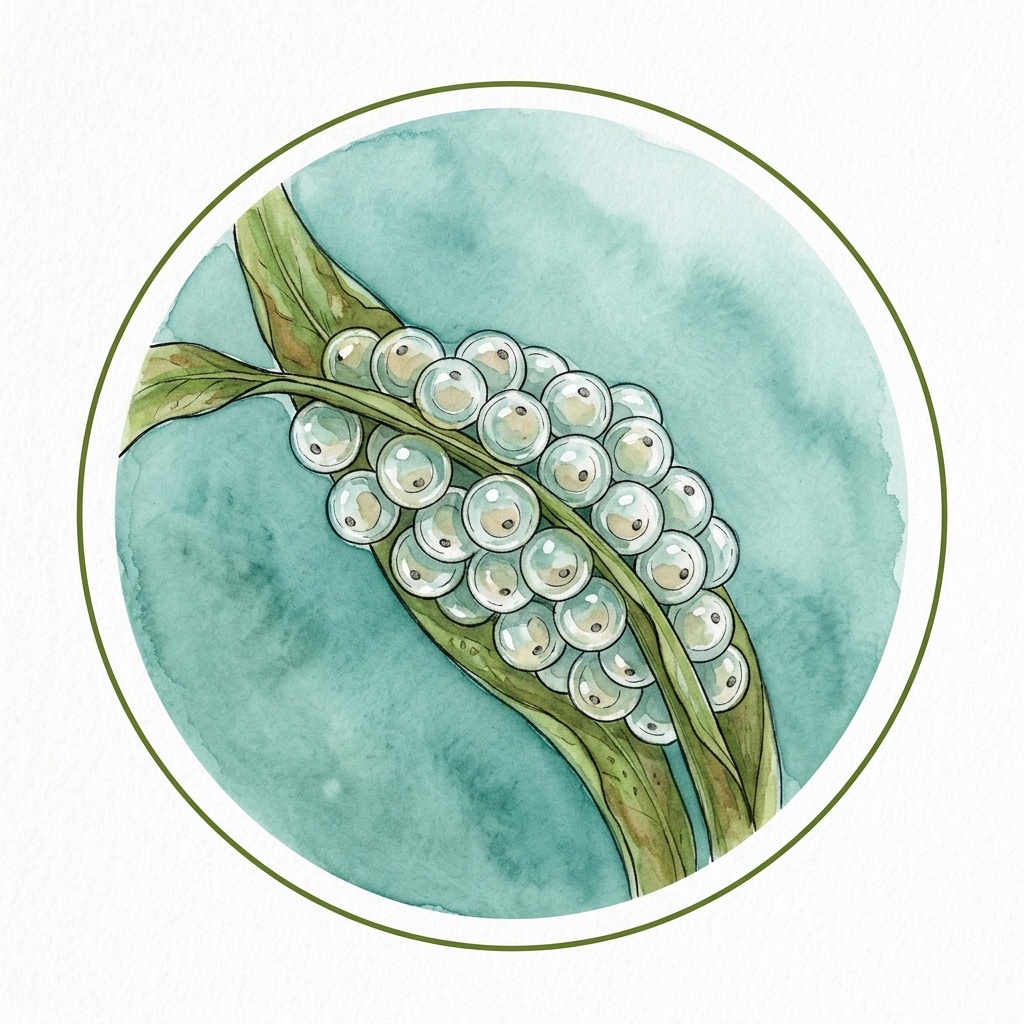
Male displays, female approaches plant thicket or spawning mop, eggs deposited 1–3 at a time
Day 1–14
Egg Incubation
Eggs harden, embryos develop; keep dim and well-oxygenated
Day 14–18
Hatching
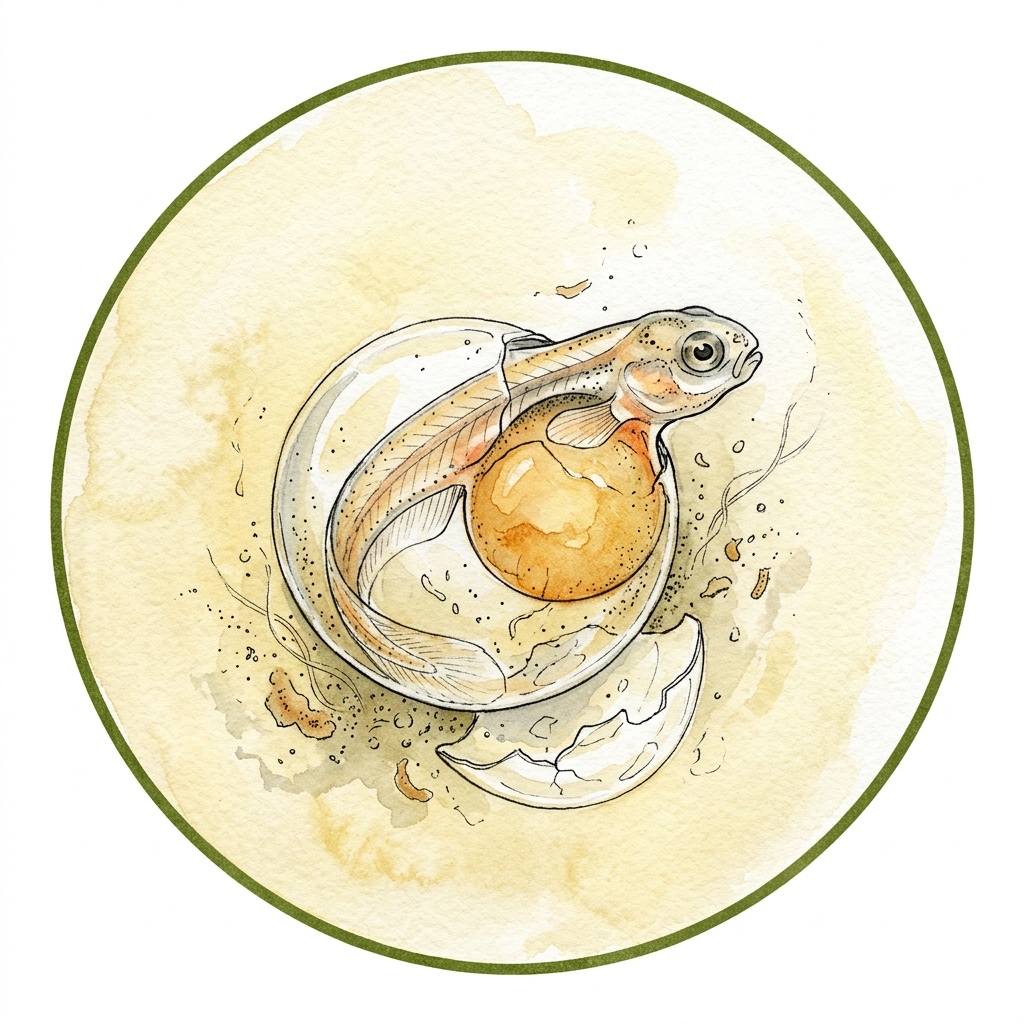
Fry emerge at approximately 4 mm, cling to plants and glass
Day 18–50
First Feeding & Early Growth
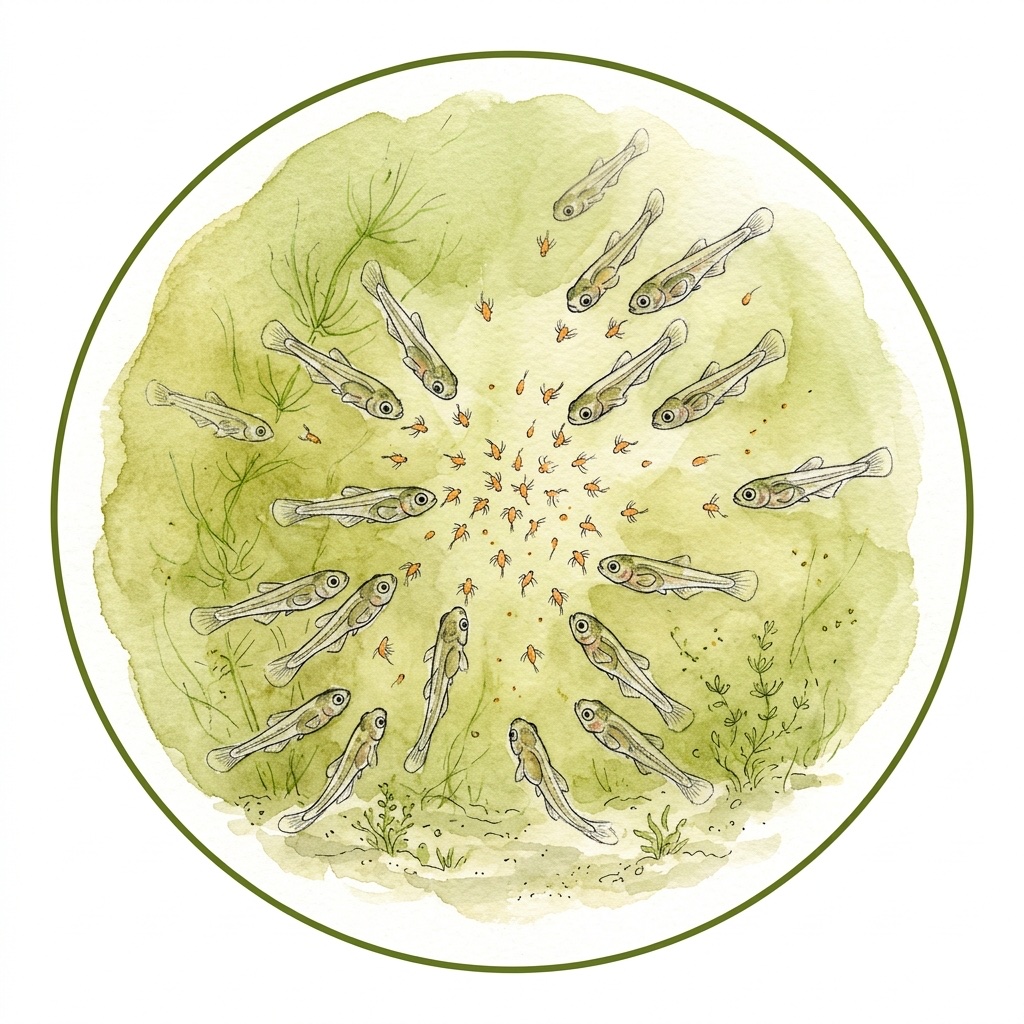
Feed infusoria, vinegar eels, then baby brine shrimp
Day 50–150
Juvenile Development
Silver flanks appear; fin dimorphism begins at 3 cm; adult colour at 5 cm
Conditioning
Like its cousin Pseudomugil gertrudae, signifer does not require a dramatic seasonal conditioning push. Mature females in a well-fed display tank already carry eggs nearly every day. Still, a week of heavy feeding on live baby brine shrimp, grindal worms, frozen daphnia, and — if available — live mosquito larvae significantly increases daily egg output and improves egg viability. Aim for pH around 7.4, hardness 10 to 15 dGH, and a steady temperature of 24 to 26 °C. The tank should contain fine-leaved plants (Java moss, Cabomba, Myriophyllum) and a floating plant with trailing roots; both serve as egg-attachment sites. A dedicated floating spawning mop of acrylic yarn lifted every few days is the most reliable way to harvest a predictable number of eggs.
Courtship & Spawning
Spawning in signifer is a continuous rolling event rather than a single dramatic night. Shortly after the tank lights come on each morning, the dominant males rise into the upper water column, flare every median fin, flash their electric blue eye rings, and perform trembling lateral displays toward the ripest available females. If a female is receptive, she follows the chosen male into a thicket of fine-leaved plant, a floating-plant root mass, or a spawning mop. The pair briefly press side by side, and the female deposits one to three adhesive eggs, each approximately 1 mm in diameter, onto the plant material. Each egg hangs from a thin adhesive thread. The pair separates and resumes normal schooling behaviour, only to repeat the ritual several more times across the course of the day. A healthy female typically drops 5 to 20 eggs per day during an active spawning stretch of one to three weeks — substantially higher than gertrudae output, reflecting signifer’s larger body size.
Egg Incubation
Signifer eggs are noticeably robust — adhesive, translucent amber, and highly resistant to fungus in clean moderately hard water. Incubation takes between 10 and 18 days at 24 to 26 °C, running longer at cooler temperatures. For maximum fry survival, carefully transfer the plant material or the entire spawning mop to a separate 10 to 20 litre rearing tank with the same water parameters as the main tank. Add a gentle sponge filter and keep lighting dim. If left in the main tank, a significant fraction of eggs and newly hatched fry will be eaten by parents and tank mates; a separate rearing tank dramatically improves survival rates. For breeders running an outdoor pond, the pond’s dense plant cover naturally protects a portion of fry without intervention, and a steady low-level trickle of juveniles will enter the population across the warm months.
Hatching
Newly hatched signifer fry are approximately 4 mm long — notably larger than gertrudae fry — with transparent bodies and a prominent dark eye. They cling to plant surfaces and the tank glass for the first 24 to 48 hours, absorbing the yolk sac before becoming active free-swimmers. Once yolk-absorbed, they move up to the upper water column and begin hunting immediately. Keep lighting very dim and flow extremely gentle during this phase — a baffled sponge filter is essential in a fry tank.
First Feeding & Early Growth
First foods must be extremely small. Commercial liquid fry food or a culture of infusoria is ideal for the first three to five days of active feeding. After a week, fry can take vinegar eels, micro-worms, or walter worms. By approximately the tenth day of active feeding, signifer fry are large enough to hunt freshly hatched baby brine shrimp — at this transition point, growth accelerates markedly. Fry grow faster than gertrudae because of their larger starting size and larger mouth; expect approximately 1.5 cm of growth in the first month under good feeding.
Juvenile Development
By around 2.5 cm, juvenile signifer begin showing the silvery flank sheen and the first faint blue eye ring that mark the species. Fin dimorphism — the first extension of dorsal and anal fin rays in males — becomes clearly visible at approximately 3 cm, generally four to five months post-hatch. Full adult colour, complete fin filaments, and the rich yellow-edged banner-fins of the name signifer are achieved at 5 to 6 cm, typically six to eight months from spawning. At this point juveniles can safely be integrated into the main display tank or outdoor pond, and the next generation of lateral-display males takes its place in the ranking hierarchy.
Compatible Species
Pseudomugil signifer is a fundamentally peaceful schooling species. In a group of eight or more it displays both the best intra-species behaviour (constant male lateral flaring, tight female schooling, daily courtship) and excellent tolerance of heterospecifics. It does not bully smaller tank mates. The real risks run in the opposite direction — anything large enough to eat it, anything aggressive enough to harass it, or anything that requires fundamentally incompatible water parameters should be avoided. The mental rule is: no tank mate whose mouth is wider than the signifer’s body, no species with a fin-nipping reputation, and no species that demands soft acidic water that would be miserable for signifer’s moderate hard-water preferences. Within those boundaries the Pacific Blue Eye fits comfortably into a wide range of community tanks, from soft-water planted South American setups through to hard-water community tanks with livebearers, gobies, and small native perches.
Where signifer genuinely outperforms almost every other species in the hobby, however, is in the all-Australian native biotope display. This is where the species truly belongs. Pair signifer with Murray River or Crimson-Spotted rainbowfish (Melanotaenia fluviatilis, M. duboulayi), southern pygmy perch, empire gudgeons, glass perchlets, desert gobies, and native Caridina shrimp, and you have a cohesive, authentic, genuinely Australian display that celebrates the continent’s freshwater heritage in a way imported-species tanks cannot match. Water parameters across this full assemblage are broadly compatible — neutral to slightly alkaline, moderately hard, 22 to 26 °C. Temperament is uniformly peaceful. Aesthetic harmony is excellent: the silvery-yellow of signifer complements the red-orange of empire gudgeons, the translucent silver of glass perchlets, and the deeper bronze of pygmy perch to produce a tank that reads unmistakably as Australian.
The native-Australian angle is a real part of the species’ appeal. Every Pacific Blue Eye in your tank or pond — if captive-bred by an Australian native-fish specialist or responsibly collected under permit in New South Wales or Queensland — is a fish that never crossed an international border, never rode in an airline cargo hold, and never carried the quarantine and disease risks that accompany imported stock. The carbon footprint is vanishingly small. The bloodlines are local. Supporting the small but vibrant network of Australian native-fish breeders through organisations like ANGFA (Australia New Guinea Fishes Association) keeps that captive-breeding infrastructure alive and ensures that the next generation of Australian aquarists inherits a viable hobby built around native species. For keepers who care about provenance, stocking a tank with Pacific Blue Eyes is a small but meaningful statement that Australian fish are just as beautiful — and often more interesting — than their tropical overseas equivalents.
Finally, a specific note on the outdoor pond option: if you have a backyard anywhere from Brisbane down to Sydney, consider a signifer pond as a complement to or even a replacement for an indoor tank. In Sydney, a 300-litre pre-formed pond lightly planted with hornwort, water lilies, and floating azolla, stocked with a dozen Pacific Blue Eyes, will happily overwinter at temperatures that drop into the low teens during July and August and produce a fresh generation of juveniles every summer. The fish eat the mosquito larvae that inevitably colonise any outdoor water feature — so instead of being a mosquito nursery, the pond becomes a mosquito sink that actively reduces the local insect population. Cover the pond with a fine mesh to block predation by butcherbirds, kookaburras, and wandering cats, and the colony takes care of itself. For the cost of a few hundred dollars in equipment and fish, you get one of the most low-maintenance, high-reward native-Australian aquarium experiences available anywhere in the country, and the quiet satisfaction of keeping a genuinely local species in a genuinely local setup.
| Species | Why | |
|---|---|---|
| ✅ | Desert Goby (Chlamydogobius eremius) | Tough, peaceful Australian native goby that occupies the lower water column while signifer owns the upper two-thirds. Tolerant of identical hard-water parameters and an ideal native-Australia biotope companion |
| ✅ | Southern Pygmy Perch (Nannoperca australis) | Another peaceful native Australian species that shares identical water parameters, temperament, and temperate climate tolerance. Mid-level schooler complementing the upper-level Pacific Blue Eye in a native display |
| ✅ | Murray River Rainbowfish (Melanotaenia fluviatilis) | Larger Australian native rainbowfish that schools alongside signifer in a medium-to-large tank. Shares cold-tolerance and mirrors the signifer male display style at a larger scale — visually stunning combination |
| ✅ | Empire Gudgeon (Hypseleotris compressa) | Peaceful east-Australian native gudgeon sharing the exact same range as signifer. Superb brackish-biotope companion for estuarine signifer setups; males develop dramatic red-orange breeding colours |
| ✅ | Glass Perchlet (Ambassis agassizii) | Small, peaceful, transparent Australian native perchlet that occupies the mid-water column alongside signifer. Ideal in native biotope tanks; shares salinity tolerance with the estuarine form |
| ✅ | Endler’s Livebearer (male only) | Peaceful nano livebearer compatible with signifer’s hard-water, moderately alkaline preferences. Keep male-only to avoid population explosion. Their colours complement signifer’s silvery-yellow without conflict |
| ✅ | Australian Native Freshwater Shrimp (Caridina spp.) | Locally collected or commercially bred native Caridina shrimp are peaceful algae-pickers that signifer completely ignores once adult. True-native biotope scavenger |
| ✅ | Cherry Shrimp (Neocaridina davidi) — adults only | Adult cherries are safe with signifer and handle the same hard-water parameters. Juvenile shrimplets may occasionally be picked off; dense moss cover protects breeding colonies |
| ✅ | Amano Shrimp (Caridina multidentata) | Large, peaceful algae-eater that cannot be eaten and does not threaten the fish. Excellent algae control in a signifer display tank |
| ✅ | Pseudomugil gertrudae / P. luminatus | Smaller nano blue-eye cousins that can share a large tank (120 L+) with signifer. Expect some cross-species male display at the boundary of territories; no damage occurs |
| ❌ | Angelfish | Adult angelfish grow large enough to swallow a 5 cm signifer whole and will prey opportunistically. The mouth-gape rule applies: anything whose mouth is wider than the signifer’s body is a predator, not a tank mate |
| ❌ | Tiger Barb | Notorious fin-nippers. Signifer males’ elongated banner-fins — the whole point of the species — are a prime target. Continuous harassment destroys fin display and causes chronic stress |
| ❌ | Serpae Tetra | Another habitual fin-nipping characin. Will relentlessly harass signifer’s flowing fins regardless of tank size. Completely incompatible |
| ❌ | Large Cichlids (Oscars, Jack Dempseys, Flowerhorns) | Predatory, aggressive, and large-mouthed. Will eat signifer immediately. Water parameters may also be incompatible — many of these cichlids prefer different conditions |
| ❌ | Large Gouramis (Pearl, Three-Spot, Giant) | Territorial surface-dwellers that will dominate the upper water column signifer needs for courtship display; even without direct aggression, their presence drives signifer down into the middle and bottom of the tank and suppresses male display |
Quick Reference
| Scientific Name | Pseudomugil signifer |
| Common Name | Pacific Blue Eye |
| Origin | Eastern Australia (Cape York QLD to Hawkesbury NSW) |
| Adult Size | 5–6 cm (2.0–2.4 in) |
| Lifespan | 3–5 years |
| pH | 6.5–8.5 (ideal 7.4) |
| Temperature | 18–28 °C (ideal 24 °C) |
| Hardness | 8–25 dGH (hard water tolerant) |
| Salinity | Freshwater to brackish SG 1.000–1.005 |
| Min Tank Size | 60 L for trio; 80–120 L for school of 8+ |
| School Size | 8+ (10–12 recommended for best display) |
| Diet | Micro-carnivore — flake, pellet, frozen, live mosquito larvae |
| Care Level | Beginner — highly forgiving |
| Temperament | Peaceful, schooling, active male display |
| Tank Position | Top to middle |
| Breeding | Daily egg-scatterer — easy in tanks and outdoor ponds |
| Outdoor Pond | Fully viable on Australian east coast; overwinters in Sydney |
| Native Pride | Genuinely local — the east-coast aquarist’s flagship native |
Related Products
Reviews
Clear filtersThere are no reviews yet.