🪨 Species at a Glance
| Scientific Name | Melanotaenia boesemani |
| Common Names | Boesemani Rainbowfish, Boeseman’s Rainbowfish |
| Family | Melanotaeniidae |
| Origin | Lake Ayamaru & surrounding lakes, Vogelkop Peninsula, West Papua (Irian Jaya), Indonesia |
| Adult Size | 10–12 cm (4–5 in) |
| Lifespan | 5–8 years |
| Care Level | Intermediate |
| Temperament | Peaceful but active; may intimidate timid species |
| Water Type | Tropical Freshwater |
| pH Range | 7.0–8.0 |
| Temperature | 26–30 °C (79–86 °F) |
| Minimum Tank Size | 200 L / 55 gal (120 cm long) |
| Diet | Omnivore — flake, pellet, frozen, live foods |
| IUCN Status | Endangered (wild populations) |
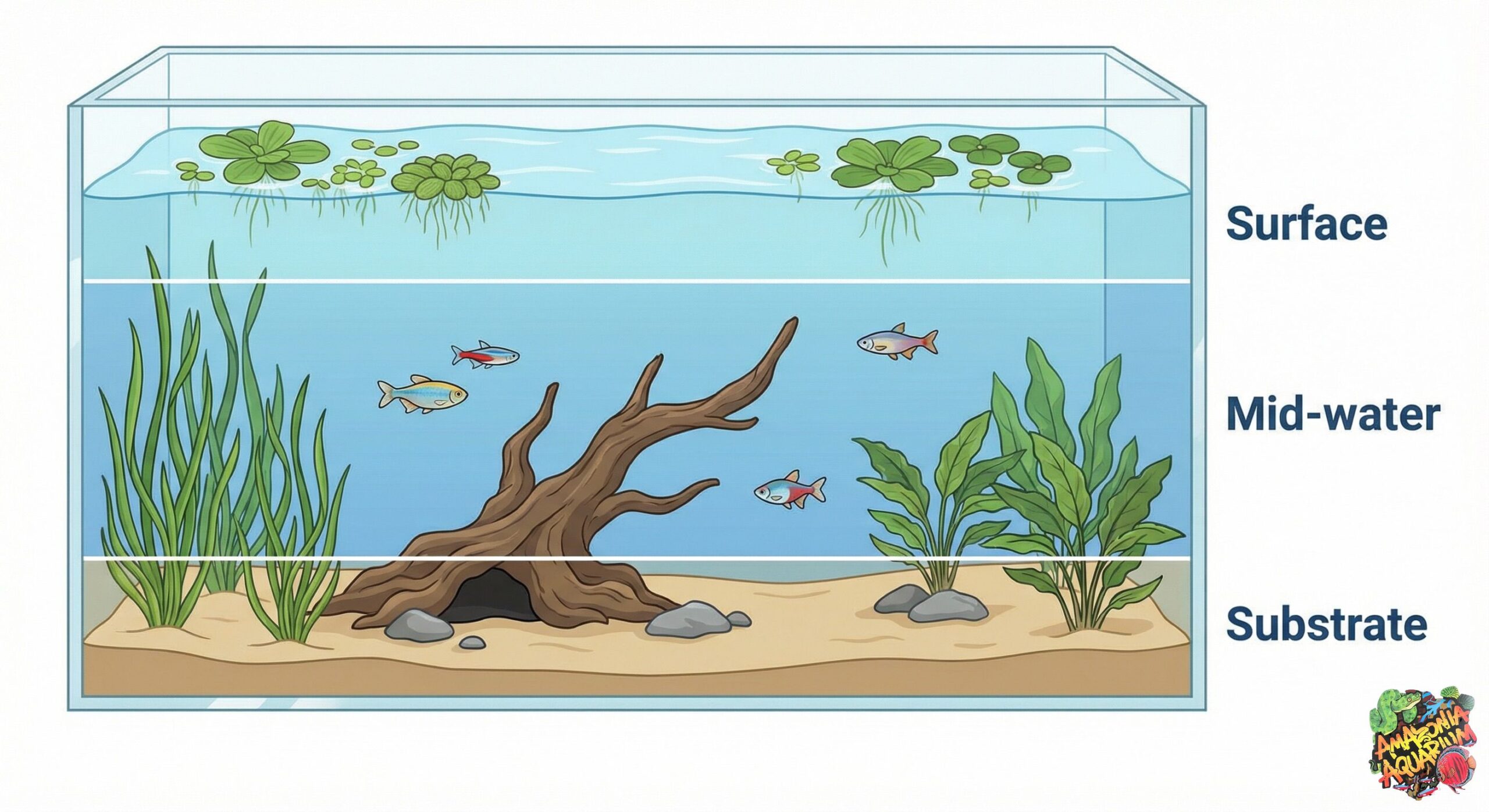
| Tank Position | Middle to Top |
Colour Forms & Morphs
🔵 Classic Bicolour (Wild-Type)
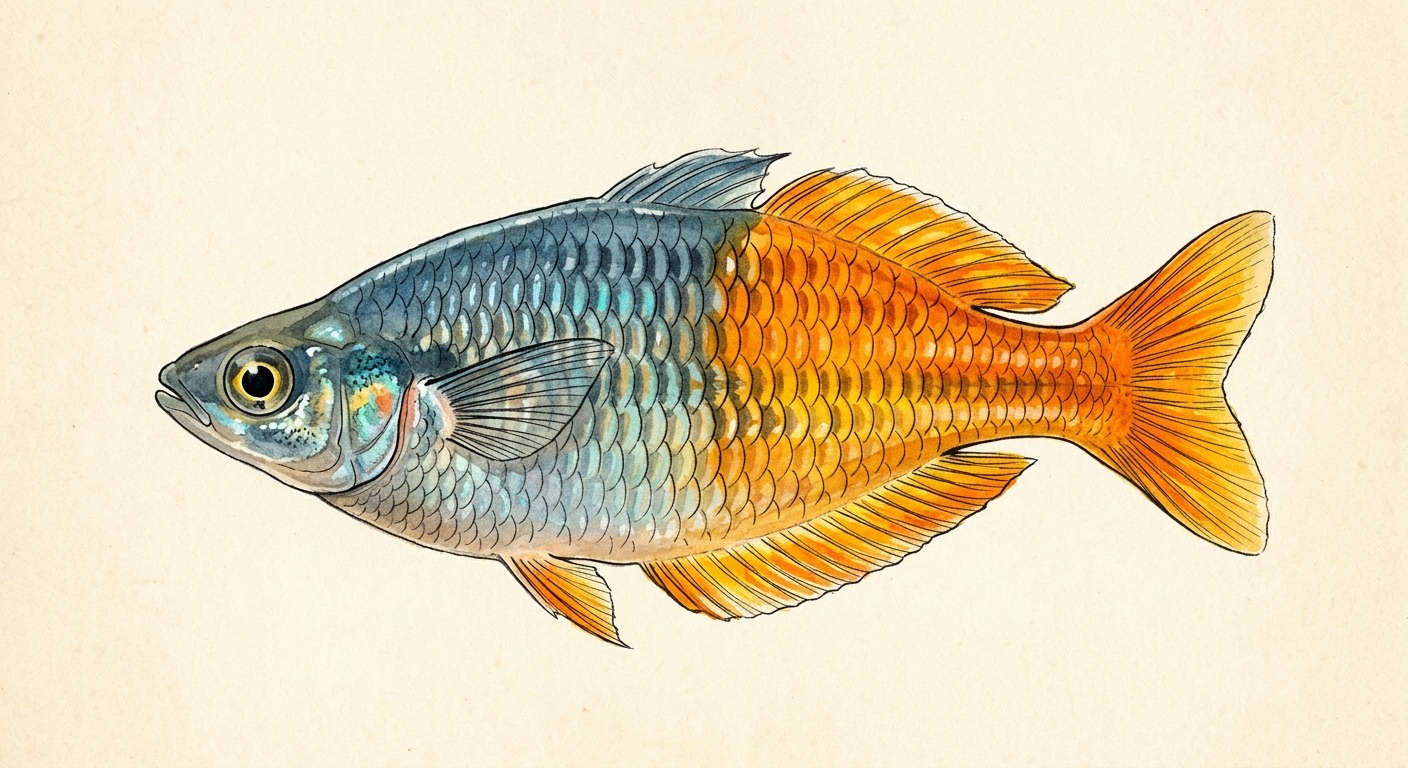
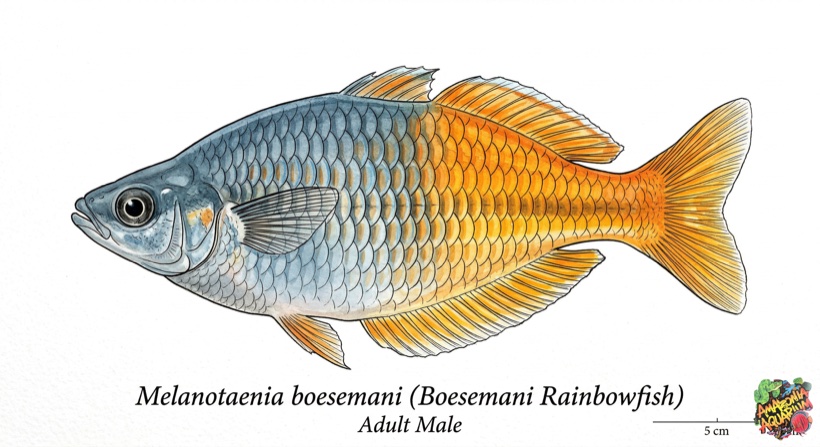
The iconic form: steel-blue anterior grading into rich amber-orange on the posterior half, separated by a narrow transitional zone of green or teal.
🟠 High-Orange Select
Selectively bred line where the orange-gold extends further forward and burns more intensely, sometimes reaching the gill plate in dominant males.
🩶 Juvenile / Subdominant
Young or stressed fish display muted silver-grey with only faint hints of blue and yellow — patience is required, as full colour may take 12–18 months to develop.
🌿 Female Colouration
Females show olive-green to silver with a subtle golden wash along the flanks; they lack the dramatic bicolour split but have their own understated elegance.
Boesemani Rainbowfish are among the most dramatic examples of delayed colour development in the hobby. Juveniles sold at 3–4 cm look disappointingly plain — pale silver with a faint yellowish tinge. Many first-time buyers wonder if they received the wrong fish. Rest assured: the transformation is coming. Males begin showing the blue-orange split around 5–6 cm, and colour continues to deepen and intensify for the first two to three years of life. Diet plays a pivotal role — regular offerings of carotenoid-rich foods such as spirulina flake, astaxanthin-enriched pellets, daphnia, and brine shrimp will accelerate and amplify the orange tones. Morning light hitting a school of mature males in full display is genuinely one of the great spectacles in freshwater fishkeeping. Males will also ‘flash’ — briefly intensifying their colour during sparring or courtship — creating pulses of neon brilliance that no photograph can fully capture.
Telling Males from Females
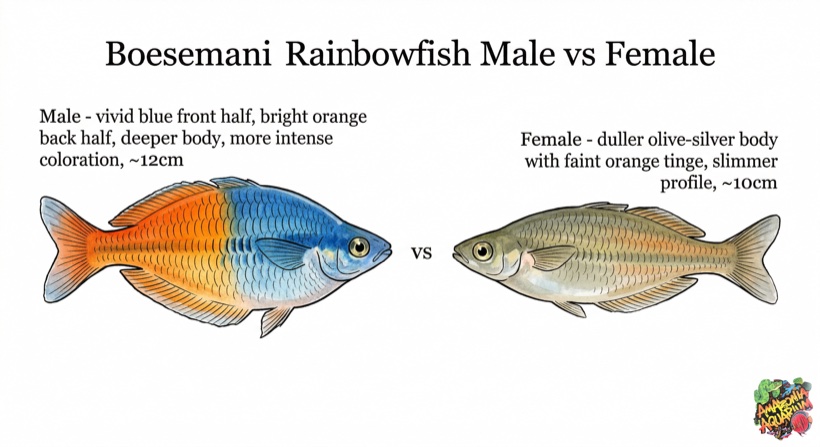
Sexual dimorphism in Boesemani Rainbowfish is among the most pronounced in the Melanotaeniidae family, but only once the fish reach maturity. Below 5 cm, sexing is essentially guesswork. As males mature, they develop a characteristic deep body profile and, in older specimens, a noticeable nuchal hump — a raised forehead that becomes quite prominent in dominant males over 3 years old. The dorsal and anal fins grow proportionally larger and more pointed in males, and the first dorsal ray may extend into a short filament.
Colour is the most reliable indicator in adult fish. Males display the full bicolour pattern with saturated blue and orange zones, while females remain olive to silver with muted golden tones. During morning display behaviour, males will line up alongside rivals and competitors, flaring fins and intensifying their colours in rapid pulses — a behaviour known as ‘jousting’ or ‘flashing’. These displays are harmless and are one of the most captivating daily behaviours in a rainbowfish aquarium.
For the best colour displays and most natural behaviour, aim for a ratio of roughly equal males and females, or a slight male majority. A group of at least six — ideally eight to twelve — gives the males enough social stimulus to display without any single individual being constantly harassed.
| Feature | Male | Female |
|---|---|---|
| Size | 10–12 cm | 8–10 cm |
| Body Shape | Deep-bodied, pronounced nuchal hump with age | Slimmer, more streamlined profile |
| Colour — Anterior | Intense steel-blue to indigo | Olive-green to silver |
| Colour — Posterior | Deep amber to orange-red | Pale golden-yellow wash |
| Fin Shape | First dorsal fin taller and more pointed | Fins shorter and rounded |
| Behaviour | Active sparring and displaying, flashing colour | Calmer, less interactive with other females |
Where the Name Comes From
The species was formally described by Gerald Allen and Norbert Cross in 1980 and named in honour of Marinus Boeseman, a distinguished Dutch ichthyologist at the Leiden Museum of Natural History. Boeseman spent decades cataloguing the freshwater fishes of New Guinea, and this spectacular rainbowfish was one of his most celebrated discoveries — a fitting tribute to a scientist whose field work opened western eyes to the astonishing biodiversity of Papuan waterways.
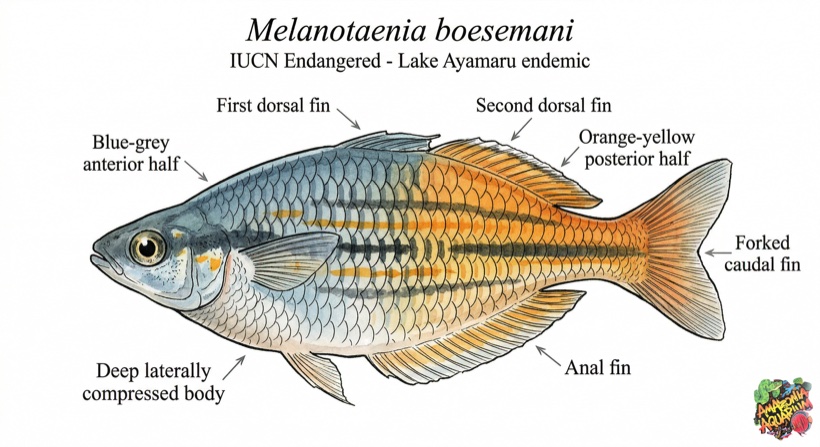
The genus name *Melanotaenia* translates roughly as ‘black-banded’ (from the Greek *melano-* meaning dark and *taenia* meaning ribbon or band), referencing the subtle dark lateral stripe found in many rainbowfish species. In the Boesemani, this stripe is largely masked by the dramatic bicolour pattern, but it can still be glimpsed in juveniles and subdominant individuals.
In the hobby, the fish is universally known by its scientific epithet — simply ‘the Boesemani’. It arrived in the aquarium trade in the early 1980s and caused an immediate sensation. The striking colour split — cool blue at the head transitioning to warm orange at the tail — was unlike anything hobbyists had seen in a freshwater fish, and demand quickly outstripped supply. Fortunately, the species breeds readily in captivity, and virtually all specimens available today are captive-bred, relieving pressure on the endangered wild populations in the Ayamaru Lakes system.
Feeding Guide
Boesemani Rainbowfish are enthusiastic, unfussy omnivores that will eat virtually anything offered. In the wild, they feed on a mix of small invertebrates, algae, insect larvae, and plant matter. In captivity, a varied diet is the key to vibrant colour and robust health.
The staple diet should be a high-quality flake or micro-pellet formulated for tropical omnivores. Look for products containing spirulina and astaxanthin — these carotenoid pigments are directly responsible for intensifying the orange and red tones. Feed two to three small meals per day rather than one large feed; this matches their natural grazing behaviour and reduces waste.
Supplement the staple with frozen foods two to three times per week: bloodworms, brine shrimp, daphnia, and mysis shrimp are all eagerly accepted. Live foods such as mosquito larvae, wingless fruit flies, or cultured daphnia are excellent conditioning foods, especially when preparing fish for breeding.
Vegetable matter should not be overlooked. Blanched zucchini medallions, spirulina wafers, or algae-based flakes ensure the fish receive the plant-based nutrition they consume in the wild. A balanced omnivorous diet — not just protein-heavy frozen foods — produces the best long-term colour, body condition, and lifespan.
Breeding Guide
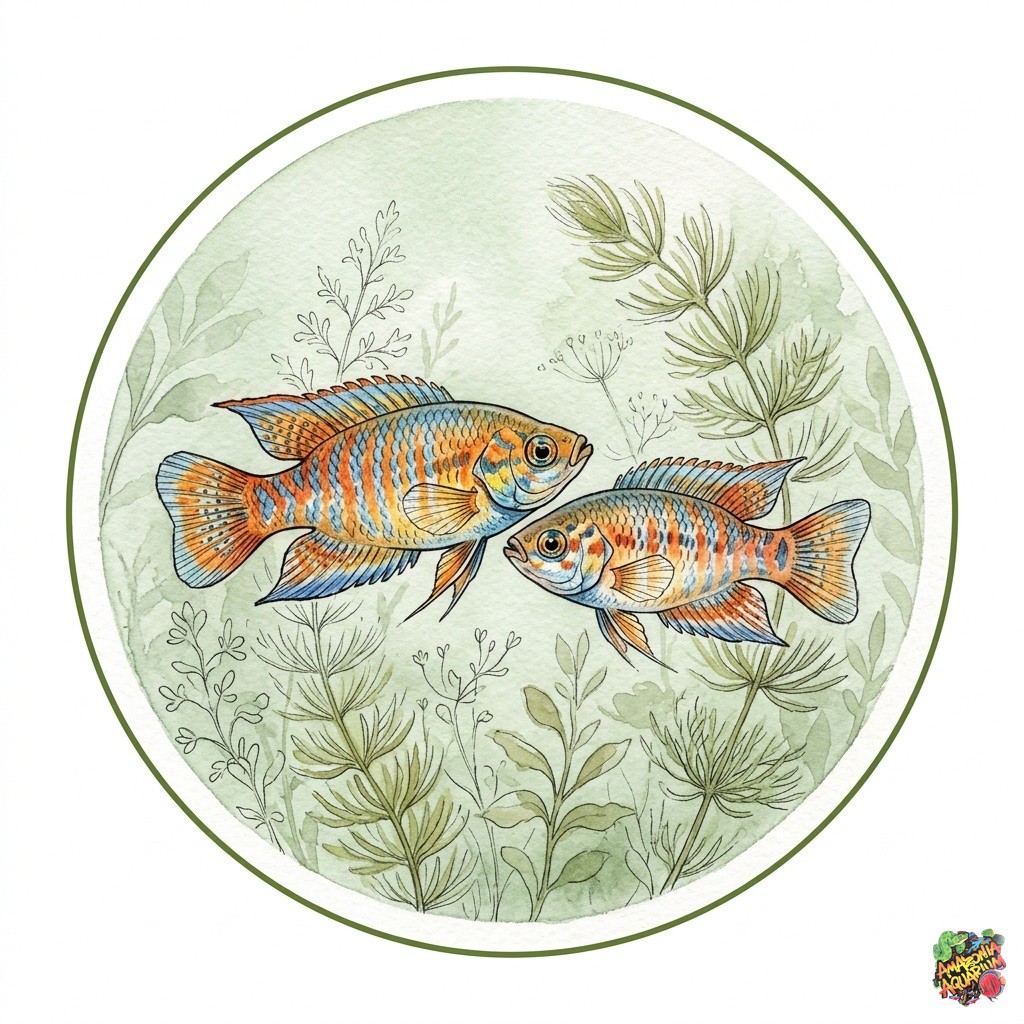
Day 0
Conditioning
Increase live and frozen foods for 1–2 weeks; raise temperature to 28–29 °C
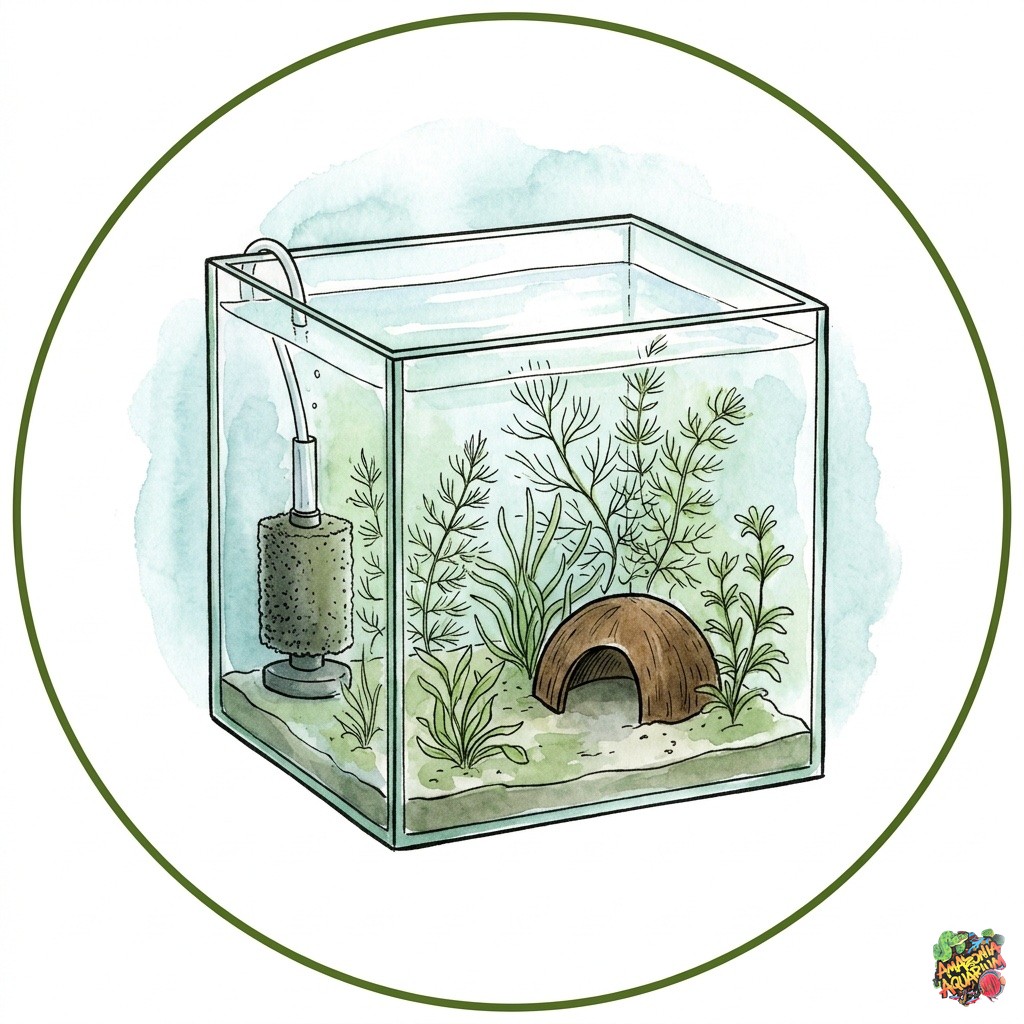
Day 7–14
Spawning
Males display at dawn; eggs scattered on fine-leaved plants or spawning mops
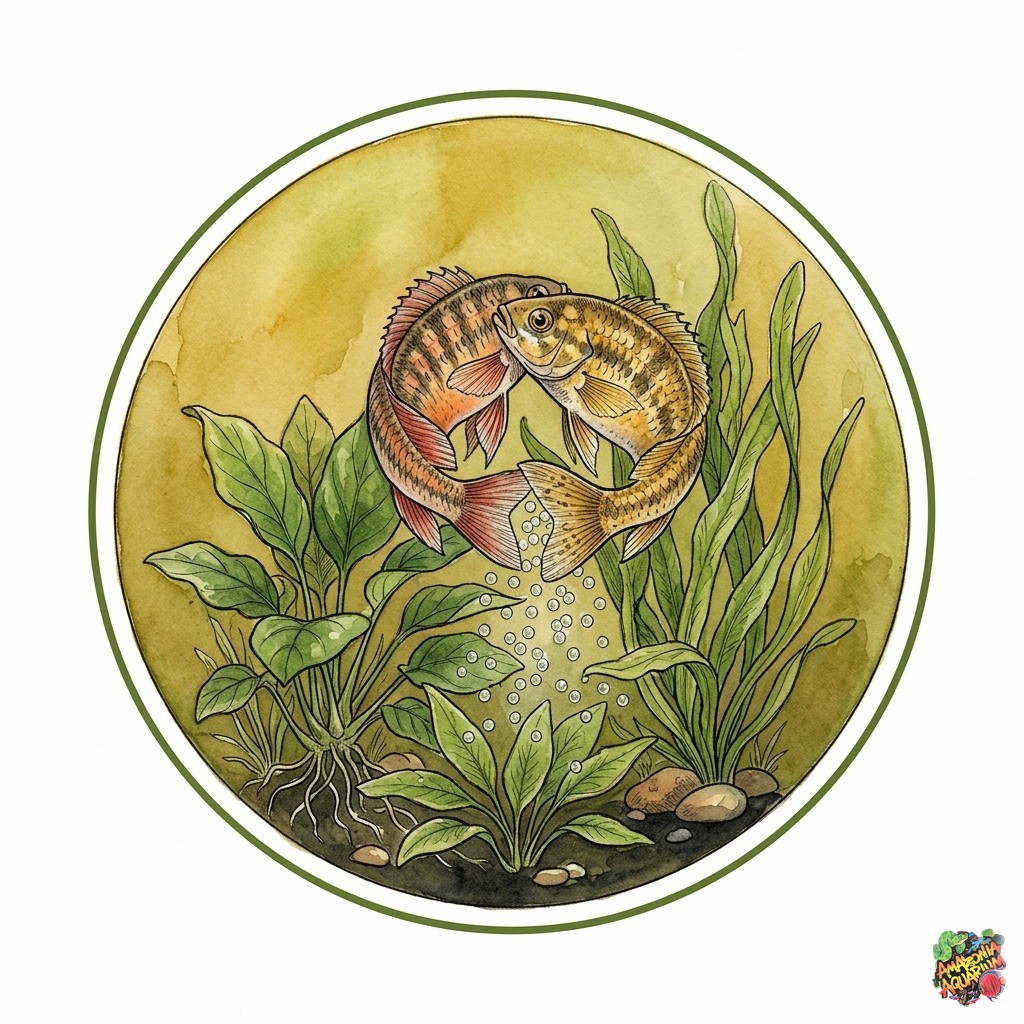
Day 14–21
Egg Collection & Incubation
Remove mops to a separate hatching tank; eggs hatch in 7–10 days at 27–28 °C
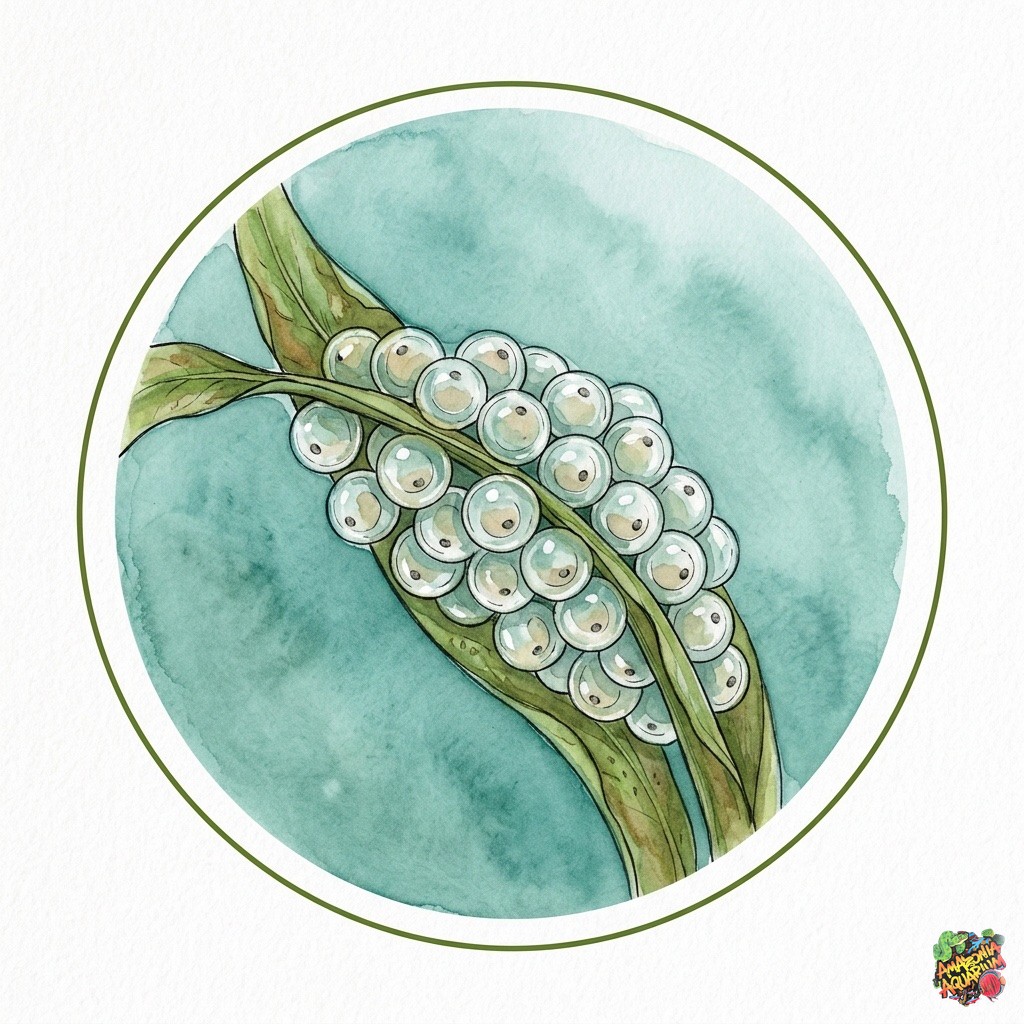
Day 21–28
Fry Emerge
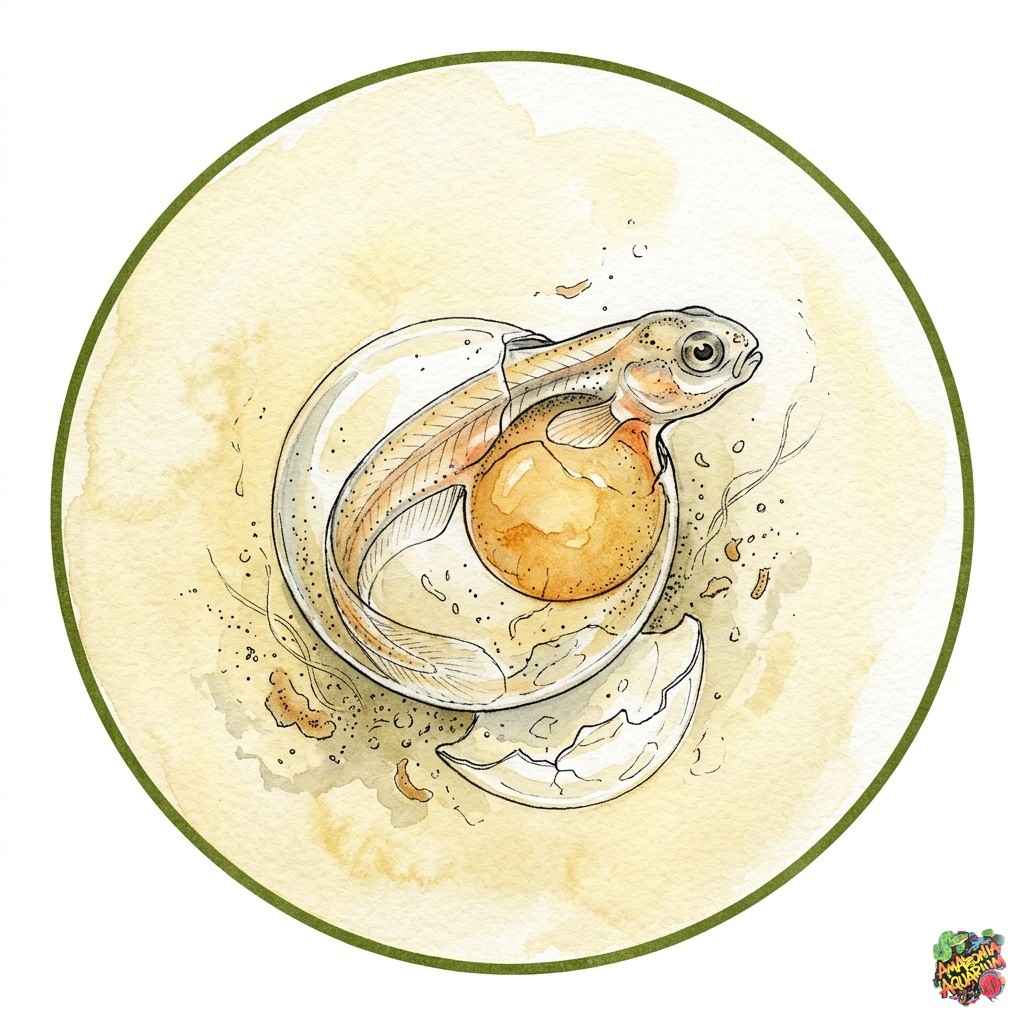
Tiny fry absorb yolk sac; begin feeding infusoria and vinegar eels
Day 28–60
Growing On
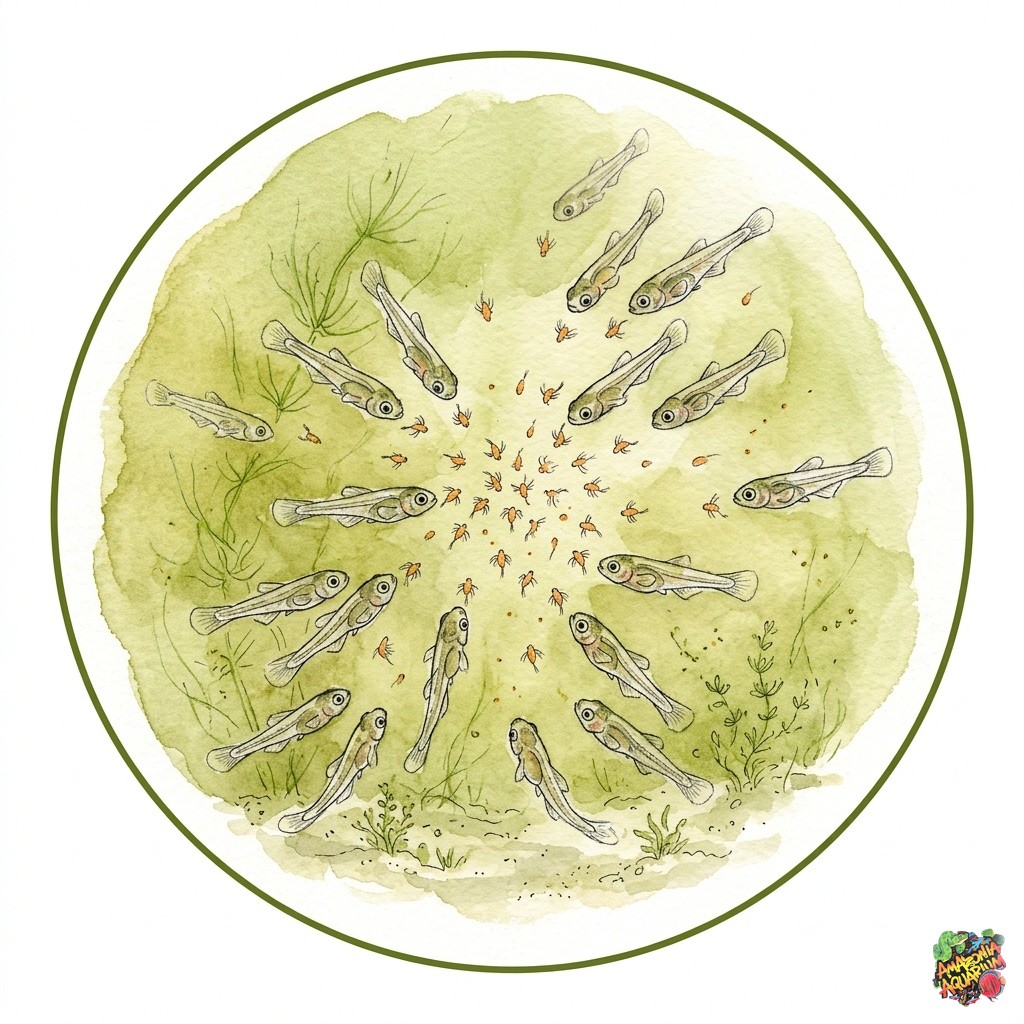
Graduate to baby brine shrimp and micro-worms; slow but steady growth
Month 3–12
Juvenile Development
Gradual colour development; full adult colour at 12–18 months
Conditioning
Successful Boesemani breeding begins with thorough conditioning. Separate males and females for one to two weeks if possible, or simply increase the proportion of live and frozen foods in the diet — daphnia, brine shrimp, and bloodworms are ideal. Gradually raise the water temperature to 28–29 °C and ensure water quality is pristine with nitrate below 10 ppm. Well-conditioned females will appear noticeably rounder when viewed from above.
Spawning
Boesemani Rainbowfish are egg scatterers that spawn at first light. Males will intensify their colours dramatically and perform vigorous parallel displays alongside females, quivering and flashing. When a female is receptive, the pair will move side by side into fine-leaved plants or synthetic spawning mops, releasing and fertilising small batches of adhesive eggs. A single female may scatter 10–30 eggs per session over several consecutive mornings. The eggs are tiny (approximately 1 mm), clear, and have adhesive filaments that attach them to plant surfaces.
Egg Collection & Incubation
Adults will readily eat their own eggs and fry, so spawning mops or plant bunches should be removed to a separate hatching container every two to three days. A small 20–40 litre tank with gentle aeration and matching water parameters works well. Add a few drops of methylene blue to prevent fungus on unfertilised eggs. At 27–28 °C, healthy eggs will hatch in approximately 7–10 days. The incubation period is notably longer than many other tropical species, so patience is required.
Fry Emerge
Newly hatched fry are extremely small — among the tiniest of commonly bred aquarium fish. They will hover near the surface for the first day or two, absorbing the remainder of their yolk sac. First foods must be correspondingly tiny: infusoria, paramecium cultures, or vinegar eels are ideal. Commercial liquid fry food can supplement but should not replace live micro-organisms in the first week. Keep the water level low (10–15 cm) to make food easier for the fry to find.
Growing On
After two to three weeks, fry can be transitioned to freshly hatched baby brine shrimp (Artemia nauplii) and micro-worms. Growth is notably slow compared to livebearers or cichlids — expect the fry to reach only 1–2 cm after two months. Frequent small water changes (10% daily or every other day), warm stable temperatures, and multiple small feeds per day are essential for healthy development. Fry mortality is highest in the first two weeks; after that, survival rates improve significantly.
Juvenile Development
Boesemani Rainbowfish are famously slow to colour up. Juvenile fish remain plain silver-grey for months, with only subtle hints of the adult pattern beginning to appear around the 4–5 cm mark. Males will start showing a faint blue wash on the anterior and golden tones on the posterior by around six months. The full, spectacular bicolour pattern typically does not develop until 12–18 months of age. This slow maturation is normal and should not cause concern — the wait is absolutely worth it.
Compatible Species
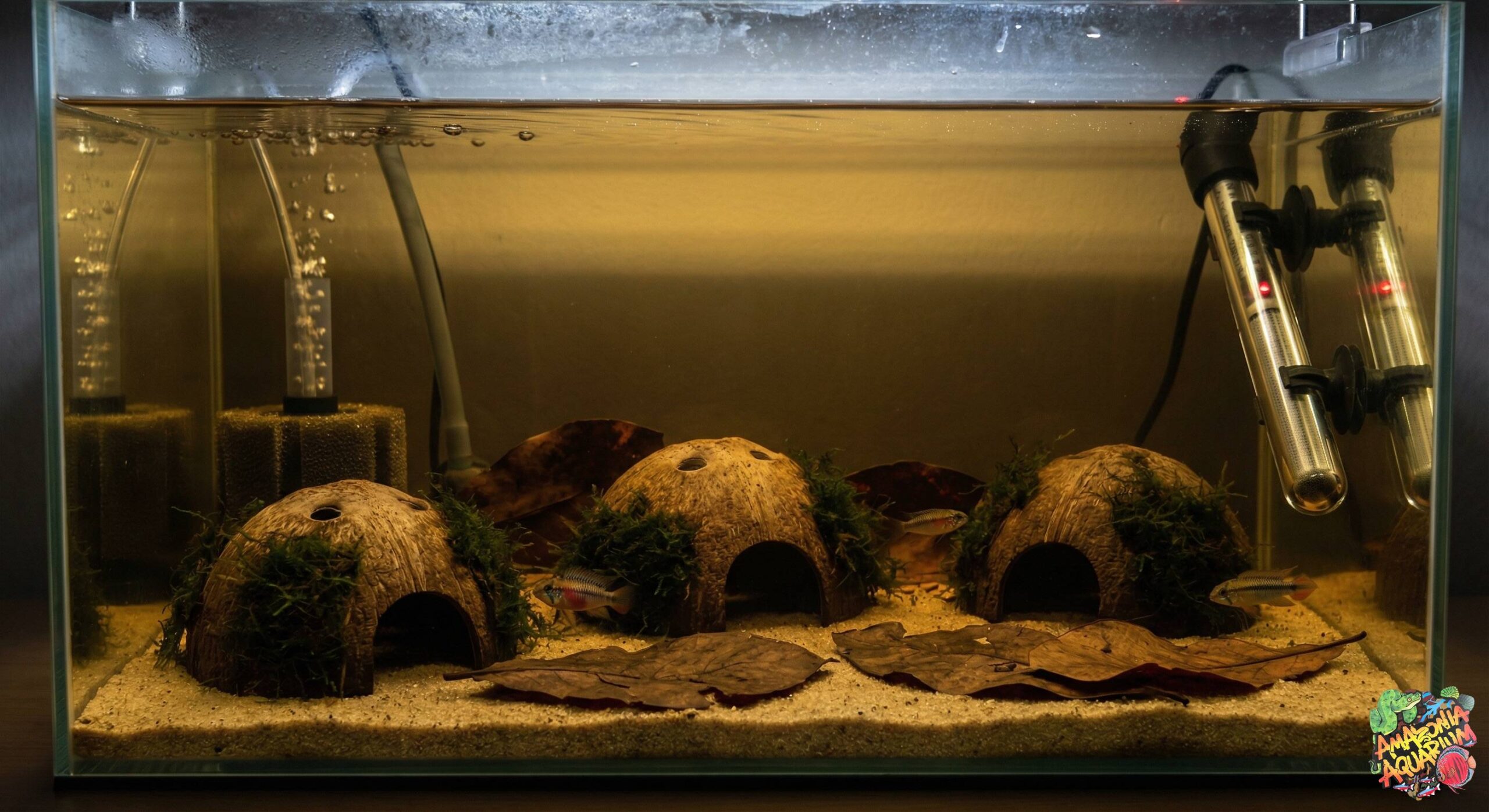
Boesemani Rainbowfish are peaceful community fish in the truest sense — they have no interest in territory, do not nip fins, and ignore species that don’t compete directly for their food. However, they are large, fast, and boisterous. Their energetic swimming and enthusiastic surface feeding can inadvertently intimidate slow-moving, timid, or very small tank mates.
The ideal community pairs Boesemani with similarly sized, active fish that occupy complementary water column zones. Other rainbowfish species make the most natural companions — a mixed Melanotaeniid community tank is a truly spectacular display. Robust tetras, barbs, corydoras, and loaches all work well. Avoid pairing with anything that requires calm, still water or cannot compete at feeding time.
A school of at least six Boesemani (ideally eight or more) is essential. Lone individuals or pairs become shy, dull in colour, and prone to stress. In a properly sized group, males will spend their energy displaying to each other rather than pestering other species, and the school dynamics create a far more natural and visually engaging aquarium.
| Species | Why | |
|---|---|---|
| ✅ | Neon Blue Rainbowfish | Fellow Melanotaeniid that shares identical water parameters and swimming behaviour; creates a stunning multi-species rainbow school |
| ✅ | Pseudomugil gertrudae (Gertrude’s Blue-Eye) | Tiny relative that occupies the upper water column; adds delicate contrast without competition — ensure plenty of floating plant cover |
| ✅ | Cherry Barb | Peaceful mid-level schooler that tolerates the same slightly alkaline, warm conditions; adds a flash of red to complement the Boesemani’s orange |
| ✅ | Rummy Nose Tetra | Tight-schooling mid-level tetra that is robust enough to coexist with active rainbowfish; prefers similar temperatures |
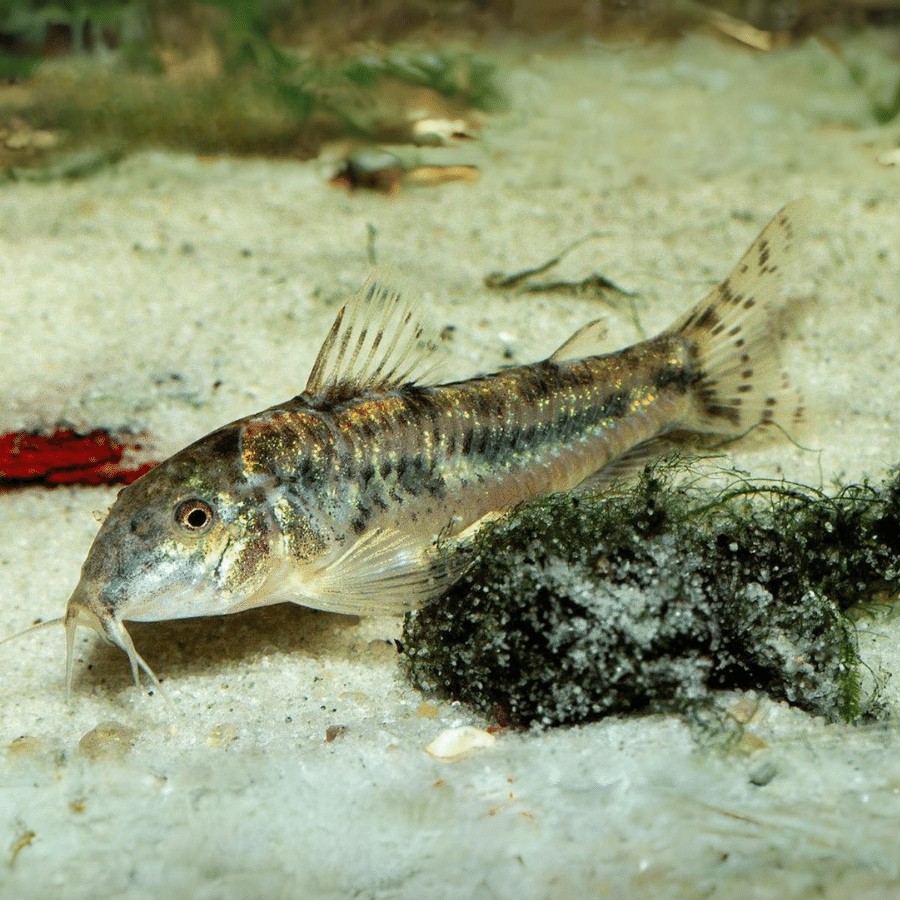
| ✅ | Sterbai Corydoras | Warm-water tolerant bottom dweller that completes the water column without competing for space; excellent cleanup crew |
| ✅ | Otocinclus | Gentle algae grazer that stays on surfaces and glass; completely ignored by Boesemani |
| ✅ | Dwarf Chain Loach | Active bottom-dwelling loach that appreciates the same warm, moderately hard water; pest snail control bonus |
| ✅ | Siamese Algae Eater | Active mid-bottom algae grazer that matches the Boesemani’s energy level; excellent for planted tank maintenance |
| ✅ | Cardinal Tetra | Classic community tetra that schools tightly at mid-level; their blue-red colour complements the Boesemani palette beautifully |
| ✅ | Neon Tetra | Hardy schooling tetra for the lower-mid column; provides a cooler colour accent against the Boesemani’s warm tones |
| ❌ | Siamese Fighting Fish (Betta) | Boesemani’s vigorous activity and surface feeding will stress slow-moving, long-finned bettas and may trigger aggression |
| ❌ | Dwarf Shrimp (Neocaridina / Caridina) | Adult Boesemani will readily eat small shrimp; only large Amano shrimp are safe |
| ❌ | Aggressive Cichlids (e.g., Jack Dempsey, Convict) | Territorial cichlids will bully and corner the fast-moving but non-aggressive rainbowfish |
| ❌ | Very Small or Timid Species (e.g., Celestial Pearl Danio) | The Boesemani’s boisterous swimming and feeding enthusiasm will outcompete and stress tiny, shy species |
Quick Reference
| Scientific Name | Melanotaenia boesemani |
| Adult Size | 10–12 cm (4–5 in) |
| Lifespan | 5–8 years |
| pH | 7.0–8.0 (ideal 7.5) |
| Temperature | 26–30 °C (ideal 27 °C) |
| Hardness | 10–20 dGH |
| Min Tank Size | 200 L / 55 gal (120 cm long) |
| Diet | Omnivore — flake, pellet, frozen, live |
| Temperament | Peaceful, active schooler |
| Tank Position | Middle–Top |
| Minimum School Size | 6 (8–12 recommended) |
| Breeding | Egg scatterer; easy to breed, slow fry growth |
| IUCN Status | Endangered (wild) |
| Community Safe | Yes — with appropriately sized tank mates |
Sydney Keeper Tips
Keeping Boesemani Rainbowfish in Sydney comes with specific advantages and challenges. Here’s what local keepers should know.
Sydney Tap Water
Boesemani Rainbowfish actually prefer harder, more alkaline water (pH 7.0–8.0, GH 10–20) — Sydney’s tap water is on the softer side for them. They’ll adapt, but adding a small amount of crusite or limestone can help buffer pH.
Seasonal Considerations
Rainbowfish are active swimmers that generate heat through metabolism. In Sydney’s summer, they cope well but need excellent oxygenation — increase surface agitation. They’re comfortable down to 22°C in winter.
Local Tips
- Boesemani need a long tank (minimum 120cm) for proper swimming — they’re active and fast.
- Males colour up dramatically when displaying to females or competing — morning light brings out their best colours.
- Feed colour-enhancing foods (spirulina, astaxanthin) to maintain the iconic blue-and-gold split.
Frequently Asked Questions
Why are my Boesemani Rainbowfish dull in colour?
How big do Boesemani Rainbowfish get?
Can they live with small fish like tetras?
Do they jump?
What ratio of males to females?
Ideal Water Conditions
7.0–8.0
ideal 7.5
26–30 °C
ideal 27 °C
10–20 dGH
Moderately hard to hard water preferred
Unlike many popular tropical species that prefer soft, acidic water, Boesemani Rainbowfish come from alkaline, moderately hard lakes in West Papua. They are genuinely happiest in water with a pH of 7.0–8.0 and hardness of 10–20 dGH — conditions that many Australian and Asian tap water sources provide straight from the tap. This makes them an excellent choice for hobbyists whose local water is too hard for tetras or discus.
Temperature should be maintained between 26 and 30 °C. The lower end of this range is suitable for a general community, while the upper end can be used to stimulate breeding activity. Consistency matters more than hitting a precise number — avoid sudden swings caused by heater malfunctions or large cold water changes.
Water quality is paramount. Boesemani are tolerant fish, but they are active, high-metabolism swimmers that produce a moderate bioload. Weekly water changes of 25–30% are the single most important maintenance task. Ammonia and nitrite must always read zero; nitrate should be kept below 20 ppm for optimal colour and health. Invest in reliable filtration — a canister filter rated at 8–10 times the tank volume per hour is a good baseline. The fish appreciate moderate current, which also helps distribute heat and oxygen evenly throughout the aquarium.
Setting Up Your Aquarium
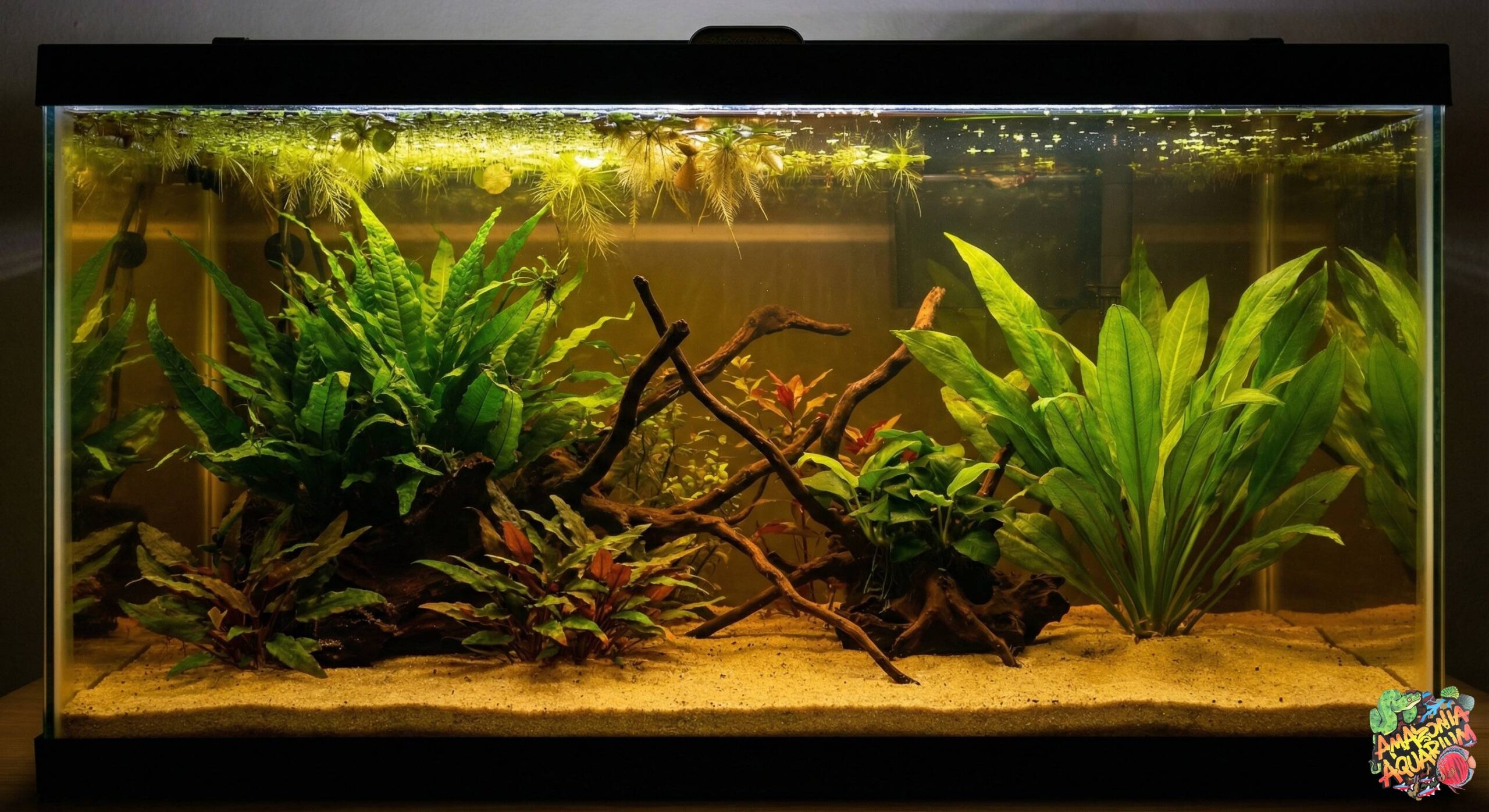
Boesemani Rainbowfish are powerful, active swimmers that need horizontal swimming space above all else. A tank at least 120 cm (4 feet) long is the minimum for a school of six adults; 150 cm (5 feet) or longer is significantly better. Tank depth and height are secondary concerns — prioritise length.
Substrate can be fine gravel, sand, or a planted tank soil — the fish are indifferent to substrate type. A dark substrate will make the colours pop more dramatically against a lighter background, though this is purely aesthetic.
Planting is beneficial but should be arranged to preserve open swimming lanes through the centre and front of the tank. Dense background plantings of Vallisneria, Hygrophila, or Java Fern work well, with shorter foreground plants like Cryptocoryne or Staurogyne repens. Floating plants such as Amazon Frogbit or Salvinia provide dappled light and a sense of security, and the fish will often display most vigorously just below the floating plant canopy.
Driftwood and rocks can be placed along the sides and back to create visual structure without blocking the swimming corridor. Avoid creating too many confined spaces or dead ends — Boesemani prefer broad, sweeping paths rather than tight crevices.
Lighting should be moderate to strong, especially if you want to see the full colour impact. Morning light or a lighting schedule that ramps up gradually will trigger the best daily display behaviour. A tight-fitting lid or cover is essential — Boesemani are capable jumpers, especially when startled or during vigorous display behaviour.
Tank
Minimum 200 L / 55 gal, 120 cm (4 ft) long — longer is always better for active swimmers
Filter
Canister filter rated 8–10× tank volume/hr; moderate to high flow suits their swimming style
Heater
Reliable 200–300 W heater with thermostat; set to 27 °C
Lid / Cover
Tight-fitting lid essential — Boesemani are capable jumpers
Lighting
Moderate to strong LED with dawn/dusk ramp to trigger morning display behaviour
Thermometer
Digital or glass thermometer to verify heater accuracy
Substrate
Dark fine gravel or sand for maximum colour contrast
Background Plants
Vallisneria, Java Fern, or Hygrophila to fill the rear without blocking swim lanes
Related Products

Reviews
Clear filtersThere are no reviews yet.