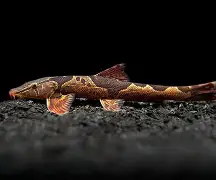
🪨 Species at a Glance
| Scientific Name | Sewellia lineolata (Red Morph) |
| Family | Balitoridae (Hillstream Loaches) |
| Common Names | Red Lizard Loach, Red Sewellia, Vietnamese Hillstream Loach, Reticulated Hillstream Loach |
| Naming Note | Common name shared across several hillstream loach species; most commonly Sewellia lineolata red morph, occasionally Gastromyzon or Homaloptera spp. |
| Origin | Central Vietnam & Laos — fast-flowing highland streams of the Annamite Range |
| Adult Size | 5–6.5 cm (2–2.5 in) |
| Lifespan | 6–10 years |
| Water Type | Cool, well-oxygenated freshwater (NOT tropical) |
| Temperature | 20–24 °C (68–75 °F) — subtropical / cool |
| pH Range | 6.5–7.5 (neutral preferred) |
| Dissolved Oxygen | > 7 mg/L — high oxygen non-negotiable |
| Flow | Strong, directional current (10–20× tank volume/hr turnover) |
| Care Level | Intermediate to Advanced |
| Minimum Group | 4–6 (social but not schooling) |
| Tank Position | Bottom — clings to rocks, glass, and hardscape |
| Min Tank Size | 100 L+ (60 cm / 24 in length minimum) |
Origin & Etymology
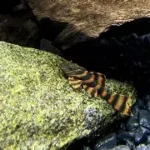
The name ‘Red Lizard Loach’ is a piece of trade-shop poetry that neatly captures the fish’s two most striking features. The ‘lizard’ half refers to the silhouette: the body is flattened from top to bottom, the pectoral and pelvic fins are fanned out sideways like the splayed limbs of a gecko, and the whole animal hugs the substrate in a way that reads more reptile than fish. Watch one scoot across a rock and you would swear you were looking at a tiny salamander. The underside of each pectoral and pelvic fin acts as a low-pressure suction pad, allowing the fish to hold station on a vertical glass surface in current strong enough to knock a pleco loose — a functional adaptation that belongs more to hillstream ecology than to standard fishkeeping intuition.
The ‘red’ half refers to colouration — specifically the warm orange-to-crimson wash that develops along the fin edges, across the pectoral rays, and sometimes over the whole body in well-conditioned specimens. Intensity varies with diet, genetics, and stress, and many shops deliberately select the most richly-flushed individuals to sell under the Red Lizard banner. It is worth emphasising that this is a true visual-appeal fish: a Red Lizard in good condition, clinging to a pale river stone under bright light, is almost hypnotic to look at, and the colour display is a direct reward for getting the husbandry right.
The naming picture is, however, genuinely messy. ‘Red Lizard Loach’ is not a scientific designation — it is a marketing label applied across several hillstream loach species in the Balitoridae family. In Australian and US shops the name most commonly attaches to Sewellia lineolata, the Vietnamese hillstream loach, especially individuals showing strong red pigment. But you will also occasionally see the same label applied to Homaloptera species, to certain Gastromyzon (the Borneo suckers), and to cross-bred or line-bred Sewellia stock whose exact species ancestry is unclear. If precise identification matters to you — for breeding, for scientific interest, or for matching parameters to a specific native range — ask the store for provenance rather than relying on the trade name alone. For day-to-day care, however, the husbandry requirements across these species are so similar that the Red Lizard label is a useful working shorthand: cool water, strong flow, high oxygen, stone surfaces, and mature biofilm.
For the purposes of this guide we treat Sewellia lineolata as the default identity, because it is by far the most commonly imported species sold under the Red Lizard name and because captive-care data on Sewellia is the most robust in the hobby literature. Where a specific care detail differs for Gastromyzon or Homaloptera, we flag it — but in practice, a keeper who builds a proper Sewellia lineolata setup is already providing the right environment for any of the closely-related Red Lizard candidates.
How to Sex This Species
Sexing Red Lizard Loaches gets considerably easier once the fish reach roughly 4 cm body length and have settled into a stable home tank — juveniles are nearly impossible to reliably sex. The single most useful view is from directly above, looking down through the water column: females show a distinctly broader, rounder body profile behind the pectoral fins, while males taper more smoothly from shoulder to tail. In breeding condition the males also develop small tubercles — granular bumps — along the top of the head and on the leading edge of the pectoral fins. These are subtle but visible under good lighting and serve as a reliable confirmation when combined with body shape. The tubercles appear only seasonally in males who are in strong breeding condition, so do not be concerned if you cannot find them on every male in your group at every moment — they come and go with conditioning cycles.
Fin proportions offer a secondary clue: males tend to carry slightly more pointed, elongated outer pectoral rays that they flare during territorial displays and courtship. Females keep their pectorals broader and more symmetrical, optimised for the single most important job these fish do — holding station against current. A female with a body full of eggs cannot afford to compromise her ability to cling to a rock, so evolution has favoured the broader, more hydrodynamically stable fin shape in her. Males, whose reproductive role is less mechanically demanding, can afford the slightly more elaborate fin geometry that serves display.
For planning a breeding group, aim for two to three females per male in a group of six or more; this spreads male attention and reduces wear on any single female. At the point of purchase, juveniles will all look identical and you simply have to trust probability — a group of six random juveniles will very likely contain at least two of each sex, and you can re-balance the ratio as the fish mature if needed by adding or rehoming selected individuals. If you are specifically trying to establish a breeding colony, it is worth buying at least eight to ten fish to raise the odds of a well-balanced adult group.
| Feature | Male | Female |
|---|---|---|
| Body Shape | Slimmer, more streamlined silhouette | Broader and rounder, especially viewed from above when gravid |
| Size | Typically 5–5.5 cm, slightly smaller overall | Can reach 6–6.5 cm — the larger of the pair |
| Head Tubercles | Small breeding tubercles (bumps) on the head and leading pectoral rays during spawning condition | Head remains smooth; no tubercles develop |
| Pectoral Fins | Slightly longer and more pointed at the outer edge, used in courtship displays | Pectorals broader and more rounded, optimised purely for holding station |
| Abdomen Profile | Flat or slightly concave when viewed from below | Noticeably fuller and rounder, particularly mid-body when carrying eggs |
| Colour Intensity | Often slightly more saturated red on fin rays during breeding condition | Generally similar but may appear marginally duller while gravid |
Available Colour Grades
🔴 Wild Red Sewellia
The classic form — warm orange-red wash across pectoral and pelvic fin rays, a reticulated dark-on-cream pattern along the dorsal surface, and a pale cream belly. Red intensifies with age, mature biofilm diet, and stress-free conditions.
🟡 Yellow-Banded Form
A softer morph where the warm tones lean golden-yellow rather than red, often paired with more distinct horizontal banding along the flanks. Common in juveniles and in fish kept under cooler, slightly softer water.
🌵 High-Red / Premium Line
Selectively line-bred stock (usually from Asian breeders) showing saturated crimson across a larger portion of the body, including dorsal pigment. Commands a premium price and tends to be more consistent in colour from specimen to specimen.
Red Lizard Loach colouration is less about discrete morphs and more about a spectrum of expression along a few shared axes — how much red, how saturated, how far it extends onto the body, and how sharp the reticulated pattern reads against the base colour. A given tank of juveniles will contain individuals anywhere from muted olive-cream to vivid orange-red, and ranking them visually is largely a matter of personal preference. Because there is no standardised morph classification in the trade, it pays to shop in person where possible, pick your own specimens, and watch them move for a few minutes before committing — a fish that holds station confidently on a current-facing rock with fins fanned out will almost always out-colour a skittish individual that skulks in a back corner regardless of breeding.
Two environmental factors make the biggest practical difference to colour in captivity. The first is diet: a long-established tank with mature algae biofilm, diatom patches, and occasional blanched spinach or spirulina wafers will produce visibly richer reds over six to twelve months than a sterile, newly-cycled tank fed only on pellets. Carotenoid-rich foods — spirulina, krill, high-quality colour-enhancing pellets — support the biological pigment pathways that produce red in the fins, but they cannot manufacture colour that was never there genetically, only bring out what is latent in the fish. The second is light: moderate-to-bright top-lit tanks with a sandy-cream substrate and pale river stones make the red tones pop far more than a dim or dark-substrate setup, and they also drive the algae-and-diatom growth that feeds the loaches in the first place.
Finally, stable cool water in the 20–23 °C range appears to correlate with better colour than warmer keeping — yet another argument for resisting the temptation to lump these fish into a tropical community tank. Anecdotally, many long-term keepers report that red intensity peaks in the second year of captive life and remains strong for the following three to four years, only beginning to soften as the fish enter old age. A well-kept group therefore offers a steadily improving display for years, not just a brief honeymoon period after purchase.
Getting the Water Right
6.5–7.5
ideal 7.2
20–24 °C
ideal 22 °C
5–12 dGH
Moderately soft to moderately hard (neutral mineral content)
This is where Red Lizard Loaches diverge most sharply from almost every other fish in the trade: they are not tropical. The streams of the Annamite Range in central Vietnam and Laos where Sewellia lineolata originates are cool mountain watercourses — temperatures typically sit between 19 and 23 °C year-round, the water is turbulent, and dissolved oxygen levels are the highest of any freshwater environment these fish will ever experience. Replicating this in an aquarium requires a mental shift. Instead of asking ‘how warm should the heater be set’, you should be asking ‘how do I keep this tank below 24 °C, with massive flow, and with oxygen levels that would suit a trout?’
Temperature is the single most dangerous variable. Above 25 °C dissolved oxygen begins to drop, metabolism spikes, and the fish start to show stress signs — laboured gilling, restlessness, loss of appetite, and fish moving to the highest-flow area of the tank and pressing themselves hard against the spray bar or powerhead outlet in a desperate bid for oxygenated water. Sustained temperatures above 26 °C can be rapidly fatal, and short spikes above 28 °C may kill the entire group within hours. In Australian summers this means most setups require a cooling strategy: a dedicated aquarium chiller, ice bottles floated in the tank on hot days, a clip-on cooling fan aimed at the surface (evaporative cooling can drop tank temperature by 2–4 °C), or a tank sited in an air-conditioned room. Do not buy these fish unless you have a realistic plan for summer cooling — this is the single most common reason Red Lizards die in Australian home aquariums.
pH and hardness are more forgiving. Neutral water around 7.0–7.2 with moderate hardness (5–12 dGH) suits them well. They are not blackwater fish; mildly alkaline, mineral-rich water better replicates their natural streams than a peat-stained tannin tank. Avoid heavy aquasoil substrates and Indian almond leaves, which drive pH down and add organic load the hillstream environment does not have. Weekly water changes of 30–40 % with dechlorinated, temperature-matched water are essential — these fish come from constantly-refreshed running water and degrade quickly in stale conditions. Some experienced hillstream keepers perform smaller changes twice per week rather than one large weekly change, better mimicking the continuous renewal of natural stream water.
Finally, remember that dissolved oxygen is not a single parameter you can set once — it fluctuates with temperature, bioload, plant activity, and flow. Test it at the warmest part of the day, typically late afternoon in summer, when oxygen capacity is lowest and oxygen demand from fish metabolism is highest. If you cannot hold 7 mg/L at that moment, the tank setup needs more aeration or less stocking, not more hope.
Nutrition & Diet
Red Lizard Loaches are specialist aufwuchs feeders — ‘aufwuchs’ being the German ecologist’s term for the mixed mat of algae, diatoms, bacteria, protozoa, and tiny invertebrates that coats submerged rocks in any healthy waterway. In the wild they spend nearly every waking hour grazing this biofilm from stone surfaces with a small, downward-pointing mouth specialised for scraping. Their entire digestive system is tuned to this slow, constant intake of low-calorie mixed matter — not the occasional high-protein meal most tropical community fish are built around.
This has two major practical implications for captive feeding. First, a mature, biologically established tank with naturally-grown biofilm on rocks is the single best feeding environment you can provide. Do not scrub every rock spotless — leave the back and side glass and much of the hardscape to develop a fine brown-green patina of diatoms and algae, which the loaches will graze continuously between feedings. Newly-set-up tanks are genuinely poor homes for these fish; wait at least six to eight weeks after cycling, ideally three months, before introducing them. A ‘seeded’ hillstream tank using a handful of rocks transferred from an existing mature aquarium shortcuts this considerably and is worth the effort for serious keepers.
Second, supplemental feeding must reach the bottom. Flake food is essentially useless — it floats, it spreads, and most of it is consumed by mid-water fish before it ever reaches the substrate. The tiny mouth of a Red Lizard cannot effectively chase floating food anyway; they are anatomically designed to scrape downward-facing surfaces, not to snatch at the water column. Instead, offer sinking algae wafers, spirulina-based tablets, sinking micro-pellets, and blanched vegetables (zucchini slices, spinach leaves, cucumber medallions) weighted down with a fork or veggie clip so they stay pinned to a rock. The loaches will cluster on these offerings within minutes and graze them down over several hours.
For protein variety, offer occasional frozen bloodworm, daphnia, or brine shrimp dropped near the substrate — these will be eaten but are not essential as a staple. Many experienced hillstream keepers feed protein foods only once or twice per week, keeping the daily diet plant-and-biofilm-dominated to match the natural nutritional balance. Keep overall protein moderate; these are herbivore-leaning omnivores and excess protein in a warm, under-oxygenated tank can cause digestive issues that manifest as bloating, lethargy, and loss of the characteristic ‘suctioning’ posture on rocks. Feed small amounts daily rather than large amounts infrequently — their stomachs are small and constant grazing is natural.
A practical feeding trick that works exceptionally well: place vegetable offerings in the high-flow zone of the tank, weighted onto a flat rock. The current keeps oxygen rich around the fish as they feed, matches their natural grazing posture of facing into the flow, and prevents the food from becoming a stagnant bacterial hotspot. Remove any uneaten vegetable matter within 24 hours to keep water quality pristine.
Aquarium Setup Guide
The classic setup for Red Lizard Loaches is a ‘river manifold’ or ‘hillstream biotope’ tank, and it looks visibly different from a planted community aquarium. Start with a tank that is long rather than tall: 60 cm length is the workable minimum, 90–120 cm is far better. Length matters because current travels along the tank and provides the linear swimming lane these fish use to hold station and dart between feeding rocks. A tall 60-litre cube, even at the same volume, is a poor home for this species — the flow pattern is wrong and the grazing surface area is too limited.
For hardscape, build a river-bed: a layer of fine to medium-grade sand or pea gravel, topped with a collection of smooth, rounded river stones of varying sizes. Think granite pebbles, flat slate slabs, and tumbled quartzite — the kinds of rocks you would find in a mountain creek. Arrange them to create a mix of flat grazing surfaces facing the current and sheltered lee-side pockets where fish can rest out of the strongest flow. Avoid sharp-edged hardscape; the loaches slide across stone surfaces constantly and abrasive rocks damage their belly and barbels. Aim for multiple ‘zones’ — a high-flow scree of small stones at one end, a few larger boulder-shaped rocks in the middle with obvious grazing plateaus, and a calmer lee-side pocket at the other end where fish can rest. This zonation lets the group self-distribute according to mood and appetite.
For flow, a single canister filter rarely delivers enough. The standard approach is a canister filter PLUS one or two powerheads (or a wave maker) aimed along the tank’s long axis, creating a visible, directional current at the substrate level. You want to see plant leaves and loose debris being carried along the bottom — this is the environment the fish evolved for. A spray bar across the back wall, pointed slightly down, helps disperse oxygen-rich water through the whole tank. For an advanced build, look up the ‘hillstream manifold’ design popularised by aquarist Martin Thoene: a length of PVC pipe drilled with precisely-sized holes, connected to a powerful pump, generating a laminar current that matches natural stream conditions remarkably well.
Plants are possible but must be current-tolerant: Anubias and Bolbitis tied to rocks, Java fern anchored to driftwood, and tough Cryptocoryne species tucked into low-flow pockets all work. Skip delicate stem plants and carpeting species — they will either uproot or melt in the flow. Lighting can be moderate to bright; a well-lit tank encourages healthy biofilm and diatom growth on rocks, which is the primary natural food source. Running the lights on a long photoperiod of 10–12 hours per day further encourages this growth — counterintuitive for keepers used to algae being ‘a problem’, but here the fine algae mat is actively cultivated as a food crop.
Finally, cover the tank with a tight-fitting lid. Hillstream loaches do not jump often, but when they do they travel with surprising determination, and power-sockets plus water are a bad combination. A full cover also reduces evaporation, which in high-flow, well-agitated tanks can otherwise be significant — expect to top off a 100-litre hillstream tank with several litres of dechlorinated water every week just to keep levels constant.
Tank
100 L+ minimum, 60 cm length or longer — prioritise length over depth for river-style flow
Canister Filter
Oversized for the tank volume; target at least 6× volume turnover from the filter alone
Powerheads / Wave Maker
One or two additional flow pumps aimed along the tank length — combined turnover 10–20× tank volume per hour
Airstone or Spray Bar
Dedicated aeration or surface-agitating spray bar to keep dissolved oxygen above 7 mg/L
Chiller or Cooling Fan
Aquarium chiller ideal; clip-on cooling fan minimum for summer temperature control
Substrate
Fine sand or pea gravel base with abundant smooth, rounded river stones for grazing surfaces
Lighting
Moderate to bright LED — encourages biofilm and diatom growth, which is primary food
Thermometer (digital)
Accurate digital thermometer — track temperature daily, especially in warm months
Dissolved Oxygen Meter
Optional but recommended — confirms DO stays above 7 mg/L at peak daily temperature
Tight Lid
Full cover — loaches occasionally jump, and evaporation from high-flow tanks is significant
Community Compatibility
The guiding principle for a Red Lizard Loach community is brutally simple: cool-water species only, and nothing that competes for bottom food. These two filters eliminate roughly 80 percent of common community fish — including virtually every tetra, rasbora, gourami, and the entire pleco-and-catfish family. What remains is a smaller but genuinely compatible set of temperate-stream natives and cool-tolerant specialists: zebra danios and white cloud mountain minnows for mid-water movement, other hillstream loaches for conspecific company, rainbow shiners for colour, and cool-water shrimp or Borneo suckers for algae-grazing companionship. The resulting tank has a distinct character — clean, fast, silvery, and reminiscent of a mountain stream rather than a tropical forest pool — and it tends to attract keepers who value the naturalistic biotope aesthetic over the ‘Amazon planted tank’ default.
The community error that kills more Red Lizard Loaches than any other is the ‘just one more fish’ temptation when a keeper with an existing tropical community wants to add ‘something interesting for the bottom’. Red Lizards are not that fish. A 26 °C community tank is already above their healthy range; drop the temperature to accommodate them and the tropical fish suffer. The only sustainable solution is a dedicated cool-water setup built around the loaches’ needs from day one. If you already have a tropical community and fall in love with Red Lizards at your local shop, budget for a second tank rather than trying to retrofit the first — it will save fish lives and a great deal of frustration.
Socially, Red Lizards are gregarious but not schooling — they recognise conspecifics, congregate on good grazing rocks, and tolerate each other at very close quarters, but they do not swim in formation. Minimum group size is four to six; any fewer and the fish become reclusive, hide under rocks, feed poorly, and lose colour. In a properly sized group they are bold, front-of-glass, and interact with each other throughout the day in ways that solitary specimens simply do not. They are peaceful toward other species and will not harass tankmates, though they will mildly squabble among themselves over prime grazing real estate — short pectoral-flaring displays that resolve without injury in seconds, often accompanied by a brief chase across a rock face before both fish settle back into grazing posture a few centimetres apart. Provide plenty of flat rock surfaces and these disputes stay trivial; crowd too many fish onto too few grazing plateaus and you will see more persistent harassment.
One final community consideration: the hillstream setup is not particularly friendly to very small shrimp fry or egg-laying fry of other species, because the strong flow tends to sweep small larvae into filter intakes. If you want to breed shrimp or any fish alongside your Red Lizards, plan a separate grow-out tank rather than relying on the main setup to produce survivable fry.
| Species | Why | |
|---|---|---|
| ✅ | Zebra Danio | Classic cool-water schooler, tolerates identical temperature and high flow, occupies upper water column without competing for bottom biofilm |
| ✅ | White Cloud Mountain Minnow | Temperate-stream native with near-identical parameter requirements; peaceful mid-to-upper swimmer and visually elegant in a river-style tank |
| ✅ | Other Hillstream Loaches (Sewellia, Gastromyzon spp.) | Conspecifics and near-relatives share all husbandry requirements; mixed hillstream groups graze the same rocks without conflict |
| ✅ | Rosy Barb (cool-water form) | Active, flow-tolerant, peaceful at the cool end of their range; adds colour and movement in the mid-water zone |
| ✅ | Hillstream Shrimp / Freshwater Neocaridina (cool variants) | Compatible invertebrates that graze biofilm alongside loaches; choose locally-bred cool-tolerant stock rather than tropical lines |
| ✅ | Borneo Sucker (Gastromyzon spp.) | Another hillstream specialist with matching parameter needs; shares rock surfaces amicably and adds visual variety |
| ✅ | Rainbow Shiner (Notropis chrosomus) | North American temperate-stream minnow with striking breeding colours; thrives in the same cool, high-flow setup |
| ❌ | Tropical Community Fish (Tetras, Rasboras, Gouramis, Discus) | Require 25–28 °C warm water — directly incompatible with the 20–24 °C cool range Red Lizards need. Keeping either species at a compromise temperature harms both. |
| ❌ | Plecos and Bristlenose Catfish | Share bottom territory and aggressively monopolise sinking wafers and vegetable offerings; slow-grazing loaches get out-competed at every feeding |
| ❌ | Corydoras (warm-water species) | Most common Cory species need 24–28 °C tropical conditions and still-to-moderate flow — unsuitable for the cool, turbulent Red Lizard setup |
| ❌ | Goldfish | Although cool-water, goldfish are messy, high-bioload, and will harass small bottom fish; their waste rapidly overwhelms the oxygen budget these loaches depend on |
| ❌ | Large Cichlids and Predatory Fish | A flat, 5 cm loach clinging to a rock is an easy target; any fish large enough to swallow them will eventually try |
How to Breed
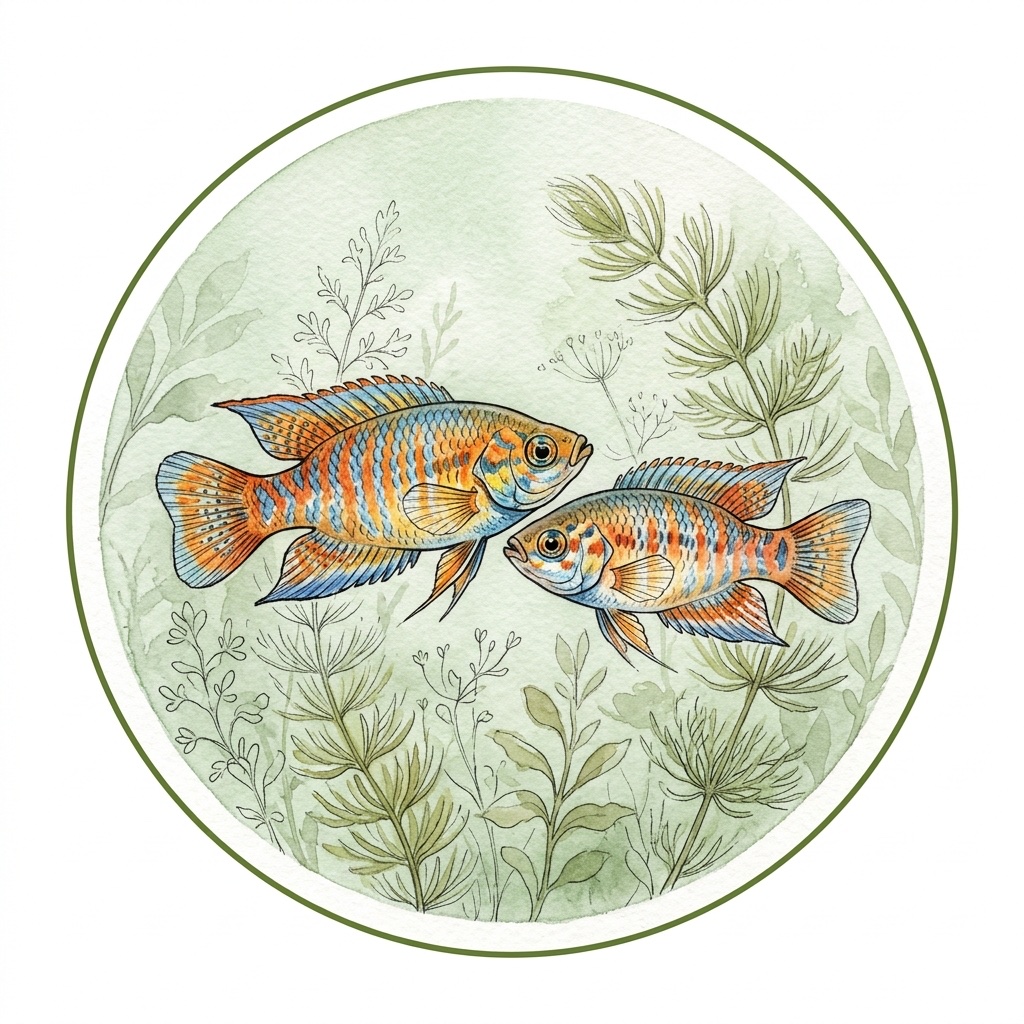
Weeks 1–3
Conditioning
Varied diet, mature biofilm, cool stable water, balanced sex ratio
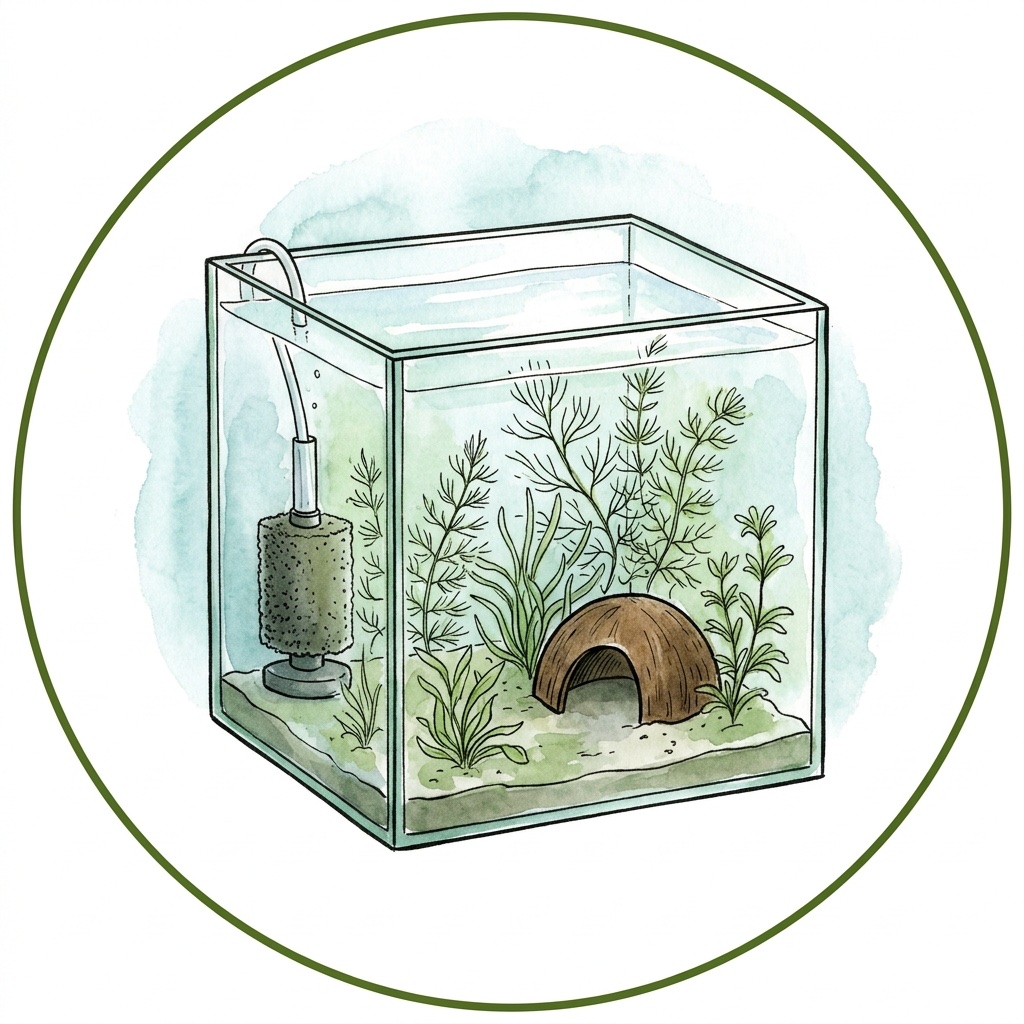
Week 4
Spawning Trigger — Cool Water Change
Large cool-water change simulates monsoon runoff
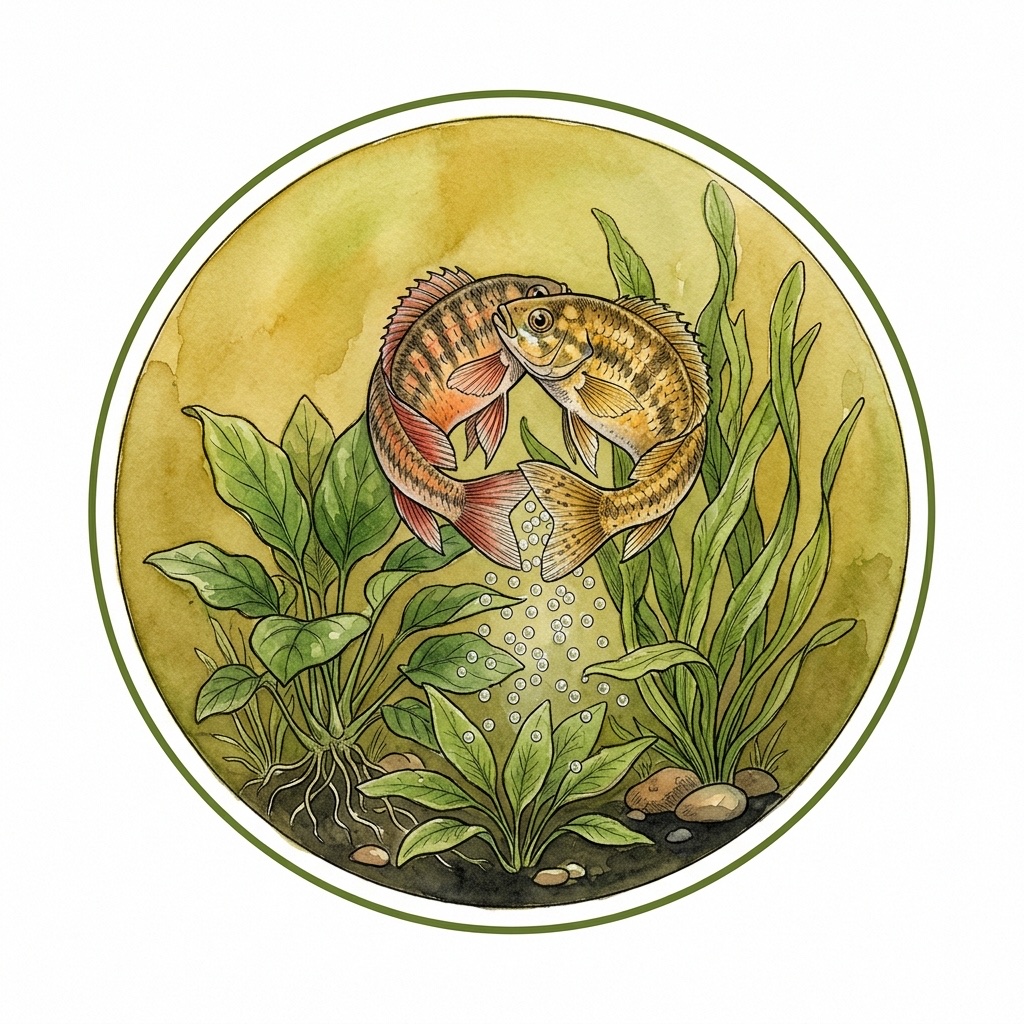
Day 0
Spawning — Rock Cleaning & Egg Laying
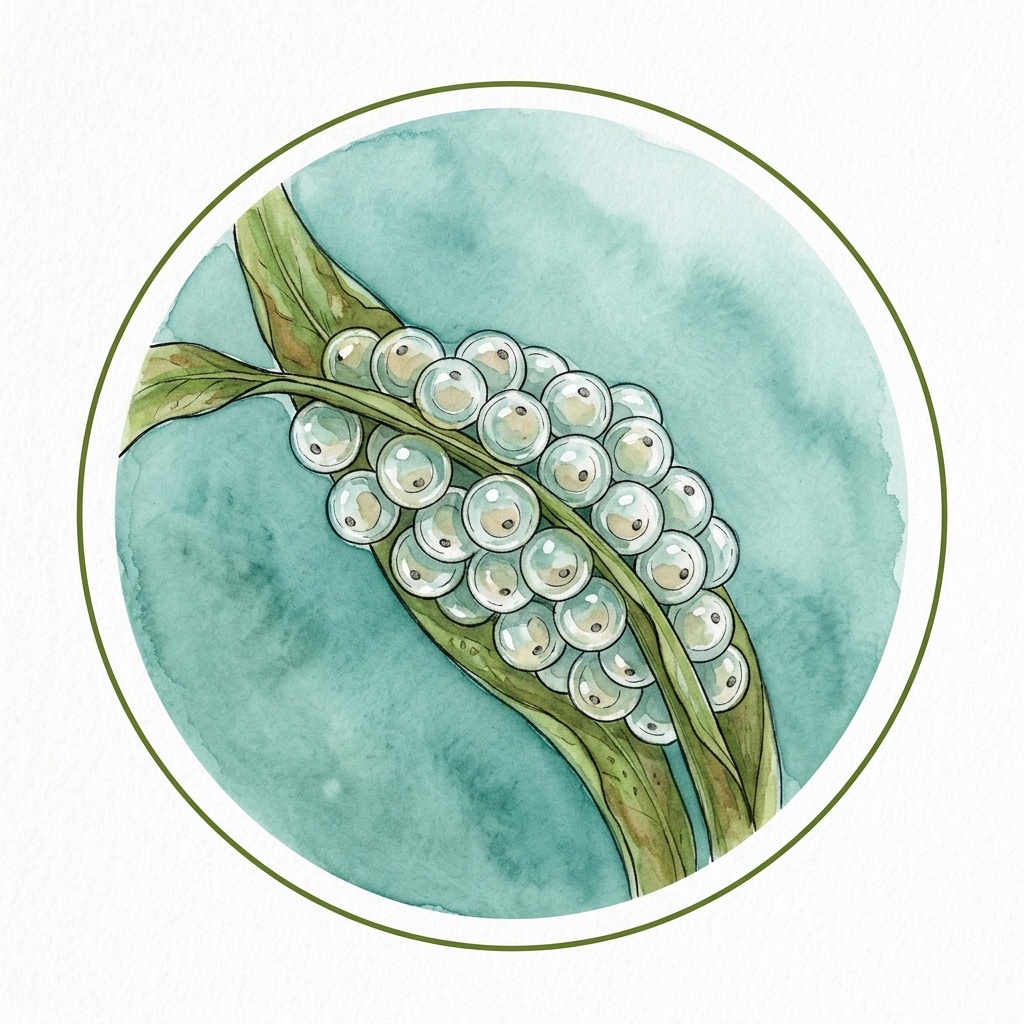
Adhesive eggs deposited on cleaned flat rock surfaces or spawning mops
Days 3–5
Hatching
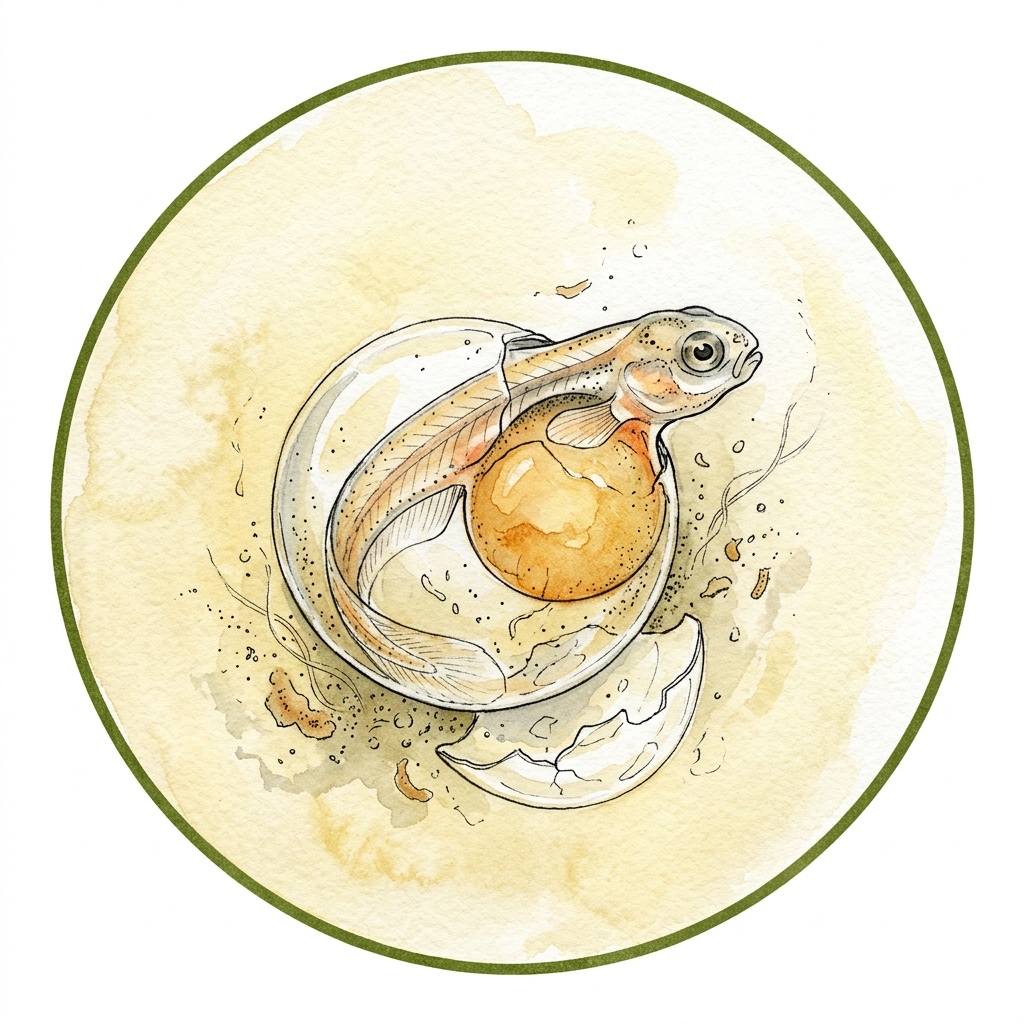
Fry emerge, cling to rock surfaces
Days 6–21
First Feeding & Free-Swimming Phase
Infusoria then baby brine shrimp; establish grazing on rock biofilm
Conditioning
Captive breeding of Sewellia lineolata is documented but remains uncommon in home aquariums — most stock in the trade is still wild-caught from Vietnam, with a growing minority from Asian commercial breeders using purpose-built flow tanks. Home-tank spawns do happen, however, and the key is starting from a well-conditioned group of at least six adults in a mature tank with abundant biofilm. Feed a mix of high-quality sinking wafers, spirulina tablets, frozen daphnia, and the occasional bloodworm, aiming for gradual weight gain in the females. Keep the temperature stable at the cooler end of the range (20–22 °C) and maintain strong flow with dissolved oxygen above 8 mg/L. The males should be showing bright red fin tones and, ideally, early tubercle development on the head.
During conditioning, watch for increased social interaction between males and females — brief pectoral-fin flaring, side-by-side grazing that pauses when the pair meet, and generally more ‘together’ behaviour than at baseline. These are the first signs that reproductive hormones are engaging and that the group is approaching readiness.
Spawning Trigger — Cool Water Change
After two to three weeks of heavy conditioning, the classic spawning trigger is a large water change — 40 to 50 percent — performed with dechlorinated water two to three degrees cooler than the tank. This mimics the sudden influx of cool, oxygen-rich runoff that accompanies the onset of the monsoon season in the species’ native highland streams. Perform the change in the early evening and increase flow immediately afterward by cranking powerheads to maximum. Some keepers also time the trigger to coincide with a real weather front moving through — a low-pressure system combined with the cool water change appears to produce the strongest response, suggesting these fish are sensitive to barometric cues the same way many stream-spawning species are.
Over the following 24–72 hours, watch for active courtship: males pursuing females across open rock surfaces, pectoral fin flaring, and pairs briefly vibrating side-by-side on flat stones. Chasing can look energetic but is not aggressive in the harmful sense — spawning is a whole-body ritual for this species. If no spawning occurs within a week of the trigger, return to conditioning for another fortnight and try again; multiple cycles are normal before a first successful spawn.
Spawning — Rock Cleaning & Egg Laying
Spawning itself is subtle and easily missed. A courting pair will select a flat rock surface — often one positioned in moderate rather than peak current — and the male will nudge the female into position. Eggs are small, adhesive, and laid in scattered clusters directly on the rock face or, if provided, on a fine-fibre spawning mop anchored to a stone. A single female may release 30–100 eggs per spawning event, and in a well-conditioned colony multiple females may spawn within the same 24–48 hour window following a successful trigger.
The adults show no parental care and will readily eat eggs given the chance. The standard practice is to either lift the entire rock (or spawning mop) with eggs attached and transfer it to a separate bare-bottom rearing tank with matched water parameters and gentle but continuous aeration, or to net out the adults and leave the spawning tank as-is. The separate rearing tank is more reliable but requires additional space and equipment. Prepare the rearing tank a week in advance so it has a stable biological filter and matches the main tank’s parameters precisely — sudden parameter shifts at the egg stage dramatically reduce hatch rates.
Hatching
Eggs hatch in roughly 72 to 120 hours depending on temperature — slower at the cooler end of the range. Newly hatched fry are tiny, transparent, and initially cling to the rock surface or sink to the bottom, absorbing their yolk sacs over the next 24–48 hours. Maintain pristine water quality during this phase: daily 10–15 % water changes using a turkey baster are the safest approach, avoiding strong filter intakes that can trap fry. Keep flow gentle for the first week — a single small airstone is enough. Resist the urge to feed yet; premature feeding fouls the water before fry can use it. Cover any filter intakes with fine sponge pre-filters — hillstream fry are small enough to be drawn through standard intake strainers and lost to the filter media.
First Feeding & Free-Swimming Phase
Once free-swimming, fry require extremely small first foods. Start with live infusoria cultured from a green-water jar or commercial liquid fry food, graduating to freshly hatched baby brine shrimp (Artemia nauplii) within about a week. Crucially, also provide one or two rocks pre-seeded with mature biofilm from the parent tank — fry begin grazing microscopic algae and diatoms very early, and these surfaces can provide supplemental nutrition around the clock between meal feedings.
Gradually increase flow as the fry develop stronger pectoral fins, teaching them to cling and hold station. This staged flow increase is important; adult-strength current imposed on tiny newly-free-swimming fry will exhaust them and drive high mortality. By three weeks, surviving fry are miniature replicas of the adults, roughly 8–10 mm long, and already showing the flattened lizard-like body shape. Growth is slow; expect six to nine months to reach sale size of 3–4 cm. Patience is part of the hillstream-breeding mindset — these are not guppies, and nothing about their life cycle is hurried.
Quick Reference
| Scientific Name | Sewellia lineolata (Red Morph) |
| Common Names | Red Lizard Loach, Red Sewellia, Vietnamese Hillstream Loach |
| Origin | Central Vietnam & Laos — Annamite Range |
| Adult Size | 5–6.5 cm (2–2.5 in) |
| Lifespan | 6–10 years |
| Temperature | 20–24 °C (COOL — not tropical) |
| pH | 6.5–7.5 (ideal 7.2) |
| Hardness | 5–12 dGH |
| Dissolved Oxygen | > 7 mg/L (critical) |
| Flow Rate | 10–20× tank volume / hour |
| Min Tank Size | 100 L+ (60 cm length minimum) |
| Min Group | 4–6 |
| Diet | Biofilm grazer + sinking wafers + blanched vegetables |
| Temperament | Peaceful, gregarious, diurnal |
| Care Level | Intermediate to Advanced |
Related Products

Reviews
Clear filtersThere are no reviews yet.