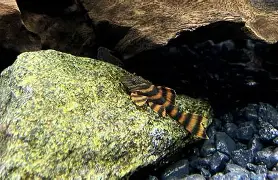
🪨 Species at a Glance
| Scientific Name | Panaqolus sp. ‘L397’ |
| Common Names | L397 Pleco, Alenquer Tiger Pleco, Alenquer Pleco |
| Family | Loricariidae |
| Subfamily | Hypostominae (Ancistrini) |
| Origin | Rio Trombetas basin, Alenquer area, Pará, Brazil |
| L-Number | L397 |
| Adult Size | 10–12 cm (4–4.7 in) SL |
| Lifespan | 8–12 years |
| Water Type | Soft Acidic Blackwater |
| Temperature | 26–30 °C (79–86 °F) |
| pH Range | 5.5–7.0 |
| Hardness | 2–8 dGH |
| Diet | Xylivore (wood-eater) — plant-based, low protein |
| Care Level | Intermediate |
| Community Safe | Yes — exceptionally peaceful |
| Tank Position | Bottom — wood and cave-dwelling |
| Min Tank Size | 150 L (40 gal) well-furnished |
Species Background
Like every L-coded pleco, L397 owes its label to the German aquarium magazine DATZ, which began issuing sequential L-numbers in 1988 as a pragmatic workaround for the flood of undescribed loricariids pouring out of South America through the ornamental fish trade. L397 was catalogued in the early 2000s from shipments originating around the port town of Alenquer in Pará State, Brazil. Despite more than two decades in the hobby, Panaqolus sp. ‘L397’ has not yet received a formal scientific description — hence the quoted L-number standing in for a species epithet. Most working ichthyologists treat it as a distinct population within a complex of closely related small striped Panaqolus, some of which may eventually prove to be local colour forms of a single widespread species, while others stand up as genuinely separate lineages. Until somebody sits down with the preserved specimens and a phylogenetic study, the L-number remains the honest identifier.
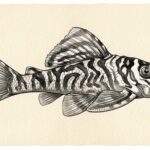
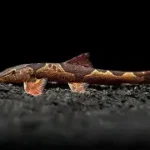
The common name ‘Alenquer Tiger Pleco’ stitches together the type locality — the Alenquer region of the Rio Trombetas basin — with the bold, vertically banded pattern that earns so many small loricariids their ‘tiger’ nickname. That naming convention is genuinely confusing in the hobby, because several unrelated plecos share variations on ‘Tiger Pleco’: the L333 and L066 ‘King Tiger’ (Hypancistrus, carnivorous), the Tiger Pleco L002 (Panaqolus, wood-eater), and a handful of other striped species in multiple genera. L397 belongs firmly to the Panaqolus camp — the small, wood-eating cousins of the well-known Panaque genus — so its care and diet profile are worlds apart from the superficially similar Hypancistrus tigers. Keepers who buy an L397 expecting a Hypancistrus-style protein-heavy feeding regime, or who buy it as an algae eater, will misfeed the fish from day one.
In the wild, L397 inhabits the clear, tannin-tinted tributaries of the lower Rio Amazonas around Alenquer, where the Rio Trombetas meets the main channel. These are warm, soft-water environments dense with submerged woody debris — whole tree trunks, branches, and leaf litter that accumulate along slow-moving margins. Everything about the species’ biology is tuned to this habitat: the rasping teeth that scrape cellulose from softening wood, the elongated gut adapted to fermenting plant fibre, the cryptic stripe pattern that disappears against a background of bark, and the cave-loving behaviour that keeps the fish safely tucked into hollow logs by day. Replicating that wooded, blackwater niche in the aquarium is both the core challenge and the core pleasure of keeping L397.
Sexual Dimorphism
L397, like most Panaqolus, becomes reliably sexable once individuals reach around 7–8 cm and are approaching their first year of maturity. The single most dependable external cue is the development of odontodes, the tiny hook-shaped bristles that male loricariids use in territorial disputes and mate-guarding. On male L397 these appear in two main zones: a prominent cluster radiating from the interopercular cheek region, and a scattering along the body flanks and rear half of the fish. Females may show a faint hint of cheek bristles but remain relatively smooth along the body. Pectoral fin rays are another strong indicator — run a fingertip very gently along the leading pectoral spine and a mature male will feel distinctly coarser than a female.
Viewed from directly above, a well-fed female usually reveals a rounder, more ovoid abdominal outline, especially during conditioning when eggs begin to develop. Males maintain a straighter-sided, more torpedo-shaped silhouette. Head shape is subtler but consistent once you have calibrated your eye on several specimens: the male’s skull is broader across the cheek plates, built to wedge solidly into a cave entrance and hold position against a rival. If you are buying a pair or small group with breeding in mind, the safest approach is to purchase five or six juveniles and grow them on together, letting nature sort out the sexes as they mature. Trying to mix two adult males in a tank with limited cave real estate is the classic route to persistent territorial harassment and stress.
At import sizes — typically 5–7 cm — reliable sexing is effectively impossible. Shops that claim to sell ‘confirmed pairs’ at that size are usually making educated guesses, not firm identifications. If a confirmed pair matters to you, the honest options are to buy a group of six and grow them on yourself, or to buy larger, fully mature adults from a specialist breeder who can show you the odontode development, head width, and body profile side-by-side. A good breeder will also know the behavioural history of the fish — whether a particular male has already claimed and spawned in a specific cave, which is by far the strongest possible evidence of sex and reproductive viability.
| Feature | Male | Female |
|---|---|---|
| Head Shape | Broader, boxier head with visible cheek widening in mature fish | Narrower, more tapered head profile |
| Interopercular Odontodes | Pronounced hooked odontodes fanning from the cheek plates, easily visible in breeding condition | Short, inconspicuous cheek odontodes |
| Body Odontodes | Small bristly odontodes scattered along the flanks, especially along the rear body and caudal peduncle | Body flanks almost smooth, without visible bristles |
| Pectoral Fin Ray | Leading pectoral ray noticeably thickened and heavily armed with odontodes | Leading pectoral ray thinner and smoother |
| Body Shape (Top View) | More rectangular, straight-sided from above | Rounder in the abdomen, especially when gravid and packed with eggs |
| Size | Slightly smaller on average, 9–11 cm SL | Often the bulkier sex, 10–12 cm SL with more overall body depth |
| Colour Intensity | Often slightly higher contrast when displaying at a cave | More uniform year-round, less dramatic display colour |
| Behaviour | Claims and defends a specific cave; performs tail-fanning at entrance | Wanders more between shelters; visits male’s cave when ready to spawn |
The Colour Spectrum
🟫 Standard Alenquer Stripe
The classic form: warm chocolate-brown body crossed by broad, slightly wavy cream bands of fairly even spacing from nose to caudal peduncle.
🌀 Fine-Line Form
Some Alenquer-area shipments display narrower, more numerous stripes that can almost merge into a fine reticulated net, especially on the head and pectoral girdle.
🎯 Bold-Band Form
Individuals with fewer, broader, very high-contrast cream bands — the most photogenic pattern and the one most often selected by breeders for tank-bred stock.
🟠 Warm Orange-Cream Variant
Wild-caught fish maintained on a tannin-rich, leaf-litter-heavy diet often develop warm apricot or light orange tones in the pale bands rather than pure cream.
Unlike heavily line-bred ornamental species such as guppies or angelfish, L397 has not been selectively bred for decades, and most of the pattern variation on offer reflects genuine geographic and individual variation from wild-caught fish. Line width, spacing, and background tone differ noticeably between shipments and sometimes even between siblings from the same clutch. Environment and diet both play a role in how the colours present in your tank. A dark substrate, dim lighting, and tannin-stained water bring out the deepest chocolate tones in the dark bands and make the cream stripes pop dramatically. Bright lighting over pale sand tends to wash the fish out, encouraging them to darken defensively and lose some stripe contrast. Diet matters too: carotenoid intake from spirulina, hibiscus leaves, and occasional algae wafers helps maintain warm orange-cream tones rather than flat ivory, and a well-fed fish will always look richer than a hungry one. Patience is also part of the picture — young L397 often ship with slightly muddy, less-defined stripes and really only reach peak pattern clarity once they settle and begin eating wood confidently, which can take several weeks in a new tank.
A useful way to think about pattern selection when buying is this: avoid the temptation to pick the fish that ‘looks brightest’ in a harshly-lit shop tank, because what you are often seeing there is stress pallor, not good genetics. Look instead for a fish that is actively rasping a piece of wood, showing clean edges to its stripes at all scales, and displaying symmetrical pattern on both flanks. Those three signs — active behaviour, crisp edges, and symmetry — predict the long-term appearance of the adult fish much better than momentary contrast. Pattern also slowly intensifies with age in this species: many L397 spend their first year looking fairly ordinary and then bloom dramatically into their adult colours around 18–24 months as the dark pigment matures.
Water Chemistry Guide
5.5–7.0
ideal 6.3
26–30 °C
ideal 28 °C
2–8 dGH
Soft, acidic blackwater preferred
Water chemistry for L397 is best understood through its habitat. The Alenquer region sits in the lower Amazon where slow, forested tributaries stain the water deep amber with humic acids from decomposing leaves and wood. These are classic blackwater conditions: soft, acidic, warm, and rich in dissolved organics but poor in dissolved minerals. Target a pH between 5.5 and 7.0 with 6.3 as an ideal sweet spot, and keep general hardness firmly in the soft range — roughly 2 to 8 dGH, with carbonate hardness (KH) kept low enough that the water can buffer naturally against acidic inputs without locking the pH at 7.5.
Temperature is a non-negotiable for this species. L397 comes from genuinely warm equatorial water, and the aquarium should sit consistently in the 26–30 °C range with 28 °C as an ideal daily operating point. Chronic exposure to temperatures below 25 °C is one of the most common causes of poor appetite, slow growth, and susceptibility to opportunistic disease in Panaqolus. Many keepers instinctively run their tanks cooler to ‘save electricity’ or to accommodate tetras, not realising their wood-eating pleco is quietly suffering. If you cannot reliably maintain 27 °C or above, L397 is the wrong species for your setup.
Achieving and holding the right water chemistry usually means softening the source water. If your tap water is hard and alkaline, an RO/DI unit remineralised with a small dose of specialist blackwater salt is by far the most reliable long-term approach. Indian almond (catappa) leaves, alder cones, and botanicals like casuarina cones steep naturally into the water column, releasing tannins that lower pH, bind heavy metals, and provide mild antibacterial and antifungal benefits that Panaqolus fry in particular seem to appreciate. Leaf litter on the tank floor also provides grazing surfaces for microfauna that form part of a healthy pleco diet.
Because warm water holds less dissolved oxygen than cool water, flow and surface agitation matter more than most keepers realise. You want visible surface movement, a turnover rate around 6–10 times tank volume per hour, and a filter outlet that breaks the surface gently. Do not run heavy CO2 injection on an L397 tank unless you can guarantee oxygen saturation through aggressive surface gas exchange — the combination of high temperature, low pH, heavy organics, and low oxygen is a well-documented silent killer of Xingu and Trombetas loricariids.
What to Feed
This section is the one that most often catches new keepers off guard. L397 is a xylivore — a true wood-eater. Driftwood is not decoration in its tank, it is a staple food. The fish scrapes softening wood fibres with specialised spoon-shaped teeth, and its gut harbours symbiotic microbes that ferment cellulose into usable nutrition. Remove the wood and you remove roughly half of the fish’s diet and most of its normal behavioural repertoire. Place an L397 in a bare tank and offer only commercial pellets and you will have a chronically stressed, under-stimulated, under-nourished animal, even if it keeps eating and looks outwardly healthy.
Build the daily diet around three layers. The foundation is driftwood: choose soft, tannin-rich woods like mopani, mangrove, catappa, and spiderwood, and let the fish rasp continuously. Expect visible grooves and a slow loss of mass from softer pieces over months — that is the fish feeding, not the wood rotting. Add fresh pieces to the tank as old ones are consumed. On top of the wood, offer fresh vegetables: blanched zucchini, cucumber, and sweet potato are the core rotation, with occasional additions of blanched spinach, shelled peas, steamed carrot, or thin slices of butternut pumpkin. Weight the vegetables with a stainless clip or an algae-feeding stone so they sink and stay put through the night. Any uneaten pieces should be removed within 12–24 hours before they foul the water. Finally, supplement with high-quality algae and vegetable wafers — spirulina-based, Repashy Morning Wood, and similar wood-and-vegetable formulations. These fill nutritional gaps and give you a way to deliver targeted trace elements and vitamins.
Protein should be kept deliberately low. This is where L397 parts company most dramatically from its Hypancistrus ‘Tiger’ namesakes. Do not feed bloodworm, beefheart, carnivore pellets, or high-protein cichlid food as a staple. These are simply not what this fish evolved to digest, and chronic high-protein feeding is strongly associated with ‘bloat’ — a swollen, often fatal digestive disorder seen in Panaqolus and Panaque. A rare treat of mysis shrimp or a small frozen bloodworm offering once every two or three weeks is tolerated, but protein should sit well under 20 % of the overall diet. If you ever have to choose between too much vegetable matter and too much protein, err heavily on the side of the vegetables.
Feed primarily in the evening, ideally shortly before lights-out. L397 is crepuscular and becomes most active as the tank dims. A heavy daytime feeding regime often results in tankmates like cories and tetras stealing most of the prepared food before the pleco emerges. A single substantial evening feeding, plus around-the-clock access to driftwood and leaf litter for grazing, is more than enough for a healthy adult.
A practical way to judge feeding success is to watch the belly profile rather than pellet consumption. A healthy L397 has a gently rounded, slightly convex underside — not caved-in, not bloated-taut. Turn the tank lights off, wait twenty minutes, and watch with a dim red light: a well-fed adult will spend most of the evening slowly working across the driftwood and leaf litter, occasionally detouring to a vegetable offering. If your fish is still hunting desperately for food two hours after feeding, increase the vegetable portion by a quarter and re-evaluate in a week. If the belly looks visibly swollen the morning after feeding, especially around the pelvic region, skip the next feeding entirely and reassess the protein balance in the diet.
Creating the Perfect Habitat
A 150-litre tank is a sensible minimum for a small group of L397. You can keep a single specimen or a pair in as little as 100 litres, but the extra footprint really pays off: it lets you lay out a full wood-scape with multiple territories, several caves, and the clear sight-lines Panaqolus need to stay out of each other’s way. Footprint matters more than height — a long, shallow tank gives you more floor area to lay driftwood horizontally, which is the natural orientation these fish prefer to work from.
Driftwood is the single most important element of the aquascape. Treat it as food and as furniture simultaneously. Use soft, tannin-rich woods: mopani, mangrove, and especially good-quality catappa or spiderwood allow the fish to rasp productively at the surface as it softens. Harder woods like Malaysian driftwood are decorative only — the fish cannot meaningfully graze them. Expect to add fresh wood over time: a healthy, well-fed group of L397 will slowly but visibly reduce softer driftwood pieces over months and years, leaving characteristic rasping grooves behind. That is not damage, it is a sign that the fish are behaving normally. Build the wood layout so that there are multiple distinct zones: a front centrepiece log visible from the viewing side, several side-tank branches with overhang and shadow, and at least one rear ‘wood pile’ of crossing branches that creates enclosed, dim interior space. This gives the fish a genuine choice of where to spend the day and encourages them to use the entire tank rather than clustering in one corner.
Provide one cave per fish plus at least one extra. Commercial clay or slate Panaqolus caves with 3–4 cm inside diameter and 8–10 cm inside length are ideal; the cave should feel like a snug sleeve rather than a roomy bedroom. Natural hollow branches and carefully stacked flat stones work equally well provided the entrances are tight enough for the male to block. Arrange caves so that their entrances face slightly different directions — this visually separates the territories and reduces tension between neighbouring males. Bury the rear third of each cave under a flat stone or wedge it under a driftwood branch so the fish perceives the shelter as part of a larger structure rather than a free-standing box.
Substrate should be fine, smooth sand or very fine rounded gravel. Coarse or sharp substrates can wear the soft ventral plating and mouthparts of a species that spends a lot of time in direct contact with the tank floor. Dark sand deepens the colour of the fish and amplifies the blackwater look. Scatter a thin layer of dried leaves — catappa, oak, beech, or magnolia — across the sand. The leaves tannin-stain the water as they decompose, feed biofilm, shelter microfauna, and give fry an extra grazing surface once breeding begins.
Planting is optional. L397 does not destroy plants, but the preferred water chemistry — low pH, warm temperatures, and dim tannin-stained light — suits only a narrow palette of species. Anubias and Java fern attached to driftwood, Bolbitis heudelotii, and floating plants like Amazon frogbit or Salvinia all thrive in these conditions and reinforce the dim, shaded feel. Floaters in particular are worth adding: they shade the tank from above, lower light intensity, and make the fish noticeably bolder in their daytime activity.
Lighting should be subdued. A single moderate LED run on a short photoperiod of six to eight hours gives enough light for plants and for you to enjoy the tank, without pushing the fish into permanent hiding. Remember that L397 is most active at dusk and after lights-out — a blue or red moonlight setting for an hour after the main lights switch off rewards patient watching with some of the most interesting behaviour the species offers.
Tank
150 L (40 gal) minimum for a group; 100 L acceptable for a single specimen or pair
Driftwood (primary food)
Multiple pieces of soft, tannin-rich wood — mopani, mangrove, spiderwood. Non-negotiable.
Caves
One snug clay/slate cave per fish plus one extra — 3–4 cm inside diameter, 8–10 cm long
Filter
Canister filter at 6–10x tank volume turnover per hour
Sponge filter
Supplementary sponge filter for extra oxygen, biofilm grazing and breeding-safe intake
Heater
Reliable thermostat heater holding 27–29 °C year-round
Substrate
Fine dark sand or smooth rounded gravel
Leaf litter
Handful of catappa, oak, or beech leaves refreshed every 3–4 weeks
Lid
Tight-fitting cover — startled plecos can jump during acclimation
Tank Mate Guide
L397 is close to an ideal community pleco in terms of temperament. It is exceptionally peaceful with anything that does not compete directly for its cave or actively bully it, and spends most of its time either inside a cave or working along driftwood at the lower levels of the tank. The main compatibility constraints are therefore not about aggression but about niche and environment. Temperature is the hard filter: at 27–30 °C many popular community fish are at or beyond their comfort zone, so your stocking list needs to lean strongly on warm-water lineages from South America and warm Southeast Asia. Warm-water cories like Corydoras sterbai are excellent companions, as are cardinal, neon, rummy-nose and flame tetras, South American dwarf cichlids in the Apistogramma group, and peaceful labyrinth fish like honey gourami.
The second filter is cave and territory competition. Any fish that wants to own a cave — other plecos, large cichlids, some loaches — will sooner or later come into conflict with L397 males, who will fight back vigorously for the cave they have claimed even at a size disadvantage. Keep L397 as the only cave-dwelling pleco in the tank and avoid species that aggressively excavate the substrate around driftwood. Mixing different Panaqolus or Panaque species together is especially risky, both because of territorial pressure and because several of these small wood-eaters will hybridise, producing offspring of uncertain provenance that confuse the responsible side of the hobby.
Finally, think about the visual and vertical layout. L397 is a shy, crepuscular fish that works the bottom half of the tank at dusk and after lights-out. Pair it with active mid-water schoolers and a small surface-dwelling species so that the upper levels are visually ‘occupied’ during the day. A well-planned community tank around an L397 will almost always look livelier than one built around a more dominant centrepiece fish, precisely because the pleco asks for so little social space. Shrimp and snails are generally compatible too: Amano shrimp, cherry shrimp colonies, and most mystery or nerite snails all coexist without issue, and the shrimp in particular help keep vegetable offerings tidy and pick up detritus around the driftwood. Just note that very tiny shrimp fry may occasionally be snacked on in the tumult of evening feeding, though L397 does not actively hunt them.
| Species | Why | |
|---|---|---|
| ✅ | Cardinal Tetra | Peaceful mid-water schooler from the same soft, warm blackwater zone; beautiful visual contrast against the tannin-stained tank |
| ✅ | Neon Tetra | Classic peaceful mid-water community fish, too small to ever bother a pleco and ideal filler for the upper levels |
| ✅ | Rummy Nose Tetra | Tight-schooling warm-water tetra that happily tolerates 28 °C and never competes with the pleco for food or floor space |
| ✅ | Flame Tetra | Hardy, active mid-water tetra that adds warm red tones in the upper half of the tank without any territorial overlap |
| ✅ | Corydoras sterbai | One of the few Corydoras genuinely comfortable at 28 °C; forages in open sand rather than caves so does not clash with the pleco |
| ✅ | Apistogramma cacatuoides | Small South American dwarf cichlid pair adds bottom-half colour and activity; claims a small territory but usually ignores Panaqolus entirely |
| ✅ | Honey Gourami | Peaceful surface-dweller that tolerates warm soft water and completes the vertical layout by occupying the top of the column |
| ✅ | Kuhli Loach | Nocturnal bottom-dweller that prefers to shelter in leaf litter rather than caves; zero niche overlap with L397 |
| ✅ | Dwarf Chain Loach | Active, peaceful shoaling loach that does well in warm softish water and snail-patrols without pestering plecos |
| ✅ | Boesemani Rainbowfish | Large, bright upper-level schooler for spacious tanks — takes advantage of open swimming room while the pleco stays on the wood |
| ❌ | Large aggressive cichlids (Oscar, Green Terror, large Geophagus) | Aggressive feeders will harass L397, compete for cave space, and easily injure a 10 cm pleco around the head and fin rays |
| ❌ | Other wood-eating Panaqolus or Panaque species | Cave competition is intense between male Panaqolus of any species, and mixed-species pairings can hybridise and muddy bloodlines |
| ❌ | Large common pleco (Pterygoplichthys adults) | Adult common plecos will dominate caves, out-eat L397, and at 40 cm+ pose a direct physical threat in a mid-sized tank |
| ❌ | Cold-water species (Goldfish, White Cloud Mountain Minnow) | L397 needs 26–30 °C — well above the comfortable range of any true coldwater fish. Temperature is a hard incompatibility |
| ❌ | Fin-nippers (Tiger Barb, Serpae Tetra in groups) | Chronic nipping of long pleco fin rays causes stress and secondary infections, even if the pleco itself is too armoured to be seriously injured |
Reproduction & Breeding
Weeks 1–8
Conditioning & Cave Claim
High-quality vegetable diet, soft acidic water, each male chooses and defends a cave
Trigger
Pre-Spawn Water Change
Large soft cool water change and falling barometric pressure trigger spawning
Days 0–2
Eggs in Cave
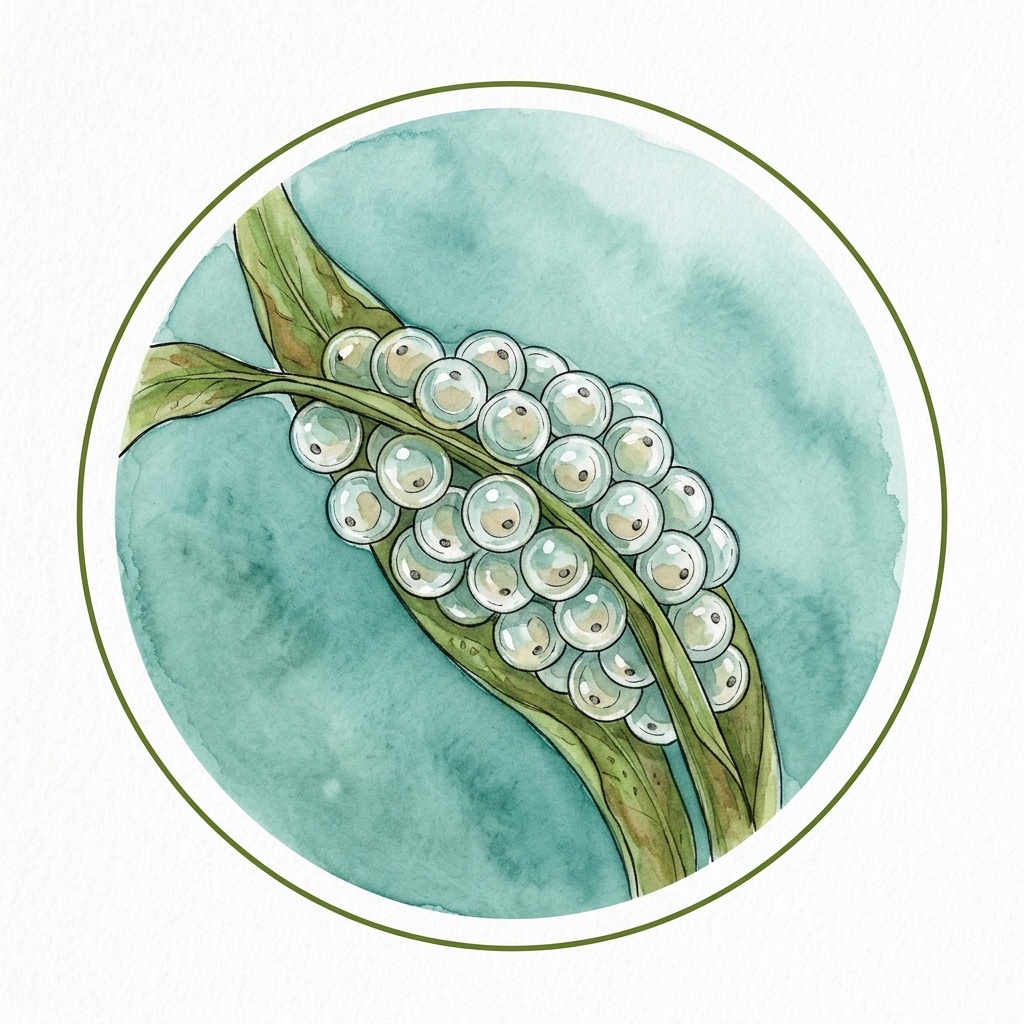
Female deposits 20–50 adhesive amber eggs on the cave ceiling
Days 1–8
Male Fans Eggs
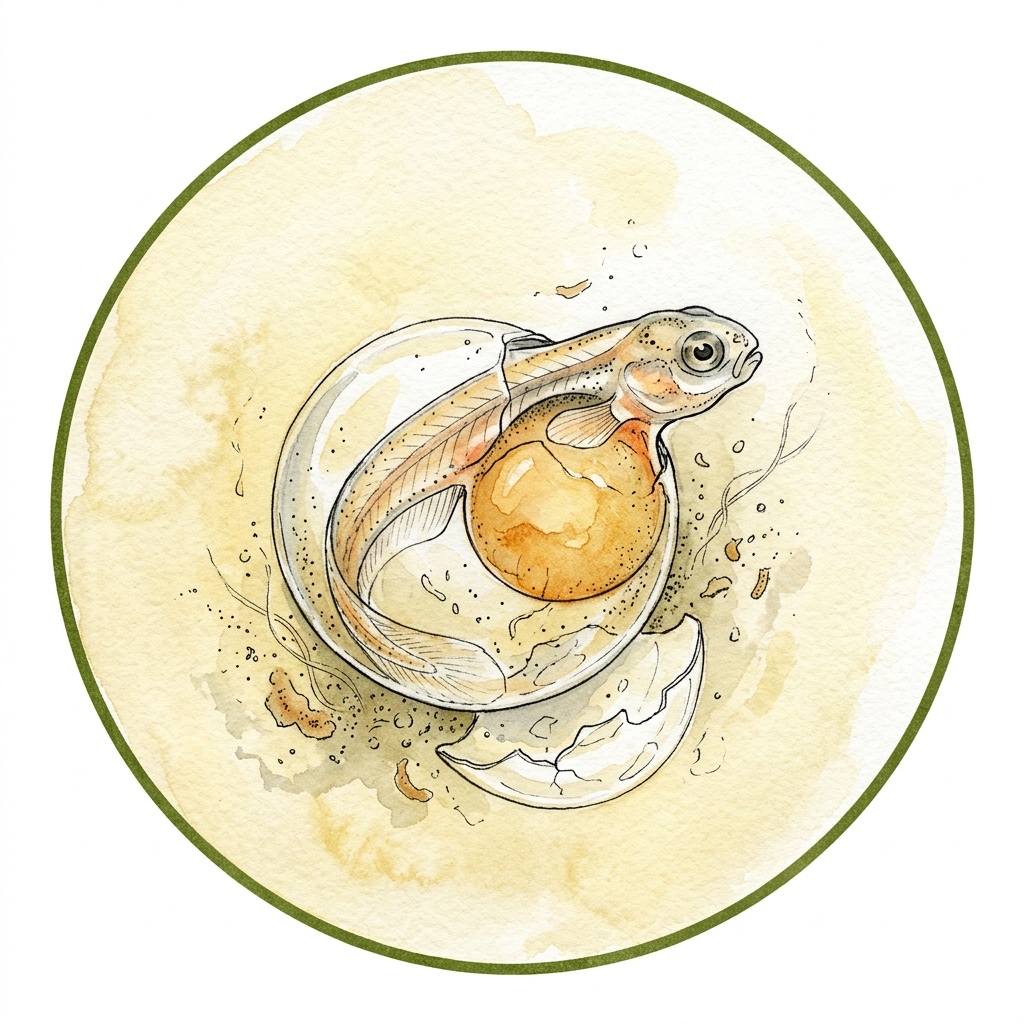
Male continuously fans clutch, rarely eats, removes any spoiled eggs
Days 8–14
Yolk-Sac Fry
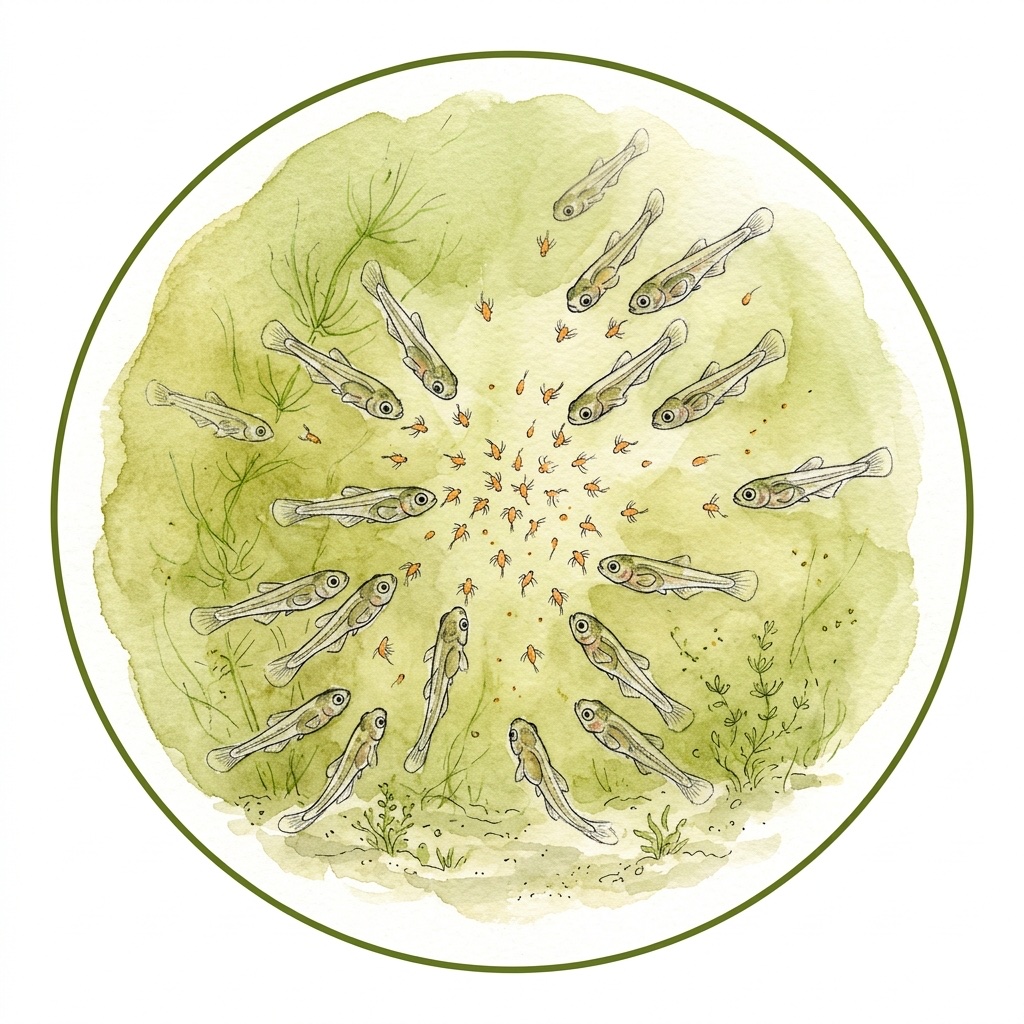
Fry hatch with large orange yolk sacs; remain clustered in cave
Day 14+
Free-Swimming on Driftwood
Fry leave cave, cling to driftwood and leaf litter, begin grazing biofilm
Conditioning & Cave Claim
Breeding L397 is absolutely achievable in captivity once the habitat basics are in place, and it is one of the most rewarding milestones a Panaqolus keeper can hit. The starting point is conditioning. Maintain temperatures at the upper end of the range, around 28–29 °C, feed a rich vegetable-led diet of Repashy gels, zucchini, cucumber, and quality wafers, and keep water parameters stable at soft, acidic values. Over six to eight weeks, mature males will each pick out a favourite cave, clean it by rasping at the walls, and begin defending the entrance with increasing intensity against other males and against curious tankmates. Females meanwhile fill out visibly, developing the rounded abdominal profile that signals a gravid state.
This is also the time to fine-tune your cave selection. Watch which caves individual males gravitate to, and add or remove shelters to make sure each dominant male has a cave he clearly owns. If a male is still shuffling between caves after several weeks, try a cave with a slightly smaller entrance or a different orientation.
Pre-Spawn Water Change
Like many blackwater species, Panaqolus take their spawning cues from simulated rainy-season events. A large water change of 30–50 % with RO or very soft water a few degrees cooler than the tank — for example a change from 29 °C down to 26 °C — mimics a rainfall pulse and often triggers spawning within 24 to 72 hours. Changes in barometric pressure around real-world rainy weather can reinforce the effect, which is why many keepers find their L397 spawning coincidentally with summer thunderstorms.
During this trigger window, raise temperature slowly back toward 28–29 °C over the next day or two, and resist the urge to over-feed or over-clean. The female will approach the male’s cave, engage in gentle nudging and positional displays at the entrance, and eventually enter. The male wedges himself into the cave entrance behind her, effectively trapping her until spawning is complete.
Eggs in Cave
Inside the cave, the female deposits a clutch of 20–50 large, adhesive, amber-coloured eggs, typically on the ceiling or upper side wall. Clutch sizes for L397 tend to be modest compared to egg-scatterers but the eggs themselves are large and yolk-rich, giving the fry a substantial nutritional head start. Once deposition is complete, the male fertilises the clutch and immediately takes over custodial duties. The female is expelled from the cave and plays no further part in brood care — if anything she may try to re-enter and eat the eggs, which is why most breeders remove her to a separate tank once they see her leave.
From this point the cave is entirely the male’s responsibility. He adjusts his body to sit directly under the eggs, turns his tail upwards toward them, and begins the continuous fanning behaviour that defines Panaqolus parental care.
Male Fans Eggs
For the next week to ten days, the male remains in the cave almost constantly. His pectoral and caudal fins drive a steady current of oxygenated water over the eggs, preventing fungus and encouraging even development. Healthy eggs develop visibly darkening eye spots around day five. Any infertile or fungused eggs are nosed off the clutch and discarded by the male — this is normal husbandry on his part, not a problem.
The single most important rule during incubation is: do not disturb him. Avoid shining a torch directly into the cave, do not reposition the cave or surrounding wood, and keep maintenance work at the opposite end of the tank. Even shy checking with a mirror can occasionally trigger a nervous male to eat his clutch. Resist the urge to confirm success — if the male has stopped leaving the cave and is visibly fanning, you have a clutch.
Yolk-Sac Fry
Hatching happens around day seven to ten at 28–29 °C. The fry emerge as unusually large, yolk-heavy larvae, with their orange-yellow yolk sacs taking up much of the body length. They cling to the cave walls and ceiling close to their father, who continues fanning and occasionally repositioning them with his mouth. For another several days the fry do not need external food — they absorb yolk reserves, develop pigmentation, and begin to show a faint hint of the adult stripe pattern across the dorsal surface.
This is usually the point at which the male will start venturing briefly out of the cave to feed for the first time in weeks. Offer a gentle portion of high-quality wafers or Repashy gel nearby so he can refuel without having to travel far.
Free-Swimming on Driftwood
Once the yolk sac is fully absorbed, the fry leave the cave in small waves and quickly settle onto nearby driftwood surfaces, leaf litter, and cave walls. From their first independent meals they already behave like miniature adults — rasping at biofilm, grazing on softening wood, and tucking themselves into crevices during bright periods. First foods should emphasise easily-digested plant matter: finely crushed spirulina wafers, Repashy smeared thinly on flat slate or on a strip of catappa leaf, fresh catappa and oak biofilm, and a gentle rotation of blanched soft vegetables cut small. Occasional micro-feedings of freshly hatched baby brine shrimp are accepted but should not dominate the diet.
Growth is slow in Panaqolus. Expect roughly 0.7–1 cm per month under good conditions, with fry reaching a sellable 3–4 cm at around six to eight months. Fry can be raised alongside the parents in a well-furnished adult tank, but transferring them to a dedicated grow-out tank with plenty of driftwood, leaf litter, and sponge-filtered flow dramatically improves survival rates and lets you feed them more targetedly. A dedicated grow-out tank also lets you control temperature and water quality very tightly, which pays off in faster, more even growth across a clutch. Keep the grow-out tank simple: bare bottom or thin sand, several pieces of softening wood, a heavy leaf layer, a sponge filter, and a single small internal heater tucked against the back wall.
Quick Reference
| Scientific Name | Panaqolus sp. ‘L397’ |
| L-Number | L397 |
| Origin | Alenquer area, Pará, Brazil |
| Adult Size | 10–12 cm SL |
| Lifespan | 8–12 years |
| pH | 5.5–7.0 (ideal 6.3) |
| Temperature | 26–30 °C (ideal 28 °C) |
| Hardness | 2–8 dGH (soft) |
| Min Tank Size | 150 L (40 gal) well-furnished |
| Diet | Xylivore — wood + vegetables, NOT carnivore |
| Driftwood | Mandatory — primary food, not decoration |
| Temperament | Exceptionally peaceful; territorial only with own males |
| Tank Zone | Bottom — wood and cave-dwelling |
| Flow | Moderate to strong; well oxygenated |
| Breeding | Cave spawner; male fans eggs ~7–10 days |
| Care Level | Intermediate |
Related Products

Reviews
Clear filtersThere are no reviews yet.