🪨 Species at a Glance
| Scientific Name | Hygrophila lancea ‘Araguaia’ |
| Common Name | TC Hygrophila Lancea, Lanceolate Hygrophila, Araguaia Red |
| Family | Acanthaceae (acanthus family) |
| Origin | Cultivar traded as ‘Araguaia’; parent species native to Hong Kong and southern China |
| Mature Height | 15-25 cm (6-10 in) |
| Leaf Size | 3-5 cm long, 5-7 mm wide spear-shaped blades |
| Growth Rate | Slow to moderate — compact habit, not a weed like other Hygrophila |
| Light Requirement | Medium (50-80 PAR at canopy) |
| CO2 Requirement | Helpful but not strictly required — recommended for reddish-brown colour |
| Planting Method | Stem planted individually into fine substrate |
| Placement | Midground feature, occasionally background in nano tanks |
| Difficulty | Intermediate — patience and steady parameters reward the keeper |
Planting Method
Stem
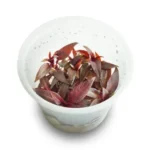
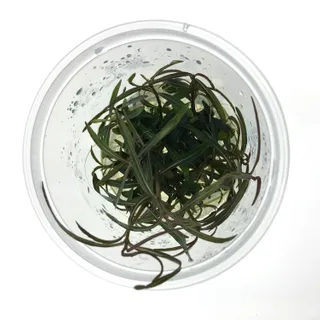
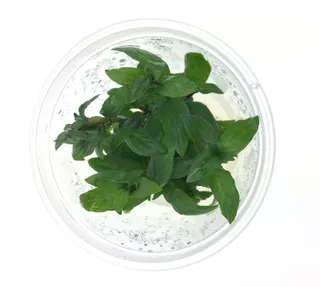
Hygrophila lancea ‘Araguaia’ is a true stem plant and is planted into substrate in the classical manner, one stem at a time, but the specific technique deserves careful attention because ‘Araguaia’ is less forgiving of careless planting than its fast-growing relatives. The plant arrives from tissue culture laboratories as a tight cluster of short emersed-grown stems, each three to five centimetres tall, bearing small rounded leaves that bear little resemblance to the narrow submerged form the plant will eventually take on. The first task is to remove the cluster from its plastic pot or TC cup, rinse the rockwool or gel medium thoroughly from the roots under a gentle stream of dechlorinated water, and separate the cluster into individual stems by teasing them apart at their base. Do not attempt to plant the entire cluster as a single unit — the crowded rooting that results will cause the interior stems to melt back within the first two weeks, wasting a significant portion of your investment. A typical commercial cup yields between twelve and twenty separable stems, each of which is capable of developing into a full plant over the subsequent two to three months.
Each individual stem should be trimmed at the base to expose a fresh cut just below the lowest leaf node, then planted into fine substrate using long aquascaping tweezers. The ideal substrate is a nutrient-rich aquasoil such as ADA Amazonia, Tropica Aquarium Soil, or UNS Controsoil, in a particle size of two to four millimetres; coarser gravels are workable but less effective because the stems can slip free before rooting, and because substrate nutrient release is a meaningful contributor to vigorous establishment of this species. Insert each stem so that the lowest one or two nodes are buried in the substrate, at a depth of approximately one and a half to two centimetres, and space adjacent stems two to three centimetres apart. Tighter spacing creates a denser visual impression but encourages lower-stem melting once the canopy closes over; wider spacing looks sparse initially but allows each stem to develop its best form over the first two months. For a compact midground group, a triangular or oval planting arrangement of twelve to twenty stems in a footprint of roughly fifteen by twenty centimetres produces a handsome mature bush at the three-month mark.
The emersed-grown starter stems will almost invariably shed most of their original leaves within the first ten to fourteen days after planting. This is the normal emersed-to-submerged transition and is not a sign of plant failure, though it can be alarming to the first-time keeper who watches the plant appear to die back before their eyes. What is actually happening is that the emersed leaves, which have a waxy cuticle and stomata optimised for atmospheric gas exchange, are being replaced by genuine submerged leaves that lack stomata and rely on direct dissolved-gas absorption through the leaf surface. The new submerged leaves emerge from the growing tip and from axillary buds along the stem, and they are visibly different from the original emersed foliage: narrower, more pointed, and — crucially — capable of developing the reddish-brown colouration that gives the plant its reputation. Expect a four to six week transition period during which the plant looks leggy and unimpressive, followed by a sudden burst of submerged growth as the root system establishes and the first true submerged leaves emerge. Patience during this transition is the single most important virtue in ‘Araguaia’ cultivation, and aquarists who pull the plants up to replant or otherwise intervene during the transition period almost invariably prolong the problem.
Common planting mistakes to avoid include: burying the stem too deep, such that multiple nodes are suffocated and cannot root; planting stems too close together so that the cluster competes with itself; using coarse gravel that fails to grip the stem and allows it to float free; and disturbing newly-planted stems during the first two weeks while they are still establishing root connection to the substrate. A clean, confident planting at the outset — one stem at a time, correctly spaced, with the growing tip clear of adjacent stems and the lowest node firmly seated in fresh aquasoil — sets up the specimen for a long productive life of six months to a year before serious trimming or replanting is required.
Light Requirements
MEDIUM LIGHT
PAR: 50-80 PAR at canopy level
High
Hygrophila lancea ‘Araguaia’ occupies the medium-light band of the aquarium plant spectrum, and the question of how much light to provide is genuinely the central question of cultivating this species successfully. At the low end of the light range, below roughly forty PAR at the canopy, the plant will survive but will remain a dull olive-green throughout its life, producing narrow spear-shaped leaves of the correct form but lacking the reddish-brown anthocyanin pigmentation that makes the cultivar desirable in the first place. At this low-light level ‘Araguaia’ is just another slow-growing green stem plant and there is little reason to choose it over easier alternatives. As light intensity rises into the fifty to eighty PAR range, however, the plant undergoes a progressive colour shift: first the growing tips develop a bronze undertone, then the upper third of each stem begins to flush coppery, and eventually — at roughly sixty to seventy-five PAR at the leaf surface — the entire plant settles into the characteristic deep reddish-brown tone that is the hallmark of a well-grown specimen. This colour is driven by anthocyanin production, a photoprotective pigment that the plant synthesises in response to strong light as a biological sunscreen, and it cannot be induced by any other means — not by fertilisation tricks, not by iron supplementation, not by pH manipulation. Strong light is the necessary and sufficient condition for the reddish-brown colouration, and any successful cultivation regime must deliver it.
Above roughly eighty-five PAR the law of diminishing returns takes over, and pushing light higher brings little colour benefit while dramatically increasing algae pressure across the tank. Green dust algae, green spot algae, staghorn algae, and in extreme cases cyanobacteria will begin to colonise the glass, the hardscape, and the slower-growing plants in the tank, and the aquarist finds themselves engaged in a losing battle against algae in pursuit of colouration that would be nearly as good at a more moderate light level. The recommended sweet spot is therefore around sixty to seventy-five PAR at the canopy, which is achievable with a quality mid-range LED fixture running at seventy to eighty percent output over a sixty-litre tank of thirty-five to forty centimetres depth, and which produces both the desired reddish-brown colouration and an algae load that remains manageable with standard tank husbandry. A daily photoperiod of seven to eight hours is appropriate under these conditions; shorter photoperiods will reduce colouration, and longer photoperiods tend to accelerate algae problems without producing additional colour benefit because the anthocyanin response saturates within a few hours of strong light exposure each day.
One practical implication worth understanding is that ‘Araguaia’ tends to colour most intensely in the upper third of each stem, the portion exposed directly to the light without being shaded by neighbouring foliage. Stems in the centre of a dense cluster will colour less than stems at the exposed edges, and the lower portions of tall stems will revert toward green as they fall into self-shade beneath the canopy. For this reason the plant looks its best when groomed as a compact midground feature rather than allowed to grow tall, because tall stems reveal an unattractive two-tone effect with green lower stems and reddish-brown tops. Regular trimming of the growing tips not only keeps the plant compact but also forces branching, which produces a bushier form where a larger fraction of the total leaf area is directly exposed to the light and therefore developing the characteristic colour.
Recommended Photoperiod: 7-8 hours under medium light is the sweet spot; shorter photoperiods reduce anthocyanin development, longer ones accelerate algae without improving colour
CO2 & Fertilisation
CO2 OPTIONAL
Pressurised CO2 injection is strongly recommended for Hygrophila lancea ‘Araguaia’ but is not absolutely required, and the distinction is worth understanding clearly. Without injected CO2, at ambient dissolved carbon concentrations of two to four parts per million, ‘Araguaia’ will survive and grow slowly under suitable light and nutrition, producing narrow spear-shaped leaves of the correct form and achieving a modest flush of colour in the top growth. Many hobbyists run low-tech setups with this plant and are satisfied with the results. However, ‘Araguaia’ grown without CO2 rarely develops the full-bodied reddish-brown saturation that makes the cultivar visually spectacular, tending instead toward a muted bronze or copper tone that is pleasant but not striking. Injected CO2 at a target concentration of twenty-five to thirty-five parts per million — the standard range for high-tech planted tanks — unlocks the plant’s full expressive range: leaves deepen to the characteristic reddish-brown, growth rate accelerates from roughly one new leaf pair every fortnight to one every five to seven days, and the stems themselves become thicker and more rigid. For the aquarist whose primary reason for choosing ‘Araguaia’ is its colouration, CO2 injection is effectively a requirement even though the plant does not absolutely demand it to stay alive.
Liquid carbon supplements such as Seachem Excel, Easy-Life EasyCarbo, and UNS Easy Carbon are a workable middle ground for aquarists unwilling to invest in pressurised CO2 hardware. Dosed at manufacturer’s recommended rates, they produce a modest acceleration of growth and a meaningful improvement in colouration compared to no carbon supplementation at all, though the effect falls well short of what can be achieved with a pressurised system. ‘Araguaia’ tolerates liquid carbon well at normal doses and does not exhibit the sensitivity that troubles delicate species such as Vallisneria or Riccia. Overdosing liquid carbon above twice the recommended rate can cause stem damage and leaf drop; conservative dosing is always preferred. When transitioning from liquid carbon to pressurised CO2 at any point, expect a week or two of readjustment during which growth rate fluctuates while the plant adapts to the higher and more stable carbon supply. Conversely, aquarists who have been running pressurised CO2 and who need to suspend injection during a holiday or due to equipment failure will find ‘Araguaia’ holds up acceptably for two to three weeks of interrupted supply, though colour intensity will fade noticeably during this period and will take a fortnight or more to rebuild once CO2 resumes.
Fertilisation
Hygrophila lancea ‘Araguaia’ draws nutrients through both its roots and its leaves, which means a balanced fertilisation strategy should address both substrate and water column. In the water column, a standard all-in-one liquid fertiliser such as Tropica Specialised Nutrition, Seachem Flourish Comprehensive, APT Complete, or UNS Plant Food used at the manufacturer’s full recommended rate provides adequate macronutrients (nitrogen, phosphorus, potassium) and micronutrients (iron, manganese, zinc, copper, boron) for healthy growth. For high-tech tanks running strong light and pressurised CO2, an EI-style dosing regime with separate macro and micro fertilisers dosed on alternating days is the professional approach and reliably produces the most vigorous growth and most saturated leaf colour; the core targets are roughly fifteen to twenty ppm nitrate, one to two ppm phosphate, ten to twenty ppm potassium, and a steady micronutrient baseline. Weekly water changes of thirty to fifty percent reset nutrient levels and prevent the accumulation of excess that can fuel algae.
Substrate nutrition is equally important for this species, probably more so than for surface-feeding stem plants like Rotala rotundifolia or Ludwigia palustris. Nutrient-rich aquasoils release ammonium, iron, and trace elements steadily from the substrate pore water, and ‘Araguaia’ responds visibly to this source of nutrition by developing a larger and more vigorous root system than it would on inert gravel. If inert gravel must be used for aesthetic or budget reasons, supplementation with root tabs placed close to the planting zone is effectively mandatory; a schedule of one tab per twenty square centimetres of planted area, replaced every four to six weeks, keeps the substrate adequately enriched. Iron supplementation is particularly worthwhile because anthocyanin production — the pigment responsible for the reddish-brown colour — correlates with healthy iron availability, and tanks with deficient iron often see ‘Araguaia’ revert to green even under ostensibly adequate light and CO2. A dedicated iron supplement such as Seachem Flourish Iron, UNS Iron, or Tropica Plant Growth Specialised (which carries enhanced iron) dosed twice weekly at half the manufacturer’s rate is a reliable insurance policy and typically produces visible deepening of leaf colour within two weeks of the first dose. Potassium deficiency presents as small pinholes in older leaves and is occasionally seen in soft-water tanks where total dissolved ions are low; a potassium booster such as Seachem Flourish Potassium resolves the issue within a fortnight.
Water Parameters
6.0–7.5
ideal 6.5
22–28 °C
ideal 25 °C
4–15 dGH
Soft to moderately hard; tolerates a broad GH range but colours most intensely in soft water
Hygrophila lancea ‘Araguaia’ is surprisingly adaptable across the normal range of freshwater planted tank parameters, although it reveals clear preferences once the aquarist looks closely at what produces the best colour and form. The pH range of six point zero to seven point five covers effectively every planted aquarium likely to be set up in the hobby, and the plant grows acceptably across this entire span, but it colours most intensely and grows most vigorously toward the acidic end of the range. Around pH six point two to six point eight the plant tends to develop its deepest reddish-brown saturation, the submerged leaf form is at its narrowest and most pointed, and stem internodes are shortest and most compact. Above pH seven point two the colouration shifts toward a muted copper or even olive green, leaf shape broadens subtly, and the plant takes on a less distinctive appearance. For aquarists using high-quality aquasoils that buffer pH downward into the acidic range, this preference aligns naturally with the substrate of choice; for aquarists in hard alkaline tap water who prefer not to use aquasoil, CO2 injection itself will pull the pH down into the preferred range during the daytime photoperiod and thereby deliver much of the colouration benefit.
Temperature tolerance spans twenty-two to twenty-eight degrees Celsius, with a genuine sweet spot at twenty-four to twenty-six degrees. At the cooler end of the range, growth slows noticeably but colour can become even more intense because anthocyanin production is upregulated by the combination of strong light and mild cold stress; winter-grown specimens in temperate-climate tanks often display the most dramatic colour of the year. At the upper end of the range, sustained temperatures above twenty-seven degrees combined with high light can accelerate stem melting at the base and make the plant more vulnerable to algae, so aquascapers running hot discus tanks should either choose different plants or make peace with slightly less vigorous ‘Araguaia’ performance. Below twenty-one degrees Celsius the plant enters a functional dormancy, new leaf production effectively halts, and the specimen maintains itself without growing — a state it can tolerate for weeks but that does not constitute healthy cultivation and should not be used as a long-term strategy.
Hardness tolerance is similarly broad, from soft water of four dGH up to moderately hard water of fifteen dGH, but colour and form trend toward their best in soft water of four to eight dGH. Very soft water below three dGH can occasionally cause potassium deficiency symptoms on older leaves and tends to produce slightly stunted growth due to the low background of dissolved ions, so extreme softness is not beneficial. Carbonate hardness in the one to five dKH range is appropriate and keeps pH stable under CO2 injection; higher KH does not harm the plant but requires more CO2 to achieve the same drop in pH and therefore runs up the monthly CO2 bill without delivering additional benefit. Tannins from driftwood and leaf litter are entirely welcome and often seem to improve colour modestly, possibly through the mild pH-lowering and light-filtering effects. Chlorine and chloramine in tap water damage new growth and must be removed with standard dechlorinators at every water change. Copper-based medications used to treat fish disease should be used with extreme caution or avoided entirely around ‘Araguaia’; even therapeutic doses of copper above point five parts per million will cause leaf yellowing and stem damage within days.
Growth & Maintenance
SLOW GROWTH
Hygrophila lancea ‘Araguaia’ confounds the expectations of aquarists who know its genus from other species, because its growth habit bears almost no resemblance to the fast-sprawling H. polysperma, H. corymbosa, or H. difformis that most hobbyists associate with the Hygrophila name. Where those species can double in mass every ten to fourteen days under high-tech conditions and need aggressive trimming to stay in bounds, ‘Araguaia’ grows at roughly a quarter to a third of that rate. A high-tech tank with strong light, pressurised CO2, and balanced fertilisation produces roughly one new leaf pair every five to seven days on each growing tip, and stem extension is typically one to two centimetres per week rather than the five-plus centimetres of the fast Hygrophilas. A low-tech tank without CO2 can reduce growth rate further, to one new leaf pair every ten to fourteen days and stem extension of perhaps half a centimetre weekly. This slowness is the plant’s greatest practical virtue as a midground feature, because it means the composed aquascape stays in proportion for months at a time without constant grooming.
Mature height under most aquarium conditions tops out at fifteen to twenty-five centimetres, with occasional specimens reaching thirty centimetres in exceptionally well-maintained tanks. The stems branch readily from axillary nodes once the growing tip is trimmed, and a well-groomed clump develops into a dense compact bush over the course of three to four months, typically reaching its aesthetic peak between months four and six before becoming leggy and needing replanting of the terminal cuttings. This contrasts markedly with fast Hygrophilas, which can go from planting to overgrown mess in as little as six weeks. Leaf size maxes out at roughly three to five centimetres long and only five to seven millimetres wide — the signature narrow spear shape — and mature specimens carry twenty to thirty leaves per well-developed stem arranged in tight alternating whorls along the reddish-brown stem.
Maintenance requirements centre on two main activities: topping to promote branching, and replacing leggy old stems with fresh cuttings. Topping is performed by snipping the growing tip roughly one centimetre above a leaf node using sharp scissors; the plant responds by activating two or three axillary buds below the cut and producing a bushy multi-headed stem over the subsequent three to four weeks. Regular topping every four to six weeks keeps the plant compact, bushy, and fully colour-expressing across its height, and is the single most important grooming habit for this species. Replanting of cuttings is performed every four to six months once the original planting has reached its aesthetic peak and begun to decline, by trimming fresh five to seven centimetre tops from the healthiest stems and replanting them into fresh substrate in the same footprint, discarding the tired parent stems to the compost bin. This refresh cycle keeps the display looking its best indefinitely.
Compared to fast Hygrophilas, ‘Araguaia’ is also notably less prone to shedding old lower leaves and becoming leggy, though some lower-leaf drop does occur after the third or fourth month as the canopy closes overhead and the lower stem falls into shade. Gentle thinning of the upper canopy, by removing a few stems from the densest part of the cluster every two to three weeks, keeps light reaching the lower stems and slows the development of legginess. Mature stems that have become leggy can be topped aggressively, removing up to two-thirds of their height, and the cut stems will regenerate with dense bushy side branching over the subsequent month — a renovation technique that extends the useful life of an original planting by several additional months.
One subtle growth habit worth understanding is that ‘Araguaia’ exhibits a mild but reliable seasonal rhythm even in temperature-stable aquariums, producing its most vigorous growth during spring and early summer when ambient photoperiods are long and slowing noticeably through late autumn and early winter. This pattern persists even under constant artificial lighting, and may be driven by subtle changes in tap water chemistry between seasons, by variations in household temperature that reach the aquarium indirectly, or by circadian rhythms intrinsic to the plant itself. Aquarists who observe their planting carefully will notice that stem extension through January and February is measurably slower than in May and June, and that leaf colour tends to deepen in the cooler months while growth rate decreases. This is not a problem to solve but a characteristic to appreciate and plan around, scheduling major replanting and propagation activities for the vigorous growth season when cuttings establish fastest.
Top growing tips for branching
Every 4-6 weeks — snip the terminal growing tip of each stem roughly 1 cm above a leaf node using sharp scissors. The plant responds by activating 2-3 axillary buds and producing bushier multi-headed growth over the following 3-4 weeks.
Replant cuttings into fresh substrate
Every 4-6 months — trim fresh 5-7 cm tops from the healthiest stems and replant them into the same footprint, discarding the tired parent stems. This refresh cycle keeps the display at its aesthetic peak indefinitely.
Thin dense upper canopy
Every 2-3 weeks — remove a few stems from the densest part of the cluster to let light reach the lower stems. Prevents legginess and keeps the lower portion of the planting colour-expressing rather than green and shaded.
Remove melted lower leaves
Monthly — snip off any yellowed, browned, or algae-affected lower leaves flush with the stem. Keeps the planting looking tidy and prevents decaying leaves from fuelling localised algae pressure.
Inspect substrate and top up root tabs
Every 4-6 weeks — check substrate condition around the planting, gently probe with tweezers for softness or anaerobic pockets, and replace root tabs if using inert gravel. Aquasoil setups typically need root tabs only after 6-9 months of service.
Wipe algae from older leaves
As needed during water changes — gently wipe green spot algae from established leaves using a soft cloth or fingertip. Catch colonies early before they establish a firm grip on the leaf surface.
Propagation
Cuttings
Propagation of Hygrophila lancea ‘Araguaia’ is straightforward and effectively failure-proof, relying on the standard stem-cutting technique that works for virtually every stem plant in the hobby. A healthy mature stem is identified — typically one of the tallest and most vigorous in the display, bearing full reddish-brown colouration and a well-developed canopy of submerged leaves — and a terminal section of five to seven centimetres is snipped cleanly using sharp scissors just below a leaf node. This top cutting is the premium propagule and will root and resume growth faster than any other part of the plant, typically establishing new roots within seven to ten days and resuming visible growth by the two-week mark. The lower portion of the parent stem remains planted in the substrate and will sprout one or two new axillary shoots from the nodes just below the cut within three to four weeks, effectively producing two plants from the original one.
The fresh top cutting is planted immediately into substrate using the same technique as the original starter stem — lowest node or two buried at a depth of one and a half to two centimetres, terminal tip well clear of the substrate, and spacing of two to three centimetres from adjacent stems. There is no need for a special rooting period in a quarantine tank, no dipping in rooting hormone, and no misting or other propagation-nursery technique — the plant will root readily in ordinary planted tank conditions as long as water parameters, light, and CO2 are adequate. Successful rooting is signalled by a subtle firming of the stem in the substrate after about a week, followed by visible new growth at the terminal tip by ten to fourteen days. Root development proceeds from the buried nodes into a fibrous white root system that extends widely through the substrate over the following month. Once established the propagated stem is indistinguishable from its parent and will develop full colouration and bushy habit as long as its cultivation conditions are maintained.
An aggressive propagation program for a hobbyist wishing to rapidly multiply stock can produce a six-to-tenfold increase in stem count over the course of three to four months, starting from a single commercial cup of twelve to twenty stems. Each original stem is allowed to grow to ten to twelve centimetres, topped to produce a top cutting and induce axillary branching, and the process is repeated on both parent and daughter stems in rolling sequence every three to four weeks. After three such cycles the original dozen stems have become seventy to a hundred individual stems, enough to plant a full mature display or to share freely with other hobbyists. This productivity is remarkable given the plant’s reputation for slow growth and is one of the reasons ‘Araguaia’ has become steadily more available in the hobby over the past decade despite initial scarcity.
Tissue culture propagation in commercial laboratories is responsible for the majority of ‘Araguaia’ stock currently entering the hobby, and aquarists encountering the plant for the first time will almost certainly be buying tissue-cultured material. Tissue-cultured starter plants are pest-free, snail-free, algae-free, and entirely clean of the hitchhikers that commonly arrive on nursery-grown stock, which is a significant practical advantage when introducing plants to an established aquascape. The tradeoff is that tissue-cultured stems arrive in emersed form and must transition to submerged growth once planted, which as noted earlier involves an initial four to six week period of leaf replacement during which the plant can look unimpressive. Aquarists aware of this transition period and willing to be patient through it are richly rewarded; those expecting instant submerged beauty from a tissue-cultured cup are invariably disappointed and often misdiagnose the normal transition as plant failure.
Aquascaping
Midground
Hygrophila lancea ‘Araguaia’ occupies a specific and valuable niche in modern aquascape composition: the midground red feature plant that remains in scale with the tank for months without runaway growth. In the vocabulary of the Nature Aquarium style popularised by Takashi Amano and his successors, the midground is the zone of visual focus, the area where the viewer’s eye naturally settles when observing the tank from a normal viewing distance, and the plant chosen to occupy this zone carries disproportionate responsibility for the overall impression of the scape. ‘Araguaia’ is well suited to this role because its reddish-brown colouration provides a warm accent against the predominantly green palette of most aquascapes, its narrow spear-shaped leaves create a fine-textured visual mass that differentiates it from both the broader-leaved midground alternatives like Cryptocoryne wendtii and the finer-textured background stems like Rotala rotundifolia, and its slow compact growth habit keeps it in proportion month after month without the frantic trimming that would be required of a fast-growing red stem like Ludwigia palustris or Alternanthera reineckii.
Classical placement is in a midground cluster of twelve to twenty stems arranged in an oval or triangular footprint, positioned slightly off-centre from the main hardscape focal point to avoid visual competition. Grouped in this way the plant reads as a coherent bush or shrub, roughly fifteen centimetres wide and twenty centimetres tall at maturity, with a textured canopy of narrow reddish-brown leaves that catches and reflects light in a distinctive matte-satin way that differs from both the glossy cuticle of Anubias and the translucent brightness of Rotala. Under moderately warm LED lighting with good CRI, the colour develops a luminous inner glow that photographs spectacularly well and that has made ‘Araguaia’ a favourite subject for aquascape contest photography at the IAPLC, the AGA international contest, and the LAB competitions in Europe. In smaller nano tanks of twenty to forty litres, a cluster of six to ten stems can take on the role of background feature rather than midground, while in larger display tanks of two hundred litres and above, multiple clusters can be scattered along a driftwood axis to create a rhythm of warm accents that guides the viewer’s eye through the composition.
Companion planting should emphasise visual contrast through leaf shape and colour rather than through form. The fine-textured narrow leaves of ‘Araguaia’ pair beautifully with broader-leaved green plants such as Anubias barteri var. nana, Bucephalandra species, and small Cryptocorynes — the foliage contrast reads as rich and varied rather than cluttered. Green carpeting plants such as Monte Carlo (Micranthemum tweediei), Dwarf Hairgrass (Eleocharis parvula), or Dwarf Baby Tears (Hemianthus callitrichoides) provide a fresh green groundcover that accentuates the warmth of the reddish-brown above. Background stem plants should be chosen in complementary greens and soft reds that do not compete directly with ‘Araguaia’ for attention: Rotala rotundifolia in its standard green form, Staurogyne repens, Myriophyllum mattogrossense, and the various Lilaeopsis species all associate well. Avoid placing ‘Araguaia’ directly adjacent to brighter or more saturated red plants such as Rotala macrandra or Ludwigia ‘Super Red’ — the competing reds will either clash or cause one to visually overwhelm the other, and the subtle reddish-brown of ‘Araguaia’ tends to lose out in such matchups. Similarly avoid placing the plant in deep shadow behind larger foreground features, where the colouration it works so hard to produce will simply go unappreciated by the viewer.
One particularly effective composition is the Iwagumi-inspired scape in which a few carefully placed stones form the hardscape skeleton, a green carpet of Monte Carlo or dwarf hairgrass covers the open substrate, and a single restrained cluster of ‘Araguaia’ occupies a position of visual weight behind the principal stone. This composition emphasises the disciplined restraint of the Iwagumi style while introducing the warm colour accent that pure Iwagumi arrangements traditionally lack. The subtle reddish-brown of ‘Araguaia’ works particularly well in this role because it reads as a natural feature rather than as a gaudy floral intrusion, and because its slow compact habit allows it to hold its position for the full lifetime of the scape rather than outgrowing its role within weeks as a fast red stem would.
For biotope-oriented aquascapers, it is worth noting that although the parent species Hygrophila lancea hails from southern Chinese stream edges, the ‘Araguaia’ cultivar is a horticultural selection rather than a wild-type form, and no freshwater biotope in the world genuinely features this plant in situ. This does not diminish its aesthetic value in any way, but it does mean that strict biotope purists working on reproductions of specific Asian, African, or South American ecosystems will generally exclude it in favour of wild-type plants native to their target region. For the vast majority of aquascapers pursuing the Nature Aquarium style, the Dutch style, or eclectic contemporary aquascaping, this biotope consideration is irrelevant and ‘Araguaia’ is simply one of the most versatile and visually rewarding midground plants available. Paludarium and riparium builders may also be interested to know that ‘Araguaia’ grows well emersed and often flowers more readily in this state, producing small pale violet flowers at leaf axils along the stem; emersed-grown plants develop subtly different leaf morphology with slightly broader blades and a less intense reddish-brown colouration, a form that some aquascapers find attractive in its own right for semi-terrestrial displays.
| Plant | Why | |
|---|---|---|
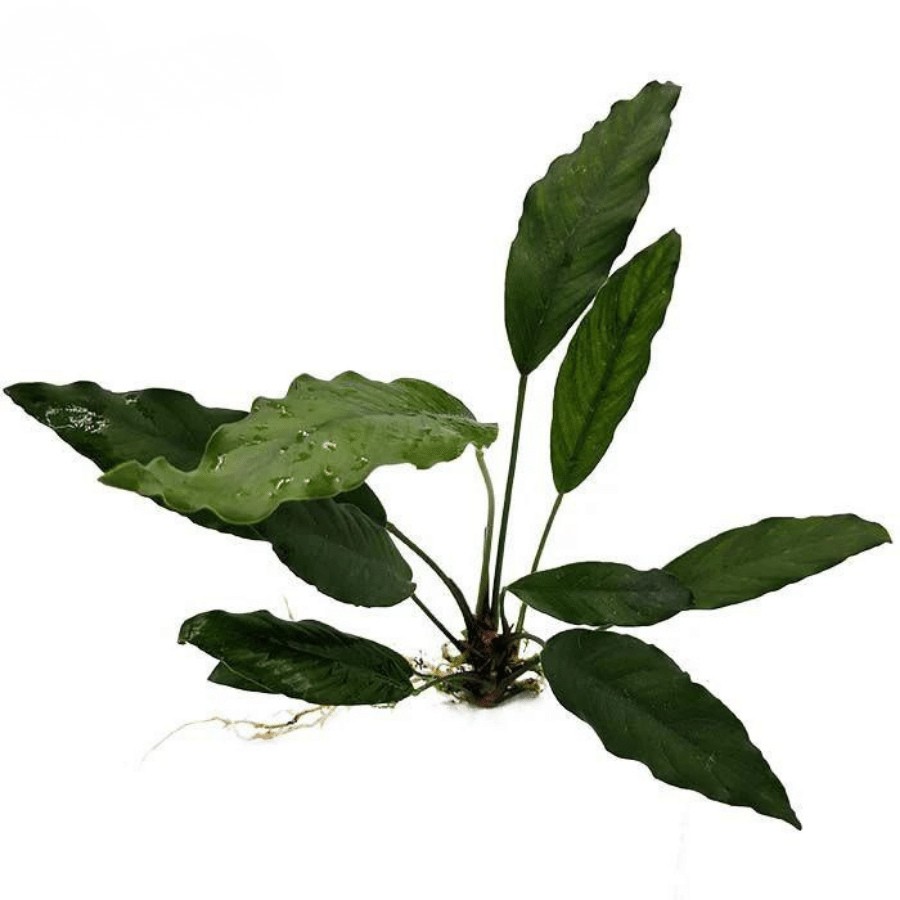
| 🌿 | Anubias barteri var. nana ‘Petite’ | Shade-tolerant rhizome plant whose dark glossy green leaves provide textural and colour contrast against the narrow reddish-brown ‘Araguaia’ leaves; both species share the same undemanding water parameter range. |
| 🌿 | Bucephalandra sp. | Epiphytic rhizome plant that thrives in the same medium-light CO2-enriched environment and provides complementary broad-leaf texture to ‘Araguaia’s narrow spears, often with subtle metallic sheen that pairs beautifully. |
| 🌿 | Monte Carlo (Micranthemum tweediei) | Classic green carpeting plant that forms a fresh groundcover beneath ‘Araguaia’ and accentuates the warmth of the reddish-brown foliage above; both enjoy aquasoil and CO2 injection. |
| 🌿 | Dwarf Hairgrass (Eleocharis parvula) | Fine-textured grassy carpet that provides a tranquil green foreground base, visually grounding the reddish-brown midground cluster and creating a classic Nature Aquarium layered composition. |
| 🌿 | Rotala rotundifolia | Fast-growing green background stem whose fine texture and fresh green colour complement the compact reddish-brown ‘Araguaia’ midground without competing for colour attention, filling the back wall of the scape handsomely. |
| 🌿 | Cryptocoryne parva | Tiny rooted crypt that tolerates the same water parameters as ‘Araguaia’ and provides a broad-leaved green counterpoint in the lower midground, layering the composition between foreground carpet and ‘Araguaia’ cluster. |
Quick Reference
| Scientific Name | Hygrophila lancea ‘Araguaia’ |
| Light | Medium (50-80 PAR) |
| CO2 | Helpful, not strictly required |
| Growth Rate | Slow to moderate (1 leaf pair / 5-7 days high-tech) |
| Mature Height | 15-25 cm |
| pH Range | 6.0-7.5 |
| Temperature | 22-28 degC |
| Hardness | 4-15 dGH |
| Planting Method | Stem planted individually into fine substrate |
| Placement | Midground feature |
| Propagation | Stem cuttings |
| Difficulty | Intermediate |
Reviews
Clear filtersThere are no reviews yet.