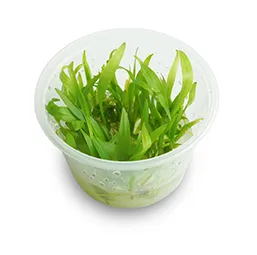
🪨 Species at a Glance
| Scientific Name | Helanthium bolivianum (Rusby) Holm |
| Former Name | Echinodorus bolivianus (pre-2008 taxonomy) |
| Common Names | Bolivian Sword, Dwarf Amazon Sword, Mini Sword |
| Family | Alismataceae (water-plantain family) |
| Origin | Bolivia, Peru, western Brazil lowlands |
| Form | TC (Tissue Culture, lab-grown, pest-free) |
| Plant Type | Rosette, rhizome-based herbaceous perennial |
| Max Height | 10-15 cm |
| Placement | Midground; carpet-like when densely planted |
| Light Level | Medium (50-90 PAR) |
| CO2 | Not required (recommended for dense growth) |
| Growth Rate | Medium |
| Propagation | Runners (stoloniferous side shoots) |
| Difficulty | Beginner to Intermediate |
Planting Guide
Rhizome
Helanthium bolivianum is a classic rosette plant: a short, compressed rhizome (the crown) sits at the substrate line, and leaves emerge radially from it in a tight spiral arrangement that echoes the arrangement of petals on a flower. Unlike stem plants such as Rotala or Ludwigia that can be buried deeply at any node along the stem, or epiphytes like Anubias and Bucephalandra that rot if buried at all and must be attached to hardscape above the substrate, the rosette rhizome of a true sword-type plant occupies a very precise vertical zone. The crown must sit at the substrate surface, no deeper, no shallower, and this single detail is the most important thing a hobbyist learns about caring for any plant in the Alismataceae family. Get the planting depth right and the plant will reward you with years of steady, reliable growth and abundant propagation; get it wrong and you will watch your investment melt into mush over the course of two weeks as anaerobic bacteria colonise the buried crown and rot it from the inside.
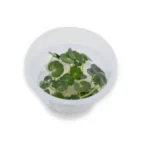
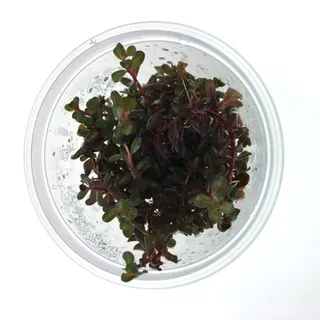
When you first unpack the TC cup, peel back the foil lid carefully and remove the sealed gel puck holding the plantlets in a dense cluster. Gently rinse the agar gel off the root mass under lukewarm, dechlorinated water at roughly 22-25 degrees Celsius to minimise thermal shock. The agar gel is a sugar-and-vitamin-rich medium designed to feed the plant tissue during lab propagation, and it is also a perfect food source for opportunistic bacteria once introduced to a non-sterile aquarium. Leaving gel attached to the roots will fog the tank on day one and invite a short-lived bacterial bloom that can linger for a week or more, sometimes triggering an associated diatom outbreak. Work the gel away between your fingers gently but thoroughly, separating plantlets as you go. Divide the TC portion into small bouquets of 3-5 plantlets each; this spacing dramatically accelerates carpet formation because runners can then fill the gaps between clusters rather than competing with overcrowded parents for light and root space. A single TC cup typically contains enough material for 8-12 bouquets, which is sufficient to densely midground a 45-60 cm long aquarium, or to create 3-4 well-spaced specimen clusters in a 90 cm display tank.
Using fine-tipped aquascaping tweezers (24 cm curved tips work best for mid-sized tanks, with 30 cm straight tips preferred for deeper aquariums), push each bouquet into the substrate at a shallow 30-45 degree angle, then gently lift the tweezers straight up so the roots settle vertically and the crown rests exactly at the substrate surface. The critical rule bears repeating: the green base of the leaves (the crown where all leaves converge into the rhizome) must remain visible above the substrate line at all times. Bury the crown and the plantlet will suffocate and rot within two weeks, melting the entire bouquet and potentially infecting neighbouring plantlets. Bury too shallowly, and the plant will float free on its first water change or the first time a curious fish swims past aggressively; floating plantlets that are not reseated quickly will lose their root system and need to restart from scratch. Space bouquets about 3-5 cm apart in a grid pattern for a traditional midground cluster, or 2-3 cm apart if you want a dense carpet effect within three to four months. When planting near hardscape, angle the bouquets so their leaves will eventually fan away from the stones rather than growing into them, creating visual flow rather than crashing into the rocks and developing ragged edges.
Expect a brief transition period that is normal, expected, and often deeply unnerving to new hobbyists who have never grown TC plants before. TC plants are emersed-grown (above water) on the lab bench, with thicker, waxier leaves optimised for atmospheric gas exchange at 100 percent humidity and bright emersed lighting. Over the first 2-4 weeks fully submerged in your aquarium, the original emersed leaves will yellow progressively, soften, and eventually melt away while the plant pushes out thinner, translucent, ribbon-like submerged leaves from the crown that are morphologically adapted to CO2 dissolved in water rather than atmospheric CO2. This is not plant death; this is plant adaptation at a cellular level, with the plant actively redirecting resources from doomed emersed leaves to new submerged growth. Do not panic, do not pull the plant to ‘check the roots’ (a common and ruinous mistake), and do not dose excessive fertiliser during this adjustment thinking it will accelerate recovery. Over-dosing during the melt phase is a classic cause of algae outbreaks because the struggling plant cannot yet absorb the extra nutrients. Simply trim any fully melted leaves with sharp scissors at the base to prevent them from fouling the water column, and the tank will stabilise on its own within three to four weeks. By week 6-8, you will see the first unmistakable new submerged leaves push out from the crown with their characteristic thinner, slightly translucent appearance, and the plant is on its way to becoming a permanent fixture of your layout.
Maintenance Guide
MEDIUM GROWTH
Healthy Helanthium bolivianum advances at a medium pace that rewards patience and punishes impatience. Under medium light and balanced fertilisation without CO2, expect a mature rosette to reach 10-15 cm tall within 3-4 months, pushing one new ribbon-shaped leaf every 5-7 days once past the initial emersed-to-submerged transition period. With pressurised CO2 injection added to the same tank at 25-30 ppm, that same plant reaches full size within 6-8 weeks and produces a visible runner every 7-10 days, quickly densifying a midground cluster from isolated bouquets into a ribbon-like continuous band of foliage. In a freshly set up tank, the first 4-6 weeks are dominated by the emersed-to-submerged transition discussed in the planting section, so do not judge growth rate or consider the plant ‘stalled’ until it is firmly producing its new underwater leaf form and the emersed leaves have fully melted away. Many hobbyists abandon TC plants during this window believing they are failing, which is a common and preventable disappointment; patience during weeks 2-6 is the difference between success and unnecessary frustration.
Maintenance is refreshingly light for a sword-type plant, and this is one of the main reasons serious aquascapers recommend this species over its larger cousins for any tank under 90 cm. Unlike the Amazon Sword (Echinodorus grisebachii), which demands substantial pruning, throws massive flower spikes that can crash against the aquarium lid or exit the water entirely, and consumes aggressive quantities of root tab nutrients, H. bolivianum stays compact and well-behaved throughout its entire life cycle. The main routine task is removing the occasional old outer leaf that has yellowed naturally with age or has been overtaken by green spot algae faster than the snail or shrimp cleanup crew can address it. Snip it cleanly at the base of the crown with sharp aquascaping scissors rather than pulling the leaf away from the plant by hand, which can loosen the rhizome’s grip on the substrate and unsettle the whole bouquet. Every 2-3 months, thin out the densest spots if the carpet begins to trap detritus, shade younger neighbouring plantlets, or develop yellowing leaves in the interior where light no longer penetrates. The single most important maintenance principle for this species is never to bury the crown during cleaning or rearranging; if substrate shifts and begins to creep over the crown (a common occurrence when corydoras or other bottom-dwellers dig near the plant), gently brush the substrate away with a finger or a soft paintbrush during your weekly water change. A buried crown, left unaddressed for two weeks, will rot every time, and the rot can spread laterally to adjacent healthy plantlets connected via stolons if the cluster is tightly spaced. A simple visual check every time you feed the fish is all it takes to catch substrate migration early and spare yourself the heartbreak of losing a mature cluster to something as preventable as a few grains of aquasoil sliding over the crown.
Weekly inspection and debris fanning
Scan the rosette base for trapped mulm, yellowing outer leaves, or any signs of partial crown burial from substrate migration; gently fan debris away with your hand or a turkey baster during weekly water changes
Biweekly leaf trim for algae control
Snip any individual leaves that show significant algae coverage (typically green spot algae or black brush algae on older leaves) or tip damage at the base of the crown with fine-tip curved scissors; never tear the leaf off by hand as this can unseat the rhizome
Monthly runner management
Either redirect runners into gaps with long tweezers while they are still young and flexible, or snip and replant plantlets elsewhere in the tank once they carry 4-5 leaves and have developed their own visible white root system
Quarterly root tab refresh
Push a nutrient capsule (Seachem Flourish Tab, Tropica Plant Growth Capsule, ADA Multi Bottom) approximately 2 cm below each mother cluster every 3 months to maintain substrate fertility, using long tweezers to ensure the tab is fully buried
Quarterly cluster thinning
Remove 20-30 percent of the oldest plantlets every 3 months to maintain airflow through the canopy, light penetration to lower leaves, and healthy substrate circulation that prevents anaerobic pocket formation
Annual substrate vacuum
Carefully work a fine-tip gravel vacuum around (not into) the rhizomes once a year to clear accumulated anaerobic mulm pockets that otherwise build up slowly over 10-12 months of continuous operation
How Much Light?
MEDIUM LIGHT
PAR: 50-90 PAR at substrate level (moderate LED intensity at 60-75 percent dimmer)
High
Helanthium bolivianum is a medium-light plant, which in practical terms means a modern LED fixture delivering roughly 50-90 micromols of PAR (Photosynthetically Active Radiation) measured at the substrate surface where the rosette actually photosynthesises. On aquariums up to 45 cm tall, popular fixtures such as the Chihiros WRGB II, Twinstar S-series, ONF Flat Nano+, Fluval Plant 3.0, and the Week Aqua M-series all reach this range at approximately 60-75 percent of their maximum dimmer setting, which is a good default starting point for a newly planted tank. If your fixture has no published PAR data and you do not own a PAR meter, a practical workaround is to look at the lumens or watts-per-litre figure: you are aiming for approximately 30-50 lumens per litre of tank volume on a standard 35-45 cm tall tank, or 0.5-0.8 watts of modern LED per litre. Below 40 PAR, the plant survives but grows slowly, stays leggy (producing long-petioled leaves that stretch upward toward the distant light source), and fails to produce the tight carpet-like cluster of runners that makes the species so visually appealing in a well-designed layout; above 120 PAR without correspondingly strong CO2 supplementation and complete fertilisation, leaves develop pinholes from deficiency-stressed photosynthesis, edge browning from excessive radiation, and become magnets for green spot algae (GSA) and black brush algae (BBA) colonising the slowly-photosynthesising leaf edges that can no longer keep up with the metabolic demands the light is imposing.
A stable, consistent photoperiod is more important than raw intensity, and this principle is often under-appreciated by hobbyists who focus obsessively on PAR numbers. An 8-hour photoperiod is the safe sweet spot for most setups running this species; 10 hours works only if CO2 is injected and fertilisation is dialled in with weekly water tests to verify no deficiency is developing during the longer photosynthetic window. Use a smart plug or a fixture-built-in timer to hold the schedule to the minute, because this plant is sensitive to erratic lighting and will respond to a sudden increase in photoperiod (for example adding two hours because the tank ‘looks dim’ in the morning) with a burst of algae growth before it adjusts its own metabolism over the following 7-14 days. Watch the oldest (outermost) leaves as a living diagnostic tool: if they turn translucent yellow from the tips inward and this progresses over weeks, light is too low or the plant is being shaded by overgrown neighbouring plants that have expanded since planting; if new leaves emerge small, cupped, and reddish-brown with visible algae on day-five of their life, light is excessive (or CO2 and ferts are insufficient relative to the light level, which is effectively the same problem from the plant’s perspective). A siesta schedule (4 hours on, 4 hours off, 4 hours on) is an option for algae-prone tanks and is well tolerated by this species, because the dark midday period allows CO2 to rebuild, nitrates to be partially consumed, and algae to experience a mid-day stress that slows their colonisation, before the plant receives the second photosynthetic burst in the afternoon. For tanks in rooms with significant window light, consider whether daylight spillover is effectively extending the photoperiod; if so, reduce fixture-on hours accordingly.
Recommended Photoperiod: 8 hours (standard daily on-period recommended for most setups); 4+4 hour siesta schedule with a 4-hour dark midday also acceptable and algae-suppressing
CO2 & Nutrient Guide
CO2 OPTIONAL
Pressurised CO2 injection is not required for Helanthium bolivianum to survive and grow healthily; this species evolved in seasonally flooded lowland meadows where dissolved CO2 fluctuates widely between wet and dry seasons, ranging from near-atmospheric equilibrium in stagnant dry-season pools to heavily supersaturated in densely decomposing wet-season flood-plains. The plant has retained considerable metabolic flexibility as a result, and can efficiently extract carbon from both elevated CO2 and from bicarbonate sources at higher pH via the carbonic anhydrase enzyme pathway. In a non-CO2 tank with medium light and balanced fertilisation, expect the plant to reach 8-12 cm, produce one runner every 3-5 weeks, and maintain a clean, deep-green appearance indefinitely. For aquarists building their first planted tank, or running a small nano tank where a CO2 system would dominate the cabinet space, this species delivers the aesthetic of a traditional sword-type plant without any of the gas hardware complexity, regulator tuning, drop-checker monitoring, or risk of livestock gassing that pressurised injection introduces.
That said, pressurised CO2 injection at 25-30 ppm (a drop checker holding a pale lime-green colour during the photoperiod) transforms this plant visibly and measurably within 10-14 days of switching from non-CO2 to injected CO2. With injected CO2, leaves become visibly thicker and more rigid, their green colour deepens as chlorophyll production accelerates, runner production picks up to one new plantlet every 7-10 days, and overall growth rate roughly doubles. Carpet formation collapses from four months to six weeks under injected CO2 with good flow distribution across the midground. In a high-tech tank running CO2 at 30 ppm with 80 PAR and daily liquid macros, a single TC cup planted into a 60 cm tank can reach 80 percent canopy coverage of the midground in eight weeks. If pressurised CO2 is not an option due to cost, space, electrical complexity, or personal preference, liquid carbon supplements (Seachem Excel, Easy Carbo, UNS Plant Fuel) dosed at the manufacturer’s standard rate provide a measurable boost, though never matching the density or rigidity achievable under true pressurised injection. Dose liquid carbon in the morning, roughly an hour before lights on, for best uptake efficiency because the plant is primed to begin photosynthesis and the oxidative daily dose correlates with the plant’s peak demand for carbon. Be aware that some sensitive species (Vallisneria, certain mosses like Christmas moss, some Riccia) react poorly to daily glutaraldehyde-based liquid carbon, so audit your other plants and any delicate shrimp species (especially Caridina) before committing to a long-term daily dosing regimen.
Fertilisation
Fertilisation strategy depends on the substrate choice and overall tank goals, and the correct approach for this species is meaningfully different from what you would use for stem plants or epiphytes. In a nutrient-rich aquasoil tank during the first 6 months of setup, no water-column dosing is generally necessary; the substrate supplies everything the rosette needs, and the plant’s heavy root development allows it to exploit substrate nutrients efficiently through direct uptake rather than depending on water-column levels. After 6 months, or immediately if using inert sand or gravel, begin an all-in-one liquid regimen (Tropica Specialised Nutrition, ADA Green Brighty Neutral, Seachem Flourish Comprehensive, or any comparable product) dosed at manufacturer rates, adjusted down to 50 percent for a light-stocked tank with low fish load or maintained at 100 percent for a medium-stocked tank with regular feeding and visible fish activity. Overdosing liquid ferts in a low-bioload tank is the single most common cause of green spot algae and green dust algae outbreaks, and new hobbyists should err toward under-dosing and observing the plant’s response over 2-3 weeks rather than piling in a full manufacturer-recommended dose from day one of a new tank when biomass is low and demand is minimal.
Because Helanthium bolivianum is a heavy root feeder (a trait characteristic of the entire Alismataceae family), root tabs beneath each cluster are the single most effective fertilisation intervention you can make for this species specifically. Place a Seachem Flourish Tab, Tropica Plant Growth Capsule, or ADA Multi Bottom every 3 months approximately 2 cm below the crown of the mother plant in each cluster. Use a long pair of tweezers (at least 25 cm for most tanks) to push the tab fully into the substrate; tabs left on the surface or only partially buried leach straight into the water column and feed algae rather than the plant roots, which defeats the entire purpose of using a root tab in the first place. Signs of deficiency are diagnostic and specific on this species, and learning to read them will serve you well across many related plants. Yellowing between the veins of young (newest) leaves while the veins themselves remain green (interveinal chlorosis) indicates iron deficiency and responds within 5-7 days to a dedicated Fe+ supplement such as Seachem Flourish Iron dosed at 1 ml per 40 litres every 2-3 days. Pinholes appearing in mid-age leaves with ragged edges and no direct physical cause point to potassium deficiency and are resolved by raising K+ dosing, either via an all-in-one fert at higher dose or via a dedicated potassium supplement like Seachem Flourish Potassium at 1 ml per 20 litres weekly. Stunted, pale new growth with uncharacteristically small leaves suggests nitrogen is the limiting nutrient; check nitrate on a drop test or test strip and raise it toward a 10-20 ppm target by adding KNO3 directly from a stock solution, by dosing an ‘N’ supplement, or simply by feeding fish a bit more generously over 2-3 weeks. Magnesium deficiency, less common but real in very soft water tanks using RO-remineralised water, shows as a softer interveinal yellowing on older leaves (the opposite polarity from iron deficiency) and responds quickly to a small Epsom salt dose at the next water change, typically 1 gram per 50 litres. Keep a simple journal of dosing changes and photograph new leaves weekly; this discipline will teach you more about aquatic plant nutrition than any book.
Water Chemistry Guide
6.0–7.5
ideal 6.8
22–28 °C
ideal 25 °C
4–15 dGH
soft to moderately hard water tolerated across the full range
This species is strikingly adaptable to water chemistry and is one of the reasons it thrives across both blackwater biotopes and neutral community tanks, making it one of the most universally recommended midground plants in the hobby. In its native range, the water runs soft and slightly acidic (pH 5.8-6.8, GH 2-6) owing to tannic humic acids from leaf litter decay in seasonally flooded grasslands that develop a characteristic tea-coloured stain during the wet season, and the plant evolved in tandem with South American tetras, dwarf cichlids, corydoras catfish, and kuhli-like loaches that prefer similar conditions. In aquarium culture, however, it tolerates anywhere from pH 6.0 to 7.5 and a General Hardness of 4-15 dGH without visible stress, making it suitable for almost any freshwater community setup short of hardwater African Rift Lake tanks where pH above 8.0 and hardness above 18 dGH are sustained year-round. In the transition zone between these extremes, a livebearer community tank (guppies, platies, swordtails) with pH 7.2-7.5 and GH 10-12 grows this plant just fine, even if it is not the exact native chemistry the plant would encounter in a Bolivian flood-plain; the plant will adapt, particularly if introduced from its lab-propagated TC form where it is essentially a blank-slate young plant without strong tissue acclimation to any particular chemistry yet.
Temperature is the single most important water parameter to monitor for this species, and it is also the parameter most commonly ignored by hobbyists who focus on pH and hardness while neglecting their thermometer. Bolivian Sword performs best between 22 and 28 degrees Celsius, with 25 Celsius being a practical sweet spot that aligns with the preferred range of most South American community fish (tetras, corydoras, Apistogramma, angelfish, pencilfish). Prolonged exposure above 29 Celsius slows growth, accelerates leaf melt, and correlates with a measurable increase in bacterial crown rot and root system degradation, particularly in tanks with high organic waste, low oxygen saturation during nighttime respiration, or insufficient flow. Summer heatwaves in tanks without chillers or significant thermal mass are a genuine risk for this plant; consider a clip fan blowing across the surface to evaporatively cool 2-3 degrees, or staggered ice-bottle placements for extreme events. In unheated tanks that drop below 20 Celsius in winter, the plant enters a near-dormant state and may stop producing runners entirely until spring, although it will not die and will resume growth quickly once temperatures rise. A steady, regulated heater is a worthwhile investment for any tank in a temperate climate if you want year-round growth from this species; cheap unregulated heaters that cycle widely are worse than no heater at all because the swing stresses both plant and fish. Weekly water changes of 20-30 percent with temperature-matched, dechlorinated water help keep dissolved organic carbon (DOC) and nitrates in check, which this plant appreciates with visibly brighter green growth and more vigorous runner production in the weeks following the establishment of a consistent water change schedule. Skipping water changes for a month will not kill this plant, but you will see noticeably less vigorous runner production and the eventual onset of surface algae on older leaves as DOC accumulates.
Propagation Guide
Runners
Helanthium bolivianum reproduces asexually in the aquarium through stolons, which are horizontal runner stems that extend 2-6 cm along or just above the substrate and then send down adventitious roots and push up a miniature rosette plantlet at the runner’s terminal node. Each daughter plantlet is a genetically identical clone of the mother, carrying forward exactly the same growth characteristics, leaf morphology, and nutritional demands. A mature, well-fed cluster will produce a new runner approximately every 1-3 weeks depending on light, CO2, and fertilisation levels, with photoperiod-driven seasonal variation observable even in climate-controlled indoor tanks. In an optimised high-tech tank (strong light, CO2 at 30 ppm, complete fertilisation, weekly water changes), a single mother plantlet can produce 15-20 daughters in a calendar year, each of which will in turn begin producing its own daughters once it reaches maturity at around 4-5 months. In a low-tech tank running without CO2 and on conservative fertilisation, expect 6-10 daughters per mother per year, which is still ample for progressive tank densification. Either way, propagation is effortless compared to the pollination-and-seed approach required for some other aquatic plants (emersed flowering is possible but rarely seen in typical aquarium setups), and a single TC cup of this species can populate an entire 60 cm aquarium midground within one calendar year with zero additional plant purchases.
When a plantlet has reached 4-5 leaves and has visibly developed its own thin white root system (usually 3-4 weeks after the runner first emerged from the mother), it is ready to harvest if you want to relocate it to another part of the tank or to a different tank entirely. Gently pinch the runner stem between the mother and daughter with your fingernails, or more cleanly snip it with fine curved scissors, leaving 2-3 mm of stolon attached to the daughter to reduce crown disruption. Lift the daughter plantlet carefully with its attached roots intact (avoid pulling against root resistance, which can snap the fragile white rootlets), and replant it exactly like a newly purchased TC specimen, with the crown precisely at the substrate line and the roots gently tucked downward rather than crumpled. Alternatively, and often preferably, leave runners in place and let them fill gaps organically; this is the best strategy if you are aiming to build a dense carpet-style midground, because the parent-daughter stolon network becomes a stabilising mat that resists disturbance from fish, water changes, or bottom-dwelling invertebrates. Some aquarists harvest surplus daughters to trade with local aquarium clubs, to seed a new tank, or to gift to friends, making this species one of the most community-friendly plants in the hobby. Daughters can be bagged in clean, temperature-matched tank water and transported for several hours without obvious damage, which is far more than can be said for most epiphytes or delicate carpeting plants. If you are planning a planned relocation of daughters to another tank, harvest in the afternoon after the lights have been on for several hours (when plant turgor is strongest), bag with a 2 to 1 water-to-air ratio, and insulate the bag in a styrofoam box if the journey exceeds 90 minutes or crosses a large temperature gradient between source and destination environments.
Layout & Placement
Midground
Helanthium bolivianum occupies a genuinely useful niche in the aquascaping toolkit, one that is harder to fill than many hobbyists realise until they begin designing layouts and run into a scale-gap in their plant options. At 10-15 cm, it is too tall to compete with true carpet plants such as Monte Carlo (Micranthemum tweediei), Dwarf Hair Grass (Eleocharis acicularis), or Cuba (Hemianthus callitrichoides), but it is significantly shorter than full-size swords like Echinodorus bleheri, amazonicus, or the giant ‘Red Rubin’ that can reach 40-50 cm in a tall tank. This makes it a textbook midground plant: the transitional layer that bridges the foreground carpet and the background stem plants, filling a scale-gap that otherwise forces you to rely on aggressive pruning of stem plants to approximate a midground. Planted as isolated clusters of 3-5 bouquets separated by hardscape or open substrate, it creates visual rhythm and focal bushes along a Nature Aquarium style pathway or between rockwork in an Iwagumi-inspired layout, drawing the eye along lines of composition. Planted densely in a tight 2-3 cm grid, it knits together into a ribbon-like carpet that reads as a textural band of bright green at mid-height, which is a look almost impossible to achieve with any other single species and lends itself beautifully to biotope layouts that want a naturalistic grassy meadow feel.
Stylistically, this species shines in South American biotope layouts, where its taxonomic origin and natural preference for soft, slightly acidic water align beautifully with other Amazonian flora (swords, Cryptocoryne species that also tolerate the range, dwarf chain sword for a coordinated H. tenellum-H. bolivianum foreground-to-midground transition, Bucephalandra on attached wood, various mosses like Christmas moss or Weeping moss for shaded areas) and fauna (tetras such as Cardinals and Rummynose, corydoras species, Apistogramma dwarf cichlids, Mikrogeophagus ramirezi, pencilfish, and Otocinclus for algae cleanup on leaves). It also fits elegantly into Iwagumi-inspired layouts where a single midground species between stones provides scale and softness contrasting with the hardscape, and the modest final size ensures it does not overwhelm the negative space that defines the Iwagumi style. For Dutch-style aquascapes with tightly organised plant groups in ‘streets’ of contrasting species, Bolivian Sword provides a reliable ribbon-leaved group that contrasts effectively with broader-leaved Echinodorus or needle-leaved Eleocharis neighbours on either side. Pair with contrasting leaf shapes (Anubias barteri nana for broad dark green, Cryptocoryne wendtii ‘Brown’ or ‘Tropica’ for bronze-brown broad leaves, stem plants with reddish tones like Ludwigia arcuata or Rotala macrandra for colour pop) and finer-textured stems (Rotala rotundifolia, Pogostemon erectus, Limnophila aromatica) to exploit its distinctive ribbon-like leaf form to maximum visual effect. Avoid placing this species directly beside its close relative Helanthium tenellum (Chain Sword), whose similar but narrower leaves can blur into an undifferentiated green mass at viewing distance and defeat the plant’s value as a distinct midground element; if you want both species in the same scape (which is a classic naturalistic choice for a South American layout), separate them with a clear visual break such as a hardscape element, a zone of broad-leaved intermediary plants, or a contrasting colour group.
From a composition perspective, think of this plant as the ‘supporting actor’ in your scape. It rarely steals the scene, but it makes everything around it look more balanced. In the rule-of-thirds framework that underpins most Nature Aquarium layouts, positioning a cluster of Bolivian Sword at the midground intersection points creates natural focal anchors without needing a bright red specimen plant or a dramatic hardscape feature. For tanks photographed for contests or social media, the fine leaf texture photographs beautifully under RGB lighting, with the thin submerged leaves catching light at multiple angles and producing the glowing, almost-luminous quality that defines top-tier aquascape photography. For display tanks in a home or office setting where the tank is viewed from varying angles throughout the day, the consistent upright rosette silhouette reads clearly from the front, the sides, and even from above, which is a rare trait among midground plants and one that makes this species particularly versatile for bowfront, cube, or corner aquariums where traditional flat-planted midground species would look awkward from non-frontal angles. Finally, consider the time dimension in your scape planning: Bolivian Sword is a plant that rewards long-term stewardship. A cluster planted today and maintained patiently for 12-18 months will densify, self-propagate, and mature into something dramatically more impressive than what you can buy in a single initial TC cup. The best scapes in this hobby are the ones given time to settle, fill in, and develop their own character, and this species is an ideal companion for that patient long-form approach to aquascaping as art rather than instant gratification.
| Plant | Why | |
|---|---|---|
| 🌿 | Cryptocoryne wendtii ‘Green’ | Similar medium light and nutrient preferences; the broad crypt leaves contrast beautifully with the ribbon leaves of H. bolivianum and both plants tolerate the same pH and hardness ranges |
| 🌿 | Anubias barteri var. nana | Low-demand epiphyte attached to wood or stone above the midground; complementary dark broad leaves provide vertical layering without competing for substrate nutrients |
| 🌿 | Monte Carlo (Micranthemum tweediei) | Classic bright-green foreground carpet; H. bolivianum bridges up to background stem plants from this carpet foundation beautifully, creating a three-tier layered composition |
| 🌿 | Rotala rotundifolia | Slim-leaved background stem plant that contrasts cleanly with the broader ribbon rosettes of the midground, while sharing a similar tropical tolerance range |
| 🌿 | Bucephalandra sp. | Slow-growing rhizome plant for crevices and stone faces at the midground-to-background transition; shares soft water preference and low maintenance |
| 🌿 | Staurogyne repens | Low creeping midground-to-foreground filler with small dark green leaves; harmonises well with the rosette habit of the Bolivian Sword without visual competition |
Quick Reference
| Light | Medium (50-90 PAR at substrate) |
| CO2 | Optional; recommended for dense carpet |
| Photoperiod | 8 hours standard; siesta works |
| Growth Rate | Medium (faster with CO2) |
| Max Height | 10-15 cm mature rosette |
| Placement | Midground; carpet when densely planted |
| pH | 6.0-7.5 (ideal 6.8) |
| Temperature | 22-28 C (ideal 25 C) |
| Hardness | 4-15 dGH (soft to moderately hard) |
| Substrate | Aquasoil preferred; inert + root tabs works |
| Propagation | Runners (stolons) with daughter plantlets |
| Difficulty | Beginner to Intermediate |
Related Products


Reviews
Clear filtersThere are no reviews yet.