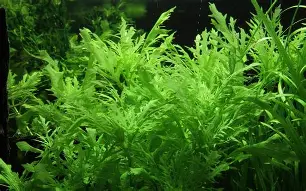
🪨 Species at a Glance
| Common Name | Water Wisteria |
| Scientific Name | Hygrophila difformis |
| Family | Acanthaceae (same family as Hygrophila polysperma and Hygrophila corymbosa) |
| Origin | Indian subcontinent and Southeast Asia — India, Bangladesh, Nepal, Bhutan, Myanmar, Thailand, Malaysia |
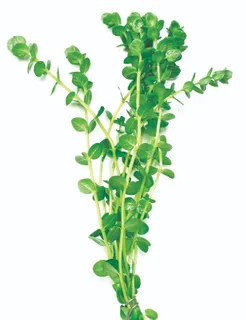
| Form Supplied | Traditional bunched stems (non-TC, weighted at the base, typically 5-8 stems per bunch) |
| Planting Method | Stem — plant individual cuttings directly into the substrate |
| Light Level | Medium (tolerates low to high; leaf shape changes dramatically with light level) |
| CO2 | Not required — thrives without CO2 in most setups; CO2 accelerates growth and enhances lace form |
| Growth Rate | Fast — a quintessential beginner-friendly fast stem plant |
| Max Height | 30-50 cm (trim regularly to maintain shape and density) |
| Propagation | Stem cuttings, lateral side-shoots, and adventitious plantlets from detached leaves |
| Aquascape Placement | Background feathery mass — rear of tank where height, texture, and a soft open silhouette are wanted |
| Unique Trait | Strongly heterophyllous — the same plant produces narrow feathery leaves under high light and broader lobed leaves under lower light |
How to Plant
Stem
Water Wisteria is a classic stem plant, which in aquascaping terminology means that its entire growth strategy revolves around a single primary vertical shoot pushing upward from a single rooted base, with fresh whorls of leaves unfurling at regular intervals and propagation happening almost exclusively through cuttings taken from that same stem. Unlike rhizome plants such as Anubias and Bucephalandra that cling to hardscape, unlike carpet plants such as Monte Carlo and Hair Grass that creep horizontally, and unlike floating plants that drift on the surface film, stem plants live or die by how correctly the lower portion of the stem is anchored into soft substrate. The bunched form you receive from Amazonia Aquarium is the traditional non-tissue-culture presentation: a small cluster of five to eight individual stems held together at the base by a lead strip or rubber band, grown submerged in a nursery pond or a flow-through raceway, trimmed to uniform length, and shipped wet. This traditional bunched form has been the standard way to supply Hygrophila difformis for decades and remains the most cost-effective way to buy this plant in meaningful quantity, because a single twelve-dollar bunch will seed a full background hedge if you divide and plant the stems correctly.
Before you plant, spend a few minutes on preparation. Remove the rubber band or lead strip at the base of the bunch, because leaving it in place will compress the stems together underwater, cut off water circulation to the lower portion, and cause the base to rot within a week or two. Rinse the entire bunch gently under dechlorinated water to dislodge any debris, snail eggs, or residual algae from the nursery, and inspect each stem individually, discarding any that have blackened soft bases or completely stripped lower leaves. Using sharp aquascaping scissors, trim the very bottom half-centimetre of each stem with a clean diagonal cut — this fresh cut exposes living cambium that will root quickly, whereas the ragged or dehydrated cut from harvest may simply fail to rejuvenate. Strip the lower three to four centimetres of leaves from each stem with a gentle fingertip motion or with the scissors, because buried leaves decompose underwater and can seed a bacterial bloom or a localised ammonia spike in a newly established tank. The stems are now individual planting units, each ready to take root on its own.
Using long straight planting tweezers, grasp each stem about two centimetres from its freshly cut base and push it firmly into the substrate at a slight angle, burying the bottom three to four centimetres. Keep the tweezers in place momentarily as you withdraw your hand, so the stem does not pop back up — a common beginner frustration with buoyant fresh cuttings. Space stems roughly three to four centimetres apart in a staggered grid rather than a perfect row, because a staggered pattern creates a more natural, less hedge-like appearance once the plant fills in. In a typical 60 centimetre background planting you will use fifteen to thirty stems; in a 90 centimetre tank, forty to sixty stems produces a full lush hedge. If you have fewer stems than you would like, plant them more widely spaced: Water Wisteria spreads rapidly through both vertical elongation and lateral side-shoots, so a sparse initial planting will close up into a solid mass within four to six weeks under reasonable conditions. A common aquascaping trick is to plant stems at varying depths — some buried five centimetres, some only two — which creates a natural-looking height gradient immediately rather than waiting for differential growth to produce one.
A crucial note about the initial adjustment period: Water Wisteria, like almost all stem plants, goes through a transition phase when it first enters your aquarium, and this transition is more dramatic in Hygrophila difformis than in most other easy stem plants precisely because of the heterophyllous trait. Nursery stems are typically grown partly emersed — with the top portions above water in high humidity — which encourages the plant to produce broad, solid, lobed leaves with smooth margins. When planted underwater in your tank, the original emersed leaves will often yellow, brown, or drop off over the first one to two weeks as the stem produces new submerged-form leaves from the growing tip. These new submerged leaves will look dramatically different from the starting material, with deep lace-cut division, narrow segments, and a feathery silhouette. New hobbyists frequently mistake this morphological shift for disease, pest damage, or plant death — in reality it is the exact opposite, a clear sign that the plant is adapting and thriving. By week three the new underwater-adapted growth should be visibly dominant, and by week five to six the original emersed leaves will be completely replaced by fresh feathery lace-shaped foliage that looks nothing like the material you planted. Resist the urge to pull up stems that look scraggly during the first fortnight; patience is genuinely the single most important trait for getting through the first month with any stem plant, and Water Wisteria is no exception.
One final consideration during planting is how deep to bury the stem base. There is a small ongoing debate among aquascapers about whether to plant stems deep (five to six centimetres) for maximum initial anchoring, or shallow (two to three centimetres) to allow faster rooting into the oxygenated upper substrate layer. Both methods work for Water Wisteria; in practice, aim for the middle of that range, and err deeper if your substrate is loose or if you have fish that like to dig near the base. Freshly cut stems are reasonably buoyant, and if planted too shallow they will float free within hours. If you find stems repeatedly popping up, consider pressing a small stone or a glass plant weight against the base until roots anchor the stem firmly in place, which usually takes seven to ten days. After that initial anchoring period, the stem is locked in and you can forget about it except for the regular rhythm of trimming.
Ideal Water Conditions
6.0–8.0
ideal 6.8
22–28 °C
ideal 25 °C
4–18 dGH
soft to moderately hard water; the plant accepts everything from acidic soft Amazonian-style water to alkaline moderately hard general-community water
Water Wisteria is one of the most parameter-tolerant stem plants in the aquarium hobby, which is another reason it ranks as a top beginner recommendation. In its native Indian and Southeast Asian range, Hygrophila difformis colonises everything from acidic blackwater paddy-field ditches at pH 5.5 and very soft water, through neutral rice-paddy margins at pH 7.0 and moderate hardness, to slightly alkaline agricultural drainage canals and seasonal wetlands at pH 7.8 or even 8.0 and considerably harder water. This natural flexibility translates directly into aquarium adaptability: the plant grows well across pH 6.0 to 8.0 and across general hardness ranges from 4 to 18 dGH. An ideal middle-ground target is pH 6.8 with 6 to 10 dGH and 3 to 6 dKH, which also happens to be a range that suits the most common community fish species (tetras, rasboras, guppies, shrimps, peaceful dwarf cichlids), so you can build an aquascape where plant and livestock preferences align without conflict. The exceptional upper-pH tolerance makes Water Wisteria one of the best stem plants for Central American livebearer tanks or African dwarf cichlid tanks where slightly alkaline, harder water is the norm — very few other fast-growing stem plants thrive across that entire breadth.
Temperature is where Water Wisteria shows its tropical origins most distinctly. The plant wants warm water, ideally 22 to 28 degrees Celsius, with the sweet spot around 24 to 26 degrees. Below 20 degrees the plant slows dramatically and becomes vulnerable to rot at the stem base; below 16 degrees it generally fails to thrive long-term. Above 30 degrees the plant still grows but may become stringy with weaker internode development, and its resistance to algae and bacterial infection drops as warmer water holds less dissolved oxygen. If you keep Water Wisteria in a discus tank at 29 to 30 degrees, expect faster growth and more frequent trimming but also slightly higher maintenance demands around algae prevention. Conversely, Water Wisteria does not suit coldwater tanks (white cloud minnows, hillstream loaches, fancy goldfish at sub-20-degree temperatures) — choose hornwort or other cold-tolerant stem plants for those setups instead.
Water-change discipline matters for any planted tank and Water Wisteria benefits particularly from regular changes because of its fast growth rate and correspondingly fast nutrient throughput. A typical well-run Water Wisteria tank benefits from a weekly 30 to 50 percent water change, which serves to reset fertiliser concentrations, remove organic waste that would otherwise feed algae, replenish trace minerals, and refresh dissolved oxygen. Pair each water change with a light mechanical cleaning of the stems: gently agitate the hedge with your fingers or a soft mesh net to dislodge accumulated detritus from the lacy leaflets, then siphon the freed debris. Without this periodic cleaning, fine particles settle within the dense whorls and can create localised algae problems, especially on older lower leaves. Many hobbyists also perform a quick glass cleaning and filter-media rinse in tank water during the weekly water change routine; Water Wisteria tanks with consistent weekly maintenance stay visibly healthier than tanks where maintenance slips to fortnightly or monthly.
Chlorine and chloramine in tap water must always be neutralised with a quality dechlorinator at every water change. Water Wisteria is not particularly sensitive to chlorine compared to some plants, but the beneficial bacteria in your filter and substrate certainly are, and a sudden large dose of raw tap water can trigger a bacterial crash that indirectly stresses the plant through ammonia spikes. Seachem Prime at double dose or Tetra AquaSafe at label dose both neutralise chlorine, chloramine, and ammonia simultaneously. If your tap water has unusual contaminants (heavy metals, phosphates above 2 ppm, nitrates above 30 ppm), consider cutting it 50/50 with remineralised reverse-osmosis water for all changes, which also gives you finer control over pH and hardness.
Lighting Guide
MEDIUM LIGHT
PAR: 30-60 PAR at the top of the stems (tolerates 15-100 PAR across a remarkably wide usable range)
High
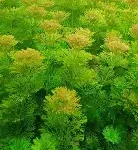
Water Wisteria is refreshingly undemanding when it comes to lighting, which is one of the many reasons it features so prominently in beginner planted aquarium guides and starter plant collections. Medium intensity illumination — roughly 30 to 60 PAR measured at the top of the stems with a quantum meter — is the sweet spot where this plant thrives without becoming leggy and without burning under excess photon supply. Because Hygrophila difformis is strongly heterophyllous, however, the way it responds to light is more interesting and more visually consequential than in most easy stem plants. Under higher light (50 to 80 PAR) with good nutrition, the plant produces its most famous submerged form: deeply divided, lacy, feathery leaves with narrow segments and a tracery-like silhouette reminiscent of fennel or dill. Under lower light (15 to 35 PAR), the same plant produces broader, simpler leaves with shallower lobes, a smoother margin, and an overall less fractal appearance — closer to the emersed growth form you would see on riverbank plants in monsoon-season India. Both forms are attractive, both are healthy, and both are natural; aquascapers choose the form they want by choosing the light level they supply.
Because Water Wisteria grows tall, the effective light level measured at the stem tips will change as the plant elongates: a freshly planted stem at 10 centimetres height might experience only 20 PAR at its growing tip in a 45 centimetre deep tank, while the same stem once it has grown to 40 centimetres will find itself exposed to 50 or 60 PAR near the water surface. This natural height-based light gradient is part of what creates the attractive layered look of a mature Water Wisteria hedge, with slightly broader simpler whorls at the bottom and more deeply divided lace-cut whorls at the sun-drenched top. Some aquascapers deliberately exploit this by intentionally growing Water Wisteria tall, specifically to produce the dramatic leaf-form gradient on a single specimen.
Under very low light — say, 10 to 20 PAR — Water Wisteria still grows but slows considerably and may stretch in an etiolated fashion, with longer internodes (gaps between whorls) and thinner individual leaves as the plant reaches desperately for more photons. This leggy growth is not attractive and is not the plant’s best form, but neither does it kill the plant; many low-tech aquariums maintain Hygrophila difformis for years at 15 to 20 PAR with acceptable if slow results. Under very bright light above 80 PAR without commensurate CO2 supplementation, the plant can develop algae on the older lower leaves as it cannot use all the available light and the surplus energy drives algal growth in the water column. The simple rule for balancing light with the rest of the system is: if you raise the light, raise the CO2 and ferts; if you cannot raise CO2, keep the light moderate.
Spectral quality matters less for Water Wisteria than for more demanding species. A balanced full-spectrum LED — Fluval Plant 3.0, Finnex Planted+ 24/7, Chihiros WRGB II, Twinstar S-Line, Aquasky, ONF Flat series, or any of dozens of competent planted-tank fixtures — will grow Water Wisteria beautifully. The plant responds particularly well to lights with strong red and green output as opposed to blue-dominated spectra, because the lacy foliage visually benefits from warm-spectrum rendition and because the plant’s chlorophyll absorbs red and blue wavelengths primarily. Photoperiods of six to nine hours per day suit this species perfectly; longer photoperiods push faster growth but also drive faster nutrient consumption and increase trimming frequency. For new tanks, start at six hours and extend by thirty minutes per week until you reach your target photoperiod. A consistent daily schedule controlled by a simple digital timer is the single best lighting habit for this plant.
If you notice specific symptoms, here is what Water Wisteria is telling you about light. Pale, yellowish-green whorls at the very top with shortened internodes typically indicate too much light combined with nutrient limitation — reduce photoperiod by an hour or increase fertiliser dosing. Dark rich green whorls with unusually elongated internodes and downward-drooping leaves typically indicate too little light combined with adequate nutrition — raise your light intensity, shorten any shading from surface plants, or raise the fixture higher above the tank. Gradual reversion from lace-cut leaf form back toward broad, simple leaves on the newest growth without any change in lighting setup can indicate that the fixture’s output has degraded over time (LEDs lose output gradually over years) and that you may benefit from adjusting the intensity setting upward or replacing the fixture. Crisp, deeply divided, evenly spaced lace-cut whorls with rich mid-green colour and typical two-centimetre internode spacing indicate a well-matched light and nutrient supply, which is the goal for aquascapers who want the dramatic feathery form.
Recommended Photoperiod: 6-9 hours per day (7-8 is ideal; start at 6 for a new tank and extend by 30 minutes weekly)
Carbon & Nutrients
CO2 OPTIONAL
One of the most attractive traits of Water Wisteria for hobbyists who want a lush planted tank look without the expense and complexity of a pressurised gas setup is that this plant genuinely grows well without CO2 injection. Hygrophila difformis evolved in slow-flowing Indian and Southeast Asian wetlands where dissolved CO2 from decomposing organic matter naturally runs higher than in many other freshwater habitats, and the species has retained a high tolerance for extracting inorganic carbon from whatever source is available — dissolved CO2, bicarbonate ions, and even atmospheric CO2 when the plant emerses at the waterline. In a low-tech aquarium with no added CO2, expect Water Wisteria to grow at a steady moderate-to-fast rate, adding three to six centimetres of vertical growth per week and producing healthy new whorls at consistent intervals. The colour will be a clean mid-green, the texture will be preserved, and the overall plant will look attractive and full. This makes Water Wisteria one of the elite handful of stem plants that can genuinely carry a non-CO2 aquascape, which is a major reason it appears on virtually every beginner plant recommendation list.
That said, adding CO2 injection dramatically accelerates Water Wisteria’s growth and sharpens its form. Under pressurised CO2 dosed to 20 to 30 parts per million during the photoperiod, the plant typically doubles its growth rate to six to ten centimetres of new vertical length per week, produces shorter internodes for a fuller denser appearance, and develops more pronounced lace-cut leaf morphology with deeper divisions and narrower segments. If you are running a high-tech planted tank with other CO2-demanding species, Water Wisteria slots right in and thrives — it is not a plant that struggles with CO2 injection the way some slow-growing species occasionally do. Use a standard CO2 kit: a cylinder of food-grade CO2, a quality regulator with solenoid valve, a bubble counter for visual feedback, and either an inline atomiser or an in-tank diffuser to distribute the gas. Monitor CO2 levels with a drop checker filled with 4 dKH reference solution, targeting a bright lime green during the lit hours. Start CO2 about an hour before lights on and stop it about an hour before lights off; this syncs gas availability with photosynthesis and minimises night-time CO2 accumulation that would otherwise depress pH and stress fish.
If pressurised CO2 is not an option for you — because of budget, tank location, or personal preference for a simpler low-tech system — you can partly compensate with liquid carbon supplements such as Seachem Flourish Excel or Easy Life EasyCarbo. Dose daily at roughly one millilitre per 40 litres of water; the dose can be split morning and midday for more consistent availability. Liquid carbon supplements provide a source of bioavailable carbon (glutaraldehyde-based compounds) that plants can metabolise, though significantly less efficiently than gas-phase CO2. Water Wisteria tolerates liquid carbon dosing well, as do most Hygrophila species, and the supplement will meaningfully boost growth rate above an unmedicated low-tech baseline. Be aware that certain sensitive plants (some Vallisneria species, some mosses, Riccia) react poorly to liquid carbon, so if your aquarium contains these species, dose cautiously or avoid the product entirely. Hygrophila difformis itself has no such sensitivity and will simply grow faster when liquid carbon is added.
A note on surface gas exchange for non-CO2 tanks: if you are running Water Wisteria without any supplemental carbon, make sure your tank has good surface agitation to maximise the absorption of atmospheric CO2. A filter outflow that creates gentle ripples at the surface, an air stone running during the day, or a small surface-skimming pump all help replenish dissolved CO2 naturally from the atmosphere. Stagnant surface films actually harm plant growth in non-CO2 tanks because they block the gas exchange that the plants depend on. This is one case where the usual aquascaping advice to minimise surface turbulence in CO2 tanks reverses: in a non-CO2 tank you want more, not less, surface movement.
Fertilisation
Water Wisteria is a moderately heavy feeder that draws nutrients from both the water column and the substrate, so a combined fertilisation approach produces the best results. For the substrate side, nutrient-rich active planted-tank soil provides months to years of slow-release nitrogen, phosphorus, potassium, and trace elements at the root zone; alternatively, slow-release root tabs placed beneath the stems every six to eight centimetres and refreshed every three to four months deliver comparable results in inert substrate. For the water column side, a comprehensive liquid fertiliser providing macronutrients (NPK — nitrogen, phosphorus, potassium) and micronutrients (iron, magnesium, manganese, copper, zinc, boron, and other trace elements) is essential for fast fresh growth.
Two main dosing philosophies dominate the planted-tank hobby. The Estimative Index (EI) method, popular among high-tech aquascapers, maintains slightly excess nutrient concentrations (nitrate around 20 ppm, phosphate around 2 ppm, potassium around 30 ppm, iron around 0.5 ppm) with a 50 percent weekly water change to reset. This guarantees the plant is never nutrient-limited but tolerates imperfect CO2 less well. The leaner dosing philosophy targets lower steady-state nutrient levels (nitrate 5 to 10 ppm, phosphate 0.5 ppm) which tends to produce algae-free tanks but requires more careful observation to avoid genuine deficiencies. Water Wisteria works well under either approach and under simpler all-in-one liquid fertiliser products such as Tropica Specialised Nutrition, ADA Green Brighty, Seachem Flourish, or Aquario Neo Premium dosed per manufacturer instructions. An all-in-one product is an excellent starting point for anyone not yet comfortable with precise dosing arithmetic.
Watch for specific deficiency symptoms and respond accordingly. Pinhole holes appearing in older leaves indicate potassium deficiency; dose potassium sulphate or a dedicated potassium supplement. Yellowing older leaves with green veins indicates magnesium deficiency; dose Epsom salt at roughly one teaspoon per 100 litres weekly, especially in soft water. Pale new growth with green older leaves indicates iron deficiency; add Seachem Flourish Iron or Tropica Premium Fertiliser one to three times per week. Overall pale green colouration of the entire plant indicates nitrogen deficiency; increase the overall fertiliser dose. A specific Water Wisteria signal worth noting is that reduced lace-cut leaf division, with new leaves appearing broader and simpler than expected under current lighting, can indicate overall nutrient limitation rather than any specific single deficiency — the plant’s shape-shifting response to stress is to produce the simpler, lower-energy leaf form. Because Water Wisteria grows fast, deficiency symptoms appear relatively quickly (within one to two weeks of onset), but conversely the plant responds quickly to corrected dosing — usually you see new healthy growth within a week of adding the missing nutrient. This quick feedback loop makes Water Wisteria a useful indicator plant: if your Hygrophila difformis looks healthy, vigorous, and produces its best lace form, your overall fertiliser regime is well-balanced for most other plants in the tank.
Growing & Trimming
FAST GROWTH
Water Wisteria is a genuinely fast-growing stem plant by any reasonable measure. Under target conditions (medium-to-high light, any level of CO2 supplementation, regular fertiliser, and 24 to 26 degrees Celsius), expect vertical growth of five to ten centimetres per week during the active growth phase, meaning a freshly planted 10 centimetre cutting can reach the water surface of a 45 centimetre deep tank within four to seven weeks. In low-tech setups (medium light, no CO2, weekly Tropica Specialised Nutrition dosing), growth slows to a still-respectable three to five centimetres per week, and stems reach the surface in eight to twelve weeks. Without proper fertilisation or at the extremes of pH and temperature, growth can slow to a crawl, but this is a plant that genuinely wants to grow and will keep trying as long as anything resembling appropriate conditions are maintained. This vigour is both the greatest strength and the most important thing to manage with Water Wisteria: a fast-growing plant that is not trimmed and shaped will quickly overtake the aesthetic design of your aquascape.
Trimming is therefore the central maintenance activity for a mature Water Wisteria hedge. The first trim is usually appropriate three to five weeks after planting, once the stems have reached two-thirds of the way to the water surface and are developing a mature whorl pattern. Using sharp aquascaping scissors, cut each stem at roughly half to two-thirds of its current height, removing the top portion cleanly. Do not simply rip or fold the stems — that damages the remaining stem tissue and can cause the base to rot. A clean diagonal cut with sharp scissors heals rapidly. The top portion that you remove is a valuable piece of plant material: strip its lower leaves and replant it nearby, and you have effectively doubled your stem count for free. This is the primary mechanism by which a single twelve-dollar bunch builds into a full background hedge — every trim is also a propagation event.
After the first trim, Water Wisteria exhibits a characteristic and beautiful behaviour: each cut stem responds by producing two or more new side shoots from the whorl immediately below the cut, effectively doubling or tripling the visible stem count at the top of the hedge. Over two or three trims, a hedge planted with fifteen original stems can develop fifty to eighty visible growing tips, creating the dense fluffy lace-like mass that makes Water Wisteria so visually striking as a background plant. Trim every two to four weeks depending on growth rate, always aiming to keep the hedge at a consistent target height that fits your aquascape design. Common target heights are 20 to 30 centimetres in a 45 centimetre tall tank, 30 to 45 centimetres in a 60 centimetre tall tank, and proportionally for other sizes.
A recurring maintenance issue with Water Wisteria is that the lower leaves on older stems tend to progressively brown and thin out as the stem ages, because the shading from the canopy above reduces the lower leaves’ photosynthetic productivity, and the plant preferentially invests in the newer productive tissue at the top. Over time, the hedge can develop an unattractive bald zone at the bottom where only bare stems remain, with the lacy foliage mass all concentrated in the top half of the tank. The solution is periodic rejuvenation: every two to three months, uproot the oldest and baldest stems entirely, take fresh cuttings from their healthy top sections, and replant those cuttings in the spaces left by removed stems. This effectively rotates the hedge, keeping the visible foliage mass always fresh and at an appropriate height. Many aquascapers describe this as the fundamental stem plant rhythm — trim, propagate, rotate — and Water Wisteria is a quintessentially rhythm-based plant. Thinking about Hygrophila difformis as a perpetual project rather than a static installation puts the maintenance demands in the right mental frame.
Algae management on Water Wisteria is straightforward in a well-balanced tank but can spiral if conditions are neglected. The lacy foliage traps fine detritus readily, which in turn feeds fine-particle algae, so periodic gentle agitation of the hedge during water changes (using fingers or a soft net) is effective preventive care. If green spot algae, green dust algae, or brown diatom films start to accumulate on the leaves, address the underlying cause: either reduce photoperiod by an hour, increase water-change frequency, check CO2 stability if you are running injection, or boost fertiliser if pale new growth suggests nutrient deficiency. Tactical treatments include spot-dosing hydrogen peroxide with a syringe directly onto algae patches (one millilitre per litre dilution is safe), boosting Seachem Excel to triple dose briefly at black beard algae, and enlisting a clean-up crew of Amano shrimp, otocinclus, and nerite snails. Avoid heavy use of algaecides, which can damage Water Wisteria’s delicate lace foliage; patient parameter correction is almost always the better approach.
One specific problem worth highlighting is Water Wisteria’s occasional susceptibility to surface-film suffocation in stagnant-surface tanks. If your tank develops a visible oily surface film, light penetration to the hedge drops noticeably and the plant’s growth slows within a week or two. Fix the film either by installing a surface skimmer attachment on your filter intake (Eheim and Oase both make good ones), or by briefly skimming the film with absorbent paper towel, or by increasing surface agitation. Keeping the surface clear of oily film is one of the simplest yet most overlooked variables in planted-tank care. A second issue to watch for is sudden unexplained reversion to simpler, broader leaf forms on new growth: this is the plant’s heterophyllous stress response and typically indicates either a drop in light output, a drop in nutrient availability, or a drop in temperature. Treat reversion as a diagnostic signal rather than a cosmetic problem, and investigate the underlying tank conditions.
Daily
Observe the hedge for floating fragments, uprooted stems, or signs of melt or algae; a brief glance is sufficient in a healthy tank
Weekly
Perform 30-50 percent water change; gently agitate the hedge to dislodge fine detritus from whorls; dose liquid fertiliser per schedule; check CO2 drop checker and surface film
Every 2-4 Weeks
Trim the hedge to target height using sharp aquascaping scissors; save trimmings for replanting to extend the hedge; siphon any fallen clippings
Every 2-3 Months
Rotate the hedge: uproot the oldest baldest stems, take fresh cuttings from their top sections, replant the cuttings in the vacated spots to renew the hedge from scratch
Every 3-4 Months
Add fresh root tabs beneath the hedge if using inert substrate, or assess whether active soil reservoir is depleting and supplement accordingly
As Needed
Address algae by increasing flow, correcting CO2 or ferts, shortening photoperiod, or spot-treating; clear any oily surface film promptly to preserve light penetration
Aquascaping & Design
Background
Water Wisteria belongs unambiguously in the background of an aquascape — the tall, rear zone where stem plants create the sense of density, depth, and the feeling of a vegetation wall that visually separates the scene from the back glass of the tank. The deeply divided, lacy, finely cut foliage of Hygrophila difformis is particularly valuable because it provides a texture that very few other background plants can match: soft, fluttering, almost cloud-like masses of whorled leaf tracery that catch and refract light in ways that solid-leaved plants simply cannot. This makes Water Wisteria a textural counterpoint to broader-leaved background plants such as Amazon Sword (Echinodorus) and gives the aquascape visual rhythm when the two are placed alongside each other. Water Wisteria also pairs beautifully with other feathery plants such as Ambulia (Limnophila sessiliflora) and Cabomba in mixed backgrounds where the very small variations in leaf tracery between the three species create subtle painterly gradients across the rear of the tank.
Placement within the background is flexible. You can plant Water Wisteria as a solid back-wall hedge running the entire length of the tank, creating a uniform curtain of lacy green behind everything else; this is the approach most commonly seen in beginner aquascapes and in breeding tanks where the primary goal is to provide cover for fry and invertebrates. Alternatively, you can plant Water Wisteria in one or two asymmetrically placed mounds, with the mounds occupying perhaps 40 to 60 percent of the back wall and leaving the remainder for other background species or for deliberate open water space; this is the more advanced open-style approach that creates asymmetry, negative space, and a sense of natural airy composition. A classic open-style Water Wisteria composition leaves a generous open water expanse in front of a tall lacy Water Wisteria mound, with only a few dramatic hardscape pieces and a low foreground carpet filling out the rest of the scene — the openness of the composition lets the delicate filigree of the Water Wisteria foliage become the primary visual focus rather than competing with dense packed planting elsewhere.
For design pairings, several plants work especially well alongside Water Wisteria. In the background, consider red-stem plants (Rotala rotundifolia, Rotala H’ra, Ludwigia Super Red, Ludwigia repens) for colour contrast against the saturated green of the lacy foliage; the red-green complementary pairing is classic and powerful. Alternatively, pair Water Wisteria with taller solid-leaf background plants (Amazon Sword, Red Tiger Lotus, Aponogeton species) for leaf-form contrast — broad strap-like leaves next to finely divided lace leaves produce visually rich textured backgrounds. In the midground, slower-growing rhizome plants (Anubias nana, Anubias barteri, Bucephalandra varieties, Java Fern Windelov) provide a stable anchoring presence against which the fluttering Water Wisteria can play, and Cryptocoryne wendtii or Cryptocoryne parva offer substrate-rooted midground mounds that do not compete with Hygrophila difformis’ feathery habit. In the foreground, low carpet plants (Hair Grass, Monte Carlo, Glossostigma, Marsilea hirsuta) or low rosette plants (Staurogyne repens, Lilaeopsis) provide scale and ground that sets off the tall rear lace hedge.
Livestock compatibility in a Water Wisteria aquascape is extremely broad, broader than for almost any other stem plant because of the species’ wide water-parameter tolerance. Small schooling fish (cardinal tetras, neon tetras, ember tetras, galaxy rasboras, chili rasboras, harlequin rasboras) look beautiful moving through the lacy background hedge. Dwarf cichlids (Apistogramma, rams) appreciate the cover and visual complexity of a Water Wisteria-backed tank. Shrimps (cherry shrimp, Amano shrimp, crystal red shrimp) thrive in Water Wisteria’s complex foliage, which provides both cover and grazing surface; the lace leaves are especially productive shrimp grazing territory because they trap fine biofilm and micro-organisms. Livebearers (guppies, endlers, platies, mollies) also pair well, and because Water Wisteria tolerates slightly alkaline harder water better than most stem plants, it is one of the few fast-growing stem plants that genuinely works in dedicated livebearer tanks. Bottom-dwellers (corydoras, otocinclus, small plecos) do fine alongside Water Wisteria since the stem plant occupies the back and does not crowd the substrate or compete with bottom feeders for territory. The main incompatibilities are large substrate-disturbing fish that would uproot stems (some larger cichlids, loaches that dig aggressively, goldfish which also tend to nibble soft plant material), and very cold-water species whose tank temperatures fall below Water Wisteria’s tropical comfort zone.
For breeding applications specifically, Water Wisteria is exceptional. The dense lacy foliage provides outstanding cover for livebearer fry, dwarf cichlid fry, tetra and rasbora fry, and shrimp larvae. Many breeders deliberately plant a thick Water Wisteria hedge in fry-rearing tanks specifically because the feathery whorls trap micro-organisms and biofilm that serve as first foods for newly hatched fry, while also providing safe refuge from adult fish that might otherwise predate their offspring. This dual role as both design element and functional breeding structure makes Water Wisteria particularly valuable in enthusiast breeding setups. Some livebearer breeders describe a mature Water Wisteria thicket as the single most useful piece of equipment in a fry-rearing tank, outperforming artificial breeder traps because it provides cover, oxygenation, waste export, and grazing surface simultaneously.
Thinking biotope-first is also productive with Water Wisteria. The plant’s native habitats in India, Bangladesh, and Southeast Asia are slow-moving wetlands, paddy-field margins, oxbow lakes, and low-gradient streams, typically dense with emergent sedges, rice plants, and various other aquatic angiosperms. Fish native to these habitats include many popular aquarium species: the wild ancestors of many livebearers, danios, rasboras, gouramis, and paradise fish, plus native barbs and loaches. A biotope-inspired Water Wisteria aquascape might combine the plant with Cryptocoryne wendtii, Asian Microsorum pteropus (Java fern), and a school of harlequin rasboras or scissortail rasboras with a pair of honey gourami, producing an aquascape that is both aesthetically pleasing and ecologically coherent. This kind of thoughtful species pairing elevates an aquascape from a random collection of beautiful organisms into a tiny reconstructed ecosystem.
One final design consideration is scale. Water Wisteria is a medium-to-large plant that suits tanks of 40 centimetres depth and greater; in small nano tanks (below 20 litres) the plant quickly overwhelms the available space and requires such frequent trimming that it becomes impractical. For nano tanks, consider smaller-growing stem plants like Rotala macrandra Mini, Hemianthus micranthemoides, or compact Hygrophila polysperma. Water Wisteria truly shines in mid-sized to large planted aquariums (60 to 120 centimetres long) where its lacy mass can spread across a meaningful background without dominating the composition. For paludarium and terrarium builders, Water Wisteria’s emersed form is also worth exploring — the plant grows well in saturated substrate above the waterline and produces small violet flowers under good conditions, an entirely different experience from the submerged aquarium form and a reminder of the species’ underlying terrestrial relatives in the Acanthaceae family.
A note on the name: despite the common name, Water Wisteria is botanically Hygrophila difformis and is not related to the terrestrial ornamental Wisteria (genus Wisteria) of gardens and trellises, which belongs to the entirely different Fabaceae (pea and bean) family. The common name arose from a superficial visual similarity between the deeply divided Water Wisteria leaves and the pinnate compound leaves of garden Wisteria vines. The two plants are not related, do not share habitat or care requirements, and only the aquatic Hygrophila difformis is suitable for fish tanks. If you ever see an aquarium product sold simply as Wisteria or advertised with ambiguous common-name-only signage, always check the scientific name on the label — you want Hygrophila difformis, and nothing else.
| Plant | Why | |
|---|---|---|
| 🌿 | Rotala rotundifolia and variants | Classic red-stem background partner — the red-green colour contrast between Rotala and Water Wisteria is one of the most visually powerful combinations in planted aquarium design, and both species share similar care requirements and fast growth rates |
| 🌿 | Amazon Sword (Echinodorus bleheri) | Broad strap-leaved rosette plant that provides dramatic textural contrast against Water Wisteria’s lacy whorls — combined they create rich layered background visual interest |
| 🌿 | Cryptocoryne wendtii Green or Brown | Slow-growing midground rhizome plant that anchors the transition from carpet to Water Wisteria background; thrives in similar substrate and lighting and shares the Southeast Asian biotope origin |
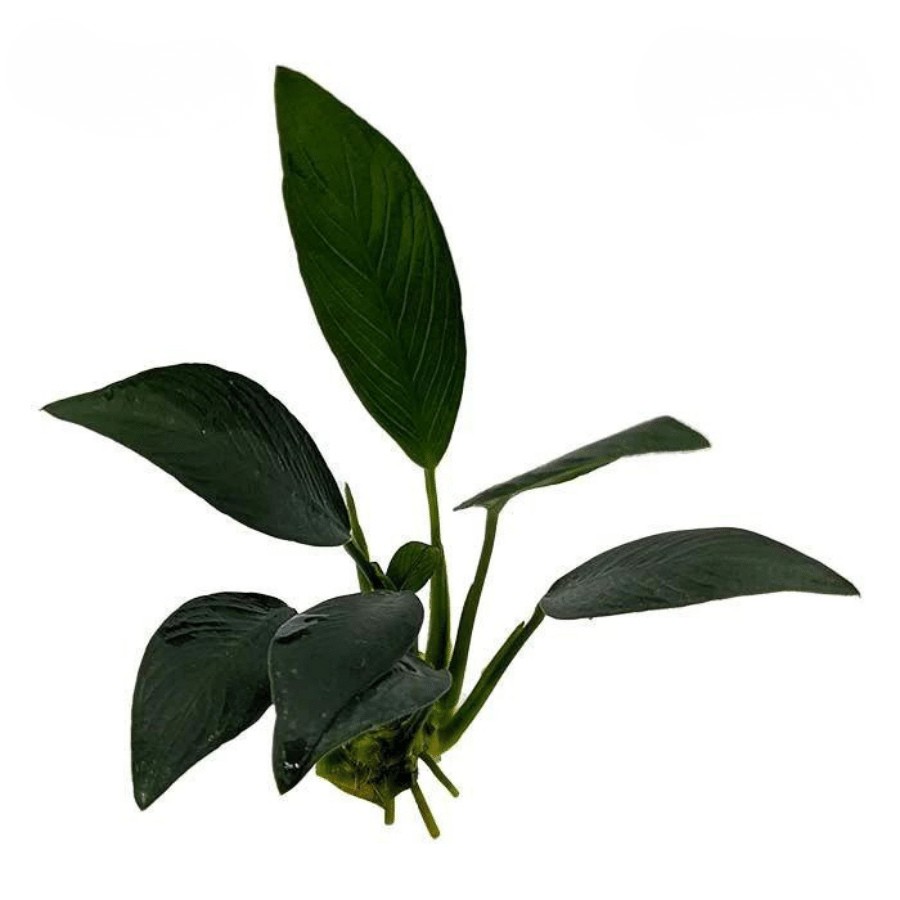
| 🌿 | Anubias nana Petite | Hardscape-attached rhizome plant for midground or foreground accent; its broad dark leaves contrast beautifully with Water Wisteria’s fine lacy foliage and its slow growth balances the stem plant’s rapid fill |
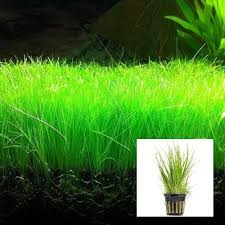
| 🌿 | Hair Grass (Eleocharis acicularis) | Foreground carpet partner that provides the low ground layer against which Water Wisteria’s tall lacy background plays; visually reminiscent of meadow-and-reed natural scenes |
| 🌿 | Ambulia (Limnophila sessiliflora) | Another feathery fast-growing background stem plant from a similar Southeast Asian biotope; planting Water Wisteria and Ambulia in adjacent mounds creates subtle lace-vs-whorl tracery gradients that feel painterly in a mature aquascape |
How to Propagate
Cuttings
If there were a prize for the easiest-to-propagate plant in the aquarium hobby, Water Wisteria would be in serious contention. Propagation is so trivially simple that most hobbyists end up with more Hygrophila difformis than they know what to do with within three months of their first bunch. The primary mechanism is pure stem-cutting propagation: any cleanly cut section of healthy Water Wisteria stem that contains at least two or three whorls of leaves can be replanted into the substrate and will root readily within five to ten days, developing into an independent plant indistinguishable from the parent. No special hormones, no bottom heat, no mist propagation, no complicated substrate preparation — just snip, trim, plant.
The main propagation opportunity arises naturally during every regular trim. When you cut a stem to maintain hedge height, the removed top portion (often five to fifteen centimetres long with three to eight whorls of leaves) becomes propagation material. Strip the lower two to three centimetres of leaves, make a fresh diagonal cut at the base if the cut is ragged, and plant the cutting directly into the substrate near the original hedge. Within one to two weeks the cutting has rooted and begun its own vertical growth trajectory. This is how a single bunch of five to eight stems purchased for twelve dollars can evolve into a hedge of forty to eighty stems over three to four months with no additional plant purchases, simply by propagating every trim.
A secondary propagation mechanism is lateral side-shoot development. When you cut a main stem, the node immediately below the cut frequently produces two or more lateral side-shoots over the following weeks, which grow upward alongside the original stem and eventually can be treated as independent stems themselves. Some aquascapers intentionally pinch growing tips to encourage lateral branching, producing bushier and fuller Water Wisteria clumps than a simple vertical-stem approach would yield. If you want particularly dense bushy Water Wisteria, topping the growing tip every two to three weeks during active growth produces a strikingly different habit than letting the stems grow straight up and periodically cutting them back.
The third and most unusual propagation route — and one of the genuinely distinctive features of this species — is adventitious plantlet development from detached leaves. Unlike most aquatic stem plants, Hygrophila difformis can produce entirely new plantlets from an individual leaf that falls off the parent and lands in contact with substrate under good conditions. The mature leaf, sitting flush against fertile soil under reasonable light, can develop miniature roots from its midrib region and miniature shoot buds along its base, eventually regenerating a complete new plant from what was originally just a single leaf. This is a rare trait among aquarium plants, shared with only a small handful of species such as certain Hygrophila relatives and a few Cryptocoryne forms, and it explains why Water Wisteria fragments seem to ‘reseed’ new sprouts in unexpected corners of well-established tanks. It is not fast — a leaf-based plantlet takes four to eight weeks to become a recognisable small plant — but it is reliable, and it makes the plant genuinely difficult to eradicate once it has established itself in a tank.
A fourth occasionally useful propagation opportunity comes from floating fragments. If a stem breaks off during maintenance and drifts around the tank for several days, it will often produce aerial roots at the break point and along any submerged nodes. These floating stems can be collected, trimmed, and planted back into the substrate with a high success rate, because the plant has already prepared its rooting response at the nodes. Combined with the adventitious leaf trait described above, this makes Water Wisteria remarkably resilient to accidental damage during cleaning — fragments rarely go to waste unless you specifically discard them by removing them from the tank entirely.
For serious propagation — building up stock for sharing with fellow hobbyists, seeding a new tank, or compensating for a future tank break-down — consider setting up a dedicated propagation container. A simple plastic tub or spare small aquarium, filled with a few centimetres of Aquasoil, partially submerged under a cheap grow light, can maintain a small forest of Water Wisteria emersed or semi-submerged. Emersed Water Wisteria is especially striking because it grows the broad, simple, rounded lobed leaves that look nothing like the famous lace-cut submerged form; people seeing emersed Water Wisteria for the first time frequently refuse to believe it is the same species as the submerged plant they know from their aquariums. Emersed cultivation is also algae-free, which makes it a useful backup reservoir of clean genetic material if the main aquarium ever suffers an algae outbreak that requires a plant-cull reset. Switching stems between emersed and submerged life is straightforward in either direction; the plant simply grows new appropriate-form leaves over two to three weeks and proceeds as normal.
Quick Reference
| Scientific Name | Hygrophila difformis |
| Common Name | Water Wisteria |
| Family | Acanthaceae (NOT terrestrial Wisteria, which is Fabaceae) |
| Light | Medium (tolerates low to high; leaf shape shifts with intensity) |
| CO2 | Not required; responds well to injection |
| Growth Rate | Fast |
| pH | 6.0-8.0 (very tolerant) |
| Temperature | 22-28 degrees C |
| Hardness | 4-18 dGH (very tolerant) |
| Placement | Background lace mass; open-style aquascape |
| Propagation | Stem cuttings, lateral shoots, and rare leaf-contact plantlets |
| Unique Trait | Heterophyllous — shape-shifts leaves between narrow feathery and broader lobed forms |
| Max Height | 30-50 cm (trim to preferred height) |
| Supplied As | Traditional bunched stems (non-TC) |
Reviews
Clear filtersThere are no reviews yet.