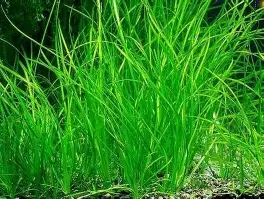
🪨 Species at a Glance
| Scientific Name | Vallisneria nana |
| Common Names | Thin-Leaf Vallis, Narrow Vallisneria, Ribbon Grass, Australian Vallis |
| Family | Hydrocharitaceae |
| Origin | Northern Australia (Darwin, NT) and tropical QLD river systems |
| Planting Method | Rhizome / rosette into substrate |
| Light Requirement | Medium (low tolerated) |
| CO2 | Not required |
| Growth Rate | Medium to fast |
| Leaf Width | 2-3 mm (distinctly narrow) |
| Maximum Height | 40-60 cm |
| Aquascape Position | Background |
| Difficulty | Beginner-friendly |
Planting & Placement
Rhizome
Vallisneria nana is a rosette plant that grows from a short horizontal rhizome, sometimes called the crown, which sits at the base of the leaf fan. The single most important rule when planting Vallis is also the most commonly broken one: do not bury the crown. The pale junction where the green leaves meet the white roots must sit exactly at substrate level, not below it. Bury the crown and the rhizome rots within a week; leave it too high and the plant floats free the first time a bristlenose barges past. Aim for goldilocks depth, with the white root collar kissing the sand surface and only the green leaf bases visible above the substrate. This single detail, more than lighting, fertilisation or water chemistry, is the difference between a beginner who succeeds with Vallis and a beginner who blames themselves for killing an otherwise bulletproof plant.
When you unwrap a freshly arrived bunch from Amazonia Aquarium, trim the roots back to roughly two centimetres with sharp scissors. Shorter roots regrow faster and anchor more firmly than the long, tangled roots shipped from the grower. Gently separate the individual plantlets by teasing them apart at the rhizome, never by yanking on the leaves, and remove any soft, brown or mushy rhizome tissue with a clean cut. Dip them in a mild one-to-twenty bleach-to-water solution for ninety seconds if you are worried about snail or algae hitchhikers, then rinse thoroughly in dechlorinated water. Use long aquascaping tweezers to push each plantlet into the substrate at a thirty degree angle, driving the rhizome down to about one centimetre below the surface. Once seated, pull back slightly on the tweezers so the crown rises to the correct depth. The angled insertion method is a decades-old aquarium trick that greatly reduces the chance of the plant floating free during the first twenty-four hours, which is the critical anchoring window while the roots are still trimmed short.
The first week after planting is the most delicate period in the life of a new Vallis. Expect some older leaves to melt, turn translucent along the midrib, develop brown spots, and eventually detach from the rhizome entirely. This is normal adaptation from emersed nursery growth to submerged tank life, not a sign of failure, and it happens even to experienced planters with perfect technique. Trim the melted leaves at the base with sharp scissors to keep the tank tidy and allow the rhizome to redirect its energy into pushing new submerged-form leaves from the centre. Within ten to fourteen days, fresh bright-green leaves with a softer texture will emerge from the crown, and these are the true aquatic growth you can expect for the life of the plant. Resist the urge to move, trim or uproot during this settling-in period, as Vallis hates being disturbed while it is rebuilding its root system.
Space plantlets roughly five to seven centimetres apart in a zig-zag pattern across the back third of the tank. It may look sparse on day one, but within six to eight weeks the runners will have filled every gap and you will be trimming excess daughters out of the front glass. Planting too densely from the start wastes stock, causes the inner plants to be shaded out and lost, and makes it harder to press root tabs precisely where they are needed. Think of each starter plant as the seed of an eventual colony of ten to thirty plants, not as a finished piece of the scape.
Substrate choice influences planting technique more than many beginners realise. In pool-filter sand, the grains are small and dense, which supports the rhizome beautifully but makes it difficult to push plantlets in by hand without using tweezers; sand also compacts over time, so plan to disturb the top centimetre every few months with a chopstick to maintain oxygen penetration around the roots. In fine gravel of two to four millimetres, the plant seats easily but the loose grains allow more accidental uprooting by fish, so weigh new plantings down with a small stone or a strip of plant weight wire for the first fortnight. Nutrient-rich aquasoils such as ADA Amazonia, UNS Controsoil or Tropica Aquarium Soil all work for Vallis but are genuine overkill, as the plant is happy in pure inert substrate provided root tabs are refreshed quarterly. If you already have aquasoil in place for another project, great; if you are starting fresh for a Vallis-focused tank, save your money, buy bulk pool-filter sand from a local pool shop for a tenth the price, and spend the difference on a better LED or a stronger filter.
Water Quality for Plants
6.5–8.0
ideal 7.4
18–28 °C
ideal 24 °C
8–20 dGH
hard water tolerant, Sydney tap water is ideal
If there is a single reason Vallisneria nana should be at the top of every Australian beginner’s shopping list, it is water chemistry. Most popular aquarium plants, particularly the South American stems and the Southeast Asian Cryptocorynes, prefer soft, slightly acidic water with a general hardness below eight degrees and a pH below seven. That is the exact opposite of what flows out of a typical Australian mixer tap. Sydney tap water sits around pH 7.6 to 8.0 with a general hardness of ten to fourteen degrees; Adelaide, parts of Perth, Melbourne’s western suburbs and much of regional Queensland are harder still. For most plants this is an uphill battle requiring reverse-osmosis water, peat filtration, Indian almond leaves and patience. Vallis, on the other hand, sees that same hard, alkaline tap water and thinks it is finally home, because that is exactly the water chemistry of its native billabongs during the Top End dry season when evaporation concentrates minerals and the pH climbs.
The species comfortably spans pH 6.5 through to a robust 8.0, tolerates general hardness from eight all the way up to twenty degrees, and handles carbonate hardness in the same range without blinking. Temperature is equally flexible, from a cool eighteen degrees in an unheated Melbourne tank through to twenty-eight degrees in a tropical community setup, though steady room temperature around twenty-two to twenty-four degrees produces the best all-round growth with the least algae pressure. The plant can briefly tolerate excursions outside these ranges, for example when a heater fails in winter and the tank drops to sixteen degrees, or when a Sydney summer heatwave pushes a tank to thirty-one degrees, without permanent damage. Avoid extreme softness, however, because in ultra-soft, blackwater biotope tanks Vallis often struggles to access calcium for structural strength and presents stunted, curling new growth. If you keep a blackwater Apistogramma, wild Betta, chocolate gourami or discus biotope tank, Vallis is not your plant; pair it instead with rainbowfish, livebearers, Endlers, African rift-lake community tanks and goldfish-free coldwater setups where hardness is already elevated.
Chlorine and chloramine handling deserves its own note. Vallis tolerates standard dechlorinator-treated tap water without issue, and weekly twenty-five percent water changes using a Seachem Prime, API Tap Water Conditioner or equivalent product cause no setback to growth. Where Vallis does complain is in tanks that use well water or bore water with high iron and hydrogen-sulphide content, both of which stain and blacken the older leaves within days. If your source water smells of sulphur or leaves orange stains on taps, run it through a basic carbon and iron-removal pre-filter before it reaches the aquarium. Phosphate and silicate levels in Australian tap water are generally low and not a concern for Vallis, though extremely high phosphate in some regional supplies can encourage green spot algae on mature leaves.
Illumination Requirements
MEDIUM LIGHT
PAR: 40-80 PAR at substrate
High
Vallisneria nana is pleasantly flexible when it comes to lighting. In the wild it grows in waist-deep tropical billabongs that receive full equatorial sun filtered through tannin-stained water, but in aquaria it thrives under any modern LED bar rated from low to medium output. A single thirty to forty watt LED running over a standard sixty to ninety centimetre tank is more than enough to drive brisk growth and produce the classic emerald-green colour that sells the plant in the first place. Push light any higher, into the high-tech territory of eighty to one hundred and twenty PAR, and you will see faster growth, but you will also spend more weekends trimming runners and fighting green spot algae on the older leaves, and the bright colour can bleach to a pale yellow-green that looks sickly rather than lush.
Signs of too little light include pale, stringy new growth that looks yellow rather than green, leaves that lean sharply towards the brightest corner of the tank, runners that travel unusually long distances before throwing up a new plantlet, and a generally tired, thin look to the plant even when fertilisation is adequate. In a deep tank over fifty-five centimetres, the bottom twenty centimetres can easily drop below the fifty PAR threshold that Vallis considers the minimum for robust growth, in which case either upgrade to a stronger LED, raise the substrate in a slope, or accept slower growth. Signs of too much light without matching nutrients and CO2 include brown or black algae spots on the oldest outer leaves, a bronze or reddish tinge at the leaf tips, and a curling or twisting deformation in new growth. If that reddish tinge appears on healthy, fast-growing leaves with strong fertilisation, it is actually a desirable feature, hinting at a V. nana var. ‘red’ phenotype that some aquarists seek out intentionally.
A reliable photoperiod matters more than raw intensity. Aim for a consistent eight to ten hour daily cycle, delivered through an automated timer, and avoid the old trick of running lights all day for a twelve to fourteen hour stretch, as this tends to feed algae more than it feeds the plant. A split photoperiod, with six hours of light, a two hour dark siesta, and then another two hours of light, is a clever algae-suppressing schedule that works beautifully for Vallis because the plant continues photosynthesising for the full light total without giving algae the uninterrupted runtime it needs to colonise leaves. Under a sustained photoperiod and good ferts, a mature Vallis jungle looks like a wind-blown wheat field the moment you switch the filter on, and that motion is one of the most compelling visual effects in all of freshwater aquascaping.
Colour temperature of your LED also influences how Vallis looks in the tank, though it has little effect on actual growth. A neutral six thousand five hundred to seven thousand Kelvin LED produces the most accurate green rendition and is the safe default for any planted community tank. Warmer three thousand Kelvin ‘plant growth’ LEDs make Vallis look slightly yellow-green and wash out the true emerald tones, while cooler ten thousand Kelvin marine-style LEDs drain the warmth out of the scape and can make the plant appear almost grey-green. If your current LED is fixed-spectrum and produces poor colour rendition over Vallis, the simplest fix is not a new light but a supplemental low-wattage warm LED strip clipped to the tank rim to mix the spectrum. Most modern aquarium LEDs from Chihiros, Week Aqua, Twinstar, Fluval Plant 3.0 and AquaOne ColourMax all produce excellent Vallis colouration straight out of the box, so there is no need to chase exotic lighting solutions.
One subtle lighting trick used by aquascape competition veterans is to position the brightest point of the LED towards the front of the tank rather than directly over the Vallis at the back. This causes the Vallis leaves to lean gently forward towards the light, creating the illusion that the background is sweeping towards the viewer, which dramatically enhances the sense of depth in photographs and in person. The plant is happy to grow at a slight lean, and you can periodically rotate individual rhizomes to balance the lean direction across the colony. Competition aquascapers also exploit the natural phototropism of Vallis to make the ribbon curtain frame a hardscape focal point, a subtle bit of planting geometry that separates good scapes from great ones.
Recommended Photoperiod: 8-10 hours, ideally on an automated timer
Feeding Your Plant: CO2 & Ferts
CO2 OPTIONAL
One of the most liberating things about Vallisneria nana is that it does not require CO2 injection to thrive. Unlike sensitive stem plants and high-end carpets that demand thirty parts per million of dissolved CO2 to look presentable, Vallis evolved in shallow tropical waters where atmospheric CO2 uptake at the surface is more than adequate to fuel its photosynthesis. In a standard low-tech tank with moderate surface agitation from a filter outlet or an air stone, ambient CO2 sits around three to five parts per million, and Vallis is perfectly content at that level. This is why the plant has such a strong reputation as the definitive beginner background plant in Australia, where the combined cost of a pressurised CO2 rig and a regulator can easily exceed three hundred dollars.
That said, if you already run pressurised CO2 for other more demanding species in the same tank, Vallis will happily ride along, growing roughly thirty to fifty percent faster with denser leaf production and slightly bolder colouration. It will also respond to CO2 by producing more numerous and shorter runners, giving the Vallis colony a denser, more carpet-like appearance rather than the usual spreading jungle form. If you do not want to commit to a full CO2 rig, a liquid carbon supplement such as Seachem Excel, Easy-Life EasyCarbo or API CO2 Booster can be dosed at half the recommended rate for a mild growth boost. Never dose full-strength liquid carbon on freshly planted Vallis, however, as this species is notably sensitive to glutaraldehyde-based products and will melt its older leaves within forty-eight hours at the full label dose. Start at twenty-five percent of label dose, watch the plant for one week, and only then consider ramping up in small increments. Vallis is one of the few aquarium plants that does not tolerate the standard spot-dosing technique for algae control either, so aim the syringe at hardscape and algae patches rather than at the rhizome or leaves.
Fertilisation
Vallisneria nana is a root-feeder first and a water-column feeder second, a split that shapes the entire fertilising strategy. The main nutrient source should be root tabs pressed into the substrate within five centimetres of the rhizome every two to three months. Any standard complete root tab with nitrogen, phosphorus, potassium and iron will do the job, and you do not need the premium aquasoil-based brands to see excellent results. The Seachem Flourish Tabs, Tropica Aquarium Soil Powder capsules, and any generic osmocote-based tab all perform equivalently in a Vallis tank. Push the tab fully into the substrate until it is no longer visible, to prevent ammonia spikes and to ensure the nutrients remain in the root zone rather than leaching into the water column where they feed algae.
For the water column, a weekly dose of a complete liquid fertiliser such as Seachem Flourish, Tropica Premium Nutrition, or APT Complete at label rate is enough to keep the leaves glossy green. Pay particular attention to potassium and iron, the two nutrients most commonly deficient in Vallis tanks. Potassium deficiency shows as pinhole holes in mid-age leaves, often starting as small yellow dots that expand into translucent windows and finally punch through to become true holes. Iron deficiency presents as yellow or cream-coloured new growth, sometimes with a pale green vein pattern against the paler leaf blade, and is easily fixed with a dedicated iron supplement such as Seachem Flourish Iron dosed two or three times per week. Avoid high-nitrate dosing in a Vallis-heavy tank as this species is an efficient nitrate sponge and excess nitrogen will simply fuel algae rather than plant growth. Many experienced Vallis keepers dose nitrate only when their test kit shows under five parts per million, which in a densely planted tank is rare.
Calcium and magnesium are worth a special mention for anyone keeping Vallis in remineralised RO water or in exceptionally soft municipal water. Both minerals are essential for leaf structural integrity, and Vallis in very soft water often presents curling new leaves, weak stems and generally poor posture even with strong lighting and good nitrogen-phosphorus-potassium levels. The fix is a remineralising salt mix such as Salty Shrimp GH/KH+ dosed to bring general hardness to at least eight degrees. In genuinely hard tap water cities like Sydney, Adelaide and most of Queensland, this is a non-issue because the tap water already contains plenty of both minerals.
A practical dosing schedule for a typical one hundred and twenty litre low-tech Vallis tank looks like this: root tabs every eight to ten weeks pressed into the substrate near each mature rhizome cluster, a four millilitre weekly dose of Seachem Flourish Comprehensive on water-change day, a two millilitre weekly dose of Seachem Flourish Potassium mid-week, and an iron supplement of one to two millilitres twice weekly only if new leaves start to yellow. This schedule costs roughly three dollars a week in consumables, produces lush dense growth, and requires no testing kits beyond a basic general hardness and carbonate hardness strip every few months to confirm nothing has drifted. For tanks larger than two hundred litres, simply scale the liquid doses proportionally; root tab counts scale with the number of mature rhizome clusters rather than with tank volume, because the nutrients are root-delivered rather than water-column-delivered.
One fertilisation mistake worth explicitly warning against is over-dosing trace elements. Vallis is efficient at absorbing what it needs and stops taking up excess micronutrients beyond a threshold, meaning that any over-dose simply accumulates in the water column and feeds algae. If you see staghorn or green hair algae appearing on hardscape and glass despite good maintenance, the first variable to reduce is trace element dosing rather than light or CO2. Cut the trace dose in half for three weeks, observe the algae response, and then re-introduce doses at the reduced level. This counterintuitive fix cures more low-tech Vallis tank algae outbreaks than any other single intervention.
Caring for Your Plant
FAST GROWTH
Under medium light, moderate root feeding and no CO2, a single healthy Vallisneria nana plantlet will produce its first horizontal runner within ten to fourteen days of settling in. That runner pops up a daughter plant, which in turn sends out its own runner within a fortnight of surfacing. Left unmanaged, one starter plant can become a forest of eight to twelve plantlets inside six weeks and thirty-plus plantlets inside three months, which is why nursery stock from Amazonia Aquarium is sold in small bunches of three to five plants rather than in larger quantities, because those three plants become the entire back wall of a ninety-centimetre tank within a single season. Mature leaves reach forty to sixty centimetres in length, meaning the tips will lie across the water surface in tanks shorter than fifty centimetres unless you manage leaf length actively.
Rather than constantly trimming the tops, which causes ugly blunt ends that brown off and invite algae, the better long-term strategy is to remove the oldest, longest individual leaves at the rhizome base. A Vallis leaf lives for roughly two to three months from emergence to senescence, and leaves naturally yellow and brown from the outermost ring first. Removing the oldest one or two leaves per fortnight from each mature plant maintains a natural tapered silhouette, keeps the colony looking fresh, and prevents the tank from ever developing the ratty, overgrown look that gives low-tech jungles a bad name. New shorter leaves quickly replace them from the centre of the rhizome and the overall silhouette stays natural and healthy.
Maintenance is minimal but not zero. The three weekly jobs are uprooting excess runners that invade the midground or foreground, pruning oldest outer leaves that have turned brown or developed algae, and pressing a replacement root tab whenever you notice slowing growth. Vallis is a powerful nitrate sink, so a heavy Vallis jungle can dramatically reduce the frequency of water changes required to control nitrates. This does not mean you should skip water changes entirely, as trace-element replenishment, organic-waste dilution and oxygen refreshment all still matter, but a twenty-five percent fortnightly change often suffices where a plant-free tank would need weekly swaps. Many experienced keepers of Vallis-heavy tanks drop to monthly thirty percent changes and see no adverse effects on water quality parameters at all.
A word of warning for keepers of larger rooting fish: goldfish, oscars, adult severums, large plecos such as common or sailfin plecos, and any of the loach species larger than ten centimetres will destroy a Vallis tank within days. These fish either eat the leaves directly, uproot plants while foraging in the substrate, or both. Vallis is an ideal match for tetras, rasboras, rainbowfish, livebearers, dwarf cichlids, smaller gouramis, shrimp and smaller catfish that respect the root zone. If you absolutely must combine Vallis with known rooting disturbers, plant it inside mesh pots buried in the substrate and weigh the pots with small stones, but honestly it is easier just to pick a different plant for those tanks.
Seasonal growth patterns are worth noting for aquarists who do not run heaters, especially in the southern states. In Sydney, Melbourne and Adelaide, room temperatures drop to fifteen or sixteen degrees for stretches of winter, and Vallis growth slows accordingly without stopping entirely. You will see fewer new runners, older leaves living longer without being replaced, and a general ‘paused’ look to the plant. This is normal and does not require intervention; resume normal fertilisation and the plant explodes back into growth as soon as room temperatures climb above twenty degrees in spring. In Queensland and the Top End, Vallis grows at high speed year-round and the only seasonal effect is increased runner production during the wet-season months from November through March. Tropical keepers should be prepared to thin runners weekly rather than fortnightly during peak season, and consider harvesting and selling or trading the surplus to local fish shops to offset the cost of the habit.
Another maintenance consideration is algae management on the oldest leaves. Vallis leaves naturally accumulate green dust algae, brown diatoms in newer tanks, and occasional green spot algae patches as they age, and these are not signs of plant distress so much as signs of a leaf nearing the end of its useful life. The correct response is not to scrub the leaves, which tears them and invites infection, but simply to trim the oldest leaves at the base and let the natural leaf-replacement cycle deal with the problem. A healthy Vallis colony replaces its entire leaf mass every two to three months, so any algae on a given leaf is temporary by design. Snails such as nerites and ramshorns are excellent at grazing algae from Vallis leaves without damaging them, while otocinclus catfish will do the same job from the underside. Avoid apple snails and larger mystery snails in Vallis tanks, as they occasionally decide to eat the plant itself rather than the algae on it, and a hungry apple snail can defoliate a mature Vallis in a single night.
Runner thinning
Weekly — uproot daughter plants creeping into midground or foreground zones, pot up as spares or trade with other hobbyists
Old leaf pruning
Weekly — trim brown, algae-covered or torn outer leaves at the rhizome base using sharp scissors
Root tab top-up
Every 8-12 weeks — press a new tab into substrate within 5 cm of each mature rhizome cluster, fully below the surface
Rhizome replanting
Monthly — re-seat any crowns that have been lifted by fish, shrimp or gravel-vacuum activity
Leaf-tip trimming
As needed — for tanks under 50 cm tall, trim only if tips bend at the surface and cause shading of midground plants
Algae inspection
Fortnightly — check oldest outer leaves for green spot or black brush algae, a signal to adjust phosphate, light duration, flow patterns or trace element dosing
Aquascaping with This Plant
Background
Vallisneria nana is the quintessential background plant and has been a staple of Dutch-style, biotope and jungle-style aquascapes for over half a century, appearing in the earliest colour aquarium photography of the 1960s and remaining a top seller in Australian aquatic stores today. Its upright ribbon leaves create vertical visual lines that counterbalance the horizontal sweep of a substrate or the rugged mass of hardscape, giving even a simple rectangular tank a sense of depth and motion. Plant it in a rough curve across the back third of the aquarium, densest at the tallest point on one side and tapering towards the opposite corner, to create a natural perspective effect that makes a one hundred and twenty litre tank feel like a two hundred litre river bend. This single planting trick is one of the most powerful optical illusions in aquascape design, and Vallis executes it better than almost any other plant thanks to its consistent upright posture.
In Dutch-style scapes, Vallis acts as the vertical accent beside broad-leaved red stems for a classic green-and-red contrast, a combination Dutch aquarists call the ‘straat en ruggegraat’, literally ‘street and spine’, referring to the horizontal planting streets interrupted by vertical Vallis spines. In biotopes it is historically accurate for Northern Australian river systems around Darwin, the Katherine River and Kakadu National Park waterways, many Southeast Asian slow-moving rivers where the very similar V. spiralis grows natively, and even some African rift-lake habitats where Vallis species are part of the shoreline flora. Pair it with driftwood pieces placed in the midground so the swaying ribbons appear to emerge from behind weathered branches, creating a sense of concealed depth that draws the eye through the scape rather than flattening it against the back glass. Avoid pairing it with small-leaved foreground plants that will simply be overrun by runners within two months; the Vallis will always win that territorial battle.
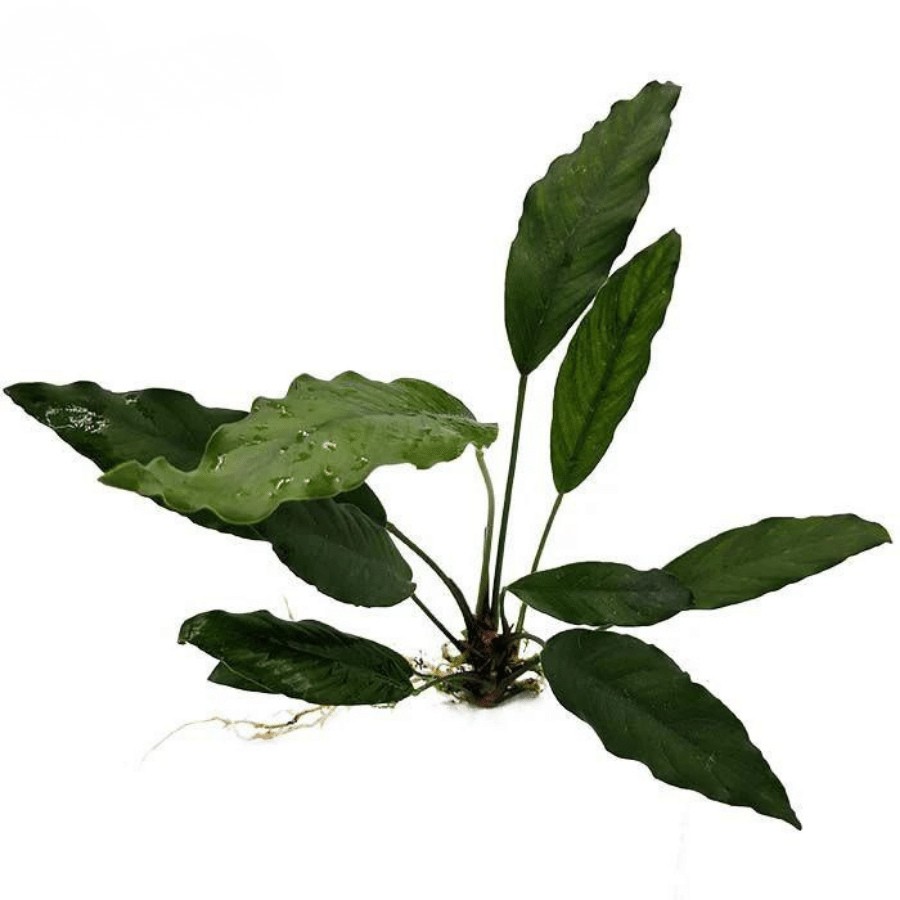
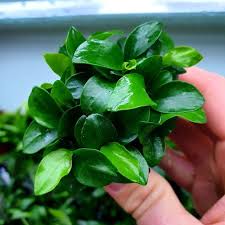
The combination that almost always works in a balanced aquarium is Vallis at the back, Anubias nana or Microsorum pteropus Java Fern attached to hardscape in the midground, and a slow-growing dense Cryptocoryne wendtii fringe in the midground-to-foreground transition. All three groups share tolerance for hard, alkaline water, all three are slow to moderate feeders, and all three can coexist under the same lighting and fertilisation schedule. For a more dramatic scape, add a single specimen Echinodorus bleheri Amazon Sword as a focal point slightly offset from the tank centre, then ring it with Vallis behind and flanking it; the contrast between the broad paddle-shaped Echinodorus leaves and the narrow ribbon Vallis leaves is one of the most visually effective pairings in all of aquascape design, and it has been used in competitive aquascaping for four decades with no sign of falling out of fashion.
For rainbowfish biotopes, particularly those featuring Melanotaenia species from Australia and Papua New Guinea, Vallis is ecologically accurate, visually stunning, and practically bulletproof, which is a rare triple achievement in the plant world. The open upper-water swimming column that rainbowfish prefer is preserved because Vallis leaves stick to the back wall and do not clutter the middle of the tank, while the dense root mat at the substrate level creates shelter for fry and shrimp, and the occasional flowering stalks reaching the surface add a wildlife-documentary authenticity that artificial plants simply cannot replicate.
For African rift-lake community tanks housing peaceful mbuna, tanganyikan shell-dwellers or Victorian haplochromis, Vallis is a natural fit because the hard alkaline water chemistry that these cichlids demand is exactly what Vallis wants, and the robust leaf structure stands up to the moderate boisterousness of a cichlid community. It is one of the few plants that can realistically survive in a Malawi or Tanganyika tank, and it gives these setups a lushness that is otherwise very difficult to achieve without plastic. Just place Vallis in the rear corners rather than across the full back wall, leaving clear sightlines for the cichlids to establish territories against the back glass, and expect occasional uprooting that simply requires replanting without damage to the plant itself. Anchor the plants initially with small stones over the root zone to deter the cichlids’ early curiosity, and remove the stones once the plants have taken hold after two to three weeks, at which point the Vallis colony is effectively bomb-proof against all but the most determined digging behaviour.
Tank size considerations matter more than many beginners realise. In tanks shorter than forty centimetres in height, Vallis nana leaves will lie across the water surface within three months and block light to everything below, turning a pleasant tank into a shadowed green mess. For tanks this short, choose the even shorter sister species Vallisneria nana ‘pygmy’ or a different background plant such as Hygrophila corymbosa ‘compact’. In tanks between forty and sixty centimetres tall, Vallis nana is perfect. In tanks over sixty centimetres tall, Vallis nana will sit slightly short of the surface, which is actually ideal because the top ten centimetres of water remains clear for surface-feeding and swimming, and floating plants can be added above the Vallis curtain for a complete three-tier jungle effect. This versatility across a wide range of tank heights is one reason Vallis has remained popular across decades of shifting aquascape fashions.
| Plant | Why | |
|---|---|---|
| 🌿 | Anubias nana | Attaches to hardscape in midground, shade-tolerant, will not compete with Vallis for root space or substrate nutrients |
| 🌿 | Cryptocoryne wendtii | Midground rosette that also thrives in hard water, shares similar low-to-medium light care needs, slow growth prevents overwhelming Vallis |
| 🌿 | Microsorum pteropus (Java Fern) | Hardscape epiphyte with contrasting broad leaves, both tolerate identical water parameters, adds visual texture variety |
| 🌿 | Ludwigia repens | Red stem plant for Dutch-style contrast against the green Vallis curtain, enjoys identical water chemistry |
| 🌿 | Echinodorus bleheri (Amazon Sword) | Large midground rosette that shares the heavy root-feeder profile, complements the vertical Vallis lines with broad paddle leaves |
| 🌿 | Bacopa caroliniana | Mid-to-background stem plant that tolerates hard water and adds bushy texture between Vallis ribbons for a more complex planted silhouette |
Reproduction & Division
Runners
Vallisneria nana reproduces vegetatively through horizontal runners that travel under or just above the substrate surface, throwing up a new plantlet every five to ten centimetres along the runner’s length. This is hands-down the most efficient propagation method in the freshwater aquarium plant world, and it happens entirely without your intervention, at no cost and with no equipment beyond the original starter plant. A single healthy starter plant will produce its first daughter within ten to fourteen days and can realistically generate ten to fifteen new plantlets within a month under medium light and adequate root nutrition. Commercial growers routinely divide a single mother plant into over one hundred saleable units per year from runner offspring alone, which is why Vallis is one of the cheapest aquarium plants on the Australian retail market despite being entirely domestically produced.
To deliberately propagate, wait until a runner has produced a daughter plantlet with at least three leaves of its own and a visible root bud emerging from the base of the new rhizome. At this stage the daughter is photosynthetically self-sufficient and ready to live independently. Trace the horizontal runner back to the mother plant, then cut the runner roughly halfway between the two plants with clean scissors, leaving about two centimetres of runner stub attached to both the mother and the daughter. The daughter can now be uprooted and replanted wherever you like in the same tank, transferred to another tank, or potted up for trade or sale, and the mother continues to produce fresh runners from the same rhizome without any setback. Never cut the runner until the daughter is well established, as premature separation starves the daughter of translocated nutrients and usually results in a slow, stunted plant that takes weeks to recover.
If you want to gift plantlets to friends or swap with other hobbyists, pot the harvested daughters in small terracotta pots of aquasoil or fine gravel under a drip tray for a week before handing them over. This week of semi-emersed recovery produces a sturdy, travel-ready rosette with zero melt when the new owner plants it in their tank, compared to the typical two-week melt period when plants are moved between tanks with bare roots. For Australian shippers who send Vallis through the post, wrap the potted plantlet in damp newspaper inside a zip-lock bag with a small air pocket, and expect the plant to arrive in perfect condition up to five days in transit. Vallis is remarkably hardy during shipping precisely because its rhizome stores enough energy reserves to survive a week of cool, dark conditions.
Sexual propagation through seed is theoretically possible but practically irrelevant for aquarists. Vallisneria is dioecious, meaning individual plants are either male or female, and the plant sends up tiny flowers on long spiral stalks that reach the water surface for pollination. In home aquaria you almost never have both sexes at once, flowering is triggered by seasonal cues that are difficult to replicate, and even if seeds form they take months to germinate and grow slowly. Stick with runners; they work.
Some experienced growers report that running a heavy feeding regime on a single mother plant in isolation, with twice-weekly root tab replacement and high light, produces runners at an accelerated pace and can generate up to fifty daughters from one mother within ninety days. This is the technique used by commercial nurseries, and it is perfectly replicable at home if you set up a dedicated thirty or forty litre ‘nursery’ tank for propagation. Keep a single mother plant in a small pot of dense aquasoil, dose liquid fertiliser at one and a half times the normal rate, and prune daughters aggressively as soon as they establish to encourage the mother to push further runners rather than invest energy in raising established offspring. A nursery tank run this way can produce enough free Vallis plantlets to fully plant a new display tank every six to eight weeks, making it a genuinely economical long-term investment for anyone who runs multiple aquariums or who trades plants with a local aquarium society.
When moving plantlets between tanks, pay attention to source water chemistry. Vallis tolerates sudden parameter swings better than most plants, but a plantlet moving from a soft-water planted tank to a hard-water community tank will melt a few older leaves during the transition even though the destination chemistry is actually better for its long-term health. This is entirely normal and resolves within two weeks; do not panic and move the plant a third time, which only compounds the problem. A week of emersed recovery in a pot, as mentioned earlier, effectively resets the plant’s leaf tissue to match the new water chemistry as new submerged leaves emerge after transplant, and this trick makes tank-to-tank transfers almost melt-free.
Quick Reference
| Light | Medium (40-80 PAR) |
| CO2 | Not required |
| Growth Rate | Medium to fast |
| pH | 6.5 – 8.0 |
| Temperature | 18 – 28 degC |
| Hardness (GH) | 8 – 20 dGH |
| Planting Method | Rhizome rosette, crown at substrate level |
| Substrate | Sand or fine gravel + root tabs |
| Position | Background (rear third of aquarium) |
| Max Height | 40 – 60 cm |
| Propagation | Horizontal runners |
| Difficulty | Beginner-friendly and forgiving |
Reviews
Clear filtersThere are no reviews yet.