🪨 Species at a Glance
| Scientific Name | Heros efasciatus (commercial Blue form) |
| Family | Cichlidae |
| Order | Cichliformes |
| Origin | Amazon basin — Brazil, Peru, Colombia (line-bred colour form) |
| Current Size | 4-5 cm juvenile (grow-out stage) |
| Adult Size | 20-25 cm (8-10 in) SL |
| Lifespan | 10-15 years with good husbandry |
| pH Range | 5.5-7.0 (soft acidic Amazon water) |
| Temperature | 24-28 °C (75-82 °F) |
| Hardness (dGH) | 2-10 |
| Diet | Omnivore leaning herbivorous — unique fruit/seed feeder |
| Minimum Tank Size | 150 L grow-out / 300 L+ single adult / 400 L+ pair |
| Care Level | Intermediate (due to adult size and space planning) |
| Temperament | Peaceful for a large cichlid; shy when young |
| Breeding | Substrate spawner — biparental, discus-like |
| Tank Position | Middle to lower-middle |
Species Background
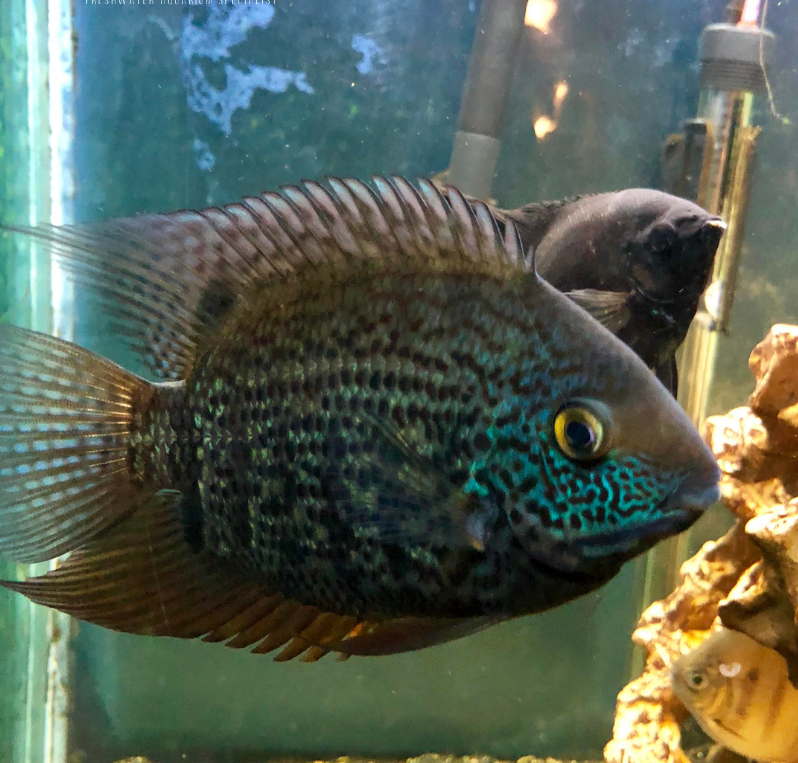
The genus name *Heros* comes from the Greek for ‘hero’ or ‘demigod’, a name given by Austrian ichthyologist Johann Jakob Heckel in 1840 when he first described this group of stately, disc-shaped cichlids. Heckel clearly saw something noble in their bearing — the upright posture, the calm glide through open water, the deliberate way a mature Severum surveys its tank and chooses to acknowledge you. The species name *efasciatus* means ‘without bands’ and refers to the fact that adult fish lose most of the vertical barring that characterises juveniles, leaving only a prominent dark blotch on the caudal peduncle in the wild-type form. The common name ‘Severum’ comes from an older specific epithet, *severus*, meaning ‘stern’ or ‘grave’ — a fitting description for a fish that gazes at you with the solemn, thoughtful expression that is one of its most endearing qualities.
The nickname ‘poor man’s discus’ has followed the Severum around for generations, and it deserves a closer look. The comparison came from the pet trade in the 1960s and 70s, when wild-caught discus were both exorbitantly expensive and notoriously difficult to keep alive in captivity. Severums, by contrast, were cheap, robust, and shared the same classic Amazonian disc-shaped silhouette. Aquarists who could not afford discus — or could not keep them alive — bought Severums instead. The label stuck, but it sells the fish short. A well-kept adult Severum is every bit as visually impressive as a discus, has significantly more personality, will eat food that would gag a fussy wild discus, and interacts with its keeper in a way few other large cichlids do. Call them what you like; a full-grown Blue Severum is nobody’s consolation prize.
The taxonomy of the Heros genus is, to put it gently, a work in progress. Until the 1980s, essentially all Severums in the hobby were lumped under the older name *Heros severus*. Molecular and morphological work has since split the group into at least four or five species, including *H. efasciatus*, *H. severus* (true severus, rarely in the trade), *H. notatus*, *H. liberifer* (a remarkable mouthbrooding species), and the undescribed ‘Rotkeil’ and ‘Inirida’ populations treated informally as *Heros* sp. The commercial Blue line almost certainly traces most of its ancestry to *H. efasciatus*, though decades of line-breeding have blurred the picture. For the practical purpose of keeping the fish you just bought, this uncertainty does not matter — care requirements across the genus are essentially identical.
The Colour Spectrum
🟢 Wild Green-Gold
The natural form: olive-green body with golden-yellow belly, faint vertical bars in juveniles, and a bold dark blotch on the caudal peduncle.
🔵 Blue / Turquoise Severum
The fish you are buying — line-bred for intense turquoise-blue iridescence across the flanks and face, most vivid in mature males in good conditions.
🔴 Red Spotted (Rotkeil-influenced)
Displays scattered red or orange spotting across the face and flanks, sometimes with a reddish ‘beard’ below the eye; influenced by the true Rotkeil form.
🟡 Gold Severum
A melanistic-reduction line — uniform golden-yellow body with little or no dark barring. A classic hobbyist variant, hardy and widely available.
🟠 Super Red Severum
The most intensely pigmented line-bred form, showing deep red-orange colouration across most of the body; requires excellent water and diet to maintain.
The Blue Severum line emerged from Southeast Asian and European breeding programs during the 1990s and has steadily intensified with each generation. Wild *Heros efasciatus* shows only traces of blue iridescence — usually restricted to the gill plate and a few scattered scales — but generations of selection have amplified this into the all-over turquoise sheen that defines the Blue form. The colour is structural, produced by iridophores rather than pigment cells, which means it is angle-dependent and responds dramatically to lighting. Under cool-white LEDs the blue can look almost metallic; under warmer 4000-5000 K lighting with a hint of tannin in the water, it takes on a richer, more sea-glass quality that suits the fish’s Amazon heritage. Some of the highest-quality Blue Severum lines — particularly those originating from reputable German and Czech breeders — show what keepers call ‘whole-body blue’, where every scale from gill plate to caudal peduncle carries iridescence, compared to lower-grade lines where the blue is confined mainly to the head and upper flanks.
At 4-5 cm, your juvenile will show the beginnings of blue iridescence but nothing like the adult colour — expect a silvery body with faint vertical bars, subtle blue highlights on the gill plate and dorsal fin, and perhaps a darker caudal spot. The juvenile barring is a natural developmental phase and not an indicator of lower quality; it fades gradually as the fish matures and the adult colouration emerges from beneath. Over the next twelve months, as the fish grows past 8-10 cm, the blue will deepen noticeably, and by the time it reaches 15 cm you will have the unmistakable turquoise adult colouration. Full adult colour intensity typically peaks around 18-24 months of age in males, slightly later in females. Colour intensity in Blue Severums is strongly diet-dependent — a fish fed a quality pellet with spirulina and astaxanthin, kept in soft tannin-stained water with a dark substrate, will outclass a sibling raised on plain flakes in a brightly-lit bare tank by a margin that has to be seen to be believed. Stress, poor water quality, and inappropriate tank mates also dim the blue dramatically; a Severum that looks washed-out is almost always telling you something is wrong with its environment, not its genetics.
Sexual Dimorphism
Severums are a classic example of a species that is essentially impossible to sex as juveniles and relatively straightforward to sex as adults. Below about 10-12 cm, males and females are monomorphic: same body shape, same fin structure, same facial pattern, same colouration. The sexual dimorphism listed in the comparison table develops gradually over the second year of life, becoming reliable only once fish approach sexual maturity at 12-14 months and 12-15 cm in length. The most reliable single cue on adults is the facial patterning — males develop dark speckling, wavy ‘worm-lines’, or stippling across the face and gill cover, while females keep a clean face. This facial patterning is genuinely diagnostic, and in many Severum varieties (including the Blue form) it is the first dimorphism to appear, often visible from around 10 cm onwards before other sex traits develop. The nuchal hump on dominant males is the next most reliable trait, though it develops slowly and is only prominent in fish kept in good conditions and with enough tank space to claim territory. Subordinate males in a crowded tank may never develop a full hump; dominant males in a spacious tank with a receptive female can develop strikingly pronounced ones.
At 4-5 cm, trying to sex your fish is genuinely pointless — no visual marker you can observe today will predict what sex the fish will turn out to be. Experienced Severum keepers typically buy a group of 6 young fish and grow them out together, then pair off males and females as they mature. If you are buying a single juvenile to raise as a solo showpiece fish, this is not a problem — the fish will grow into whichever sex it was genetically destined for, and you will know by month 18 at the latest. Either sex makes an excellent display fish; males tend to be larger, more ornate in finnage, and more visually dramatic, while females are often more peaceful with tank mates and easier to integrate into a community setup. Neither sex is ‘better’ as a pet — both have admirers among long-time Severum keepers.
| Feature | Male | Female |
|---|---|---|
| Size | Larger at maturity — 22-25 cm | Smaller — 18-20 cm |
| Forehead / Nuchal Hump | Develops a pronounced nuchal hump and steeper forehead with age | Forehead remains gently rounded, no prominent hump |
| Dorsal & Anal Fin Tips | Elongated, pointed, often trailing filaments past the tail base | Shorter, more rounded tips; fins stop at or just past the tail base |
| Facial Pattern | Dark spotting, ‘worm-line’ patterning, or stippling across the face and gill plate | Face is typically clean, with only faint patterning at most |
| Body Shape | Taller and more laterally compressed overall | Noticeably rounder belly, especially when gravid |
| Genital Papilla (breeding) | Narrow, pointed genital papilla visible when ready to spawn | Short, blunt, tubular ovipositor extends during spawning |
Water Chemistry Guide
5.5–7.0
ideal 6.5
24–28 °C
ideal 26 °C
2–10 dGH
Soft, slightly acidic Amazon blackwater preferred
Severums come from the slow-moving, blackwater tributaries and flooded forest margins of the Amazon basin, where the water is tea-coloured from tannins, the pH often drops below 5.0, and dissolved minerals are nearly absent. In the aquarium, they are more adaptable than their wild origins suggest — they will tolerate neutral pH and moderately hard water without immediate distress — but their colour, behaviour, and long-term health improve dramatically in water that approximates their natural conditions. A target pH of 6.0 to 6.8, hardness below 8 dGH, and temperature steady at 26 °C is ideal. Blackwater-conditioned Severums hold themselves differently: they swim in the open more, colour up more vividly, feed more confidently, and spawn readily when mature. The difference between a Severum kept in bright, hard, high-pH water and the same fish transferred to soft, tannin-stained, slightly acidic water is genuinely startling — it looks like a different fish entirely, and this transformation typically takes only 2-4 weeks.
Stability is more important than chasing a perfect number. Severums dislike swings in pH or temperature far more than they dislike water that is slightly off their ideal. A pH that holds steady at 7.2 is a better home than a pH that swings between 6.0 and 6.8 due to inconsistent buffering. If your tap water runs hard and alkaline, you have two practical options: blend with RO water to soften the mix, or add botanicals (Indian almond leaves, alder cones, peat, driftwood) to buffer the pH gently downward and tint the water naturally. The botanical approach is cheaper, more biotope-accurate, and what most experienced Severum keepers recommend. Water changes should be 25-30% weekly, with new water temperature-matched to within one degree and pH-matched as closely as possible. For larger adult tanks, two smaller water changes per week (15% each) are less disruptive than one large weekly change and are generally preferred.
Temperature matters more for Severums than for many other Amazon cichlids — they are a tropical species that sulks below 23 °C and feeds best at 25-27 °C. A good heater sized at roughly 1 watt per litre, paired with a reliable digital thermometer, is non-negotiable. For the grow-out phase, 26 °C is the sweet spot: warm enough for active feeding and rapid growth, not so warm that metabolic demand outpaces the feeding schedule. In large tanks (300 L+), consider running two smaller heaters rather than one large one — this provides redundancy if one heater fails and distributes heat more evenly across the water column. Ammonia and nitrite must read zero, always; nitrate should be kept below 20 ppm with regular water changes, as Severums show reduced colour and increased disease susceptibility at chronically elevated nitrate levels, even within the ranges that technically ‘don’t kill fish’.
Creating the Perfect Habitat
This is the single most important chapter for anyone buying a 4-5 cm juvenile Severum: you are buying a fish that will, with proper care, reach 20-25 cm as an adult. A tank that is adequate for a 5 cm juvenile is not adequate for a 20 cm adult, and the fish grows steadily across the first 18-24 months. You need to plan for the final tank size now, not improvise later when the fish has outgrown everything you own. The most common regret among new Severum keepers is buying a tank that seemed spacious for a juvenile, only to find the fish has outgrown it within a year and being forced into an emergency tank upgrade (or worse, selling the fish back to the store). Plan the full adult tank today, even if you use a smaller grow-out tank first.
For the grow-out phase (4-5 cm to roughly 10 cm, months 1-8), a 150-litre tank is the practical minimum. This gives the juvenile enough space to grow steadily, room for tank mates, and allows you to establish a biotope-style environment without overcrowding. Larger grow-out tanks are always better — a 250-litre tank will produce a visibly larger, healthier fish at the one-year mark than a 150-litre grow-out tank, simply because more water volume means more stable parameters and more swimming space. Many experienced keepers skip the separate grow-out tank entirely and start the juvenile directly in the intended adult tank; this works fine as long as tank mates are chosen carefully and aggressive species are avoided during the small-fish months.
For an adult single Severum (month 8 onwards), 300 litres is the absolute minimum, and 400 litres is much better. If you are planning a pair (and all of the advanced joys of Severum breeding), step up to 400-500 litres minimum, with a footprint of at least 120 cm x 50 cm so the pair has enough linear space to establish territory without constant conflict. Severums are deep-bodied fish — tank height matters less than tank length and width, since they swim laterally rather than vertically. A low, long tank suits them far better than a tall cube. A standard 120 cm x 50 cm x 50 cm (300 L) tank is the classic single-Severum configuration; a 150 cm x 60 cm x 60 cm (540 L) tank is the classic pair-and-community setup that accommodates the fish through old age without further upgrades.
Substrate should be fine dark sand (black or brown), which mimics the Amazon riverbed, makes the blue colour pop, and is gentle on the Severum’s chin when it hovers over the bottom. Avoid sharp gravel — Severums spend much of their time close to the substrate and can abrade their chin, belly, or barbel-less snouts on coarse material. Driftwood is essential — large, weathered pieces of Mopani, Malaysian driftwood, or spiderwood create natural territorial structure and leach tannins that improve water chemistry. Arrange two or three large pieces to create ‘rooms’ in the tank: a sight-break here, a shady corner there, an open swimming corridor down the middle. Severums are intelligent fish that use their environment; a featureless tank bores them and can lead to stress behaviours like glass-pacing or surface-gulping. Consider placing a large flat slate or smooth stone at a visible location near the centre of the tank — this serves no immediate purpose for a juvenile, but a mature pair will eventually use it as a spawning site and it saves you rearranging the aquascape later.
A critical warning on live plants: Severums are notorious plant-wreckers as adults. They will graze soft-leaved plants to stubs, uproot anything not firmly anchored, and dig freely through loose substrate. Your plant options are limited to tough, robust species: Amazon sword (*Echinodorus*) anchored with weights or heavy roots, Anubias and Bolbitis attached to driftwood (not planted in substrate), Java fern on hardscape, and possibly Vallisneria along the back glass if the Severum is not a particularly keen digger. Forget stem plants, carpeting plants, or anything delicate — they will not survive past the three-month mark. Floating plants (Amazon frogbit, red root floaters, dwarf water lettuce) are an excellent addition: Severums love them, they cannot realistically destroy them, and they diffuse overhead light into the dappled underwater shade of a flooded forest. Juveniles (4-10 cm) are much less destructive than adults — you may find that soft plants survive the first six months fine, only to be methodically destroyed once the fish reaches sub-adult size and discovers the new texture of plant leaves as food.
Grow-Out Tank
150 L (4 ft / 120 cm) minimum for juvenile phase; plan ahead for 300 L+ adult tank
Final Adult Tank
300 L minimum single, 400 L+ for pair, footprint at least 120 x 50 cm
Canister Filter
Oversized canister rated 1.5x tank volume/hour, with sponge pre-filter to protect intake
Heater
Reliable submersible heater, roughly 1 W per litre; set to 26 °C; consider a backup heater for large tanks
Substrate
Fine dark sand (black or brown) — makes blue colour pop, gentle on fish
Driftwood
Large Mopani, Malaysian, or spiderwood pieces for territorial structure and tannins
Lighting
Moderate, dimmable LED at 4000-5000 K; avoid harsh bright lighting that washes out colour
Plants (tough species only)
Amazon sword, Anubias/Bolbitis on wood, Java fern, floating plants — skip soft-leaved species
Botanicals
Indian almond leaves, alder cones, for gentle pH buffering and natural tannins
Test Kit
Liquid test kit for pH, ammonia, nitrite, nitrate — essential for monitoring a growing-bioload tank
What to Feed
Severums are one of the most dietarily distinctive cichlids in the hobby. Unlike the overwhelmingly carnivorous Amazonian cichlids most keepers are familiar with (Oscars, Green Terrors, Jack Dempseys, and so on), wild Severums are genuinely omnivorous with a strong leaning toward plant matter — fallen fruit, seeds, soft aquatic vegetation, and the occasional invertebrate. Stomach-content studies of wild *Heros efasciatus* have documented rubber tree seeds, palm fruit pulp, and fig fruits alongside insect larvae. This is almost unique among the New World cichlids and has major implications for how you feed the fish in captivity. During the Amazon flood season, when the river overspills into the surrounding várzea forest, Severums spend months feeding predominantly on fallen fruit and seeds that wash into the newly-flooded forest floor — a seasonal dietary shift that has shaped the species’ digestive physiology over evolutionary time.
The staple diet should be a high-quality sinking pellet formulated for omnivorous or herbivorous cichlids — something with spirulina, plant matter, and whole fish or insect meal, rather than a pure carnivore formula. Good options include New Life Spectrum Cichlid (which works well for Severums despite being marketed as generic), Hikari Cichlid Gold sinking, or a mix of spirulina pellets and a lower-protein cichlid pellet. Avoid pellet brands marketed for ‘large predatory cichlids’ or ‘Oscar/Jack Dempsey’ — these are formulated with excessive protein (50%+) that is actively harmful to Severums over the long term. Look for cichlid pellets with 35-42% protein and noticeable plant matter in the ingredient list. Feed the staple pellet twice daily in small amounts — as much as the fish will consume in 90 seconds, no more.
Fresh vegetables and fruit are not a supplement for Severums; they are a core part of the diet. Blanched zucchini (courgette) is the classic Severum food, prepared by briefly boiling or microwaving a slice until soft, then cooling and clipping it to a plant clip at the bottom of the tank. Blanched peas (pop them out of the shell first), cucumber, spinach, and small pieces of softened mango or banana are all eagerly accepted. Raw or dried banana slices, in particular, seem to delight Severums — an echo of their wild fruit-feeding behaviour. Offer vegetable matter 3-4 times a week. This is not optional — a Severum raised exclusively on high-protein pellets and frozen foods will, over a period of years, develop digestive problems, reduced colour, and shortened lifespan. Your juvenile at 4-5 cm is still learning what food looks like; introduce vegetables early, and the fish will recognise and accept them for life. Severums introduced to vegetables for the first time as adults sometimes ignore them completely for weeks before figuring out they are edible.
Frozen and live foods add variety and trigger enthusiastic feeding responses. Bloodworms, mysis shrimp, krill, brine shrimp, and chopped prawn are all welcome treats — but they are treats, offered 2-3 times a week rather than as a staple. Over-feeding high-protein frozen foods is the single most common diet-related mistake Severum keepers make, leading to bloat, poor long-term health, and a fish that refuses the plant matter it actually needs. Beef heart, once a popular feed among old-school cichlid keepers, should be avoided — it is a terrestrial mammal protein that Severum digestive systems are not evolved to process efficiently, and heavy feeding leads to fatty liver disease. At 4-5 cm, your juvenile’s mouth is small — crush pellets to appropriate size, and chop frozen foods finely. Feed small portions more frequently (3-4 times daily) during the first few months of grow-out, then transition to twice daily as the fish approaches 8-10 cm. A hungry juvenile grows faster than a stuffed juvenile; aim for lean, active fish that always come eagerly to the glass at feeding time, not plump fish with distended bellies.
Reproduction & Breeding
Months 12-18
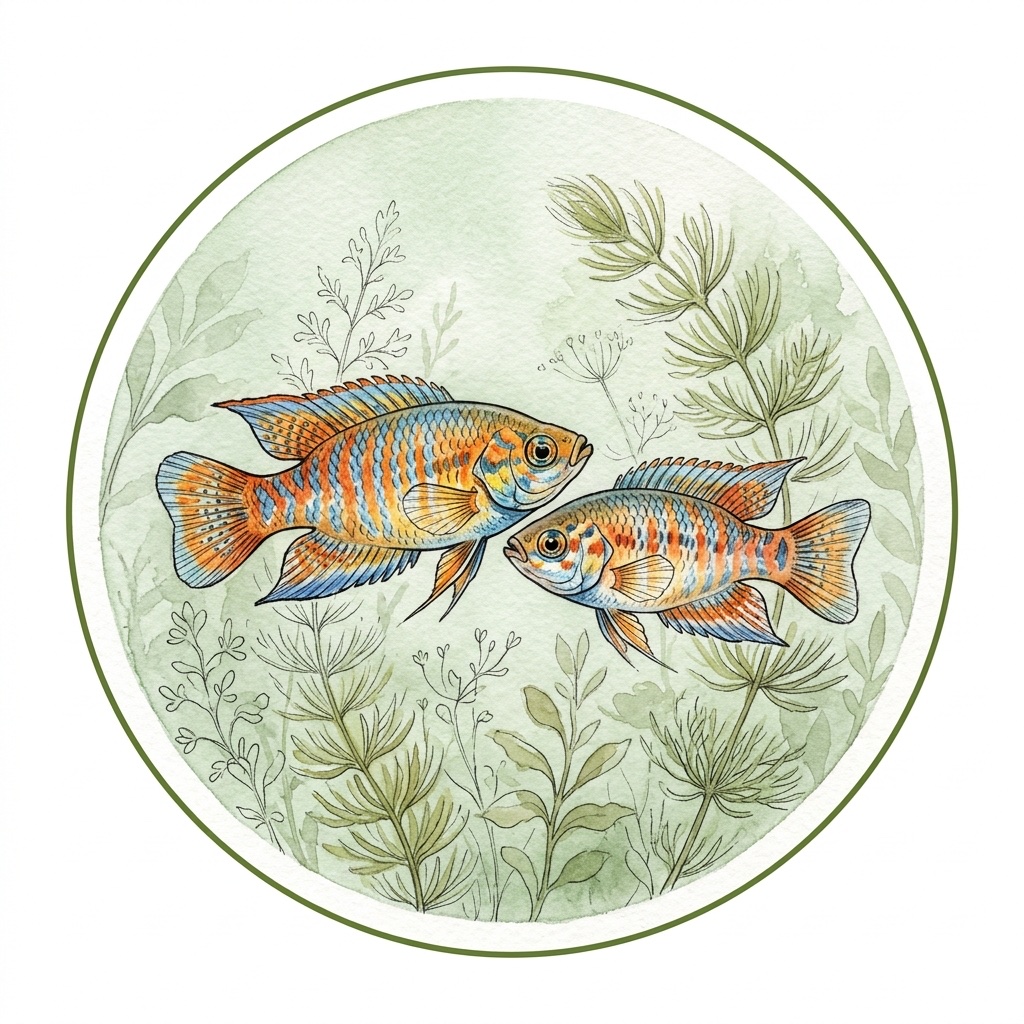
Sexual Maturity
Pair forms at 12-15 cm, 12-18 months old
Day -7 to 0
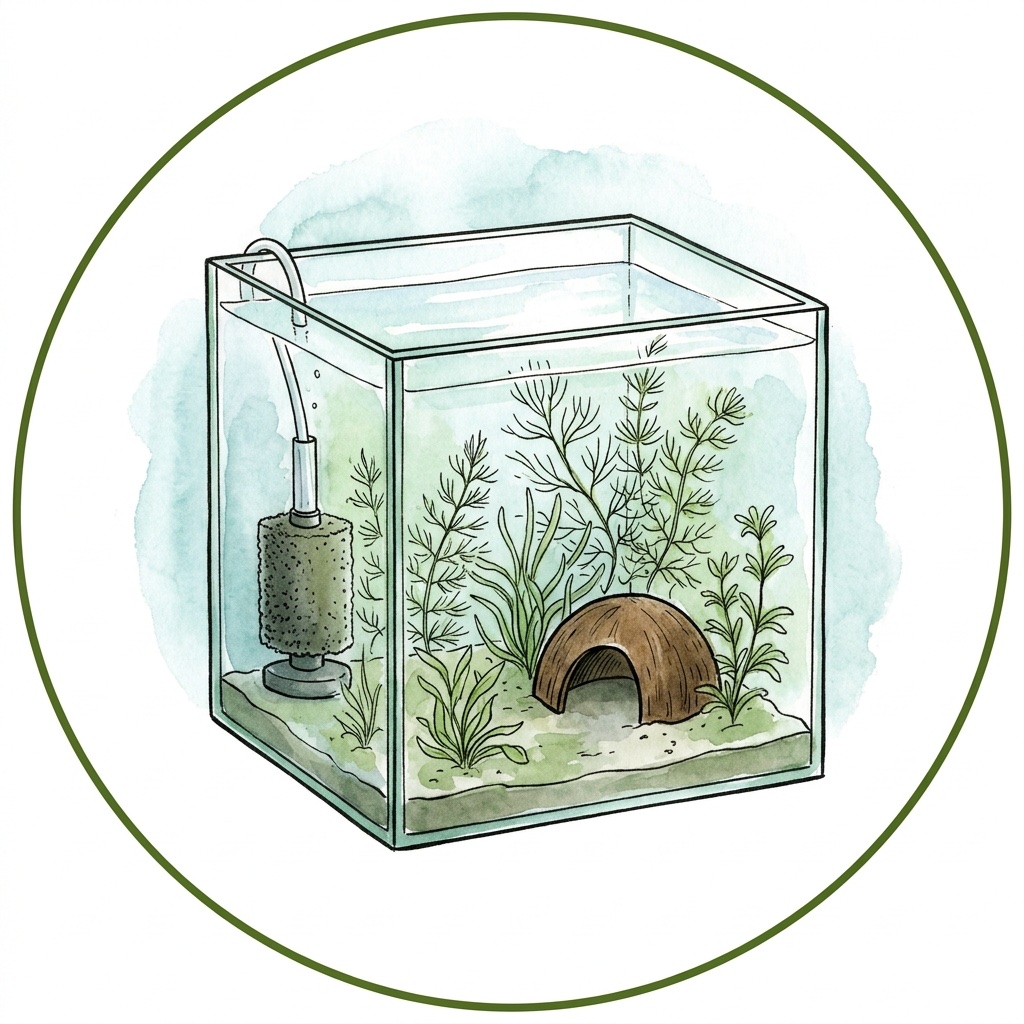
Courtship & Site Preparation
Pair cleans a flat surface; female’s abdomen swells
Day 0
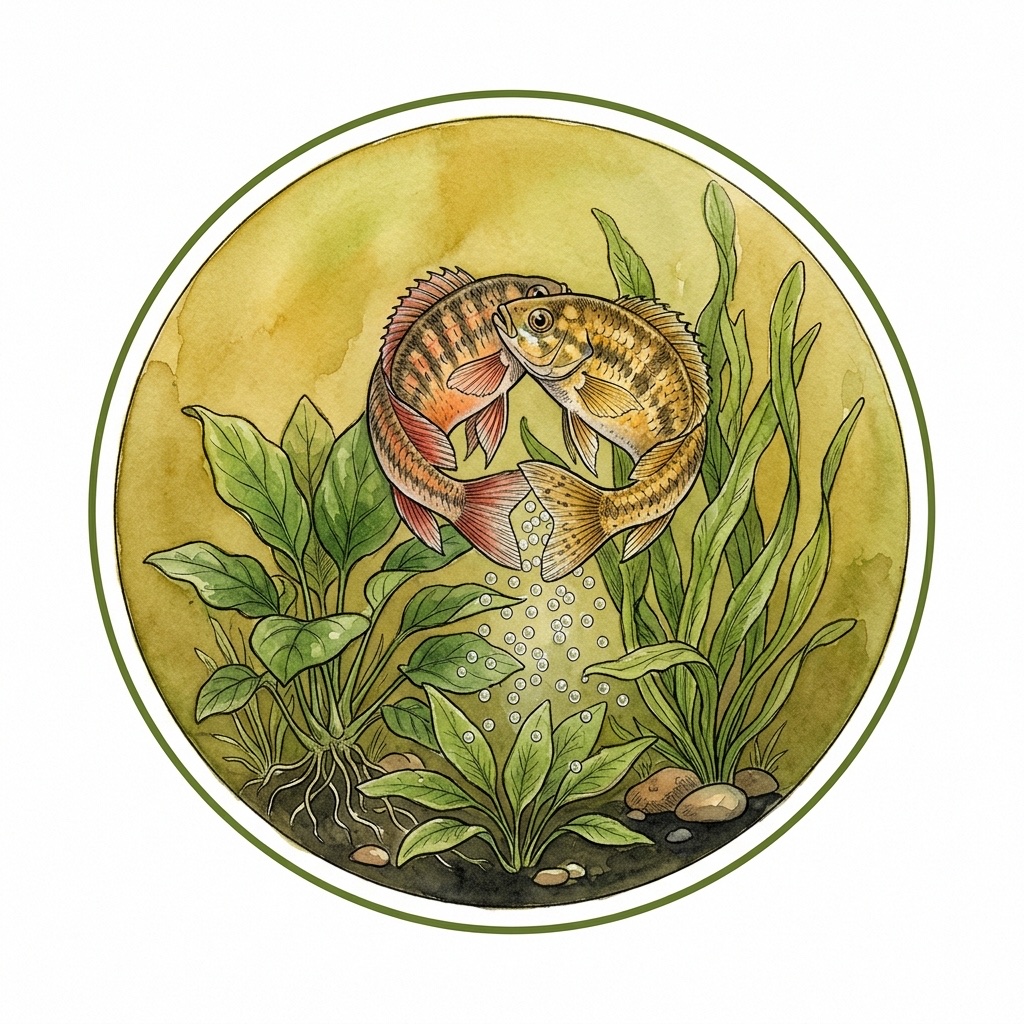
Spawning
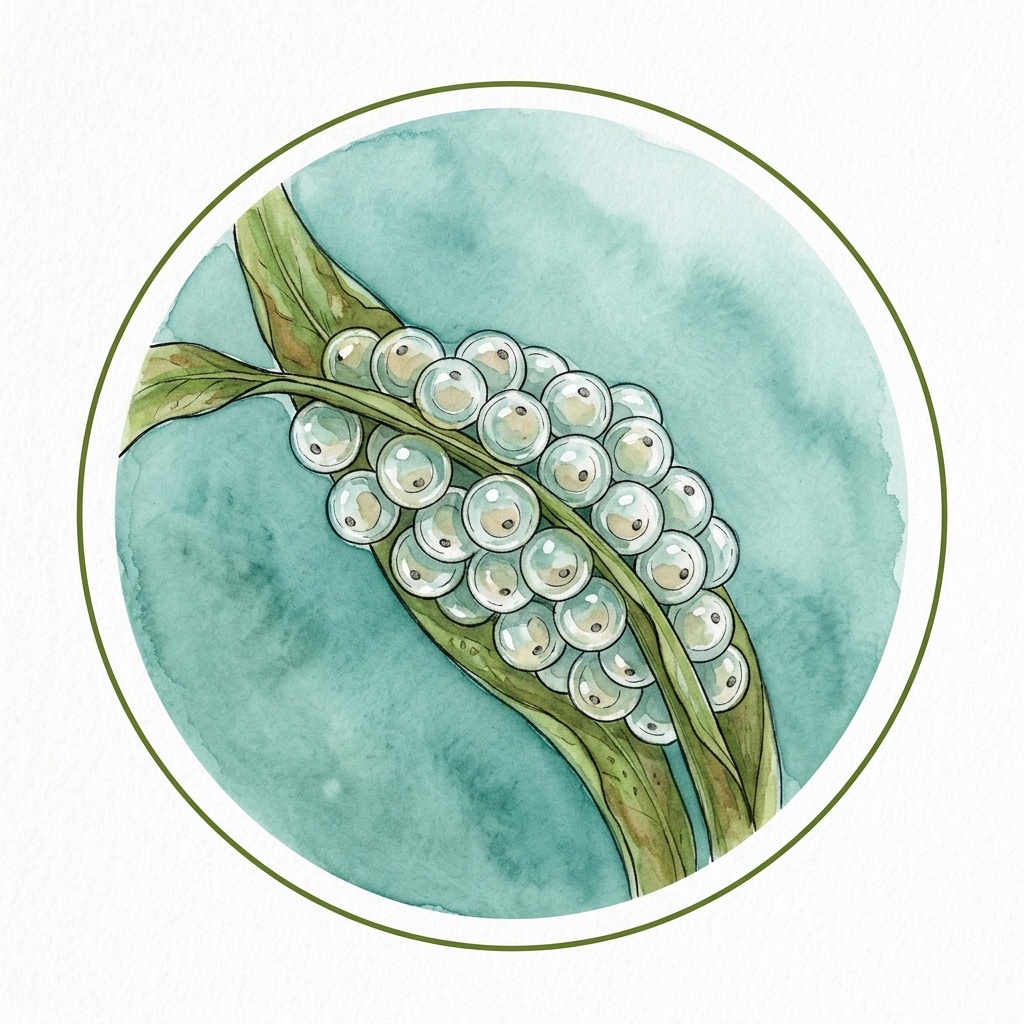
400-1000 eggs laid on prepared surface; both parents guard
Day 2-4
Egg Incubation & Hatching
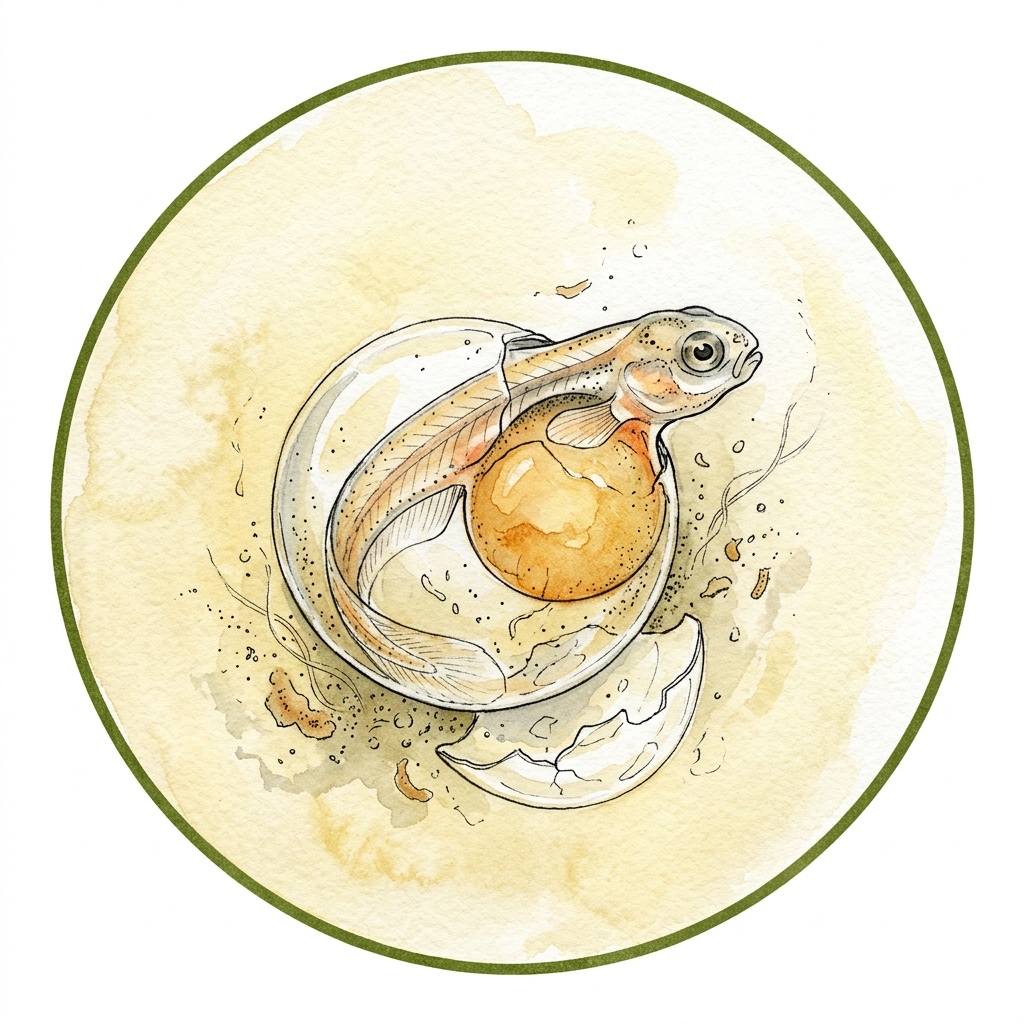
Parents fan eggs; wrigglers hatch at ~72 hours
Day 7-10
Free-Swimming Fry
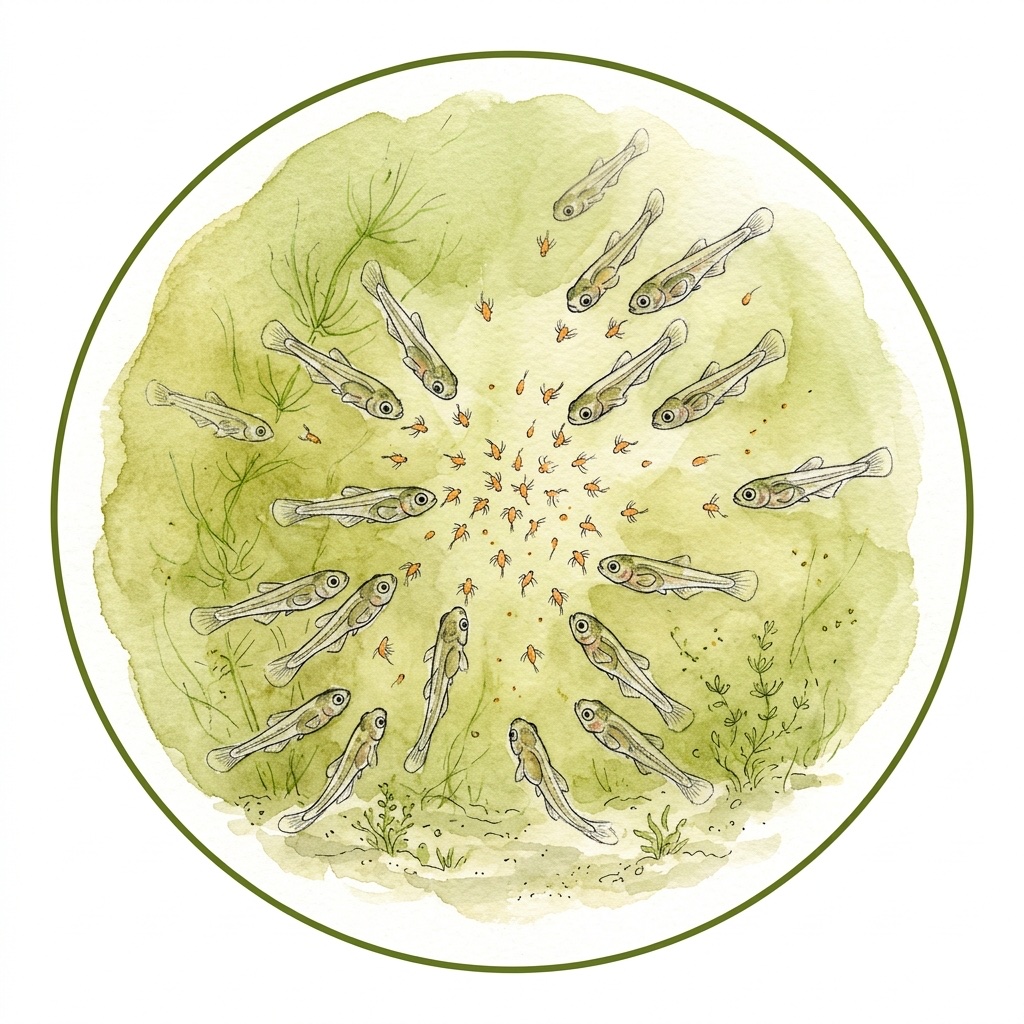
Fry become free-swimming; feed baby brine shrimp and powdered food
Week 4-12
Grow-Out
Separate fry from parents at ~4 weeks; grow on in nursery tank
Sexual Maturity
Your 4-5 cm juvenile is a minimum of 12 months away from sexual maturity and realistically 18 months or more from first spawning. Severums reach reproductive maturity at roughly 12-15 cm, and the best approach is to raise a group of 6 juveniles together, letting them self-pair as they mature. Pair formation is often obvious — two fish begin swimming together constantly, defending a corner of the tank, and mouthing surfaces. Attempting to force a pair by placing two randomly chosen adults together frequently ends in failure or fatal aggression, particularly between two females.
Courtship & Site Preparation
Once a pair has formed, courtship becomes intense in the days leading up to spawning. Both fish will select a flat, hard surface — typically a piece of slate, a broad stone, a flowerpot, or the aquarium glass itself — and spend hours cleaning it with their mouths, sometimes over several days. The female’s abdomen visibly swells with eggs, and her short tubular ovipositor becomes visible between the ventral and anal fins. The male’s genital papilla extends into a narrow pointed form. Both fish deepen in colour and may show more intense blue iridescence than at any other time.
Spawning
Spawning typically occurs in the morning hours. The female makes repeated passes over the prepared surface, depositing a line of adhesive eggs with each pass, while the male follows immediately behind and fertilises them. A healthy large female can produce 400 to 1000 eggs in a single spawn. Both parents are highly protective from the moment spawning begins — they will drive any tank mate away from the area, and at this point the breeding pair should ideally be in a species-only tank. The eggs are small, amber-coloured, and adhesive, arranged in a neat disc-shaped patch.
Egg Incubation & Hatching
Both parents take turns fanning the eggs with their pectoral and caudal fins, keeping a steady flow of oxygenated water across the developing clutch. Infertile eggs turn white and are picked off by the parents — unlike many cichlids, Severums rarely cannibalise the fertile eggs. Hatching occurs at around 72 hours at 26 °C. The newly hatched wrigglers are moved by mouth to a shallow pit the parents have dug in the substrate, where they continue to develop while absorbing their yolk sacs.
Free-Swimming Fry
Around day 7 the fry become free-swimming and leave the pit as a tight cloud guided by the parents. This is one of the most remarkable behaviours in Amazonian cichlid keeping — the pair herds the fry school like sheep-dogs, with both parents taking turns watching over the young, and any fry that strays from the cloud is gently mouthed and returned. Start feeding freshly hatched baby brine shrimp, microworms, and high-quality powdered fry food. Some Severum keepers report fry biting at parental mucus during this phase, similar to (but less dramatic than) the famous discus behaviour — this is normal and provides the fry with an immunological boost in their first week of free-swimming life.
Grow-Out
At around four weeks old, the fry are 1-1.5 cm long and can be moved to a dedicated nursery tank for rapid grow-out. Offer baby brine shrimp twice daily alongside a crushed high-quality staple pellet, and begin introducing tiny amounts of blanched vegetable matter (finely mashed pea, for instance) to imprint the plant-eating behaviour early. The nursery tank should have the same parameters as the main tank, with gentle sponge filtration and frequent small water changes (10-15% daily if possible) to maintain perfect water quality during the fast-growth phase. Fry reach 3-4 cm by week 10-12, at which point they can be sold, traded, or moved to a larger grow-out tank. Note that a single Severum spawn can produce hundreds of fry — planning in advance where those fry will go is the mark of a responsible breeder, not an afterthought once the fry are swimming.
Tank Mate Guide
The Severum is the ‘gentle giant’ of the Amazon cichlid world. For a fish of its adult size, it is remarkably peaceful and gets along well with a wide range of tank mates, as long as you follow two basic rules: first, no tank mate should be small enough to fit in an adult Severum’s mouth (adult Severums will opportunistically eat small tetras, even if they have never done so before); second, no tank mate should be aggressive enough to stress or bully a peaceful Severum. The classic Amazon community tank — Severums, silver dollars, a school of Congo tetras, a pair of Geophagus on the substrate, and a bristlenose or two on the driftwood — is one of the most harmonious and visually complete setups the hobby has to offer, and has been a staple of advanced Amazon biotope keeping since the 1970s.
One of the most important community considerations is long-term planning. The Cardinal Tetras that work beautifully with a 5 cm Severum today will become snacks within 12-18 months. Either resign yourself to rehoming the small fish before the Severum outgrows them, or stock only tank mates that will still be size-appropriate at the Severum’s adult dimensions. Silver dollars, Congo tetras, and other medium-to-large characoid fish are the classic ‘size-appropriate for life’ choices — they are big enough that an adult Severum cannot eat them, peaceful enough that they coexist comfortably, and sociable enough that they naturally form schools that provide visual interest in the open water of the tank. Similarly, a single Severum held in isolation often becomes either shy (more common in smaller tanks) or surprisingly assertive about claiming the entire tank as its territory (more common in large tanks with too few dither fish). A small group of 4-6 silver dollars or a school of 8-10 Congo tetras serves as excellent dither fish that reassure the Severum and keep it active and visible in open water.
A final note on Severum-to-Severum compatibility: juveniles get along fine in groups, and a group of 6 raised together is the recommended way to produce a naturally-paired breeding couple. Adults that are not a bonded pair can be more complicated — two adult males in the same tank will typically fight for dominance unless the tank is very large, and two adult females usually coexist peacefully but with subtle tension. A bonded pair is the ideal adult configuration; a solo adult is the next best option; a trio or more of adults requires a genuinely large tank (500 L+) and acceptance that some aggression is inevitable. Plan your adult stocking as part of your grow-out strategy, not as an afterthought. If you have bought a single juvenile with the intention of keeping one Severum for life, that is a perfectly valid approach — a solo Severum in a well-stocked community of dithers and bottom-dwellers is one of the most satisfying single-specimen display fish the hobby offers, with none of the breeding drama of a pair and all of the personality that makes Severums beloved.
| Species | Why | |
|---|---|---|
| ✅ | Congo Tetra | Large, peaceful tetras that hold their own in a Severum tank without being small enough to eat; share soft-water preference |
| ✅ | Silver Dollar | Classic Severum tank mate — similar size, peaceful temperament, plant-friendly vegetarian diet, schooling behaviour complements Severum’s solitary nature |
| ✅ | Large Bristlenose Pleco | Excellent bottom-dweller cleanup crew that is robust enough not to be bullied, and small enough not to compete for Severum space |
| ✅ | Common Pleco / L-number Pleco | Larger pleco species match the Severum’s scale and tank size; choose species that stay under 30 cm unless you have a very large tank |
| ✅ | Brochis / Emerald Cory | Large corydoras (Brochis splendens) are robust enough for a Severum tank, unlike smaller cory species which may be harassed |
| ✅ | Geophagus (medium species) | Sand-sifting ‘earth-eaters’ share Amazon origins and peaceful temperament; choose smaller Geophagus species to avoid size mismatch |
| ✅ | Festivum Cichlid | Close relative of the Severum with similar size, diet, and temperament — pairs beautifully in a dedicated Amazon biotope |
| ✅ | Discus (advanced keepers) | In a large tank with ideal water, discus and Severums can coexist; both require soft acidic water and share the ‘disc-body’ aesthetic — match temperature at 28 °C |
| ❌ | Neon/Cardinal Tetra | Small tetras under 3 cm will be eaten by an adult Severum. A 4 cm Severum today is a 20 cm Severum with a neon-sized mouth within 18 months |
| ❌ | Tiger Barb | Aggressive fin-nippers that will harass a peaceful Severum relentlessly, damaging the delicate dorsal and anal fin extensions |
| ❌ | African Cichlids (Mbuna, Peacocks) | Completely incompatible — require hard alkaline water, are far too aggressive, and will stress or kill a peaceful Amazon cichlid |
| ❌ | Oscar / Large Aggressive Central Americans | Oscars, Jaguar cichlids, and similar large aggressive cichlids will bully Severums mercilessly; size alone is not the issue, temperament mismatch is |
| ❌ | Fancy Goldfish / Koi | Wrong water parameters entirely (cold hard water), wrong temperament, wrong everything — never mix with tropical Amazon fish |
Quick Reference
| Scientific Name | Heros efasciatus (Blue form) |
| Current Size | 4-5 cm juvenile |
| Adult Size | 20-25 cm |
| Lifespan | 10-15 years |
| pH | 5.5-7.0 (ideal 6.5) |
| Temperature | 24-28 °C (ideal 26 °C) |
| Hardness | 2-10 dGH |
| Min Tank (Grow-Out) | 150 L |
| Min Tank (Adult) | 300 L single / 400 L+ pair |
| Diet | Omnivore/herbivore — veg essential, not optional |
| Care Level | Intermediate — space planning critical |
| Temperament | Peaceful, shy when young |
| Tank Position | Middle to lower-middle |
| Breeding | Substrate spawner — biparental, 12-18 months to maturity |
| Grow-Out Timeline | 4-5 cm to 20 cm over 18-24 months |
Related Products

Reviews
Clear filtersThere are no reviews yet.