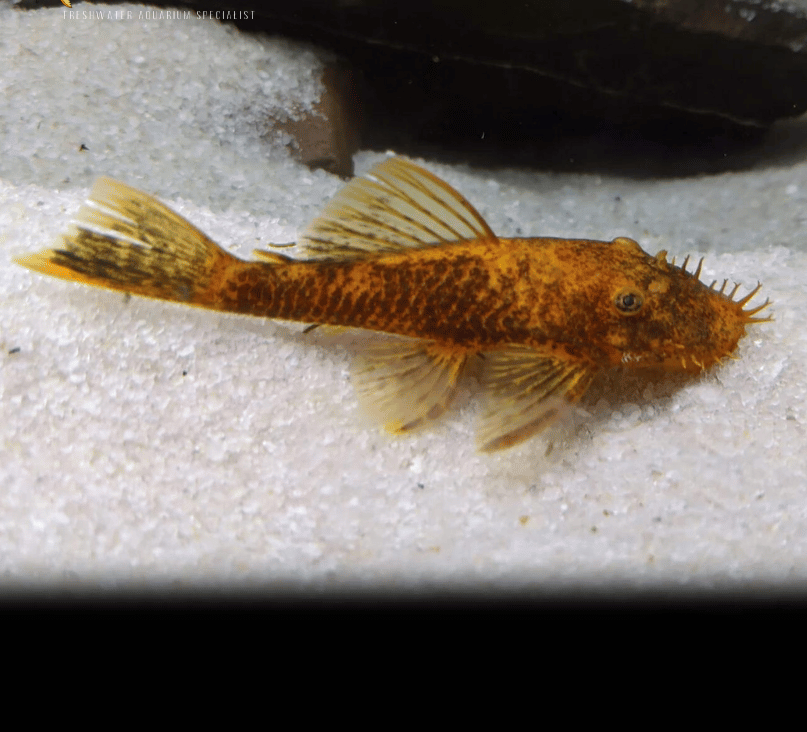
🪨 Species at a Glance
| Scientific Name | Ancistrus sp. (commercial ‘Calico’ strain, juvenile) |
| Common Names | Calico Bristlenose, Calico Bushynose, Marbled Bristlenose, Tortoiseshell Pleco |
| Family | Loricariidae |
| Order | Siluriformes |
| Origin | Tank-bred (wild ancestors from the Amazon & Orinoco basins) |
| Shipped Size | ~4 cm (juvenile / grow-out stage) |
| Adult Size | 10–13 cm (4–5 in) |
| Lifespan | 8–12 years with good care |
| pH Range | 6.5–7.8 (very tolerant) |
| Temperature | 22–28 °C (72–82 °F) |
| Hardness (dGH) | 4–20 (very flexible) |
| Diet | Herbivore-leaning omnivore — driftwood fibre, veggie wafer, blanched vegetables, occasional protein |
| Minimum Tank Size | 80 L for grow-out; 100 L+ for a mature pair |
| Care Level | Beginner to Easy-Intermediate |
| Temperament | Peaceful; males territorial with other male plecos once mature |
| Breeding | Cave spawner once mature at 6–7 cm+ |
| Tank Position | Bottom / on hardscape |
Where the Name Comes From
The genus name *Ancistrus* comes from the ancient Greek *ankistron*, meaning “fishhook” — a reference to the hooked odontodes (modified skin denticles, structurally similar to shark skin) that sprout from the cheeks and gill covers of adult males, and from the stiff leading rays of their pectoral fins. In the wild, *Ancistrus* species use these hooks both as visual signals of maturity and as physical anchors: a mature male can wedge himself into a crevice during flood conditions and ride out currents that would wash away a smoothly-bodied fish. Taxonomically, the fish sold in every aquarium shop around the world simply as “bristlenose” or “bushynose” is not one clean species but a loose commercial complex. Decades of mixed farm imports from Asia, Europe, and the Americas have blended at least five closely related *Ancistrus* species — most prominently *A. cirrhosus*, *A. temminckii*, *A. dolichopterus*, *A. triradiatus*, and *A. ranunculus* — into a single captive-bred pool. For this reason, reputable retailers label every line-bred morph, including the calico, simply as *Ancistrus sp.* DNA studies on farmed stock consistently turn up multiple lineages within the same batch of fry. Your calico juvenile is therefore a farmed descendant of that blended pool, and a very capable one — generations of captivity have, if anything, made the modern commercial bristlenose hardier, more water-tolerant, and easier to breed than any single wild ancestor.
The word “calico” comes from the English textile trade — originally naming a brightly patterned printed cotton from the Indian port city of Kozhikode — and has since transferred to any animal showing a random patchwork of three colours: orange, black, and white (or cream). Calico cats are the most famous example, and the comparison is not accidental. Much like a calico cat, every calico bristlenose is visually unique: the pattern of orange blotches, black peppering, and cream patches on each fish is a one-off combination that never repeats in nature. No two calicos you ever see will wear exactly the same coat, even if they come from the same spawn. This uniqueness is part of the morph’s charm, and also why calico keepers tend to name their fish individually — the pattern is recognisable enough that you will know which specific fish is grazing which specific piece of driftwood at any given moment.
The name confusion worth addressing is that “calico” and “marbled” are often used interchangeably in Australian and European aquarium shops, but they describe slightly different things. The calico strain is the commercial name for the three-colour (orange + black + white) patchwork morph you are buying. The “Marbled Bristlenose” — sometimes labelled *Ancistrus* “Marbled” or Marbled L-144 in older literature — is the ancestral stock from which the modern calico was developed, and shows a two-colour pattern of brown and cream swirls without the orange highlights. In genetic terms, the calico is essentially a marbled fish with additional xanthophore (yellow-orange pigment cell) expression, achieved over many generations of selective breeding by pairing marbled individuals that showed the most warm-toned highlights. Some calico fish in the trade are closer to pure marbled (brown-cream dominant with faint orange), and some are closer to the fully-saturated three-colour ideal (bright orange against jet black on cream). Breeders sort these into grade categories — the brightest three-colour fish command the highest prices, while more muted marbled-leaning fish are sold at lower grades — but at the 4 cm juvenile size, the pattern is still settling and grading is imprecise. Your fish may shift noticeably in the direction of either end of that spectrum between now and its adult pattern at 6–7 cm. This instability is not a flaw; it is the reason the morph is so interesting to grow out.
Telling Males from Females
Four centimetres is a pre-sexing age — there is simply nothing reliable to look at yet. Both males and females at this size look identical: the same slim torpedo body, the same proportionally large head, the same smooth face, and in the case of calicos, the same random patchwork pattern that has nothing whatsoever to do with sex. The male-defining head bristles — those branching facial tentacles that give the species its common name — do not begin to emerge until the fish reaches roughly 6 cm total length, and they are not clearly distinguishable from the small jaw-line bristles some females grow until about 7 cm. At 4 cm your fish is roughly two to three months away from being sexable with any confidence, depending on how fast you grow it out. This is not a flaw in the listing or a case of poor stock selection; it is simply how bristlenose development works. Sexing requires sexual maturity, and sexual maturity in this species arrives with a size rather than an age.
What this means practically is that if you need a specific sex ratio for a planned breeding project, the sensible approach is to order a group of five or six juveniles rather than try to specify sex at purchase. A group of six gives you a statistical near-certainty of at least two males and two females once the group matures — the sex ratio at hatching is effectively 50/50, and the probability of all-one-sex in a group of six is only 3 per cent. By the time the fish reach 7 cm (roughly 3–5 months of grow-out from 4 cm, depending on feeding and water quality), the males will be unmistakable: they will carry multiple branching bristles fanning from the tip of the snout and between the eyes, while the females will show only faint stubble at most along the upper jaw. Either keep the whole group together — bristlenose tolerate mixed-sex social arrangements well — or re-home surplus males once the ratio is clear.
It helps to understand what you are looking for when the first bristles finally appear. Female bristlenose often grow a sparse row of short, simple bristles along the leading edge of the upper lip and along the jaw line; these are never more than 2–3 mm long and never branch. Male bristles, by contrast, are branching and forest-like. They sprout from the top of the snout between the eyes and extend forward, and each individual bristle typically forks once or twice into a miniature tree. A mature male of the common bristlenose complex at 10 cm will carry anywhere from a dozen to thirty of these branching bristles fanning from the tip of the snout — a striking, shaggy crown of flesh that makes sex identification instant. The transition from pre-sexing to clearly sexable happens fast: there is often only a two-week window between “I cannot tell” and “obviously a male” as the bristles fill in. Photograph your juveniles weekly from the front and compare images over time; it is the easiest way to catch the moment of transformation.
Secondary sex characteristics worth knowing about (for reference later in the fish’s life, not now): adult males develop thickened leading edges on their first pectoral fin rays, with tiny rows of hooked odontodes visible as white flecks along the bony edge; females have smooth, slimmer leading rays. Adult males also develop prominent cheek odontodes that can be flared outward as a defensive display; females have the odontodes too but they are shorter, softer, and rarely mobile. Body shape diverges after 8 cm — males become somewhat slimmer and longer in profile, with a broader boxier head, while females thicken around the belly and remain more rounded overall. Combined, head bristles plus body shape plus pectoral ray thickness sex adult bristlenose with near-perfect accuracy, but all three cues require the fish to be at or past sexual maturity. At 4 cm, none of them apply.
For hobbyists who simply want an attractive community pleco, sexing is largely irrelevant. Both sexes eat the same foods, occupy the same niche, and behave essentially identically until breeding conditions trigger the male territorial response. A mixed group of calicos will establish a loose pecking order around the best driftwood without visible aggression, and if a male and female happen to mature together you may be rewarded with a spontaneous cave spawn one evening — a gentle surprise rather than a planned event. One reality to be aware of: all-male groups are fine in an adequately sized tank with multiple well-separated caves, but two males in a small tank competing for the same single cave will stress each other and eventually fight. Provide multiple caves from the start, and the social structure will sort itself out.
| Feature | Male | Female |
|---|---|---|
| Age at Shipment | Pre-sexing juvenile (too young) | Pre-sexing juvenile (too young) |
| Head Bristles | Not yet visible — first bristle buds emerge at 6–7 cm | Absent at any age beyond faint lip stubs |
| Body Shape | No reliable difference at 4 cm (too young) | No reliable difference at 4 cm (too young) |
| Calico Pattern | Random patchwork — not a sex indicator | Random patchwork — not a sex indicator |
| Head Shape (Adult, 8 cm+) | Broader, flatter, slightly more angular from above | Narrower, rounder, more tapered profile |
| Pectoral Odontodes (Adult, 7–8 cm+) | Thickened leading ray with visible hooked odontodes | Smooth, slimmer leading ray |
| Belly (Adult, conditioned) | Slim, rarely rounded | Noticeably plumper when carrying eggs |
| Earliest Reliable Sexing | ~6–7 cm (first branching bristles visible) | ~6–7 cm (by absence of branching bristles) |
Colour Forms & Morphs
🤎 Wild Brown (Common)
The ancestral form: mottled olive-brown to chocolate body with pale speckling. Hardy, cheap, and the baseline from which every line-bred morph has been selected over the past three decades.
🎨 Calico (this fish)
Three-colour patchwork of orange, black, and cream-white. Every individual is visually unique; pattern is still stabilising at 4 cm and locks in by 6–7 cm.
💫 Marbled
The calico’s direct ancestor: two-colour brown-and-cream swirl pattern without the orange. Still appears occasionally in calico spawns as a throwback.
🤍 Albino
Recessive melanin-free form: creamy yellow to peach body with pink undertones and ruby-red eyes. One of the oldest fixed morphs in the commercial trade.
🔴 Super Red
Selectively bred for deep saturated warm-orange to red body colour. Often red-eyed (related to the albino gene), occasionally black-eyed in the “Dark-Eye Red” sub-line.
🎈 Longfin
Separate recessive trait that elongates every fin ray into veil-like trailing extensions. Combines freely with any colour form — longfin calicos exist and are highly prized.
🍫 Chocolate
Warm milk-chocolate base with faint black peppering and darker fin tips. A fixed line, often muted as juveniles but rich and creamy once adult.
🐉 Green Dragon
Uncommon selectively-bred morph with a subtle olive-yellow body and cream spots. Often mistaken for a washed-out brown at juvenile size; the green shimmer is only visible in good side-lighting.
✨ Starlight / Pepper
Dark grey to black base covered in tiny white star-spots. Rarest of the fixed morphs, usually held back by dedicated breeders rather than appearing in general stock.
The calico sits in an interesting middle position in the bristlenose colour family. It is not an outright recessive morph like the albino (which requires two copies of a single mutated gene), nor a selectively-bred intensification of the wild type like the super red (where breeders simply concentrated existing warm pigment over many generations). Calico is instead a composite trait layered on top of the marbled base, where the patchwork pattern comes from the marbled ancestry and the orange highlights come from crossing in super-red or wild-type lines with particularly strong xanthophore expression. This mixed inheritance is exactly why every calico looks different — there is no single “calico allele” that produces a predictable pattern. Instead, each fry inherits a semi-random mix of pigment-cell distribution, melanophore regulation, and carotenoid uptake, and the final pattern is effectively a one-time genetic lottery result expressed on skin.
Here is the most important thing to understand about your 4 cm fish: **the pattern you see today is not the pattern you will see in three months, and that is good news.** Bristlenose pigmentation continues to develop through the grow-out phase. At 4 cm, calico juveniles typically show relatively muted, low-contrast patterning: the oranges are closer to peach, the blacks are closer to charcoal, and the cream bases are closer to dusty grey. The edges between colour blocks are often blurry rather than sharp. Between 4 cm and the 6–7 cm mark, three things happen in sequence: the melanophore density increases, giving the black patches sharper edges and deeper saturation; the xanthophores mature, deepening the orange highlights toward true tangerine or sometimes pumpkin; and the overall pattern shifts slightly as individual colour blocks expand or contract based on how the skin plates grow. By about 6–7 cm the pattern is 90 per cent locked in for life. Small amounts of ongoing shift continue through adulthood — colour deepens slightly with age, and dominant males sometimes develop slightly darker overall pigmentation as a side effect of hormonal changes around sexual maturity — but the overall distribution of orange, black, and cream blocks does not substantially change after 7 cm.
Two practical implications follow. First, do not judge your calico’s final appearance from its 4 cm grow-out photos. A muted juvenile frequently colours up into a vivid adult, especially if fed a carotenoid-rich diet (carrot, red capsicum, spirulina) during the grow-out phase. Second, if you are hoping for a specific pattern balance — more orange, less black, sharp edges, whatever the preference — there is not much you can influence beyond diet and water quality. Pattern distribution is largely genetic and largely random; your job is to feed and raise the fish well and see what the genetics produce. The upside of this randomness is that every calico you ever buy will be one-of-a-kind. Keepers often raise a group of four or five and watch each fish develop into an unmistakable individual with its own recognisable markings. Photographing the group from the front once a month through grow-out is a rewarding project in itself, and the progression from muted juvenile to vivid adult is one of the most satisfying visual arcs in the hobby.
One final note on morph confusion: you may occasionally see calico bristlenose mislabelled as “Marbled Bristlenose”, “Marbled Bushynose”, or even “L-144 Marbled” in older aquarium literature or at stores that have not updated their naming. All three describe related but distinct stock. True Marbled Bristlenose are a two-tone brown-cream morph (no orange); calico is the three-tone orange-black-cream morph descended from marbled parents; L-144 was an outdated L-number for a lemon-yellow morph that is now sold under the “lemon” or “super red” names. If a shop labels a fish with obvious orange patches as “marbled”, they almost certainly mean calico — the stock will be fine, just be aware of the naming inconsistency across the trade.
Ideal Water Conditions
6.5–7.8
ideal 7.0
22–28 °C
ideal 25 °C
4–20 dGH
Wide tolerance — soft to moderately hard both accepted
If you have been bracing for an RO-water project, you can relax — this is the opposite of a fussy pleco. Decades of commercial line-breeding on Asian, European, and Australian farms have acclimated the calico bristlenose (along with every other morph in the *Ancistrus* complex) to an unusually wide envelope of water chemistry. Aquariums across Australia keep healthy, breeding calicos in everything from soft acidic blackwater at pH 6.3 through moderately hard Sydney tap water at pH 7.6, and the fish genuinely do not mind. What matters far more than the absolute numbers is stability and oxygenation. A pH that drifts steadily between 6.8 and 7.2 over the course of a week is fine; a pH that crashes from 7.4 to 6.0 in a single afternoon — because a buffered substrate suddenly exhausted, or a CO2 injection system was mismanaged, or a large dose of peat unexpectedly kicked in — is potentially fatal. Buy a basic pH and nitrate test kit, check weekly for the first month after adding your calico, and only move to monthly testing once you are confident the tank is stable.
Aim for a pH between 6.5 and 7.8, a temperature of 22–28 °C (with 24–26 °C being the sweet spot for daily keeping and 26–27 °C for conditioning breeders), and hardness anywhere from 4 to 20 dGH. Weekly 25–30 per cent water changes, temperature-matched to within a degree of tank temperature, keep nitrate in check and supply the trace minerals these fish use to armour their skin plates. Bristlenose are surprisingly sensitive to nitrate creep despite being described as “bulletproof” in many beginner guides — nitrate sustained above 40 ppm produces reduced growth, pale colour (especially noticeable in calicos, where the orange and black saturation drops visibly), and suppressed breeding behaviour even when the fish appear outwardly healthy. Aim for nitrate below 20 ppm during grow-out, and below 10 ppm if you are actively breeding the fish once mature.
Australian tap water deserves a specific word. Most metropolitan supplies — Sydney, Melbourne, Brisbane, Adelaide, Perth — fall comfortably inside the calico bristlenose’s comfort range straight out of the dechlorinator bottle. Sydney and Melbourne water tend to run slightly soft and neutral to slightly alkaline (pH 7.2–7.6, 4–8 dGH). Brisbane and Adelaide water can run harder and more alkaline (pH 7.4–8.0, 10–15 dGH). Perth water varies by suburb but generally lands in a similar range. All of these are acceptable. You do not need to buffer, acidify, or soften water for this fish — adding Indian almond leaves for mild tannin is optional and aesthetic rather than necessary. If your tap runs at the very top of the dGH range (above 18), consider a 50 per cent RO blend for water changes, but this is a preference rather than a requirement.
Because calico bristlenose produce noticeable waste loads (they are efficient grazers and therefore efficient poopers), a filter rated for at least 1.5× tank volume and a brisk current across the substrate is cheap insurance against cloudy water. The waste is characteristically long, stringy, and fibrous — quite different from a tetra or cichlid’s droppings — and can clog fine sponge filters faster than keepers expect. Clean the mechanical media monthly in old tank water (never in tap, which kills biofilter bacteria), and pay particular attention to the primary mechanical sponge. A second, parallel filter of any type (internal, sponge, HOB) adds redundancy and is highly recommended for any tank you intend to grow out breeding bristlenose in: if the primary filter fails during a spawn, the backup will save the eggs and fry while you diagnose the problem.
Oxygen deserves its own mention. Bristlenose come from well-oxygenated running water and are more sensitive to low dissolved oxygen than most community fish. In a warm tank at 27 °C, with heavy planting and a still surface, oxygen can drop below comfortable levels overnight — the first symptom is bristlenose hanging at the surface and gulping air, which for a normally bottom-dwelling species is a serious warning sign. Keep enough surface agitation to maintain a gentle ripple at all times, and consider adding an air stone for insurance in summer if your tank temperature climbs above 27 °C. If you see the fish at the surface during the day, act immediately — drop the temperature one or two degrees, add surface agitation, and check for any filter failure.
Feeding Guide
Bristlenose are often miscategorised as “algae eaters” — a term that undersells them considerably. In nature and in the aquarium they are broad-spectrum omnivores with a heavy bias toward plant matter, biofilm, and decaying wood. A grow-out diet for a 4 cm calico should mirror that bias while pushing slightly more protein than an adult would need, because the fish is still packing on muscle, skin plates, and pigment cells at a rate it will never match again. The window between 4 cm and 7 cm is the single most diet-sensitive period in a calico’s life: a well-fed juvenile reaches 7 cm in 10–14 weeks, while an underfed one may take 20 weeks or more, and the colour saturation of the underfed fish will be permanently duller than its genetic potential because xanthophore (orange pigment cell) development depends heavily on dietary carotenoids during this exact window.
The foundation of the diet is actually the driftwood itself. A bristlenose in a tank with good driftwood is continuously grazing wood fibre and the biofilm that grows on it — you will not see this as “feeding” because it happens 24 hours a day, but it does more nutritional work than any wafer you drop in. You can confirm the fish is using the wood by inspecting its surface weekly: a well-used piece of driftwood in a bristlenose tank develops visible rasp marks, clean patches where the fish has scraped biofilm, and small piles of wood-pulp waste on the substrate nearby. These are all signs of a healthy, well-fed fish. If you never see any rasping tracks on your driftwood after a month of ownership, something is wrong — either the fish is not eating (unlikely if it looks plump) or your driftwood is too hard or too dense for the fish to rasp effectively, in which case swap it for a softer variety like Malaysian or mopani.
On top of that baseline, offer a high-quality sinking algae or veggie wafer once a day in the evening. Calicos are primarily nocturnal at this age, and food dropped at lights-out is eaten rather than swiped by mid-water dither fish. Look for wafers where spirulina, kelp, or mixed algae lead the ingredient list — not fish meal or wheat. The ingredient list on the back of the container matters far more than the brand name on the front. For a group of four juveniles in a grow-out tank, a single wafer broken into smaller fragments before dropping ensures a dominant fish cannot hoard the whole piece. Break the wafer into the tank about five minutes after the lights switch off; by morning, it will be gone.
Rotate in blanched fresh vegetables three or four times a week: zucchini medallions, cucumber slices, carrot rounds, sweet potato strips, de-seeded red capsicum, and occasional softened peas (deshelled). Blanch them for 60 seconds in boiling water, cool under cold running water, and anchor with a vegetable clip or a stainless-steel fork. The boiling softens cell walls and makes nutrients far more accessible than raw vegetable would be — a raw piece of zucchini will often be ignored for hours, while the same piece blanched is grazed down to the skin within twelve. Remove any uneaten vegetable within 24 hours to prevent fouling; vegetable matter breaks down far faster than commercial wafers and can spike ammonia if ignored. Rotate vegetables through the week rather than feeding the same one daily — dietary variety produces visibly better colour in calicos than a monoculture of zucchini.
Carrot deserves a special mention for the calico strain. The beta-carotene in carrot is the direct precursor for the xanthophore pigments that produce the orange patches on your fish. Two thin carrot coins a week, blanched for 90 seconds to soften (raw carrot is too tough), will visibly deepen the orange saturation of any calico during grow-out. Red capsicum works similarly. Sweet potato contributes both beta-carotene and the related pigment anthocyanin. Green vegetables like zucchini and cucumber contribute bulk fibre and vitamin content but do not directly feed the orange pigment cells, so a balanced rotation includes both categories. If your calico looks dull after six weeks of grow-out, check the diet before you check anything else — a calico fed only on zucchini and generic algae wafer will reach 7 cm visibly paler than a sibling fed with a carrot-heavy rotation.
Protein rounds out the diet but should be a minor component: once or twice a week, offer a small portion of frozen bloodworm, mysis, or daphnia — enough to be gone in five minutes across the whole tank. A single cube of frozen bloodworm is plenty for a tank with four or five juvenile bristlenose plus a small community of tetras. Excess protein bloats the gut, triggers bacterial infections, and shortens pleco lifespans dramatically. A bristlenose fed a high-protein cichlid diet will often look outwardly fine for six to twelve months and then die suddenly with a swollen abdomen and pale colour; the underlying cause is chronic liver and gut damage from an inappropriate diet. If you need a visual check for protein balance, look at the fish from above: a healthy bristlenose’s belly line should be barely wider than its head, not visibly bulging outward. Persistent belly bulge in a juvenile is almost always a dietary problem. Juveniles push protein slightly harder than adults and can tolerate two protein meals a week during grow-out; once the fish reach adult size, drop protein to once weekly.
Setting Up Your Aquarium
For the grow-out phase (4 cm to 7 cm, roughly 3–5 months), an 80-litre tank is enough for a group of four to six juveniles. That gives each fish room to establish a small territory around a piece of driftwood without feeling crowded, and leaves margin for water quality if you are still learning the maintenance rhythm. Once the fish reach adult size of 10–13 cm, you will want to move them to a 100-litre or larger tank — three adult calicos in a 120-litre is a comfortable long-term arrangement. If you plan ahead and set up the adult tank from the start, the fish will simply grow into it without the stress of a later move; the only downside is a slightly higher stocking-up cost on day one. For keepers who want to breed the group long-term, a 150-litre tank with two or three caves and multiple driftwood territories will comfortably house a trio plus a handful of adult offspring while the next generation grows up alongside.
Floor space matters far more than height for this species. These are bottom dwellers that patrol the substrate and hardscape, not mid-water swimmers, and a tall narrow tank wastes most of its volume on empty water column above the fish’s head. A tank with at least 80 cm of front-to-back floor length and 35 cm of depth is ideal; avoid cube-format tanks, which tend to be deep but short. Substrate should be smooth: fine sand or rounded pea gravel. Sharp or jagged substrate will abrade the belly plates over months of contact (bristlenose spend 90 per cent of their time belly-down on the substrate) and will also catch and tear the delicate pectoral and caudal fin edges. Black or dark brown sand is particularly flattering for calicos — the dark background makes the orange highlights and cream patches appear noticeably more vivid, and is the same optical trick show breeders use at exhibitions. Avoid bright white or cream substrates; these tend to make bristlenose produce paler melanin patterning over time as they adjust to the high-reflection background, and specifically wash out the contrast on a calico’s black patches. A well-chosen substrate makes the difference between a muted fish and a vivid one without changing anything about the fish’s genetics.
The single non-negotiable piece of hardscape is driftwood. Bristlenose rasp and ingest wood fibre as a regular part of their diet — it provides roughage their gut needs to process plant matter, and depriving them of it produces bloated, constipated fish over the long term. This is not optional decoration: a bristlenose tank without driftwood is a bristlenose tank with a digestive problem waiting to happen. Offer at least one substantial piece of aquarium-safe softwood (mopani, Malaysian driftwood, spiderwood, or manzanita are all excellent choices), sized so that the fish can clamp along its length. A 25–30 cm piece for a grow-out group of four is a sensible minimum, and larger is always better. If your driftwood is brand new and still leaching tannins, expect a week or two of brown-tinted water after adding it; this is harmless and mildly beneficial (tannins have weak antibacterial properties and lightly lower pH), though if you want clear water faster you can pre-soak the wood in a bucket of changed-daily water for two weeks before installation. Two separate pieces of driftwood, placed at opposite ends of the tank, give subordinate fish somewhere to go during the brief dusk-hour sparring that young bristlenose sometimes engage in.
Caves are the third essential element. Even juveniles love a tight-fitting hiding spot, and mature males absolutely require a dedicated cave for breeding. Purpose-made ceramic bristlenose caves are cheap and last a lifetime; a horizontal PVC pipe cut to 10 cm long works equally well; terracotta flower pots laid on their sides with a chipped entrance also serve the purpose and look more natural. The rule of thumb is one cave per male plus one extra, with a minimum of two caves in any tank regardless of how many fish you have. For a 4 cm juvenile growing toward 10–13 cm adulthood, install two caves with a 3 cm to 3.5 cm internal diameter — these will be slightly large for the current size but exactly right for the adult fish. Depth should be 8–12 cm; too shallow and the fish cannot fully enclose itself, too deep and water circulation to eggs becomes a problem later in life. Place the caves in shaded corners, tucked behind or under driftwood, with the openings facing away from the brightest tank lighting.
Plant the tank as densely or sparsely as you prefer — bristlenose are plant-safe and will not uproot or nibble healthy live plants. Java fern, Anubias, Bucephalandra, and Bolbitis tied to driftwood are excellent choices because they tolerate moderate tannin levels and do not require substrate roots (so the bristlenose cannot accidentally dislodge them while grazing). Cryptocoryne, Amazon sword, and vallisneria work well too; their root balls are too well-anchored for a bristlenose to disturb once established. Avoid delicate stem plants with soft leaves, and skip tall hairgrass or carpeting plants — bristlenose will not actively eat healthy leaves, but the constant low-level disturbance of a suckermouth dragging across substrate is enough to prevent delicate carpets from ever establishing. Floating plants (Amazon frogbit, red root floater, salvinia) diffuse overhead lighting and encourage daytime activity; the calico’s pattern looks noticeably better under dimmer, diffused light than under harsh overhead LEDs.
Tank (Grow-Out)
80 L minimum for a group of 4–6 juveniles; 100 L+ preferred long-term
Filter
Canister or oversized HOB rated 4–6× tank volume per hour; moderate surface agitation for oxygen
Heater
100–150 W adjustable, set to 25 °C; use a heater guard so bristles do not rasp the element
Lighting
Low to moderate intensity — dimmable LED or single T5; calicos show better colour under diffused lighting
Substrate
Fine sand or smooth fine gravel in black or dark brown; avoid sharp gravel or white substrate
Driftwood (essential)
At least two pieces of aquarium-safe softwood (mopani, Malaysian, spiderwood, or manzanita) — non-negotiable dietary fibre source
Caves
Ceramic bristlenose cave or 10 cm PVC section; inner diameter 3–3.5 cm, depth 8–12 cm; one per potential male plus one spare
Thermometer
Digital stick-on or submersible; verify heater accuracy weekly
Plants
Anubias, java fern, cryptocoryne, amazon sword, vallisneria — all pleco-safe and forgiving
Veggie Clip
Stainless-steel clip for securing blanched zucchini, cucumber, carrot, and similar vegetable slices
Compatible Species
The calico bristlenose is the same easy-going community pleco the brown form has always been — peaceful toward anything that is not another male pleco competing for the same cave. It does not school, does not shoal, and does not even particularly socialise with its own kind outside of spawning; it simply occupies the lower third of the tank, grazes its way around the hardscape, and ignores the mid-water community entirely. This makes it compatible with almost every classic community fish: tetras, rasboras, corydoras, gouramis, hatchets, pencilfish, small peaceful danios, and most medium peaceful cichlids such as apistogramma, rams, and kribensis. In practice, if the tank’s water parameters fall within the bristlenose’s broad comfort range and the other residents are not aggressive fin-nippers or bottom-zone bullies, the calico will integrate silently and invisibly within the first week.
Unlike the longfin strains in our other listings, the calico bristlenose is a **standard short-fin** fish — its fins are the normal proportional length and therefore are not a magnet for fin-nippers. This opens up a slightly wider range of compatible tank mates than the longfin albino or assorted longfin listings. You can keep calicos alongside mildly active barbs (rosy barbs, cherry barbs, gold barbs) that would destroy longfin trailing edges. You can keep them in faster-current tanks where the longer fins of other morphs would constantly be battered. You can keep them in tight community setups where other morphs would need dedicated open swim space. The calico is, in short, the most versatile morph of the bristlenose complex from a community compatibility standpoint — you get the striking coat of a designer fish with the practical robustness of a wild-type.
The main compatibility rule is therefore not about fin nipping but about scale, aggression, and territory. Avoid anything large enough to eat or bully your 4 cm juvenile — which currently means virtually any aggressive cichlid over 10 cm, any large catfish with predatory tendencies, or any aggressive pleco competing for the same hardscape. Once your calico matures to adult size (10–13 cm), its territorial requirements become the limiting factor: stock only one adult male per tank under 150 litres, because two mature males will compete for caves and eventually fight. A single male with one or two females, or a single pair with fry, is the ideal calico social unit in any community tank. Multiple males can coexist peacefully in larger tanks (180 L+) with multiple caves distributed well apart, but even then expect occasional territorial disputes during spawning periods.
Shrimp are worth addressing specifically. Large Amano shrimp (4 cm+) are perfectly safe with juvenile and adult calicos — they are too large to be swallowed accidentally, active enough to avoid being trapped in caves, and useful as a complementary cleanup crew. Small dwarf shrimp (Neocaridina cherry, Caridina crystal) are a different story. Adult bristlenose will not actively hunt shrimp, but the rasping motion of a suckermouth on a flat surface will occasionally engulf a shrimp fry by accident, and over time this prevents a dwarf shrimp colony from establishing a reproducing population. If you want to breed cherry shrimp, keep them in a dedicated shrimp tank. If shrimp are cleanup-only and you do not care about breeding them, cherries and bristlenose coexist fine at the adult shrimp level.
A well-stocked community tank for a group of calicos at 4 cm might look like this: one 80–100 L planted tank with driftwood and at least two caves; four to six calico juveniles on the bottom; a school of ten neon or cardinal tetras in the mid-water; a trio of sterbai corydoras working the substrate; and either a single honey gourami or a small group of ember tetras near the surface. That mix occupies three tank zones, keeps each species stress-free, and showcases the calicos as the visible centrepiece without crowding them. As the fish grow and the tank matures, the calicos will become the most individually recognisable inhabitants — keepers often develop a personal relationship with specific fish based on their unique patterns, a relationship that simply is not possible with visually identical shoaling species. This is one of the quiet joys of keeping calicos: each fish has a face, a name, and a history.
| Species | Why | |
|---|---|---|
| ✅ | Neon Tetra | Classic mid-water schooler that occupies the opposite tank zone; shares the same temperature range and never interferes with bottom dwellers |
| ✅ | Cardinal Tetra | Similar to neons but tolerates slightly warmer water — a great match for calicos at 25–26 °C |
| ✅ | Harlequin Rasbora | Hardy warm-water schooler that thrives in planted driftwood tanks; will not bother a grazing bristlenose |
| ✅ | Rummy Nose Tetra | Tight-schooling mid-water tetra; leaves bristlenose alone and looks spectacular against planted driftwood |
| ✅ | Corydoras (Bronze / Sterbai / Panda) | Ideal floor companions — corys forage in sand while bristlenose graze driftwood; zero territorial overlap |
| ✅ | Otocinclus | Tiny algae eater that works leaves and glass at a different scale; coexist perfectly with bristlenose |
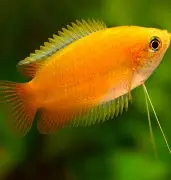
| ✅ | Honey Gourami | Gentle surface-to-mid-water centrepiece; no interest in bottom dwellers and a calm personality overall |
| ✅ | Pearl Gourami | Calm, slow-moving centrepiece that will not bother a calico even during courtship or spawning |
| ✅ | Kuhli Loach | Nocturnal like bristlenose but stays in substrate crevices rather than on driftwood; zero territorial overlap |
| ✅ | Amano Shrimp | Large enough (4 cm+) to avoid being swallowed accidentally; excellent co-janitors on algae with no competition for driftwood |
| ✅ | Mystery Snail | Large inert grazer that bristlenose completely ignore; helps with biofilm and leftover food |
| ❌ | Other Adult Male Plecos (any species) | Bristlenose males become territorial with other cave-dwelling plecos once mature; fights over caves cause injuries and stress. One male per tank under 150 L |
| ❌ | Common Pleco (Pterygoplichthys) | Reaches 40+ cm, out-competes smaller bristlenose for food and hardscape, and will eventually bully the smaller cousin. Never house together |
| ❌ | Dwarf / Cherry Shrimp (Neocaridina) fry | Shrimp fry are small enough to be accidentally sucked up by a grazing bristlenose — the colony will not establish a reproducing population in the same tank |
| ❌ | Tiger Barb / Serpae Tetra | Notorious fin-nippers; even though this calico is a standard shortfin, barbs still harass bristlenose around the hardscape and disrupt grazing |
| ❌ | Large Aggressive Cichlids (Oscars, Jack Dempsey, Flowerhorn) | Too aggressive and too large; will harass, injure, or kill a bristlenose trying to graze their territory |
| ❌ | African Rift Lake Cichlids | Require hard alkaline water near the top of the bristlenose comfort range, and are territorially aggressive toward bottom dwellers. Parameter mismatch plus temperament mismatch |
Breeding Guide
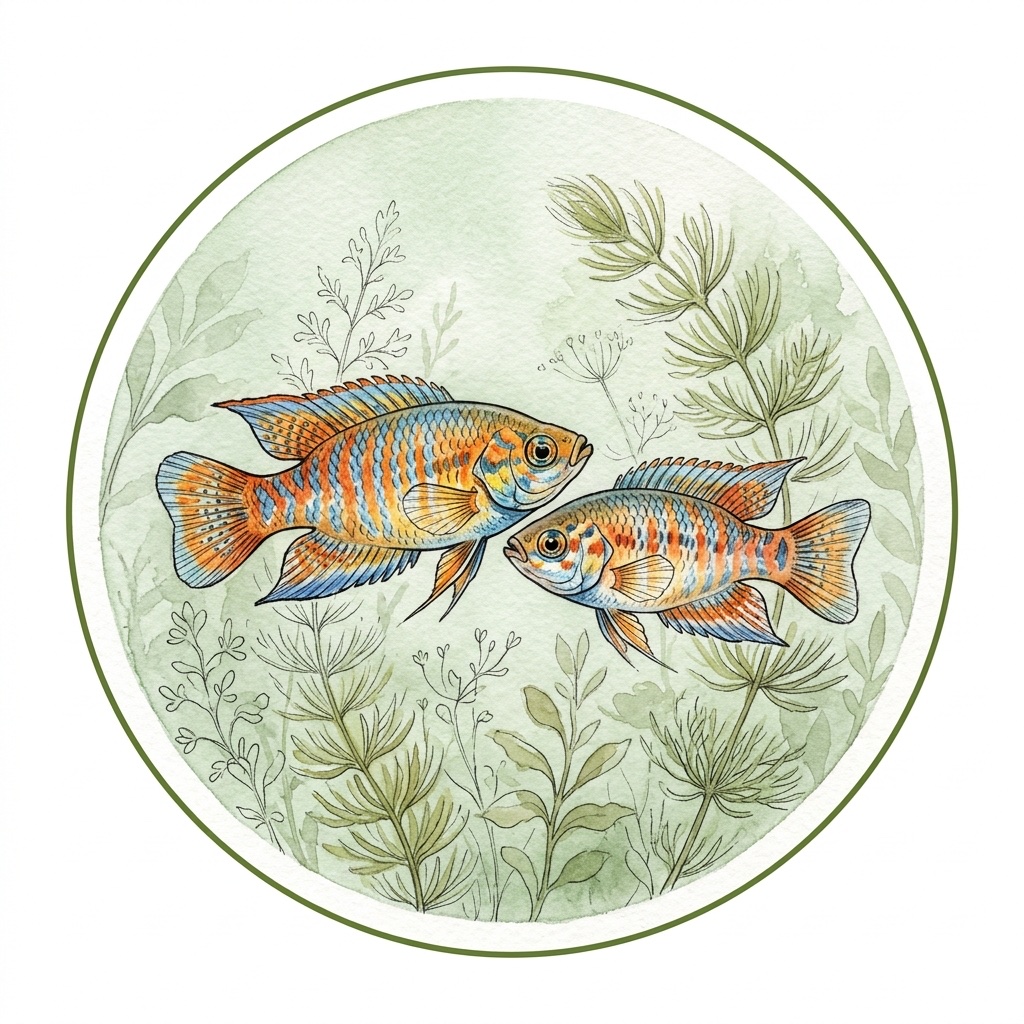
Month 0 (shipment)
Juvenile Arrival — Pre-Sexing
4 cm, pre-sexing, pattern still settling
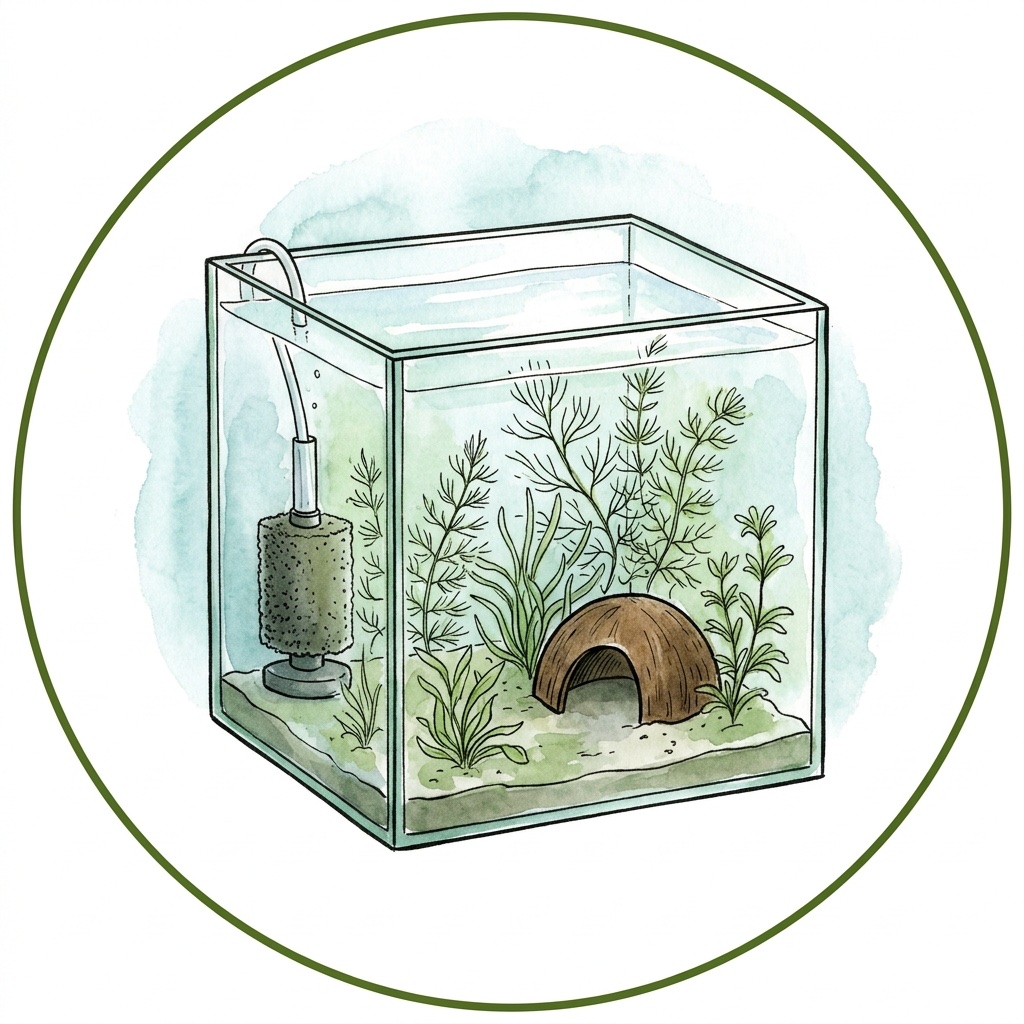
Month 2–3
Pattern Lock-In
Calico pattern stabilises at 6–7 cm
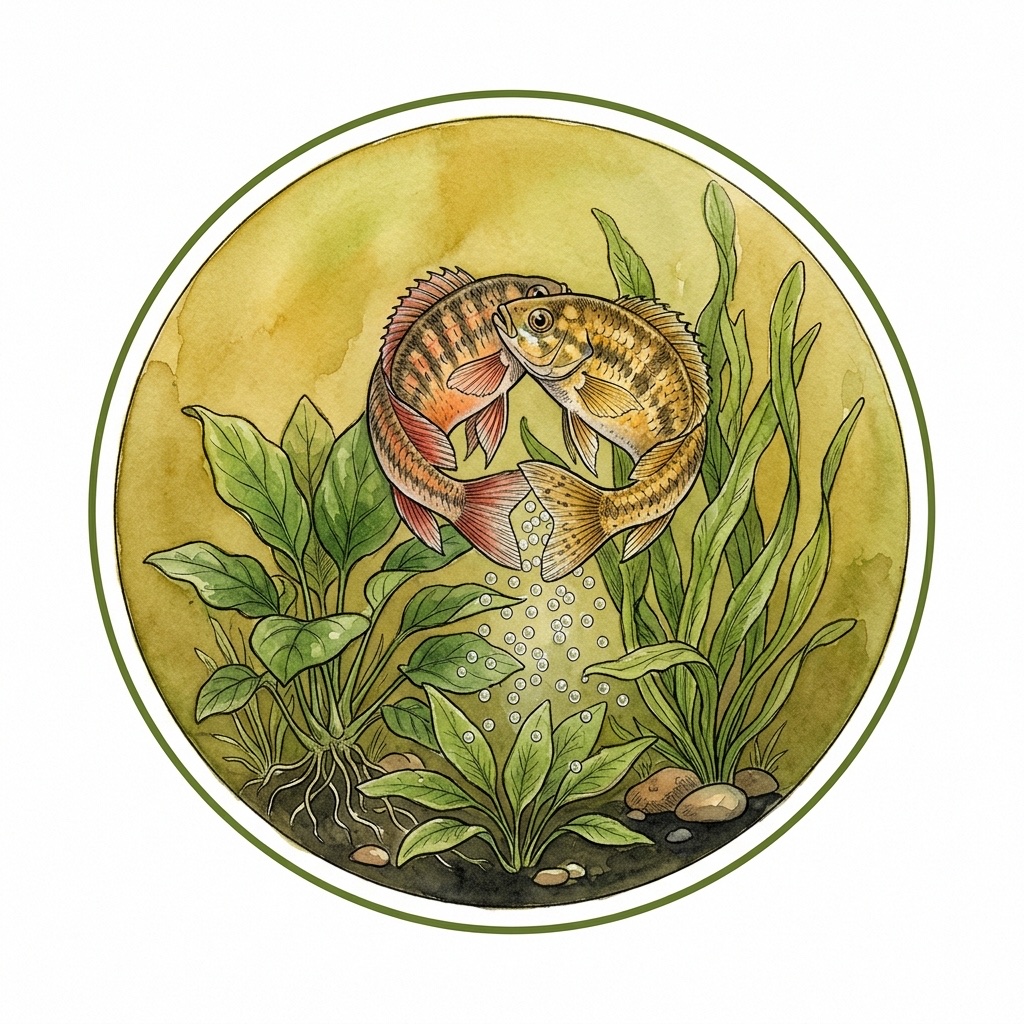
Month 3–4
Sexing Becomes Possible
Males begin sprouting head bristles at 6–7 cm
Month 5–8
Sexual Maturity & Courtship
Males claim caves, flash bristles, call females in
Spawn Day (6–12 months post-shipment)
Spawn & Guard
Male fertilises and guards 30–150 eggs for 5–7 days
Day +7 to +14
Free-Swimming Fry
Fry leave cave, accept crushed wafers and blanched veg
Juvenile Arrival — Pre-Sexing
Your calicos arrive at 4 cm, not yet showing any sex characteristics and with patterns still in the final weeks of stabilising. The clever play at this stage is to order five or six rather than two or three. Statistically, a group of six virtually guarantees at least two males and two females, giving you a natural breeding pool six to nine months down the line without any deliberate pairing effort. At six fish your 80-litre grow-out tank is still comfortable until they reach 7 cm.
Pattern Lock-In
Between month two and month three of grow-out, the calico pattern on each fish will lock into its final adult form. Edges sharpen, orange saturation deepens, and the black patches reach their full contrast. At this point you can confidently identify each individual fish by its markings and begin photographing the group for a permanent visual record. This is also the size at which sex begins to become readable.
Sexing Becomes Possible
Around the three- to four-month mark your juveniles will pass the 6 cm mark and the males will begin to show their first true bristles — short, branching tentacles emerging from the tip of the snout rather than along the jaw line. By 7 cm the difference between sexes is unambiguous. At this point you can either keep the whole group together (males tolerate each other once territories are established in a large enough tank) or re-home any surplus males to maintain a balanced 1 male to 2 female ratio for breeding.
Sexual Maturity & Courtship
Between 8 cm and 10 cm the dominant male will stake a claim to the best cave in the tank, cleaning it obsessively by fanning debris out with his pectoral fins and rasping the interior with his mouth. When he feels ready, he sits in the cave entrance with bristles flared, pectoral fins extended, and tail pumping a steady current through the cave. This is both a territorial display (warning other males off) and a courtship invitation (signalling to females that the cave is clean and well-oxygenated). If a receptive female enters, spawning follows within a day or two.
Spawn & Guard
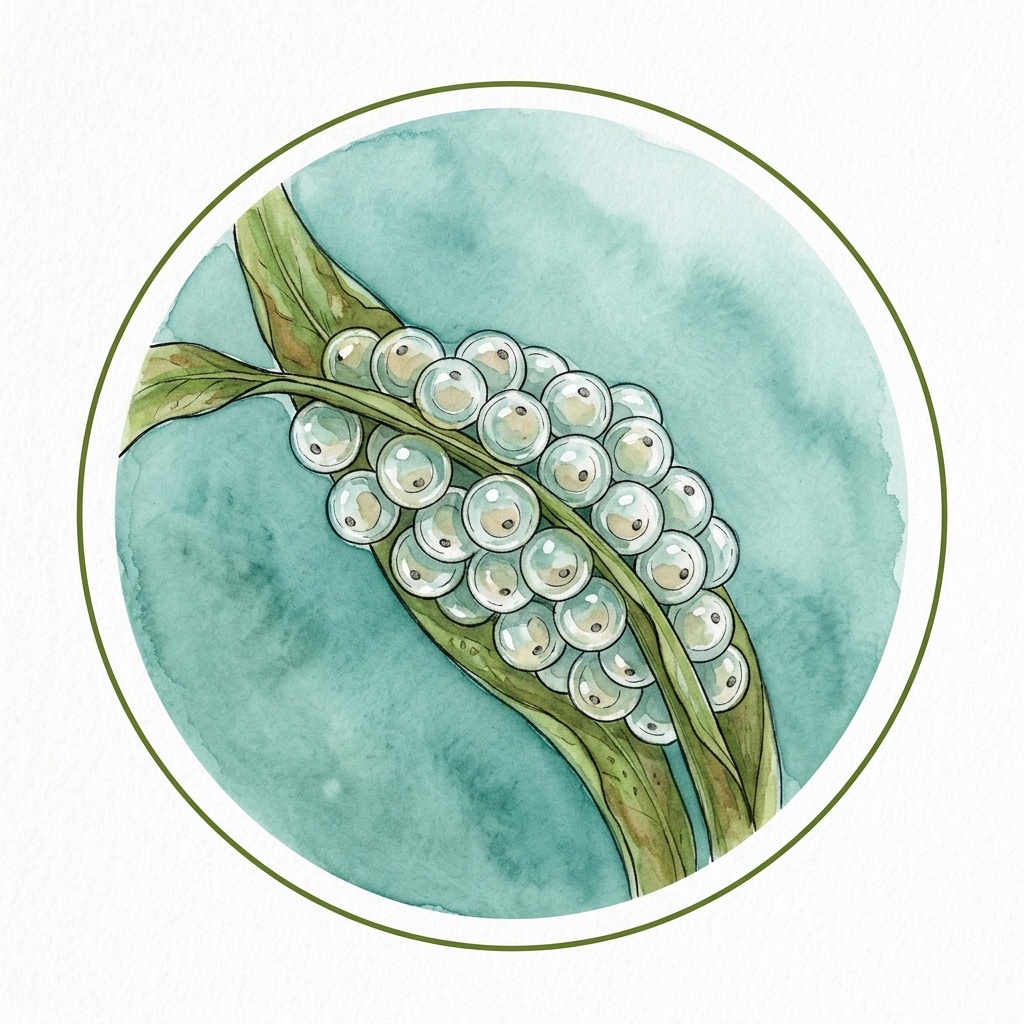
When a gravid female finally enters the cave, she deposits a compact cluster of bright orange, 2–3 mm eggs on the cave ceiling — typically 30 to 80 eggs for a first-time female, up to 150 for an older, larger female. The male fertilises the cluster and then takes over full parental duty: he blocks the cave entrance with his body and pumps oxygenated water over the eggs with his pectoral fins for the next 4 to 7 days. He will not leave the cave for more than a few seconds at a time, not even to feed. Any fish or shrimp that approaches the cave entrance gets driven off with a quick flare of bristles.
Free-Swimming Fry
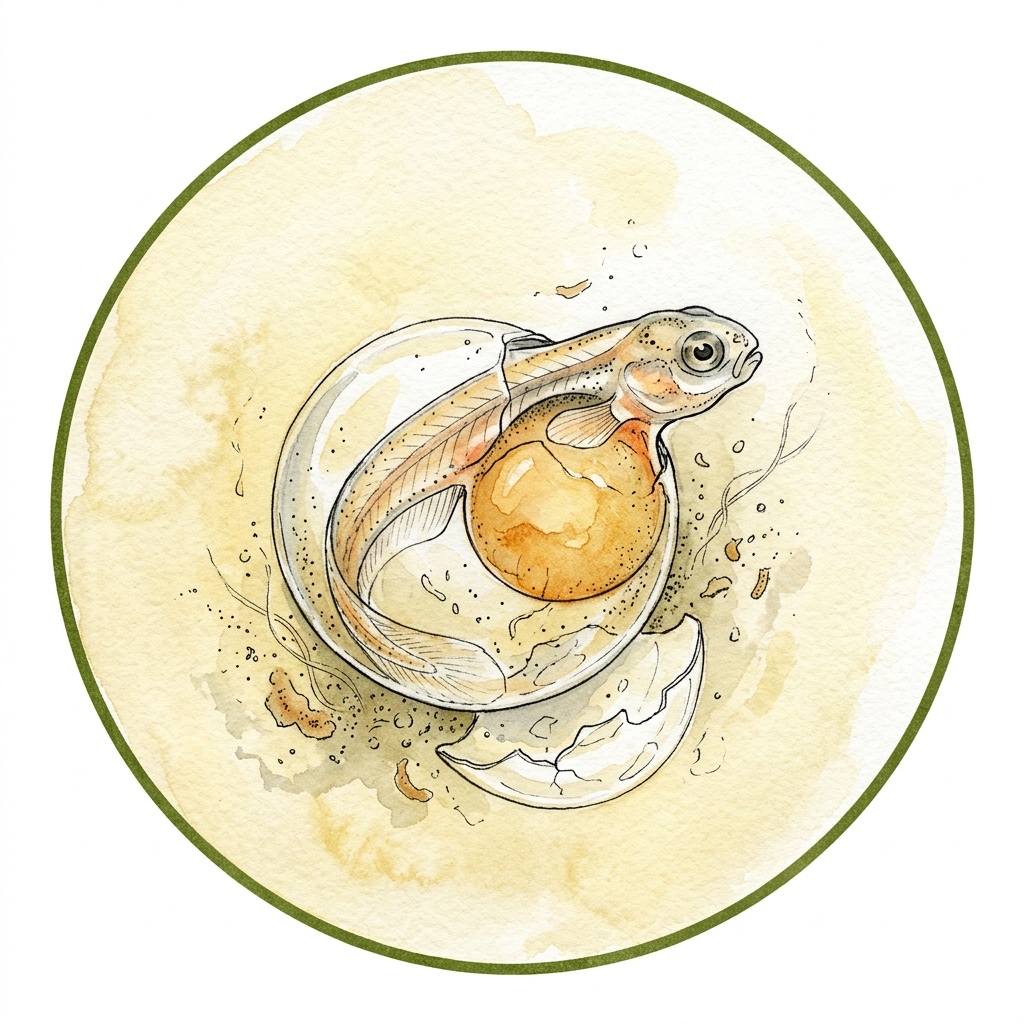
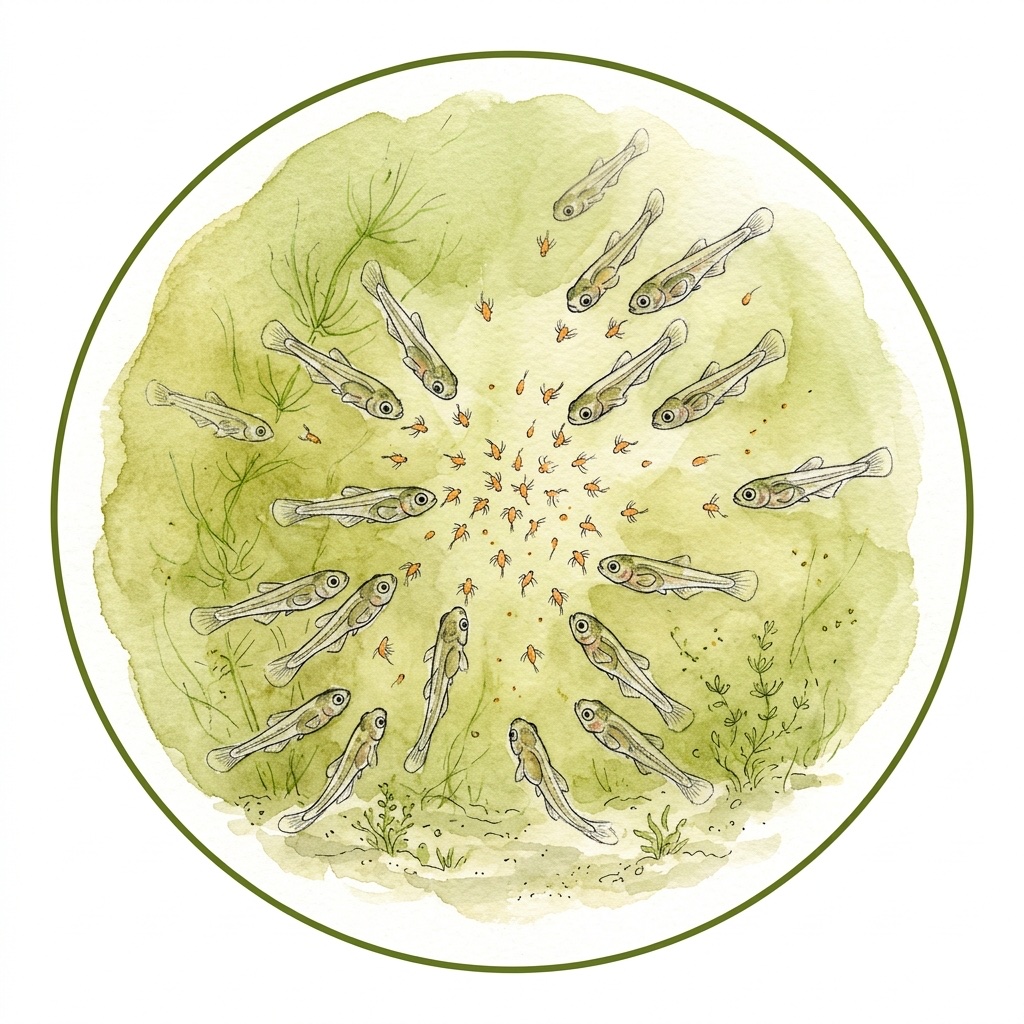
Eggs hatch into orange, yolk-sac fry within 4–7 days of spawning. The fry cling to the cave walls and ceiling for another week while absorbing their yolk sacs. Once the yolk is absorbed, they venture out of the cave and begin grazing — finely crushed algae wafer, blanched softened zucchini skin, and biofilm on driftwood all go down well. Calico fry show faint patchwork patterning from free-swimming size, though the full adult contrast only develops over the following 6–12 weeks. Expect survival rates of 70–95 per cent in a dedicated species tank, or 30–50 per cent in a community where they are sight-predated on.
Quick Reference
| Scientific Name | Ancistrus sp. (commercial ‘Calico’ strain) |
| Morph | Calico — three-colour (orange + black + cream) patchwork; shortfin |
| Shipped Size | ~4 cm (juvenile / grow-out) |
| Adult Size | 10–13 cm |
| Lifespan | 8–12 years |
| pH | 6.5–7.8 (ideal 7.0) |
| Temperature | 22–28 °C (ideal 25 °C) |
| Hardness | 4–20 dGH (very tolerant) |
| Min Tank (Grow-Out) | 80 L for a group of 4–6 juveniles |
| Min Tank (Adult) | 100 L+ for a mature pair or trio |
| Hardscape | Driftwood essential + cave per potential male |
| Diet | Fibre-first: driftwood, algae wafer, blanched veggies; weekly protein |
| Colour-Feed Note | Carrot, red capsicum, sweet potato weekly during grow-out for orange saturation |
| Care Level | Beginner to Easy-Intermediate |
| Temperament | Peaceful; one adult male per tank under 150 L |
| Breeding | Cave spawner once mature at 6–7 cm+ |
| Tank Position | Bottom / on hardscape |
| Pattern Lock-In | Adult pattern stabilises at 6–7 cm; 4 cm pattern is muted vs final |
| Price | $22.50 AUD |
Related Products

Reviews
Clear filtersThere are no reviews yet.