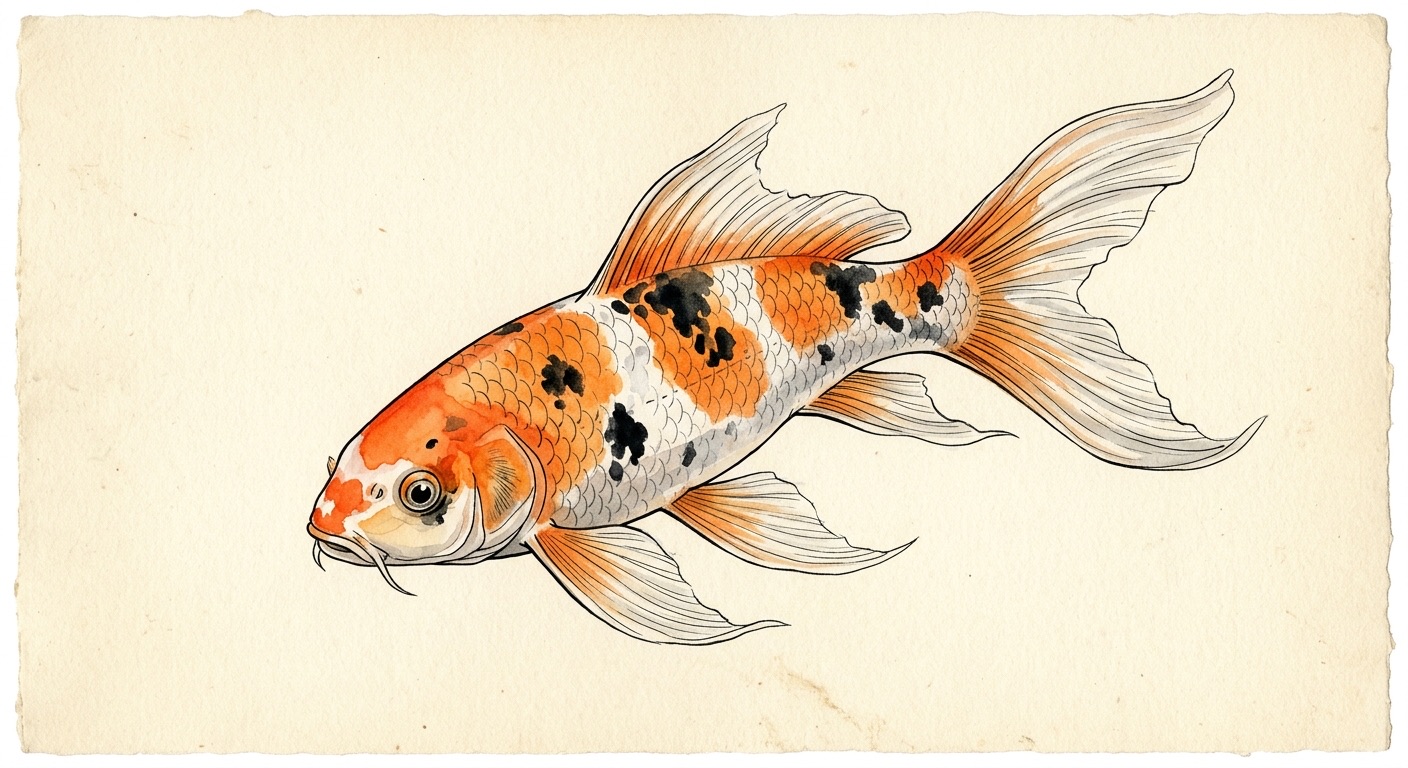
🪨 Species at a Glance
| Scientific Name | Cyprinus rubrofuscus |
| Family | Cyprinidae |
| Order | Cypriniformes |
| Origin | East Asia (China, Japan, Korea, Vietnam); domesticated in Japan early 1800s |
| Adult Size | 60-90 cm (24-36 in); jumbo specimens exceed 1 m |
| Lifespan | 25-50 years; exceptional individuals 70+ years |
| pH Range | 7.0-8.5 (ideal 7.5) |
| Temperature | 4-28 degC (39-82 degF); survives ice cover if depth allows |
| Hardness (dGH) | 8-20 |
| Diet | Omnivore — formulated koi pellets, aquatic plants, insects, blanched vegetables |
| Minimum Housing | Pond 1000+ L per koi; aquarium only for juvenile grow-out up to 2-3 years |
| Care Level | Intermediate — demanding on space and filtration, tolerant on water quality |
| Temperament | Peaceful, social, gregarious with conspecifics |
| Breeding | Open-water spawner — induced by spring temperature rise and dense vegetation |
| Tank Position | All levels — bottom foragers that rise readily to surface feed |
| Australian Status | Restricted/prohibited in several states — strict enclosure required, zero release |
Species Background
The scientific name *Cyprinus rubrofuscus* tells a story of taxonomic re-examination that is still echoing through hobby literature today. For most of the twentieth century, the ornamental koi was treated as a colour variant of the widespread common carp, *Cyprinus carpio* — the same fish eaten across Europe for two thousand years, farmed in medieval monastery ponds, and later declared a destructive invasive species across Australia, North America, and parts of Africa. That view was overturned beginning in 2005 when ichthyologists analysing mitochondrial DNA and detailed morphological traits concluded that the East Asian carp lineage is in fact a distinct species from the European one. *Cyprinus rubrofuscus* was resurrected as the correct name for the East Asian fish (it had been described in 1846 but sunk into synonymy), while *carpio* was reserved for the European Danube-basin species. Modern hobby literature is slowly catching up, so you will still see older references to *Cyprinus carpio* ‘Koi’ or *Cyprinus carpio* var. *koi* in books published before about 2010 — but the current taxonomic consensus, reinforced by subsequent genetic studies in 2013 and 2018, is clear: koi are their own species, native to East Asia and particularly the rivers and lakes of China, Japan, Korea, and northern Vietnam. This distinction matters for more than pedantry: it reinforces why Australian invasive-species regulations that target *Cyprinus carpio* in the wild still apply to koi release, because the two species are closely related enough to interbreed and establish feral populations if introduced.
The second story is cultural, and it is crucial to get right. **Koi are not fancy goldfish.** The two fish are often shelved side by side in Australian aquarium shops, sold at similar prices for small juveniles, and sometimes kept in similar backyard ponds, so the confusion is entirely understandable — but biologically the two could not be more distant. Goldfish (*Carassius auratus*) belong to a different genus entirely and were domesticated from the Prussian carp in imperial China more than a thousand years ago during the Tang dynasty, originally as ornamental fish for temple ponds. Their maximum adult size in the original single-tail form is about 30 centimetres, and fancy varieties like ranchu or oranda top out closer to 20 centimetres. Koi, by contrast, descend from the much larger Amur-style carp lineage and were domesticated in Japan only about two hundred years ago, in the rice-terraced Niigata prefecture of the early 1800s. There, farmers kept food-carp through winter in irrigation flood-ponds and noticed rare red or white colour mutations appearing in otherwise drab grey stock. Over successive generations they selected and line-bred for colour, gradually stabilising new varieties. By the Meiji era (1868-1912) Niigata koi shows had become a recognised art form, and after the 1914 Tokyo Taisho Exposition brought Niigata koi to national attention the hobby exploded across Japan and eventually the world. The Japanese word *Nishikigoi* (written with the kanji characters meaning ‘brocaded carp’) is the proper term for the coloured ornamental fish; ‘koi’ in Japanese simply means ‘carp’ and historically included both the food fish and the ornamental variety. In English the word has narrowed over the last century to mean only the ornamental variety, but the distinction still matters when you read older or translated Japanese texts about breeding and husbandry.
An ‘Assorted’ label at a retailer means the fish are sold as a mixed batch of varieties rather than selected and graded to a specific named type. For the hobbyist this is both the attraction and the gamble: you receive whatever colour patterns came through that week’s shipment from the wholesale breeder — often a beautiful diversity of Kohaku, Sanshoku, metallics, and sometimes one or two surprises, all at a fraction of the price that individually graded koi command. Serious Nishikigoi collectors buy named fish from specific breeders with full lineage papers that trace the fish back through several generations of parent stock; some Japanese champion koi sell at auction for tens or even hundreds of thousands of dollars, and the 2018 record-holder for the most expensive koi ever sold changed hands for 203 million yen (roughly 2.2 million Australian dollars). Pond-keepers starting their first collection do not need to play in that league. A carefully chosen group of five or six assorted juveniles, grown out in a proper pond over two to three years, will develop into a stunning adult collection where colour development, pattern sharpening, and individual personality are part of the reward.
Sexual Dimorphism
Sexing young koi under 25 centimetres is extraordinarily difficult — externally they appear nearly identical and even experienced Japanese breeders frequently mis-sex fish at the juvenile stage. Reliable differentiation typically begins around age three when the fish reach 30 to 40 centimetres and begin to display unambiguous adult body proportions. The single most useful indicator outside of spawning season is body depth viewed from above: mature females develop a noticeably heavier, wider-shouldered silhouette as egg-carrying capacity expands through the ovaries, while males retain the longer, slimmer, more torpedo-shaped profile of a juvenile well into adulthood. During the spring spawning window, male koi develop pinhead-sized white bumps called breeding tubercles on their gill plates and along the leading rays of the pectoral fins; these feel distinctly like sandpaper when the fish is gently handled and are an unambiguous male marker that cannot be faked or confused with disease. Females meanwhile show pronounced abdominal swelling as eggs mature, a reddened and slightly everted vent, and often a visible asymmetry as eggs settle to one side of the body cavity. Outside the spawning window these secondary sex indicators fade entirely and you are back to guessing from body shape alone. A useful practical technique for sexing fish of 40 centimetres or larger is to place the koi briefly in a shallow bowl of pond water with just enough depth to cover the back; viewed from directly above, mature females show the classic wide-shouldered silhouette while males appear distinctly narrower — a difference that becomes obvious with practice even to novice keepers. Chromosomal sex determination and ultrasound are sometimes used by professional breeders for high-value individuals, but neither is practical in a typical hobby setting.
| Feature | Male | Female |
|---|---|---|
| Body Shape | Slimmer, longer, more torpedo-like profile | Deeper bodied; rounded belly, especially when gravid |
| Pectoral Fins | Slightly larger, more pointed tips | Shorter, more rounded pectorals |
| Vent (Anal Pore) | Small, narrow, concave opening | Larger, rounder, slightly protruding — especially before spawning |
| Breeding Tubercles | White sandpaper-like bumps on gill covers and pectoral-fin rays during spawning season | No tubercles |
| Size (Same Age) | Slightly smaller and more streamlined | Larger and heavier once past 3 years old |
| Behaviour | Active chasers during spawning; bumps females against pond plants | Less active; leads chase when ready to release eggs |
| Colour Intensity | Often brighter and more defined year-round | Slightly softer; colours may dilute when heavily gravid |
The Colour Spectrum
🔴 Kohaku
The foundation variety — pure snow-white body with bold crimson red (hi) patches. Simplicity and clarity of edges define a good Kohaku; often called the ‘starting and ending point’ of koi appreciation.
⚫ Taisho Sanshoku (Sanke)
White base with red (hi) plus black (sumi) markings. Named for the Taisho era (1912-1926) when the variety was stabilised. Sumi never appears on the head — a defining judging rule.
🌑 Showa Sanshoku (Showa)
Black-based koi with red and white patterning wrapping the body. Sumi typically extends through the head as a bold lightning pattern, giving Showa a dramatic, painterly look distinct from Sanke.
🟡 Ogon
Solid metallic koi — platinum, gold, or orange-gold with no secondary markings. The burnished single-colour body and high sheen make Ogon one of the most eye-catching varieties in direct sunlight.
⚫ Bekko
Single-colour base (white, red, or yellow) with small scattered black (sumi) stepping-stone markings. Clean, uncluttered, and classically elegant — the base colour defines the sub-type (Shiro Bekko, Aka Bekko, Ki Bekko).
💠 Asagi
Blue-grey reticulated scale pattern on the back with red along the sides, gill plates, and belly. Oldest documented Nishikigoi variety — believed to be the ancestor of many modern koi lines.
💧 Shusui
Doitsu (scaleless) version of Asagi — a single line of enlarged blue scales runs down the spine on an otherwise smooth bluish-grey body, with red flanks. Created in 1910 by crossing Asagi with German mirror carp.
⚫ Utsurimono
Black base with a second colour (white, red, or yellow) in bold wrapping patches. Shiro Utsuri is the classic black-and-white. The pattern should wrap the body fully — not merely sit on one side.
🏯 Tancho
Any variety bearing a single round red spot on the head and nothing else red. The round hi disc evokes the Japanese flag and the red-crested crane — revered as auspicious and often the most expensive fish at a show.
🧥 Goromo / Koromo
Kohaku-like pattern with blue or black reticulation overlaid on the red scales, producing a ‘robed’ appearance. Ai-goromo (indigo robe) and Budo-goromo (grape robe) are the main sub-forms.
⚖ Kawarimono
Catch-all category for koi that do not fit other classifications — includes Karasu (all-black), Chagoi (solid tan), Ochiba-shigure, and many experimental morphs. Judging criteria vary by sub-type.
✨ Hikari-moyomono
Metallic two-colour varieties — Yamabuki Hariwake (platinum and yellow), Kujaku (metallic reticulated), and Kikokuryu (metallic Doitsu). Combines the sheen of Ogon with patterned bodies.
An assorted batch at the shop typically leans heavily on the cheaper-to-produce varieties because Japanese and Chinese breeding farms produce these in the greatest numbers: Kohaku, Ogon, and basic Sanke are standard expectations, with Showa, Bekko, Shiro Utsuri, and Asagi appearing less often. Rarer types like high-grade Tancho or well-defined Goromo almost never appear in assorted tanks because they are worth enough to grade and sell individually even as juveniles. That said, many serious koi collections started life as an assorted purchase where a surprise standout grew into a genuinely impressive adult — part of the pleasure of koi-keeping is watching a plain-looking young fish blossom into an unexpectedly beautiful mature specimen. Colour intensity in young koi is a notoriously unreliable predictor of adult appearance: the bold markings of a 10 cm juvenile may fade, shift, sharpen, or completely rearrange as the fish matures over the next three to five years. The hi (red) pigmentation in particular can extend or retract, and sumi (black) often develops only in the second or third year — a Sanshoku that appears as a bland Kohaku at purchase may reveal dramatic black markings by age three. This is one reason serious collectors wait until koi reach 40+ centimetres before declaring a champion. Water quality, diet rich in colour-enhancing carotenoids (astaxanthin, canthaxanthin, marigold extract, spirulina), and ample natural pond sunlight all influence final adult colouration. Koi kept in shaded, algae-scarce indoor tanks almost always develop duller colours than the same fish raised in a sunlit outdoor pond exposed to real UV spectrum — one of many reasons a proper outdoor pond is the correct long-term home. Mud-pond farming, where high-grade koi are overwintered on natural clay substrate with abundant micro-fauna, is traditionally credited with the richest colour development, and the finest Japanese nishikigoi are still raised this way in Niigata before finishing in clean indoor tanks before sale.
Water Chemistry Guide
7.0–8.5
ideal 7.5
4–28 °C
ideal 20 °C
8–20 dGH
Moderately hard to hard water — koi thrive in mineral-rich, well-buffered conditions
Koi are among the most cold-hardy ornamental fish in the entire aquarium and pond hobby, a trait inherited directly from their wild *Cyprinus rubrofuscus* ancestors which naturally inhabit temperate rivers and lakes that ice over in winter. They tolerate a remarkable temperature range from 4 degC (and survive brief periods hovering near freezing if pond depth allows them to winter beneath an insulating ice layer in the warmer water below) up to about 28 degC, and they thrive across a wide pH spectrum provided conditions remain stable rather than swinging. The practical target for a pond is pH 7.5 with moderate to hard water, because koi are alkaline-water carp by evolution and low-pH soft-water conditions stress their osmoregulation over the long term and can lead to scale damage and fin erosion. Australian municipal tap water in most cities is already well suited — typically pH 7.2 to 8.0 with moderate hardness thanks to the predominantly limestone or clay-based catchments — so extensive water chemistry adjustment is rarely needed. If your water comes from a soft-water catchment (parts of Tasmania, some bore water supplies) you may need to supplement with oyster shell or crushed limestone in the filter stage to buffer pH and raise KH.
Where new koi-keepers most often fail is not in pH or temperature but in waste load management. A single adult koi produces roughly ten times the ammonia and dissolved organic output of a goldfish of similar apparent size, because koi are larger, eat more, and digest more aggressively. Unlike goldfish which slow feeding significantly in very warm water, koi eat aggressively all summer long in Australian conditions. Undersized biological filtration simply will not compensate, and a pond that looks ‘fine’ in spring with juvenile fish can crash catastrophically by midsummer once biomass, feeding, and water temperature have all increased in parallel. Plan your filtration for the adult biomass you expect three to five years out (typically 1 kg of fish per 1000 L pond volume as a conservative maximum stocking density) rather than the small juveniles you are starting with today. A standard rule of thumb used by professional koi-pond installers is: calculate total pond volume, divide by 1000, multiply by 1 kg to get your adult biomass ceiling, then multiply by 10 to get the rough number of grams of fish food you should be able to feed daily at full summer load — then size your biofilter for that feed-rate. This usually produces a biofilter volume equal to 10-20% of pond volume, which surprises many first-time builders.
Koi also require steady aeration year-round; in winter they slow dramatically but still consume dissolved oxygen, and a frozen surface with no aeration creates a suffocation risk as under-ice oxygen is depleted and surface gas exchange is blocked. A small air-stone positioned to keep a hole open in ice is the traditional solution; a dedicated floating pond de-icer is the modern one. Summer brings the opposite problem: warm water holds less dissolved oxygen than cool water, koi metabolism peaks, and biological filter bacteria consume their share too — it is common for dissolved oxygen to drop dangerously low in the early morning hours of hot summer nights. Aeration should be designed to maintain 6+ mg/L dissolved oxygen under worst-case conditions, which usually means a diaphragm air pump sized roughly 50-100 W for a 5000 L pond with dedicated air stones, plus a waterfall, spray bar, or venturi return to provide additional gas exchange. Test your dissolved oxygen on a hot February morning before first light; that is the worst-case measurement and the number that matters.
What to Feed
Koi are true omnivores and aggressive foragers, adapted by evolution to exploit whatever food is available in rich lowland river systems. In the wild ancestral population their natural diet includes aquatic insects and larvae (chironomids, mayfly nymphs, dragonfly larvae), crustaceans (freshwater shrimp, amphipods, copepods), molluscs (snails, small clams, mussel spat), plant matter (aquatic vegetation, roots, seeds), detritus from the pond floor, and terrestrial insects and seeds that fall into the water. In a home pond they will eat almost anything you offer and many things you do not intend to — from mosquito larvae and dragonfly nymphs to the roots of your water lilies and the tender shoots of any submerged plant within reach. This catholic appetite is what makes koi both easy to feed and challenging to landscape around. A quality formulated koi pellet from a reputable manufacturer (Saki-Hikari, Hikari, Tetra, Mazuri, Blackwater Creek, and several Australian labels) should form the backbone of their daily diet; modern koi food is scientifically formulated to deliver appropriate protein levels by temperature and growth stage, with added spirulina, astaxanthin, canthaxanthin, and marigold extract for colour enhancement, plus probiotics and vitamin packages for immune support.
Protein requirements vary dramatically with water temperature, which is the single concept most new koi-keepers fail to grasp and the most common root cause of summer die-offs and winter digestive illness. Above 20 degC koi metabolism is at full speed, digestive enzymes are fully active, and a growth food of 38-42% protein is appropriate, fed up to four times daily in small portions that the fish can finish within five minutes each sitting. Between 15 and 20 degC metabolism slows; switch to a maintenance food around 30-35% protein fed twice daily. Between 10 and 15 degC feed only a wheatgerm-based low-protein food (around 28%) once daily or every other day — wheatgerm is specifically chosen because it digests at low temperatures while animal-protein sources become problematic. Below 10 degC stop feeding entirely; koi digestive enzymes cease function below this threshold and undigested food in the gut does not pass through — instead it ferments and rots in place, causing fatal bacterial complications including enteritis and septicaemia. Many well-intentioned pond-keepers lose their entire stock during the first mild winter because they continued to feed through cold snaps.
Supplement formulated pellets two or three times weekly with natural treats, which koi love and which provide micronutrients not always present in processed food. Blanched romaine lettuce, spinach, kale, broccoli florets, and bok choy are all accepted eagerly. Shelled green peas are a traditional constipation remedy and a reliable favourite. Orange slices (remove peel and seeds), watermelon rind, halved grapes, and small pieces of banana are welcome summer treats. Live earthworms are the single most enthusiastic food koi will ever encounter — hand-feeding worms is how most pond-keepers tame their fish to accept feeding from a human hand. Avoid any food that is high in fat, heavily salted, or processed for human consumption; koi digestive systems cannot handle mammalian fats and develop fatty liver disease over time. Bread and crackers are particularly dangerous because they swell in the digestive tract and cause painful bloating or outright blockage. Cat and dog food, despite the internet legends, is not suitable long-term koi food — the fat profile is wrong and vitamin levels inappropriate.
Koi will hand-feed once accustomed to a regular keeper, and this is genuinely one of the great pleasures of pond-keeping. The process typically takes two to four weeks of consistent daily feeding at the same spot: sit quietly by the pond edge with food in hand each morning, drop a few pellets gradually closer to your fingers day by day, and eventually the boldest fish will take food directly from your hand. Older koi recognise individual keepers by sight and will come to the pond edge when you approach — a level of recognition and interaction unusual in fish and deeply satisfying to experience.
Creating the Perfect Habitat
The fundamental honesty required of any koi retailer, and any koi-keeping guide worth reading, is this: an aquarium is not a permanent home for a koi. A fish that grows to sixty, seventy, or even ninety centimetres and lives four decades simply cannot live out its natural life in a glass box, regardless of how large the box is by aquarium standards. Juveniles sold at 8 to 15 centimetres will grow at roughly 10 to 20 centimetres per year under good conditions — faster in heavily fed, well-filtered systems — and reach a size where even a 1000-litre aquarium is visibly cramped within three seasons. Hobbyists who buy assorted koi for an indoor display tank almost always face a difficult rehoming decision somewhere between year two and year four, and the most common outcome is sale or donation to a pond-keeper. The honest purchase decision is made at the beginning, not at the crisis point: buy koi only if you have a pond of at least 3000 litres planned or already built, allowing a minimum of 1000 litres per adult koi, with 1.2 metres minimum depth for thermal stability, predator protection, and winter safety. A pond meeting these specifications comfortably houses three to four adult koi with excellent water quality and genuine long-term welfare.
For pond construction, three approaches dominate the Australian market and each has distinct trade-offs. Flexible EPDM liner over a dug hole is the most affordable and forgiving approach: it shapes freely to any design, lasts 20 or more years if protected from UV and mechanical damage, and can be installed by a reasonably handy owner over a long weekend. The downside is that liners puncture and repair is a tedious process requiring pond drainage. Pre-formed fibreglass or polyethylene shells offer the quickest installation and hold their shape reliably, but are limited to relatively small volumes (rarely above 2000 litres for off-the-shelf units) and the fixed shape may not suit your garden. Concrete or cinder-block construction with a cementitious or epoxy lining is the permanent option: expensive, slow, requires curing and sealing to prevent lime leaching into the water, but offers essentially unlimited design flexibility and a lifespan of decades. Professional installers in Australia typically quote $8000 to $25000 for a turnkey 5000-10000 litre koi pond including filtration; DIY projects can come in at a third of that with labour time invested.
Whatever construction method you choose, build filtration into the design from the very start rather than adding it as an afterthought — this is the single most common error in home koi ponds. Bottom drains feeding a gravity-fed filter house are vastly superior to pumped surface skimmers for koi-size waste loads, because koi faeces sink and accumulate on the pond floor, and surface-only skimming leaves the majority of the waste in place to decompose. The standard professional layout is a bottom drain, feeding by gravity to a settlement chamber, then to a mechanical filter stage (drum filter, bead filter, or matting chamber), then to a biological filter stage (moving-bed bioreactor, shower filter, or static media), then pumped back to the pond via a waterfall or spray bar that adds aeration on the return. This gravity-fed layout eliminates the energy cost and wear of pumping dirty water through filters and is standard practice in Japanese koi ponds. Shade one-third of the pond surface with a pergola, water lilies, or tall overhanging plantings to reduce summer algae blooms and give fish a visual retreat; koi can sunburn in shallow, fully exposed ponds (yes, literally — the soft tissue above exposed gill plates and along white-skinned backs can develop lesions) and are regularly preyed upon by kingfishers, herons, cormorants, and cats where overhead cover is absent. Netting or a pergola with climbing vines addresses both concerns at once.
An aquarium used as a temporary grow-out for juvenile assorted koi should be at absolute minimum 400 litres (roughly a standard 120 cm long tank), kept under 24 degC to slow growth and reduce waste load, heavily over-filtered, and treated explicitly as a transition home with a written move-out plan and timeline. Bare-bottom or very fine smooth gravel is best for substrate; koi are constant substrate foragers and will ingest or displace loose gravel, sometimes lodging stones in their pharyngeal teeth, and sharp decor can damage their delicate barbels. Plants are a challenge in any koi tank or pond because koi will eat soft-leaved species like elodea, water lettuce, and hornwort within days, and uproot anything less than firmly anchored. Hardy emergent plants (reeds, iris, canna) planted in gravel baskets on pond margins and tough floating plants like water hyacinth (check state regulations) are the viable options for planted koi ponds.
Pond (Primary Home)
Minimum 3000 L for starter setup with 3-4 koi; 5000-10000 L preferred. Depth minimum 1.2 m. Bottom drain essential.
Mechanical Filtration
Bead filter, drum filter, or multi-chamber settlement/matting stage sized for full pond turnover every 1-2 hours
Biological Filtration
Moving-bed bioreactor, shower filter, or large volume static media. Size for 1 kg fish per 1000 L target biomass
UV Clarifier
11-55 W inline UV sterilizer to control free-floating algae and some pathogens; replace bulb annually
Aeration
Dedicated air pump with multiple air stones. Maintains DO above 6 mg/L; keeps winter ice hole open
Heater (Optional)
For cold-climate overwintering or early spring conditioning; 300-500 W inline heater if temperature control desired
Net Cover
Protection from herons, kingfishers, cats, and falling leaves in autumn. Essential in most Australian gardens
Water Test Kit
Liquid reagent test for ammonia, nitrite, nitrate, pH, KH — far more accurate than strips for pond-volume diagnostics
Quarantine Tank
Separate 200-500 L tank or IBC tote for 4-6 week quarantine of all new arrivals before pond introduction
Tank Mate Guide
The ideal koi pond community is koi. These are social, gregarious fish that form loose groups and recognise individual tankmates after a few months together; a pond of four to eight koi behaves far more naturally and exhibits more of the relaxed, confident surface-feeding behaviour that makes koi enjoyable to watch than a lone fish ever will. Koi that are kept singly often become shy, hide constantly, and refuse to feed in the presence of their keeper. If you want additional visual variety beyond the assorted koi batch you started with, pond-hardy single-tail goldfish (commons, comets, shubunkins, sarasas) are the safest supplement — they share exactly the same water parameters as koi, tolerate the same temperature range, are not bullied by koi at feeding time, and compete only mildly because their smaller mouths target smaller food particles. A mixed koi-and-comet pond is a very traditional Japanese-style arrangement and works well at all pond sizes.
Fancy goldfish varieties (orandas, ranchus, telescope eyes, pearlscales, ryukins) and delicate tropical species do not belong in a koi pond for several converging reasons: fancy goldfish cannot out-compete koi at feeding time and are routinely crowded out and starved despite apparent friendliness of interaction; their slow swimming makes them targets for the flank-bumping play behaviour of bored koi; their bred-for-beauty bodies are prone to injury from the rough-and-tumble of koi pond life; and the outdoor temperature swings typical of unheated Australian ponds are too extreme for the selectively-bred swim-bladder and digestive anatomy of fancy varieties. Tropical species simply cannot survive outdoor pond temperatures in most Australian climates. Koi are not predatory in the aggressive hunting sense — they do not chase and kill prey — but anything under about 5 centimetres that happens to pass through their vacuum-feeding strike is likely to be swallowed incidentally, including their own fry during spawning season. This is why native fish and invertebrates do not coexist well with koi, and it is also why any deliberate breeding program requires separating the eggs and fry to a dedicated rearing tank.
The one genuinely incompatible category is anything aggressive or territorial — cichlids of any kind, large catfish including plecos, turtles of any species — where behavioural mismatch produces chronic stress and physical injury. Plecos deserve specific mention because many new pond-keepers think of them as harmless algae eaters: in a pond setting plecos will attach to the flanks of sleeping koi at night, rasping slime and opening wounds that become bacterial infection sites. The same warning applies to Chinese algae eaters and some other sucker-mouth species. Turtles, particularly the common red-eared slider often kept in backyard ponds, are aggressive bite-injury risks for any long-finned pond fish and will damage or kill koi over time. If you inherit a pond that mixes koi with any of these species, separation is the only safe long-term solution.
| Species | Why | |
|---|---|---|
| ✅ | Other Koi (Any Variety) | Koi are social and thrive in groups of four or more. Mix varieties freely — an assorted pond is both beautiful and behaviourally healthy |
| ✅ | Goldfish (Common & Comet) | Hardy pond goldfish share water parameters and temperature range with koi; occupy similar niches without aggression |
| ✅ | Shubunkin | Multi-coloured single-tail goldfish variety — pond-hardy, peaceful, and visually complements koi without competing for food |
| ✅ | Sarasa Comet | Red-and-white comet goldfish mimic Kohaku patterning on a smaller, faster-swimming fish; excellent visual companion species |
| ✅ | Grass Carp | Large pond-compatible herbivore that helps control aquatic plant growth. Check local regulations — restricted in many Australian states |
| ✅ | Golden Orfe | Surface-schooling coldwater pond fish that occupies upper water column; decorative counterpoint to bottom-foraging koi |
| ❌ | Small Tropical Fish (tetras, rasboras, guppies) | Tropical water requirement incompatible with outdoor pond temperatures; koi will eat anything small enough to fit in their mouth |
| ❌ | Fancy Goldfish (Ranchu, Oranda, Pearlscale) | Delicate, slow-swimming fancy varieties cannot compete with koi at feeding time and are frequently bullied or starved |
| ❌ | Plecos & Large Catfish | Plecos can latch onto koi flanks at night rasping slime and causing serious injury; not a safe combination in any pond size |
| ❌ | Cichlids (Oscars, Jack Dempsey, etc.) | Aggressive warm-water territorial species; incompatible temperature range and behavioural mismatch leads to fin damage and stress |
| ❌ | Turtles | Red-eared sliders and similar pond turtles will bite koi, particularly targeting long flowing fins; injuries invite bacterial infection |
Reproduction & Breeding
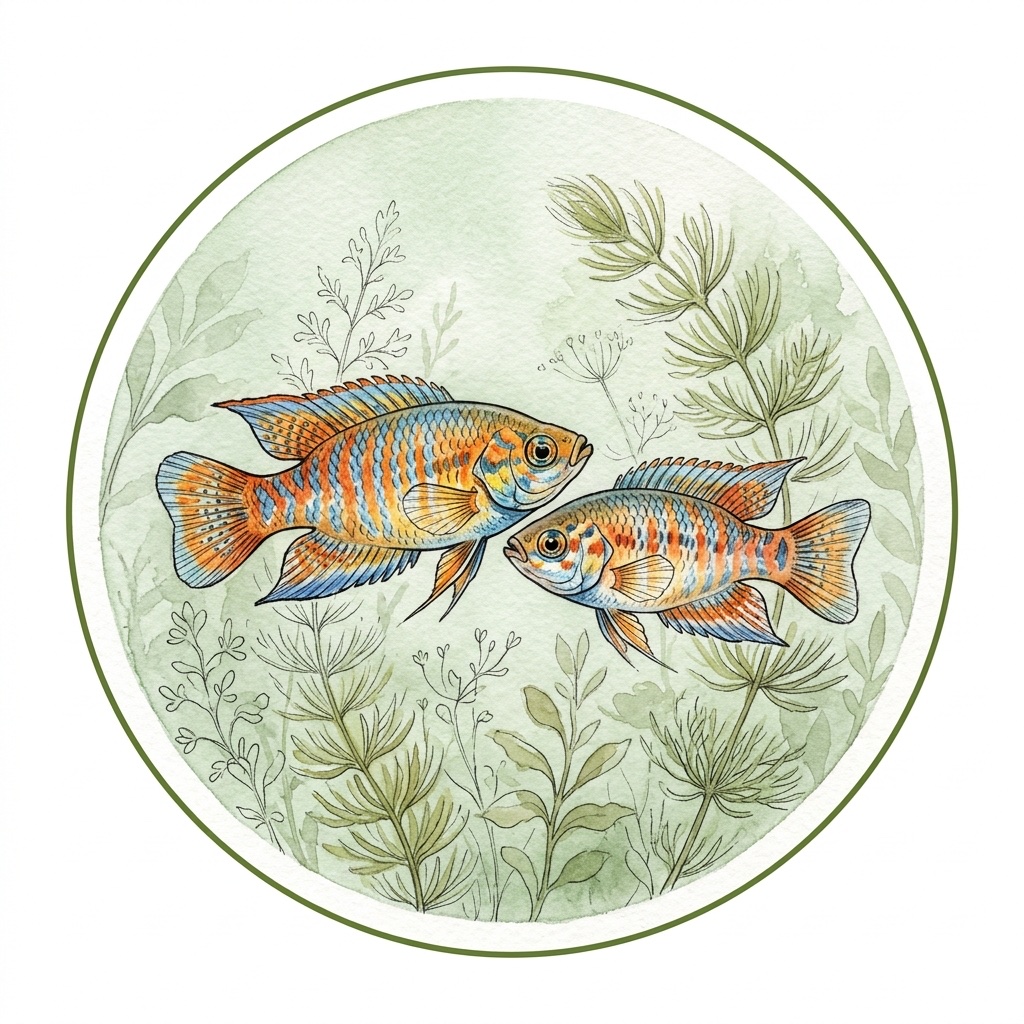
Winter -> Spring
Pre-Conditioning
Temperature rise triggers hormone activity
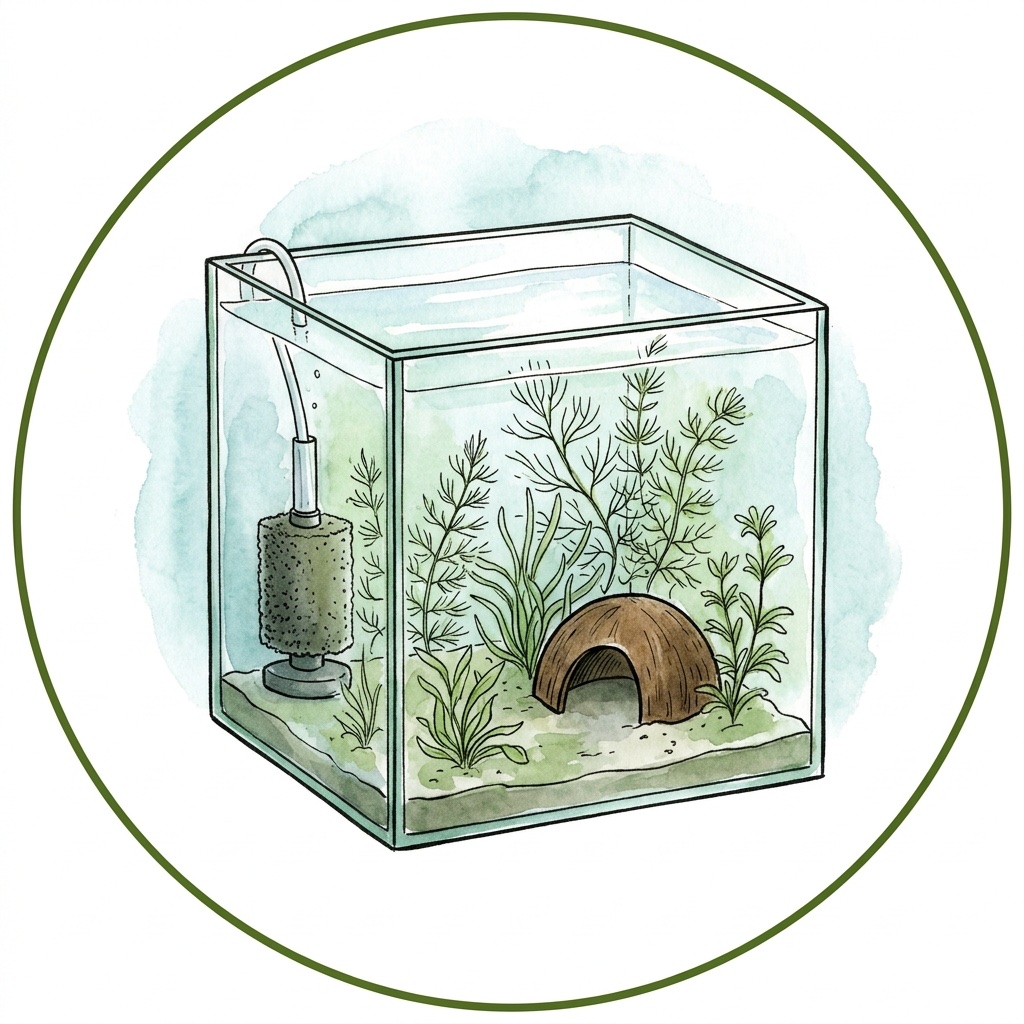
Day 0 (Evening)
Courtship
Males chase female through vegetation
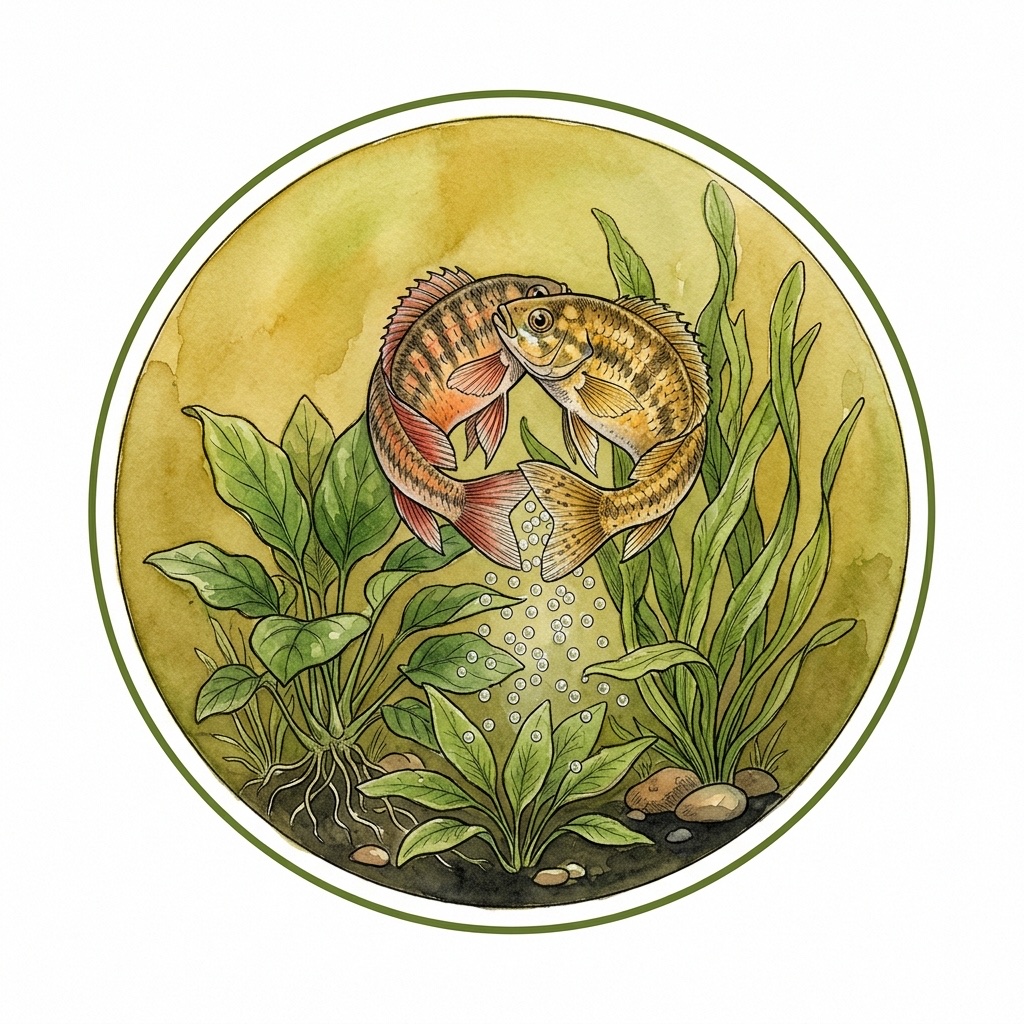
Day 1 (Dawn)
Spawning
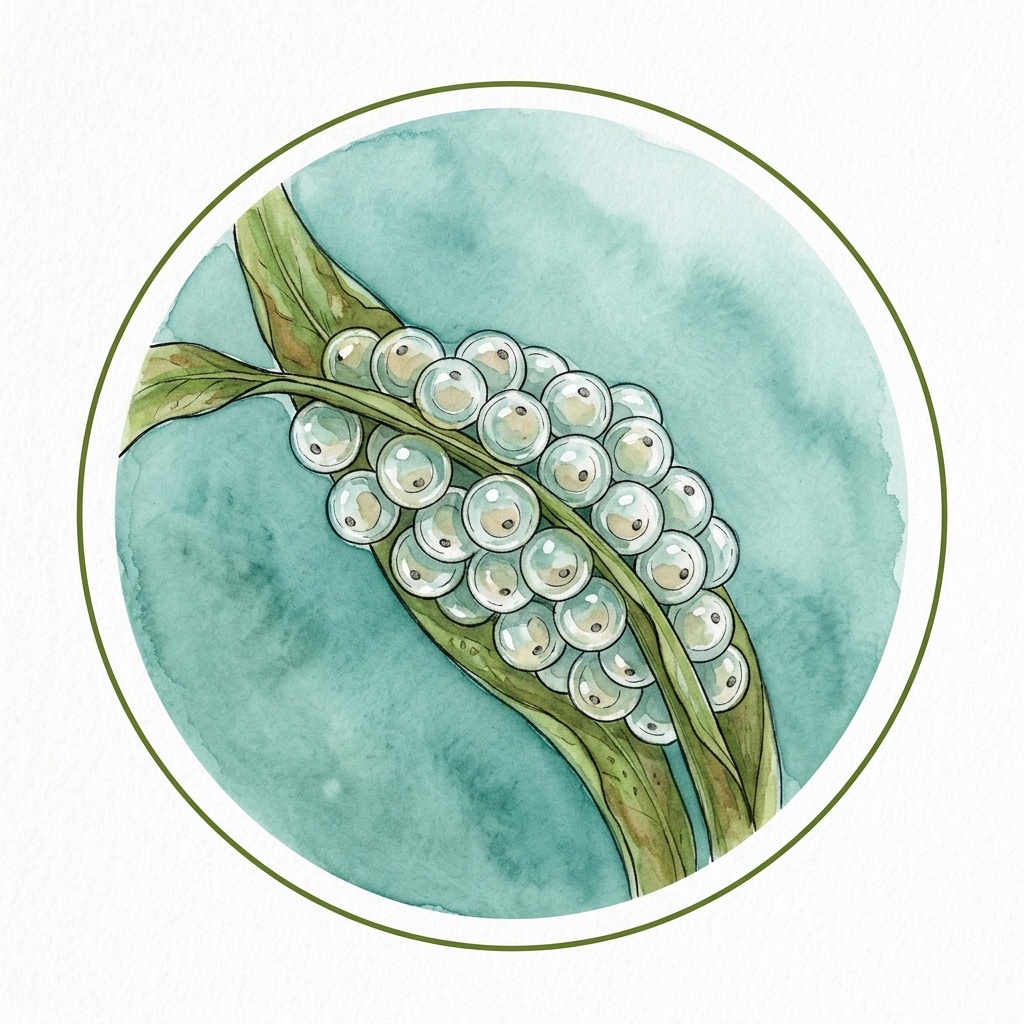
Eggs scattered on plants; males fertilise externally
Day 3-5
Hatching
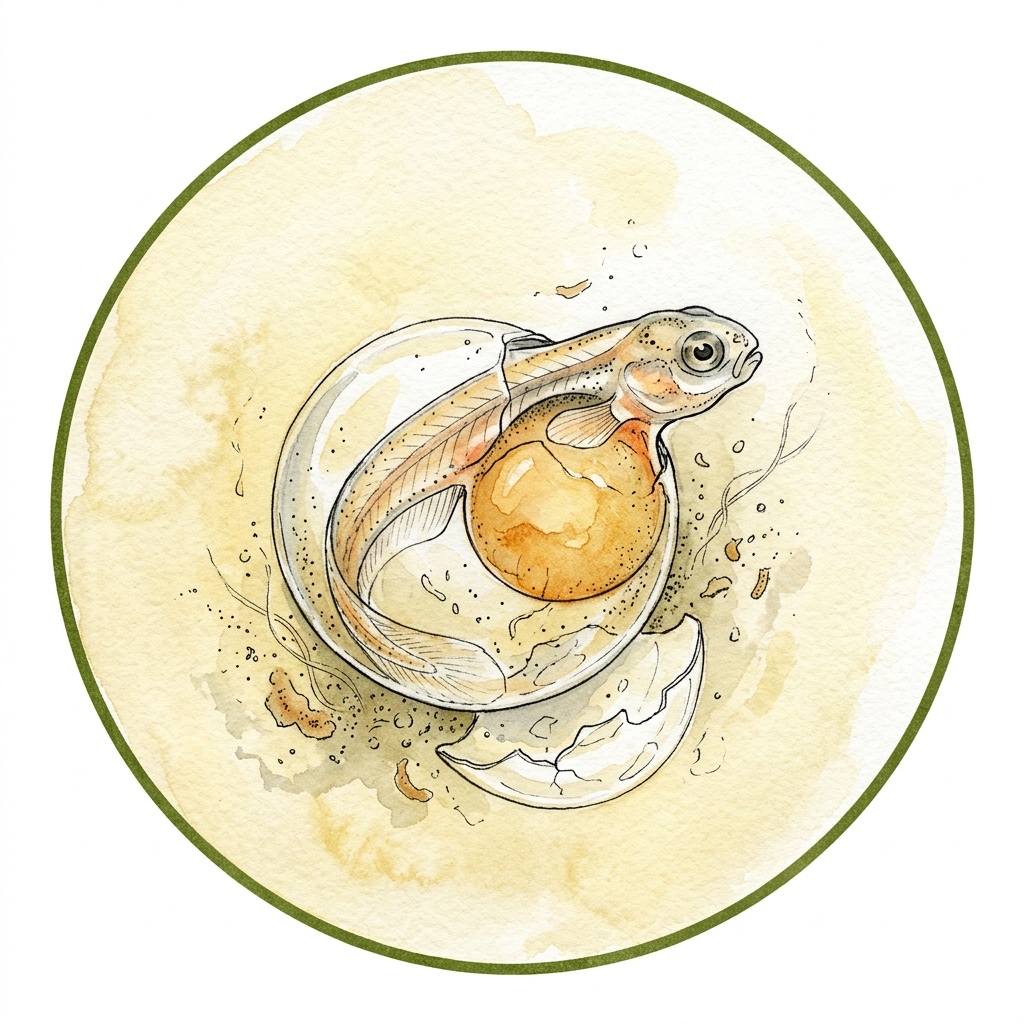
Tiny fry emerge, cling to surfaces
Day 5-14
First Feeding
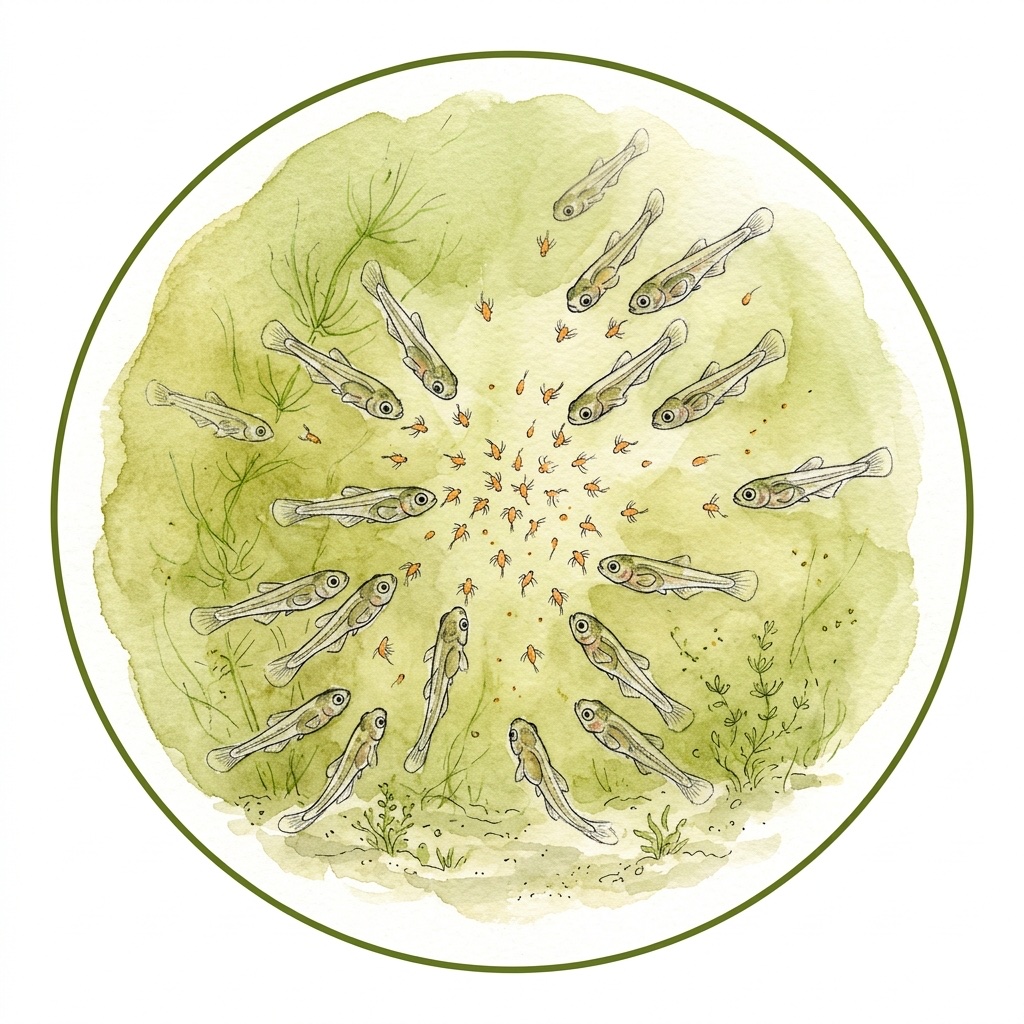
Infusoria then baby brine shrimp
Week 6-12
Culling & Grading
Select for colour, pattern, body shape
Pre-Conditioning
Koi spawn naturally in late spring to early summer, triggered by a steady rise in water temperature from winter baseline up through 18-22 °C. Conditioning begins as soon as feeding resumes in spring: offer high-protein growth food three to four times daily to build egg mass in females and milt volume in males. Mature breeders should be at minimum three years old and 40+ centimetres. Females show pronounced abdominal swelling as eggs develop; males begin displaying breeding tubercles on gill plates and pectoral fin rays as the water warms.
Courtship
As water stabilises above 18 °C, the spawning impulse activates. Two to four males will pursue a single ripe female through the pond, bumping her flanks and driving her toward dense vegetation or a prepared spawning mop. The chase typically intensifies in late afternoon and evening, with the actual release occurring in the pre-dawn hours of the following morning. Courtship is boisterous — water splashes audibly, plants are uprooted, and watching koi will often jump clear of the surface. Do not confuse this with aggression.
Spawning
At first light the female releases eggs in explosive bursts against the vegetation while the pursuing males release milt. A single healthy female produces 100,000 to 400,000 eggs depending on body size. The eggs are tiny, adhesive, and amber-gold; they stick to plants, spawning mops, and any available surface. The spawning event lasts one to three hours. Parent koi will enthusiastically eat their own eggs — remove either the adults or the eggs (on their plants/mops) to a separate rearing tank immediately after spawning concludes.
Hatching
At 20-22 °C eggs hatch in four to five days. The newly hatched fry are tiny (4-5 mm) and nearly transparent; they cling to vegetation using an adhesive gland on the head and live off their yolk sac for 48-72 hours. Survival at this stage is heavily dependent on water quality — ammonia must be zero and temperature stable. Expect massive natural attrition: from 200,000 eggs, typical survival to free-swimming stage is under 10% even in good conditions.
First Feeding
Once the yolk sac is absorbed, fry become free-swimming and require microscopic first foods. Green water cultures (infusoria, rotifers, paramecium) are traditional; commercial liquid fry food or freshly hatched baby brine shrimp work from day eight. Feed several small portions daily. At this stage water changes must be done very gently — fry are easily sucked into filters and standard pond filtration is too aggressive; use a sponge-filtered rearing tank for the first six to eight weeks.
Culling & Grading
By six weeks the fry reach 1-2 cm and the first rough colour separation becomes visible. Professional breeders cull heavily — often reducing 100,000 fry to 1000 keepers by week twelve — selecting only fish with strong colour, clean patterns, and correct body conformation. Hobbyist breeders without culling facilities will quickly overwhelm a pond; it is essential to plan homes for juveniles in advance or else treat the spawn as wildlife and accept heavy natural attrition. Full adult colouration and pattern crystallisation takes three to five additional years.
Quick Reference
| Scientific Name | Cyprinus rubrofuscus |
| Common Name | Assorted Koi Fish (Nishikigoi) |
| Adult Size | 60-90 cm (pond-raised) |
| Lifespan | 25-50 years |
| pH Range | 7.0-8.5 (ideal 7.5) |
| Temperature | 4-28 degC (cold-hardy, winter dormant) |
| Hardness | 8-20 dGH |
| Min Housing | Pond 1000+ L per koi; aquarium grow-out 2-3 years max |
| Pond Depth | 1.2 m minimum for thermal stability |
| Diet | Koi pellets, plants, insects, blanched veggies |
| Care Level | Intermediate (demanding on space & filtration) |
| Temperament | Peaceful, social, gregarious |
| Breeding | Spring spawner, 18-22 degC trigger |
| Australian Status | Restricted — strict enclosure, zero release |
| Price Point | $18 AUD per juvenile (assorted varieties) |
Related Products
Reviews
Clear filtersThere are no reviews yet.