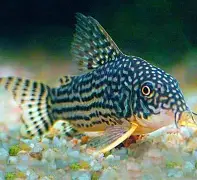
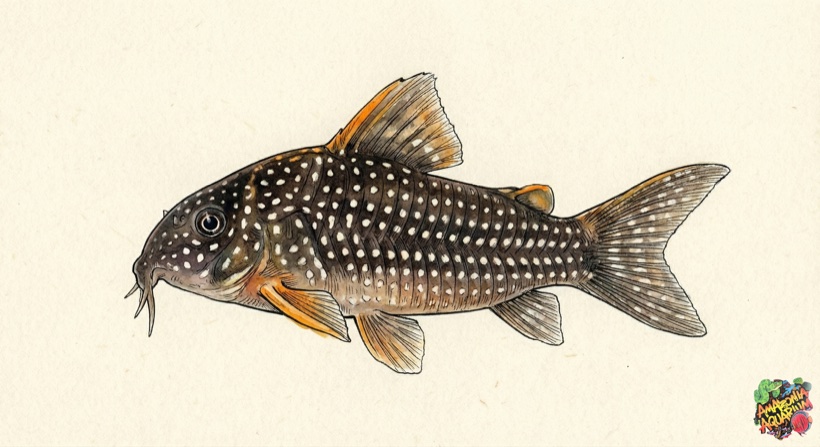
🪨 Species at a Glance
| Scientific Name | Corydoras sterbai |
| Family | Callichthyidae |
| Order | Siluriformes |
| Origin | Brazil — upper Rio Guaporé basin (Mato Grosso state) |
| Adult Size | 6–7 cm (2.4–2.8 in) |
| Lifespan | 5–10 years |
| pH Range | 6.0–7.5 |
| Temperature | 24–28 °C (75–82 °F) |
| Hardness (dGH) | 2–12 |
| Diet | Omnivore bottom feeder — sinking pellets, wafers, frozen bloodworm, blanched vegetables |
| Minimum Tank Size | 60 L (16 gal) for a school of 6 |
| Care Level | Beginner |
| Temperament | Peaceful, social; must be kept in groups of 6+ |
| Breeding | Egg scatterer — T-position mating; female deposits eggs on surfaces |
| Tank Position | Bottom / substrate |
| Availability | Common |
Origin & Etymology
The species name *sterbai* honours Günther Sterba (1922–2020), a German ichthyologist, aquarist, and author who dedicated much of his career to freshwater fish of the Amazon basin. Sterba is best remembered for his encyclopaedic work *Freshwater Fishes of the World*, first published in 1959, which became the standard reference for aquarium fish for decades and was translated into numerous languages. The Sterbai cory was formally described by Knaack in 1962, who named it in recognition of Sterba’s contributions to the understanding and popularisation of South American catfishes.
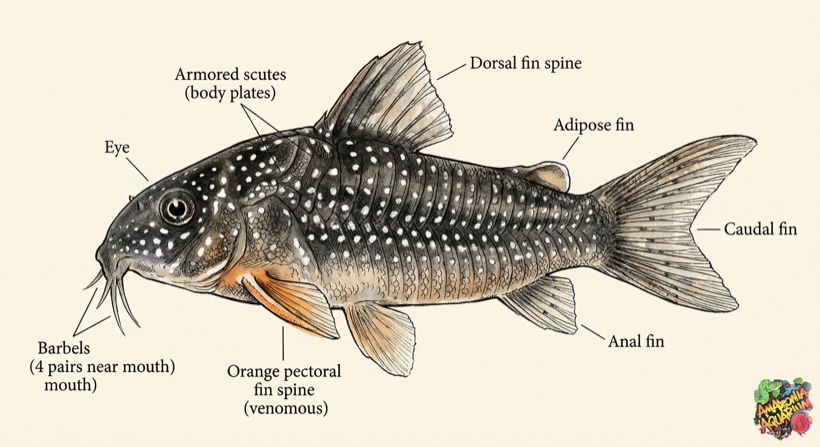
The genus *Corydoras* is one of the most species-rich genera of freshwater fish, with over 170 described species and many more awaiting formal description. The name *Corydoras* derives from the Greek *kory* (helmet) and *doras* (skin), referring to the distinctive double row of bony scutes — called plates or scutes — that form the armoured flanks of all callichthyid catfishes. These plates are not mere decoration; they are the fish’s principal defence against predation, making corydoras effectively rigid-bodied and difficult for most predators to swallow.
The Sterbai cory was collected from the upper Guaporé River, which forms part of the border between Brazil and Bolivia. The Guaporé is a clear, warm, slow-moving river with sandy and rocky substrates, dense aquatic vegetation in the margins, and water chemistry that can vary from moderately soft and slightly acidic to near neutral — which explains the Sterbai cory’s tolerance for a fairly broad pH and hardness range.
Aquarium Setup Guide
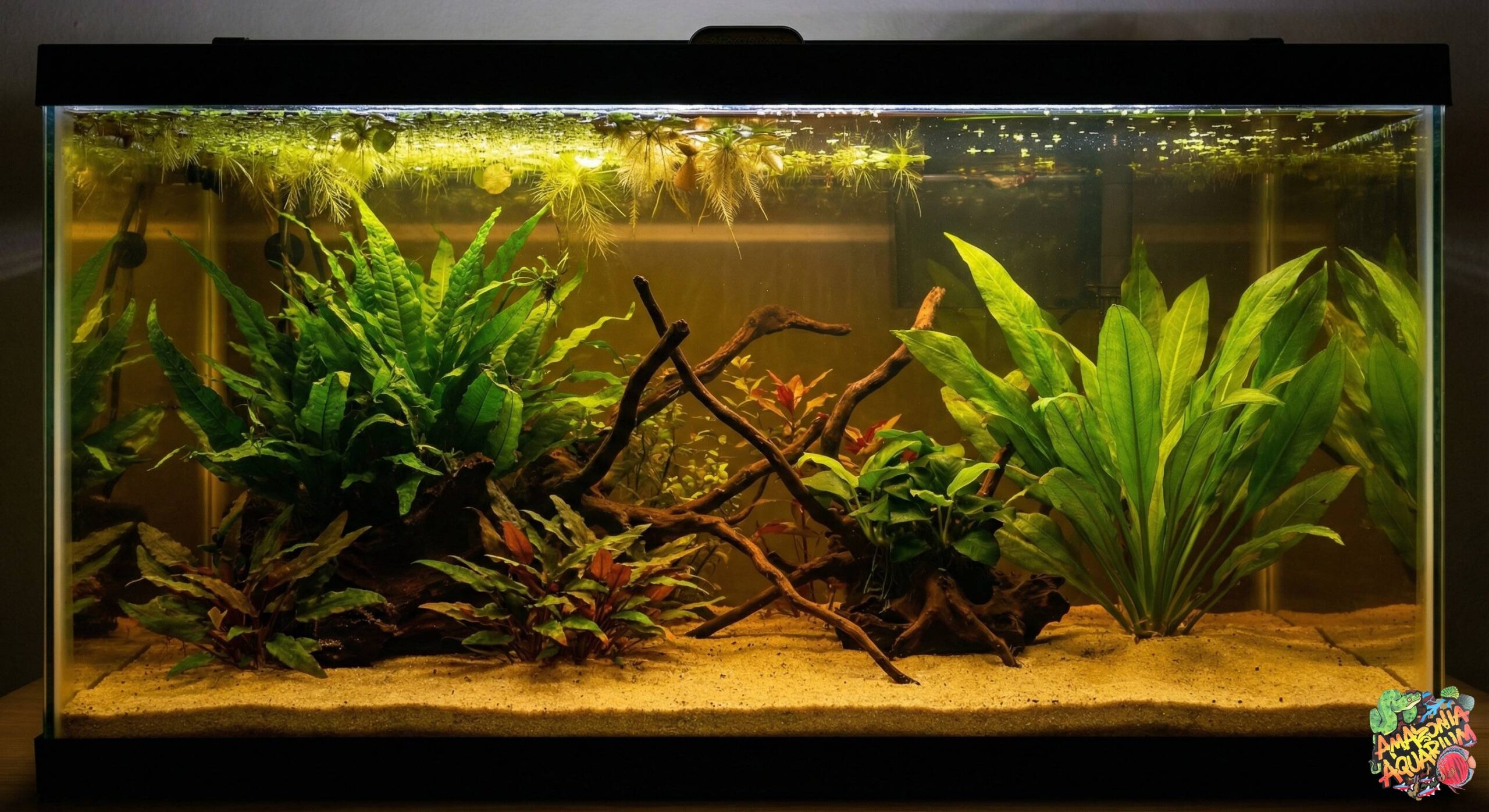
The substrate is the single most important element of a Sterbai cory tank. In nature, these fish forage constantly through sand and fine sediment, pushing their barbels through the substrate to detect buried food. Coarse gravel or sharp-edged substrate will wear down and eventually erode the barbels — the sensory whiskers around the mouth — causing chronic bacterial infections that are difficult to treat. Use fine-grain sand (0.1–0.5 mm particle size) or smooth, rounded substrate specifically sold for corydoras. Dark sand shows off the white spotting to best effect.
A 60-litre tank is the minimum for a school of six — the recommended group size for this social species. A larger group of eight to twelve in a 90-litre tank produces much more natural behaviour, with the fish foraging, resting, and swimming in coordinated groups. Provide shelter in the form of driftwood, smooth-edged caves, and areas of dense planting, as corydoras appreciate retreat spots and will use them regularly between foraging bouts.
Sterbai corys are compatible with most live plants and will not disturb roots. Java fern, Anubias, and Vallisneria are all excellent choices. Avoid very delicate carpet plants on the substrate, as the corys’ constant foraging activity may uproot them. The fish are active and entertaining, but they are not jumpers — a lid is still recommended mainly to prevent overheating problems from open-top evaporation.
Tank
60 L (16 gal) minimum for 6 fish; 90 L (24 gal) recommended for a natural-looking school of 8–10
Filter
Canister or hang-on-back with moderate flow; ensure good oxygenation at the surface
Heater
50–150 W adjustable, set to 26 °C; Sterbai cory tolerates up to 28 °C
Substrate
Fine-grain sand (0.1–0.5 mm) or smooth rounded substrate — critical for barbel health
Lighting
Low to moderate; corydoras are not light-demanding, and subdued lighting shows their colouration best
Caves / Decor
Smooth driftwood, rounded slate caves, PVC tubes — corydoras rest in sheltered spots
Plants
Anubias, java fern, Vallisneria — any plant that doesn’t require deep substrate disturbance
Thermometer
Verify accuracy regularly — temperature consistency is especially important at the upper end of the range
Nutrition & Diet
Corydoras sterbai are opportunistic omnivore bottom-feeders in the wild, consuming whatever edible matter sinks to the substrate — invertebrates, detritus, plant material, and organic debris. In the aquarium, they require sinking foods specifically, as they are physically incapable of competing with mid-level or surface feeders. Sinking pellets and wafers designed for bottom-dwellers should form the staple diet; look for formulas with high protein content and a range of ingredients, as corydoras do best on dietary variety.
Supplement two to three times per week with frozen bloodworm, frozen daphnia, or frozen tubifex — all eagerly consumed. Sterbai corys are enthusiastic feeders for a corydoras species and will emerge actively at feeding time rather than waiting for food to drift to them. Blanched vegetables (spinach, zucchini, cucumber) are accepted occasionally and provide beneficial fibre. Feed in the evening or shortly after lights-out, as corydoras are naturally more active in lower light and will compete more effectively against daytime feeders.
Community Compatibility
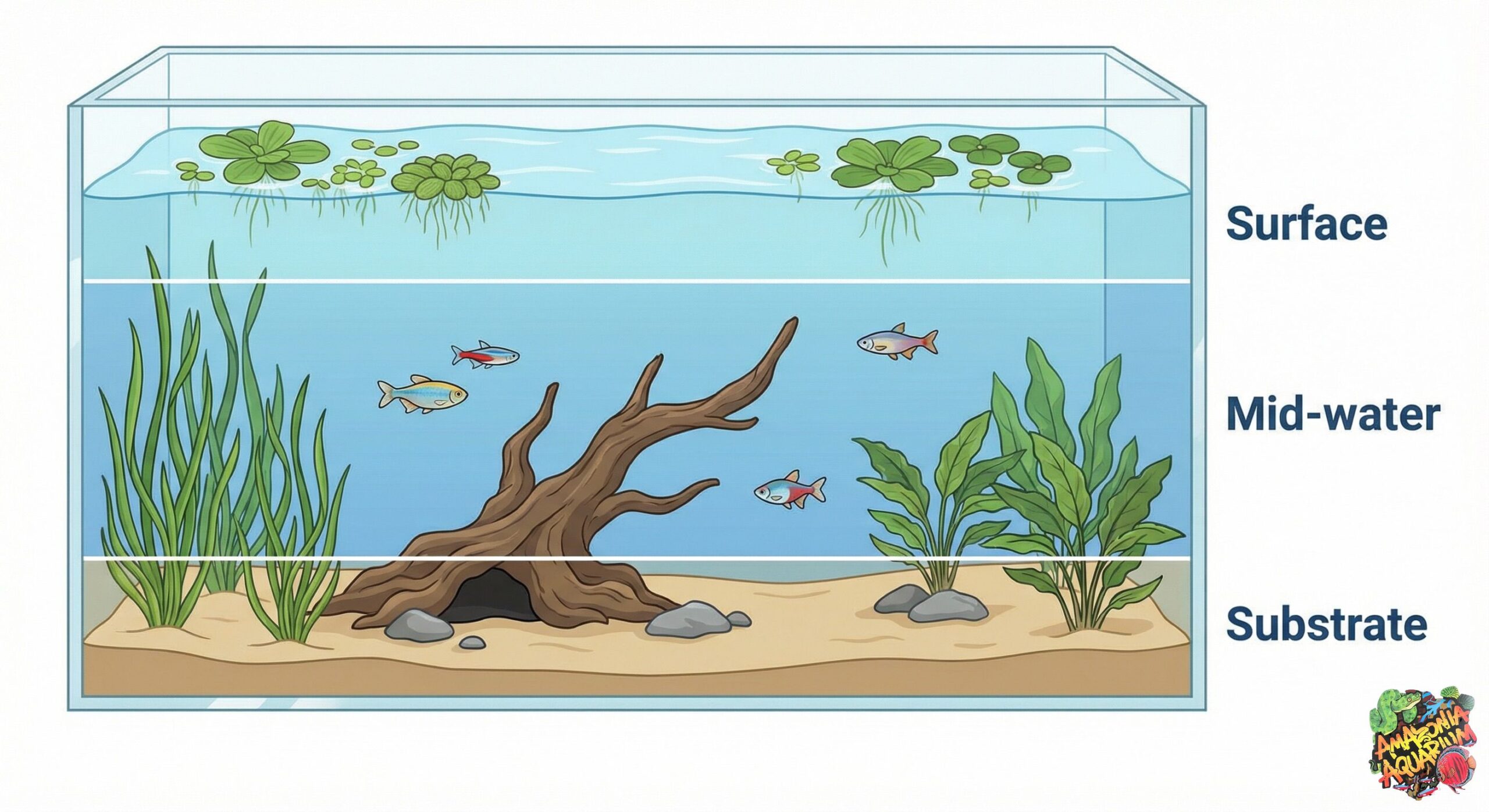
The Sterbai cory’s greatest community asset is its temperature tolerance. Most corydoras species cap out around 25–26 °C and become stressed in the warm conditions preferred by discus, altum angels, and similar fish. The Sterbai cory is the practical solution — a genuine bottom-dwelling companion that can thrive at 28 °C, clean up substrate waste, and add a completely different visual layer to a warm-water showcase tank. Their armoured bodies and mild venomous spines mean they have effective natural defences; they should not be housed with large predatory fish, but they are far more robust than their peaceful temperament might suggest. The one practical precaution worth knowing: when handling or netting Sterbai corys, be aware that the pectoral fin spine can lock in an extended position and tangle in fine mesh nets — wet your hands if handling them directly, and use a container rather than a net where possible.
| Species | Why | |
|---|---|---|
| ✅ | Discus | The Sterbai cory’s high temperature tolerance (up to 28 °C) makes it one of the very few corydoras safe for discus tanks; cleans substrate and doesn’t compete |
| ✅ | Angelfish | Peaceful cichlid that occupies mid and upper levels; Sterbai corys are too large to be eaten and are ignored entirely |
| ✅ | Neon Tetra | Classic community pairing; corydoras clean the substrate while tetras school in the mid-water — completely different ecological niches |
| ✅ | Cardinal Tetra | Shares warm-water preference (up to 28 °C); peaceful and occupies different tank level |
| ✅ | Honey Gourami | Gentle surface and mid-water fish; no competition or aggression with bottom-dwelling corydoras |
| ✅ | Rummy Nose Tetra | Peaceful schooling species; also prefers warmer water and soft conditions — ideal overlap |
| ✅ | Dwarf Chain Loach | Both are peaceful bottom inhabitants; the loach focuses on snail control while the cory focuses on substrate foraging |
| ✅ | Apistogramma (Dwarf Cichlid) | Most Apistogramma species coexist peacefully with corydoras; corydoras are fast enough to avoid occasional cichlid posturing |
| ❌ | Large Cichlids (e.g. Oscars, Jack Dempsey) | Will attempt to eat or harass corydoras; even if they cannot swallow them, the venomous pectoral spine lodging in a predator’s throat causes serious injury to both fish |
| ❌ | Aggressive Substrate Feeders (e.g. Red-tailed Catfish) | Outcompete corydoras for food and territory at the bottom; large predatory catfish will eat them |
| ❌ | Goldfish | Kept at incompatible temperatures (goldfish prefer 15–20 °C); Sterbai cory requires minimum 24 °C |
Available Colour Grades
🟤 Wild Type
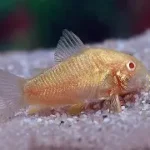
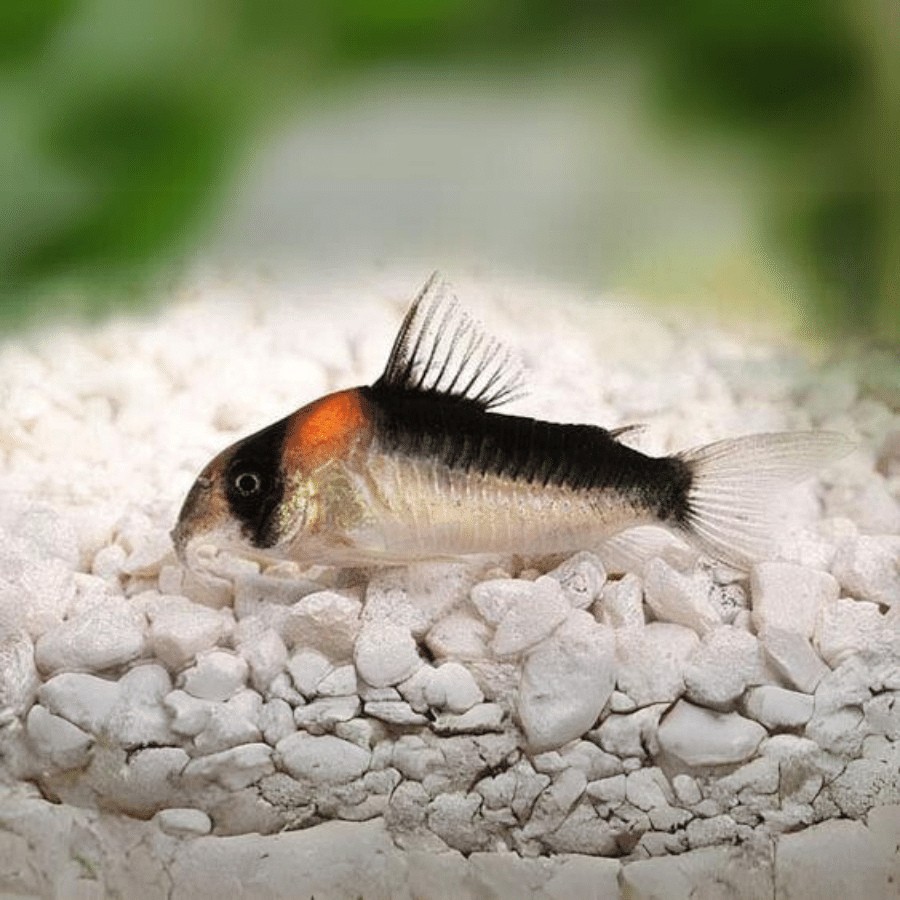
Dark brown to black body covered in evenly spaced white or cream spots; vivid orange-yellow pectoral fins and the leading spine of the dorsal fin.
🟡 Albino Sterbai
A selectively bred line with a pale cream to white base body, retaining the spot pattern in reduced contrast; pink eyes and often paler pectoral fin colouration.
In the trade, the wild-type Sterbai cory dominates and is the form most aquarists seek — its dark body with white spotting and the burst of orange at the pectoral fins creates one of the most distinctive silhouettes of any small catfish. The albino form appears occasionally and attracts attention, but is generally considered less striking. Colour intensity in the wild type varies with light and mood: fish kept on dark sand under subdued lighting display richer, higher-contrast patterning than those on light gravel under bright lights. The orange pectoral fin colouration is consistent across specimens and does not vary significantly with diet, making it a useful identification marker when distinguishing Sterbai cory from similar species such as *Corydoras haraldschultzi*, which has a similar spot pattern but lacks the orange fin colouration.
Acclimation & First-Week Care
Proper acclimation prevents shock and greatly improves survival. Never rush this process.
Step-by-Step Acclimation
- Float the sealed bag in your aquarium for 15–20 minutes to equalise temperature.
- Open the bag and roll down the edges to create a floating collar.
- Drip acclimation: Add approximately ¼ cup of tank water to the bag every 5 minutes for 30–40 minutes.
- Net and release — gently net the fish/shrimp and place them into the aquarium. Discard the bag water; never pour it into your tank.
First-Week Checklist
- Keep lights dimmed for the first 24–48 hours to reduce stress.
- Feed sinking wafers or frozen bloodworms — Corydoras are bottom feeders and won’t compete at the surface.
- Add in a group of 4+ for social comfort.
- Monitor ammonia and nitrite daily — any spike above 0.25 ppm warrants an immediate 25% water change.
- Observe for signs of disease (white spots, clamped fins, lethargy) and quarantine if needed.
Sydney Keeper Tips
Keeping Sterbai Corydoras in Sydney comes with specific advantages and challenges. Here’s what local keepers should know.
Sydney Tap Water
Sterbai Corydoras are unusual among Corydoras — they prefer warmer water (24–28°C), making them one of the few Corydoras compatible with Discus tanks. Sydney tap water parameters suit them well.
Seasonal Considerations
Their warm-water preference means Sydney’s summer is their comfort zone. In winter, keep heaters set to at least 25°C. Sterbais are one of the few Corydoras that won’t suffer in a heated tropical community.
Local Tips
- Sterbai Cories are the go-to Corydoras for Discus tanks in Sydney — they share the same temperature requirements.
- Feed sinking wafers after lights-out — you’ll see them foraging actively in the dark.
- Sand substrate is non-negotiable for all Corydoras — their barbels are damaged by gravel.
Frequently Asked Questions
Can Sterbai Corydoras live with Discus?
Do they need sand substrate?
How many should I keep?
Will they eat algae?
Can I use salt to treat my Corydoras?
How to Sex This Species
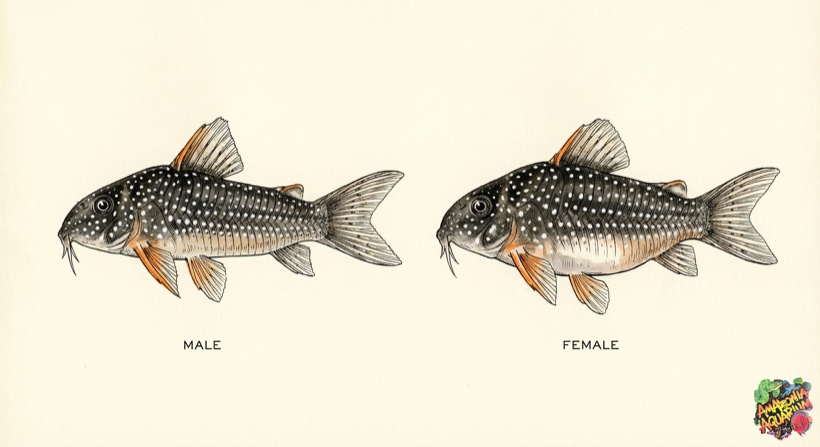
Sexing Corydoras sterbai is best done by viewing the fish from above rather than from the side. A mature female will be clearly broader across the body — she has a wider, rounder silhouette compared to the streamlined male. This difference is especially pronounced when the female is carrying eggs, but it is visible even in non-breeding condition in adult fish. In young or juvenile fish, the sex difference is not reliably apparent and attempts to sex them are likely to be inaccurate.
Colour and fin shape provide no reliable sex cues in this species — both sexes are identically patterned and fin lengths are not sexually dimorphic in the way seen in some other fish families. For breeding purposes, buying a group of six or more juveniles and allowing them to reach maturity together is the most practical approach, as a mixed-sex group is virtually guaranteed.
| Feature | Male | Female |
|---|---|---|
| Body Shape (from above) | Slimmer, more torpedo-shaped when viewed from above | Noticeably wider and rounder when viewed from above, especially when gravid |
| Size | Slightly smaller, typically 5.5–6.5 cm | Slightly larger, typically 6–7 cm |
| Belly Profile | Flatter ventral surface | Rounder, fuller ventral profile — clearly visible from the side when carrying eggs |
| Colouration | Essentially identical to female in body pattern and fin colour | Essentially identical to male in body pattern; no reliable colour-based differentiation |
| Behaviour | May chase female before spawning; participates in T-position mating | Receives male, carries fertilised eggs cupped in pelvic fins before placing on surfaces |
Getting the Water Right
6.0–7.5
ideal 6.8
24–28 °C
ideal 26 °C
2–12 dGH
Soft to moderately hard; soft water preferred for breeding
The Sterbai cory stands apart from most corydoras in its genuine preference for warm water. While many cory species do best between 22–26 °C, Sterbai cory are naturally adapted to the warm upper Guaporé, where water temperatures regularly reach 27–28 °C. This makes them uniquely suited to discus tanks, angelfish setups, and other high-temperature communities where most corydoras would be uncomfortable over the long term. Keeping them at 26 °C as a daily baseline and allowing temperatures to reach 28 °C during breeding conditioning causes them no stress whatsoever.
Water quality is critical. As bottom-dwellers, Sterbai corys are directly exposed to any debris or waste that settles on the substrate. High nitrate levels are a particular hazard — corydoras are more sensitive to nitrates than many fish, and chronic exposure above 20 ppm leads to barbel erosion and bacterial infections. Perform weekly 25–30% water changes and syphon the substrate regularly. Bare sand bottoms are easier to keep clean than gravel, which traps waste. Dissolved oxygen should be high — especially at warmer temperatures where gas solubility drops; ensure the filter creates good surface movement.
How to Breed
Week -1 to -2
Conditioning
Feed group live and frozen foods; raise temperature
Day 0
Courtship
Males pursue female; T-position mating begins
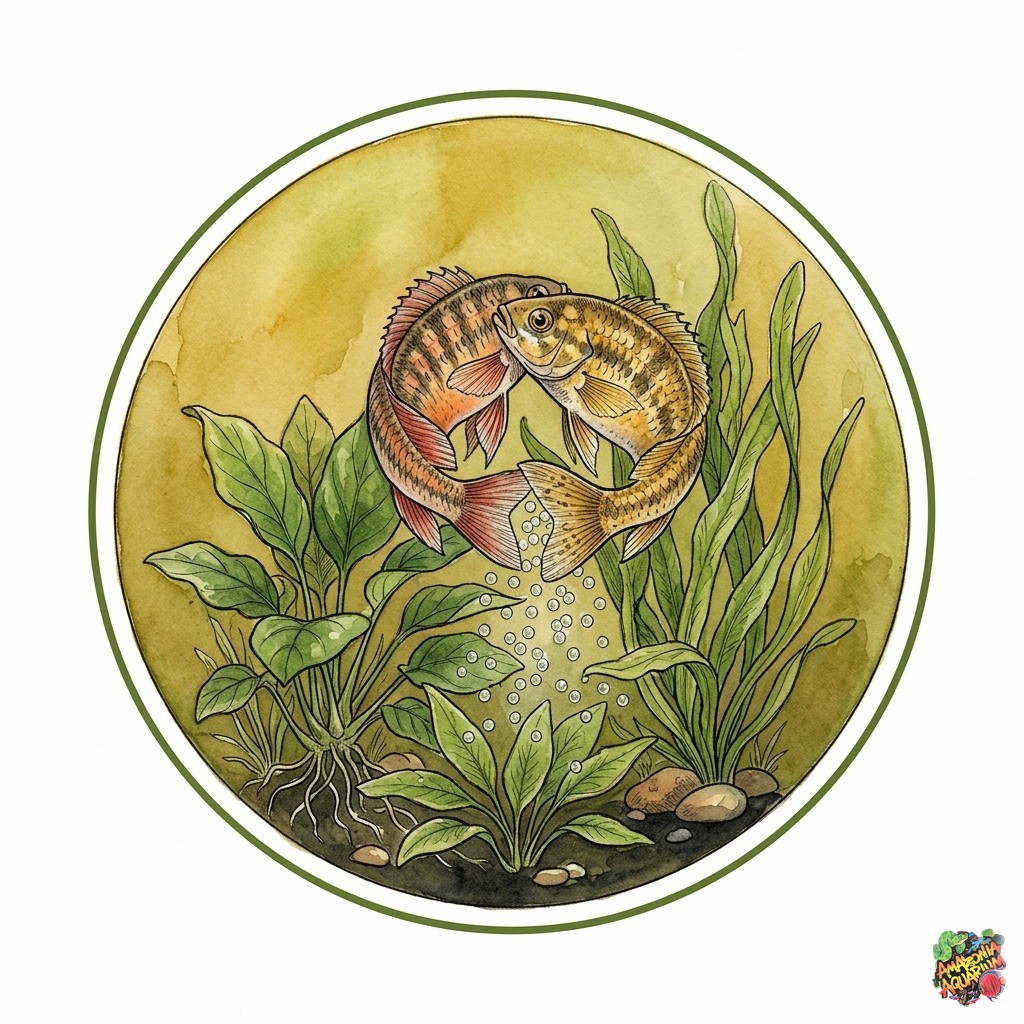
Day 0–1
Egg Deposition
Female deposits batches of 2–6 eggs on chosen surfaces
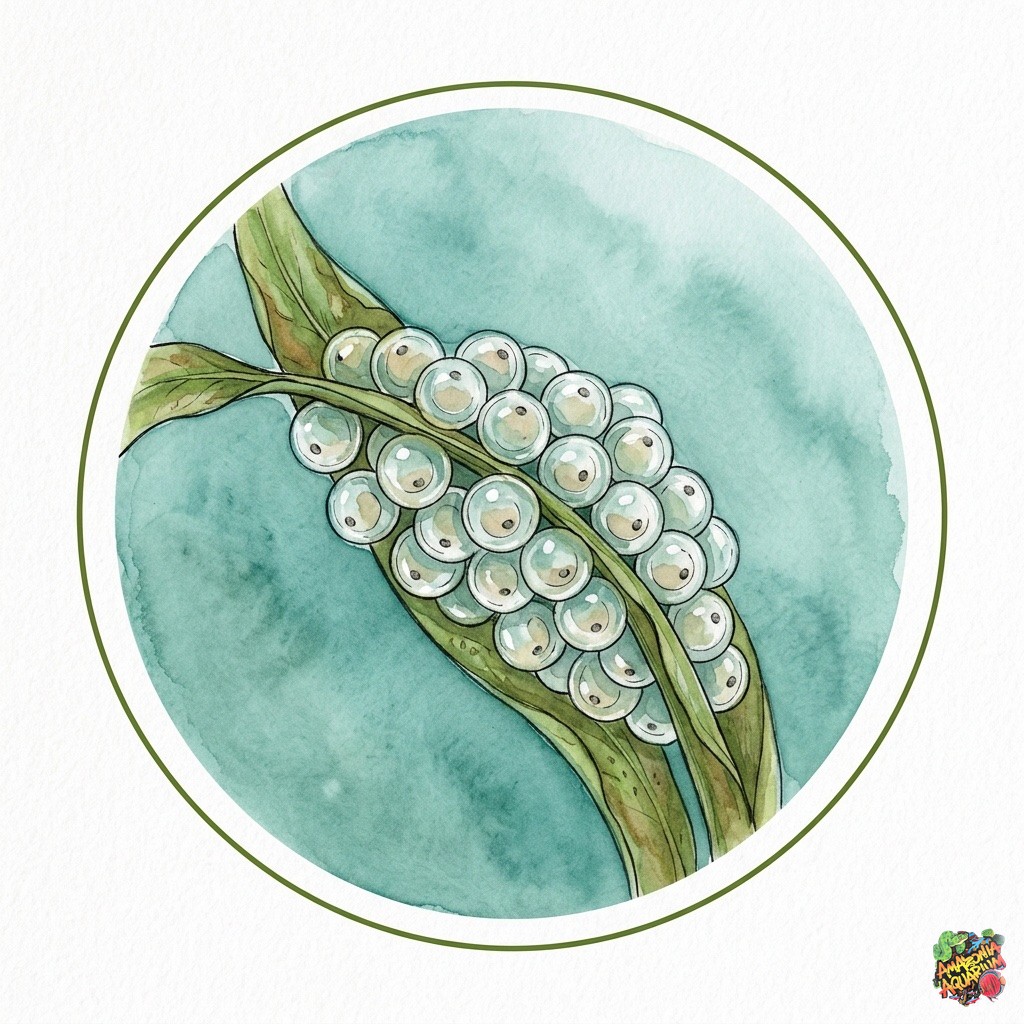
Day 1–3
Egg Incubation
Transfer eggs or parents; eggs develop over 3–5 days
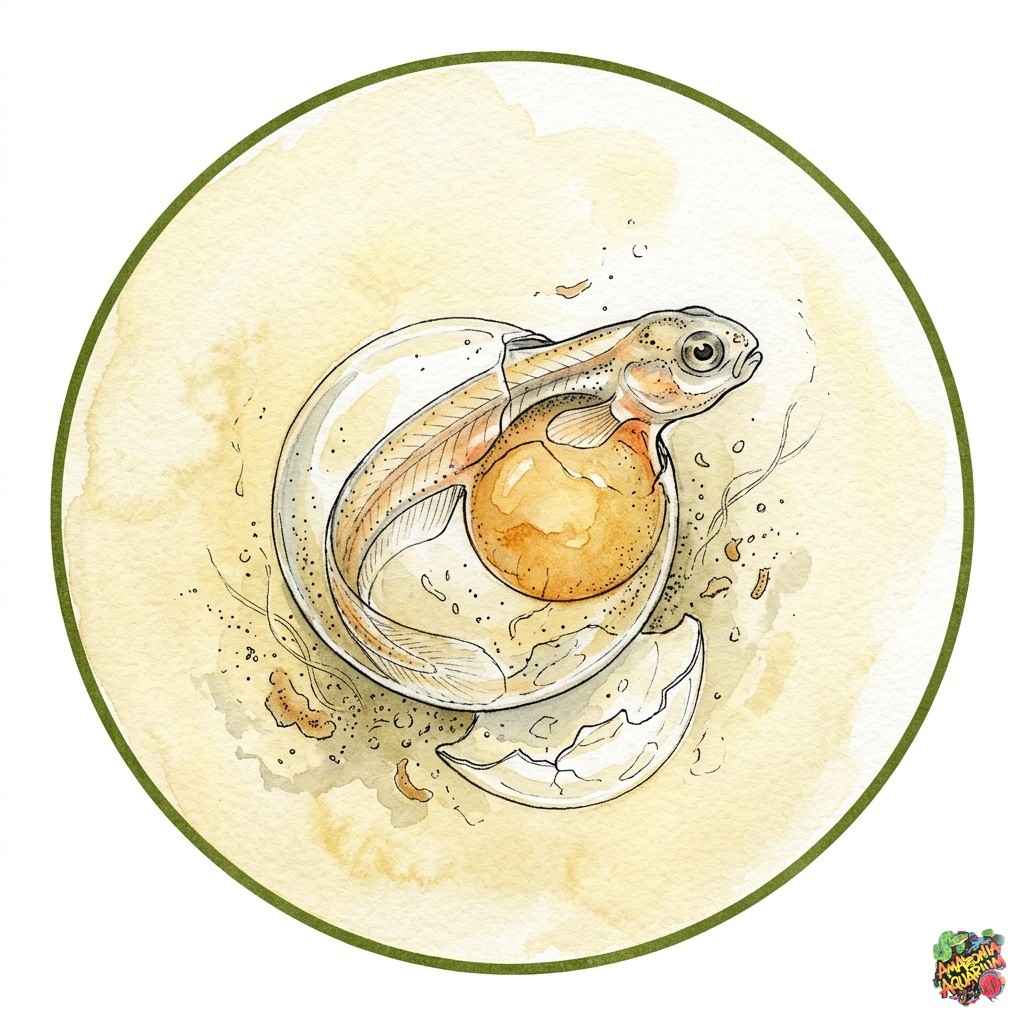
Day 4–6
Hatching
Fry hatch and absorb yolk sac over 48 hours
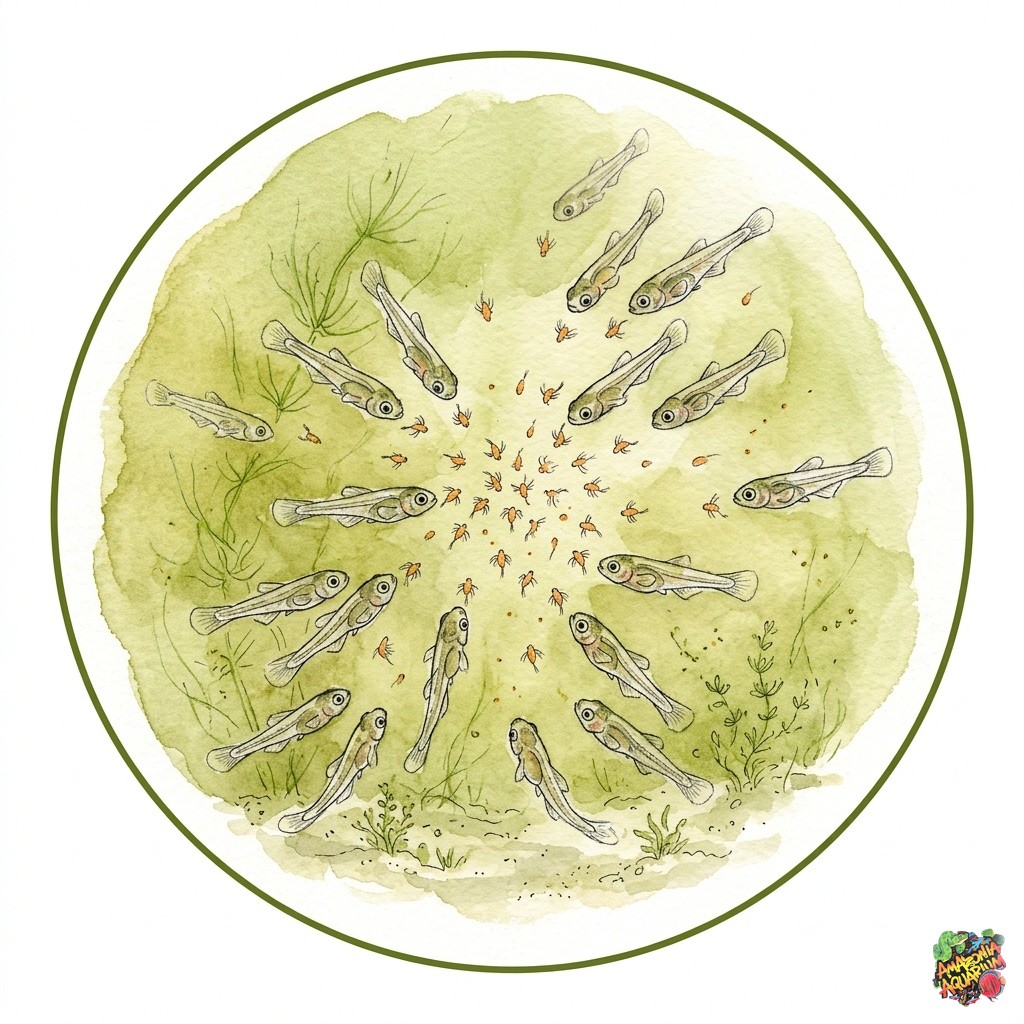
Day 7+
Free Swimming
Fry begin feeding; offer microworm and baby brine shrimp
Conditioning
Feed the breeding group generously with live or frozen bloodworm and daphnia for one to two weeks. The females should visibly round out as eggs develop. Raise the temperature gradually to 27–28 °C. Some breeders trigger spawning by performing a large (30–50%) water change with slightly cooler water (22–24 °C), mimicking the seasonal rain event that triggers breeding in the wild.
Courtship
When ready to spawn, males pursue the female around the tank in short, energetic chases. Spawning occurs in the characteristic corydoras T-position: the female positions herself perpendicular to the male and takes his milt into her mouth. She holds it briefly while selecting a spawning site — a clean surface such as broad plant leaves, the aquarium glass, or smooth decor — before pressing her cupped pelvic fins (which hold the fertilised eggs) against the surface and depositing them.
Egg Deposition
The female deposits eggs in small batches of two to six, carefully pressing them onto plant leaves, glass panels, or flat decor surfaces. Each batch is secured by natural adhesion. The process repeats throughout the spawning session, with a total of 30–100+ eggs typical for a healthy female. The eggs are large relative to fish size, spherical, and initially pale cream to green in colour.
Egg Incubation
Corydoras show no parental care after spawning and will eat the eggs if left in the same tank. Either remove the adults and leave the eggs in place (add a small airstone nearby for gentle circulation), or carefully peel the adhesive eggs from surfaces with a finger and transfer them to a small hatching tank. Keep the hatching tank at 26–27 °C and add a small amount of antifungal treatment (methylene blue at low dose, or a clean tank with good flow) to prevent fungal losses.
Hatching
At 26 °C, eggs typically hatch within 3–5 days. Newly hatched fry are relatively large and robust compared to many egg-scattering species. They absorb the yolk sac over approximately 48 hours, during which they require no feeding and should not be disturbed. Keep the hatching vessel clean, as decomposing unfertilised eggs can quickly foul the water.
Free Swimming
Free-swimming fry immediately exhibit the corydoras bottom-foraging behaviour, searching the substrate for food. Offer microworms, baby brine shrimp nauplii, or commercially prepared liquid fry food from the start. Fry grow steadily on this diet and begin to show their characteristic spotted patterning within four to six weeks. Move juveniles to the main tank once they reach 1.5–2 cm and are large enough not to be accidentally startled by larger tankmates.
Quick Reference
| Scientific Name | Corydoras sterbai |
| Family | Callichthyidae |
| Origin | Brazil — upper Rio Guaporé |
| Adult Size | 6–7 cm |
| Lifespan | 5–10 years |
| pH | 6.0–7.5 (ideal 6.5–7.0) |
| Temperature | 24–28 °C (ideal 26 °C) |
| Hardness | 2–12 dGH |
| Min Tank | 60 L for a school of 6 |
| Group Size | 6+ minimum; 8–10 recommended |
| Care Level | Beginner |
| Diet | Sinking pellets, frozen bloodworm, wafers |
| Breeding | Egg scatterer; T-position mating |
| Tank Zone | Bottom / substrate |
| Special Note | Tolerates 28 °C — safe for discus tanks. Armoured with mild venomous spine. |
Related Products

Reviews
Clear filtersThere are no reviews yet.