
🪨 Species at a Glance
| Scientific Name | Paracheirodon innesi |
| Family | Characidae |
| Order | Characiformes |
| Origin | Peru, Colombia, Brazil — upper Amazon basin |
| Adult Size | 2.5–3 cm (1–1.2 in) |
| Lifespan | 5–8 years |
| pH Range | 6.0–7.0 |
| Temperature | 20–26 °C (68–79 °F) |
| Hardness (dGH) | 2–10 |
| Diet | Omnivore — micro-pellets, flakes, small frozen/live foods |
| Minimum Tank Size | 30 L (8 gal) for a school of 10 |
| Care Level | Beginner |
| Temperament | Peaceful, schooling |
| Breeding | Egg scatterer — moderately difficult in captivity |
| Tank Position | Middle |
Meet the Species
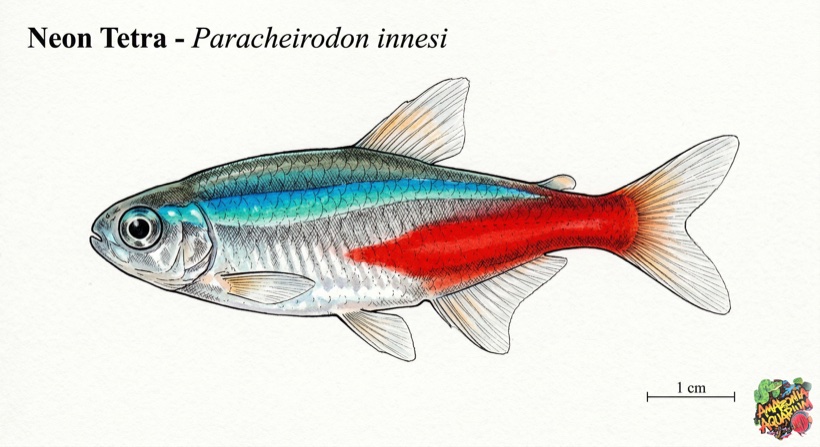
The name *Paracheirodon innesi* tells two stories. The genus, Paracheirodon — meaning “beside Cheirodon” — places the neon tetra alongside a group of small South American characins, while hinting that it is something special enough to stand apart. The species name honours William T. Innes, the Philadelphia publisher whose magazine *The Aquarium* introduced the fish to the English-speaking world in 1936. Innes received specimens from Auguste Rabaut, a French collector working the tributaries near Iquitos, Peru, and was so captivated that he rushed them to ichthyologist George S. Myers for formal description.
The common name needs no explanation — hold a neon tetra under a desk lamp and the blue stripe blazes with the unmistakable glow of a neon sign. That bioluminescent quality comes not from true luminescence but from iridophores, specialised cells packed with guanine crystals that refract light. The effect is angle-dependent: view the fish from above and the stripe almost vanishes; look head-on and it burns electric blue. This structural colour is the same physics behind a butterfly wing or an opal, and it never fades with age the way pigment-based colours sometimes can.
Visual Varieties
🔵 Wild Type
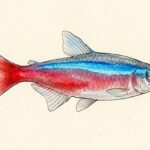
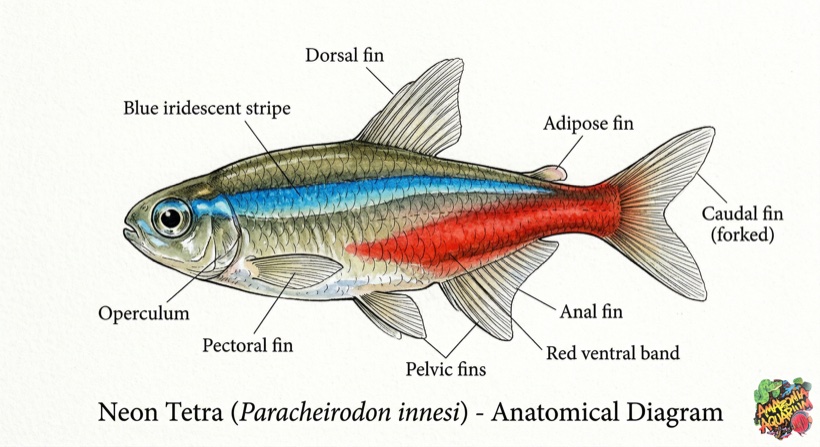
The classic form: iridescent blue dorsal stripe from eye to adipose fin, red band covering the lower posterior half.
💎 Diamond / Diamond Head
A selectively bred variant with an expanded area of blue iridescence across the top of the head, giving a ‘diamond’ sparkle effect.
🟡 Gold / Albino Neon
Lacks the dark melanin pigment, producing a translucent golden body with faint blue and red hints — delicate and eye-catching.
🏳 Long-Fin Neon
A less common line-bred form with elongated pectoral and caudal fins, prized by specialists but rarely seen in stores.
In the trade, the wild-type neon tetra overwhelmingly dominates. Diamond head and gold variants appear from time to time, especially from Southeast Asian farms, but they remain niche. Colour intensity in all forms depends heavily on diet and environment — neons kept in soft, tannin-stained water with a dark substrate display noticeably richer hues than those in bare, brightly lit tanks. A quality micro-pellet enriched with astaxanthin will deepen the red band within a few weeks.
Spot the Difference: Male & Female
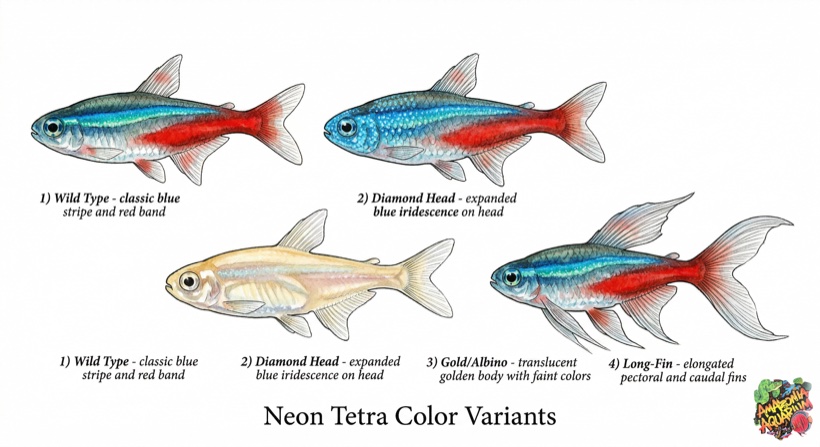
Sexing neon tetras is notoriously tricky, especially in juveniles. The most reliable cue is body shape: females carrying eggs develop a visibly rounder belly that gently bows the otherwise ruler-straight blue stripe. In a mature school, the slimmer individuals darting at the edges are usually males displaying to attract a spawning partner. Under subdued lighting, you may also notice that males flash their blue stripe more frequently — a behaviour linked to the angle-dependent iridophore display used in courtship signalling.
| Feature | Male | Female |
|---|---|---|
| Body Shape | Slimmer, more streamlined | Slightly rounder belly, especially when gravid |
| Blue Stripe | Appears straighter due to slender body | May show a slight bend or kink due to fuller abdomen |
| Size | Marginally smaller (~2.5 cm) | Marginally larger (~3 cm) |
| Behaviour | More active during courtship, may chase | Less active, tends to stay mid-school |
| Colour Intensity | Slightly more vivid under good conditions | Similar but may appear paler when full of eggs |
Water Quality Requirements
6.0–7.0
ideal 6.5
20–26 °C
ideal 24 °C
2–10 dGH
Soft to moderately soft water preferred
Neon tetras originate from blackwater tributaries where the pH hovers between 5.5 and 6.5 and dissolved minerals are nearly absent. In the aquarium, they adapt well to a broader range — pH 6.0 to 7.0, temperatures from 20 to 26 °C — but they truly thrive when water is soft and slightly acidic. If your tap water runs above 7.5 or hardness exceeds 12 dGH, consider blending with RO (reverse osmosis) water or using an active buffering substrate.
Stability matters more than hitting a perfect number. A rock-steady pH of 7.0 is far better than a pH that swings between 6.0 and 6.8 due to inconsistent CO2 injection or erratic water changes. Perform 20–25% weekly water changes, temperature-matching the new water to within one degree, and your neons will reward you with vivid colour and active schooling behaviour.
Tank Requirements & Layout
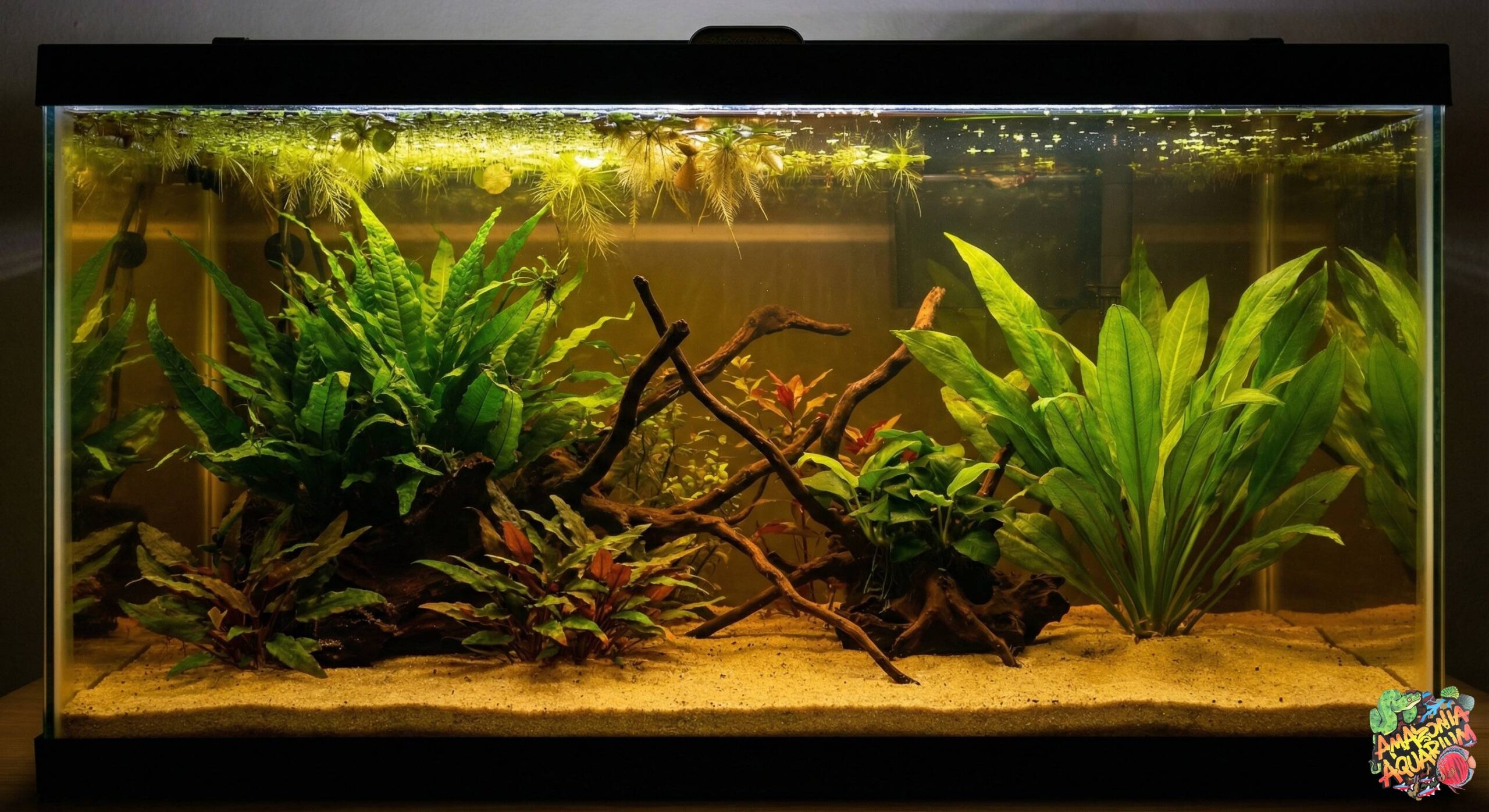
Think dark, planted, and gentle. A fine-grain dark substrate — black sand or dark aquasoil — makes neon colours pop dramatically compared to light gravel. Plant densely along the back and sides with stem plants like Rotala, Ludwigia, or Cabomba, leaving an open swimming corridor in the front-centre. Floating plants such as Amazon frogbit or red root floaters are highly recommended: they diffuse overhead light, reduce stress, and encourage the school to swim more openly rather than hiding.
Driftwood and leaf litter complete the biotope look. A piece of spiderwood draped with java moss or Bucephalandra provides shelter without blocking swimming space. Neons are mid-water fish by nature, so vertical structure matters less than horizontal swimming room. For a nano setup, a 30-litre tank with a gentle sponge filter, a small heater, and dense planting is enough for a school of 10 — though 60 litres gives the school more room to display natural tight-formation behaviour.
Minimum 30 L (8 gal); 60 L recommended for a fuller school
Sponge filter or nano HOB with adjustable/baffled flow
25–50 W adjustable heater set to 24 °C
Low to moderate; dimmable LED ideal. Avoid intense light without floating plants
Fine dark sand or aquasoil for best colour contrast
Digital or glass — verify heater accuracy weekly
Stem plants (Rotala, Ludwigia), floating plants (frogbit, salvinia), epiphytes (java fern, Anubias)
Indian almond leaves, alder cones, or driftwood for tannins
Feeding Schedule & Diet
Neon tetras are micro-predators in the wild, snapping up insect larvae, tiny worms, and zooplankton. In the aquarium, they accept virtually anything that fits their small mouths. A high-quality micro-pellet or crushed flake should form the staple diet — look for brands with whole fish or insect meal as the first ingredient and added astaxanthin for colour enhancement.
Supplement two to three times a week with frozen foods: baby brine shrimp, daphnia, and cyclops are all eagerly accepted. Occasional live foods — micro-worms, grindal worms, or newly hatched brine shrimp — trigger the most enthusiastic feeding response and are especially valuable for conditioning breeders. Feed small amounts twice daily rather than one large meal; neon stomachs are tiny and excess food fouls nano tanks quickly.
Breeding in Captivity
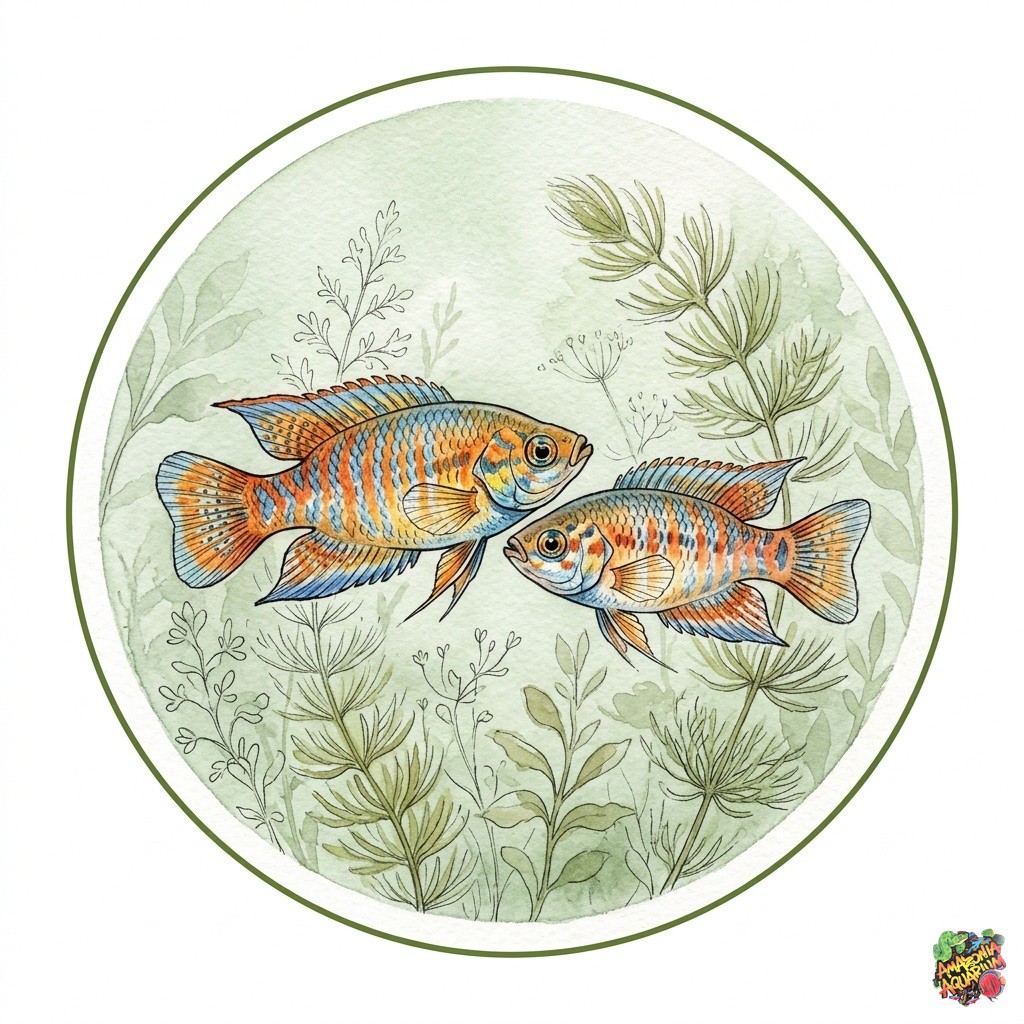
Week -2 to -1
Conditioning
Separate sexes, feed live foods heavily
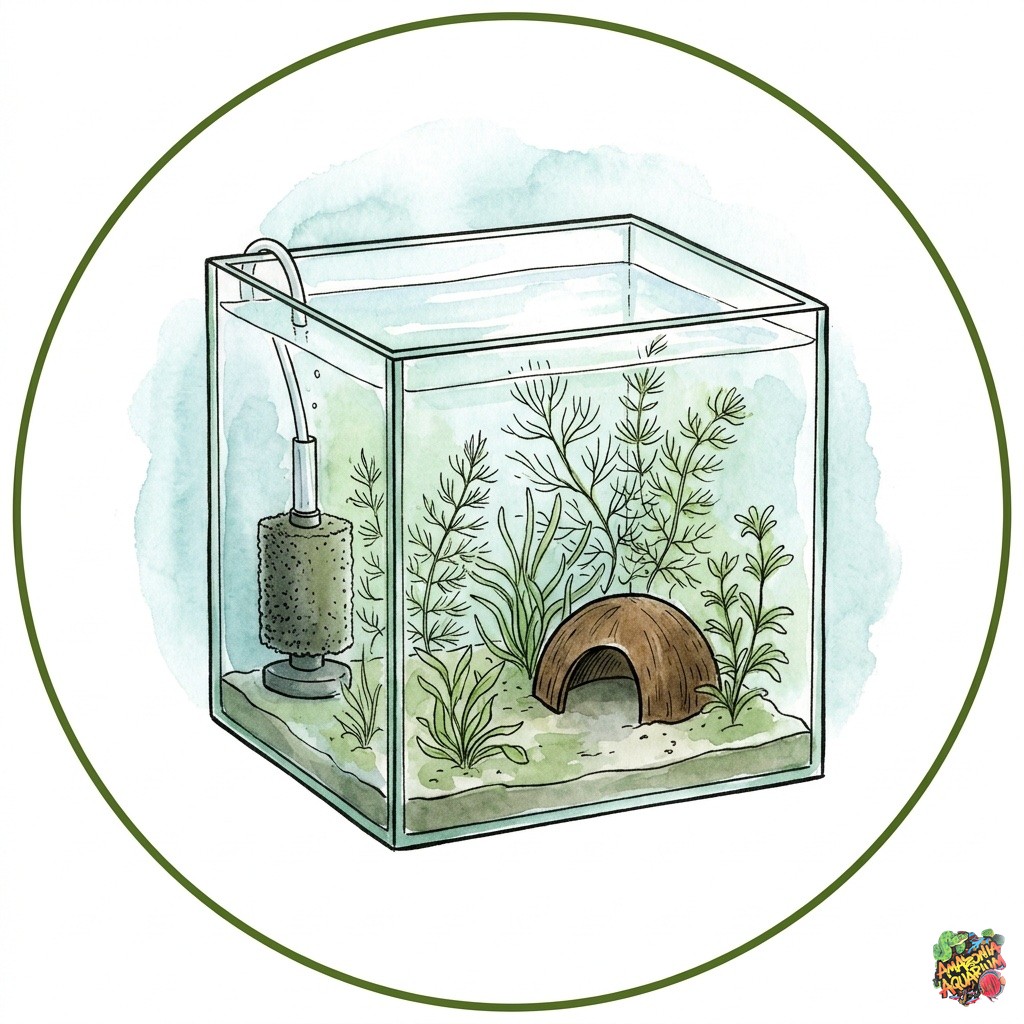
Day 0
Spawning Setup
Introduce pair to breeding tank at dusk
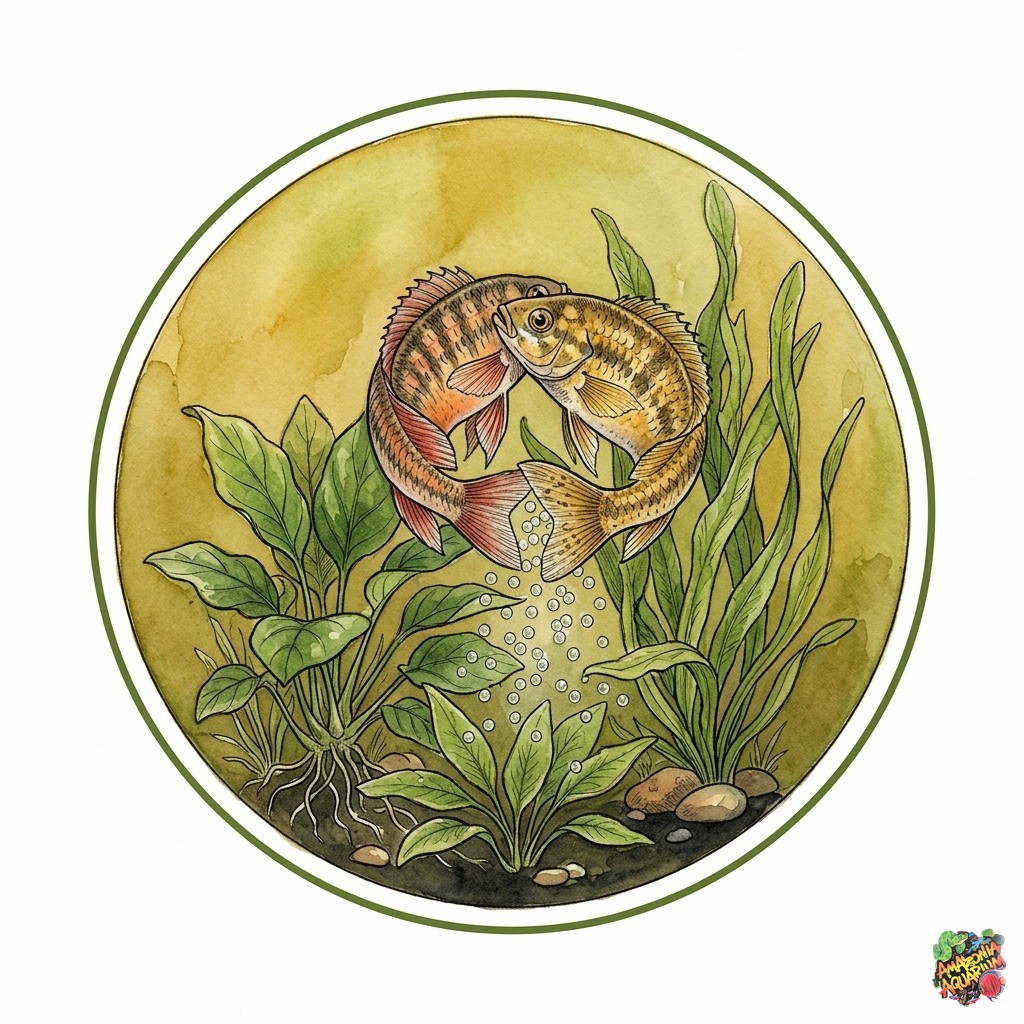
Day 1
Egg Scattering
100–150 eggs scattered among plants/mesh
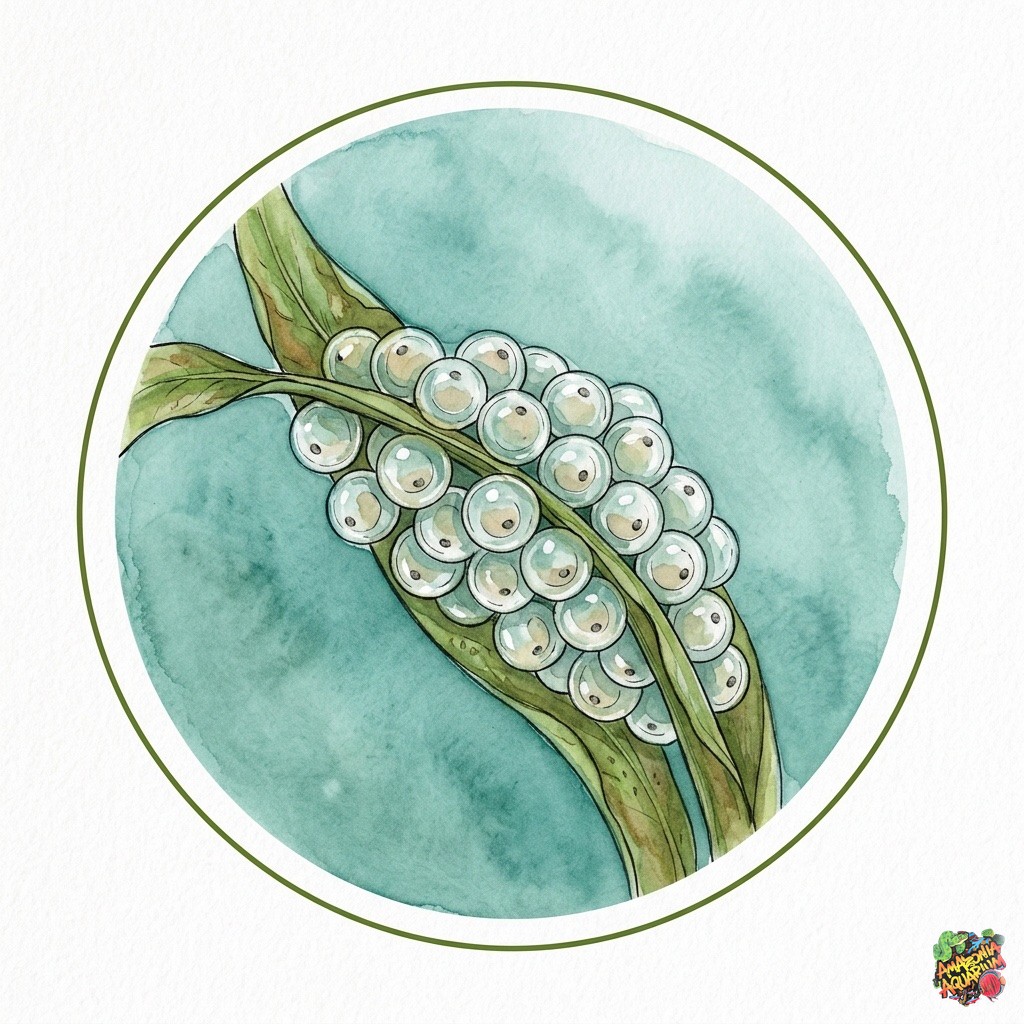
Day 1–2
Egg Incubation
Eggs develop in darkness; remove infertile white eggs
Day 2–3
Hatching
Fry emerge, absorb yolk sac
Day 5–7
Free Swimming
Begin feeding infusoria, then baby brine shrimp
Conditioning
Select the plumpest female and the most colourful male from your school. House them separately for one to two weeks, feeding generous portions of live baby brine shrimp and daphnia. The female should visibly swell with eggs — her belly will round out and the blue stripe may appear to bend slightly.
Spawning Setup
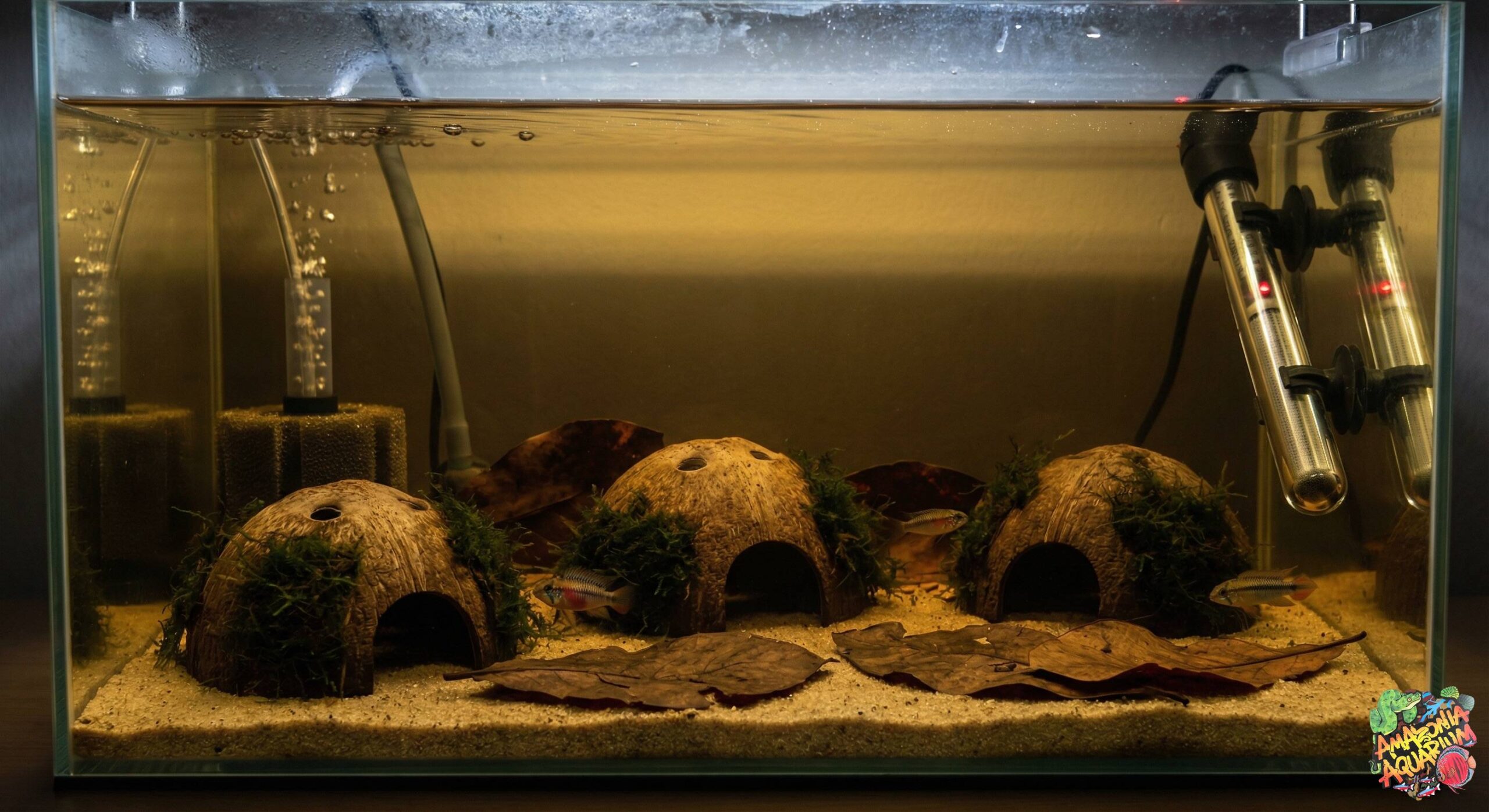
Prepare a small breeding tank (10–20 L) with very soft water — pH 5.5 to 6.0, hardness below 2 dGH. Use RO water with a tiny addition of blackwater extract. Place a mesh or spawning mop on the bottom to catch eggs, and keep the tank dim. Introduce the pair in the evening; spawning usually occurs at first light.
Egg Scattering
The male will chase the female through the plants or spawning media. She scatters eggs a few at a time — typically 100 to 150 total. The eggs are tiny, translucent, and adhesive. Remove the parents immediately after spawning ends, as they will eat the eggs without hesitation.
Egg Incubation
Keep the breeding tank completely dark — neon tetra eggs are highly light-sensitive and exposure to bright light kills them. Infertile eggs will turn white within 12 hours; remove them gently with a pipette to prevent fungus spreading to viable eggs. Maintain temperature at 24 °C.
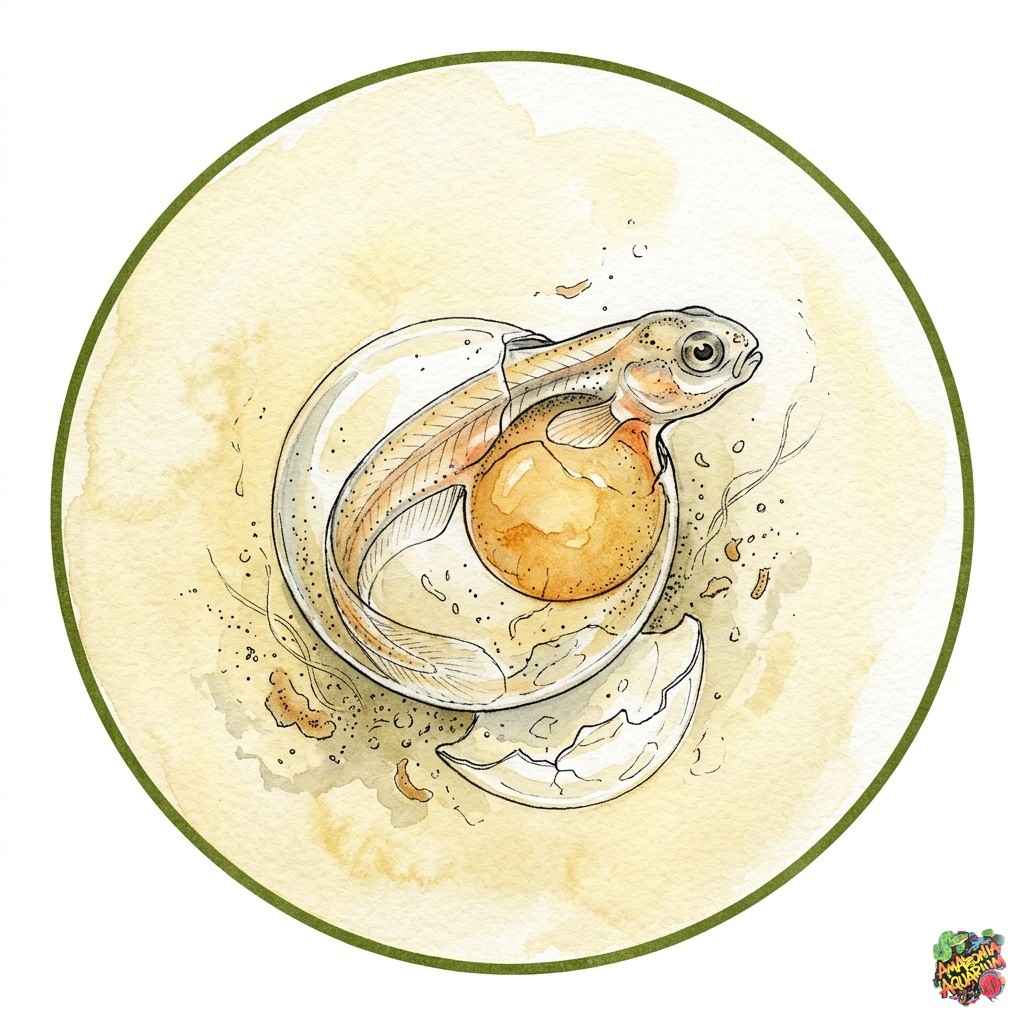
Hatching
Tiny, nearly invisible fry hatch and cling to surfaces or lie on the tank bottom. They survive on their yolk sac for the first 24–48 hours and do not need feeding. Continue to keep light very dim. The fry are extremely small — smaller than most livebearer fry — and require microscopic first foods.
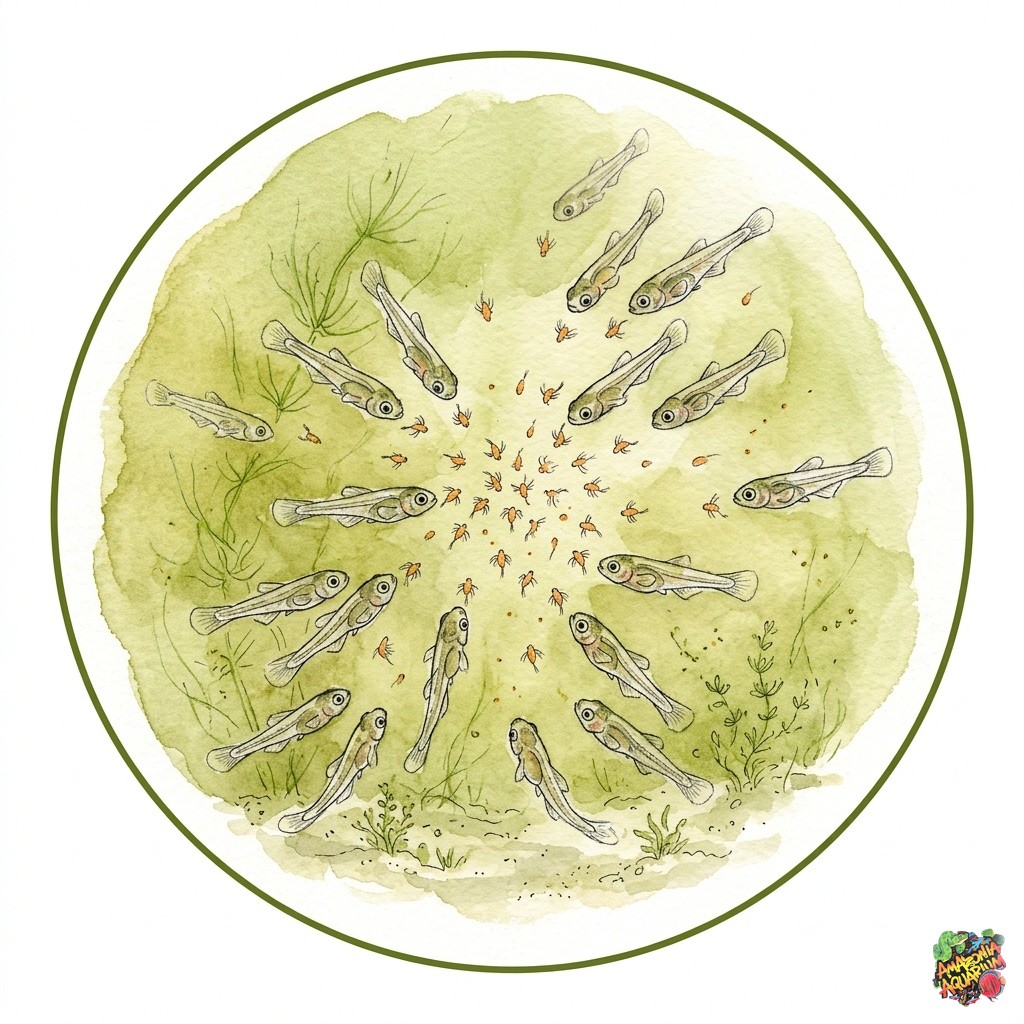
Free Swimming
Once fry become free-swimming, offer infusoria or commercially available liquid fry food for the first week. After 7–10 days, they can take freshly hatched baby brine shrimp. Growth is slow — it takes roughly three months before juveniles develop the characteristic neon stripe and can join the main tank.
Choosing Tank Mates
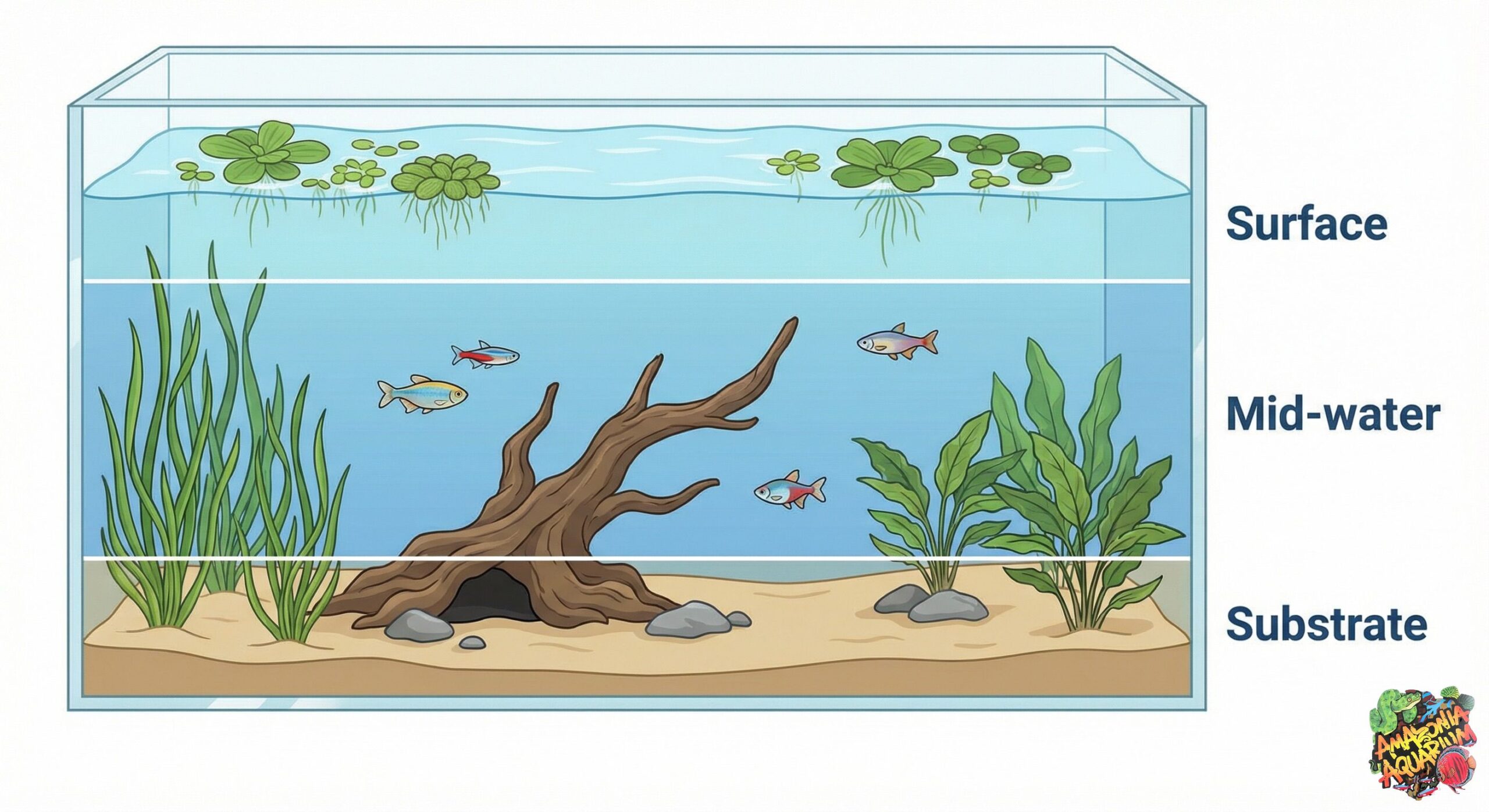
Neon tetras are the definition of a community fish. They mind their own business, school tightly when they feel secure, and never bother tank mates. The key to a successful neon community is avoiding anything large enough to eat them (a good rule: no tank mate with a mouth wider than the neon’s body) and anything aggressive enough to chase them. Pair neons with other soft-water species that occupy different levels — corydoras on the bottom, neons in the middle, a honey gourami near the surface — and you create a balanced, visually layered aquarium. Keep neons in groups of at least 8, ideally 12+; a larger school reduces stress, intensifies colour, and produces the mesmerising synchronized swimming that makes this species iconic.
| Species | Why | |
|---|---|---|
| ✅ | Cardinal Tetra | Near-identical care requirements; the two species school loosely together creating a stunning mixed shimmer |
| ✅ | Rummy Nose Tetra | Tight schooling behaviour complements neons beautifully; shares soft-water preference |
| ✅ | Flame Tetra | Warm orange tones contrast with neon blue; peaceful and similar size |
| ✅ | Corydoras (Sterbai) | Gentle bottom-dwellers that occupy a different zone and clean up fallen food |
| ✅ | Otocinclus | Tiny algae eaters that are completely non-aggressive and love the same soft water |
| ✅ | Honey Gourami | A calm centrepiece fish that won’t bother neons; attractive golden contrast |
| ✅ | Cherry Barb | Peaceful barb species that adds red accent to the mid-level without any fin-nipping |
| ✅ | Galaxy Rasbora | Similar nano-fish temperament; stunning spotted pattern pairs well with neon stripes |
| ✅ | Dwarf Chain Loach | Active, small loach that controls snails and stays peaceful with tetras |
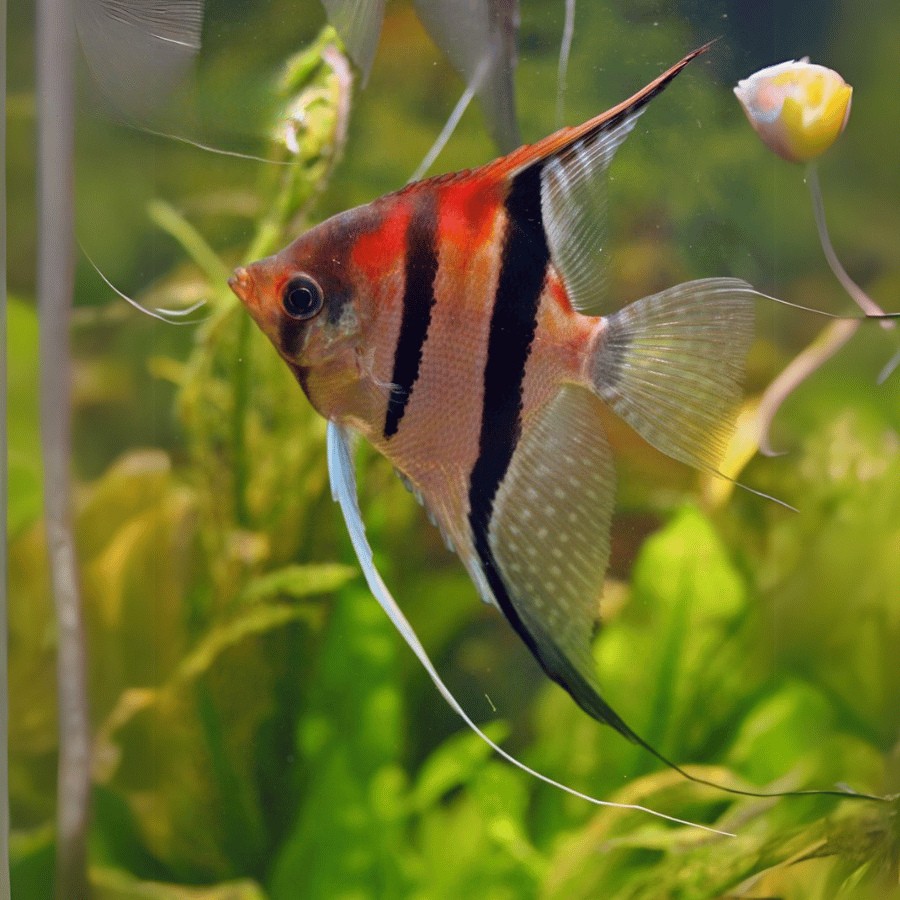
| ❌ | Angelfish | Adult angelfish will eat neon tetras — their mouths are large enough to swallow them whole |
| ❌ | Tiger Barb | Notorious fin-nippers that will harass and stress neon tetras relentlessly |
| ❌ | Betta (Male) | While sometimes kept together, bettas may attack neons in smaller tanks; risky combination |
| ❌ | African Cichlids | Completely incompatible — require hard alkaline water and are far too aggressive |
Quick Reference
| Scientific Name | Paracheirodon innesi |
| Adult Size | 2.5–3 cm |
| Lifespan | 5–8 years |
| pH | 6.0–7.0 (ideal 6.5) |
| Temperature | 20–26 °C (ideal 24 °C) |
| Hardness | 2–10 dGH |
| Min Tank Size | 30 L |
| School Size | 8+ (12+ recommended) |
| Diet | Micro-pellets, flakes, frozen/live small foods |
| Care Level | Beginner |
| Temperament | Peaceful |
| Tank Position | Middle |
| Breeding | Egg scatterer — soft acidic water required |
| Product ID | 3318 |
Sydney Keeper Tips
Keeping Neon Tetras in Sydney comes with specific advantages and challenges. Here’s what local keepers should know.
Sydney Tap Water
Sydney’s tap water (pH 7.0–7.6, GH 2–5 dGH) is actually quite suitable for Neon Tetras, which prefer soft, slightly acidic water. You may not need to adjust pH at all — just dechlorinate with a quality conditioner that neutralises chloramine (Sydney Water uses chloramine, not chlorine).
Seasonal Considerations
Sydney summers (Dec–Feb) can push indoor tank temperatures above 28°C without air conditioning. Neons prefer 22–26°C — consider a clip-on fan or chiller during heatwaves. In winter, a reliable heater set to 24°C is sufficient.
Local Tips
- Always use a dechlorinator that handles chloramine — standard chlorine removers are insufficient for Sydney water.
- Buy in groups of 10+ from a single source to avoid mixing disease strains.
- Sydney’s moderate hardness means you rarely need RO water for tetras.
Frequently Asked Questions
How many Neon Tetras should I keep together?
Why are my Neon Tetras losing colour?
Can Neon Tetras live with Bettas?
How long do Neon Tetras live?
Do Neon Tetras need a heater?
Related Products
Reviews
Clear filtersThere are no reviews yet.