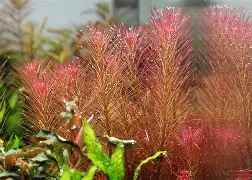
🪨 Species at a Glance
| Scientific Name | Rotala wallichii |
| Common Name | Rotala Wallichii, Whorled Rotala, Needle-Leaf Rotala |
| Family | Lythraceae (loosestrife family) |
| Origin | Southeast Asia — northern India, Myanmar, Thailand, Cambodia, Vietnam, Malaysia, Indonesia |
| Mature Height | 6-10 cm underwater (significantly shorter than other Rotala species) |
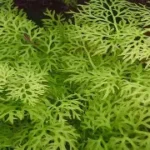
| Leaf Form | Ultra-fine needle-like leaves 2-3 cm long, 1-2 mm wide, in dense whorls of 8-12 leaves |
| Colour Under CO2 | Deep red to red-purple with violet apical tips under high light |
| Colour Without CO2 | Usually fails to establish; surviving stems revert to pale green or melt |
| Growth Rate | Medium with CO2; effectively zero or negative without |
| Light Requirement | High (80-130 PAR at leaf surface, non-negotiable for survival) |
| CO2 Requirement | Mandatory — survival is marginal without pressurised CO2 injection |
| Planting Method | Stem cuttings rooted into fine-grain nutrient-rich substrate |
| Placement | Foreground-midground bushy red-purple accent in the transition zone |
| Difficulty | Advanced — demanding, prone to rapid leaf-drop if conditions slip |
Planting & Placement
Stem
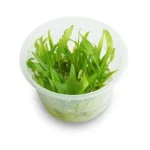
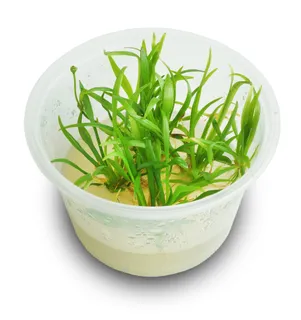
Rotala wallichii is a stem plant in the conventional botanical sense but its needle-fine morphology requires a planting technique more delicate than any other member of the genus. Each stem arrives from the grower as a slim pale-green to pale-pink emersed shoot of six to twelve centimetres in length carrying a modest basal root structure that is far less substantial than the robust root mass of broader-leaved Rotala species. When sourcing a bunch from a local aquatic plant retailer, expect ten to fifteen individual stems bound together with a lead weight or rockwool plug, and when sourcing a tissue-cultured cup expect twenty to thirty smaller plantlets each only three to five centimetres long. In either case, the first task is to remove any binding material completely — lead weights crush the lower stems and rockwool holds moisture that rots buried sections within days. Separate each stem individually with your fingertips and reserve only those stems that show firm green tissue and visible white root initials at the basal nodes; any soft, yellowed, or translucent stems are past saving and should be discarded rather than planted in the hope of recovery.
Each prepared stem is inserted into a fine-grain nutrient-rich substrate using long aquascaping tweezers held at a shallow twenty to thirty degree angle to the substrate surface, a technique identical in principle to broader Rotala species but requiring considerably more finesse because the fine stems of Rotala wallichii bruise and crush easily under the jaws of the tweezers. Experienced aquascapers grip the stem at the basal node rather than midway along the delicate upper section, and they insert only the lower one to two centimetres of the stem into the substrate to avoid burying any of the whorled needle leaves, which will rot if submerged in the anaerobic substrate layer. Spacing between stems should be generous — fifteen to twenty millimetres minimum between adjacent plantings — because the fine stems need unimpeded access to light, flow, and CO2-enriched water from every angle if they are to establish successfully. Cramming needle-leaf stems close together in the belief that a thicker initial planting will produce a denser final display is a classic beginner’s mistake and reliably produces rotting central stems within a fortnight as the inner plantings suffocate from inadequate flow and light.
Substrate choice is a decisive factor in whether Rotala wallichii will thrive or merely survive. The species demands fine-grained nutrient-rich aquasoil with a grain size of two to three millimetres, such as ADA Amazonia Light, Tropica Aquarium Soil Powder, Fluval Stratum, or a power sand base covered with Amazonia. The fine grain is important because the delicate fibrous roots of Rotala wallichii struggle to penetrate coarse gravel and because the plant draws heavily on interstitial ammonium and iron from its root zone during the critical first four weeks of establishment. Inert gravel substrates are emphatically not recommended for this species even with aggressive root tab supplementation; the carrying capacity of liquid fertilisation alone is insufficient to feed the needle-leaf growth habit, and tanks set up on inert gravel show high mortality and failure-to-thrive rates for Rotala wallichii despite apparently meeting all other culture requirements. A fresh aquasoil layer of at least five to seven centimetres over an optional power sand base provides the nutrient reservoir depth that the plant needs for long-term success, and aquarists who invest in this substrate preparation report dramatically better establishment rates and long-term colour expression than those who try to shortcut the substrate question.
Water Quality for Plants
5.5–6.8
ideal 6.2
22–28 °C
ideal 25 °C
2–8 dGH
Soft water strictly required; plant declines rapidly above 10 dGH
Rotala wallichii is among the most parameter-sensitive plants commonly sold in the aquarium hobby and demands strictly soft acidic water conditions that mirror the slow-moving Southeast Asian streams of its native range. The ideal pH range is a narrow five-point-five to six-point-eight with a practical sweet spot around six-point-two that is achieved by combining a nutrient-rich aquasoil substrate with pressurised CO2 injection. The aquasoil alone will typically drop tap water pH by half to a full unit below its starting value, and the CO2 injection drops a further full pH unit during the photoperiod, which together produce the required acidic envelope without any chemical adjustment or reverse osmosis water required — assuming the starting tap water is already moderately soft. Tanks with pH above seven-point-zero, however, will not sustain Rotala wallichii long-term regardless of all other culture variables being correct, because the species is intolerant of the iron precipitation that occurs in alkaline water. Above pH seven-point-two dissolved iron converts rapidly to insoluble iron hydroxide and becomes unavailable to the plant, and in Rotala wallichii specifically this iron lockout produces rapid chlorosis and needle-drop within a fortnight that no amount of increased iron dosing can overcome.
For aquarists on hard alkaline tap water, the only viable approach is to dilute with reverse osmosis or distilled water to bring total dissolved solids and carbonate hardness down into the target range before doing water changes, with a rough guideline of mixing approximately fifty percent RO water with fifty percent moderately-hard tap water to land in the acceptable zone, or using one hundred percent RO water remineralised with a specialty planted tank mineral mix such as Salty Shrimp GH+ to produce precisely controlled parameters. Attempting to grow Rotala wallichii in hard alkaline tap water is a frustrating dead end that produces only wasted money and dead plants and should be avoided in favour of a more tolerant red plant such as Ludwigia palustris or Rotala rotundifolia if RO water is not an option.
Temperature tolerance for Rotala wallichii is the normal tropical range of twenty-two to twenty-eight degrees Celsius with a practical sweet spot around twenty-four to twenty-five degrees. The species is notably sensitive to thermal excursions at the upper end of this range; sustained temperatures above twenty-eight degrees produce visible needle-drop within a week even under otherwise ideal conditions, and temperatures above thirty degrees for even a few days during a summer heatwave can collapse an otherwise healthy planting. Aquascapers in warmer climates should budget for an aquarium chiller or at minimum a room-air-conditioning strategy during the summer months if Rotala wallichii is part of the layout. Cool temperatures below twenty-two degrees slow growth considerably but do not harm the plant; some aquascapers deliberately run their display tanks at twenty-three to twenty-four degrees specifically to push Rotala wallichii toward its deepest red-purple expression, which is slightly enhanced at the cooler end of the range.
Hardness parameters are a strict requirement rather than a preference for this species: general hardness (GH) must be kept below eight degrees and carbonate hardness (KH) should be below five degrees for long-term success. Water above ten dGH will visibly suppress colouration, accelerate needle-drop, and eventually collapse the planting regardless of all other culture inputs, because the iron precipitation problem described above intensifies as hardness rises. The practical rule for Rotala wallichii is that soft water is not a nicety but a prerequisite, and aquarists who cannot deliver soft water should select a different plant rather than fight a losing battle. Tannin-rich water from driftwood, catappa leaves, or peat filtration is actively beneficial for this species, both because tannins bind residual carbonate hardness and help soften effective water hardness, and because the deep amber backdrop visually enhances the perceived red-purple colouration of Rotala wallichii in the same way it enhances other anthocyanin-rich red plants. Weekly water changes of thirty to forty percent using temperature-matched and parameter-matched soft water are essential to flush accumulated dissolved organics and maintain parameter stability, both of which Rotala wallichii appreciates more than less demanding species.
Illumination Requirements
HIGH LIGHT
PAR: 80-130 PAR at leaf surface
High
Light intensity is the first critical cultural variable for Rotala wallichii, and the plant sits firmly at the high-demand end of the aquarium lighting spectrum. Unlike some red stem plants that will merely fade to green under insufficient light but otherwise survive indefinitely, Rotala wallichii will actively decline under low-light conditions — the needle-fine leaves self-shade extensively within their own dense whorls, and any stem that cannot gather enough light to support the entire whorl will begin dropping leaves from the lower internodes upward within a week of establishment, a distinctive failure mode that aquascapers call needle-drop and that is essentially pathognomonic for inadequate light with this species. The target intensity at the leaf surface is eighty to one hundred and thirty PAR, achieved with a high-quality planted-tank LED such as the Chihiros Vivid 2, Twinstar S Series, ADA Solar RGB, or Kessil A160WE running at eighty to one hundred percent output for a six to eight hour photoperiod in a sixty-centimetre tank. Tanks running at forty to sixty PAR can keep the plant alive in a bronze-green form but will not produce the red-purple colour expression the species is prized for and will show steady rates of needle-drop in the lower regions of the stems.
The relationship between light intensity and colour expression in Rotala wallichii is particularly pronounced and runs from pale green at low light through rose-pink at medium intensity to deep red-purple with violet apices under peak high-light conditions, a colour range that few other aquatic plants match in the same genus. The violet tones at the apical tips under one hundred and twenty-plus PAR are especially distinctive and result from elevated anthocyanin production responding to the combination of high-intensity light stress and a saturated CO2 and iron supply. These violet tones are the feature that separates a truly well-grown Rotala wallichii from a merely surviving one and are the cultural target experienced aquascapers work toward. Above one hundred and thirty PAR the plant does not colour any further and algae pressure rises sharply on the fine leaves which provide ample surface area for GSA (green spot algae) and GDA (green dust algae) colonisation, so a practical cap of one hundred and twenty to one hundred and thirty PAR is sensible for long-term sustainability.
Photoperiod management matters as much as intensity for this species because Rotala wallichii exhausts internal carbohydrate reserves more quickly than broader-leaved Rotala species during dark hours and can show pronounced leaf-drop during extended photoperiods or during photoperiod interruptions caused by power failures. A steady six to eight hour peak intensity photoperiod with a twenty to thirty minute ramp-up and ramp-down on each side delivers ideal results and keeps algae competition at bay. Running twelve-hour photoperiods in pursuit of more growth is counterproductive with this species — the plant does not extract additional benefit past eight hours and the extended low-intensity morning and evening periods consistently trigger cyanobacteria and diatoms on the fine leaves, forcing cleanup work that is difficult to perform without physically damaging the needle-fine foliage.
Light spectrum has a particularly notable visual effect on Rotala wallichii because the perceived colour of red-purple foliage depends heavily on the rendering spectrum of the light source. Full-spectrum planted-tank LEDs with strong red and deep-red channels and adjustable RGB capability will render the plant’s anthocyanin pigmentation with maximum saturation, while cool-white-dominant LED fixtures will shift the perceived colour toward brown-orange and dramatically underwhelm viewers even when the plant itself is chemically just as coloured. For aquarists committed to growing Rotala wallichii as a feature planting, a modern planted-tank LED with tunable red channels is effectively a prerequisite rather than a luxury upgrade; the difference in visual impact under matched intensity but different spectrum is so large that even experienced aquarists are often surprised when they compare the same plants under the two lighting types.
Recommended Photoperiod: 6-8 hours at peak intensity (steady photoperiod; avoid interruptions which trigger needle-drop)
Feeding Your Plant: CO2 & Ferts
CO2 INJECTION REQUIRED
Pressurised CO2 injection is absolutely mandatory for Rotala wallichii to survive long-term in submerged form. Unlike many aquarium plants where CO2 is a quality-of-growth upgrade rather than a survival requirement, Rotala wallichii will fail to establish or will decline within weeks in tanks without pressurised CO2 injection, reverting to emersed-form growth if it can reach the water surface or simply melting away if it cannot. The needle-fine leaves present an enormous surface-area-to-volume ratio relative to broader-leaved plants, which translates directly into extremely high carbon demand during active photosynthesis — the plant needs a continuous supply of dissolved CO2 in the water column simply to keep pace with its own metabolic consumption, and without that supply it exhausts internal carbon reserves within days and begins shedding needle leaves to reduce photosynthetic demand.
The target CO2 concentration is twenty-five to thirty-five parts per million of dissolved CO2 sustained throughout the photoperiod, achieved by running a pressurised cylinder through a regulator, solenoid valve, bubble counter, and a high-quality inline diffuser or atomiser on the filter output. This is toward the upper end of the standard planted-tank CO2 range because Rotala wallichii tolerates and indeed benefits from higher CO2 levels than the typical twenty to thirty parts per million target for less demanding species. A drop checker should show a bright lime-green to yellow-green reading during the main photoperiod; any persistent darker green or blue reading will produce visible needle-drop in Rotala wallichii within three to five days and is a diagnostic red flag for this species specifically even when other plants in the same tank appear unaffected. The solenoid should open one to two hours before lights-on to prime the water column and close thirty to sixty minutes before lights-off to avoid overnight accumulation; unlike hardier plants, Rotala wallichii often shows early morning needle-drop if CO2 is not yet up to target by the time peak lighting hits at hour three of the photoperiod, so aquascapers who are serious about this species often push the CO2 start earlier than default timer settings.
Liquid carbon supplements such as Seachem Excel or Easy-Life EasyCarbo are not a viable substitute for pressurised CO2 with Rotala wallichii. Some reports circulate in online forums of Rotala wallichii surviving on liquid carbon alone, but these accounts are largely the result of aquarists mistaking the initial few weeks of gradual decline for acceptable growth; careful long-term tracking almost always shows progressive needle-drop and eventual stem collapse within two to three months on liquid carbon. The fundamental issue is that liquid carbon delivers only a fraction of the total carbon that pressurised CO2 provides, and even that fraction is dosed in daily pulses rather than as a sustained concentration, which mismatches the continuous high carbon demand of the needle-leaf growth habit. Aquarists committed to low-tech planted tanks should pick a different species — Rotala wallichii is emphatically not a beginner-friendly low-tech plant and attempting to grow it in such a setup produces nothing but frustration and dead stems.
The physiological link between CO2, light, and colour in Rotala wallichii operates in the same way as for other red Rotala species: high light drives high photosynthetic demand, CO2 meets the carbon requirement, and surplus metabolic energy is channelled into anthocyanin production which produces the red-purple colouration we see. Remove any single component of this equation and the plant falls back toward conservative metabolism or outright decline, which in Rotala wallichii specifically manifests as needle-drop and eventual stem failure rather than the more forgiving green-survival mode that broader Rotala species tolerate.
Fertilisation
Fertilisation of Rotala wallichii requires a deliberate and attentive hand because the plant’s fine-leaf growth habit exhausts micronutrient reserves more quickly than any other Rotala species and is particularly sensitive to iron deficiency, which is the single most common cause of decline in otherwise well-maintained high-tech tanks with this species. The target fertilisation regime is an EI-lite or modern lean-dosing approach with nitrate held at five to fifteen parts per million, phosphate at one to two parts per million, and potassium at ten to twenty parts per million, all easily achieved through a weekly dose of a complete all-in-one macro fertiliser such as Tropica Specialised, APT Complete, or a DIY EI solution at high-tech planted tank rates. Beyond the standard macronutrient regime, however, Rotala wallichii requires a deliberately generous iron supplementation schedule delivered two to three times per week via a dedicated iron supplement such as Seachem Flourish Iron, NilocG Thrive Iron, or a DIY chelated iron solution mixed to around one-half milligram per litre per dose. The visible response to targeted iron dosing is rapid — within three to five days of starting a focused iron regime the apical growth of Rotala wallichii will darken perceptibly from pink toward deep red-purple, and continuing for three to four weeks produces the stable showpiece colouration that the species is capable of when well cultivated.
Nitrate management with Rotala wallichii requires careful attention because the species is famously sensitive to both nitrogen excess and nitrogen starvation in ways that broader-leaved Rotala species are not. Nitrate concentrations above twenty parts per million will push the plant toward greener foliage because ample nitrogen drives chlorophyll production at the expense of anthocyanin, and the resulting pale green or bronze-green colour is disappointing in a plant that can produce spectacular red-purple under the right conditions. At the same time, nitrate below three parts per million produces rapid yellowing of lower leaves accompanied by accelerated needle-drop that can strip the lower half of each stem within a week, a failure mode that is especially destructive in Rotala wallichii because the short stem habit of six to ten centimetres means that losing the lower half of each stem effectively eliminates the entire plant. The practical target of five to fifteen parts per million represents the stable middle ground where both red expression and growth vigour can be sustained over the long term. Iron specifically drives anthocyanin production through its role as a cofactor in the enzymes that synthesise and stabilise anthocyanin pigments, and the plant’s elevated iron requirement relative to other Rotala species appears to stem from the sheer pigment volume produced across all those needle-fine leaves compared to the smaller foliar surface area of broader species.
Micronutrient supplementation beyond iron should use a comprehensive trace mix such as Tropica Specialised or APT Micro at standard planted-tank rates. Zinc, manganese, boron, molybdenum, and copper at routine trace levels support all metabolic functions without specific colour consequences for Rotala wallichii. Magnesium should be maintained at six to ten parts per million to support chlorophyll function in the lower leaves and to prevent the magnesium-deficiency yellowing that is sometimes mistaken for iron deficiency in this species — a weekly dose of magnesium sulphate heptahydrate (Epsom salts) at approximately one-quarter teaspoon per hundred litres is a cheap and effective insurance policy that experienced red-stem aquarists routinely apply. One refinement worth attention specifically for Rotala wallichii is the timing of iron dosing relative to the photoperiod: iron dosed in the morning one to two hours before peak lights-on is taken up more efficiently than iron dosed in the evening after lights-off, because the plant’s active uptake metabolism is driven by photosynthetic activity. Competition aquascapers sometimes dose small iron amounts every day rather than larger amounts two or three times per week to smooth out availability and maintain maximally stable red-purple colouration, a refinement that produces slightly better colour consistency at the cost of slightly more daily fuss.
Caring for Your Plant
MEDIUM GROWTH
Under high-light, CO2-injected, well-fertilised conditions Rotala wallichii is a moderately fast-growing stem plant that extends roughly one to two centimetres per week of vertical growth during active periods, considerably slower than its broader-leaved cousins such as Rotala rotundifolia that can push three to five centimetres per week under comparable conditions. The modest growth rate is a direct consequence of the species’ short stature — the plant reaches only six to ten centimetres total height in most aquarium conditions compared to the thirty to forty-five centimetres achieved by broader Rotala species, so even moderate weekly extension produces a visible change in the group planting. The short stem habit and fine-needle foliage combine to produce a bushy rounded growth form quite different from the tall narrow hedge effect of taller Rotala species, which has important consequences for the plant’s compositional role in the aquascape.
Without pressurised CO2 injection the growth rate effectively drops to zero or turns negative as the plant begins losing mass through needle-drop faster than it produces new growth, and within two to three months a low-tech planting of Rotala wallichii will have declined to the point of visual failure. This is a sharper cliff than broader Rotala species show under CO2 deprivation and is one of the characteristics that places Rotala wallichii firmly in the advanced-difficulty category rather than the intermediate category where many other Rotala species sit. There is no meaningful low-tech growing protocol for this species; aquarists who want to cultivate Rotala wallichii must commit to the full high-tech tank infrastructure of pressurised CO2, high-quality LED lighting, nutrient-rich substrate, comprehensive fertilisation, and soft acidic water parameters. The upside of this commitment is that a successfully cultivated Rotala wallichii planting is one of the most striking visual features available in the aquatic plant hobby and rewards the effort with a unique fine-textured red-purple accent that no other commonly available plant can replicate.
Trimming Rotala wallichii requires considerably more care than trimming broader Rotala species because the needle-fine foliage bruises and breaks easily under heavy-handed scissor work, and because the short overall stature of the plant means there is less tolerance for error in cut height. The first trim is typically performed when the fastest stems approach within two to three centimetres of the water surface, or when the group planting reaches ten to twelve centimetres in overall height, which usually occurs eight to ten weeks after planting. A very sharp pair of fine-tipped aquascaping scissors with either straight or slightly curved blades is used to cut each stem cleanly at the designed height, producing a level or contoured bushy cap that will regenerate from the cut node within five to seven days. The cut tops are collected using fine tweezers or a shrimp net and either discarded or replanted to fill gaps in the group. Subsequent trims become progressively more frequent as the plant’s basal mass builds up, but the cycle is gentler and slower than that of broader Rotala species — expect to trim every two to three weeks once the plant is mature, rather than the ten to fourteen day cycles that fast-growing Rotala species require.
After three to four trim cycles the plant’s original planted bases typically begin to thin and lose vigour, at which point a complete replant using healthy fresh tops refreshes the display and restores full growth vigour for another several months. This trim-and-replant rotation is standard practice for all high-tech stem plants but Rotala wallichii is particularly sensitive to the transition and the replanting process must be done gently with fresh apical cuttings of six to eight centimetres in length rather than shorter segments which struggle to establish. The plant’s tendency to drop leaves from the lower portion of stressed stems means that replanting with stems that have already started to thin at the base produces a poor result; the aim should be to replant with top cuttings taken from the current growth cycle while they are still vigorous and fully leaved across their entire length. Careful attention to trimming technique and replant timing distinguishes a Rotala wallichii planting that thrives year after year from one that slowly declines into a thin scrappy shadow of its former self.
First trim (establishment)
8-10 weeks post-planting, when stems reach within 2-3 cm of water surface or group reaches 10-12 cm total height. Use very sharp fine-tipped aquascaping scissors to produce a level or contoured bushy cap. Remove cuttings or replant to fill gaps.
Maintenance trims
Every 2-3 weeks in mature planting. Cut gently to avoid bruising the needle-fine foliage. Remove all detached leaf fragments promptly to avoid clogging filter intake and contributing to algae nutrient load.
Replant cycle
Every 3-4 months, pull mature stems gently from substrate, cut fresh 6-8 cm apical tips, discard old woody bases, replant fresh tops at original spacing. Critical for maintaining vigour — this species declines rapidly if left unrefreshed.
Needle-drop inspection
Weekly — inspect lower stems for yellowing or needle-drop. Early needle-drop signals iron deficiency, insufficient CO2, or parameter drift and requires prompt diagnostic attention before the planting collapses.
Dose iron supplement
2-3 times per week — Seachem Flourish Iron or equivalent at or slightly above manufacturer recommended rate. Morning dosing 1-2 hours before peak lights-on improves uptake efficiency.
Drop checker verification
Daily visual check — confirm bright lime-green to yellow-green during photoperiod. Dark green or blue reading will produce visible needle-drop within 3-5 days; this species is less forgiving of CO2 shortfall than broader Rotala species.
Aquascaping with This Plant
Midground
Rotala wallichii occupies a highly distinctive compositional niche in the aquascaping vocabulary — unlike the tall background Rotala species that provide vertical mass at the rear of the tank, Rotala wallichii is a compact foreground-to-midground accent plant that contributes a fine-textured red-purple visual note in the transition zone between the carpet and the background. The plant’s short six-to-ten-centimetre stature and bushy rounded growth form mean that it is simply too small to serve as a background species in any but the smallest nano tanks, and in standard sixty-centimetre or larger aquascapes it is invariably positioned in the front third of the tank where its distinctive needle-leaf texture and red-purple colouration can be appreciated at close viewing range. This is a compositional role that few other plants can fill well, and Rotala wallichii has become a signature plant in Nature Aquarium and Iwagumi-style layouts specifically because it brings a combination of colour, fine texture, and compact stature that no substitute plant matches.
Group planting density matters enormously for Rotala wallichii. A handful of scattered individual stems reads as messy and unintentional rather than as a designed feature, and the fine-leaf foliage simply disappears visually against the denser textures of surrounding carpet and midground plants if insufficient density is achieved. The practical minimum for a visually effective group is twenty to thirty stems planted at fifteen-millimetre spacing across a ten-to-fifteen-centimetre area, producing a solid red-purple mass roughly the size of a small melon that reads as a deliberate chromatic accent against the surrounding greenery. For larger feature plantings in sixty to ninety centimetre tanks, fifty to eighty stems in a twenty-to-thirty-centimetre patch creates a substantial red-purple focal zone that anchors the midground composition and draws the eye with magnetic effect. In all cases the Rotala wallichii group should be a single contiguous planting rather than scattered clumps, because the fine-texture visual language of the plant demands mass concentration to read as a coherent feature.
Placement within the layout generally falls into one of three classical compositions. In the first and most common, Rotala wallichii sits in the near midground just behind the carpet and just in front of the main hardscape, where the small bushy red-purple cluster provides a warm chromatic accent against the green carpet foreground and the darker stones or wood of the central hardscape; this is the placement favoured in Iwagumi-style layouts where the simplicity of the composition rewards a single well-chosen chromatic accent. In the second composition, Rotala wallichii sits at the edge of a transitional sand path running diagonally through the layout, catching the eye as it travels along the implied depth-receding line of the path and drawing attention into the composition’s visual depth; this placement works well in Nature Aquarium diorama-style layouts with complex multi-plane compositions. In the third composition, Rotala wallichii is used as a repeating accent at two or three locations within a larger layout, creating rhythmic colour repetition across the tank that ties together the otherwise separate compositional zones; this is the strategy favoured in Dutch-style layouts where rhythmic planting groupings are a design virtue.
Rotala wallichii pairs particularly well with certain companion plants that complement its fine-leaf texture and red-purple colouration. Fine-leaved green foreground carpets such as Monte Carlo (Micranthemum tweediei) and Glossostigma elatinoides provide a tight texture that harmonises with the needle-leaf forms above, while dwarf hairgrass (Eleocharis acicularis) contributes a different fine-texture language of vertical blades that contrasts interestingly with the bushy Rotala form. In the midground around the Rotala wallichii group, Bucephalandra species provide slow-growing architectural accents on attached hardscape without competing for the same compositional zone, and Anubias nana ‘Petite’ serves a similar role with somewhat bolder broader leaves. For background support, slender-leaved stem plants such as Rotala rotundifolia ‘Green’ or Ludwigia arcuata provide a subtle chromatic gradient that reads as a continuation of the Rotala wallichii red-purple into the rear planting, while fine-textured companions such as Mayaca fluviatilis or Pogostemon erectus provide textural continuity without competing colours. Avoid pairing Rotala wallichii directly adjacent to visually aggressive plants such as large-leaved swords or bushy cryptocorynes, which will visually overwhelm the delicate needle-leaf character and reduce the Rotala’s impact from a thoughtful accent to a lost minor detail.
For aquarists targeting competition-grade aquascapes, Rotala wallichii’s compositional role deserves particular thought during the initial layout design rather than being added as an afterthought. The plant’s short stature means it must be placed where it will be visible rather than hidden behind hardscape or larger plants, which generally means the front one-third of the tank depth; the fine-texture needs negative space around it to read clearly, which generally means keeping the surrounding half-centimetre to one-centimetre boundary open of competing plant mass; and the red-purple colouration needs supportive light-angle lighting that renders warm colours well, which generally means positioning under the brightest zone of the main fixture rather than in shadowed corners. Layouts that plan for these constraints in advance produce dramatic Rotala wallichii accent plantings that consistently impress viewers and judges alike, while layouts that treat the plant as a generic red stem plant to be slotted in wherever space allows rarely capture its full potential.
| Plant | Why | |
|---|---|---|
| 🌿 | Monte Carlo (Micranthemum tweediei) | Classic fine-textured green carpet foreground that complements the needle-leaf texture of Rotala wallichii without competing visually. Shares the same high-light, CO2-injected, soft-water culture requirements for a coherent high-tech layout. |
| 🌿 | Dwarf Hairgrass (Eleocharis acicularis) | Fine vertical-blade grassy carpet that provides a textural contrast of vertical blades against the bushy rounded form of Rotala wallichii, while sharing identical cultural requirements. |
| 🌿 | Bucephalandra sp. ‘Kedagang’ | Slow-growing rhizome plant for hardscape accents in the midground near the Rotala wallichii group; its dark bronze-green foliage provides a quiet architectural counterpoint to the fine red-purple foliage of the Rotala without competing for attention. |
| 🌿 | Anubias nana ‘Petite’ | Small-leaved rhizome plant for attached hardscape accents in the midground; its compact size and slow growth pair well with Rotala wallichii’s short stature and provide a textural contrast of broader leaves against the needle-fine foliage. |
| 🌿 | Rotala rotundifolia ‘Colorata’ | Taller background red cultivar with broader leaves that provides a gradient of red tones from the foreground-midground Rotala wallichii to the background planting, creating visual depth through chromatic repetition at different scales. |
| 🌿 | Staurogyne repens | Low bushy green foreground-midground plant that fills transition zones around the Rotala wallichii group and provides a solid green counterpoint to the delicate red-purple accent without competing in height or texture. |
Reproduction & Division
Cuttings
Propagation of Rotala wallichii is accomplished through stem cuttings using the same general technique that applies to all stem plants, but the delicate needle-fine foliage of this species requires a considerably gentler touch than broader Rotala relatives and the success rate depends heavily on using the right cutting size, the right tools, and the right handling technique. The method exploits the plant’s natural ability to root from any intact node, where every whorl of leaves along the stem has dormant adventitious root capacity that activates once the stem is detached from its parent and placed in contact with substrate. Every trim cycle is therefore simultaneously a propagation event, and a small starter bunch of ten to fifteen stems can populate a dedicated planting area within two to three months of initial establishment given proper cutting and replanting discipline.
The standard workflow begins with trimming healthy stems to the target height of the display, gathering the trimmings with fine tweezers or a shrimp net rather than grasping them with fingers which crush the delicate leaves, and selecting only the top six to eight centimetres of each stem as propagation material. Unlike broader Rotala species where middle stem sections propagate reliably, Rotala wallichii has a much narrower successful propagation window — only the actively growing apical tips produce reliable new plants, while middle and lower stem sections tend to stall or rot rather than producing fresh growth. The selected top cuttings are prepared by gently stripping the needle leaves from the bottom one to two centimetres to expose the bare nodes that will sit in the substrate, a procedure that must be done with extreme care using fingertips rather than tweezers because scraping the nodes with metal tools will damage them and prevent rooting. The prepared cuttings are then replanted using the same fine-angle tweezer technique described for initial planting, with generous spacing between individual cuttings and careful attention to burying only the stripped section without submerging any healthy foliage.
Rooting timelines for Rotala wallichii are moderate rather than fast. Fresh cuttings produce visible root initials within five to eight days under CO2-injected high-light conditions and begin producing fresh apical growth within twelve to eighteen days, resulting in a usable replant within five to six weeks of the original cutting. This timeline is noticeably slower than the four-to-six-week cycle of broader Rotala species and reflects the slower overall growth rate of the needle-leaf morphology. Experienced aquascapers plan their Rotala wallichii replants accordingly, staging them so that the cutting-and-replant cycle aligns with scheduled major aquascape refreshes rather than attempting to perform replants on the fly when the plants show signs of decline — by the time visible decline appears in Rotala wallichii, the opportunity for easy replant using healthy cuttings has often already passed.
A useful refinement for aquarists building up stock from a small starter bunch is to maintain a dedicated nursery tank or back corner of the main display running at identical parameters but with lower stocking density, specifically to accumulate healthy well-coloured cuttings that can then be transplanted into the feature display as a single major planting event. This approach avoids the chronic thin-patch appearance that results from piecemeal replanting in the feature display and produces a visually impressive dense planting in a single well-executed session. The nursery approach also provides a hedge against accidental tank setbacks — if the main display suffers a CO2 failure or heater malfunction, the nursery stock can be used to quickly re-establish the feature planting without waiting for new tissue-culture stock to arrive via mail order, which can otherwise take weeks to obtain and re-acclimate.
One consideration unique to Rotala wallichii is the question of whether to propagate from submerged-form material or from emersed-form starter cups. Tissue-cultured emersed-form starter cups are commonly available and produce plantlets that must convert to submerged-form leaves before the planting looks its best, a transition period that typically takes three to five weeks during which the plant appears pale green and straggly rather than the showpiece red-purple it will eventually become. Submerged-form cuttings taken from an established planting bypass this transition entirely and produce an attractive planting much faster. For aquarists with access to a healthy established Rotala wallichii planting via a local club, a trading partner, or a well-run local fish store with a display tank, submerged cuttings are significantly preferable to tissue-cultured starter cups for both faster establishment and more reliable colour expression from the outset.
Quick Reference
| Scientific Name | Rotala wallichii |
| Light | High (80-130 PAR, non-negotiable) |
| CO2 | Mandatory (25-35 ppm for survival) |
| Growth Rate | Medium with CO2; decline without |
| Mature Height | 6-10 cm (compact stature) |
| Leaf Form | Ultra-fine needle-like whorls, 1-2 mm wide |
| pH Range | 5.5-6.8 (ideal 6.2) |
| Temperature | 22-28 degC (ideal 24-25) |
| Hardness | 2-8 dGH (soft water strictly required) |
| Planting Method | Stem cuttings in fine-grain nutrient-rich substrate |
| Placement | Foreground-midground red-purple accent |
| Propagation | Apical stem cuttings only (middle sections stall) |
| Iron Dosing | 2-3x weekly, critical for colour and survival |
| Difficulty | Advanced (prone to rapid needle-drop if conditions slip) |
Reviews
Clear filtersThere are no reviews yet.