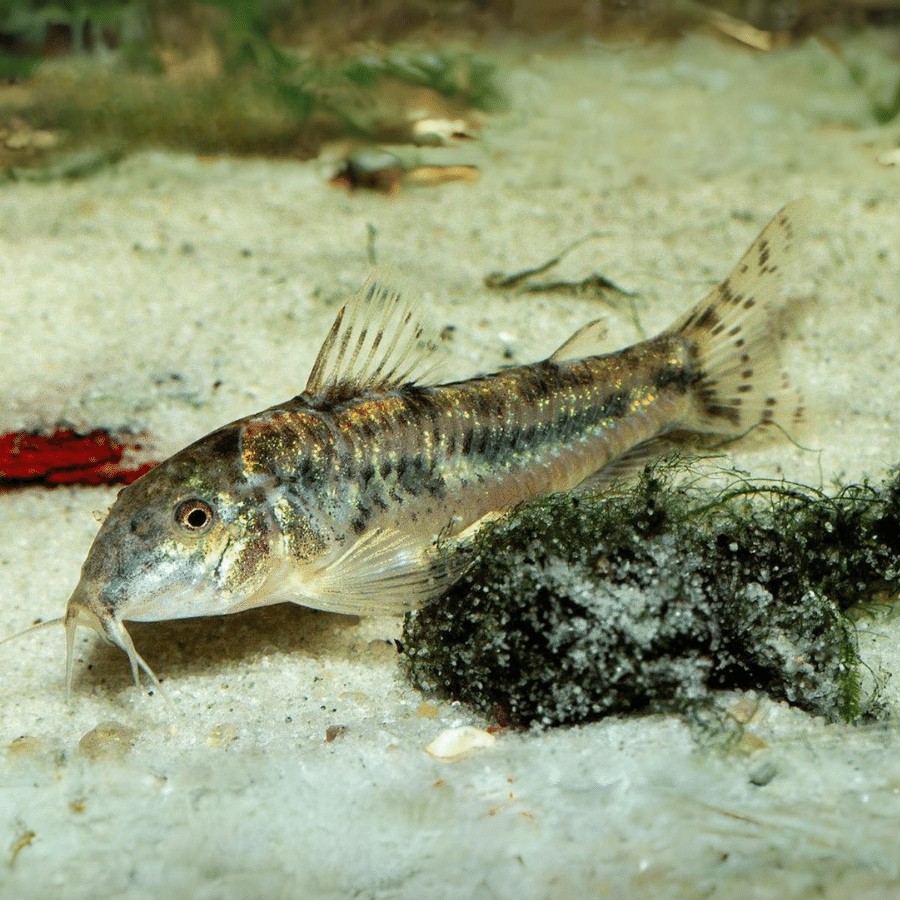
🪨 Species at a Glance
| Scientific Name | Aspidoras rochai |
| Common Names | Rocha’s Catfish, False Cory, Rochai Aspidoras |
| Family | Callichthyidae |
| Subfamily | Corydoradinae |
| Order | Siluriformes |
| Origin | Brazil — north-east, Rio Jaguaribe basin (Ceará state) and adjacent coastal drainages |
| Adult Size | 4–5 cm (1.6–2.0 in) — notably smaller than most Corydoras |
| Lifespan | 5–8 years |
| pH Range | 5.5–7.2 (ideal 6.4) |
| Temperature | 22–26 °C (72–79 °F) — prefers cooler end |
| Hardness (dGH) | 2–10 (soft preferred) |
| Diet | Omnivore bottom feeder — sinking micro-pellets, wafers, frozen micro-foods |
| Minimum Tank Size | 60 L (16 gal) for a school of 6+; ideal 80 L+ |
| Care Level | Intermediate — sand substrate and stable cool water are non-negotiable |
| Temperament | Very peaceful; strictly schooling; must be kept in groups of 6 or more |
| Breeding | Cory-like T-position egg-depositor — female attaches small clutches to glass or broad leaves |
| Tank Position | Bottom / lower substrate zone |
| Availability | Uncommon — sporadic wild imports and specialist breeder stock |
Name & Origin
The genus name *Aspidoras* is constructed from two Greek roots — *aspis*, meaning shield, and *doras*, meaning skin or hide. The shield-skin name refers directly to the same double row of bony lateral plates (scutes) that armour all members of the subfamily Corydoradinae, a defensive feature shared with their better-known cousins *Corydoras*, *Scleromystax*, and *Brochis*. The species epithet *rochai* honours Brazilian naturalist and collector Francisco Dias da Rocha, who contributed meaningfully to the early documentation of the freshwater fauna of Ceará, the north-eastern Brazilian state in which this species is found. The fish was formally described by Miranda Ribeiro in 1907 — placing Aspidoras rochai among the earlier-described members of its genus, many of which have been revised, split, or re-examined in the intervening century.
To the untrained eye, an Aspidoras is simply “a cory” — the body shape, the double row of scutes, the forked tail, the three pairs of barbels, and the characteristic bottom-grubbing behaviour are all hallmarks of the broader corydoradine catfishes. To the taxonomist and serious aquarist, however, *Aspidoras* is distinct from *Corydoras* in several subtle but diagnostic features. The most important is the cranial fontanel — an opening or soft spot in the top of the skull. In Aspidoras, the fontanel is noticeably larger and more elongated than in Corydoras, a feature visible on good museum specimens and sometimes detectable on live fish under careful observation. Aspidoras also tend to show a more slender, elongated body profile (less “stocky”) than typical Corydoras, and many Aspidoras species remain smaller at full adult size — several species, including A. rochai, mature at just four to five centimetres, compared with the six-to-eight-centimetre range common in the most popular Corydoras.
There are around 25 recognised Aspidoras species, the vast majority of which are endemic to eastern and north-eastern Brazil — a region of strongly seasonal, often drought-prone coastal drainages that have produced a rich and localised radiation of small armoured catfishes. *Aspidoras rochai* itself is primarily associated with the Rio Jaguaribe basin in Ceará, a relatively short coastal river that runs through semi-arid to sub-humid landscape before reaching the Atlantic. Within the basin, the species is typically collected from small, slow-flowing tributaries, pools, and marginal backwaters with sandy substrate, submerged leaf litter, and scattered rock cover. The water tends to be soft, lightly tannin-stained, warm during summer but distinctly cool during the dry-season mornings and winter months — a profile that explains both the species’ tolerance of a relatively broad temperature range and its clear preference for the cooler end of the typical tropical aquarium spectrum. The broader lesson is useful for any aquarist considering this species: Aspidoras are not simply “small Corydoras”, they are their own lineage with their own habitat preferences, and an aquarium setup copied wholesale from, say, a Corydoras sterbai tank will often run too warm, too hard, and too coarse-substrated for an Aspidoras to be genuinely comfortable.
Tank Setup
The tank setup for Aspidoras rochai is built around three non-negotiable priorities: fine sand substrate, dense cover with open foraging lanes, and enough horizontal footprint for a real school. A 60-litre tank with a long footprint (for example 60 by 30 centimetres) is the practical minimum for a school of six; 80 to 100 litres allows for a comfortable group of eight to twelve fish and produces the most natural, constantly-moving schooling behaviour for which this species is valued. Tall, narrow tanks are a poor fit — Aspidoras are bottom-dwellers, and floor area matters far more than water volume or water column height. A long, shallow rectangular tank is far better than a tall cube of the same capacity.
Substrate is the single most important physical element of the tank. Aspidoras rochai spend the majority of their waking life probing the substrate with their barbels, and anything other than smooth, fine-grain sand will damage those barbels within months. Use fine aquarium sand (particle size around 0.1 to 0.5 millimetres) — either natural river sand, black blasting-grit sand, or similar smooth-grained products specifically safe for corydoradine catfish. Gravel, crushed coral, lava rock, or any sharp-edged substrate is strictly unsuitable; even “smooth” small-gauge gravel will erode barbels over the long term because the fish cannot push through it the way they can push through sand. Damaged barbels do not generally regrow, and chronic barbel erosion leads to secondary bacterial infections that are difficult to treat and shorten the fish’s life considerably. If you are setting up the tank specifically for Aspidoras from scratch, choose the sand first and build everything else around it; if you are converting an existing gravel tank, plan the substrate change before introducing the fish and accept that a short period of cloudy water and minor plant disturbance is a reasonable price to pay for the animals’ long-term health.
Layer the tank with moderate planting — dense enough to create shaded resting areas and break sightlines, but open enough on the substrate to allow constant schooling across the bottom. Anubias and java fern attached to driftwood, a few clumps of cryptocoryne in the midground, and a background of taller stems (Vallisneria, hygrophila) create a workable visual balance. A few pieces of gnarled driftwood, some smooth river stones, and a generous handful of dried almond leaves on the substrate complete the habitat, producing mild tannins, slow-release biofilm, and abundant cover. The leaf litter layer is especially valuable for a biotope-accurate Aspidoras setup: in the wild, these fish live among and beneath the slow-decomposing leaf matter that accumulates along tributary margins, and a modest leaf litter layer in the aquarium provides natural hiding spots for juveniles, a substrate for beneficial microfauna, and a tannin source that softens the water over time.
Lighting should be low to moderate — the species prefers subdued lighting and will display better colour and more confident foraging in a dimmer tank than under bright, open lighting. If the tank is heavily planted with light-demanding species, consider using floating plants (Amazon frogbit, salvinia, red-root floaters) to shade the lower levels while still providing good growth conditions for the substrate-level plants. A well-fitted lid is recommended mainly to reduce evaporation, maintain temperature stability, and avoid stray jumping, although Aspidoras are not notorious jumpers in settled tanks. Tank maintenance routines should respect the fish’s calm preferences: slow, gentle water changes rather than sudden large-volume changes (except when deliberately triggering spawning), careful substrate siphoning that avoids startling resting fish, and patient replacement of almond leaves as they decompose over a period of several weeks.
Tank
60 L (16 gal) minimum for 6 fish; 80–100 L (21–26 gal) recommended for 8–12 fish and proper schooling display
Filter
Sponge filter, small canister, or baffled hang-on-back; gentle to moderate flow — avoid strong directional currents
Heater
25–75 W adjustable set to 24 °C; in cool rooms the heater may be unnecessary in summer
Substrate
Fine natural sand (0.1–0.5 mm) — absolutely critical for barbel health; gravel is unsuitable
Lighting
Low to moderate; subdued lighting brings out bronze tones and encourages confident foraging
Driftwood and Stones
Smooth, cured driftwood and rounded river stones for cover and visual interest — no sharp edges
Leaf Litter
Dried Indian almond leaves, oak, or beech — mild tannins, biofilm, natural look, welfare benefit
Plants
Anubias, java fern, cryptocoryne, Vallisneria — species tolerant of soft, cool, slightly acidic water
Thermometer
Digital or submersible glass thermometer — verify daily, particularly in warm weather spells
Lid
Well-fitted glass or mesh lid to limit evaporation and stray jumping
Water Parameters
5.5–7.2
ideal 6.4
22–26 °C
ideal 24 °C
2–10 dGH
Soft to moderately soft; soft water strongly preferred, especially for breeding
Aspidoras rochai sits firmly at the cooler, softer end of the tropical aquarium range. The single most common mistake made with this species is treating it as if it were a generic tropical fish — running the tank at 27 or 28 °C alongside discus, angelfish, or warmth-loving Corydoras sterbai. Aspidoras rochai will tolerate such temperatures for short periods, but long-term exposure to temperatures above about 26 °C leads to reduced activity, shortened lifespan, and lower breeding success. The species’ natural habitat in north-eastern Brazil is warm by day but noticeably cool by night and during the dry season, and the fish are clearly adapted to daily and seasonal temperature swings rather than constant high heat. A daily target of 24 °C, with allowance to drop to 22 °C in winter or rise briefly to 26 °C in summer, is ideal — a typical room-temperature aquarium in a temperate climate is often suitable without a heater at all. In warmer climates, an aquarium chiller or at least a cooling fan directed across the water surface may be necessary during summer heatwaves to keep the tank below the critical 26 °C threshold. Australian keepers in particular should be mindful of summer tank temperatures, which can climb surprisingly quickly in an unventilated aquarium cabinet.
Water chemistry should lean soft and slightly acidic. A pH of around 6.4, with hardness between 2 and 6 dGH, most closely matches the collection-site water of the Rio Jaguaribe basin and will bring out the best colour, activity, and breeding condition in the fish. The species is genuinely tolerant of harder, more neutral water, and can be kept healthy up to around 7.2 pH and 10 dGH, but soft water is not merely tolerated — it is preferred, and should be seen as the default rather than an exception. Tannin-stained blackwater, created with Indian almond leaves or a small amount of alder cone, is appreciated and mimics the natural habitat closely. For aquarists with hard tap water, options for softening include a modest proportion of RO (reverse osmosis) water mixed with tap, the use of commercial peat or alder-based substrates, or simply heavy reliance on leaf litter and driftwood to drive natural pH and hardness reduction over time. Avoid aggressive chemical pH-down additives; they destabilise the water and cause more problems than they solve in a soft-water biotope.
Water quality matters as much as chemistry. Like all corydoradine catfish, Aspidoras rochai spend their lives in direct contact with the substrate and are therefore more exposed to nitrate build-up and fine waste than mid-water or surface fish. Nitrates should be held below 20 ppm through regular substrate siphoning and weekly water changes of 25–30 per cent. Ammonia and nitrite must be zero — the species is quite sensitive to any detectable level of either, and a new tank should be fully cycled before Aspidoras are introduced. Dissolved oxygen should be high, especially if the tank trends toward the warmer end of the range, as oxygen solubility drops with temperature. Aspidoras, like Corydoras, will occasionally dash to the surface for a gulp of air — this is a normal secondary respiration behaviour, not a sign of oxygen starvation, but markedly increased frequency of surface gulping can indicate a real water-quality problem worth investigating. If the entire school is hovering near the surface for extended periods, test water parameters immediately and perform a large water change while the investigation continues.
Diet & Feeding
Aspidoras rochai is a small-mouthed omnivorous bottom feeder, and its feeding strategy in the aquarium must reflect that. The fish is physically incapable of meaningfully competing with mid-water or surface feeders, and relying on “whatever drifts to the bottom” is a reliable path to slow malnutrition. The staple diet should be small sinking pellets or crumbled wafers specifically formulated for bottom-dwelling catfish — high-protein, nutrient-dense, and sized to match a sub-five-centimetre catfish mouth. Standard-size Corydoras pellets are often too large for Aspidoras and should be crushed before feeding, or replaced with micro-pellet and granule formulations designed for smaller fish. Look for products that list a mix of animal protein (krill, shrimp, fish meal) alongside plant matter and are labelled as sinking rather than slow-sinking — Aspidoras feed most efficiently on food that settles onto the sand immediately rather than drifting through the water column.
Supplementary frozen and live foods are essential for long-term condition and particularly for breeding conditioning. Frozen daphnia, cyclops, micro-bloodworm, and baby brine shrimp are all excellent. Live microworms, Grindal worms, and live baby brine shrimp, when available, produce visibly improved colour, fuller body condition, and stronger pre-spawn female rounding. Feed in the evening or shortly after lights-out, when Aspidoras become noticeably more active and more confident at the front of the tank; feeding in the middle of the day often means mid-water tankmates consume most of the food before it reaches the substrate. Blanched vegetables are not a major dietary requirement for Aspidoras, although very small pieces of blanched zucchini or spinach will sometimes be accepted and can add dietary variety. Naturally occurring biofilm on driftwood, almond leaves, and the substrate itself contributes a surprisingly meaningful proportion of the fish’s total intake in a well-matured tank — another reason to favour an established, lightly-botanical setup over a sterile, bare-substrate display tank.
Feed small amounts twice a day rather than a single large feeding — small, frequent feeds match the species’ natural grazing behaviour, reduce waste accumulation, and ensure all members of the school get a share. Delivering food in two or three small portions also gives slower or more timid individuals within the school a better chance of feeding before the bolder fish monopolise a single large meal. Watch the fish rather than the clock: a well-fed Aspidoras has a gently rounded belly viewed from above, not a hollow or sunken ventral profile. Chronic underfeeding manifests as a visibly sunken belly, paler colour, and reduced activity — all of which should trigger an immediate review of feeding frequency and food delivery method. Keeping a feeding log for the first few weeks after introducing a new group is a good discipline and helps catch problems early.
Colour Varieties
🤎 Wild Form (Rio Jaguaribe type)
Silvery to pale bronze flanks, fine dark speckling across the upper body, a dark mid-lateral band of variable intensity, translucent to faintly spotted fins, and a subtly darker dorsal saddle. The form most frequently imported.
🤍 Ceará ‘Pale’ Variant
Paler, more muted bronze tone with reduced speckling; mid-lateral band less distinct; associated with very soft blackwater collection sites. Rare in trade.
⚪ Aspidoras pauciradiatus (frame of reference)
Related Aspidoras species often sold alongside A. rochai; smaller still (3–3.5 cm), with a more pronounced dark shoulder spot and higher-contrast stripe. Useful reference point when choosing among Aspidoras imports.
💿 Aspidoras lakoi (frame of reference)
Another small Aspidoras species occasionally confused with A. rochai; shows a more prominent dorsal-fin blotch and stronger speckling on the upper flanks. Similar care requirements.
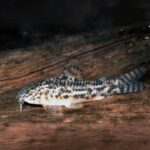
In most aquarium settings, the Aspidoras rochai presents as a subtly attractive rather than a flashy fish. The body base colour is a soft, slightly metallic silver-bronze, overlaid with fine speckling across the upper flanks and dorsal surface, and marked by a darker mid-lateral stripe that runs from the gill cover to the caudal peduncle. Colour intensity varies noticeably with substrate and lighting: on pale sand under bright lighting the fish often appears washed out and almost silvery-grey, while on dark sand under more subdued, planted-tank lighting the bronze tones deepen, the speckling stands out more clearly, and the mid-lateral band takes on a more defined, steely quality. Fins are mostly translucent with faint speckling along the rays, and the caudal fin occasionally shows a very subtle dark bar across its base — a trait strongest in wild-caught adult males in breeding condition and often barely visible in routine tank-kept fish.
Aspidoras rochai is often imported alongside other small Aspidoras species, and even experienced aquarists can struggle to tell them apart at the shop without referring to locality data on the invoice. Two species commonly seen in the same shipments — *Aspidoras pauciradiatus* and *Aspidoras lakoi* — are useful frame-of-reference forms: *pauciradiatus* is a touch smaller, more contrasty, and often has a notably darker shoulder blotch; *lakoi* tends to show heavier spotting and a prominent blotch on the dorsal fin. In all cases, the care requirements are broadly similar — soft, cool, clean water, fine sand substrate, heavy schooling — so mixing them in a well-planned biotope-style tank is both acceptable and visually interesting, although pure single-species schools show the strongest schooling behaviour and are strongly preferred by serious keepers and breeders.
One practical identification tip worth knowing: Aspidoras rochai generally lacks any strongly contrasting blotch on either the dorsal fin or the shoulder region, and the mid-lateral band, while present, is relatively soft and diffuse compared with the sharper, more graphic patterning of related species. When selecting fish from a mixed Aspidoras tank at a wholesaler or specialist shop, look for the evenly speckled, unblotched, bronze-toned individuals with a quiet horizontal stripe; these are the most likely to be A. rochai. Colour is also a useful welfare indicator in settled fish: a well-kept, relaxed, confidently schooling Aspidoras rochai will show clean, warm bronze tones and crisp speckling, whereas a stressed, poorly-fed, or newly-imported fish will appear visibly paler, greyer, and more washed-out. Colour recovery after a stressful period is typically gradual but complete, and is a useful sign that husbandry corrections are working.
Male vs. Female
Sexing Aspidoras rochai honestly requires patience, good viewing angles, and — ideally — a group of at least six fish for reliable comparison. As with many small corydoradine catfishes, the differences between the sexes are more subtle than in species famous for sexual dimorphism, and attempts to sex a single pair at point of sale are unlikely to succeed. The single most useful indicator is body shape as seen from above: a mature female viewed from directly overhead will appear as a clearly rounder, broader oval, while a mature male will look noticeably more slender and parallel-sided. This difference becomes pronounced when the female is gravid and carrying eggs, but it is generally visible even in non-breeding condition once the fish have reached full adult size.
To be frank, in juvenile or sub-adult fish the sex difference is simply not reliable, and any claim to sex fish under about three centimetres should be treated with scepticism. Dorsal fin shape is sometimes cited as a clue — mature males may show a slightly more pointed dorsal leading edge than females — but the overlap between individuals is large and this character alone is not a safe diagnostic. Colour and pattern provide essentially no sex information in this species; both sexes carry identical base colouration, speckling, and mid-lateral band, and there is no flush or temporary breeding colour in males comparable to what is seen in some tetras or cichlids. The practical path for breeders is to purchase a group of six or more sub-adult fish, grow them on together for several months, and allow natural pairing and sorting within the school; a mixed-sex group is virtually guaranteed at this sample size.
Compared with better-known Corydoras species, sexual dimorphism in Aspidoras rochai is noticeably subtler — Corydoras sterbai females, for example, are dramatically broader than their males in top-down view, whereas Aspidoras rochai females are only modestly so. This is an honest caveat for aquarists accustomed to sexing larger corydoras: the same techniques apply, but the magnitude of difference is smaller, the reliability is lower on any single individual, and group-level comparison across a full school is the only really trustworthy approach. Patience and good photographs are the serious Aspidoras breeder’s best tools.
| Feature | Male | Female |
|---|---|---|
| Body Shape (from above) | Slender and more parallel-sided along the length of the abdomen | Noticeably broader across the abdomen when viewed from above, especially in mature fish |
| Size | 3.8–4.3 cm at maturity — typically slightly smaller | 4.3–5.0 cm at maturity — modestly larger on average |
| Belly Profile | Flatter ventral line when viewed from the side | Rounded, fuller belly when carrying eggs; less pronounced when non-breeding |
| Dorsal Fin Shape | Leading edge of dorsal fin appears slightly more pointed in some mature males | Leading edge tends to be rounder, though the difference is subtle and not always reliable |
| Colour and Pattern | Essentially identical to female in base colour and pattern | Essentially identical to male; no reliable sex-specific colouration |
| Behaviour | Initiates chasing and T-position during pre-spawn | Receives male, collects milt, then places eggs on chosen surfaces |
Breeding
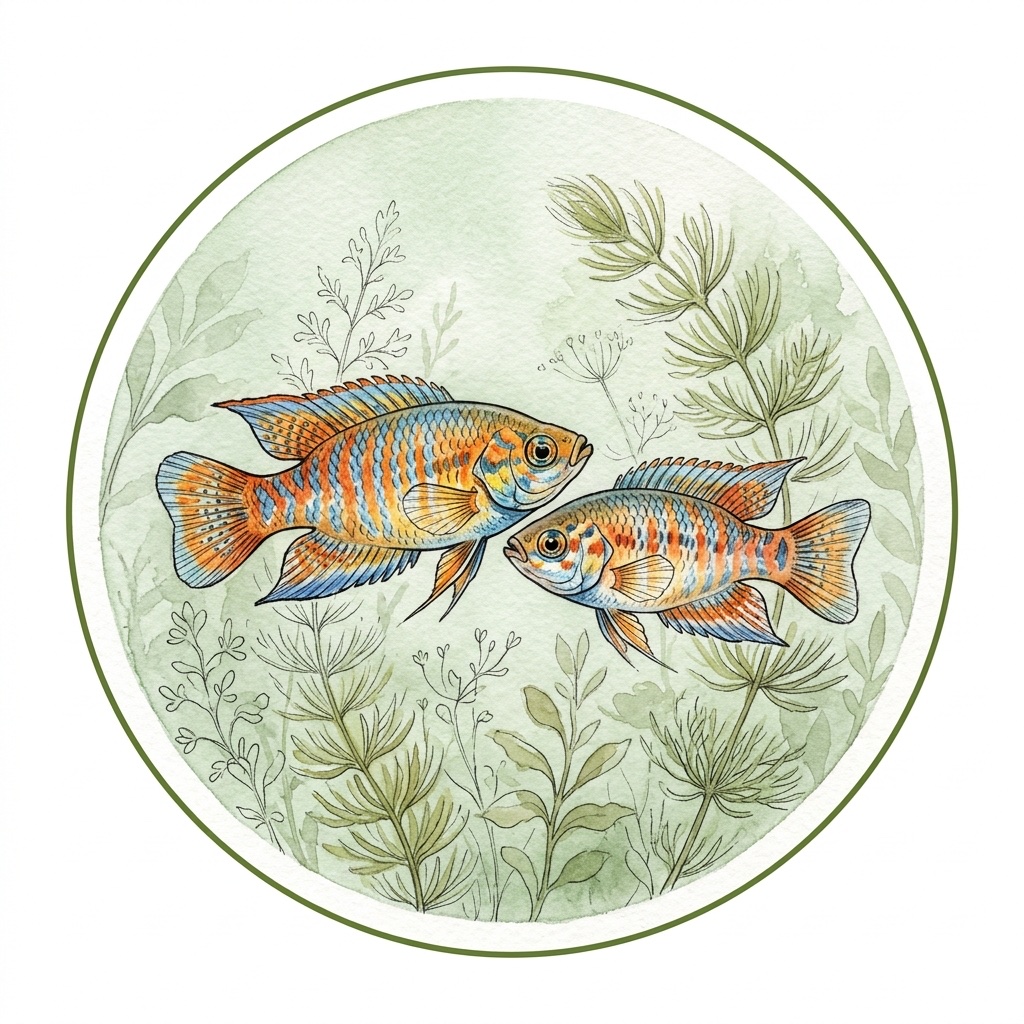
Week -2 to -1
Conditioning
Feed group heavily on live and frozen foods; stable temperature and good water quality
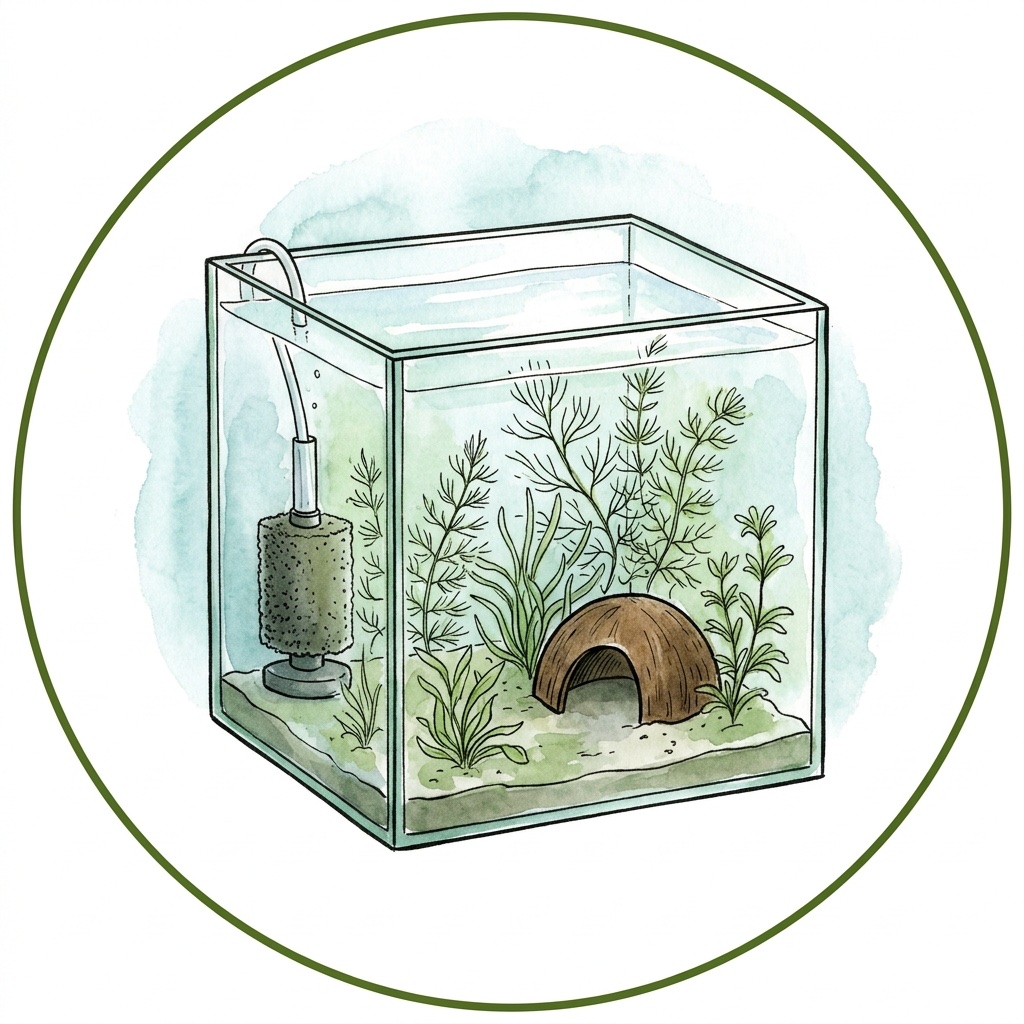
Day 0
Trigger Event
Large, cool water change simulates rainy-season onset
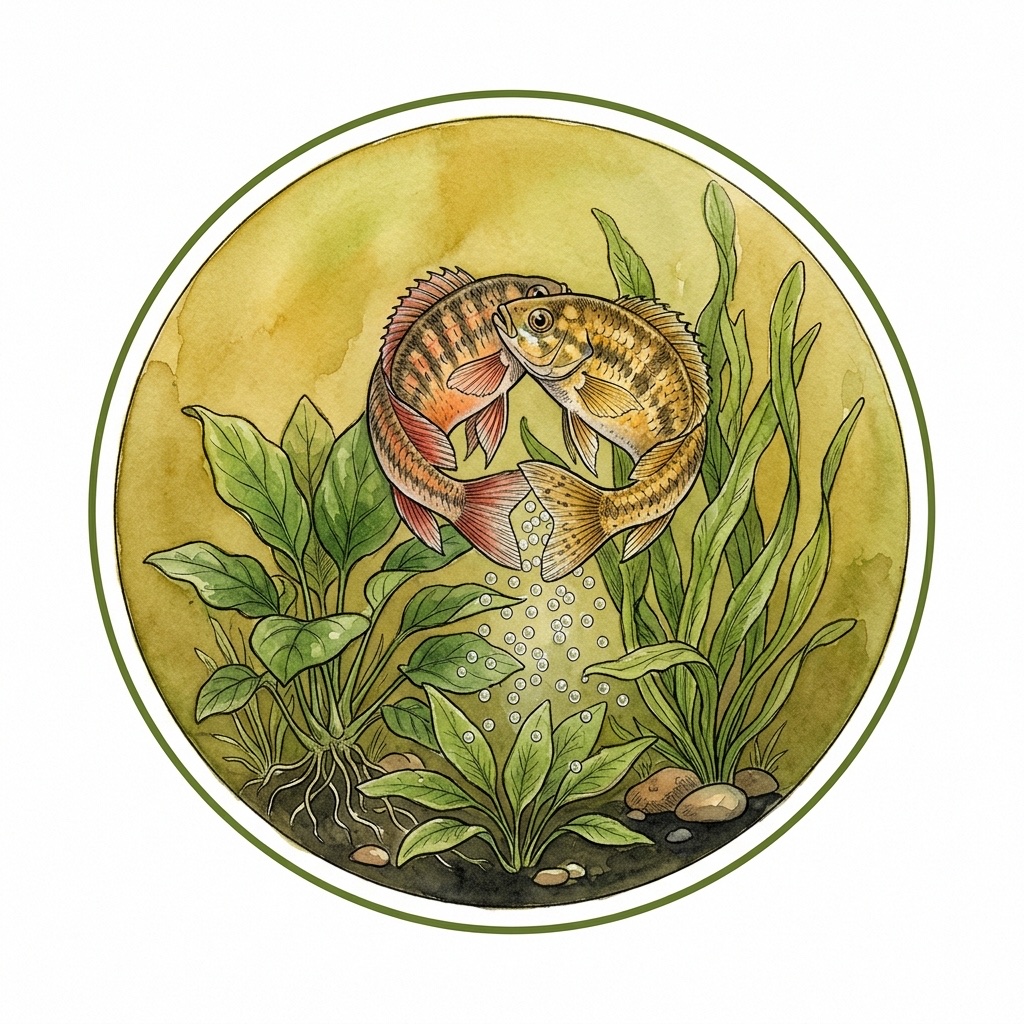
Day 0–1
Courtship and T-Position Mating
Males pursue female; spawning occurs in the characteristic T-position
Day 0–2
Egg Deposition
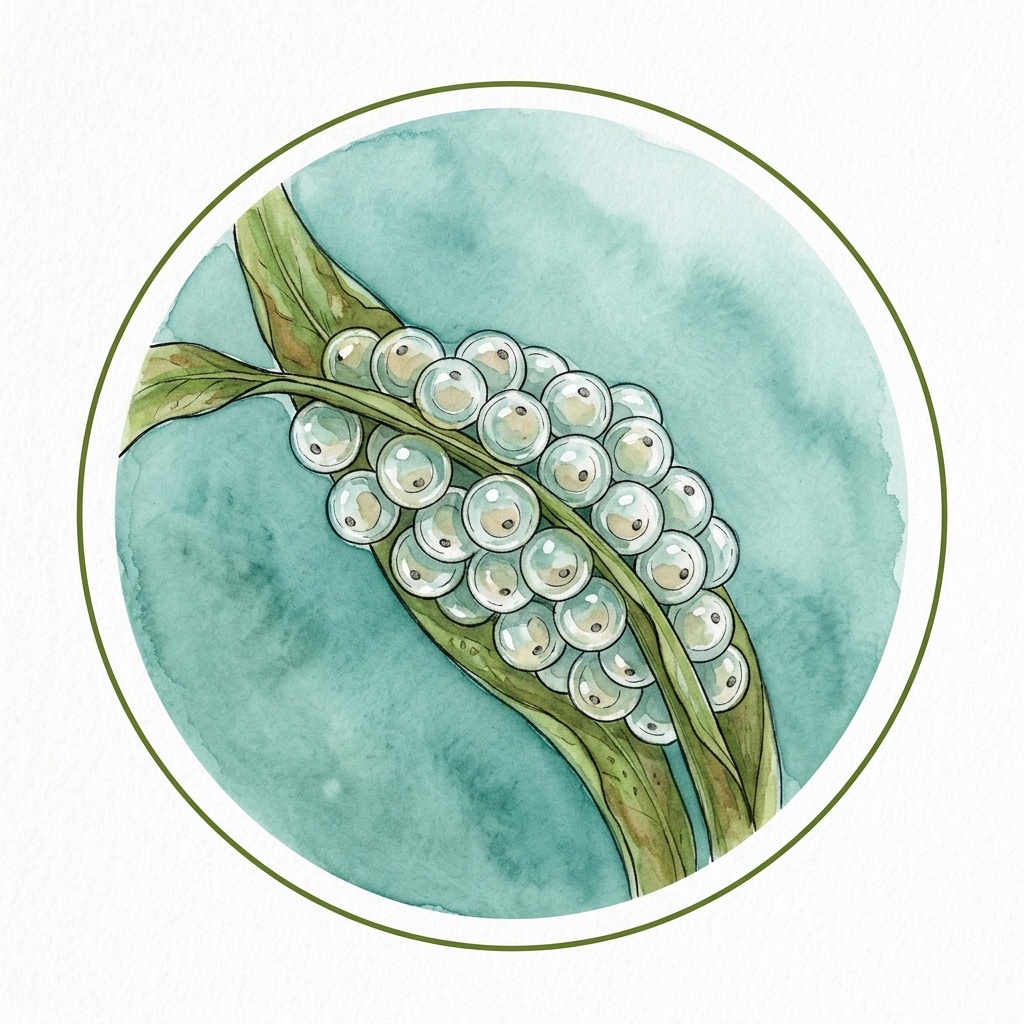
Female attaches small clutches to glass, broad leaves, or flat decor
Day 3–5
Hatching
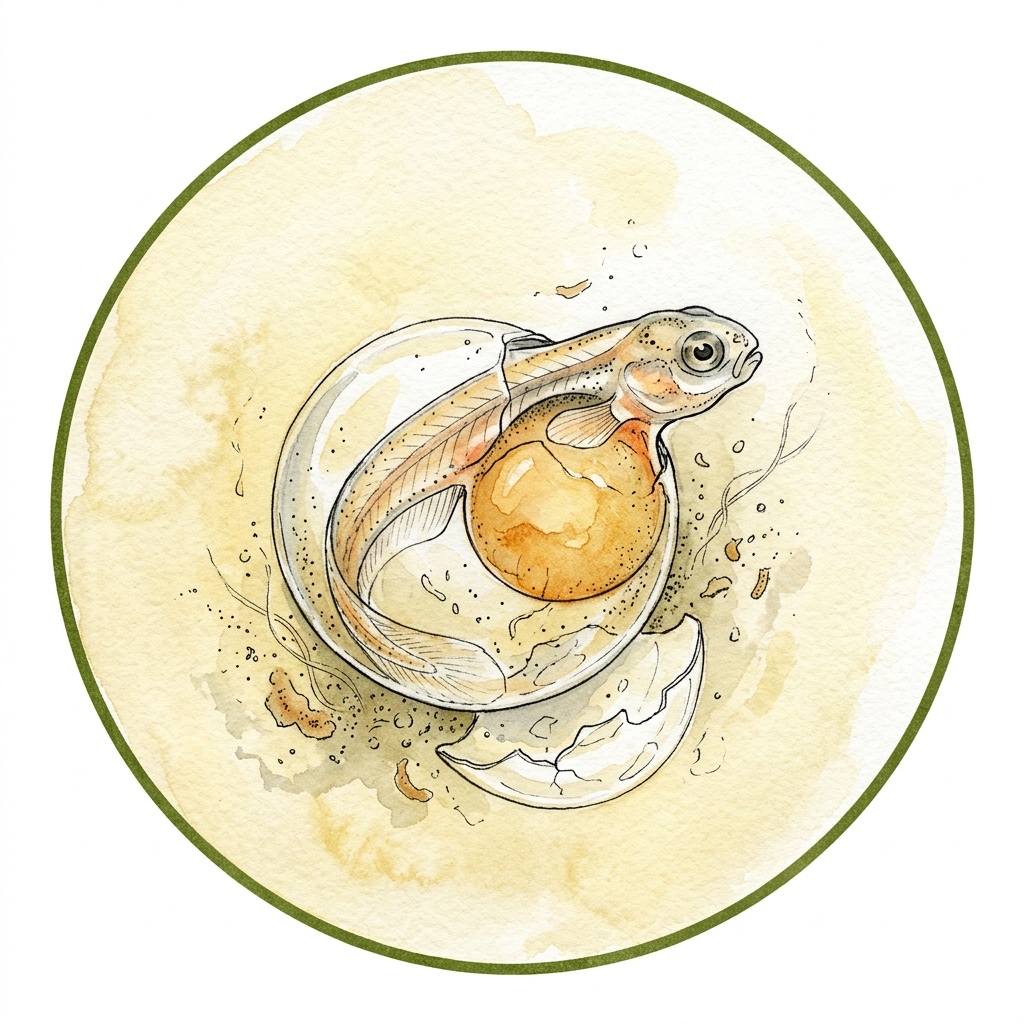
Eggs hatch into tiny, yolk-heavy fry
Day 6–14
Fry Free-Swimming and Grow-Out
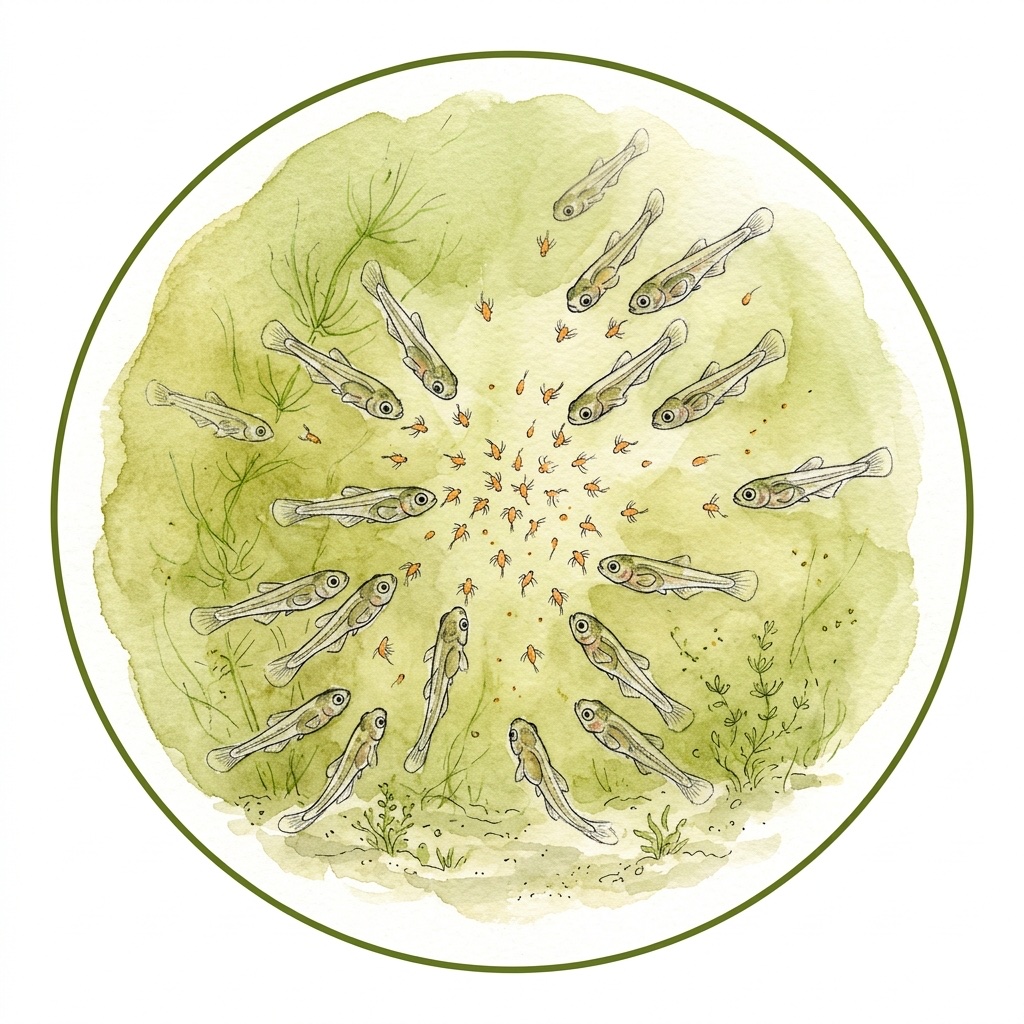
Start with infusoria and microworm; move to baby brine shrimp from day 5–7 post-hatch
Conditioning
Spawning in Aspidoras rochai is best triggered after a period of deliberate conditioning. Feed the group generously — three or four times a day in small amounts — with live baby brine shrimp, microworms, frozen daphnia, and frozen micro-bloodworm for one to two weeks. Mature females should visibly round out across the abdomen when viewed from above. Keep water quality pristine during this period, with frequent small water changes (10–15 per cent twice weekly) to mimic the steady, clean input of a well-oxygenated tributary stream.
Trigger Event
The classic trigger is a 40–50 per cent water change with noticeably cooler, softer water. Ideal parameters for the incoming water are pH 6.0–6.4, hardness 1–3 dGH, and temperature 20–22 °C — so that the tank drops by three to five degrees after the change. This simulates the onset of the rainy season in the species’ native north-eastern Brazilian habitat, a seasonal cue that reliably triggers spawning in both wild and captive populations. Active courtship often begins within 12 to 36 hours of the cool-water change, occasionally immediately.
Courtship and T-Position Mating
As with Corydoras, Aspidoras rochai spawns in the characteristic corydoradine T-position. Males pursue the chosen female around the tank in short bursts, with occasional quivering displays. The female positions herself perpendicular to the male — forming the shape of a T — with her head at the level of his vent, and briefly takes his milt into her mouth. Holding the milt briefly, she then swims to a chosen spawning surface, releases a small batch of eggs into her cupped pelvic fins, and fertilises them with the milt as she deposits them onto the chosen surface.
Egg Deposition
Egg deposition sites vary between individual females and between tanks. Favourite sites include the aquarium glass (often along the front pane near the substrate), the broad upper surfaces of anubias or cryptocoryne leaves, smooth flat areas of driftwood, and sometimes the underside of a sponge filter. Eggs are small (around 1.2–1.5 mm diameter), pale cream to amber, and attach firmly via natural adhesive. A single spawning session typically produces 30–80 eggs in multiple small clutches of two to six, spread across several surfaces over a period of several hours.
Hatching
At 24 °C, eggs typically hatch three to five days after fertilisation. As corydoradine catfish show no parental care, and the adults will readily consume their own eggs and fry if given the chance, most experienced breeders either remove the adults after spawning is complete, or carefully transfer the eggs to a small hatching tank. A small amount of gentle aeration and a trace of methylene blue or alder cone tannin helps prevent fungal loss of unfertilised eggs. Newly hatched fry are very small, heavily yolk-laden, and inactive for the first 36 to 48 hours after hatching.
Fry Free-Swimming and Grow-Out
Once free-swimming, fry immediately exhibit bottom-grubbing behaviour and begin foraging across the substrate of the hatching tank. Begin feeding with infusoria, green water, or commercially prepared liquid fry food for the first three to five days, and transition to newly-hatched microworms and baby brine shrimp nauplii from around day five to seven post-hatch. Water changes in the fry tank should be small but frequent — 10 per cent every one to two days — and the temperature should be held steady around 24 °C. Fry grow slowly for the first month and then accelerate; expect the characteristic speckled pattern to emerge around four to six weeks, and move juveniles to a larger grow-out tank once they reach around 1.5 cm.
Community Tank Mates
Aspidoras rochai thrives in quiet, well-matched community tanks where every resident is small, peaceful, and reasonably slow at feeding. The species’ size and temperament mean that it is the one being considered for protection, not the one causing problems: no Aspidoras is going to bully a tankmate, but plenty of otherwise “community” fish will bully or outcompete an Aspidoras. The ideal community is built from the bottom up — start with the Aspidoras school (six or more), then add a small schooling tetra in the mid-water (ember, neon, rummy nose, cardinal) and a gentle upper-level presence (honey gourami or small pencilfish) to complete the vertical structure. A clean-up crew of Neocaridina shrimp and a few nerite or mystery snails can be added for biological interest and glass cleaning. Everything in the tank should be soft-water tolerant, cool-tropical tolerant, and gentle in temperament.
The single most common mistake with Aspidoras rochai in community tanks is underfeeding caused by feeding-zone competition. Mid-water tetras, small gouramis, and fast-feeding dwarf cichlids will intercept sinking pellets before they reach the substrate, leaving the bottom-feeding Aspidoras hungry night after night. The solution is simple but must be deliberate: feed the mid-water fish first at the front of the tank with a small floating or slow-sinking food, then immediately drop a separate portion of dedicated sinking micro-pellets or wafers into the substrate zone at the back of the tank. The mid-water fish will be distracted by the first portion long enough for the Aspidoras to eat their share. Feed in the evening or with dimmed lights whenever possible — the Aspidoras will come out more confidently and feed more effectively in low-light conditions.
A final practical note: schooling behaviour in Aspidoras rochai is strongly size-dependent. A group of three or four fish will look lonely, constantly hide, and show almost none of the species’ natural character. A group of six is the practical minimum, and a group of eight to twelve is where the fish’s genuine schooling instincts emerge — constant synchronised movement across the substrate, visible pre-spawn interactions, confident feeding at the front of the tank, and the layered social behaviour that makes this small catfish so rewarding to keep.
| Species | Why | |
|---|---|---|
| ✅ | Ember Tetra | Tiny peaceful mid-water schooling tetra; completely different ecological niche from bottom-dwelling Aspidoras; shares soft, slightly acidic water preference |
| ✅ | Neon Tetra | Classic community pairing; mid-water schooler that occupies a separate tank level; tolerates similar cool-to-mid-warm temperature range |
| ✅ | Rummy Nose Tetra | Peaceful, tight-schooling mid-water tetra; prefers soft, slightly acidic water matching Aspidoras preferences |
| ✅ | Cardinal Tetra | Soft-water South American tetra; gentle, schools in mid-water, no competition for substrate food |
| ✅ | Honey Gourami | Gentle, slow-moving surface and upper mid-water fish; no competition and no aggression toward tiny bottom dwellers |
| ✅ | Dwarf Neocaridina Shrimp (Cherry Shrimp) | Tiny peaceful substrate invertebrate; clean-up crew partner; Aspidoras are far too small-mouthed to pose a threat to adult shrimp |
| ✅ | Nerite and Mystery Snails | Algae-grazing gastropods that occupy rock and glass surfaces; completely non-competitive with Aspidoras and add ecological interest to the tank |
| ✅ | Small Pencilfish (e.g. Nannostomus marginatus) | Tiny peaceful surface-orientated schooler; soft-water preferences match Aspidoras; no overlap in feeding zone |
| ❌ | Large or Fast-Feeding Cichlids (e.g. Angelfish, full-size Apistogramma) | Aspidoras rochai is small and shy; fast-feeding cichlids consume sinking food before it reaches the substrate, and some will nip or harass tiny bottom dwellers |
| ❌ | Larger Corydoras (e.g. Corydoras sterbai, C. aeneus) | Larger corydoras outcompete Aspidoras for substrate food and prefer warmer water; direct mixing leaves Aspidoras consistently underfed and thermally stressed |
| ❌ | Aggressive Bottom Feeders (e.g. Twig Catfish, large plecos, hoplo cats) | Compete directly for substrate food and territory; larger species will bully or displace tiny Aspidoras from their preferred foraging lanes |
| ❌ | Boisterous Barbs (e.g. Tiger Barb) | Fast-moving, nippy, semi-aggressive mid-water schoolers; stress out small, slow-feeding Aspidoras and outcompete them at feeding time |
| ❌ | Goldfish and Coldwater Species Requiring <20 °C | Incompatible temperature range; Aspidoras tolerate cool but not truly cold conditions, and goldfish waste levels overwhelm the clean soft-water requirement |
Quick Reference
| Scientific Name | Aspidoras rochai |
| Family | Callichthyidae (Corydoradinae) |
| Origin | Brazil — Rio Jaguaribe basin, Ceará |
| Adult Size | 4–5 cm — miniature cory |
| Lifespan | 5–8 years |
| pH | 5.5–7.2 (ideal 6.4) |
| Temperature | 22–26 °C (ideal 24 °C — prefers cooler end) |
| Hardness | 2–10 dGH (soft preferred) |
| Min Tank | 60 L for a school of 6; 80 L+ recommended |
| Group Size | 6+ minimum; 8–12 recommended for proper schooling |
| Substrate | Fine sand only — gravel is strictly unsuitable |
| Care Level | Intermediate — sand, cool water, feeding discipline required |
| Diet | Sinking micro-pellets, frozen daphnia and cyclops, live baby brine shrimp |
| Breeding | T-position egg-depositor; cool-water change triggers spawning |
| Tank Zone | Bottom / substrate |
| Special Note | Smaller, cooler, and softer-water oriented than most Corydoras — treat as a distinct lineage, not a mini Cory |
Related Products
Reviews
Clear filtersThere are no reviews yet.