

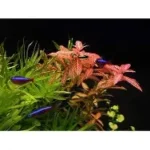
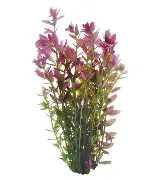
🪨 Species at a Glance
| Scientific Name | Hemianthus micranthemoides (synonym Micranthemum micranthemoides) |
| Common Names | Baby Tears, Pearlweed, Pearl Grass (also ambiguously Baby’s Tears) |
| Family | Linderniaceae (formerly Scrophulariaceae) |
| Origin | Eastern and southern United States to northern Central America — stream margins and slow river shallows |
| Form Supplied | Stem plant bundle or tissue culture (TC) cup, pest-free and algae-free |
| Planting Method | Stem — individual stems planted in clusters |
| Adult Height | 10-15 cm with regular trimming |
| Leaf Size | 2-4 mm pearl-shaped, paired along the stem |
| Light Requirement | Medium — 40-80 PAR at substrate (medium-high produces most compact form) |
| CO2 | Helpful, not mandatory — faster and denser growth with injection |
| Growth Rate | Fast under good light; medium in low-tech |
| Difficulty | Easy to Intermediate — forgiving but benefits from disciplined trimming |
| Aquascape Role | Midground to lower background cluster, NOT a carpet |
Planting Guide
Stem
Baby Tears is a stem plant, which means the planting method is fundamentally different from the plug-pressing technique used for HC Cuba or Monte Carlo carpets. Rather than dividing a single tissue-culture plug into small portions and pressing each into the substrate to spread horizontally, you plant individual stems one by one, each standing upright in the substrate, and the final visual effect depends on arranging the stems in clusters of the right density and staggered spacing. Beginners coming to Pearlweed from carpet-plant experience sometimes try to press the TC plug into the substrate as if it were HC Cuba — the result is a dense flat mass that rots at the base within two weeks because the buried stems cannot photosynthesise and there is no lateral runner mechanism to save them. If there is one planting mistake that kills more Baby Tears than any other, it is treating the plant as a carpet.
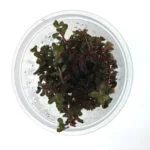
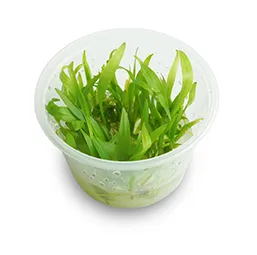
Baby Tears arrives in one of two forms depending on supplier. The traditional and most widely available form is a lead-weighted bunch of 15 to 30 individual cut stems of 5-10 cm length, gathered at the base by a strip of soft lead or a rubber band, which must be removed before planting. The modern alternative is a tissue-culture cup containing a dense mat of young plantlets — structurally similar to an HC Cuba cup but intended to be separated into individual stems rather than small horizontal clumps. If you buy a TC cup, rinse the gel thoroughly under lukewarm dechlorinated water, lay the mat on a clean surface, and use fine tweezers to gently tease apart the plantlets into individual stems of two to four centimetres. If you buy a lead-weighted bunch, remove the lead strip carefully to avoid tearing stems, inspect the base of each stem for the healthy white roots that indicate an established plant, and trim off any dead or brown lower leaves with sharp scissors before planting — this stimulates fresh root and leaf growth from the cleaned nodes and prevents rotting material from fouling the substrate.
Plant each stem individually with sharp planting tweezers, gripping the stem one third of the way up from its base rather than at the very bottom, and pushing the stem vertically into the substrate up to about two centimetres deep. Open the tweezers slightly while still buried, then slide them straight back out; the substrate should close around the buried portion of the stem. If the stem pops back out, the hole was too wide or the substrate is too loose — push it back in and gently press the substrate firmer around the base with your fingertip. Space the stems one to two centimetres apart within each cluster, and arrange the clusters themselves in irregular groupings rather than straight rows. A typical midground cluster of Baby Tears in a 45P tank uses 20 to 30 stems arranged in a soft triangular or oval footprint roughly 8 to 12 centimetres across at the base, tapering inward as it rises.
Stem orientation matters more than beginners expect. Baby Tears stems are bilaterally symmetrical along their length — two-leaved nodes paired at regular intervals — and the visual texture of a cluster is influenced by whether adjacent stems have their leaf pairs aligned or offset. Rather than planting every stem with the same orientation (which produces a stripey, slightly mechanical look), rotate each stem 30 to 60 degrees before planting relative to its neighbours; the resulting texture reads as naturally random and is closer to the appearance of a healthy wild-growing patch of Pearlweed than a uniformly oriented planting. This is a subtle touch, but it distinguishes contest-grade Dutch-style Pearlweed groups from beginner plantings where the stems all face the same direction.
Depth of insertion is critical. Stems pushed only one centimetre deep will uproot at the first water change or the first time a fish brushes against them; stems pushed five centimetres deep will rot at the buried portion within a week. Two centimetres is the sweet spot for stems of 5-10 cm length, and slightly deeper for longer stems. Always remove lower leaves from the buried portion before planting — buried leaves rot regardless of species, and rotting plant material in fresh aquasoil is the single most common trigger for a first-week diatom bloom. Use fingernail scissors or a fine pair of trimming scissors to clip off the bottom two to three leaf pairs of each stem before planting; the cleaned node will produce fresh roots within seven to ten days of being buried.
One further note for aquarists coming to Pearlweed from pure carpet-plant experience: because Baby Tears grows upward rather than outward, the cluster expands vertically during establishment rather than horizontally. This means a single initial planting does not grow to fill a larger area the way a carpet does. If you want Pearlweed to cover a wider footprint in the midground, you must either plant a larger initial cluster or let the first cluster mature and then propagate outward by trimming cuttings and replanting them in new locations (see Propagation section). Do not expect a sparse initial planting to ‘fill in’ the way a carpet does; it will instead grow tall and remain sparse, producing a leggy, straggly appearance that is very hard to rescue without replanting from scratch.
Water Chemistry Guide
5.5–7.5
ideal 6.8
20–26 °C
ideal 23 °C
2–10 dGH
Soft to moderately hard water (2-10 dGH)
Baby Tears has one of the broadest water-parameter tolerances of any classic planted-tank stem species, accepting pH from 5.5 to 7.5, total hardness from 2 to 10 dGH, and temperature from 20 to 26 C. This wide tolerance is one of the main reasons the species has remained a hobbyist staple across fifty years and across three continents of planted-tank culture despite fashion trends in more specialised carpet and background species. Pearlweed will grow in soft, acidic blackwater tanks alongside wild-type Angels and Cardinal tetras, and it will grow in moderately hard neutral tap water alongside Rainbowfish or livebearers — the breadth of compatible community setups is genuinely remarkable.
That said, Pearlweed’s best appearance comes from soft, slightly acidic water — around pH 6.5 to 7.0 with 4 to 8 dGH — where the leaves take on the deepest saturated green colour and the cluster grows in the most compact form. On harder alkaline water (pH above 7.5, GH above 12), the plant survives and grows but shows a paler colour cast and slightly longer internodes. If your tap water is very hard, a 50:50 RO blend with remineralisation to 4 to 6 dGH transforms the appearance of the cluster without requiring a fully RO-based setup. For contest-grade tanks, 100 percent RO with a quality remineraliser (Salty Shrimp GH/KH+, Seachem Equilibrium, ADA Mineral Supplement) to 4 to 6 dGH and 1 to 2 dKH gives the tightest control and the best visual result; the low dKH lets injected CO2 pull the pH down into the mid-six sweet spot without requiring high injection rates.
Temperature sits in the low-to-mid twenties Celsius, with 22 to 24 C being optimal. Pearlweed is notably more tolerant of cool temperatures than HC Cuba or Monte Carlo — it will grow acceptably at 18 to 20 C in an unheated room-temperature tank in a cool climate, which is one of the reasons the species was historically popular in Northern European planted tanks before aquarium heaters became standard household equipment. At the warm end of the range, sustained exposure above 27 C weakens the cluster, encourages brown diatom film on older leaves, and accelerates CO2 outgassing in injected setups. Tropical-climate keepers whose ambient room temperature sits above 28 C in summer should consider a small cooling fan or thermoelectric chiller; Pearlweed will tolerate 28 C for a few weeks but not indefinitely.
Flow distribution around and through the Pearlweed cluster matters more than most keepers realise. A dense cluster of 30 to 50 stems produces enough resistance to water flow that the interior of the cluster can become a slow-flow zone where detritus accumulates and biofilm coats the lower stems. If you notice brown diatom film or green hair algae appearing first on the inner stems of the cluster rather than on the outer ones, the problem is flow distribution and not fertilisation or light. Gently parting the cluster with your fingers once a week during a water change and directing a gentle stream of fresh water through the interior with a pipette or turkey baster clears the biofilm and restores healthy growth. For long-term tanks, positioning the Pearlweed cluster one-third to one-half of the tank width away from the filter output ensures adequate flow without the direct blast that uproots young stems.
How Much Light?
MEDIUM LIGHT
PAR: 40-80 PAR at substrate (medium-high 60-100 PAR produces the most compact form)
High
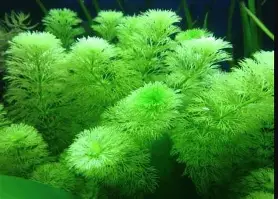
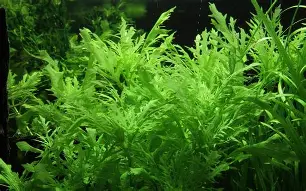
Baby Tears sits comfortably in the medium-light band for stem plants, accepting 40 to 80 PAR at the substrate as its working range with best appearance at the upper end of that band. Unlike HC Cuba, which requires strictly high light and collapses below 60 PAR, Pearlweed survives and even carpets loosely under lower light of 30 PAR, but the aesthetic difference between a well-lit cluster and a dim one is substantial enough that investing in decent lighting is almost always worth the expense. Under medium-high light of 60 to 100 PAR, Pearlweed grows in its classic compact form: short internode spacing of 3 to 5 millimetres between successive leaf pairs, densely branched stems that fill outward from every node, and a saturated bright-green colour with the semi-translucent quality that gives the plant its ‘pearl’ name. Under lower medium light of 40 to 60 PAR the internodes stretch to 7 to 10 millimetres, branching slows, and the overall cluster takes on a leggy, more open look that some aquarists prefer for naturalistic biotopes but that most contest-style layouts would consider weedy.
In practical fixture terms, any modern planted-tank LED running at 60 to 80 percent of its maximum output will provide the 60 to 100 PAR target on tanks up to 45 cm depth. For shallower 30 to 36 cm nanos, the same fixtures can be dimmed to 40 to 60 percent and still achieve target intensity. Mid-range fixtures such as the Chihiros WRGB II, Twinstar S-Line II, Week Aqua M-Series, or Fluval Plant 3.0 are well matched to Pearlweed’s requirements and cost reasonable. Budget LED strips from the hobby-level brands will grow Pearlweed successfully but often produce a looser, taller form because their actual output is below what they claim. When in doubt, choose a fixture one size up from the tank’s advertised range and run it at 60 to 70 percent rather than buying a smaller fixture and running it at 100 percent — the latter strategy runs the LEDs harder and shortens fixture lifespan without producing materially better plant growth.
The recommended photoperiod is eight to nine hours per day, slightly shorter than the HC Cuba or Monte Carlo 10-hour recommendation because Pearlweed’s fast growth rate combined with medium light produces plenty of biomass without the longer exposure, and because extending photoperiod beyond nine hours routinely triggers green hair algae in Pearlweed clusters without a compensating increase in plant growth. Use a 30 to 45 minute sunrise ramp and matching sunset ramp; the ramps are less critical for Pearlweed than for HC Cuba but still help the CO2-pH cycle settle smoothly and reduce algae pressure.
Signs of too-low light include leggy internodes of more than a centimetre between leaf pairs, loss of the characteristic pearl-like shape of individual leaves (they flatten into more elongated oval shapes when reaching for light), and a pale yellow-green colour cast that iron dosing alone cannot fix. Signs of too-high light, which are rare for Pearlweed because the plant metabolises fast and absorbs excess light productively, include a white-bleached cast on the top leaves of each cluster combined with sudden algae appearing on the glass near the tops of the stems rather than at the bottom. In the bleach case, the correct fix is usually to increase CO2 and iron dosing rather than to reduce light — Pearlweed at high light with under-supplied CO2 and micronutrients will bleach before it will slow down.
Pearling — the streams of small oxygen bubbles emerging from the leaf surfaces during peak photosynthesis — is a reliable indicator of a well-lit, well-fertilised, well-CO2-supplied Pearlweed cluster, and Pearlweed is actually one of the most dramatic pearling species in the hobby precisely because its name comes from this phenomenon. A mature cluster of 30 to 50 stems under 80 PAR with pressurised CO2 will carry visible pearls along every stem by mid-photoperiod and can produce a faint but audible faint-champagne-glass sound as bubbles detach from the leaves — one of the small pleasures of a well-kept planted tank. A cluster that never pearls, even at peak lighting, is under-performing and usually signals either low CO2 (most common), low iron (second most common), or a biofilm on the leaf surface from poor flow (third most common).
Recommended Photoperiod: 8-9 hours with 30-45 minute sunrise/sunset ramps
CO2 & Nutrient Guide
CO2 OPTIONAL
Pressurised CO2 injection is not mandatory for Baby Tears but transforms the plant’s appearance and growth rate when added. In a low-tech no-CO2 setup with adequate light and fertilisation, Pearlweed will grow successfully, produce visible branching and a healthy green colour, and spread through cuttings over time — this is a legitimate and long-established keeping style that has sustained the species in Dutch-style aquariums since the 1960s. Expect a low-tech Pearlweed cluster to reach full 10-15 cm height in roughly three to four months rather than four to six weeks, to branch less densely (20 to 30 percent fewer side shoots per node), and to pearl only weakly if at all. Many aquarists find this slower, looser growth perfectly acceptable, especially in tanks where Pearlweed is one of several mid-tech species and where the visual pace of the scape does not demand the aggressive growth of a CO2-injected tank.
Adding pressurised CO2 changes the plant dramatically. Target 20 to 30 ppm dissolved CO2, verified with a permanent drop-checker holding 4dKH reference solution that sits a confident lime-green at peak injection. Pearlweed responds to adequate CO2 within ten to fourteen days, producing visibly more compact internode spacing, denser branching at every node, richer colour saturation, and the characteristic pearling under peak light. The transition from low-tech to CO2-injected growth form is one of the more striking before-and-after demonstrations in the hobby and is why many planted-tank educators use Pearlweed as their illustration plant when teaching CO2 benefits. Unlike HC Cuba, Pearlweed is not highly sensitive to CO2 instability — a bubble-count wobble or a weekend outage during cylinder refill will slow growth but will not kill or melt the cluster, making Pearlweed a reasonable plant to learn CO2 management on before graduating to HC.
Diffusion method follows the same options as Monte Carlo: in-tank glass diffuser, in-line atomiser, or canister-output reactor. For Pearlweed specifically, the in-tank glass diffuser placed near the base of the cluster produces the most dramatic pearling because CO2 micro-bubbles drift up through the cluster and deliver gas directly to the leaves; the in-line methods produce more evenly distributed growth across the whole tank but less photogenic pearling. If your priority is visual effect during photography, consider the in-tank diffuser for Pearlweed and accept a slightly uneven distribution across the rest of the tank.
Liquid carbon (Seachem Excel, APT Fix, UNS Liquid Carbon, Easy-Life EasyCarbo) at daily-dose strength genuinely accelerates Pearlweed growth in non-pressurised tanks and produces about half the benefit of full CO2 injection for a fraction of the equipment investment. This is a sensible middle path for aquarists who want better than low-tech results without committing to a full CO2 cylinder, regulator, solenoid and diffuser setup. One caveat: at full daily dose some liquid carbons stress Vallisneria, Anacharis and delicate mosses, so if those species are present in the tank, start at half dose and only increase if the sensitive species show no ill effects after two weeks.
Fertilisation
Pearlweed is a relatively hungry column-feeder by the standards of medium-difficulty stem plants and rewards consistent water-column fertilisation more than almost any other variable in its care. Because the plant feeds heavily from the water column rather than the substrate, the usual recommendation to prioritise aquasoil over column dosing (which is sound advice for Cryptocoryne, Echinodorus and similar root-feeders) is inverted here: column dosing matters more than substrate richness, and a modest substrate paired with disciplined water-column dosing will outperform a rich aquasoil paired with weak dosing.
On a fresh aquasoil the first three to four weeks often need only a light trace mix because the substrate is leaching ammonium and nitrate. After this initial period, begin full macro and micro dosing: target 10 to 20 ppm nitrate, 1 to 2 ppm phosphate, 15 to 25 ppm potassium, and a comprehensive trace mix with iron, manganese, boron, zinc, copper and molybdenum. Commercial all-in-ones such as APT Complete, Tropica Specialised, Seachem Flourish, or ADA Green Brighty Mineral provide the core macro and trace supply when dosed three to four times per week at the label-recommended rate. Supplement with a daily or every-other-day trace micro mix emphasising chelated iron (DTPA-iron or Fe-gluconate); Pearlweed shows iron deficiency quickly as pale yellow-green new growth, and a targeted iron booster dose produces visible colour improvement within five to seven days.
On inert sand or gravel substrate with root tabs, column dosing needs to be slightly heavier than on aquasoil because there is no background leaching to supplement it. Root tabs placed under the Pearlweed cluster are optional and provide modest benefit; because the roots are shallow and fibrous rather than deep-feeding, the tabs work partially by releasing nutrients into the column near the cluster rather than feeding the plant directly through the roots. A single tab per 10 to 15 centimetres of cluster width, refreshed every three to four months, is ample.
Watch the plant for diagnostic signals. Pale new growth across the whole cluster indicates iron deficiency — raise the trace dose. Yellowing of older lower leaves indicates nitrogen or potassium deficiency — raise macros. Stunted new growth with normal colour indicates phosphate limitation — check your macro dosing. Dark spots on older leaves indicate copper or zinc excess — switch to a cleaner trace mix or halve the current dose. Algae appearing on the stems before it appears on glass indicates a biofilm problem from slow flow in the cluster rather than a fertiliser problem, and is solved by improving circulation rather than changing dosing.
Weekly water changes of 30 to 40 percent during the first two months of establishment keep the nutrient balance fresh and prevent organic accumulation in the substrate around the dense stem cluster. Once the tank is mature, fortnightly changes of 25 to 30 percent are sufficient for Pearlweed specifically, though many keepers maintain weekly changes for overall tank stability. The single most important diagnostic discipline is a weekly photograph of the Pearlweed cluster from the same angle under peak light, reviewed before any dosing or parameter adjustment. Week-on-week change is visible and guides the one-variable-at-a-time adjustment philosophy that produces steady improvement rather than the scatter-shot tinkering that destabilises otherwise healthy tanks.
Maintenance Guide
FAST GROWTH
Baby Tears is one of the fastest-growing fine-textured stem plants in the hobby under CO2-injected conditions and a moderate-pace grower in low-tech setups. Under medium-high light with pressurised CO2, a planted cluster reaches full 10 to 15 cm height in four to six weeks, branches aggressively from every node, and typically requires the first trim at week four and further trims every two to three weeks thereafter. In a low-tech no-CO2 tank, the same cluster reaches full height in three to four months and needs trimming roughly monthly once established. The first seven to ten days after planting are quiet — the cut or plantlet stems are establishing root systems and producing their first new leaf pairs — and beginners often mistake this quiet period for failure. Patience during the establishment phase is rewarded: from day ten to fourteen onwards, visible branching begins at the base and the cluster fills in rapidly.
Trimming is where Pearlweed management either succeeds or fails, and it is also the single aspect of the plant’s care that surprises aquarists coming from carpet-plant experience. Unlike HC Cuba or Monte Carlo, where trimming is a flat horizontal cut with curved scissors to keep the carpet at a uniform low height, Pearlweed trimming is a branching management technique aimed at producing a dense bushy cluster rather than a leggy one. The goal is to encourage lateral branching at every node below the cut point, so cuts are made at the height where you want the cluster to stabilise, which in turn causes every stem cut at that height to branch into two or three side shoots within ten to fourteen days. Repeated trimming at the same height over several cycles produces the dense filigree-textured cluster that is Pearlweed’s signature appearance.
Use sharp straight scissors or curved aquascaping scissors for stem plants. Cut each stem cleanly just above a leaf node rather than between nodes, because the node is where the plant will produce new side shoots, and cuts made mid-internode simply die back to the nearest node anyway. The first trim on a newly planted cluster should happen at around week four from planting, cutting back the tallest stems to about 6 to 8 centimetres; this triggers the branching that produces the dense bushy second-growth form. Subsequent trims every two to three weeks keep the cluster at its target 10 to 15 centimetre display height, and progressively increase cluster density as each trim produces more branch points.
Remove every clipping immediately with a fine net or siphon. Pearlweed clippings are one of the most prolific re-rooters in the hobby and will anchor themselves against driftwood, between stones, in filter intakes, and at the water surface if not promptly extracted. A single missed trimming session typically produces three to five unwanted re-rooted tufts that must be individually uprooted during the following week. Efficient trimming practice: turn off the filter for the duration of the trim, work from one end of the cluster to the other with scissors in one hand and a net in the other, net each cut stem within seconds of cutting rather than letting it drift, and after finishing run a 15-minute siphon-and-inspect pass over the rest of the tank to catch any that escaped.
A classic technique for rejuvenating a Pearlweed cluster that has grown leggy, pale or detritus-laden at the base (typically after six to twelve months of continuous growth): cut the cluster down hard to within one or two centimetres of the substrate, remove every trimming, and allow the stubby stems to regrow from the base. Within three to four weeks a fresh dense cluster has regrown with cleaner basal structure, richer colour, and fewer algae-colonised stem sections. This aggressive chop-and-regrow rejuvenation is a standard Dutch-style maintenance technique for all stem plant groups and is particularly effective on Pearlweed because of the plant’s vigorous regrowth response.
Snails and shrimp are generally compatible with Pearlweed. Bladder snails (Physella acuta) and ramshorn snails (Planorbidae) graze the biofilm on older stems without damaging healthy leaves; their impact is mildly beneficial rather than destructive. Neocaridina and Caridina shrimp adore the fine filigree of a mature Pearlweed cluster as a foraging and shelter environment, and the plant is one of the most recommended stem species for shrimp-focused tanks. Fish that dig or graze heavily — most loaches, larger cichlids, some cyprinids such as Goldfish or Silver Dollars — will damage young clusters and are poor tankmates for Pearlweed. Algae pressures follow the standard new-tank progression: diatoms in weeks two to four, green dust algae on glass around weeks four to six, and occasional green hair algae on stems from month two onwards. Pearlweed’s fast growth outcompetes most algae pressures if the rest of the tank is balanced; persistent algae on Pearlweed stems specifically almost always indicates either poor flow through the cluster interior or inadequate iron dosing rather than a tank-wide problem.
Weekly Water Change (establishment)
30-40% during weeks 1-8; gently part the cluster interior with tweezers and direct a pipette rinse through the inner stems to clear biofilm
Fortnightly Water Change (mature)
25-30% once the cluster is established; maintain weekly changes if keeping livestock-heavy or if algae pressure is a concern
First Branching Trim
At week 4 from planting; cut tallest stems to 6-8 cm to trigger lateral branching; every subsequent trim at 2-3 week intervals
Ongoing Shape Trim
Every 2-3 weeks once established; sharp cuts just above leaf nodes to encourage branching; net every clipping immediately
Column Fertiliser Dosing
All-in-one macro-micro mix 3-4 times weekly; daily or every-other-day trace mix emphasising DTPA-iron
Aggressive Rejuvenation Chop
Every 6-12 months; cut cluster back to 1-2 cm from substrate to refresh the base and clear accumulated biofilm
Filter Maintenance
Canister filter rinse every 6-8 weeks in old tank water only — never tap water, which kills the biofilm and destabilises the tank
Layout & Placement
Midground
Baby Tears is not a foreground plant. This needs restating as the opening point of the aquascaping discussion because so many first-time buyers purchase the species expecting a carpet — driven by the confusing ‘baby tears’ name that is shared with the true carpet species Hemianthus callitrichoides ‘Cuba’ — and end up with a delicate stem cluster that reaches for the sky. Once correctly understood as a midground-to-lower-background plant, Pearlweed becomes one of the most versatile and well-loved stem species in the hobby, with aquascaping applications spanning Dutch-style terraced layouts, Nature Aquarium naturalistic scapes, biotope aquaria representing the temperate-to-subtropical Americas, and classic community planted tanks.
In Dutch-style aquariums — the formal terraced style of planted tank developed in the Netherlands from the 1930s onwards and characterised by distinct ‘streets’ of single-species groups arranged in visual competition with one another — Baby Tears fills the critical role of a fine-textured bright-green accent cluster in the mid-to-rear-middle range of the terrace. Its saturated green colour contrasts beautifully with red Alternanthera reineckii groups placed adjacent to it, with the darker-green textural mass of Lobelia cardinalis behind it, and with the yellow-green of Hygrophila corymbosa ‘Compact’ beside it. A typical Dutch-style Pearlweed group in a 90P tank is 15 to 20 centimetres wide and 20 to 25 centimetres deep, placed at roughly the quarter or third point from the back wall, with its front edge standing 10 to 15 centimetres above the foreground carpet line. The contrast between the fine filigree of Pearlweed and the broader leaves of its terraced neighbours is what gives Dutch-style aquariums their characteristic visual music.
In Nature Aquarium (the Japanese minimalist style developed by Takashi Amano from the late 1980s onwards), Pearlweed plays a different but equally valuable role as a softening transitional plant between the hard geometric lines of stone or wood hardscape and the taller background stem plants. In a typical Nature Aquarium layout with a central rock arrangement and a background wall of red and green stem plants, a small Pearlweed cluster placed at the base of a piece of driftwood or at the transition between carpet and hardscape visually dissolves the boundary between the elements and creates the soft organic flow that defines the style. Takashi Amano himself used Pearlweed in dozens of his published layouts across three decades, and it is one of only a handful of species that appear consistently in his work from the 1990s through to his final tanks in the 2010s.
Baby Tears pairs especially well with HC Cuba and Monte Carlo in three-tier planted compositions. In a large tank, HC Cuba covers the immediate foreground as a sub-centimetre carpet, Monte Carlo covers the near-midground as a 3 to 5 centimetre carpet, and Pearlweed cluster in the midground reaches 10 to 15 centimetres with its fine filigree texture rising out of the flat Monte Carlo plane. This three-tier vertical gradient of leaf size (sub-millimetre, 3 to 5 millimetre, 2 to 4 millimetre pearl-shaped) combined with the increasing height and changing orientation produces dramatic forced perspective that makes the scape read as significantly deeper than its physical dimensions, particularly in photographs. The technique is a staple of international competition photography and is visible in many winning entries at IAPLC and AGA contests each year.
For smaller tanks of 30P or 45P where a full three-tier carpet is not practical, Pearlweed works beautifully as a standalone midground accent behind a simpler Monte Carlo or Eleocharis mini carpet, providing the textural interest and the pearling visual drama that pure carpet layouts sometimes lack. A single Pearlweed cluster of 15 to 25 stems placed at the focal point of a nano aquascape can carry the entire midground composition and leaves room in the background for a simple red stem plant such as Rotala rotundifolia ‘Colorata’ or Ludwigia ‘Super Red’ to finish the colour palette.
Companion planting is straightforward given Pearlweed’s broad parameter tolerance. Foreground carpet plants (HC Cuba, Monte Carlo, Eleocharis mini) pair as the layer below. Midground broader-leaved species (Staurogyne repens, Hygrophila corymbosa ‘Compact’) provide textural contrast beside the Pearlweed cluster. Background stem plants (Rotala species, Ludwigia species, Myriophyllum) provide the taller layer behind. Rhizome attachment plants (Anubias nana ‘Petite’, Bucephalandra varieties) on nearby driftwood give dark-green anchors that frame the Pearlweed cluster. Avoid aggressive root-feeders that compete heavily for column nutrients (large Echinodorus swords, fast-spreading Cryptocoryne), which will outcompete Pearlweed for trace elements and stunt its growth; if both must be present, increase column dosing significantly to compensate.
Fish pairing is similarly broad. Small schooling fish (cardinal tetras, ember tetras, celestial pearl danios, chilli rasboras, neon tetras, green neons) drift through and around the Pearlweed cluster with their colours popping against the saturated green background, producing the signature Nature Aquarium ‘fish floating through foliage’ visual effect. Dwarf shrimp love the fine filigree as a foraging and shelter environment. Avoid digging fish, large cichlids, and boisterous swimmers such as tiger barbs or large danios that will physically damage the delicate stems with their fin and body pressure. Pearlweed is one of the best stem plants for Betta splendens tanks specifically, because the fine leaves do not catch the Betta’s delicate fins while the density of the cluster provides valuable visual cover.
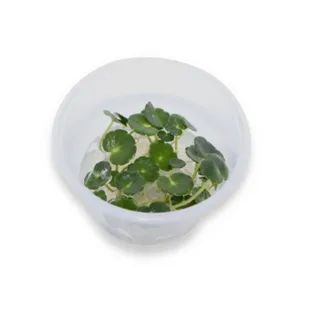
As a final aquascaping note, Pearlweed’s ‘name origin’ story is worth mentioning because it is fundamental to avoiding the most common buyer confusion in this segment of the hobby. The ‘Baby Tears’ name in English-speaking aquarium trade is applied to three genuinely different plants: (1) Hemianthus micranthemoides (this plant, Pearlweed, a stem plant growing 10-15 cm tall with 2-4 mm pearl-shaped leaves); (2) Hemianthus callitrichoides ‘Cuba’ (often called ‘Dwarf Baby Tears’ or ‘HC’, a true foreground carpet reaching only 1-3 cm with sub-millimetre leaves); and (3) Micranthemum umbrosum (sometimes called ‘Giant Baby Tears’ or simply ‘Baby Tears’ in older literature, a taller stem plant with 5-8 mm rounded leaves reaching 15-25 cm tall). Compounding the confusion, the garden-trade houseplant Soleirolia soleirolii is also called ‘Baby’s Tears’ or ‘Irish Moss’ in horticultural catalogues, though that species is not aquatic at all. When purchasing, always verify against the scientific name rather than the common name, and when in doubt ask the supplier whether the plant is a stem or a carpet — that single question resolves the most damaging version of the confusion.
| Plant | Why | |
|---|---|---|
| 🌿 | HC Cuba (Hemianthus callitrichoides) | True foreground carpet cousin that shares the common-name confusion with Pearlweed; pairs as the foreground layer below a Pearlweed midground cluster in three-tier compositions |
| 🌿 | Monte Carlo (Micranthemum tweediei) | Medium-leaved carpet cousin; provides the near-midground flat carpet layer beneath the Pearlweed vertical cluster in layered scapes |
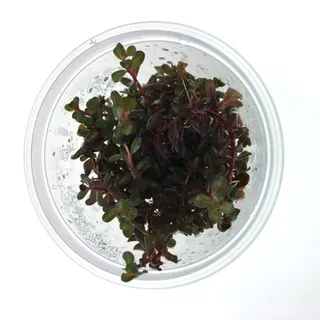
| 🌿 | Rotala rotundifolia ‘Colorata’ | Red-orange stem background plant whose warm colour contrasts dramatically against Pearlweed’s saturated cool green filigree |
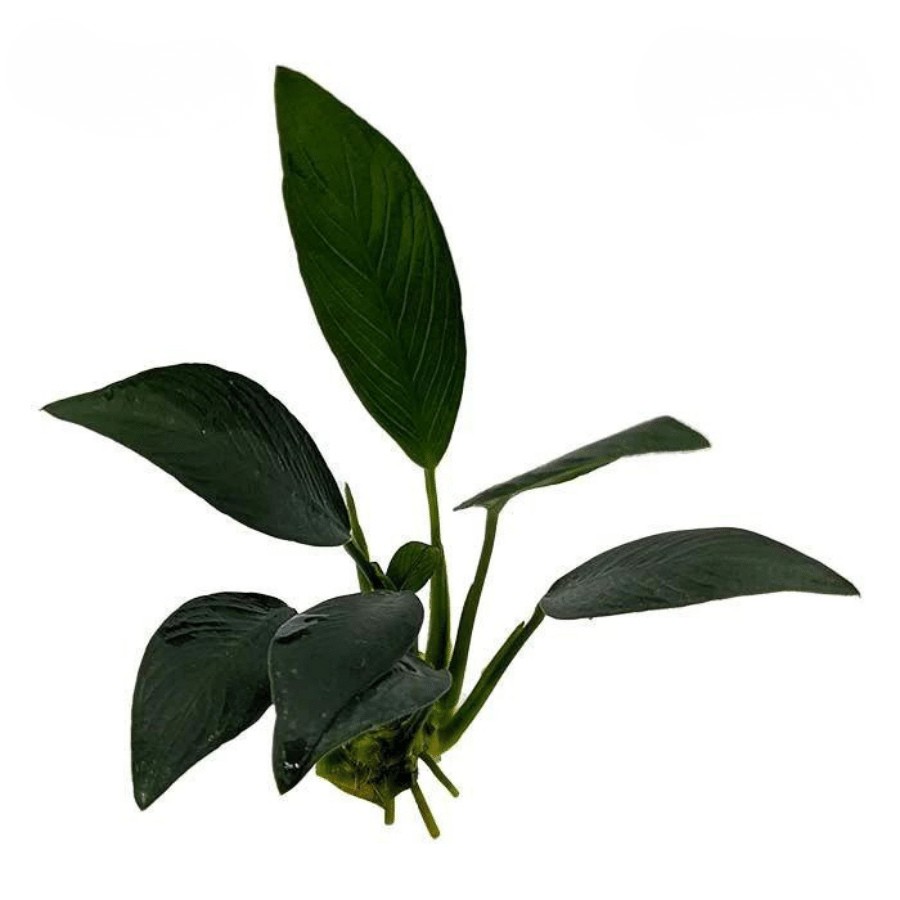
| 🌿 | Anubias nana ‘Petite’ | Dark-green dwarf rhizome plant for attaching to hardscape near the Pearlweed cluster; provides textural and tonal anchor without competing for substrate |
| 🌿 | Christmas Moss (Vesicularia montagnei) | Mid-layer moss on attached driftwood; pairs beautifully with Pearlweed’s fine filigree through shared textural register at different depths |
| 🌿 | Staurogyne repens | Broad-leaved upright midground stem that contrasts with Pearlweed’s fine texture; shares identical light and parameter preferences |
Propagation Guide
Cuttings
Baby Tears propagates by stem cuttings, which is one of the simplest propagation methods in the planted-aquarium hobby and the natural byproduct of routine trimming rather than a separate dedicated activity. Every trim session produces dozens of viable cuttings, each of which can be replanted immediately to expand the cluster footprint, fill in gaps, or start new clusters in other parts of the tank or in other tanks entirely. In fact, managing Pearlweed cuttings is more often a problem of having too many than too few, which is why experienced keepers plan their trimming around the propagation outcome: ‘I’ll trim in two weeks and take fifteen good cuttings to replant the back-left cluster’ rather than trimming reactively when the cluster outgrows its display height.
The propagation technique is straightforward. After a trim, select cuttings of 4 to 6 centimetres length that have at least three leaf pairs visible and ideally show some adventitious root formation at the lowest nodes. Trim off the bottom leaf pair with fine scissors to clean the node that will be buried, and plant the cutting in fresh substrate exactly as you would a primary planting — two centimetres deep, gripped one third up from the base, rotated to offset its orientation from neighbours. The cutting produces visible new roots within seven to ten days and begins extending new leaf growth from the top within two weeks. By week four the replanted cutting is indistinguishable from a primary planting of the same age.
Cuttings that are not immediately replanted will survive floating at the water surface for up to a week with no loss of viability, continuing to photosynthesise from surface light and atmospheric CO2. After a week the floating cuttings begin to degrade, primarily because they accumulate surface film and biofilm that impair photosynthesis. If you need to store cuttings longer than a week, pin them down on a shallow tray of substrate under gentle light and dose lightly, or simply plant them immediately into any available substrate area and trim them back into shape later.
Longer cuttings of 8 to 12 centimetres can be planted directly to produce a taller instant cluster, which is useful when you want a mid-height midground effect from the first day rather than waiting for shorter cuttings to grow up. The tradeoff is that longer cuttings take longer to establish new root systems (two to three weeks versus one week) and are more prone to tipping or drifting during the first week because their tall profile catches more flow. For most applications, medium-length cuttings of 5 to 7 centimetres are the sweet spot that balances establishment speed against initial visual impact.
A useful advanced technique for contest-style layouts is the coordinated replant, where a whole Pearlweed cluster is uprooted, refreshed with all new cuttings from the trimmings of another established cluster, and replanted in a tighter more intentional arrangement. This is a significant undertaking that can take a full afternoon on a 60P tank and will set back the cluster’s apparent maturity by two to three weeks, but it produces dramatically cleaner final results than trying to gradually trim an overgrown cluster into a tight formation. Keep this technique in reserve for preparing a scape for photography or a competition entry rather than for routine maintenance.
Quick Reference
| Light | Medium — 40-80 PAR (med-high 60-100 PAR for most compact form) |
| Photoperiod | 8-9 hours with 30-45 min ramps |
| CO2 | Helpful but optional; 20-30 ppm if injected |
| Growth Rate | Fast under CO2; medium in low-tech |
| Position | Midground to lower background — NOT a carpet |
| Height | 10-15 cm with regular trimming |
| Leaf Size | 2-4 mm pearl-shaped, paired along stem |
| pH | 5.5-7.5 (ideal 6.5-7.0) |
| Temperature | 20-26 C (ideal 22-24 C) |
| Hardness | 2-10 dGH (soft to moderately hard) |
| Substrate | Aquasoil preferred; inert sand plus root tabs acceptable |
| Propagation | Stem cuttings; freely reproduces from every trim |
| Difficulty | Easy to Intermediate — forgiving stem plant for most setups |
Reviews
Clear filtersThere are no reviews yet.