🪨 Species at a Glance
| Scientific Name | Corydoras pygmaeus |
| Family | Callichthyidae |
| Order | Siluriformes |
| Common Names | Pygmy Cory, Pygmy Catfish, Pygmy Corydoras |
| Origin | Madeira river basin — Brazil and Peru; Rio Madeira and Rio Aguarico tributaries |
| Adult Size | 2.0–2.5 cm (0.8–1.0 in) — among the smallest Corydoras |
| Lifespan | 3–5 years with good care |
| pH Range | 6.0–7.5 |
| Temperature | 22–26 °C (72–79 °F) |
| Hardness (dGH) | 2–10 (soft water preferred) |
| Diet | Micro-carnivore — crushed flake, micro pellets, frozen baby brine shrimp, daphnia |
| Minimum Tank Size | 40 L (10 gal) for a school of 10+ |
| Care Level | Beginner to Intermediate |
| Temperament | Peaceful; extremely social — requires group of 10+ to exhibit schooling |
| Swimming Zone | Mid-water — unique among corydoras (pelagic schooler) |
| Breeding | Egg depositor; T-position mating; easy to breed with soft, cool water trigger |
| Availability | Common in the hobby, often sold in small groups |
Where the Name Comes From
The species name *pygmaeus* comes directly from the Greek *pygmaios*, meaning ‘dwarf’ or ‘of the size of a fist’ — a reference in ancient mythology to the mythical pygmy people, and a name applied across zoology to any species that is notably smaller than its relatives. In the case of Corydoras pygmaeus, the name could not be more apt. At a maximum adult size of 2.0 to 2.5 centimetres, the Pygmy cory is one of the three smallest members of the genus, a group that collectively represents the extreme miniature end of a family in which most species reach 5 to 8 centimetres. The species was formally described by Knaack in 1966, just a few years after several other dwarf cory species were brought into scientific awareness in the ichthyological literature, and the description came during a particularly productive period in South American catfish taxonomy.
The genus *Corydoras* itself is built from two Greek roots: *kory*, meaning ‘helmet’, and *doras*, meaning ‘skin’ or ‘hide’. The reference is to the two overlapping rows of bony plates — called scutes — that run along the flanks of every member of the Callichthyidae family, giving them an armoured appearance and providing the principal defence of these otherwise small and vulnerable catfish. On a Pygmy cory these plates are still present and fully functional; they are simply scaled down to match the tiny body, giving a mature adult the look of a miniature knight in silvery armour. Under a magnifying glass the individual scutes are clearly visible as a pair of neat interlocking rows, a reminder that despite the Pygmy cory’s schooling, tetra-like lifestyle, it is still a genuine armoured catfish beneath its unusual behaviour.
It is worth noting that the recent large-scale revision of the Corydoradinae by Tencatt, Britto and colleagues has proposed moving many ‘classic’ Corydoras species into new genera — including the subgenus *Hoplisoma*, *Osteogaster*, and others — based on genetic and morphological studies. Under some of these revised classifications the Pygmy cory may eventually be placed in the genus *Hastatus* along with its close relatives. For now, the long-established name Corydoras pygmaeus remains in near-universal use throughout the hobby, on commercial stocklists, and in most popular references, and this guide follows that convention. The underlying biology of the fish is the same regardless of the taxonomic label used.
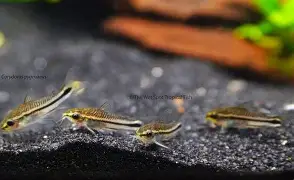
Three species are commonly grouped together under the informal banner of ‘dwarf corydoras’ in the aquarium hobby: Corydoras pygmaeus, Corydoras hastatus, and Corydoras habrosus. These three are so similar in size — all capping out around 2.0 to 2.5 centimetres — that they are frequently confused on fish stocklists, mislabelled in shops, and shipped interchangeably by wholesalers. The Pygmy cory (C. pygmaeus) is distinguished by a clean horizontal black line running from the gill cover to the base of the tail, where it terminates in a small spot. C. hastatus (the ‘dwarf’ or ‘tail-spot cory’) has no line but a distinctive diamond-shaped spot on the caudal peduncle. C. habrosus (the ‘salt-and-pepper cory’) has a mottled pattern of irregular dark spots across a pale background. If you are buying fish for a specific setup, inspect the pattern carefully — the three species have slightly different temperaments, with pygmaeus and hastatus being the two mid-water schoolers and habrosus being a more conventional bottom-dweller. This identification matters for keepers who specifically want the famous mid-water pelagic behaviour, because a group of mislabelled C. habrosus will largely stay on the substrate and never show it.
The Pygmy cory’s native range centres on the Madeira river system, one of the most important tributaries of the Amazon and by some measures the longest single tributary of any river system on the planet. The Madeira flows through the border region of Brazil and Bolivia, and extends into the upper reaches of Peruvian Amazonia via feeder rivers such as the Rio Aguarico and Rio Napo. These are slow-moving, often tannin-stained blackwater or clearwater streams, flowing through flooded forest and dense marginal vegetation. Water is typically soft, slightly acidic, and rich in dissolved humic substances from decomposing leaves — conditions that the Pygmy cory thrives in and that are worth replicating in the home aquarium wherever possible. The species lives in enormous shoals in the still-water margins and among submerged root mats, often in mixed-species aggregations with small tetras, and it is this habitat that has driven the evolution of the Pygmy cory’s distinctive mid-water schooling behaviour: in a densely vegetated margin where the substrate is mostly hidden under leaf litter and root tangles, foraging from the substrate is less productive than hunting small invertebrates in the water column and on the surfaces of plants and wood.
Colour Forms & Morphs
⚫ Corydoras pygmaeus (Pygmy Cory)
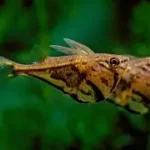
The true Pygmy cory. Slender silver-grey body with a single clean horizontal black line running from just behind the head to the base of the tail, terminating in a small black caudal spot. Adult size 2.0–2.5 cm.
🔷 Corydoras hastatus (Dwarf / Tail-Spot Cory)
The closest relative. Body pattern lacks the full horizontal line; instead shows a prominent diamond-shaped spot on the caudal peduncle, often bordered by white margins. Also a mid-water schooler. Adult size 2.0–2.5 cm.
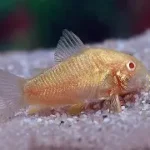
⚪ Corydoras habrosus (Salt-and-Pepper Cory)
Mottled pattern of small irregular dark spots scattered over a pale cream-grey background — the ‘salt-and-pepper’ appearance. A more conventional substrate-focused forager, not a mid-water schooler. Adult size 2.0–2.5 cm.
🔘 Wild Pygmaeus Variation
Wild-collected Pygmy corys occasionally show slight variation in the thickness and darkness of the horizontal line, and in the overall body tone from silvery to faintly olive. These are all within the natural range of the species, not separate morphs.
Colour in Corydoras pygmaeus is understated and elegant rather than showy. The body is a neutral silvery grey with a faint olive cast under certain lighting, and the single dominant feature is the sharp black horizontal line that runs from just behind the gill cover to the caudal peduncle, where it terminates in a small spot at the base of the tail. The belly is pale, almost white. Fins are essentially clear with occasional very faint dark markings. This minimalist colour pattern is actually one of the secrets of the Pygmy cory’s schooling appeal — when a group of ten, twenty, or thirty fish are hovering in the middle of the water column, the long horizontal lines stack up to create a kind of living pinstripe, which catches and reflects light in a way that a bolder pattern would obscure.
In the trade, the three dwarf cory species are frequently mixed, mislabelled, or substituted for each other. This happens both at the collecting point in South America and at wholesaler and retailer level, and it is worth being aware of when buying. If the shop label says ‘pygmy cory’ but the fish show no horizontal line, you are probably looking at C. hastatus or C. habrosus. All three species are good aquarium fish, but they have slightly different behaviour patterns — pygmaeus is the strongest mid-water schooler of the three, so if you are specifically after that pelagic schooling behaviour, it is worth making sure you are buying the correct species. A close look at the tail base is the fastest way to tell: a full horizontal line means pygmaeus, a diamond tail spot means hastatus, a speckled pattern means habrosus.
Colour intensity varies with tank conditions. Pygmy corys kept on dark sand under dim lighting, against a background of tannin-stained water and dense planting, will display the cleanest and most crisply marked horizontal lines. Fish kept on bright substrate under strong lighting often appear washed out, with the line fading to a faint grey smudge. The fish are also sensitive to stress — newly imported pygmys often look pale and tired on arrival, and their markings sharpen noticeably over the first two to three weeks in a well-settled home aquarium.
Telling Males from Females
Sexing the Pygmy cory is classified as ‘weakly dimorphic’ in the hobby literature — the differences are real but subtle, and much less dramatic than in fish families such as livebearers or killifish. The most reliable way to sex a mature Pygmy cory is to look at the fish from directly above, ideally by placing a phone camera gently against the top of the tank and observing the school from overhead. Females have a noticeably wider, more oval outline when viewed from above; males retain the narrow, parallel-sided torpedo profile. In side view, the difference is less pronounced, but a gravid female will show a clear rounded belly curve while the male remains slim.
Colour pattern provides no reliable sex cue — the horizontal line is identical in both sexes, as is the pale belly and silvery body tone. Fin length and shape are also not sexually dimorphic in this species. Juvenile fish below about 1.5 centimetres in length cannot be reliably sexed at all, so attempts to hand-pick a breeding pair from young stock are unlikely to succeed. The practical approach for anyone wanting a mixed-sex group is to buy a group of ten or more juveniles, raise them together to sexual maturity (around 6 to 9 months of age), and then observe which individuals develop the wider female profile. A group of ten will almost always contain a functional balance of both sexes.
Because the fish are so small and schooling so fast-moving, sexing a group visually in a shop display tank is close to impossible. If you are buying with breeding intent, simply take a group of ten or twelve and let them sort themselves out. The species is abundant enough in the hobby that this is usually straightforward.
| Feature | Male | Female |
|---|---|---|
| Body Shape (side view) | Slim and streamlined torpedo profile | Slightly deeper belly when mature, more rounded ventral curve |
| Body Shape (top view) | Narrow, parallel-sided silhouette from above | Clearly wider and more oval from above, especially when gravid |
| Size | Slightly smaller — typically 1.8–2.2 cm | Slightly larger — typically 2.2–2.5 cm |
| Belly Profile | Flat or very slightly convex | Rounded and fuller, especially in breeding condition |
| Colouration | No reliable difference from female in line pattern or body colour | No reliable difference from male in line pattern or body colour |
| Behaviour | Actively pursues female during courtship; participates in T-position mating | Accepts pursuit; cups pelvic fins during T-position mating and deposits eggs on plants and glass |
Ideal Water Conditions
6.0–7.5
ideal 6.8
22–26 °C
ideal 24 °C
2–10 dGH
Soft to moderately soft; ideal 2–6 dGH; softer water preferred for breeding
The Pygmy cory’s native habitat in the Madeira river system is characterised by soft, slightly acidic, and well-oxygenated water flowing slowly through flooded forest and densely vegetated margins. In the aquarium, replicating these conditions does not require exotic or expensive setups, but it does reward the keeper with the cleanest colouration, the most natural schooling behaviour, and the highest chance of successful breeding. Aim for a pH of 6.5 to 7.0 as a working ideal, with the species tolerating anywhere from 6.0 to 7.5 in healthy water. Hardness is best kept soft, between 2 and 6 degrees dGH, though the fish will live healthily at up to around 10 dGH. Temperature should sit between 22 and 26 degrees Celsius, with 24 °C as a comfortable daily set point. This is notably cooler than the Sterbai cory’s preferred range and makes Pygmy corys unsuitable as tankmates for discus or high-temperature cichlids. Keepers in warm climates who find their tanks running above 26 °C during summer should consider a small cooling fan clipped over the water surface, which uses evaporative cooling to bring temperatures down by two or three degrees without any dedicated chiller.
Water stability matters far more than hitting any particular numerical target. The Pygmy cory, like all corydoras, is intolerant of ammonia and nitrite spikes and is unusually sensitive to high nitrates. Chronic nitrate above 20 parts per million causes barbel erosion, fin damage, and eventual bacterial infections that are difficult to treat in such small fish. Weekly water changes of 20 to 30 percent are the foundation of good Pygmy cory care. When performing water changes, match temperature within a couple of degrees — large temperature swings stress small fish far more than they stress larger species. Use a proper dechlorinator; even the trace levels of chlorine and chloramine in tap water will damage their barbels and skin over time, and the thin, scale-free flanks of this species are even more vulnerable than those of larger corydoras. If your tap water is hard or heavily chlorinated, consider running it through a simple reverse-osmosis unit or blending with rainwater to bring the hardness and chemistry closer to Amazon basin conditions.
Oxygen matters as well. Although the Pygmy cory is capable of gulping atmospheric air at the surface using its modified intestinal tract — a behaviour common to all corydoras and an interesting thing to watch, as the fish dart up, break the surface briefly, and then descend — it should not have to depend on it. Regular, repeated surface-breathing dashes in a tank are a sign of inadequate dissolved oxygen and should be treated as a problem to investigate rather than charming species behaviour. Provide enough surface agitation through filter return or a gentle airstone to maintain dissolved oxygen levels that keep the fish from having to make repeated trips to the surface. Tannin-stained water from botanicals, alder cones, or a handful of Indian almond leaves is not required, but it is beneficial — the humic acids provide mild antibacterial and antifungal properties, reduce overall stress, gently lower and buffer pH toward the preferred slightly-acidic side of the range, and encourage the fish to display their best colouration. A gently tea-coloured tank with pale sand and a school of pinstriped Pygmy corys hovering in the middle is, visually, one of the most authentically Amazonian looks you can achieve in a nano aquarium.
Setting Up Your Aquarium
One of the great attractions of the Pygmy cory is that it flourishes in a small tank. Unlike most corydoras species, which need a sizable footprint to roam, the Pygmy cory is genuinely well-suited to nano aquaria — a 40-litre tank is comfortable for a school of ten, and a 60-litre tank will happily hold a spectacular group of twenty. This makes them ideal for the increasingly popular small planted biotope and iwagumi-style aquascapes, where their schooling behaviour provides animation and their compact size keeps them in proportion to the scene.
Substrate choice is the same as for any corydoras — fine-grain sand is strongly preferred. Although Pygmy corys spend much of their time in the middle of the water column, they still retain the bottom-foraging behaviour when hungry or when food is not easily available mid-water. Their delicate barbels are easily damaged by sharp gravel, and because they are so small, even mild barbel erosion is catastrophic. Use a pale or mid-toned sand (0.1 to 0.5 mm grain size), avoiding very dark substrate which can make the fish look washed out. A sand bed of 2 to 3 centimetres is plenty.
Dense planting is essential for a Pygmy cory setup, and this is where their behaviour is maximised. The fish use plants as reference points and shelter when they school — they cluster around tall stems, drift between thickets of Vallisneria or Rotala, and rest on the broad leaves of Anubias and Java fern. Provide a mixture of foreground, midground, and background planting; the most successful displays feature something like a carpet of dwarf hair grass or Monte Carlo at the front, a midground of cryptocorynes or Anubias nana on driftwood, and background stems such as Hygrophila, Ludwigia, or Vallisneria reaching most of the way to the surface. The fish will use all three levels throughout the day.
Driftwood is strongly recommended. Twisted spider wood, manzanita branches, or Malaysian driftwood create excellent vertical and overhanging structure, providing resting spots and mimicking the submerged roots and branches of their native flooded-forest habitat. Tannin-staining from the wood is a bonus, not a drawback — it brings out the fish’s colouration and replicates their natural water chemistry.
Lighting should be subdued to moderate. Very bright light washes out the fish’s colour and makes them shyer; dim lighting lets the horizontal lines stand out crisply and encourages the fish to use the whole water column. If you are running a heavily planted tank that requires strong lighting for plant health, consider adding floating plants such as Amazon frogbit or dwarf water lettuce to create dappled shadows — the Pygmy corys will appreciate the cover and the scene will look more naturalistic.
A secure lid is important despite the fish’s small size. Pygmy corys will occasionally startle and dart upward, and their tiny bodies can squeeze through surprisingly small gaps. Cover-glass gaps around filter pipes and heater cables should be sealed with a piece of foam or mesh.
40 L (10 gal) minimum for a school of 10; 60 L (16 gal) recommended for a school of 15–20 and good scaping space
Sponge filter (ideal), baffled hang-on-back, or small internal filter; gentle flow is critical — these are small fish
25–75 W adjustable, set to 24 °C; keep away from the glass surface to prevent accidental contact by curious fish
Fine-grain sand (0.1–0.5 mm), mid-tone or pale colour — essential for barbel health and good visual contrast
Low to moderate LED; floating plants help diffuse strong light if needed
Anubias, Java fern, Cryptocoryne, Vallisneria, Rotala, Hygrophila — mix of low, mid, and tall for full-column structure
Spider wood, manzanita, Malaysian driftwood; smooth rounded stones; botanicals such as Indian almond leaves and alder cones for tannins
Full cover glass or tight-fitting mesh lid; seal small gaps around equipment entry points
Liquid test kit for pH, ammonia, nitrite, and nitrate — small tanks and small fish magnify the consequences of poor water quality
Feeding Guide
Feeding the Pygmy cory is where many new keepers go wrong, and it is one of the most important things to understand about this species. Despite being a corydoras — a genus almost universally associated with sinking wafers and pellets — the Pygmy cory has a very small mouth, a strongly carnivorous preference, and a mid-water feeding style that is nothing like the bottom-grubbing habits of its larger relatives. Standard corydoras wafers and sinking pellets are generally too large for a Pygmy cory to eat in whole pieces, and by the time they have softened and broken down on the substrate, the fish often miss them entirely because they are hovering in the middle of the tank rather than foraging on the bottom. The sink rate of standard wafers is also too slow for the Pygmy cory’s active hunting style; in the wild, Pygmy corys pick small invertebrates out of the water column and off plant surfaces in real time, not from a settled pile on the floor, and their instinctive feeding responses are tuned to moving, drifting, or suspended prey rather than static deposits.
The correct approach is to offer small, high-protein, slow-sinking foods. Crushed high-quality flake food is one of the easiest staples; break the flakes into fine fragments between your fingers before dropping them in, and the Pygmy corys will intercept them as they drift downward. Micro pellets — the kind sold for small tetras, nano fish, and fry — are excellent; look for pellets around 0.5 to 1 millimetre in diameter, which are small enough to fit in a Pygmy cory’s mouth directly. Frozen baby brine shrimp (Artemia nauplii) are probably the single best food for this species; the fish go into a feeding frenzy whenever they are offered, and the high nutritional content supports good growth and breeding condition. Frozen daphnia and frozen cyclops are also eagerly consumed and provide useful dietary variety. Frozen bloodworm is acceptable for adult fish but the individual worms are on the large side, so opt for finely chopped bloodworm rather than whole.
Live foods, when available, are exceptional. Live baby brine shrimp, live daphnia, live microworms, and vinegar eels are all small enough for a Pygmy cory to handle and trigger strong natural hunting behaviour — you will see the school break formation, individual fish dart toward the moving prey, and the characteristic up-and-down chasing behaviour that is so rarely seen in bottom-feeding corydoras species. If you are conditioning fish for breeding, live foods are the most reliable trigger for bringing females into spawning condition, and a culture of microworms or grindal worms kept running on the side of the fishroom is a modest investment that pays off enormously in fish health and colour.
Feeding strategy matters because the Pygmy cory does not compete well against fast mid-water fish. In a community tank with ember tetras, rasboras, or similar small schoolers, the tetras will often intercept food before the corys can react. The solution is to feed at two points in the tank simultaneously — drop flake or micro pellet at one end to occupy the tetras, and drop frozen baby brine shrimp at the other end where the Pygmys are hovering, or along the substrate near their favourite resting plant. Feeding in low light, just after the tank lights come on or just before they go off, also helps the corys feed more confidently, and a final tiny feed right at lights-out often goes straight to the corys since the tetras have already settled down for the night.
Overfeeding is a real risk in nano tanks — uneaten food quickly pollutes a small volume of water, and the bioload of even a large Pygmy cory school is small enough that excess food is usually the larger pollutant than fish waste itself. Feed small portions once or twice a day, and observe carefully to make sure every fish is getting enough. A well-fed Pygmy cory has a gently rounded belly profile; a flat or sunken belly indicates underfeeding, which can happen easily if the fish are being outcompeted. A rapidly shrinking or concave belly in a single fish often signals internal parasites or illness and should be investigated promptly.
Breeding Guide
Week -2 to -1
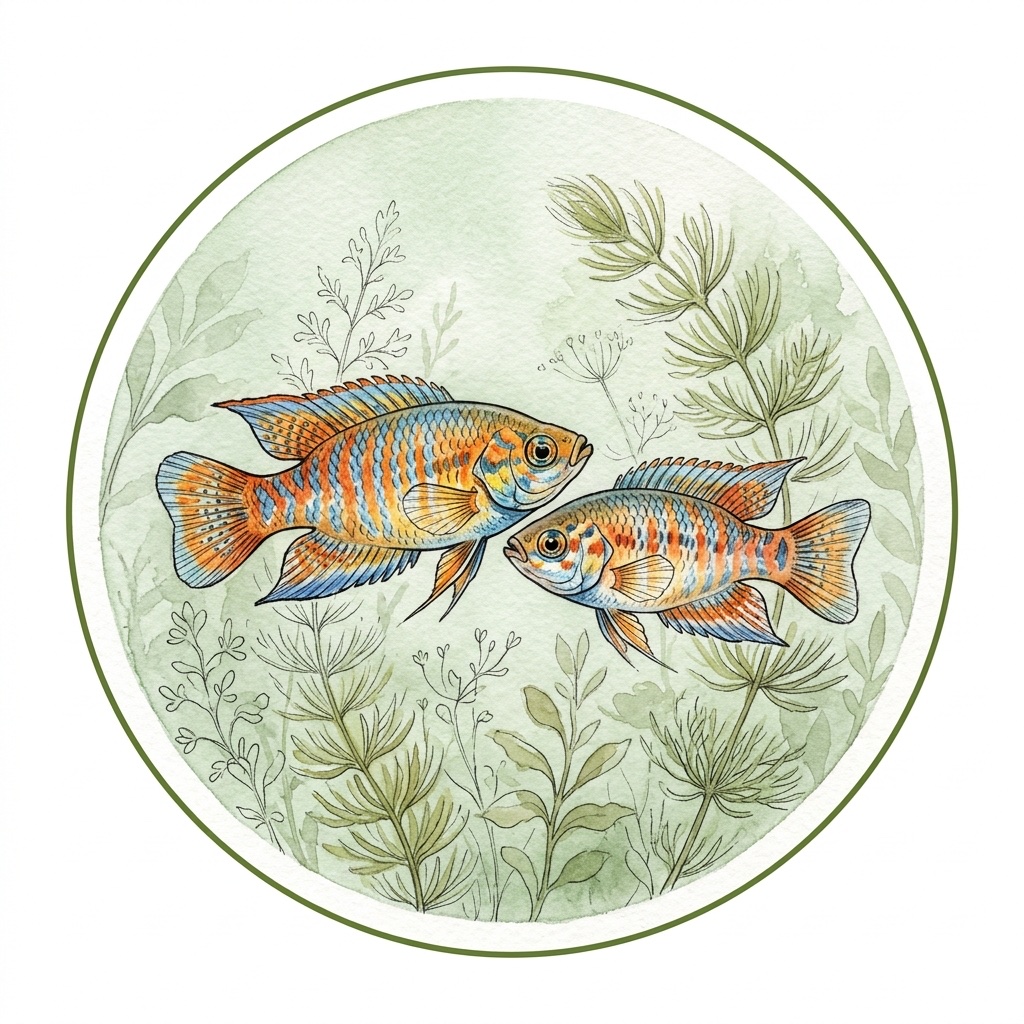
Conditioning
Feed live and frozen foods daily; fatten females
Day 0
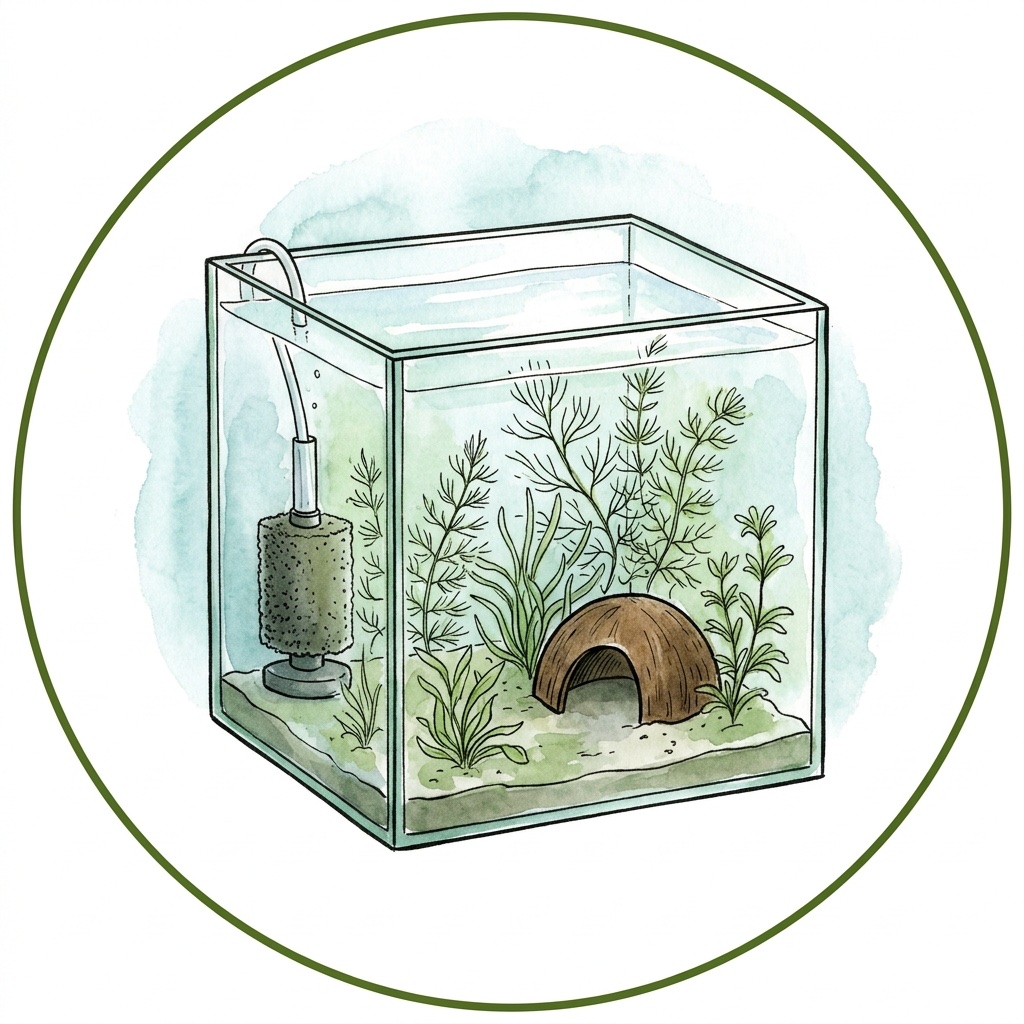
Cool-Water Trigger
Large water change with cooler, soft water
Day 1–2
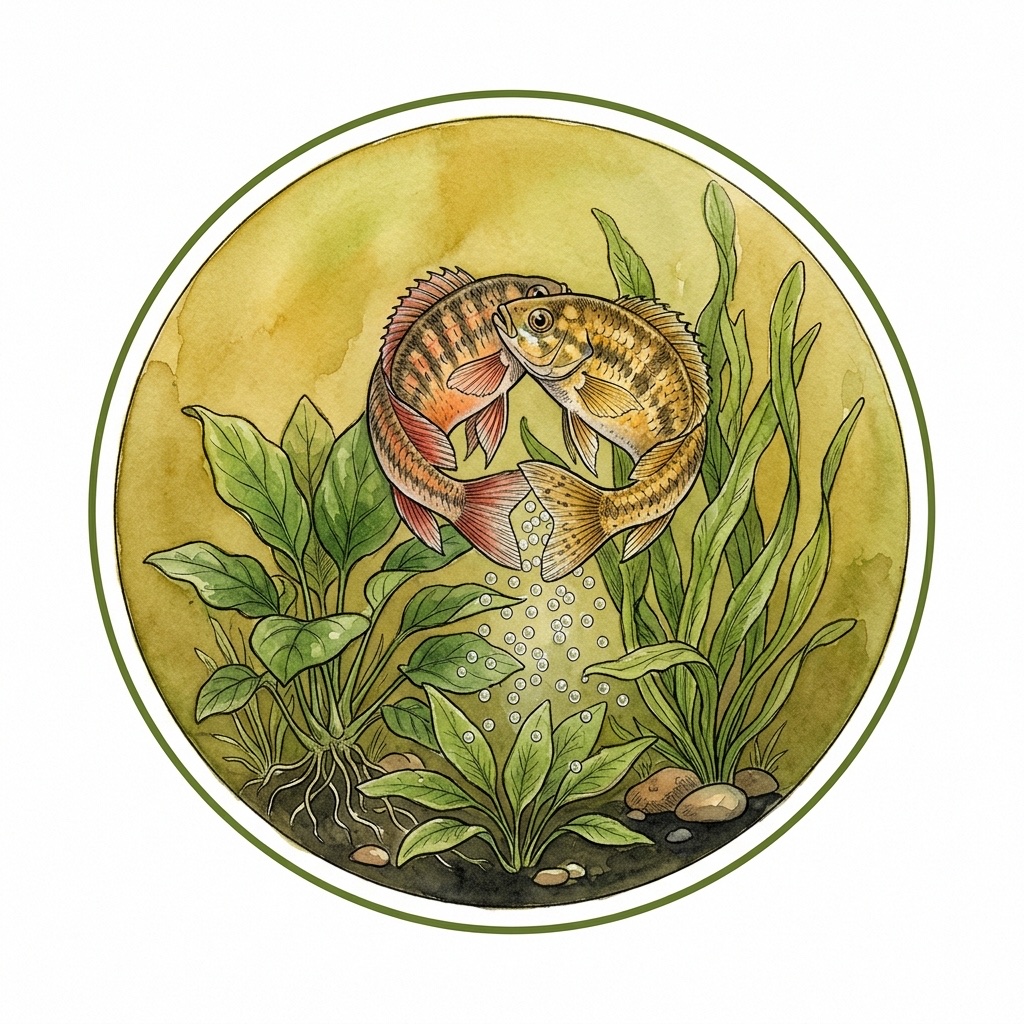
Courtship & T-Position Spawning
Males chase female; classic corydoras T-position mating
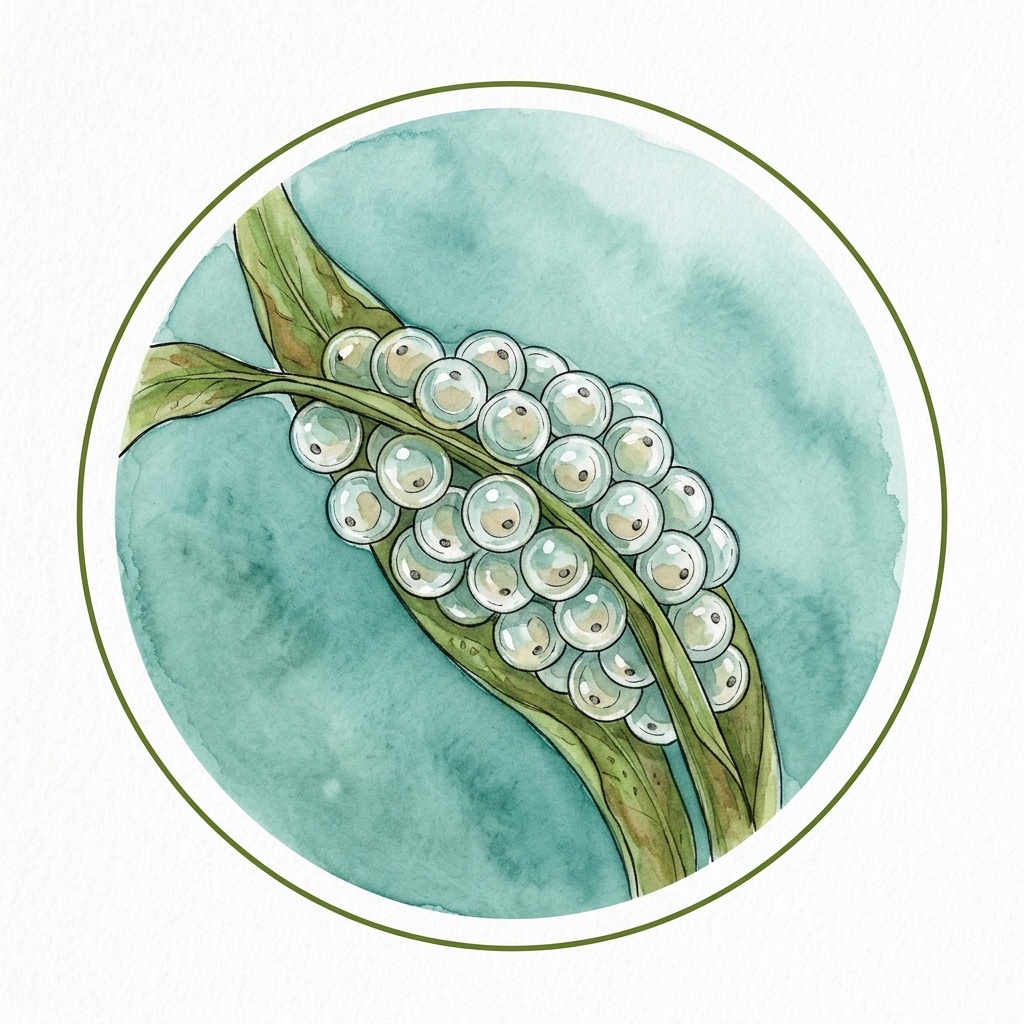
Day 2–3
Egg Deposition
30–80 eggs deposited in small batches across the tank
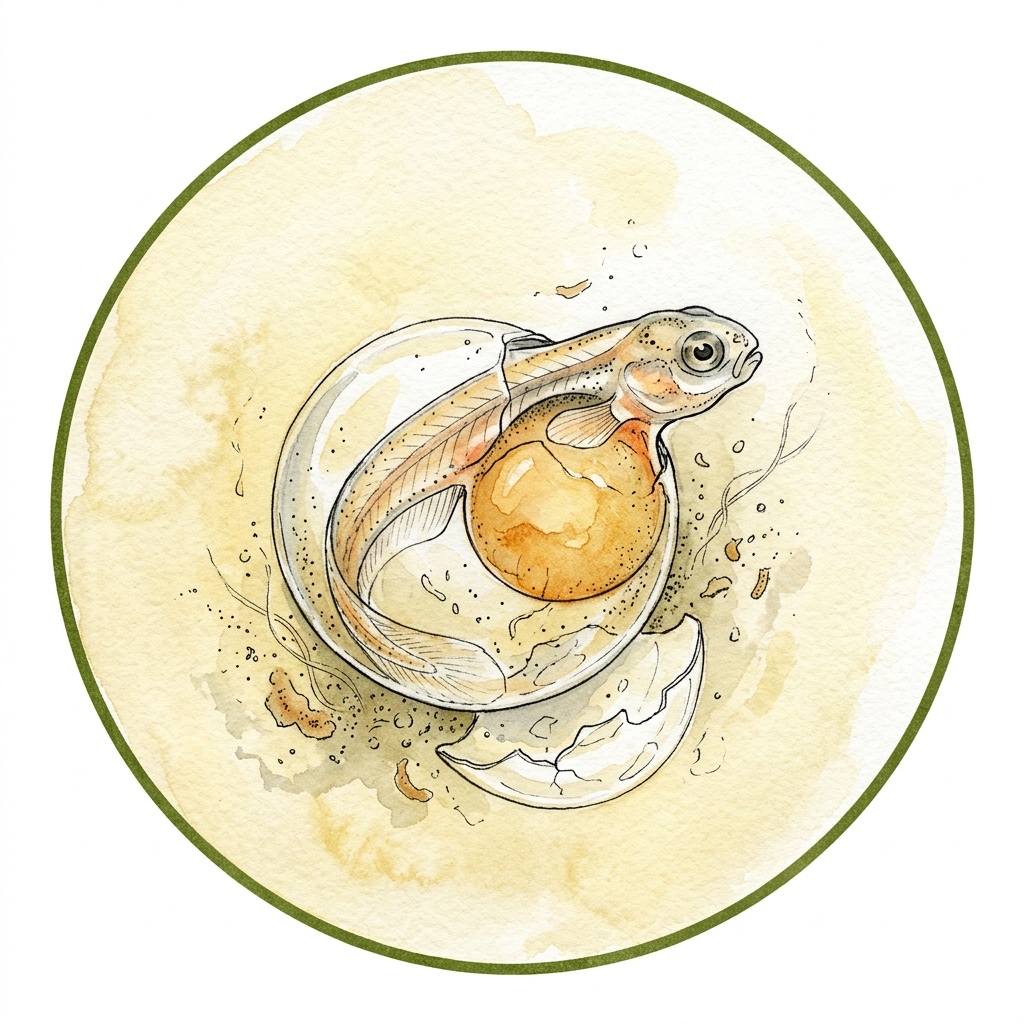
Day 3–6
Egg Incubation
Remove adults or eggs; eggs develop over 3–4 days at 24–26 °C
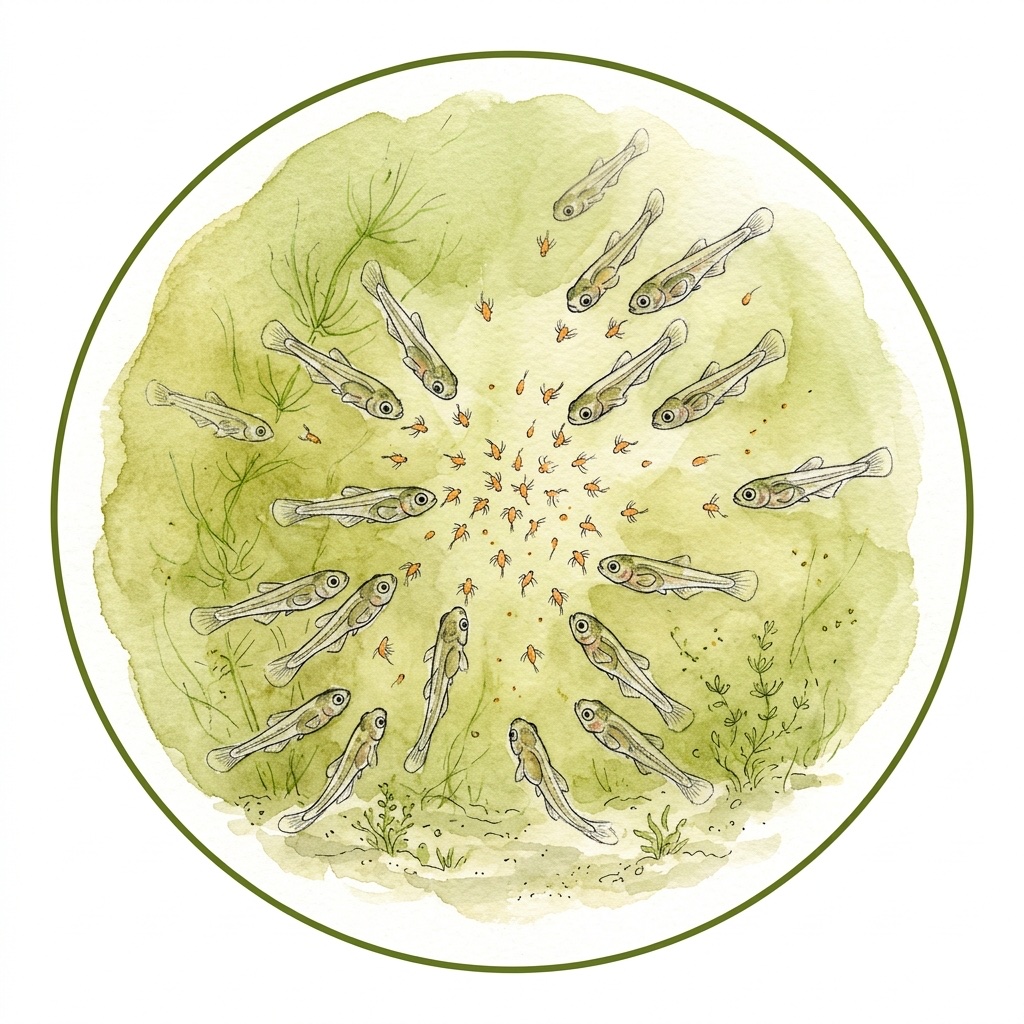
Day 7–9
Hatching
Fry hatch and absorb yolk sac over 48–72 hours
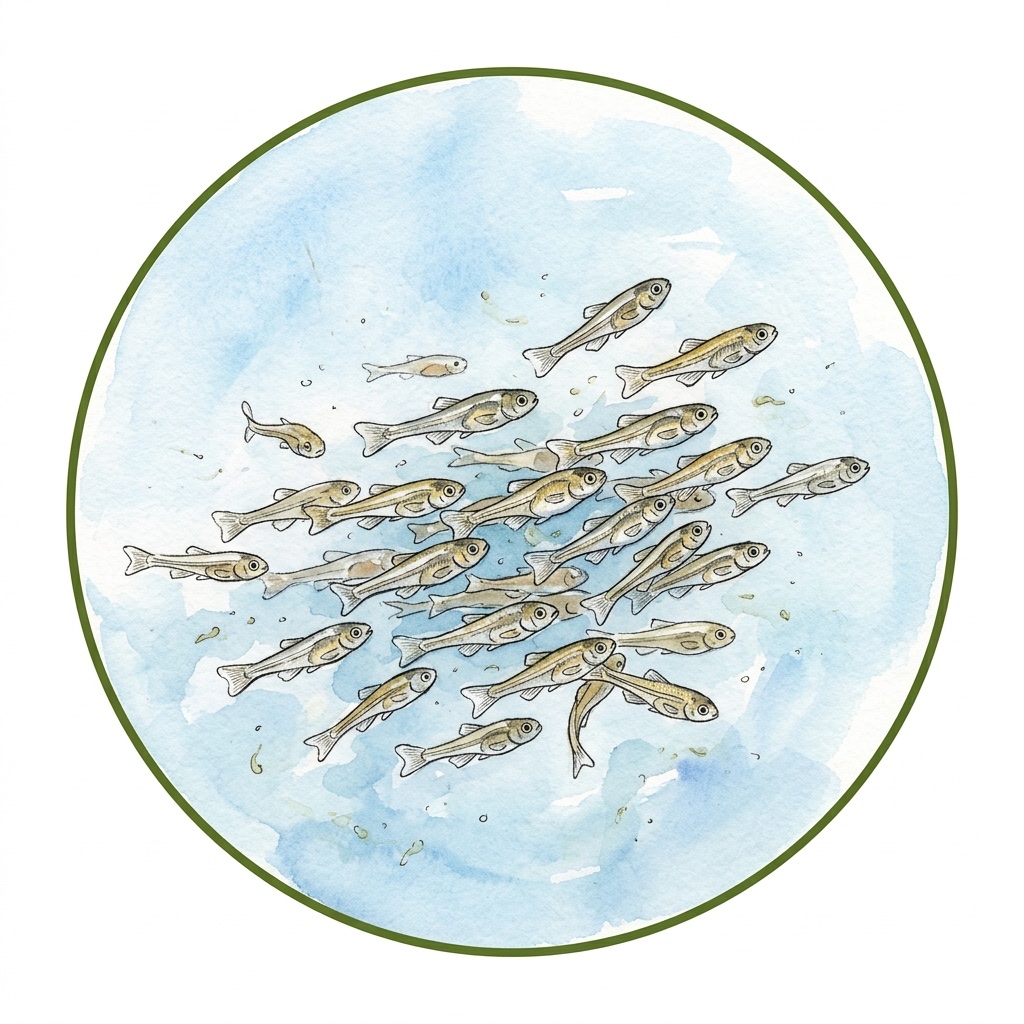
Day 10+
Fry Rearing
Offer infusoria and microworm; graduate to baby brine shrimp
Conditioning
Condition the breeding group for ten to fourteen days with heavy feedings of high-protein live and frozen foods. Baby brine shrimp, daphnia, and microworms twice daily are ideal. Females should visibly round out across the belly and become clearly distinguishable from males when viewed from above. A group of eight to twelve adults in good condition provides the best chance of triggering a spawn, since the species performs best with a surplus of both sexes and active competition between males for receptive females.
Cool-Water Trigger
Trigger spawning by performing a large water change — 40 to 50 percent of tank volume — with soft, cool water three to five degrees below the tank’s baseline temperature. If the tank is normally at 24 °C, use water at 20–21 °C. This mimics the seasonal rainstorms that flush cool, oxygenated water into the Madeira basin and initiate natural spawning. Use rainwater, RO water, or very soft tap water to keep hardness low. Increase filter flow or add an airstone for the following 24 hours to saturate the water with oxygen. In a well-conditioned group, spawning will often begin within 12 to 48 hours of the water change.
Courtship & T-Position Spawning
Males become highly active, pursuing females around the tank in short rapid bursts. When a female is receptive, the pair performs the characteristic corydoras T-position: the female positions herself perpendicular to the male, pressing her mouth against his flank just behind the pectoral fin, and takes in milt. She then cups her pelvic fins together to hold a few fertilised eggs, carries them briefly, and swims to a chosen surface — typically a broad leaf of Anubias or Java fern, a patch of clean glass, or a piece of driftwood — where she carefully deposits them. The process repeats dozens of times throughout the spawning session, which can last several hours.
Egg Deposition
The female distributes eggs widely across the tank, placing them in small groups of two to six on any available clean surface. The total egg count for a single spawning session is typically 30 to 80 for a well-conditioned female, although larger spawns of over 100 eggs have been recorded. Eggs are small — less than 1 millimetre in diameter — and initially clear to pale cream. They are held in place by a natural adhesive coating, and they are easily detached from smooth surfaces like glass by gently rolling them off with a fingertip, allowing the keeper to transfer them to a separate hatching container if desired.
Egg Incubation
The adult Pygmy corys will eat their own eggs once spawning is complete — they show no parental care. Either remove the adults to a separate holding tank for a few days, or carefully collect the eggs and transfer them to a small hatching container with an airstone for gentle circulation. A few drops of methylene blue or alder cone water help prevent fungal losses on infertile eggs. Keep the hatching container at the same temperature as the spawning tank (24 to 26 °C). Fertile eggs develop visible dark embryos within 48 hours; infertile eggs turn white and should be removed daily to prevent fungal spread.
Hatching
At 24 to 26 °C, eggs hatch within 3 to 4 days of being laid. The newly hatched fry are extremely small — significantly smaller than fry of most other corydoras species — and initially do little more than lie on the substrate absorbing their yolk sacs. Do not attempt to feed them at this stage; handling and feeding disturbances at this vulnerable point cause high mortality. Keep the water clean with small, very gentle water changes, and maintain a low but steady airstone flow for oxygenation. Over 48 to 72 hours, the fry finish consuming their yolk reserves and become free-swimming, at which point they begin searching for food.
Fry Rearing
Pygmy cory fry are so small that the standard starter food of newly hatched baby brine shrimp is too large for their first feedings. For the first week of free-swimming life, the best foods are infusoria — cultured from a jar of aquarium water with a lettuce leaf — and commercially prepared liquid fry foods for egg-layers. Microworms can be introduced from around day 4 to 5 of free-swimming, and baby brine shrimp nauplii from around day 7 to 10 once the fry have grown enough to handle the larger particle size. Fry grow steadily on this progression of increasingly larger foods and begin to show a faint version of the adult horizontal line within three to four weeks. They reach juvenile size (around 1 cm) at six to eight weeks and full adult size at six to nine months.
Compatible Species
The Pygmy cory is a nano-tank speciality and should be treated as such when planning a community. Its small size and peaceful temperament make it perfect for a dedicated nano-community built around other small, gentle species — ember tetras, chili rasboras, galaxy rasboras, honey gouramis, and similar micro-predators. In such a setup, the Pygmy cory’s unique mid-water schooling behaviour takes centre stage, because it is not being outcompeted by larger or faster fish at feeding time and it can move freely through the full water column without being harassed. The overall aesthetic of a nano community built around Pygmy corys tends toward the soft, naturalistic, densely planted look — think iwagumi-style layouts with a covering of dwarf hair grass, Anubias and Bucephalandra on scattered spider wood, a back wall of Rotala or Ludwigia, and a warm amber tint from botanicals — and the Pygmy corys sit at the heart of that scene as an active, ever-moving focal point.
Mixing Pygmy corys with larger species is where problems usually begin. The single most common and avoidable mistake is pairing them with adult angelfish — many keepers assume that a ‘peaceful’ fish like an angelfish will not bother a small cory, but the size difference is simply too great. An adult angelfish can and will consume a 2-centimetre Pygmy cory, and will do so casually, usually at night when the corys are sheltering. Once an angel has eaten one, it will actively hunt the rest, and the loss of the entire school over a few weeks is a disappointingly common outcome. Similarly, most cichlids, large tetras, barbs, and predatory catfish should be considered incompatible, regardless of their reputation for peacefulness. The rule of thumb is simple: any adult fish in the tank should be at most two to three times the length of an adult Pygmy cory. That cap rules out almost every cichlid, all but the smallest gouramis, any medium to large tetra, and any predatory catfish.
Group size is the other critical factor in community setups. Pygmy corys are not merely social — they are obligately schooling fish. A group of six is the absolute minimum; ten is a much better starting point; fifteen to twenty is where the behaviour truly comes alive. In small groups, Pygmy corys become shy, stop schooling in mid-water, and retreat to the substrate in a nervous imitation of conventional corydoras behaviour. This is the single biggest reason new keepers report disappointment with the species — they bought four or five fish, the fish hid in the corners, and the keeper never saw the famous pelagic schooling that the Pygmy cory is known for. The solution is simply to buy more. A school of fifteen Pygmy corys in a planted 40-litre tank is one of the most charming sights in the aquarium hobby, and a school of thirty in a 60 or 75-litre tank takes the effect to an entirely different level, with the fish moving as a coherent silver cloud through the middle of the tank.
Shrimp compatibility deserves a specific mention, because it is one of the few corydoras species that can safely share a tank with dwarf shrimp. Adult cherry shrimp, Amano shrimp, blue dream shrimp, crystal shrimp, and similar species are fully safe — Pygmy corys simply cannot fit an adult shrimp in their mouths. Shrimp fry (shrimplets) are a different story; they may occasionally be eaten, but in a well-planted tank with plenty of moss and fine-leaved foliage, most survive to adulthood. For shrimp breeders wanting a fish companion for their colony without risking their breeding stock, the Pygmy cory is one of the very best choices available, alongside Otocinclus and boraras rasboras. A shrimp-focused planted tank with a school of twelve Pygmy corys, a thriving colony of cherry shrimp, and a few Otocinclus is a classic and immensely popular nano setup for good reason.
One final practical point on introducing Pygmy corys to an existing community: acclimate them slowly. They are small, they ship stressed, and they do not tolerate sudden changes in water chemistry. Drip-acclimate over 45 minutes to an hour, keep the aquarium lights off for the first 12 to 24 hours after introduction, and resist the urge to feed heavily for the first two days. Given time to settle, the school will emerge into the open water and begin their characteristic mid-water cruising, usually by the third or fourth day.
| Species | Why | |
|---|---|---|
| ✅ | Ember Tetra | Small peaceful schooling tetra at a similar size; uses the mid-water zone alongside Pygmy corys, often joining their school in mixed groups — a near-perfect pairing |
| ✅ | Chili Rasbora (Boraras brigittae) | Tiny peaceful rasbora that occupies mid and upper water; identical care requirements for soft, warm water and gentle flow; no competition for food |
| ✅ | Galaxy Rasbora / Celestial Pearl Danio | Nano-sized peaceful schooler, similar tank requirements and temperament; both species share the same mid-water and lower-tank zones without conflict |
| ✅ | Neon Tetra | Small, peaceful, mid-water schooling tetra; very similar water parameters and temperament; a classic and reliable nano-community combination |
| ✅ | Cardinal Tetra | Slightly larger than Pygmy cory but completely peaceful; shares soft warm-water preferences; adds colour to the same mid-water zone the pygmys use |
| ✅ | Honey Gourami | Gentle surface and mid-water gourami; small enough that it poses no threat to Pygmy corys; excellent for adding a larger centrepiece fish without disrupting the school |
| ✅ | Otocinclus Catfish | Small peaceful algae-grazing catfish that occupies the same lower-tank zone; similar water parameter preferences; entirely compatible |
| ✅ | Cherry Shrimp (adult) | Adult cherry shrimp are safe with Pygmy corys — the corys’ mouths are too small to consume adult shrimp. Shrimplets may occasionally be eaten but most survive in a well-planted tank |
| ✅ | Amano Shrimp | Significantly larger than any adult Pygmy cory; completely safe as tankmates and actively useful for algae and debris control |
| ✅ | Sparkling Gourami (Trichopsis pumila) | Tiny peaceful labyrinth fish that shares the same soft warm-water preferences; occupies mid and upper zones; a beautiful nano-tank companion |
| ❌ | Adult Angelfish | Adult angelfish (Pterophyllum scalare) will readily eat Pygmy corys — the small body size places pygmaeus well within the angelfish’s prey range, regardless of how peaceful the angel’s temperament is. This pairing is a common and preventable mistake |
| ❌ | Larger Tetras (e.g. Congo, Serpae) | Aggressive or fast-competitor tetras will outcompete Pygmy corys at feeding time and may nip at them; the size difference is enough that the cory loses every food competition and eventually suffers condition loss |
| ❌ | Barbs (Tiger, Rosy, etc.) | Active, nippy schooling cyprinids stress and intimidate the small, slow-moving Pygmy cory school; barbs are also too fast at feeding for the cory to compete |
| ❌ | Cichlids (even ‘peaceful’ ones) | Most cichlids, including apparently peaceful species like Kribensis or large Apistogramma, will eat Pygmy corys given the chance. The size differential is simply too great, and any adult cichlid views a 2-cm fish as food |
| ❌ | Large Catfish (Plecos, Synodontis) | Large catfish outcompete Pygmy corys for substrate food; some species (Synodontis, nocturnal predatory catfish) will actively consume them at night |
Quick Reference
| Scientific Name | Corydoras pygmaeus |
| Family | Callichthyidae |
| Origin | Madeira river basin (Brazil, Peru) |
| Adult Size | 2.0–2.5 cm — among the smallest Corydoras |
| Lifespan | 3–5 years |
| pH | 6.0–7.5 (ideal 6.8) |
| Temperature | 22–26 °C (ideal 24 °C) |
| Hardness | 2–10 dGH (soft water preferred) |
| Min Tank | 40 L for a school of 10+ |
| Group Size | 10+ absolute minimum; 15–20 ideal to see mid-water schooling |
| Care Level | Beginner to Intermediate |
| Diet | Crushed flake, micro pellets, frozen baby brine shrimp, daphnia — small foods only |
| Swimming Zone | Mid-water (unique for a corydoras) |
| Breeding | Easy — cool-water trigger; T-position spawning; fry need infusoria |
| Special Note | Avoid adult angelfish and any cichlid — Pygmy corys are small enough to be eaten by most mid-sized fish. |
Related Products
Reviews
Clear filtersThere are no reviews yet.