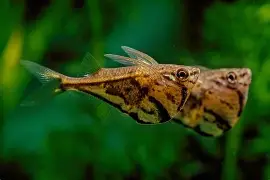
🪨 Species at a Glance
| Scientific Name | Carnegiella strigata |
| Family | Gasteropelecidae |
| Order | Characiformes |
| Origin | Peru, Colombia, Venezuela, Brazil, Guyana — upper and middle Amazon and Orinoco basins |
| Adult Size | 3.5–4.5 cm (1.4–1.8 in) |
| Lifespan | 3–5 years |
| pH Range | 5.5–7.0 |
| Temperature | 24–28 °C (75–82 °F) |
| Hardness (dGH) | 2–10 |
| Diet | Surface micro-carnivore — floating flake, small pellets, frozen and live insect foods |
| Minimum Tank Size | 80 L (21 gal) long format for a school of 6+ |
| Care Level | Intermediate — lid discipline critical |
| Temperament | Peaceful, schooling, jumpy |
| Breeding | Surface/plant spawner — very rare in captivity |
| Tank Position | Surface / top 2 cm only |
Origin & Etymology
The scientific name *Carnegiella strigata* is a small window into nineteenth and twentieth century ichthyology. The genus Carnegiella honours the Carnegie Museum of Natural History in Pittsburgh, whose expeditions to South America in the early 1900s produced many of the type specimens for Amazon fishes. Carl Eigenmann, the dominant figure in South American freshwater ichthyology of that era, erected the genus in 1909 to separate these smaller, scale-less hatchetfishes from the larger silver hatchets of genus Gasteropelecus. The species epithet *strigata* is Latin for striped or streaked — a reference to the dark irregular bands and marbling that run vertically across the silver flanks and give the Marble Hatchet its common name. Earlier literature sometimes places the species in the now-obsolete genus Gasteropelecus, so older aquarium books may list it as *Gasteropelecus strigatus* — the fish is the same, only the classification has moved.
The English name “hatchetfish” needs no explanation the moment you see one head-on. The lower body is a dramatically deep keel — a blade of muscle that starts just behind the throat and sweeps back to the anal fin. The upper body is flat, almost ruler-straight, carrying the dorsal fin and the eyes. Put the two together and the profile is unmistakably that of a small hand axe or butcher’s cleaver. Fishermen working the Amazon tributaries sometimes call them “peixe machadinha” in Portuguese — little-hatchet fish — which is as literal a translation as you will find in biology. That keel is not decoration. It houses an enormously enlarged set of pectoral muscles — proportionally, some of the largest flight muscles found anywhere in the bony fishes — and anchors the pectoral fins like the wings of a tiny biplane. The ratio of pectoral-muscle mass to total body mass in a marble hatchet is roughly 25 percent, comparable to the flight-muscle ratio of a sparrow or a small finch. No other freshwater aquarium fish comes close.
Biologists are still debating exactly how the flight itself works. Older literature describes the pectoral fins as actively flapping during flight — essentially a fish equivalent of bird wingbeats — and some high-speed footage appears to confirm rapid pectoral oscillation during the leap. More recent analyses suggest that much of the flight is ballistic, powered by a single explosive acceleration at launch, with the pectorals serving primarily to stabilise and steer rather than to generate continuous thrust. Either way, the result is the same: a fish that can clear the water by fifteen or twenty centimetres and travel a metre or more in a single leap. Marble hatchets appear on the very short list of truly flying fishes in freshwater, alongside African butterflyfish (Pantodon buchholzi) and the South American freshwater flyingfish (Gastropelecus).
The family Gasteropelecidae contains only three genera and nine species, all of them neotropical, all of them surface specialists. *Carnegiella strigata* is by far the most commonly imported, largely because it holds up better in transit than the larger silver hatchets and because its marbled pattern is simply more interesting to look at under aquarium lights. When you buy a Marble Hatchet, you are buying a tiny piece of one of the most specialised surface-hunting lineages on Earth — a lineage that branched off from the rest of the tetras probably 30 to 40 million years ago and has been refining the same flight-and-snap hunting strategy ever since.
How to Sex This Species
Marble Hatchets are one of the most genuinely monomorphic fish you will encounter in the hobby. Unlike dwarf cichlids or even most tetras, there is no obvious fin extension, no sex-specific colour patch, no stripe that appears on one sex and not the other. Both sexes share the same silver-and-chocolate pattern, the same deep keel, the same clear pectoral and caudal fins, and the same compact body size. This is unusual even within the family Gasteropelecidae — silver hatchets and black-winged hatchets both show slightly more obvious sexual dimorphism than the marble. The most reliable guide — and honestly the only reliable one without dissection — is body shape viewed from directly above the tank during feeding. A conditioned, well-fed female carrying ripe eggs develops a visibly fuller belly that bows the otherwise clean ventral line, while males retain a slightly slimmer and more symmetrical profile. The difference is subtle and disappears almost entirely outside of the short pre-spawn window; if you want a genuine breeding pair, the practical approach is to buy a school of eight to ten juveniles, grow them together for several months on heavy live food, and let pairs form naturally as they mature. Attempting to hand-pick a sexed pair at the shop is essentially guesswork.
Behaviour during conditioning can offer a secondary cue. Males sometimes initiate very short, low-intensity chase sequences around floating plants, pursuing a female for a few centimetres before settling back into the school. These are easy to miss if you are not watching for them, and they stop completely once the tank is stressed or lighting changes. Because sexing is so difficult, most hobbyists simply maintain a mixed school and enjoy the species as a community display rather than targeting reproduction. This is perfectly rewarding on its own — a well-settled school of six to ten hatchets will hover in near-perfect formation at the surface, dipping and adjusting in tiny formation flights that hint at the bigger aerial behaviours you will eventually see at feeding time. The school will naturally space itself with metronome regularity, each fish maintaining two or three body-lengths from its neighbour, facing into whatever weak current the filter generates, and reacting as a single organism the moment food hits the meniscus.
| Feature | Male | Female |
|---|---|---|
| Body Depth | Keel slightly shallower, cleaner line | Keel fractionally deeper when carrying eggs |
| Belly Profile | Ruler-straight ventral line when viewed side-on | Slight convex bulge just ahead of the anal fin when gravid |
| Size | Marginally smaller (3.5–4 cm) | Slightly larger and fuller (4–4.5 cm) |
| Marbling Pattern | Often slightly sharper contrast between dark bands and silver | Pattern slightly softened by fuller flank |
| Behaviour | Initiates short chases near surface plants during conditioning | More static, settles into surface cover |
| Overall Cue | Streamlined and straight from above | Fuller and slightly pear-shaped from above |
Available Colour Grades
🦡 Marble Hatchet (Carnegiella strigata)
The species covered by this guide. Silver flanks with dramatic chocolate-brown irregular vertical bands and marbling; the most common and most beautifully patterned hatchetfish in the trade.
💿 Silver / Common Hatchet (Gasteropelecus sternicla)
A larger relative (up to 6.5 cm) with unmarked shining silver flanks and a single thin black lateral line. Hardy, often confused with marble hatchet at the shop counter.
⚫ Spotted / Giant Hatchet (Gasteropelecus levis)
The largest aquarium hatchetfish (up to 9 cm). Silver flanks scattered with small dark spots above a faint lateral stripe; occasional import, needs larger footprint.
🏴 Black-winged Hatchet (Carnegiella marthae)
A close cousin of the marble hatchet with dusky, almost blackened pectoral fins and a finer, more delicate body stripe. Rare in the trade but sometimes arrives mixed in with C. strigata shipments.
Unlike many aquarium species, the Marble Hatchet has not been line-bred for colour morphs — no albino, no long-fin, no selectively enhanced strain. What you buy in the shop is essentially what comes out of the Amazon, and it is striking enough on its own. The underlying silver comes from light-reflecting guanine crystals packed into iridophore cells in the flank scales — the same structural-colour trick that gives neon tetras their blue stripe, only here deployed across the entire body as a mirror rather than a band. The dark chocolate marbling is true pigment (melanin), and it acts as disruptive camouflage: broken vertical bars against a silver flank viewed through stained blackwater break up the fish’s outline and make it surprisingly hard to see against a sunlit leaf-litter background. What is a striking ornament under aquarium lights is actually excellent predator camouflage in the Amazon.
What you do need to watch for is species mix-ups at the shop counter. Australian, European, and North American importers frequently label Silver Hatchets (Gasteropelecus sternicla) and Marble Hatchets under the same “Hatchetfish” tank without distinguishing them, and the two species have subtly different care needs — silvers are larger (up to 6.5 cm), a bit hardier, tolerate higher pH up to 7.5, and accept moderately hard water, while marbles are the truer Amazon blackwater specialist that really needs soft, slightly acidic conditions to thrive long-term. Black-winged hatchets (Carnegiella marthae) occasionally arrive mixed in with marble shipments and are visually similar but have dusky rather than clear pectoral fins and a noticeably finer body pattern; they are harder to settle in than true marbles and often ship in poor condition. For a soft-water, tannin-stained biotope aquarium, Carnegiella strigata is the correct choice, and its marbled pattern under subdued lighting — viewed against driftwood and amber tannin-stained water — is arguably the most beautiful of any hatchetfish and the most visually complementary to the other Amazon community species you are likely to keep alongside.
Getting the Water Right
5.5–7.0
ideal 6.2
24–28 °C
ideal 26 °C
2–10 dGH
Soft, tannin-stained blackwater preferred
Carnegiella strigata is a genuine Amazon blackwater species. In their native tributaries around Iquitos, Manaus, and the Rio Negro, water flows over fallen leaves and rotting wood, producing a dissolved-organic soup that is soft, slightly tea-coloured, and distinctly acidic — typically pH 5.0 to 6.5, hardness close to zero dGH, and warm year-round (24 to 29 °C depending on season). Conductivity in these habitats is often under 50 microsiemens, a figure that most aquarium hobbyists never measure and most aquarium water would fail by a factor of ten. Against that backdrop, the Marble Hatchet’s adaptability in the aquarium is genuinely impressive: they accept pH up to roughly 7.0 and moderate hardness without obvious distress, though they rarely breed outside of truly soft conditions. They really thrive when you lean into the biotope — a pH in the low sixes, hardness under 8 dGH, and temperature around 26 °C is where their colours deepen, their appetite sharpens, and their surface hunting becomes most active.
Stability matters as much as the absolute numbers. Hatchets are sensitive to sudden swings — a pH crash from overdue water changes or a temperature drop from a heater failure will knock them out of condition fast, often showing up as clamped pectorals, loss of appetite, and the school huddling into a corner of the surface rather than patrolling. Nitrate tolerance is moderate; keep readings under 20 ppm and the school will stay vigorous for years. Ammonia and nitrite must be zero at all times, with no exceptions — like most surface fish, marbles are unusually vulnerable to low-level ammonia because they are constantly breathing at the air-water interface where gas exchange is highest. Run a well-cycled tank, test monthly rather than obsessively once the system is mature, and perform 20 to 25 percent weekly water changes with temperature-matched, ideally RO-remineralised water if your tap runs hard or alkaline. Add leaf litter for continuous gentle acidification and you will rarely need to chase parameters with chemicals. Avoid aggressive pH-down bottle products — they cause the kind of rapid swings hatchets cannot tolerate. Slow, biological acidification with botanicals is always the better path.
Nutrition & Diet
The single most important thing to understand about feeding marble hatchets is that they are obligate surface feeders. Their mouths are physically angled upward — the lower jaw juts forward well past the upper, and the gape opens toward the sky rather than straight ahead. This is the signature of a fish that has spent millions of years specialising on prey that sits on top of the water rather than in it. A sinking pellet is not food to a hatchet; it is debris that will rot on the substrate while the fish stays hungry at the top. Every item you offer must either float or be presented on the surface film, period.
In the wild, marble hatchets are micro-carnivores of the air-water interface. Their stomach contents are dominated by terrestrial insects and insect larvae that fall or land on the water — ants, small beetles, mosquito larvae hatching at the meniscus, fruit flies drifting on the surface tension, aphids blown off overhanging branches, tiny spiders that missed a leap. Stomach analyses from wild-caught specimens consistently show 80 to 95 percent terrestrial insect content; aquatic prey is almost incidental. Their enormous pectoral muscles and flight capability evolved precisely to ambush this prey and to escape the predators that also hunt there. This is what makes feeding them so satisfying: when you drop live fruit flies on the surface, you are not just feeding a fish — you are watching thirty million years of evolutionary specialisation in action, playing out in real time across a small glass box in your living room.
Build the diet around three tiers. A staple of high-quality floating micro-flake or small floating pellet, crushed to appropriate size for the hatchet’s tiny mouth, forms the nutritional base. Look for formulations that list whole fish or insect meal as the first ingredient and include added colour-enhancers like astaxanthin — these will sharpen the contrast of the marbling over a few weeks. Tropical flake crushed between your fingers before it hits the water works well; so do small floating crisps designed for betta or gourami, broken into fragments a hatchet can actually swallow. Two to three times a week, add frozen foods selected for surface presentation: frozen daphnia, cyclops, baby brine shrimp, and bloodworm (sparingly) work well — thaw in a cup of tank water and release a small amount at the surface so it drifts on the film rather than sinking immediately. A useful trick is to turn off the filter for five minutes during frozen feeding so the food stays on the meniscus longer; just remember to turn it back on.
And weekly, if you can source them, offer live wingless fruit flies (Drosophila hydei or D. melanogaster cultures are cheap and easy to maintain at home), live mosquito larvae harvested from a bucket of seasoned water left outside in summer, or microworms cultured on oatmeal. This is when you will actually see the flying behaviour. A wingless fruit fly landing on the surface triggers a tiny eruption: one or two hatchets accelerate from a standing patrol, clear the surface entirely, and snap the fly in a horizontal leap of ten to twenty centimetres. Add mosquito larvae and the surface boils quietly for two or three minutes as the school works through them. Live food also dramatically improves conditioning, spawning readiness, and colour depth — it is arguably the single most valuable upgrade you can make to a hatchet aquarium. Maintaining a pair of fruit fly cultures on a two-week rotation takes essentially zero effort and transforms the species from “nice surface fish” to “unmistakably the most interesting fish in the tank”. It is worth keeping marble hatchets for this feeding alone.
Feed small amounts twice daily rather than one large meal. Marble hatchets have tiny stomachs and excess surface food fouls the tank fast, especially in heavily-planted biotope setups where nitrate control depends on restraint. Watch the school for a minute or two after each feeding — if food remains on the surface after 30 seconds of active hunting, you have offered too much, and the leftovers will drift into floating plants where they rot.
Aquarium Setup Guide
Everything about a marble hatchet tank revolves around two dimensions: surface area and surface cover. Because this is a true surface fish — the top two centimetres of water is essentially their entire world — depth matters less than length and width. An 80-litre tank with a long, low footprint (roughly 80 × 35 cm or larger) is a far better home than a taller 100-litre cube. More horizontal surface gives them room to space out into a loose patrol formation, room to accelerate for a leap, and room to land cleanly. A tank that is tall but narrow actively wastes water volume from the hatchets’ perspective — the bottom 40 centimetres of a deep aquarium might as well not exist for this species. If you have the choice between an 80-litre long and a 120-litre cube, the long tank will always produce a better hatchet display.
Equally important is what sits on the surface. In the wild, marble hatchets spend their lives beneath a canopy of overhanging vegetation, fallen leaves, and drifting root mats — the microhabitat where insects land and where predators from above cannot see them clearly. Recreate this with floating plants: Amazon frogbit, red root floaters, Salvinia, Pistia, or a drape of riparium-style pothos roots growing down into the water from an emerged pot. Leave roughly a third of the surface open for feeding and viewing, and cover the rest. A covered school is a calm school; a bare-surface school is a nervous, jumpy school that will bounce off the lid every time a hand passes over the tank or a door slams nearby. Floating plants also take up nitrate directly from the surface film where waste accumulates — ecological service on top of stress reduction.
Below the surface, commit to the Amazon biotope. Fine dark sand or blackwater aquasoil for the substrate, one or two generous pieces of spiderwood or mopani driftwood rising toward the surface to give vertical structure, a scatter of Indian almond leaves and alder cones on the bottom, and a few hardy mid-level plants — Amazon sword, Echinodorus, Cryptocoryne, or epiphytic anubias and java fern tied to wood. Moss on the driftwood branches is an excellent detail: java moss or Christmas moss draped on a branch that reaches within ten centimetres of the surface creates the overhanging-root look that marbles recognise instinctively. Keep lighting low to moderate and dimmable; marbles show their best colour under subdued, dappled light filtering through floating cover, not under intense planted-tank LEDs. If you are running a high-tech planted setup alongside hatchets, consider a timer profile that ramps gently — sudden full-brightness turn-ons are a known jump trigger.
Water flow deserves its own paragraph. Marble hatchets hate turbulence at the surface. A strong hang-on-back filter that churns the top of the water column, a wavemaker pointed at the meniscus, or an aggressive skimmer-style return will stress the school continuously and keep them huddled rather than patrolling. Aim the output downward or along the glass so that most of the kinetic energy dissipates below the top 5 centimetres, and use a spray bar across the rear wall if you are running a canister. Some gentle surface ripple for gas exchange is fine and even desirable; the goal is movement, not chop. Sponge filters remain an excellent choice for a dedicated hatchet biotope — they move water gently, enrich the biofilm, and create zero surface disturbance.
And then — the lid. There is no soft way to say this: a marble hatchet tank without a genuinely tight-fitting lid is an accident waiting to happen. These fish can and will launch themselves clean out of the water at any moment of the day or night, most often triggered by a sudden light change, a rattling filter, an unexpected vibration through the floor, or a dropped lid on a nearby tank. A one-centimetre gap is enough — they will find it. Open-top rimless scapes, cover slides with feeding cutouts, and poorly seated glass tops have all killed hatchets before their owners even got home from work. The usual failure mode is discovering a dried-out fish on the carpet behind the tank the next morning. Seal every hole around heater cables, filter inlets, thermometer suction cups, and CO2 tubing with cut-to-fit foam or cover-glass clips. Check the seal every single time you open the tank for maintenance. This is not optional equipment — it is life support, no different from the heater or the filter. If you are not willing to run a sealed lid 24/7, choose a different species.
Tank
Minimum 80 L (21 gal) in a LONG format — prioritise surface area over depth. Rimmed tanks are easier to seal than rimless scapes
Lid — tight-fitting
ABSOLUTE REQUIREMENT. Glass cover with trimmed foam around every cable and tube gap; no cutouts larger than 1 cm. Check nightly after every maintenance session
Filter
Sponge, canister with spray bar, or baffled HOB. Direct output along the glass or downward — NEVER across the surface. Marble hatchets hate churned surface water
Heater
50–100 W adjustable, set to 26 °C. Use a guard if your hatchets are small; an unguarded heater is a surface-burn risk
Lighting
Low to moderate dimmable LED. Bright unfiltered light stresses the school; shadow from floating plants is essential
Substrate
Fine dark sand or Amazon aquasoil — colour contrast and biotope authenticity
Driftwood
One or two pieces rising three-quarters of the way to the surface; provides tannins and vertical shade
Floating plants
Amazon frogbit, red root floater, Salvinia, or Pistia — cover roughly two-thirds of the surface
Botanicals
Indian almond leaves, alder cones, oak leaves — continuous gentle tannin release and microfauna habitat
Thermometer
Digital or glass, verified weekly; a sudden cold snap will crash a hatchet school fast
Community Compatibility
Marble hatchets are among the most peaceful fish you can put in an Amazon community — but only if you stack the tank correctly. Because they occupy the top 2 centimetres and nothing else, they are effectively invisible to any species that lives in the mid-water or at the bottom. This makes them fantastic upper-level filler for a layered biotope: corydoras on the substrate, an apistogramma pair claiming a cave, a shoal of cardinal tetras in the middle, otocinclus on the glass, and a school of marble hatchets patrolling the surface — five species, five zones, near-zero territorial friction. From a visual design standpoint, this vertical layering is one of the strongest reasons to keep hatchets in the first place: most community tanks concentrate all the activity in the mid-water and leave the surface empty, but a planted Amazon biotope with a hatchet school suddenly has life at every depth, with the most dramatic movement happening where visitors least expect it.
Keep hatchets in a group of at least six, ideally eight to ten. A lone hatchet or a pair is a stressed hatchet, and stressed hatchets jump. The larger the school, the more settled the individuals — schooling in this species is not decorative, it is an active anti-predator behaviour that only switches off when the group feels sufficiently large to dilute individual risk. Below six fish, the school structure collapses and each hatchet reverts to a hyper-vigilant, hair-trigger state that ends in one-way lid collisions. Above eight, the group relaxes, spreads out, patrols the full surface, and begins showing the confident feeding behaviour that makes the species worth keeping.
The rule of thumb is simple: the only things a hatchet should share its surface layer with are floating plants and falling food. Anything else that wants to live at the top — gouramis, bettas, halfbeaks, African butterflyfish, climbing perch — will cause problems either through direct aggression or through quiet competition for surface food that leaves the hatchets slowly losing weight. Mid-water and bottom dwellers are welcome and indeed desirable, since they make the tank feel complete without ever intruding on the hatchet zone. And avoid anything with a mouth wide enough to swallow a 4 cm fish — a general rule that rules out adult angelfish, any discus larger than 8 cm, severums, Oscars, most large catfish, and really any fish where you need to stop and ask the question. Stick to small, peaceful, Amazon-native or Amazon-compatible species in the mid and lower tank, keep the surface to the hatchets and the floating plants, and the community will run itself for years.
| Species | Why | |
|---|---|---|
| ✅ | Neon Tetra | Classic mid-water Amazon schoolers that stay well below the hatchets’ surface zone — zero territorial overlap and matching blackwater preference |
| ✅ | Cardinal Tetra | Ideal biotope match; occupies the mid-tank, prefers identical soft acidic water, and never harasses surface fish |
| ✅ | Rummy Nose Tetra | Tight mid-level schooling fish that adds visual layering beneath the hatchet formation; shares blackwater requirements |
| ✅ | Corydoras (Sterbai) | Gentle bottom-dwellers that clean up sinking food the hatchets ignore; tolerate warm soft water and never intrude on the surface |
| ✅ | Otocinclus | Tiny algae-eating catfish active on glass and plant leaves — no surface interaction, no aggression, completely hatchet-safe |
| ✅ | Apistogramma (dwarf cichlid) | A perfect lower-tank centrepiece for an Amazon biotope; territorial only around the substrate cave, ignores the upper half where hatchets live |
| ✅ | Bristlenose Pleco | Nocturnal wood-and-glass grazer; sticks to the driftwood and substrate zone and leaves the surface entirely undisturbed |
| ✅ | Amano Shrimp | Mid-sized invertebrates safe from predation by tiny-mouthed hatchets; excellent algae control in a planted Amazon setup |
| ✅ | Pencilfish (Nannostomus) | Upper-middle water Amazon native; small, peaceful, similar schooling habits, and stays just below the hatchet patrol line |
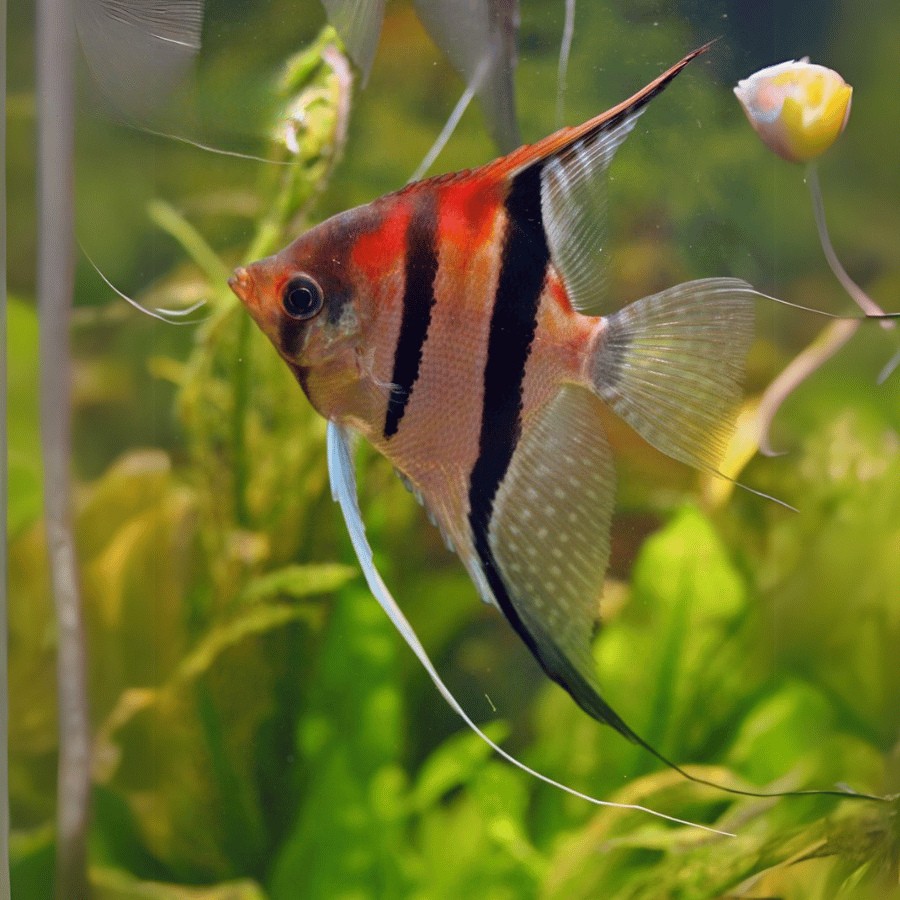
| ❌ | Angelfish | Adult angels will eat marble hatchets; their mouths are more than wide enough to engulf a 4 cm surface fish, and the height of a community angel tank turns the surface into a hunting ground |
| ❌ | Sparkling Gourami & other small gouramis | Direct surface-zone competitor. Labyrinth fish claim the same top 2 cm that hatchets need and will nip, harass, and out-compete them for floating food |
| ❌ | Betta (Male) | Surface-territorial, aggressive, and shares exactly the microhabitat hatchets depend on — a guaranteed fight for space and food |
| ❌ | Large Cichlids (Oscars, Severums, etc.) | Any cichlid larger than roughly 8 cm treats marble hatchets as live food; the hatchet’s escape leap just sends it into the lid |
| ❌ | Tiger Barb and other active fin-nippers | Fast, boisterous mid-water fish stress hatchets into constant jumping; they also compete aggressively for any food that lingers near the surface |
How to Breed
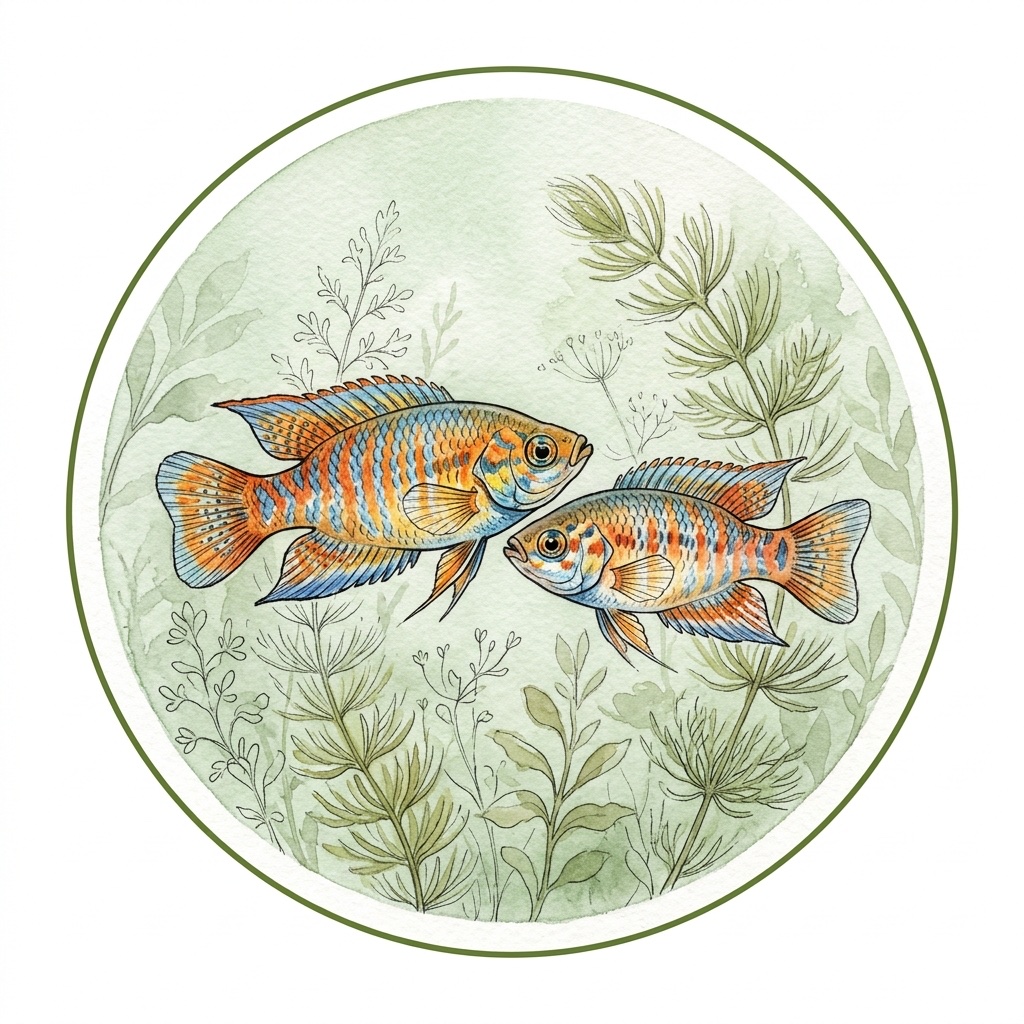
Wild behaviour
Rainy-Season Trigger
Soft floodwater and falling temperatures trigger spawning
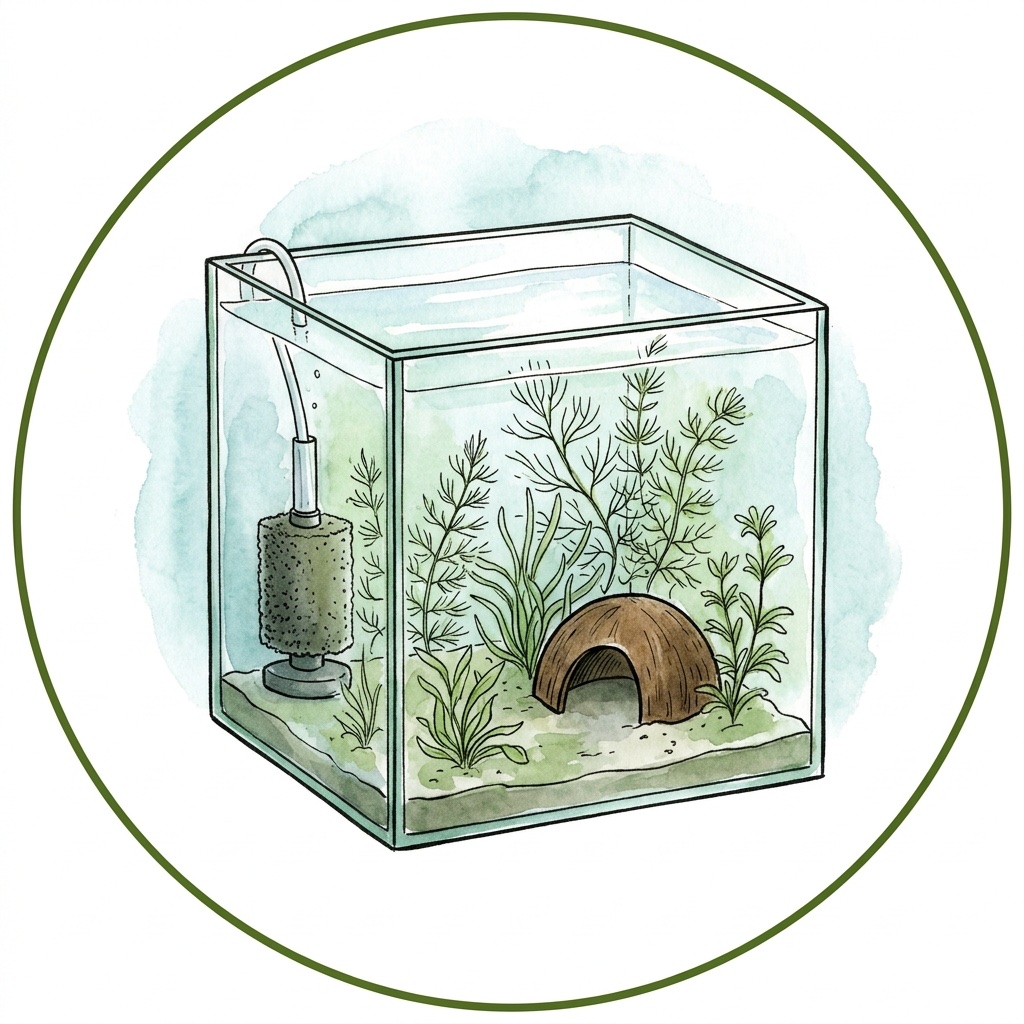
Week -2
Conditioning
Heavy live-food feeding in blackwater
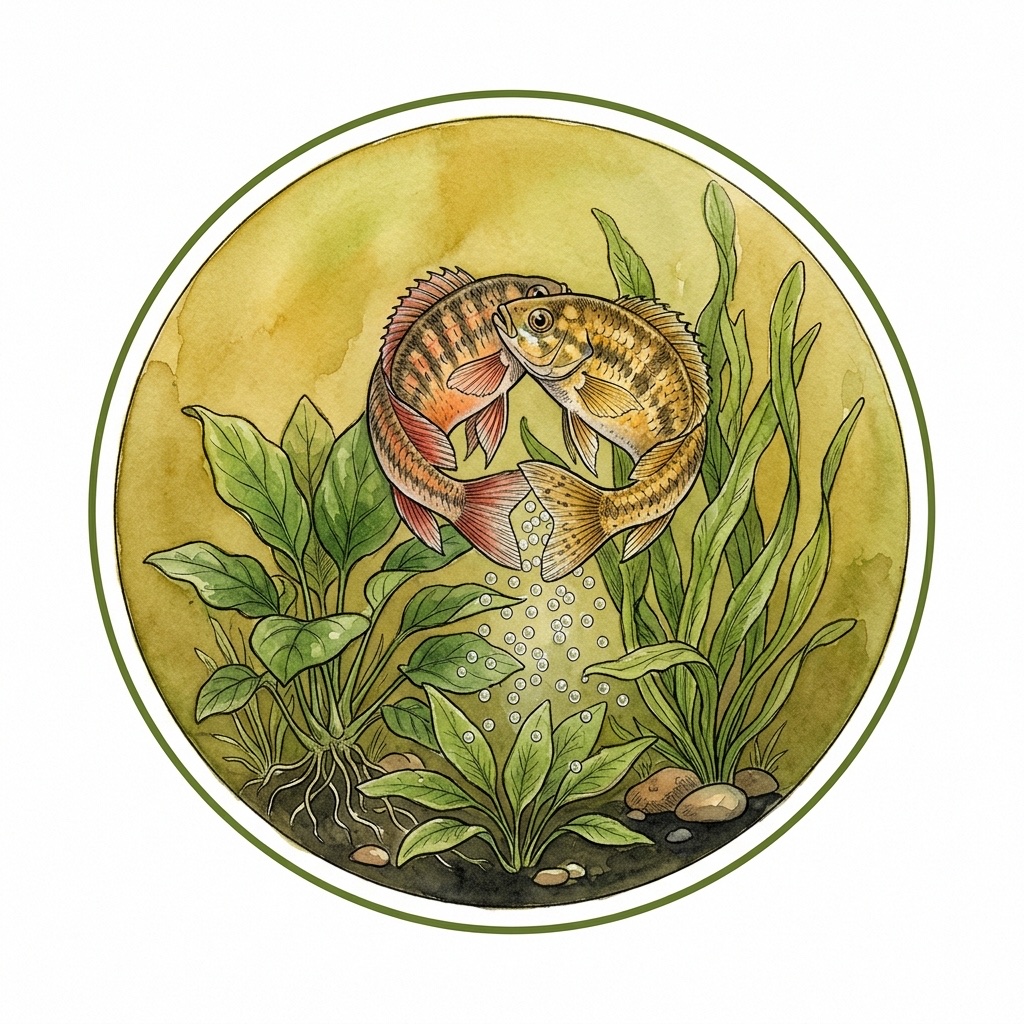
Day 0
Spawning Among Floating Plants
Eggs scattered into surface vegetation and root mats
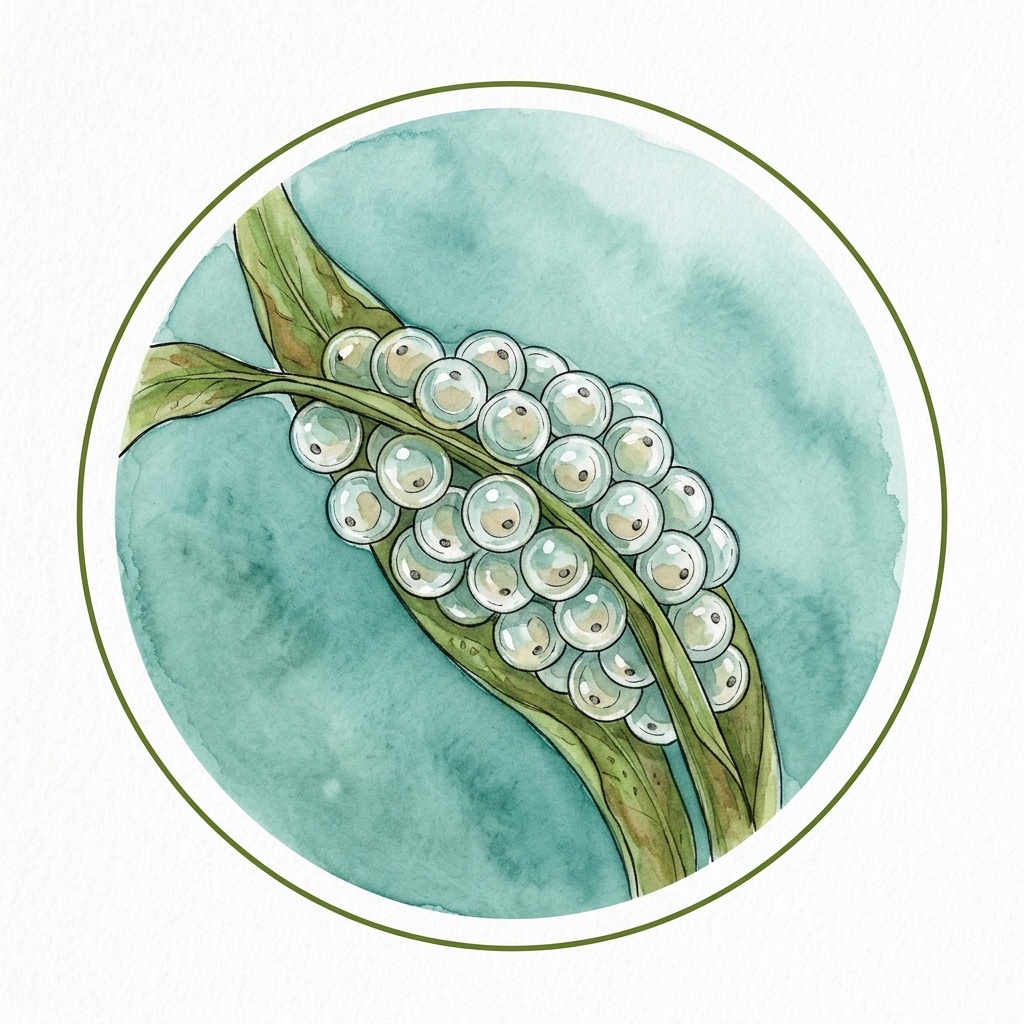
Day 1–2
Egg Incubation
Tiny transparent eggs cling to plant roots
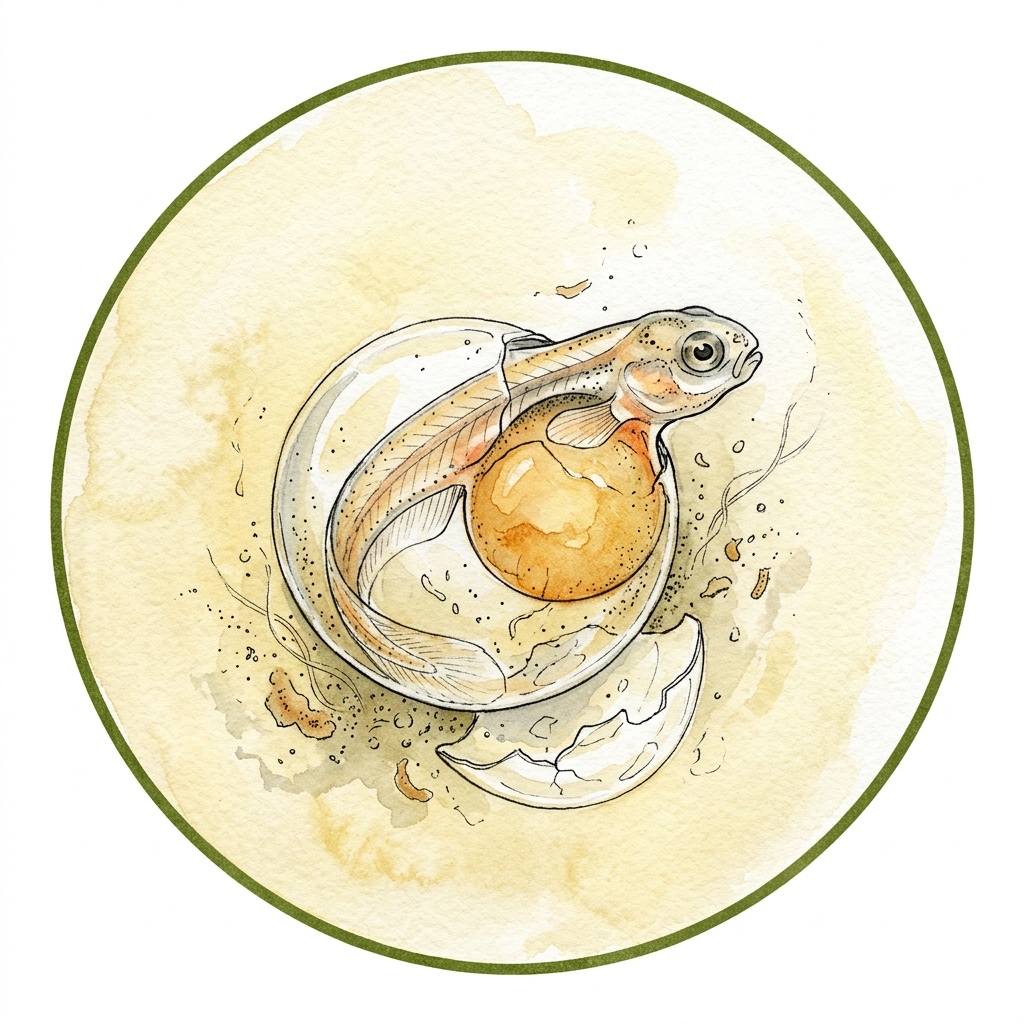
Day 3–5
Fry Free-Swimming
Begin feeding infusoria, then microworms
Rainy-Season Trigger
In the Amazon basin, marble hatchets appear to spawn at the onset of the rainy season (typically November to March in the upper Amazon), when heavy rains soften the water further, drop temperatures slightly, and flood the surrounding forest. Newly submerged leaf litter releases a surge of tannins and dissolved organics, and the schools move from the main channel into shaded, slow-flowing backwaters choked with overhanging vegetation. The biological trigger appears to be a combination of falling conductivity, slight temperature drop, and the sudden availability of flooded terrestrial micro-prey. Captive breeders trying to replicate this start with a heavy 30–40 percent water change using RO water adjusted to pH 5.5, drop the tank temperature by 2 °C for a few days, dim the lighting significantly, and then slowly return conditions to normal over the following week. Success rates are modest even for experienced hobbyists.
Conditioning
Pairs or small groups are conditioned heavily on live foods — fruit flies, mosquito larvae, small earthworms chopped fine, daphnia — for two to three weeks. Water is kept extremely soft (ideally under 2 dGH), acidic (pH 5.5 to 6.0), and stained dark with Indian almond leaves and alder cones. Females visibly fill out with eggs when conditioning is working; this is the one reliable moment when sexing becomes straightforward.
Spawning Among Floating Plants
When ready, the pair rises together into the densest cluster of floating plants. The female releases a small batch of adhesive eggs into the roots of frogbit, Pistia, or Salvinia while the male fertilises them. Spawns are typically modest — 50 to 150 eggs total, scattered across multiple small batches rather than a single deposit. This behaviour is rarely observed in standard community aquariums; it happens almost exclusively in dedicated, heavily-planted species tanks under subdued light.
Egg Incubation
Eggs are small, translucent, and fragile. Remove the adults immediately after spawning — they will eat the eggs given any opportunity. Maintain the tank dim, temperature steady at 26 °C, and watch for fungus on infertile eggs, which should be picked out gently. Incubation is short; under warm soft water, fry emerge within 24 to 36 hours.
Fry Free-Swimming
Fry are tiny — smaller than neon tetra fry, effectively invisible to the naked eye at first — and spend their first days clinging near the surface in the shadow of floating plants. First foods must be microscopic: infusoria cultured from a jar of tank water and blanched lettuce, green water (suspended phytoplankton), commercial liquid fry food, or vinegar eels. Culture at least two of these options simultaneously; a single culture that crashes mid-week will wipe the entire batch. After a week they can take microworms, and after 10 to 14 days they accept newly hatched brine shrimp. Growth is slow and loss rates are high — 50 percent mortality in the first month is unfortunately common even for experienced breeders. Juveniles develop the characteristic marbled pattern only after roughly two months and are not clearly identifiable as marble hatchets until then. Successfully raising a batch of marble hatchet fry to saleable size is considered one of the harder achievements in Amazon aquaristics and is worth documenting carefully.
Quick Reference
| Scientific Name | Carnegiella strigata |
| Adult Size | 3.5–4.5 cm |
| Lifespan | 3–5 years |
| pH | 5.5–7.0 (ideal 6.2) |
| Temperature | 24–28 °C (ideal 26 °C) |
| Hardness | 2–10 dGH (soft preferred) |
| Min Tank Size | 80 L long format |
| School Size | 6+ (8–10 recommended) |
| Diet | Floating flake, small pellets, frozen and LIVE insect foods only |
| Care Level | Intermediate — lid discipline critical |
| Temperament | Peaceful, jumpy |
| Tank Position | Surface only — top 2 cm |
| Breeding | Very rare; surface/plant spawner in soft blackwater |
| Critical Warning | TIGHT-FITTING LID MANDATORY — will jump and die without one |
| Price | $28 AUD |
Related Products

Reviews
Clear filtersThere are no reviews yet.