🪨 Species at a Glance
| Scientific Name | Rotala rotundifolia (wild-type) |
| Common Name | Rotala Rotundifolia, Dwarf Rotala, Round-Leaf Rotala |
| Family | Lythraceae (loosestrife family) |
| Origin | Southeast Asia — southern China, Taiwan, Vietnam, Laos, Thailand, northern Burma |
| Mature Height | 20-40 cm submerged stems (trimmable to any height) |
| Submerged Leaf Form | Narrow linear leaves 2-3 cm long, 2-3 mm wide, in opposing whorls of 3-4 |
| Emergent Leaf Form | Small rounded-oval leaves 8-12 mm long, matte green (round leaves only appear above water) |
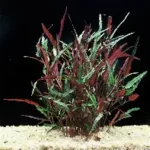
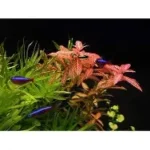
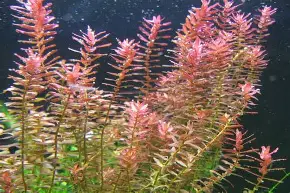
| Colour Under High Light | Apple-green body with pink-salmon apical tips ONLY (top 1-3 cm of stem) |
| Colour Under Medium Light | Clean apple-green throughout with occasional faint pink flush on newest leaves |
| Growth Rate | Fast under CO2, moderate without CO2 |
| Light Requirement | Medium to high (40-80 PAR at leaf surface for pink tips) |
| CO2 Requirement | Helpful but NOT required — grows well in low-tech tanks |
| Planting Method | Bunched stem cuttings anchored in substrate |
| Placement | Background to mid-background group planting |
| Supply Form | Non-TC, sold as bunched cuttings (wild strain, not tissue-cultured) |
| Difficulty | Easy — one of the most forgiving stem plants in the hobby |
Planting & Placement
Stem
Wild-type Rotala rotundifolia is supplied to the aquarium trade as bunched stem cuttings rather than tissue-cultured plantlets, a detail that reflects both its commercial economics — it is inexpensive to harvest wild or farm-grown stems in bulk, and the species is so vigorous that tissue culture would add cost without adding value — and its forgiving nature as a transplant. A typical bunch comprises fifteen to thirty stems eight to twelve centimetres long, wrapped at the base in a lead strip or ceramic-coated band to hold the bundle together during shipping and initial planting, and arrives in good condition provided it has been moved from wholesaler to retailer to aquarist within roughly a week of harvest. On arrival the bunch is first untied, any dead or damaged lower leaves stripped off with thumb and forefinger, and each individual stem replanted separately rather than as a bound bundle. Planting a bunch intact is a classic beginner mistake — the inner stems of a tight bundle receive no light, no flow, and no direct access to water-column nutrients, and they simply rot within two weeks of planting, taking the outer stems with them as the decay spreads. Each stem goes into the substrate individually, spaced one to two centimetres from its neighbours to allow light and flow to every stem in the planting, and this simple discipline of untying and individually planting every cutting is the single most important thing a beginner can learn about stem-plant keeping.
The planting technique is straightforward. A long pair of aquascaping tweezers is used to grip each stem near its base, the tweezers are pushed into the substrate at a shallow fifteen to thirty degree angle to a depth of one and a half to two centimetres, and the tweezers are then opened and withdrawn smoothly, leaving the stem anchored with its lowest one or two nodes buried in the substrate and the remaining leaves above. The shallow-angle insertion is crucial because wild-type Rotala stems are hollow and fragile at the newly-cut base and will often float free if pushed straight down vertically, whereas a shallow-angle insertion traps the stem under a small overhang of substrate and holds it firmly in place until the plant produces fresh adventitious roots, typically within three to seven days of planting in CO2-injected tanks or seven to fourteen days in low-tech tanks. Stems that do float free in the first day should be replanted promptly — a drifting stem will not re-establish on its own and will decay over the following week. Substrate depth is not particularly critical; wild-type Rotala rotundifolia will grow in as little as three centimetres of gravel and will grow happily in six or more centimetres of aquasoil, though a depth of four to five centimetres represents the practical sweet spot for allowing full root development without wasting expensive soil volume on a plant that does not particularly need it.
Substrate choice is unusually flexible for this species, which is part of why it has become the universal default stem plant for beginners. Nutrient-rich aquasoils such as ADA Amazonia, Tropica Aquarium Soil, or Fluval Stratum will produce the fastest and most vigorous growth and will support the brightest pink-salmon tip colouration by releasing a steady supply of ammonium and iron into the root zone. Inert gravels from plain quartz to coloured ceramic to pool-filter sand all work well provided they are supplemented with a few root tabs at the base of the planting every two to three months; the species is sufficiently vigorous that it can extract adequate nutrients from the water column alone once a tank is well-fertilised, and many hobbyists grow wild-type rotundifolia successfully with no root-zone fertilisation whatsoever, relying entirely on a weekly all-in-one liquid fertiliser. This flexibility is one of the reasons it is recommended to beginners with pre-existing inert-gravel tanks who want to add a first stem plant without committing to a full aquasoil substrate rebuild. Compare this to the strict aquasoil requirement of the Colorata cultivar and it becomes clear why wild-type rotundifolia remains the entry-level Rotala of choice for hobbyists not yet ready to commit to a high-tech setup.
Illumination Requirements
MEDIUM LIGHT
PAR: 40-80 PAR at leaf surface for pink tips; survives from 25 PAR upward
High
Wild-type Rotala rotundifolia is considerably more light-tolerant than its selectively bred red cultivars, which is another reason it has remained the entry-level Rotala of choice across three decades of hobby fashion changes. The species will survive and produce slow but healthy growth at light levels as low as twenty-five to thirty PAR at the leaf surface — roughly equivalent to a modest single-tube fluorescent fixture over a sixty-centimetre tank — and it will thrive across the medium-light range of forty to seventy PAR that characterises most general-purpose planted-tank fixtures. At these medium light intensities the plant produces a clean apple-green body colour throughout the stem with only an occasional faint pink blush on the very newest apical leaves, an attractive but restrained look that integrates well with green-dominant scaped tanks and with tanks emphasising fish display over plant chromatic drama. For hobbyists seeking the defining pink-salmon tip colouration the species is known for, light intensity needs to rise to the upper medium and lower high range of seventy to one hundred PAR at the leaf surface, achieved with a good-quality planted-tank LED such as the Chihiros A2, Twinstar B-Series, or Fluval Plant 3.0 running at sixty to eighty percent output for a seven to nine hour photoperiod. Above one hundred and twenty PAR there is essentially no further colour benefit to the wild-type plant — unlike the Colorata cultivar which continues to intensify up to one hundred and fifty PAR — and pushing intensity higher mostly just invites algae pressure without producing a visibly redder plant.
The crucial distinction between wild-type Rotala rotundifolia and its bred red cultivars is the extent and pattern of pink-to-red colouration. Wild-type rotundifolia colours ONLY at the apical tips, meaning the top one to three centimetres of each stem where the newest leaves are actively growing, and only when light intensity is sufficient to trigger the anthocyanin response in the newest leaves. Even under optimal light and CO2, the lower two-thirds of each stem remains firmly green — this is a biological feature of the wild-type genotype and not a cultural deficiency. Hobbyists expecting whole-stem red colouration from wild-type rotundifolia will be disappointed and should either upgrade to the Colorata cultivar or accept that the species produces a green-with-pink-apices display rather than a whole-stem red display. Conversely, for hobbyists who prefer the softer aesthetic of a mostly-green planting punctuated by bright pink tips, wild-type rotundifolia delivers exactly that look with a tiny fraction of the cultural effort that full-red cultivars require, and many experienced aquascapers specifically prefer the wild-type for this reason despite having access to the full range of bred cultivars.
Photoperiod for wild-type Rotala rotundifolia is forgiving — seven to ten hours of medium-intensity lighting produces excellent growth without algae complications, and beginners can run a simple eight-hour on/off schedule without any ramp-up complication and achieve perfectly respectable results. The species does not require the shorter-and-more-intense regime that red cultivars benefit from because it is not being pushed to its chromatic limit, and extending the photoperiod to ten or even twelve hours in a healthy tank with good fertilisation will not cause the algae problems that the same photoperiod would cause in a high-intensity Colorata tank. This tolerance makes wild-type rotundifolia forgiving of the irregular lighting schedules that beginners often end up with when they first install a planted tank — a tank that runs six hours one day and eleven the next because the hobbyist has not yet settled on a timer regime will still grow respectable wild-type Rotala while killing most red cultivars through stress-driven algae blooms.
Recommended Photoperiod: 7-10 hours (forgiving of irregular schedules; 8 hours is a safe default)
Feeding Your Plant: CO2 & Ferts
CO2 OPTIONAL
Pressurised CO2 injection is genuinely helpful for wild-type Rotala rotundifolia but — crucially, and in direct contrast to the Colorata cultivar — it is not required. The species is one of the small group of moderately demanding stem plants that transition gracefully between high-tech and low-tech cultivation, producing fast vigorous growth under CO2 injection at twenty to thirty parts per million and still producing perfectly presentable steady growth without any CO2 at all, just at a reduced rate of perhaps forty to fifty percent of the CO2-driven speed. A low-tech tank growing wild-type rotundifolia under medium light with a good all-in-one liquid fertiliser will produce stems that extend one to two centimetres per week, develop a clean apple-green body, and show occasional pink flushes on the newest apical leaves when fertilisation is optimal — a perfectly satisfying result for the hobbyist not ready or not interested in committing to CO2. Adding pressurised CO2 to the same tank will roughly double the growth rate to three to five centimetres per week and intensify the pink apical tip colouration from an occasional flush to a consistent feature on every stem, but the difference is quantitative rather than qualitative — the low-tech plant is still identifiably and healthily wild-type rotundifolia, just moving at a slower pace.
Liquid carbon supplements such as Seachem Excel or Easy-Life EasyCarbo work well with wild-type Rotala rotundifolia at the recommended daily dose and can add perhaps twenty to thirty percent to the growth rate of a low-tech tank without any of the infrastructure of pressurised CO2. Unlike some sensitive species — Vallisneria, Blyxa, certain mosses — that react badly to liquid carbon, wild-type rotundifolia tolerates the Excel-family compounds without leaf damage at the recommended dose, and many hobbyists find liquid carbon a satisfying middle-ground option between full no-carbon low-tech and full pressurised CO2 high-tech. That said, the species does not need either and grows perfectly respectably in a true low-tech tank with no carbon supplementation at all. This forgiving relationship with the carbon supply is the fundamental reason wild-type rotundifolia has maintained its status as the universal beginner stem plant across decades of cultivar proliferation — it will grow in the beginner’s first tank without any specialised equipment, it will grow in an intermediate hobbyist’s first CO2 tank with ordinary results, and it will still grow in an expert’s showpiece tank as a reliable green-pink backdrop plant. Very few aquatic plants offer this degree of flexibility across setup types.
Fertilisation
Fertilisation for wild-type Rotala rotundifolia is straightforward and does not require the specialist iron-dosing regimes that the red cultivars demand. A comprehensive all-in-one liquid fertiliser dosed at manufacturer-recommended rates — Tropica Premium, Seachem Flourish Comprehensive, APT Complete, or any equivalent mainstream product — will meet the plant’s nutritional needs fully in tanks running modest to moderate stem-plant load. The plant responds positively to steady nitrogen, phosphorus, and potassium at standard EI-lite concentrations of five to fifteen parts per million nitrate, one to two parts per million phosphate, and ten to twenty parts per million potassium, and shows no particular sensitivity to the exact balance of macros within that range. Unlike Colorata, the wild-type does not need aggressive dedicated iron dosing to express its pink tip colour — the trace iron in a standard comprehensive fertiliser is sufficient to support the limited apical anthocyanin production that gives the species its pink-salmon tip signature, and adding extra iron beyond the standard trace dose does not intensify the colour further because the wild-type genotype lacks the anthocyanin pathway capacity that the bred cultivars were selected for.
Root-zone fertilisation is helpful but not required. A few root tabs placed at the base of a group planting every two to three months will boost growth rate and support denser leaf production, particularly in inert-gravel substrates, but aquasoil substrates typically provide sufficient root-zone nutrition for the first year or more without any supplementation. The species is notably tolerant of fertilisation mistakes — missed weekly doses, overdoses, mid-dose switches from one brand to another — in a way that more demanding stem plants such as Eriocaulon, Tonina, or the red cultivars are not, and a forgetful hobbyist who misses three weeks of fertilisation will return to find wild-type rotundifolia still growing and still green rather than collapsed and melted. This robustness is another defining feature of the species and a major reason for its persistent popularity. On the nitrate end specifically, wild-type rotundifolia tolerates a wide nitrate window from roughly three to thirty parts per million without visible effects on growth or colour; it is substantially less sensitive to nitrate-starvation colour tricks than the red cultivars because its colour expression is driven mostly by light on the apical leaves rather than by nitrogen limitation. Hobbyists chasing pink tips should focus on light and leaf health rather than on the macronutrient regime.
Water Quality for Plants
6.0–7.5
ideal 6.8
22–28 °C
ideal 25 °C
4–12 dGH
Soft to moderately hard; tolerates a wider hardness range than most stem plants
Wild-type Rotala rotundifolia is notably more tolerant of variable water parameters than its bred red cultivars and thrives across a considerably wider envelope of pH, temperature, and hardness values. The species’ natural habitat in Southeast Asian rice paddies exposes it through an annual seasonal cycle to water parameters ranging from slightly acidic rainwater during the monsoon flood to moderately alkaline groundwater during the dry-season residual pools, and this physiological adaptability carries through to aquarium cultivation as a surprising tolerance of everyday tap-water chemistries that would distress more fastidious red-stem species. The species grows well across a pH range from about six point zero to seven point five, with a natural sweet spot around six point six to six point nine that most tap-water tanks will fall into naturally, and it continues to grow acceptably (if somewhat slower) down to pH five point five and up to pH seven point eight. The relatively alkaline-tolerant end of this range is important because it means wild-type rotundifolia is one of the few Rotalas that hobbyists on moderately hard tap water can grow without needing to invest in an RO filter or aquasoil-driven pH reduction, and a standard urban tap-water tank at pH seven point two and seven or eight dGH will grow the plant perfectly well.
Temperature tolerance covers the full tropical aquarium range of twenty-two to twenty-eight degrees Celsius without any notable effect on appearance or vigour. The plant grows fastest around twenty-five to twenty-six degrees and slightly slower at the cooler end around twenty-two to twenty-three degrees, but the difference is not visually obvious over a monthly timeframe and cooler tanks do not produce the colour bleaching seen at warmer temperatures in some sensitive species. Tanks running cold-water setups below twenty-one degrees grow the plant noticeably more slowly but do not harm it; the species has been grown successfully in unheated temperate summer outdoor ponds as low as seventeen to nineteen degrees in aquarist propagation beds. At the warm end, sustained temperatures above twenty-nine or thirty degrees begin to produce some leaf softening and reduced pink expression but the plant does not die back, and warmer tropical community tanks at twenty-seven or twenty-eight degrees grow it perfectly well.
Hardness tolerance is the most striking point of contrast with the red cultivars. Wild-type rotundifolia grows happily from four to twelve degrees general hardness, and occasional tank reports confirm survival and continued growth up to fifteen degrees dGH in hard urban water, though colour intensity on the apical tips reduces noticeably as hardness increases above about nine or ten degrees. The underlying mechanism — iron precipitation in alkaline hard water — affects wild-type rotundifolia less visibly than Colorata because the wild-type plant’s modest apical-tip colouration requires less iron than the whole-stem colouration of the cultivar, so the iron supply bottleneck hits the bred cultivar first. Practically this means hobbyists on hard tap water who cannot grow Colorata satisfactorily can still grow wild-type rotundifolia very well, producing a clean green plant with just-visible pink apices — arguably the most valuable single fact about this species for beginners with typical urban tap water. The same applies in moderately alkaline well-water tanks and in tanks built on limestone-rich local stone where passive carbonate dissolution pushes KH upward over time; wild-type rotundifolia is one of the small handful of attractive stem plants that genuinely tolerates these conditions without visible distress. Weekly water changes of thirty percent using dechlorinated tap water maintain parameter stability without needing any RO treatment or remineralisation regime.
Caring for Your Plant
FAST GROWTH
Wild-type Rotala rotundifolia is a fast-growing stem plant under CO2-injected high-light conditions, producing stem extension of three to five centimetres per week during active growth and reaching trimming height at the water surface from a fresh planting in roughly six to eight weeks. Compared to its Colorata cultivar sibling under the same conditions, wild-type rotundifolia is observably faster by roughly twenty to thirty percent — a practical consequence of the selective breeding that produced Colorata, which traded some growth vigour for intensified colour expression, a pattern familiar from garden-plant breeding generally where selecting for one trait often compromises another. The practical consequence for the aquarist is that wild-type rotundifolia demands slightly more frequent trimming than the bred cultivars under identical light and CO2 conditions, and a well-fed high-tech tank will need trimming every seven to ten days once the planting is established rather than the ten to fourteen day cycle typical of Colorata. This faster growth is mostly a feature rather than a bug — it means the plant fills in faster after initial planting, recovers faster from trims, and produces more cuttings per trim cycle for propagation or gifting to other hobbyists.
Without CO2 injection the growth rate drops to roughly one to two centimetres per week, which is still considerably faster than a low-tech tank’s slowest-growing species but slower than the CO2-accelerated rate of the same plant. A low-tech tank reaches trimming height in fourteen to eighteen weeks from fresh planting rather than six to eight, and trims are needed every three to four weeks rather than weekly. This is a comfortable maintenance cadence for a casual hobbyist and is part of what makes low-tech Rotala rotundifolia such a satisfying beginner experience — the plant grows visibly week by week without demanding intensive intervention, and a single monthly trimming-and-replant session covers all routine maintenance. Hobbyists graduating from low-tech to high-tech setups often report that the increased growth rate of wild-type rotundifolia is their first concrete experience of how dramatically CO2 affects aquarium plant growth, and the observable speed change becomes an intuitive demonstration of the CO2-growth relationship that simply reading about in textbooks does not convey. Many hobbyists keep a small companion low-tech tank running alongside a main high-tech display specifically to contrast the two growth rates side by side on the same species — the pedagogical value of watching the same plant behave differently under different carbon regimes is one of the most persuasive arguments for keeping at least one dedicated low-tech tank in a hobbyist’s collection.
Trimming technique is the same as for any stem plant. A sharp pair of aquascaping scissors — straight for flat hedgerows, curved for contoured layouts — is used to cut each stem cleanly at the designed height, and the cut tops are either removed from the tank or replanted to fill gaps in the hedge or to expand the planting. Regrowth from the cut node appears within three to five days under CO2 injection and within seven to ten days in low-tech tanks. After four to six trim cycles the original planted bases begin to lose vigour as the basal stems become woody and the adventitious root systems crowd the substrate, at which point a complete replant using fresh apical tops from the most recent trim refreshes the display and restores full growth vigour for another several months. This trim-and-replant cycle is the standard maintenance rhythm for all Rotala plantings and should be budgeted into the aquarist’s monthly tank-care schedule from the outset. The wild-type’s faster growth rate means this replant cycle comes around slightly sooner than for the Colorata cultivar — typically every three to four months under high-tech conditions rather than four to six months — and this is essentially the only meaningful maintenance cost difference between the wild-type and the bred cultivars.
First trim (establishment)
6-8 weeks post-planting in CO2-injected tanks, or 14-18 weeks in low-tech. Cut all stems to uniform 15-20 cm height with sharp stainless scissors. Remove cuttings or replant to fill gaps and expand the planting.
Maintenance trims (high-tech)
Every 7-10 days in mature CO2-injected planting. Level hedge at designed height using single clean horizontal cuts. Remove all floating debris and trimmings promptly to avoid nutrient spike from decaying biomass.
Maintenance trims (low-tech)
Every 3-4 weeks in non-CO2 tanks. Slower growth means less frequent trims, but the same level-cut technique applies. Low-tech growth is more forgiving of irregular trim intervals.
Replant cycle
Every 3-4 months in high-tech tanks, every 6-9 months in low-tech. Pull mature stems, cut fresh 8-10 cm apical tops, discard old woody bases, replant fresh tops at original spacing. Restores growth vigour.
Algae inspection on lower leaves
Weekly visual check — inspect lower leaves for GSA, GDA, or BBA and remove affected leaves promptly by pinching at the node. Increase flow or reduce photoperiod if lower-leaf algae becomes recurrent.
Weekly liquid fertiliser dose
Apply manufacturer-recommended dose of comprehensive all-in-one liquid fertiliser on the day of the weekly water change. No specialist iron regime needed, unlike for the Colorata cultivar.
Reproduction & Division
Cuttings
Propagation of wild-type Rotala rotundifolia by stem cuttings is arguably the easiest propagation job in the freshwater planted-aquarium hobby, and the combination of fast growth and forgiving rooting behaviour means a single starter bunch of fifteen stems can populate a sixty-centimetre tank within three to four months and a ninety-centimetre tank within five to six months. The method exploits the plant’s natural ability to root from any intact node — every whorl of leaves along the stem has the dormant capacity to produce adventitious roots once detached from its parent and placed in contact with substrate, and this ability means every trim cycle doubles as a propagation event without any additional effort or equipment.
The workflow is identical to the Colorata cultivar and to every other Rotala in the hobby. Trim healthy stems to the desired height, gather the cuttings, chop each cutting into a standardised replant length of eight to ten centimetres, strip the leaves from the bottom two to three centimetres of each cutting to expose the bare nodes that will sit in the substrate, and replant the prepared cuttings using the same shallow-angle tweezer technique described for initial planting. Each cutting roots within three to five days under CO2-injected conditions or seven to ten days in low-tech tanks, and begins producing fresh apical growth within seven to ten days of planting. Two to three weeks after cutting, the new plantings are indistinguishable from mature stems and the propagation cycle is complete. This cycle can be repeated indefinitely — there is no evidence of genetic drift or vigour loss in stems propagated over many cycles, and many hobbyists are growing stock descended from bunches bought a decade or more ago without any discernible degeneration.
The apical tops produce the fastest and most vigorous replants because they are already in active growth mode, and a trim-for-propagation job should preferentially use the top five to ten centimetres of each stem rather than middle or basal sections. Middle stem sections root successfully but take slightly longer to resume active apical growth because they must first activate a dormant lateral bud into the new apical meristem. Old woody basal sections are generally not worth replanting because they tend to stall indefinitely; a shrimp tank is a better disposal destination for these sections where they will decompose slowly and release modest nutrient value. A useful side note for beginners: wild-type Rotala rotundifolia’s fast growth and forgiving rooting makes it an ideal first propagation experience. A beginner practising stem-plant propagation on this species will succeed quickly, gain confidence, and carry that experience forward to more demanding species. For this reason, experienced hobbyists routinely recommend wild-type rotundifolia as a beginner’s first self-propagation project before attempting more difficult cuttings like Tonina, Eriocaulon, or the fussier Ludwigias.
One final propagation detail worth mentioning is the species’ ability to propagate from floating stems without any substrate contact at all. A stem trimmed and allowed to float freely in the water column under reasonable light and nutrient conditions will produce adventitious roots at the submerged nodes within five to ten days, and these rootlets will extend into the water column producing a scraggly but healthy plant that can be later transplanted into substrate or maintained indefinitely as a floating plant. This floating-propagation trick is useful for emergency holding of excess cuttings after a trim session when substrate space is not immediately available, and some hobbyists deliberately maintain a small floating population of wild-type rotundifolia specifically as emergency replant stock for when storms or equipment failures damage the main display planting. The species’ tolerance of floating cultivation is another reflection of its natural origin in rice paddies where high water levels during the monsoon often detach stems from the substrate and leave them drifting until the water recedes.
Aquascaping with This Plant
Background
Wild-type Rotala rotundifolia is the most widely used background stem plant in the entire freshwater planted-aquarium hobby, and it appears in more published aquascaping layouts, tank journals, and contest submissions than any other single aquatic plant species. Its role is almost invariably the same: a dense vertical group planting positioned along the rear glass or in the back corners, providing a clean green vertical backdrop with characteristic pink-salmon apical accents against which the greens of foreground and midground plants stand out with gentle chromatic warmth. Unlike the red cultivars which provide a strong colour statement requiring careful compositional balance against competing warm colours, wild-type rotundifolia provides a quieter, more universal green-with-pink-tip accent that harmonises with essentially any other planting scheme — Iwagumi layouts, Nature Aquarium compositions, Dutch-style hedgerow designs, blackwater biotope tanks with driftwood and catappa, and simple green-themed community tanks all integrate wild-type rotundifolia without compositional difficulty.
Group planting is essential to read as a visual feature rather than as scattered weeds, but the density requirements are more forgiving than for the red cultivars. Fifteen to twenty-five stems spaced at one to one and a half centimetres across a fifteen to twenty-five centimetre area of the background is sufficient to read as a solid planting in a standard sixty-centimetre tank, though denser plantings of forty or fifty stems produce a more substantial visual mass and are worth the extra stem count for hobbyists who want a bolder backdrop. The species naturally self-shades at higher densities and produces an architectural rising-hedge effect, with the apical pink tips catching the eye along the top of the hedge while the darker green of the lower stems provides a shaded backdrop that gives visual depth. In large tanks of ninety centimetres and above a background planting can scale up to a hundred or more stems occupying the full rear wall, producing a generous green backdrop with a shimmering pink canopy that is one of the most satisfying visual effects available in planted aquariums. In nano tanks of thirty centimetres and below, a tight cluster of eight to twelve stems in a back corner trimmed short at ten to fifteen centimetres produces a proportionally correct scaled-down version of the effect.
Wild-type rotundifolia pairs particularly well with fine-leaved green companion plants in the background such as Limnophila sessiliflora, Myriophyllum mattogrossense, and other Rotala species like Rotala wallichii and Rotala sp. ‘Green’ for textural variety within the rear planting without introducing competing red colour pressure. In the midground it contrasts nicely with broader-leafed green plants such as Staurogyne repens or Cryptocoryne wendtii ‘Green’, and its pink apical tips create a soft chromatic bridge to deeper-red midground accents such as Alternanthera reineckii ‘Mini’ or Ludwigia brevipes without becoming a competing colour feature in its own right. Foreground pairings with Monte Carlo, dwarf hairgrass, glossostigma, and Marsilea hirsuta all work well, with the dense green carpet foreground accentuating the subtle pink apical tips of the Rotala above through chromatic complementary contrast. For hobbyists who eventually progress from wild-type rotundifolia to the red cultivars, a common compositional move is to retain a wild-type rotundifolia backdrop and add a feature clump of Colorata, Blood Red, or Orange Juice in a midground position, producing a layered composition with wild-type rotundifolia’s gentle green-pink backdrop framing a more intense red feature planting — a design approach that reuses the hobbyist’s existing wild-type stock without requiring it to be ripped out as the collection matures.
A further aquascaping consideration worth mentioning is the species’ behaviour when grown emersed above the water line in paludarium or riparium setups. Wild-type Rotala rotundifolia readily transitions from submerged to emergent growth when the stems reach the surface and are allowed to breach into air, at which point the morphology shifts dramatically to the small round leaves that give the species its Latin name. Paludarium aquascapers make creative use of this dual-form habit by deliberately allowing some stems to climb above the water line while keeping others trimmed submerged, producing a layered planting with narrow-linear submerged leaves below and rounded emergent leaves above in the same species — a visually striking effect that is unique to amphibious species like this one and that cannot be replicated with strictly submerged or strictly terrestrial plants. The emergent form also flowers more readily than the submerged form, producing small pink flower spikes at the stem tips during long-photoperiod conditions, which adds an unusual decorative element to paludarium displays. For strictly submerged aquarium use this dual-form habit is simply an interesting piece of biology, but for hobbyists interested in paludarium or open-top rimless tank designs it becomes a genuinely useful compositional tool.
| Plant | Why | |
|---|---|---|
| 🌿 | Monte Carlo (Micranthemum tweediei) | Classic green carpet foreground that provides the complementary green half of the green-pink composition; thrives under the same medium-to-high light conditions that bring out wild-type rotundifolia’s pink apical tips. |
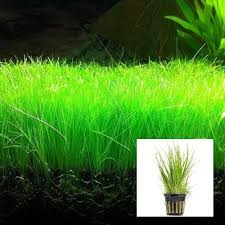
| 🌿 | Dwarf Hairgrass (Eleocharis acicularis) | Fine-textured grassy carpet that contrasts with the broader stem-plant form of Rotala rotundifolia and shares the species’ tolerance of medium-light low-tech conditions, making it a natural pairing for beginner low-tech tanks. |
| 🌿 | Cryptocoryne wendtii ‘Green’ | Broad-leaved green midground companion that provides textural contrast against the narrow linear Rotala leaves; both species are forgiving of variable water parameters and suit beginner setups. |
| 🌿 | Staurogyne repens | Bushy low-growing green midground plant that fills the transition zone between carpet and background, adding dense green mass that balances the Rotala backdrop without competing for chromatic attention. |
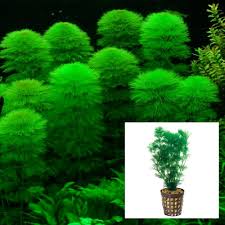
| 🌿 | Limnophila sessiliflora | Feathery bright-green stem plant for mixed background plantings alongside Rotala rotundifolia; both are fast-growing low-demand species that form a forgiving background mix suitable for beginners. |
| 🌿 | Alternanthera reineckii ‘Mini’ | Broad-leaved red midground accent that creates a chromatic bridge from the background Rotala’s pink apical tips down to a deeper red feature plant; works well as a bold colour accent against the more subdued Rotala backdrop. |
Quick Reference
| Scientific Name | Rotala rotundifolia (wild-type) |
| Light | Medium to high (40-80 PAR for pink tips; survives from 25 PAR) |
| CO2 | Helpful but NOT required — grows in low-tech tanks |
| Growth Rate | Fast with CO2; moderate without |
| Mature Height | 20-40 cm stems (trimmable) |
| pH Range | 6.0-7.5 (ideal 6.8) |
| Temperature | 22-28 degC |
| Hardness | 4-12 dGH (soft to moderately hard) |
| Planting Method | Bunched stem cuttings, planted individually |
| Placement | Background to mid-background group planting |
| Propagation | Stem cuttings (effortless, fast) |
| Colour Pattern | Green body with pink-salmon APICAL TIPS ONLY (not whole-stem red) |
| Supply Form | Non-TC bunched cuttings (wild strain) |
| Difficulty | Easy — ideal beginner stem plant |
Reviews
Clear filtersThere are no reviews yet.