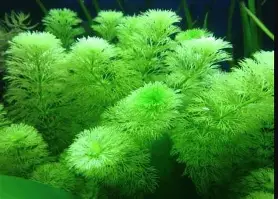
🪨 Species at a Glance
| Common Name | Giant Ambulia / Indian Ambulia / Ambulia Gigantea |
| Scientific Name | Limnophila aquatica |
| Family | Plantaginaceae (formerly Scrophulariaceae) |
| Origin | Indian subcontinent — India, Sri Lanka, Bangladesh; damp swamps, paddy-field margins, and still pools of the monsoon-fed lowlands |
| Form Supplied | Traditional bunched stems (non-TC, weighted at the base, typically 5-8 substantial stems per bunch) |
| Planting Method | Stem — plant individual cuttings directly into substrate, widely spaced |
| Light Level | Medium to high (low-light growth is possible but form is far less impressive) |
| CO2 | Helpful — benefits meaningfully more from CO2 than smaller Limnophila species do |
| Growth Rate | Fast under target conditions, moderate without CO2 |
| Max Height | 40-80 cm (trim regularly; single stems can exceed 5-8 cm diameter at full development) |
| Tank Size | Minimum 100 litres / 60 cm length; truly shines in 150-400 litre display tanks |
| Propagation | Stem cuttings — straightforward but slightly slower to root than L. sessiliflora |
| Aquascape Placement | Background feature — dense feathery column rather than uniform hedge |
Planting Guide
Stem
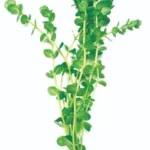
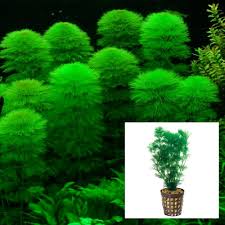
Giant Ambulia is a stem plant, which means its growth strategy revolves around a single primary vertical shoot pushing upward from the substrate, with new whorls of leaves unfurling at regular intervals along that shoot and with propagation happening almost exclusively through cuttings of that same stem. Where it differs from most other stem plants — including its smaller Limnophila cousins — is in the sheer scale of everything it does. A mature Limnophila aquatica stem can reach a diameter of five to eight centimetres across its whorl at full development, compared to the two to three centimetre diameter typical of Limnophila sessiliflora, and this dramatic size difference influences every practical decision you make about planting. You cannot plant Giant Ambulia like a hedge; it behaves more like a cluster of individual tree-like feature shoots, each of which demands its own breathing room in the substrate. The bunched form you receive from Amazonia Aquarium is the traditional non-tissue-culture presentation: a small cluster of five to eight substantial individual stems held at their base by a rubber band or lead strip, farmed submerged in a shaded nursery pond under the monsoon humidity of the Indian subcontinent, trimmed to uniform length, and shipped wet.
Before you plant, prepare the bunch carefully. Remove the rubber band or lead weight at the base, because leaving it in place will compress the stems together underwater, cut off water circulation to the lower portion, and cause the base to rot within a week or two; this is especially problematic with Giant Ambulia because the stems are thicker and slower to recover from base damage than slender species. Rinse the bunch gently under dechlorinated water to dislodge nursery debris, snail eggs, or residual algae, and inspect each stem individually, discarding any that have blackened soft bases or heavily stripped lower leaves. Using sharp aquascaping scissors, trim the very bottom one centimetre of each stem with a clean diagonal cut to expose fresh living cambium that will root quickly. Strip the lower four to five centimetres of leaves from each stem with a gentle fingertip motion; because Giant Ambulia foliage is so dense, burying even a little leaf material underwater will decompose and can seed a bacterial bloom or ammonia spike in a newly established tank. Treat each stem as an individual planting unit.
Using long, robust planting tweezers — the small delicate ones used for hair grass will not do for stems of this calibre — grasp each stem about three centimetres from its freshly cut base and push it firmly into the substrate at a slight angle, burying the bottom four to five centimetres. Keep the tweezers in place momentarily as you withdraw your hand so the thick stem does not pop back up through the lighter substrate. Crucially, space Giant Ambulia stems six to ten centimetres apart — dramatically wider than the two to three centimetres you would use for L. sessiliflora — because every mature whorl wants five to eight centimetres of lateral space around it and crowded plantings simply rot the interior leaves out within a few weeks. In a typical 90 centimetre tank background you will use only eight to fifteen Giant Ambulia stems for a full feature column; in a 120 centimetre display, twelve to twenty stems. This is one case where you must resist the beginner instinct to plant densely; sparse initial planting always outperforms crowded planting with this species because the plant simply refuses to tolerate tight neighbours once whorls reach full diameter.
Giant Ambulia experiences a more pronounced melt phase on transition than smaller Limnophila species, and new hobbyists must prepare for this. Nursery stems are almost universally grown partly emersed in high-humidity shade-house environments where the leaves are broader, firmer, and less finely divided than the fully submerged form. When planted underwater in your tank, the original emersed leaves will typically yellow, brown, and drop off over the first two to three weeks — longer than the one to two weeks typical of L. sessiliflora — while the stem produces new submerged-form leaves from the growing tip. This transition can look alarming, with the stems appearing almost bare for a fortnight, but the submerged-adapted regrowth is far more beautiful than the starting material, featuring the signature deeply bipinnate, almost moss-like feathery foliage that makes this species so prized. By week four the new underwater form should be visibly dominant, and by week six to eight the stems have transformed into proper Giant Ambulia columns. Patience during this first six weeks is non-negotiable with this species; more stems are lost to hobbyist impatience than to genuine failure.
Depth of planting deserves additional attention for Giant Ambulia. Because the stems are thicker and heavier than slender Limnophila species, they are slightly less buoyant once cut and tend to hold their planted position more reliably. Aim for four to five centimetres of buried stem base, and do not worry about over-deep planting — the species actually roots more reliably when given a generous amount of buried stem to establish against. If your substrate is shallow or if you have substrate-disturbing fish, consider placing a small smooth river stone or a glass plant weight against the base of each stem for the first ten to fourteen days of rooting. Once the thick root system establishes, Giant Ambulia is essentially impossible to accidentally uproot during normal maintenance.
Water Chemistry Guide
6.0–7.5
ideal 6.8
22–28 °C
ideal 25 °C
4–15 dGH
soft to moderately hard water; the plant is genuinely tolerant across this range, with a slight preference for the softer end
Giant Ambulia is adaptable across the standard tropical aquarium water-parameter ranges, though it shows a slightly different envelope of preferences than its Southeast Asian cousin. In its native Indian subcontinent range, Limnophila aquatica grows in monsoon-fed lowland swamps, paddy-field margins, shaded forest pools, and slow-moving streams where pH varies seasonally from mildly acidic (6.2) after monsoon flush through neutral (7.0) during dry-season concentration, with general hardness typically running 5 to 12 dGH in most populations. This gives a broad but tropically-centred aquarium comfort zone: the plant grows well from pH 6.0 to 7.5, across general hardness 4 to 15 dGH, and carbonate hardness 2 to 10 dKH. An ideal target for display performance is pH 6.6-7.0 with 6-10 dGH and 3-5 dKH, which happens to be an excellent envelope for most community tropical fish as well, so there is no conflict between livestock preferences and optimal plant conditions.
Temperature is where Giant Ambulia shows its tropical Indian origins strongly. The species wants warm water, genuinely 22 to 28 degrees Celsius, with the sweet spot at 24 to 27 degrees. It tolerates brief excursions outside this range but does not thrive below 20 degrees, where growth effectively stops and the stem base becomes vulnerable to rot. Above 30 degrees the plant continues growing but tends to become slightly stringy with less dense whorls; algae resistance also drops as warmer water carries less dissolved oxygen and CO2. Giant Ambulia is not suitable for coldwater tanks at all; it is the wrong plant for white cloud minnow, fancy goldfish, or hillstream loach aquariums. Conversely, it pairs excellently with discus at 29 degrees (with the caveat of slightly increased maintenance demands), with rams and dwarf cichlids at 26-27 degrees, and with general community tropical tanks at 25 degrees.
Water changes are more important for Giant Ambulia than for smaller species precisely because the plant’s high fertiliser consumption means nutrient concentrations drift more quickly and detritus accumulation is heavier. Target a weekly 40 to 50 percent water change, paired with a deliberate mechanical cleaning pass over the plant: gently agitate each Giant Ambulia column with your hand or a soft mesh net to dislodge the surprising amount of fine detritus that accumulates in the dense feathery foliage, then siphon the freed particles. Without this weekly detritus sweep, the interior leaves of each column begin to algae over within a few weeks as trapped particles decompose and feed filamentous algae in the low-light interior. Aquarists who skip this cleaning step almost universally report problems with their Giant Ambulia specimens declining from the inside out, while those who make the cleaning a weekly habit enjoy pristine columns for years.
Chlorine and chloramine neutralisation at every water change is non-negotiable, as with any planted tank. Seachem Prime at double dose or Tetra AquaSafe at label dose both handle chlorine, chloramine, and ammonia simultaneously. If your tap water carries heavy metal contamination or very high nitrates, consider cutting with remineralised reverse-osmosis water to preserve the beneficial bacteria that Giant Ambulia indirectly depends on through the tank’s broader nitrogen cycle. The plant itself is not unusually sensitive to tap-water impurities, but the cascading effects of filter bacteria crashes following heavy contaminant exposure will harm the plant indirectly through ammonia spikes.
How Much Light?
HIGH LIGHT
PAR: 60-120 PAR at the top of the stems (tolerates 30-150 PAR but under-lit specimens never develop full feathery density)
High
Giant Ambulia is more light-hungry than its smaller Asian cousin, and this is the single most important parameter that separates an impressive display specimen from a mediocre one. Where Limnophila sessiliflora grows acceptably at 30-60 PAR, Limnophila aquatica really wants 60-120 PAR measured at the top of the stems for its full characteristic habit to develop. Under higher-intensity light, the internodes tighten up, the whorls crowd closer together along the stem, the individual leaflets divide more finely and appear more densely packed, and the overall column develops the dense, almost moss-cloud appearance that makes this species such a striking feature plant. Under medium light (30-60 PAR), Giant Ambulia still grows and still looks like itself, but the whorls are noticeably more widely spaced, the individual leaves appear more loosely held, and the stem looks like a looser, longer-spaced version of its full potential form. Under genuinely low light (below 25 PAR), the plant survives but stretches dramatically with internodes of four to six centimetres between whorls and distinctly etiolated foliage; this leggy form is not attractive and defeats the point of buying this species in the first place.
Because Giant Ambulia grows so tall, the effective light intensity at the stem tips changes substantially as the plant elongates. A fresh cutting at 15 centimetres height in a 50 centimetre deep tank might experience only 30 PAR at its growing tip, while the same stem once grown to 45 centimetres will find itself bathed in 90 or 100 PAR near the water surface. This progressive exposure to brighter light drives the densification of whorls that characterises mature Giant Ambulia display specimens, and it is one reason why the species rewards deep tanks more than shallow ones — the light gradient across a 50 to 60 centimetre water column gives the plant a meaningful ramp from establishment intensity to full-display intensity.
Spectral balance matters more for Giant Ambulia than for the average stem plant. Lights with strong red and blue peaks driving chlorophyll absorption produce the most vigorous growth, but the species also responds visibly to wavelength balance in terms of how the feathery foliage renders visually. Full-spectrum fixtures in the Kelvin range 6500K to 8000K show off the clean lime-green colouration most flatteringly; warmer lights below 5500K tend to mute the characteristic fresh green and make the plant look slightly yellow, while cooler lights above 10000K oversaturate the green into an artificial-looking blue-green. Premium planted-tank fixtures — Twinstar series, Chihiros WRGB II, ONF Flat series, Aquael Leddy Slim Sunny, Fluval Plant 3.0 at high output — all grow this plant excellently. Photoperiods of seven to ten hours per day work well; unlike L. sessiliflora which prefers six to nine, Giant Ambulia tolerates and even benefits from the longer end of the typical photoperiod range because its larger biomass needs more total photon accumulation per day.
Reading the plant’s light signals gets easier with experience. Compressed internodes with whorl-to-whorl spacing under a centimetre and rich mid-green leaflets indicate excellent light-nutrient-CO2 balance, which is the goal. Whorls spaced two to three centimetres apart with good colour indicate adequate but not optimal light; consider raising the fixture output or extending photoperiod. Long etiolated internodes of four or more centimetres with pale thin foliage indicate genuinely deficient light — this plant needs more. Conversely, yellowing or cream-coloured top whorls with algae on the older lower leaves indicate too much light relative to CO2 and ferts; boost the CO2 and fertiliser supply before reducing light, because under-powered Giant Ambulia is a far greater disappointment than slightly-too-much-light Giant Ambulia. The species also develops faint coppery or bronze tips under very bright light with strong iron dosing — subtle, never the dramatic red of dedicated red-stem plants, but worth noting as a sign of excellent growing conditions.
Recommended Photoperiod: 7-10 hours per day (8-9 is ideal; start at 7 for a new tank and extend by 30 minutes weekly as the plant establishes)
CO2 & Nutrient Guide
CO2 OPTIONAL
Here is where Giant Ambulia diverges most meaningfully from its smaller cousin Limnophila sessiliflora in terms of practical care. Where L. sessiliflora genuinely thrives in non-CO2 low-tech aquariums and looks attractive without any carbon supplementation at all, Limnophila aquatica is decidedly happier, denser, and more visually impressive under pressurised CO2 injection, and the contrast between non-CO2 Giant Ambulia and CO2-enriched Giant Ambulia is dramatically more pronounced than the same comparison for the smaller species. In a low-tech non-CO2 tank, Giant Ambulia will grow — it is not a demanding species in the sense of refusing to live without gas — but expect noticeably slower growth (one to three centimetres per week), substantially more open whorl spacing, thinner individual leaflets, and overall a form that looks like a sketch of Giant Ambulia rather than the finished painting. Many experienced hobbyists who try this species in low-tech tanks report disappointment precisely because the low-tech form is so obviously a shadow of the species’ full potential.
Under pressurised CO2 dosed to 25-35 parts per million during the photoperiod, everything about Giant Ambulia transforms. Growth rate doubles or triples to four to eight centimetres of vertical length per week. Whorls tighten to spacings under one and a half centimetres. Individual leaflets subdivide more finely and appear denser and more three-dimensional. The overall column takes on its full characteristic fluffy, moss-cloud quality. Colouration shifts from a flat mid-green to a richer, more saturated lime green with the faintest coppery tips under strong lighting. There is simply no comparison between CO2-enriched Giant Ambulia and unsupplemented Giant Ambulia; if you have the means to run CO2 injection on the tank where you intend to grow this species, do so. It is worth the setup cost for this plant specifically.
If pressurised CO2 is not an option for your setup, liquid carbon supplementation becomes an important compromise. Dose Seachem Flourish Excel, Easy Life EasyCarbo, or Aquario Neo Carbon at the manufacturer’s recommended daily rate — typically one millilitre per 40 litres of water, split morning and midday for more consistent availability. Liquid carbon provides a bioavailable glutaraldehyde-derived carbon source that plants metabolise, though less efficiently than gas-phase CO2. Giant Ambulia tolerates liquid carbon dosing well and responds visibly, growing meaningfully faster and denser than without any supplementation, though still falling short of the form achieved under pressurised gas. Liquid carbon is the best compromise available for low-tech Giant Ambulia keepers and the results are genuinely more rewarding than leaving the plant entirely unsupplemented.
For CO2 injection specifics, use a standard kit: a cylinder of food-grade CO2, a quality regulator with solenoid valve timed to the lights, a bubble counter for visual feedback, and either an inline atomiser on the canister filter return line or an in-tank ceramic diffuser sized to the tank volume. Monitor CO2 with a drop checker filled with 4 dKH reference solution, targeting a consistent bright lime green during the lit hours. Start CO2 about an hour before lights on and stop it about an hour before lights off, syncing availability with photosynthesis. Giant Ambulia benefits notably from slightly higher CO2 concentration than smaller stem plants require — where L. sessiliflora is content at 20 ppm, L. aquatica really wants 25-35 ppm to show its full form. Ensure your filter return spreads flow along the tank length (spray bar or lily pipe) because the thick Giant Ambulia columns can shadow CO2 distribution to the rest of the scape if concentrated in one spot.
One note about surface exchange: if you run Giant Ambulia without pressurised CO2, maintain vigorous surface agitation to maximise atmospheric CO2 absorption. A stagnant surface film dramatically harms this species because its total photosynthetic biomass is so substantial that it consumes whatever dissolved inorganic carbon the water can hold. Unlike the CO2 tank where you want calm surface to retain injected gas, the non-CO2 Giant Ambulia tank wants active surface movement. This simple variable can make a meaningful difference to non-injected specimens.
Fertilisation
Giant Ambulia is a heavier feeder than its smaller Limnophila relatives, which stands to reason given the dramatically larger leaf mass it supports, and its fertilisation requirements are proportionally greater. A combined root-plus-water-column dosing approach is essential. For the substrate side, nutrient-rich active planted-tank soil supplies months of slow-release nitrogen, phosphorus, potassium, iron, and trace elements to the root zone; this matters more with Giant Ambulia than with slender stem plants because the root system is more developed and actively pulls nutrients from depth. In inert substrates, deploy root tabs more generously than you would for lesser species — two tabs beneath each Giant Ambulia stem at planting, refreshed every two to three months. Water-column fertilisation should include macronutrients (nitrogen, phosphorus, potassium) and micronutrients (iron, magnesium, manganese, copper, zinc, boron). In Estimative Index dosing, target nitrate around 20-30 ppm, phosphate 2-3 ppm, potassium 30-40 ppm, and iron 0.5-1 ppm; these are towards the upper end of standard EI recommendations and reflect this plant’s heavier appetite.
For simpler all-in-one fertiliser products, good options include Tropica Specialised Nutrition, ADA Green Brighty Neutral, Seachem Flourish comprehensive, or Aquario Neo Premium, all dosed per manufacturer instructions but leaning towards the higher end of recommended daily quantities when keeping Giant Ambulia. If you are dosing for a general community planted tank and Giant Ambulia is one of several species, the Giant Ambulia will typically be the first plant in the tank to show deficiency symptoms as fertiliser reserves deplete, making it a useful early-warning indicator for the overall fertilisation regime.
Specific deficiency responses merit attention. Small pinholes appearing in mid-age leaves indicate potassium deficiency; dose potassium sulphate or a dedicated potassium supplement. Yellowing between veins on older leaves (interveinal chlorosis) indicates magnesium deficiency; dose Epsom salt at approximately one teaspoon per 80 litres weekly, particularly important in very soft water. Pale yellow-green new growth with green older leaves indicates iron deficiency; dose Seachem Flourish Iron, Tropica Premium, or a dedicated iron supplement two or three times weekly. Overall dull colouration with slow growth indicates nitrogen deficiency; increase macronutrient dosing. Because Giant Ambulia grows relatively quickly and develops substantial biomass, deficiency symptoms appear within one to two weeks of onset but also clear within a week of corrected dosing — this fast feedback loop makes it an excellent barometer for your overall fertilisation scheme. Many experienced planted tank keepers use the health of their Giant Ambulia as a proxy for judging whether their fertiliser regime is generous enough for all the other heavy-feeder species in the tank.
Maintenance Guide
FAST GROWTH
Giant Ambulia grows quickly under target conditions but is more sensitive to sub-optimal conditions than its smaller relatives. In a well-run CO2-enriched high-tech tank with generous fertilisation and 24-26 degrees Celsius, expect four to eight centimetres of vertical growth per week during the active phase, meaning a freshly planted 15 centimetre cutting reaches the water surface of a 50 centimetre tall tank within five to nine weeks. In a medium-light low-tech tank with liquid carbon supplementation, expect two to four centimetres per week, surface contact in 10-15 weeks. In genuinely low-light non-CO2 tanks the plant may creep along at one to two centimetres per week and rarely develops its full characteristic form at all. This strong response curve to conditions means Giant Ambulia is more rewarding to invest good conditions into than smaller Limnophila species are; the visual payoff for optimising is much more obvious.
Trimming for a mature Giant Ambulia column is a deliberate, thoughtful activity rather than the casual haircut appropriate for smaller hedge plants. The first trim is typically needed four to seven weeks after planting, once stems have reached two-thirds of the way to the surface and are developing mature whorl patterns. Using sharp, large aquascaping scissors — the substantial Spartan-style scissors rather than delicate foreground trimmers — cut each stem at roughly half to two-thirds of its current height, removing the top portion with a clean diagonal cut. The removed top is extremely valuable propagation material: strip its lower leaves and replant nearby. Because Giant Ambulia stems are thick and bulky, each trim produces substantial cutting material, and the bunched twelve-dollar starter investment can realistically build into eight to fifteen distinct columns within four to five months of patient trim-and-replant cycling.
After trimming, Giant Ambulia responds characteristically with two or three new lateral side-shoots emerging from the whorl immediately below each cut, creating a multi-headed column that gradually becomes denser and fuller at the top. Over two to three trim cycles, an original single stem can develop into a cluster of four to six visible growing tips, which is exactly how a feature column fills out to its full dense display form. Trim every four to six weeks once established, maintaining target height for your aquascape. Typical display heights are 35 to 50 centimetres in a 60 centimetre tall tank, 45 to 70 centimetres in a 75 centimetre tall tank, adjusting proportionally for other tank sizes.
The classic stem-plant bald-bottom problem affects Giant Ambulia more severely than smaller species because the dense feathery canopy shades the lower portions more completely, and the lower whorls simply die off over several months as they lose access to light. A mature Giant Ambulia column often develops completely bare lower stems with all visible foliage in the upper third of the tank, which is acceptable if hidden behind midground plants but ugly if the lower stems are exposed. The established solution is periodic full rejuvenation: every three to four months, uproot the oldest columns entirely, take vigorous cuttings from their healthiest upper sections, and replant those cuttings into the substrate spaces left by the removed specimens. This process effectively rotates the entire Giant Ambulia display, keeping fresh dense foliage visible at all times rather than progressively watching the tank fill with bare stems. Think of Giant Ambulia as a cycling feature rather than a static installation; the rhythm of trim-propagate-rotate is fundamental to this species and far more obvious than it is for smaller Limnophila.
Algae management on Giant Ambulia demands more attention than on smaller stem plants. The very dense feathery foliage traps fine detritus readily in its internal structure, where low light and stagnant water-flow conditions favour filamentous and hair algae growth. Weekly water-change-day agitation of each column (fingertips or soft net) is mandatory, not optional. If you see early green hair algae or brown diatoms beginning to colonise interior leaves, address the root cause promptly — insufficient flow through the column, inadequate CO2 distribution, or rising organic-waste load. Tactical options include spot-dosing hydrogen peroxide onto affected patches (one millilitre per litre dilution), boosting liquid carbon briefly to triple dose against established black beard algae, and deploying algae-eating livestock (Amano shrimp are highly effective, nerite snails graze on firmer leaf surfaces, otocinclus handle diatoms). Avoid heavy algaecide use because Giant Ambulia foliage is delicate and can burn under aggressive chemical treatment; patient cause-correction is always the better long-term strategy.
Another distinctive issue is what aquascapers sometimes call ‘interior browning’ — the death of whorl interiors when a column grows too dense and self-shades. When a mature column has packed so many whorls into its vertical length that no light penetrates to the internal leaves, those interior leaves brown and die, creating a hollow appearance where the visual foliage is only the outermost leaflet surface. Address this by thinning the column: selectively remove one in three stems from a dense column cluster to reopen interior air spaces, improve flow penetration, and restore interior light. This thinning is counter-intuitive because the impulse is always to preserve every stem, but an overly dense Giant Ambulia column actually looks worse than a moderately dense one because of interior browning.
Daily
Glance at the columns for floating fragments, uprooted stems, or signs of melt or interior browning; longer inspection once weekly is sufficient
Weekly
Perform 40-50 percent water change; agitate each Giant Ambulia column with fingers or soft net to dislodge interior detritus; dose liquid fertiliser per schedule; check CO2 drop checker; clear any surface film
Every 4-6 Weeks
Trim columns to target height using sharp large scissors; save substantial cuttings for replanting to extend the feature or gift to other aquarists; siphon fallen clippings promptly
Every 3-4 Months
Full rotation: uproot the oldest baldest columns, take fresh vigorous cuttings from their top sections, replant into the vacated substrate spots; refresh root tabs beneath new plantings in inert substrate
Every 2-3 Months
Thin any over-dense column clusters by removing one in three stems to prevent interior browning; replant removed stems elsewhere or share with other hobbyists
As Needed
Address algae by increasing flow through affected columns, correcting CO2 or fertiliser imbalances, shortening photoperiod if excess light is implicated, or spot-treating localised outbreaks
Layout & Placement
Background
Giant Ambulia is fundamentally a background plant, but unlike smaller stem plants that work as uniform hedges, this species demands placement as a dedicated feature element. Think of Giant Ambulia as a single structural component of your aquascape rather than as filler mass. In a classic Nature Aquarium composition, Giant Ambulia might occupy a single mounded cluster on one side of the background, balanced against hardscape or a contrasting plant on the opposite side; the visual weight of a mature Giant Ambulia column is so substantial that trying to plant it across the full tank width produces a claustrophobic over-planted scene that actually reduces the aquascape’s impact. Restraint is essential: three, five, or eight columns of Giant Ambulia arranged asymmetrically typically produces a more impressive aquascape than twenty columns planted densely.
Tank scale matters enormously for Giant Ambulia placement. This is not a nano-tank plant. In tanks under 100 litres or shorter than 60 centimetres in length, Giant Ambulia quickly overwhelms the available visual space and requires such frequent maintenance that it becomes impractical. The sweet spot for this species is medium-to-large display tanks of 120 to 400 litres, with 75-centimetre or 90-centimetre or 120-centimetre lengths and 45 to 60 centimetre heights. In genuinely large display tanks (above 200 centimetres long and 60 centimetres tall), Giant Ambulia reaches its most spectacular form, with individual columns towering 60 to 80 centimetres high and forming massive feathery feature masses visible from across a room. If you keep nano or small tanks under 45 centimetres tall, choose smaller relatives (Limnophila aromatica, L. sessiliflora) rather than forcing L. aquatica into an ill-suited space.
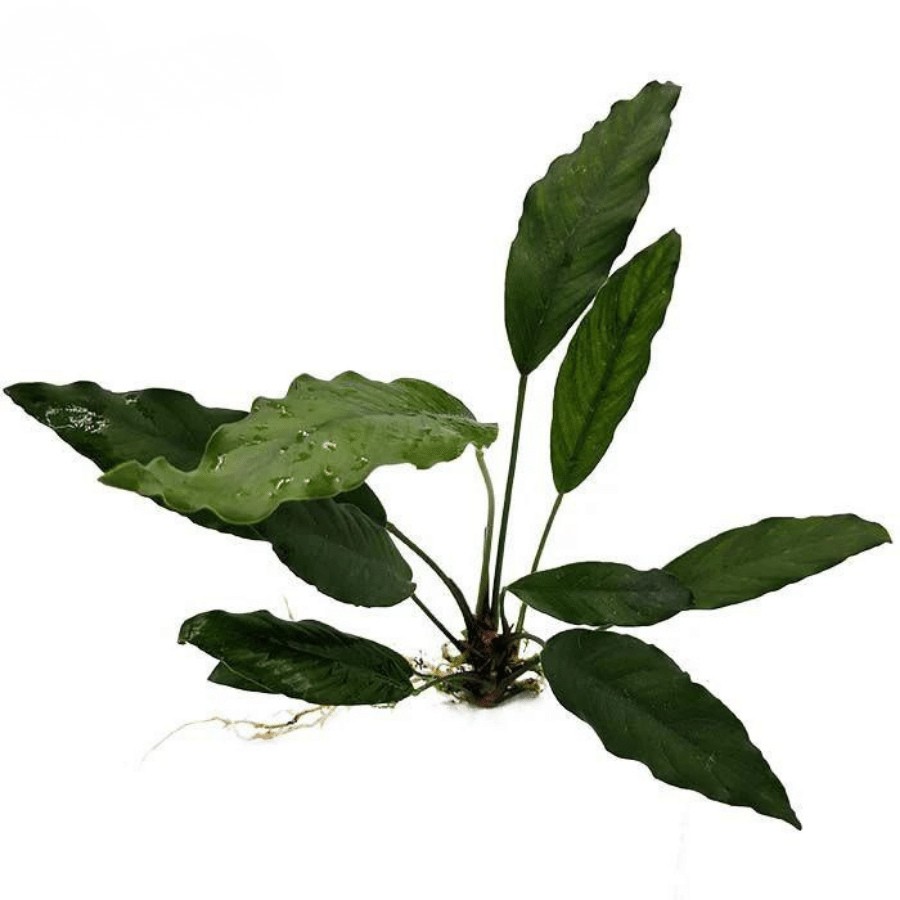
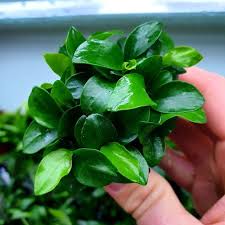
Design pairings make or break a Giant Ambulia aquascape. The plant’s saturated lime-green feathery foliage pairs especially well with bold red-colour stem plants on the opposite side of the composition: Ludwigia ‘Super Red’, Rotala macrandra, Alternanthera reineckii ‘Mini’, or Ammannia senegalensis create powerful colour dialogue across the tank. Broad-leaved companion plants (Echinodorus bleheri, Echinodorus ‘Kleiner Bar’, large Cryptocoryne species like C. balansae or C. crispatula) provide textural contrast through their strap-leaf form. In the midground, slower-growing rhizome attachments on hardscape (Anubias barteri, Microsorum pteropus ‘Windelov’, Bucephalandra species) offer stable anchor points that contrast the fluttering soft Giant Ambulia mass. In the foreground, classic carpet plants (Monte Carlo, Hair Grass, Glossostigma, Marsilea hirsuta) provide the low ground layer against which the tall rear feature reads most dramatically.
Livestock compatibility is broad for Giant Ambulia. Schooling fish move beautifully through the feathery columns: cardinal tetras, rummy-nose tetras, congo tetras, silvertip tetras, harlequin and galaxy rasboras, pencil fish, and many similar species all showcase brilliantly against this backdrop. Dwarf cichlids (Apistogramma, rams, cockatoo cichlids) appreciate the cover and visual complexity. Larger statement fish like discus, angelfish, and adult gouramis pair well in proportionally larger tanks where the scale ratio between fish and plant is appropriate. Shrimp colonies (Amano, cherry, crystal) thrive in Giant Ambulia’s complex foliage, which provides outstanding foraging surface and biofilm cover for juveniles. Bottom-dwellers (corydoras, otocinclus, small plecos, kuhli loaches) do fine alongside the plant since its rear-placement leaves the substrate open for foragers. Avoid large substrate-disturbing cichlids that might uproot stems, herbivorous fish that nibble soft plant material (goldfish, silver dollars), and coldwater species whose tanks run below Giant Ambulia’s tropical comfort zone.
For breeding tanks, Giant Ambulia is exceptional when tank size permits. The dense feathery whorls provide outstanding cover for livebearer fry, dwarf cichlid fry, and shrimp larvae, while the substantial biofilm surface area on the finely divided leaves offers a meaningful first-food source for newly hatched young. Breeders who work with Apistogramma, rams, or other demanding dwarf cichlids often include Giant Ambulia as a deliberate element of their breeding-tank aquascapes because the plant functions as both decoration and infrastructure for raising fry. Commercial breeding facilities in India and Sri Lanka have used this species for generations in domestic livebearer and small-cichlid breeding setups, taking advantage of its native status to grow it in outdoor ponds for bulk production.
An Indian-subcontinent biotope approach is a particularly satisfying design direction. Combine Giant Ambulia with other South Asian plants — Aponogeton crispus, Rotala rotundifolia from southern India (a different population than the more common Southeast Asian type), Cryptocoryne cordata or C. ciliata, and a stem of the native Hygrophila corymbosa. Stock with wild-caught scarlet badis (Dario dario), honey gouramis, Colisa lalia, or peacock gudgeons, all native to broadly the same habitat region. This kind of biotope-coherent aquascape creates an experience that transcends random collection-tank aesthetics and produces a miniature reconstruction of a specific ecosystem, which is satisfying in a way that generic community tanks often are not.
Finally, a word on Australian regulatory considerations. Like Limnophila sessiliflora, Limnophila aquatica is classified as a potential invasive weed in tropical and subtropical Australian waterways, particularly in the Northern Territory and far north Queensland where monsoon climate conditions closely match the plant’s native Indian range. Grow it only in tanks. Never release trimmings or excess plants to stormwater, waterways, garden ponds, or natural environments. Dispose of trimmings by drying completely (seven days spread out in full sun) or by sealed-bag general waste disposal. Compost only in sealed hot-composting systems that reliably reach 55 degrees Celsius internal temperature. Responsible aquarium-plant stewardship is the absolute minimum baseline for keeping this species, and we at Amazonia Aquarium will not sell to customers who indicate any intention to release plants to non-aquarium environments.
| Plant | Why | |
|---|---|---|
| 🌿 | Ludwigia ‘Super Red’ | Bold red-colour stem plant that dramatically contrasts Giant Ambulia’s saturated lime-green feathery foliage; the red-green colour dialogue across the composition is one of the most powerful pairings in planted aquarium design |
| 🌿 | Echinodorus bleheri (Amazon Sword) | Large strap-leaved rosette plant that provides textural contrast against Giant Ambulia’s feathery whorls; ideal for the same kind of medium-to-large display tanks where Giant Ambulia thrives |
| 🌿 | Cryptocoryne balansae | Tall narrow-leaved crinkle-textured rosette plant that anchors the midground transition and matches the tropical Asian origin with a similar biotope hint; thrives under the same water parameters as Giant Ambulia |
| 🌿 | Anubias barteri | Hardscape-attached rhizome plant for midground anchoring; its broad dark green leaves contrast beautifully with Giant Ambulia’s fine feathery foliage and provide a stable structural element against the fluttering mass |
| 🌿 | Monte Carlo (Micranthemum tweediei) | Low foreground carpet that establishes the ground layer against which Giant Ambulia’s towering background feature reads most dramatically; creates meaningful depth through scale contrast |
| 🌿 | Rotala macrandra | Rich crimson-to-pink background stem plant that pairs powerfully with Giant Ambulia in asymmetric compositions; both are heavy-light-and-CO2 demanding species that suit the same high-tech tank environment |
Propagation Guide
Cuttings
Like all stem plants, Giant Ambulia propagates exclusively through stem cuttings, and the process is straightforward enough that every trim-and-replant cycle multiplies your stock. That said, Giant Ambulia roots slightly more slowly than smaller Limnophila species — expect seven to fourteen days for a cutting to develop reliable roots compared to the five to ten days typical of L. sessiliflora, because the thicker stems take longer to mobilise their internal resources into new root tissue. The mechanism is the same: any cleanly cut section of healthy Giant Ambulia stem containing at least three or four whorls of leaves can be replanted into the substrate where it will root and develop into a full independent specimen indistinguishable from the parent plant. No hormones, no heat, no mist — just snip, trim, plant, and wait.
The main propagation opportunity arises during every trim. When you cut a stem to maintain column height, the removed top portion (typically 10-20 centimetres long with four to eight whorls of feathery foliage) becomes propagation material. Strip the lower three to four centimetres of leaves, make a fresh diagonal cut at the base if the scissors-cut is ragged, and plant the cutting directly into substrate with six to ten centimetre spacing from nearby columns. Within two weeks the cutting has rooted and begun its own vertical growth trajectory, and within six to eight weeks the cutting has developed into a proper Giant Ambulia column. This is how a single bunch of five to eight starter stems can multiply into a meaningful collection of ten to fifteen established columns over four to five months of patient propagation.
Lateral side-shoot development is the secondary propagation mechanism, and it plays out more slowly in Giant Ambulia than in smaller relatives. After trimming a stem, the node immediately below the cut usually produces two or sometimes three lateral side-shoots over three to four weeks, which grow upward alongside the remaining stem and can be separated later as independent propagules if desired. Some aquascapers pinch the growing tips of newly planted cuttings to encourage bushy lateral branching rather than a single vertical trajectory, which produces fuller cluster-like columns that suit certain aquascape styles. Be aware that Giant Ambulia responds to pinching more slowly than L. sessiliflora does, so do not expect rapid branching.
Floating fragment propagation works well and is particularly rewarding for this species. If a stem breaks off during maintenance and drifts freely for several days, it will typically produce aerial roots at the break point and at submerged nodes, and these floating fragments can be collected, trimmed cleanly, and planted back into substrate with very high success rates. Many aquarists maintain a small ‘fragment collection zone’ in the corner of the tank specifically for accumulating broken Giant Ambulia fragments from various maintenance activities, ready to replant whenever a specimen needs replacing.
For serious propagation — building up stock to share, replanting a scaped display, or rescuing cuttings from a failing main tank — consider a dedicated propagation setup. A small spare aquarium or plastic tub partially filled with active soil and illuminated by a modest planted-tank LED can maintain a quiet reserve of Giant Ambulia cuttings, kept in good health until needed. Emersed cultivation is also possible and interesting: Giant Ambulia in emersed form grows taller and somewhat stiffer, with broader less-subdivided leaves that reveal the plant’s true terrestrial heritage as a wetland angiosperm. Emersed cultivation is excellent as a clean algae-free reservoir of genetic material, and switching stems from emersed to submerged or vice versa is straightforward with a two-to-three-week transition period.
Quick Reference
| Scientific Name | Limnophila aquatica |
| Common Name | Giant Ambulia / Indian Ambulia |
| Light | Medium to high (60-120 PAR ideal) |
| CO2 | Helpful — benefits more than smaller Limnophila |
| Growth Rate | Fast under target conditions |
| pH | 6.0-7.5 |
| Temperature | 22-28 degrees C |
| Hardness | 4-15 dGH |
| Placement | Background feature column |
| Tank Size | Minimum 100 litres / 60 cm; ideal 150-400 litres |
| Propagation | Stem cuttings (straightforward, 7-14 day rooting) |
| Max Height | 40-80 cm (trim to preferred height) |
| Supplied As | Traditional bunched stems (non-TC) |
| AU Warning | Potential weed in NT/QLD waterways — in-tank growth only; dispose dry or sealed waste, never release to wild |
Reviews
Clear filtersThere are no reviews yet.