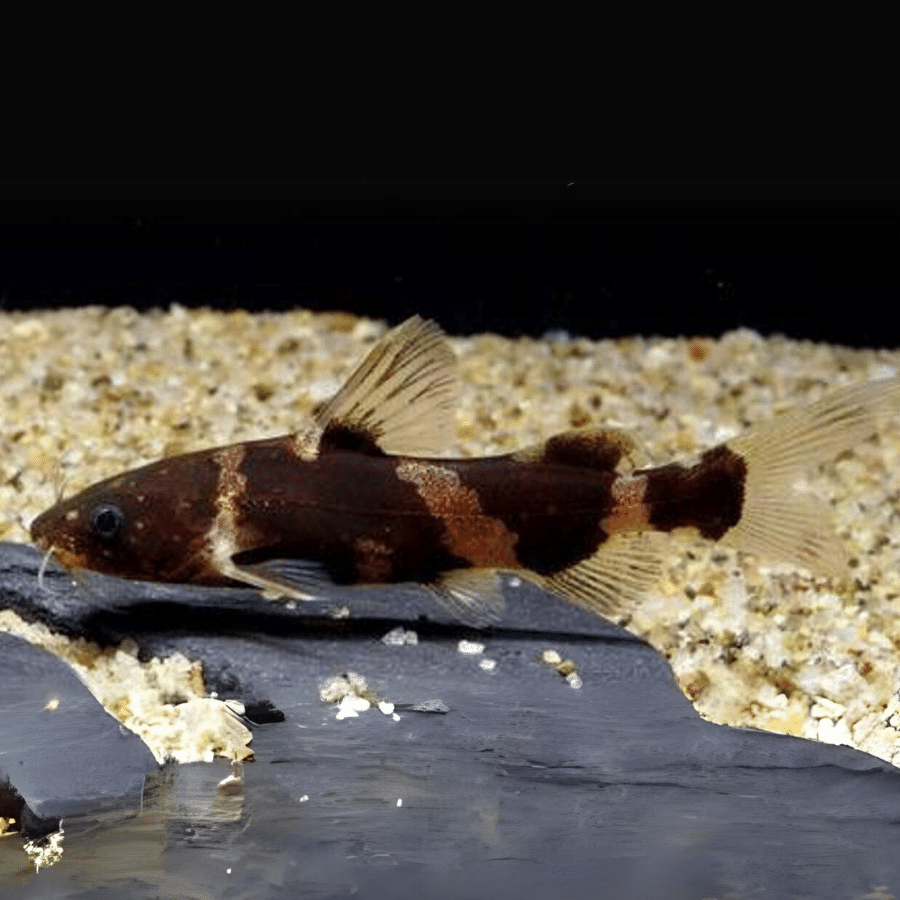
🪨 Species at a Glance
| Scientific Name | Pseudomystus siamensis |
| Family | Bagridae |
| Order | Siluriformes |
| Origin | Thailand, Laos, Cambodia, peninsular Malaysia — Mekong and Chao Phraya basins |
| Adult Size | 15-20 cm (6-8 in) |
| Lifespan | 8-12 years |
| pH Range | 6.0-7.5 |
| Temperature | 22-26 °C (72-79 °F) |
| Hardness (dGH) | 4-12 |
| Diet | Carnivore — sinking pellets, frozen bloodworm, prawn, earthworm |
| Minimum Tank Size | 120 L (32 gal) for juveniles; 150 L+ adult |
| Care Level | Intermediate |
| Temperament | Peaceful with larger fish; predatory toward fish under 3 cm |
| Activity | Strictly nocturnal — hides by day, active at night |
| Breeding | Seasonal river spawner — virtually unknown in home aquaria |
| Tank Position | Bottom — inside caves and driftwood |
Origin & Etymology
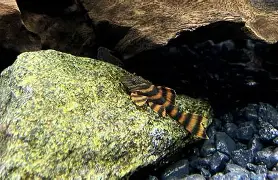
The common name Bumblebee Catfish is one of the more confusing labels in the aquarium hobby because it is applied to two completely unrelated fish from opposite sides of the planet. The species in front of you — Pseudomystus siamensis — is the Asian Bumblebee Catfish, a member of the family Bagridae native to the Mekong, Chao Phraya, and peninsular Malay river systems. The other Bumblebee, frequently sold under the same common name, is Microglanis iheringi, a tiny South American species from the family Pseudopimelodidae that barely reaches 8 cm. The two look superficially similar at juvenile sizes — both wear black-and-yellow banding that recalls the striping of a bumblebee — but they differ dramatically in adult size, behaviour, water requirements, and husbandry needs. Getting the identification right matters: a 5 cm Microglanis will stay small forever and is perfectly safe with neon tetras, while a 5 cm Pseudomystus siamensis is only just starting its growth journey, will reach 15 to 20 cm given proper care, and will absolutely hunt those same neons once it settles in. If a shop sells you a Bumblebee Catfish without clarifying which one, always ask — and if they cannot tell you, look closely at the fin ray counts, adipose fin size (much larger in Pseudomystus), and the width of the bands (broader and more regular in the Asian species).
The genus name Pseudomystus translates literally as “false Mystus” — a reference to the superficial resemblance between these fish and the genus Mystus, the classic Asian long-barbel catfish. When 19th-century ichthyologists first encountered these banded catfish, they slotted them into Mystus or the related Leiocassis, and it took careful revision in the late 20th century for taxonomist Heok Hee Ng to untangle the relationships and establish Pseudomystus as a distinct genus. The species epithet siamensis honours the historical kingdom of Siam (modern Thailand), where the type specimens were collected in the late 1800s from the slow-moving rivers around the central Thai plain. The common name “Bumblebee” is straightforward descriptive shorthand — the juvenile fish wears alternating wide bands of charcoal black and warm yellow, a livery that unmistakably evokes a fat garden bumblebee in flight. In older pet-store literature and pre-2000s aquarium books you may also encounter the names Siamese Bumblebee Catfish, Asian Bumblebee Cat, Banded Mystus, or even the now-erroneous scientific trade name Leiocassis siamensis — all refer to the same species that is today correctly placed in genus Pseudomystus. When you search online, using both the current scientific name and the older Leiocassis name will surface substantially more husbandry information than either name alone.
In Thai markets the fish is sometimes called pla kot hin, which roughly translates as “stone catfish”, a reference to its habit of wedging itself between stones and driftwood during the day. That single habit — the obsessive need for a tight dark hiding place — defines every aspect of its husbandry, from tank decor to feeding technique to tank-mate selection. Understanding the fish starts with understanding the name: a banded, cave-dwelling, night-hunting Asian cousin of the larger bagrid catfish, wearing the colours of an insect that it has absolutely nothing in common with. Once you internalise the fact that you are keeping a small nocturnal predator rather than a decorative bottom-dweller, every subsequent care decision becomes obvious and intuitive — bright light is bad, caves are good, small fish are food, and evening is mealtime. That is really the whole handbook in one sentence; everything that follows in this guide is simply elaboration on those four ideas and the nuances that separate a surviving bumblebee from a thriving one.
Aquarium Setup Guide
If there is one species in the hobby that truly rewards thoughtful aquascaping, it is the Asian Bumblebee Catfish. Everything about their natural behaviour — the nocturnal activity, the tight-fitting shelter preference, the aversion to bright open water — hinges on providing appropriate cover. A minimum tank size of 120 litres is realistic for juveniles at 5 to 6 cm, but you should plan from day one to upgrade to 150 litres or larger as the fish approaches adult size. Footprint matters more than height: a long, low tank with generous floor space gives the fish room to patrol and multiple territorial zones to explore. A 90×45 cm footprint is a much better home for an adult than a tall 60×30 cm cube of the same volume, even though both hold similar litres.
Substrate should be fine sand or smooth, small-grain gravel. Coarse substrate can catch on the barbels during nocturnal foraging and cause irritation over time — long-term barbel damage is a genuine welfare issue in this species and is almost always caused by sharp gravel rather than disease. A dark substrate (black sand or dark gravel) dramatically intensifies band contrast and makes the fish look noticeably more striking — and, more importantly, it reassures the fish. Light-coloured substrate reflects overhead light back up into the tank and makes Pseudomystus siamensis reluctant to leave its hiding spots even after dark. Pool-filter sand and dark aquarium sand are both excellent and inexpensive choices; avoid sharp-grained materials marketed for freshwater shrimp tanks, which look beautiful but can abrade the sensitive mouth and barbel area during night foraging.
Decor is where this species really comes alive. Provide multiple caves — more caves than you have fish, ideally at least two to three per individual. Suitable options include clay flowerpots laid on their sides, ceramic catfish caves, hollowed-out coconut shells, pieces of PVC pipe large enough to admit the fish, and — best of all — hollow driftwood and branchy spiderwood with natural gaps and overhangs. The fish will claim a favourite cave and defend it loosely against other bumblebees, but will happily switch if a more appealing option appears; one of the simple pleasures of keeping this species is rearranging the cave complex every few months and watching the fish enthusiastically explore and re-colonise each new configuration. Dense planting is not required and many keepers find live plants struggle under the subdued lighting these fish prefer; good alternatives are low-light epiphytes like Anubias nana, java fern, and Bucephalandra, all of which can be tied to driftwood to add cover without requiring substrate planting. Floating plants (Amazon frogbit, red root floaters, dwarf water lettuce) are strongly recommended: they diffuse overhead light into a comfortable dappled shade, which this species greatly prefers to bright top-down illumination. A scattering of dried leaf litter — Indian almond leaves, oak leaves, or beech leaves — across the substrate is another genuinely beneficial touch: it provides extra daytime cover, slowly releases tannins, and creates microfauna hiding places that keep the tank biologically interesting.
One detail often overlooked is the tank lid. Nocturnal catfish are surprisingly capable jumpers, especially when startled in the middle of the night by a sudden noise, a power flicker, or the arrival of a new tank mate. A tight-fitting hood or glass cover is not optional — the tragic outcome of keeping a bumblebee in an open-top tank is almost always the same. Leave no gaps around filter intakes or heater cords wider than the fish’s body, because a determined catfish will squeeze through a surprisingly narrow slot at 2 AM. If you favour open-top aquascapes for the benefit of floating plants and emergent growth, use fine mesh or low-profile polycarbonate strips to seal every opening; a few dollars of material is cheap insurance against losing a decade-long fish in a single night.
Tank
120 L minimum for juveniles; 150 L+ recommended for adults with room to grow
Filter
Canister or large internal filter rated 2-3x tank volume; moderate flow with calm zones
Heater
100-200 W adjustable, set to 24 °C; thermostat accuracy matters
Lighting
Low-intensity, dimmable LED; floating plants preferred over bright exposed surface
Substrate
Fine dark sand or smooth small-grain gravel; avoid sharp or coarse media
Caves & Hides
Minimum 2-3 caves per fish — clay pots, ceramic caves, hollow driftwood, PVC
Driftwood
Hollow driftwood or spiderwood with natural overhangs; tannins are a bonus
Lid
Tight-fitting hood or cover — nocturnal catfish can and do jump, especially when startled
Getting the Water Right
6.0–7.5
ideal 6.8
22–26 °C
ideal 24 °C
4–12 dGH
Soft to moderately hard — very adaptable
Pseudomystus siamensis occupies a wide range of habitats in the wild, from slow, tannin-stained forest streams to the main channels of large rivers like the Mekong. This breadth of native range translates into a reassuringly adaptable aquarium fish: pH anywhere from 6.0 to 7.5 is acceptable, and hardness can run from very soft (4 dGH) up to moderately hard (12 dGH) without any real impact on health. What matters far more than hitting an exact number is stability. These are long-lived fish and will tolerate your local tap water happily, provided the parameters stay consistent week to week. Large, sudden shifts in pH or hardness — the kind caused by skipping water changes for a month and then doing a massive refresh — stress them far more than a pH that is slightly outside the ideal range. If you are an aquarist who enjoys chasing precise parameters with reverse-osmosis blends and buffering substrates, you can certainly aim for the 6.5 to 6.8 ideal, but you will not gain much extra vigour compared to simply keeping the tap water you already have on a tight, consistent schedule. For almost every keeper in Australia, East Asia, or Europe, aged and dechlorinated municipal tap water will support this species for a full decade or more without any special treatment.
Temperature is the parameter to watch most carefully. Although sometimes labelled as a tropical catfish, Pseudomystus siamensis actually prefers the cooler end of the tropical range — 22 to 26 °C, with 24 °C as an ideal sweet spot. Sustained temperatures above 28 °C reduce dissolved oxygen and shorten lifespan, particularly in larger tanks with deeper water columns, and also push the fish into a state of near-permanent hiding that makes it effectively invisible even at night. In summer, in a room without air conditioning, you may need to actively cool the tank by increasing surface agitation, directing a fan across the water surface, or floating ice bottles during heatwaves. Filtration needs to be robust: these are meat-eating fish that produce substantial waste, and their nocturnal feeding habit means leftover food often goes undetected until it starts to foul the water. A canister filter rated for two to three times the tank volume, combined with a weekly 30 to 40 percent water change, keeps conditions well within the comfort zone. Avoid extremely strong flow; while the fish is happy in moderately brisk water, it prefers calm zones around its hiding places and will actively seek out low-flow corners. A good compromise is a spray-bar canister return along the back wall — it provides excellent oxygenation and gentle current across the tank without blasting the fish out of its chosen cave every time it emerges.
Nutrition & Diet
Pseudomystus siamensis is an obligate nocturnal carnivore. In the wild it hunts slowly along the riverbed after dark, using its long sensitive barbels to locate insect larvae, small crustaceans, worms, and any small fish unlucky enough to be resting within reach. The barbels are the primary sensory organ — four pairs of long whiskers that sweep the substrate and pick up chemical and tactile cues invisible to the eye. Watching a well-settled bumblebee hunt under a red LED night-viewing light is genuinely fascinating: the fish moves slowly, barbels fanned wide, pausing every few centimetres to investigate anything promising, then striking suddenly on anything that matches the profile of prey. Translating this natural hunting style into aquarium feeding is not difficult, but it does require you to rethink the daylight feeding routine most aquarists default to. Food offered at midday will usually be ignored — the fish is asleep inside its cave and has no interest in leaving it just because lights are on. Feed in the evening, immediately after the tank lights go off (or just before), and you will see the fish emerge within minutes to hunt down the sinking food.
The staple diet should be high-quality sinking carnivore pellets or wafers — look for products with whole fish, krill, or insect meal as the first ingredient and avoid plant-heavy tropical flakes that pass straight through. Hikari Sinking Carnivore Pellets, Fluval Bug Bites carnivore formula, and NorthFin Carnivore Formula are all excellent brand-name staples; the pellet should be large enough not to be swallowed whole by mid-water tank mates before it reaches the bottom. Supplement two to three times a week with frozen foods: bloodworm, chopped prawn, mussel, or earthworm pieces are all eagerly accepted. Live blackworm or earthworm cultures produce the most dramatic feeding response and are especially useful for conditioning adults or tempting a reluctant new arrival. Variety matters more than quantity: a rotating diet of pellets, frozen prawn, frozen bloodworm, and occasional earthworm keeps growth steady and colour deep. Feed small portions — what the fish can clear in about 30 minutes — rather than dumping a large meal, since leftover meat foods foul water rapidly at warm temperatures.
One useful technique with shy new arrivals: use a long turkey baster or feeding pipette to deliver a small portion of food directly to the entrance of the chosen cave. This puts the meal within barbel reach without requiring the fish to make a long, exposed journey across open substrate. Within two or three weeks most bumblebees learn the association between lights-out and food and will start emerging confidently to the middle of the tank; after a month or two they often recognise the keeper’s arrival at the tank in the evening as the cue that dinner is imminent. Juveniles at 5 to 6 cm grow fastest on a high-protein diet fed once daily in the evening; adult fish can be fed every second day with no loss of condition, which is actually healthier for long-term weight and liver health in this slow-burning species. A once-weekly fasting day is perfectly fine and in fact beneficial for digestion; a bumblebee that appears to ‘never eat’ is almost certainly a daytime feeder’s misinterpretation of a perfectly healthy fish that simply prefers the night shift.
Available Colour Grades
🐝 Wild Type (Classic Bumblebee)
The standard form: three to four bold charcoal-black bands alternating with rich butter-yellow to cream bands across a stocky body, darkening with age.
🟡 Chao Phraya Variant
Fish collected from the central Thai river system tend to show narrower, more defined bands and a slightly paler, more golden background, giving a cleaner ‘wasp-like’ appearance.
⚫ Mekong Variant
Mekong-sourced specimens often display broader, softer-edged bands with more brown tones, producing a darker, chocolate-and-cream overall look rather than pure black and yellow.
Unlike many popular aquarium fish, Pseudomystus siamensis has not been selectively bred into a parade of colour morphs. Every fish you see in the trade is wild-type, and the variation you do encounter comes from natural differences between river systems rather than from breeder selection. Juveniles at the 5 to 6 cm size (the stage at which they enter the aquarium trade) show the cleanest, brightest contrast between the yellow and black bands. As the fish matures, the yellow tends to warm into a tan or cream tone and the black bands may soften at the edges, giving an older adult a more muted chocolate-and-butterscotch appearance. This is completely normal and not a sign of poor health — think of it as the patina a well-kept bumblebee develops with age, the aquatic equivalent of polished brass mellowing into bronze. Colour intensity in all ages responds strongly to environment: a fish kept on dark substrate in a tannin-stained tank with subdued lighting will display dramatically richer, more contrasted bands than one kept in a bright, bare tank. If your bumblebee looks washed-out, check your lighting before assuming anything is wrong — these fish almost always darken and intensify within a week of being given proper cave cover and dimmed illumination. You may also notice short-term colour shifts based on mood: a relaxed, confident fish wears its bands at full saturation, while one that has just been startled or netted for tank maintenance can pale noticeably within minutes, returning to full colour once back inside its favourite cave. These colour-shift responses are normal and useful — they give you a constant, no-equipment-required barometer of how comfortable your fish feels in its environment on any given day.
How to Sex This Species
Sexing Asian Bumblebee Catfish is genuinely difficult and something of a fool’s errand outside the breeding season. The species is essentially monomorphic — males and females look nearly identical through the glass under aquarium lighting, and the most reliable cues only appear in sexually mature, well-conditioned adults that are several years old. Body shape is your best visual indicator: a ripe female viewed from directly above has a noticeably wider, rounder abdomen than a male of the same length, while a male looks more streamlined from the same angle. During a narrow window in the breeding season (which rarely occurs in captivity) the male develops a small pointed genital papilla behind the anal fin that is absent in females, but this is really only visible during careful handling or in very good-quality photographs of settled, illuminated fish. For the average aquarist buying one or two juvenile specimens at 5 to 6 cm, attempting to sex them is unrealistic — treat them as an unknown sex until they reach 12 cm or more, at which point the body-shape differences become easier to judge. Take advantage of feeding time for observation: when the fish emerges and turns broadside to approach a sinking pellet, the top-down silhouette is the clearest you will ever get without netting the animal, and a patient keeper with a flashlight and a good memory can usually sort a group of adults into probable males and probable females within a week or two of consistent watching. Do not trust juvenile sexing — commercial importers and online sellers who advertise ‘sexed pairs’ of bumblebees under 10 cm are either guessing or simply selling two random fish.
| Feature | Male | Female |
|---|---|---|
| Body Shape | Slimmer overall, more torpedo-like profile | Fuller, rounder abdomen especially when mature and gravid |
| Size at Maturity | Often slightly smaller, 14-17 cm typical | Often slightly larger, 16-20 cm typical |
| Head Width | Noticeably narrower head when viewed from above | Broader, more rounded head and wider gape |
| Genital Papilla | Small, pointed papilla visible behind anal fin when in breeding condition | Shorter, rounder urogenital opening |
| Behaviour | More exploratory at night, often first out of the cave | Tends to hold station inside shelter, emerges briefly to feed |
| Band Contrast | Generally similar; slight tendency toward sharper black edges | Generally similar; may appear paler when carrying eggs |
How to Breed
Wet Season Trigger
Environmental Cue
Rising water, cooling temperature, heavy rain in native rivers
Courtship
Pair Formation
Male follows and nudges ripe female inside shared cave
Spawning
Egg Deposition
Eggs laid inside cave or under cover; details poorly documented
Incubation & Fry
Hatching
Presumed 3-5 day incubation; tiny free-swimming fry
Environmental Cue
In the wild, Pseudomystus siamensis is believed to be a seasonal spawner triggered by the arrival of the Southeast Asian monsoon. As heavy rains swell the Mekong and Chao Phraya rivers from roughly May through September, water levels rise, temperatures drop slightly, dissolved oxygen increases, and food availability explodes with a flush of insect larvae, aquatic worms, and newly hatched fish fry washing out of the flooded vegetation. Mature adults move from the main river channels into flooded margins, backwaters, and temporarily inundated forest streams, where they take advantage of this seasonal abundance to build the body condition needed for spawning. Recreating this shift in an aquarium — dropping temperature from 26 to 22 °C over a week or two, performing large cool water changes to simulate the dilution effect of rainfall, softening the water if possible, and dramatically increasing live food input — is thought to be the most promising approach for captive breeding attempts, though documented success remains rare even among experienced bagrid specialists. The seasonal nature of the trigger means that keeping conditions perfectly stable year-round is likely one of the main reasons home aquaria so rarely produce spawns.
Pair Formation
Based on limited field observation and behaviour in related bagrid species, courtship likely begins with a male seeking out a receptive female and attempting to occupy the same large cave or hollow log. Considerable chasing, nudging, and body-contact display is expected, with the male circling and pressing against the female’s flanks, sometimes producing audible clicks or grunts from the pectoral spine mechanism common to bagrid catfish. This stage has been observed a handful of times in community tanks with well-conditioned adults but has almost never led to confirmed spawning under home aquarium conditions. Keepers who have witnessed pre-spawning behaviour report that it typically occurs over several consecutive evenings, often in combination with unusually active barbel display and the male following the female closely on every foraging exit from the shared cave.
Egg Deposition
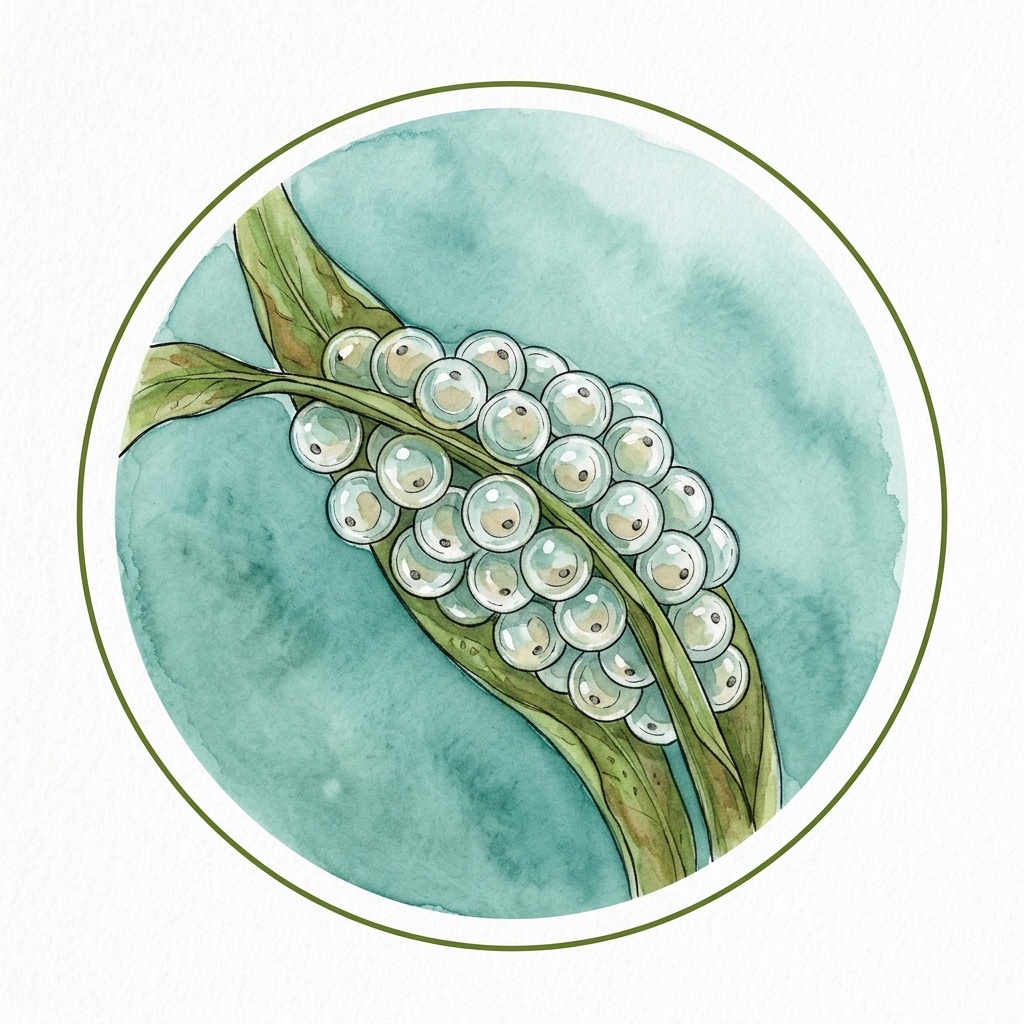
Spawning in captivity is essentially unheard of. In the very few anecdotal reports from experienced bagrid breeders, eggs are believed to be deposited on the roof or wall of a secluded cave and fertilised externally, with the female turning upside down briefly in classic bagrid fashion to release eggs onto the cave ceiling while the male positions beneath her. Clutch size in related Pseudomystus species appears to be in the range of 200 to 500 eggs, each roughly 2 mm across and pale yellow to amber in colour. Whether the parents guard the clutch or abandon it is not well established — some related bagrids show brief parental care with the male fanning eggs for the first 24 to 48 hours, while others leave the eggs entirely and will even cannibalise them if returned to the breeding area. The absence of reliable home-aquarium observation is a real gap in our knowledge of this species, and any keeper who does witness a spawn should carefully isolate the eggs (or the parents) to maximise fry survival while they work out what behaviour is natural.
Hatching
Where any data exists at all, it suggests eggs hatch within three to five days at 25 °C, and free-swimming fry emerge after a further two to three days absorbing their yolk sacs. The newly hatched larvae are tiny, translucent, and instinctively hide in any crevice available, so dense cover (java moss clumps, fine filter wool, small cave structures) in a grow-out tank is essential. First foods are presumed to be microorganisms and later micro-crustaceans such as newly hatched brine shrimp; as the fry grow past the one-centimetre mark, finely chopped bloodworm and micro-pellet can be introduced. Growth is likely slow — probably four to six months to reach the 5 cm juvenile size currently sold in the trade — which is one practical reason wild-caught fish still dominate the market. Without confirmed breeding success in the hobby, these details remain educated extrapolation from related bagrids rather than verified observation. If you ever witness spawning behaviour in your own tank, photograph everything and document carefully — your notes would be genuinely useful to the hobby and to the small handful of specialists still trying to crack captive breeding of this species.
Community Compatibility
The golden rule for a Pseudomystus siamensis community tank is simple: if it is small enough to fit in the catfish’s mouth, and it rests anywhere near the bottom at night, it will eventually become dinner. Everything else follows from that. Small tetras, rasboras, and dwarf shrimp are completely off the menu — not because the bumblebee is aggressive, but because it is an efficient nocturnal ambush hunter doing exactly what evolution shaped it to do. A well-fed bumblebee is not any less of a threat to a neon tetra than a hungry one; the hunting reflex is not about hunger, it is about opportunity. Many keepers have learned this lesson the hard way after introducing an adult bumblebee to an established nano community and watching the school of neons silently disappear over a fortnight of quiet nights. Suitable tank mates are therefore larger (4 cm+ adult size is a practical cutoff), daytime-active, and ideally occupy the middle to upper water column. Gouramis, rainbowfish, silver dollars, congo tetras, adult tiger barbs, angelfish, and larger rasboras all fit this brief beautifully. Other bottom-dwellers are trickier — cory catfish are usually fine because they are small, diurnal, and fast, and will be asleep well above the substrate (often perched on plant leaves or driftwood) by the time the bumblebee is active. Avoid other nocturnal cave-dwellers like Synodontis or larger bagrids, as territorial conflict in the dark is a near-certainty, often resulting in bitten barbels, torn fins, and chronic stress on both sides. Keep Pseudomystus siamensis as one or two individuals in most tanks; a group of three or more is possible in 200 litres plus, but expect some cave-claiming scuffles until the pecking order settles, and provide at least three caves per fish to reduce contact. In a well-planned community, the bumblebee is an almost invisible daytime resident that reveals itself after dark as a calm, confident, genuinely charismatic hunter — the kind of fish that transforms a routine after-dinner aquarium check into an unexpectedly rewarding ritual, because you never quite know what you are going to see when you flick the red moonlight on at 9 PM. A keeper with the patience to sit quietly beside the tank for ten minutes after lights-out on a weekend evening will watch their bumblebee slowly emerge, trace its evening patrol route along the driftwood and through the open substrate, and interact with the environment in ways no daytime observation will ever reveal. It is this quiet, after-hours drama that makes Pseudomystus siamensis one of the most rewarding bottom-dwelling catfish in the hobby for keepers willing to meet the fish on its own nocturnal schedule.
| Species | Why | |
|---|---|---|
| ✅ | Pearl Gourami | Calm, mid-to-upper-level centrepiece fish at 10-12 cm — large enough to ignore the bumblebee and vice versa; different activity zone and daytime habits |
| ✅ | Honey Gourami | Peaceful surface-dwelling labyrinth fish that stays high in the water column and never encounters the bumblebee’s nocturnal territory |
| ✅ | Congo Tetra | Larger, active schooling tetra (7-8 cm) that occupies mid-water during the day; well out of the bumblebee’s reach and ignored by it |
| ✅ | Rainbowfish (Boesemani, Turquoise) | Active mid-to-upper-level schoolers, too large and too fast for the bumblebee to harass; tolerate similar soft-to-moderate water parameters |
| ✅ | Silver Dollar | Large peaceful herbivorous schooler that shares the bumblebee’s water preferences and cruises the open upper two-thirds of the tank |
| ✅ | Tiger Barb (adult) | Adult tiger barbs are fast and large enough (6-7 cm) that the bumblebee shows no interest in them, and their daytime activity avoids conflict entirely |
| ✅ | Angelfish | Tall, slow-moving cichlid that occupies upper-mid water and is too deep-bodied for the bumblebee to bother; needs compatible soft water |
| ✅ | Larger Rasboras (Scissortail, Harlequin adult) | Mid-water schoolers at 4-6 cm adult size that stay in open water during the day and roost high at night — out of the bumblebee’s hunting lane |
| ✅ | Bristlenose Pleco (Ancistrus) | Diurnal algae-grazing catfish that sleeps tucked into its own driftwood cave at night; large enough (12-15 cm) and armoured enough to be safely ignored by the bumblebee |
| ❌ | Neon Tetra and other nano fish (<3 cm) | Small sleeping fish are directly on the bumblebee’s nocturnal menu — neons, ember tetras, chili rasboras and similar species will disappear one by one at night |
| ❌ | Freshwater Shrimp (cherry, Amano, crystal) | Shrimp are classic prey for any bagrid catfish; even large Amanos will eventually be eaten, and breeding shrimp colonies are impossible with a bumblebee present |
| ❌ | Other Nocturnal Catfish (Synodontis, larger Pseudomystus, Mystus) | Direct territorial competition for caves and feeding zones after dark; aggressive nighttime conflict over shared shelter is almost guaranteed |
| ❌ | African Cichlids (Mbuna, Peacock) | Require hard alkaline water incompatible with this species, and their aggression at any time of day will stress or directly injure the bumblebee |
| ❌ | Fancy Goldfish | Cold-water requirements are incompatible; in addition, slow-moving goldfish with trailing fins are at risk from nocturnal nipping by a territorial catfish |
Quick Reference
| Scientific Name | Pseudomystus siamensis |
| Family | Bagridae |
| Adult Size | 15-20 cm |
| Lifespan | 8-12 years |
| pH | 6.0-7.5 (ideal 6.8) |
| Temperature | 22-26 °C (ideal 24 °C) |
| Hardness | 4-12 dGH |
| Min Tank Size | 120 L juvenile / 150 L+ adult |
| Group Size | 1-2 typical; 3+ only in 200 L+ |
| Diet | Carnivore — sinking pellet, frozen bloodworm/prawn/earthworm |
| Activity | Strictly nocturnal — feed after lights-out |
| Care Level | Intermediate |
| Temperament | Peaceful with mid/upper fish; predatory toward <3 cm |
| Tank Position | Bottom — caves and driftwood |
| Breeding | Not achieved reliably in home aquaria |
Related Products
Reviews
Clear filtersThere are no reviews yet.