

🪨 Species at a Glance
| Scientific Name | Hemigrammus rhodostomus (also sold as H. bleheri) |
| Common Names | Rummy Nose Tetra, Red Nose Tetra, Firehead Tetra |
| Family | Characidae |
| Origin | Amazon basin — Brazil, Colombia, Peru (blackwater tributaries) |
| Adult Size | 4.5-5 cm (1.8-2 in) |
| Lifespan | 5-6 years in aquaria |
| Care Level | Beginner |
| pH | 5.5-7.0 |
| Temperature | 24-28 °C (75-82 °F) |
| Hardness | 2-12 dGH |
| Min. Tank | Nano/Small — under 40 L for a small school |
| Diet | Omnivore — micro pellets, flakes, frozen & live foods |
| Tank Position | Middle |
| Community Safe | Yes — excellent community fish |
| Schooling | Obligate schooler — best in groups of 10+ |
Colour Forms & Morphs
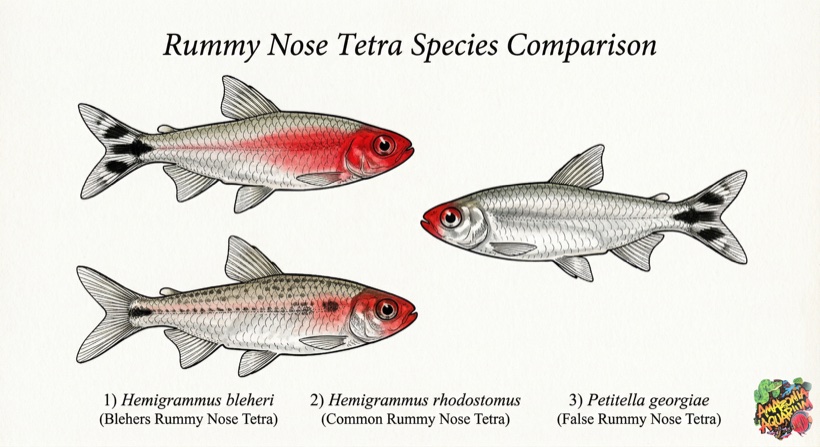
🔴 True Rummy Nose (H. rhodostomus)
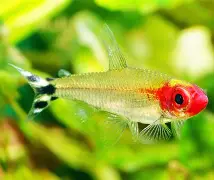
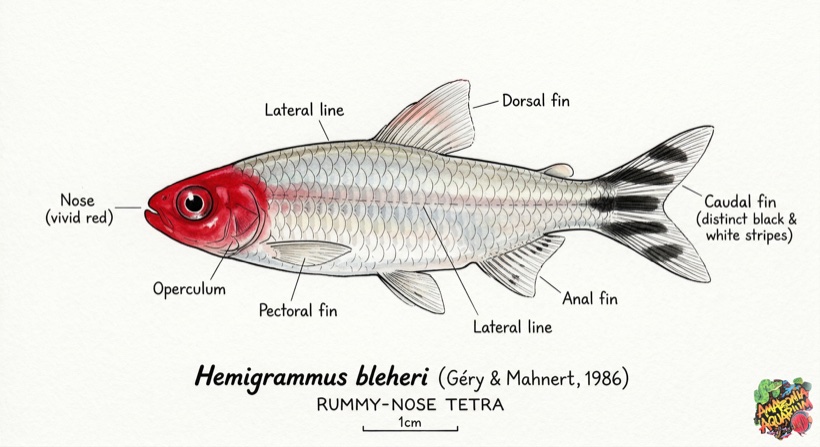
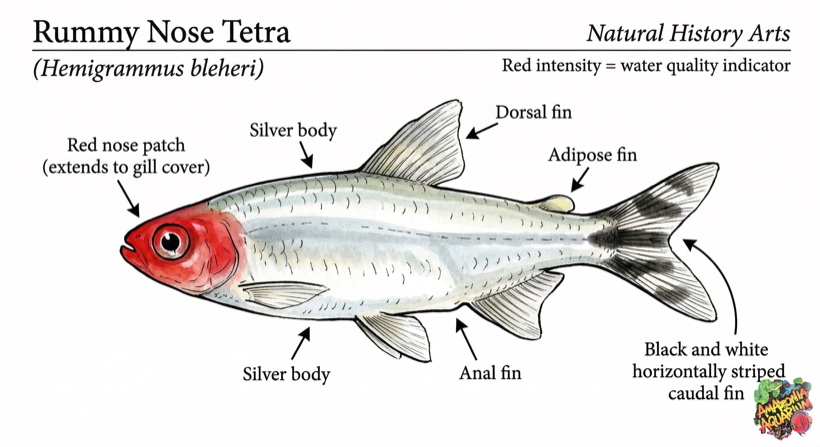
Classic form with a concentrated red patch on the snout and forehead, distinct black-and-white striped caudal fin.
🔴🔴 Brilliant Rummy Nose (H. bleheri)
The most commonly sold variety; red coloration extends further back past the gill covers, producing a more dramatic head blaze.
🟠 False Rummy Nose (P. georgiae)
Slightly more subdued red with a different caudal pattern; less commonly imported but identical in care requirements.
Unlike many tetras that have been selectively bred into dozens of colour morphs, the Rummy Nose is valued precisely for its wild-type appearance. The interplay of the crimson head, silver-olive body, and boldly striped black-and-white tail is the entire point. There are no designer strains, no neon variants, no long-fin mutations — and the hobby is better for it. The intensity of the red is not genetic variation so much as a real-time health barometer: well-oxygenated, slightly acidic water with low nitrates produces the deepest reds. Bright lighting can also enhance perceived colour, but nothing substitutes for clean, stable water chemistry.
The tail pattern deserves special mention. The caudal fin is marked with bold horizontal black-and-white stripes that create a striking visual contrast against the silver body. In a tight school, this tail pattern creates a flickering strobe effect as dozens of striped tails move in unison — one of the visual signatures that makes this species so captivating in aquascaped tanks. When shopping, choose specimens that already display strong red and crisp tail banding — this indicates both good genetics and good husbandry at the store.
Telling Males from Females
Rummy Nose Tetras show minimal sexual dimorphism compared to many other freshwater species. Outside of spawning condition, telling males from females requires a careful eye. The most reliable indicator is body shape when viewed from above: females in good condition develop a noticeably plumper belly profile, particularly in the weeks before spawning. Males tend to be fractionally slimmer and may appear slightly smaller overall, though the difference is measured in millimetres. Unlike cichlids or livebearers, there are no fin extensions, colour differences, or dramatic size gaps to work with. Both sexes display the same brilliant red head and the same black-and-white caudal stripes.
For practical purposes, if you buy a group of ten or more, statistical probability guarantees you will have both sexes. This is one of the many advantages of keeping a proper school — you never need to worry about sexing individual fish at the store.
| Feature | Male | Female |
|---|---|---|
| Body shape | Slightly slimmer and more streamlined | Rounder, especially when carrying eggs |
| Size | 4-5 cm, marginally smaller | 4.5-5 cm, marginally larger when mature |
| Belly profile | Flat to slightly concave | Gently rounded, noticeably so before spawning |
| Red intensity | Equally vivid in both sexes | Equally vivid in both sexes |
| Behaviour | May chase rivals during spawning | Slightly less active, stays within school |
Where the Name Comes From
The common name is wonderfully literal. Look at a healthy specimen head-on and the entire snout and forehead glow a deep, almost neon red — it genuinely looks like the fish has been face-first into a glass of red wine. Early aquarists in Europe likened the flush to the rosy cheeks of someone who had enjoyed one too many drinks, and the playful nickname stuck.
Taxonomically, the story is a little messier. Three closely related species are all sold under the “Rummy Nose” banner: Hemigrammus rhodostomus (the original description from the lower Amazon), Hemigrammus bleheri (from the Rio Negro, with red extending further along the body), and Petitella georgiae (from Peru, with a slightly different tail pattern). In the retail trade these are rarely distinguished, and all three share the same care requirements. The species epithet rhodostomus itself comes from the Greek rhodo (rose) and stomus (mouth) — rose-mouth — which captures the signature feature perfectly.
For the aquarist, the taxonomic debate matters far less than the practical takeaway: if the red is bright and extends cleanly across the head, your fish is healthy and your water is good. If the red fades to a washed-out pink, something in the environment needs attention. No other common aquarium fish gives you such an immediate, visible stress indicator.
Feeding Guide
Rummy Nose Tetras are unfussy omnivores with small mouths, so food size matters more than food type. High-quality micro pellets or crushed flake food should form the staple diet, offered once or twice daily in amounts the school can finish within two minutes. Look for foods containing spirulina, astaxanthin, or krill meal — these carotenoid-rich ingredients directly support the red pigmentation that makes this species so striking. Supplement with frozen foods two to three times per week — baby brine shrimp, daphnia, cyclops, and micro bloodworms are all eagerly accepted and help maintain peak coloration.
Live foods are the gold standard for conditioning and colour. Freshly hatched brine shrimp nauplii, micro worms, and grindal worms trigger enthusiastic feeding responses and are especially valuable if you intend to breed. Even if breeding is not on the agenda, the occasional live food session keeps the school active and vibrant. Watching a school of twenty Rummy Noses zero in on a cloud of live daphnia is one of those small aquarium joys that never gets old.
Variety is the guiding principle. No single food provides everything, but a rotation of staple, frozen, and live foods covers all nutritional bases. A once-weekly fast day is beneficial for digestion, particularly in smaller tanks where overfeeding can spike water parameters quickly. Remember that the red nose itself serves as your feeding gauge — if coloration is fading, look first at water quality, then at diet quality.
Breeding Guide
Weeks 1-2
Conditioning
High-protein live and frozen foods
Day 0
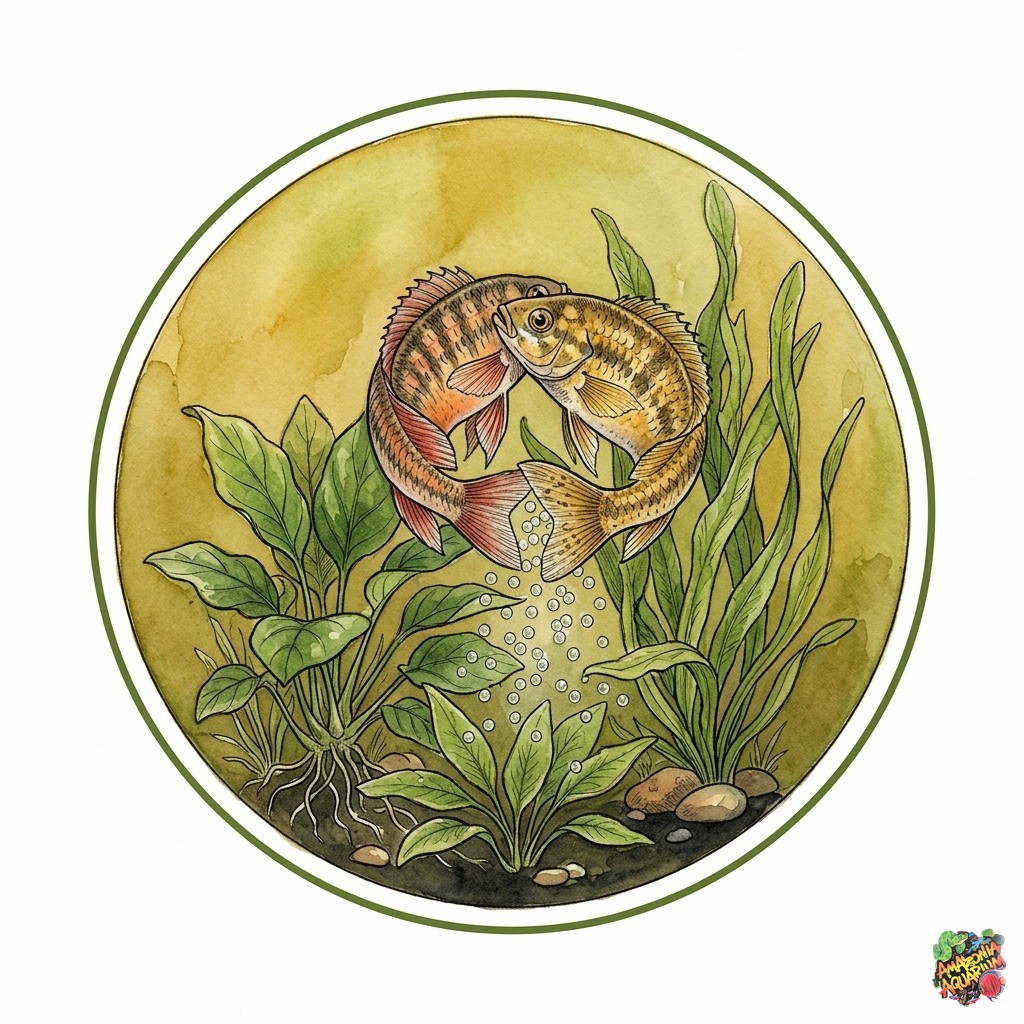
Spawning
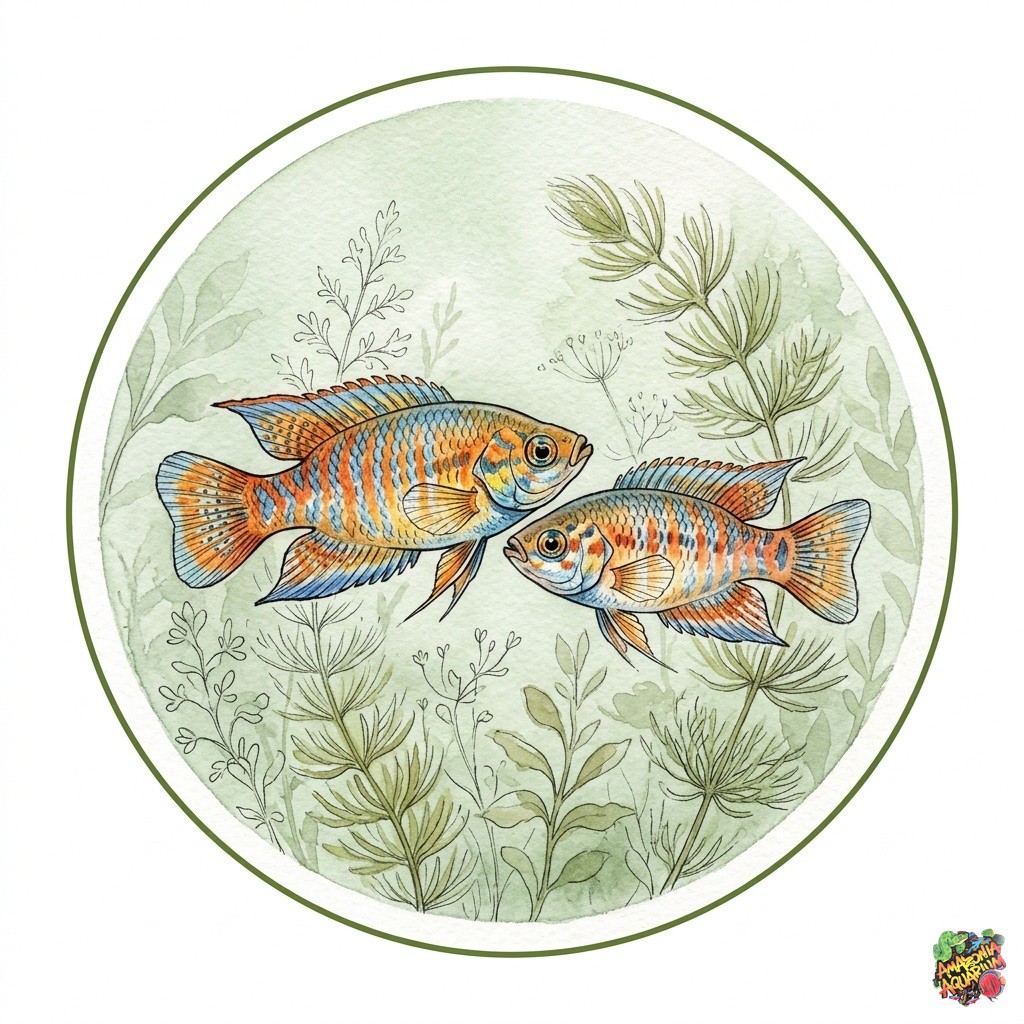
Eggs scattered among fine-leaved plants
Day 1-2
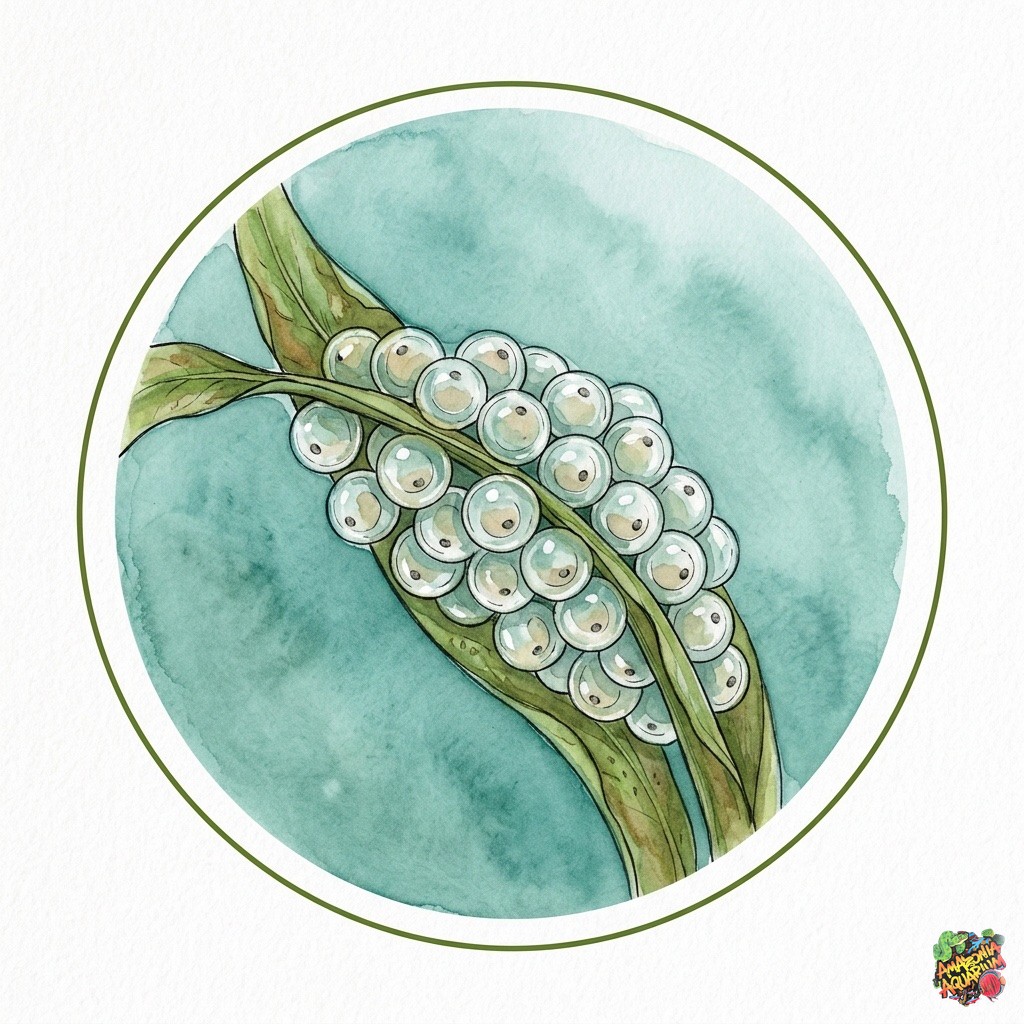
Incubation
Eggs develop in darkness
Day 2-3
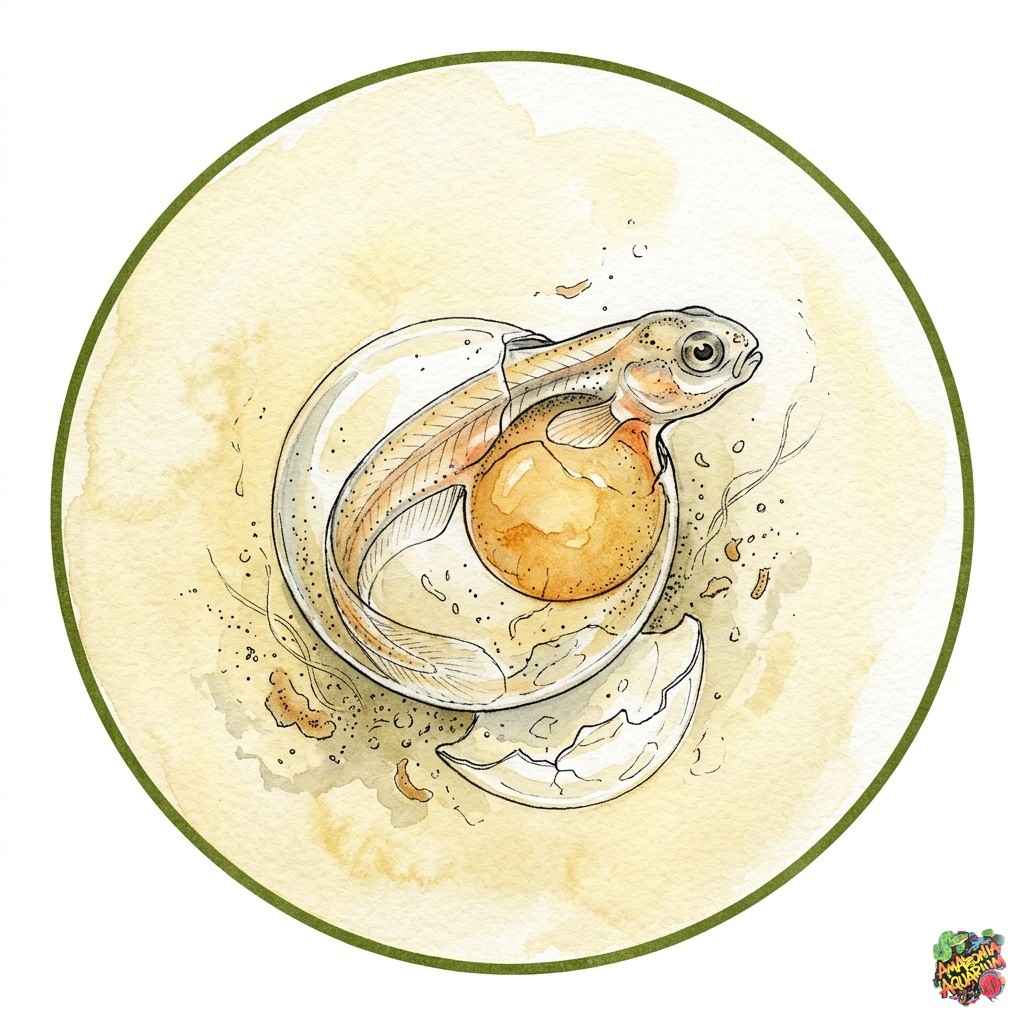
Hatching
Larvae emerge and attach to surfaces
Day 5-7
Free Swimming
Fry begin active feeding
Conditioning
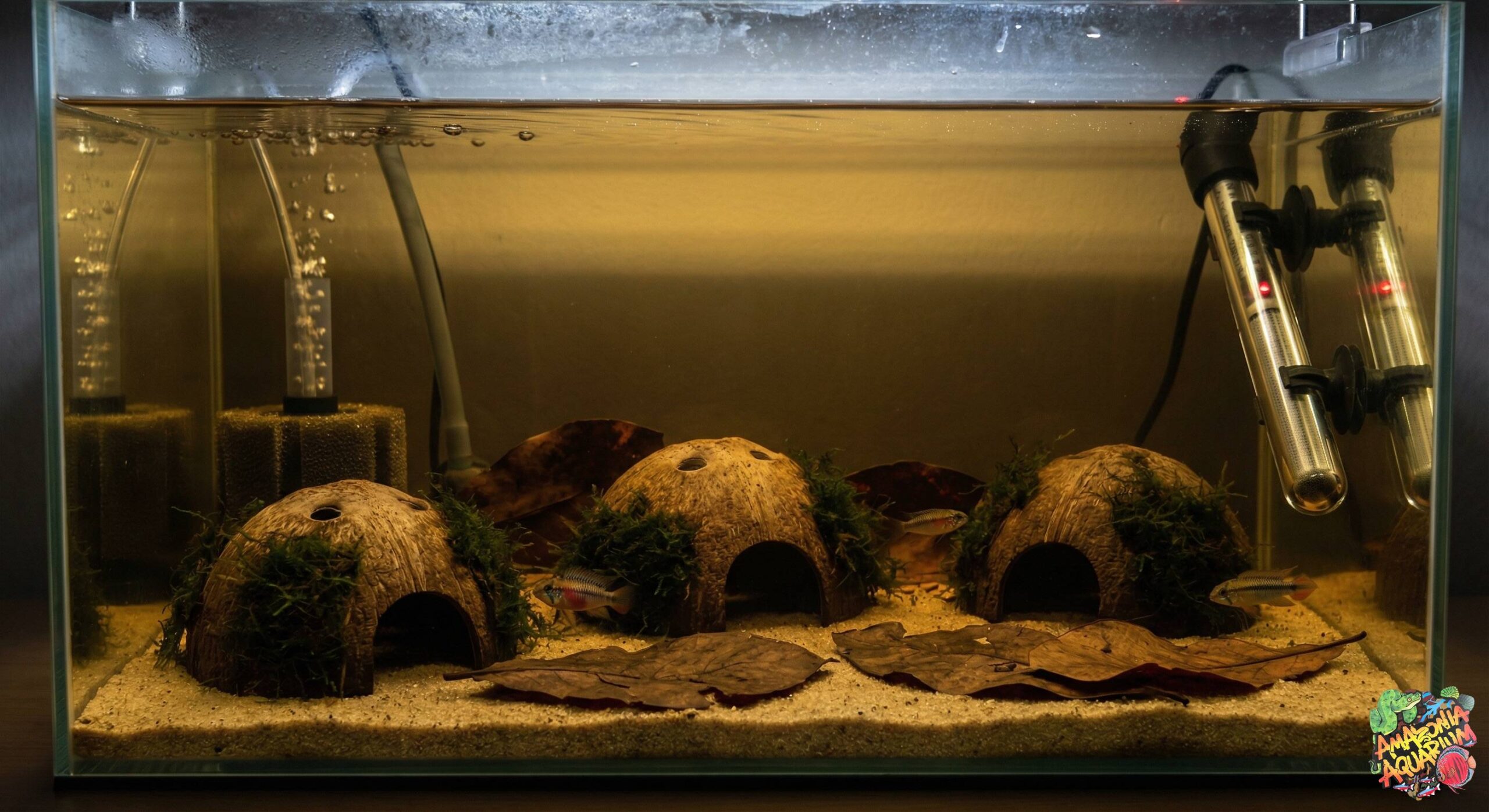
Separate a group of six or more well-coloured adults into a dedicated breeding tank with soft, acidic water (pH 6.0-6.5, temperature 27 °C). Feed heavily with live brine shrimp, daphnia, and micro worms to bring females into spawning condition. Females will develop noticeably rounder bellies as they fill with eggs.
Spawning
Spawning typically occurs at dawn. Pairs break away from the group and scatter small, semi-adhesive eggs among fine-leaved plants like Java Moss or spawning mops. A single female may produce 50-150 eggs per session. The eggs are tiny and translucent, making them difficult to spot. Remove the adults immediately after spawning, as they will readily consume their own eggs.
Incubation
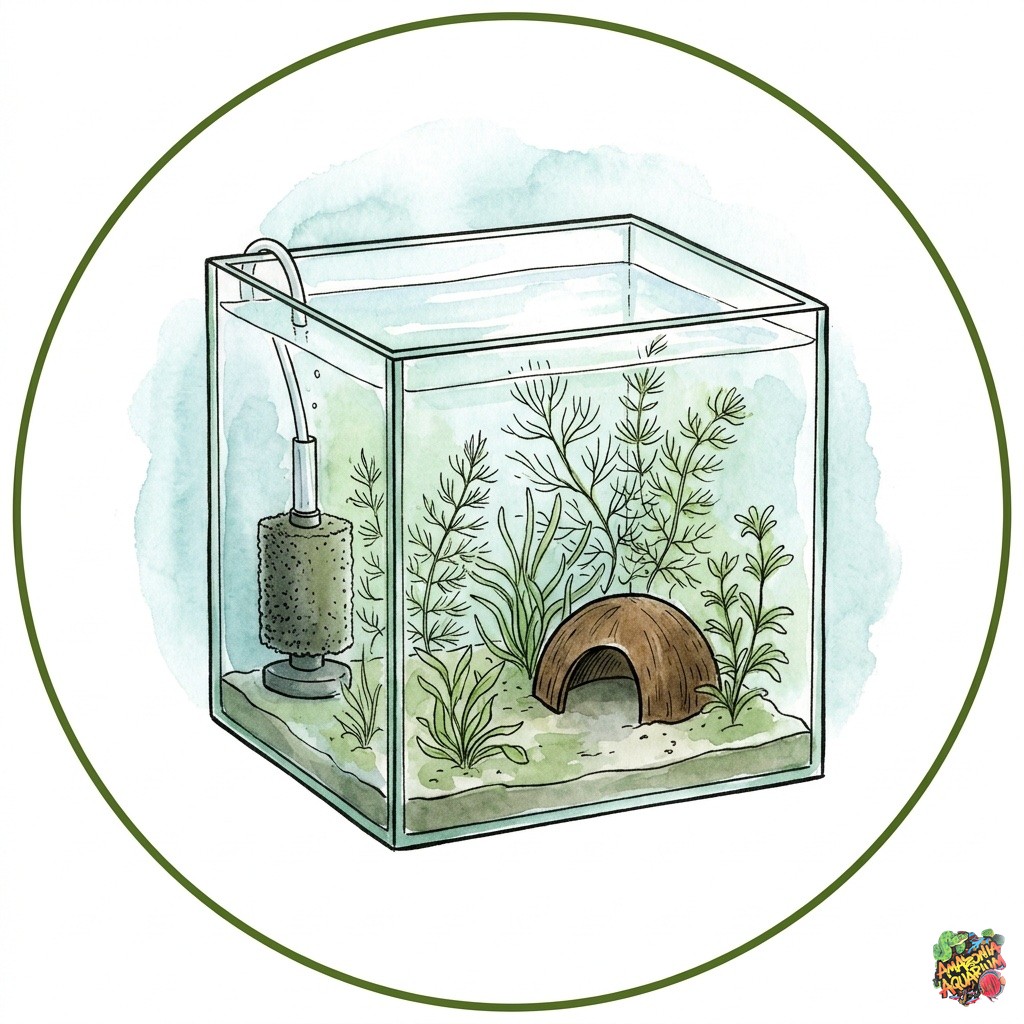
Rummy Nose eggs are light-sensitive, so keep the breeding tank dim or covered during incubation. Maintain pristine water quality and consider adding a few drops of methylene blue to prevent fungal growth on unfertilised eggs. Gentle aeration from a sponge filter provides water movement without disturbing the delicate eggs.
Hatching
Tiny larvae hatch and remain attached to plants and glass by their yolk sacs. They are nearly invisible at this stage. Do not feed yet — the yolk sac provides all necessary nutrition for the first 24-48 hours. Resist the urge to disturb them; minimal intervention is best.
Free Swimming
Once the yolk sac is absorbed, the fry become free-swimming and will need immediate access to infusoria or commercially available liquid fry food. After a few days, they can graduate to freshly hatched brine shrimp nauplii — the single best fry food available. Growth is slow compared to livebearers; expect 8-12 weeks before they begin to show the characteristic red nose. Water changes must be small, frequent, and temperature-matched to avoid shocking the delicate fry.
Compatible Species
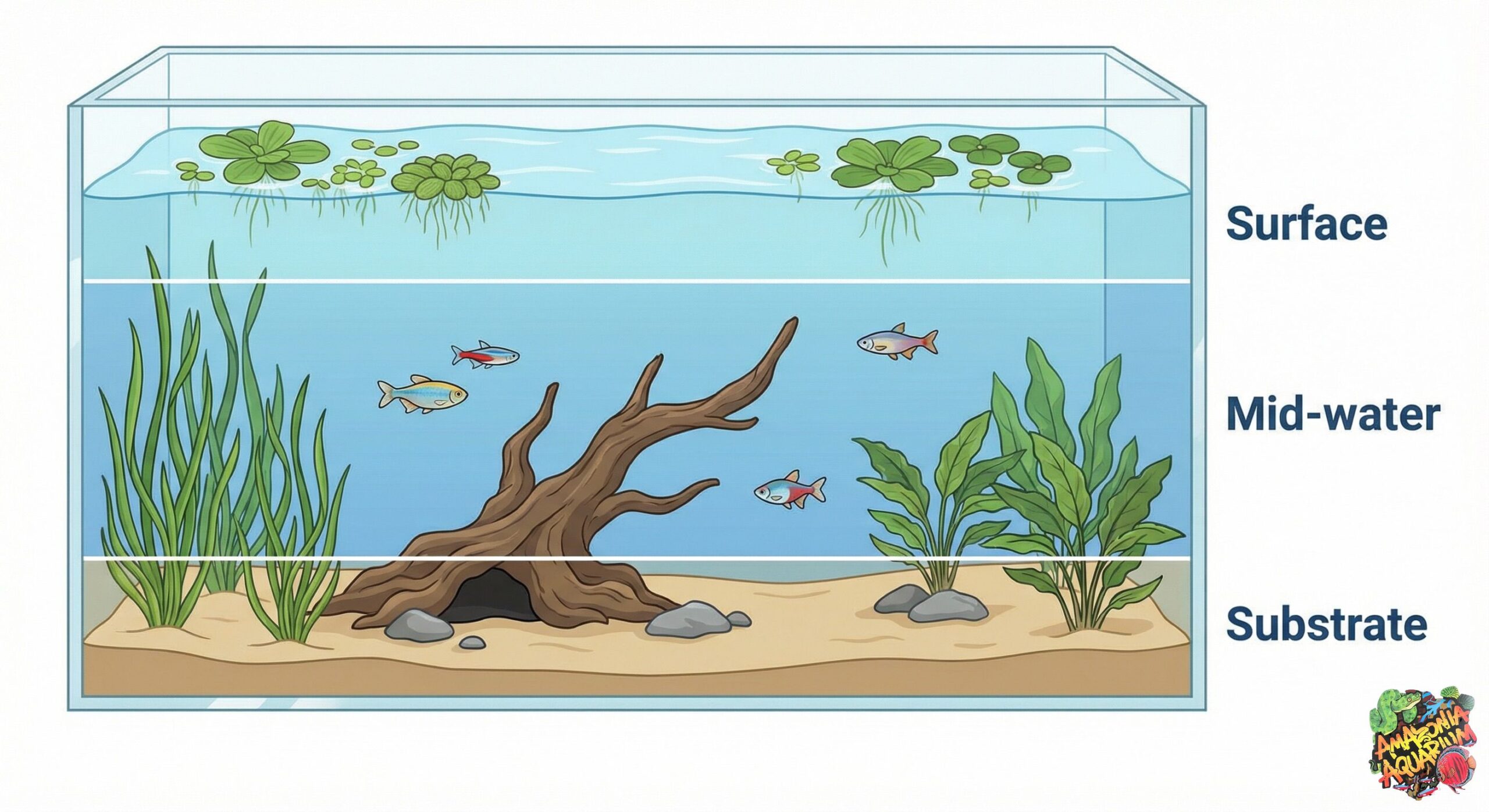
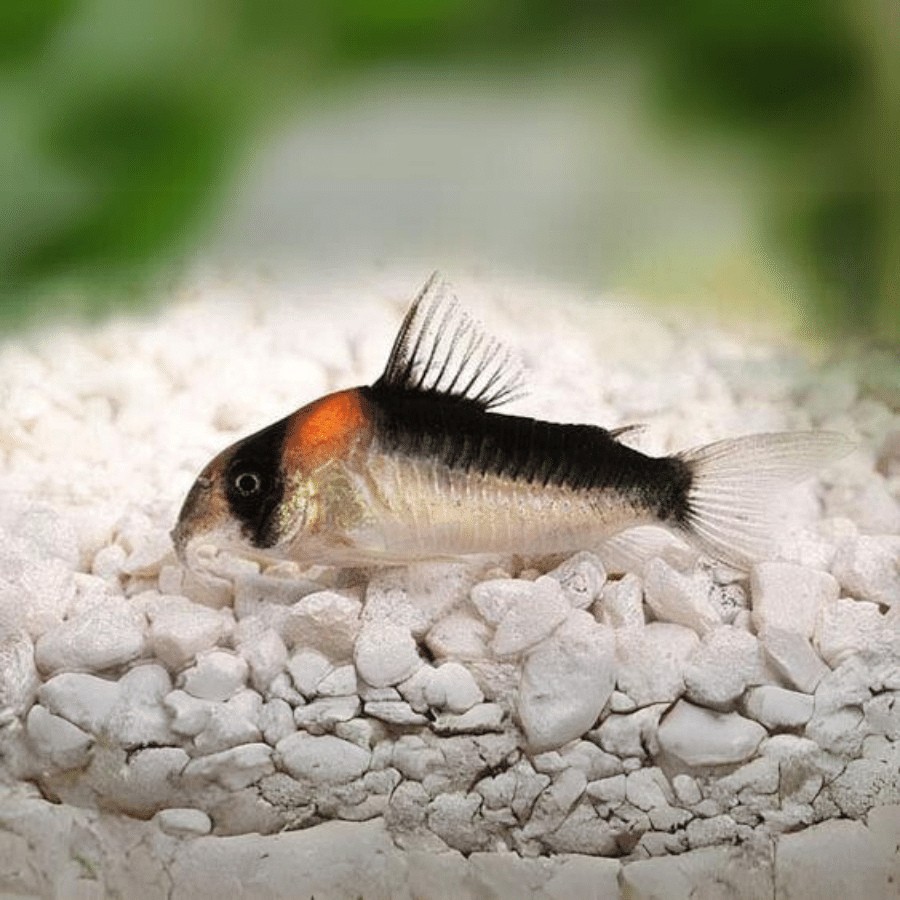
The Rummy Nose Tetra is one of the finest community tank citizens in the hobby. Its peaceful temperament, strict mid-water schooling habit, and modest size mean it integrates beautifully with almost any non-aggressive species. The ideal community tank layers different species across vertical zones: Hatchetfish cruising the surface, Rummy Noses commanding the middle, Corydoras pottering along the bottom, and Otocinclus quietly cleaning the glass. This vertical stratification means each species has its own territory and feeding niche, minimising competition and maximising the visual complexity of the tank.
For maximum visual impact, consider pairing Rummy Noses with Cardinal Tetras — the two schools will remain distinct (Rummies form tighter groups) and their colours complement each other spectacularly against a dark, planted backdrop. The Cardinal’s horizontal neon stripe provides a cool blue counterpoint to the Rummy’s warm red head, and when both schools are moving simultaneously through a planted aquascape, the effect is genuinely breathtaking. Adding a pair of Honey Gouramis provides a centrepiece without any risk to the tetras, while a group of Kuhli Loaches adds nocturnal bottom activity.
The single most important rule for community stocking with Rummy Noses is to avoid anything large, aggressive, or nippy. These fish are delicate and stress-sensitive; even moderate harassment will cause the red to fade and the school to fragment. If the red heads are glowing, your community balance is right. They are, in this sense, not just beautiful fish but genuinely useful diagnostic tools for the health of your entire community.
| Species | Why | |
|---|---|---|
| ✅ | Cardinal Tetra | Fellow blackwater tetra occupying the same niche. The red-and-blue of Cardinals alongside the red-nosed Rummies creates a stunning visual contrast. |
| ✅ | Neon Tetra | Classic community companion. Slightly smaller but equally peaceful, adding a blue-red shimmer to the mid-level. |
| ✅ | Corydoras (e.g. Sterbai Cory) | Peaceful bottom-dwellers that sift the substrate for leftovers. Completely non-competitive with mid-level schoolers. |
| ✅ | Otocinclus | Tiny, harmless algae grazers that keep glass and plant leaves clean. Share the same soft-water preferences. |
| ✅ | Honey Gourami | Gentle surface-to-mid dweller that adds a warm golden accent without any aggression toward tetras. |
| ✅ | Hatchetfish | Strict surface dwellers from the same Amazonian habitat. They occupy a completely different zone and share water chemistry needs. |
| ✅ | Kuhli Loach | Nocturnal bottom-dweller that stays hidden by day. Zero conflict with schooling tetras and adds interest during evening hours. |
| ✅ | Cherry Barb | One of the most peaceful barb species. Males display rich red colour that complements the Rummy Nose’s red head beautifully. |
| ❌ | Large cichlids (Oscars, Jack Dempseys) | Will treat Rummy Noses as food. Any fish large enough to fit a tetra in its mouth is incompatible. |
| ❌ | Tiger Barbs | Notorious fin-nippers that will harass and stress the school, causing the red coloration to fade permanently. |
| ❌ | Aggressive territorial fish (e.g. Red-Tail Shark) | Chase and bully tetras relentlessly, disrupting the school and causing chronic stress. |
| ❌ | African cichlids | Completely incompatible water chemistry (hard, alkaline) and aggressive temperament. |
Quick Reference
| Scientific Name | Hemigrammus rhodostomus / H. bleheri |
| Adult Size | 4.5-5 cm |
| pH | 5.5-7.0 (ideal 6.5) |
| Temperature | 24-28 °C (ideal 26 °C) |
| Hardness | 2-12 dGH (soft preferred) |
| Min. Tank | Nano/Small — under 40 L |
| Diet | Micro pellets + frozen + occasional live foods |
| Tank Position | Middle |
| Schooling | Obligate — 10+ recommended |
| Community | Cardinals, Corydoras, Honey Gourami, Hatchetfish |
| Breeding | Egg scatterer, moderately difficult |
| Lifespan | 5-6 years |
| Special Feature | Red nose intensity = live water quality indicator |
Acclimation & First-Week Care
Proper acclimation prevents shock and greatly improves survival. Never rush this process.
Step-by-Step Acclimation
- Float the sealed bag in your aquarium for 15–20 minutes to equalise temperature.
- Open the bag and roll down the edges to create a floating collar.
- Drip acclimation: Add approximately ¼ cup of tank water to the bag every 5 minutes for 30–40 minutes.
- Net and release — gently net the fish/shrimp and place them into the aquarium. Discard the bag water; never pour it into your tank.
First-Week Checklist
- Keep lights dimmed for the first 24–48 hours to reduce stress.
- Offer food sparingly on Day 1 — they may refuse to eat initially.
- Add them in a group of 6+ to reduce individual stress.
- Monitor ammonia and nitrite daily — any spike above 0.25 ppm warrants an immediate 25% water change.
- Observe for signs of disease (white spots, clamped fins, lethargy) and quarantine if needed.
Sydney Keeper Tips
Keeping Rummy Nose Tetras in Sydney comes with specific advantages and challenges. Here’s what local keepers should know.
Sydney Tap Water
Sydney tap water is acceptable for Rummy Nose Tetras, though they thrive in slightly softer, more acidic conditions. Their famous red nose is the best indicator — vibrant red means your water is good; pale pink means something needs adjusting.
Seasonal Considerations
Rummy Noses are sensitive to temperature fluctuations. In Sydney’s variable spring weather (Sep–Nov), avoid placing tanks near windows where afternoon sun can cause rapid temperature spikes.
Local Tips
- Use your Rummy Noses as canaries in the coal mine — if their nose fades, test water immediately.
- They school tightly when stressed — a loose, relaxed school means they’re comfortable.
- Avoid buying from tanks where multiple fish have pale noses — likely poor water quality at the store.
Frequently Asked Questions
Why is my Rummy Nose Tetra’s nose pale?
How can I make my Rummy Nose Tetras’ colour brighter?
Are Rummy Nose Tetras good for beginners?
How many Rummy Nose Tetras should I keep?
Can Rummy Nose Tetras live with shrimp?
Ideal Water Conditions
5.5–7.0
ideal 6.5
24–28 °C
ideal 26 °C
2–12 dGH
Soft to moderately soft water preferred
If there is one species that rewards meticulous water maintenance, it is the Rummy Nose Tetra. The intensity of the red head patch correlates directly with water quality — elevated nitrates, unstable pH, or temperature swings will cause the red to fade noticeably within hours. This makes them invaluable canaries in the coal mine for planted community tanks, but it also means you need to take water changes seriously.
Aim for weekly water changes of 25-30%, using dechlorinated water matched to the tank temperature. In their native blackwater habitats, these fish experience very soft, acidic conditions stained dark with tannins. You do not need to replicate pure blackwater, but keeping pH on the slightly acidic side of neutral and hardness below 10 dGH will produce the best colour and the most natural behaviour. If your tap water is hard and alkaline, consider cutting it with RO water or using botanicals like Indian almond leaves and driftwood to gently buffer downward.
Temperature stability matters as much as the number on the thermometer. Rummy Noses tolerate 24-28 °C but dislike rapid fluctuations. A reliable adjustable heater and a thermometer you actually check are non-negotiable. In a well-maintained tank, these tetras are genuinely hardy — the beginner label is earned, as long as the beginner commits to consistent maintenance.
Setting Up Your Aquarium
The Rummy Nose Tetra’s greatest visual impact comes from its schooling behaviour, so tank design should prioritise open swimming space in the middle third of the water column. A nano or small tank under 40 litres can house a starter school, but a longer tank (60 cm+) allows the school to stretch out and display the mesmerising synchronized turns that make this species famous.
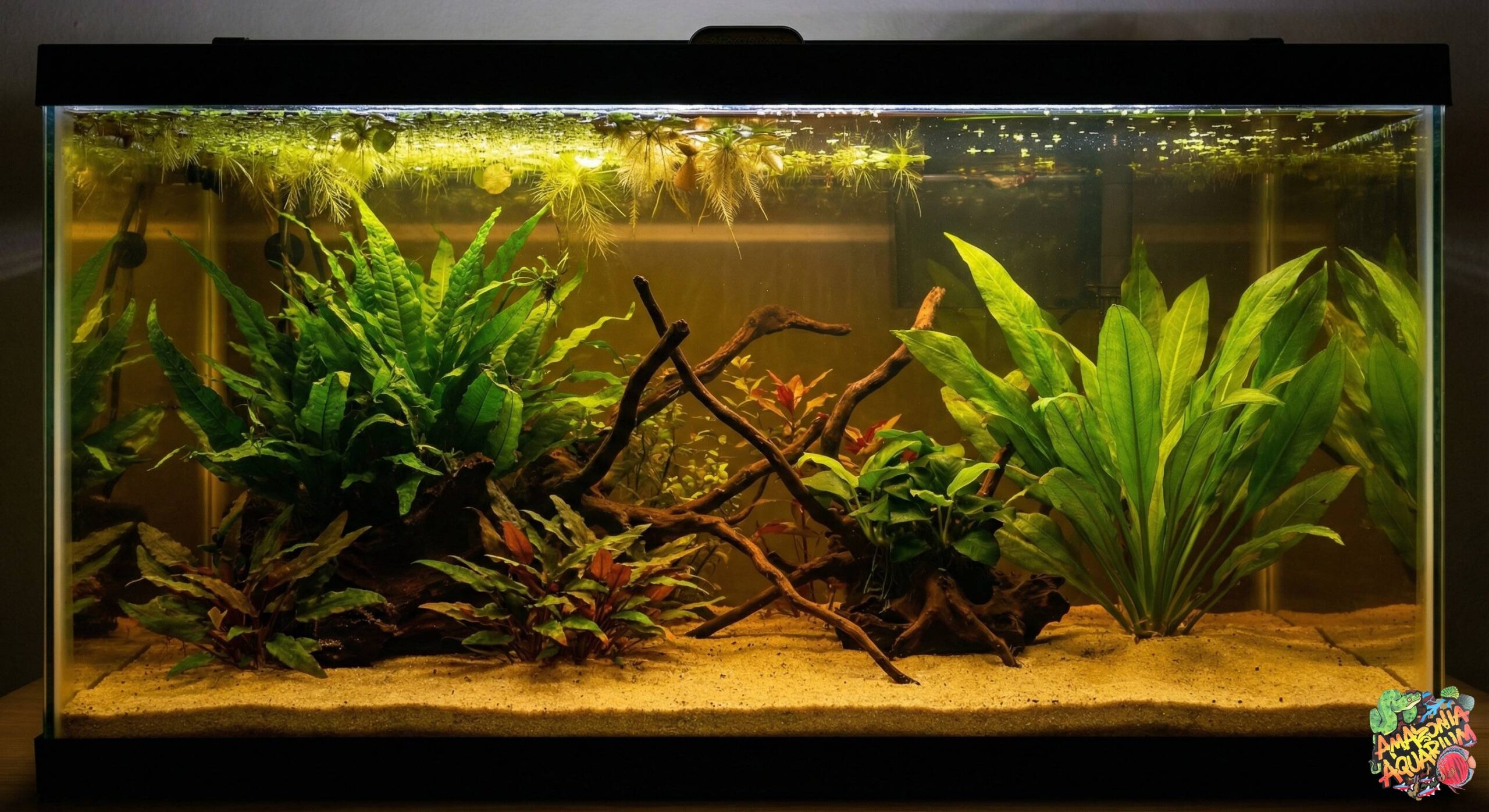
Substrate choice is flexible — fine sand or smooth gravel both work well. Dark substrates tend to bring out the best colour in the fish by reducing light reflection from below. Plant the back and sides densely with species like Vallisneria, Java Fern, Cryptocoryne, or stem plants such as Rotala and Ludwigia. Leave the centre and front relatively open to give the school room to manoeuvre. Floating plants like Amazon Frogbit or Red Root Floaters provide dappled shade that mimics the forest canopy of their native streams.
Driftwood and botanicals are welcome additions. Spiderwood branches create naturalistic hardscape and release gentle tannins. A few Indian almond leaves scattered on the substrate complete the blackwater aesthetic and provide grazing surfaces for biofilm that fry and small invertebrates appreciate. Avoid sharp decorations or rough rocks that could damage these delicate tetras during their rapid schooling manoeuvres.
Filter
Sponge filter for nano tanks; canister or HOB with spray bar for larger setups. Prioritise biological filtration and gentle flow.
Heater
Adjustable heater rated for your tank volume. Set to 25-26 °C for optimal colour and activity.
Thermometer
Digital or glass thermometer — check daily. Temperature stability is critical for this species.
Lighting
Moderate intensity suitable for live plants. Floating plants provide natural dimming.
Substrate
Fine sand or smooth gravel. Dark colours enhance fish colour contrast.
Botanicals
Indian almond leaves, alder cones, or driftwood for tannin release and pH buffering.
Related Products


Reviews
Clear filtersThere are no reviews yet.